Review

Organophosphate Esters in China: Fate, Occurrence, and Human Exposure
1
School of Hydraulic Engineering, Changsha University of Science & Technology, Changsha 410114, China
2
Key Laboratory of Dongting Lake Aquatic Eco-Environmental Control and Restoration of Hunan Province, Changsha 410114, China
3
Key Laboratory of Water-Sediment Sciences and Water Disaster Prevention of Hunan Province, Changsha 410114, China
4
College of Environmental Science and Engineering, Hunan University and Key Laboratory of Environmental Biology and Pollution Control (Hunan University), Ministry of Education, Changsha 410082, China
*
Author to whom correspondence should be addressed.
Toxics 2021, 9(11), 310; https://doi.org/10.3390/toxics9110310
Submission received: 21 October 2021 / Revised: 10 November 2021 / Accepted: 11 November 2021 / Published: 16 November 2021
(This article belongs to the Section Environmental Chemistry)

Abstract

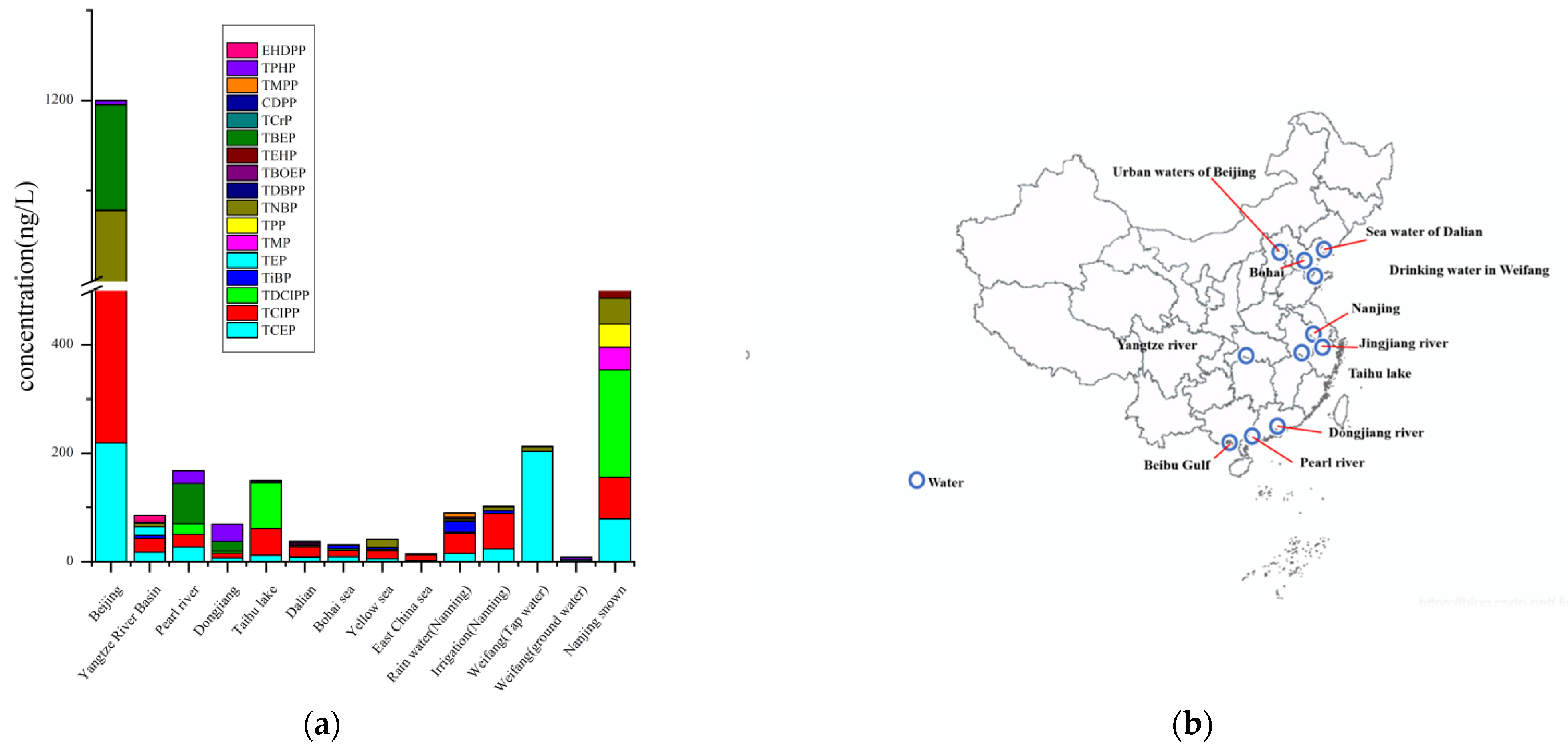
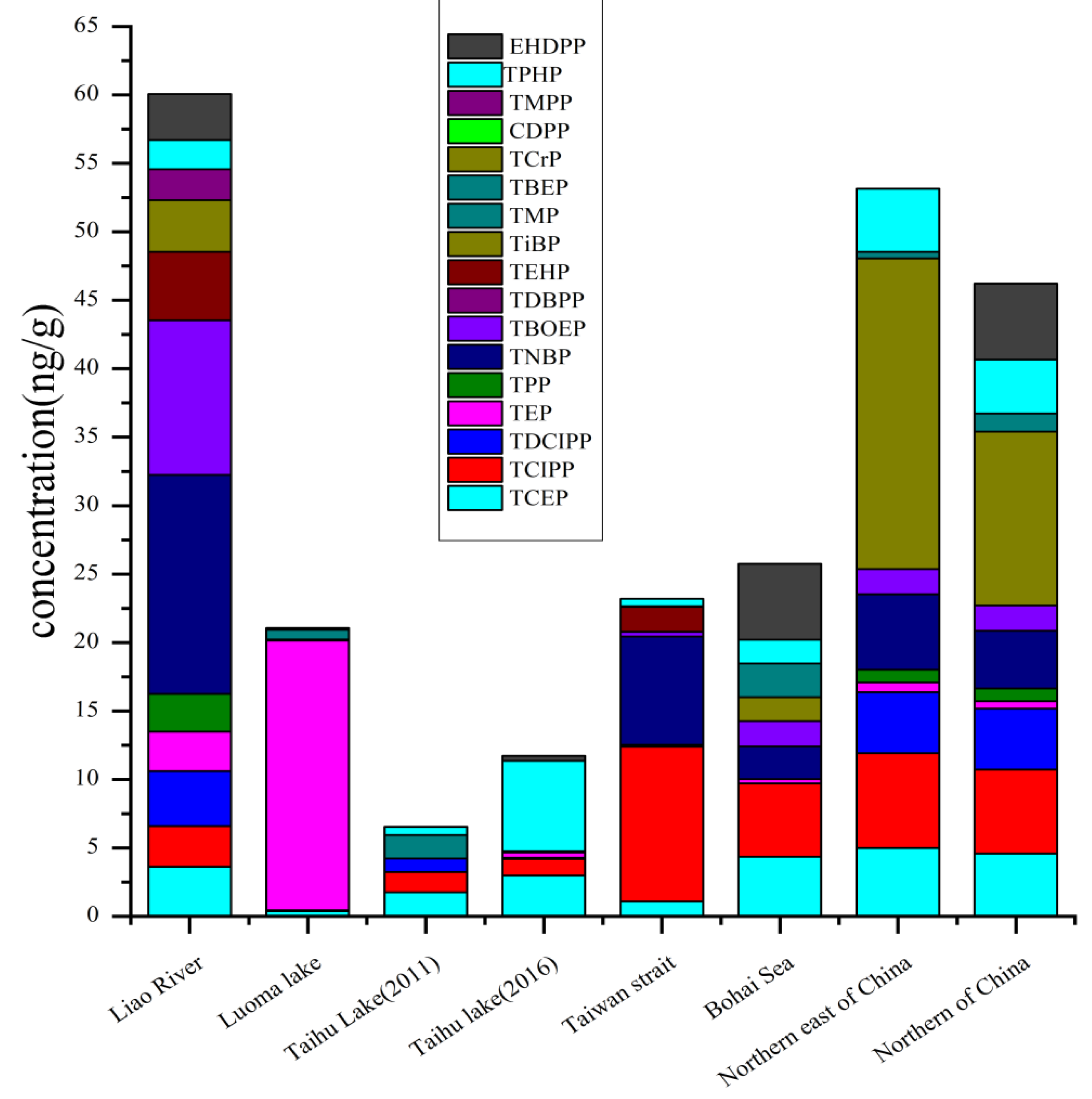
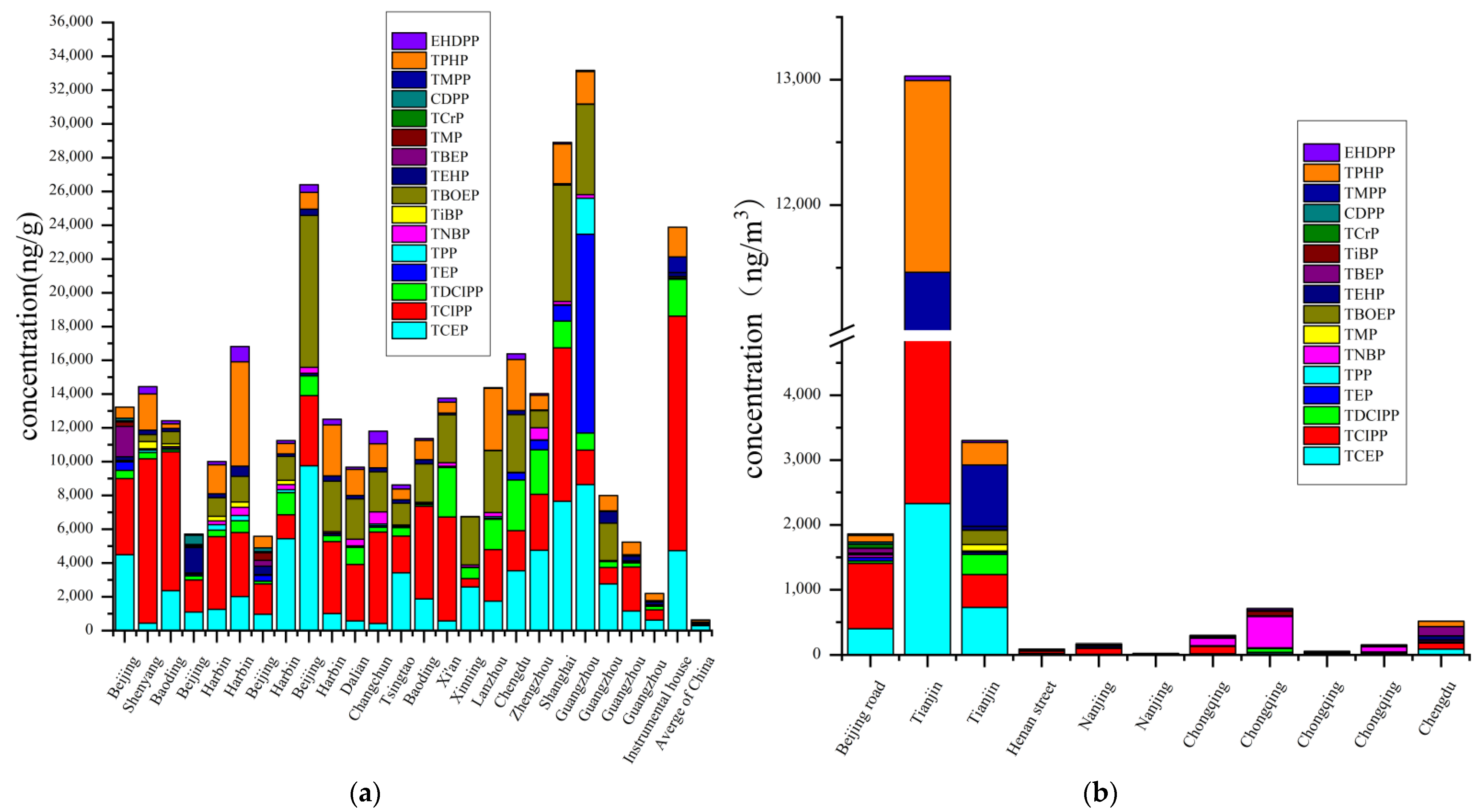
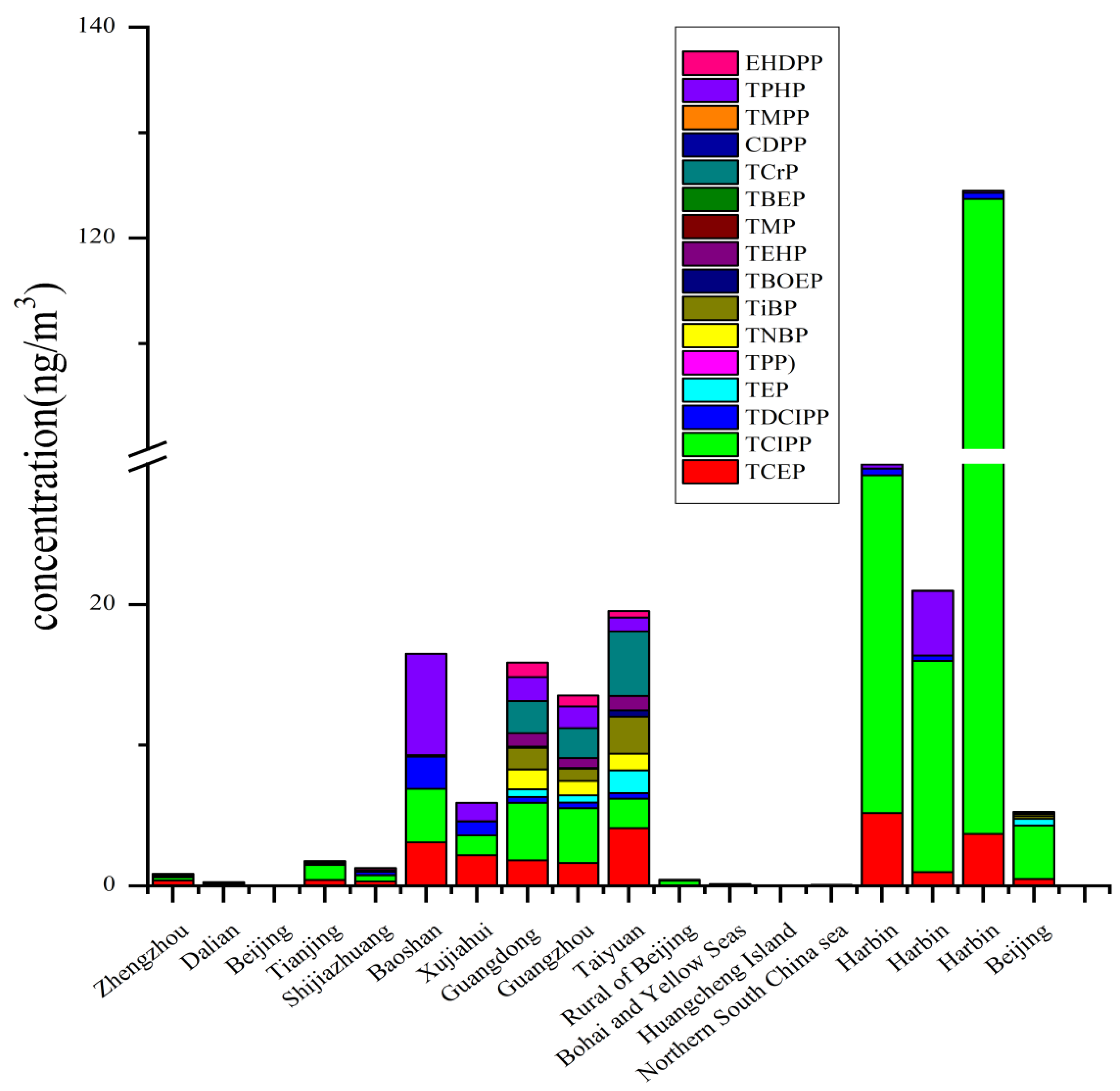
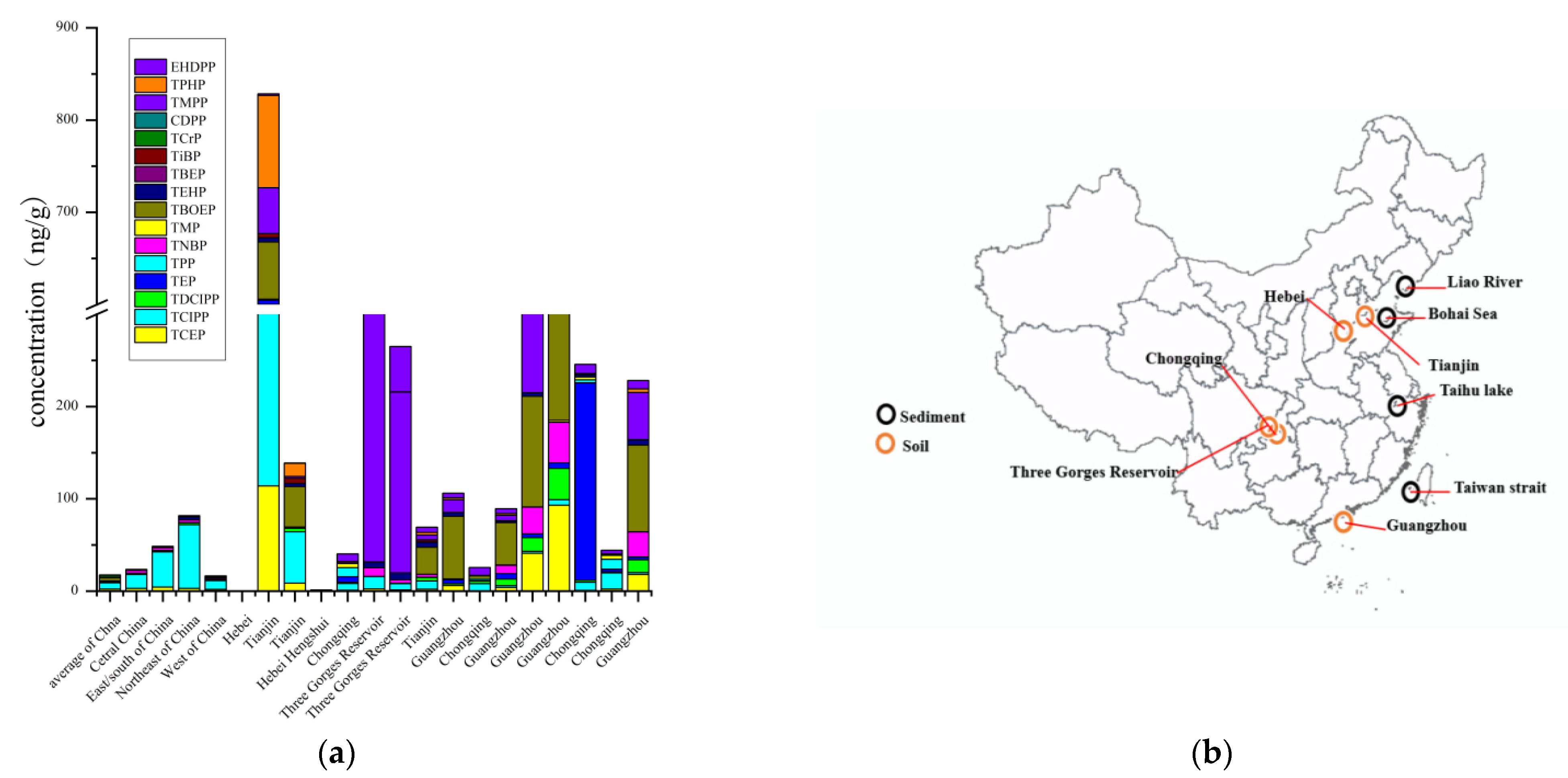
Organophosphate esters (OPEs) are widely used as flame retardants and plasticizers. OPEs have been released into various environments (e.g., water, sediments, dust and air, and soil). To investigate the occurrence and distribution of OPEs in various environments in China, this review collects and discusses the published scientific studies in this field. Chlorinated OPEs, as flame retardants, are the predominant OPEs found in the environment. The analysis of data revealed large concentration variations among microenvironments, including inflowing river water (range: 0.69–10.62 µgL−1), sediments (range: 0.0197–0.234 µg/g), dust (range: 8.706–34.872 µg/g), and open recycling sites’ soil (range: 0.122–2.1 µg/g). Moreover, OPEs can be detected in the air and biota. We highlight the overall view regarding environmental levels of OPEs in different matrices as a starting point to monitor trends for China. The levels of OPEs in the water, sediment, dust, and air of China are still low. However, dust samples from electronic waste workshop sites were more contaminated. Human activities, pesticides, electronics, furniture, paint, plastics and textiles, and wastewater plants are the dominant sources of OPEs. Human exposure routes to OPEs mainly include dermal contact, dust ingestion, inhalation, and dietary intake. The low level of ecological risk and risk to human health indicated a limited threat from OPEs. Furthermore, current challenges and perspectives for future studies are prospected. A criteria inventory of OPEs reflecting the levels of OPEs contamination association among different microenvironments, emerging OPEs, and potential impact of OPEs on human health, particularly for children are needed in China for better investigation.
Keywords: China; human exposure; organophosphate esters; sources; spatial distribution China; human exposure; organophosphate esters; sources; spatial distribution