
From Legacy Contamination to Green Infrastructure: Heavy Metal, Microplastics and Nutrient Pollution Management in the Yangtze River Basin

Abstract
1. Introduction
2. Methodology
3. Major Pollutants in the Yangtze River Basin
3.1. Heavy Metals in the Yangtze Drainage System
3.2. Sources of Heavy Metals in the Yangtze River
3.3. Organic Pollutants in the Yangtze River
3.4. Nutrient Pollution
3.5. Cross-Pollutant Interactions and Emerging Concerns
4. Spatial and Temporal Pollution Trends
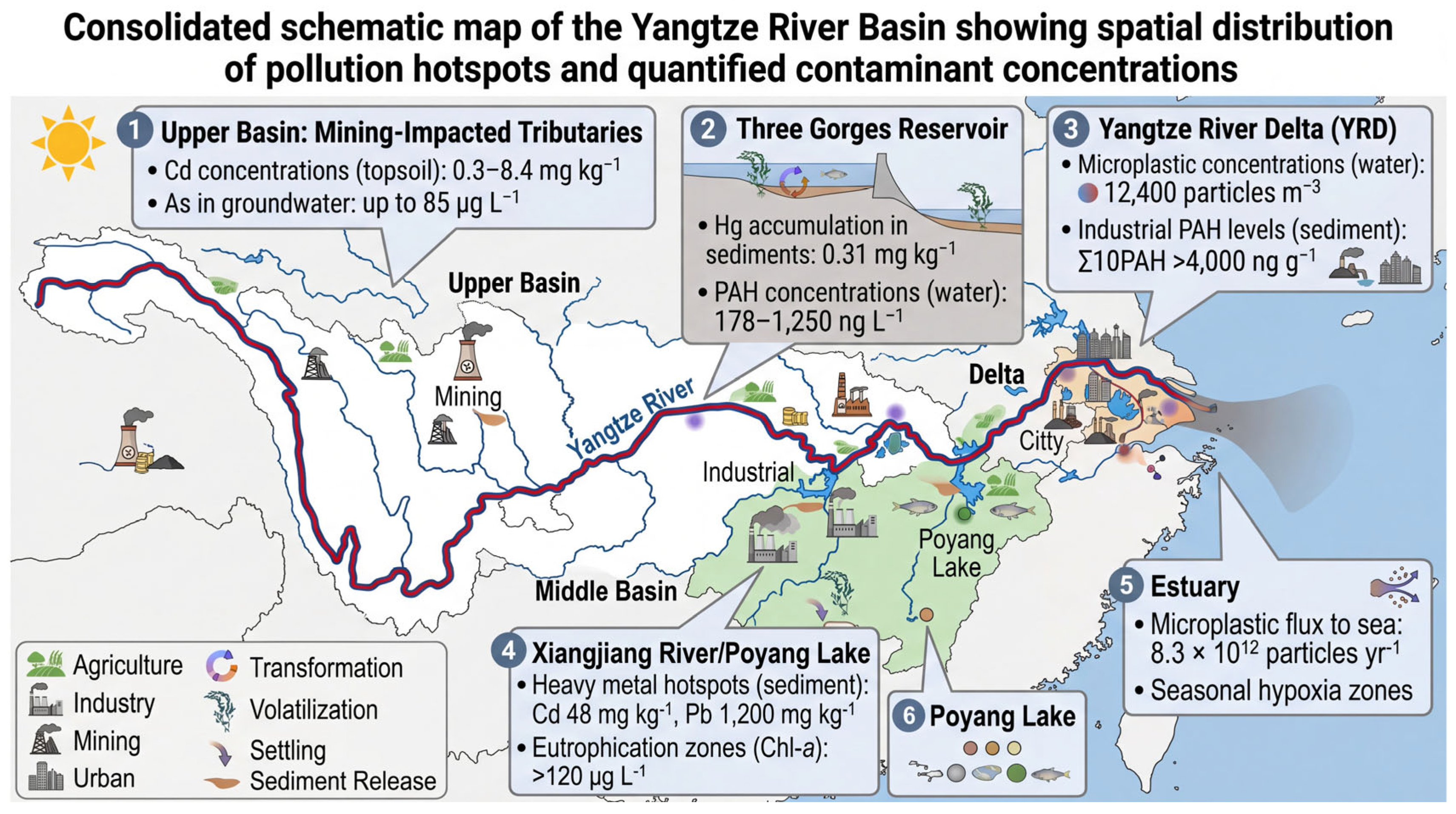
4.1. Spatial Pollution Trends
4.2. Temporal Evolution: Divergent Trajectories
5. Ecological and Health Risks
5.1. Ecological Risk Through Yangtze River Pollution
5.2. Human Health Risks Through Yangtze River Pollution
6. Remediation Strategies
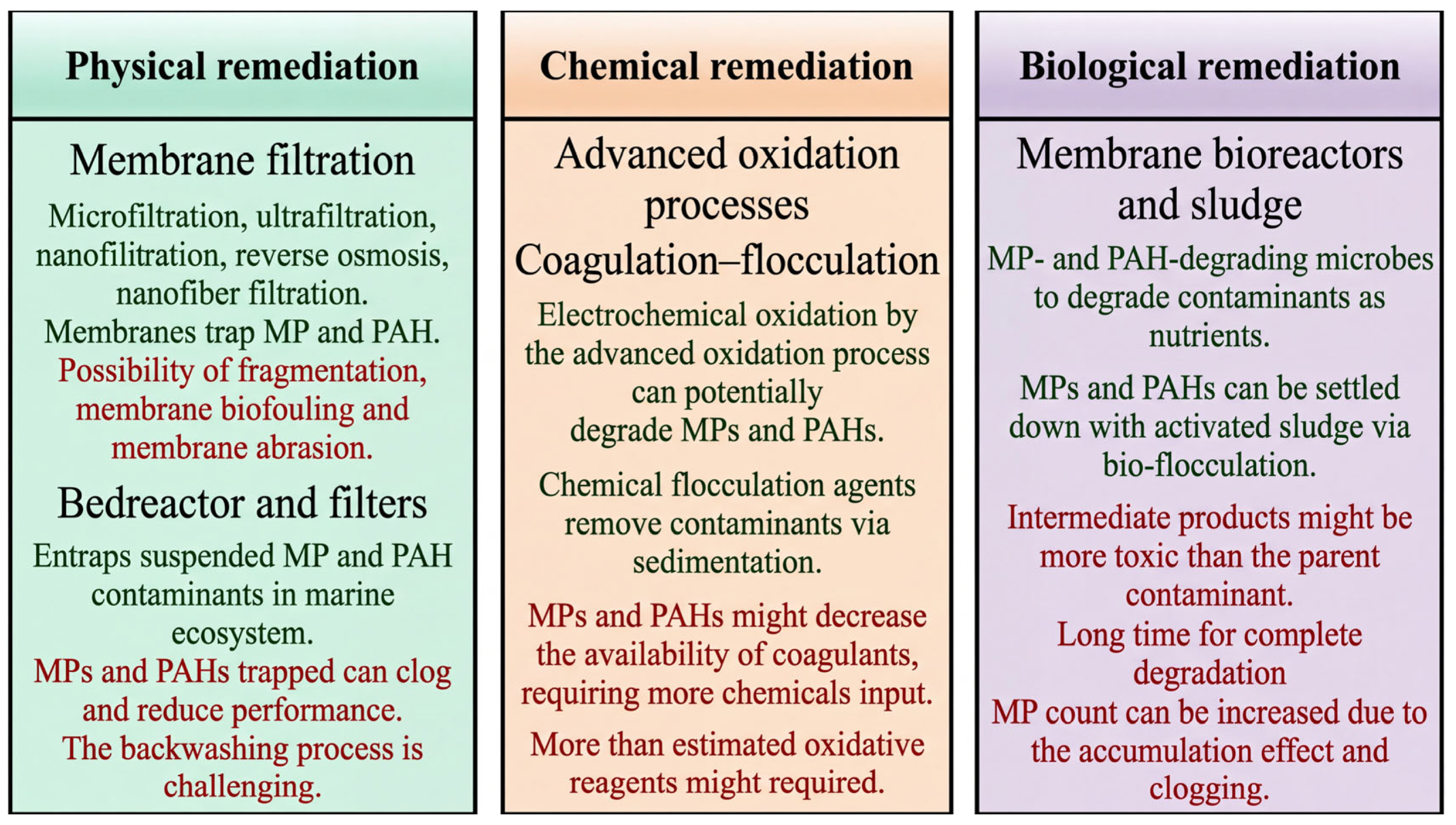
6.1. Physical and Chemical Methods Applied in the Yangtze River System
6.2. Biological Remediation Applied in the Yangtze River System
6.2.1. Phytoremediation Applied in the Yangtze River System
6.2.2. Microbial Remediation Applied in the Yangtze River System
7. Policy and Management Approaches
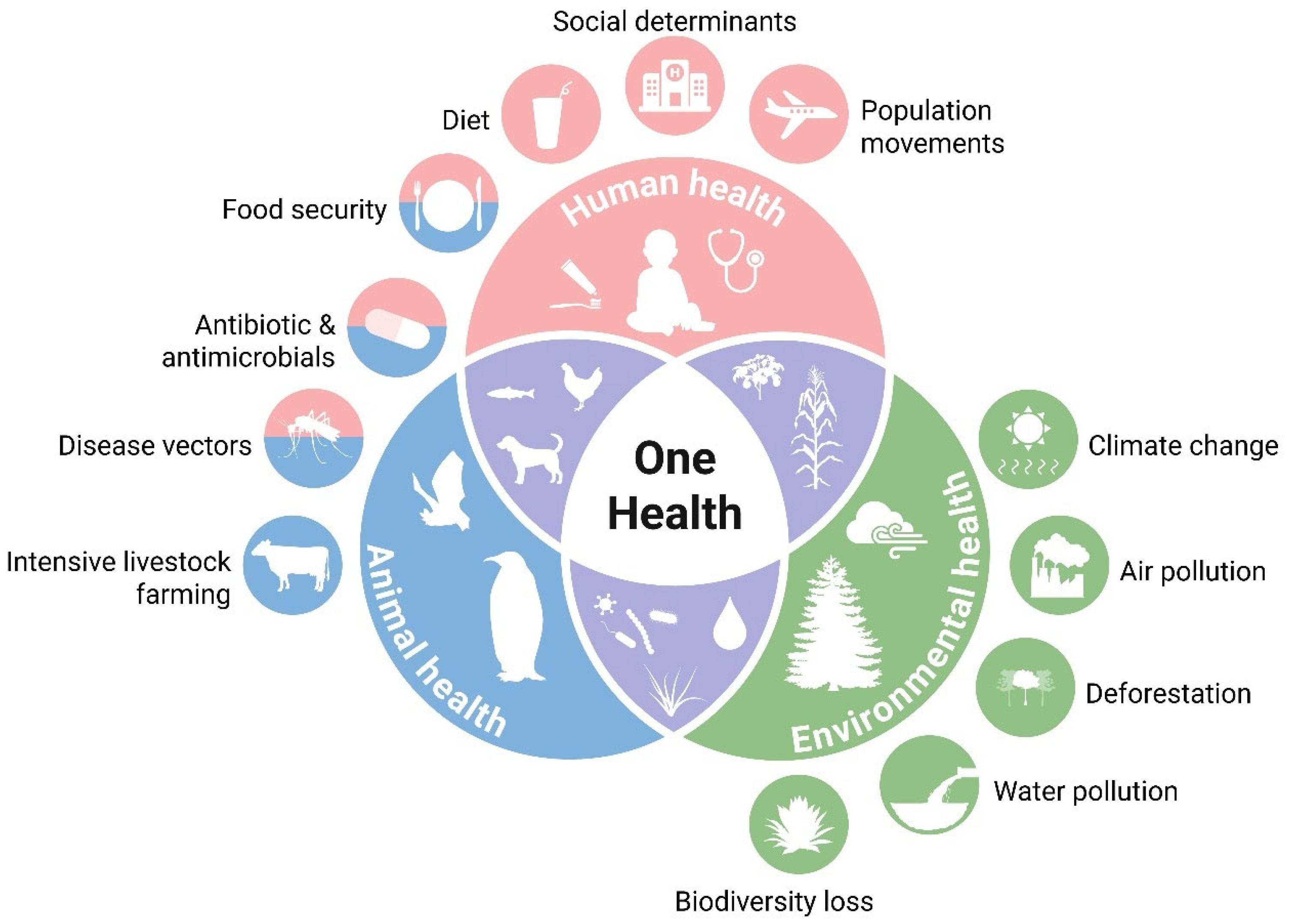
8. Integrated Management: One Health and Cross-Pollutant Strategies
9. Challenges and Future Directions
9.1. Knowledge Gaps in Yangtze River System Pollution Reclamation Understanding
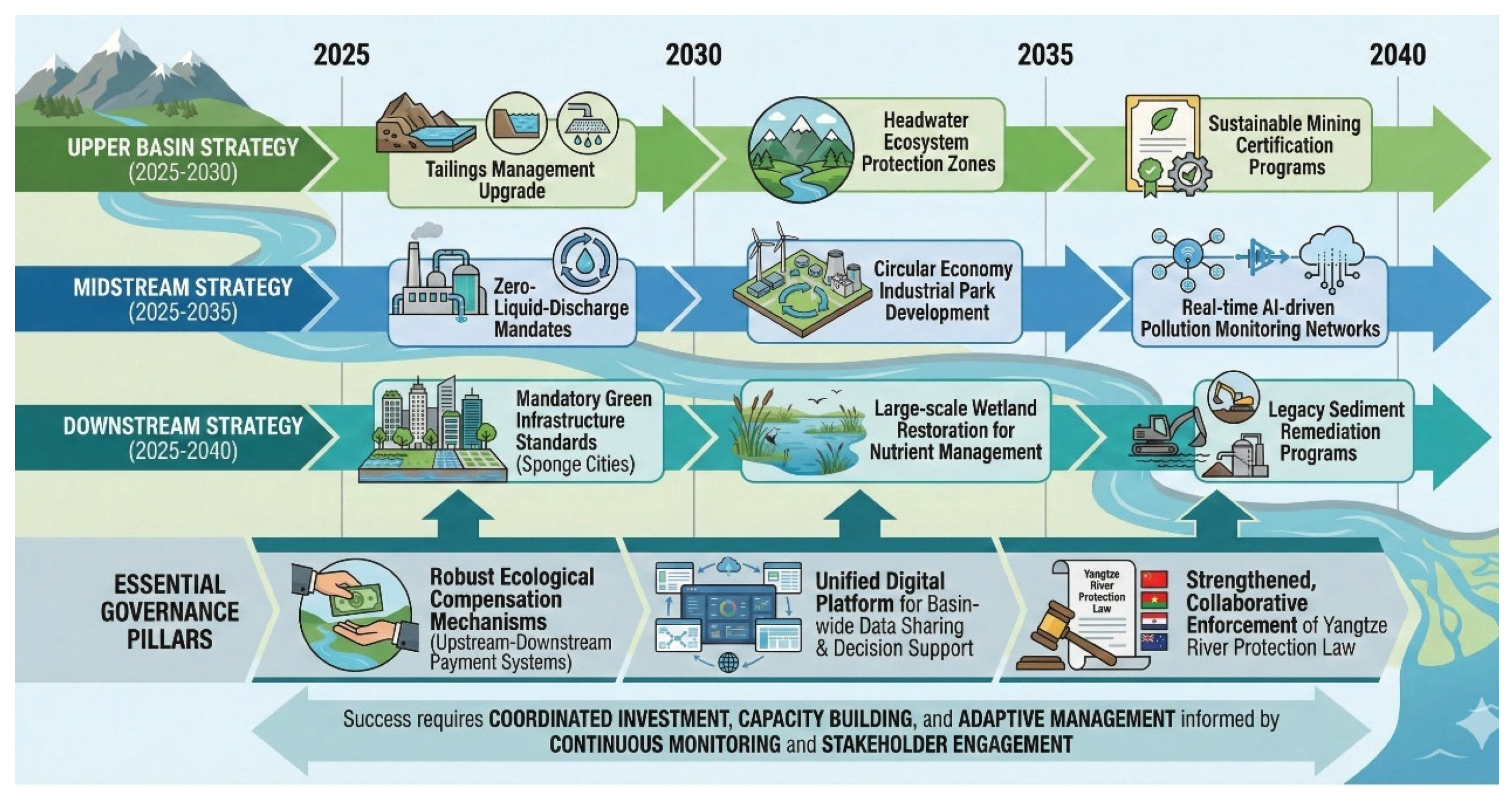
9.2. Innovative Solutions for Greening the Golden Belt of the Yangtze River Basin
10. Conclusions
Author Contributions
Funding
Institutional Review Board Statement
Informed Consent Statement
Data Availability Statement
Acknowledgments
Conflicts of Interest
References
- Che, Q.; Su, X.; Zheng, S.; Li, Y. Interaction between surface water and groundwater in the Alluvial Plain (anqing section) of the lower Yangtze River Basin: Environmental isotope evidence. J. Radioanal. Nucl. Chem. 2021, 329, 1331–1343. [Google Scholar] [CrossRef]
- Li, M.; Chen, Q.; Yang, L.; Zhang, Y.; Jiang, J.; Deng, S.; Wan, J.; Fan, T.; Long, T.; Zhang, S.; et al. Contaminant characterization at pesticide production sites in the Yangtze River Delta: Residue, distribution, and environmental risk. Sci. Total. Environ. 2022, 860, 160156. [Google Scholar] [CrossRef] [PubMed]
- Song, X.; Hao, Y.; Zhang, C.; Peng, J.; Zhu, X. Vehicular emission trends in the Pan-Yangtze River Delta in China between 1999 and 2013. J. Clean. Prod. 2016, 137, 1045–1054. [Google Scholar] [CrossRef]
- Chen, C.; Cowger, W.; Nava, V.; van Emmerik, T.H.M.; Leoni, B.; Guo, Z.-F.; Liu, D.; He, Y.-Q.; Xu, Y.-Y. Wastewater Discharge Transports Riverine Microplastics over Long Distances. Environ. Sci. Technol. 2024, 58, 15147–15158. [Google Scholar] [CrossRef]
- Ruan, X.; Ye, H.; Lu, Q.; Yang, Z. Historical record, source, and toxicity assessment of sedimentary organic matter using molecular composition of hydrocarbons in an urban lake, Wuhan, China. J. Soils Sediments 2018, 18, 2081–2092. [Google Scholar] [CrossRef]
- Han, Z.; Zhou, R.F. Research on the Doubtful Radioactive Contaminated Sites in the Urban Area of Chongqing. Adv. Mater. Res. 2011, 414, 161–165. [Google Scholar] [CrossRef]
- Ye, S.; Pei, D. Relationships between microplastic pollution and land use in the Chongqing section of the Yangtze River. Front. Ecol. Evol. 2023, 11, 1202562. [Google Scholar] [CrossRef]
- Cai, Y.; Chen, H.; Zhao, W.; Sun, Y.; Wang, M.; Chen, Y.; Ma, J. Investigation of greenhouse gas emissions in soil remediation activities based on the integration of machine learning models and life cycle assessment. J. Clean. Prod. 2025, 487, 144630. [Google Scholar] [CrossRef]
- Cheng, K.; Sheng, B.; Zhao, Y.; Guo, W.; Guo, J. An Urban Water Pollution Model for Wuhu City. Water 2022, 14, 386. [Google Scholar] [CrossRef]
- Du, X.; Tian, J.; Huang, Y.; Ye, Y.; Yang, Y.; Xu, W.; Zhao, Y.; Li, Y. Effects of stock enhancement on the macrobenthic community and ecological health in the intertidal zone of the estuarine wetland in Nanhui, China. Mar. Pollut. Bull. 2024, 203, 116492. [Google Scholar] [CrossRef]
- Li, Y.; Liu, Y.; Yu, S.; Xing, B.; Xu, X.; Yu, H.; Wang, L.; Wang, D.; Liu, C.; Yu, D. Vigilance against climate change-induced regime shifts for phosphorus restoration in shallow lake ecosystems. Water Res. 2025, 278, 123397. [Google Scholar] [CrossRef]
- Yang, C.-W.; Xing, F.; Zhu, J.-C.; Li, R.-H.; Zhang, Z.-Q. Temporal and Spatial Distribution, Utilization Status, and Carbon Emission Reduction Potential of Straw Resources in China. Huan Jing Ke Xue 2023, 44, 1149–1162. [Google Scholar] [PubMed]
- Wang, Y.; Yu, H.; Yi, M.; Zhou, R.; Li, H.; Xu, S.; Tang, J.; Wang, C. Spatial distribution, sources, and risks of heavy metals in soil from industrial areas of Hangzhou, eastern China. Environ. Earth Sci. 2023, 82, 95. [Google Scholar] [CrossRef]
- Li, M.; Chen, J.; Finlayson, B.L.; Chen, Z.; Webber, M.; Barnett, J.; Wang, M. Freshwater Supply to Metropolitan Shanghai: Issues of Quality from Source to Consumers. Water 2019, 11, 2176. [Google Scholar] [CrossRef]
- Di Guardo, A.; Gouin, T.; MacLeod, M.; Scheringer, M. Environmental fate and exposure models: Advances and challenges in 21st century chemical risk assessment. Environ. Sci. Process. Impacts 2018, 20, 58–71. [Google Scholar] [CrossRef]
- Mackay, D.; Paterson, S. The Fugacity Approach to Multimedia Environmental Modeling. In Pollutants in a Multimedia Environment; Cohen, Y., Ed.; Springer: Boston, MA, USA, 1986; pp. 117–131. [Google Scholar]
- Hou, L.; Qi, Q.; Zhou, Q.; Lv, J.; Zong, L.; Chen, Z.; Jiang, Y.; Yang, H.; Jia, Z.; Mei, S.; et al. Shallow Groundwater Quality Assessment and Pollution Source Apportionment: Case Study in Wujiang District, Suzhou City. Water 2024, 16, 3139. [Google Scholar] [CrossRef]
- Liang, L.; Yan, X.; Qi, Y.; Wang, L.; Tu, H.; Jiang, H.; Wang, D.; Zhang, H.; Xu, Y. Assessing Fluoride Contamination in Groundwater of Informal Landfills in the Yangtze River Delta: Implications for Environmental Security and Sustainable Resource Management. Water Air Soil Pollut. 2025, 236, 532. [Google Scholar] [CrossRef]
- Dong, J.; Feng, R.; Yao, Z.; Wang, J.; Wang, Y.; Wang, H.; Yan, D.; Cui, Y.; Xie, H.; Du, Y.; et al. Layer-specific mechanisms of perfluoroalkyl acid (PFAA) transport and partition in estuarine environments: Unveiling the depth-dependent differences. J. Hazard. Mater. 2024, 473, 134675. [Google Scholar] [CrossRef]
- Lim, Y.-C.; Chen, C.-F.; Tsai, M.-L.; Wu, C.-H.; Lin, Y.-L.; Wang, M.-H.; Albarico, F.P.J.B.; Chen, C.-W.; Dong, C.-D. Impacts of Fishing Vessels on the Heavy Metal Contamination in Sediments: A Case Study of Qianzhen Fishing Port in Southern Taiwan. Water 2022, 14, 1174. [Google Scholar] [CrossRef]
- Guoliang, Y.; Fang, D.; Chowdhury, A.; Aixin, Z.; Sajid, M. Persistent organic pollutants in Chinese waterways: Occurrence, remediation, and epidemiological perspectives. Reg. Stud. Mar. Sci. 2022, 56, 102688. [Google Scholar] [CrossRef]
- Li, C.; Xu, Y.; Song, W. Pollution Characteristics and Risk Assessment of Typical Antibiotics and Persistent Organic Pollutants in Reservoir Water Sources. Water 2023, 15, 259. [Google Scholar] [CrossRef]
- Sereenonchai, S.; Arunrat, N. Fishers’ Decisions to Adopt Adaptation Strategies and Expectations for Their Children to Pursue the Same Profession in Chumphon Province, Thailand. Climate 2019, 7, 34. [Google Scholar] [CrossRef]
- Cui, X.; Cheng, H.; Sun, H.; Huang, J.; Huang, D.; Zhang, Q. Human health and environment: Spatiotemporal variation of chinese cancer villages and its contributing factors. Ecol. Eng. 2020, 158, 106075. [Google Scholar] [CrossRef]
- Wei, R.; Song, Y.; Ben, Y.; Wu, Y.; Hu, Y.; Yu, K.; Zhang, M.; Hu, C.; Zhang, L.; Qu, S. Evaluating the heterogeneous effects of on-site scientist-government collaboration on Yangtze River protection and restoration using causal machine learning. J. Clean. Prod. 2025, 493, 144913. [Google Scholar] [CrossRef]
- Xu, D.; Wang, Z.; Tan, X.; Xu, H.; Zhu, D.; Shen, R.; Ding, K.; Li, H.; Xiang, L.; Yang, Z. Integrated assessment of the pollution and risk of heavy metals in soils near chemical industry parks along the middle Yangtze River. Sci. Total. Environ. 2024, 917, 170431. [Google Scholar] [CrossRef]
- Zhu, C.; Fan, W.; Wu, X.; Zhang, Z.; Chen, Y. Spatial mismatch and the attribution analysis of carbon storage demand and supply in the Yangtze River Economic Belt, China. J. Clean. Prod. 2023, 434, 140036. [Google Scholar] [CrossRef]
- Ding, X.; Zhou, C.; Zhong, W.; Tang, P. Addressing Uncertainty of Environmental Governance in Environmentally Sensitive Areas in Developing Countries: A Precise-Strike and Spatial-Targeting Adaptive Governance Framework. Sustainability 2019, 11, 4510. [Google Scholar] [CrossRef]
- Li, R.; Jin, W. The role of the Yangtze River Protection Law in the emergence of adaptive water governance in China. Ecol. Soc. 2023, 28, 32. [Google Scholar] [CrossRef]
- Cai, L.; Song, X.; Zhang, J.; Xing, Y. Post-evaluation analysis on urban coal, oil and gas resources comprehensive utilization governance project: A case study in Fuxian, China. Heliyon 2023, 9, e16732. [Google Scholar] [CrossRef]
- Hu, W.-Q.; Su, Y.; Fang, H. Constraints and incentives: Promoting air pollution governance through performance evaluation system. J. Asian Econ. 2025, 98, 101933. [Google Scholar] [CrossRef]
- Mann, C.; Loft, L.; Hernández-Morcillo, M.; Primmer, E.; Bussola, F.; Falco, E.; Geneletti, D.; Dobrowolska, E.; Grossmann, C.M.; Bottaro, G.; et al. Governance Innovations for forest ecosystem service provision—Insights from an EU-wide survey. Environ. Sci. Policy 2022, 132, 282–295. [Google Scholar] [CrossRef]
- Yu, Z.; Geng, Y.; He, Q.; Oates, L.; Sudmant, A.; Gouldson, A.; Bleischwitz, R. Supportive governance for city-scale low carbon building retrofits: A case study from Shanghai. Clim. Policy 2021, 21, 884–896. [Google Scholar] [CrossRef]
- Zhang, Z.; Zhang, G.; Hu, Y.; Jiang, Y.; Zhou, C.; Ma, J. The evolutionary mechanism of haze collaborative governance: Novel evidence from a tripartite evolutionary game model and a case study in China. Humanit. Soc. Sci. Commun. 2023, 10, 69. [Google Scholar] [CrossRef]
- Sanyé-Mengual, E.; Sala, S. Life Cycle Assessment support to environmental ambitions of EU policies and the Sustainable Development Goals. Integr. Environ. Assess. Manag. 2022, 18, 1221–1232. [Google Scholar] [CrossRef]
- Wei, A.; Jia, J.; Chang, P.; Wang, S. Status of Sustainable Balance Regulation of Heavy Metals in Agricultural Soils in China: A Comprehensive Review and Meta-Analysis. Agronomy 2024, 14, 450. [Google Scholar] [CrossRef]
- Chen, J.; Su, Z.; Dai, T.; Huang, B.; Mu, Q.; Zhang, Y.; Wen, D. Occurrence and distribution of antibiotic resistance genes in the sediments of the East China Sea bays. J. Environ. Sci. 2019, 81, 156–167. [Google Scholar] [CrossRef] [PubMed]
- Tong, Y.; Bu, X.; Chen, J.; Zhou, F.; Chen, L.; Liu, M.; Tan, X.; Yu, T.; Zhang, W.; Mi, Z.; et al. Estimation of nutrient discharge from the Yangtze River to the East China Sea and the identification of nutrient sources. J. Hazard. Mater. 2017, 321, 728–736. [Google Scholar] [CrossRef]
- Liu, H.; Zeng, W.; He, M. Distribution, sources, contamination, and risks of toxic metals in Zijiang River, a typical tributary of the midstream of the Yangtze River in China. J. Environ. Sci. 2025, 153, 30–43. [Google Scholar] [CrossRef]
- Liu, W.; Liu, S.; Zhang, H.; Jiang, W. The environment quality of surface sediments in relation of heavy metals in Hangzhou Bay. Environ. Earth Sci. 2025, 84, 6. [Google Scholar] [CrossRef]
- Gao, J.; Zheng, T.; Deng, Y.; Jiang, H. Microbially mediated mobilization of arsenic from aquifer sediments under bacterial sulfate reduction. Sci. Total. Environ. 2021, 768, 144709. [Google Scholar] [CrossRef]
- Liu, Y.; Zhang, D.; Shi, L.; Wang, J.; Niu, X.; Pan, B.; He, L. Cadmium accumulation in farmlands through irrigation: Evidence from multimedia fate modeling and scenario simulations. Hum. Ecol. Risk Assess. 2024, 30, 490–505. [Google Scholar] [CrossRef]
- Shao, F.; Li, K.; Ouyang, D.; Zhou, J.; Luo, Y.; Zhang, H. Sources apportionments of heavy metal(loid)s in the farmland soils close to industrial parks: Integrated application of positive matrix factorization (PMF) and cadmium isotopic fractionation. Sci. Total. Environ. 2024, 924, 171598. [Google Scholar] [CrossRef]
- Arunrat, N.; Kongsurakan, P.; Sereenonchai, S. Heavy metal contamination and potential health risks in upland rice-producing soils of rotational shifting cultivation in northern Thailand. Environ. Sci. Eur. 2024, 36, 196. [Google Scholar] [CrossRef]
- Hu, H.; Gao, L.; Zhang, H.; Zhou, X.; Zheng, J.; Hu, J.; Hu, H.; Ma, Y. Effectiveness of Passivator Amendments and Optimized Fertilization for Ensuring the Food Safety of Rice and Wheat from Cadmium-Contaminated Farmland. Sustainability 2022, 14, 15026. [Google Scholar] [CrossRef]
- Jia, Y.; Yue, P.; Li, K.; Xie, Y.; Li, T.; Pu, Y.; Xu, X.; Wang, G.; Zhang, S.; Li, Y.; et al. Mechanisms of Cadmium Tolerance and Detoxification in Two Ornamental Plants. Agronomy 2023, 13, 2039. [Google Scholar] [CrossRef]
- Chen, F.; Zhang, S.; Chen, Z.; Zhang, Y.; Cao, B. Phytoremediation of Toxic Lead from Contaminated Soil Using Neyraudia reynaudiana: Soil of Xuzhou as a Case Study. Agronomy 2024, 14, 118. [Google Scholar] [CrossRef]
- Zhang, Y.; Wang, M.; Huang, B.; Akhtar, M.S.; Hu, W.; Xie, E. Soil mercury accumulation, spatial distribution and its source identification in an industrial area of the Yangtze Delta, China. Ecotoxicol. Environ. Saf. 2018, 163, 230–237. [Google Scholar] [CrossRef] [PubMed]
- Zhao, Y.; Xu, X.; Sun, W.; Huang, B.; Darilek, J.L.; Shi, X. Uncertainty assessment of mapping mercury contaminated soils of a rapidly industrializing city in the Yangtze River Delta of China using sequential indicator co-simulation. Environ. Monit. Assess. 2008, 138, 343–355. [Google Scholar] [CrossRef]
- Junejo, S.A.; Zhou, Q.Y.; Talpur, M.A.; Debao, L.; Shaikh, S.A. Imaging of contaminant plumes using ERT in Qinhuai River water and its bed caused by urban effluents at Nanjing, China. Environ. Earth Sci. 2015, 74, 7431–7440. [Google Scholar] [CrossRef]
- Luo, Y.; Pang, J.; Li, C.; Sun, J.; Xu, Q.; Ye, J.; Wu, H.; Wan, Y.; Shi, J. Long-term and high-bioavailable potentially toxic elements (PTEs) strongly influence the microbiota in electroplating sites. Sci. Total. Environ. 2022, 814, 151933. [Google Scholar] [CrossRef]
- Sun, Y.; Liu, D.; Wu, Y.; He, X.; Luo, Y.; Zhou, X.; Chen, W.; Chen, W.; Li, S. Updated spatial distribution and health risk assessment of heavy metals in soils of the Yangtze River Basin, China. Front. Environ. Sci. 2023, 11, 1197634. [Google Scholar] [CrossRef]
- Wang, H.; Gao, Y.; Hu, W.; Wu, Q.; Zhong, X.; Huang, B.; Hu, X.; Wu, C. Health management of Cd-contaminated soil using Ca-Al layered double hydroxide: Response of different vegetables. Agric. Ecosyst. Environ. 2023, 356, 108631. [Google Scholar] [CrossRef]
- Zhang, Q.; Achal, V.; Xiang, W.-N.; Wang, D. Identification of Heavy Metal Resistant Bacteria Isolated from Yangtze River, China. Int. J. Agric. Biol. 2014, 16, 619–623. [Google Scholar]
- Peng, Y.; Yu, G.I. Assessment of heavy metal pollution on agricultural land in Chengdu city under different anthropogenic pressures based on APCS-MLR modelling. Ecol. Indic. 2024, 165, 112183. [Google Scholar] [CrossRef]
- Boyle, J.F.; Rose, N.L.; Bennion, H.; Yang, H.; Appleby, P.G. Environmental Impacts in the Jianghan Plain: Evidence from Lake Sediments. Water Air Soil Pollut. 1999, 112, 21–40. [Google Scholar] [CrossRef]
- Chen, Y.; Guo, J.; Zheng, X.; Wu, H.; Wang, Y. Dual biomarker traceability and ecological risk assessment of centennial organic contamination in South Dongting Lake. Sci. Total. Environ. 2024, 951, 175449. [Google Scholar] [CrossRef]
- Deng, J.; Gao, L.; Liu, W.; Mao, T.; Yin, F.; Jia, T.; Wu, W.; Chen, C. Environmental behavior and risk of the emerging organic contaminants halogenated carbazoles in chemical industrial park clusters. Sci. Total. Environ. 2024, 956, 177253. [Google Scholar] [CrossRef]
- He, J.-K.; Zhou, Y.-N.; Chen, Y.-H.; Zhuang, C.; Li, R.-Q. Driving Factors Analysis for Spatial-Temporal Distribution of Organic Pollutants in the Yangtze River Delta Based on the Optimal-scale Geographical Detector. Huan Jing Ke Xue 2024, 45, 3480–3492. [Google Scholar]
- Cheng, D.; Xiong, J.; Dong, L.; Wong, J.W.C.; Liu, X. Spatial distribution of PAHs and microbial communities in intertidal sediments of the Pearl River Estuary, South China. Comp. Biochem. Physiol. Part C Toxicol. Pharmacol. 2024, 284, 109992. [Google Scholar] [CrossRef]
- Wang, Z.; Liu, Y.J.; Yang, L.; Yang, Z.Z.; Zhang, A.N.; Li, Z.H.; Liu, Z. Distribution, sources, and risk assessment of polycyclic aromatic hydrocarbons (PAHs) in Kaokaowusu river sediments near a coal industrial zone. Environ. Geochem. Health 2023, 45, 6853–6867. [Google Scholar] [CrossRef]
- Chen, Y.; Zhang, F.; Gao, Q.; Zhang, J. Pollution and Risk Assessment of Polycyclic Aromatic Hydrocarbons (Pahs) in Agricultural Soil along a Highway of Jilin Province, China. Soil Sediment Contam. 2022, 31, 97–114. [Google Scholar] [CrossRef]
- Sun, T.; Zhao, Z.; Zhang, Y.; Zhang, M.; Yu, K.; Kong, X.; Chen, Y.; Wang, Y. Urbanization affects the composition, source, and risk of soil PAHs in lakeside residential area of the Yangtze River Delta, China. J. Soils Sediments 2023, 23, 3958–3973. [Google Scholar] [CrossRef]
- Zheng, B.; Ma, Y.; Qin, Y.; Zhang, L.; Zhao, Y.; Cao, W.; Yang, C.; Han, C. Distribution, sources, and risk assessment of polycyclic aromatic hydrocarbons (PAHs) in surface water in industrial affected areas of the Three Gorges Reservoir, China. Environ. Sci. Pollut. Res. 2016, 23, 23485–23495. [Google Scholar] [CrossRef]
- Sun, J.T.; Pan, L.L.; Zhan, Y.; Tsang, D.C.W.; Zhu, L.Z.; Li, X.D. Atrazine contamination in agricultural soils from the Yangtze River Delta of China and associated health risks. Environ. Geochem. Health 2017, 39, 369–378. [Google Scholar] [CrossRef] [PubMed]
- Ali, M.; Jia, J.; Yang, E.; Xu, D.; Ong, S.L.; Hu, J. Unveiling Mixed Microplastics and Organic Contaminants of Different Classes Affection: Dual-Phase Partitioning and Biofilm-Switch Mechanisms Dictate the Fate of Biodegradation. Environ. Sci. Technol. 2026, 60, 12463–12478. [Google Scholar] [CrossRef]
- Yuan, W.; Christie-Oleza, J.A.; Xu, E.G.; Li, J.; Zhang, H.; Wang, W.; Lin, L.; Zhang, W.; Yang, Y. Environmental fate of microplastics in the world’s third-largest river: Basin-wide investigation and microplastic community analysis. Water Res. 2022, 210, 118002. [Google Scholar] [CrossRef] [PubMed]
- Xue, Y.; Lu, H.; Feng, S.; Kang, J.; Guan, Y.; Li, H.; Zhang, K.; Weiss, L. Standardization of monitoring data reassesses spatial distribution of aquatic microplastics concentrations worldwide. Water Res. 2024, 254, 121356. [Google Scholar] [CrossRef] [PubMed]
- Wu, P.; Fan, Y.; Zhang, X.; Wu, W.; Zhang, Z.; Wu, Y.; Wang, J.; Xu, J.; Chen, T.; Gao, B. Seasonal dynamics, tidal influences, and anthropogenic impacts on microplastic distribution in the Yangtze River estuary: A comprehensive characterization and comparative analysis. J. Hazard. Mater. 2024, 476, 135167. [Google Scholar] [CrossRef]
- Huang, L.; Fang, H.; He, G.; Jiang, H.; Wang, C. Effects of internal loading on phosphorus distribution in the Taihu Lake driven by wind waves and lake currents. Environ. Pollut. 2016, 219, 760–773. [Google Scholar] [CrossRef]
- Jiang, Q.; He, J.; Wu, J.; He, M.; Bartley, E.; Ye, G.; Christakos, G. Space-Time Characterization and Risk Assessment of Nutrient Pollutant Concentrations in China’s Near Seas. J. Geophys. Res. Ocean. 2019, 124, 4449–4463. [Google Scholar] [CrossRef]
- Wu, B.; Dai, S.; Wen, X.; Qian, C.; Luo, F.; Xu, J.; Wang, X.; Li, Y.; Xi, Y. Chlorophyll-nutrient relationship changes with lake type, season and small-bodied zooplankton in a set of subtropical shallow lakes. Ecol. Indic. 2022, 135, 108571. [Google Scholar] [CrossRef]
- Zheng, J.; Guo, X.; Cai, Y.; Liu, J.; Wang, D.; Gao, X.; Tan, B. Source apportionment and health risks of nitrate pollution in shallow groundwater in the agricultural Northern Xiaoxing’ an Mountains region of China. J. Hydrol. Reg. Stud. 2025, 59, 102394. [Google Scholar] [CrossRef]
- Liu, Z.; Wang, X.; Jia, S.; Mao, B. Multi-methods to investigate spatiotemporal variations of nitrogen-nitrate and its risks to human health in China’s largest fresh water lake (Poyang Lake). Sci. Total. Environ. 2023, 863, 160975. [Google Scholar] [CrossRef] [PubMed]
- Yang, S.-Q.; Liu, P.-W. Strategy of water pollution prevention in Taihu Lake and its effects analysis. J. Great Lakes Res. 2010, 36, 150–158. [Google Scholar] [CrossRef]
- Zhang, Y.; Hou, D.; O’cOnnor, D.; Shen, Z.; Shi, P.; Ok, Y.S.; Tsang, D.C.W.; Wen, Y.; Luo, M. Lead contamination in Chinese surface soils: Source identification, spatial-temporal distribution and associated health risks. Crit. Rev. Environ. Sci. Technol. 2019, 49, 1386–1423. [Google Scholar] [CrossRef]
- Li, J.; Sun, Y.; Yin, Y.; Ji, R.; Wu, J.; Wang, X.; Guo, H. Ethyl lactate-EDTA composite system enhances the remediation of the cadmium-contaminated soil by Autochthonous Willow (Salix x aureo-pendula CL ‘J1011’) in the lower reaches of the Yangtze River. J. Hazard. Mater. 2010, 181, 673–678. [Google Scholar] [CrossRef]
- Li, Y.; Pan, S.; Wang, L.; Jia, F.; Lu, F.; Shi, J. Soil Chromium Accumulation in Industrial Regions across China: Pollution and Health Risk Assessment, Spatial Pattern, and Temporal Trend (2002–2021). Toxics 2023, 11, 363. [Google Scholar] [CrossRef]
- Shao, D.; Zhan, Y.; Zhou, W.; Zhu, L. Current status and temporal trend of heavy metals in farmland soil of the Yangtze River Delta Region: Field survey and meta-analysis. Environ. Pollut. 2016, 219, 329–336. [Google Scholar] [CrossRef]
- Xi, J.; He, M.; Wang, P. Adsorption of Antimony on Sediments from Typical Water Systems in China: A Comparison of Sb(III) and Sb(V) Pattern. Soil. Sediment Contam. 2014, 23, 37–48. [Google Scholar] [CrossRef]
- Lu, Q.; Luo, Q.S.; Li, H.; Di Liu, Y.; Gu, J.D.; Lin, K.F. Characterization of Chlorinated Aliphatic Hydrocarbons and Environmental Variables in a Shallow Groundwater in Shanghai Using Kriging Interpolation and Multifactorial Analysis. PLoS ONE 2015, 10, e0142241. [Google Scholar]
- Ma, Y.; Yun, X.; Ruan, Z.; Lu, C.; Shi, Y.; Qin, Q.; Men, Z.; Zou, D.; Du, X.; Xing, B.; et al. Review of hexachlorocyclohexane (HCH) and dichlorodiphenyltrichloroethane (DDT) contamination in Chinese soils. Sci. Total. Environ. 2020, 749, 141212. [Google Scholar] [CrossRef]
- Ping, L.; Luo, Y. Phenanthrene adsorption on soils from the Yangtze River Delta region under different pH and temperature conditions. Environ. Geochem. Health 2018, 41, 267–274. [Google Scholar] [CrossRef] [PubMed]
- Xiang, J.; Xu, P.; Chen, W.; Wang, X.; Chen, Z.; Xu, D.; Chen, Y.; Xing, M.; Cheng, P.; Wu, L.; et al. Pollution Characteristics and Health Risk Assessment of Heavy Metals in Agricultural Soils over the Past Five Years in Zhejiang, Southeast China. Int. J. Environ. Res. Public Health 2022, 19, 14642. [Google Scholar] [CrossRef] [PubMed]
- Zhang, R.; Chen, T.; Pu, L.; Qie, L.; Huang, S.; Chen, D. Current Situation of Agricultural Soil Pollution in Jiangsu Province: A Meta-Analysis. Land 2023, 12, 455. [Google Scholar] [CrossRef]
- Kranzioch-Seipel, I.; Beckert, U.; Shen, C.; Yin, D.; Tiehm, A. Microbial dechlorination of HCB, PCP, PCB180, HCH and PCE in a Yangtze Three Gorges Reservoir enrichment culture, China. Environ. Earth Sci. 2016, 75, 928. [Google Scholar] [CrossRef]
- Li, Y.; Zhang, J.; Wang, W.; Lu, Y.; Sun, L.; Zhang, Y. Ecological Risk Assessment of Three Pesticide Additives in Soil and Application to the Remediation of Contaminated Soil. Environ. Toxicol. Chem. 2024, 43, 1677–1689. [Google Scholar] [CrossRef]
- Liu, X.; Wang, Z.; Wang, C.; Wang, B.; Cao, H.; Shan, J.; Zhang, X. Mercury distribution, exposure and risk in Poyang Lake and vicinity, China. Environ. Pollut. 2024, 344, 123409. [Google Scholar] [CrossRef] [PubMed]
- Yi, Y.; Zhang, S. The relationships between fish heavy metal concentrations and fish size in the upper and middle reach of Yangtze River. Procedia Environ. Sci. 2012, 13, 1699–1707. [Google Scholar] [CrossRef]
- Liu, Y.; Ma, R. Human Health Risk Assessment of Heavy Metals in Groundwater in the Luan River Catchment within the North China Plain. Geofluids 2020, 2020, 8391793. [Google Scholar] [CrossRef]
- Chen, Y.; Feng, C.; Le, S.; Lin, Y.; Qiu, X.; Xu, Q.; Wang, X.; Qian, H.; Qian, Z.; Lu, D.; et al. A Systematic Investigation on Contamination of Pesticides and Relevant Metabolites in Pre- and Post-Treatment Drinking Water from the Yangtze River Delta, China. Water 2024, 16, 3712. [Google Scholar] [CrossRef]
- Liu, C.; Shao, S.; Shen, Q.; Fan, C.; Zhou, Q.; Yin, H.; Xu, F. Use of multi-objective dredging for remediation of contaminated sediments: A case study of a typical heavily polluted confluence area in China. Environ. Sci. Pollut. Res. 2015, 22, 17839–17849. [Google Scholar] [CrossRef]
- Xu, Q.; Zhao, F.; Wu, B.; Fang, X.; Chen, J.; Yang, T.; Chai, X.; Yuan, L. Assessment of Heavy Metal Pollution in Suburban River Sediment of Nantong (China) and Preliminary Exploration of Solidification/Stabilization Scheme. Water 2022, 14, 2247. [Google Scholar] [CrossRef]
- Liu, X.; Wang, Z.; Zhang, X.; Wang, J.; Xu, G.; Cao, Z.; Zhong, C.; Su, P. Degradation of diesel-originated pollutants in wetlands by Scirpus triqueter and microorganisms. Ecotoxicol. Environ. Saf. 2011, 74, 1967–1972. [Google Scholar] [CrossRef]
- Zhao, L.; Guo, W.; Zhao, W.; Tang, X.; Li, Q.; Huang, Z. Bioremediation technologies and mechanisms for pentachlorophenol contaminated soil and sediment of water environment. Desalination Water Treat. 2018, 125, 278–284. [Google Scholar] [CrossRef]
- Sharma, P.; Bano, A.; Singh, S.P.; Sharma, S.; Xia, C.; Nadda, A.K.; Lam, S.S.; Tong, Y.W. Engineered microbes as effective tools for the remediation of polyaromatic aromatic hydrocarbons and heavy metals. Chemosphere 2022, 306, 135538. [Google Scholar] [CrossRef]
- Ali, M.; Song, X.; Ding, D.; Wang, Q.; Zhang, Z.; Tang, Z. Bioremediation of PAHs and heavy metals co-contaminated soils: Challenges and enhancement strategies. Environ. Pollut. 2022, 295, 118686. [Google Scholar] [CrossRef]
- Ali, M.; Song, X.; Wang, Q.; Zhang, Z.; Che, J.; Chen, X.; Tang, Z.; Liu, X. Mechanisms of biostimulant-enhanced biodegradation of PAHs and BTEX mixed contaminants in soil by native microbial consortium. Environ. Pollut. 2023, 318, 120831. [Google Scholar] [CrossRef] [PubMed]
- Ali, M.; Song, X.; Wang, Q.; Zhang, Z.; Zhang, M.; Chen, X.; Tang, Z.; Liu, X. Thermally enhanced biodegradation of benzo[a]pyrene and benzene co-contaminated soil: Bioavailability and generation of ROS. J. Hazard. Mater. 2023, 455, 131494. [Google Scholar] [CrossRef] [PubMed]
- Ali, M.; Song, X.; Wang, Q.; Zhang, Z.; Zhang, M.; Ma, M.; Che, J.; Li, R.; Chen, X.; Tang, Z.; et al. Effects of short and long-term thermal exposure on microbial compositions in soils contaminated with mixed benzene and benzo[a]pyrene: A short communication. Sci. Total. Environ. 2024, 912, 168862. [Google Scholar] [CrossRef]
- Ali, M.; Wang, Q.; Zhang, Z.; Chen, X.; Ma, M.; Tang, Z.; Li, R.; Tang, B.; Li, Z.; Huang, X.; et al. Mechanisms of benzene and benzo[a]pyrene biodegradation in the individually and mixed contaminated soils. Environ. Pollut. 2024, 347, 123710. [Google Scholar] [CrossRef] [PubMed]
- Liu, X.; Wang, Q.; Song, X.; Li, K.; Ali, M.; Wei, C.; Che, J.; Guo, S.; Dou, X. Utilization of biochar prepared by invasive plant species Alternanthera philoxeroides to remove phenanthrene co-contaminated with PCE from aqueous solutions. Biomass-Convers. Biorefinery 2022, 15, 22215–22228. [Google Scholar] [CrossRef]
- Wang, Q.; Guo, S.; Ali, M.; Song, X.; Tang, Z.; Zhang, Z.; Zhang, M.; Luo, Y. Thermally enhanced bioremediation: A review of the fundamentals and applications in soil and groundwater remediation. J. Hazard. Mater. 2022, 433, 128749. [Google Scholar] [CrossRef]
- Wang, M.; Sha, C.; Wu, J.; Su, J.; Wu, J.; Wang, Q.; Tan, J.; Huang, S. Bacterial community response to petroleum contamination in brackish tidal marsh sediments in the Yangtze River Estuary, China. J. Environ. Sci. 2021, 99, 160–167. [Google Scholar] [CrossRef]
- Liu, X.; Wei, J.; Wang, C.; Chen, X.; Liang, X.; Wang, Q. Contrastive Soil Properties, Microbial Structure and Soil Enzymes in the Rhizosphere of Scirpus triqueter and Bulk Soil in Petroleum-Contaminated Wetland. Environ. Eng. Manag. J. 2018, 17, 1701–1709. [Google Scholar] [CrossRef]
- Zhou, Z.; Liu, J.; Zhou, N.; Zhang, T.; Zeng, H. Does the “10-Point Water Plan” reduce the intensity of industrial water pollution? Quasi-experimental evidence from China. J. Environ. Manag. 2021, 295, 113048. [Google Scholar] [CrossRef]
- Zheng, P.; Wang, H.; Wei, D.; Pu, C.; He, Z. Environmental governance capability and water quality: A quasi-natural experiment based on the Ten-point Water Plan. Urban Clim. 2022, 41, 101050. [Google Scholar] [CrossRef]
- Wang, L.; Zheng, H.; Chen, Y.; Huang, B. Ecological redline policy strengthens sustainable development goals through the strict protection of multiple ecosystem services. Glob. Ecol. Conserv. 2024, 56, e03306. [Google Scholar] [CrossRef]
- Piet, G.J.; Tamis, J.E.; Volwater, J.; de Vries, P.; van der Wal, J.T.; Jongbloed, R.H. A roadmap towards quantitative cumulative impact assessments: Every step of the way. Sci. Total. Environ. 2021, 784, 146847. [Google Scholar] [CrossRef]
- Wang, X.; Chen, W.; Yin, J.; Wang, L.; Guo, H. Risk assessment of flood disasters in the Poyang lake area. Int. J. Disaster Risk Reduct. 2024, 100, 104208. [Google Scholar] [CrossRef]
- Gao, D.; Liu, C.; Li, X.; Zheng, Y.; Dong, H.; Liang, X.; Niu, Y.; Yin, G.; Liu, M.; Hou, L. High importance of coupled nitrification-denitrification for nitrogen removal in a large periodically low-oxygen estuary. Sci. Total. Environ. 2022, 846, 157516. [Google Scholar] [CrossRef]
- Wu, R.; Yu, G.; Cao, Y. The impact of industrial structural transformation in the Yangtze River economic belt on the trade-offs and synergies between urbanization and carbon balance. Ecol. Indic. 2025, 171, 113165. [Google Scholar] [CrossRef]
- Chen, Y.; Zhou, K.; Xu, Y. How environmental stress will be spatially reconfigured under artificial sources and scale mismatch? A case in Yangtze River Delta, China. Humanit. Soc. Sci. Commun. 2025, 12, 503. [Google Scholar] [CrossRef]
- Liu, L.; Zhang, B.; Bi, J.; Wei, Q.; He, P. The greenhouse gas mitigation of industrial parks in China: A case study of Suzhou Industrial Park. Energy Policy 2012, 46, 301–307. [Google Scholar] [CrossRef]
- Wu, C.; Tan, T.; Zhang, J.; Wang, Y.; Liu, H.; Du, M. Exploration and results analysis of the construction paths of “zero-waste park” in Nanjing’s typical chemical industrial park. Circ. Econ. 2025, 4, 100144. [Google Scholar] [CrossRef]
- Sarker, M.; Ahuja, S.; Alonge, O.; Irazola, V.; Mahendradhata, Y.; Montagu, D. Five ways to bridge the ‘know–do’ continuum in global health. Nat. Hum. Behav. 2025, 9, 429–432. [Google Scholar] [CrossRef]
- Ominyi, J.; Alabi, A. Bridging Barriers to Evidence-Based Practice and Knowledge Utilisation: Leadership Strategies in Acute Care Nursing. Hospitals 2025, 2, 4. [Google Scholar] [CrossRef]
- Zhang, H.; Wang, X.-Y.; Zheng, Y.-H.; Hu, J.-R.; Li, X.-L.; Yin, H.-L.; Xiao, R.; Zhu, X.-L.; Chen, T.; Chen, H. Target analysis of per- and polyfluoroalkyl substances in surface water: Occurrence, seasonal trends, and risk-based prioritization in the Minjiang River. Sci. Total. Environ. 2025, 986, 179748. [Google Scholar] [CrossRef]
- Ali, M.; Xu, D.; Yang, X.; Hu, J. Microplastics and PAHs mixed contamination: An in-depth review on the sources, co-occurrence, and fate in marine ecosystems. Water Res. 2024, 257, 121622. [Google Scholar] [CrossRef] [PubMed]
- Ding, X.; Liu, S.; Tang, S.; Qin, S.; Mei, W.; Ali, M.; Wang, J. The role of microplastics as carriers of per- and polyfluoroalkyl substances and their fate in the environment. TrAC Trends Anal. Chem. 2024, 181, 15. [Google Scholar] [CrossRef]
- Guo, H.; Huang, J.J.; Chen, B.; Guo, X.; Singh, V.P. A machine learning-based strategy for estimating non-optically active water quality parameters using Sentinel-2 imagery. Int. J. Remote. Sens. 2021, 42, 1841–1866. [Google Scholar] [CrossRef]
- Cao, Z.; Ma, R.; Duan, H.; Pahlevan, N.; Melack, J.; Shen, M.; Xue, K. A machine learning approach to estimate chlorophyll-a from Landsat-8 measurements in inland lakes. Remote. Sens. Environ. 2020, 248, 111974. [Google Scholar] [CrossRef]
- Biermann, L.; Clewley, D.; Martinez-Vicente, V.; Topouzelis, K. Finding Plastic Patches in Coastal Waters using Optical Satellite Data. Sci. Rep. 2020, 10, 5364. [Google Scholar] [CrossRef] [PubMed]
- Chan, F.K.S.; Griffiths, J.A.; Higgitt, D.; Xu, S.; Zhu, F.; Tang, Y.-T.; Xu, Y.; Thorne, C.R. “Sponge City” in China—A breakthrough of planning and flood risk management in the urban context. Land Use Policy 2018, 76, 772–778. [Google Scholar] [CrossRef]
- Li, J.; Li, Y.; Li, Y. SWMM-based evaluation of the effect of rain gardens on urbanized areas. Environ. Earth Sci. 2015, 75, 17. [Google Scholar] [CrossRef]





| Primary Contaminants | Sources | Type of Pollutants | Sample Collection Point/Area | Type of Sample | Reference Study |
|---|---|---|---|---|---|
| Heavy metals | |||||
| Lead (Pb) | Industrial activities, urban runoff, historical contamination | Pb | Yangtze River Delta, China | Soil | [76] |
| Cadmium (Cd) | Agricultural practices, industrial discharge, mining | Cd | Lower reaches of the Yangtze River, China | Soil | [77] |
| Mercury (Hg) | Industrial emissions, coal combustion, electronic waste | Hg | Yangtze River Delta, China | Soil | [49] |
| Chromium (Cr) | Industrial effluents, leather tanning, metal plating | Cr | Industrial regions across China | Soil | [78] |
| Arsenic (As) | Natural deposits, mining, pesticides | As | Yangtze River Delta, China | Groundwater | [41] |
| Copper (Cu) | Industrial discharge, mining, agricultural runoff | Cu | Yangtze River Delta, China | Soil | [79] |
| Zinc (Zn) | Industrial activities, galvanization, urban runoff | Zn | Yangtze River Delta, China | Soil | [43] |
| Nickel (Ni) | Industrial emissions, metal refining, batteries | Ni | Yangtze River Delta, China | Soil | [79] |
| Antimony (Sb) | Industrial activities, mining, vehicle brakes | Sb(III), Sb(V) | Yangtze River Delta, China | Soil | [80] |
| Fluoride (F) | Industrial discharge, natural geological sources | F | Informal landfills in the Yangtze River Delta, China | Groundwater | [18] |
| Organic contaminants and Microplastics | |||||
| Polycyclic Aromatic Hydrocarbons (PAHs) | Combustion of fossil fuels, industrial processes, vehicle emissions | PAHs (e.g., Benzo[a]pyrene) | Three Gorges Reservoir, China | Sediment | [64] |
| Organohalogenated Compounds | Industrial discharge, pesticide use, urban runoff | Chlorinated aliphatic hydrocarbons | Shallow groundwater in Shanghai, China | Groundwater | [81] |
| Pesticides (e.g., Atrazine) | Agricultural runoff, pesticide application | Atrazine | Yangtze River Delta, China | Soil | [65] |
| Hexachlorocyclohexane (HCH) | Historical pesticide use, industrial contamination | HCH, DDT | Agricultural soils across China | Soil | [82] |
| Microplastics | Urban runoff, wastewater discharge, plastic degradation | Various polymers | Yangtze River Estuary, China | Water, Sediment | [69] |
| Indicator | Spatial Pattern | Temporal Trend | Primary Driver | Input Type | Policy Response |
|---|---|---|---|---|---|
| Dissolved Cd/Pb | Higher near industrial parks | Decline of 38–42% (2013–2022) | Point-source industrial controls | Legacy plus continuing | “Water Ten” plan; discharge permits |
| Hg (sediment flux) | Peaks at Poyang Lake, Three Gorges Reservoir | Decline of 68% (2007–2020) | Smelter closures; wet scrubbers | Primarily legacy | “Soil Ten” action; smelter phase-out |
| Σ10PAHs | Concentrated in Yangtze River Delta industrial zones | Persistent above 4000 ng/g (2020) | Industrial legacy; ongoing petrochemical activity | Legacy dominant | Partial controls; limited effectiveness |
| Microplastics | Highest in Shanghai estuary; storm-driven pulses | Increase of 295% (2013–2022); 9.4% per year | Plastic production growth; packaging waste | Continuing (new) | Minimal upstream reduction policies |
| Cr(VI) groundwater | Nanjing Qixia district plume | Stable or elevated up to 110 µg/L | Legacy electroplating | Legacy | Site remediation required |
| Zn (industrial) | Suzhou section hotspot | Decline of 55% (post-2019) | Permit system enforcement | Continuing | 2019 Wastewater Discharge Permit |
| Risk Domain | Evidence Type | Key Finding | Quantitative Value | Interpretation/Context |
|---|---|---|---|---|
| Ecological | Field observation | Benthic community impairment near industrial discharge | Species richness decline >50% within 5 km | Direct ecosystem impact; correlates with sediment Hg and PAH concentrations |
| Field observation | Fish bioaccumulation in lower reaches | 30% of predatory fish exceed 0.5 mg kg−1 Hg wet weight | Approaches 1.0 mg kg−1 consumption advisory threshold | |
| Field observation | Seasonal hypoxia downstream of Three Gorges Dam | Dissolved oxygen <2 mg L−1 during summer stratification | Recurring kill zones for bottom-dwelling species | |
| Laboratory study | Cadmium acute toxicity to zebrafish embryos | 96 h LC50 = 125 µg L−1 in soft water | Upper basin tributary conditions; establishes acute threshold | |
| Laboratory study | Lead acute toxicity to zebrafish embryos | 96 h LC50 = 890 µg L−1 in soft water | Lower toxicity than Cd; concentration–response reference | |
| Laboratory study | Microplastic sublethal effects on juvenile carp | 10,000 particles L−1 induces feeding depression | Environmentally relevant concentration; behavioral endpoint | |
| Laboratory study | Oxidative stress from PAH-contaminated sediment | MDA levels increase 3× after 2-week exposure | Mechanistic pathway validation; biomarker response | |
| Laboratory study | Genotoxicity in carp erythrocytes | Significant DNA fragmentation at >500 ng g−1 B[a]P | Comet assay; sediment quality threshold indicator | |
| Modeled estimate | Cadmium species sensitivity distribution | HC5 = 1.2 mg kg−1 sediment (5% species affected) | 40% of Yangtze Delta sediments exceed ecological threshold | |
| Modeled estimate | Mercury biomagnification | BMF = 3.8–6.2 per trophic level | Top predators accumulate highest burdens; dietary exposure driver | |
| Modeled estimate | Pesticide mixture risk in agricultural tributaries | 65% of locations show probable risk to invertebrates | Combined organophosphate and pyrethroid exposures | |
| Human Health | Epidemiological | Lung cancer mortality near petrochemical facilities | RR = 1.34 (males), 1.28 (females) | Significant excess mortality after smoking adjustment; 12,000-subject cohort |
| Epidemiological | Childhood blood lead near former smelters | 6.8 vs. 3.2 µg dL−1 (geometric mean) | 15% of exposed children exceed 10 µg dL−1 intervention threshold | |
| Epidemiological | Preterm birth and chlorinated solvents | OR = 1.42 for TCE >5 µg L−1 | Drinking water exposure in Shanghai suburbs | |
| Modeled estimate | Mercury intake via fish consumption | 0.48 µg kg−1 bw day−1 | 84% of JECFA tolerable daily intake (0.57 µg kg−1 bw day−1) | |
| Modeled estimate | PAH cancer risk for recreational anglers | ILCR = 2.3 × 10⁻⁴ | Exceeds 1.0 × 10⁻⁴ de minimis threshold; sediment contact scenario | |
| Modeled estimate | Microplastic drinking water risk | 0.02 DALYs per capita annually | Below toxicological thresholds but includes uncertainty | |
| Biomonitoring | Breast milk PCB congener sum | 180 ng g−1 lipid (median, 2020) | Decline from 340 ng g−1 (2005); comparable to global industrialized regions | |
| Biomonitoring | Hair mercury in fishing communities | 1.9 µg g−1 geometric mean | 22% exceed 2.0 µg g−1 reference for neurological symptoms | |
| Biomonitoring | Urinary 1-hydroxypyrene in urban populations | Elevated levels detected | Indicates combined inhalation and dietary PAH exposure | |
| Mixture Toxicity | Laboratory | Cd-Pb synergistic toxicity to zebrafish | 30–50% greater than additive | Concentration ratios typical of Yangtze sediments |
| Laboratory | PAH mixture AHR activation | B[a]P + fluoranthene below individual thresholds | Receptor-mediated interaction; non-additive mechanism | |
| Laboratory | Microplastic pollutant carrier effect | 1.5–3× increased effective toxicity | Hydrophobic organic pollutant delivery enhancement | |
| Field observation | Whole-sediment toxicity vs. individual contaminants | Observed > predicted from single-chemical models | Synergistic interactions; unmeasured organic toxicant contributions | |
| Modeled estimate | Cumulative hazard index for delta communities | HI = 2.4–4.7 | Probable health concern; heavy metals + pesticides + solvents | |
| Modeled estimate | Dioxin-like TEQ in fish | 12–45 pg g−1 lipid | Endocrine disruption risk range; RPF approach | |
| Modeled estimate | PAH mixture margin of exposure | Approaches threshold for developmental toxicity | Sensitive subpopulation consideration required |
Disclaimer/Publisher’s Note: The statements, opinions and data contained in all publications are solely those of the individual author(s) and contributor(s) and not of MDPI and/or the editor(s). MDPI and/or the editor(s) disclaim responsibility for any injury to people or property resulting from any ideas, methods, instructions or products referred to in the content. |
© 2026 by the authors. Licensee MDPI, Basel, Switzerland. This article is an open access article distributed under the terms and conditions of the Creative Commons Attribution (CC BY) license.
Share and Cite
Cao, S.; Wang, P. From Legacy Contamination to Green Infrastructure: Heavy Metal, Microplastics and Nutrient Pollution Management in the Yangtze River Basin. Toxics 2026, 14, 406. https://doi.org/10.3390/toxics14050406
Cao S, Wang P. From Legacy Contamination to Green Infrastructure: Heavy Metal, Microplastics and Nutrient Pollution Management in the Yangtze River Basin. Toxics. 2026; 14(5):406. https://doi.org/10.3390/toxics14050406
Chicago/Turabian StyleCao, Shu, and Ping Wang. 2026. "From Legacy Contamination to Green Infrastructure: Heavy Metal, Microplastics and Nutrient Pollution Management in the Yangtze River Basin" Toxics 14, no. 5: 406. https://doi.org/10.3390/toxics14050406
APA StyleCao, S., & Wang, P. (2026). From Legacy Contamination to Green Infrastructure: Heavy Metal, Microplastics and Nutrient Pollution Management in the Yangtze River Basin. Toxics, 14(5), 406. https://doi.org/10.3390/toxics14050406