Validation of the Epi2SensA Method Using the EpiDerm™ Model for Skin Sensitization Testing Under OECD TG442D

 , , , ,
Abstract
1. Introduction
2. Materials and Methods
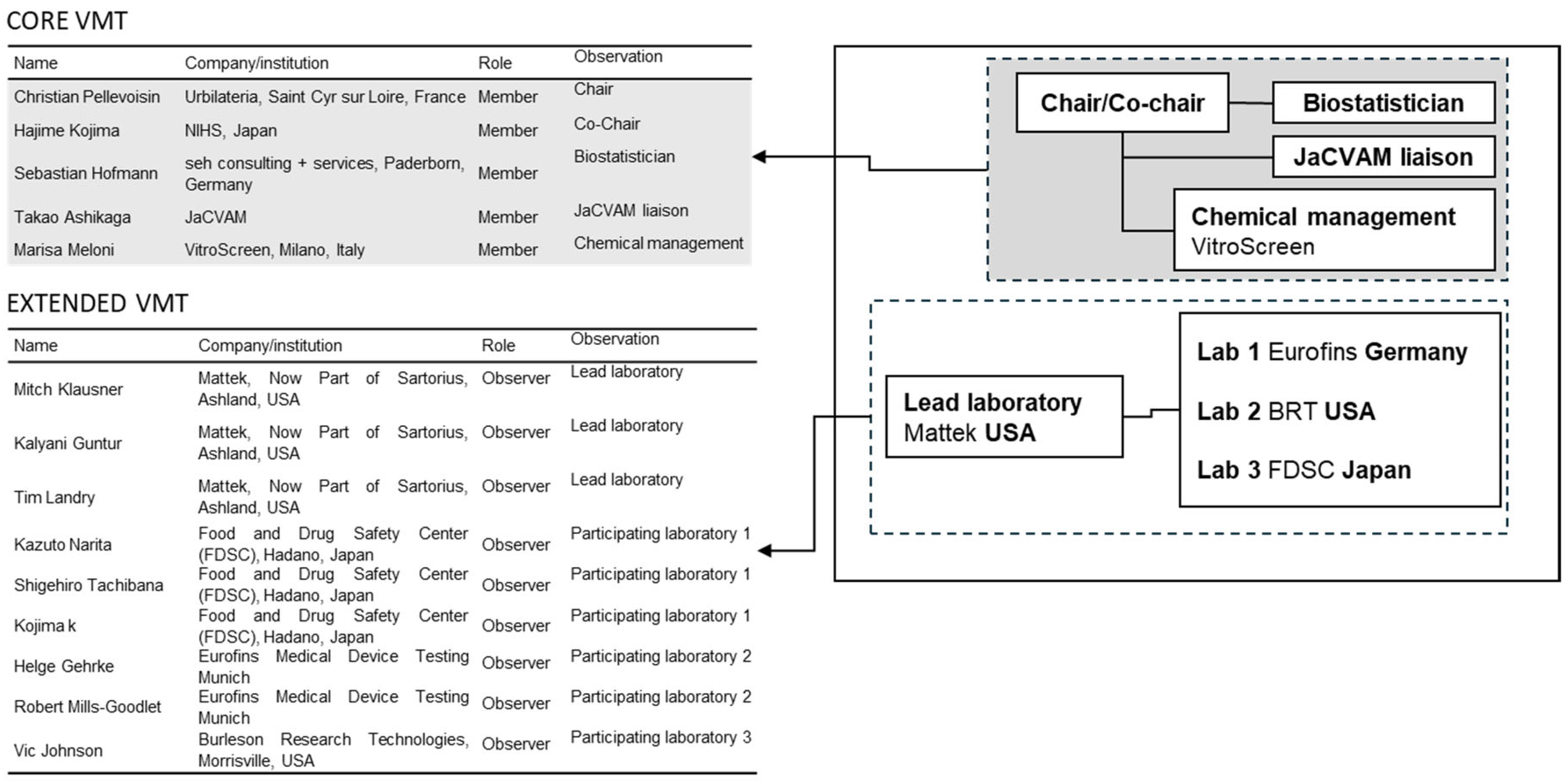
2.1. Study Design and Organization
2.2. Participating Laboratories
2.3. Test Chemicals
2.4. Reconstructed Human Epidermis Model: EpiDermTM
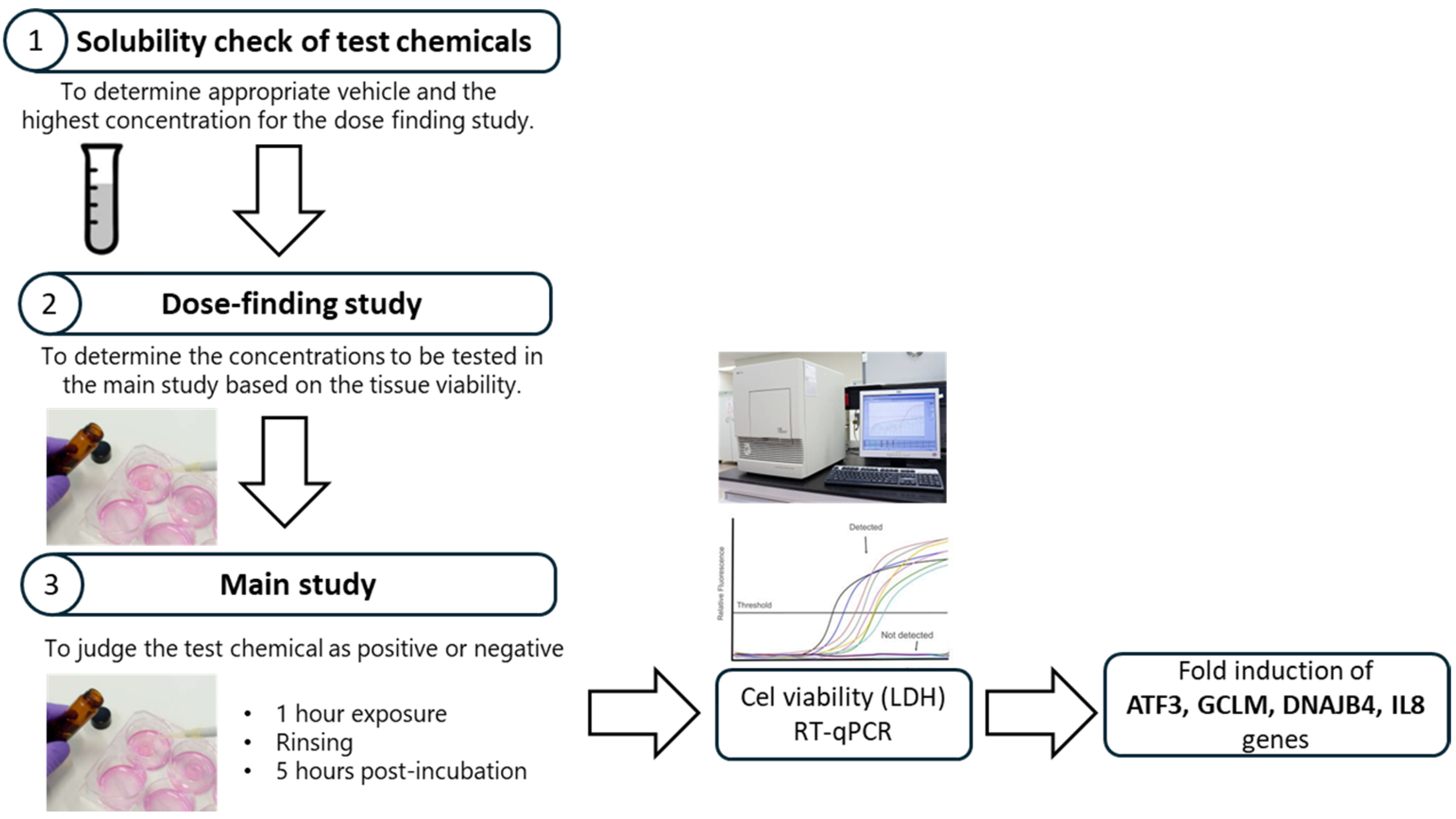
2.5. Chemical Solubility Assessment
2.6. Dose-Finding Study
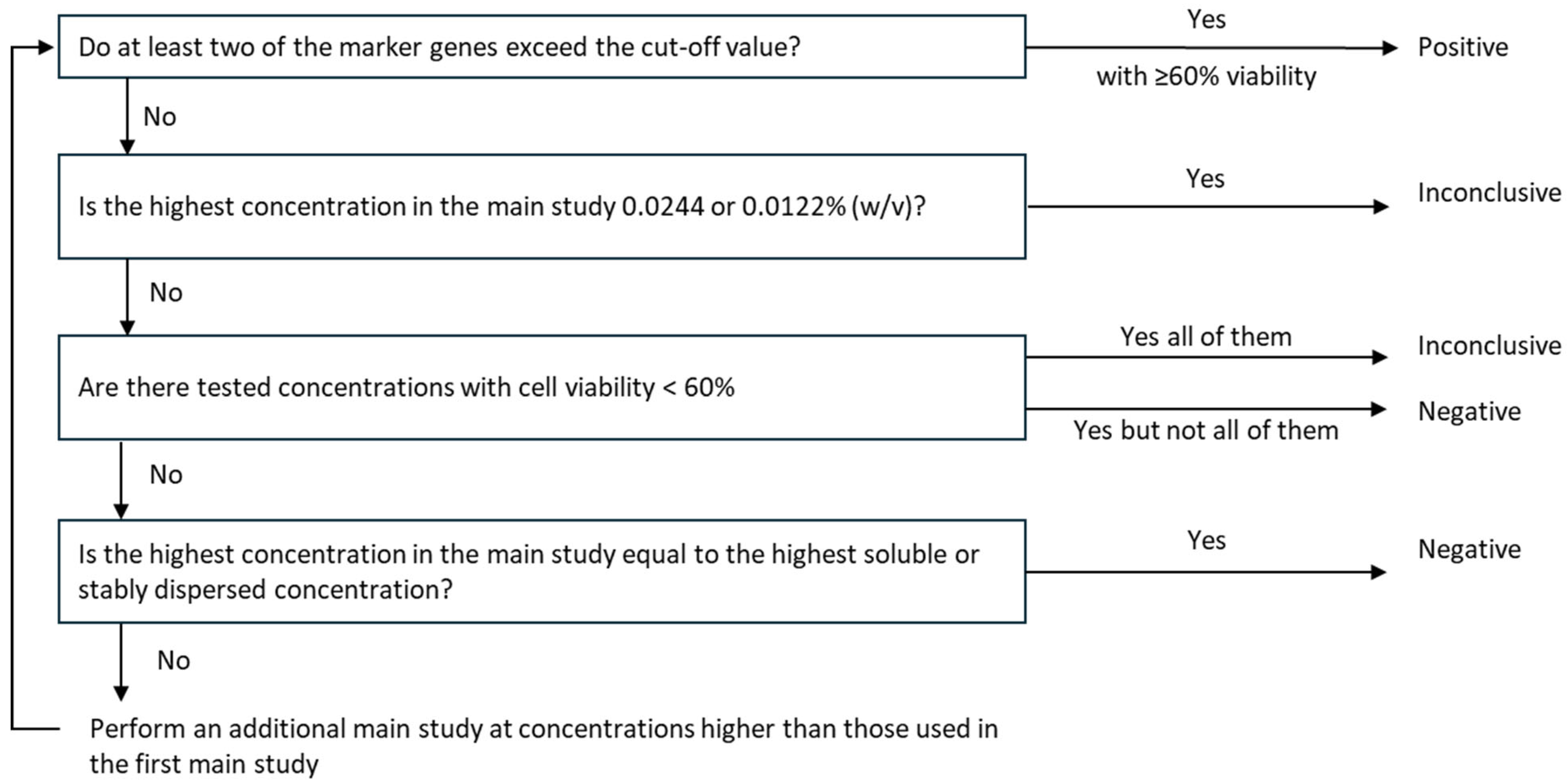
2.7. Main Study
- The tissue viability of at least two of the tissues exposed to the vehicle control was ≥95%.
- The mean tissue viability of both positive controls was ≥80%.
- For the positive control 1.56 w/v% clotrimazole, the mean values of fold induction for ATF3 and IL-8 exceeded the cut-off value.
- For the positive control 0.10 w/v% 4NBB, the mean values of fold induction for GCLM and DNAJB4 exceeded the cut-off value.
2.8. Statistical Analysis
3. Results
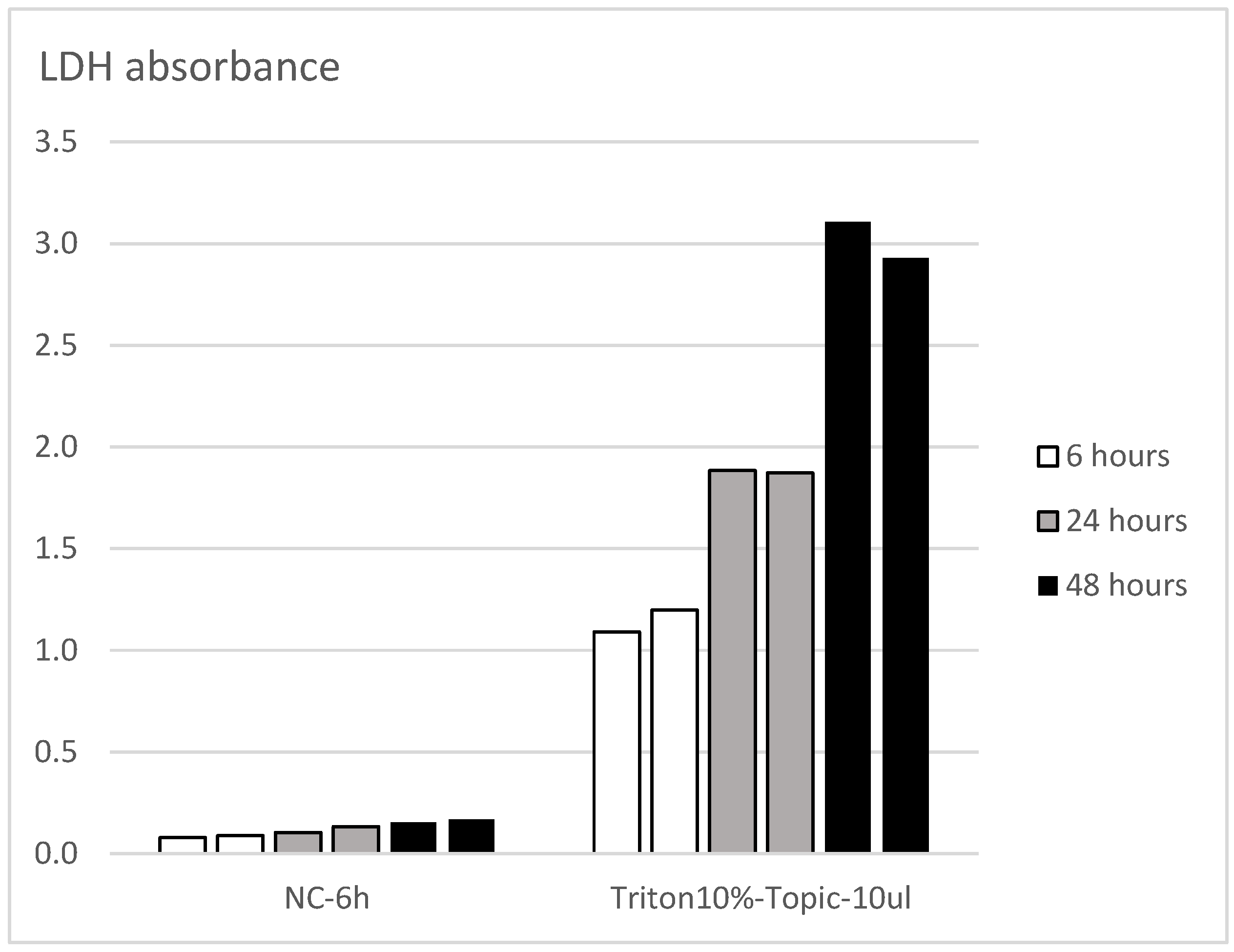
3.1. Adaptation of the SOP to the EpiDerm™ Model
3.2. Similar Method Validation Study
3.3. Applicability of the Test Method
4. Discussion
5. Conclusions
Supplementary Materials
Author Contributions
Funding
Institutional Review Board Statement
Informed Consent Statement
Data Availability Statement
Acknowledgments
Conflicts of Interest
Abbreviations
| 2D | 2-dimensional |
| 4NBB | 4-Nitrobenzyl bromide |
| AOO | acetone:olive oil (20% v/v olive oil in acetone) |
| AOP | adverse outcome pathway |
| AP-1 | activator protein-1 |
| ATF3 | Activating Transcription Factor 3 |
| BLR | between-laboratory reproducibility |
| BRT | Burleson Research Technologies, Inc. |
| Ct | Cycle threshold |
| DA | Defined Approach |
| DNAJB4 | DnaJ homolog subfamily B member 4 |
| DPBS | Dulbecco’s Phosphate-Buffered Saline |
| DW | distilled water |
| EtOH | ethanol |
| FDSC | Food and Drug Safety Center |
| GAPDH | Glyceraldehyde-3-phosphate dehydrogenase |
| GARD | Genome Allergen Rapid Detection |
| GCLM | Glutamate-Cysteine Ligase Modifier subunit |
| h-CLAT | human cell line activation test |
| HSF-1/HSE | heat shock transcription factor-1/heat shock factor response element |
| IATA | Integrated Approaches to Testing and Assessment |
| IL-8 | Interleuikin-8 |
| IL-8 Luc | Interleukin-8 Reporter Gene Assay |
| ITS | Integrated Testing Strategy |
| KE | key event |
| LDH | lactate dehydrogenase |
| LLNA | Local Lymph Node Assay |
| LogP | logarithm of the Octanol-Water Partition Coefficient |
| MTT | 3-[4,5-dimethylthiazol-2-yl]-2,5 diphenyl tetrazolium bromide |
| Nrf2/ARE | nuclear factor E2-related factor 2/antioxidant response element |
| OECD | Organisation for Economic Co-operation and Development |
| PS | Performance Standard |
| RhE | reconstructed human epidermis |
| RNA | ribonucleic acid |
| RT-qPCR | quantitative real-time polymerase chain reaction |
| SOP | Standard Operating Procedure |
| TG | test guideline |
| U-SENS™ | U937 Cell Line Activation Test |
| VMT | Validation Management Team |
| VRM | Validated Reference Method |
| WLR | within-laboratory reproducibility |
| Δabs | change in absorbance |
References
- OECD. The Adverse Outcome Pathway for Skin Sensitisation Initiated by Covalent Binding to Proteins; OECD Series on Testing and Assessment, No. 168; OECD Publishing: Paris, France, 2012. [Google Scholar]
- OECD. Test No. 442C: In Chemico Skin Sensitisation: Assays Addressing the Adverse Outcome Pathway Key Event on Covalent Binding to Proteins; OECD Guidelines for the Testing of Chemicals, Section 4; OECD Publishing: Paris, France, 2025. [Google Scholar] [CrossRef] [Scilit]
- OECD. Test No. 442D: In Vitro Skin Sensitisation: Assays Addressing the Adverse Outcome Pathway Key Event on Keratinocyte Activation; OECD Guidelines for the Testing of Chemicals, Section 4; OECD Publishing: Paris, France, 2024. [Google Scholar] [CrossRef] [Scilit]
- OECD. Test No. 442E: In Vitro Skin Sensitisation: In Vitro Skin Sensitisation Assays Addressing the Key Event on Activation of Dendritic Cells on the Adverse Outcome Pathway for Skin Sensitisation; OECD Guidelines for the Testing of Chemicals, Section 4; OECD Publishing: Paris, France, 2024. [Google Scholar] [CrossRef] [Scilit]
- OECD. Test Guideline No. 497: Defined Approaches on Skin Sensitisation; OECD Guidelines for the Testing of Chemicals, Section 4; OECD Publishing: Paris, France, 2014. [Google Scholar]
- Mizumachi, H.; Watanabe, M.; Ikezumi, M.; Kajiwara, M.; Yasuda, M.; Mizuno, M.; Imai, N.; Sakuma, M.; Shibata, M.; Watanabe, S.I.; et al. The inter-laboratory validation study of EpiSensA for predicting skin sensitization potential. J. Appl. Toxicol. 2024, 44, 510–525. [Google Scholar] [CrossRef] [Scilit] [PubMed]
- Saito, K.; Takenouchi, O.; Nukada, Y.; Miyazawa, M.; Sakaguchi, H. An in vitro skin sensitization assay termed EpiSensA for broad sets of chemicals including lipophilic chemicals and pre/pro-haptens. Toxicol. Vitr. 2017, 40, 11–25. [Google Scholar] [CrossRef] [Scilit] [PubMed]
- Faller, C.; Bracher, M.; Dami, N.; Roguet, R. Predictive ability of reconstructed human epidermis equivalents for the assessment of skin irritation of cosmetics. Toxicol. Vitr. 2002, 16, 557–572. [Google Scholar] [CrossRef] [Scilit] [PubMed]
- Saito, K.; Nukada, Y.; Takenouchi, O.; Miyazawa, M.; Sakaguchi, H.; Nishiyama, N. Development of a new in vitro skin sensitization assay (Epidermal Sensitization Assay; EpiSensA) using reconstructed human epidermis. Toxicol. Vitr. 2013, 27, 2213–2224. [Google Scholar] [CrossRef] [Scilit] [PubMed]
- Mizumachi, H.; Sakuma, M.; Ikezumi, M.; Saito, K.; Takeyoshi, M.; Imai, N.; Okutomi, H.; Umetsu, A.; Motohashi, H.; Watanabe, M.; et al. Transferability and within- and between-laboratory reproducibilities of EpiSensA for predicting skin sensitization potential in vitro: A ring study in three laboratories. J. Appl. Toxicol. 2018, 38, 1234–1245. [Google Scholar] [CrossRef] [Scilit] [PubMed]
- OECD. Performance Standards for the Assessment of Proposed Similar or Modified In Vitro Epidermal Sensitisation Assay (EpiSensA) Test Methods; OECD Series on Testing and Assessment, No. 396; OECD Publishing: Paris, France, 2024. [Google Scholar] [CrossRef] [Scilit]
- Cannon, C.L.; Neal, P.J.; Southee, J.A.; Kubilus, J.; Klausner, M. New epidermal model for dermal irritancy testing. Toxicol. Vitr. 1994, 8, 889–891. [Google Scholar] [CrossRef] [Scilit] [PubMed]
- OECD. ANNEX 5: Impact of Log P on the Performance of In Chemico/In Vitro Assays and ITSV1, ITSV2, 2O3 Defined Approach on Skin Sensitization; OECD Series on Testing and Assessment, No. 336; OECD Publishing: Paris, France, 2021; Available online: https://one.oecd.org/document/ENV/CBC/MONO(2021)11/ann5/en/pdf (accessed on 25 March 2026).
- Natsch, A.; Kleinstreuer, N.; Asturiol, D. Reduced specificity for the local lymph node assay for lipophilic chemicals: Implications for the validation of new approach methods for skin sensitization. Regul. Toxicol. Pharmacol. 2023, 138, 105333. [Google Scholar] [CrossRef] [Scilit] [PubMed]
- Brinkmann, J.; Stolpmann, K.; Trappe, S.; Otter, T.; Genkinger, D.; Bock, U.; Liebsch, M.; Henkler, F.; Hutzler, C.; Luch, A. Metabolically competent human skin models: Activation and genotoxicity of benzo[a]pyrene. Toxicol. Sci. 2013, 1, 351–369. [Google Scholar] [CrossRef] [Scilit] [PubMed]
- van Eijl, S.; Zhu, Z.; Cupitt, J.; Gierula, M.; Götz, C.; Fritsche, E.; Edwards, R.J. Elucidation of xenobiotic metabolism pathways in human skin and human skin models by proteomic profiling. PLoS ONE 2012, 7, e41721. [Google Scholar] [CrossRef] [Scilit] [PubMed]
- OECD. Epidermal Sensitisation Assay (EpiSensA) Validation Study Report; OECD Series on Testing and Assessment, No. 384; OECD Publishing: Paris, France, 2023. [Google Scholar]
- Ohara, H.; Saito, R.; Hirakawa, S.; Shimada, M.; Mano, N.; Okuyama, R.; Aiba, S. Gene expression profiling defines the role of ATP-exposed keratinocytes in skin inflammation. J. Dermatol. Sci. 2010, 58, 143–151. [Google Scholar] [CrossRef] [Scilit] [PubMed]
- Gilchrist, M.; Thorsson, V.; Li, B.; Rust, A.G.; Korb, M.; Roach, J.C.; Kennedy, K.; Hai, T.; Bolouri, H.; Aderem, A. Systems biology approaches identify ATF3 as a negative regulator of Toll-like receptor 4. Nature 2006, 441, 173–178. [Google Scholar] [CrossRef] [Scilit] [PubMed]
- Hoffmann, E.; Dittrich-Breiholz, O.; Holtmann, H.; Kracht, M. Multiple control of interleukin-8 gene expression. J. Leukoc. Biol. 2002, 72, 847–855. [Google Scholar] [CrossRef] [Scilit] [PubMed]
- Qiu, X.B.; Shao, Y.M.; Miao, S.; Wang, L. The diversity of the DnaJ/Hsp40 family: The crucial partners for Hsp70 chaperones. Cell. Mol. Life Sci. 2006, 63, 2560–2570. [Google Scholar] [CrossRef] [Scilit] [PubMed]
- Lu, S.C. Glutathione synthesis. Biochim. Biophys. Acta 2013, 1830, 3143–3153. [Google Scholar] [CrossRef] [Scilit] [PubMed]
- Satoh, T.; Rezaie, T.; Seki, M.; Sunico, C.R.; Tabuchi, T.; Kitagawa, T.; Yanagitai, M.; Senzaki, M.; Kosegawa, C.; Taira, H.; et al. Dual neuroprotective pathways of a pro-electrophilic compound via HSF-1-activated heat-shock proteins and Nrf2-activated phase 2 antioxidant response enzymes. J. Neurochem. 2011, 119, 569–578. [Google Scholar] [CrossRef] [Scilit] [PubMed]
- OECD. Test No. 439: In Vitro Skin Irritation: Reconstructed Human Epidermis Test Method; OECD Guidelines for the Testing of Chemicals, Section 4; OECD Publishing: Paris, France, 2025. [Google Scholar] [CrossRef] [Scilit]
- Hendriks, G.; Derr, R.S.; Misovic, B.; Morolli, B.; Calléja, F.M.; Vrieling, H. The Extended ToxTracker Assay Discriminates Between Induction of DNA Damage, Oxidative Stress, and Protein Misfolding. Toxicol. Sci. 2016, 150, 190–203. [Google Scholar] [CrossRef] [Scilit] [PubMed] [PubMed Central]
- Thienpont, A.; Cho, E.; Williams, A.; Meier, M.J.; Yauk, C.L.; Rogiers, V.; Vanhaecke, T.; Mertens, B. Unlocking the Power of Transcriptomic Biomarkers in Qualitative and Quantitative Genotoxicity Assessment of Chemicals. Chem. Res. Toxicol. 2024, 37, 465–475. [Google Scholar] [CrossRef] [Scilit] [PubMed] [PubMed Central]
- OECD. Guidance Document No. 34 on the Validation and International Acceptance of New or Updated Test Methods for Hazard Assessment; OECD Series on Testing and Assessment, No. 34; OECD Publishing: Paris, France, 2016. [Google Scholar]



| No. | Proficiency Substances | CAS No. | Physical State | In Vivo Prediction 1 | LogP | Pre/Pro-Hapten | Vehicle 2 | VRM Prediction |
|---|---|---|---|---|---|---|---|---|
| 1 | 2,4-Dinitrochlorobenzene | 97-00-7 | Solid | Sensitizer (GHS Cat.1A) | 2.17 | AOO | Positive | |
| 2 | p-Phenylenediamine | 106-50-3 | Solid | Sensitizer (GHS Cat.1A) | −0.3 | X | AOO | Positive |
| 3 | Metol | 55-55-0 | Solid | Sensitizer (GHS Cat.1A) | 0.63 | X | DW | Positive |
| 4 | Tetrachloro-salicylanilide | 1154-59-2 | Solid | Sensitizer (GHS Cat.1A) | 5.87 | AOO | Positive | |
| 5 | Lauryl galate | 1166-52-5 | Solid | Sensitizer (GHS Cat.1A) | 6.9 | X | AOO | Negative |
| 6 | Methyl heptine carbonate | 111-12-6 | Liquid | Sensitizer (GHS Cat.1A) | 2.79 | AOO | Positive | |
| 7 | Isoeugenol | 97-54-1 | Liquid | Sensitizer (GHS Cat.1A) | 3.04 | X | AOO | Positive |
| 8 | Glyoxal 40% solution in water | 107-22-2 | Liquid | Sensitizer (GHS Cat. 1A | −0.08 | DW | Positive | |
| 9 | Abietic acid | 514-10-3 | Solid | Sensitizer (GHS Cat.1B) | 3.92 | X | AOO | Positive |
| 10 | Dibutyl aniline | 613-29-6 | Liquid | Sensitizer (GHS Cat.1B) | 4.7 | X | AOO | Positive |
| 11 | Amyl cinnamic aldehyde | 122-40-7 | Liquid | Sensitizer (GHS Cat.1B) | 3.99 | AOO | Positive | |
| 12 | Benzisothiazolinone | 2634-33-5 | Solid | Sensitizer (GHS Cat.1B) | 0.8 | AOO | Positive 4 | |
| 13 | Imidazolidinyl urea | 39236-46-9 | Solid | Sensitizer (GHS Cat.1B) | −0.86 | DW | Positive | |
| 14 | Farnesol | 4602-84-0 | Liquid | Sensitizer (GHS Cat.1B) | 4.91 | AOO | Positive | |
| 15 | Cetrimide | 57-09-0 | Solid | Non-sensitizer (Not classified) | 3.18 | 50% EtOH | Negative | |
| 16 | Lactic acid 3 | 50-21-5 | Liquid | Non-sensitizer (Not classified) | −0.72 | DW | Negative | |
| 17 | Benzyl butyl phthalate | 85-68-7 | Liquid | Non-sensitizer (Not classified) | 4.84 | AOO | Negative | |
| 18 | Diethyl phthalate | 84-66-2 | Liquid | Non-sensitizer (Not classified) | 2.44 | AOO | Positive | |
| 19 | Hexane | 110-54-3 | Liquid | Non-sensitizer (Not classified) | 3.9 | AOO | Negative | |
| 20 | 1-Iodehexane | 638-45-9 | Liquid | Non-sensitizer (Not classified) | 3.99 | AOO | Positive |
| Essential Test Method Component | VRM (EpiSensA) | Epi2SensA | Key Difference and Rationale |
|---|---|---|---|
| Reconstructed Human Epidermis (RhE) Model | LabCyte EPI-MODEL24. | EpiDerm (EPI-200). | Different model. This was the fundamental difference requiring subsequent protocol adjustments. |
| Marker Genes | Quantifies expression of ATF3, GCLM, DNAJB4, and IL-8. | Quantifies expression of ATF3, GCLM, DNAJB4, and IL-8. | Identical. Both methods target the same four mechanistically relevant genes associated with keratinocyte activation. |
| Gene Cut-off Values | ATF3 > 15-fold; GCLM > 2-fold; DNAJB4 > 2-fold; IL-8 > 4-fold. | ATF3 > 15-fold; GCLM > 2-fold; DNAJB4 > 2-fold; IL-8 > 4-fold. | Identical. The gene-specific induction thresholds were retained. |
| Cytotoxicity Viability Threshold | Must maintain cell viability > 80% for acceptable test concentration results. | Must maintain cell viability > 60% for acceptable test concentration results. | Modified criterion. The threshold was reduced from 80% to 60% based on preliminary data showing the LDH assay overestimated cytotoxicity for EpiDerm compared to the MTT assay and to enhance test reproducibility. |
| Prediction Model (Positive Result) | Prediction is positive if at least one marker gene exceeds its cut-off (Imax) at an accepted concentration. | Prediction is positive if at least two marker genes exceed their respective cut-off values (Imax) at an accepted concentration. | Modified criterion. The requirement was increased to two positive genes to enhance robustness, a modification common when using different tissue models in similar method validation. |
| Exposure Time | 6 h. | 1 h topical exposure followed by a 5 h post-incubation period. | Modified procedure. The exposure duration was shortened to 1 h to reduce unexpected cytotoxicity observed with the EpiDerm model, while maintaining the 6 h time point for gene expression measurement. |
| Application Volume | 5 μL applied to the epidermis surface. | 10 μL applied to the epidermis surface. | Modified procedure. The volume was doubled because the surface area of the EpiDerm model (0.63 cm2 is roughly double that of the LabCyte model (0.32 cm2) thus maintaining a similar volume/surface ratio. |
| Positive Control (Clotrimazole) | 0.78% (w/v). | 1.56% (w/v). | Modified procedure. The concentration was increased to ensure the run acceptance criteria were consistently met for ATF3 and IL-8 fold induction, as 0.78% led to a 40% failure rate in preliminary Epi2SensA runs. |
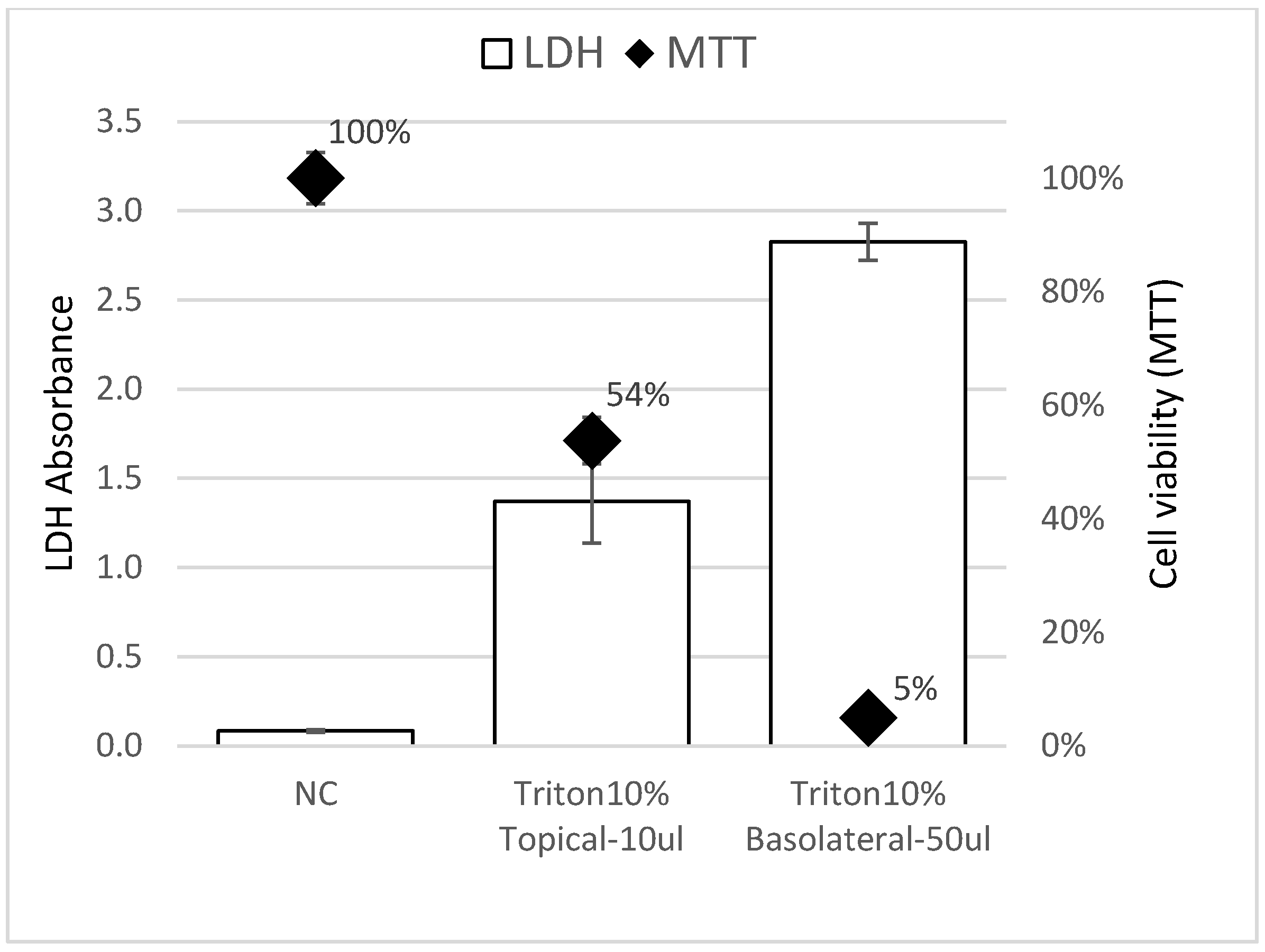
| Killed Control Method | 10 μL of 10% Triton X-100 applied topically. | 50 μL of 10% Triton X-100 applied in the culture medium. | Modified procedure. Changed the volume and application to ensure complete tissue death with maximum LDH release for the EpiDerm model. |
| Acceptance Criterion | Average Original VRM | Average Modified Epi2SensA | Mattek | Eurofins | BRT | ||||
|---|---|---|---|---|---|---|---|---|---|
| Original VRM | Modified Epi2SensA | Original VRM | Modified Epi2SensA | Original VRM | Modified Epi2SensA | ||||
| WLR | ≥80% | 63.9% | 83.3% | 66.7% (8/12) | 91.7% (11/12) | 58.3% (8/12) | 83.3% (10/12) | 66.7% (8/12) | 75.0% (9/12) |
| BLR | ≥80% | 70% | 85% | Original VRM: 70% | Modified Epi2SensA: 85% | ||||
| Specificity | ≥65% | 66.6% | 88.9% | 66.7% (4/6) | 100% (6/6) | 83.3% (5/6) | 83.3% (5/6) | 50.0% (3/6) | 83.3% (5/6) |
| Sensitivity | ≥85% | 90.5% | 88.1% | 92.9% (13/14) | 92.9% (13/14) | 85.7% (12/14) | 78.6% (11/14) | 92.9% (13/14) | 92.9% (13/14) |
| Accuracy | ≥85% | 83.3% | 88.3% | 85.0% (17/20) | 95.0% (18/20) | 85.0% (17/20) | 80.0% (16/20) | 80.0% (16/20) | 90.0% (18/20) |
| Chemical | CAS | Log P | Pre/Pro-Hapten | Classification UN GHS In Vivo | VRM Classification | Epi2SensA Classification |
|---|---|---|---|---|---|---|
| 2,4-Dinitrochlorobenzene | 97-00-7 | 2.17 | UN GHS Cat. 1A | Sensitizer | Sensitizer | |
| p-Phenylenediamine | 106-50-3 | −0.39 | Pre | UN GHS Cat. 1A | Sensitizer | Sensitizer |
| Metol | 55-55-0 | 0.63 | Pre/Pro | UN GHS Cat. 1A | Sensitizer | Sensitizer |
| Tetrachlorosalicylanilide | 1154-59-2 | 5.87 | UN GHS Cat. 1A | Sensitizer | Sensitizer | |
| Lauryl gallate | 1166-52-5 | 6.9 | Pre | UN GHS Cat. 1A | Non-sensitizer | Non-sensitizer |
| Methyl heptine carbonate | 111-12-6 | 2.79 | UN GHS Cat. 1A | Sensitizer | Sensitizer | |
| Isoeugenol | 97-54-1 | 3.04 | Pre/Pro | UN GHS Cat. 1B | Sensitizer | Sensitizer |
| Glyoxal | 107-22-2 | −0.08 | UN GHS Cat. 1A | Sensitizer | Sensitizer | |
| Abietic acid | 514-10-3 | 3.92 | Pre | UN GHS Cat. 1B | Sensitizer | Sensitizer |
| Dibutyl aniline | 613-29-6 | 4.7 | Pro | UN GHS Cat. 1B | Sensitizer | Sensitizer |
| Amyl cinnamic aldehyde | 122-40-7 | 3.99 | UN GHS Cat. 1B | Sensitizer | Sensitizer | |
| Benzisothiazolinone | 2634-33-5 | 0.8 | UN GHS Cat. 1B | Sensitizer | Sensitizer | |
| Imidazolidinyl urea | 39236-46-9 | −0.86 | UN GHS Cat. 1B | Sensitizer | Sensitizer | |
| Farnesol | 4602-84-0 | 4.91 | UN GHS Cat. 1B | Sensitizer | Sensitizer | |
| Cetrimide | 57-09-0 | 3.18 | Not classified | Non-sensitizer | Non-sensitizer | |
| Lactic acid | 50-21-5 | −0.72 | Not classified | Non-sensitizer | Non-sensitizer | |
| Benzyl butyl phthalate | 85-68-7 | 4.84 | Not classified | Non-sensitizer | Non-sensitizer | |
| Diethyl phthalate | 84-66-2 | 2.44 | Not classified | Sensitizer | Non-sensitizer | |
| Hexane | 110-54-3 | 3.9 | Not classified | Non-sensitizer | Non-sensitizer | |
| 1-Iodehexane | 638-45-9 | 3.99 | Not classified | Sensitizer | Sensitizer |
Disclaimer/Publisher’s Note: The statements, opinions and data contained in all publications are solely those of the individual author(s) and contributor(s) and not of MDPI and/or the editor(s). MDPI and/or the editor(s) disclaim responsibility for any injury to people or property resulting from any ideas, methods, instructions or products referred to in the content. |
© 2026 by the authors. Licensee MDPI, Basel, Switzerland. This article is an open access article distributed under the terms and conditions of the Creative Commons Attribution (CC BY) license.
Share and Cite
Pellevoisin, C.; Kojima, H.; Hoffmann, S.; Ashikaga, T.; Landry, T.; Romero, C.; Guntur, K.; Klausner, M.; Stadnicki, J.; Gehrke, H.; et al. Validation of the Epi2SensA Method Using the EpiDerm™ Model for Skin Sensitization Testing Under OECD TG442D. Toxics 2026, 14, 295. https://doi.org/10.3390/toxics14040295
Pellevoisin C, Kojima H, Hoffmann S, Ashikaga T, Landry T, Romero C, Guntur K, Klausner M, Stadnicki J, Gehrke H, et al. Validation of the Epi2SensA Method Using the EpiDerm™ Model for Skin Sensitization Testing Under OECD TG442D. Toxics. 2026; 14(4):295. https://doi.org/10.3390/toxics14040295
Chicago/Turabian StylePellevoisin, Christian, Hajime Kojima, Sebastian Hoffmann, Takao Ashikaga, Timothy Landry, Celina Romero, Kalyani Guntur, Mitchell Klausner, Jennifer Stadnicki, Helge Gehrke, and et al. 2026. "Validation of the Epi2SensA Method Using the EpiDerm™ Model for Skin Sensitization Testing Under OECD TG442D" Toxics 14, no. 4: 295. https://doi.org/10.3390/toxics14040295
APA StylePellevoisin, C., Kojima, H., Hoffmann, S., Ashikaga, T., Landry, T., Romero, C., Guntur, K., Klausner, M., Stadnicki, J., Gehrke, H., Mills-Goodlet, R., Panousi, N., Johnson, V. J., Burleson, G. R., Narita, K., Tachibana, S., Kojima, K., Markus, J., & Armento, A. (2026). Validation of the Epi2SensA Method Using the EpiDerm™ Model for Skin Sensitization Testing Under OECD TG442D. Toxics, 14(4), 295. https://doi.org/10.3390/toxics14040295