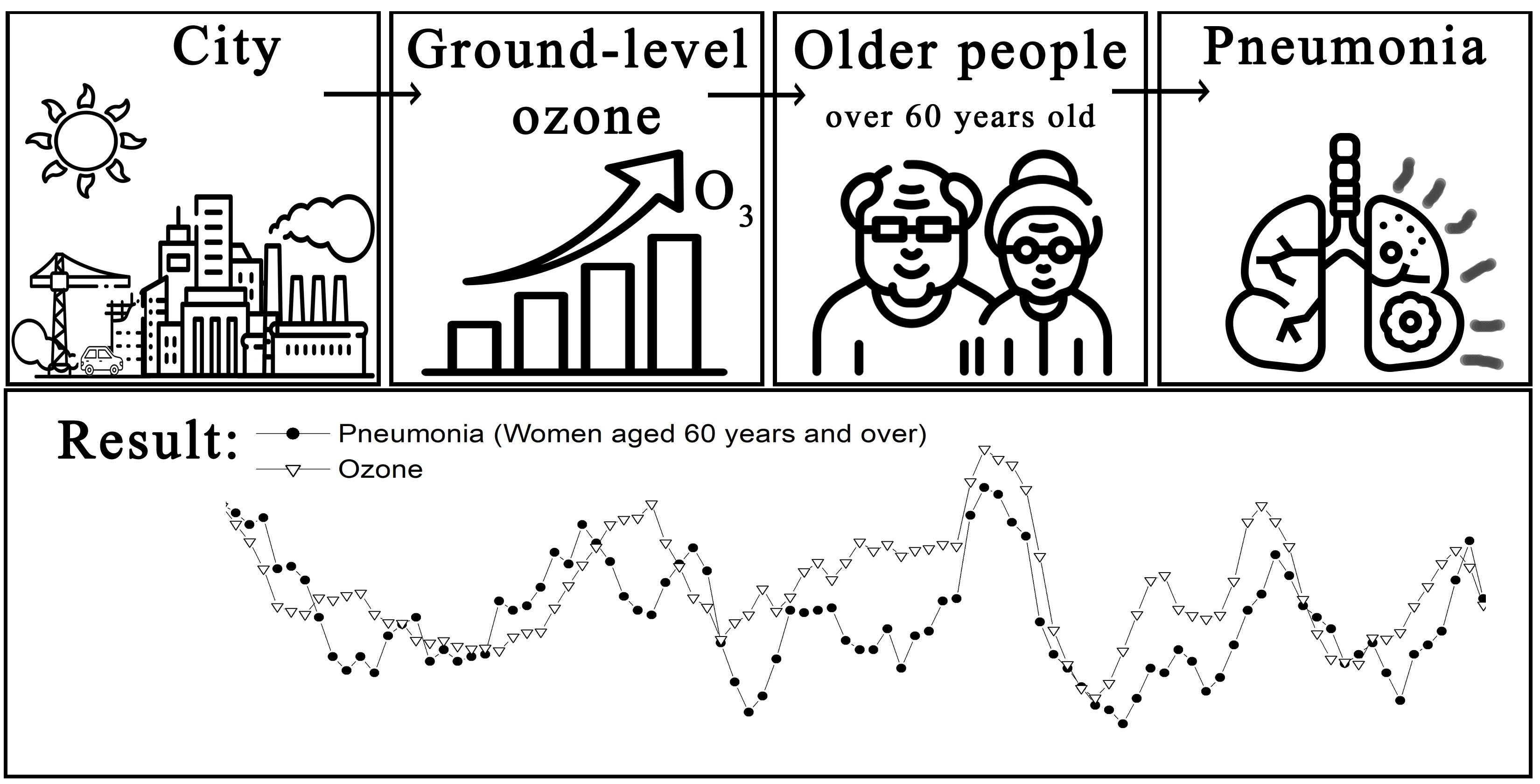

Ground-Level Ozone as Community-Acquired Pneumonia Risk Factor in Different Population Groups in Summer: The Case of Moscow


Abstract
1. Introduction
2. Materials and Methods
3. Results
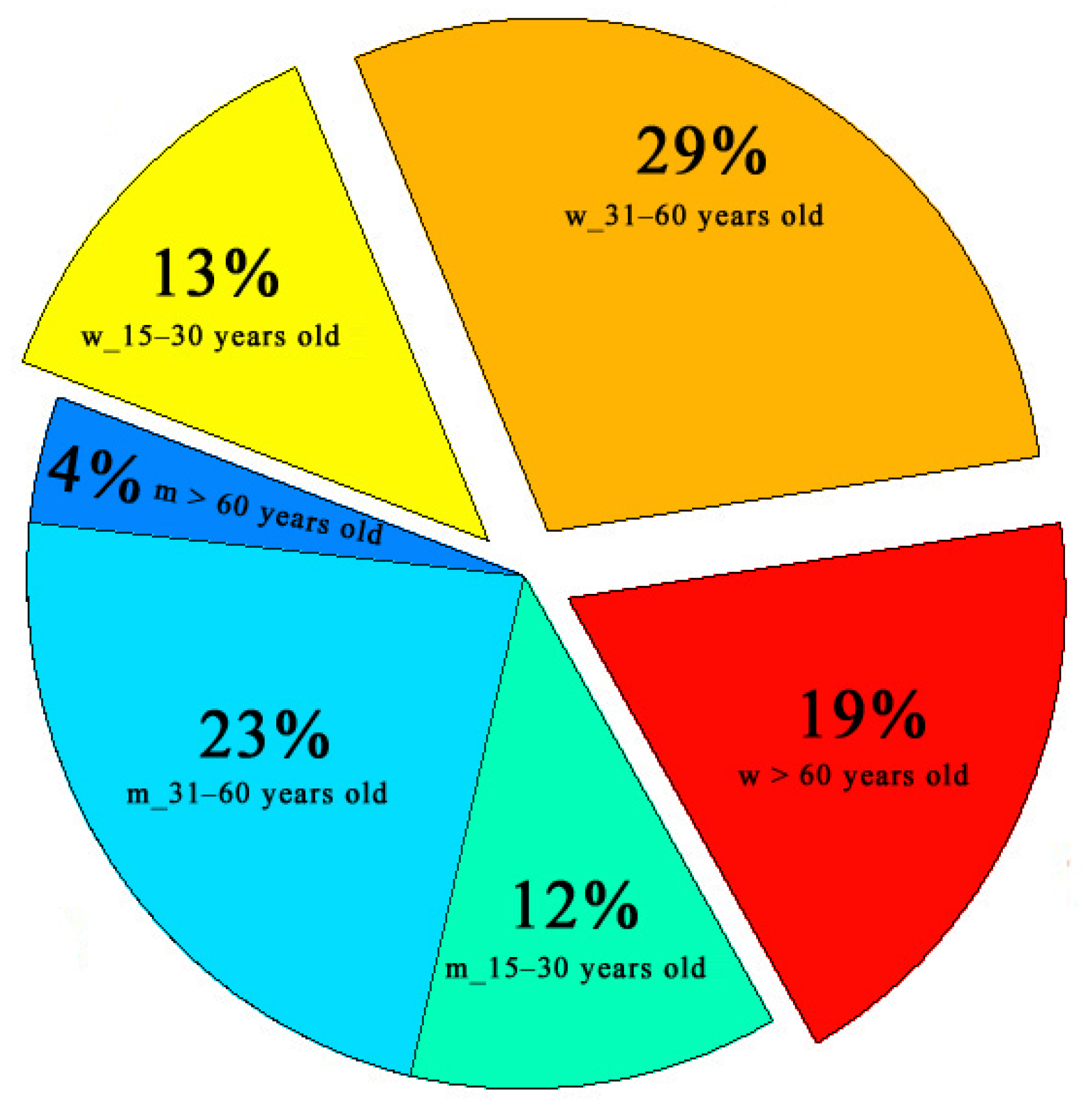
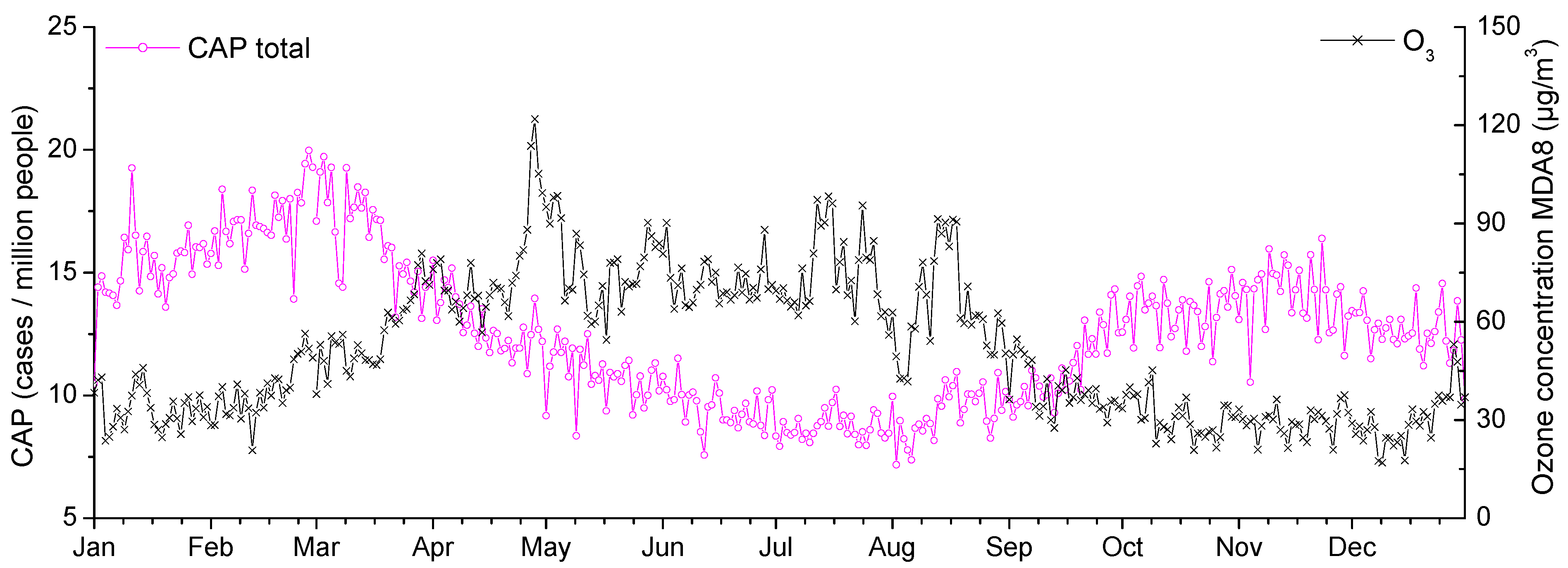
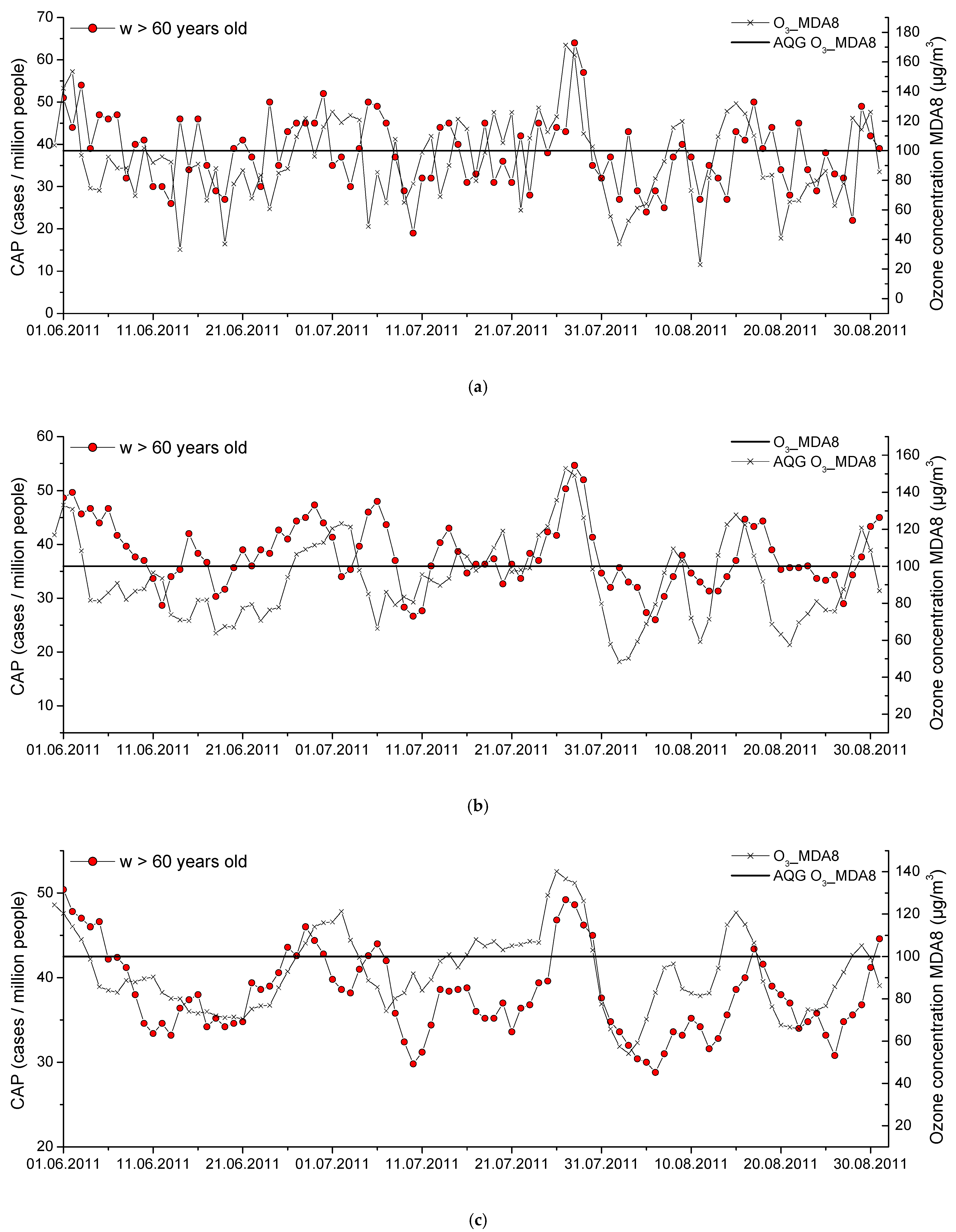
3.1. Characterization of the Period and Population Groups Under Study
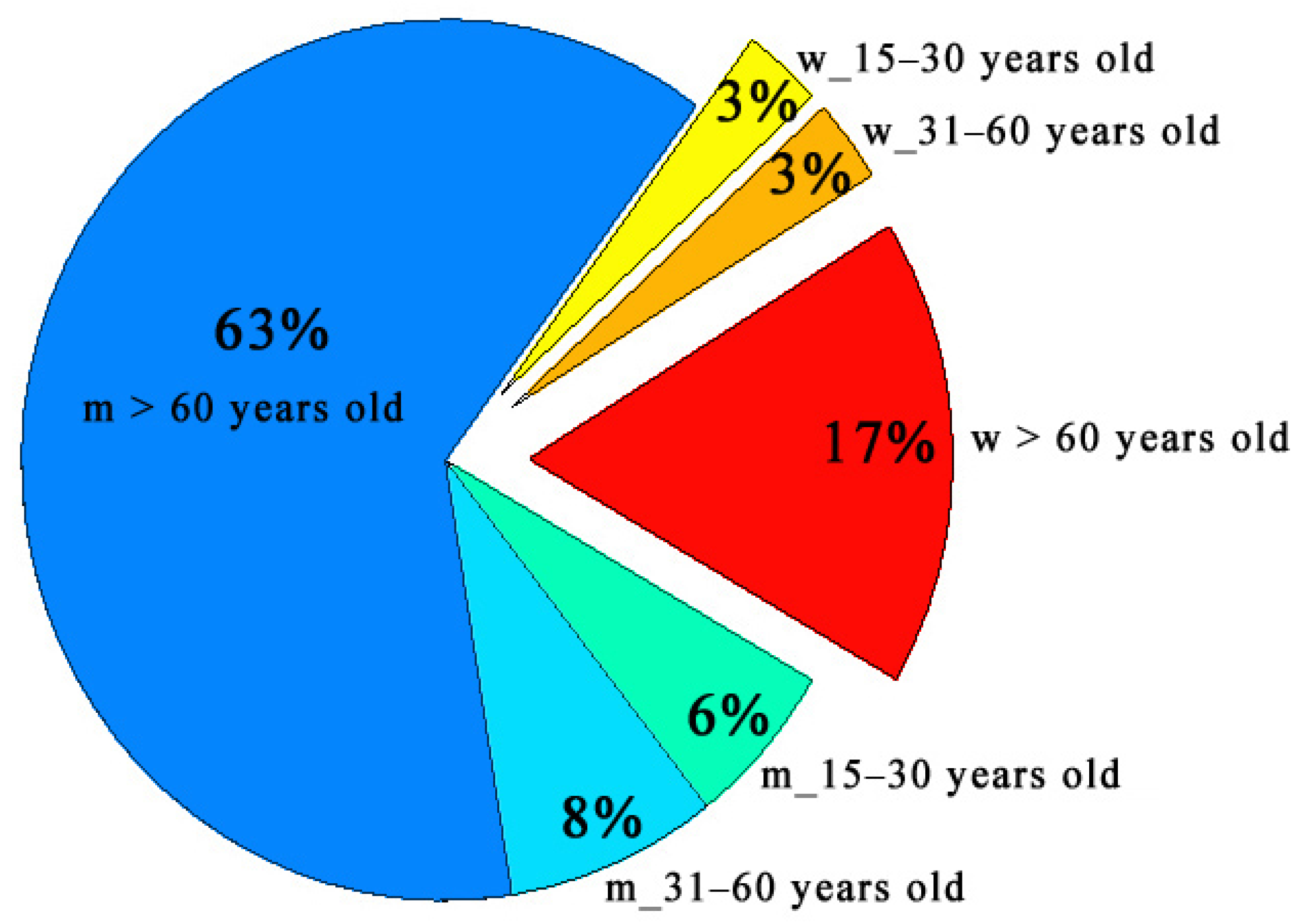
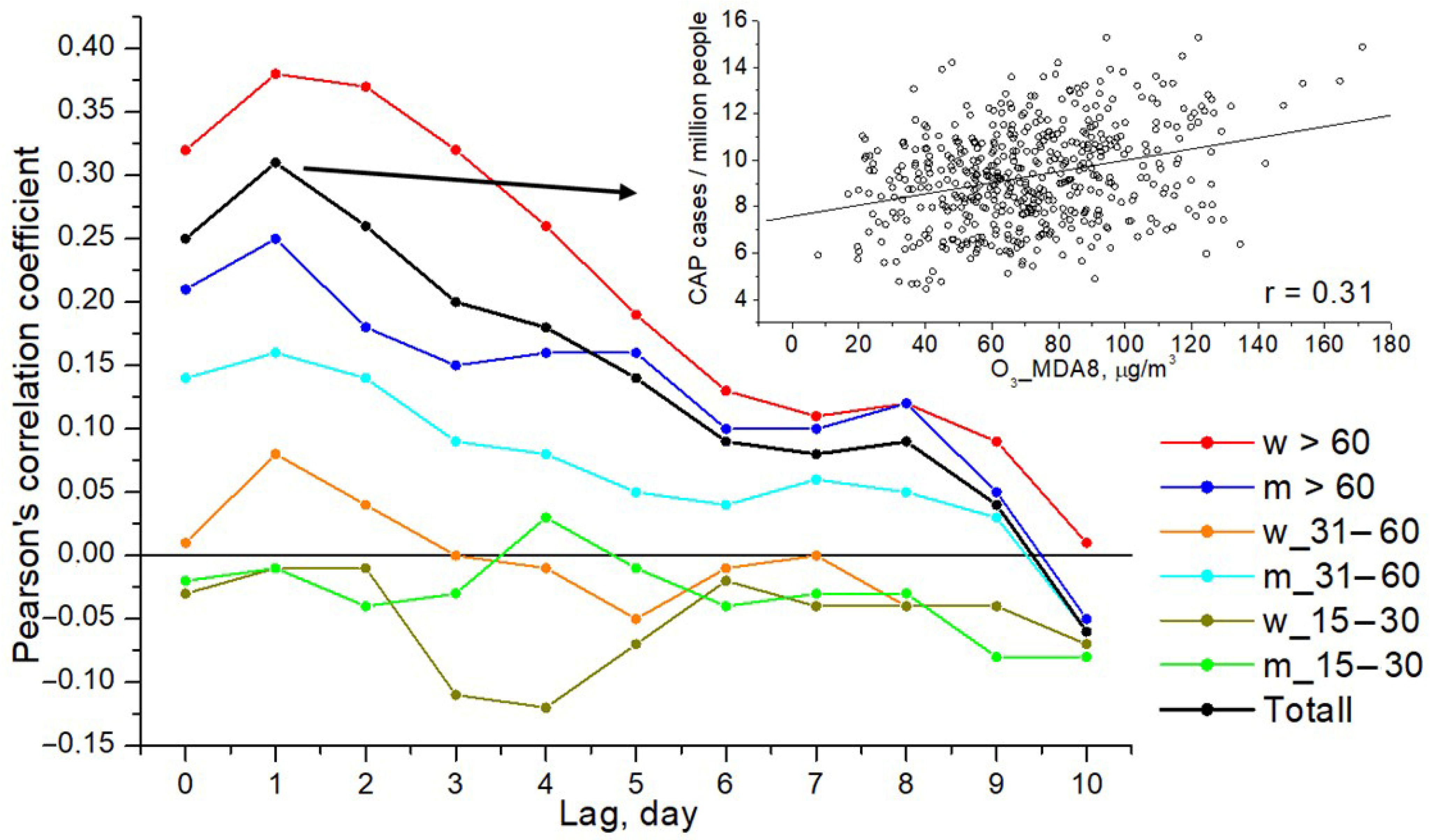
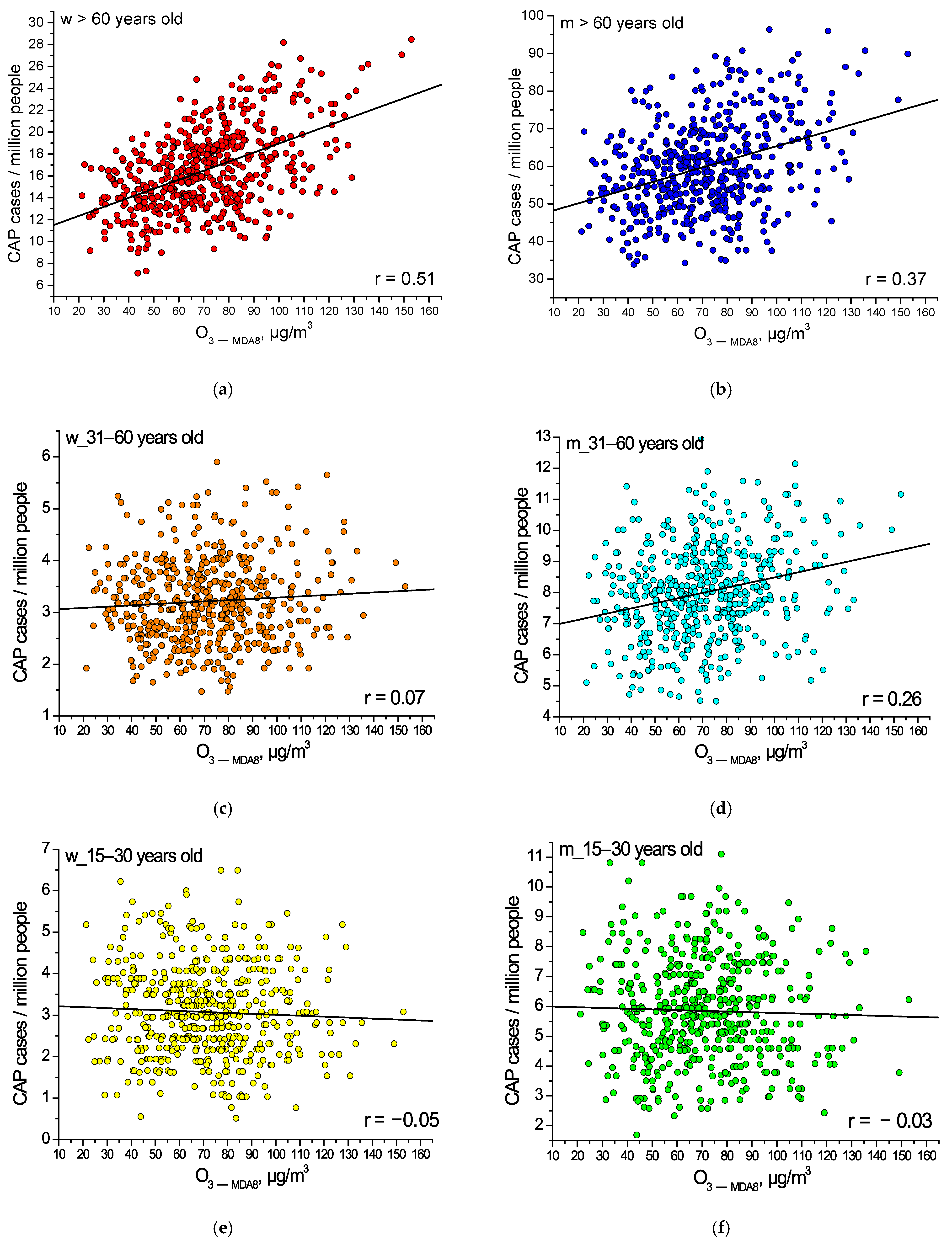
3.2. Effect of Ground-Level Ozone on the Development of CAP in Different Subgroups
4. Discussion
5. Conclusions
- Organizing a network for the permanent monitoring of near-surface ozone concentration in large cities;
- Developing early warning systems for the population regarding increased ozone concentrations;
- Conducting an information campaign on the risks associated with ozone pollution to raise the awareness of residents about the negative impact of this pollution on health and ways to reduce it.
Author Contributions
Funding
Institutional Review Board Statement
Informed Consent Statement
Data Availability Statement
Conflicts of Interest
Abbreviations
| WHO | World Health Organization |
| AQG | Air Quality Guideline |
| COPD | Chronic obstructive pulmonary disease |
| CAP | Community-acquired pneumonia |
| MDA8 | Daily maximum 8 h average |
References
- State of Global Air. Available online: https://www.stateofglobalair.org/hap (accessed on 17 November 2025).
- Institute for Health Metrics and Evaluation. Available online: https://www.healthdata.org/news-events/newsroom/news-releases/air-pollution-accounted-81-million-deaths-globally-2021-becoming (accessed on 17 November 2025).
- World Health Organization. Available online: https://www.who.int/publications/i/item/9789240034228 (accessed on 17 November 2025).
- Niu, Y.; Yang, T.; Gu, X.; Chen, R.; Meng, X.; Xu, J.; Yang, L.; Zhao, J.; Zhang, X.; Bai, C.; et al. Long-term ozone exposure and small airway dysfunction: The China pulmonary health (CPH) study. Am. J. Respir. Crit. Care. Med. 2022, 205, 450–458. [Google Scholar] [CrossRef]
- Kahle, J.J.; Neas, L.M.; Devlin, R.B.; Case, M.W.; Schmitt, M.T.; Madden, M.C.; Diaz-Sanchez, D. Interaction effects of temperature and ozone on lung function and markers of systemic inflammation, coagulation, and fibrinolysis: A crossover study of healthy young volunteers. Environ. Health Perspect. 2014, 123, 310–316. [Google Scholar] [CrossRef] [PubMed]
- Gibbs-Flournoy, E.A.; Simmons, S.O.; Bromberg, P.A.; Dick, T.P.; Samet, J.M. Monitoring intracellular redox changes in ozone-exposed airway epithelial cells. Environ. Health Perspect. 2012, 121, 312–317. [Google Scholar] [CrossRef] [PubMed]
- Albright, M.; Guttenberg, M.A.; Tighe, R.M. Ozone-induced models of airway hyperreactivity and epithelial injury. Methods Mol. Biol. 2022, 2506, 67–81. [Google Scholar] [CrossRef]
- Hargreave, F.E.; Dolovich, J.; O’Byrne, P.M.; Ramsdale, E.H.; Daniel, E.E. The origin of airway hyperresponsiveness. J. Allergy Clin. Immunol. 1986, 78, 825–832. [Google Scholar] [CrossRef]
- Aris, R.M.; Christian, D.; Hearne, P.Q.; Kerr, K.; Finkbeiner, W.E.; Balmes, J.R. Ozone-induced airway inflammation in human subjects as determined by airway lavage and biopsy. Am. Rev. Respir. Dis. 1993, 148, 1363–1372. [Google Scholar] [CrossRef] [PubMed]
- Weisel, C.P.; Cody, R.P.; Lioy, P.J. Relationship between summertime ambient ozone levels and emergency department visits for asthma in central New Jersey. Environ. Health Perspect. 1995, 103, 97–102. [Google Scholar] [CrossRef][Green Version]
- Atkinson, C.E.; Kesic, M.J.; Hernandez, M.L. Ozone in the development of pediatric asthma and atopic disease. Immunol. Allergy. Clin. N. Am. 2022, 42, 701–713. [Google Scholar] [CrossRef]
- Fang, X.; Huang, S.; Zhu, Y.; Lei, J.; Xu, Y.; Niu, Y.; Chen, R. Short-term exposure to ozone and asthma exacerbation in adults: A longitudinal study in China. Front. Public Health 2023, 10, 1070231. [Google Scholar] [CrossRef]
- Breitner, S.; Steckling Muschack, N.; Markevych, J.; Zhao, T.; Mertes, H.; Heinrich, J.; Nowak, D. Chronic obstructive pulmonary disease (COPD) attributable to ozone in Germany: Burden of disease estimates for the years 2007–2016. In Proceedings of the International Society for Environmental Epidemiology (ISEE) 2021 Annual Conference, Virtual, 1–2 August 2021; Volume 2021, p. 233. [Google Scholar]
- Mallia, P.; Johnston, S.L. Mechanisms and experimental models of chronic obstructive pulmonary disease exacerbations. Proc. Am. Thorac. Soc. 2005, 2, 361–372. [Google Scholar] [CrossRef] [PubMed]
- Avdeev, S.N.; Dekhnich, A.V.; Zaytsev, A.A.; Kozlov, R.S.; Rachina, S.A.; Rudnov, V.A.; Sinopal’nikov, A.I.; Tyurin, I.E.; Fesenko, O.V.; Chuchalin, A.G. Federal guidelines on diagnosis and treatment of community-acquired pneumonia. Pulmonologiya 2022, 32, 295–355. (In Russian) [Google Scholar] [CrossRef]
- Regunath, H.; Oba, Y. Community-Acquired Pneumonia; StatPearls Publishing: Orlando, FL, USA, 2025. Available online: https://www.ncbi.nlm.nih.gov/books/NBK430749/ (accessed on 17 November 2025).
- Qin, T.; Zhou, H.; Ren, H.; Meng, J.; Du, Y.; Mahemut, M.; Wang, P.; Luo, N.; Tian, F.; Li, M.; et al. Incidence, etiology, and environmental risk factors of community-acquired pneumonia requiring hospitalization in China: A 3-year, prospective, age-stratified, multicenter case-control study. Open. Forum. Infect. Dis. 2021, 8, ofab499. [Google Scholar] [CrossRef] [PubMed] [PubMed Central]
- Russian Federal State Statistics Service. Available online: https://www.fedstat.ru/indicator (accessed on 17 November 2025).
- Torres, A.; Peetermans, W.E.; Viegi, G.; Blasi, F. Risk factors for community-acquired pneumonia in adults in Europe: A literature review. Thorax 2013, 68, 1057–1065. [Google Scholar] [CrossRef] [PubMed] [PubMed Central]
- Bilichenko, T.N.; Bystritskaya, E.V.; Chuchalin, A.G.; Belevskiy, A.S.; Batyn, S.Z. Mortality of respiratory disease in 2014–2015 and ways of its improvement. Pulmonologiya 2016, 26, 389–397. (In Russian) [Google Scholar] [CrossRef]
- Muthumbi, E.; Lowe, B.S.; Muyodi, C.; Getambu, E.; Gleeson, F.; Scott, J.A.G. Risk factors for community-acquired pneumonia among adults in Kenya: A case-control study. Pneumonia 2017, 9, 17. [Google Scholar] [CrossRef] [PubMed]
- Almirall, J.; Blanquer, J.; Bello, S. Community-acquired pneumonia among smokers. Arch Bronconeumol. 2014, 50, 250–254. [Google Scholar] [CrossRef]
- Guo, C.; Yu, T.; Lin, C.; Chang, L.Y.; Bo, Y.; Wong, M.C.S.; Tam, T.; Lau, A.K.H.; Lao, X.Q. Habitual exercise, air pollution, and pneumonia mortality: A longitudinal cohort study of approximately 0.4 million adult. Am. J. Epidemiol. 2022, 191, 1732–1741. [Google Scholar] [CrossRef] [PubMed]
- Li, R.; Jiang, N.; Liu, Q.; Huang, J.; Guo, X.; Liu, F.; Gao, Z. Impact of air pollutants on outpatient visits for acute respiratory outcomes. Int. J. Environ. Res. Public Health 2017, 14, 47. [Google Scholar] [CrossRef]
- Kotel’nikov, S.N.; Stepanov, E.V. An impact of tropospheric ozone on population health. Trudy IOFAN 2015, 71, 72–94. (In Russian) [Google Scholar]
- Mosecomonitoring. Available online: https://mosecom.mos.ru/ (accessed on 17 November 2025).
- Urgent Medical Care Station of the Moscow Department of Health. Available online: https://mos03.ru/ (accessed on 17 November 2025).
- Mikerov, A.N. Factors involved in modulating pulmonary immune defense mechanisms in pneumonia. Immunol. Patog. 2012, 111, 81–83. (In Russian) [Google Scholar]
- Mikerov, A.N.; Alekseeva, N.I.; Abramkina, S.S.; Eliseev, Y.Y. The Role of Surfactant Protein A and Its Oxidation in Sensitivity to Experimental Pneumonia; Bull Samara Scientific Center, Russian Academy of Sciences: Moscow, Russia, 2010; Volume 12, pp. 1769–1773. (In Russian) [Google Scholar]
- Evstaf’eva, E.V.; Lapchenko, V.A.; Makarova, A.S.; Burukhina, T.F.; Abibullaeva, N.K.; Evstaf’eva, I.A. Assessment of the dynamics of ground-level ozone concentration and meteorological parameters as risk factors for the occurrence of emergency health conditions of the population. Khimicheskaya Fizika 2019, 38, 42–51. (In Russian) [Google Scholar]
- Stepanov, E.V.; Andreev, V.V.; Chuprov, D.V.; Ivashkin, V.T. The Association of high COVID-19 cases and mortality with anomalous high surface ozone concentration in Moscow City in summer 2021. Russ. J. Gastroenterol. Hepatol. Coloproctol. 2022, 32, 18–22. [Google Scholar] [CrossRef]
- Krivosheev, V.V.; Stolyarov, A.I.; Semenov, A.A. Effect of ozone on morbidity and mortality of the European population during the third wave of COVID-19 pandemic. Obs. Zdorov’ye Zdr. 2021, 4, 5–11. (In Russian) [Google Scholar]
- Miranda, A.C.; Santana, J.C.C.; Yamamura, C.L.K.; Rosa, J.M.; Tambourgi, E.B.; Ho, L.L.; Berssaneti, F.T. Application of neural network to simulate the behavior of hospitalizations and their costs under the effects of various polluting gases in the city of São Paulo. Air Qual. Atmos. Health 2021, 14, 2091–2099. [Google Scholar] [CrossRef]
- Kwas, H.; Rangareddy, H.; Rajhi, H.H.S. Impact of outdoor air pollutants exposure on the severity and outcomes of community-acquired pneumonia in Gabes Region, Tunisia. Cureus 2024, 16, e66578. [Google Scholar] [CrossRef] [PubMed] [PubMed Central]
- Wang, H.T.; Zhang, H.; Xue, F.Z.; Zhao, L.; Cao, W.C. Associations of air pollutants with pneumonia hospital admissions in Qingdao, China: A prospective cohort study. Environ. Sci. Pollut. Res. Int. 2022, 29, 27779–27787. [Google Scholar] [CrossRef] [PubMed]
- Lu, W.; Tian, Q.; Xu, R.; Zhong, C.; Qiu, L.; Zhang, H.; Shi, C.; Liu, Y.; Zhou, Y. Short-term exposure to ambient air pollution and pneumonia hospital admission among patients with COPD: A time-stratified case-crossover study. Respir. Res. 2022, 23, 71. [Google Scholar] [CrossRef] [PubMed]



| Year | O3_MDA8, µg/m3 | tmax, °C | CAP, Cases/Millions Persons |
|---|---|---|---|
| All | 70.52 | 24.18 | 9.17 |
| 2006 | 57.45 | 22.9 | 8.28 |
| 2007 | 79.62 | 24.05 | 8.51 |
| 2008 | 65.65 | 22.26 | 9.41 |
| 2009 | 57.13 | 22.05 | 9.46 |
| 2011 | 92.75 | 25.94 | 10.21 |
| Lag, Day | r (CAP, O3_MDA8) | r (CAP, tmax) |
|---|---|---|
| 0 | 0.47 | 0.38 |
| 1 | 0.51 | 0.42 |
| 2 | 0.51 | 0.41 |
| 3 | 0.46 | 0.33 |
| 4 | 0.37 | 0.24 |
| 5 | 0.29 | 0.15 |
| 6 | 0.23 | 0.08 |
| 7 | 0.18 | 0.03 |
Disclaimer/Publisher’s Note: The statements, opinions and data contained in all publications are solely those of the individual author(s) and contributor(s) and not of MDPI and/or the editor(s). MDPI and/or the editor(s) disclaim responsibility for any injury to people or property resulting from any ideas, methods, instructions or products referred to in the content. |
© 2026 by the authors. Licensee MDPI, Basel, Switzerland. This article is an open access article distributed under the terms and conditions of the Creative Commons Attribution (CC BY) license.
Share and Cite
Dudorova, N.; Belan, B.; Kotel’nikov, S. Ground-Level Ozone as Community-Acquired Pneumonia Risk Factor in Different Population Groups in Summer: The Case of Moscow. Toxics 2026, 14, 83. https://doi.org/10.3390/toxics14010083
Dudorova N, Belan B, Kotel’nikov S. Ground-Level Ozone as Community-Acquired Pneumonia Risk Factor in Different Population Groups in Summer: The Case of Moscow. Toxics. 2026; 14(1):83. https://doi.org/10.3390/toxics14010083
Chicago/Turabian StyleDudorova, Nina, Boris Belan, and Sergey Kotel’nikov. 2026. "Ground-Level Ozone as Community-Acquired Pneumonia Risk Factor in Different Population Groups in Summer: The Case of Moscow" Toxics 14, no. 1: 83. https://doi.org/10.3390/toxics14010083
APA StyleDudorova, N., Belan, B., & Kotel’nikov, S. (2026). Ground-Level Ozone as Community-Acquired Pneumonia Risk Factor in Different Population Groups in Summer: The Case of Moscow. Toxics, 14(1), 83. https://doi.org/10.3390/toxics14010083