1. Introduction
Poly Ether-Ether Ketone (PEEK) is a high-performance aromatic thermoplastic renowned for its hydrolysis resistance, high-temperature stability, abrasion resistance, strength, and dimensional stability. These properties enable its widespread use in the medical, semiconductor, and food industries. Sulfonation modification of PEEK significantly enhances its affinity for CO
2, improves gas permeability., making it suitable for fruit and vegetable preservation [
1]. Additionally, its excellent chemical stability and mechanical properties protect against external damage, making PEEK increasingly attractive for developing food packaging materials. It has been demonstrated that the use of modified PEEK for air-conditioned packaging is effective in maintaining the quality of fruits and vegetables, such as sundried fruits [
2] and chili peppers [
3]. In the early stages, the research group developed a modified atmosphere packaging (MAP) material using PEEK as the raw material, which is well-suited for preserving fruits and vegetables under high-temperature and humidity climate conditions of southern China.
In recent years, there has been a great deal of concern about the migration of food packaging materials into food and the potential health risks for humans [
4]. Current research on PEEK-modified materials for MAP is increasing, and investigations into the safety profiles of food contact migrants derived from these materials remain critically underexplored. Therefore, further investigation is required to clarify the health risks associated with migrants from PEEK-based MAP materials, providing a scientific basis for hazard assessment and regulating safe application of PEEK materials.
In 2007, the US National Research Council (NRC) elaborated the Toxicity Testing in the 21st Century (TT21C), which proposed for the first time the establishment of an in vitro toxicity-testing method based on the ‘toxicity pathway’ and ‘toxicity mechanism of action’ [
5]. Linking key toxicity pathway molecules to their biological effects establishes dose–response models, enhancing testing efficiency and reducing animal use [
6]. Currently, multiple regions, including China, the EU, the US, and Japan, have established animal welfare regulations. The adverse outcome pathway (AOP) framework connects molecular initiating event (MIE)) to adverse outcome (AO) through key events (KEs), enabling prediction of high-level toxicity from low-level events [
7]. By establishing AOPs, the number of tests, times, and costs will be reduced, while animal welfare will be further safeguarded based on the accuracy and reliability of compound toxicity assessments [
8].
The liver is the major organ responsible for the metabolism of substances and energy in the body. L-02 cells are derived from human hepatocytes and are widely used to assess health risks and toxicity mechanisms in vitro [
9]. Exogenous chemicals endanger health mainly through oxidative stress, with mitochondria, the primary energy producers, as critical targets [
10]. AOP-Wiki and literature reviews identify mitochondrial dysfunction and increased ROS as frequent MIEs of mitochondrial toxicity AOPs [
11]. Downstream KEs, such as mtDNA damage, ATP reduction, oxidative stress, and MMP loss, culminate in AOs, including liver injury [
12]. Central to this process, the PGC-1α/Nrf2 pathway involves Sirtuin 1 (Sirt1) upregulating peroxisome proliferator-activated receptor gamma coactivator-1α (PGC-1α) via deacetylation. This master regulator of mitochondrial biogenesis, once activated through post-translational modification or transcriptional upregulation, controls the expression of mitochondrial proteins and drives mitochondrial biogenesis [
13]. PGC-1α, in turn, activates nuclear factor erythroid 2-related factor 2 (Nrf2), which not only supports antioxidant defenses but also acts as a transcriptional modulator of mitochondrial biogenesis. Specifically, Nrf2 can directly induce NRF1 (nuclear respiratory factor 1) by binding to ARE sequences in the NRF1 gene promoter, thereby promoting NRF1 expression [
14]. Elevated NRF1 subsequently increases the expression of mitochondrial transcription factor A (TFAM), which is essential for mtDNA transcription and replication [
15]. Moreover, Nrf2 itself is required for the full induction of mitochondrial biogenesis programs—including NRF1 and TFAM expression—during metabolic or oxidative stress [
16]. Through this cascade, PGC-1α-driven Nrf2 activation stimulates NRF1/TFAM signaling, thus facilitating mitochondrial biogenesis and ATP synthesis. Additionally, PGC-1α could also directly regulate UCP2 and MnSOD expression, modulating cellular antioxidant defenses [
17]. Collectively, the PGC-1α/Nrf2 pathway represents the central regulatory pathway counteracting oxidative damage by synchronously orchestrating mitochondrial biogenesis, ROS scavenging, and energy homeostasis, making it a critical mechanistic focus for assessing xenobiotic-induced hepatotoxicity.
This study is conducted within the framework of the adverse outcome pathway (AOP). We investigate mitochondrial impairment caused by PEEK migrations and identify key toxicity pathways associated with mitochondrial dysfunction, with emphasis on the PGC-1α/Nrf2 signaling axis. The results will provide scientific evidence and a theoretical foundation for hazard assessment and the development of safety standards for PEEK air-conditioning packaging films previously developed by our research group.
2. Materials and Methods
2.1. Materials and Reagents
RPMI-1640, 0.25% Trypsin, and fetal bovine serum (FBS) were purchased from Gibco (Grand Island, NY, USA). PEEK was purchased from Shanghai Yingcai Industrial Co., Ltd. (Shanghai, China). Anhydrous ethanol (HPLC), acetic acid (HPLC), dimethyl sulfoxide, and MTT were purchased from Sigma-Aldrich (St. Louis, MO, USA). ZLN005 was purchased from MedChemExpress (Monmouth Junction, NJ, USA). Antibodies against GAPDH (5174S), Nrf2 (12721), UCP2 (89326), and MnSOD (13141) were purchased from Cell Signaling Technology (Danvers, MA, USA). Antibodies against PGC-1α (ab191838), NRF1 (ab175932), and TFAM (ab176558) were purchased from Abcam (Cambridge, MA, USA). Antibodies against sirt1 (13161-1-AP) were purchased from Proteintech (Wuhan, China). Horseradish peroxidase (HRP)-conjugated goat anti-rabbit IgG (111-036-045) was purchased from Jackson ImmunoResearch Laboratories (West Grove, PA, USA). Phosphate-buffered saline (PBS) and skimmed milk were purchased from Pythonbio (Guangzhou, China).
2.2. Cell Culture
L-02 cells for the experiments were donated by Liu Qizhan Research Group of Nanjing Medical University and obtained from the Institute of Cell Biology, Shanghai Institutes for Life Sciences, The Chinese Academy of Sciences. It was confirmed that L-02 cells were not contaminated by HeLa cells to ensure the reliability of this paper (
Supplementary Figure S1). The cells were cultured in RPMI-1640 medium supplemented with 10% FBS and 1% penicillin at 37 °C with 5% CO
2 in a CO
2 incubator (Thermo Fisher Scientific Heracell™ VIOS 160i, Waltham, MA, USA). The medium was changed every 2 days. When the cells reached 80–90% confluence, they were washed twice with PBS, then trypsinized and centrifuged at 1000 rpm for 3 min, and then the cells were passed at a ratio of 1:2–1:3.
2.3. Preparation of PEEK Food Migrations
According to the guidelines GB 31604.1-2015 National Standard for Food Safety General Principles for migrations Tests of Food Contact Materials and Products, and taking into account the intended use of the PEEK membrane, three food simulants were selected: 95% (
v/
v) ethanol to simulate fatty foods, 10% (
v/
v) ethanol to simulate aqueous foods, and 4% (
v/
v) acetic acid to simulate acidic foods. Food simulants were prepared volumetrically: 95% (
v/
v) ethanol by diluting 50 mL ultrapure water to 1 L with ethanol (fatty food simulants); 10% (
v/
v) ethanol by diluting 100 mL ethanol to 1 L with ultrapure water (aqueous food simulants); and 4% (
v/
v) acetic acid by diluting 40 mL acetic acid to 1 L with ultrapure water (acidic food simulants). Standard preparation protocols are documented in
Supplementary Materials Text S1. PEEK membranes were cut into 30 cm
2 pieces, ultrasonically cleaned in ultrapure water, dried for 30 min, and weighed. Five membrane specimens were fully submerged in 250 mL food simulants and in Constant Temp. Water Bath (Shanghai Yiheng Instruments DK-8D, Shanghai, China), maintained at 40 °C for 10 days to simulate actual food contact duration and temperature. Post-migration, simulants were concentrated to approximately 10 mL via rotary evaporation (IKA Works RV 10, Staufen, Germany), followed by complete solvent removal through nitrogen purging (Beijing Hengao Tech HAD-24, Beijing, China). The residues were reconstituted in DMSO to obtain food migrations. Further experimental details are provided in the
Supplementary Materials Text S2. The row experimental record of the migration test for PEEK Food Contact Material is presented in the
Supplementary Table S2. UPLC-MS/MS confirmed batch consistency (chromatographic conditions: Amide column, mobile phase is 0.1% formic acid water + 5 mmol/L ammonium acetate (Phase A) and acetonitrile (Phase B), flow rate: 0.20 mL/min, injection volume: 2 μL), enabling preparation of a 4000 mg/mL migration stock solution for subsequent investigations. More details of the protocols are presented in the
Supplementary Materials Text S3. Analysis of the base peak chromatograms obtained from UPLC-MS/MS characterization of PEEK food migrations is presented in the
Supplementary Figure S2. Additional analyses are presented in the
Supplementary Materials Text S4.
2.4. Cell Viability Assays
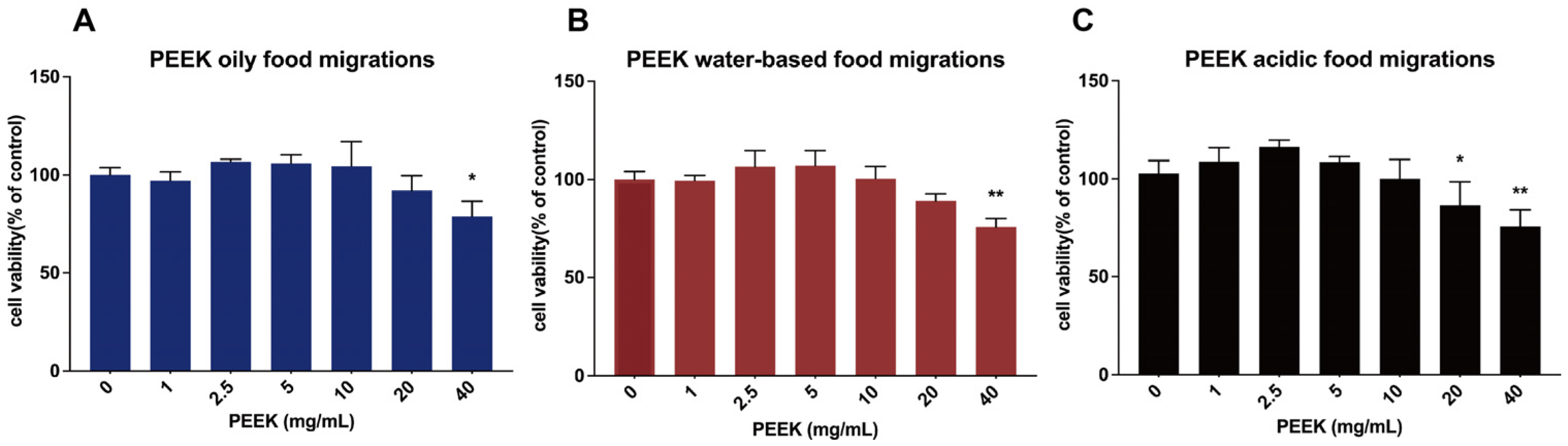
L-02 cells in logarithmic phase and in good condition were seeded into 96-well culture plates at a density of 5000 cells per well. After incubation for 24 h, the growth medium was replaced with various concentrations of PEEK oily, water-based, and acidic food migrations (0, 1, 2.5, 5, 10, 20, and 40 mg/mL) incubated for an additional 24 h. Meanwhile, the cells were treated with different concentrations of DMSO as a solvent control. After treatment, the cells were exposed to 0.5 mg/mL MTT for 4 h, then the culture medium was discarded carefully, and 150 μL DMSO was added to dissolve the formazan crystals, which were shaken continuously for 10 min. Absorbance at wave 490 nm was measured using a microplate reader (BioTek Instruments Synergy H1, Winooski, VT, USA).
2.5. Transmission Electron Microscopy (TEM) for Analysis of Mitochondria
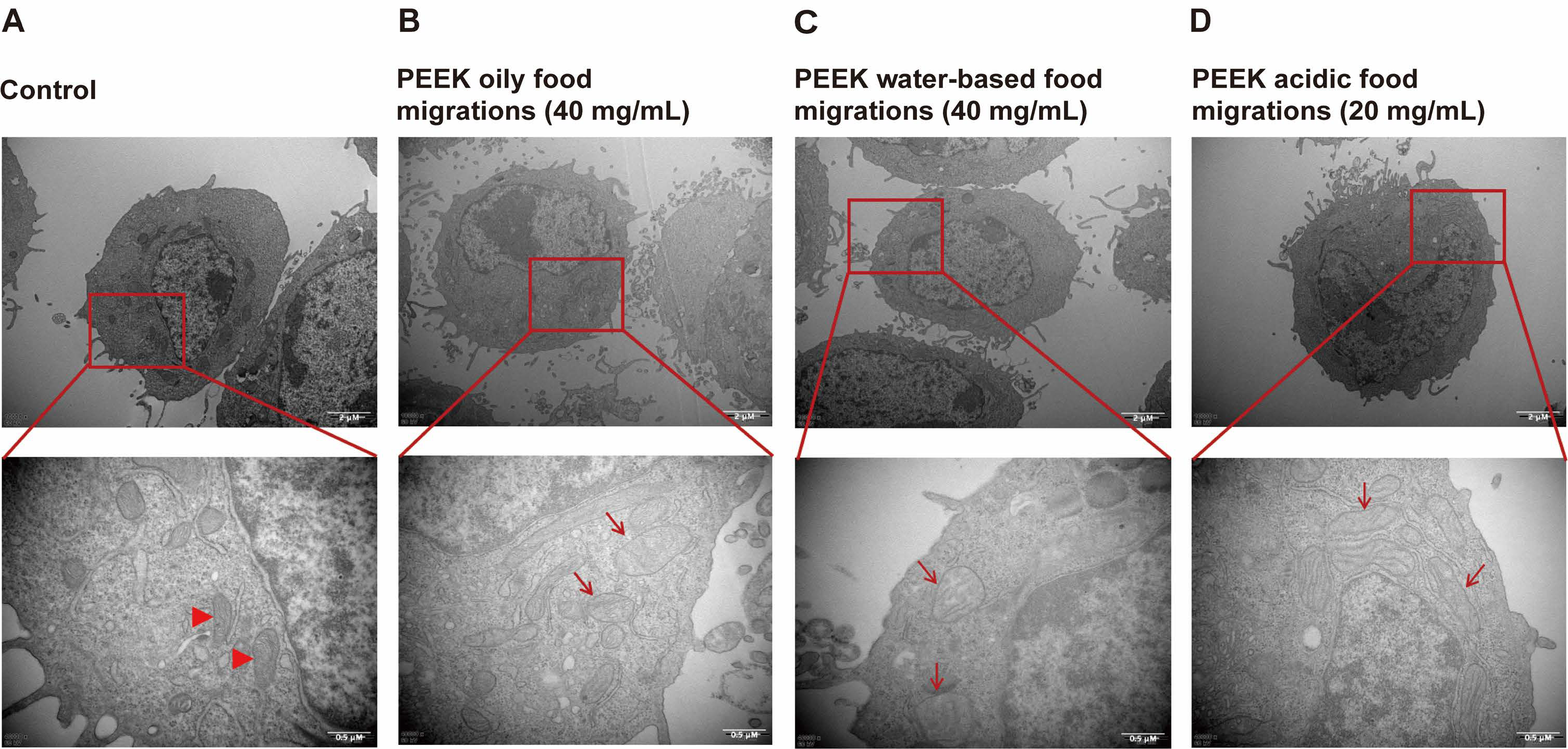
L-02 cells in good condition were seeded into 6-well culture plates at a density of 5 × 10⁵ cells per well. After incubation for 24 h, the growth medium was renewed with various concentrations of PEEK oily and water-based food migrations (40 mg/mL) and PEEK acidic food migrations (20 mg/mL) for 24 h. Cells cultured in medium without PEEK food migrations for 24 h served as the control. After discarding the culture medium, the cells were washed twice with PBS before being fixed in 2.5% glutaraldehyde. The samples were then fixed with osmic acid (OsO4), embedded in Epon812, and sectioned into ultrathin slices. These sections were stained with uranyl acetate and lead citrate, and mitochondrial structures were observed using TEM (Hitachi H-7500, Tokyo, Japan).
2.6. Intracellular ATP Analysis
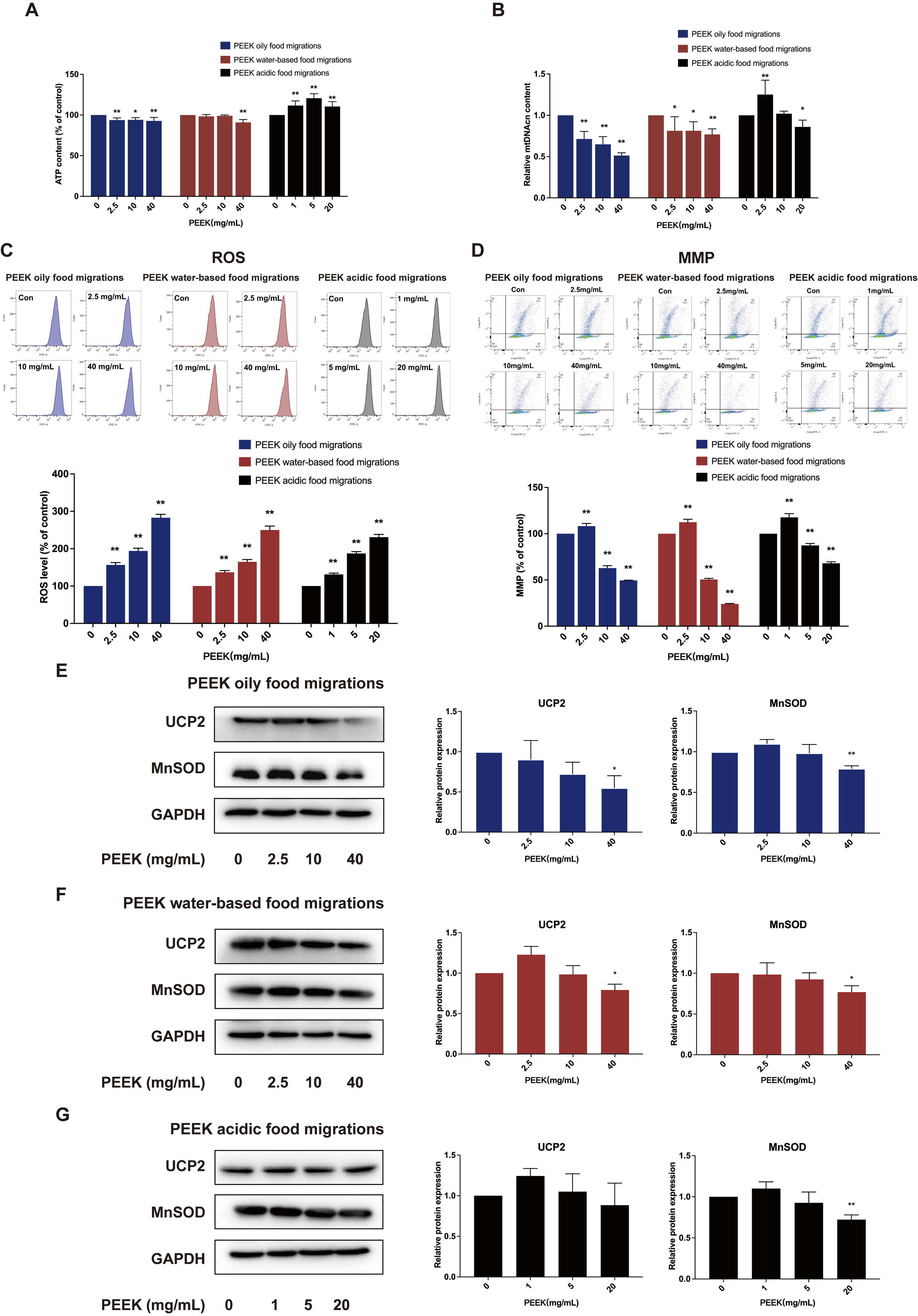
L-02 cells in logarithmic phase and in good condition were seeded into 6-well culture plates at a density of 5 × 10⁵ cells per well, and after a 24 h incubation, the growth medium was renewed with various concentrations of PEEK oily and water-based food migrations (0, 2.5, 10, and 40 mg/mL) and PEEK acidic food migrations (0, 1, 5, and 20 mg/mL) for 24 h. Cells in complete medium served as the zero-dose control group. After incubation for 24 h, the cells were washed twice with PBS and lysed in 200 μL ATP lysis solution per well for 15 min (Beyotime, Haimen, China). The lysates were centrifuged at 12,000× g for 5 min at 4 °C, and the supernatants were collected. The ATP concentration corresponding to the relative luminescence unit (RLU) of the samples was derived from the ATP standard curve, and the final ATP content was normalized to the protein concentration.
2.7. Measurement of Cytosolic Reactive Oxygen Species (ROS)
ROS were measured with the DCFH-DA probe (Nanjing Jiancheng Bioengineering Institute, Nanjing, China). A negative control tube contained cells in medium without the probe, while a positive control tube contained cells treated with the probe and supplemented with a ROS inducer. After a 24 h infection period, the culture medium was discarded, and the cells were washed with PBS. All experimental groups (including treatment groups and the zero-dose control group) were then incubated with 10 μM DCFH-DA for 30 min at 37 °C, followed by two PBS washes. The cells were trypsinized, centrifuged at 1000× g for 3 min, washed twice with PBS, and then collected and transferred to flow sampling tubes. The fluorescence intensity of the cells was detected by flow cytometry using 488 nm excitation and 525 nm emission wavelengths.
2.8. Detection of Mitochondrial Membrane Potential (MMP)
MMP was measured with the JC-1 probe (KEYGEN BIOTECH, Nanjing, China). Following a 24 h infection period, the culture medium was discarded, and the cells were washed twice with PBS. All experimental groups, including treatment groups and zero-dose control, were then incubated with 1 mL of JC-1 working solution for 20 min at 37 °C in the dark. After two washes with JC-1 incubation buffer, cells were collected into flow cytometry tubes. JC-1 exhibits concentration-dependent fluorescence: forming green-fluorescent monomers at low concentrations and red-fluorescent J-aggregates at high concentrations. In mitochondria with polarized Δψm, JC-1 accumulates and forms J-aggregates, while depolarization promotes monomer formation. MMP was assessed by calculating the ratio of red fluorescence intensity (aggregate) to green fluorescence intensity (monomer) (red/green ratio). Monomers emit green fluorescence detected through the FITC channel (FL1, emission 530 nm), while J-aggregates emit red fluorescence measured via the PE channel (FL2, emission 590 nm). Fluorescence intensity was quantified by flow cytometry at 488 nm excitation.
2.9. Analysis of Mitochondrial DNA Copy Number (mtDNAcn)
L-02 cells in logarithmic phase and in good condition were seeded into 12-well culture plates at a density of 2 × 10
5 cells per well. After incubation for 24 h, the growth medium was replaced with various concentrations of PEEK oily and water-based food migrations (0, 2.5, 10, and 40 mg/mL) and PEEK acidic food migrations (0, 1, 5, and 20 mg/mL) for 24 h. As a control, cells were cultured in medium containing no PEEK food migrations for 24 h. Total DNA was extracted from cells using a universal genomics DNA kit (TIANGEN, Beijing, China), and 10 ng of DNA was used for qPCR analysis. ND1 was the target gene, with HBG (human β-globin protein) serving as the internal reference gene. Primer sequences for ND1 and HBG are provided in
Supplementary Table S1. Samples were cycled 40 times at 95 °C for 5 s and 64 °C for 34 s, and results were calculated using 2
−ΔΔCT.
2.10. Western Blot Analysis
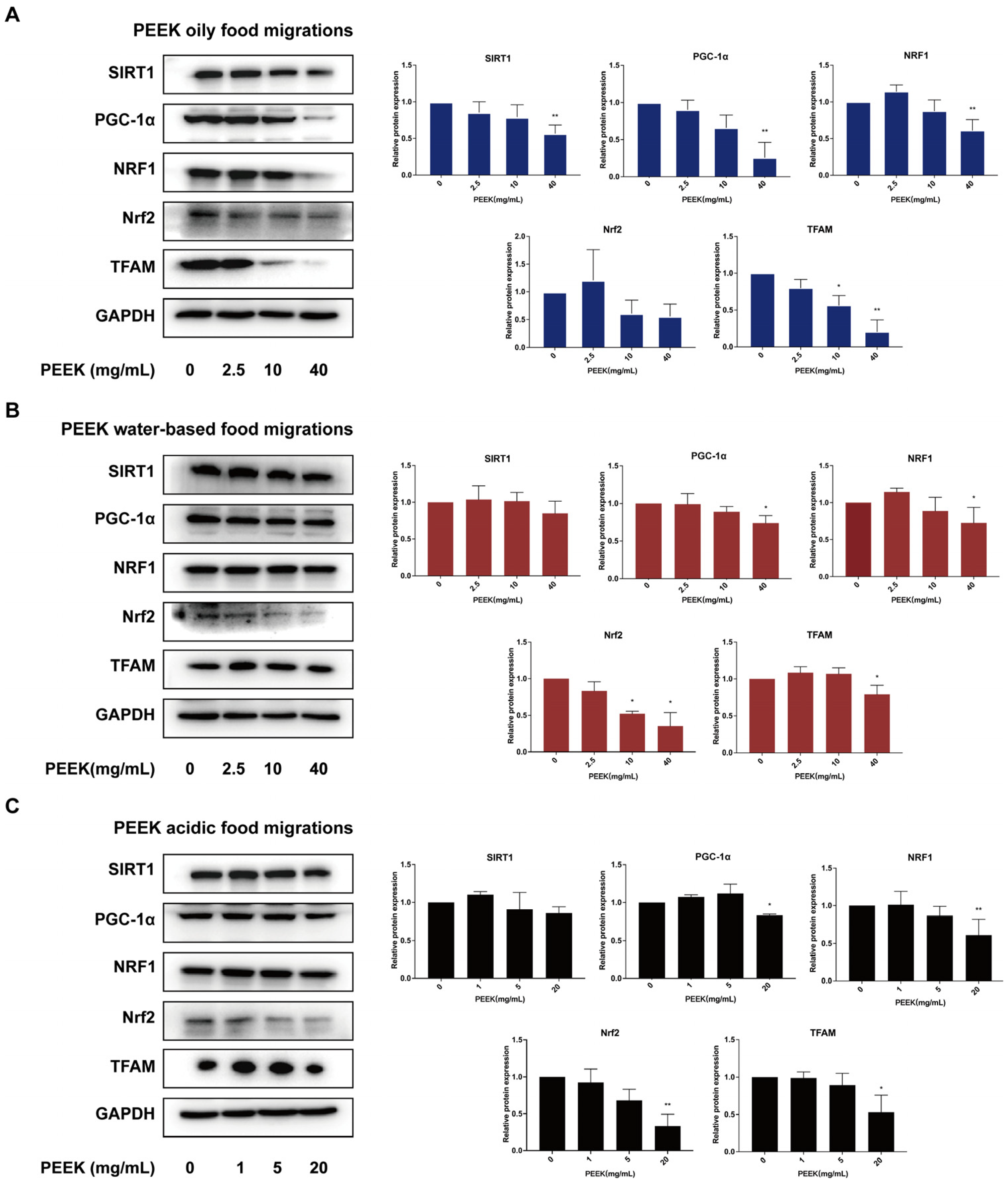
L-02 cells in logarithmic phase and in good condition were seeded into 6-well culture plates at a density of 5 × 10⁵ cells per well. After incubation for 24 h, the growth medium was replaced with various concentrations of PEEK oily and water-based food migrations (0, 2.5, 10, and 40 mg/mL) and PEEK acidic food migrations (0, 1, 5, and 20 mg/mL) for 24 h. The control group comprised cells cultured for 24 h in medium lacking PEEK food migrations. Total cellular protein was extracted using a BCA protein assay kit (KEYGEN BIOTECH, Nanjing, China). Protein samples (40 μg) were separated by 10–12% SDS-PAGE and transferred to polyvinylidene fluoride (PVDF) membranes by gel electrophoresis (Bio-Rad, Hercules, CA, USA). The membranes were blocked with 5% skim milk and then incubated with primary antibodies against Sirt1 (1:3000), PGC-1α (1:1000), Nrf2 (1:1000), NRF1 (1:5000), TFAM (1:10,000), UCP2 (1:1000), MnSOD (1:1000), and GAPDH (1:1000) overnight with gentle agitation at 4 °C. After three washes with TBST, the membranes were incubated with goat anti-rabbit secondary antibodies (dilution 1:5000) for 90 min at room temperature. Protein expression was quantified using an electrochemiluminescence (ECL) detection system (Tanon Science & Technology Co., Ltd., Shanghai, China), and the final protein bands were analyzed using Image J software version 1.54g (NIH, Bethesda, MD, USA). The results are expressed as the optical density value of the target protein divided by the optical density value of the internal reference protein.
2.11. Statistical Analysis
All measurements were obtained from at least 3 independent experiments. Statistical analysis was performed using Graph Pad Prism version 9.0 (GraphPad Software, San Diego, CA, USA). Data were first tested for normality using the Shapiro–Wilk test. For normally distributed data, one-way ANOVA was applied, followed by Tukey’s post hoc test for multiple comparisons. Data are presented as mean ± SD, and differences were considered statistically significant at p < 0.05.
4. Discussion
PEEK is an environmentally friendly and non-toxic food packaging material that has been approved by the U.S. Food and Drug Administration (FDA) for direct contact with food. It is also widely utilized in food and beverage machinery, both domestically and internationally. Research has shown that sulfonation modification of PEEK enhances excellent antimicrobial, air permeability, and moisture permeability properties, which can be used to achieve the regulation of gas composition and maintain balance within food packaging. As a result, PEEK serves as a new type of food gas-conditioning packaging material, meeting the preservation needs of diverse foods [
20].
Cytotoxicity assessments, including MTT cell viability assays, alkaline phosphatase (ALP) activity measurements, and live/dead cell staining, demonstrate that PEEK exhibits no cytotoxic effects on L-929 mouse fibroblast cells and maintains normal cellular activity levels [
21]. Furthermore, histopathological analysis from the systemic toxicity testing of carbon fiber-reinforced PEEK (CFRP) composites indicated no significant acute toxicity to the organisms [
22]. These findings verify the material’s biological safety at both cellular and organismal levels.
In recent years, it has been found that the chemical components of food packaging materials can migrate from the surface into food during the contact process with the food, thereby entering the human body through dietary consumption and resulting in potential health risks [
23]. For example, polystyrene (PS), currently a commonly used material in MAP, can produce micro-plastics that migrate into food during contact with food, leading to excessive accumulation of ROS, impaired mitochondrial function, and induced mitochondrial apoptosis and oxidative stress [
24]. However, reliable toxicological data on PEEK food migrations remain scarce, and its safety profile is incompletely characterized.
Following the 2007 NRC publication of TT21C, novel in vitro toxicity-testing methods focusing on ‘toxicity pathways’ and ‘mechanisms of toxic action’ have emerged. This approach utilizes the adverse outcome pathway (AOP) framework as an innovative alternative strategy for toxicity assessment, gaining prominence in regulatory toxicology [
25]. Exogenous chemicals enter the human body and produce toxic effects mainly through oxidative damage. Mitochondria are the main site of oxidative phosphorylation in vivo and the key source of intracellular ROS. Furthermore, many exogenous chemicals can directly interact with mitochondria, leading to oxidative stress, changes in mitochondrial membrane potential, and mitochondrial DNA damage, among other effects [
26]. Increasingly, studies are conducting toxicity safety assessments by developing AOP frameworks that link mitochondrial damage to effects at both the organism and population levels. Analysis from AOP-Wiki and the published literature have identified cell death, oxidative stress, mitochondrial dysfunction, and lipid accumulation as the core KEs that are consistently associated with mitochondrial toxicity [
27]. Consequently, we focused on mitochondrial toxicity induced by PEEK food migrations.
Preliminary findings indicate that the cell viability decreased significantly when the concentration of PEEK in oily and water-based food simulants is at 40 mg/mL, and PEEK in acidic food simulants at 20 mg/mL. Below these doses, PEEK food migrations do not significantly impact cell viability. In the preliminary stage, our research group utilized UPLC-MS/MS to analyze and identify PEEK food migrations. They found that only migrations were detected from oily food simulants, including two intended additive substances (IAS), diethyl phthalate (DEP) and 2,6-di-tert-butyl-p-benzoquinone (BHT-Q), as well as two non-intentionally added substances (NIAS), pentaethylene glycol (PEGn5) and dodecanoic acid-2-[bis (2-hydroxyethyl) amino] ethyl ester. The concentrations measured in the samples were as follows: DEP at 44.89 ng/mL, PEGn5 at 4.58 ng/mL, and dodecanoic acid-2-[2-(hydroxyethyl) amino] ethyl ester at 0.085 ng/mL, while BHT-Q exhibited a low response. A quantitative risk assessment conducted by the thresholds of toxicological concern (TTC) method revealed that the exposure levels of the above four migrations did not exceed the TTC thresholds, indicating that the PEEK material is relatively safe. While UPLC-MS/MS quantitatively detects specific migrations, it cannot evaluate downstream biological toxicity. In contrast, our mitochondrial pathway method directly links chemical migrations (validated by UPLC-MS/MS) to functional toxicity by demonstrating PEEK-induced mitochondrial dysfunction via the PGC-1α/Nrf2 signaling pathway, thereby bridging analytical chemistry with mechanistic toxicology. In conjunction with the findings of this study, it is recommended that regarding cell viability, PEEK material as a food air-conditioning packaging material is safe at low doses, and, therefore, we further examined molecular-level cellular changes at low doses.
Mitochondria serve as the principal site of ROS action, and the generation of ROS in the human body mainly depends on the aerobic metabolism of the mitochondria. Excessive ROS can disrupt intracellular redox homeostasis and induce oxidative stress. Consequently, mitochondria play a critical role in toxicity induced by exogenous compounds [
28]. When mitochondria are damaged by ROS, the permeability of the mitochondrial membranes is altered, and protons are pumped from the matrix side of the inner mitochondrial membrane to the outside of the inner membrane, creating a mitochondrial transmembrane potential difference that is reduced, resulting in a decrease in the MMP and causing MMP depolarization [
29]. Mitochondrial DNA and respiratory chain complexes, etc., are damaged, contributing to the cell being in a state of oxidative stress and resulting in organ damage [
30]. DEP is a plasticizer used in food packaging materials, which can cause redox imbalance and oxidative damage in organisms, accumulating in the liver, causing hepatotoxicity [
31]. Meanwhile, BHT-Q has been shown to generate superoxide radicals in aqueous solutions, which can indirectly damage DNA and cause DNA cleavage by producing H
2O
2 at a concentration as low as 1 × 10
−6 M [
32]. We therefore assessed mitochondrial damage as an indicator of PEEK food migration toxicity.
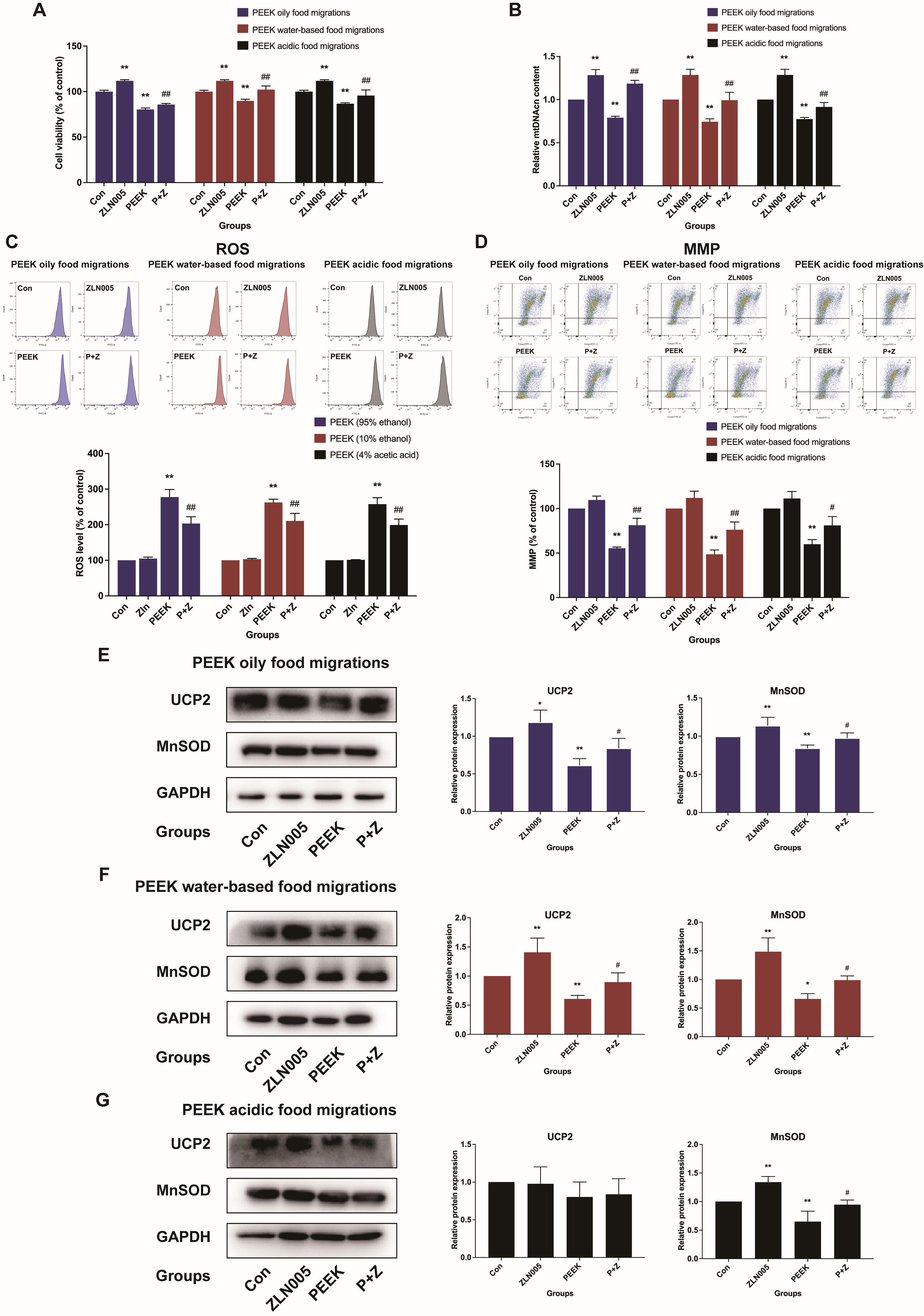
Electron microscopy revealed mitochondrial structural damage after 24 h exposure to PEEK food migrations. The results show that PEEK food migrations damage mitochondrial structure and increase intracellular ROS levels depending on the dose of PEEK in oily, water-based, and acidic food simulants. Furthermore, PEEK oily and water-based food migrations could decrease ATP levels, while acidic food migrations at different PEEK concentrations elevated cellular ATP levels. This opposite response may reflect different cellular mechanisms. The ATP elevation observed with acidic migrants could represent a compensatory response to mild mitochondrial stress, temporarily enhancing energy production to counteract oxidative damage [
33]. In contrast, the ATP reduction caused by oily and water-based migrants likely reflects mitochondrial dysfunction and impaired energy metabolism under higher cytotoxic stress [
34]. Alternatively, the differing ATP responses may be a plausible hypothesis given possible compositional differences among food simulants, although direct evidence is currently lacking. Specifically, 2.5–40 mg/mL of PEEK in oily and water-based food simulants, as well as 20 mg/mL of PEEK in acidic food simulants, could decrease mtDNAcn. Additionally, MMP exhibited a biphasic response, initially rising and then falling. Moreover, the expression of UCP2 and MnSOD was down-regulated after treatment of PEEK food migrations, which are related to mitochondrial levels [
35]. Overall, these findings suggest that food migrations may increase or slightly decrease the indicators of mitochondrial function at low concentrations of PEEK without statistical significance, which could be a compensatory response. This suggests PEEK at high concentrations may produce mitochondrial toxicity through the oxidative stress pathways when used as food air-conditioning packaging materials.
The mtDNAcn are the key indicators of mitochondrial biogenesis [
36]. The overproduction of ROS is associated with mitochondrial structure and function damage. Mitochondrial biogenesis is regarded as a compensatory response to restore mitochondrial components and maintain homeostasis [
37]. To investigate whether mitochondrial function injury and mtDNAcn reductions result from impaired biogenesis, we focused on the PGC-1α/Nrf2 pathway. We measured the levels of SIRT1, PGC-1α, NRF1, Nrf2, and TFAM in cells using Western Blot analysis. PGC-1α, a master regulator of mitochondrial biogenesis, may lead to a decrease in mtDNAcn [
38]. Yi Li et al. found that Nrf2 collaborates with PGC-1α to regulate mitochondrial gene transcription, influencing the expression of NRF1 and TFAM during the process of mitochondrial biogenesis [
14]. Nrf2 is known to scavenge excess ROS to protect cells from oxidative stress injury and maintain redox homeostasis. Elevated ROS levels stimulate Nrf2 signaling [
39]. The Nrf2 signaling pathway is a crucial host defense pathway, as a major mediator of antioxidant transcription [
40,
41]. SIRT1 plays a vital role in regulating cellular responses to oxidative stress, activating the PGC-1α-mediated transcription of mitochondrial genes involved in mitochondria proliferation, oxidative phosphorylation, and energy production [
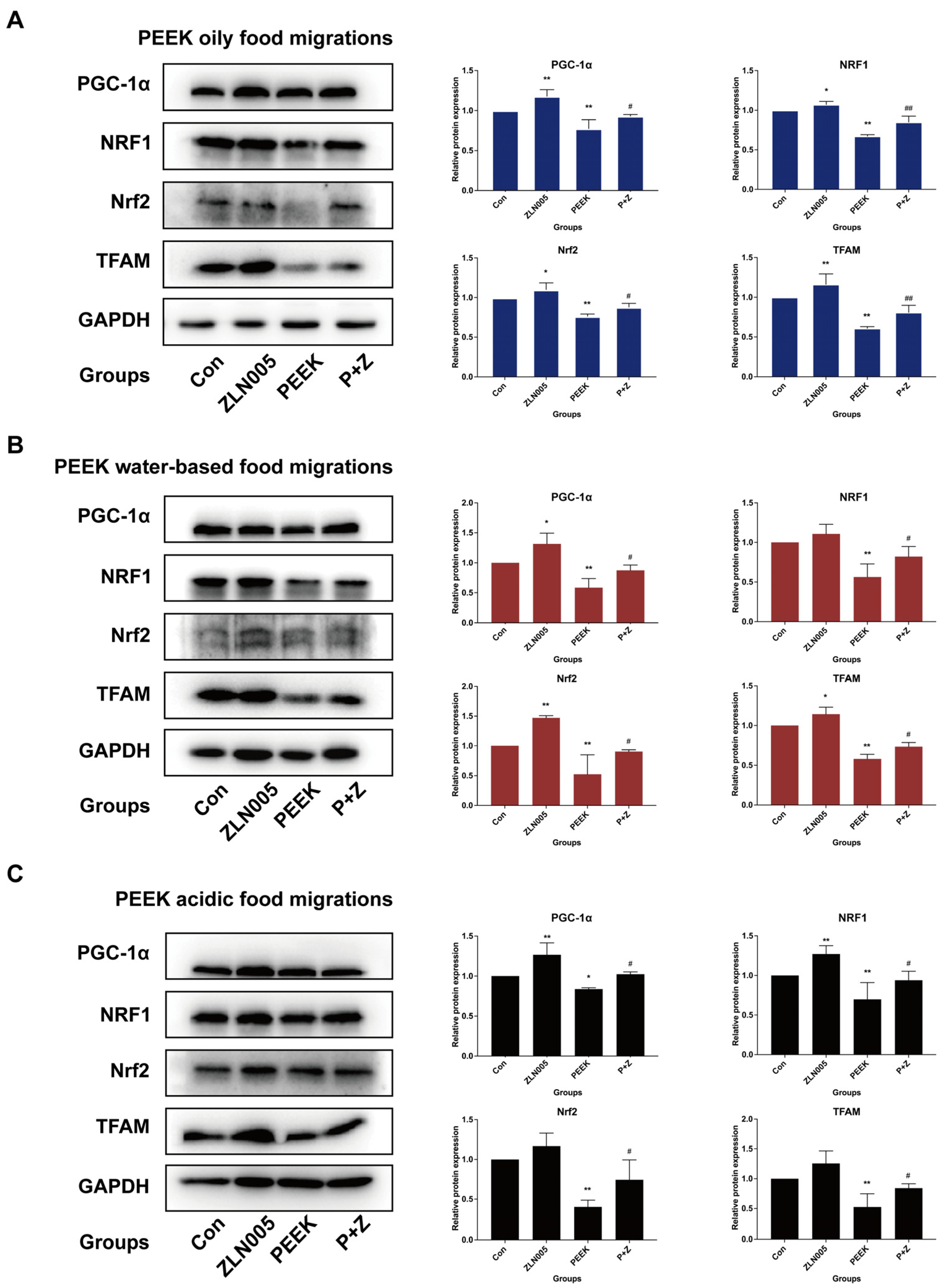
42]. Food migrations could decrease mtDNAcn and MMP, increase ROS levels, and down-regulate the expression of UCP2 and MnSOD significantly in L-02 cells at high concentrations of PEEK, thus causing mitochondrial damage. Our study showed that after the treatment of PEEK food migrations for 24 h, oily, water-based, and acidic food migrations could reduce the expression of SIRT1, PGC-1α, NRF1, and Nrf2 at high PEEK doses. The effect of the PGC-1α/Nrf2 signaling pathway suggested that the PGC-1α/Nrf2 pathway may be implicated in the process of mitochondrial damage induced by PEEK food migrations in L-02 cells.
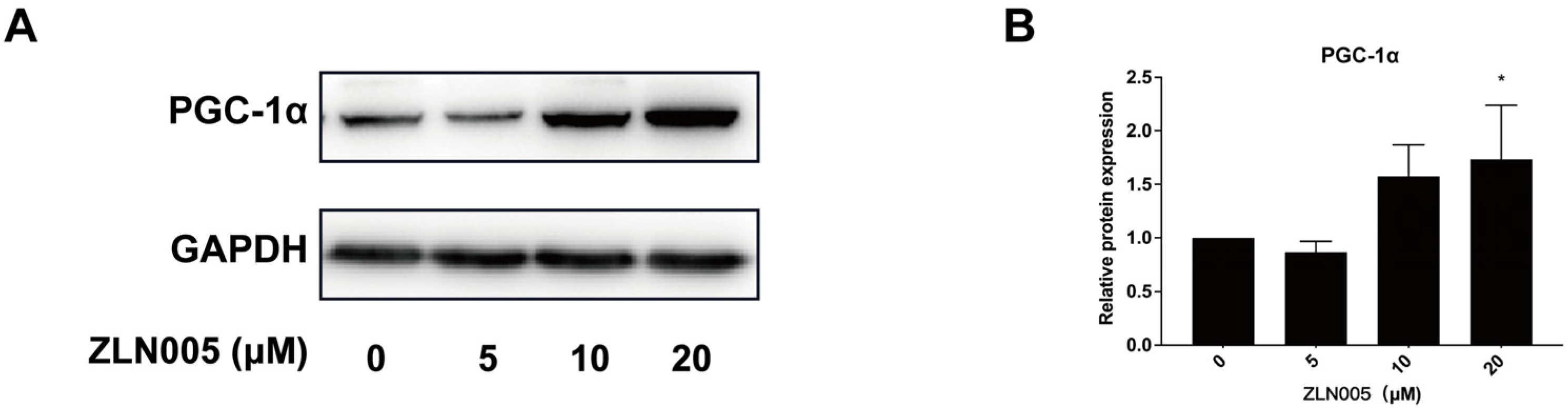
To further investigate the relationship between the PGC-1α/Nrf2 signaling pathway and mitochondrial damage induced by PEEK food migrations, we co-treated L-02 cells with PEEK food migrations and ZLN005. The protein expression levels of key molecules in the PGC-1α/Nrf2 pathway was assessed using Western Blot analysis, and the results indicated that ZLN005 effectively reversed the impact of high concentrations of PEEK food migrations on the protein expression levels of PGC-1α/Nrf2 pathway molecules. Subsequently, we detected cell viability, mtDNAcn, ROS, and MMP levels, the protein expression levels of UCP2 and MnSOD in L-02 cells treated with 20 μM ZLN005, and a high concentration of PEEK food migrations. The results showed that, compared to PEEK food migrations alone, co-treatment with ZLN005 significantly increased viability, mtDNAcn, MMP, and the protein expression levels of UCP2 and MnSOD, while ROS levels were notably reduced. These findings suggest that by upregulating the PGC-1α pathway, the level of intracellular oxidative stress can be reduced, mitochondria can be protected, and cell survival can be improved, thus alleviating the cellular damage caused by food migrations at high concentrations of PEEK. Collectively, high concentrations of PEEK food migrations induce mitochondrial damage via the PGC-1α/Nrf2 signaling pathway in L-02 cells.
The safety of PEEK remains uncertain due to the lack of reliable toxicological data. This study is the first to investigate the toxicity of PEEK materials through in vitro cellular experiments and to study the mitochondrial damage effects of migrations of PEEK food packaging materials based on the harmful outcome pathway, so as to provide a scientific basis and technical guarantee for the subsequent risk assessment and safe use of PEEK-modified atmosphere packaging. This study was conducted in accordance with national standards using packaging materials migrations from various types of food that are the substances humans are actually exposed to, providing a scientific basis for the hazard assessment of PEEK as a food packaging material. Therefore, we offer novel hazard assessment data for PEEK food migrations.
It is important to acknowledge certain limitations of this study. We selected only the L-02 cell line to construct the mitochondrial AOP framework, in view of the different sensitivities of different cells to exogenous chemicals. Further validation with other cell lines or liver organoids is necessary in the future. Additionally, this study did not consider the metabolic activation of PEEK food migrations within the human body. Further research should explore whether metabolic activation occurs in the human body after entering the body, and whether its toxicity changes before and after metabolic activation, thereby providing a more comprehensive evaluation of the safety of PEEK materials. Finally, provided the condition of ensuring the safety of PEEK migration products, whether the additives are toxic is also an area of research that our research group will carry out.




 ,
,