Microscopic Evidence of Haze Formation During the COVID-19 Lockdown in Beijing: Insights from Physicochemical Properties

 ,
,  ,
,  , ,
, , 


Abstract
1. Introduction
2. Experimental Methods
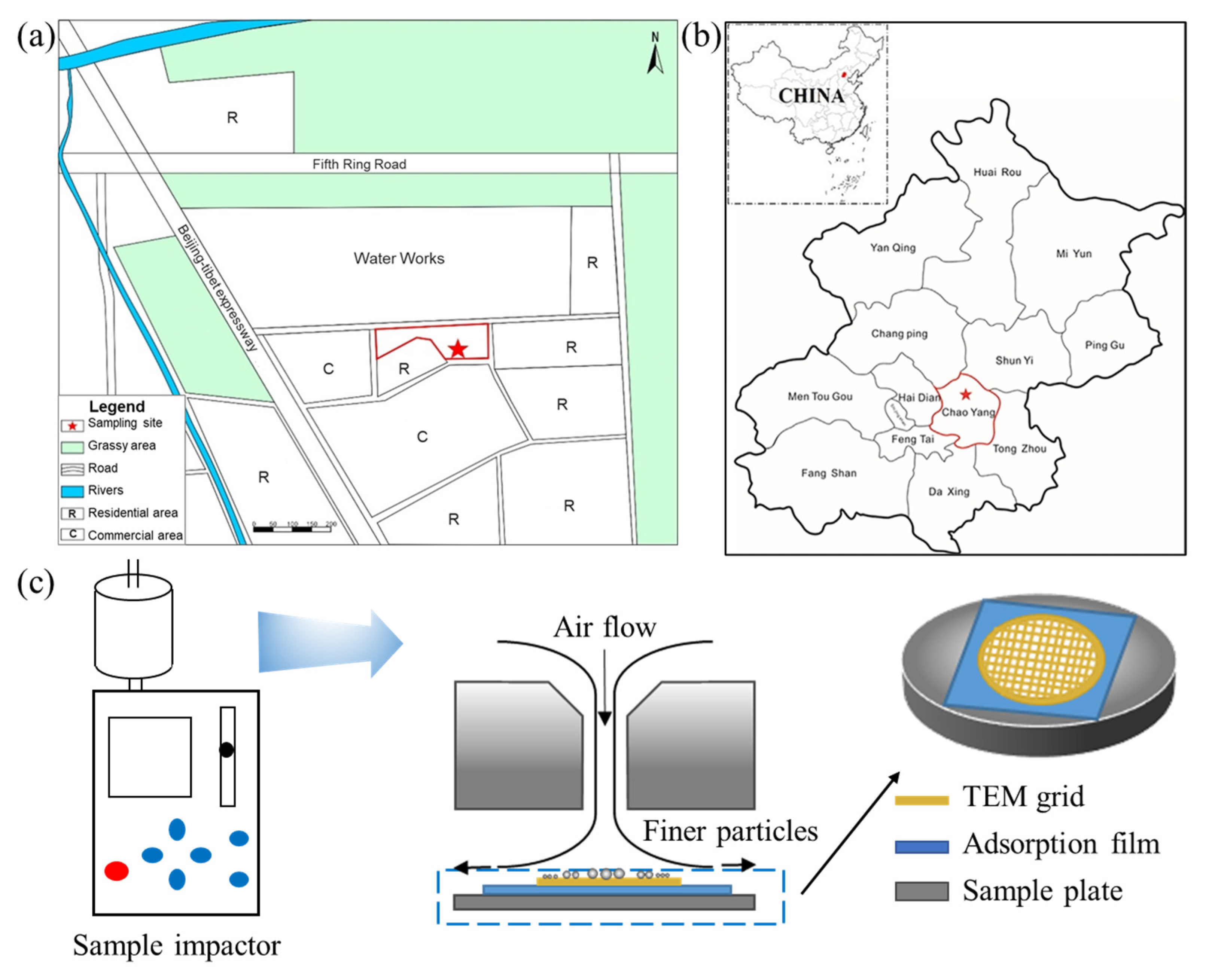
2.1. Study Area
2.2. Particle Sampling
2.3. TEM-EDX Analysis
2.4. Data Analysis
3. Results
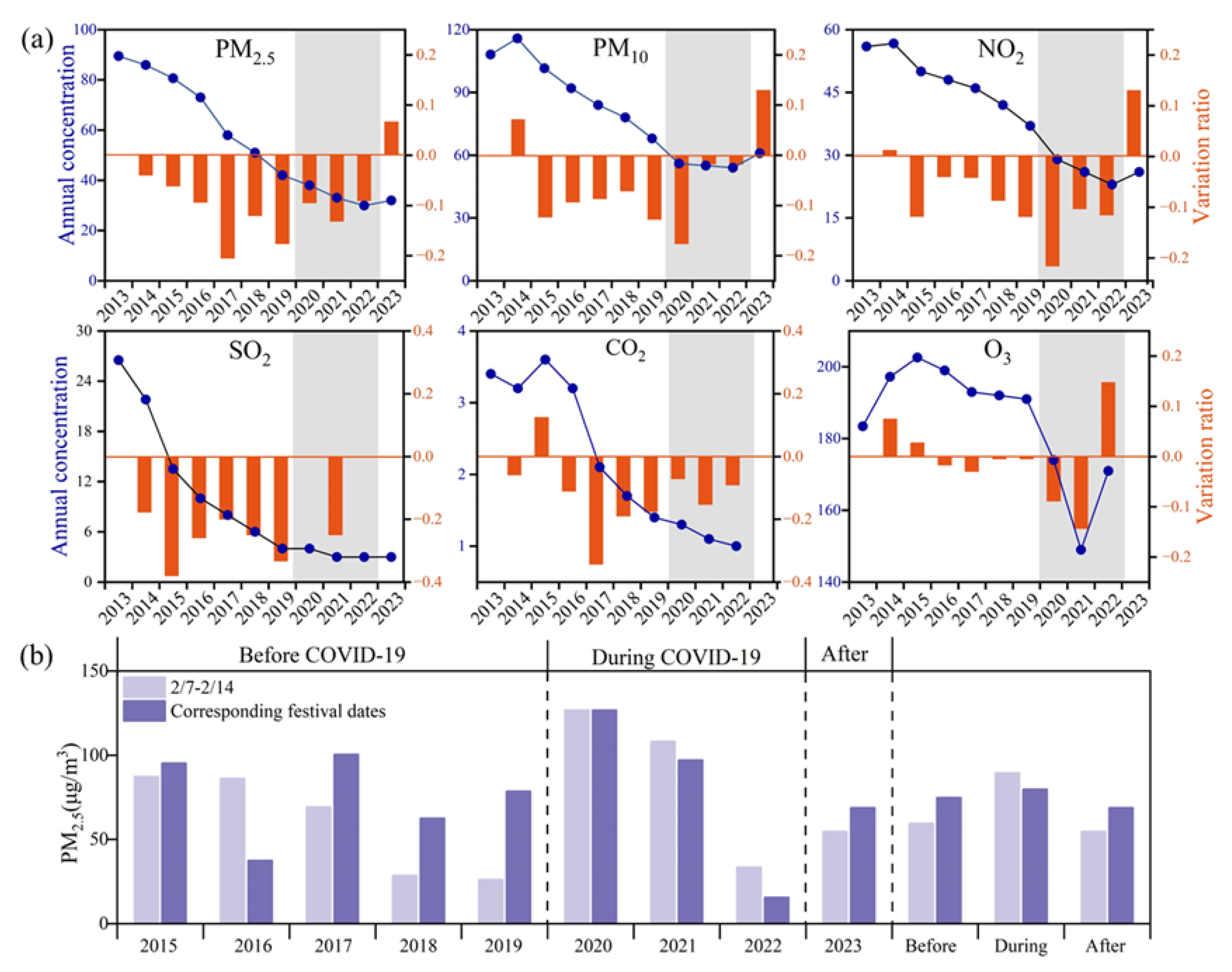
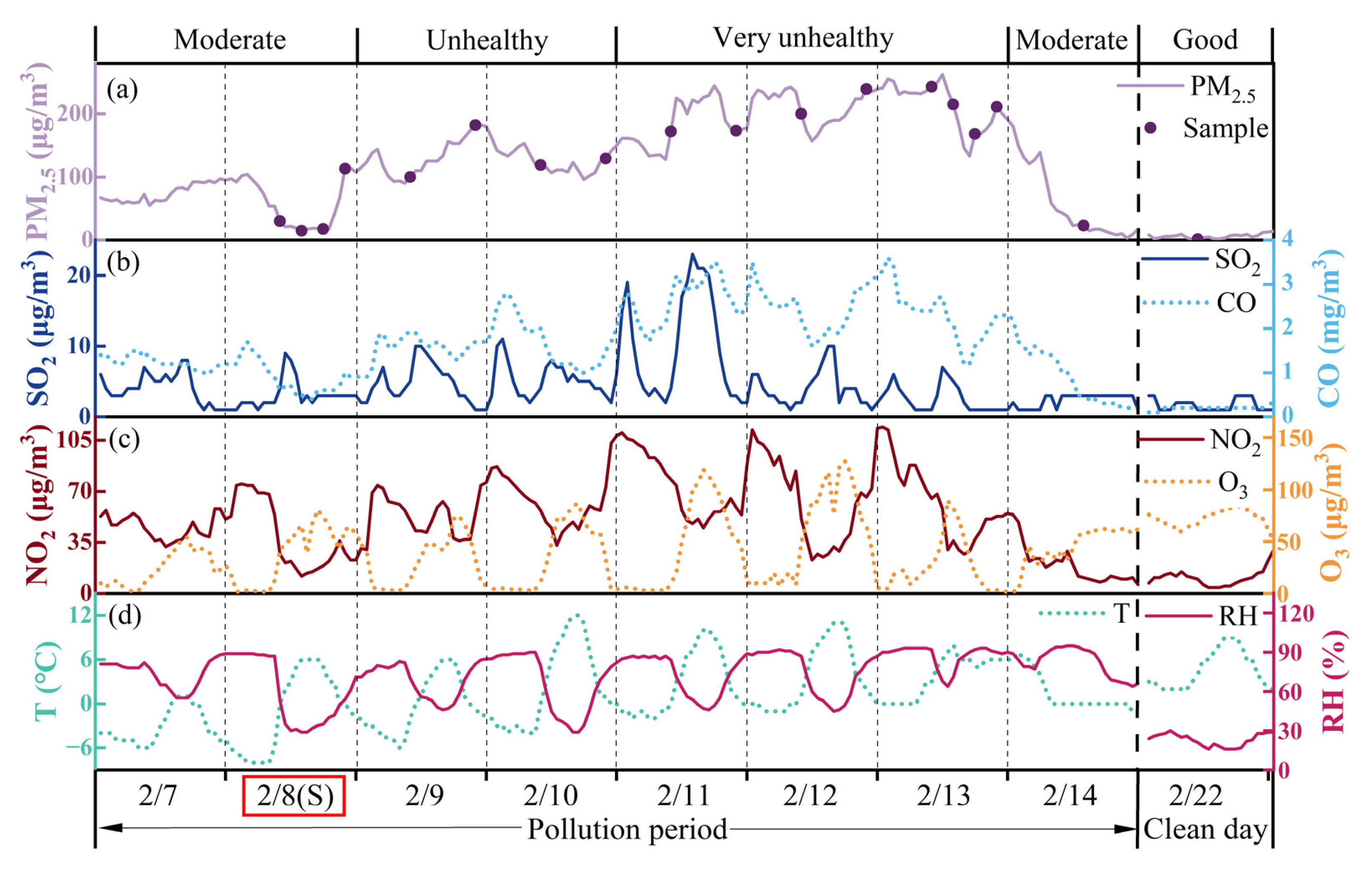
3.1. Air Pollution Processes
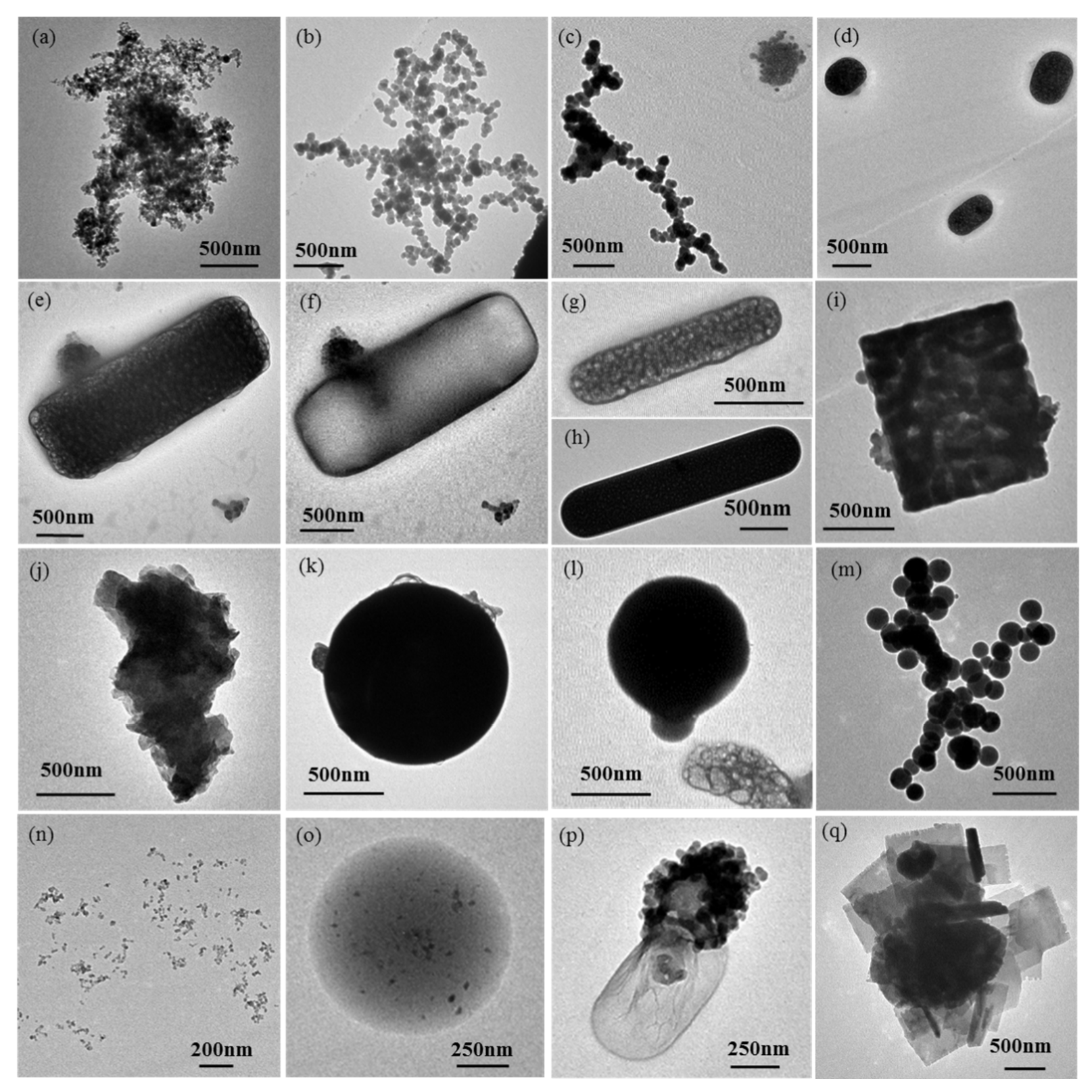
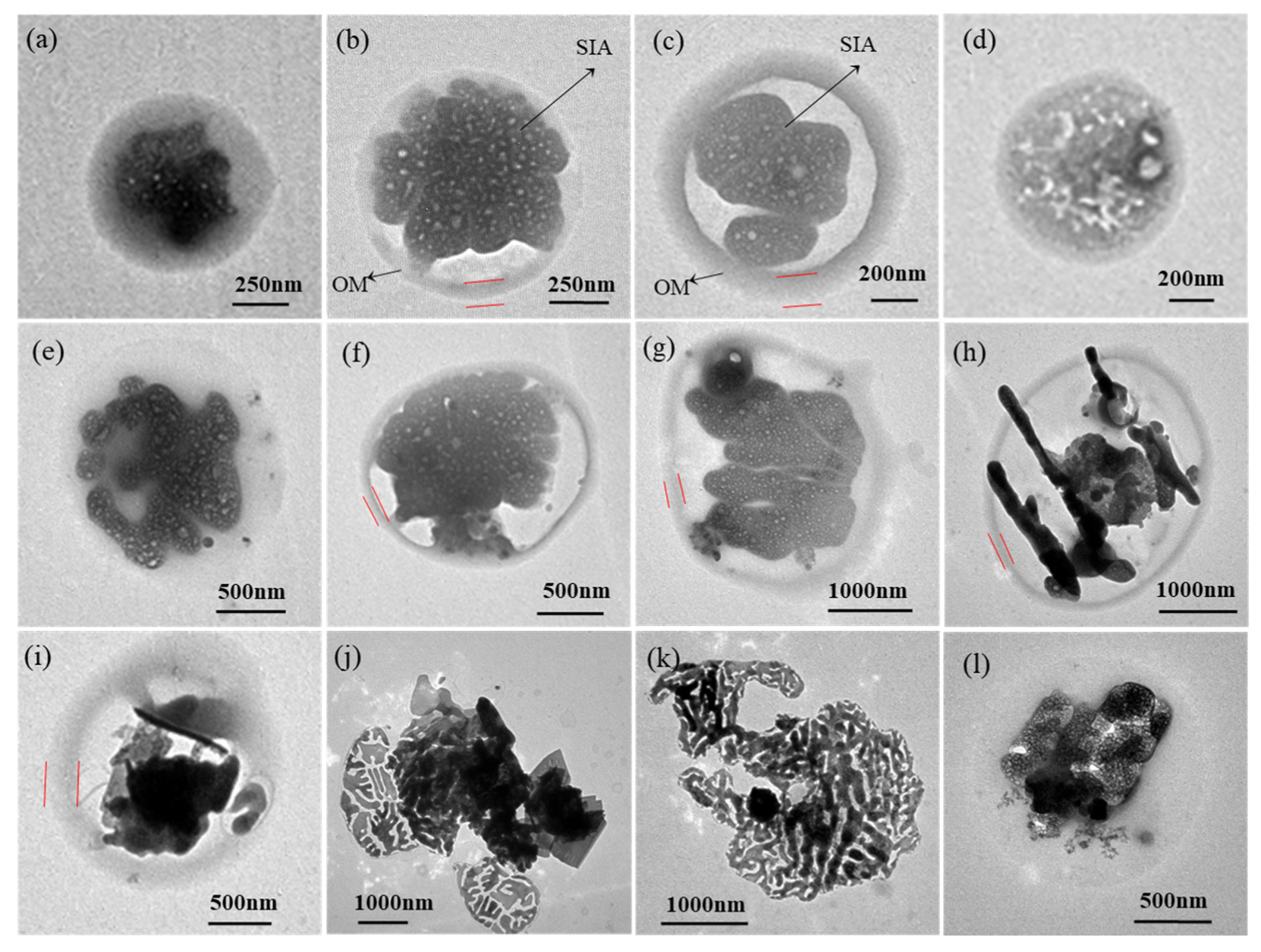
3.2. Individual Particle Types
3.3. Variations in Physicochemical Properties of Individual Particles
4. Discussion
4.1. The Temporal Evolution and Aging Processes of Individual Particles
4.2. Phase Separation Variations
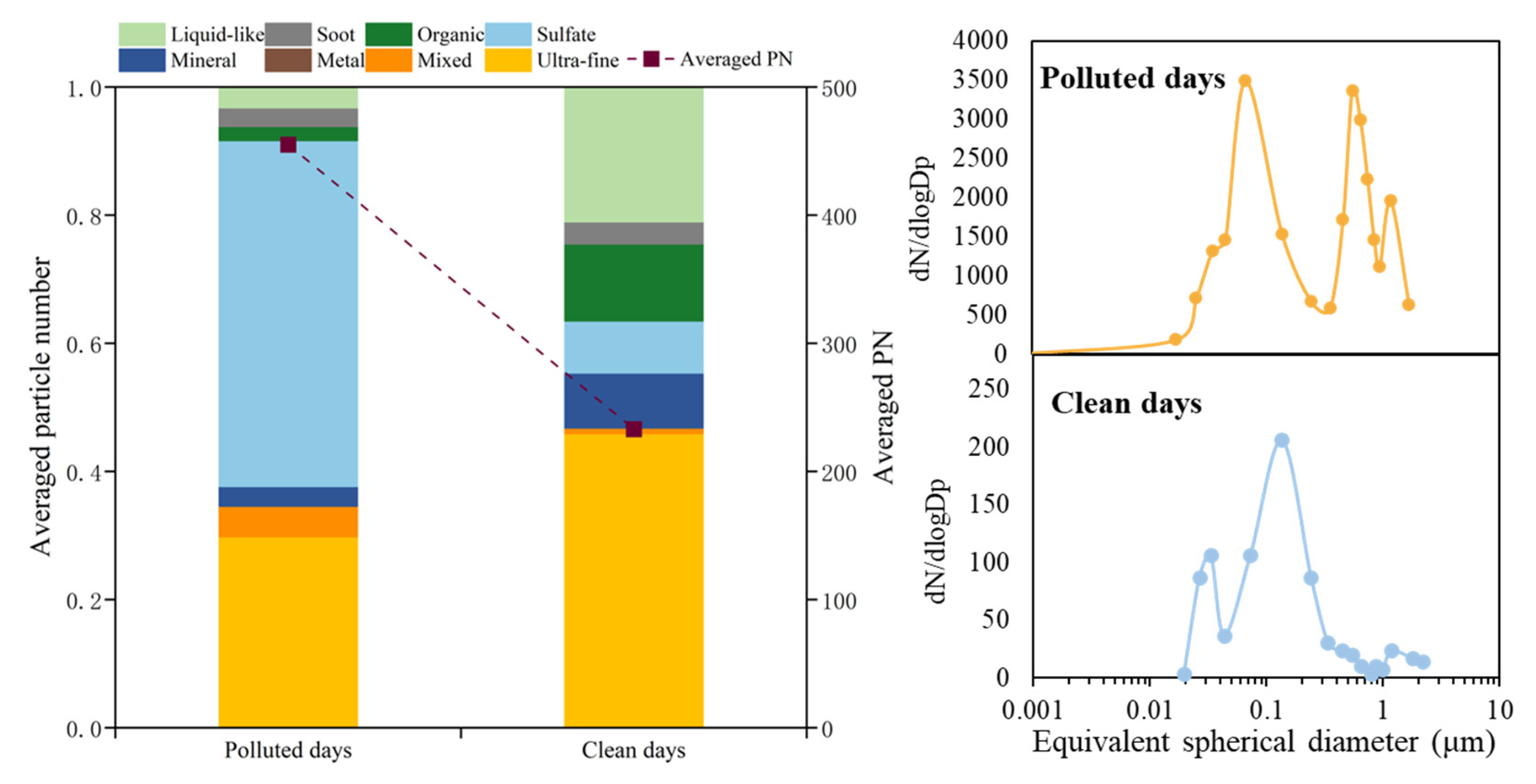
4.3. Comparisons Between Highly Polluted and Cleaner Airborne Particles During the Lockdown Period
4.4. Atmospheric Implications
5. Conclusions
- (1)
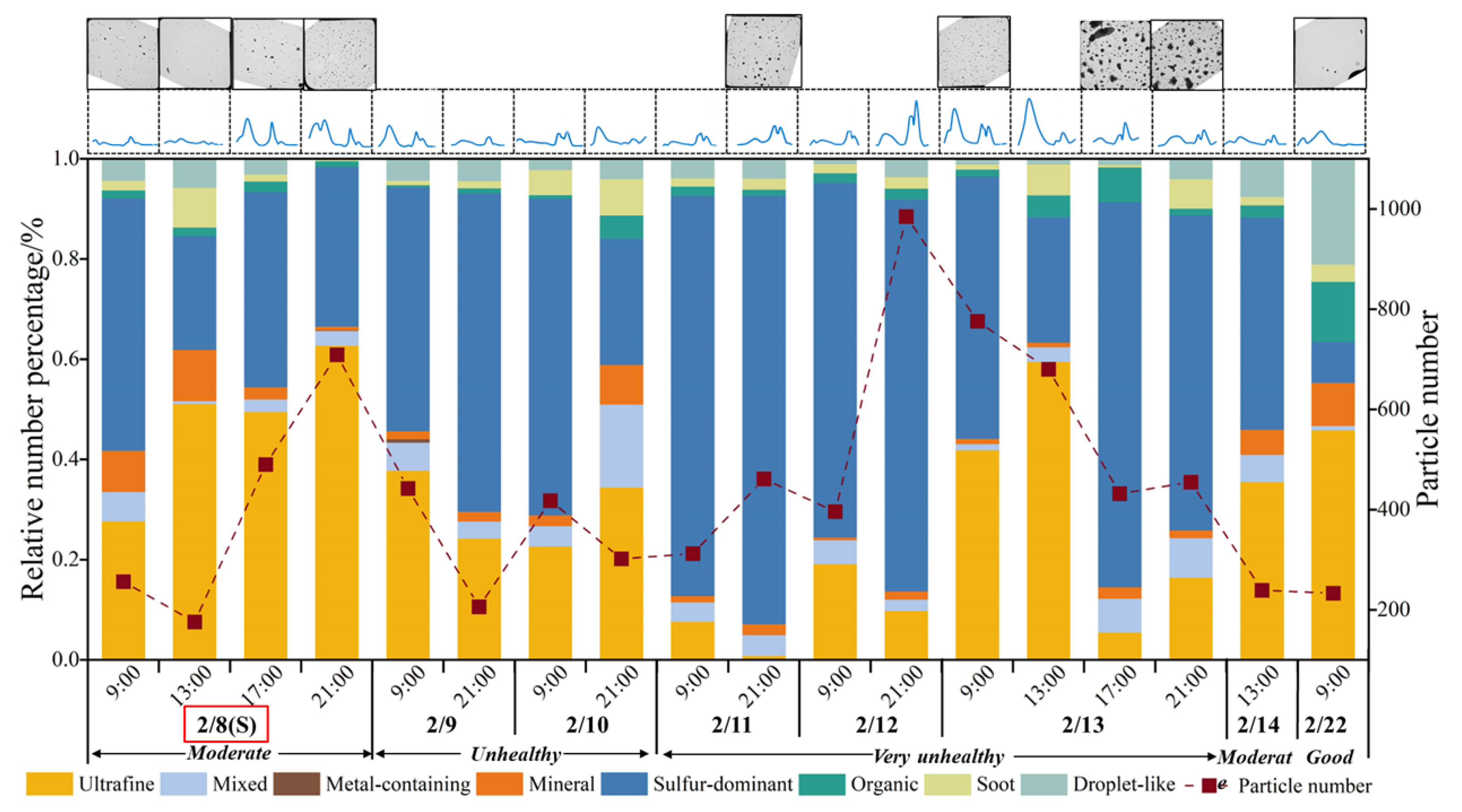
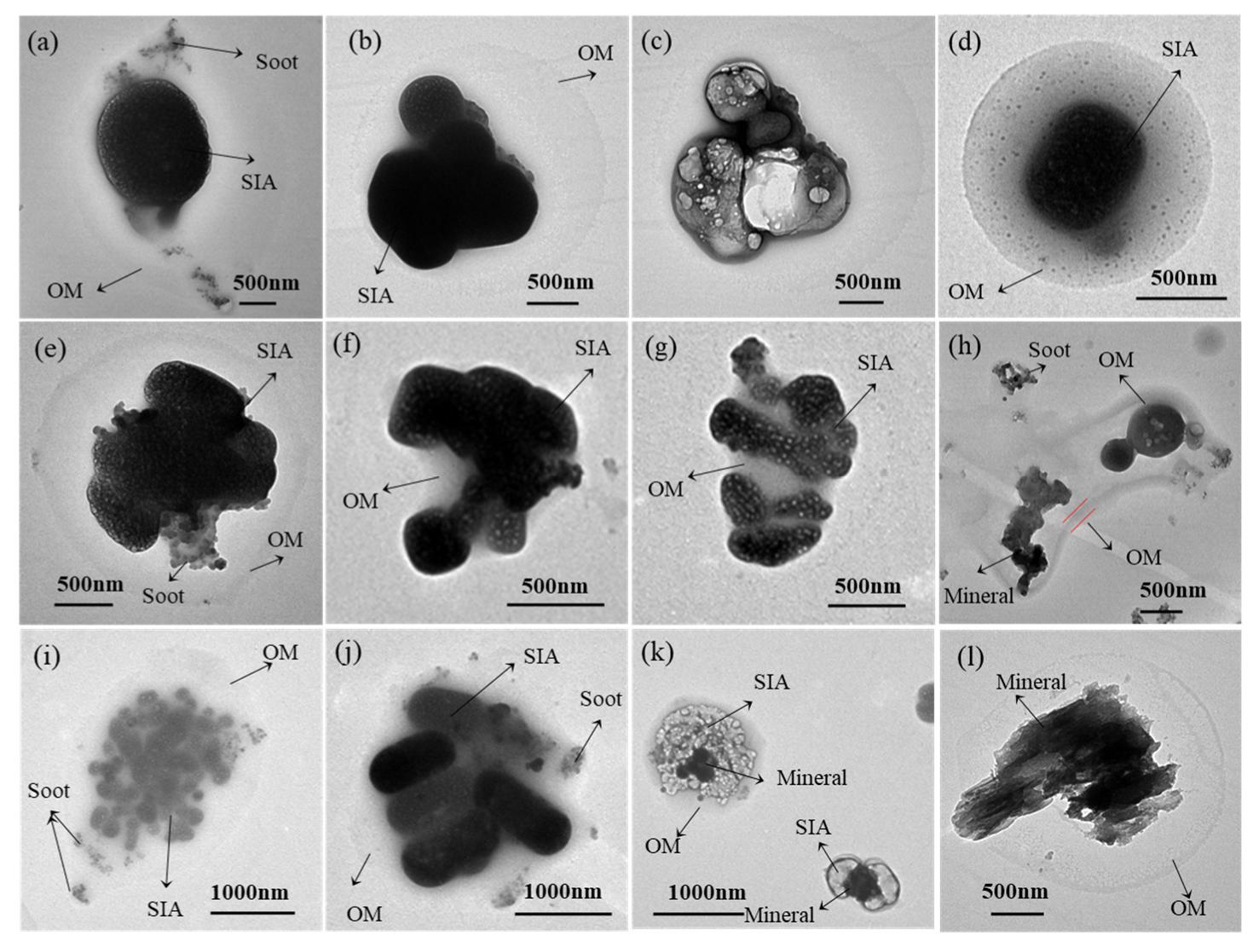
- Airborne aerosol particles collected during the lockdown period were classified into eight types, including soot (2.9%), sulfur-dominant particles (51.5%), mineral particles (3.3%), organic (OM) particles (2.7%), metal-containing particles (0.2%), ultrafine particles (UFPs, 30.7%), droplet-like particles (4.2%), and mixed particles (4.5%). Sulfur-dominant, ultrafine, and mixed particles were the three most abundant types.
- (2)
- Significantly reduced anthropogenic particles (soot, organic, and metal-containing particles) reflect decreased primary emissions due to inactive source emissions during the lockdown period.
- (3)
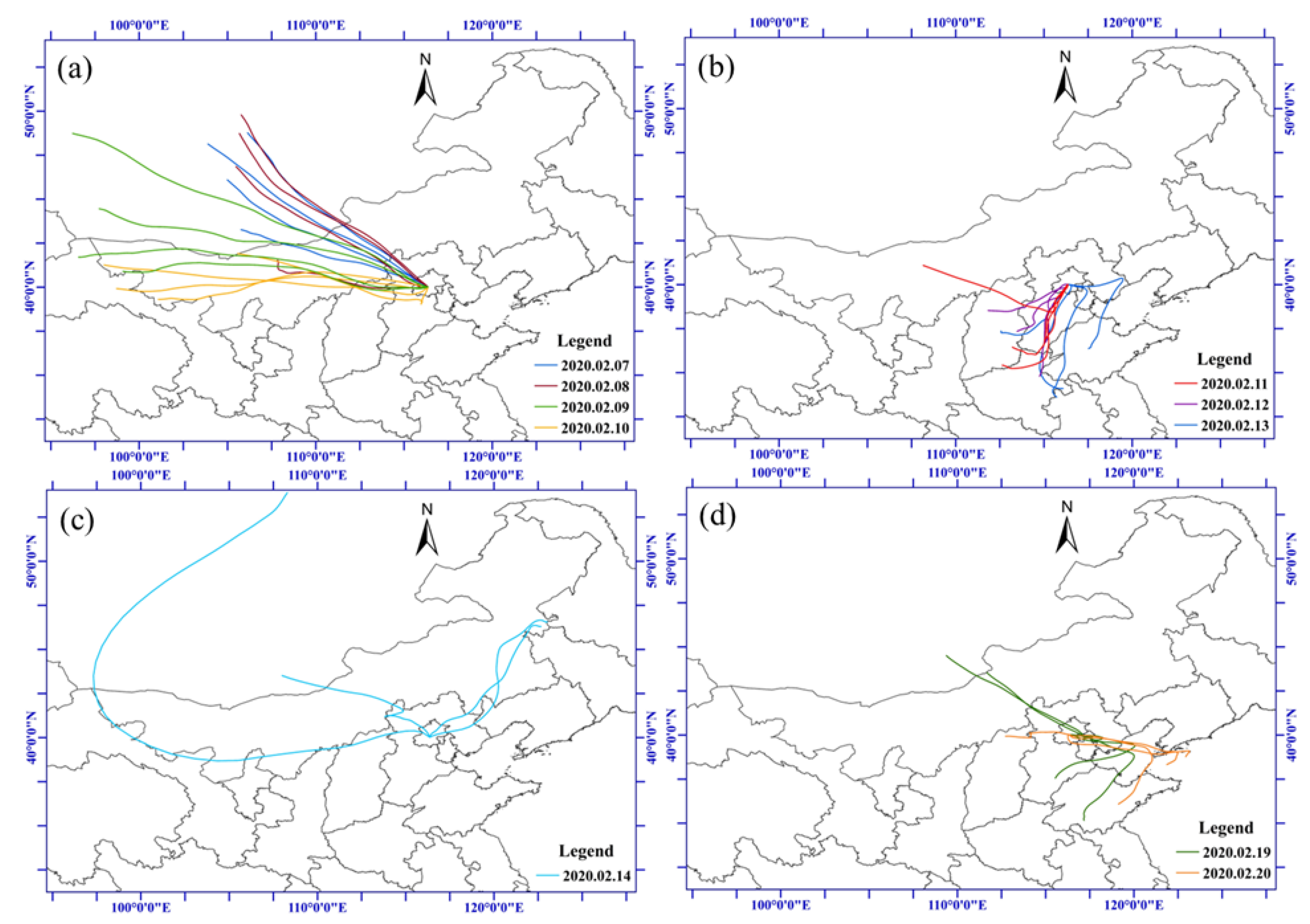
- The haze episode during the lockdown period was initially influenced by the firework-derived primary emissions with mostly fine particles, followed by substantial secondary formation, particularly sulfur-dominant particles peaking at 85.5%, and finally removed by precipitation.
- (4)
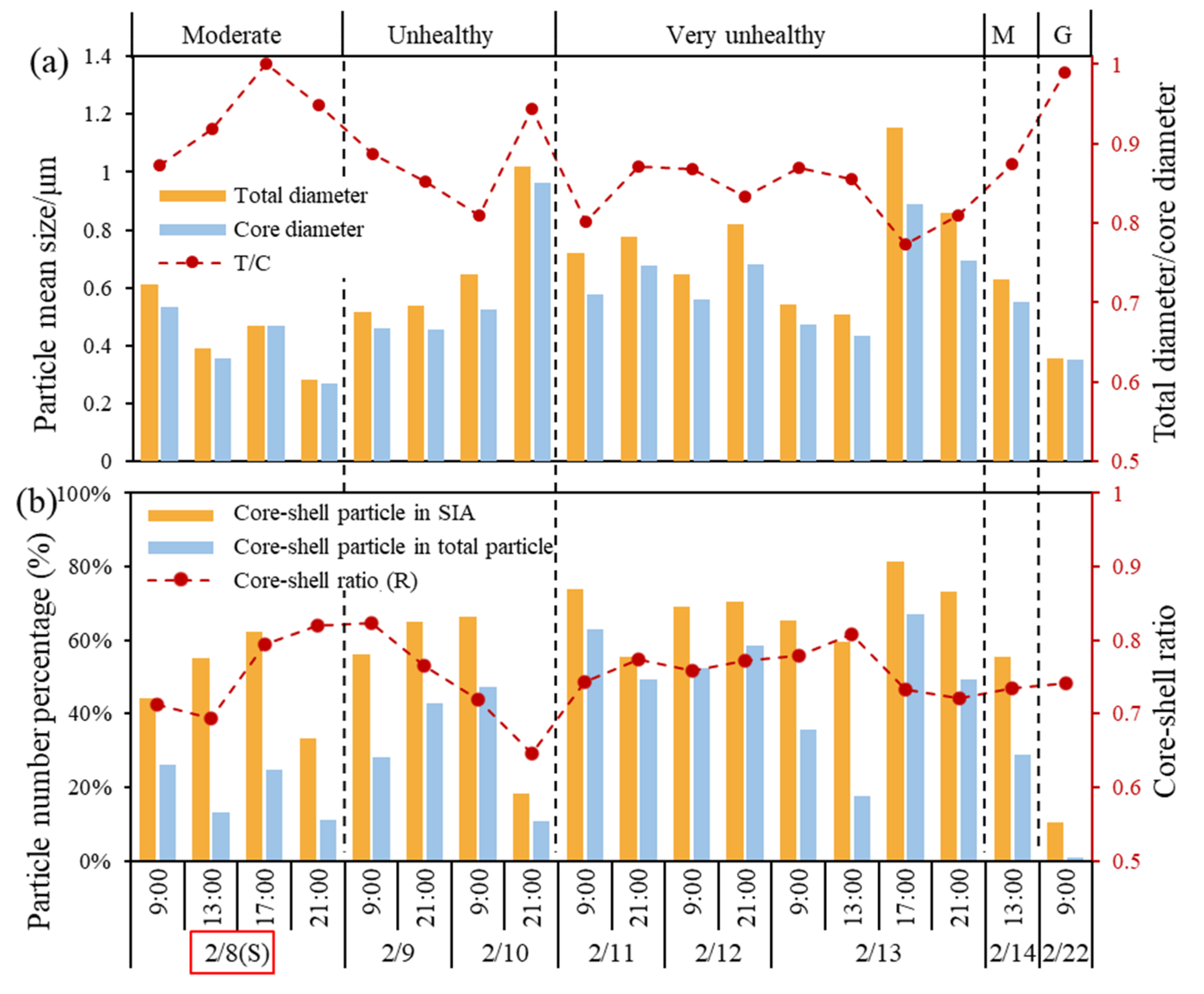
- Advanced particle aging process was evidenced by increasing core–shell particle proportions (up to 67.1%) and decreasing core/shell ratios (minimum 0.65) during the haze event, demonstrating enhanced secondary inorganic salt formation despite reduced primary emissions.
Supplementary Materials
Author Contributions
Funding
Institutional Review Board Statement
Informed Consent Statement
Data Availability Statement
Acknowledgments
Conflicts of Interest
References
- U.N. World Health Organization (WHO). Statement on the Second Meeting of the International Health Regulations (2005) Emergency Committee Regarding the Outbreak of Novel Coronavirus (2019-nCoV). WHO Official Website, 30 January 2020. Available online: https://www.who.int/news/item/30-01-2020-statement-on-the-second-meeting-of-the-international-health-regulations-(2005)-emergency-committee-regarding-the-outbreak-of-novel-coronavirus-(2019-ncov) (accessed on 3 August 2020).
- Muhammad, S.; Long, X.L.; Salman, M. COVID-19 pandemic and environmental pollution: A blessing in disguise? Sci. Total Environ. 2020, 728, 138820. [Google Scholar] [CrossRef] [Scilit] [PubMed]
- Chen, Y.T.; Zhang, Y.; Yu, G.Y.; Wang, Q.; Ma, H.; Yang, F. Impacts of transportation emissions on horizontal and vertical distributions of air pollutants in Shanghai: Insights from emission reduction in COVID-19 lockdown. Atmos. Environ. X 2024, 22, 100267. [Google Scholar] [CrossRef] [Scilit]
- Si, J.J.; Zhang, L.; Zhang, S.Z.; Li, Y.J.; Zhang, Z.X.; He, Z.Q.; Chen, Y.; Zhan, H.B. Response of air pollution to meteorological conditions and socioeconomic activities associated to the COVID-19 outbreak in the Yangtze River Economic Belt. Atmos. Environ. 2024, 323, 16. [Google Scholar] [CrossRef] [Scilit]
- Lian, X.B.; Huang, J.P.; Huang, R.J.; Liu, C.W.; Wang, L.N.; Zhang, T.H. Impact of city lockdown on the air quality of COVID-19-hit of Wuhan city. Sci. Total Environ. 2020, 742, 140556. [Google Scholar] [CrossRef] [Scilit]
- Bauwens, M.; Compernolle, S.; Stavrakou, T.; Müller, J.-F.; Van Gent, J.; Eskes, H.; Levelt, P.F.; Van Der A, R.; Veefkind, J.P.; Vlietinck, J.; et al. Impact of coronavirus outbreak on NO2 pollution assessed using TROPOMI and OMI observations. Geophys. Res. Lett. 2020, 47, e2020GL087978. [Google Scholar] [CrossRef] [Scilit]
- Dai, Q.L.; Ding, J.; Hou, L.L.; Li, L.X.; Cai, Z.Y.; Liu, B.S.; Song, C.B.; Bi, X.H.; Wu, J.H.; Zhang, Y.F.; et al. Haze episodes before and during the COVID-19 shutdown in Tianjin, China: Contribution of fireworks and residential burning. Environ. Pollut. 2021, 286, 117252. [Google Scholar] [CrossRef] [Scilit]
- Zhang, X.Y.; Xu, X.D.; Ding, Y.H.; Liu, Y.J.; Zhang, H.D.; Wang, Y.Q.; Zhong, J.T. The impact of meteorological changes from 2013 to 2017 on PM2.5 mass reduction in key regions in China. Sci. China Earth Sci. 2019, 62, 1885–1902. [Google Scholar] [CrossRef] [Scilit]
- Huang, X.; Ding, A.J.; Gao, J.; Zheng, B.; Zhou, D.R.; Qi, X.M.; Tang, R.; Wang, J.P.; Ren, C.H.; Nie, W.; et al. Enhanced secondary pollution offset reduction of primary emissions during COVID-19 lockdown in China. Natl. Sci. Rev. 2021, 8, 51–59. [Google Scholar] [CrossRef] [Scilit]
- Ma, T.; Duan, F.K.; Ma, Y.L.; Zhang, Q.Q.; Xu, Y.Z.; Li, W.G.; Zhu, L.D.; He, K.B. Unbalanced emission reductions and adverse meteorological conditions facilitate the formation of secondary pollutants during the COVID-19 lockdown in Beijing. Sci. Total Environ. 2022, 838, 155970. [Google Scholar] [CrossRef] [Scilit]
- Li, X.X.; Zhao, B.; Zhou, W.; Shi, H.R.; Yin, R.J.; Cai, R.L.; Yang, D.S.; Dällenbach, K.; Deng, C.J.; Fu, Y.Y.; et al. Responses of gaseous sulfuric acid and particulate sulfate to reduced SO2 concentration: A perspective from long-term measurements in Beijing. Sci. Total Environ. 2020, 721, 137700. [Google Scholar] [CrossRef] [Scilit]
- Yuan, Q.; Xu, J.Z.; Liu, L.; Zhang, A.X.; Liu, Y.M.; Zhang, J.; Wan, X.; Li, M.M.; Qin, K.; Cong, Z.Y.; et al. Evidence for Large Amounts of Brown Carbonaceous Tarballs in the Himalayan Atmosphere. Environ. Sci. Technol. Lett. 2021, 8, 16–23. [Google Scholar] [CrossRef] [Scilit]
- Peterson, R.E.; Tyler, B.J. Surface composition of atmospheric aerosol: Individual particle characterization by TOF-SIMS. Appl. Surf. Sci. 2003, 203–204, 751–756. [Google Scholar] [CrossRef] [Scilit]
- Li, W.J.; Shao, L.Y.; Li, Z.P.; Li, H.; Gao, J.; Li, J.J.; Zhang, H.; Zhang, Z.Z.; Silva, L.F.O.; Zhang, M.Y.; et al. Surface chemistry of atmospheric nanoparticles during a haze episode in Beijing by TOF-SIMS. Gondwana Res. 2022, 110, 305–318. [Google Scholar] [CrossRef] [Scilit]
- Shao, L.Y.; Liu, P.J.; Jones, T.; Yang, S.S.; Wang, W.H.; Zhang, D.Z.; Li, Y.W.; Yang, C.X.; Xing, J.P.; Hou, C.; et al. A review of atmospheric individual particle analyses: Methodologies and applications in environmental research. Gondwana Res. 2022, 110, 347–369. [Google Scholar] [CrossRef] [Scilit]
- Li, W.J.; Sun, J.X.; Xu, L.; Shi, Z.B.; Riemer, N.; Sun, Y.L.; Fu, P.Q.; Zhang, J.C.; Lin, Y.T.; Wang, X.F.; et al. A conceptual framework for mixing structures in individual aerosol particles. J. Geophys. Res.-Atmos. 2016, 121, 13784–13798. [Google Scholar] [CrossRef] [Scilit]
- Schneider, C.A.; Rasband, W.S.; Eliceiri, K.W. NIH Image to ImageJ: 25 years of image analysis. Nat. Methods 2012, 9, 671–675. [Google Scholar] [CrossRef] [Scilit]
- Murr, L.E.; Soto, K.F. A TEM study of soot, carbon nanotubes, and related fullerene nanopolyhedra in common fuel-gas combustion sources. Mater. Charact. 2005, 554, 50–65. [Google Scholar] [CrossRef] [Scilit]
- Wang, W.H.; Shao, L.Y.; Li, J.; Chang, L.L.; Zhang, D.Z.; Zhang, C.C.; Jiang, J.K. Characteristics of Individual Particles Emitted from an Experimental Burning Chamber with the Coal from Lung Cancer Area of Xuanwei, China. Aerosol Air Qual. Res. 2018, 19, 355–363. [Google Scholar] [CrossRef] [Scilit]
- Wang, W.H.; Shao, L.Y.; Guo, M.L.; Hou, C.; Xing, J.P.; Wu, F. Physicochemical Properties of Individual Airborne Particles in Beijing during Pollution Periods. Aerosol Air Qual. Res. 2017, 17, 3209–3219. [Google Scholar] [CrossRef] [Scilit]
- Ueda, S. Morphological change of solid ammonium sulfate particles below the deliquescence relative humidity: Experimental reproduction of atmospheric sulfate particle shapes. Aerosol Sci. Technol. 2020, 55, 423–437. [Google Scholar] [CrossRef] [Scilit]
- Zhang, Y.; Yang, Y.M.; Zhang, L.M.; Xu, H.M.; Sun, J.; Wang, T.; Li, F.X.; Chang, X.J.; Ho, S.H.; Li, B.; et al. Insight into the contributions of primary emissions of sulfate, nitrate, and ammonium from residential solid fuels to ambient PM2.5. Atmos. Res. 2023, 290, 106790. [Google Scholar] [CrossRef] [Scilit]
- Li, W.J.; Liu, L.; Zhang, J.; Xu, L.; Wang, Y.Y.; Sun, Y.L.; Shi, Z.B. Microscopic Evidence for Phase Separation of Organic Species and Inorganic Salts in Fine Ambient Aerosol Particles. Environ. Sci. Technol. 2021, 55, 2234–2242. [Google Scholar] [CrossRef] [Scilit] [PubMed]
- Jones, T.P.; Williamson, B.J.; BéruBé, K.A.; Richards, R.J. Microscopy and chemistry of particles collected on TEOM filters: Swansea, South Wales, 1998–1999. Atmos. Environ. 2001, 35, 3573–3583. [Google Scholar] [CrossRef] [Scilit]
- Rausch, J.; Jaramillo-Vogel, D.; Perseguers, S.; Schnidrig, N.; Grobéty, B.; Yajan, P. Automated identification and quantification of tire wear particles (TWP) in airborne dust: SEM/EDX single particle analysis coupled to a machine learning classifier. Sci. Total Environ. 2022, 803, 149832. [Google Scholar] [CrossRef] [Scilit] [PubMed]
- Mathis, U.; Kaegi, T.; Mohr, M.; Zenobi, R. TEM analysis of volatile nanoparticles from particle trap equipped diesel and direct-injection spark-ignition vehicles. Atmos. Environ. 2004, 38, 4347–4355. [Google Scholar] [CrossRef] [Scilit]
- David, B.; Kittelson, A. Engines and nanoparticles: A review. J. Aerosol Sci. 1998, 29, 575–588. [Google Scholar] [CrossRef] [Scilit]
- Hilario, M.R.A.; Arellano, A.F.; Behrangi, A.; Crosbie, E.C.; Digangi, J.P.; Diskin, G.S.; Shook, M.A.; Ziemba, L.D.; Sorooshian, A. Assessing potential indicators of aerosol wet scavenging during long-range transport. Atmos. Meas. Tech. 2024, 17, 37–55. [Google Scholar] [CrossRef] [Scilit]
- Li, W.J.; Shao, L.Y. Mixing and water-soluble characteristics of particulate organic compounds in individual urban aerosol particles. J. Geophys. Res. Atmos. 2010, 115, D02301. [Google Scholar] [CrossRef] [Scilit]
- Wang, W.H.; Shao, L.Y.; Xing, J.P.; Li, J.; Chang, L.L.; Li, W.J. Physicochemical Characteristics of Individual Aerosol Particles during the 2015 China Victory Day Parade in Beijing. Atmosphere 2018, 9, 40. [Google Scholar] [CrossRef] [Scilit]
- Zhang, K.; Wang, Y.S.; Wen, T.X.; Yousef, M.; Frank, M. Properties of nitrate, sulfate and ammonium in typical polluted atmospheric aerosols (PM10) in Beijing. Atmos. Res. 2007, 84, 67–77. [Google Scholar] [CrossRef] [Scilit]
- Kulmala, M.; Vehkamaki, H.; Petaja, T.; Maso, M.D.; Lauri, A.; Kerminen, V.M.; Birmili, W.; Mcmurry, P.H. Formation and growth rates of ultrafine atmospheric particles: A review of observations. J. Aerosol. Sci. 2004, 35, 143–176. [Google Scholar] [CrossRef] [Scilit]
- Kerminen, V.M.; Chen, X.M.; Vakkari, V.; Petäjä, T.; Kulmala, M.; Bianchi, F. Atmospheric new particle formation and growth: Review of field observations. Environ. Res. Lett. 2018, 13, 103003. [Google Scholar] [CrossRef] [Scilit]
- Zhang, R.Y.; Khalizov, A.; Wang, L.; Hu, M.; Xu, W. Nucleation and Growth of Nanoparticles in the Atmosphere. Chem. Rev. 2011, 112, 1957–2011. [Google Scholar] [CrossRef] [Scilit] [PubMed]
- Konarski, P.; Haluszka, J.; Cwil, M. Comparison of urban and rural particulate air pollution characteristics obtained by SIMS and SSMS. Appl. Surf. Sci. 2006, 252, 7010–7013. [Google Scholar] [CrossRef] [Scilit]
- Cheng, W.J.; Weng, L.T.; Li, Y.J.; Lau, A.P.S.; Chan, C.K.; Chan, C.M. Characterization of size-segregated aerosols using ToF-SIMS imaging and depth profiling. Surf. Interface Anal. 2014, 46, 480–488. [Google Scholar] [CrossRef] [Scilit]
- Bertram, A.K.; Martin, S.T.; Hanna, S.J.; Smith, M.; Bodsworth, A.Q.; Chen, P.; Kuwata, M.; Liu, A.; You, Y.; Zorn, S. Predicting the relative humidities of liquid-liquid phase separation, efflorescence, and deliquescence of mixed particles of ammonium sulfate, organic material, and water using the organic-to-sulfate mass ratio of the particle and the oxygen-to-carbon elemental ratio of the organic component. Atmos. Chem. Phys. 2011, 11, 10995–11006. [Google Scholar] [CrossRef] [Scilit]
- You, Y.; Renbaum-Wolff, L.; Carreras-Sospedra, M.; Hanna, S.J.; Hiranuma, N.; Kamal, S.; Smith, M.; Zhang, X.L.; Weber, R.; Shilling, J.E.; et al. Images reveal that atmospheric particles can undergo liquid-liquid phase separations. Proc. Natl. Acad. Sci. USA 2012, 109, 13188–13193. [Google Scholar] [CrossRef] [Scilit]
- Wang, Y.; Shi, M.S.; Lv, Z.F.; Liu, H.; He, H. Local and regional contributions to PM2.5 in the Beijing 2022 Winter Olympics infrastructure areas during haze episodes. Front. Environ. Sci. Eng. 2021, 15, 140. [Google Scholar] [CrossRef] [Scilit]
- Hong, G.; Jee, Y.-K. Special issue on ultrafine particles: Where are they from and how do they affect us? Exp. Mol. Med. 2020, 52, 309–310. [Google Scholar] [CrossRef] [Scilit]



| No. | Date | Air Quality | Duration | PM2.5 (μg/m3) | PM10 (μg/m3) | T * (°C) | RH * (%) | P * (hPa) | Note | Weather |
|---|---|---|---|---|---|---|---|---|---|---|
| 1 | 2/8A * | Moderate (AQI: 82) | 2 min 30 s | 33.4 | 43.9 | 4.1 | 34.6 | 1028.8 | Sunny | |
| 2 | 2/8N * | 3 min | 15.7 | 21.4 | 12.1 | 25.5 | 1026.8 | |||
| 3 | 2/8P * | 1 min 50 s | 73.8 | 110.5 | 8.7 | 30 | 1026 | Firework | ||
| 4 | 2/8E * | 1 min | 117.8 | 181.1 | 6.5 | 39 | 1026.6 | |||
| 5 | 2/9A | Unhealthy (AQI: 160) | 50 s | 114.5 | 155.7 | 4.1 | 45 | 1021.2 | Sunny | |
| 6 | 2/9P | 20 s | 162.3 | 238.7 | 15.5 | 28.9 | 1017.1 | |||
| 7 | 2/10A | Unhealthy (AQI: 163) | 35 s | 148.4 | 206.2 | 12.3 | 33.4 | 1016 | Sunny | |
| 8 | 2/10P | 30 s | 116.9 | 184.2 | 13 | 34 | 1014.6 | |||
| 9 | 2/11A | Very unhealthy (AQI: 232) | 20 s | 218.5 | 305.9 | 9.3 | 42.3 | 1015.6 | Sunny | |
| 10 | 2/11P | 12 s | 266.5 | 409.2 | 11.7 | 53.9 | 1013.2 | |||
| 11 | 2/12A | Very unhealthy (AQI: 257) | 13 s | 258.1 | 368.3 | 8.3 | 42.3 | 1012.3 | Haze to fog | |
| 12 | 2/12P | 18 s | 249.6 | 346.8 | 18.5 | 31.9 | 1007.8 | |||
| 13 | 2/13A | Very unhealthy (AQI: 247) | 12 s | 262.2 | 433.7 | 9.8 | 40.8 | 1008.9 | Snowfall start | Haze to sleet |
| 14 | 2/13N | 12 s | 259.3 | 381.3 | 15.3 | 50.6 | 1007.2 | |||
| 15 | 2/13P | 20 s | 226.8 | 346.8 | 10.2 | 49.3 | 1007.8 | |||
| 16 | 2/13E | 20 s | 237.3 | 379.2 | 10.9 | 50.7 | 1011.4 | |||
| 17 | 2/14N | Moderate (AQI: 69) | 2 min 40 s | 24.9 | 29.0 | 11.9 | 39.7 | 1020.8 | Snowfall finish | Light snowfall |
| 18 | 2/22A | Good (AQI: 40) | 4 min | 3.2 | 4.3 | 9.3 | 19.8 | 1028.7 | Sunny |
| Types | Elemental Composition | Morphology | Stability Under Electron Beam |
|---|---|---|---|
| Soot | Mainly composed of C and O with minor Si and Al | Chain-like or aggregate morphologies with numerous C-rich spheres | Stable |
| Organic particle | Mainly composed of C and O, with minor Si, K, and S | Spherical, near-spherical, or irregular morphologies | Stable |
| Sulfur-dominant particle | Primarily composed of C, S, and O | Spherical, near-spherical, or irregular shapes, with foam-like morphologies | Unstable and beam-sensitive |
| Mineral particle | Mainly composed of Si, Al, Fe, Ca, Na, K, and Mg | Mostly irregular morphologies | Stable |
| Metal-containing particle | Except C, O, mainly composed of metal elements, including Zn, Fe, Cr, Ca, etc. | Spherical or irregular morphologies | Stable |
| Ultrafine particle | Mainly composed of C, O with minor Si, etc. | Irregular morphologies | Stable |
| Droplet-like particle | Mainly composed of C and O, with minor Ca, S, etc. | Mostly round or near-round | Stable |
| Mixed particle | Complex elements | Irregular morphologies | - |
Disclaimer/Publisher’s Note: The statements, opinions and data contained in all publications are solely those of the individual author(s) and contributor(s) and not of MDPI and/or the editor(s). MDPI and/or the editor(s) disclaim responsibility for any injury to people or property resulting from any ideas, methods, instructions or products referred to in the content. |
© 2025 by the authors. Licensee MDPI, Basel, Switzerland. This article is an open access article distributed under the terms and conditions of the Creative Commons Attribution (CC BY) license (https://creativecommons.org/licenses/by/4.0/).
Share and Cite
Li, W.; Shao, L.; Jones, T.P.; Li, H.; Zhang, D.; Li, W.; Gao, J.; Santosh, M.; Yang, S.; BéruBé, K. Microscopic Evidence of Haze Formation During the COVID-19 Lockdown in Beijing: Insights from Physicochemical Properties. Toxics 2025, 13, 1051. https://doi.org/10.3390/toxics13121051
Li W, Shao L, Jones TP, Li H, Zhang D, Li W, Gao J, Santosh M, Yang S, BéruBé K. Microscopic Evidence of Haze Formation During the COVID-19 Lockdown in Beijing: Insights from Physicochemical Properties. Toxics. 2025; 13(12):1051. https://doi.org/10.3390/toxics13121051
Chicago/Turabian StyleLi, Wenjun, Longyi Shao, Timothy P. Jones, Hong Li, Daizhou Zhang, Weijun Li, Jian Gao, M. Santosh, Shushen Yang, and Kelly BéruBé. 2025. "Microscopic Evidence of Haze Formation During the COVID-19 Lockdown in Beijing: Insights from Physicochemical Properties" Toxics 13, no. 12: 1051. https://doi.org/10.3390/toxics13121051
APA StyleLi, W., Shao, L., Jones, T. P., Li, H., Zhang, D., Li, W., Gao, J., Santosh, M., Yang, S., & BéruBé, K. (2025). Microscopic Evidence of Haze Formation During the COVID-19 Lockdown in Beijing: Insights from Physicochemical Properties. Toxics, 13(12), 1051. https://doi.org/10.3390/toxics13121051