Article

Risk Prediction Score for Thermal Mapping of Pharmaceutical Transport Routes in Brazil

by
Clayton Gerber Mangini
1,
Nilsa Duarte da Silva Lima
2 and
Irenilza de Alencar Nääs
1,*
1
Graduate Program in Production Engineering, Paulista University, Sao Paulo 05347-020, Brazil
2
Department of Animal Science, Federal University of Roraima, Boa Vista 69310-000, Brazil
*
Author to whom correspondence should be addressed.
Logistics 2024, 8(3), 84; https://doi.org/10.3390/logistics8030084

Submission received: 4 July 2024 / Revised: 12 August 2024 / Accepted: 15 August 2024 / Published: 19 August 2024

Abstract

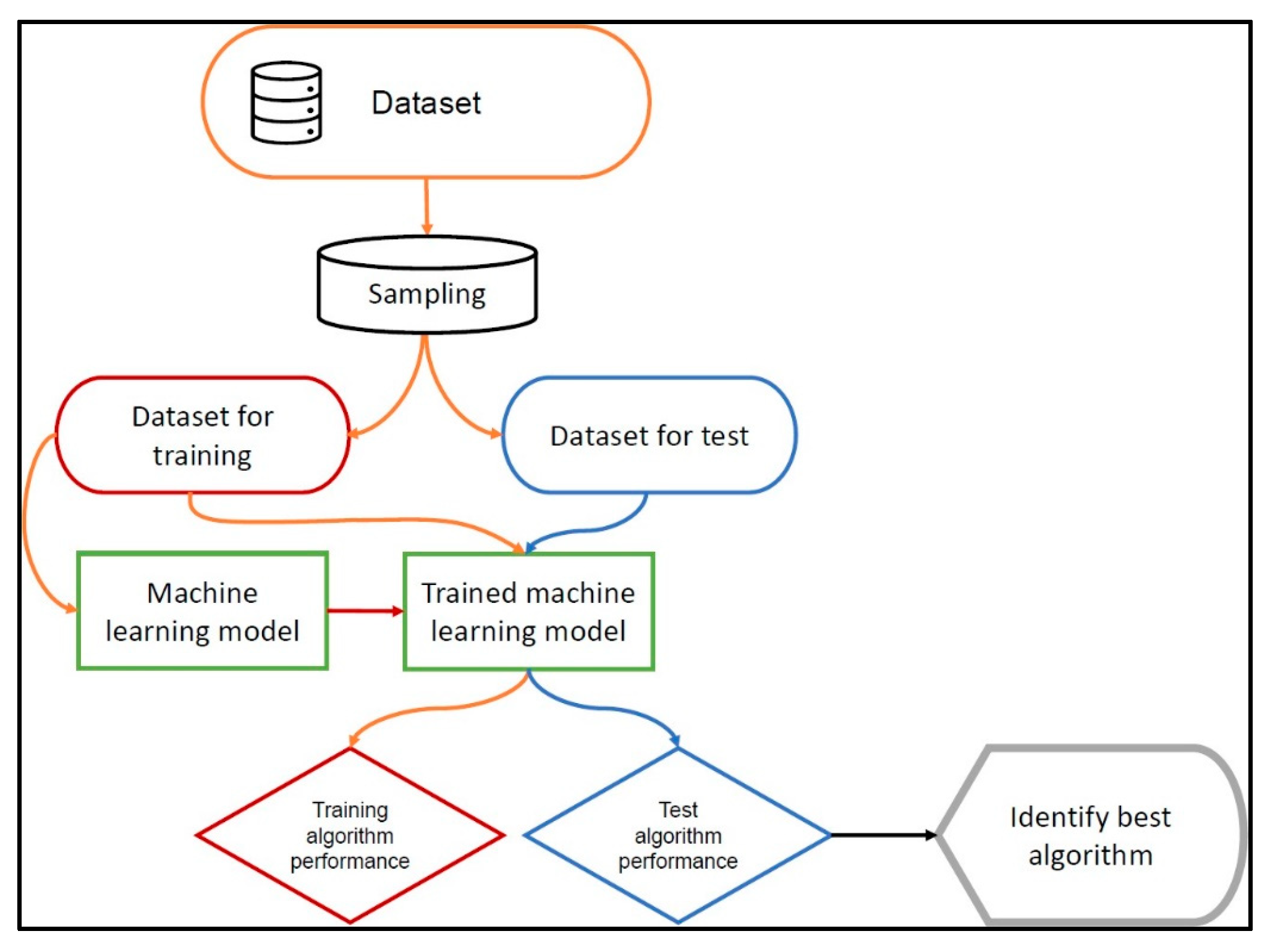
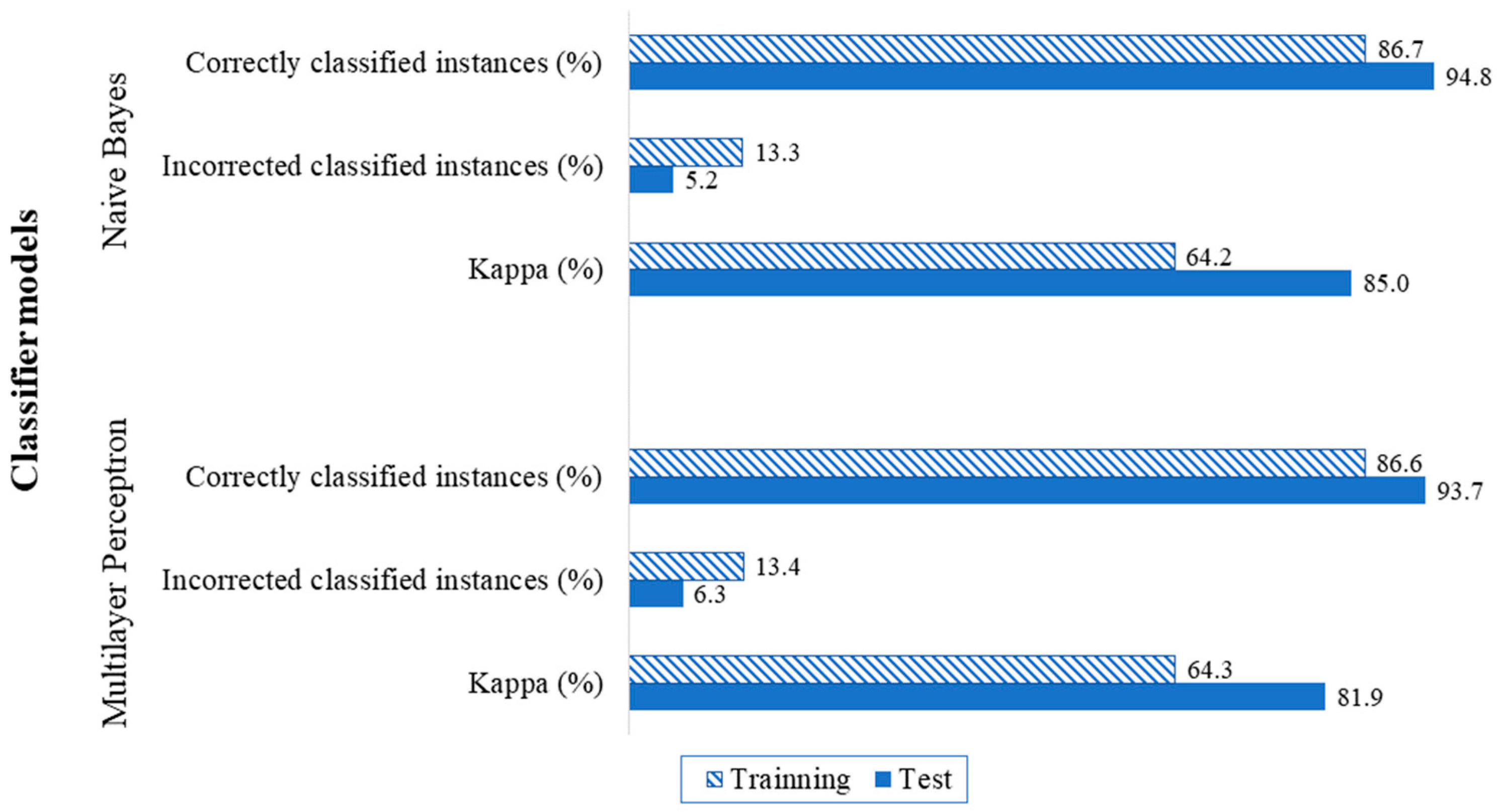
Background: The global pharmaceutical industry is crucial for providing medications but faces challenges in distributing products safely, especially in tropical and remote areas. Pharmaceuticals require careful transport control to maintain quality; therefore, manufacturers must adopt optimal distribution strategies to ensure product quality throughout the supply chain. The current research focused on creating a model to assess risk levels and predict risk categorization (low, moderate, and high) associated with thermal mapping across pharmaceutical transportation pathways. Methods: Data from a company for pharmaceutical logistics in Brazil were used. The data had 85,261 instances and six attributes (season, origin, destination, route, temperature, and temperature excursion). The dataset consisted of critical destinations, including the shipment time, cargo temperature, and route information. The classification algorithms (CART-Decision Tree, NB-Naive Bayes, and MP-Multilayer Perceptron) were used to build up a model of rules for predicting risk levels in thermal mapping routes; Results: The MP model presented the best performance, indicating a better application probability. The machine learning model is the basis for an automated risk prediction for routes of pharmaceutical transportation; Conclusions: the developed MP model might automatically predict risk during the distribution of pharmaceutical products, which might lead to optimizing time and costs.
Keywords: classifiers; pharmaceuticals logistics; risk management; route operation classifiers; pharmaceuticals logistics; risk management; route operation