




Generative Artificial Intelligence in Supply Chain: Review, Trends, and Future Directions

Abstract
1. Introduction
- What are the major research trends in the application of GenAI to SCM?
- How are different GenAI models applied across the various supply chain decision-making tasks?
- How has research on Generative AI in supply chain management evolved over time, and what patterns can be identified through bibliometric and Supervised Embedding Visualization analyses?
- What research gaps and future opportunities exist for the application of GenAI in SCM?
2. Research Methodology
2.1. Sources of Information and Search Strategy
2.2. Eligibility Criteria
2.3. Study Selection and Screening Process
2.4. Study Selection Results
2.5. Research Methods and Analysis
3. Generative AI Models
3.1. Generative Adversarial Networks
3.2. Variational Autoencoders
3.3. Transformers-Based Models
3.4. Flow-Based Generative Models
4. Supply Chain Tasks
- Level 0 serves as the analytical foundation of the supply chain tasks. It converts raw, multi-source data into actionable insights using advanced analytics and optimization techniques. This level focuses on finding patterns, predicting outcomes, and recommending optimal decisions that balance cost, quality, and performance. Therefore, it enables proactive, data-driven decision-making and ensures operational efficiency across interconnected supply chain processes using historical data, predictive analytics, and optimization.
- Level 1 focuses on supply chain planning and analysis. It involves assessing market demand, forecasting future needs, and aligning supply and capacity accordingly. This level also addresses network planning, structuring suppliers, warehouses, and distribution points to balance service levels and costs. This level ensures adaptation to changing market conditions and data to achieve efficient and effective supply chain performance.
- Level 2 encompasses sourcing and selecting suppliers, procuring materials, and managing warehousing operations. This level ensures the efficient flow and storage of goods, supports order fulfillment, and manages inventory and capacity buffers to address demand variability for suppliers, manufacturers, and end consumers.
- Level 3 emphasizes the ethical and sustainable responsibilities of the supply chain. This level impacts performance, stakeholder perception, and community impact. The goal is to minimize environmental footprint, ensure ethical practices, and integrate sustainability in both forward and reverse supply chains to build trust, corporate responsibility, and long-term brand value.
- Level 4 focuses on operational management and product lifecycle oversight. It includes product development, order management, asset management, risk mitigation, and quality management to ensure efficient production and delivery. This level aims to maximize profitability, minimize costs, and maintain resilience in the supply chain while aligning operations with ethical and sustainable practices highlighted in Level 3.
- Level 5 addresses reverse logistics and after-sales services. It focuses on product returns, refurbishment, remanufacturing, repairs, and warranty management to recover value from products while ensuring customer satisfaction. This level emphasizes sustainable practices, efficient transportation, and effective documentation to support circular supply chains, enhance consumer trust, and extend the lifecycle of products.
5. Generative AI in SCM
6. Bibliometric Analysis
6.1. Keywords Co-Occurrence Analysis
- The yellow cluster includes publications primarily related to the applications of Transformer-based models designed for Natural Language Processing. For transportation, several studies utilize the Transformer architecture to model intricate traffic flow dynamics. Some examples of these models include the Adaptive Spatial–Temporal Transformer Network (ASTTN) [180], Routeformer [181], the Graph-Enhanced Spatial–Temporal Transformer (GE-STT) [182], and the Cross-dimensional global interactive transformer (CDGIT) [183] specifically designed to capture dynamic spatial–temporal features and inter-series dependencies for improved traffic forecasting. Other models, such as the Motion-Inspired Spatial–Temporal Transformer (MSTFormer) [184] apply a motion-inspired Transformer for vessel trajectory prediction. A Heterogeneous Hypergraph Transformer network with Cross-modal Future Interaction (HHT-CFI) proposed by X. Zhou et al., 2025 [185] uses a hypergraph Transformer for multi-agent trajectory prediction. Transformer-based models are also employed for energy consumption forecasting using the Temporal Kolmogorov-Arnold Transformer (TKAT) [186], oil production forecasting via the Informer model [187], and lithium-ion battery State of Health (SOH) prediction through an ADTC-Transformer framework [188].
- The green cluster demonstrates the growing application of Transformer-based models to various optimization problems. The cluster links keywords such as costs, analysis, decision-making, data, scheduling, and cloud computing, among others, and illustrates how AI-driven optimization strategies can enhance productivity in a variety of computing contexts. For example, in the Hybrid-Prediction integrated Planning (HPP) proposed by [189], the authors use the Transformer architecture for interactive open- and closed-loop planning. The algorithm outperforms current algorithms on the Waymo Open Motion Dataset (WOMD) and Car Learning to Act (CARLA) benchmarks with greater prediction consistency. Transformer-based architectures are also used by [190] to develop reliable AI systems for vital IoT infrastructures, guaranteeing transparent decision-making in dynamic sensor network situations without sacrificing efficiency.
- Recent developments in Transformer- and autoencoder-based models in transportation, agriculture, and environmental monitoring are illustrated in the purple cluster. This cluster focuses on the application of artificial intelligence to improve accuracy across domains. For example, ref. [191] integrates the Transformer-Photovoltaic (TransPV) model with Vision Transformers to improve photovoltaic panel detection in a variety of structures to support sustainable energy mapping.
- The red cluster represents the advancement of research on Generative AI driven by LLMs and GANs across a variety of fields. These developments improve supply chain performance and green innovation in small- and medium-sized e-commerce enterprises [192]. Another major advancement is agent-driven generative semantic communication in 6G networks, improving the accuracy and efficiency of GenAI in the development of digital infrastructure and societal change [192,193].
- The orange cluster highlights the roles of attention mechanisms, self-attention, and Markov decision processes in various industrial processes, such as manufacturing and packaging. For example, ref. [194] uses a diffusion-based Transformer (DIFFormer) in conjunction with other models, such as deep reinforcement learning, to model the dynamic flexible job-shop scheduling problem as a Markov decision process. The model uses graph-based encoding of operations and machines, integrates selective rescheduling strategies, and applies the Twin Delayed Deep Deterministic Policy Gradient (TD3) algorithm for efficient policy learning to overcome the drawbacks of metaheuristic methods.
- The blue cluster encompasses data science, risk management, decision-making, quality, blockchain, collaboration, and neural networks, highlighting the intersection of GenAI applications across various domains. For instance, ref. [195] uses GAN-based data augmentation for imbalanced spectrum data in the field of materials science to improve classification accuracy. In other research conducted by [196], the authors integrate blockchain and formal verification to incorporate verifiable ethical limitations in AI agents for healthcare supply chain processes.
6.2. Temporal Analysis
- The blue phase focuses on research conducted between approximately 2020 and 2021, during which traditional machine learning techniques and Generative AI were incorporated into SCM for structured data-based demand forecasting, inventory control, and logistics optimization [164,197]. Improving automation and operational efficiency enabled researchers to create data pipelines and a predictive analytics foundation for the adoption of GenAI [160]. Initial works around 2020 also emphasized foundational generative techniques for data scarcity in SCM, for example, utilizing VAEs to enable interpolation between microstructures and encoding meaningful patterns of variation in geometries and properties [139]. Another example is the Causal-Aware GAN method to batch incomplete traffic tensors in consecutively missing cases with a fast recovery process [198]. In 2021, research focused on the increased usage of GANs, VAEs, multi-Transformers, and hybrid ML models to enhance efficiency in defect detection, demand forecasting, scheduling, and anomaly management in the manufacturing, transportation and energy sectors [160,176,199].
- The green phase includes studies conducted in approximately 2022 and 2023, with a focus on the development and usage of various Transformer-based models. Among different models, ref. [200] proposed the Multi-Feature Integration Network (Swin-MFINet) to provide precise pixel-level manufacturing defect identification, which is helpful for quality management. Ref. [130] proposed the Complementary Reliability perspective Transformer (CRFormer), which reduces warranty and production expenses while improving automobile reliability prediction using short-term data. In 2022, research focused on Transformer-based and hybrid deep-learning models to integrate attention mechanisms and federated learning to address data scarcity, privacy, and real-time optimization in manufacturing, transportation, and energy systems. An example is the FedAnomaly framework for privacy-preserving anomaly detection in cloud manufacturing [201]. Research conducted in 2023 focused on the experimental and solution-oriented usage of Transformer-based deep learning models for infrastructure and framework development. An example is the Variational Mode Decomposition Sample Entropy Transformer (VMDSE-Tformer) to predict resource demand in cloud data centers, with implications for more effective resource management and service delivery [202].
- The yellow phase describes research done in 2024 and 2025 that highlights how Generative AI may solve problems in various domains based on improving Transformer-based models. For example, ref. [110] integrates Graph Neural Networks, self-attention mechanisms, and meta-reinforcement learning (Meta-RL) to handle route optimization path planning in both static and dynamic contexts. A Transformer-based deep reinforcement learning (T-DRL) approach, a so-called two-stage encoder–decoder architecture with multi-head attention, is proposed by [203]. The algorithm is used for multi-objective, multi-hydropower reservoir operation optimization by extracting complex spatial–temporal dependencies and producing context-aware optimal decisions for water supply, power generation, and ecological protection. Ref. [149] developed a Transformer-based deep multi-agent reinforcement learning (T-MARL) framework that is used for cooperative, scalable decision-making for the multi-unmanned aerial vehicle area coverage problem in intelligent transportation systems. Research conducted in 2024 focused on the problem-solving ability of Generative AI to accomplish tasks by leveraging Generative AI models to enhance efficiency, interpretability, and adaptability in complex systems such as transportation and drug delivery [204,205]. In 2025, some studies focused on a solution-oriented approach to Transformers, emphasizing practical advancements in AI-driven frameworks for data sharing and anomaly detection [154,206,207].
6.3. Density Analysis
7. Supervised Embedding Visualization of Generative AI for Supply Chain Tasks
Literature Analysis Based on SCM Levels and Tasks
8. Conclusions and Future Research
- Analysis of Figure 9 reveals that few studies have been conducted for Service and Returns (Level 5). The ability of Transformer-based models to analyze unstructured data for sentiment analysis is a potential area for research, enabling better understanding of clients’ perspectives. This can be used to predict product returns and improve customer service. Additionally, Transformer-based models can be studied to understand and decode warranty claims for a better understanding of traceability to enable trust among consumers and financiers. Other GenAI models can be integrated with GANs to generate high-fidelity synthetic defect datasets to automate inspection. VAEs can also be used to generate repair geometries that enable precision additive manufacturing of worn components.
- According to Figure 9, GenAI models can be used for SCM level 2 tasks to generate realistic demand and supply scenarios, simulate supplier behavior under uncertainty, and create synthetic transaction and operational data to improve decision-making in environments characterized by data sparsity or volatility. These models could be used to evaluate alternative sourcing strategies, support supplier selection and negotiation, and assess inventory policies. Similarly, in warehousing and inventory management, they have high potential to be used to generate realistic order streams, layout configurations, and replenishment scenarios to optimize storage, picking, and stock allocation decisions.
- Despite their low adoption in supply chain research, flow-based generative models have the potential for tasks related to probabilistic forecasting and inventory optimization. Future work could focus on adapting flow-based models to better capture the dynamic and interdependent nature of supply chains, particularly in environments with high uncertainty and variability. These models can be used for scenario generation to evaluate a wide range of potential outcomes, as well as for dynamic demand forecasting and inventory prediction considering seasonality, trends, supplier reliability, lead times, and external factors for higher accuracy.
- Generative AI models with complex architectures may pose challenges in interpretability. In SCM, the black box nature of AI models can create trust issues. This may result in hesitation to rely on the generated predictions and recommendations. Future research could investigate approaches to improve model explainability in GenAI, such as incorporating interpretable layers or designing visual tools that allow users to observe influencing factors on outputs. Future research could focus on developing ethical guidelines and privacy-preserving techniques for generative AI in SCM, such as differential privacy, federated learning, or blockchain integration.
- As organizations increasingly integrate GenAI into various SCM tasks, such as procurement, logistics, and forecasting with large volumes of sensitive operational, financial, and customer data, it creates concerns regarding data privacy, information leakage, and regulatory compliance. At the same time, several recent studies demonstrate that Transformer-based models can strengthen cybersecurity by detecting cyber threats, identifying anomalous network activities, and analyzing unstructured cyber threat intelligence using contextual language representations [248,249,250]. Therefore, while GenAI offers opportunities to improve both operational decision-making and cybersecurity, future research should place greater emphasis on developing secure, privacy-preserving, and trustworthy GenAI frameworks that protect sensitive supply chain information while maintaining the benefits of intelligent decision support.
- One direction of research could focus on the uses of GenAI for enhancing decision-making in ethical supply chains. This includes areas such as supplier compliance monitoring, fair labor practices, and environmental sustainability. GenAI can generate synthetic datasets for simulating scenarios or predicting outcomes to address ethical challenges and advance sustainable practices across global supply chain networks. For instance, GANs can simulate potential violations of labor laws or environmental standards, allowing organizations to preemptively mitigate risks, and flow-based models could provide probabilistic insights into potential non-compliance events based on historical trends. VAEs can be utilized to compress and analyze massive datasets on labor practices to uncover hidden patterns of exploitation. In sustainability, for example, GenAI models could simulate the effects of adopting renewable energy sources or switching to eco-friendly packaging, providing actionable recommendations for improving sustainability metrics.
- The existing literature largely concentrates on the use of GenAI for individual SCM tasks, such as inventory management, demand forecasting, and logistics optimization, often treating these as separate functions rather than interconnected components within a continuous process. Future research could enhance this by developing models that enable seamless connections across each phase. This can create a circular flow of information that optimizes efficiency and adaptability throughout the entire SCM process. This could also be potentially supported by agentic AI systems capable of autonomously coordinating and executing decisions across multiple supply chain functions.
- A promising area for research is the application of GenAI in Product Lifecycle Management. Particularly, the research could examine how GenAI models can optimize design processes, predict product failure rates, and enhance decision-making around product disposal, refurbishment, or recycling. Such applications could significantly reduce waste and extend the usability and durability of products in a circular economy. GenAI models can analyze past product designs and customer feedback to generate optimized prototypes that meet functional and aesthetic criteria. Similarly, VAEs or flow-based models can analyze historical performance data and generate synthetic scenarios that predict product failure rates under different usage conditions. These models should also be able to enhance end-of-life decision-making related to recycling, refurbishment, and remanufacturing, as well as optimize lifecycle costs.
- Generative AI models are often trained on static datasets, limiting their effectiveness in dynamic supply chain environments. Future research should focus on developing models that can process and learn from real-time data streams to use them to adapt to rapidly changing conditions in different areas, including transportation, warehousing, and customer service. This can be supplemented by real-time traffic data and sensor data from vehicles to generate optimized transportation routes that minimize delays and costs.
- The search strategy in this paper primarily focused on Generative AI models and SCM tasks; hence, it did not explicitly include enabling technologies, such as cloud computing, the Internet of Things, cybersecurity, and edge computing as primary search terms. Future reviews could broaden the search strategy to investigate the integration of GenAI with the digital infrastructure that supports modern supply chains to evaluate the effects of these infrastructures on the outcome of GenAI and its impacts. With the increasing growth of GenAI integration with cloud platforms and IoT devices, protecting sensitive data, preventing unauthorized access, and ensuring secure information sharing become essential challenges. Future research should, therefore, investigate the privacy rules of GenAI and robust cybersecurity frameworks for supply chain applications.
Supplementary Materials
Author Contributions
Funding
Institutional Review Board Statement
Informed Consent Statement
Data Availability Statement
Acknowledgments
Conflicts of Interest
Appendix A

| SCM Level | Coding Criteria | Example Keywords | Evidence for Coding |
|---|---|---|---|
| Level 0: Data and Analytics | This level is chosen when the study primarily develops analytical methods, optimization models, data processing, simulation, or predictive techniques that are applicable across multiple SCM functions. | data analytics, optimization, simulation, OR, machine learning, data mining, predictive analytics, prescriptive analytics, descriptive analytics | Study focuses on analytical methods or optimization supporting SCM decision-making |
| Level 1: Design and Planning | This level is chosen when the primary objective is to predict future conditions or determine supply chain plans and structures. | demand forecasting, demand planning, forecasting, network design, demand prediction, capacity planning | Study focuses on planning, forecasting, or network design decisions |
| Level 2: Supply Chain Core | This level is chosen when the study focuses on improving day-to-day supply chain operations. | sourcing, procurement, manufacturing, scheduling, inventory, warehousing, transportation, logistics, fulfillment | Study supports operational supply chain execution or management activities |
| Level 3: Responsible Supply Chain | This level is chosen when sustainability, ethics, transparency, the circular economy, ESG, or responsible operations represent one of the main research objectives. | sustainability, ethics, ESG, carbon emissions, responsible sourcing, green logistics, transparency, fair wages | Study discusses sustainability, ethics, or governance objectives as one of the study’s main contributions |
| Level 4: Operation and Development | This level is chosen when the study manages products, assets, quality, risk, resilience, or operational performance beyond core execution activities. | quality management, lifecycle, resilience, risk management, asset management, maintenance, order management | Study relates to operational management, product development, or performance improvement |
| Level 5: Service and Returns | This level is chosen when the study contributes to activities related to post- delivery processes or customer use. | reverse logistics, returns, remanufacturing, refurbishment, repair, warranty, customer service | Study addresses reverse logistics, after-sales services, or product recovery activities |
Appendix B
| GenAI models: |
| ‘GAN’: [‘Generative Adversarial Networks (GANs)’, |
| ‘Generative adversarial network (GAN)’, |
| ‘Self-Attention-Based Provisional Variational-Auto-Encoder Generative-Adversarial-Network (SPVAGAN)’, |
| ‘improved Generative Adversarial Network with Grey Wolf Optimization and Support Vector Regression (LAGAN-GWO-SVR)’, |
| ‘compact convolutional Transformers-GAN (CCT-GAN)’, |
| ‘CCT-GAN’, |
| ‘Di-GraphGAN’, |
| ‘Data imputation Graph Attention Generative Adversarial Networks (Di-GraphGAN)’, |
| ‘multiscale GAN with transformer’, |
| ‘GANSMIA-CDIA’], |
| ‘VAE’: [ |
| ‘Variational AutoEncoder (VAE)’, |
| ‘Variational auto-encoders (VAE)’, |
| ‘latent space’, |
| ‘convolutional variational autoencoder (CVAE)’, |
| ‘Self-Attention-Based Provisional Variational-Auto-Encoder Generative-Adversarial-Network (SPVAGAN)’, |
| ‘Directed NLI (DNLI)’, |
| ‘Gaussian process prior’, |
| ‘deep generative spatial variational autoencoder model’, |
| ‘spaVAE’, |
| ‘spaVAE’, |
| ‘spaMultiVAE’, |
| ‘optimized stacked variational denoising autoencoder (OSVDAE)’, |
| ‘variational denoising auto-encoder (VDAE)’, |
| ‘stacked variational denoising auto-encoder (SVDAE)’, |
| ‘latent alignment variational autoencoder (LA-VAE)’, |
| ‘stacked variational denoising auto-encoder (SVDAE)’, |
| ‘optimized stacked variational denoising autoencoder (OSVDAE)’], |
| ‘Flow-based’: [ |
| ‘Normalizing Flow’, |
| ‘Flow-based’, |
| ‘Neural Flow’, |
| ‘Invertible Neural Networks’, |
| ‘Invertible Flow’, |
| ‘Flow Matching’, |
| ‘Continuous Normalizing Flow’, |
| ‘Continuous-time Normalizing Flow’, |
| ‘Masked Autoregressive Flow’, |
| ‘Inverse Autoregressive Flow’, |
| ‘Residual Flow’, |
| ‘Radial Flow’, |
| ‘Planar Flow’, |
| ‘Coupling Flow’, |
| ‘Transformer’: [ |
| ‘Vision Transformer (ViT)’, |
| ‘CKViT’, |
| ‘Temporal Fusion Transformer (TFT)’, |
| ‘LIBSFormer’, |
| ‘PatchTST’, |
| ‘Scene-Adaptive Visual Enhancement Transformer’, |
| ‘SE-Resformer-Transfer’, |
| ‘Trans-Farmer’, |
| ‘SWIN-Transformer’, |
| ‘Mining Environment Transformer (MEFormer)’, |
| ‘Interpretable Hierarchical Transformer (IHTF)’, |
| ‘federated learning-based transformer framework (FedAnomaly)’, |
| ‘Quality Transformers’, |
| ‘Transformers with Contrastive learning for Knowledge Graph Embedding (TCKGE)’, |
| ‘Two-Stream Swin Transformer Network (TSSTNet)’, |
| ‘3DPECP’, |
| ‘RoadFormer’, |
| ‘Dynamic Spatial Transformer WaveNet Network (DSTWN)’, |
| ‘ConvTrans-TCN’, |
| ‘SwinT’, |
| ‘CrackFormer’, |
| ‘Transformer-Graph Convolutional Attention Net-works’, |
| ‘IPO-ViT’, |
| ‘Swin-MFINet’, |
| ‘MaDRLAM’, |
| ‘deformable channel-wise column transformer (DCCT)’, |
| ‘Hybrid Convolutional-Transformer (HCT)’, |
| ‘vehicle attribute transformer’, |
| ‘CRFormer’, |
| ‘Bayesian Spatiotemporal grAph tRansformer’, |
| ‘Multi-Transformer’, |
| ‘transformer attention model (TAM)’, |
| ‘RT-DETR’, |
| ‘multiscale GAN with transformer’, |
| ‘DMVST-VGNN’, |
| ‘transformer-based deep graph network (TDGN)’] |
| Supply chain task levels: |
| ‘Level 0’: [‘data-driven modeling’, ‘analytics’, ‘forecasting’, ‘optimization algorithms’,], |
| ‘Level 1’: [‘demand forecasting’, ‘traffic prediction’, ‘sales forecasting’, ‘delivery time estimation’, |
| ‘trajectory prediction’, ‘water quality forecasting’, ‘energy consumption prediction’, |
| ‘reliability prediction’, ‘demand estimation’], |
| ‘Level 2’: [‘manufacturing process’, ‘production scheduling’, ‘task scheduling’, ‘logistics optimization’, |
| ‘transportation management’, ‘inventory control’, ‘warehousing operations’, |
| ‘supply chain logistics’, ‘production planning’, ‘process automation’, ‘vehicle scheduling’, |
| ‘delivery logistics’, ‘resource allocation’, ‘industrial production’, ‘material handling’], |
| ‘Level 3’: [‘carbon neutrality’, ‘environmental impact’, ‘green manufacturing’, |
| ‘energy efficiency’, ‘sustainable development’, ‘ethical AI’, ‘resource conservation’, |
| ‘climate action’, ‘eco-friendly processes’, ‘environmental monitoring’, ‘social responsibility’, |
| ‘ESG integration’, ‘carbon footprint reduction’, ‘sustainable logistics’], |
| ‘Level 4’: [‘order management’, ‘product lifecycle’, ‘risk assessment’, ‘quality assurance’, |
| ‘asset monitoring’, ‘system resiliency’, ‘defect management’, ‘requirement management’, |
| ‘process reliability’, ‘quality inspection’, ‘system maintenance’, ‘failure prediction’, |
| ‘operational robustness’, ‘production quality’, ‘risk mitigation’, ‘equipment servicing’, ‘reliability maintenance’], |
| ‘Level 5’: [‘product returns’, ‘customer support’, ‘warranty claims’, ‘repair processes’, |
| ‘remanufacturing’, ‘refurbishment’, ‘maintenance operations’, ‘fault repair’, |
| ‘service’, ‘product recovery’, ‘warranty management’, |
| ‘defect correction’, ‘after-sales service’] |
References
- Sajja, G.S.; Meesala, M.K.; Ravipati, P.; Addula, S.R. Strengthening Supply Chain Resilience through Lessons Learned from the COVID-19 Pandemic and Implementing Strategies for Future Preparedness. In Proceedings of the AIP Conference Proceedings; AIP Publishing LLC: Coimbatore, India, 2025; Volume 3306, p. 040032. [Google Scholar]
- Ivanov, D.; Dolgui, A. Viability of Intertwined Supply Networks: Extending the Supply Chain Resilience Angles towards Survivability. A Position Paper Motivated by COVID-19 Outbreak. Int. J. Prod. Res. 2020, 58, 2904–2915. [Google Scholar] [CrossRef] [Scilit]
- Queiroz, M.M.; Ivanov, D.; Dolgui, A.; Fosso Wamba, S. Impacts of Epidemic Outbreaks on Supply Chains: Mapping a Research Agenda amid the COVID-19 Pandemic through a Structured Literature Review. Ann. Oper. Res. 2022, 319, 1159–1196. [Google Scholar] [CrossRef] [Scilit] [PubMed]
- Waller, M.A.; Fawcett, S.E. Data Science, Predictive Analytics, and Big Data: A Revolution That Will Transform Supply Chain Design and Management. J. Bus. Logist. 2013, 34, 77–84. [Google Scholar] [CrossRef] [Scilit]
- Choi, T.; Wallace, S.W.; Wang, Y. Big Data Analytics in Operations Management. Prod. Oper. Manag. 2018, 27, 1868–1883. [Google Scholar] [CrossRef] [Scilit]
- Min, H. Artificial Intelligence in Supply Chain Management: Theory and Applications. Int. J. Logist. Res. Appl. 2010, 13, 13–39. [Google Scholar] [CrossRef] [Scilit]
- Wamba, S.F.; Queiroz, M.M.; Trinchera, L. Dynamics between Blockchain Adoption Determinants and Supply Chain Performance: An Empirical Investigation. Int. J. Prod. Econ. 2020, 229, 107791. [Google Scholar] [CrossRef] [Scilit]
- Amazon Staff Amazon Announces AI-Powered Innovations in Delivery, Inventory, Robotics. Available online: https://www.aboutamazon.com/news/operations/amazon-ai-innovations-delivery-forecasting-robotics (accessed on 1 November 2025).
- Cunningham, W. Starbucks Rolls out AI for Inventory Counting|Reuters. Available online: https://www.reuters.com/business/starbucks-rolls-out-ai-inventory-counting-2025-09-03/ (accessed on 1 November 2025).
- Goodfellow, I.J.; Pouget-Abadie, J.; Mirza, M.; Xu, B.; Warde-Farley, D.; Ozair, S.; Courville, A.; Bengio, Y. Generative Adversarial Nets. In Advances in Neural Information Processing System; Departement d’informatique et de recherche opérationnelle, Université de Montréal: Montreal, QC, Canada, 2014; Volume 27, Available online: https://arxiv.org/pdf/1406.2661 (accessed on 4 August 2026).
- Chandrasekaran, A. Top Strategic Technology Trends for 2024: Democratized Generative AI. Available online: https://www.gartner.com/en/documents/4836731 (accessed on 1 November 2025).
- Chui, M.; Yee, L.; Hall, B.; Singla, A.; Sukharevsky, A. The State of AI in 2023: Generative AI’s Breakout Year|McKinsey. Available online: https://www.mckinsey.com/capabilities/quantumblack/our-insights/the-state-of-ai-in-2023-generative-ais-breakout-year (accessed on 1 November 2025).
- Ivanov, D.; Dolgui, A. A Digital Supply Chain Twin for Managing the Disruption Risks and Resilience in the Era of Industry 4.0. Prod. Plan. Control 2021, 32, 775–788. [Google Scholar] [CrossRef] [Scilit]
- Feuerriegel, S.; Hartmann, J.; Janiesch, C.; Zschech, P. Generative AI. Bus. Inf. Syst. Eng. 2024, 66, 111–126. [Google Scholar]
- Stratview Research AI in Supply Chain Management Market Is Forecasted to Reach US$ 22.7 Billion in 2030, Says Stratview Research. Available online: https://www.globenewswire.com/news-release/2025/03/26/3049313/0/en/AI-in-Supply-Chain-Management-Market-is-Forecasted-to-Reach-US-22-7-Billion-in-2030-Says-Stratview-Research.html (accessed on 29 October 2025).
- Snoeckx, J. Gartner Predicts 70% of Large Organizations Will Adopt AI-Based Supply Chain Forecasting to Predict Future Demand by 2030. Available online: https://www.gartner.com/en/newsroom/press-releases/2025-09-16-gartner-predicts-70-percent-of-large-orgs-will-adopt-ai-based-supply-chain-forecasting-to-predict-future-demand-by-2030 (accessed on 1 November 2025).
- Jury, B. Gartner Survey Shows Just 23% of Supply Chain Organizations Have a Formal AI Strategy. Available online: https://www.gartner.com/en/newsroom/2025-06-11-gartner-survey-shows-just-23-percent-of-supply-chain-organizations-have-a-formal-ai-strategy (accessed on 1 November 2025).
- Chatterjee, S.; Byun, Y.-C. A Synthetic Data Generation Technique for Enhancement of Prediction Accuracy of Electric Vehicles Demand. Sensors 2023, 23, 594. [Google Scholar] [CrossRef] [Scilit] [PubMed]
- Necula, S.-C.; Rieder, E. Generative and Adaptive AI for Sustainable Supply Chain Design. J. Theor. Appl. Electron. Commer. Res. 2025, 20, 240. [Google Scholar] [CrossRef] [Scilit]
- Wang, C.; Pérez-D’Arpino, C.; Xu, D.; Fei-Fei, L.; Liu, K.; Savarese, S. Co-Gail: Learning Diverse Strategies for Human-Robot Collaboration. In Proceedings of the Conference on Robot Learning; PMLR: London, UK, 2022; pp. 1279–1290. [Google Scholar]
- Steinberg, G.; Burton, M. How Supply Chains Benefit from Using Generative AI|EY—US. Available online: https://www.ey.com/en_us/insights/supply-chain/how-generative-ai-in-supply-chain-can-drive-value (accessed on 13 July 2024).
- Delesline, N., III. How Walmart Is Using Generative AI|Retail Dive. Available online: https://www.retaildive.com/news/Walmart-generative-ai-search-customers-workers/716820/ (accessed on 12 July 2024).
- PYMNTS Amazon and Walmart Use GenAI to Cut Vendor Costs. Available online: https://www.pymnts.com/news/retail/2024/amazon-and-walmart-use-genai-to-cut-vendor-costs/ (accessed on 13 July 2024).
- Marr, B. The Amazing Ways Walmart Is Using Generative AI. Available online: https://www.forbes.com/sites/bernardmarr/2024/02/15/the-amazing-ways-walmart-is-using-generative-ai/ (accessed on 9 June 2024).
- Seares, E. Could Generative AI Solve Fashion’s Excess Stock Problems?|Vogue Business. Available online: https://www.voguebusiness.com/technology/could-generative-ai-solve-fashions-excess-stock-problems (accessed on 12 July 2024).
- Coffee, P. Retailers Enlist AI in Fight Against Returns. The Wall Street Journal, 18 December 2023. Available online: https://www.wsj.com/articles/retailers-enlist-ai-in-fight-against-returns-02f437b1 (accessed on 1 August 2026).
- Johnston, L. General Mills Expanding Generative AI in Procurement Amid Shift to Always-On Supply Chain|Consumer Goods Technology. Available online: https://consumergoods.com/general-mills-expanding-generative-ai-procurement-amid-shift-always-supply-chain (accessed on 12 July 2024).
- Robert How Does Maersk Use AI—Exploring the Future of Emerging Technologies, Digital Economy, Data Security, and HealthTech. Available online: https://disruptionhub.com/how-does-maersk-use-ai/ (accessed on 12 July 2024).
- Robert How Is Fedex Using AI—Exploring the Future of Emerging Technologies, Digital Economy, Data Security, and HealthTech. Available online: https://disruptionhub.com/how-is-fedex-using-ai/ (accessed on 12 July 2024).
- Jackson, I.; Ivanov, D.; Dolgui, A.; Namdar, J. Generative Artificial Intelligence in Supply Chain and Operations Management: A Capability-Based Framework for Analysis and Implementation. Int. J. Prod. Res. 2024, 62, 6120–6145. [Google Scholar] [CrossRef] [Scilit]
- Wamba, S.F.; Queiroz, M.M.; Jabbour, C.J.C.; Shi, C.V. Are Both Generative AI and ChatGPT Game Changers for 21st-Century Operations and Supply Chain Excellence? Int. J. Prod. Econ. 2023, 265, 109015. [Google Scholar] [CrossRef] [Scilit]
- Bendaoud, N.M.M.; Farah, N.; Ahmed, S. Ben Comparing Generative Adversarial Networks Architectures for Electricity Demand Forecasting. Energy Build. 2021, 247, 111152. [Google Scholar] [CrossRef] [Scilit]
- Moher, D.; Liberati, A.; Tetzlaff, J.; Altman, D.G. Preferred Reporting Items for Systematic Reviews and Meta-Analyses: The PRISMA Statement. BMJ 2009, 339, b2535. [Google Scholar] [CrossRef] [PubMed]
- Sitompul, F.R.; Borbély, C. Traditional and Innovative Managerial Adaptations in Dairy Supply Chains During COVID-19: A Comprehensive Review. Logistics 2026, 10, 58. [Google Scholar] [CrossRef] [Scilit]
- Page, M.J.; Moher, D.; Bossuyt, P.M.; Boutron, I.; Hoffmann, T.C.; Mulrow, C.D.; Shamseer, L.; Tetzlaff, J.M.; Akl, E.A.; Brennan, S.E.; et al. PRISMA 2020 explanation and elaboration: Updated guidance and exemplars for reporting systematic reviews. Br. Med. J. 2021, 372, 160. [Google Scholar]
- Creswell, A.; White, T.; Dumoulin, V.; Arulkumaran, K.; Sengupta, B.; Bharath, A.A. Generative Adversarial Networks: An Overview. IEEE Signal Process. Mag. 2018, 35, 53–65. [Google Scholar] [CrossRef] [Scilit]
- Pan, Z.; Yu, W.; Yi, X.; Khan, A.; Yuan, F.; Zheng, Y. Recent Progress on Generative Adversarial Networks (GANs): A Survey. IEEE Access 2019, 7, 36322–36333. [Google Scholar] [CrossRef] [Scilit]
- Alqahtani, H.; Kavakli-Thorne, M.; Kumar, G. Applications of Generative Adversarial Networks (Gans): An Updated Review. Arch. Comput. Methods Eng. 2021, 28, 525–552. [Google Scholar] [CrossRef] [Scilit]
- Maniyar, H.; Budihal, S.V.; Siddamal, S.V. Persons Facial Image Synthesis from Audio with Generative Adversarial Networks. ECTI Trans. Comput. Inf. Technol. (ECTI-CIT) 2022, 16, 135–141. [Google Scholar] [CrossRef] [Scilit]
- Fu, H.; Tang, K.; Lu, Y.; Qi, Y.; Deng, G.; Sung, F.; Chen, C. Ess-Infogail: Semi-Supervised Imitation Learning from Imbalanced Demonstrations. In Advances in Neural Information Processing Systems; Curran Associates Inc.: New York, NY, USA, 2024; Volume 36. [Google Scholar]
- Torabi, F.; Warnell, G.; Stone, P. Generative Adversarial Imitation from Observation. arXiv 2018, arXiv:1807.06158. [Google Scholar]
- Tsurumine, Y.; Cui, Y.; Yamazaki, K.; Matsubara, T. Generative Adversarial Imitation Learning with Deep P-Network for Robotic Cloth Manipulation. In Proceedings of the 2019 IEEE-RAS 19th International Conference on Humanoid Robots (Humanoids); IEEE: New York, NY, USA, 2019; pp. 274–280. [Google Scholar]
- Bhattacharyya, R.; Wulfe, B.; Phillips, D.J.; Kuefler, A.; Morton, J.; Senanayake, R.; Kochenderfer, M.J. Modeling Human Driving Behavior through Generative Adversarial Imitation Learning. IEEE Trans. Intell. Transp. Syst. 2022, 24, 2874–2887. [Google Scholar] [CrossRef] [Scilit]
- Kingma, D.P.; Welling, M. Auto-Encoding Variational Bayes. arXiv 2013, arXiv:1312.6114. [Google Scholar]
- Bowman, S.R.; Vilnis, L.; Vinyals, O.; Dai, A.M.; Jozefowicz, R.; Bengio, S. Generating Sentences from a Continuous Space. arXiv 2015, arXiv:1511.06349. [Google Scholar]
- Vahdat, A.; Kautz, J. NVAE: A Deep Hierarchical Variational Autoencoder. Adv. Neural Inf. Process. Syst. 2020, 33, 19667–19679. [Google Scholar]
- Liang, D.; Krishnan, R.G.; Hoffman, M.D.; Jebara, T. Variational Autoencoders for Collaborative Filtering. In Proceedings of the 2018 World Wide Web Conference, Lyon, France, 23–27 April 2018; pp. 689–698. Available online: https://dl.acm.org/doi/abs/10.1145/3178876.3186150 (accessed on 4 August 2026).
- Lappin, S. Assessing the Strengths and Weaknesses of Large Language Models. J. Log. Lang. Inf. 2023, 33, 9–20. [Google Scholar] [CrossRef] [Scilit]
- Floridi, L.; Chiriatti, M. GPT-3: Its Nature, Scope, Limits, and Consequences. Minds Mach. 2020, 30, 681–694. [Google Scholar] [CrossRef] [Scilit]
- Bi, K.; Ai, Q.; Croft, W.B. A Transformer-Based Embedding Model for Personalized Product Search. In Proceedings of the 43rd International ACM SIGIR Conference on Research and Development in Information Retrieval; Association for Computing Machinery: New York, NY, USA, 2020; pp. 1521–1524. [Google Scholar]
- Wang, X.; He, X.; Feng, F.; Nie, L.; Chua, T.-S. Tem: Tree-Enhanced Embedding Model for Explainable Recommendation. In Proceedings of the 2018 World Wide Web Conference; Association for Computing Machinery: New York, NY, USA, 2018; pp. 1543–1552. [Google Scholar]
- Kingma, D.P.; Dhariwal, P. Glow: Generative Flow with Invertible 1x1 Convolutions. In Advances in Neural Information Processing Systems; Curran Associates Inc.: New York, NY, USA, 2018; Volume 31. [Google Scholar]
- Dinh, L.; Sohl-Dickstein, J.; Bengio, S. Density Estimation Using Real Nvp. arXiv 2016, arXiv:1605.08803. [Google Scholar]
- Zhen, X.; Chakraborty, R.; Yang, L.; Singh, V. Flow-Based Generative Models for Learning Manifold to Manifold Mappings. In Proceedings of the AAAI Conference on Artificial Intelligence; PKP Publishing Services: Burnaby, BC, Canada, 2021; Volume 35, pp. 11042–11052. [Google Scholar]
- Goodfellow, I.; Pouget-Abadie, J.; Mirza, M.; Xu, B.; Warde-Farley, D.; Ozair, S.; Courville, A.; Bengio, Y. Generative Adversarial Networks. Commun. ACM 2020, 63, 139–144. [Google Scholar] [CrossRef] [Scilit]
- Saxena, D.; Cao, J. Generative Adversarial Networks (GANs) Challenges, Solutions, and Future Directions. ACM Comput. Surv. (CSUR) 2021, 54, 1–42. [Google Scholar]
- Bandi, A.; Adapa, P.V.S.R.; Kuchi, Y.E.V.P.K. The Power of Generative Ai: A Review of Requirements, Models, Input–Output Formats, Evaluation Metrics, and Challenges. Future Internet 2023, 15, 260. [Google Scholar] [CrossRef] [Scilit]
- Huang, Y.; Xu, M.; Zhang, X.; Niyato, D.; Xiong, Z.; Wang, S.; Huang, T. AI-Generated Network Design: A Diffusion Model-Based Learning Approach. IEEE Netw. 2023, 8, 202–209. [Google Scholar] [CrossRef] [Scilit]
- Sharma, A. Variational Autoencoder in TensorFlow (Python Code). Available online: https://learnopencv.com/variational-autoencoder-in-tensorflow/ (accessed on 29 April 2024).
- Kingma, D.P.; Welling, M. An Introduction to Variational Autoencoders. Found. Trends Mach. Learn. 2019, 12, 307–392. [Google Scholar] [CrossRef] [Scilit]
- Shi, Y.; Lian, L.; Shi, Y.; Wang, Z.; Zhou, Y.; Fu, L.; Bai, L.; Zhang, J.; Zhang, W. Machine Learning for Large-Scale Optimization in 6g Wireless Networks. IEEE Commun. Surv. Tutor. 2023, 25, 2088–2132. [Google Scholar] [CrossRef] [Scilit]
- Wei, R.; Garcia, C.; El-Sayed, A.; Peterson, V.; Mahmood, A. Variations in Variational Autoencoders-a Comparative Evaluation. IEEE Access 2020, 8, 153651–153670. [Google Scholar] [CrossRef] [Scilit]
- Greco, G.; Guzzo, A.; Nardiello, G. FD-VAE: A Feature Driven VAE Architecture for Flexible Synthetic Data Generation. In Proceedings of the Database and Expert Systems Applications; Hartmann, S., Küng, J., Kotsis, G., Tjoa, A.M., Khalil, I., Eds.; Springer International Publishing: Cham, Switzerland, 2020; pp. 188–197. [Google Scholar]
- Sønderby, C.K.; Raiko, T.; Maaløe, L.; Sønderby, S.K.; Winther, O. Ladder Variational Autoencoders. In Advances in Neural in Formation Processing Systems; Curran Associates Inc.: New York, NY, USA, 2016; Volume 29, Available online: https://arxiv.org/pdf/1602.02282 (accessed on 4 August 2026).
- Miyato, T.; Kataoka, T.; Koyama, M.; Yoshida, Y. Spectral Normalization for Generative Adversarial Networks. arXiv 2018, arXiv:1802.05957. [Google Scholar]
- Vaswani, A.; Shazeer, N.; Parmar, N.; Uszkoreit, J.; Jones, L.; Gomez, A.N.; Kaiser, Ł.; Polosukhin, I. Attention Is All You Need. In Advances in Neural Information Processing Systems; Curran Associates Inc.: New York, NY, USA, 2017; Volume 30. [Google Scholar]
- Luitse, D.; Denkena, W. The Great Transformer: Examining the Role of Large Language Models in the Political Economy of AI. Big Data Soc. 2021, 8, 20539517211047736. [Google Scholar] [CrossRef] [Scilit]
- Atallah, S.B.; Banda, N.R.; Banda, A.; Roeck, N.A. How Large Language Models Including Generative Pre-Trained Transformer (GPT) 3 and 4 Will Impact Medicine and Surgery. Tech. Coloproctol. 2023, 27, 609–614. [Google Scholar] [CrossRef] [Scilit] [PubMed]
- Bouschery, S.G.; Blazevic, V.; Piller, F.T. Augmenting Human Innovation Teams with Artificial Intelligence: Exploring Transformer-based Language Models. J. Prod. Innov. Manag. 2023, 40, 139–153. [Google Scholar] [CrossRef] [Scilit]
- Stefenon, S.F.; Seman, L.O.; da Silva, L.S.A.; Mariani, V.C.; dos Santos Coelho, L. Hypertuned Temporal Fusion Transformer for Multi-Horizon Time Series Forecasting of Dam Level in Hydroelectric Power Plants. Int. J. Electr. Power Energy Syst. 2024, 157, 109876. [Google Scholar] [CrossRef] [Scilit]
- Hwang, M.-H.; Shin, J.; Seo, H.; Im, J.-S.; Cho, H.; Lee, C.-K. Ensemble-Nqg-T5: Ensemble Neural Question Generation Model Based on Text-to-Text Transfer Transformer. Appl. Sci. 2023, 13, 903. [Google Scholar] [CrossRef] [Scilit]
- Thisanke, H.; Deshan, C.; Chamith, K.; Seneviratne, S.; Vidanaarachchi, R.; Herath, D. Semantic Segmentation Using Vision Transformers: A Survey. Eng. Appl. Artif. Intell. 2023, 126, 106669. [Google Scholar] [CrossRef] [Scilit]
- Weng, L. Flow-Based Deep Generative Models|Lil’Log. Available online: https://lilianweng.github.io/posts/2018-10-13-flow-models/ (accessed on 30 April 2024).
- Dinh, L.; Krueger, D.; Bengio, Y. Nice: Non-Linear Independent Components Estimation. arXiv 2014, arXiv:1410.8516. [Google Scholar]
- Kumar, M.; Babaeizadeh, M.; Erhan, D.; Finn, C.; Levine, S.; Dinh, L.; Kingma, D. Videoflow: A Flow-Based Generative Model for Video. arXiv 2019, arXiv:1903.01434. [Google Scholar]
- Nattassha, R.; Handayati, Y.; Simatupang, T.M. Linear and Circular Supply Chain: SCOR Framework Stages, Actor Analysis and the Illustrative Case of Cassava Farming. Int. J. Bus. Glob. 2020, 26, 3–23. [Google Scholar] [CrossRef] [Scilit]
- Aprillia, F.; Nahum Marpaung, J. Enhancing Supply Chain Performance Analysis Through Methodological Integration: A SCOR-Based Framework with AHP and Fishbone Application. J. Ekon. Manaj. Sist. Inf. 2025, 6, 3303–3310. [Google Scholar] [CrossRef] [Scilit]
- Hangl, J.; Behrens, V.J.; Krause, S. Barriers, Drivers, and Social Considerations for AI Adoption in Supply Chain Management: A Tertiary Study. Logistics 2022, 6, 63. [Google Scholar] [CrossRef] [Scilit]
- Silva, J.C.S.; de Almeida Filho, A.T. Using GAN-Generated Market Simulations to Guide Genetic Algorithms in Index Tracking Optimization. Appl. Soft Comput. 2023, 145, 110587. [Google Scholar] [CrossRef] [Scilit]
- Ali, H.; Grönlund, C.; Shah, Z. Leveraging GANs for Data Scarcity of COVID-19: Beyond the Hype. In Proceedings of the IEEE/CVF Conference on Computer Vision and Pattern Recognition; IEEE: New York, NY, USA, 2023; pp. 659–667. [Google Scholar]
- Xu, L.; Skoularidou, M.; Cuesta-Infante, A.; Veeramachaneni, K. Modeling Tabular Data Using Conditional Gan. In Advances in Neural Information Processing System; Curran Associates Inc.: New York, NY, USA , 2019; Volume 32. [Google Scholar]
- Zhao, Z.; Kunar, A.; Birke, R.; Van der Scheer, H.; Chen, L.Y. Ctab-Gan+: Enhancing Tabular Data Synthesis. Front. Big Data 2024, 6, 1296508. [Google Scholar] [CrossRef] [Scilit] [PubMed]
- Wang, S.; Yang, Y. M-GAN-XGBOOST Model for Sales Prediction and Precision Marketing Strategy Making of Each Product in Online Stores. Data Technol. Appl. 2021, 55, 749–770. [Google Scholar] [CrossRef] [Scilit]
- Feng, T.; Zhang, Y.; Wang, H.; Li, Y. EPR-GAIL: An EPR-Enhanced Hierarchical Imitation Learning Framework to Simulate Complex User Consumption Behaviors. arXiv 2025, arXiv:2503.06392. [Google Scholar]
- Yoon, J.; Jarrett, D.; Van der Schaar, M. Time-Series Generative Adversarial Networks. In Advances in Neural Information Processing System; Curran Associates Inc.: New York, NY, USA, 2019; Volume 32. [Google Scholar]
- Oliveira, E.e.; Pereira, T. A New Generation? A Discussion on Deep Generative Models in Supply Chains. In Proceedings of the IFIP International Conference on Advances in Production Management Systems; Springer: Berlin/Heidelberg, Germany, 2023; pp. 444–457. [Google Scholar]
- Saxena, D.; Cao, J. D-GAN: Deep Generative Adversarial Nets for Spatio-Temporal Prediction. arXiv 2019, arXiv:1907.08556. [Google Scholar]
- Kumar, A.; Biswas, A.; Sanyal, S. Ecommercegan: A Generative Adversarial Network for e-Commerce. arXiv 2018, arXiv:1801.03244. [Google Scholar]
- Leznik, M.; Michalsky, P.; Willis, P.; Schanzel, B.; Östberg, P.-O.; Domaschka, J. Multivariate Time Series Synthesis Using Generative Adversarial Networks. In Proceedings of the ACM/SPEC International Conference on Performance Engineering; Association for Computing Machinery: New York, NY, USA, 2021; pp. 43–50. [Google Scholar]
- Pahune, S.A.; Rewatkar, N. Investigating the Application of Quantum-Enhanced Generative Adversarial Networks in Optimizing Supply Chain Processes. Int. Res. J. Eng. Technol. (IRJET) 2024, 11, 446. [Google Scholar]
- Chen, X.; Wu, P.; Zhang, Y.; Wang, X.; Xian, J.; Zhang, H. Smart Maritime Transportation-Oriented Ship-Speed Prediction Modeling Using Generative Adversarial Networks and Long Short-Term Memory. J. Mar. Sci. Eng. 2025, 13, 1045. [Google Scholar] [CrossRef] [Scilit]
- Wang, F. The Application of Intelligent Information Systems Driven by 6G Big Data in Product Sales Traceability. Wirel. Pers. Commun. 2024, 1–33. [Google Scholar] [CrossRef] [Scilit]
- Francis Onotole, E.; Ogunyankinnu, T.; Adeoye, Y.; Osunkanmibi, A.A.; Aipoh, G.; Egbemhenghe, J. The Role of Generative AI in Developing New Supply Chain Strategies-Future Trends and Innovations. Int. J. Supply Chain Manag. 2022, 11, 325–338. [Google Scholar]
- Elahi, M.; Afolaranmi, S.O.; Martinez Lastra, J.L.; Perez Garcia, J.A. A Comprehensive Literature Review of the Applications of AI Techniques through the Lifecycle of Industrial Equipment. Discov. Artif. Intell. 2023, 3, 43. [Google Scholar] [CrossRef] [Scilit]
- He, W.; Chen, J.; Zhou, Y.; Liu, X.; Chen, B.; Guo, B. An Intelligent Machinery Fault Diagnosis Method Based on GAN and Transfer Learning under Variable Working Conditions. Sensors 2022, 22, 9175. [Google Scholar] [CrossRef] [Scilit] [PubMed]
- Tang, T.-W.; Kuo, W.-H.; Lan, J.-H.; Ding, C.-F.; Hsu, H.; Young, H.-T. Anomaly Detection Neural Network with Dual Auto-Encoders GAN and Its Industrial Inspection Applications. Sensors 2020, 20, 3336. [Google Scholar] [CrossRef] [Scilit] [PubMed]
- Herold, M.; Ahmeti, E.; Kolakaleti, N.S.T.; Odabasi, C.; Koller, J.; Döpper, F. Alleviate Data Scarcity in Remanufacturing: Classifying the Reusability of Parts with Data-Efficient Generative Adversarial Networks (DE-GANs). Appl. Sci. 2025, 15, 9833. [Google Scholar] [CrossRef] [Scilit]
- Shirshahi, A.; Moshiri, B.; Aliyari-Shoorehdeli, M. Identification of Propagation Path and Root Cause of Faults Based on Generative Adversarial Networks in Industrial Systems. Process Saf. Environ. Prot. 2024, 187, 1606–1617. [Google Scholar] [CrossRef] [Scilit]
- Wang, G.; Yang, C.; Yan, J.; Guo, J.; Wang, Y.; Alsaedi, T.B. An IoT-Enabled Secured Approach for Industrial Supply Chain Systems With Variational Autoencoders. IEEE Internet Things J. 2025, 12, 39447–39456. [Google Scholar] [CrossRef] [Scilit]
- Gerald Manju, J.; Chitra, P.; Selva Jeba, G. A Hybrid Generative AI Demand Forecasting Framework for Mitigating the Bullwhip Effect in Supply Chain Operations. In Proceedings of the International Conference on Data Analytics & Management; Springer: Berlin/Heidelberg, Germany, 2025; pp. 460–472. [Google Scholar]
- Arğun, H.; Alptekin, S.E. Variational Autoencoder-Based Anomaly Detection in Time Series Data for Inventory Record Inaccuracy. Turk. J. Electr. Eng. Comput. Sci. 2023, 31, 163–179. [Google Scholar] [CrossRef] [Scilit]
- Deng, D.; Shahabi, C.; Demiryurek, U.; Zhu, L.; Yu, R.; Liu, Y. Latent Space Model for Road Networks to Predict Time-Varying Traffic. In Proceedings of the 22nd ACM SIGKDD International Conference on Knowledge Discovery and Data Mining; Association for Computing Machinery: New York, NY, USA, 2016; pp. 1525–1534. [Google Scholar]
- Yao, R.; Bekhor, S. A Variational Autoencoder Approach for Choice Set Generation and Implicit Perception of Alternatives in Choice Modeling. Transp. Res. Part B Methodol. 2022, 158, 273–294. [Google Scholar] [CrossRef] [Scilit]
- Proteau, A.; Tahan, A.; Zemouri, R.; Thomas, M. Predicting the Quality of a Machined Workpiece with a Variational Autoencoder Approach. J. Intell. Manuf. 2023, 34, 719–737. [Google Scholar] [CrossRef] [Scilit]
- Kioskli, K.; Grigoriou, E.; Islam, S.; Yiorkas, A.M.; Christofi, L.; Mouratidis, H. A Risk and Conformity Assessment Framework to Ensure Security and Resilience of Healthcare Systems and Medical Supply Chain. Int. J. Inf. Secur. 2025, 24, 90. [Google Scholar] [CrossRef] [Scilit]
- Li, X.; Xie, C.; Sha, Z. Part-Aware Product Design Agent Using Deep Generative Network and Local Linear Embedding. In Proceedings of the Annual Hawaii International Conference on System Sciences, Virtually, 4–9 January 2021; Available online: https://aisel.aisnet.org/hicss-54/ks/aspects_of_ai/3/ (accessed on 4 August 2026).
- Madanchian, M. Generative AI for Consumer Behavior Prediction: Techniques and Applications. Sustainability 2024, 16, 9963. [Google Scholar] [CrossRef] [Scilit]
- Tian, J.; Yin, M.; Jiang, J. Fault Self-Healing: A Biological Immune Heuristic Reinforcement Learning Method with Root Cause Reasoning in Industrial Manufacturing Process. Eng. Appl. Artif. Intell. 2024, 133, 108553. [Google Scholar] [CrossRef] [Scilit]
- Tanikonda, A.; Pandey, B.K.; Peddinti, S.R.; Katragadda, S.R. Application of Transformer Models for Advanced Process Optimization and Process Mining. J. Sci. Technol. (JST) 2022, 3, 128–150. [Google Scholar]
- Wang, Y.; Liang, X. Application of Reinforcement Learning Methods Combining Graph Neural Networks and Self-Attention Mechanisms in Supply Chain Route Optimization. Sensors 2025, 25, 955. [Google Scholar] [CrossRef] [Scilit] [PubMed]
- Wang, J.; Xu, D.; Li, Y.; Shahidehpour, M.; Yang, T. Transformer-Based Probabilistic Demand Forecasting with Adaptive Online Learning. Electr. Power Syst. Res. 2025, 240, 111255. [Google Scholar] [CrossRef] [Scilit]
- Li, P.; Ren, S.; Zhang, Q.; Wang, X.; Liu, Y. Think4SCND: Reinforcement Learning with Thinking Model for Dynamic Supply Chain Network Design. IEEE Access 2024, 23, 195974–195985. [Google Scholar] [CrossRef] [Scilit]
- Kaul, D.; Khurana, R. Ai-Driven Optimization Models for e-Commerce Supply Chain Operations: Demand Prediction, Inventory Management, and Delivery Time Reduction with Cost Efficiency Considerations. Int. J. Soc. Anal. 2022, 7, 59–77. [Google Scholar]
- Li, B.; Mellou, K.; Zhang, B.; Pathuri, J.; Menache, I. Large Language Models for Supply Chain Optimization. arXiv 2023, arXiv:2307.03875. [Google Scholar]
- Mikucionis, V.; Wang, Z.; Wei, X.; Pruś, K.; Pal, P.; Zhu, X. An Intelligent Matching Approach for Upstream and Downstream Textual Information in Manufacturing Supply Chains Based on Transformer. Int. J. Manag. Sci. Res. 2025, 8, 9–18. [Google Scholar]
- Yang, Y.; Wang, M.; Wang, J.; Li, P.; Zhou, M. Multi-Agent Deep Reinforcement Learning for Integrated Demand Forecasting and Inventory Optimization in Sensor-Enabled Retail Supply Chains. Sensors 2025, 25, 2428. [Google Scholar] [CrossRef] [Scilit] [PubMed]
- Li, F.; Tian, Y.; Noortwyck, R.; Zhou, J.; Kuang, L.; Schulz, R. Topology-Aware and Highly Generalizable Deep Reinforcement Learning for Efficient Retrieval in Multi-Deep Storage Systems. arXiv 2025, arXiv:2506.14787. [Google Scholar]
- Luo, H.; Wei, J.; Zhao, S.; Liang, A.; Xu, Z.; Jiang, R. Intelligent Logistics Management Robot Path Planning Algorithm Integrating Transformer and Gcn Network. arXiv 2025, arXiv:2501.02749. [Google Scholar]
- Aylak, B.L. SustAI-SCM: Intelligent Supply Chain Process Automation with Agentic AI for Sustainability and Cost Efficiency. Sustainability 2025, 17, 2453. [Google Scholar] [CrossRef] [Scilit]
- Javidroozi, V.; Tawil, A.-R.; Azad, R.M.A.; Bishop, B.; Elmitwally, N.S. AI-Enabled Customised Workflows for Smarter Supply Chain Optimisation: A Feasibility Study. Appl. Sci. 2025, 15, 9402. [Google Scholar] [CrossRef] [Scilit]
- Kar, A.K.; Varsha, P.S.; Rajan, S. Unravelling the Impact of Generative Artificial Intelligence (GAI) in Industrial Applications: A Review of Scientific and Grey Literature. Glob. J. Flex. Syst. Manag. 2023, 24, 659–689. [Google Scholar] [CrossRef] [Scilit]
- Mohammadian, N.; Valilai, O.F. Influencer-Driven Paradigm Shifts: Analyzing Sustainability and Customer Behavior in Cell Phone and E-Auto Industries via Social Media Analytics. IEEE Access 2024, 12, 119133–119145. [Google Scholar] [CrossRef] [Scilit]
- Zhu, Q.; Luo, J. Generative Transformers for Design Concept Generation. J. Comput. Inf. Sci. Eng. 2023, 23, 041003. [Google Scholar] [CrossRef] [Scilit]
- Shishehgarkhaneh, M.B.; Moehler, R.C.; Fang, Y.; Hijazi, A.A.; Aboutorab, H. Transformer-Based Named Entity Recognition in Construction Supply Chain Risk Management in Australia. IEEE Access 2024, 12, 41829–41851. [Google Scholar] [CrossRef] [Scilit]
- Lezmi, E.; Xu, J. Time Series Forecasting with Transformer Models and Application to Asset Management. 2023. Available online: https://papers.ssrn.com/sol3/papers.cfm?abstract_id=4375798 (accessed on 4 August 2026).
- Wu, B.; Qiu, S.; Liu, W. Addressing Sensor Data Heterogeneity and Sample Imbalance: A Transformer-Based Approach for Battery Degradation Prediction in Electric Vehicles. Sensors 2025, 25, 3564. [Google Scholar] [CrossRef] [Scilit] [PubMed]
- Xu, W.; Zhang, X.; Chen, R.; Yang, Z. How Do You Say It Matters? A Multimodal Analytics Framework for Product Return Prediction in Live Streaming e-Commerce. Decis. Support Syst. 2023, 172, 113984. [Google Scholar] [CrossRef] [Scilit]
- Agarwal, A.; Maiya, S.; Aggarwal, S. Evaluating Empathetic Chatbots in Customer Service Settings. arXiv 2021, arXiv:2101.01334. [Google Scholar]
- Liang, Y.; Wang, Y.; Li, A.; Gu, C.; Tang, J.; Pang, X. A Deep Learning-Based Framework for Bearing RUL Prediction to Optimize Laser Shock Peening Remanufacturing. Appl. Sci. 2024, 14, 10493. [Google Scholar] [CrossRef] [Scilit]
- Park, H.J.; Kim, T.; Kim, Y.S.; Min, J.; Sung, K.W.; Han, S.W. CRFormer: Complementary Reliability Perspective Transformer for Automotive Components Reliability Prediction Based on Claim Data. IEEE Access 2022, 10, 88457–88468. [Google Scholar] [CrossRef] [Scilit]
- Zhang, X.; Cade, W.; Haapala, K.R.; Natarajan, A.; Behdad, S. Predictive Repair Management Using Multi-Head Attention Transformer and Online Learning. In Proceedings of the International Design Engineering Technical Conferences and Computers and Information in Engineering Conference; American Society of Mechanical Engineers: New York, NY, USA, 2025; Volume 89244, p. V004T05A021. [Google Scholar]
- Rasul, K.; Sheikh, A.-S.; Schuster, I.; Bergmann, U.; Vollgraf, R. Multivariate Probabilistic Time Series Forecasting via Conditioned Normalizing Flows. arXiv 2020, arXiv:2002.06103. [Google Scholar]
- Papamakarios, G.; Nalisnick, E.; Rezende, D.J.; Mohamed, S.; Lakshminarayanan, B. Normalizing Flows for Probabilistic Modeling and Inference. J. Mach. Learn. Res. 2021, 22, 1–64. [Google Scholar]
- Yang, F.; Zhang, J.; Wang, L.; Qiao, B.; Weng, D.; Qin, X.; Weber, G.; Das, D.N.; Rakhunathan, S.; Srikanth, R. Contextual Self-Attentive Temporal Point Process for Physical Decommissioning Prediction of Cloud Assets. In Proceedings of the 29th ACM SIGKDD Conference on Knowledge Discovery and Data Mining; Association for Computing Machinery: New York, NY, USA, 2023; pp. 5372–5381. [Google Scholar]
- Long, Y.; Kroeger, S.; Zaeh, M.F.; Brintrup, A. Leveraging Synthetic Data to Tackle Machine Learning Challenges in Supply Chains: Challenges, Methods, Applications, and Research Opportunities. Int. J. Prod. Res. 2025, 1–22. [Google Scholar] [CrossRef] [Scilit]
- Dinh, P.T.; Park, M. ECSD: Enhanced Compromised Switch Detection in an SDN-Based Cloud through Multivariate Time-Series Analysis. IEEE Access 2020, 8, 119346–119360. [Google Scholar] [CrossRef] [Scilit]
- Dwivedi, Y.K.; Kshetri, N.; Hughes, L.; Slade, E.L.; Jeyaraj, A.; Kar, A.K.; Baabdullah, A.M.; Koohang, A.; Raghavan, V.; Ahuja, M. So What If ChatGPT Wrote It? Multidisciplinary Perspectives on Opportunities, Challenges and Implications of Generative Conversational AI for Research, Practice and Policy. Int. J. Inf. Manag. 2023, 71, 102642. [Google Scholar] [CrossRef] [Scilit]
- Achiam, J.; Adler, S.; Agarwal, S.; Ahmad, L.; Akkaya, I.; Aleman, F.L.; Almeida, D.; Altenschmidt, J.; Altman, S.; Anadkat, S. Gpt-4 Technical Report. arXiv 2023, arXiv:2303.08774. [Google Scholar]
- Wang, L.; Chan, Y.-C.; Ahmed, F.; Liu, Z.; Zhu, P.; Chen, W. Deep Generative Modeling for Mechanistic-Based Learning and Design of Metamaterial Systems. Comput. Methods Appl. Mech. Eng. 2020, 372, 113377. [Google Scholar] [CrossRef] [Scilit]
- Jin, G.; Cui, Y.; Zeng, L.; Tang, H.; Feng, Y.; Huang, J. Urban Ride-Hailing Demand Prediction with Multiple Spatio-Temporal Information Fusion Network. Transp. Res. Part C Emerg. Technol. 2020, 117, 102665. [Google Scholar] [CrossRef] [Scilit]
- Zhang, H.; Zou, Y.; Yang, X.; Yang, H. A Temporal Fusion Transformer for Short-Term Freeway Traffic Speed Multistep Prediction. Neurocomputing 2022, 500, 329–340. [Google Scholar] [CrossRef] [Scilit]
- Shang, H.; Sun, C.; Liu, J.; Chen, X.; Yan, R. Defect-Aware Transformer Network for Intelligent Visual Surface Defect Detection. Adv. Eng. Inform. 2023, 55, 101882. [Google Scholar] [CrossRef] [Scilit]
- Arachchige, P.C.M.; Bertok, P.; Khalil, I.; Liu, D.; Camtepe, S.; Atiquzzaman, M. A Trustworthy Privacy Preserving Framework for Machine Learning in Industrial IoT Systems. IEEE Trans. Ind. Inform. 2020, 16, 6092–6102. [Google Scholar] [CrossRef] [Scilit]
- Zhong, Z.; Sun, A.Y.; Wang, Y.; Ren, B. Predicting Field Production Rates for Waterflooding Using a Machine Learning-Based Proxy Model. J. Pet. Sci. Eng. 2020, 194, 107574. [Google Scholar] [CrossRef] [Scilit]
- Khattak, Z.H.; Smith, B.L.; Park, H.; Fontaine, M.D. Cooperative Lane Control Application for Fully Connected and Automated Vehicles at Multilane Freeways. Transp. Res. Part C Emerg. Technol. 2020, 111, 294–317. [Google Scholar] [CrossRef] [Scilit]
- Pang, Y.; Zhao, X.; Hu, J.; Yan, H.; Liu, Y. Bayesian Spatio-Temporal Graph Transformer Network (b-Star) for Multi-Aircraft Trajectory Prediction. Knowl.-Based Syst. 2022, 249, 108998. [Google Scholar] [CrossRef] [Scilit]
- Yun, J.P.; Shin, W.C.; Koo, G.; Kim, M.S.; Lee, C.; Lee, S.J. Automated Defect Inspection System for Metal Surfaces Based on Deep Learning and Data Augmentation. J. Manuf. Syst. 2020, 55, 317–324. [Google Scholar] [CrossRef] [Scilit]
- Kim, J.; Nam, Y.; Kang, M.-C.; Kim, K.; Hong, J.; Lee, S.; Kim, D.-N. Adversarial Defect Detection in Semiconductor Manufacturing Process. IEEE Trans. Semicond. Manuf. 2021, 34, 365–371. [Google Scholar] [CrossRef] [Scilit]
- Chen, D.; Qi, Q.; Fu, Q.; Wang, J.; Liao, J.; Han, Z. Transformer-Based Reinforcement Learning for Scalable Multi-UAV Area Coverage. IEEE Trans. Intell. Transp. Syst. 2024, 25, 10062–10077. [Google Scholar] [CrossRef] [Scilit]
- Nguyen, T.-A.; Le, L.T.; Nguyen, T.D.; Bao, W.; Seneviratne, S.; Hong, C.S.; Tran, N.H. Federated PCA on Grassmann Manifold for IoT Anomaly Detection. IEEE/ACM Trans. Netw. 2024, 32, 4456–4471. [Google Scholar] [CrossRef] [Scilit]
- Rana, N.P.; Pillai, R.; Sivathanu, B.; Malik, N. Assessing the Nexus of Generative AI Adoption, Ethical Considerations and Organizational Performance. Technovation 2024, 135, 103064. [Google Scholar] [CrossRef] [Scilit]
- Santhosh, K.K.; Dogra, D.P.; Roy, P.P.; Mitra, A. Vehicular Trajectory Classification and Traffic Anomaly Detection in Videos Using a Hybrid CNN-VAE Architecture. IEEE Trans. Intell. Transp. Syst. 2021, 23, 11891–11902. [Google Scholar] [CrossRef] [Scilit]
- Belal, M.M.; Sundaram, D.M. Global-Local Attention-Based Butterfly Vision Transformer for Visualization-Based Malware Classification. IEEE Access 2023, 11, 69337–69355. [Google Scholar] [CrossRef] [Scilit]
- Prasad, Y.B.; Dondeti, V. PDSMV3-DCRNN: A Novel Ensemble Deep Learning Framework for Enhancing Phishing Detection and URL Extraction. Comput. Secur. 2025, 148, 104123. [Google Scholar] [CrossRef] [Scilit]
- Ahmed, W.A.H.; MacCarthy, B.L. Blockchain-Enabled Supply Chain Traceability–How Wide? How Deep? Int. J. Prod. Econ. 2023, 263, 108963. [Google Scholar] [CrossRef] [Scilit]
- Zhu, N.; Zhu, C.; Emrouznejad, A. A Combined Machine Learning Algorithms and DEA Method for Measuring and Predicting the Efficiency of Chinese Manufacturing Listed Companies. J. Manag. Sci. Eng. 2021, 6, 435–448. [Google Scholar] [CrossRef] [Scilit]
- Ramana, K.; Srivastava, G.; Kumar, M.R.; Gadekallu, T.R.; Lin, J.C.-W.; Alazab, M.; Iwendi, C. A Vision Transformer Approach for Traffic Congestion Prediction in Urban Areas. IEEE Trans. Intell. Transp. Syst. 2023, 24, 3922–3934. [Google Scholar] [CrossRef] [Scilit]
- Zhang, Z.; Farnsworth, M.; Song, B.; Tiwari, D.; Tiwari, A. Deep Transfer Learning with Self-Attention for Industry Sensor Fusion Tasks. IEEE Sens. J. 2022, 22, 15235–15247. [Google Scholar] [CrossRef] [Scilit]
- Liu, W.; Lin, Y.; Liu, W.; Yu, Y.; Li, J. An Attention-Based Multiscale Transformer Network for Remote Sensing Image Change Detection. ISPRS J. Photogramm. Remote Sens. 2023, 202, 599–609. [Google Scholar] [CrossRef] [Scilit]
- Mohammadi, M.G.; Mahmoud, D.; Elbestawi, M. On the Application of Machine Learning for Defect Detection in L-PBF Additive Manufacturing. Opt. Laser Technol. 2021, 143, 107338. [Google Scholar] [CrossRef] [Scilit]
- Yin, H.; Tian, D.; Lin, C.; Duan, X.; Zhou, J.; Zhao, D.; Cao, D. V2VFormer++: Multi-Modal Vehicle-to-Vehicle Cooperative Perception via Global-Local Transformer. IEEE Trans. Intell. Transp. Syst. 2023, 25, 2153–2166. [Google Scholar] [CrossRef] [Scilit]
- Rayhana, R.; Yun, H.; Liu, Z.; Kong, X. Automated Defect-Detection System for Water Pipelines Based on CCTV Inspection Videos of Autonomous Robotic Platforms. IEEE/ASME Trans. Mechatron. 2023, 29, 2021–2031. [Google Scholar] [CrossRef] [Scilit]
- Chen, C.; Liu, Y.; Chen, L.; Zhang, C. Bidirectional Spatial-Temporal Adaptive Transformer for Urban Traffic Flow Forecasting. IEEE Trans. Neural Netw. Learn. Syst. 2022, 34, 6913–6925. [Google Scholar] [CrossRef] [Scilit] [PubMed]
- Rediansyah, D.; Prasojo, R.A.; Abu-Siada, A. Artificial Intelligence-Based Power Transformer Health Index for Handling Data Uncertainty. IEEE Access 2021, 9, 150637–150648. [Google Scholar] [CrossRef] [Scilit]
- Fu, M.; Nguyen, V.; Tantithamthavorn, C.; Phung, D.; Le, T. Vision Transformer Inspired Automated Vulnerability Repair. ACM Trans. Softw. Eng. Methodol. 2024, 33, 1–29. [Google Scholar] [CrossRef] [Scilit]
- Szarski, M.; Chauhan, S. An Unsupervised Defect Detection Model for a Dry Carbon Fiber Textile. J. Intell. Manuf. 2022, 33, 2075–2092. [Google Scholar] [CrossRef] [Scilit]
- Fosso Wamba, S.; Guthrie, C.; Queiroz, M.M.; Minner, S. ChatGPT and Generative Artificial Intelligence: An Exploratory Study of Key Benefits and Challenges in Operations and Supply Chain Management. Int. J. Prod. Res. 2023, 62, 5676–5696. [Google Scholar] [CrossRef] [Scilit]
- Pellegrini, C.; Navab, N.; Kazi, A. Unsupervised Pre-Training of Graph Transformers on Patient Population Graphs. Med. Image Anal. 2023, 89, 102895. [Google Scholar] [CrossRef] [Scilit] [PubMed]
- Bellenbaum, J.; Höckner, J.; Weber, C. Designing Flexibility Procurement Markets for Congestion Management: Investigating Two Stage Procurement Auctions; HEMF Working Paper; Elsevier B.V.: Essen, Germany, 2019. [Google Scholar]
- Loevenich, J.; Adler, E.; Huerten, T.; Lopes, R.R.F. Design and Evaluation of an Autonomous Cyber Defence Agent Using DRL and an Augmented LLM. Comput. Netw. 2025, 262, 111162. [Google Scholar] [CrossRef] [Scilit]
- Kuo, C.-H.; Chen, C.-T.; Lin, S.-J.; Huang, S.-H. Improving Generalization in Reinforcement Learning–Based Trading by Using a Generative Adversarial Market Model. IEEE Access 2021, 9, 50738–50754. [Google Scholar] [CrossRef] [Scilit]
- Trappey, A.J.C.; Trappey, C.V.; Chao, M.-H.; Wu, C.-T. VR-Enabled Engineering Consultation Chatbot for Integrated and Intelligent Manufacturing Services. J. Ind. Inf. Integr. 2022, 26, 100331. [Google Scholar] [CrossRef] [Scilit]
- Fan, S.-K.S.; Chiu, S.-H. A New ViT-Based Augmentation Framework for Wafer Map Defect Classification to Enhance the Resilience of Semiconductor Supply Chains. Int. J. Prod. Econ. 2024, 273, 109275. [Google Scholar] [CrossRef] [Scilit]
- Chen, L.-C.; Pardeshi, M.S.; Liao, Y.-X.; Pai, K.-C. Application of Retrieval-Augmented Generation for Interactive Industrial Knowledge Management via a Large Language Model. Comput. Stand. Interfaces 2025, 94, 103995. [Google Scholar] [CrossRef] [Scilit]
- Silva, L.A.; Leithardt, V.R.Q.; Batista, V.F.L.; Gonzalez, G.V.; Santana, J.F.D.P. Automated Road Damage Detection Using UAV Images and Deep Learning Techniques. IEEE Access 2023, 11, 62918–62931. [Google Scholar] [CrossRef] [Scilit]
- Ramos-Pérez, E.; Alonso-González, P.J.; Núñez-Velázquez, J.J. Multi-Transformer: A New Neural Network-Based Architecture for Forecasting S&P Volatility. Mathematics 2021, 9, 1794. [Google Scholar] [CrossRef] [Scilit]
- Ruiz-Dolz, R.; Alemany, J.; Barberá, S.M.H.; García-Fornes, A. Transformer-Based Models for Automatic Identification of Argument Relations: A Cross-Domain Evaluation. IEEE Intell. Syst. 2021, 36, 62–70. [Google Scholar] [CrossRef] [Scilit]
- Ghimire, S.; Nguyen-Huy, T.; AL-Musaylh, M.S.; Deo, R.C.; Casillas-Pérez, D.; Salcedo-Sanz, S. Integrated Multi-Head Self-Attention Transformer Model for Electricity Demand Prediction Incorporating Local Climate Variables. Energy AI 2023, 14, 100302. [Google Scholar] [CrossRef] [Scilit]
- Van Eck, N.J.; Waltman, L. Text Mining and Visualization Using VOSviewer. arXiv 2011, arXiv:1109.2058. [Google Scholar]
- Xue, Z.; Huang, L.; Ning, Q. ASTTN: An Adaptive Spatial–Temporal Transformer Network for Traffic Flow Prediction. Eng. Appl. Artif. Intell. 2025, 148, 110263. [Google Scholar] [CrossRef] [Scilit]
- Qi, J.; Fan, H. Routeformer: Transformer Utilizing Routing Mechanism for Traffic Flow Forecasting. Neurocomputing 2025, 633, 129753. [Google Scholar] [CrossRef] [Scilit]
- Kong, W.; Ju, Y.; Zhang, S.; Wang, J.; Huang, L.; Qu, H. Graph Enhanced Spatial–Temporal Transformer for Traffic Flow Forecasting. Appl. Soft Comput. 2025, 170, 112698. [Google Scholar] [CrossRef] [Scilit]
- Yang, Z.; Chen, Y. Cross-Dimensional Global Interactive Transformer for Traffic Forecasting. Digit. Signal Process. 2025, 159, 104974. [Google Scholar] [CrossRef] [Scilit]
- Qiang, H.; Guo, Z.; Chu, Z.; Xie, S.; Peng, X. Motion-Inspired Spatial–Temporal Transformer for Accurate Vessel Trajectory Prediction. Eng. Appl. Artif. Intell. 2025, 148, 110391. [Google Scholar] [CrossRef] [Scilit]
- Zhou, X.; Chen, X.; Yang, J. Heterogeneous Hypergraph Transformer Network with Cross-Modal Future Interaction for Multi-Agent Trajectory Prediction. Eng. Appl. Artif. Intell. 2025, 144, 110125. [Google Scholar] [CrossRef] [Scilit]
- Lu, Y.; Vijayananth, V.; Perumal, T. Smart Home Energy Prediction Framework Using Temporal Kolmogorov-Arnold Transformer. Energy Build. 2025, 335, 115529. [Google Scholar] [CrossRef] [Scilit]
- Deng, W.; Xin, X.; Song, R.; Yang, X.; Wang, W.; Yu, G. A Time Series Forecasting Method for Oil Production Based on Informer Optimized by Bayesian Optimization and the Hyperband Algorithm (BOHB). Comput. Chem. Eng. 2025, 197, 109068. [Google Scholar] [CrossRef] [Scilit]
- Chen, C.; Wu, Y.; Shi, J.; Yue, D.; Shi, G.; Lyu, D. A Parallel Weighted ADTC-Transformer Framework with FUnet Fusion and KAN for Improved Lithium-Ion Battery SOH Prediction. Control Eng. Pract. 2025, 159, 106302. [Google Scholar] [CrossRef] [Scilit]
- Liu, H.; Huang, Z.; Huang, W.; Yang, H.; Mo, X.; Lv, C. Hybrid-Prediction Integrated Planning for Autonomous Driving. IEEE Trans. Pattern Anal. Mach. Intell. 2025, 47, 2597–2614. [Google Scholar] [CrossRef] [Scilit] [PubMed]
- Jin, J.; Xing, S.; Ji, E.; Liu, W. XGate: Explainable Reinforcement Learning for Transparent and Trustworthy API Traffic Management in IoT Sensor Networks. Sensors 2025, 25, 2183. [Google Scholar] [CrossRef] [Scilit] [PubMed]
- Guo, Z.; Lu, J.; Chen, Q.; Liu, Z.; Song, C.; Tan, H.; Zhang, H.; Yan, J. TransPV: Refining Photovoltaic Panel Detection Accuracy through a Vision Transformer-Based Deep Learning Model. Appl. Energy 2024, 355, 122282. [Google Scholar] [CrossRef] [Scilit]
- Wang, S.; Zhang, H. Generative Artificial Intelligence and Internationalization Green Innovation: Roles of Supply Chain Innovations and AI Regulation for SMEs. Technol. Soc. 2025, 82, 102898. [Google Scholar] [CrossRef] [Scilit]
- Yang, W.; Xiong, Z.; Yuan, Y.; Jiang, W.; Quek, T.Q.S.; Debbah, M. Agent-Driven Generative Semantic Communication with Cross-Modality and Prediction. IEEE Trans. Wirel. Commun. 2024, 24, 2233–2248. [Google Scholar] [CrossRef] [Scilit]
- Wan, L.; Cui, X.; Zhao, H.; Fu, L.; Li, C. A Novel Method for Solving Dynamic Flexible Job-Shop Scheduling Problem via DIFFormer and Deep Reinforcement Learning. Comput. Ind. Eng. 2024, 198, 110688. [Google Scholar] [CrossRef] [Scilit]
- Thurzo, A. Provable AI Ethics and Explainability in Medical and Educational AI Agents: Trustworthy Ethical Firewall. Electronics 2025, 14, 1294. [Google Scholar] [CrossRef] [Scilit]
- Chung, J.; Zhang, J.; Saimon, A.I.; Liu, Y.; Johnson, B.N.; Kong, Z. Imbalanced Spectral Data Analysis Using Data Augmentation Based on the Generative Adversarial Network. Sci. Rep. 2024, 14, 13230. [Google Scholar] [CrossRef] [Scilit] [PubMed]
- Zhang, M.; Chen, W.; Zhang, Y.; Liu, F.; Yu, D.; Zhang, C.; Gao, L. Fault Diagnosis of Oil-Immersed Power Transformer Based on Difference-Mutation Brain Storm Optimized Catboost Model. IEEE Access 2021, 9, 168767–168782. [Google Scholar] [CrossRef] [Scilit]
- Han, L.; Zheng, K.; Zhao, L.; Wang, X.; Wen, H. Content-Aware Traffic Data Completion in ITS Based on Generative Adversarial Nets. IEEE Trans. Veh. Technol. 2020, 69, 11950–11962. [Google Scholar] [CrossRef] [Scilit]
- Huang, C.-H.; Lee, P.-H.; Chang, S.-H.; Kuo, H.-C.; Sun, C.-W.; Lin, C.-C.; Tsai, C.-L.; Liu, X. Automated Optical Inspection Method for Light-Emitting Diode Defect Detection Using Unsupervised Generative Adversarial Neural Network. Crystals 2021, 11, 1048. [Google Scholar] [CrossRef] [Scilit]
- Üzen, H.; Türkoğlu, M.; Yanikoglu, B.; Hanbay, D. Swin-MFINet: Swin Transformer Based Multi-Feature Integration Network for Detection of Pixel-Level Surface Defects. Expert Syst. Appl. 2022, 209, 118269. [Google Scholar] [CrossRef] [Scilit]
- Ma, S.; Nie, J.; Kang, J.; Lyu, L.; Liu, R.W.; Zhao, R.; Liu, Z.; Niyato, D. Privacy-Preserving Anomaly Detection in Cloud Manufacturing via Federated Transformer. IEEE Trans. Ind. Inform. 2022, 18, 8977–8987. [Google Scholar] [CrossRef] [Scilit]
- Zhu, J.; Bai, W.; Zhao, J.; Zuo, L.; Zhou, T.; Li, K. Variational Mode Decomposition and Sample Entropy Optimization Based Transformer Framework for Cloud Resource Load Prediction. Knowl.-Based Syst. 2023, 280, 111042. [Google Scholar] [CrossRef] [Scilit]
- Wu, R.; Wang, R.; Hao, J.; Wu, Q.; Wang, P. Multiobjective Multihydropower Reservoir Operation Optimization with Transformer-Based Deep Reinforcement Learning. J. Hydrol. 2024, 632, 130904. [Google Scholar] [CrossRef] [Scilit]
- Eugster, R.; Orsi, M.; Buttitta, G.; Serafini, N.; Tiboni, M.; Casettari, L.; Reymond, J.-L.; Aleandri, S.; Luciani, P. Leveraging Machine Learning to Streamline the Development of Liposomal Drug Delivery Systems. J. Control. Release 2024, 376, 1025–1038. [Google Scholar] [CrossRef] [Scilit] [PubMed]
- Li, T.; Hui, S.; Zhang, S.; Wang, H.; Zhang, Y.; Hui, P.; Jin, D.; Li, Y. Mobile User Traffic Generation via Multi-Scale Hierarchical GAN. ACM Trans. Knowl. Discov. Data 2024, 18, 1–19. [Google Scholar] [CrossRef] [Scilit]
- Karst, F.S.; Li, M.M.; Leimeister, J.M. SynDEc: A Synthetic Data Ecosystem. Electron. Mark. 2025, 35, 7. [Google Scholar] [CrossRef] [Scilit]
- Abudurexiti, Y.; Han, G.; Zhang, F.; Liu, L. An Explainable Unsupervised Anomaly Detection Framework for Industrial Internet of Things. Comput. Secur. 2025, 148, 104130. [Google Scholar] [CrossRef] [Scilit]
- Wen, Y.; Li, Z.; Wang, X.; Xu, W. Traffic Demand Prediction Based on Spatial-Temporal Guided Multi Graph Sandwich-Transformer. Inf. Sci. 2023, 643, 119269. [Google Scholar] [CrossRef] [Scilit]
- Jin, G.; Xi, Z.; Sha, H.; Feng, Y.; Huang, J. Deep Multi-View Graph-Based Network for Citywide Ride-Hailing Demand Prediction. Neurocomputing 2022, 510, 79–94. [Google Scholar] [CrossRef] [Scilit]
- Keshun, Y.; Zengwei, L.; Yingkui, G. A Performance-Interpretable Intelligent Fusion of Sound and Vibration Signals for Bearing Fault Diagnosis via Dynamic CAME. Nonlinear Dyn. 2024, 112, 20903–20940. [Google Scholar] [CrossRef] [Scilit]
- Xu, Q.; Zhou, G.; Zhang, C.; Chang, F.; Cao, Y.; Zhao, D. Generative AI and DT Integrated Intelligent Process Planning: A Conceptual Framework. Int. J. Adv. Manuf. Technol. 2024, 133, 2461–2485. [Google Scholar] [CrossRef] [Scilit]
- Xu, W.; Yang, H.; Ji, Z.; Ba, M. Cognitive Digital Twin-Enabled Multi-Robot Collaborative Manufacturing: Framework and Approaches. Comput. Ind. Eng. 2024, 194, 110418. [Google Scholar] [CrossRef] [Scilit]
- Zhang, W.; Zhao, F.; Li, Y.; Du, C.; Feng, X.; Mei, X. A Novel Collaborative Agent Reinforcement Learning Framework Based on an Attention Mechanism and Disjunctive Graph Embedding for Flexible Job Shop Scheduling Problem. J. Manuf. Syst. 2024, 74, 329–345. [Google Scholar] [CrossRef] [Scilit]
- Li, Z.; Gao, L.; Gao, Y.; Li, X.; Li, H. Zero-Shot Surface Defect Recognition with Class Knowledge Graph. Adv. Eng. Inform. 2022, 54, 101813. [Google Scholar] [CrossRef] [Scilit]
- Li, T.; Zheng, M.; Zhou, Y. LTPNet Integration of Deep Learning and Environmental Decision Support Systems for Renewable Energy Demand Forecasting: Deep Learning for Renewable Energy Demand Prediction. J. Organ. End User Comput. (JOEUC) 2025, 37, 1–29. [Google Scholar] [CrossRef] [Scilit]
- Shi, J.; Wang, S.; Qu, P.; Shao, J. Time Series Prediction Model Using LSTM-Transformer Neural Network for Mine Water Inflow. Sci. Rep. 2024, 14, 18284. [Google Scholar] [CrossRef] [Scilit] [PubMed]
- Wang, K.; Yu, L.; Xu, J.; Zhang, S.; Qin, J. Energy Consumption Intelligent Modeling and Prediction for Additive Manufacturing via Multisource Fusion and Inter-Layer Consistency. Comput. Ind. Eng. 2022, 173, 108720. [Google Scholar] [CrossRef] [Scilit]
- Zhao, J.; Feng, X.; Wang, J.; Lian, Y.; Ouyang, M.; Burke, A.F. Battery Fault Diagnosis and Failure Prognosis for Electric Vehicles Using Spatio-Temporal Transformer Networks. Appl. Energy 2023, 352, 121949. [Google Scholar] [CrossRef] [Scilit]
- Hao, J.; Chen, P.; Chen, J.; Li, X. Effectively Detecting and Diagnosing Distributed Multivariate Time Series Anomalies via Unsupervised Federated Hypernetwork. Inf. Process. Manag. 2025, 62, 104107. [Google Scholar] [CrossRef] [Scilit]
- Salam, A.; Ullah, F.; Amin, F.; Abrar, M. Deep Learning Techniques for Web-Based Attack Detection in Industry 5.0: A Novel Approach. Technologies 2023, 11, 107. [Google Scholar] [CrossRef] [Scilit]
- Luo, Y.; Chen, X.; Ge, N.; Feng, W.; Lu, J. Transformer-Based Device-Type Identification in Heterogeneous IoT Traffic. IEEE Internet Things J. 2022, 10, 5050–5062. [Google Scholar] [CrossRef] [Scilit]
- Truong, H.T.; Ta, B.P.; Le, Q.A.; Nguyen, D.M.; Le, C.T.; Nguyen, H.X.; Do, H.T.; Nguyen, H.T.; Tran, K.P. Light-Weight Federated Learning-Based Anomaly Detection for Time-Series Data in Industrial Control Systems. Comput. Ind. 2022, 140, 103692. [Google Scholar] [CrossRef] [Scilit]
- Luo, Q.; He, S.; Han, X.; Wang, Y.; Li, H. LSTTN: A Long-Short Term Transformer-Based Spatiotemporal Neural Network for Traffic Flow Forecasting. Knowl.-Based Syst. 2024, 293, 111637. [Google Scholar] [CrossRef] [Scilit]
- Xiao, S.; Shang, K.; Lin, K.; Wu, Q.; Gu, H.; Zhang, Z. Pavement Crack Detection with Hybrid-Window Attentive Vision Transformers. Int. J. Appl. Earth Obs. Geoinf. 2023, 116, 103172. [Google Scholar] [CrossRef] [Scilit]
- Yu, Z.; Pei, J.; Zhu, M.; Zhang, J.; Li, J. Multi-Attribute Adaptive Aggregation Transformer for Vehicle Re-Identification. Inf. Process. Manag. 2022, 59, 102868. [Google Scholar] [CrossRef] [Scilit]
- McInnes, L.; Healy, J.; Melville, J. UMAP: Uniform Manifold Approximation and Projection for Dimension Reduction. arXiv 2018, arXiv:1802.03426. [Google Scholar]
- Fuertes, D.; del-Blanco, C.R.; Jaureguizar, F.; Navarro, J.J.; Garcia, N. Solving Routing Problems for Multiple Cooperative Unmanned Aerial Vehicles Using Transformer Networks. Eng. Appl. Artif. Intell. 2023, 122, 106085. [Google Scholar] [CrossRef] [Scilit]
- Wang, X.; Hu, X.; Wan, J. Digital-Twin Based Real-Time Resource Allocation for Hull Parts Picking and Processing. J. Intell. Manuf. 2024, 35, 613–632. [Google Scholar] [CrossRef] [Scilit]
- Schmidt, A.; Kabir, M.W.U.; Hoque, M.T. Machine Learning Based Restaurant Sales Forecasting. Mach. Learn. Knowl. Extr. 2022, 4, 105–130. [Google Scholar] [CrossRef] [Scilit]
- Farooq, M.; Zafar, A.; Samad, A. FR-EAHTS: Federated Reinforcement Learning for Enhanced Task Scheduling with Hierarchical Load Balancing and Dynamic Power Adjustment in Multi-Core Systems. Telecommun. Syst. 2025, 88, 48. [Google Scholar] [CrossRef] [Scilit]
- Liu, J.; Zhou, D.; Hang, P.; Ni, Y.; Sun, J. Towards Socially Responsive Autonomous Vehicles: A Reinforcement Learning Framework with Driving Priors and Coordination Awareness. IEEE Trans. Intell. Veh. 2023, 9, 827–838. [Google Scholar] [CrossRef] [Scilit]
- Huang, F.; Yi, P.; Wang, J.; Li, M.; Peng, J.; Xiong, X. A Dynamical Spatial-Temporal Graph Neural Network for Traffic Demand Prediction. Inf. Sci. 2022, 594, 286–304. [Google Scholar] [CrossRef] [Scilit]
- Shang, L.; Liu, B.; Qiu, Q.; Yang, L.; Du, Y. Designing Warranty and Maintenance Policies for Products Subject to Random Working Cycles. Reliab. Eng. Syst. Saf. 2023, 234, 109187. [Google Scholar] [CrossRef] [Scilit]
- Guo, X.; Zhang, Q.; Jiang, J.; Peng, M.; Zhu, M.; Yang, H.F. Towards Explainable Traffic Flow Prediction with Large Language Models. Commun. Transp. Res. 2024, 4, 100150. [Google Scholar] [CrossRef] [Scilit]
- Tupayachi, J.; Xu, H.; Omitaomu, O.A.; Camur, M.C.; Sharmin, A.; Li, X. Towards Next-Generation Urban Decision Support Systems through Ai-Powered Construction of Scientific Ontology Using Large Language Models—A Case in Optimizing Intermodal Freight Transportation. Smart Cities 2024, 7, 2392–2421. [Google Scholar] [CrossRef] [Scilit]
- Xiangjun, Z.; Lingqin, X.; Chen, F.; Ming, Y. An Improved Conditional Generative Adversarial Method for Wind Turbine Gearbox Fault Diagnosis with Imbalance Data. IEEE Sens. J. 2024, 24, 38727–38739. [Google Scholar] [CrossRef] [Scilit]
- Nguyen, H.T.; Olsson, R.; Haugen, Ø. Automatic Synthesis of Recurrent Neurons for Imitation Learning from CNC Machine Operators. IEEE Open J. Ind. Electron. Soc. 2024, 5, 91–108. [Google Scholar] [CrossRef] [Scilit]
- Hou, Y.; Kench, S.; Wauters, T.; Talemi, R. Numerical Framework for Predicting Fatigue Scatter in Additively Manufactured Parts. Int. J. Mech. Sci. 2024, 281, 109562. [Google Scholar] [CrossRef] [Scilit]
- He, J.; Liu, X.; Lei, Y.; Cao, A.; Xiong, J. An End-to-End General Language Model (GLM)-4-Based Milling Cutter Fault Diagnosis Framework for Intelligent Manufacturing. Sensors 2025, 25, 2295. [Google Scholar] [CrossRef] [Scilit] [PubMed]
- Liu, Y.; Shen, G.; Liu, N.; Han, X.; Xu, Z.; Zhou, J.; Kong, X. Traffic Data Imputation via Knowledge Graph-Enhanced Generative Adversarial Network. PeerJ Comput. Sci. 2024, 10, e2408. [Google Scholar] [CrossRef] [Scilit] [PubMed]
- Chiu, M.-C.; Tai, P.-Y.; Chu, C.-Y. Developing a Smart Green Supplier Risk Assessment System Integrating Natural Language Processing and Life Cycle Assessment Based on AHP Framework: An Empirical Study. Resour. Conserv. Recycl. 2024, 207, 107671. [Google Scholar] [CrossRef] [Scilit]
- Rocha, H.S.; Da Costa, E.J.; Duarte, J.D.; Da Costa, J.P.J. A New Dataset and Neural Benchmark for Multi-Label Classification of Modern Slavery Litigation. IEEE Access 2025, 13, 180739–180755. [Google Scholar] [CrossRef] [Scilit]
- Tian, J.; Wang, S. Tool Wear Prediction Based on XLSTM Combined with the ECA Attention Mechanism Model. J. Mech. Sci. Technol. 2025, 39, 519–530. [Google Scholar] [CrossRef] [Scilit]
- Du, X.; Jia, L.; Haq, I.U. Fault Diagnosis Based on SPBO-SDAE and Transformer Neural Network for Rotating Machinery. Measurement 2022, 188, 110545. [Google Scholar] [CrossRef] [Scilit]
- Riad, M.; Naimi, M.; Okar, C. Enhancing Supply Chain Resilience through Artificial Intelligence: Developing a Comprehensive Conceptual Framework for AI Implementation and Supply Chain Optimization. Logistics 2024, 8, 111. [Google Scholar] [CrossRef] [Scilit]
- Bo, L.; Xu, J. Enhancing Supply Chain Efficiency Resilience Using Predictive Analytics and Computational Intelligence Techniques. IEEE Access 2024, 12, 183451–183465. [Google Scholar] [CrossRef] [Scilit]
- Khanna, A.; Jain, S.; Sah, A.; Dangi, S.; Sharma, A.; Tiang, S.S.; Wong, C.H.; Lim, W.H. Generative AI and Blockchain-Integrated Multi-Agent Framework for Resilient and Sustainable Fruit Cold-Chain Logistics. Foods 2025, 14, 3004. [Google Scholar] [CrossRef] [Scilit] [PubMed]
- Chechkin, A.; Pleshakova, E.; Gataullin, S. A Hybrid KAN-BiLSTM Transformer with Multi-Domain Dynamic Attention Model for Cybersecurity. Technologies 2025, 13, 223. [Google Scholar] [CrossRef] [Scilit]
- Kaur, J.; Prabha, M.; Samiun, M.; Hasan, S.N.; Hasan, R.; Esa, H.; Bhuiyan, M.F.H.; Rob, M.A.; Shahi, D. Comparative Analysis of Transformer and LSTM Architectures for Cybersecurity Threat Detection Using Machine Learning. EAI Endorsed Trans. AI Robot. 2025, 4, 10–4108. [Google Scholar] [CrossRef] [Scilit]
- Ali, Z.; Tiberti, W.; Marotta, A.; Cassioli, D. Empowering Network Security: Bert Transformer Learning Approach and Mlp for Intrusion Detection in Imbalanced Network Traffic. IEEE Access 2024, 12, 137618–137633. [Google Scholar] [CrossRef] [Scilit]
- Sorour, S.E.; Aljaafari, M.; Shaker, A.M.; Amin, A.E. LSTM-JSO Framework for Privacy Preserving Adaptive Intrusion Detection in Federated IoT Networks. Sci. Rep. 2025, 15, 11321. [Google Scholar] [CrossRef] [Scilit] [PubMed]
- Zhou, X.; Yang, J.; Li, Y.; Li, S.; Su, Z.; Lu, J. EC-TRL: Evolutionary-Weighted Clustering and Transformer-Augmented Reinforcement Learning for Dynamic Resource Scheduling in Edge Cloud Environments. IEEE Internet Things J. 2024, 12, 7503–7517. [Google Scholar] [CrossRef] [Scilit]
- Babaei Goushlavandani, A.; Bayat, P.; Ekbatanifard, G. Detecting Attacks on the Internet of Things Network in the Computing Fog Layer with an Embedded Learning Approach Based on Clustering and Blockchain. Clust. Comput. 2025, 28, 226. [Google Scholar] [CrossRef] [Scilit]
- Tricco, A.C.; Lillie, E.; Zarin, W.; O’Brien, K.K.; Colquhoun, H.; Levac, D.; Moher, D.; Peters, M.D.J.; Horsley, T.; Weeks, L.; et al. PRISMA Extension for Scoping Reviews (PRISMAScR): Checklist and Explanation. Ann. Intern. Med. 2018, 169, 467–473. [Google Scholar] [CrossRef] [Scilit] [PubMed]
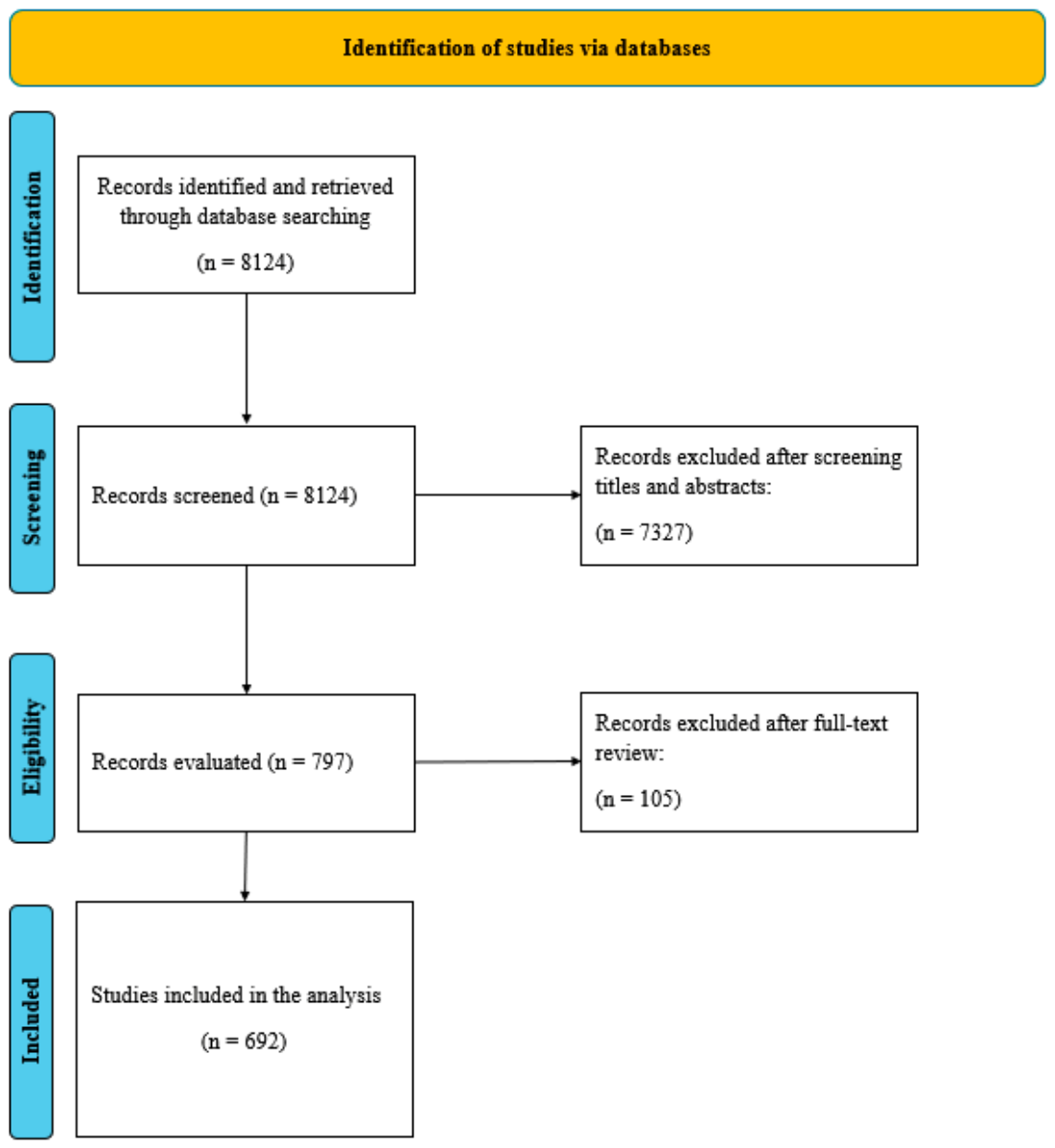
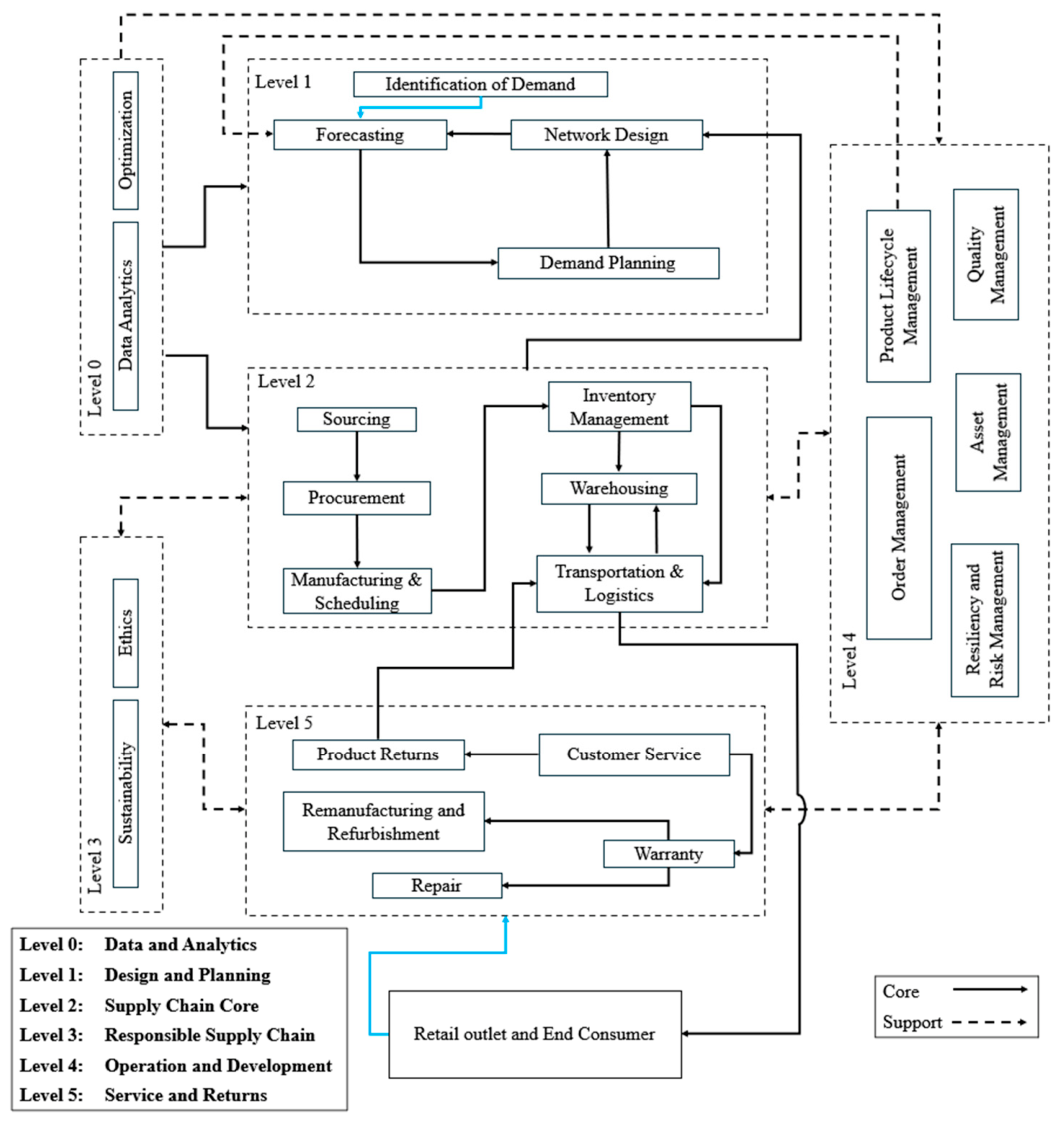
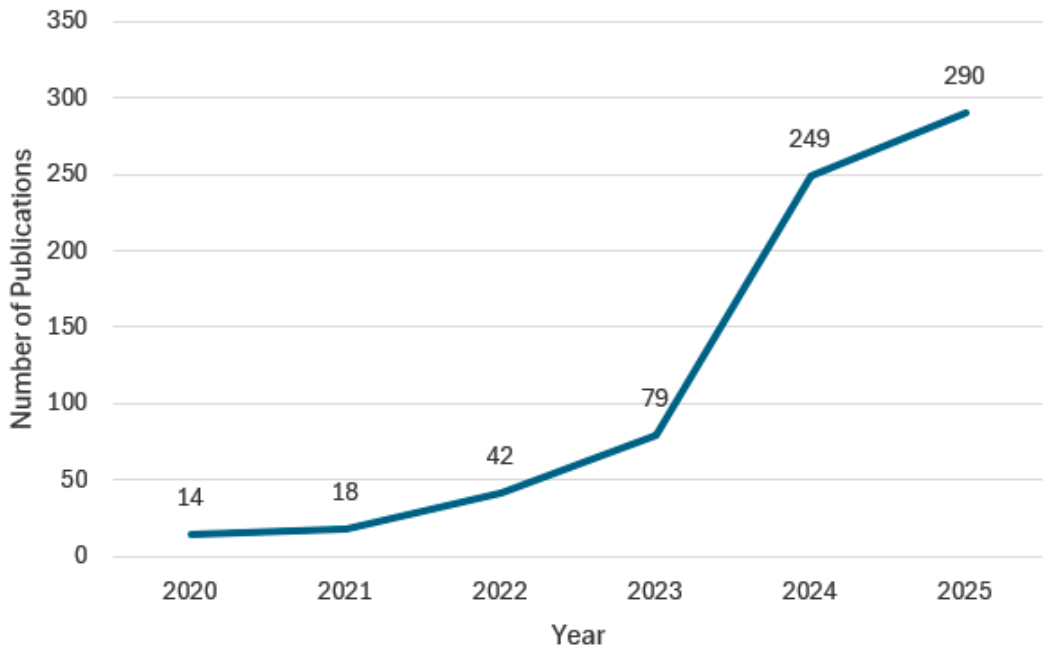
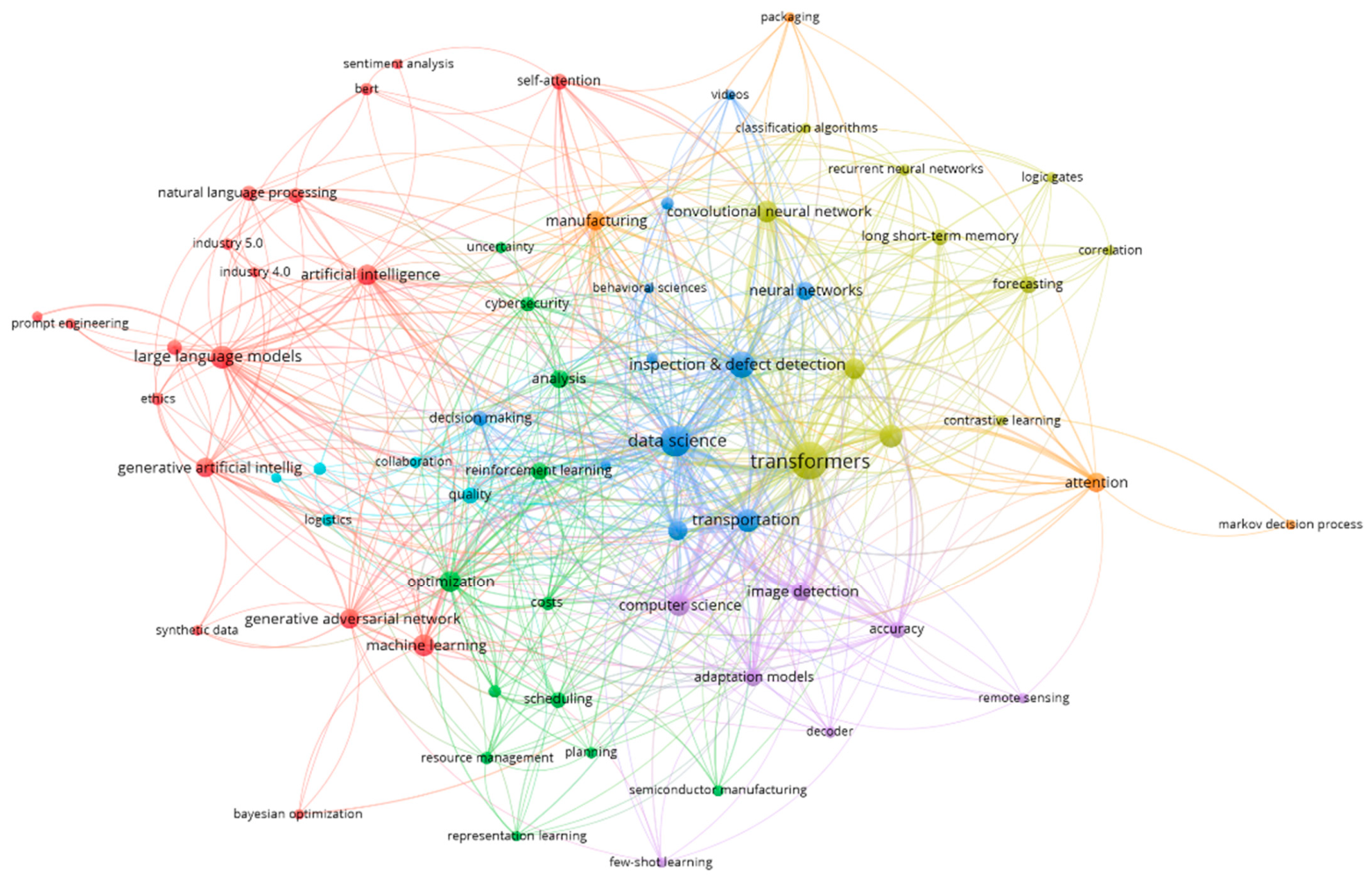
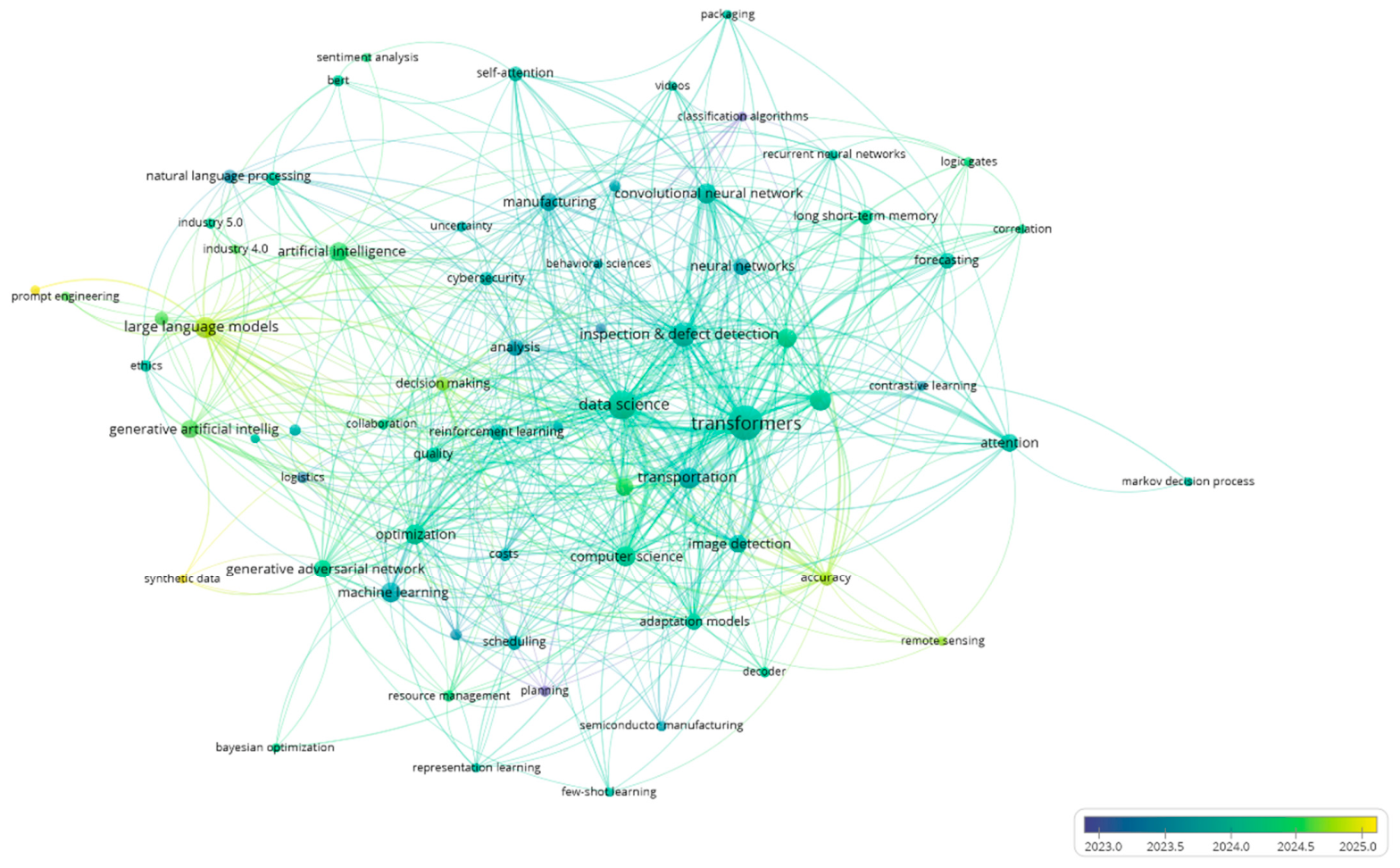
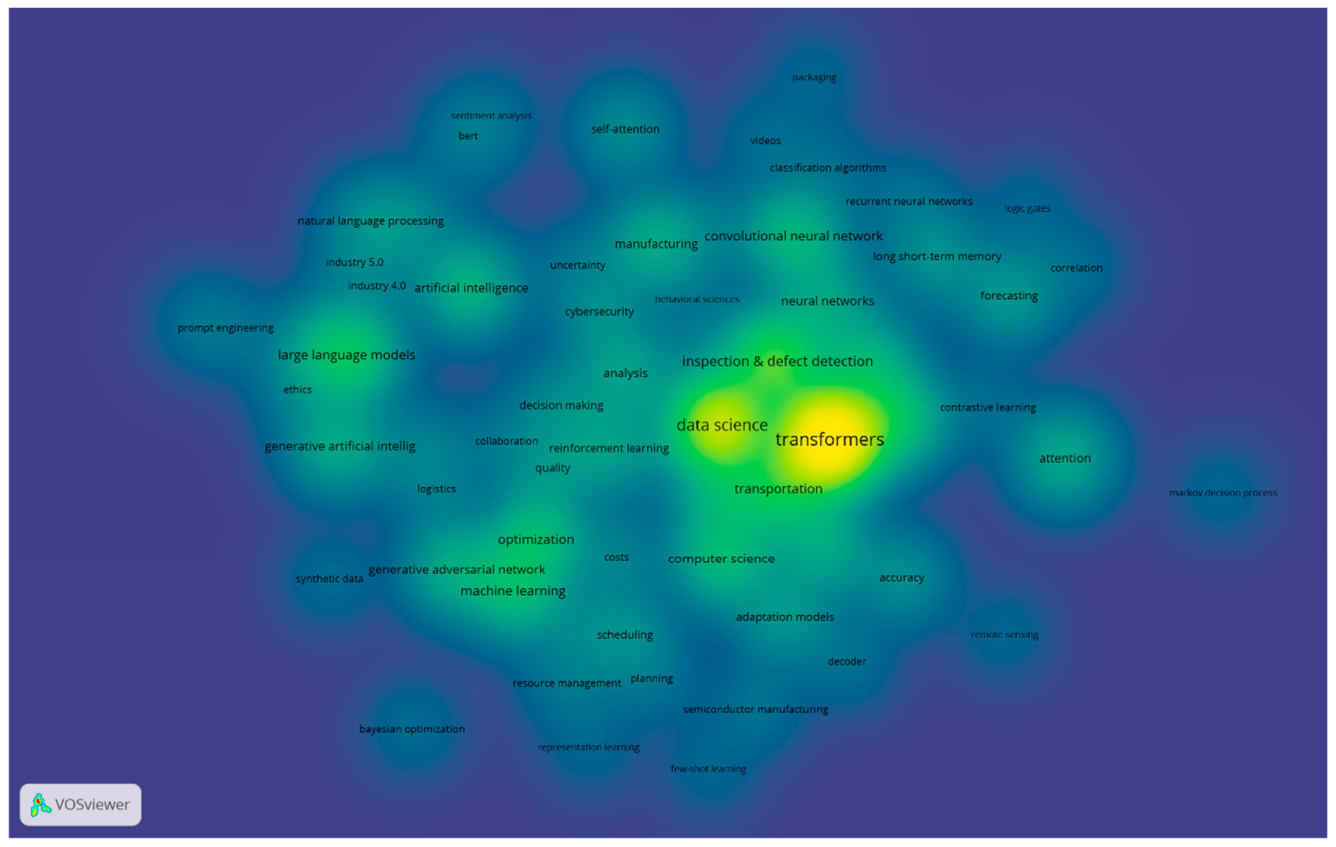
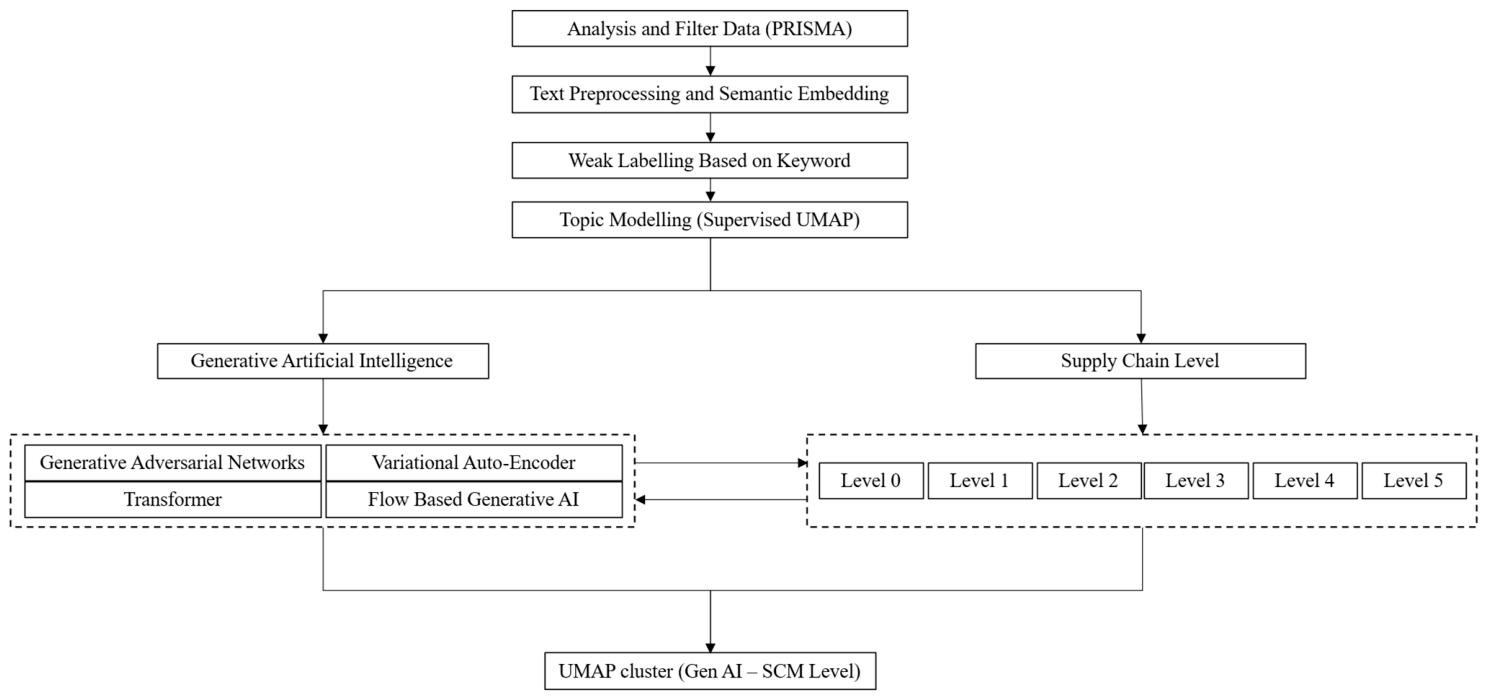
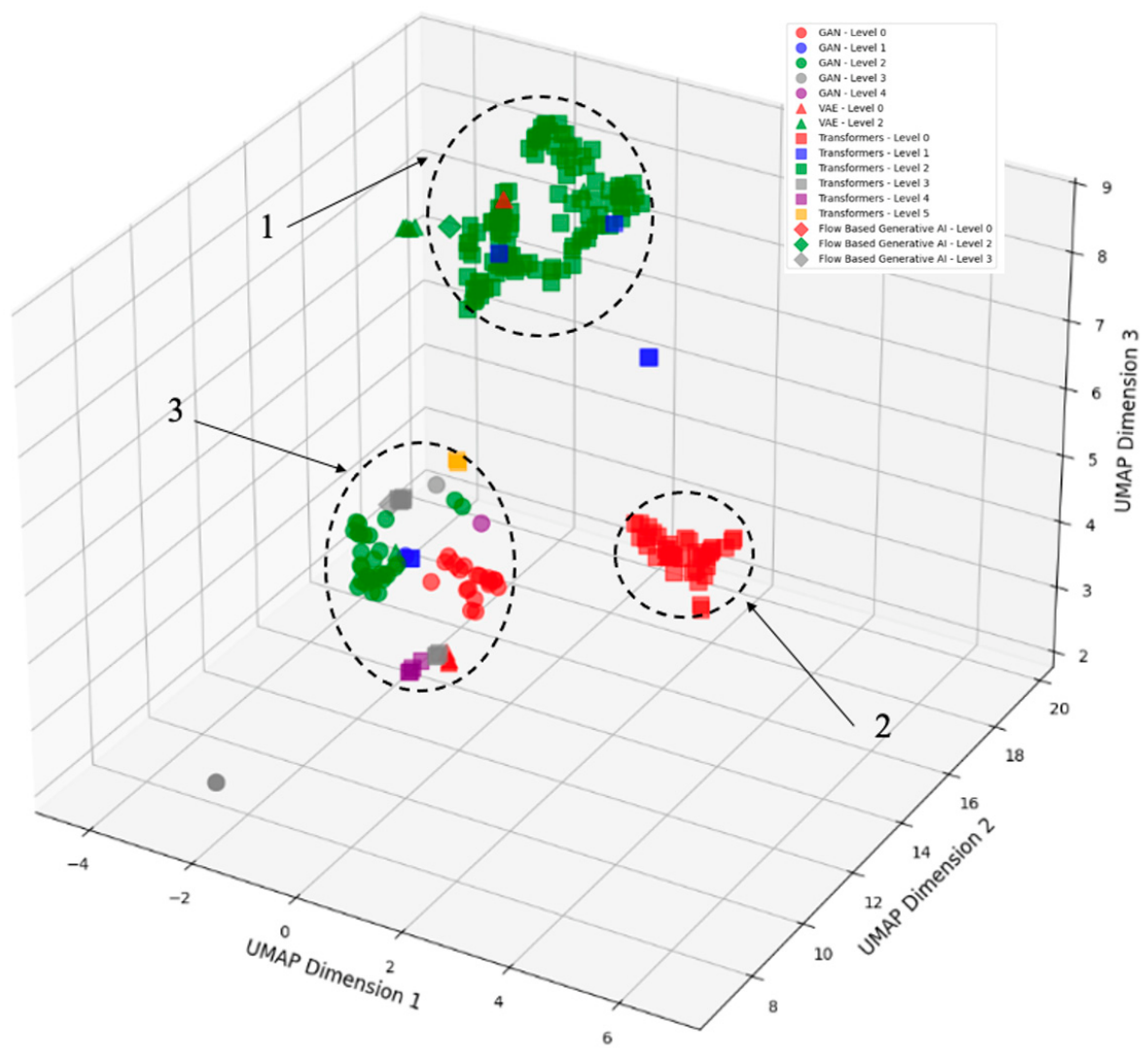
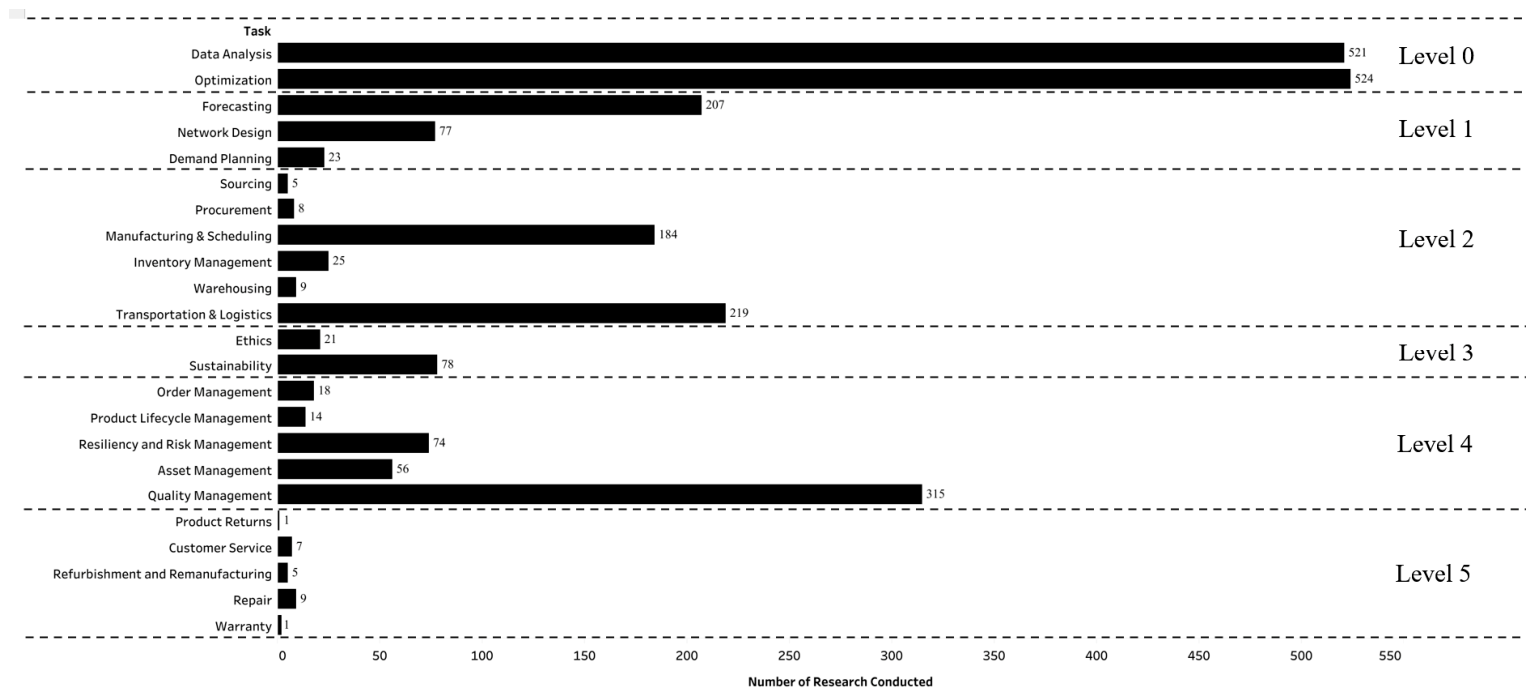
| Model | References | Strengths | Limitations | Applications |
|---|---|---|---|---|
| Generative Adversarial Networks | [36,37,38,39,40,41,42,43] | Learning with minimal labeled data, generation of high-quality, diverse outputs, adaptability to multimodal inputs, effectiveness for representation learning, and applicability in imitation learning without explicit rewards | Training instability, mode collapse, sensitivity to hyperparameters, difficulty in achieving convergence, challenges with multimodal or manifold data | Image generation, enhancement, and translation; text-to-image synthesis; video- and audio-based face generation; and imitation learning in robotics and autonomous driving |
| Variational Autoencoders | [44,45,46,47] | Scalable probabilistic modeling, efficient inference, ability to capture complex latent patterns, smooth interpolation, effectiveness for collaborative filtering | Approximate posterior may miss complexity, limited applicability for discrete variables, potential overfitting, unstable deep hierarchical training | Image and text generation, data denoising, inpainting, super-resolution, and recommender systems |
| Transformer-based Models | [48,49,50,51] | State-of-the-art performance in NLP, capturing long-range dependencies, enabling parallel training, flexible personalization, high performance across diverse domains | High data and computational requirements, opaque decision-making processes, struggles with complex reasoning, large architecture complexity | Machine translation, summarization, question answering, chatbots, protein structure prediction, and recommendation systems |
| Flow-based Generative Models | [52,53,54] | Exact log-likelihood computation, invertible transformations that allow tractable inference, efficient parallelizable synthesis, and an interpretable latent space | High computational weight, sensitive to initialization, complexity for manifold-valued data, and optimization challenges | Image generation, inpainting, denoising, speech synthesis, brain image reconstruction, and texture generation |
| Generative AI | Level | Task | Description | Reference |
|---|---|---|---|---|
| Generative Adversarial Network | 0 | Optimization | Genetic Algorithms are improved by GAN-driven market simulations. | [79] |
| Produces realistic datasets to mitigate data scarcity. | [80] | |||
| Data Analytics | Multimodal continuous and imbalanced discrete problems in tabular data are addressed by CTGAN. | [81] | ||
| CTAB-GAN+ produces synthetic tabular data with high utility and privacy preservation. | [82] | |||
| 1 | Identification of Demand | M-GAN-XGBoost forecasts product sales from historical data by combining LSTMs, GANs, and XGBoost. | [83] | |
| EPR-GAIL utilizes purchase, exploration, and preference decisions to represent user consumption. | [84] | |||
| Forecasting | TimeGAN improves synthetic time-series forecasting by maintaining temporal dynamics. | [85] | ||
| Network Design | Creates robust and effective supply chain networks by learning supply chain trends. | [86] | ||
| Demand Planning | Learns latent distributions to forecast future demand patterns by considering spatiotemporal uncertainty and external factors. | [87] | ||
| 2 | Sourcing | Creates realistic demand scenarios to enhance planning and supplier negotiations. | [88] | |
| Procurement | Creates synthetic, realistic demand situations for new products and uses simulated customer-order patterns to improve procurement strategies. | [88] | ||
| Inventory Management | Adaptive multivariate GANs optimize replenishment and stress-test systems by simulating realistic inventory demand. | [89] | ||
| Warehousing | QGANs produce realistic warehouse data to maximize layout, slotting, picking, and labor–robot collaboration. | [90] | ||
| Transportation and Logistics | Improves marine ship-speed forecasts by capturing spatiotemporal dynamics and guaranteeing reliable, distributionally faithful predictions. | [91] | ||
| 3 | Ethics | CGANs-KHO with blockchain enables demand forecasting and transparent, auditable, and equitable distribution. | [92] | |
| Sustainability | Generates synthetic data to optimize inventory, logistics, and risks for effective, sustainable supply chains. | [93] | ||
| 4 | Order Management | An e-commerce conditional GAN produces realistic orders, allowing for data-driven order management and analysis. | [88] | |
| Product Lifecycle Management | WGANs use topology-optimized data from the Product Lifecycle Management design phase to produce innovative, high-performance automotive wheel designs. | [94] | ||
| Resiliency and Risk Management | Improves resilience, contingency planning, and anomaly detection by simulating demand shocks, supplier disruptions, and cyberattacks. | [90] | ||
| Asset Management | Enables reliable, transferable fault diagnosis under a variety of circumstances by synthesizing realistic fault-condition sensor data. | [95] | ||
| Quality Management | Enhances visual inspection and inline quality control by augmenting defect-free datasets and supporting pixel-level unsupervised anomaly detection. | [96] | ||
| 5 | Product Returns | DE-GANs create images with a variety of defects, allowing for reliable automated triage in reverse logistics under data scarcity. | [97] | |
| Remanufacturing and Refurbishment | DE-GANs allow CNNs to evaluate the acceptability of reuse and automate inspection decisions by producing realistic worn-part images. | [97] | ||
| Repair | Root cause localization and targeted repair decisions are made possible by the GAN-VAE hybrid’s learning of causal latent relationships. | [98] | ||
| VAE | 0 | Optimization | IoT data is analyzed by VAEs to optimize demand, identify abnormalities, inform reuse choices, and guarantee safe, open supply chains. | [99] |
| 1 | Demand Planning | Extracts latent demand features, creates scenarios, models uncertainty, and enhances planning under volatile conditions. | [100] | |
| 2 | Inventory Management | VAEs learn latent patterns to detect uncontrolled inventory anomalies and prevent stockouts and overstocking. | [101] | |
| Transportation and Logistics | Efficiency and analytical performance are increased by compressing high-dimensional route, traffic, and delivery data into the latent space. | [102] | ||
| VAEs train probabilistic latent models for effective route optimization from structured and unstructured transportation data. | [103] | |||
| 3 | Sustainability | Pareto-optimal cost-emission sourcing trade-offs are made possible by sustainable scenarios produced by probabilistic latent demand models. | [104] | |
| Ethics | Facilitates data-driven, rule-free anomaly identification, enabling more equitable, objective, and fair monitoring. | [105] | ||
| 4 | Product Lifecyle Management | Provides quick prototyping, validation, and design space exploration by producing several variations in product design. | [106] | |
| Resiliency and Risk Management | Creates scenarios by learning demand distributions with sustainability aspects, enabling flexible and reliable supply chain decisions. | [19] | ||
| Quality Management | Learns structured 2D latent sensor representations to provide real-time part quality prediction and monitoring. | [104] | ||
| 5 | Customer Service | Utilizes brand interactions to model consumers’ latent emotional states and identifies factors that drive customer happiness to enhance service. | [107] | |
| 5 | Repair | TCN-VAE reconstructs features from multivariate sensor data while investigating latent variables to facilitate causal fault analysis. | [108] | |
| Transformer-based Models | 0 | Data Analytics | Transformer’s NLP capabilities enhance data quality and minimize labor by automating extraction from unstructured documents and analyzing sentiment. | [109] |
| Optimization | Transformers enable context-aware, comprehensive network optimization by using self-attention to balance supply chain components. | [110] | ||
| 1 | Identification of Demand | Utilizes self-attention to extract temporal patterns to determine demand trends, spikes, and anomalies. | [111] | |
| Forecasting | Utilizes an encoder–decoder architecture with probabilistic decoding to forecast, quantify uncertainty, and facilitate accurate decision-making. | [111] | ||
| Network Design | Employs self-attention to effectively optimize supply chain network designs, assess choices, and identify dependencies. | [112] | ||
| Demand Planning | Uses self-attention to identify long-range dependencies to make better supply chain and demand planning decisions. | [113] | ||
| 2 | Sourcing | GPT-4 generates expert-aligned judgments from natural language by automating supplier ranking using AHP-weighted synthesis. | [114] | |
| Procurement | Uses self-attention to align solutions with procurement requirements by integrating supplier capabilities and documentation. | [115] | ||
| Manufacturing and Scheduling | Manufacturing signals are fused by self-attention and multi-head attention, allowing for precise scheduling, process optimization, and decision support. | [109] | ||
| Inventory Management | Uses self-attention to enable precise, context-aware forecasting for inventory optimization by modeling multimodal demand. | [116] | ||
| Warehousing | Transformers dynamically prioritize retrieval jobs in warehouses using GNN-encoded item and layout embeddings. | [117] | ||
| Transportation and Logistics | Self-attention on GNN-encoded supply networks enables adaptive, globally optimal route planning with meta-reinforcement learning. | [110] | ||
| Transportation and Logistics | With GAN refinement, globally optimized, resource-aware path planning is made possible by self-attention on GNN-processed robot and cargo data. | [118] | ||
| 3 | Sustainability | Multi-head self-attention enables real-time ethical supply chain optimization, tracking origin, emissions, and unsustainable behaviors. | [119] | |
| Ethics | The SustAI-SCM transformer enables ethical, transparent, and compliance-aware procurement by using multi-head self-attention on supplier data. | [119] | ||
| 4 | Order Management | Transformers automate order management and enable precise, real-time operations by integrating unstructured and ERP data. | [120] | |
| Product Lifecycle Management | Uses Natural Language Processing (NLP) to comprehend textual data in order to analyze market research reports, consumer reviews, and social media. | [121,122] | ||
| Contributes to the development of novel concepts and ideas for original concept design. | [123] | |||
| Resiliency and Risk Management | Sequence modeling and knowledge-graph grounding are used to extract context-aware, real-time data from unstructured text. | [124] | ||
| Asset Management | An encoder–decoder Transformer forecasts multi-step volatility, enhancing portfolio risk-adjusted performance, while the encoder predicts returns for the following week. | [125] | ||
| Quality Management | Self-attention can detect unusual patterns that might point to shortcomings or inefficiencies. | [126] | ||
| 5 | Product Returns | OpenTransformer can forecast the likelihood of a product return by extracting acoustic cues from anchor speech in live feeds. | [127] | |
| 5 | Customer Service | Uses chatbots and virtual assistants to provide accurate answers 24/7, automate repetitive queries, and provide customized suggestions. | [128] | |
| 5 | Remanufacturing and Refurbishment | Hybrid transformer-attention guides Laser Stock Peening remanufacturing for maximal lifespan by predicting the bearing’s remaining useful life. | [129] | |
| 5 | Warranty | CRFormer enables early, data-driven reliability and warranty management by forecasting long-term automotive failures from short-term claims. | [130] | |
| 5 | Repair | A transformer uses self-attention and temporal encoding for adaptive, real-time repair prediction after ingesting multimodal maintenance data. | [131] | |
| Flow-Based | 1 | Identification of Demand | By capturing variability and uncertainty, these models provide accurate demand estimates and guarantee effective training across product lines. | [132] |
| 1 | Forecasting | Conditional flows combine digital traffic, IoT data, and transactions to identify market abnormalities and estimate demand. | [132] | |
| 1 | Demand Planning | Learns calibrated multivariate demand distributions to effectively make risk-aware safety stock and service-level decisions. | [133] | |
| 2 | Warehousing | Complex demand distributions are modeled by exact likelihood computation, which helps with warehouse and inventory management decisions. | [132] | |
| 3 | Sustainability | Normalizing Temporally Flows enable efficient hardware reuse or resale and minimize e-waste by precisely modeling decommissioning dates in reverse cloud supply chains. | [134] | |
| 3 | Order Management | Temporal Normalizing Flow models are used in flow-based generative AI to model order-event sequences for precise fulfillment times. | [134] | |
| 4 | Resiliency and Risk Management | Risk-aware SCM disruption modeling, early warning, and resilient planning are made possible by integrating NKF and ACNet flows. | [122,135] | |
| 4 | Quality Management | Normalizing Flows describe multivariate process data for sensitive anomaly detection and real-time quality assurance. | [136] |
| Rank | Country | Number of Publications | Total Citation | Average Citations |
|---|---|---|---|---|
| 1 | China | 370 | 6378 | 17.24 |
| 2 | USA | 62 | 1719 | 27.73 |
| 3 | Korea | 26 | 558 | 21.46 |
| 4 | India | 26 | 318 | 12.23 |
| 5 | England | 18 | 558 | 31.00 |
| 6 | Canada | 16 | 412 | 25.75 |
| 7 | Australia | 14 | 390 | 27.86 |
| 8 | Germany | 13 | 289 | 22.23 |
| 9 | Taiwan | 13 | 150 | 11.54 |
| 10 | Spain | 10 | 347 | 34.70 |
| Country | Paper | Article Title | Publication Year | Citation |
|---|---|---|---|---|
| China | [139] | Deep generative modeling for mechanistic-based learning and design of metamaterial systems | 2020 | 365 |
| [140] | Urban ride-hailing demand prediction with multiple spatiotemporal information fusion network | 2020 | 153 | |
| [141] | A temporal fusion transformer for short-term freeway traffic speed multistep prediction | 2022 | 133 | |
| [142] | Defect-aware transformer network for intelligent visual surface defect detection | 2023 | 122 | |
| USA | [143] | A Trustworthy Privacy Preserving Framework for Machine Learning in Industrial IoT Systems | 2020 | 284 |
| [144] | Predicting field production rates for waterflooding using a machine learning-based proxy model | 2020 | 124 | |
| [145] | Cooperative lane control application for fully connected and automated vehicles at multilane freeways | 2020 | 93 | |
| [146] | Bayesian Spatiotemporal grAph tRansformer network (B-STAR) for multi-aircraft trajectory prediction | 2022 | 80 | |
| Korea | [147] | Automated defect inspection system for metal surfaces based on deep learning and data augmentation | 2020 | 285 |
| [148] | Adversarial Defect Detection in Semiconductor Manufacturing Process | 2021 | 50 | |
| [149] | Transformer-Based Reinforcement Learning for Scalable Multi-UAV Area Coverage | 2024 | 37 | |
| [150] | Federated PCA on Grassmann Manifold for IoT Anomaly Detection | 2024 | 24 | |
| India | [151] | Assessing the nexus of Generative AI adoption, ethical considerations and organizational performance | 2024 | 100 |
| [152] | Vehicular Trajectory Classification and Traffic Anomaly Detection in Videos Using a Hybrid CNN-VAE Architecture | 2022 | 81 | |
| [153] | Global-Local Attention-Based Butterfly Vision Transformer for Visualization-Based Malware Classification | 2023 | 26 | |
| [154] | PDSMV3-DCRNN: A novel ensemble deep learning framework for enhancing phishing detection and URL extraction | 2025 | 14 | |
| England | [155] | Blockchain-enabled supply chain traceability-How wide? How deep? | 2023 | 133 |
| [156] | A combined machine learning algorithms and DEA method for measuring and predicting the efficiency of Chinese manufacturing listed companies | 2021 | 125 | |
| [157] | A Vision Transformer Approach for Traffic Congestion Prediction in Urban Areas | 2023 | 110 | |
| [158] | Deep Transfer Learning With Self-Attention for Industry Sensor Fusion Tasks | 2022 | 38 | |
| Canada | [159] | An attention-based multiscale transformer network for remote sensing image change detection | 2023 | 139 |
| [160] | On the application of machine learning for defect detection in L-PBF additive manufacturing | 2021 | 100 | |
| [161] | V2VFormer++: Multimodal Vehicle-to-Vehicle Cooperative Perception via Global-Local Transformer | 2024 | 47 | |
| [162] | Automated Defect-Detection System for Water Pipelines Based on CCTV Inspection Videos of Autonomous Robotic Platforms | 2024 | 34 | |
| Australia | [163] | Bidirectional Spatial–Temporal Adaptive Transformer for Urban Traffic Flow Forecasting | 2023 | 163 |
| [164] | Artificial Intelligence-Based Power Transformer Health Index for Handling Data Uncertainty | 2021 | 69 | |
| [165] | Vision Transformer Inspired Automated Vulnerability Repair | 2024 | 45 | |
| [166] | An unsupervised defect detection model for a dry carbon fiber textile | 2022 | 33 | |
| Germany | [167] | ChatGPT and generative artificial intelligence: an exploratory study of key benefits and challenges in operations and supply chain management | 2024 | 197 |
| [168] | Unsupervised pre-training of graph transformers on patient population graphs | 2023 | 21 | |
| [169] | Designing flexibility procurement markets for congestion management investigating two-stage procurement auctions | 2022 | 16 | |
| [170] | Design and evaluation of an Autonomous Cyber Defense agent using DRL and an augmented LLM | 2025 | 13 | |
| Taiwan | [171] | Improving Generalization in Reinforcement Learning-Based Trading by Using a Generative Adversarial Market Model | 2021 | 48 |
| [172] | VR-enabled engineering consultation chatbot for integrated and intelligent manufacturing services | 2022 | 44 | |
| [173] | A new ViT-Based augmentation framework for wafer map defect classification to enhance the resilience of semiconductor supply chains | 2024 | 13 | |
| [174] | Application of retrieval-augmented generation for interactive industrial knowledge management via a large language model | 2025 | 12 | |
| Spain | [175] | Automated Road Damage Detection Using UAV Images and Deep Learning Techniques | 2023 | 84 |
| [176] | Multi-Transformer: A New Neural Network-Based Architecture for Forecasting S&P Volatility | 2021 | 75 | |
| [177] | Transformer-Based Models for Automatic Identification of Argument Relations: A Cross-Domain Evaluation | 2021 | 66 | |
| [178] | Integrated Multi-Head Self-Attention Transformer model for electricity demand prediction incorporating local climate variables | 2023 | 33 |
| Rank | Keyword | Occurrences | Total Link Strength | Cluster |
|---|---|---|---|---|
| 1 | transformers | 218 | 424 | Yellow |
| 2 | data science | 119 | 392 | Blue |
| 3 | inspection and defect detection | 73 | 195 | Blue |
| 4 | computer science | 37 | 156 | Purple |
| 5 | prediction | 43 | 117 | Yellow |
| 6 | transportation | 47 | 109 | Blue |
| 7 | temporal analysis | 33 | 105 | Yellow |
| 8 | convolutional neural network | 35 | 101 | Yellow |
| 9 | optimization | 37 | 97 | Green |
| 10 | image detection | 26 | 85 | Purple |
| No | Authors | Article Title | Article Keywords | Description | Country | Citation |
|---|---|---|---|---|---|---|
| 1 | [163] | Bidirectional Spatial–Temporal Adaptive Transformer for Urban Traffic Flow Forecasting | Dynamic halting mechanism; spatial-temporal; transformer; urban traffic forecasting | Proposes bidirectional spatial–temporal adaptive transformer (Bi-STAT), which uses adaptive modules and dual decoders for past recollection to improve generalization for traffic forecasting. | Australia | 163 |
| 2 | [159] | An attention-based multiscale transformer network for remote sensing image change detection | Change detection; attention mechanism; Transformer; multiscale | Introduces the attention-based multiscale transformer network (AMTNet) for bi-temporal change detection in remote sensing, which uses feature exchange between Siamese branches. | Canada | 139 |
| 3 | [222] | Light-weight federated learning-based anomaly detection for time-series data in industrial control systems | Anomaly detection; ICS; federated learning; autoencoder; Transformer; Fourier | Proposes a federated learning, autoencoder, and Transformer architecture with Fourier mixing for robust, lightweight, and fast anomaly detection in industrial control systems. | France | 134 |
| 4 | [141] | A temporal fusion transformer for short-term freeway traffic speed multistep prediction | Deep learning; temporal fusion transformer; traffic speed; multistep prediction | Adopts the Temporal Fusion Transformer (TFT) for accurate short-term freeway speed prediction for intelligent transportation management to plan travel routes. | China | 133 |
| 5 | [157] | A Vision Transformer Approach for Traffic Congestion Prediction in Urban Areas | Convolutional neural networks; Transformers; transportation; Roads; feature extraction; deep learning; computational modeling; vision transformers; deep learning; intelligent transportation system; long-short-term-memory (LSTM); traffic congestion prediction | Utilizes a Vision Transformer with Convolutional Nerual Networks for citywide traffic congestion prediction by tokenizing features for LSTM input. | England | 110 |
| 6 | [218] | Battery fault diagnosis and failure prognosis for electric vehicles using spatiotemporal transformer networks | lithium-ion battery; fault; failure; diagnosis and prognosis; Transformer; field data | Introduces BERTtery (Bidirectional Encoder Representations from Transformers for Batteries), a specialized Transformer for predicting EV battery faults from early-cycle charging data by capturing multiscale spatiotemporal signals. | China | 99 |
| 7 | [223] | LSTTN: A Long-Short Term Transformer-based spatiotemporal neural network for traffic flow | Traffic forecasting; spatiotemporal modeling; long-short term forecasting; Transformer; Mask Subseries Strategy | Proposes Long-Short Term Transformer-Based Network (LSTTN) framework for traffic flow using masked subseries pretraining and dilated convolutions to extract long/short-term trends. | China | 85 |
| 8 | [146] | Bayesian Spatiotemporal grAph tRansformer network (B-STAR) for multi-aircraft trajectory prediction | Multi-agent trajectory prediction; graph neural network; Transformer; air traffic management | Introduces a Bayesian Spatiotemporal grAph tRansformer (B-STAR) for multi-agent trajectory prediction under uncertainty. | USA | 80 |
| 9 | [224] | Pavement crack detection with hybrid-window attentive Vision Transformers | Crack detection; pavement distress; attentive vision transformer; feature attention; high-resolution network; deep learning | Proposes CrackFormer, a hybrid-window attentive Vision Transformer for pavement crack detection, enhancing semantic details and saliency via weighted multi-head attention. | China | 76 |
| 10 | [225] | Multi-attribute adaptive aggregation transformer for vehicle re-identification | Vehicle re-identification; transformer; multi-attribute adaptive aggregation; multi-sample dispersion | Introduces vehicle attribute transformer (VAT) for re-identification, embedding color/model/viewpoint features and using adaptive aggregation for multi-attribute weighting useful for intelligent transportation systems | China | 76 |
| Generative AI | Common SCM Task | Focused Research Areas | Predominant GenAI Techniques | Existing Research Gaps | Managerial Outcomes |
|---|---|---|---|---|---|
| Generative Adversarial Networks | Data Analytics, Optimization, Manufacturing and Scheduling, Transportation and Logistics, Quality Management | Smart Manufacturing and Industrial Defect Detection, Intelligent Transportation Systems, Traffic and Autonomous Vehicles, Cybersecurity and Network Intrusion Detection | DCGAN (Deep Convolutional GAN), Conditional GANs (CGAN/ACGAN/CTGAN), WGAN-GP (Wasserstein GAN with Gradient Penalty), CycleGAN and Pix2Pix, TimeGAN/Sequence GANs | Research in Sourcing, Procurement, Warehousing, Product Lifecycle Management, Reverse Supply chains | Analyze image-based tasks, such as manufacturing defect images. CGANs are used for generating specific datasets for a specific type of cyberattack, a specific manufacturing defect, or tabular financial/credit risk data WGAN are used for network security and IoT intrusion detection because they provide more stable training and prevent “mode collapse” when generating complex network traffic patterns. TimeGANs are used for time-series data, such as generating synthetic vehicle trajectories, mobile user traffic patterns, or energy load scenarios. |
| Variational AutoEncoders | Data Analytics, Optimization, Manufacturing and Scheduling, Quality Management | Spatiotemporal modeling, topology and inverse design optimization, Circular Supply Chain IoT integration, and visual/signal quality inspection under constrained data conditions | Conditional VAEs, hybrid CNN/TCN-VAEs, surrogate VAE-ANN models, denoising and stacked VAEs, and VAE combined with One-Class SVM | Research in required in Demand/Capacity Planning, Network Design, Sourcing, Procurement, Warehousing, Ethics, Order Management, Asset Management, Repair, Customer Service, Warranty | Millisecond-level real-time predictions, significant energy and material savings, high-accuracy defect detection and enhanced operational sustainability. |
| Transformers | Forecasting, Data Analytics, Optimization, Manufacturing and Scheduling, Transportation and Logistics, Quality Management | Spatiotemporal prediction, text/knowledge extraction, network design, smart manufacturing, autonomous logistics, and visual inspection | TFT, PatchTST, Graph Transformers, BERT, LLMs/RAG, Decision Transformers, ViT, Swin, RT-DETR, and Hybrid CNN-Transformers. | Research in Product Returns, Warranty, Sourcing, Procurement, Warehousing, Refurbishment, Remanufacturing and Warranty | End-to-end supply chain improvement by enhancing forecasting accuracy, automating analytics and compliance monitoring. Optimizes operations and logistics. Improves manufacturing efficiency, strengthens transportation reliability and drives quality improvement while reducing costs and risks. |
| Flow Based | Forecasting, Demand Planning, Resiliency and Risk, Quality Management | Generates synthetic relational graph data and simulates systemic failures by generating full, high-fidelity synthetic copies of a logistics graph. Normalizing Flows capture deep temporal dependencies, seasonality and the conditional noise of historical data. | Normalizing Flows, Time Series forecasting | Flow-based generative AI has not been extensively researched. Further research will benefit from investigating how temporal analysis can help in predicting reverse supply chains. | Using flow-based, operations can transition from reactive scheduling to resilient, proactive demand mitigation. |
Disclaimer/Publisher’s Note: The statements, opinions and data contained in all publications are solely those of the individual author(s) and contributor(s) and not of MDPI and/or the editor(s). MDPI and/or the editor(s) disclaim responsibility for any injury to people or property resulting from any ideas, methods, instructions or products referred to in the content. |
© 2026 by the authors. Licensee MDPI, Basel, Switzerland. This article is an open access article distributed under the terms and conditions of the Creative Commons Attribution (CC BY) license.
Share and Cite
Baruah, A.; Moshref-Javadi, M. Generative Artificial Intelligence in Supply Chain: Review, Trends, and Future Directions. Logistics 2026, 10, 190. https://doi.org/10.3390/logistics10080190
Baruah A, Moshref-Javadi M. Generative Artificial Intelligence in Supply Chain: Review, Trends, and Future Directions. Logistics. 2026; 10(8):190. https://doi.org/10.3390/logistics10080190
Chicago/Turabian StyleBaruah, Amlan, and Mohammad Moshref-Javadi. 2026. "Generative Artificial Intelligence in Supply Chain: Review, Trends, and Future Directions" Logistics 10, no. 8: 190. https://doi.org/10.3390/logistics10080190
APA StyleBaruah, A., & Moshref-Javadi, M. (2026). Generative Artificial Intelligence in Supply Chain: Review, Trends, and Future Directions. Logistics, 10(8), 190. https://doi.org/10.3390/logistics10080190

