Systematic Review

Systematic Review Analysis of Sustainability in Port Logistics Through Carbon Footprint of Container Terminals


1
Faculty of Tourism and Hospitality Management, University of Rijeka, 51410 Opatija, Croatia
2
Faculty of Maritime Studies, University of Rijeka, 51000 Rijeka, Croatia
*
Author to whom correspondence should be addressed.
Logistics 2026, 10(6), 132; https://doi.org/10.3390/logistics10060132 (registering DOI)
Submission received: 9 March 2026 / Revised: 3 May 2026 / Accepted: 7 May 2026 / Published: 10 June 2026
(This article belongs to the Special Issue Decarbonization of Maritime Logistics and Global Supply Chains)

Abstract

Background: Container terminals are crucial nodes in global supply chains, but they also contribute significantly to environmental pollution. The analysis of sustainability in port logistics through carbon footprint offers crucial knowledge on how to reduce environmental impact in logistics. Methods: This systematic review uses a PRISMA-based research flow to extract key facts about energy consumption and greenhouse gas emissions, particularly CO2, which are still prevalent in terminal operations and logistics. Results: The paper analyses strategies and technologies adopted to reduce the carbon footprint, such as efficient infrastructure, electrification, automation, digitalisation, and AI-powered port logistics. It highlights the potential of sustainable logistics solutions, such as real-time cargo tracking, intelligent robotics and data analytics, to make container terminals more eco-friendly. Conclusions: Beyond analysing sustainability assessment models for the ecological efficiency and operational performance of container terminals, this paper highlights the need for future applied research into how investments in sustainable practices, as demonstrated by the most successful Asian port examples, can further reduce container terminal environmental footprint.

1. Introduction

Seaports are essential in today’s global logistics network, facilitating the efficient transfer of goods between sea and land. Container terminals in seaports are critical nodes in this global supply chain, facilitating the flow of goods between maritime and inland transport systems. Their operations, however, are energy-intensive and rely heavily on fossil-fuel-powered equipment such as cranes, tractors, and container handling vehicles [1,2]. Studies such as “Efficient Space Allocation for Import Containers Minimizing Reshuffling in Yard Blocks: Case Study” [1] and “A carbon emission evaluation model for a container terminal” [2] show the efficiency of container logistics and the CO2 emissions (CF) of sea terminals as significant carbon footprint hotspots. CF of container terminals usually arises from energy-intensive handling equipment, vessel operations, and hinterland connections, both directly, through fuel combustion, and indirectly, through electricity consumption [3,4,5]. Studies [3,4,5] address energy management and CO2 emission assessment from different perspectives, including emission factor validation, port-level energy optimisation, and the role of port authorities in emission governance. This fact has prompted a surge of research aimed at understanding and reducing the CF of container terminal activities. Recent studies on port carbon footprints differ in scope and methodological focus. Some authors concentrate on ship-related emissions (e.g., manoeuvring, berthing, auxiliary engines), while others emphasise terminal-side operations such as container handling and yard activities. Although these studies consistently identify container handling processes as emission-intensive, they vary significantly in system boundaries, emission accounting methods, and the level of operational detail considered [6,7]. Container handling processes (loading, unloading, yard shifting, and inter-terminal transport) are particularly emission-intensive, and studies focusing on these operations [8,9,10] propose a range of CO2 reduction strategies, including equipment electrification, process optimisation, and improved hinterland coordination.
Also, recent initiatives for greening port management highlight the role of smart operations, incorporating automation, AI, and digitalisation, to reduce energy consumption and emissions while maintaining throughput efficiency [11]. This approach emphasises the importance of smart technologies for advancing in low-carbon logistics. Research such as [12] emphasises the importance of complementary management and technological advances, such as eco-efficiency assessment models that integrate environmental and operational data in order to support continuous improvement and informed decision-making. Some of the latest empirical case studies, for instance, sustainability practices in Brazilian container terminals, provide valuable insights into region-specific challenges and enablers, reinforcing the need for context-adapted solutions [13].
In light of the above, a more systematic and comparable understanding of the carbon footprint of container terminals is needed. Keeping pace with developments in this field is essential to address gaps in mitigation strategies and support the transition to low-carbon port operations.
Despite the growing body of research, several limitations remain. Existing studies often analyse emissions either at a broad port level or focus on isolated components (e.g., vessel operations or specific terminal processes), lacking an integrated perspective on container terminal systems. Furthermore, there is no consistent framework for comparing the effects of emerging green technologies (such as electrification, automation, and AI-based optimisation) on carbon footprint reduction. This fragmentation not only limits comparability across studies but also has practical implications for carbon reduction strategies in real-world terminal operations.
In the context of existing research on multidimensional sustainability, investment impacts, and evidence-based strategies for addressing regional disparities, this paper addresses the following two research questions:
  • What methods and indicators are used to quantify the carbon footprint of container terminal operations, and how do they differ in terms of system boundaries and accuracy?
  • How do selected green technologies (e.g., electrification, automation, and AI-based optimisation) affect carbon footprint reduction in container terminals, based on existing empirical and modelling studies?

2. Materials and Methods

The study employs a systematic quantitative literature review to map and evaluate existing research on the CF of container terminals, addressing the two stated research questions. This review follows a structured and replicable approach that ensures transparency, reliability, and comprehensiveness. The paper incorporates categorisation and quantification and identifies trends in the literature, so that it can address the research gaps and directions for future research and progress in the field.
A systematic review was conducted in accordance with the PRISMA guidelines to provide a structured overview of the contemporary scientific perspective on the topic. This involved a multistep analysis process. First, a comprehensive search was conducted in one of the biggest and most reliable scientific databases, the Scopus database, covering publications from the earliest available records until the end of 2024. The literature search was performed using Boolean operators: “port” AND “container” AND (“sustainability” OR “footprint”), applied to the titles, abstracts, and keywords, resulting in 120 documents. Scopus database was selected because of its wide international coverage, high-quality indexing, and focus on peer-reviewed journals.
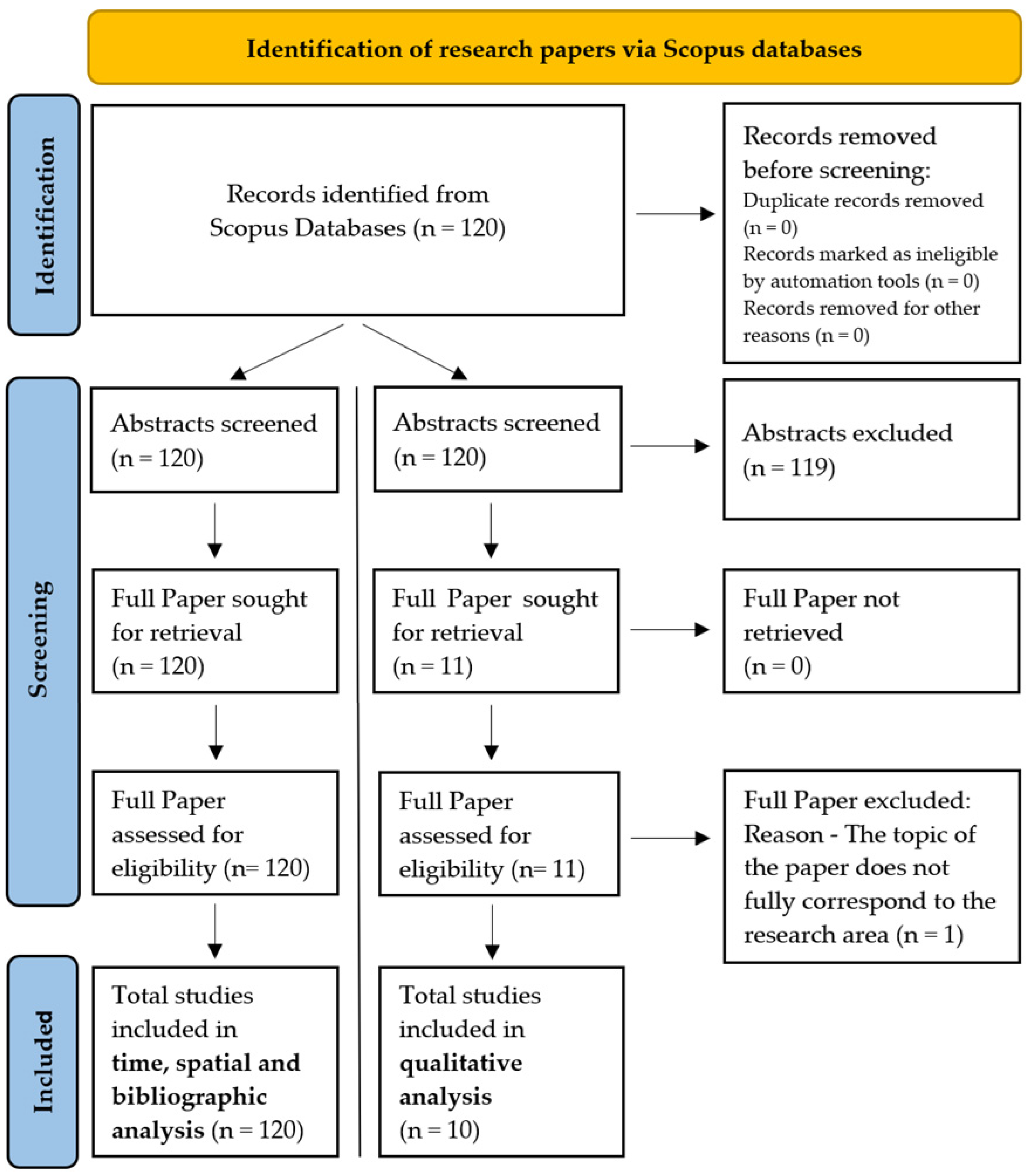
The analysis of the dataset was conducted along two parallel lines: (1) the full Scopus dataset, consisting of 120 papers, was used for time, spatial, and bibliometric analyses; and (2) a subset of the 10 most-cited papers was used for a detailed qualitative analysis (Figure 1).
The dataset was refined through a screening process to exclude papers that were not research-oriented or that only marginally addressed the CF issue. Papers that were not directly related to operational CF reduction in container ports and logistics were excluded from further analysis, such as papers addressing CF reduction in architecture and construction (Figure 1). The final set of publications was then manually stored, coded, and categorised. The classification of the papers was based on direct data extraction and inductive interpretation, following established approaches used in systematic reviews (Appendix A). A frequency analysis of the categories was also conducted, while the iterative categorization process ensured consistency and reliability across the reviewed studies. The papers were subsequently analysed from temporal, spatial, and qualitative perspectives, and the results are presented in graphs, maps, and tables.
The bibliometric analysis employed VOSviewer 1.6.20 software to map the virtual scientific landscape. These bibliometric maps visualise cluster analyses of reference networks, revealing the scientific field’s structure through similarities and association strengths. In examining the maps, three main features were evaluated: (1) distance: terms that often co-occur in the papers appear closer together; (2) size: the circle diameter and label size indicate how frequently terms appear in titles, abstracts, and keywords; (3) clustering: related terms are grouped automatically via a weighted, parameterized modularity-based method [14]. The parameters used to analyse and visualise the networks in the VOSviewer software were as follows: the keyword occurrence threshold was set to five, the clustering settings were set to the default for ease of reproduction, and the association strength method was used to normalise the strength of links between items.

3. Results and Discussion

3.1. Time Analysis

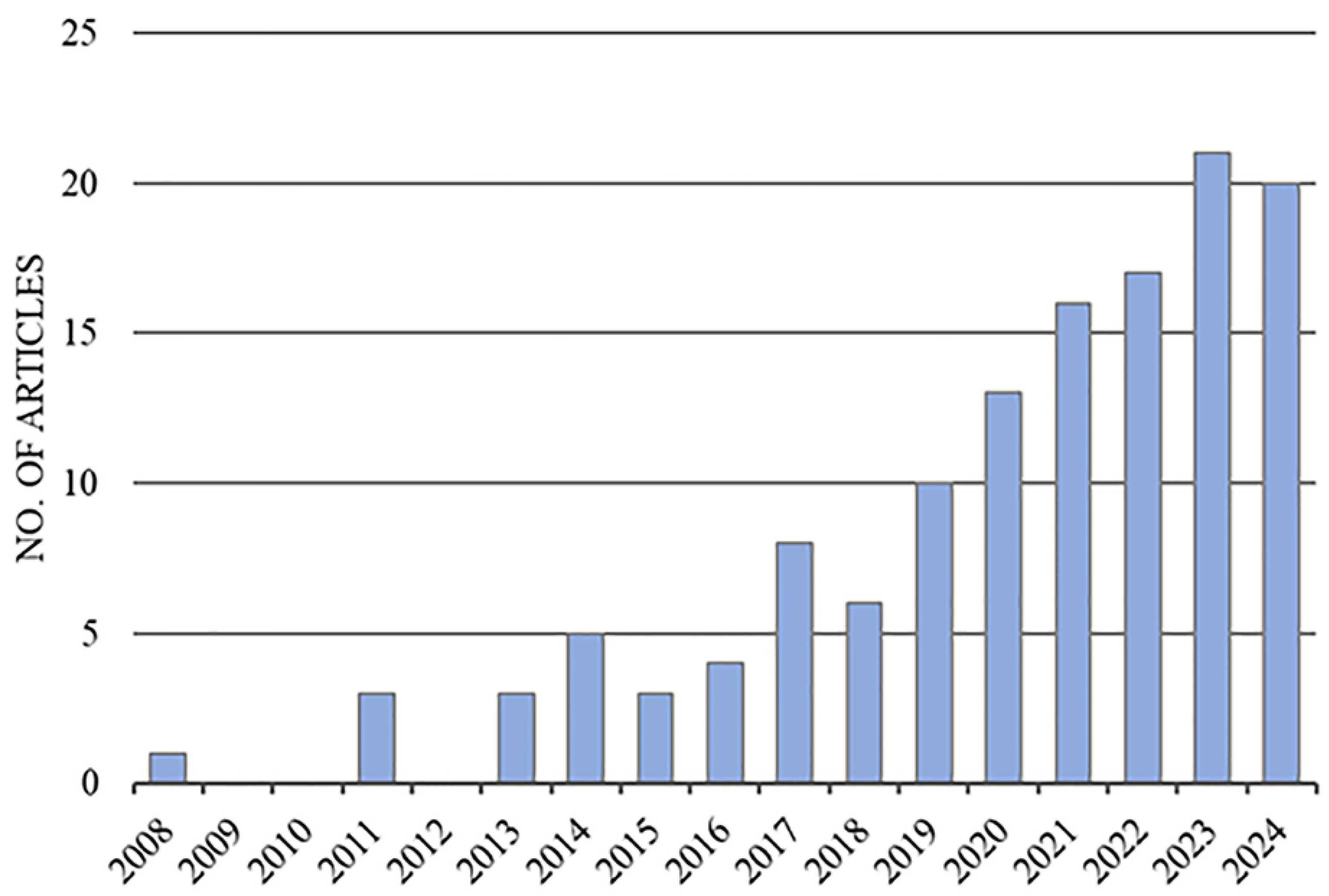
Figure 2 shows an increasing trend in the number of papers published over the years on the CF of container ports. The trajectory shows a growing academic interest in the field, with acceleration in the past five years. The acceleration in publications reflects environmental awareness of the researchers and port authorities in the context of climate change and sustainability, especially in maritime logistics. This is evident in recent works such as “Towards AI-Driven Environmental Sustainability: The Application of Automated Logistics in Container Port Terminals” [15], which highlights environmental sustainability in the context of AI and automated processes in ports. Also, the paper “Blockchain-powered incentive system for JIT arrival operations and decarbonization in maritime shipping” [16] describes the monitoring of the environmental sustainability of logistics in terms of arrival punctuality, just-in-time compliance, emission reduction and the implementation of blockchain technology. Overall, there is a visible upward trend (Figure 2) in the number of studies addressing environmentally sustainable aspects of modern port operations. This fact aligns with global regulatory pressures and initiatives to reduce CO2 emissions in the transportation sector.

3.2. Spatial Analysis

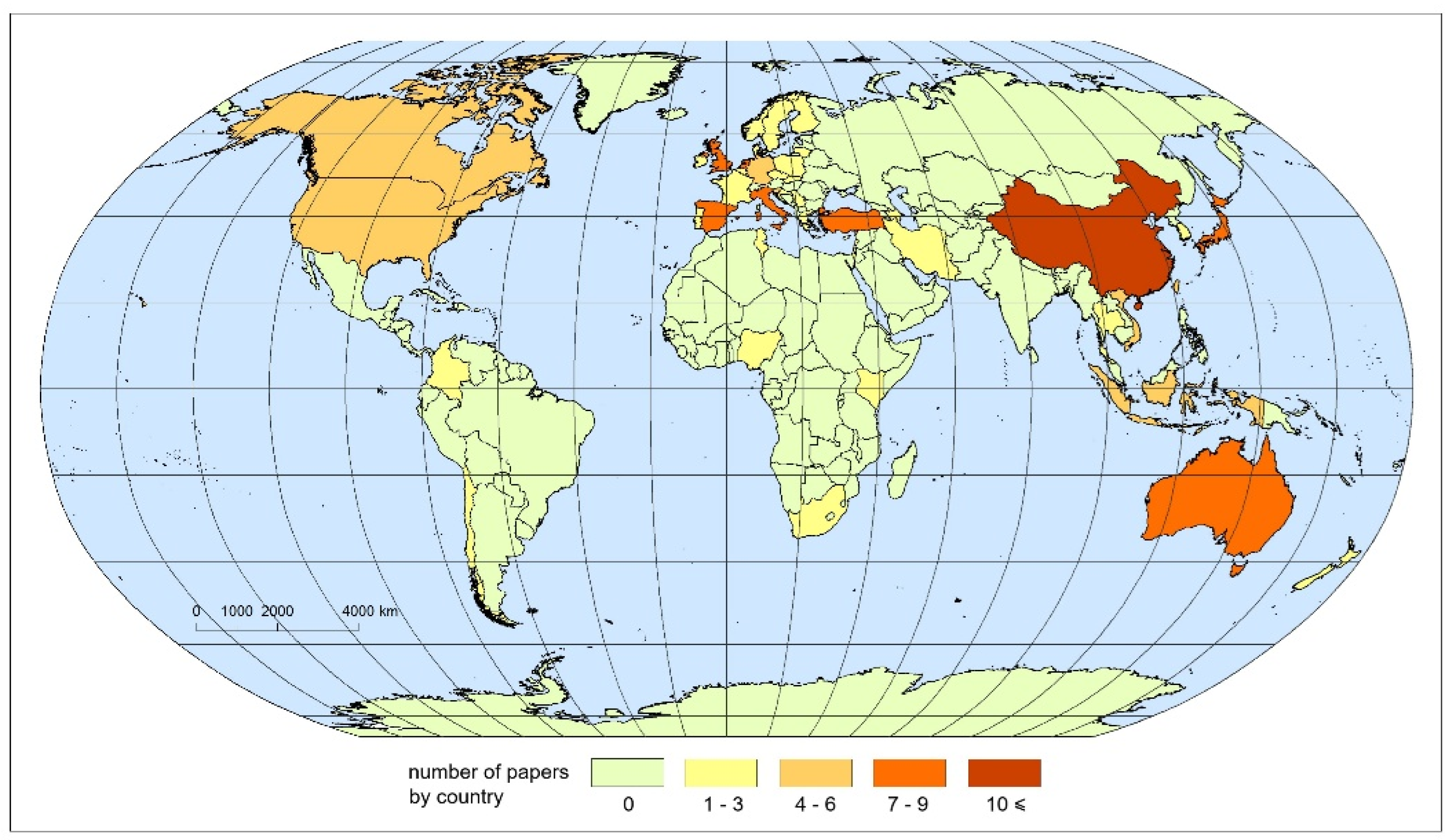
Figure 3 presents a map of the geographic distribution of research, highlighting the countries and regions where studies on this topic have been published. The spatial distribution of the papers is geographically uneven. It is visible that a concentration of publications originates from large countries with major container ports like China and Japan. This pattern suggests that research and publishers’ interest activity overlaps with economic and logistical importance in global trade and shipping. It also implies that some regions, particularly those less involved in large-scale container handling, may be underrepresented.
The geographical concentration of research (Figure 3) indicates disparities in global research engagement, with technologically and economically advanced regions leading the investigation.
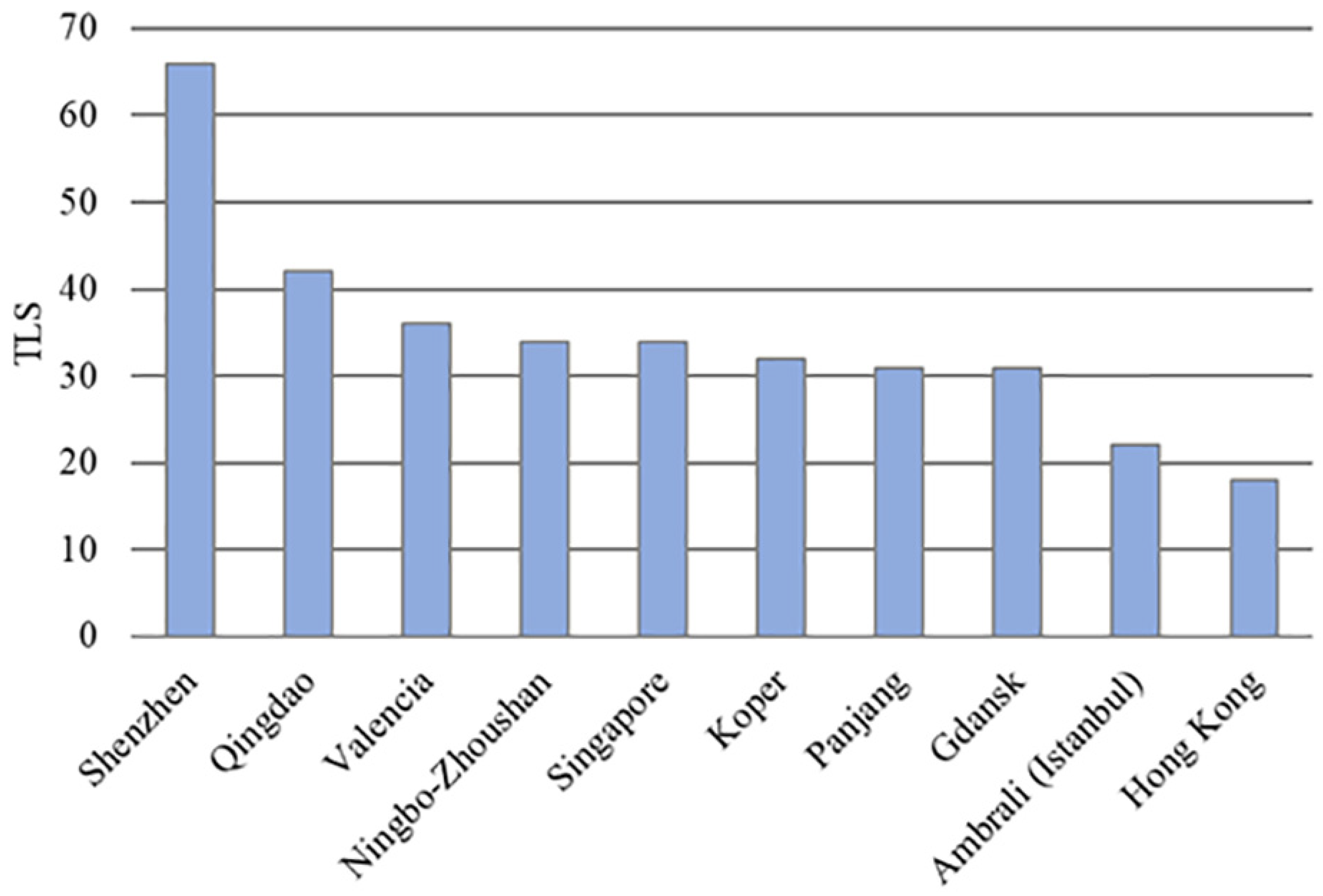
A bibliographic analysis of port names in the abstracts of 120 Scopus papers was conducted using the VOSviewer software. The analysis illustrates the total link strength (TLS) for individual ports, representing the sum of all connections each port has within the network of terms in the abstracts. A higher number of links (TLS) indicates a greater presence of these ports in scientific papers, correlating with their significance in maritime traffic and the adoption of sustainable management practices.
The rising publication trend (Figure 2) underscores the increasing prioritisation of CF assessment in port operations within the scientific community.
Figure 4 reveals significant differences in the prominence of ports within the analysed literature. Certain maritime hubs appear more frequently due to their strategic role in global logistics networks. The bibliometric analysis reveals a significant focus on highly connected transhipment and gateway ports, especially those integrated into major international trade corridors and supply chains. The co-occurrence of keywords suggests that studies frequently associate port performance with topics such as infrastructure development, connectivity, sustainability and supply chain integration. Overall, the findings suggest a clear research focus on ports that combine advanced operational capabilities with strategic geographic positioning, reflecting their central importance in contemporary maritime and logistics systems.

3.3. Qualitative Analysis

The following tables provide a comprehensive overview of Scopus (TOP 10) recent scientific trends in the study of ecological and energy-related aspects of container terminal management and logistics, with a strong focus on methodologies, prominent authorship, and substantive outcomes that inform sustainable port operations. The top ten papers were analysed based on their number of citations, taken from the Scopus database till the end of 2024 (Table 1).
Table 1 presents the most influential research articles on CO2 emissions and energy efficiency in container terminals, ranked by citation count in the Scopus database. It lists the leading authors, journals, and publication years, including key studies such as CO2 emission assessments, reviews of atmospheric emissions from ships in ports, and optimisation methods for environmentally sustainable logistics. The table highlights major contributors shaping the scientific discourse in this field.
Table 2 describes in detail the research methodologies and techniques employed in the analysed studies. Examples include systematic frameworks for analysing CO2 emissions in port terminal operations, energy efficiency analyses of port equipment, emission modelling using traffic data regression, bi-objective optimisation models for intermodal freight flows incorporating carbon constraints, and life cycle assessment (LCA) approaches for sustainable construction. It also features simulation-based methods and multi-methodological approaches that allow comprehensive evaluations and the formulation of recommendations for greener terminal operations.
Table 3 summarises the principal results and contributions of the featured research. Key findings include the validation of analytical frameworks for CO2 emission quantification across container terminal activities, the crucial role of port authority policies in emission reduction, significant emission decreases through equipment retrofits and fuel replacements, the application of regression models to estimate ship emissions, and trade-offs between cost, transit time, and environmental impact in logistics planning. Additionally, the table underscores the positive environmental impacts of automation and AI adoption in terminal operations, demonstrating measurable emission reductions under simulated scenarios.
Analysis of the top 10 most cited papers (Table 2 and Table 3) reveals an evolution in research approaches, characterised by a shift towards quantitative, data-driven methodologies, and an increased use of real operational data to enable more accurate emission assessments. Concurrently, multi-criteria optimisation models have been developed to integrate cost, time and environmental considerations, underscoring the necessity of balanced and informed decision-making in logistics systems. The literature further emphasises a transition towards a more holistic perspective, treating container terminals and wider logistics networks as integrated systems. This approach is often supported by simulation techniques to evaluate alternative scenarios. More recent studies emphasise the increasing importance of automation and artificial intelligence in improving energy efficiency and reducing the carbon footprint of port operations. However, despite these advancements, uncertainties in emission estimation and the limited real-world validation of certain models remain evident, indicating the need for further empirical research and methodological standardisation.

3.4. Bibliometric Analysis

Following a bibliometric analysis provides a systematic means of identifying research trends, thematic clusters, and connections between key concepts. The analysis highlights the central roles of containers, container terminals, carbon footprint, and emission control, illustrating the intersection of logistics, sustainability, and environmental challenges in maritime transport. The results underscore the integration of infrastructural optimisation with environmental considerations and the increasing significance of sustainable practices in supply chain and transportation research.
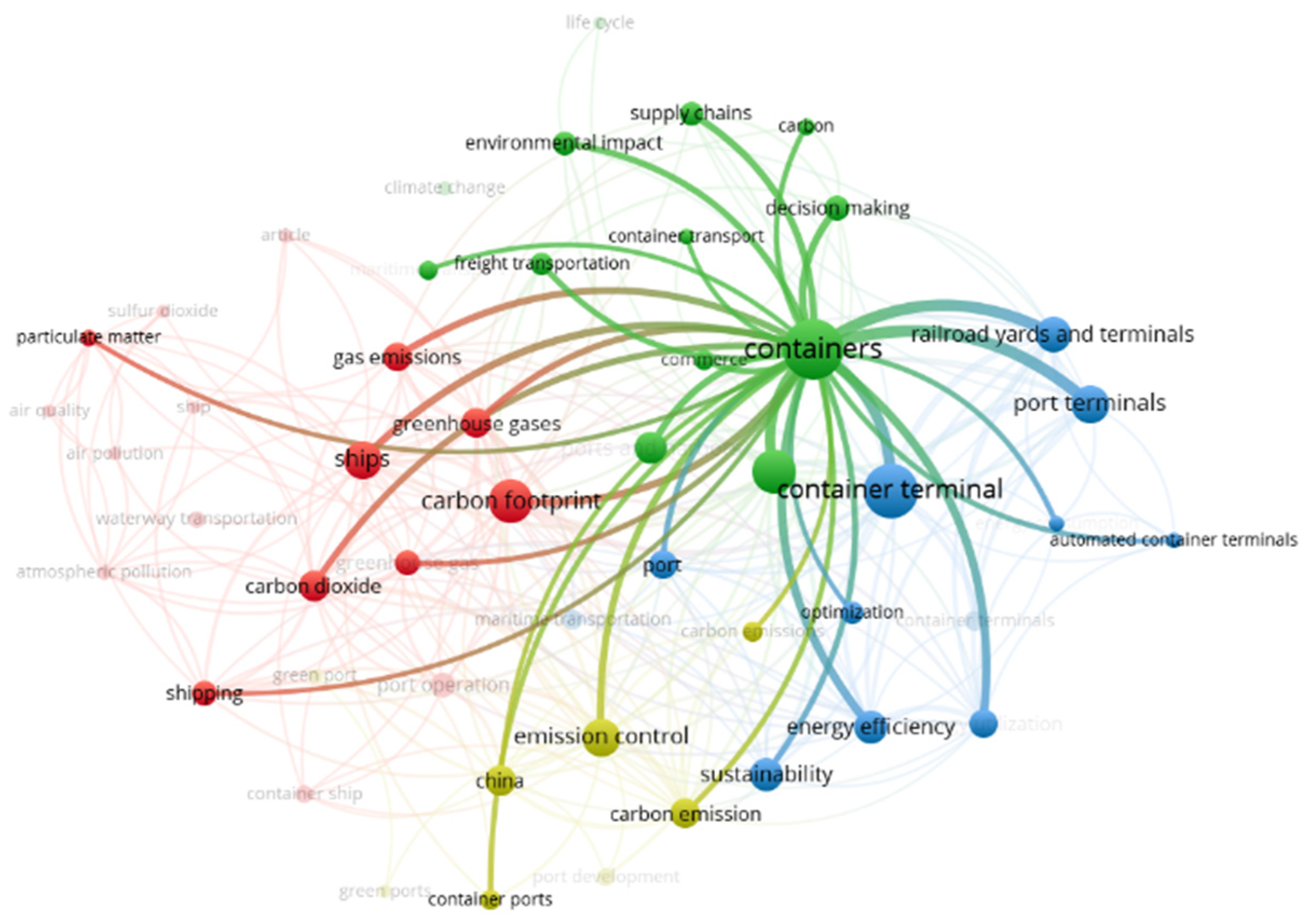
The term “containers” occupies the central position in the network (Figure 5), acting as a hub that connects several thematic clusters. The green cluster focuses on logistics, supply chains, environmental impact, and freight transportation. The blue cluster is connected with infrastructure, including railroad, port terminals, energy efficiency, and optimisation. The red cluster is gathering terms like emissions, carbon footprint, ships, greenhouse gases, and pollution. The yellow cluster is highlighting terms like emission control, sustainability, and port development. It is important to note that the term “containers” makes a bridge between research on logistics, sustainability, and environmental impacts. The strongest links are between terms: container terminal, carbon footprint, emission control, and supply chains. In the context of this paper’s analysis (Figure 5), it is important to note the keywords “emission control” and “supply chains”, which are directly connected to the goal of reducing CF in logistics and container terminals. The links with sustainability indicate a change in emphasis from mere logistical efficiency to environmentally responsible container flow management. The net of terms is showing a high degree of interdisciplinarity, connecting logistics, environmental sciences, and supply chain management. Therefore, it can be concluded that future research should concentrate on standardising operational processes to minimise the carbon footprint in the future.
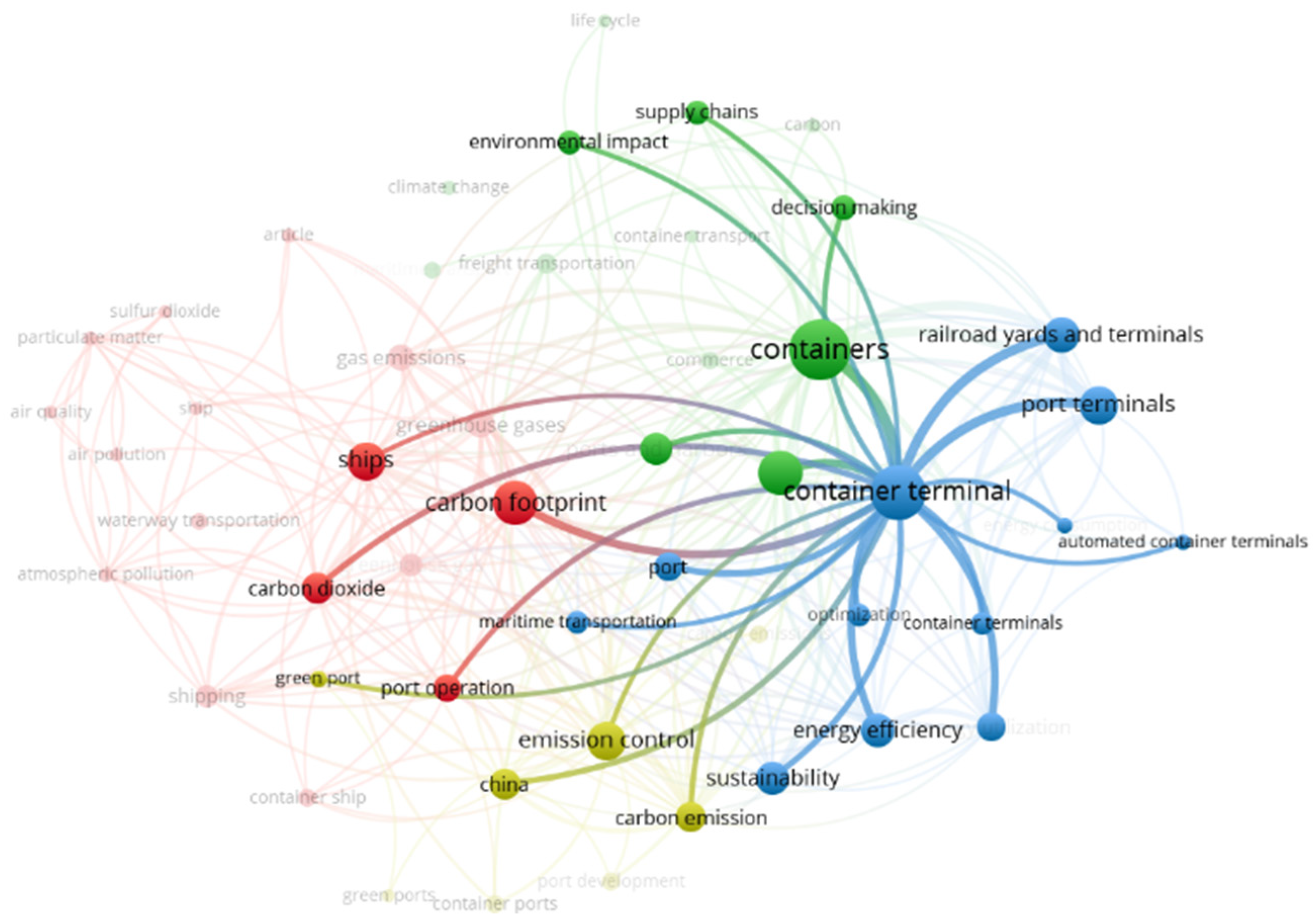
The term “container terminal” is the focal point, with four clusters around (Figure 6). The blue cluster includes terms like terminals, optimisation, automation, and energy efficiency. The green cluster covers terms such as containers, environmental impact, and supply chains. The red cluster includes terms such as ships, emissions, and carbon footprint. The yellow cluster focuses on emission control and sustainability. Bibliometric Connections of the term “container terminal” link infrastructural themes with environmental challenges. In the context of this paper analysis, it is important to highlight emerging topics that appear here (Figure 6), such as “automated container terminals”, “optimisation”, and “energy efficiency”. There are strong associations with terms: energy efficiency, port terminals, optimisation, and carbon footprint. The network underscores the centrality of terminals in reducing emissions and improving operational efficiency. Figure 6 shows that automation and energy efficiency are inevitable for achieving sustainable goals, indicating the need for technological modernisation of the terminal. In this sense, integrating smart logistics technologies is the most significant development approach for reducing CF.
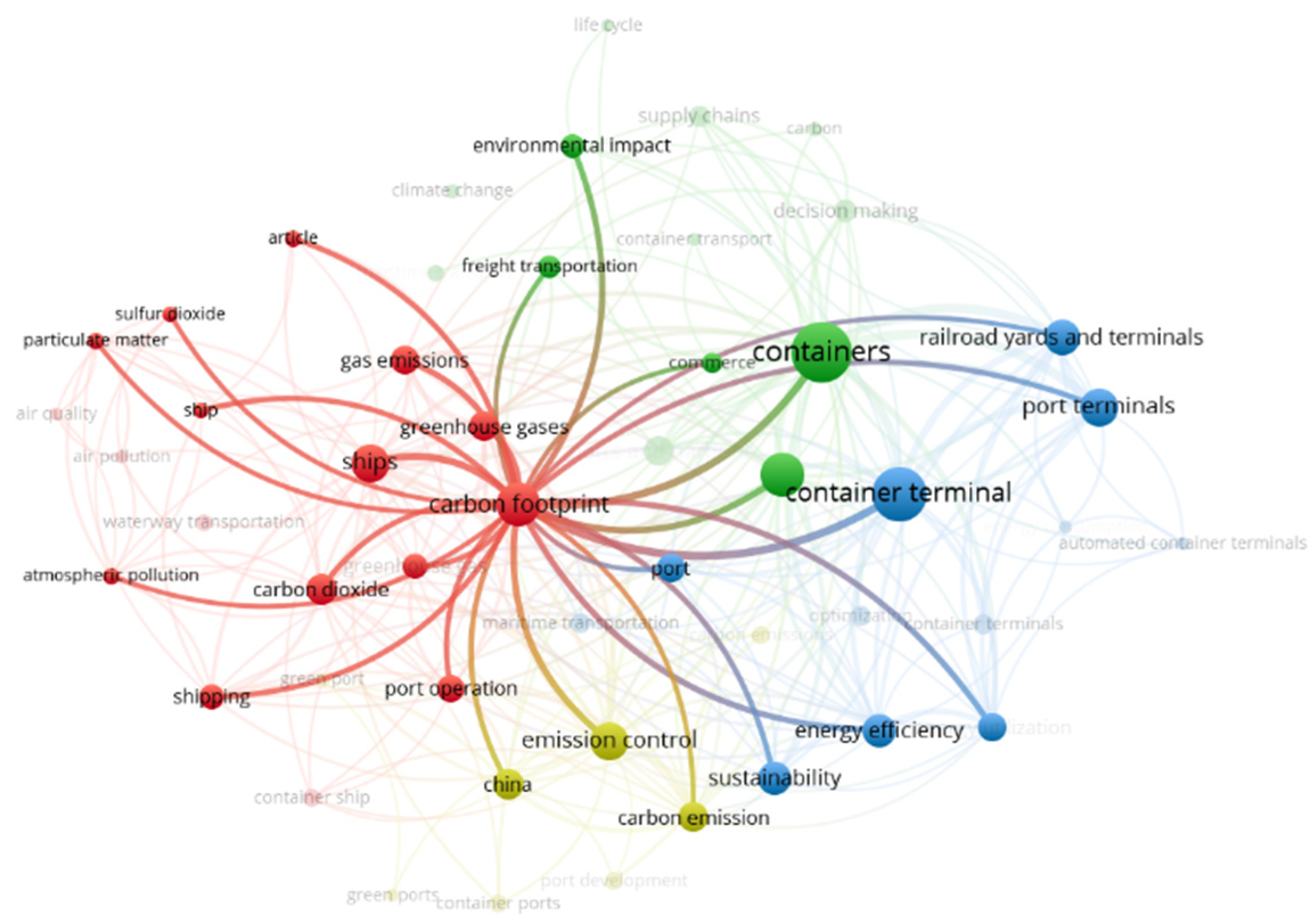
In the network shown in Figure 7, the term “Carbon Footprint” is in the central node of the network, with all keywords regarding sustainable container terminal management. The map emphasises the environmental dimension of maritime transport and the importance of monitoring and reducing carbon emissions. The red cluster dominates, comprising emissions, ships, carbon dioxide, and air pollution. It is important to recognise the keyword “port operation” as one of the crucial areas for reducing the carbon footprint of container terminals. The green and blue clusters are less prominent but still present, relating to logistics, terminals, and sustainability. The term “carbon footprint” is closely linked to “ships”, “carbon dioxide”, “gas emissions”, and “greenhouse gases”. Connections to “containers” and “container terminal” highlight the impact of logistics processes on emissions. Figure 7 on “Carbon footprint” highlights the critical role of emissions monitoring and reduction in maritime transport. The dominance of the red cluster suggests that the research community is currently primarily focused on emissions. However, the correlation between port operations and the overall CF needs to be explored more deeply in order to identify where emissions require immediate intervention.
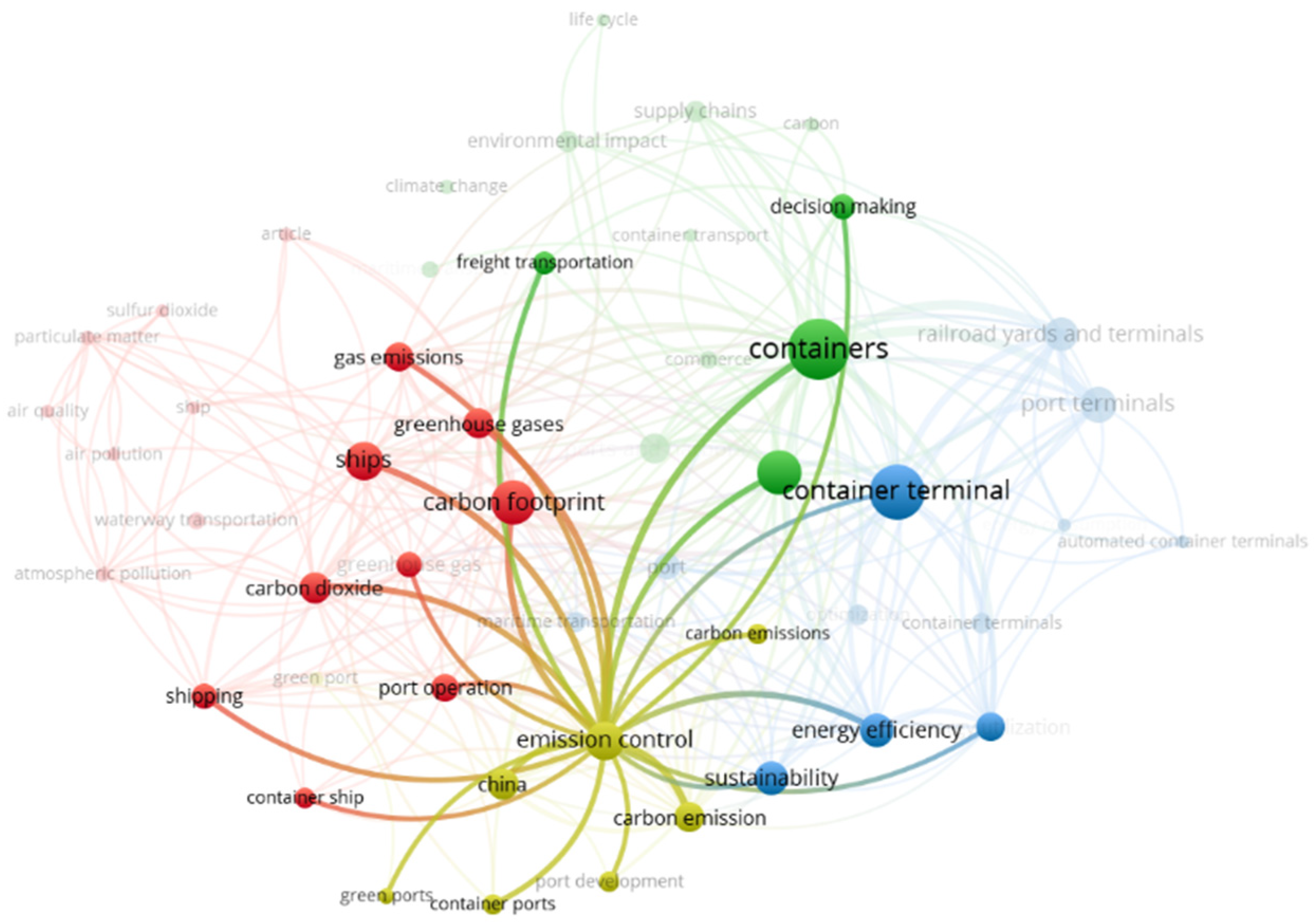
Figure 8 shows a network of interconnected terms related to emissions, transportation, and sustainability, with a focus on maritime and container operations. The focus node “emission control” has the most connections, indicating its central role in the network. Other significant related terms are: “carbon footprint”, “greenhouse gases”, “container terminal”, “sustainability”, and “freight transportation”. “Emission control” is linked to numerous terms suggesting a focus on emission reduction strategies, integration and automation in ports, and sustainability in port management. The red cluster is focused on emissions and pollution (e.g., greenhouse gases, carbon footprint, air pollution). The green group of terms is related to container transport and ports (e.g., container terminal, freight transportation). The blue group emphasises energy and sustainability (e.g., energy efficiency, sustainability). The yellow cluster has a central theme of emission control and port development (e.g., emission control, port development). The analysis of Figure 8 suggests that the research papers are focused on reducing emissions in maritime transportation and optimising container terminals, with an emphasis on sustainability. Focusing on the keyword topic of “energy efficiency” would be a good way to contribute to scientific research into reducing CO2 emissions, since these result from energy consumption. Improving energy efficiency is a strategic necessity for decarbonising maritime transport and ports, so the crucial question is not only technological but also a managerial issue.

4. Conclusions

The conducted analysis of sustainability in container terminal logistics, with a particular focus on CF, reveals several important insights into the evolution and future direction of this research field. The results show that container terminals remain critical emission sources within global supply chains due to their high energy intensity and operational complexity.
Research in this field has evolved significantly over time. Early studies predominantly focused on operational efficiency and emissions quantification, while recent research increasingly shifts toward digitalisation, automation, and AI-driven optimisation of terminal operations. Recent literature demonstrates a clear transition from efficiency-oriented logistics studies toward digitally enabled sustainability and decarbonization strategies in container terminal operations. A key finding is the emergence of smart port technologies as a dominant research direction. Electrification of equipment, shore power systems, automated terminals, and artificial intelligence-based decision-support tools are increasingly identified as core enablers of emission reduction. Digitalisation, electrification, and automation represent the dominant technological pathways shaping the future decarbonization of container terminals.
The bibliometric analysis confirms that emission reduction strategies and supply chain efficiency remain central research themes. However, new emerging directions include digital twins, real-time emissions monitoring, predictive analytics, and integrated multimodal optimisation models. Emerging research directions increasingly focus on AI-enabled predictive systems, digital twins, and real-time carbon monitoring in port operations.
Despite progress, several key research gaps remain. These include the lack of standardised carbon accounting methodologies, limited integration of environmental-economic assessment models, and insufficient empirical evidence linking green investments with measurable environmental outcomes. This paper examined the CF of container terminals with a focus on quantification methods and the role of green technologies in emission reduction.
In relation to the first research question, the findings show that a wide range of methods and indicators are used to quantify the carbon footprint of container terminal operations. These approaches differ significantly in terms of system boundaries, data availability, and methodological frameworks, ranging from aggregated port-level inventories to detailed process-based assessments. This variability reduces comparability across studies and highlights the lack of standardised carbon accounting methodologies.
Regarding the second research question, the analysis indicates that green technologies, such as electrification, automation, and AI-based optimisation, have strong potential to reduce emissions in container terminals. However, their actual impact varies depending on implementation context, energy sources, and the level of integration within terminal operations.
From a policy and managerial perspective, the findings highlight the need for stronger regulatory incentives, including carbon pricing mechanisms, green port certification schemes, and targeted investment support for clean technologies. Port authorities are increasingly required to adopt data-driven and sustainability-oriented decision-making frameworks. Effective decarbonization of container terminals requires the integration of regulatory incentives with data-driven operational management strategies. Ports that invest in sustainable infrastructure and digital transformation are expected to achieve long-term competitiveness in increasingly carbon-constrained global logistics systems.
The study also identifies a geographical imbalance in research output, with most studies concentrated in technologically advanced regions, limiting global representativeness.
Looking forward, the field is expected to evolve toward fully integrated smart and green port ecosystems, driven by AI, IoT, automation, and advanced analytics. Future research should be focused on green technologies, interoperability of digital port systems, and lifecycle-based carbon accounting. In conclusion, the carbon footprint reduction should be viewed as both an environmental necessity and a strategic imperative for global port competitiveness. Sustainable port development requires a multidimensional integration of technological innovation, governance frameworks, and strategic management.
The main limitation of this research is its reliance on a single database. Future work should therefore expand the literature review to include other relevant databases, such as Web of Science. Also, future research should explore how investments in sustainable practices at ports impact the reduction in their ecological footprint. Specifically, it would be valuable to investigate the relationship between capital expenditures on green technologies (such as electrification of terminal equipment, renewable energy installations, shore power facilities, and automated systems) and measurable environmental outcomes including emissions of harmful gases, air quality improvements, and overall carbon footprint reduction. Such studies could provide port authorities and policymakers with evidence-based insights for strategic investment decisions and contribute to the development of best practices for sustainable port development.

Author Contributions

Conceptualization/Supervision/Validation/Verification: H.G., M.J. and G.M.; Data collection/Data Curation/Formal Analyses: H.G.; Methodology/Research/Writing/Review and Editing/Final approval: H.G., M.J. and G.M. All authors have read and agreed to the published version of the manuscript.

Funding

This research received no external funding.

Institutional Review Board Statement

Not applicable.

Informed Consent Statement

Not applicable.

Data Availability Statement

No new data were created or analyzed in this study. Data sharing is not applicable to this article.

Conflicts of Interest

The authors declare no conflicts of interest.

Appendix A. PRISMA 2020 Checklist

Section and TopicItemChecklist ItemLocation Where Item Is Reported
TITLE
Title 1Identify the report as a systematic review.1
ABSTRACT
Abstract 2See the PRISMA 2020 for Abstracts checklist.1
INTRODUCTION
Rationale 3Describe the rationale for the review in the context of existing knowledge.1
Objectives 4Provide an explicit statement of the objective(s) or question(s) the review addresses.2
METHODS
Eligibility criteria 5Specify the inclusion and exclusion criteria for the review and how studies were grouped for the syntheses.2 and 3
Information sources 6Specify all databases, registers, websites, organisations, reference lists and other sources searched or consulted to identify studies. Specify the date when each source was last searched or consulted.2
Search strategy7Present the full search strategies for all databases, registers and websites, including any filters and limits used.2 and 3
Selection process8Specify the methods used to decide whether a study met the inclusion criteria of the review, including how many reviewers screened each record and each report retrieved, whether they worked independently, and, if applicable, details of automation tools used in the process.2
Data collection process 9Specify the methods used to collect data from reports, including how many reviewers collected data from each report, whether they worked independently, any processes for obtaining or confirming data from study investigators, and, if applicable, details of automation tools used in the process.2 and 15
Data items 10aList and define all outcomes for which data were sought. Specify whether all results that were compatible with each outcome domain in each study were sought (e.g., for all measures, time points, analyses), and if not, the methods used to decide which results to collect.2
10bList and define all other variables for which data were sought (e.g., participant and intervention characteristics, funding sources). Describe any assumptions made about any missing or unclear information.2 and 15
Study risk of bias assessment11Specify the methods used to assess risk of bias in the included studies, including details of the tool(s) used, how many reviewers assessed each study and whether they worked independently, and if applicable, details of automation tools used in the process.N/A
Effect measures 12Specify for each outcome the effect measure(s) (e.g., risk ratio, mean difference) used in the synthesis or presentation of results.7–9
Synthesis methods13aDescribe the processes used to decide which studies were eligible for each synthesis (e.g., tabulating the study intervention characteristics and comparing against the planned groups for each synthesis (item #5)).7–9
13bDescribe any methods required to prepare the data for presentation or synthesis, such as handling of missing summary statistics or data conversions.3
13cDescribe any methods used to tabulate or visually display the results of individual studies and syntheses.2
13dDescribe any methods used to synthesise results and provide a rationale for the choice(s). If meta-analysis was performed, describe the model(s), method(s) to identify the presence and extent of statistical heterogeneity, and software package(s) used.2
13eDescribe any methods used to explore possible causes of heterogeneity among study results (e.g., subgroup analysis, meta-regression).2
13fDescribe any sensitivity analyses conducted to assess the robustness of the synthesised results.N/A
Reporting bias assessment14Describe any methods used to assess the risk of bias due to missing results in a synthesis (arising from reporting biases).N/A
Certainty assessment15Describe any methods used to assess certainty (or confidence) in the body of evidence for an outcome.N/A
RESULTS
Study selection 16aDescribe the results of the search and selection process, from the number of records identified in the search to the number of studies included in the review, ideally using a flow diagram.4
16bCite studies that might appear to meet the inclusion criteria, but which were excluded, and explain why they were excluded.3
Study characteristics 17Cite each included study and present its characteristics.4 and 5
Risk of bias in studies 18Present assessments of risk of bias for each included study.N/A
Results of individual studies 19For all outcomes, present, for each study: (a) summary statistics for each group (where appropriate) and (b) an effect estimate and its precision (e.g., confidence/credible interval), ideally using structured tables or plots.4 and 5
Results of syntheses20aFor each synthesis, briefly summarise the characteristics and risk of bias among contributing studies.7–9
20bPresent the results of all statistical syntheses conducted. If meta-analysis was done, present for each the summary estimate and its precision (e.g., confidence/credible interval) and measures of statistical heterogeneity. If comparing groups, describe the direction of the effect.6 and 7
20cPresent the results of all investigations of possible causes of heterogeneity among study results.6 and 7
20dPresent the results of all sensitivity analyses conducted to assess the robustness of the synthesised results.6 and 7
Reporting biases21Present assessments of risk of bias due to missing results (arising from reporting biases) for each synthesis assessed.N/A
Certainty of evidence 22Present assessments of certainty (or confidence) in the body of evidence for each outcome assessed.7 and 8
DISCUSSION
Discussion 23aProvide a general interpretation of the results in the context of other evidence.9 and 10
23bDiscuss any limitations of the evidence included in the review.14
23cDiscuss any limitations of the review processes used.14
23dDiscuss implications of the results for practice, policy, and future research.10
OTHER INFORMATION
Registration and protocol24aProvide registration information for the review, including register name and registration number, or state that the review was not registered.N/A
24bIndicate where the review protocol can be accessed, or state that a protocol was not prepared.2 and 3
24cDescribe and explain any amendments to information provided at registration or in the protocol.N/A
Support25Describe sources of financial or non-financial support for the review, and the role of the funders or sponsors in the review.14
Competing interests26Declare any competing interests of review authors.14
Availability of data, code and other materials27Report which of the following are publicly available and where they can be found: template data collection forms; data extracted from included studies; data used for all analyses; analytic code; any other materials used in the review.2

References

  1. Amani, H.; Bouyaya, L.; Chaib, R.; Amani, M.S. Efficient Space Allocation for Import Containers Minimizing Reshuffling in Yard Blocks: Case Study. Pomorstvo 2024, 38, 224–238. [Google Scholar] [CrossRef]
  2. Sim, J. A carbon emission evaluation model for a container terminal. J. Clean. Prod. 2018, 186, 526–533. [Google Scholar] [CrossRef]
  3. Song, D.P.; Xu, J. CO 2 Emission Comparison Between Direct and Feeder Liner Services: A Case Study of Asia-Europe Services Interfacing with the UK. Int. J. Sustain. Transp. 2012, 6, 214–237. [Google Scholar] [CrossRef]
  4. Acciaro, M.; Ghiara, H.; Cusano, M.I. Energy management in seaports: A new role for port authorities. Energy Policy 2014, 71, 4–12. [Google Scholar] [CrossRef]
  5. Budiyanto, M.A.; Huzaifi, M.H.; Sirait, S.J.; Prayoga, P.H.N. Evaluation of CO2 emissions and energy use with different container terminal layouts. Sci. Rep. 2021, 11, 5476. [Google Scholar] [CrossRef]
  6. Martinić-Cezar, S.; Bratić, K.; Jurić, Z.; Račić, N. Exhaust emissions reduction and fuel consumption from the LNG energy system depending on the ship operating modes. Pomorstvo 2022, 36, 338–349. [Google Scholar] [CrossRef]
  7. Long, N.X.; Van Hung, P. Energy efficiency and carbon emissions assessment of container terminal equipment at Tan Cang–Cai Mep Thi Vai. Int. J. Sustain. Eng. 2025, 18, 2580726. [Google Scholar] [CrossRef]
  8. Chang, C.C.; Wang, C.M. Evaluating the effects of green port policy: Case study of Kaohsiung harbor in Taiwan. Transp. Res. D Transp. Environ. 2012, 17, 185–189. [Google Scholar] [CrossRef]
  9. Yang, Y.C. Operating strategies of CO2 reduction for a container terminal based on carbon footprint perspective. J. Clean. Prod. 2017, 141, 472–480. [Google Scholar] [CrossRef]
  10. Tao, X.; Wu, Q. Energy consumption and CO2 emissions in hinterland container transport. J. Clean. Prod. 2021, 279, 123394. [Google Scholar] [CrossRef]
  11. Issa, M.; Rizk, P.; Boulon, L.; Rezkallah, M.; Rizk, R.; Ilinca, A. Smart, Connected, and Sustainable: The Transformation of Maritime Ports Through Electrification, IoT, 5G, and Green Energy. Sustainability 2025, 17, 7568. [Google Scholar] [CrossRef]
  12. Hsu, W.K.K.; Huynh, N.T.; Le Quoc, T.; Yu, H.L. An assessment model of eco-efficiency for container terminals within a port. Econ. Transp. 2024, 39, 100359. [Google Scholar] [CrossRef]
  13. Calcerano, T.A.; de Castro Hilsdorf, W. Sustainability practices in container terminals in Brazil. Production 2021, 31, e20200113. [Google Scholar] [CrossRef]
  14. Van Eck, N.J.; Waltman, L. Visualizing Bibliometric Networks, in Measuring Scholarly Impact; Springer International Publishing: Berlin/Heidelberg, Germany, 2014; pp. 285–320. [Google Scholar] [CrossRef]
  15. Tsolakis, N.; Zissis, D.; Papaefthimiou, S.; Korfiatis, N. Towards AI driven environmental sustainability: An application of automated logistics in container port terminals. Int. J. Prod. Res. 2022, 60, 4508–4528. [Google Scholar] [CrossRef]
  16. Nguyen, S.; Leman, A.; Xiao, Z.; Fu, X.; Zhang, X.; Wei, X.; Zhang, W.; Li, N.; Zhang, W.; Qin, Z. Blockchain-powered incentive system for jit arrival operations and decarbonization in maritime shipping. Sustainability 2023, 15, 15686. [Google Scholar] [CrossRef]
  17. Geerlings, H.; Van Duin, R. A new method for assessing CO2-emissions from container terminals: A promising approach applied in Rotterdam. J. Clean. Prod. 2011, 19, 657–666. [Google Scholar] [CrossRef]
  18. Martínez-Moya, J.; Vazquez-Paja, B.; Gimenez Maldonado, J.A. Energy efficiency and CO2 emissions of port container terminal equipment: Evidence from the Port of Valencia. Energy Policy 2019, 131, 312–319. [Google Scholar] [CrossRef]
  19. Chen, D.; Zhao, Y.; Nelson, P.; Li, Y.; Wang, X.; Zhou, Y.; Lang, J.; Guo, X. Estimating ship emissions based on AIS data for port of Tianjin, China. Atmos. Environ. 2016, 145, 10–18. [Google Scholar] [CrossRef]
  20. Toscano, D.; Murena, F. Atmospheric Ship Emissions in Ports: A Review. Correlation with Data of Ship Traffic; Elsevier Ltd.: Amsterdam, The Netherlands, 2019. [Google Scholar] [CrossRef]
  21. Lam, J.S.L.; Gu, Y. A market-oriented approach for intermodal network optimisation meeting cost, time and environmental requirements. Int. J. Prod. Econ. 2016, 171, 266–274. [Google Scholar] [CrossRef]
  22. Kizilay, D.; Eliiyi, D.T. A comprehensive review of quay crane scheduling, yard operations and integrations thereof in container terminals. Flex. Serv. Manuf. J. 2021, 33, 1–42. [Google Scholar] [CrossRef]
  23. Lee, K.H.; Wu, Y. Integrating sustainability performance measurement into logistics and supply networks: A multi-methodological approach. Br. Account. Rev. 2014, 46, 361–378. [Google Scholar] [CrossRef]
  24. Xin, J.; Negenborn, R.R.; Lodewijks, G. Energy-aware control for automated container terminals using integrated flow shop scheduling and optimal control. Transp. Res. Part C Emerg. Technol. 2014, 44, 214–230. [Google Scholar] [CrossRef]
  25. Tsao, Y.C.; Linh, V.T. Seaport- dry port network design considering multimodal transport and carbon emissions. J. Clean. Prod. 2018, 199, 481–492. [Google Scholar] [CrossRef]
Figure 1. PRISMA 2020 flow diagram of the systematic reviews process.
Logistics 10 00132 g001
Figure 2. Trend in the number of papers published from 2008 to 2024.
Logistics 10 00132 g002
Figure 3. Geographic dispersion of papers on the research topic from 2008 to 2024.
Logistics 10 00132 g003
Figure 4. Major global ports in research papers (120 Scopus papers).
Logistics 10 00132 g004
Figure 5. Network of terms connected to the term “containers”.
Logistics 10 00132 g005
Figure 6. Network of terms connected to the term “container terminal”.
Logistics 10 00132 g006
Figure 7. Network of terms connected to the term “carbon footprint”.
Logistics 10 00132 g007
Figure 8. Network of terms connected to the term “emission control”.
Logistics 10 00132 g008
Table 1. Authors, Journals, Citations (Scopus-TOP 10).
Article TitleAuthorsJournal (Year)Cited
A new method for assessing CO2-emissions from container terminals: A promising approach applied in Rotterdam [17]Geerlings, H., Van Duin, R.Journal of Cleaner Production (2011)166
Energy efficiency and CO2 emissions of port container terminal equipment: Evidence from the Port of Valencia [18]Martínez-Moya, J., Vazquez-Paja, B., Gimenez Maldonado, J.A.Energy Policy (2019)109
Estimating ship emissions based on AIS data for the port of Tianjin, China [19]Chen, D., Zhao, Y., Nelson, P., Li, Y., Wang, X., Zhou, Y., … & Guo, X.Atmospheric environment (2016)102
Atmospheric ship emissions in ports: A review. Correlation with data of ship traffic [20]Toscano, D., Murena, F.Atmospheric Environment (2019)82
A market-oriented approach for intermodal network optimisation meeting cost, time and environmental requirements [21]Lam, J.S.L., Gu, Y.International Journal of Production Economics (2016)82
A comprehensive review of quay crane scheduling, yard operations and integrations thereof in container terminals [22]Kizilay, D., Eliiyi, D.T.Flexible Services and Manufacturing Journal (2020)79
Integrating sustainability performance measurement into logistics and supply networks: A multi-methodological approach [23]Lee, K.-H., Wu, Y.British Accounting Review (2014)79
Energy-aware control for automated container terminals using integrated flow shop scheduling and optimal control [24]Xin, J., Negenborn, R.R., Lodewijks, G.Transportation Research Part C: Emerging Technologies (2014)73
Seaport–dry port network design considering multimodal transport and carbon emissions [25]Tsao, Y.-C., Linh, V.T.Journal of Cleaner Production (2018)60
Towards AI-driven environmental sustainability: an application of automated logistics in container port terminals [15]Tsolakis, N., Zissis, D., Papaefthimiou, S., Korfiatis, N.International Journal of Production Research (2021)57
Table 2. Research Methods.
TitleResearch Method/Technique
A new method for assessing CO2-emissions from container terminals: A promising approach applied in Rotterdam [17]A systematic framework was developed to analyse CO2 emissions from container terminal operations in ports. The methodology is exemplified through its application to the Port of Rotterdam, serving as a representative case study.
Energy efficiency and CO2 emissions of port container terminal equipment: Evidence from the Port of Valencia [18]The study analyses energy consumption and CO2 emissions at the Mediterranean container terminal (Valencia, Spain). Focus is on identifying key emission sources and assessing technical measures for improving energy efficiency.
Estimating ship emissions based on AIS data for the port of Tianjin, China [19]The research was conducted using the Automatic Identification System (AIS) for Tianjin Port.
Atmospheric ship emissions in ports: A review. Correlation with data of ship traffic [20]The study reviews and analyses NOₓ and PM10 emissions from passenger and commercial ships in ports, focusing on: cruise ships, other passenger ships, and commercial vessels. Emissions were correlated with annual traffic regression for emissions.
A market-oriented approach for intermodal network optimisation meeting cost, time and environmental requirements [21]The study develops a bi-objective optimisation model for tactical planning of intermodal container flows, specifically designed for freight integrators. The model simultaneously minimises total cost and transit time, while incorporating constraints on carbon emissions.
A comprehensive review of quay crane scheduling, yard operations and integrations thereof in container terminals [22]The study categorises and synthesises previous research on key problem areas including quay crane assignment and scheduling, yard crane operations, vehicle dispatching, routing, and storage planning to provide a holistic understanding of terminal performance.
Integrating sustainability performance measurement into logistics and supply networks: A multi-methodological approach [23]The study employs a multi-methodological approach to assess economic and environmental performance in logistics and supply chain management. A case study of Westgate Ports (Australia) is used to compare cost and carbon emissions.
Energy-aware control for automated container terminals using integrated flow shop scheduling and optimal control [24]A hybrid control methodology is proposed for optimising energy consumption and handling capacity in automated container terminals. Simulation is used to test the approach.
Seaport–dry port network design considering multimodal transport and carbon emissions [25]The study uses an approximation model for a multimodal seaport–dry-port network that includes carbon emissions as a parameter. It combines road and rail transport and applies a game-theoretic approach to model interactions among seaports, dry ports, and shippers.
Towards AI-driven environmental sustainability: an application of automated logistics in container port terminals [15]The paper combines a literature review with a simulation-based case study to examine the environmental impacts of artificial intelligence (AI) and automation, particularly Automated Guided Vehicles (AGVs), in container terminals. The study uses data for scenarios and assesses environmental outcomes.
Table 3. Results/Highlights.
TitleResearch Method/Technique
A new method for assessing CO2 emissions from container terminals: A promising approach applied in Rotterdam [17]The proposed analytical framework enables the quantification and evaluation of CO2 emissions across various container terminal activities.
A set of targeted recommendations has been formulated to support emission reduction, including alternative fuels such as biofuels.
Energy efficiency and CO2 emissions of port container terminal equipment: Evidence from the Port of Valencia [18]Retrofitting RTGs and replacing diesel tractors with LNG models significantly reduced emissions.
The study underscores the role of port authority policies in promoting environmental improvements.
Estimating ship emissions based on AIS data for the port of Tianjin, China [19]ship emission inventory with temporal and spatial resolution.
spatial distribution and monthly variations in ship emissions.
Atmospheric ship emissions in ports: A review. Correlation with data of ship traffic [20]Regression models were developed to estimate ship emissions in ports using easily available traffic data.
The approach highlights significant uncertainty in existing emission estimation methods.
A market-oriented approach for intermodal network optimisation meeting cost, time and environmental requirements [21]The model provides practical insights into trade-offs between cost and transit time in intermodal logistics.
The study highlights the potential of integrated planning tools to balance economic efficiency and environmental impact in freight transport.
A comprehensive review of quay crane scheduling, yard operations and integrations thereof in container terminals [22]Integrated approaches to operational planning show promise in improving overall terminal efficiency.
The study offers managerial insights and research directions for optimising container terminal logistics.
Integrating sustainability performance measurement into logistics and supply networks: A multi-methodological approach [23]The multi-method approach proved effective in supporting decision-making by providing a more comprehensive sustainability assessment.
The study emphasises the value of integrating diverse performance indicators into a unified model to enhance sustainable logistics planning.
Energy-aware control for automated container terminals using integrated flow shop scheduling and optimal control [24]The methodology enables minimisation of energy use while maintaining efficient container handling.
Coordinated control across system levels allows for time-constrained energy optimisation.
Seaport–dry port network design considering multimodal transport and carbon emissions [25]Rail transport via dry ports reduces both cost and carbon emissions compared to exclusive road transport.
Game theory provides balanced outcomes, optimising environmental and economic goals.
Towards AI-driven environmental sustainability: an application of automated logistics in container port terminals [15]Adoption of AGVs and AI-based systems improves environmental sustainability in port operations.
Simulated routing strategies show measurable reductions in emissions.
Disclaimer/Publisher’s Note: The statements, opinions and data contained in all publications are solely those of the individual author(s) and contributor(s) and not of MDPI and/or the editor(s). MDPI and/or the editor(s) disclaim responsibility for any injury to people or property resulting from any ideas, methods, instructions or products referred to in the content.