2.1. Block Relocation Problem
The classical definition of the Block Relocation Problem (BRP) involves retrieving all items according to their departure time with minimal relocation. The Block Relocation Problem (BRP) itself refers to the unloading of goods from storage in a specific order, with the shortest possible sequence of movements. During the retrieval process, decisions may need to be made to move items that obstruct the target item. The objective of BRP is to retrieve all items according to their departure time while minimizing the number of relocations [
11].
The Block Relocation Problem (BRP) can be divided into two categories: Restricted BRP (RBRP) and Unrestricted BRP (UBRP). RBRP only allows the relocation of items that obstruct the target item, whereas UBRP permits the movement of any items, including voluntary movements. Although UBRP may result in fewer relocations by sacrificing a much larger search space, this approach has the potential to increase operational costs. Therefore, a more appropriate approach to address this problem is through the use of RBRP, which is better suited for cases with smaller storage spaces and the retrieval of containers from stacks [
4].
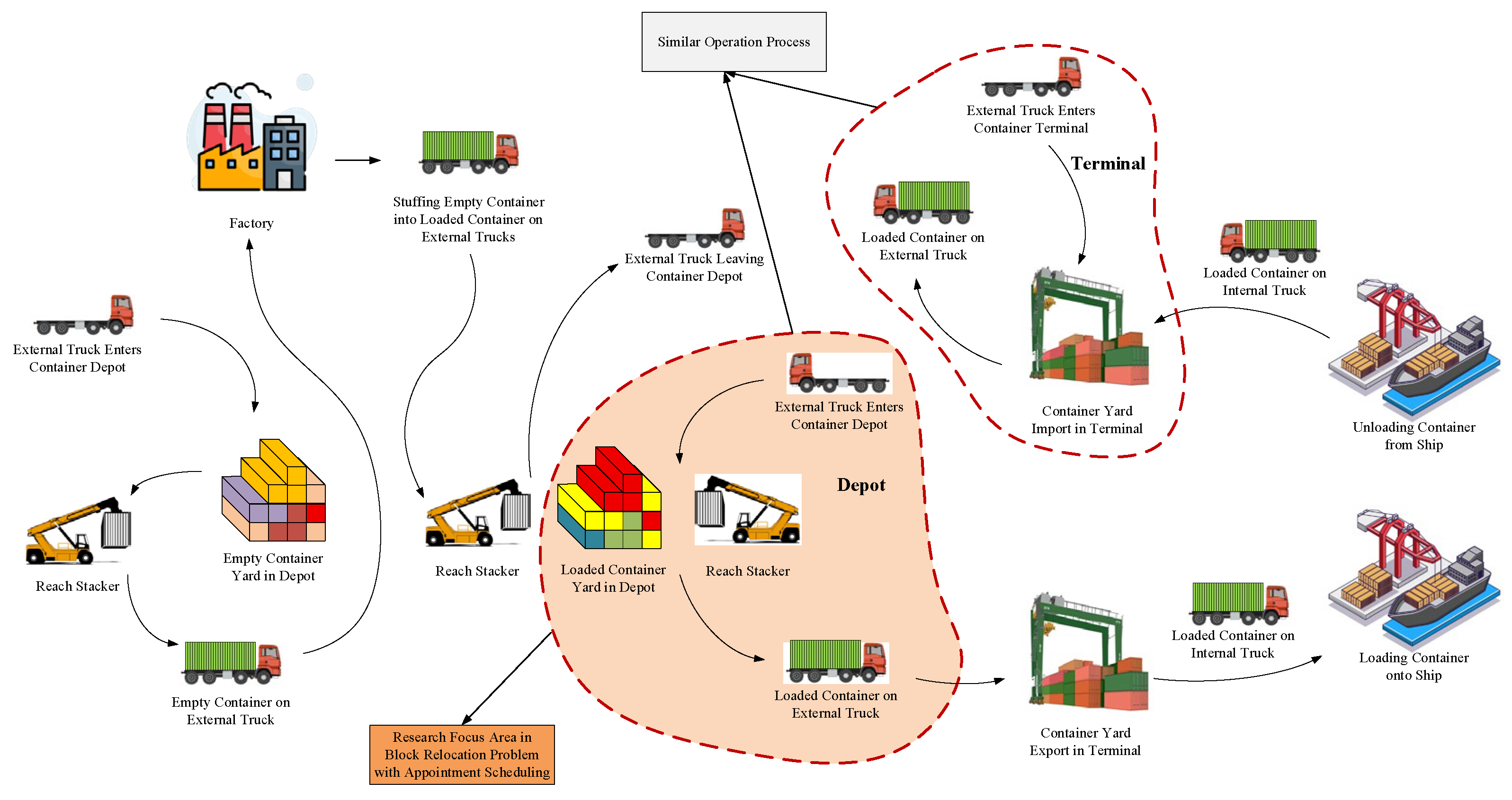
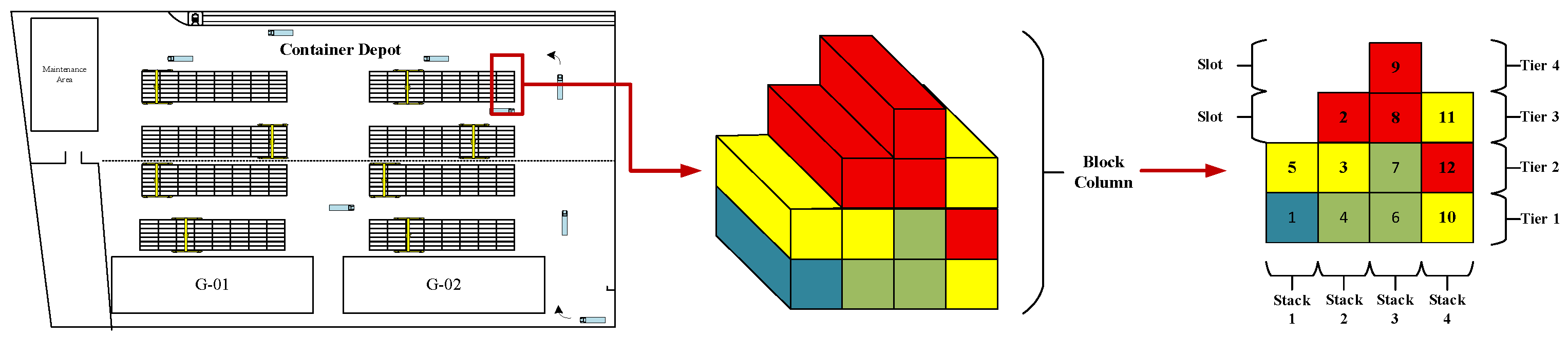
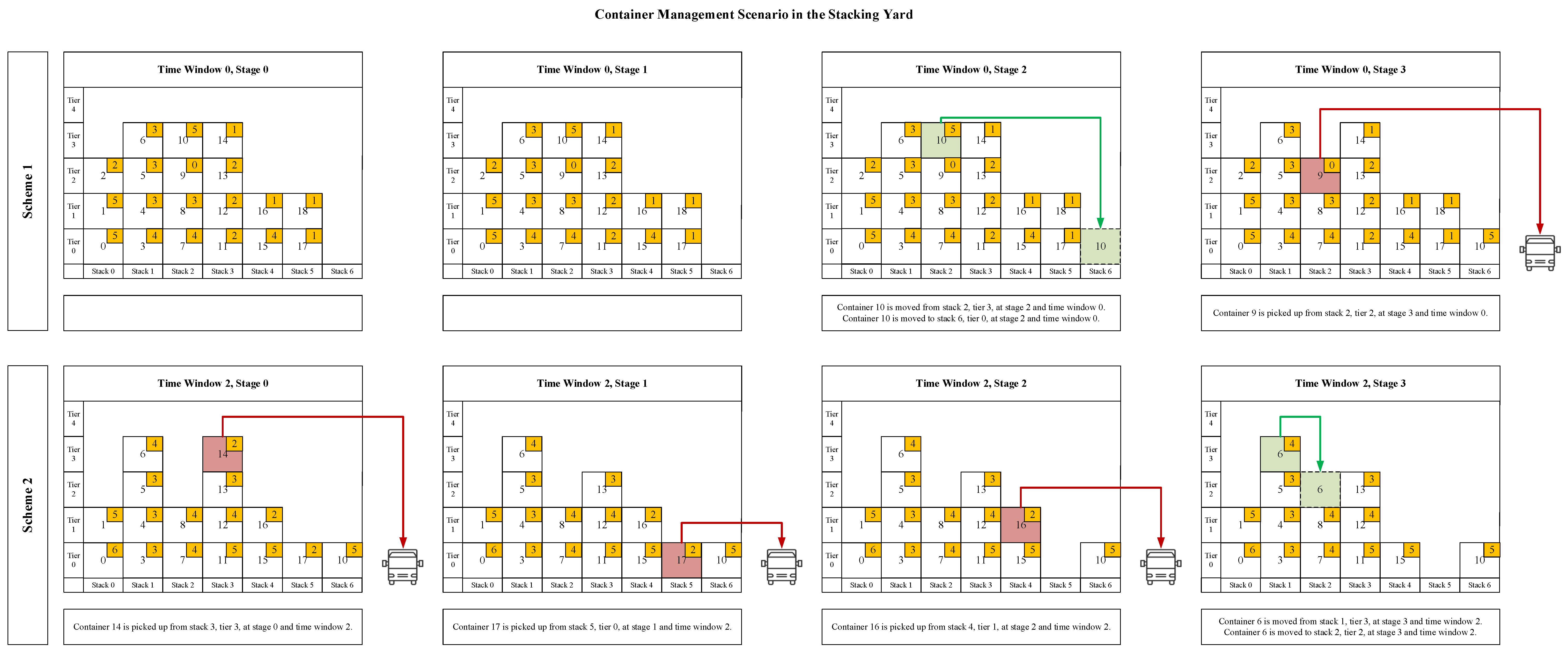
The application of the Block Relocation Problem (BRP) in container depot logistics systems aims to optimize the process of retrieving and relocating containers at port terminals or container depots. In this context, the Block Relocation Problem refers to the reorganization of containers arranged either vertically or horizontally. This issue arises when containers that need to be retrieved are not at the top of the stack, necessitating multiple moves to create space for their retrieval. The management of storage space and container relocation becomes a critical aspect of logistics operations, particularly in ports or container depots with high volumes. The application of the Block Relocation Problem facilitates more efficient planning and management of containers by minimizing the number of relocations required. The block column in the Block Relocation Problem (BRP) case, consisting of stacks, tiers, and empty slots, is illustrated in
Figure 3.
In the context of the Block Relocation Problem (BRP), several key terms are commonly used. A block refers to a unit of container stored within a storage area or bay, which must be retrieved according to a predefined order. Within a block, there is a block column, which is a vertical arrangement of containers designed to maximize space utilization and facilitate efficient loading and unloading. A stack consists of a vertical pile of blocks within a column, with limited capacity, and can only be accessed from the top. The bay is the storage area that contains multiple stacks, organized to ensure efficient retrieval of blocks. Each tier represents a height level within a stack, where the bottom block is typically the first to be stored and retrieved, unless a block above it must be moved first. Lastly, a slot is the position within a tier of the stack for storing a block, with its capacity determined by the number of available slots. These terms collectively help in understanding and addressing the logistical challenges posed by the Block Relocation Problem in container depots.
The Block Relocation Problem (BRP) has been addressed using various solution approaches in the literature. These approaches can generally be classified into three categories. First, exact optimization methods, such as integer programming and branch-and-bound algorithms, aim to obtain optimal solutions but are often limited by computational complexity when applied to large-scale problems. Second, heuristic methods are widely used to generate near-optimal solutions with lower computational effort, making them suitable for real-time applications. Third, metaheuristics approaches, including genetic algorithms, tabu search, and simulated annealing, have been developed to balance solution quality and computational efficiency, particularly for large and complex instances of BRP.
In this study, an exact optimization approach based on integer programming is adopted. This approach enables a precise formulation of decision variables and constraints while ensuring optimality of the solution, which is essential for capturing the operational characteristics of container relocation problems.
2.2. Truck Appointment Scheduling
Truck appointment scheduling refers to a system implemented by container terminals or depots to manage truck arrivals and schedule appointments by dividing truck arrivals into specific time windows. This system aims to reduce congestion, minimize waiting times, and enhance operational productivity by preventing excessive truck queues both inside and outside the stacking area. Research by [
12] indicates that the use of a Truck Appointment System (TAS) can reduce truck waiting times, which leads to shorter truck turnaround times and mitigates congestion in the stacking area. Truck turnaround time is the sum of truck waiting time and the time taken for the truck to be serviced [
13].
Truck appointment scheduling, in the context of the Block Relocation Problem, not only involves truck arrival times but also requires coordination with container relocation and retrieval operations in the stacking yard. This coordination includes planning for container pickup and the capacity of equipment such as cranes. Research by [
14] demonstrates that efficient scheduling can reduce truck waiting times and improve the utilization of stacking yard capacity. Coordination between truck arrival schedules and the container relocation process is one of the key challenges in truck appointment scheduling. Often, when trucks arrive on time according to the scheduled appointment, the container intended for retrieval is not located at the top of the stack, necessitating the relocation of other containers to access the desired one. Poor coordination between arrival times and container relocation can result in reduced productivity and increased truck waiting times. It is found in [
15] that the truck waiting times can be reduced by aligning truck arrival schedules with container management movements, by developing a truck appointment scheduling model involving container relocation. Later on, we will refer to this research in [
15] to validate our proposed model, and it is referred to as BRP-AS.
Despite the extensive development of solution approaches for BRP, many existing studies treat container relocation as an isolated problem without explicitly considering the dynamics of truck arrivals. In practical container depot operations, however, container retrieval activities are closely linked to truck appointment schedules. Poor synchronization between these two aspects can lead to increased relocation operations, longer truck waiting times, and reduced yard efficiency.
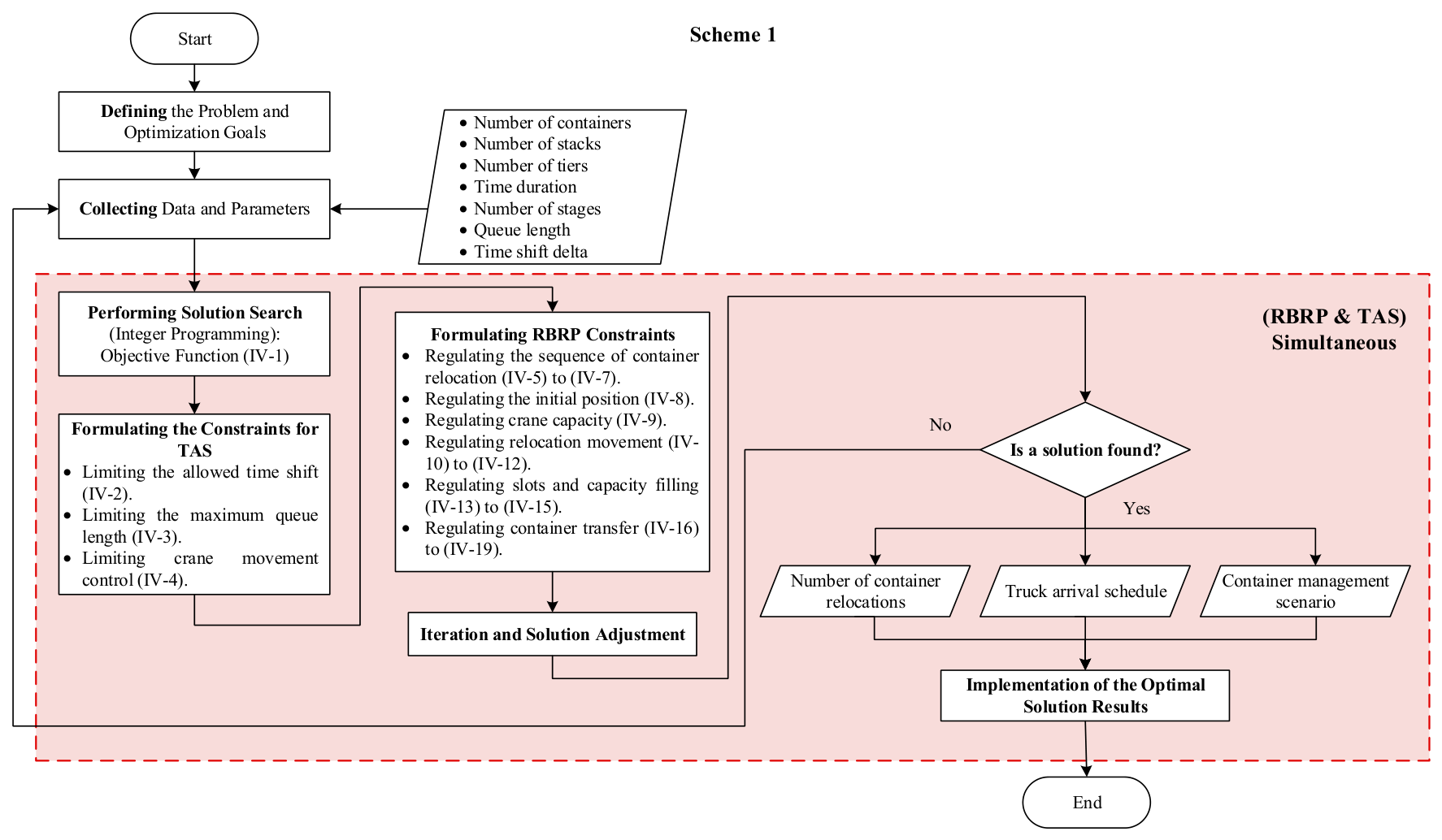
Therefore, this study focuses on integrating Truck Appointment Scheduling (TAS) with the Restricted Block Relocation Problem (RBRP) within a unified optimization framework. The use of an exact optimization approach allows for a structured and consistent representation of both scheduling and relocation decisions, enabling more accurate coordination between truck arrivals and container handling processes.
2.3. Previous Works
The Block Relocation Problem (BRP) was first introduced as an optimization problem aimed at determining the retrieval sequence of containers while minimizing the number of relocation moves [
16]. Their study demonstrated that containers blocked by other containers require reshuffling operations before retrieval, making relocation minimization a critical factor in improving container yard operational efficiency. The main contribution of this study was the introduction of the BRP model along with the Expected Number of Additional Relocations (ENARs) heuristics to estimate additional relocations during the retrieval process. Although the heuristics were capable of generating feasible solutions, it was unable to guarantee optimality, particularly for large-scale and complex instances. Since then, BRP has evolved into one of the major research topics in container terminal optimization due to its close relationship with crane utilization, service time, yard productivity, and operational costs.
In its early development, BRP research mainly focused on heuristic approaches to obtain operationally feasible solutions. Following the ENAR heuristics proposed in [
16,
17], the Corridor Method was developed to improve reshuffling efficiency through a local-search approach [
17]. Although this method reduced the number of relocations compared to previous heuristics, its performance strongly depended on the initial container stack configuration and did not always produce optimal solutions. Subsequently, the PR (Priority Rule) and PU (Priority Update) heuristics for both restricted and unrestricted BRP were introduced in [
18]. These approaches improved heuristic solution quality; however, the resulting solutions remained highly dependent on the priority rules employed. In addition, several studies began applying metaheuristics approaches such as Genetic Algorithms (GAs), Simulated Annealing (SA), and Ant Colony Optimization (ACO) to address large-scale BRP instances. While metaheuristics were able to generate high-quality solutions for complex problems, they could not guarantee optimality and were highly sensitive to algorithmic parameter settings.
The limitations of heuristic approaches subsequently motivated the development of exact optimization methods. An integer programming-based formulation through the Multi-Relocation Integer Programming (MRIP) model was developed in [
19]. This study represented an important milestone in BRP evolution because it enabled the problem to be mathematically formulated and solved systematically to obtain optimal solutions. Nevertheless, the formulation generated a very large number of variables and constraints, making it less efficient for large-scale applications. As BRP research evolved, four major categories, namely mathematical formulations, heuristics, metaheuristics, and tree search-based methods, were classified as BRP solution approaches [
4]. This classification indicates that BRP research has evolved not only toward achieving optimal solutions but also toward improving the capability of models to represent increasingly complex terminal operational conditions.
A major advancement occurred when the BRP-I and BRP-II formulations were introduced in [
17]. BRP-I was developed for the Unrestricted Block Relocation Problem (UBRP), whereas BRP-II became the foundation of the Restricted Block Relocation Problem (RBRP), in which only containers directly blocking the target retrieval are allowed to be relocated. The RBRP approach is considered more realistic because it better reflects practical operational constraints in container terminals, such as crane capacity, yard space limitations, and service requirements. Although BRP-II reduced the solution search space compared to BRP-I, the formulation still suffered from weaknesses related to model complexity and the consistency of several mathematical constraints. It is found that the BRP-II formulation still contained redundant variables and required further refinement to improve model efficiency [
20]. Similarly, it is also found that several constraint structures in BRP-II led to inefficient search processes in certain cases [
21].
To address these limitations, subsequent studies focused on improving mathematical formulations and enhancing model scalability. Therefore, preprocessing and constraint-tightening techniques were developed to reduce model size and improve solution efficiency [
22]. Their study showed that preprocessing was able to reduce 65–89% of model variables, significantly improving model performance. However, the approach still faced limitations when applied to very large-scale instances. Subsequently, a relationship representation through the CRP-I model to reduce the number of variables used in previous formulations was developed in [
23]. Although this approach improved model efficiency, the formulation still focused primarily on static operational environments.
Further developments concentrated on more efficient search algorithms. A Branch-and-Cut approach to improve the performance of solving large-scale RBRP instances was proposed by [
5]. This approach was able to obtain optimal solutions with better performance than previous exact formulations. However, algorithm performance still deteriorated significantly as the number of stacks and containers increased. Later, an iterative exact optimization approach based on relocation sequence combinations to solve instances involving up to 100 items optimally was developed in [
24]. Although this method demonstrated substantial performance improvements, the model still assumed relatively deterministic terminal operations and did not consider truck arrival uncertainty or real-time operational dynamics.
As container terminal operations became increasingly complex, BRP research evolved from static models toward more realistic and dynamic environments. Ref. [
8] developed the Block Relocation Problem with Time Windows, which incorporates container retrieval time constraints. Their study demonstrated that retrieval sequences are not always fixed because they are influenced by vehicle arrival times. However, the model still assumed deterministic operational conditions. Subsequently, a Stochastic Block Relocation Problem with Flexible Service Policies, which considers service time uncertainty and truck waiting times, was developed in [
25]. The main contribution of this study was the introduction of stochastic aspects into BRP, making the model more realistic. Nevertheless, the research still focused primarily on container relocation optimization without simultaneously integrating other terminal operational decisions.
On the other hand, developments in container terminal operations have also encouraged the implementation of Truck Appointment Scheduling (TAS) systems to reduce gate congestion and truck waiting times through predefined truck arrival time slots. However, most TAS studies primarily focus on vehicle traffic optimization and gate service efficiency without considering their impact on container relocation activities in the yard area. Conversely, traditional RBRP models generally ignore truck arrival schedules and assume fixed retrieval sequences. As a result, the relocation solutions generated are often difficult to implement in dynamic and real-time terminal operations.
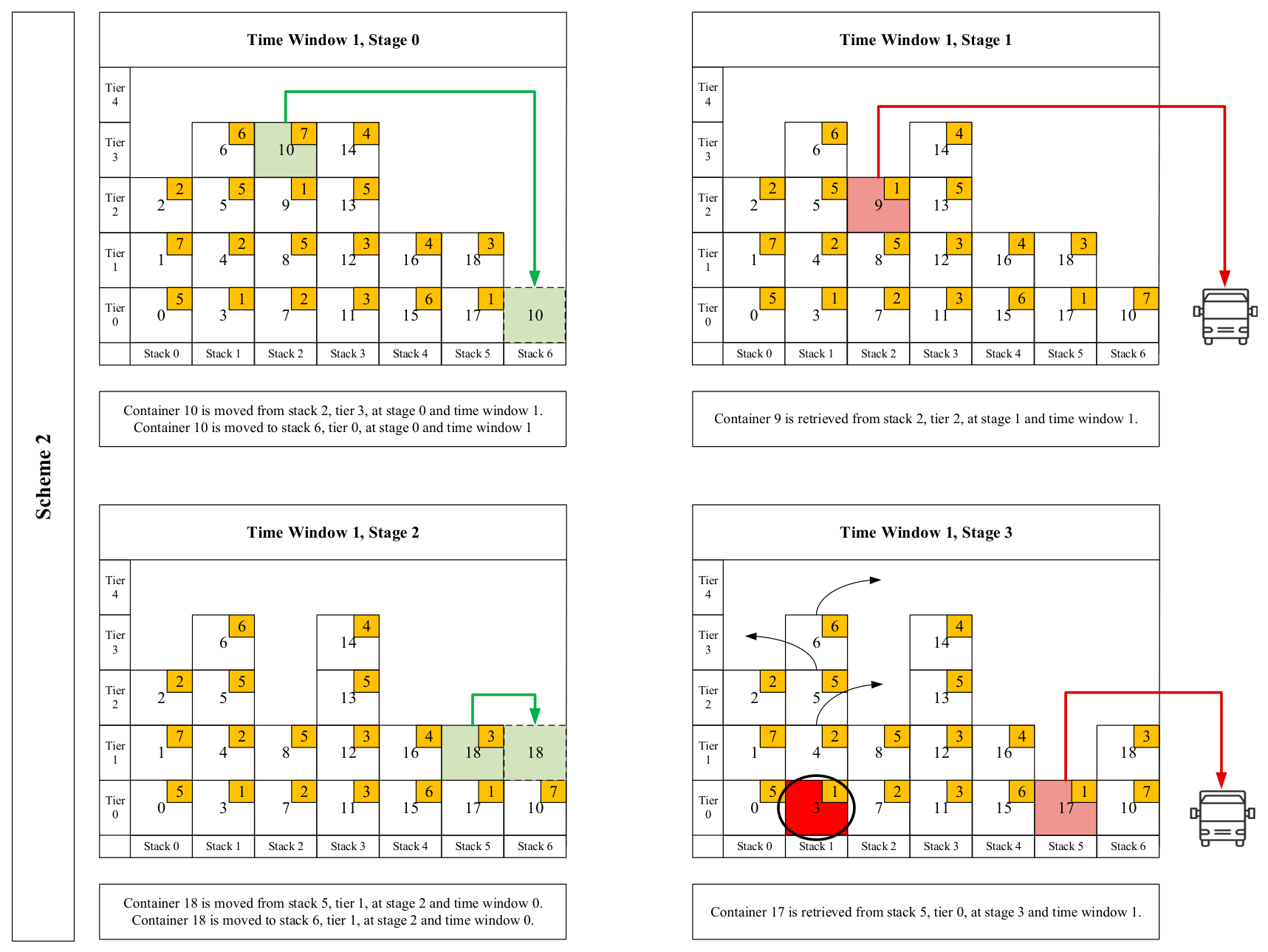
The relationship between BRP and appointment scheduling was further investigated by [
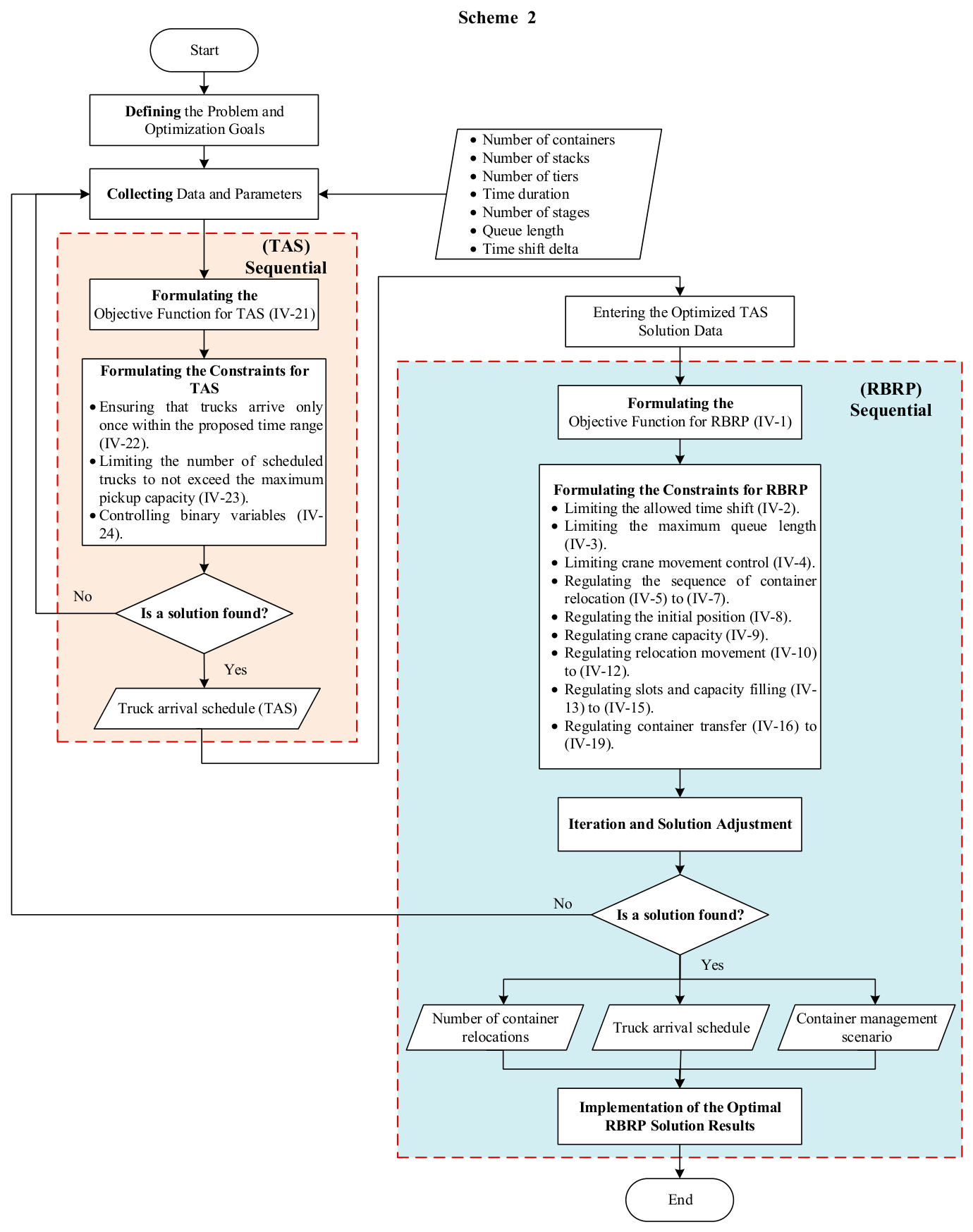
15] through the Block Relocation Problem with Appointment Scheduling model. Their study demonstrated that truck arrival schedules directly influence retrieval sequences and the number of container relocations. The main contribution of this study was the introduction of the integration between relocation decisions and truck scheduling in container terminal operations. Nevertheless, the proposed approach remained sequential, where scheduling and relocation decisions were solved separately. Such an approach may lead to suboptimal solutions because decisions made in earlier stages can restrict optimization flexibility in subsequent stages.
Based on the evolution of previous studies, there remains a need for an optimization model capable of simultaneously integrating the Restricted Block Relocation Problem (RBRP) and Truck Appointment Scheduling (TAS), so that relocation and scheduling decisions can be optimized within a more realistic and efficient framework. Therefore, this study develops an integrated optimization model that connects container relocation decisions and truck appointment scheduling within a simultaneous optimization framework to improve the operational efficiency of container terminals.
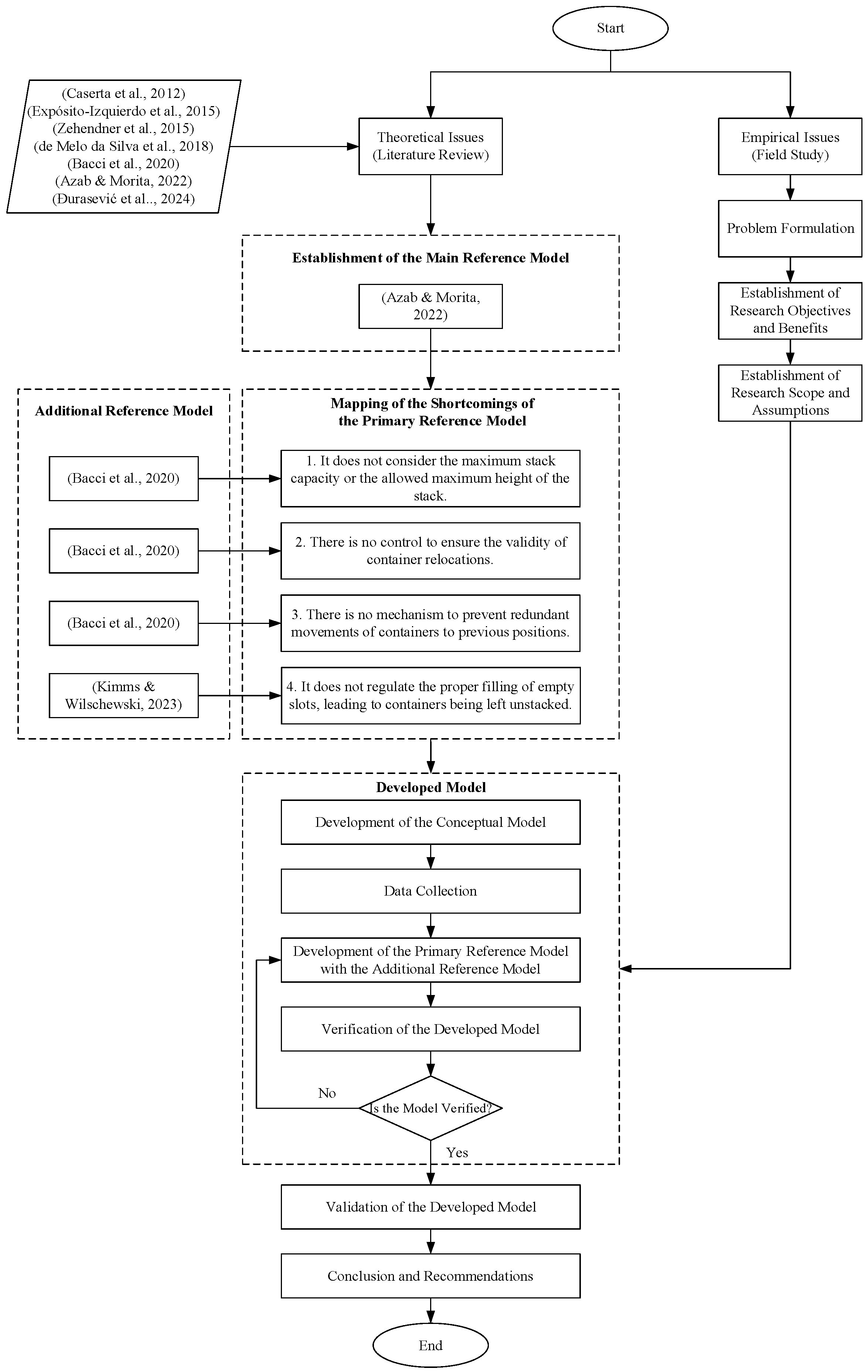
This section presents a structured review of previous studies related to the Block Relocation Problem (BRP) and Truck Appointment Scheduling (TAS). The literature was collected from major academic databases, including Scopus, Web of Science, and Google Scholar, to ensure comprehensive and relevant research coverage. The search focused on publications from 2010 to 2025, covering both foundational studies and recent advancements in container relocation optimization and terminal scheduling operations. The primary keywords used in the search included “block relocation problem,” “restricted block relocation problem,” “container relocation,” and “truck appointment scheduling.”
This literature review mainly considers peer-reviewed journal articles and selected conference proceedings that contribute to the development of mathematical models, optimization methods, and integrated logistics systems. Through this review, previous studies are analyzed comprehensively to identify the evolution of existing approaches and to map unresolved research gaps. The analysis particularly focuses on the relationship between container relocation decisions and truck appointment scheduling, especially concerning the objective function of minimizing container relocations within a single block column. Accordingly, this review provides a basis for integrated terminal optimization. The position of this research compared with previous studies is summarized in
Table 1.
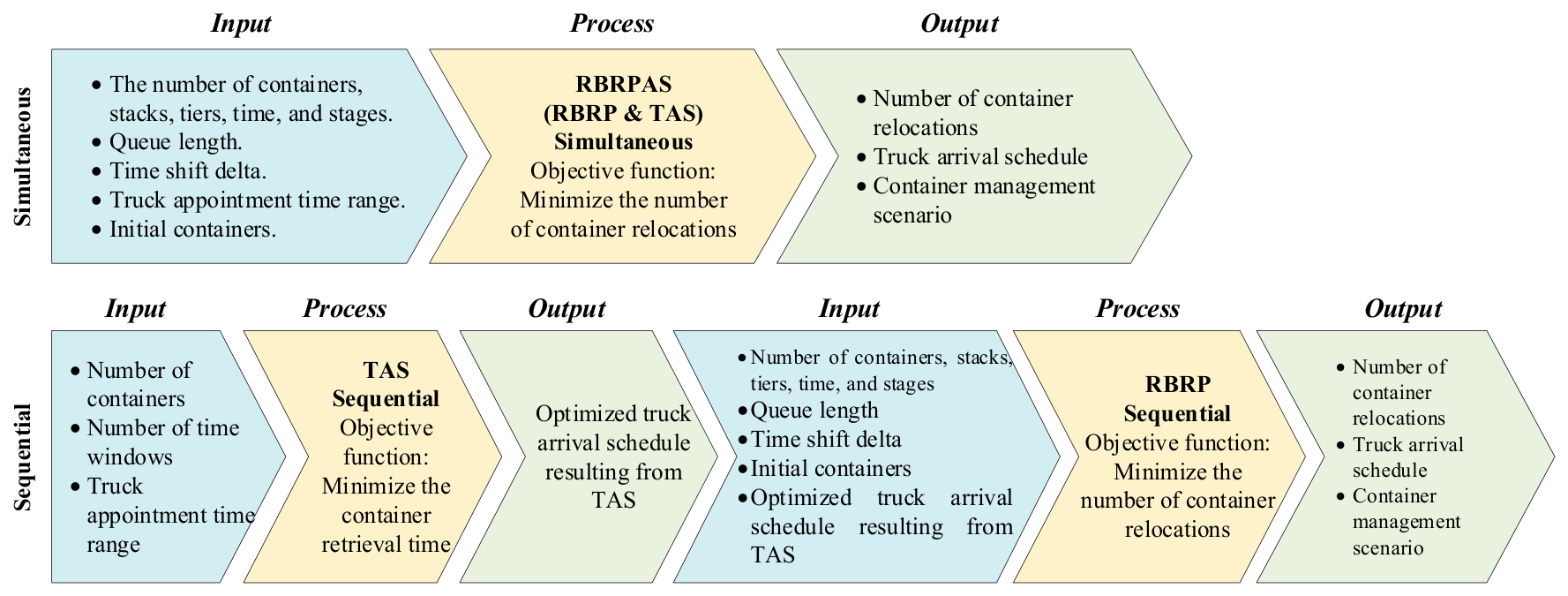
This study addresses a gap in the literature by integrating the Restricted Block Relocation Problem (RBRP) with Truck Appointment Scheduling (TAS), which are typically studied separately. The proposed model incorporates practical constraints such as relocation validity, avoidance of redundant movements, efficient slot utilization, and controlled time deviations. Furthermore, the study compares simultaneous and sequential solution approaches, providing insights into their effectiveness and applicability. These contributions offer a more comprehensive and realistic approach to container logistics optimization compared to existing studies.