1. Introduction
1.1. Background and Motivation
As sustainability becomes an increasingly pressing concern, the transition toward a Circular Economy (CE) offers a promising approach to reducing the environmental footprint of the industry, thereby increasing interest in sustainable solutions. In the fashion industry, the concept of circularity emphasizes the reuse, repair, and recycling of materials to extend the product life cycles, ultimately promoting sustainability by reducing greenhouse gas (GHG) emissions and reducing waste [
1]. Circular Supply Chain (CSC) refers to the implantation of holistic practices that facilitate the recycling, reuse, and remanufacturing of waste materials. CSCs are central to efforts aimed at reducing negative environmental impacts and improving resource utilization efficiency. Unlike conventional linear “take-make-dispose” supply systems, CSCs are characterized by reduced waste generation and maximized resource utilization [
2]. Reverse logistics is a sustainability-oriented strategy designed to mitigate environmental impacts, regulate production and recovery processes, and ensure proper disposal practices [
3]. As a key pillar of the CE, reverse logistics has attracted significant attention from researchers [
4].
Live-streaming commerce, also known as live-streaming e-commerce, is a type of marketing platform in which sellers communicate with customers through live-streaming, while customers can purchase products or service using the same platform [
5]. In this model, broadcasters promote, demonstrate, and sell products to online audiences in real time through digital platforms. The live-streaming e-commerce sector has experienced significant and sustained growth in recent years [
6]. In 2020, a survey conducted in China found that two-thirds of consumers had purchased products from live-streaming platforms within the previous year [
7]. According to [
8], advancements in technology and the widespread availability of internet-based devices have contributed to the exponential growth of this e-commerce industry in recent years, significantly impacting industries such as apparel and fashion. Fashion is the largest sector in the global e-commerce industry, with an estimated value of 1501.3 billion USD by 2027 [
9]. Although the expansion of live-streaming e-commerce has transformed the retail industry, it has also intensified operational and environmental challenges in the apparel sector, particularly in the management of return orders.
The fashion industry is well-known for its exceptionally high return rates, making it unique among other businesses. In 2021, online sales made up 30% of total garment sales, with return rates reaching 20% in the U.S [
10]. In 2020, U.S. customers returned products worth approximately 428 billion USD, representing 10.6% of total retail sales [
11]. Fashion e-commerce returns were projected to cost 7 billion GBP in United Kingdom in 2022 and 38 billion USD in the United States by 2023 [
12]. In contrast to the traditional retail environment, online shopping does not allow consumers to physically interact with the products before purchase. As a result, consumers must rely on images and written descriptions, which are often incomplete or potentially misleading. Consequently, consumers frequently purchase multiple variants of the same product, such as different sizes or colors, and return those that do not meet their expectations, thereby increasing return volumes [
13]. Only 48% of returned products can be resold, while the remainder are often destroyed or sent to landfills. The decomposition of these products generates methane and toxic leachate, which harm ecosystems, negatively affect human health, and contribute significantly to GHG emissions equivalent to the annual emissions of millions of vehicles [
14]. Economically, over-purchasing for returns drives overproduction, causing a 10% loss in global sales, amounting to billions in wasted revenue, highlighting the urgent need for sustainable return management practices. Recent data underscore the escalating scale of this challenge. Total U.S. retail returns reached about 890 billion USD in 2024, with online apparel return rates typically between 20% and 30%, and even higher during promotional periods and fashion e-commerce returns create a large economic burden—costing billions each year in the UK and the U.S. and lead to significant environmental impacts [
15]. Live-streaming e-commerce exacerbates these dynamics due to its impulse-driven nature. Platforms such as TikTok Shop, Douyin, and Taobao Live have accelerated market growth through real-time interaction and influencer endorsements, leading to increased volumes of uncertain purchases and subsequent returns. Studies indicate that consumer behaviors commonly associated with live-streaming commerce, including wardrobing, bracketing, and the inability to physical evaluate products, contribute to return rates that may exceed those observed in traditional e-commerce settings [
16].
These characteristics make fashion returns highly time-sensitive and operationally complex. Moreover, distinctive consumer behaviors are particularly prevalent in fashion e-commerce, including wardrobing—purchasing items for short-term use before returning them—and bracketing, where consumers buy multiple sizes or styles with the intention of returning those that do not fit [
17].
Beyond economic and operational implications, return orders in fashion e-commerce generate substantial environmental consequences. Fashion and textile business are among the most polluting in the world, emitting more GHG than international aircraft and maritime shipping combined [
18,
19]. Reverse logistics activities, particularly transportation, inspection, repackaging, redistribution, and disposal of returned products, play a significant role in this environmental footprint. It is estimated that reverse logistics alone account for approximately 25 percent of the total carbon footprint of fashion e-commerce [
20]. Studies further indicate that fast fashion consumption generates disproportionately high emissions; For instance, a single pair of fast-fashion jeans is thought to have a carbon footprint of 2.50 kg CO2e, which is over eleven times greater than that of traditional fashion consumption [
20]. In certain situations, jeans production and cross-border transportation together contribute up to 91 percent of total emissions [
18].
From an environmental perspective, reverse logistics for apparel returns has emerged as a critical hotspot. Recent Life Cycle Assessment (LCA)-informed analyses show that transportation in reverse flows can account for over 90% of return-related carbon emissions in some centralized systems, while packaging and disposal add further burdens. The configuration of logistics networks, whether centralized or decentralized, plays a critical role in shaping the carbon footprint of apparel returns, with long-distance transportation accounting for most emissions [
21]. Similarly, detailed analyses of fashion e-commerce return operations reveal significant inefficiencies in reverse logistics processes, which contribute to increased costs and environmental impacts [
22].
These developments align with broader shifts toward CE principles in the textile sector. Emerging research on CSCs in fashion stresses the integration of reverse logistics, material recovery, and digital technologies to close loops and reduce virgin resource dependency. However, applications specific to live-streaming contexts remain limited, creating an opportunity for targeted LCA studies.
Taken together, the rapid expansion of live-streaming e-commerce, the uniquely high and behavior-driven return rates in the fashion industry, and the severe environmental impacts of reverse logistics underscore the urgent need for more sustainable and efficient return management practices. These challenges highlight the importance of rethinking reverse logistics through the lens of CSCs, where returned products are systematically collected, assessed, and reintegrated into value-creating processes such as reuse, recycling, and remanufacturing.
1.2. Reverse Logistics Challenges in Live-Streaming E-Commerce
Product returns, often caused by discrepancies between product description, images, and customer’s expectations formed during the online purchasing process [
23], are managed through reverse logistics. The growing popularity of live-streaming e-commerce has shifted consumer behavior away from physical stores, contributing to increased clothing returns [
14].
Live-streaming e-commerce presents a list of unique features that significantly increase the complexity of reverse logistics, especially in the fashion and apparel industry. In comparison to conventional online shopping, live-streaming commerce is more about real-time interaction, entertainment, and influencer-based persuasion, which tends to lead to impulse buying behavior among customers [
24]. Purchasing choice is often made under a short period, with a lack of information processing time, and a demand to meet promotion deadlines with limited time. In addition, the physical inspection of goods, particularly when it comes to clothes, in terms of fitting, fabric, and quality, is naturally non-existent. Consequently, there exists a high rate of discrepancy between expectation and actual product features, resulting in high rates of returns. In live-streaming platforms, customers are often manipulated by online influencers. Due to this, consumers heavily depend on broadcasters’ demonstrations and endorsements, which are not always based on the preference of individuals or body-specific fit needs. Such dependency, along with marketing strategies, including flash sales and timed offers, raises the chances of over-buying and buyer remorse, which in turn adds to large returns and discrepancies in returns. These dynamics increase the already large rates of returns in the fashion industry, and reverse flows become less predictable and volatile than in the case of traditional e-commerce channels [
17].
Operationally, these return orders created in live-streaming commerce are very difficult to manage throughout the reverse logistical process, which includes collection, inspection, sorting, and reprocessing. The evaluation of the returned products and the appropriate disposition, i.e., to restock, refurbish, recycle, or dispose, involves elaborate inspection and sorting processes, which are complex and resource intensive in nature, especially considering the differences in the quality of the returned products and the non-standardization of processes across industries [
25]. The environmental impacts of product returns arise from packaging materials, transportation processes, and waste disposal pathways. Packaging, which is frequently plastic based, contributes to environmental pollution. Transportation of returns, especially via. aircraft and rail freight is a significant source of GHG and air pollutant emissions. At the end-of-life stage, landfill disposal further leads to environmental impacts through methane emissions [
26]. Furthermore, product-related factors such as the time sensitivity of fashion products (supported by the product life cycle that is short and quick turnover of trends) further limits the operations of the reverse logistics because delays can quickly destroy residual product value.
These challenges have significant implications for inventory management and supply chain stability. High return uncertainty, coupled with limited visibility of reverse flows, complicates inventory planning and replenishment decisions, often leading to excess stock or stockouts in forward channels. The lack of alignment between forward and reverse logistics processes in live-streaming commerce not only increases operational costs but also undermines overall supply chain performance and responsiveness. Collectively, these issues indicate that conventional linear approaches to returns management are inadequate, necessitating more complex, adaptive, and sustainability-driven supply chain strategies.
1.3. Circular Economy and Circular Supply Chains
The CE is a manufacturing and consumption structure that emphasizes sharing, leasing, reusing, repairing, refurbishing, and recycling existing materials and products as much as feasible, emerging as a sustainable development strategy [
27]. Textiles and apparel industries have received significant focus in the transformation to CE in recent years. The basic concept of the CE is resource efficiency, less waste, and system interconnectivity, which are based on the idea that sustainable practices can combine environmental and economic goals [
28]. And as the CE theory states, the returns of products and other reverse logistics may be used to interrupt the supply chain loops by reusing returned products in productive processes, which reduces waste and carbon emissions [
29]. From the perspective of live-streaming e-commerce, the adaptation of a CSC can be a potential solution to the operational and environmental issues faced by large return volumes. With this framework, organizations can not only transform their return orders into a source of value instead of a cost burden but also decrease the environmental footprint of fashion e-commerce. From CE to CSC, the different aspects of sustainability have been considered such as reverse logistic, Industry 4.0, packaging recovery ecosystems, and artificial intelligence. CSC consists of a supply network of organizations implementing provision and recovery flow of materials, by-products or waste [
30]. CSC practices must be implemented by firms to establish CSCs that reduce resource waste throughout the entire chain, increase production efficiency, and encourage recycling practices [
31].
1.4. Environmental Impact Assessment and Life Cycle Perspective
LCA is a popular method that is used to determine the environmental impact of the product during all its life cycle (production, distribution, use and end-of-life). The role of LCA in fashion e-commerce is specifically the evaluation of the environmental burden of return management, which implies further transportation, inspection, repackaging, refurbishment, and disposal actions. Empirical evidence from 2024–2025 confirms that reverse logistics in fashion e-commerce contributes substantially to overall sector emissions, with packaging and multi-modal transport as recurring hotspots [
21,
22]. Disposal procedures, particularly waste landfilling, are a significant contributor to emissions in reverse logistics because they produce methane and cause the loss of resources [
32]. Non-recyclable packaging used in e-commerce, especially plastics, increases waste and GHG emissions when products are returned, and with long-distance shipments and additional packaging layers exacerbating the overall environmental burden [
33]. Furthermore, reverse transportation systems also cause major environmental impacts like air pollutants and GHG emissions (CO, NO
2, PM10, PT, SO
2), as well as volatile organic compounds, noise pollution, traffic congestion, and increased fuel consumption [
28]. Such environmental liabilities not only compromise sustainability goals but also adversely impact firm performance in terms of high costs of operation, regulatory risks, and reputational harm. Subsequently, poor management of reverse logistics is a major issue in the sphere of corporate social responsibility, as it affects environmental management as well as economic performance. With the growth in volumes of returns in the e-commerce live-streaming business, LCA offers a holistic approach to measure the emissions and find ways to make the process more environmentally friendly.
The primary objective of this study is to assess the environmental issues and carbon emissions related to clothing return orders produced through live-streaming e-commerce. To do so, the research incorporates live-streaming e-commerce, reverse logistics of returned orders, and LCA into a single analysis framework. In particular, the environmental effects of returning one pair of jeans purchased via. A live-streaming platform can be evaluated using LCA in SimaPro. The combination of these dimensions allows the study to offer empirical evidence on the environmental impacts of return-intensive digital retail channels and provide insights to enable more sustainable return management practices. This approach will enable a robust and transparent assessment of the environmental impacts associated with clothing return orders and will substantiate the inclusion of LCA in analyzing CSCs within live-streaming e-commerce.
1.5. Research Novelties and Positioning
This study contributes several important novelties to the emerging intersection of live-streaming e-commerce, reverse logistics, and CSC management.
First, while previous research has examined general e-commerce returns or forward logistics in the fashion industry, this is among the first studies to apply a focused gate-to-gate Life cycle analysis (LCA) specifically to product returns generated through live-streaming commerce. It explicitly incorporates the unique behavioral drivers of live-streaming platforms This study contributes several important novelties to the emerging intersection of live-streaming e-commerce, reverse logistics, and CSC management.
First, while previous research has examined general e-commerce returns or forward logistics in the fashion industry, this is among the first studies to apply a focused gate-to-gate LCA specifically to product returns generated through live-streaming commerce. It explicitly incorporates the unique behavioral drivers of live-streaming platforms—such as impulse buying, influencer-driven purchases, wardrobing, and bracketing—that lead to higher and more unpredictable return volumes compared to traditional online channels.
Second, the research provides a comprehensive, integrated hotspot analysis of three critical reverse logistics elements—transportation modes, packaging materials, and waste disposal pathways—for a representative functional unit (one pair of returned jeans, 1 kg) using SimaPro software 10.4 and the ReCiPe 2016 database methodology obtained from the software. This granular approach goes beyond broad carbon footprint estimates to deliver actionable comparative insights across multiple transport options (light commercial vehicle, lorry, train, aircraft) and material choices (LDPE, paper, tape).
Third, by embedding the LCA within a CSC framework tailored to live-streaming e-commerce, the study bridges consumer behavior literature with operational and environmental decision-making. It highlights how platform-specific dynamics amplify environmental burdens and demonstrates how CSC principles (reuse, recycling, and optimized reverse flows) can mitigate them.
These novelties address important gaps in the existing literature, where applications of LCA to returns generated by live-streaming commerce remain limited. The findings provide both empirical evidence and practical decision-support tools for e-commerce platforms, logistics providers, and policymakers seeking to balance rapid customer responsiveness with environmental sustainability in high-return digital retail environments.
2. Literature Review
For our study, we tried to identify relevant information from existing research papers. First, we selected ScienceDirect as our main database. Later, we chose key words like “circular supply chain”, “closed-loop supply chain”, “reverse logistics”, “recycling”, “life cycle assessment”, “carbon emissions”, “live streaming ecommerce”, “textile industry”, “clothing industry”, “return orders”, “product returns”, “apparel return”, and “environmental impact” in order to make different combinations and strings. Then we connected these words and strings using Boolean operators and searched in ScienceDirect to identify the relevant journals. Initially, we obtained 222 journals and included only English-language peer-reviewed journals and review articles; in this way, we came up with 201 journals. Later, we carefully sorted based on the title and abstract to find more relevant papers. Finally, we came up with the journal articles that are relevant to our work and use these for further detailed studies and extracting information.
2.1. Live-Streaming E-Commerce: Scope and Research Focus
The very first research on live-streaming e-commerce was conducted in 2018. Later, the number of research on that sector increased gradually, especially after the COVID-19 pandemic [
34]. Most of the research was conducted based on consumer behavior and marketing-related outcomes, such as purchase intention [
35,
36,
37,
38], trust formation [
39], social presence, and influencer credibility [
39,
40,
41] reported on the impulse buying behavior of customers and higher product return rates. Existing live-streaming e-commerce research has focused on customer behavior and marketing outcomes. While these studies explain demand generation mechanisms, they provide limited insight into the operational and environmental consequences of high-return purchasing behavior. Current research highlights that digitalization and green innovation reshape supply chain resilience and sustainability performance; such perspectives remain absent from live-streaming commerce studies.
Nevertheless, live-streaming e-commerce studies are still mostly confined to the pre-purchase and purchase phases. Limited attention is given to post-purchase performance, such as product returns, uncertainty in returns, and their operational implications. Subsequently, the current literature is not very informative about the impacts of purchasing behavior driven by live-streaming on the downstream supply chain processes and sustainability performance.
2.2. Reverse Logistics Research: Scope and Limitations
Reverse logistics is a concept that has been studied widely to reduce wastage, recover value, and support a CE agenda in many industries, such as textiles, fashion, electronics, and waste management [
42,
43]. The studies that have been previously carried out indicated that reverse logistics in the fashion and textile sector is a complicated process that may include collection, transportation, sorting, refurbishment, and resale and plays a significant role in managing the post-consumer wastes and increasing the rates of reuse and recycling [
44,
45]. Most of the literature available applies optimization and modeling techniques to design an efficient reverse logistics network with a primary focus on minimizing costs, facility location, transportation planning, and, more recently, carbon emission reduction [
28,
46]. In these studies, it is demonstrated that the choice to develop reverse logistics and network design significantly influences economic and environmental performance. Despite advances in reverse logistics research on network optimization and cost-efficiency modeling, reverse logistics studies often overlook the environmental intensity of returned flows, treating them as transactional.
Despite these improvements, there are still major gaps. The research on reverse logistics is mostly performed in the traditional retail or manufacturing environment and fails to consider the digitally based retail format. Environmental analysis is frequently integrated into optimization models instead of being assessed in terms of long-term life cycle views. Moreover, consumer behavior–induced return uncertainty, which is particularly pronounced in fashion e-commerce, is rarely linked to reverse logistics system design. As a result, the environmental effects of clothing returns in new digital commerce environments have not been sufficiently studied, indicating a theoretical gap between reverse logistics and emerging CSC perspectives to prioritize value recovery, emissions reduction, and resource circularity.
2.3. Research Gap and Scope of the Study
Although sustainable supply chains are receiving increasing attention, several research gaps remain. There is limited research on live-streaming e-commerce in relation to reverse logistics and CSC, despite its high return rates and operational complexity. Existing studies predominantly focus on forward logistics and emissions from production and distribution, while the environmental impacts of reverse logistics remain underexplored [
43]. Furthermore, empirical evidence linking digital technology adoption to CSC performance is scarce, particularly in high-return industries such as fashion. Finally, however, LCA has been extensively used in production and manufacturing studies, limited studies are on the LCA for apparel return systems, mostly within digital channels where return frequency and packaging repetition may intensify impacts.
2.4. Comparative Analysis of Circular Supply Chain Studies
A comparative analysis of recent studies on CSC management, reverse logistics, and environmental assessment in the fashion and textile sector is presented in
Table 1. This highlights the positioning of the present work relative to existing literature.
2.5. Summary and Study Positioning
Although live-streaming e-commerce and reverse logistics are two separate research streams, less has been done to integrate them. Namely, no literature was found that comprehensively examines the connection between live-streaming e-commerce, clothing returns management, and CSC performance. Moreover, the available literature has seldom used the LCA to assess the environmental effects of the return orders in the digital retail environment.
This study addresses these gaps by integrating live-streaming e-commerce, reverse logistics, and LCA into a CSC system. By combining digital capability analysis with organizational theories, the study provides a novel and comprehensive perspective on how return-intensive digital retail channels can be run in a more sustainable way.
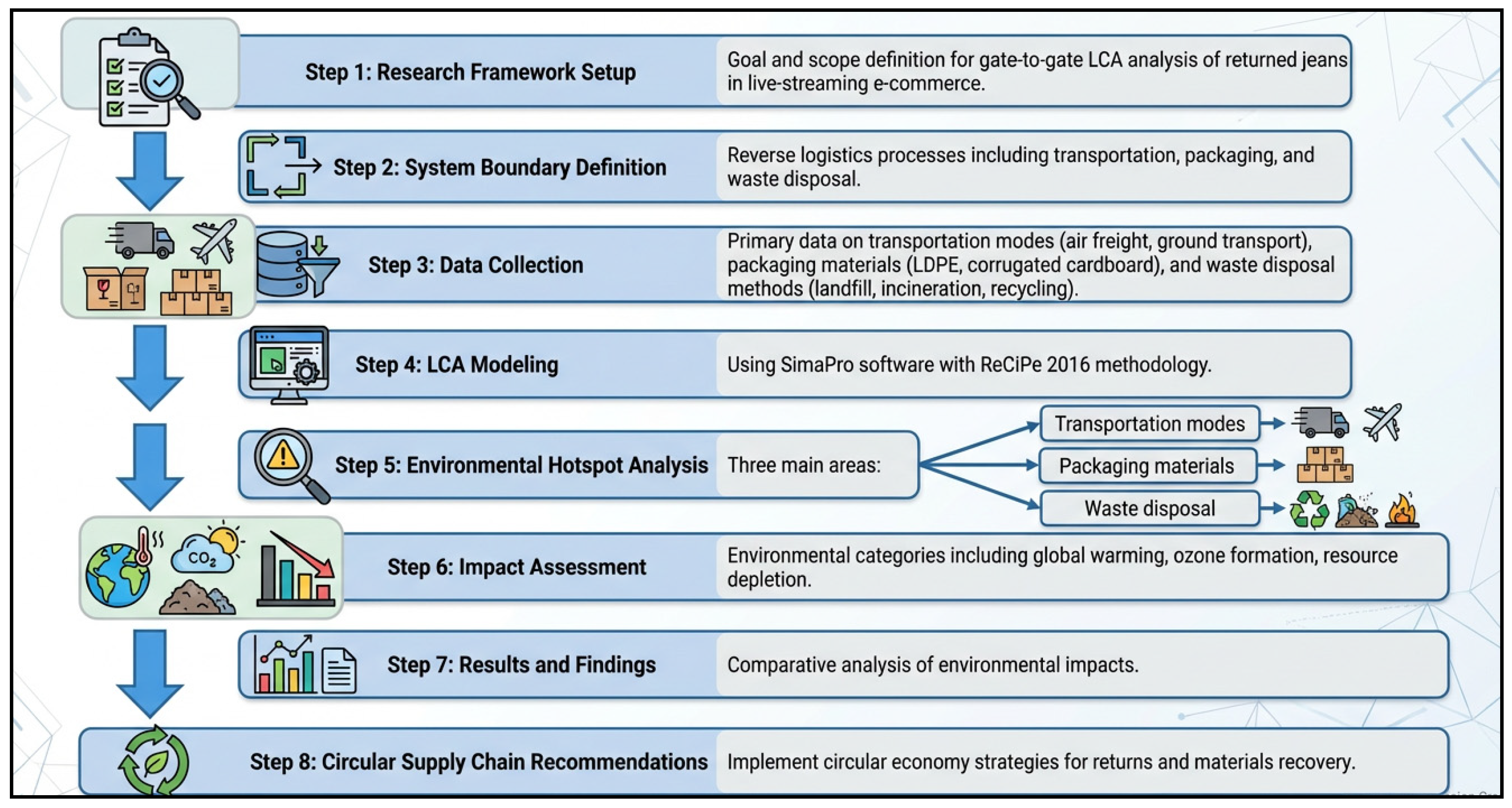
Figure 1 highlights a research framework and LCA workflow for analyzing clothing return orders in live-streaming e-commerce.
3. Methodology
LCA has been used as a systematic environmental impact evaluation in alignment with the International Organization for Standardization (ISO) ISO 14040 and ISO 14044 Standard [
52,
53]. These standards ensure methodological consistency, transparency, and credibility in environmental analysis. It follows a structured four stages: goal and scope, inventory analysis, impact assessment and interpretation of findings.
3.1. Goal and Scope
The main goal of this study is to quantify and analyze the environmental impacts associated with the reverse logistics of returned e-commerce apparel items, specifically a pair of jeans, using LCA implemented in SimaPro software. The functional unit was to process one (1) pair of jeans returned from e-commerce. The mass of the jeans is assumed to be 1 kg, equivalent to 0.001 ton. The functional unit describes the unit for analysis of environmental indicators. Jeans were chosen for this analysis due to their prominence as a core fast-fashion garment with high global consumption levels, yet existing literature has largely assessed their environmental impacts only under traditional retail and consumption models. The environmental impact associated with reverse logistics was conducted using gate-to-gate perspective. The intended audience is e-commerce platform managers, sellers, logistics planners, researchers, and environmental policymakers. It is important to acknowledge and address assumptions and limitations to mitigate potential decision-making challenges to conduct this research effectively.
The system boundary starts when a consumer initiates a return and ends when the returned item reaches its final handling stage. This includes: first-mile return transport, middle-mile transport to centralized return facilities, and long-distance transport to redistribution, recycling, and disposal facilities. The original manufacturing of the jeans and forward distribution to consumers was excluded because this study is focused on reverse logistics. Transportation modes were selected based on real-world reverse logistics practices in e-commerce apparel systems, particularly fast-fashion return flows. Transportation processes are modeled using unit processes, representing freight transport services required to handle one returned item. It is expressed in ton-kilometers (tkm), calculated as the product of parcel mass and transport distance. The following transportation modes are considered:
First-mile transport (return pickup or drop-off)
Middle-mile transport (hub to return center)
Long-distance transport (to recycling or disposal facilities)
Packaging includes materials used to protect returned items during reverse logistics handling and transport. Packaging is modeled as packaging material production and processing, based on the mass of packaging used per returned item. The analysis includes the following packaging categories:
Waste management includes the treatment of waste streams generated during reverse logistics, including discarded products and packaging materials with an assumed share of 5%. Waste flows are modeled as distinct waste categories, each contributing separately to the environmental impacts. The following waste streams are included:
3.2. Life Cycle Inventory Analysis
Inventory data was obtained from the databases such as Ecoinvent using SimaPro software. Mode allocation is consistent with LCA literature and Ecoinvent-based modeling assumptions. The distance measured data was taken from the literature.
Table 2 shows the inventory data products for transportation, processing, and waste disposal.
Each transport mode was modeled using ton-kilometers (tkm), a standard metric for freight transport in SimaPro. It is computed as:
3.3. Impact Assessment Methodology
LCA methodology was performed using Simapro software in line with ISO standards, implemented based on the ReCiPe 2016 (H) methods such as midpoint and endpoint. This method was selected due to its comprehensive coverage of impact categories. The assessment was made in different midpoint categories such as climate change, ozone depletion, resource scarcity, ecosystem quality, land occupation, aquatic ecotoxicity, and human toxicity. The endpoint categories included are human health, ecosystems, and resources.
3.4. Reverse Logistics Process Mapping
The reverse logistics processes are systematically mapped through following:
Step 1—Customer initiates a return online.
Step 2—Either customer delivers to designated collection point, or the courier collects from customer location.
Step 3—Returned item is transported to the sortation warehouse or facility.
Step 4—Item is inspected and categorized into resalable, remanufacture, or waste.
3.5. Conceptual Framework
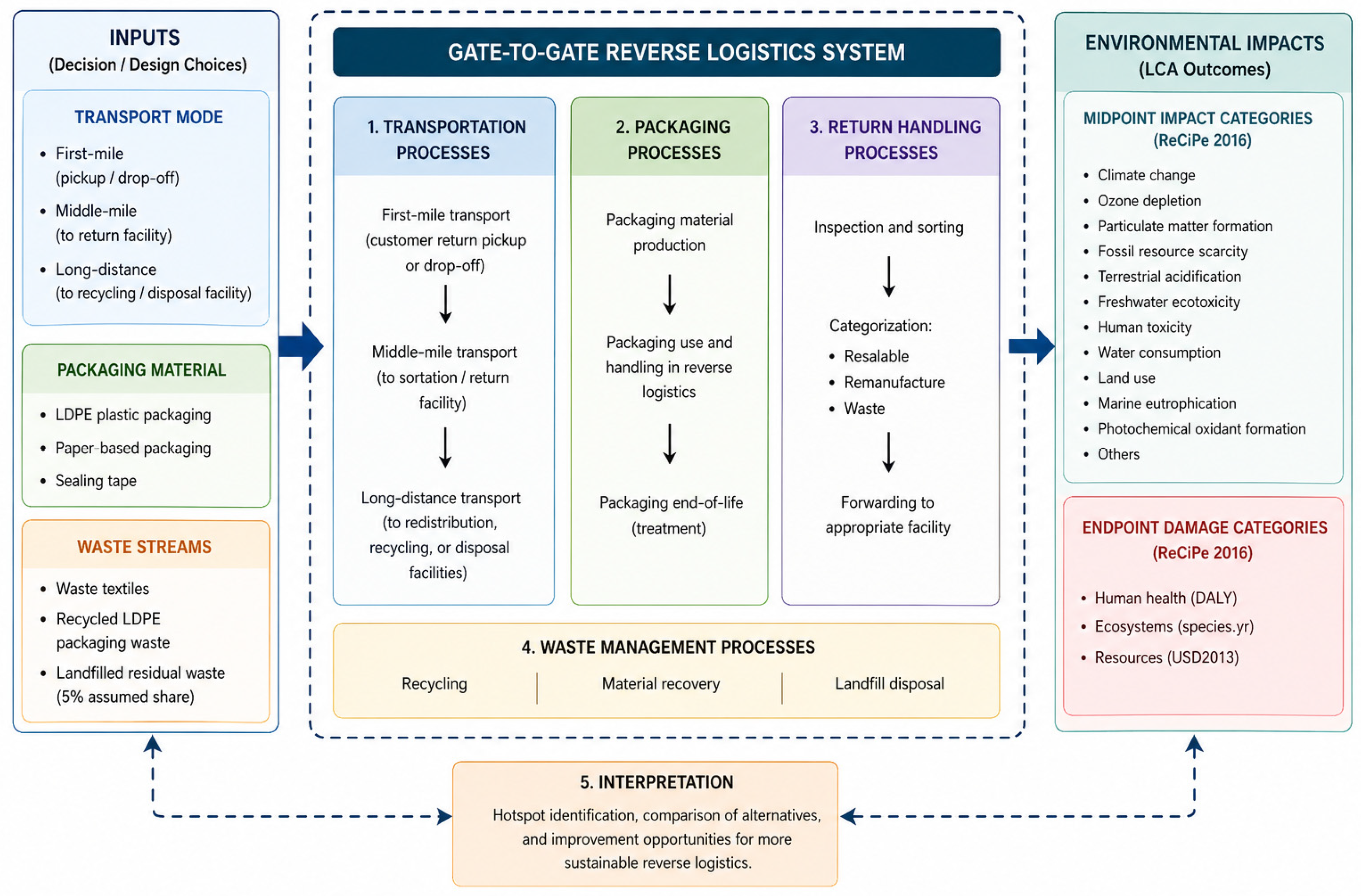
This study applies a life cycle-based process framework to assess how key reverse logistics components, including transport modes, packaging systems, and waste treatment pathways, shape environmental performance. It identifies environmental hotspots across the reverse logistics chain, such as transport mode intensity, packaging cycles, and waste treatment pathways. Using a gate-to-gate LCA boundary, the framework (
Figure 2) evaluates how these system design choices influence midpoint and endpoint environmental impacts across return operations, providing decision-supporting value for managers and policymakers.
4. Results
The gate-to-gate LCA for a pair of jeans returned through e-commerce has been conducted through SimaPro software.
Table 3 summarizes the key transport-related emissions contributing to the environment covering different modes of transportation. These substances were selected as the dominant drivers of midpoint and endpoint environmental impacts. It is observed that carbon dioxide emissions are the most significant emissions for aircraft that emit 758.83 g of CO
2, which is more than eight times higher than light commercial vehicles and over twenty times higher than rail transport. The same pattern is observed for methane emissions, where air-based reverse logistics generate larger climate impacts per returned unit relative to land and sea transport modes, highlighting that increased return speed can incur a significant environmental burden. A similar pattern is observed for methane emissions. Similarly, SO
2 is a major precursor of secondary particulate matter and acid rain. The findings suggest that transport mode selection affects not only GHG emissions but also wider air quality impacts, emphasizing the strategic role of modal choice in reverse logistics network planning.
The emissions related to the packaging materials are reported in
Table 4. The results indicate a substantial variation in emission profiles across the packaging materials, reflecting differences in material composition, production processes, and processing intensity. It has been observed that LDPE packaging exhibits the highest emissions of carbon dioxide (fossils) at 34.16 g, which is approximately three times higher than paper packaging (11.43 g) and more than 60 times higher than tape (0.55 g). A similar pattern is observed for fossil methane emissions, where LDPE packaging emits 95.54 mg, compared to 31.85 mg for paper and 1.96 mg for tape. Tape, despite being plastic-based, shows negligible emissions across all substances due to its very low material quantity per return. This shows that environmental impacts are closely related to material intensity rather than packaging category, as even plastic-based components may have negligible effects when used in small quantities.
This indicates that packaging has a limited share of return mass but results in substantial cumulative environmental impacts when applied across high-return-frequency operations of live-streaming commerce systems.
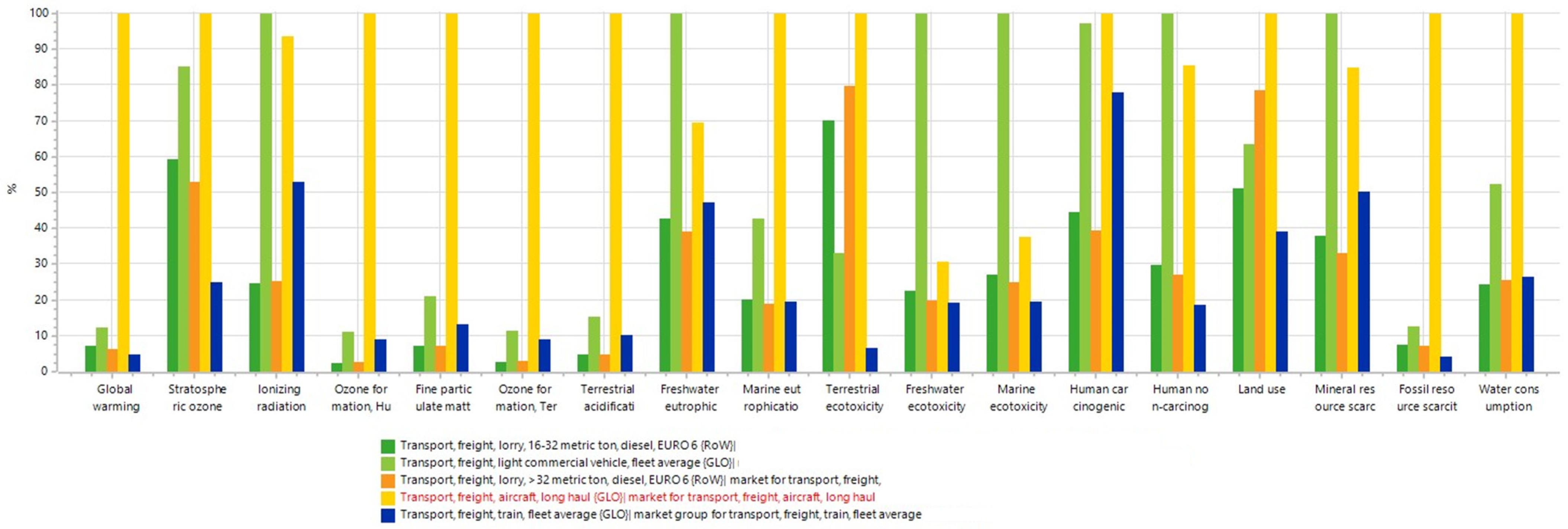
Figure 3 represents the environmental midpoint impacts of different transportation modes for first-mile, middle-mile, and long-distance modes in the SimaPro software. The results are produced based on the comprehensive set of ReCiPe 2016 midpoint impact categories for one pair of returned jeans through ecommerce. The results show that the transport mode selection in reverse logistics is a dominant driver of environmental performance. It has been observed that across all impact categories, aircraft freight mode exhibits the highest relative environmental impacts indicating that air freight is not only a climate hotspot but also as a broader environmental hotspot to multiple dimensions. This is particularly evident for global warming, fossil resource scarcity, particulate matter formation, ozone formation, and toxicity-related indicators. The lorry and train freight show the lowest impacts. Among road modes, light commercial vehicles and medium-duty lorries (16–32 t) perform worse than heavy vehicles (>32 t).
Rail transport mode represents the lowest environmental impacts across all midpoint categories. Among road-based modes, light commercial vehicles are significantly worse than medium and heavy-duty lorries across most impact categories. This confirms that changes in transport mode within reverse logistics can be enhanced via modal shifts without requiring reductions in service coverage.
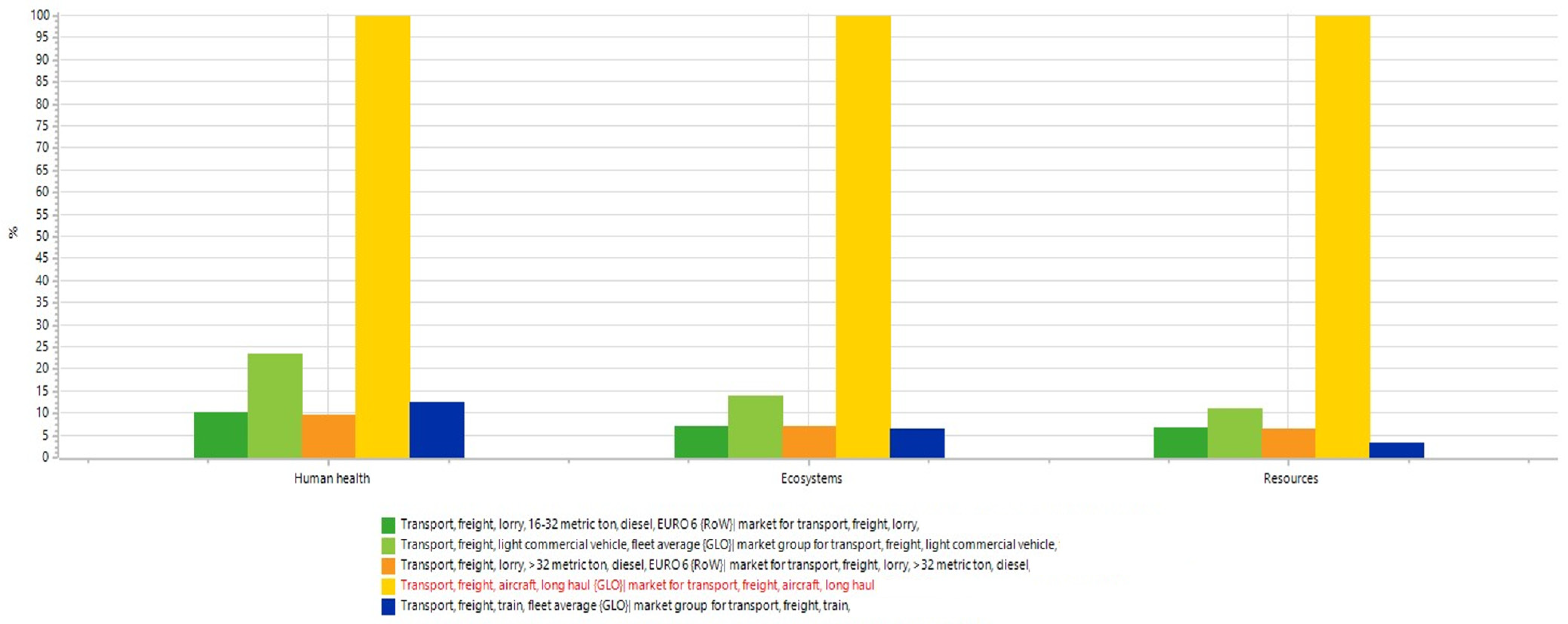
Figure 4 presents the endpoint damage assessment results for transport modes used in the reverse logistics of one pair of returned jeans through e-commerce, taken by converting midpoint impacts into the endpoint categories. The impacts are distributed into the three endpoint damage categories: human health, ecosystems, and resources. Among all three endpoint categories, air freight mode dominates the total damage.
The midpoint impact assessment of packaging materials used in the reverse logistics is shown in
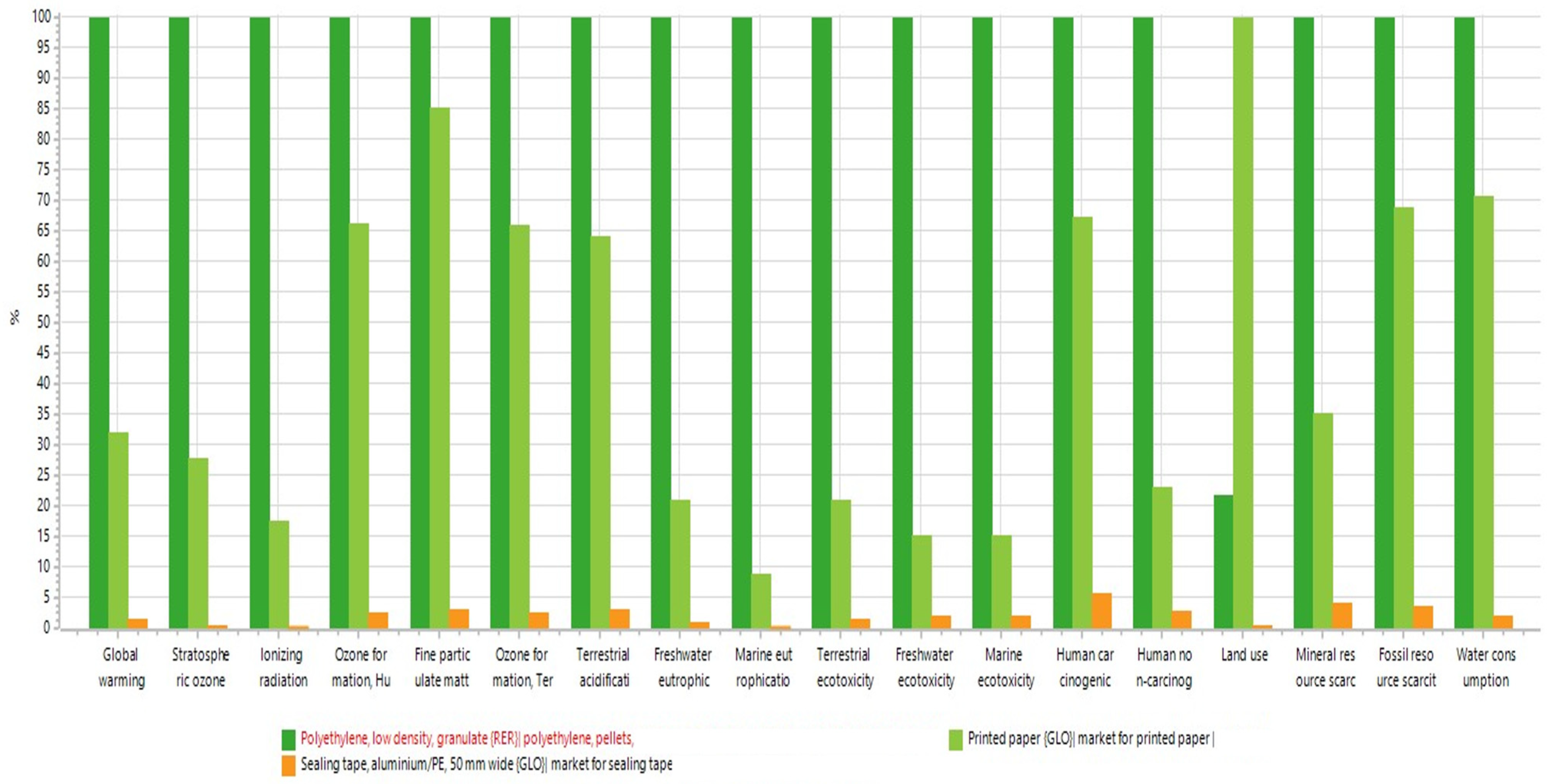
Figure 5. Among all categories, LDPE exhibits the highest environmental impacts, dominating all the indicators including global warming, ozone formation, fossil resource scarcity, and water consumption. Printed paper shows higher impacts in land use, water consumption, and particulate matter. Aluminum-based sealing tape contributes the least overall impact.
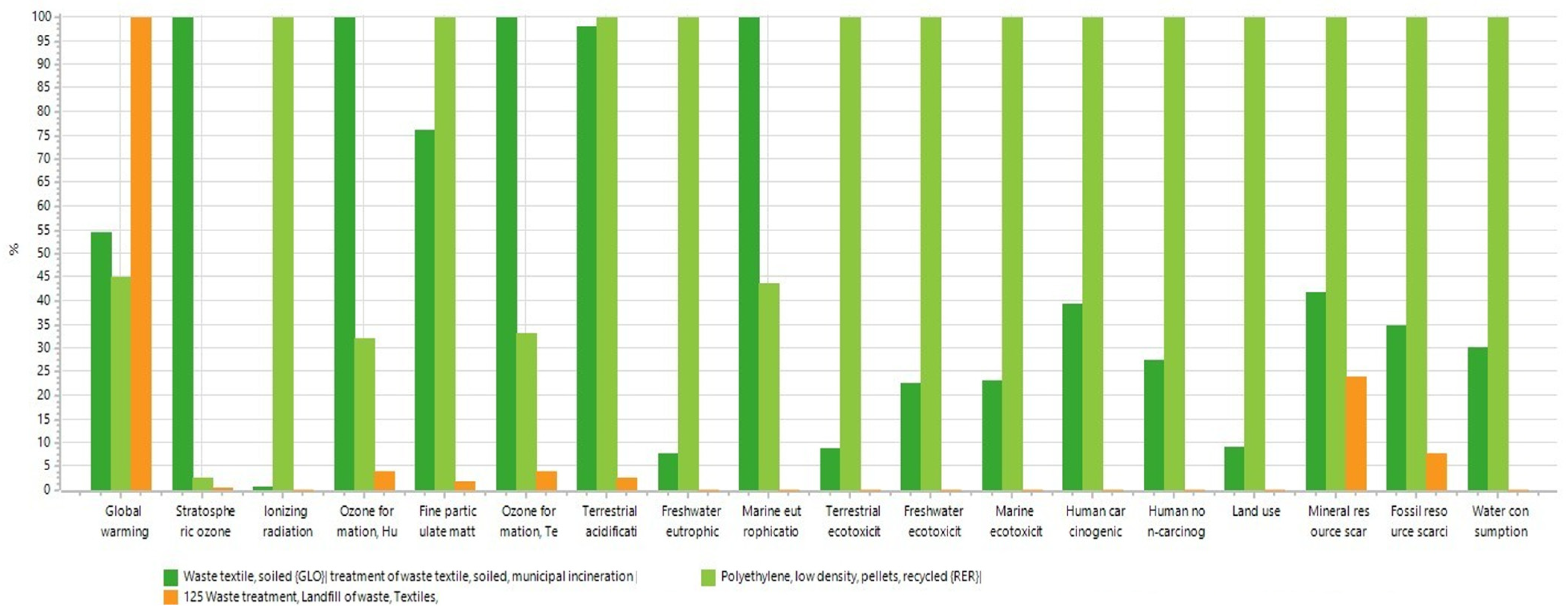
Figure 6 presents the midpoint impact assessment of different types of waste associated with reverse logistics. The results have shown that each category contributes differently across impact categories. For global warming, the landfill waste has shown significant contribution driven by methane emissions and long-term carbon release associated with landfill disposal. The contribution of landfills in other categories has been lower. Waste from textiles contributes around 55% in global warming and 100% in ozone formation and marine eutrophication. The waste from packaging material dominates almost all the categories. This demonstrates that reverse logistics environmental impacts include both transportation and downstream waste management, meaning that freight efficiency alone may underestimate the full sustainability footprints of return.
The findings do not involve statistical hypothesis; it refines theory at the process level by relating reverse logistics system design decisions to corresponding environmental impact pathways. The results point to a multi-stage structure of environmental impacts in e-commerce returns across transport mode choice, packaging reuse, and waste management, highlighting the need for system-wide rather than activity-specific sustainability interventions.
Sensitivity Analysis
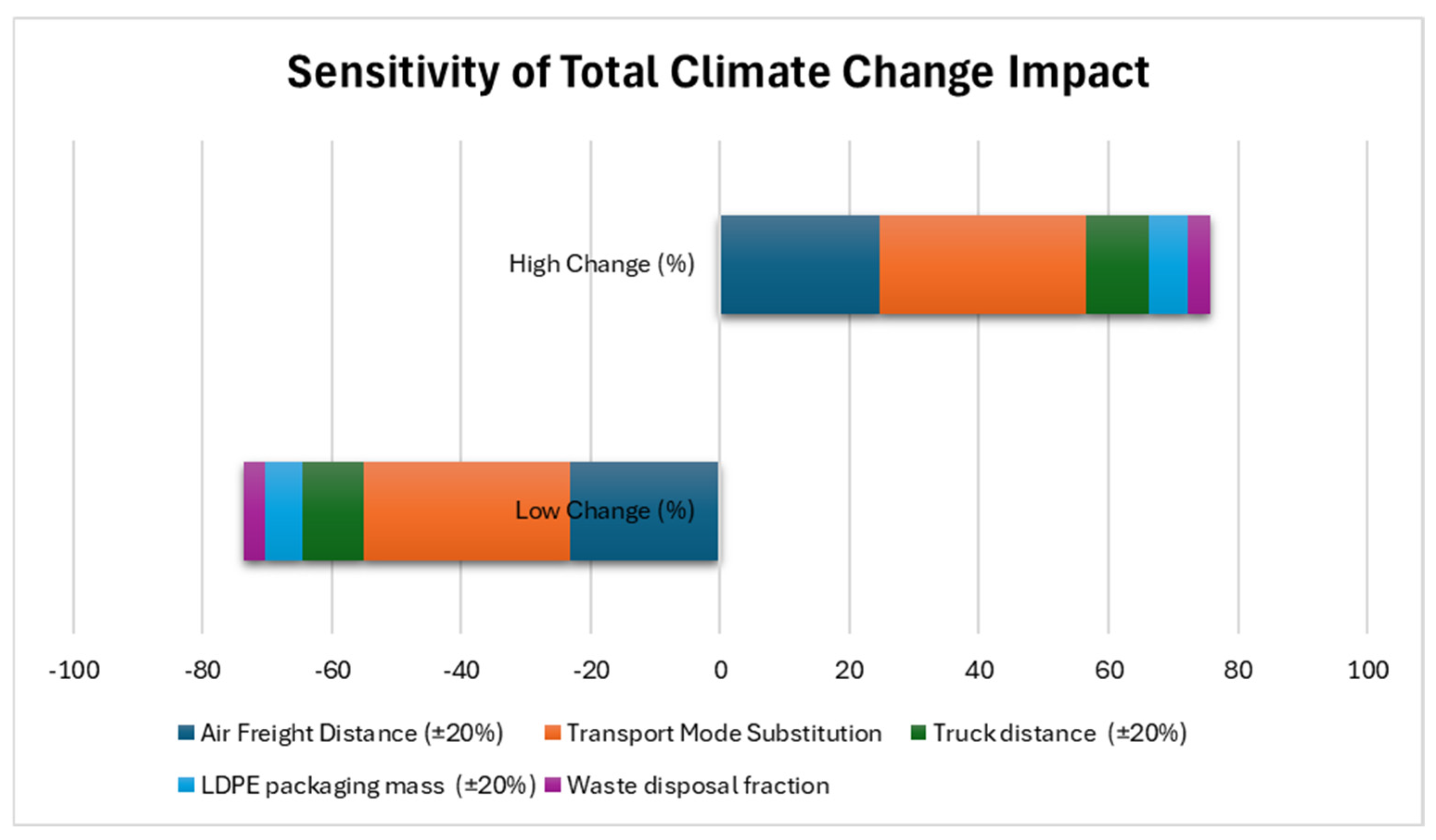
Figure 7 shows the sensitivity analysis of total climate change impacts within the reverse logistics system for one returned pair of jeans. The analysis evaluates the percentage change in overall climate change impact when each parameter is varied independently while other assumptions remain constant. It can be observed that transport mode substitution is the most important parameter with a variation range of −32% to +32%, indicating that by replacing air freight with lower emission alternatives such as rail or truck transport can minimize the carbon footprint. The second most important factor found to be is air freight distance, highlighting the strong relationship between aviation distance and emissions intensity. Among packaging-related variables, LDPE packaging mass (±20%) generates a smaller but still measurable effect, ranging from −5.8% to +6.1%. The impact of waste disposal is limited, ranges between −3.2% and +3.4%, indicating that waste and packaging contribute minimal to total climate change impacts as compared with transportation modes. This sensitivity analysis confirms the stability and robustness of the models’ results.
5. Discussion
This gate-to-gate LCA points out that reverse logistics is not just a parallel operational activity for live-streaming e-commerce, but rather a critical environmental hotspot. Transportation mode selection, packaging material choice, and waste treatment processes emerged as the dominant contributors to environmental impacts across human health, ecosystems, and resource depletion categories. The findings show that the environmental impacts of air freight are significant, especially due to its energy-intensive nature, fuel usage, and low volume return flows, which are a consequence of frequent consumer returns in live-streaming trade.
The results explain the dominance of air freight in climate change and resource damage categories. Air freight significantly increases impacts on both human health and ecosystems, primarily due to its high energy intensity and fuel consumption per ton-kilometer. This is further exacerbated by lower payload utilization and higher vehicle-kilometer requirements in fragmented return flows typical of live-streaming e-commerce, highlighting the importance of economies of scale through freight consolidation. Consequently, reverse logistics transport emerges not as a marginal activity but as a critical environmental hotspot within CSCs serving live-streaming platforms. Unlike traditional retail, live-streaming commerce is characterized by impulse purchasing, real-time promotions, and high return rates, which increase the dispersion of return flows and amplify the environmental consequences of transport mode choices.
The research also revealed that packaging materials, especially LDPE-based packages, are a major factor in increasing climate change and the depletion of fossil resources because packaging relies on fossil feedstock and energy-intensive polymer production. Packaging makes up a small portion of total return mass, but cumulative environmental impacts are increased with repeated returns in live-streaming e-commerce. These findings indicate that circularity objectives in e-commerce cannot be achieved solely through product recovery practices but also require environmentally efficient reverse logistics systems, sustainable packaging strategies, and optimized transport configurations.
A holistic evaluation of reverse logistics transport reveals cumulative impacts across endpoint categories, including human health, ecosystems, and resource depletion. The dominance of air freight across these categories indicates that speed-driven return strategies can undermine circularity objectives. In contrast, aggregating return flows and shifting transport towards higher-capacity, energy-efficient modes can significantly reduce endpoint damage across all areas of protection.
Furthermore, the results indicate that packaging materials represent a significant and often overlooked source of environmental impact in CSCs. This is particularly relevant in live-streaming e-commerce, where high return rates lead to repeated packaging cycles, increasing the cumulative environmental burden. Substituting virgin plastics with recycled materials can reduce greenhouse gas emissions and fossil resource depletion, thereby aligning packaging decisions with CE principles. This emphasizes that supply chain sustainability assessments should explicitly consider repeated packaging cycles from high-return digital retail models.
In addition, waste textiles present further environmental challenges due to complex material compositions, such as cotton–polyester blends, dyes, and chemical finishes. These materials contribute to carbon emissions, chemical leaching, and the release of organic pollutants during treatment and recovery processes. In live-streaming e-commerce systems, repeated cycles of packaging generation, collection, sorting, and reprocessing increase cumulative energy demand, emissions from mechanical recycling, and water-intensive washing processes, thereby intensifying impacts on air quality and water resources.
Moreover, the findings validate CSC theory, promoting circular material flows through reuse, repair, remanufacturing, and recycling rather than waste disposal in landfills. From a managerial perspective, firms should expand resale platforms, repair services, and textile recycling partnerships to reclaim residual values from returned items. From a policy standpoint, the results highlight stronger textile collection systems, recycling incentives, packaging producer responsibility schemes, and carbon reduction measures for freight logistics.
5.1. Implications for Theory
This study contributes to the CSC and Reverse Logistics literature in several ways. First, it extends CSC theory by demonstrating that circularity-oriented systems may still generate substantial environmental burdens when reverse logistics activities rely on carbon-intensive transport modes and resource-intensive packaging systems. Existing CSC frameworks frequently emphasize material recovery, recycling, and closed-loop flows as pathways toward sustainability. However, the findings of this study suggest that circularity alone does not guarantee environmental sustainability unless supported by low-impact logistics design and efficient reverse flow management.
Second, this research advances Life Cycle Thinking in digital retail environments by showing that gate-to-gate assessment of reverse logistics flows can reveal environmental hotspots that are often overlooked in broader e-commerce sustainability discussions. The dominance of air freight across multiple endpoint categories highlights how speed-driven return practices and promotion-oriented purchasing behavior in live-streaming e-commerce can intensify environmental impacts. This finding strengthens the theoretical linkage between consumer purchasing behavior, reverse logistics operations, and environmental performance within digitally enabled commerce systems.
Third, the study contributes to Reverse Logistics theory by emphasizing the importance of transport consolidation, modal selection, and packaging optimization in reducing the environmental footprint of returned products. The results demonstrate that fragmented, rapid-return systems may undermine the sustainability objectives of circular-economy initiatives, whereas consolidated, higher-capacity transport systems can substantially reduce environmental damage across multiple impact categories. Accordingly, the study supports the growing view that operational efficiency and environmental sustainability in reverse logistics must be evaluated simultaneously rather than independently.
5.2. Implications for Practice and Policy
The findings provide several practical implications for e-commerce platforms, logistics providers, fashion retailers, and policymakers. For practitioners, the results indicate that reducing reliance on air freight and prioritizing consolidated rail or high-capacity freight transport can significantly reduce the environmental impacts of reverse logistics. Freight consolidation strategies, regional return hubs, and optimized routing systems may therefore improve both environmental and operational performance within CSCs.
The study also highlights the importance of sustainable packaging strategies in reverse logistics systems. Firms should consider reducing the intensity of packaging materials, increasing the use of recycled packaging materials, and designing reusable or recyclable packaging systems that maintain adequate product protection while minimizing environmental impacts. Packaging decisions should therefore balance material reduction, protective functionality, and processing requirements to avoid unintended increases in product damage or reprocessing activities.
In addition, live-streaming e-commerce platforms may benefit from integrating sustainability considerations into return management policies. For example, platforms could encourage return consolidation, incentivize low-impact delivery options, or incorporate sustainability metrics into seller and promotional guidelines. Such initiatives may help reduce environmentally intensive return behaviors while supporting broader CE objectives.
From a policy perspective, the findings support the development of targeted regulatory and industry-level initiatives for sustainable reverse logistics in digital commerce. Policymakers may consider introducing incentives for low-carbon freight systems, promoting the adoption of recycled packaging, and strengthening Extended Producer Responsibility (EPR) frameworks to include reverse logistics and packaging recovery processes. Industry-wide sustainability standards for e-commerce returns and packaging systems could further advance progress toward climate mitigation and resource-efficiency goals.
5.3. Limitations and Future Recommendations
This study has several limitations. First, data on live-streaming e-commerce and reverse logistics processes remain scarce. Consequently, the analysis relies partly on assumptions and secondary data, which may affect the robustness of the findings. In addition, the study considers a limited set of transport modes, light commercial vehicles, medium- and heavy-duty lorries, rail, and air freight, while excluding emerging alternatives such as electric and hydrogen-based logistics systems. Future research should incorporate these modes to provide a more comprehensive assessment of environmental impacts, supported by dedicated LCAs to enable evidence-based logistics planning. The future studies should consider primary firm-level data from live-streaming platforms on transport distances, return rates, and product disposition to improve model reliability.
Furthermore, the analysis is based on a single case study of a returned pair of jeans, which may limit the generalizability of the findings to other clothing categories. Future studies could extend the framework to include a wider range of apparel products, as well as other product categories such as electronics and home goods. In addition, further research should investigate sustainable packaging solutions such as biodegradable for reverse logistics, explicitly considering trade-offs between material reduction and protective performance to avoid unintended increases in product damage and reprocessing.
Limited transportation modes are selected in this study, which shows limit to other categories. Future studies should focus on low-carbon alternatives for transportation such as electric vehicles and hydrogen powered vehicles for emission reductions. Landfill disposal and textile waste contributed to a significant number of emissions. Therefore, circular end-of-life pathways such as repair, resale, and remanufacturing to evaluate reverse logistics strategies.
The gate-to-gate system boundary adopted in this study excludes the manufacturing and forward distribution phases, focusing solely on reverse logistics. As a result, it does not capture the full cradle-to-grave environmental footprint of e-commerce systems. Future research would benefit from incorporating real-time, firm-level data from live-streaming e-commerce platforms, particularly regarding transportation patterns, the geographic distribution of returns, and product disposition outcomes.
Moreover, future studies should quantify the relationship between live-streaming purchasing behavior and the environmental impacts of reverse logistics. The application of machine learning techniques could support the prediction of return behavior and the design of platform-level strategies to reduce high-impact return volumes. Finally, integrating waste-stream-specific environmental indicators into reverse logistics optimization models would enable firms to better balance operational efficiency with environmental sustainability objectives.
6. Conclusions
This study examines the environmental impacts of clothing returns in live-streaming e-commerce using LCA. It analyses reverse logistics processes, transportation, inspection, and repackaging, for a pair of returned jeans using SimaPro software, identifying transport mode selection and packaging materials as critical environmental hotspots. Incorporating the characteristics of live-streaming e-commerce into life cycle analysis reveals unique environmental challenges that distinguish digital retail channels from traditional e-commerce systems.
The results provide empirical evidence that return transportation can dominate several life cycle impact categories, particularly when air freight or light commercial vehicles are used. This highlights a fundamental trade-off between logistical responsiveness, which is important for customer satisfaction, and environmental sustainability. The findings further indicate that CSCs cannot be optimized solely through product recovery strategies; they must also account for logistics system design and transport configuration.
Additionally, the results suggest that waste-stream differentiation is essential for optimizing CSCs. These findings can inform optimization models, network design, and decision support systems. Overall, the research demonstrates that CSCs must optimize logistics system design alongside product recovery to mitigate the environmental impacts associated with high return rates in live-streaming platforms. This study also provides a foundation for future research integrating LCA-based environmental metrics into production planning, reverse logistics optimization, and CSC network design, particularly in relation to transport modes and packaging materials. Practically, by identifying key environmental hotspots the findings can support more sustainable reverse logistics design by providing evidence for supply chain managers, e-commerce platforms, and policymakers. Hotspot identification can guide enhancements in return transport, packaging design, and circular recovery practices and contribute to the development of EPR-based regulatory frameworks for digital retail systems with high return rates. The study also provides a process-based LCA framework that can be adapted to other product categories, regions, and digital retail systems to assess reverse logistics.






 ,
,