1. Introduction
The transformative industrial advancements of the past two centuries have yielded significant economic prosperity in many countries [
1,
2], and there has been notable progress reported in African economies as well with uninterrupted growth since the mid-1990s. However, this advancement in economic growth and development has been accompanied by ecological deterioration and a notable deleterious impact on the physical environment; hence, it is considered unsustainable. In an effort to maintain competitiveness, African governments keep encouraging local and foreign investments in non-service sector commercial activities such as mining, production, manufacturing, and infrastructure development, and in the active participation of both large and small businesses. While the need to attain economic relevance is justifiable, wealth must be created in a sustainable manner. Indeed, business process and practices must be cognisant of the needs of the present generation without compromising the ability of future generations to meet their own needs [
3]. Interestingly, the idea of sustainability and development appears to be conflicting, since economic growth through increased production and industrialisation may require consequential changes to the physical environment. This is besides the changes in social order that often characterises development.
From a business perspective, managers are compelled to reconsider the role of supply chain management practices and to re-evaluate their actions as it is increasingly evident that the supply chain activities of both large and small enterprises and their corresponding environmental and social impact will have reaching implications [
4,
5]. In fact, businesses across the continent face immense stakeholder pressure to provide concrete evidence of their compliance with the sustainability principles requirements [
6,
7]). Hence, businesses are adopting sustainable practices along their supply chain [
8]. Sustainable supply chains strive to strike a balance between their conventional financial performance measures and their social and environmental performance measures [
8].
However, if the reason for business venturing is primarily to maximise profit, then it is unsurprising that they would be driven to achieve this goal despite engaging in activities that are environmentally and socially irresponsible if left unchallenged [
9]. Activities such as depositing toxic waste into the environment, as well as compromising on product quality and safety throughout the supply chain are rampant among non-service sector business, particularly those with extended supply chain lines, and business-2-business that hardly works in collaboration [
2]. While some businesses pursue profits at the expense of their other stakeholders, other businesses prioritise stakeholder interests over immediate financial gains [
10]. The latter aligns with the tenets of corporate social responsibility (CSR) which holds that organisations have societal obligations which transcend profit maximisation. In addition, businesses are expected to undertake initiatives that benefit stakeholders, even when such actions do not maximise their immediate profits [
11]. From a practical standpoint, many businesses operate between these two extremes, only engaging in environmentally responsible supply chain management practices to a certain degree.
Recent studies (2020–2025) suggest that the adoption of SSCM practices enhances firm performance, resilience and long-term competitiveness, particularly when sustainability is entrenched in organisational culture and supported by collaborative supply chain relationships [
12,
13,
14]. In addition, a study by Li et al. showed that stakeholder pressure has a positive moderating effect on the relationship between sustainable supply management and performance, while sustainable process management was reported to mediate the same relationship fully [
15]. More so, in Ghana, another study found out that SSCM practices affect firm performance positively and significantly [
12], with firm capabilities mediating the relationship between SSCM practices and firm performance significantly.
Notwithstanding these advances, the adoption of SSCM remains uneven across regions, with developing economies, particularly in Africa, facing distinct structural and institutional challenges. For instance, evidence from Kenya showed that while SSCM practices are increasingly embedded in Communications Authority operations, their maturity varies, with green procurement and ethical sourcing emerging as key drivers of efficiency, transparency, and institutional credibility, whereas waste management and resource efficiency remain less developed in the country [
16]. In Ghana, evidence from a study by Nsowah and Phiri revealed some key policy gaps in promoting SSCM adoption in the manufacturing industry [
17] and emphasised the need for sustainability frameworks that can integrate resource efficiency, standardised eco-design, circularity (e.g., reuse, recycling, and recovery), lifecycle optimisation, and institutionalised environmentally responsible production practices. Thus, although the extant literature indicates increasing awareness of sustainability and CSR among African firms, there is still limited practical adoption as a result of inadequate financial and technological resources, fragmented supply chain networks, and weak institutional frameworks [
14,
18]). Studies in South Africa, Kenya, and Nigeria further reveal that inadequate inter-organisational collaboration, low levels of trust among supply chain partners, and insufficient managerial commitment hinder the effective adoption of socially sustainable practices [
16]. These challenges are especially more pronounced in the retail sector, where complex supplier networks and cost pressures often incentivise short-term decision-making over long-term sustainability.
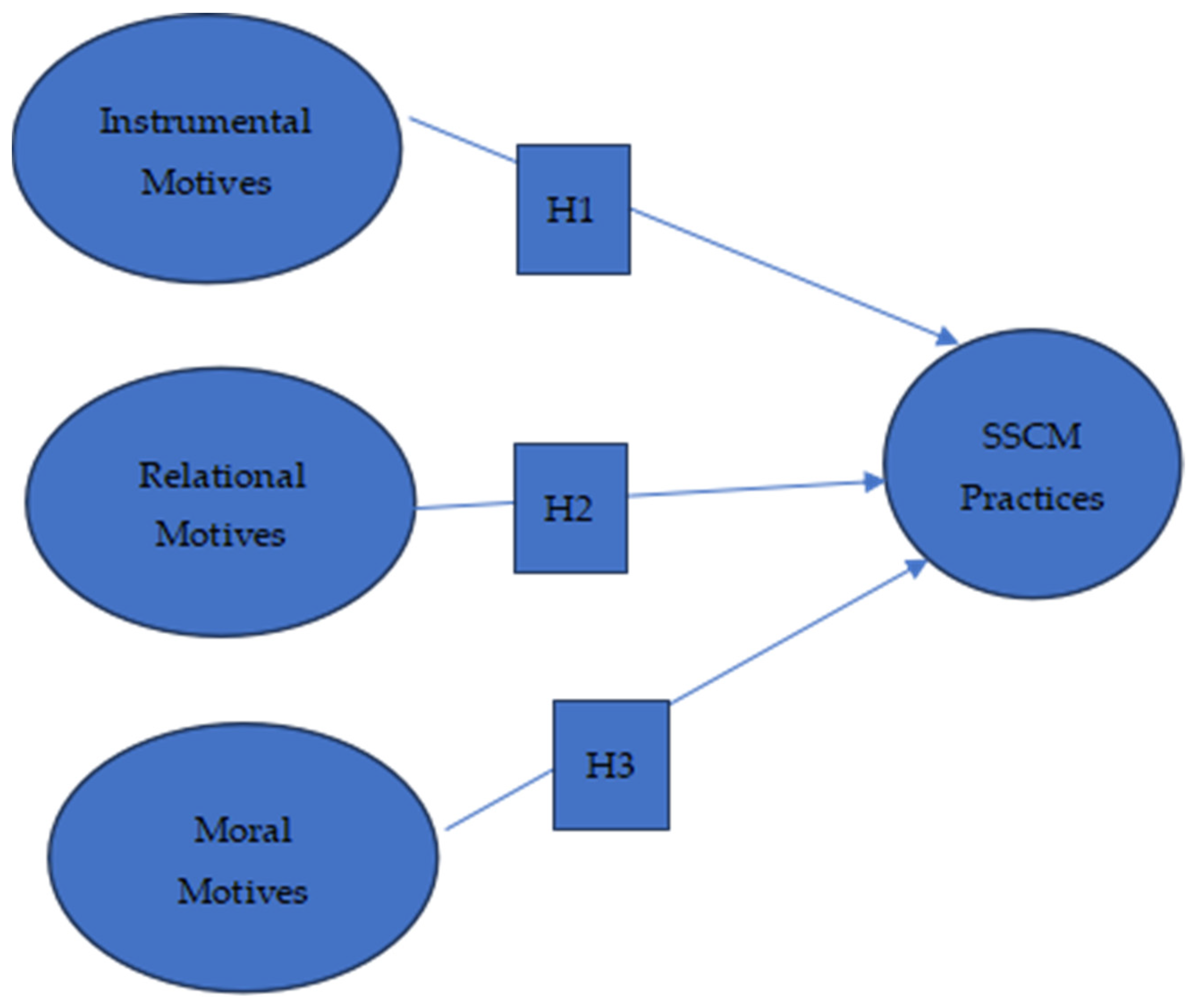
In light of these points of view and varying practices, it is vital to explore why businesses across Africa, particularly small and medium enterprises, engage in SSCM practices. Could it be that SSCM can actually benefit these businesses or is its value rooted in addressing the interests of multiple stakeholders? Alternatively, can small enterprises in Africa be motivated to adopt and implement SSCM simply because they perceive it as the right course of action ethically? An enquiry that brings answers to these questions will be illuminating. Although a number of conceptual papers have investigated the conditions in which firms would adopt sustainable practices or behave in environmentally responsible ways [
9], an empirical investigation that is directed towards the motives for adopting SSCM practices and that cuts across countries, focusing specifically on small businesses operating in related industries and with similar issues, is scarce. Moreover, SMEs constitute a large proportion of businesses in Africa and sustainability along with supply chain management-related issues is often more pronounced in the non-service sector industries [
19]. Therefore, this study sought to interrogate this phenomenon by clarifying why non-service sector SMEs in selected countries engage in SSCM practices. The remainder of the paper covers materials and methods which encompass a literature review and hypothesis development, as well as research design and methods. This is followed by sections on results, discussion, and conclusions.
4. Discussion
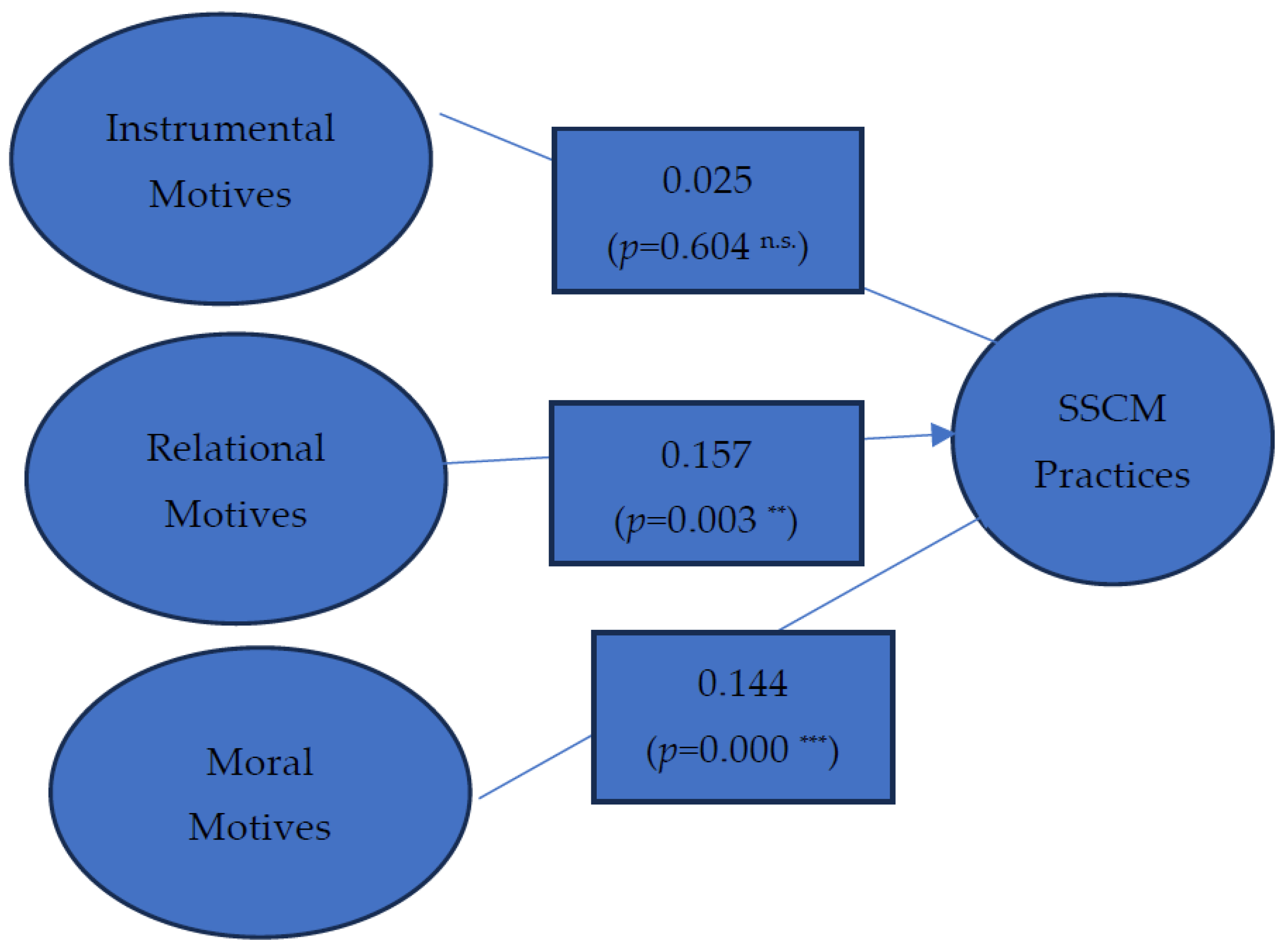
Researchers in corporate social responsibility and business ethics suggest that enterprises which implement responsible initiatives are driven by diverse motives. Building on established theoretical frameworks, this study posits that instrumental, relational, and moral motives can each motivate enterprises to implement SSCM practices. Again, considering the partial SEM model fit results obtained in this study, the SEM path analysis results discussed here should be considered as results that provide indicative and suggestive rather than conclusive evidence of the posited relationships among the study variables. On the basis of empirical evidence from this inquiry, this study indicates that, among established non-service sector-based SMEs, relational and moral motives have a positive relationship with SSCM practices.
The SEM path analysis results of this study suggest that instrumental motives have an insignificant in-fluence on sustainable supply chain management adoption. While previous studies [
12,
13,
14,
15,
31,
32,
33,
34] largely assumes that firms are motivated by economic and efficiency gains when adopting sustainability practices. For instance, a study by Sumarno et al. [
31] found out that ESG disclosure has a positive and significant influence on return on assets. Acquah et al. [
32] ’s study also confirmed that the synergy between green human resource management and green supply chain management creates the highest value in financial performance, which can impel supply chain managers to implement such SSCM practices. However, the current study’ s findings which suggest that instrumental motives have an insignificant influence on sustainable supply chain management adoption challenges the dominant assumption that firms adopt sustainability practices mainly for economic and efficiency gains. This may be because of the contextual nuances in African SMEs, where decision-making is often shaped more by relational, normative, or survival-oriented considerations than by purely instrumental reasoning. Although the measurement items were drawn from validated scales, it is possible that they capture instrumental intent in general contexts but less so in the specific socio-economic and cultural environment of African SMEs. As such, these findings are interpreted as a theoretical anomaly.
Drawing on the institutional theory, these findings indicating that instrumental motives have an insignificant influence on SSCM practices adoption suggests that there are other primary motives other than financial gains driving African SMEs to adopt SSCM practices. Instead, in environments characterised by institutional voids, weak and fragmented regulatory enforcement, as well as high levels of informality, firms often prioritise normative legitimacy, relational ties, and survival-oriented decision-making over economic and efficiency-seeking rationality. In such cases, SSCM practices may then be mainly adopted for maintaining social acceptance, alignment with key stakeholder’s expectations, or for ensuring long-term continuity, rather than to achieve immediate financial gain.
These findings deviate from the extant body of empirical studies [
31,
32], particularly in developed and more institutionally stable emerging economies, which report a positive and significant relationship between instrumental motives and sustainability adoption. In such contexts, well-operational markets, adequate regulatory incentives, and competitive pressures tend to promote the economic rationality case for sustainability adoption. However, the current study’s findings indicating that instrumental motives have an insignificant influence on SSCM practices adoption, supports emergent empirical evidence from developing and informal economy settings, where resource constraints, fragmented supply chain systems, inadequate and fragmented regulatory enforcement, as well as the socio-cultural dynamics reduce the salience of purely instrumental motives [
14,
16,
17,
18].
This study, therefore, contributes to the SSCM body of literature by highlighting the context-dependent nature of SSCM motives and by questioning the universal application of instrumental motives as a key SSCM adoption driver. The study findings suggest that theoretical SSCM adoption models should clearly account for institutional pressures and the role of informal economic structures in shaping firm’s sustainability behaviours.
Moreover, the non-significant result for instrumental motives may also reflect measurement limitations, since the existing measurement scales for instrumental motives, which were mostly developed in developed contexts, may fail to optimally capture the context-specific expressions of economic rationality in African SMEs, mainly due to structural differences. Future studies should, therefore, refine these research variables, adapt measurement items to reflect locally salient drivers of strategic behaviour better, and explore how hybrid motives, combining economic, social, and survival rationality, influence SSCM adoption in similar settings.
In addition, the SEM path analysis results suggest that relational motives have a positive and significant relationship with SSCM practices concurs with both the utilitarianism and stakeholder theory, and suggests that multiple stakeholders, such as customers and competitors, can act as key drivers of sustainability practices such as SSCM. In addition, the findings suggest that these businesses are guided by moral motives rooted in deontological or virtue ethics, rather than by self-interest or ethical egoism. In fact, the finding of this study is consistent with that of Pagell and Wu [
62], which analyses the relationship between instrumental, relational, and moral motives of organisations on environmental, social, and financial performance with the involvement of SSCM. In the same manner, they confirm a positive association between relational and moral motives and SSCM, but their research found no relationship between instrumental motives and SSCM.
In contrast, a recent study by Gao et al. [
63] indicates that internal motives, which are essentially instrumental by their definition, do have a significantly positive effect on SSCM. In addition, the study of Sajjad et al. [
64] draws a contrast to the results of this enquiry, as they provide support for both instrumental logics for SSCM adoption. A plausible explanation for this might be that, although self-interest is often assumed to be central to most enterprises, this may not hold true in the business environment examined in this study. In addition, this non-finding might indicate that the scales used for measuring this self-interest construct might not be the most suitable in the context of these countries.
A plausible explanation is that, although self-interest is often assumed to be central to most enterprises, this may not hold true in the business environment examined in this study. This could be because the surveyed firms in Kenya, Ghana, Nigeria, and South Africa may operate in business environments where moral, relational, or institutional factors play a stronger role [
29,
38]. While this might be the case, it could also be that the owners and managers of SMEs across Africa might not have realised fully how SSCM practices can generate immense economic benefits. Indeed, this misperception may be attributed to the relative novelty of these SSCM practices, which may result in limited awareness of their effectiveness. Thus, in the absence of strong instrumental incentives and interests, moral motives emerge as a compelling driver for firms to implement SSCM practices.
With reference to moral motives, this study’s SEM path analysis results suggest that among established non-service sector-based SMEs, moral motives have a positive relationship with SSCM practices. These findings are in line with Kitsis and Chen [
52]’s study which highlighted the key links between moral motives and triple-bottom-line (TBL) performance, suggesting that managers should pay greater attention to moral motives in decision-making. This contrasts with Hahn et al. [
51], whose study found moral motives less relevant to the engagement of firms in social initiatives compared to strategic or self-interest considerations. Thus, although social desirability bias can affect self-reported measures, it appears to have had minimal impact in this study. This is because the questionnaire used in this study was anonymous, which reduced the incentives to present overly favourable responses, and respondents were willing to acknowledge self-serving motives.
Given that many environmental and social challenges cannot be addressed through regulation alone, it is encouraging that the majority of enterprises in this cross-country sample went beyond mere compliance to engage in SSCM guided by strong moral motives. Prior research also indicates that firms with high moral motives or strong virtues outperform those driven primarily by instrumental or relational motives [
27,
53]. These findings align with the limited empirical literature on moral motives, which shows that moral commitment fosters greater involvement in sustainable practices and is positively correlated with performance [
46].
Furthermore, the SEM path analysis results provide empirical support for positive organisational scholarship (POS), suggesting that organisational virtuousness is associated with higher performance through its amplifying effect, which generates escalating positive outcomes, and its buffering effect, which protects against negative influences [
12]. Organisations guided by high moral standards strive not merely to “do no harm” but rather to pursue the highest aspirations for unconditional societal and environmental advancement [
12].
In addition, the comparative analysis results further suggest that relational motives exhibit a distinct hierarchy, with Ghana having the strongest relational motives, which demonstrates the centrality of trust, social capital, and long-term inter-firm relationships in driving SSCM. According to Ofori and Sackey [
38], social capital plays a critical role in Ghanaian firms, facilitating trust-based collaboration, enhancing information flow, and supporting the achievement of organisational goals. South Africa and Kenya show comparable, moderate relational motives, indicating hybrid contexts where relational governance complements formal mechanisms. Nigeria consistently records the lowest relational drive, reflecting fragmented supply chains as well as regulatory systems, inconsistent enforcement mechanisms, and reliance on external coercive pressures [
29]. The results also highlight substitution dynamics between relational and institutional governance, emphasising the importance of context-specific SSCM strategies.
Moreover, the comparative results indicate that South Africa exhibits the strongest instrumental orientation, reflecting global value chain integration and market competitiveness. Kenya and Nigeria show moderate, pragmatically oriented motives, while Ghana records the weakest instrumental motives, suggesting that economic payoff is less central in contexts where moral and relational drivers predominate [
27,
55]. These results show that instrumental drivers are context sensitive, particularly in market-oriented environments, requiring differentiated incentives aligned with local economic structures.
Corporate motives, also evaluated via Games-Howell, follow a similar pattern. As shown in
Table 6, Ghana indicates the highest internalisation of sustainability in organisational governance, while South Africa and Kenya occupy intermediate positions, and Nigeria consistently shows the weakest corporate alignment. Ghana’s strong sustainability integration reflects robust governance and proactive institutionalisation, whereas South Africa and Kenya exhibit partial alignment, and Nigeria’s weak alignment reflects structural and regulatory constraints [
29,
44]. These results highlight the pivotal role of leadership, governance, and organisational embedding in translating sustainability intent into practice.
Despite strong motives drivers, the overall SSCM adoption, assessed with Games-Howell, shows an asymmetric landscape. The results also showed that Kenya leads in SSCM adoption, followed by Nigeria and South Africa, with Ghana lagging despite high moral and corporate motives. This indicates a motive-adoption disconnection, where ethical or corporate intent alone is insufficient without institutional capacity, operational capability, and enforcement mechanisms [
50].
At the practice level, sustainable product design shows moderate adoption in South Africa, Kenya, and Ghana, but is significantly lower in Nigeria, reflecting technological, cost, and regulatory constraints. These results align with a study by Nwamekwe et al. [
33], which showed that SMEs in Nigeria face substantial barriers, such as prohibitive capital requirements, limited technical expertise, outdated machinery, and weak regulatory enforcement, reflecting both institutional constraints and resource-based limitations that hinder their capacity to adopt sustainable practices. Sustainable process design is strongest in Ghana, intermediate in South Africa and Nigeria, and weakest in Kenya, suggesting that operational integration depends more on investment capacity and technological capability rather than on the motive alone [
34].
All in all, these findings indicate that SSCM motives and adoption are highly context dependent across African economies, with moral, relational, instrumental, and corporate drivers interacting with institutional, socio-cultural, and operational factors. For instance, the comparative results signify a crucial misalignment between the motive factors and adoption capacity, especially in Ghana and Nigeria, where strong relational and moral orientations failed to translate into commensurate SSCM adoption. The eminence of moral and relational motives in these two countries can be attributed to strong communitarian norms, and high reliance on informal networks, where firms depend on trust-based relationships and social legitimacy to navigate institutional voids [
29]. However, constant challenges such as technological inadequacy, limited access to finance, weak fragmented regulatory enforcement, and inadequate infrastructure hinder the translation of these motives into SSCM practice [
29,
44,
65]. This contests the main traditional assumptions that pro-sustainability motives intrinsically yield greater sustainability outcomes and instead places SSCM as an institutionally dependent process shaped by the interactions between formal and informal governance mechanisms. In such contexts, moral and relational motives, therefore, function as necessary but insufficient conditions, which need to be complemented by institutional strengthening and capability development to foster tangible adoption, while in more formalised environments such as South Africa, instrumental motives may be more effective though promoting risk compliance-driven rather than substantive SSCM practices adoption.
South Africa’s evidence of stronger instrumental orientation indicates its relatively advanced institutional environment, which is characterised by stricter environmental regulations, established sustainability reporting frameworks, and deeper integration into global supply and value chains. This incentivises firms to adopt and implement SSCM practices to enhance their supply chain competitiveness, compliance, and reputational gains, even though this may at times encourage compliance-driven SSCM adoption [
45,
66]. The comparative results for Kenya present a different trajectory where SMEs were reported to implement SSCM greatly despite the presence of weaker relational and moral motives. This can be linked to Kenya’s growing policy to advance green innovation, rapid digitalisation, a dynamic entrepreneurial ecosystem, and increasing participation in export-oriented sectors, all of which enact sustainability standards; however, resource limitations and fragmented regulatory enforcement still compromise the extent of SSCM adoption [
67]. All of the country-specific examples discussed reveal a serious misalignment between SSCM adoption motive and execution, which challenges the traditional assumptions in SSCM scholarship. The given examples also highlight that successful SSCM adoption is dependent on the interaction between the level of market maturity, institutional quality, firm level capabilities, and infrastructure development.
Therefore, beyond confirming and validating previous empirical findings, this study contributes to the body of SSSCM literature through the advancing of a more nuanced theoretical insight which indicates that SSCM motives operate within a context-dependent configuration, rather than as universally applicable SSCM adoption drivers. The results reveal that instrumental, relational, and corporate motives interrelate in complementary and substitutive ways, though contingent on the market and institutional conditions. For example, the strong relational motives reported in Ghana might suggest the crucial role played by social capital, trust, and long-term inter-organisational relationships in driving SSCM adoption, while the case of South Africa and Kenya may point to hybrid contexts wherein relational motives complements formal institutional mechanisms. Contrarily, the weaker relational motives reported in Nigeria may point to the country’s fragmented and inadequate regulatory enforcement, and fragmented supply chains. These patterns indicate a functional substitution dynamic in Nigeria, wherein relational motives mechanisms compensate for weak and inadequate formal institutions, which extends the institutional theory by demonstrating how informal mechanisms can partially replace formal regulatory structures in shaping SSCM adoption especially in informal economies where micro enterprises operate in.
Likewise, the comparative analysis results of instrumental motives exhibit clear context sensitivity and dependency. These results expose the deficiency of universal policy and managerial prescriptions, thus highlighting the urgent need for context-specific strategies that associate SSCM initiatives with the institutional realities of a specific country, while also integrating the sense-making insights of the managers and local sustainability to promote a more distinct globally relevant SSCM discourse. For instance, South Africa reported the strongest instrumental motives, which points to a deeper enterprise governance integration into global value chains and competitive market pressures, while the findings for Kenya and Nigeria suggest moderate, pragmatically driven motives, and Ghana records relatively weaker instrumental motives. Corporate motives follow a comparable pattern, with Ghana recording the highest internalisation of sustainability within enterprise governance structures, while the findings for South Africa and Kenya suggest partial alignment, and Nigeria records weaker organisational integration due to regulatory and structural constraints. Thus, all these findings indicate that the effectiveness of different SSCM adoption motive types is dependent on their alignment with the broader institutional and economic environments.
A key theoretical contribution of this study lies in the identification and conceptualisation of a motives-adoption gap in SSCM. Though previous studies have often assumed that stronger sustainability motives directly lead to higher sustainability adoption levels, this study’s findings challenge this traditionally dominant assumption. The findings indicate an asymmetric pattern wherein African countries such as Ghana demonstrate strong moral and corporate motives, yet this is accompanied by relatively lower SSCM adoption levels, whereas Kenya records higher SSCM adoption levels despite having more moderate SSCM adoption motives drivers. This indicates that the presence of SSCM motives does not automatically translate into adoption.
This study, thus, conceptualises the SSCM motives-adoption gap as a capability-mediated phenomenon, which we define as the misalignment between SSCM adoption motive and the actual SSCM adoption. This gap arises from institutional capacity, enforcement mechanisms, and organisational readiness constraints. In this case, SSCM adoption motives thus function as necessary yet insufficient conditions, that require complementary operational capabilities and enabling institutional environments in order for them to be translated effectively into meaningful and tangible SSCM adoption outcome. This logic extends the extant SSCM empirical literature by shifting the focus from identifying the key motives to rather understanding the conditions under which these SSCM adoption motives are activated or constrained.
All in all, these findings contribute to both stakeholder and institutional theory by demonstrating that SSCM adoption motives are not universally effective, but that they are rather shaped by the interaction between formal institutions, informal relational mechanisms, and enterprise-level capabilities. This study, therefore, advances a more context-dependent and configurational understanding of SSCM adoption and the motives driving it, particularly within African economy settings. As such, effective SSCM strategies require nuanced, country-specific approaches that bridge motives and adoption, leveraging leadership, trust networks, and policy instruments to convert ethical intent into measurable sustainability outcomes. Thus, to bridge this practice gap, this study suggests that policy makers in African countries should consider developing targeted green financing mechanisms such as the SME-focused sustainability funds, utilising blended SME finance models, and applying incentive-based tax credits to alleviate SME funding challenges and minimise to risks associated with SSCM investments.
5. Conclusions
This study has examined the relationships between corporate motives and SSCM practices among SMEs across Africa. The findings demonstrate that corporate motives play a pivotal role in driving SSCM practices among SMEs in Africa, providing novel theoretical insights and reinforcing the centrality of ethical and strategic drivers in SSCM. This is because, first, the prevalence of existing models on SSCM have considered the outcomes of the SSCM practices rather than the antecedents. Second, this study makes a unique contribution to the SSCM literature by addressing a notable gap in the literature, in which prior studies have been predominantly qualitative and large-scale quantitative evidence remains scarce. This study extends prior qualitative research by showing empirically, using quantitative techniques, how moral, relational, and instrumental motives drive SSCM practices among SMEs in Africa, offering novel insights for both SSCM and business ethics scholarship. In addition, it does this by aggregating responses of SMEs in the non-service sector across four countries.
From a practical point of view, the results of this study indicate that regarding sustainability-oriented practices, businesses are not motivated entirely by their own interests. They are driven by the interests of key stakeholders, such as their customers, suppliers, employees, and government and environment groups, in order to gain social literacy. In addition, businesses are concerned about the ethics of their operations and are compelled to act responsibly for the common good.
This study revealed further how moral, relational, instrumental, and corporate motives interact with institutional and operational contexts to shape sustainable supply chain adoption across African economies. It uncovered a critical SSCM motive-adoption gap and substitution dynamics between relational and formal governance mechanisms, which advances SSCM theory. To bridge this gap, non-service SMEs should implement targeted capacity-building programmes alongside process-level interventions, such as resource efficiency measures (e.g., minimising material waste and optimising inventory), cleaner production practices (e.g., recycling process waste, using low-impact inputs), and eco-design initiatives (e.g., recyclable packaging, material-light product design). More so, these SMEs can also implement energy and water efficiency improvements, simple monitoring and feedback systems, and stakeholder (e.g., supplier) collaboration for shared sustainability practices, all of which are aimed at translating sustainability intent into measurable operational adoption.
The results of this study present key implications for both SME owners/managers as well as for policy makers, by showing how each of the unique SSCM motive profiles can be leveraged strategically to fast-track SSCM adoption. For policy makers, the study recommends that policy interventions should be aligned explicitly with the country’s most prominent and dominant SSCM motives. For example, in African countries like Ghana and Nigeria, characterised by strong moral and relational SSCM motives, policy makers should establish policy frameworks that embed sustainability in normative and community-based mechanisms, such as industry-led codes of conduct, public recognition schemes, and cluster-based sustainability initiatives, while simultaneously strengthening enforcement consistency and expanding access to green finance to convert ethical SSCM intent into practice. In South Africa, where instrumental motives prevail, policy makers should prioritise market-based incentives, including tax rebates, preferential procurement policies, and export support tied to sustainability compliance, to reinforce the business case for SSCM while discouraging superficial, compliance-driven adoption. In Kenya, where adoption is relatively strong, but motives are more pragmatic, policies should focus on scaling innovation through digital platforms, SME incubation, and integration into global sustainable value chains.
For SME owners/managers, the study results highlight the need to internalise and operationalise these SSCM adoption motives. For instance, SMEs in high moral-relational contexts such as Ghana and Nigeria should formalise trust-based SSCM practices into structured supplier development and monitoring systems, while those in more instrumentally driven environments like South Africa should embed sustainability into performance metrics, cost-efficiency strategies, and competitive positioning. More so, there is a need to establish multi-stakeholder platforms that actively support the engagement and collaboration of SME owners/managers, customers, regulators, suppliers, industry associations, and local communities. Such collaborations will enable the co-creation of context-sensitive and relevant standards, promote effective sharing of knowledge, and reinforce accountability among stakeholders. Again, SME owners and managers, together with policy makers, should also consider implementing capacity-building initiatives, such as technical training, digital tools for SSCM tracking, and supplier development programmes, in order to translate SSCM motives and intent into SSCM operational capability.
6. Limitations and Suggestions for Future Research
Despite its contributions, this research has several limitations that also present opportunities for future study. For instance, data were collected from 378 non-service sector SME owners/managers based in four African countries, namely Ghana, Kenya, Nigeria, and South Africa. As such, caution is warranted when generalising the study results to other contexts, particularly those with different levels of economic development. This is because, although the sample size of 378 respondents is adequate for the applied SEM path analysis, it limits the statistical power of the structural model for more robust country-level comparisons. Again, the model may have inadequately captured the divergence of institutional and sectoral conditions across the African continent. Again, although the study used both convenience and purposive sampling techniques to select the targeted SME owners/managers, disparities in sample composition across countries in and beyond Africa may affect comparability and may pose the risk of selection bias.
Importantly, although this study provides useful insights, it has the partial measurement model fit limitation. As such, the SEM path analysis results and the comparative analysis results’ interpretation and discussion are subject to the partial fit of the SEM measurement model, since a number of the other fit indices were below the minimum recommended threshold values. For instance, while some absolute and parsimonious model fit indices, such as RMSEA (0.074), RMR (0.049), and χ2/df (3.244), indicated a reasonable model fit, a number of the other incremental model fit indices, such as CFI = 0.825, TLI = 0.807, and NFI = 0.767, were below the minimum acceptable threshold value of 0.90. This partial model fitness suggests that the SEM measurement model proposed and tested in this study partially captures the underlying data structure and fitness, but it does not fully achieve optimal model fit in accordance with the conventional model fitness criteria.
These partial model fitness results may be ascribed to several factors. For example, these results could be as a result of the measurement model complexity which incorporates various latent variables and observed variables, which could have adversely influence incremental model fit indices. The results could also be due to the sample size and data characteristics which may have affected the sensitivity of model fit indices, such as CFI and TLI, that are known to not work well with complex models that are heavier. Moreover, unobserved heterogeneity might have had been introduced through the cross-country nature of the dataset which covered four African countries (Ghana, Kenya, Nigeria, and South Africa).
Thus, considering the above, the SEM measurement model is interpreted as partially fit, and its derived SEM path analysis results were interpreted and discussed as indicative exploratory insights rather than conclusive empirical evidence. While the obtained SEM path analysis results remain theoretically informative and consistent with the prior literature, they may not fully capture the underlying covariance structure.
As such, future studies should replicate the study, with the aim to improve the measurement model fit through model respecification, such as refining measurement items, removing poorly performing indicators, or re-examining construct dimensionality. In addition, they should consider using other alternative estimation techniques and employ alternative robustness checks for the validation of the study results.
Beyond the partial measurement model fit limitation discussed above, this study is subject to empirical methodological limitations. First, the study used self-reported, cross-sectional survey data which may have introduced the possibility of common method bias and thus limit causal inference. Again, using a cross-sectional research design only captured the short-term effects, and failed to capture the long-term effects, as well as the dynamic relationships between SSCM adoption motives, in turn failing to capture how these motives evolve over time. Second, conducting a cross-country comparative study based on four African countries (Ghana, Kenya, Nigeria, and South Africa) with varying sample composition, these varying sample compositions and cross-country differences may affect the generalisability of these study findings. Lastly, as discussed above, the measurement model fit indices (e.g., CFI, TLI, NFI) reported to be below the minimum recommended thresholds reflect potential misspecification, which may have affected the robustness of parameter estimates due to context-specific dynamics or limited statistical power rather than the absence of theoretical effects. As such, the SEM path analysis and comparative analysis results derived from this partially fit model should be considered as indicative exploratory insights rather than conclusive empirical evidence.
Moreso, to strengthen generalisability, future research should replicate this study using a longitudinal study that employs a larger sample, with more African countries representing all the regions of Africa and incorporating all firm sizes including those from service sectors. In addition, future studies could explore the role of corporate motives in SSCM across diverse settings, including other developing markets or developed economies. Future research could explore whether moral motives are more prominent among small businesses in developing countries, while instrumental considerations dominate in larger firms in emerging and developed economies. These queries are unanswered in this disquisition and could be the objective driving future studies.