
Skip to Content
LogisticsLogistics
  • Article
  • Open Access

17 April 2026

Effects of Circular Economy Principles, Technological Integration, and Sustainable Supply Chain Management Practices on Green Supply Chain and Organizational Performance


,
and
1
Department of Business Technologies and Entrepreneurship, Vilnius Gediminas Technical University, LT-10223 Vilnius, Lithuania
2
Department of Finance, Holy Spirit University of Kaslik, Jounieh 446, Lebanon
3
Department of Management and Marketing Studies, Rafik Hariri University, Mechref 2010, Lebanon
*
Author to whom correspondence should be addressed.

Abstract

Background: The growing emphasis on sustainability has increased interest in understanding how environmentally oriented supply chain practices translate into organizational outcomes. However, empirical research examining how circular economy principles, technological integration, and sustainable supply chain management (SSCM) practices jointly influence green supply chain performance remains limited, particularly in developing economies. Methods: A quantitative research design was employed using survey data collected from 333 professionals in the Lebanese consumer goods industry through structured Likert-scale questionnaires. The proposed conceptual model was analyzed using Partial Least Squares Structural Equation Modeling (PLS-SEM) to evaluate the measurement model and test the relationships among circular economy practices, technological integration, SSCM practices, green supply chain performance, and organizational performance. Results: The findings indicate that technological integration, circular economy practices, and SSCM practices collectively enhance green supply chain performance. The results further show that improved green supply chain performance supports stronger organizational outcomes. Conclusions: This study contributes to sustainable supply chain literature by integrating circular economy principles, technological capabilities, and SSCM practices within a unified framework. It highlights the strategic role of green supply chain performance in linking sustainability initiatives to organizational outcomes and provides insights for managers seeking to implement integrated sustainability strategies.

1. Introduction

The urgent environmental challenges we face today underscore the necessity for businesses to adopt sustainable practices. Rapid urbanization and the expansion of online commerce have increased material flows, product returns, and resource losses, which have heightened the significance of responsible resource management for both environmental and economic sustainability [1]. The traditional linear economy, characterized by its ’take-make-dispose’ model, has proven unsustainable due to its reliance on finite resources and contribution to waste and pollution. In response, the circular economy (CE) has emerged as a strategic alternative that seeks to retain resource value through reuse, recycling, and remanufacturing of materials [2] while simultaneously supporting environmental sustainability and economic performance [3].
The circular economy has been extensively promoted as a pathway to reach sustainable logistics and supply chain systems; however, empirical research is still striving to clearly prove how circular economy principles can be translated into measurable green supply chain performance [4]. The precise effects of circular economy principles on measurable environmental and economic outcomes within supply chains have limited clarity so far. To be specific, the role of technological integration and sustainable supply chain management practices as complementary drivers of implementing the circular economy remains underexamined within an integrated empirical framework.
Prior logistics and supply chain research has also tended to examine circular economy principles, technological integration, and sustainable supply chain management (SSCM) practices in isolation, rather than examining their combined effects as interdependent components of a broader sustainability system. Moreover, the performance of the green supply chain is always considered an outcome measure and not considered as an intermediary capability measure that connects sustainable practices to organizational performance. This creates a research gap in the form of a missing integrated model in the literature regarding the performance of the green supply chain, where the principles of the circular economy and SSCM influence performance.
Besides, most of the empirical evidence on circular economy-driven supply chain sustainability comes from developed economies where institutional frameworks, technological infrastructure, and regulatory enforcement are considerably different from those of developing countries. These contextual differences are likely to change the nature of the interaction between and amongst the principles of the circular economy, technology integration, and SSCM practices in translating into green supply chain performance. The applicability and external validity of the existing model thus remain limited, underscoring the need for empirical investigation within resource-constrained and institutionally volatile developing-economy contexts.
In response to the identified gaps, this study develops and empirically tests an integrated model where circular economy principles, technological integration, and sustainable supply chain management practices altogether impact green supply chain performance, which subsequently influences organizational performance. By positing the performance of the green supply chain as a mediating variable, the development of the model enables the enhancement of the theory of the field of logistics and supply chain management being studied. This study contributes to sustainable supply chain literature in some significant ways. First, it extends existing models by examining the interplay between circular economy principles, green innovation, and technological integration in shaping green supply chain performance and organizational outcomes. Second, the study responds to the limited empirical evidence from developing economies by informing policymakers in developing regulations that promote sustainable practices, highlight economic benefits through improved resource efficiency, and advocate for environmental sustainability. Ultimately, this study aspires to facilitate a transformative shift in how organizations approach sustainability, contributing to a more sustainable future. By concentrating on diverse industries in Lebanon, it addresses a gap in research concerning developing nations. The study utilizes random sampling for improved representativeness and applies robust statistical validation techniques, including Partial Least Squares Structural Equation Modeling (PLS-SEM) using SmartPLS (version 4.1.1.8), to examine the relationships among constructs, along with reliability and validity assessments such as composite reliability, average variance extracted (AVE), and the Heterotrait–Monotrait ratio (HTMT). From a practical standpoint, this should enhance the robustness of the results and offer a detailed perspective on how sustainability efforts can improve both environmental and organizational performance.
These variables are selected based on their central role in the theory of contemporary logistics and the supply chain. Circular economy principles are representative of the strategic approach to resource efficiency and closed-loop logistics. Sustainability objectives, for sourcing, production, and distribution, are operationalized through sustainable supply chain management practices. Supply chains are coordinated and traceable, while their performance is monitored by technological integration. Green supply chain performance represents the environmental outcomes of these practices, while organizational performance reflects their strategic and economic implications.
The Lebanese consumer goods industry serves as a relevant empirical background given its great reliance on imported goods, growing complexity in logistics, as well as its susceptibility to sustainability pressures in the face of economic and environmental adversity. As a developing country characterized by underdeveloped waste management facilities and emerging regulations on sustainability, Lebanon also presents a useful backdrop against which how organizations in various industries are leveraging the principles of the circular economy can be investigated. Regarding the industry, it should be noted that it has great material intensity, frequent returns, as well as great material impacts on the environment. This is why the Lebanese consumer goods industry was chosen as the context for this cross-sectional study.
The research objectives are as follows:
  • R.O1: To examine the influence of circular economy principles on the environmental performance of supply chains.
  • R.O2: To analyze the role of technological integration in enhancing green supply chain sustainability.
  • R.O3: To evaluate how sustainable supply chain practices contribute to the effectiveness of green supply chain management.
  • R.O4: To assess the impact of green supply chain performance on overall organizational performance.
In order to seek a better understanding of research objectives, the latter are articulated through the following questions: RQ (1): To what extent do circular economy principles have a statistically significant influence on green supply chain performance? RQ (2): To what extent does technological integration directly affect green supply chain performance within circular economy-oriented supply chains? RQ (3): What is the effect of sustainable supply chain management practices on green supply chain performance? RQ (4): To what extent does green supply chain performance influence overall organizational performance outcomes?
By investigating the relationships between circular economy principles, green innovation, and technological integration, this research aspires to enrich the ongoing discourse of sustainable supply chain management literature by offering an integrated empirical perspective on how these factors jointly affect green supply chain performance and organizational results. The findings offer valuable implications for organizations aiming to integrate environmental sustainability with their strategic and economic objectives. Furthermore, this study illustrates implications of an improved green supply chain performance on a variety of encompassing dimensions such as efficiency of resources, and ultimately organization alignment with respect to sustainability objectives. This research contributes to the existing body of knowledge on sustainable supply chain transformation by empirically confirming such associations and implications of the study variables among other sustainable supply chain practices and objectives.

2. Literature Review

The Resource-Based View (RBV) offers a generic theoretical framework for understanding how firms capitalize on resources to create sustainable competitive advantages, whereas Natural Resource-Based View (NRBV) builds upon RBV, but picks out NRBV studies, which are specifically interested in environmental resources, pointing out how sustainable capabilities can lead to sustainable advantages in a distinctive way. Dynamic Capability Theory supplements NRBV theories, which describe how firms use resources in order to adapt to environmental factors in an effective manner. Institutional Theory supplements NRBV theories, providing additional explanations about why firms are likely to practice sustainable supply chain management due to institutional factors like regulatory, normative, and stakeholder pressures. These theories, in conjunction with one another, point out that organizational resources, capabilities, and institutional factors co-aggregate the sustainability outcomes. The Triple Bottom Line (TBL) framework allows for the operationalization of outcomes in three different dimensions, namely environmental (such as emission reduction, waste management, and environmental transparency), economic (such as cost savings, operational efficiencies), and social (such as stakeholder interactions, ethics).
Circular Economy. The circular economy framework model is a sustainable economic model aimed at reducing waste, optimizing resource use, and maintaining the circulation of products, materials, and resources for as long as possible. It operates on three core principles: minimizing waste and pollution, promoting the continuous use of products and materials, and regenerating natural systems. Unlike the traditional linear economy, which follows a “take, make, dispose” pattern, the circular economy focuses on practices like recycling, repairing, reusing, and establishing closed-loop systems to minimize environmental harm [5]. The circular economy not only addresses environmental concerns but also promotes economic benefits through cost savings and new business opportunities [3]. The integration of circular economy principles into supply chains can significantly enhance environmental performance and resource efficiency. By redesigning supply chains to support closed-loop processes, companies can achieve substantial reductions in waste and resource consumption [6]. Such practices include designing disassembly, implementing take-back schemes, and employing circular business models that prioritize product longevity and material recovery [5]. For instance, the implementation of reverse logistics and closed-loop supply chains has been shown to improve sustainability outcomes by facilitating the recovery and recycling of products and materials [7]. These practices not only contribute to environmental preservation but also offer competitive advantages by reducing dependency on virgin resources and lowering waste management costs [8]. Additionally, collaboration among supply chain partners is essential for achieving effective circularity, as it fosters innovation and knowledge sharing [9]. However, the positive environmental impact of circular economy adoption relies on how particular supply chain mechanisms translate circular principles into operational and environmental capabilities. The Natural Resource-Based View contends that sustainable competitive advantages can be achieved by building competencies that minimize environmental harm in combination with greater resource efficiency. Circular economy practices including reuse, recycling, remanufacturing, and closed-loop supply chains directly support these competencies by minimizing waste generation in the supply chains. From a supply chain point of view, circular economy practices can minimize greenhouse gas emissions, reduce energy usage, and minimize material losses through procurement activities, production processes, transportation activities, and reverse operations. Furthermore, circular economy practices move the flow of supplies from being in linear “take-make-dispose” value chains to regenerative environments, ensuring that ecological performance measures concerning waste minimization, carbon emissions, and use of resources are improved. Existing literature in logistics and operations management depicts circular economy practices being used as dynamic ecological assets that help organizations improve their green supplies performance. To summarize, prior studies presume that when circular economy practices are incorporated within supply chain processes, they contribute to better green supply chain performance. Therefore, based on the above literature, Hypothesis 1 (H1) can be formulated as below.
Hypothesis 1. 
The adoption of circular economy principles within supply chains enhances green supply chain performance.
Technological Integration. Green innovation involves the development and implementation of technologies and practices that reduce environmental impacts and promote sustainability [10]. This encompasses a wide range of innovations, including energy-efficient processes, eco-friendly materials, and waste reduction techniques [11]. According to Porter’s competitive advantage theory, green innovation is not only a response to regulatory pressures but also a source of competitive advantage, as it drives efficiency, reduces waste, and fosters differentiation in supply chains, thereby enabling firms to meet regulatory requirements while simultaneously responding to market demands for environmentally responsible products [12]. Technological advancements play a pivotal role in driving green innovation. Artificial intelligence (AI), big data analytics, and the Internet of Things (IoT) are among the technologies revolutionizing supply chain management by improving efficiency and reducing environmental impact [13]. For example, AI-driven predictive analytics can optimize inventory management and demand forecasting, leading to reduced waste and lower carbon emissions [14]. Similarly, IoT technologies facilitate real-time monitoring and control of supply chain processes, enhancing transparency and resource efficiency [15]. The integration of digital technologies such as blockchain can further enhance sustainability by improving traceability and accountability within supply chains [16]. Blockchain technology provides a decentralized and immutable ledger of transactions, which can be used to verify the authenticity of sustainable practices and ensure compliance with environmental standards [17]. This transparency helps build trust among stakeholders and supports the adoption of green practices across the supply chain [18]. The Technology-Organization-Environment framework focuses on the importance of technological abilities in providing organizations with the capability to respond to environmental challenges. Modern technology such as big data analysis, ERP systems, IoT, blockchain, and tracking systems all improve supply chain traceability and environmental management. Dynamic Capability Theory argues that technology assists organizations in detecting, exploiting, and shaping supply chain resources to capitalize on environmental benefits. Information technology assists organizations in tracking their emissions and energy use on an end-to-end basis. Technology is thus an enabling factor in achieving better environmental efficiency in the supply chain. Collectively, previous research indicates that the environmental benefits of technology implementation within supply chain activities come not from technology, but rather from applying technology to certain specific business processes. The use of digital technology, such as artificial intelligence, Internet of Things, and blockchain technology, makes it possible for companies to better manage demand forecasting, tracing, and pollution, thereby leading to lower waste, energy, and environmental risks. At an organizational level, technology acts as an enabler of improved environmental efficiency, and hence improved levels of performance within a green supply chain. Therefore, based on the above literature, Hypothesis 2 (H2) can be formulated as below:
Hypothesis 2. 
The organizational adoption of digital technologies (AI, IoT, and blockchain) enhances green supply chain performance.
Sustainable Supply Chain Management Practices. The Triple Bottom Line (TBL) framework serves as an excellent lens for examining sustainability within supply chain management by highlighting the integration of economic, social, and environmental factors beyond purely financial outcomes. This perspective urges businesses to evaluate their supply chain activities in terms of cost efficiency, social responsibility, and environmental impact leading to improved accountability and transparency in supply chain practices [19]. Sustainability in supply chain management has become a pivotal focus for businesses facing increasing stakeholder, regulatory, and market pressures regarding resource scarcity, climate change, and ethical production [20]. This encompasses not only the reduction of waste and emissions but also the adoption of renewable energy sources, the efficient use of natural resources, and the ethical treatment of workers at every stage of production and distribution [21]. By integrating sustainable practices, companies can mitigate risks associated with regulatory penalties, supply chain disruptions, and reputational damage, all while capitalizing on the growing consumer demand for eco-friendly products [22]. Furthermore, sustainability in supply chain management can lead to cost reductions through the optimization of resources, the reduction of energy consumption, and the minimization of waste. These efficiencies contribute to improved operational performance, making companies more agile and better equipped to respond to market changes [23]. In addition to the financial benefits, sustainable supply chain practices can also enhance a company’s brand image, fostering greater customer loyalty and opening up new markets that prioritize sustainability [24]. Given the multidimensional benefits of sustainable supply chain management, businesses that effectively integrate these practices are likely to experience enhanced operational efficiency, improved stakeholder relations, and long-term profitability. This relationship between sustainability and business performance underscores the importance of sustainability as a strategic imperative in supply chain management. Also, Institutional Theory postulates that firms implement SSCM practices as responses to the regulatory, normative, and stakeholder pressures. These SSCM practices include green procurement, supplier environmental audit, eco-design, and environmental collaboration; they help to align supply chain operations with environmental regulations and stakeholders’ expectations. From a stakeholder perspective, green supply chain practices make companies more legitimate while minimizing environmental risks both at their backward and forward links. Sustainability criteria in sourcing, logistics, and relationships with suppliers improve environmental monitoring at firms, reduce pollution, and enhance compliance across the supply chain., and thus translate into measurable environmental outcomes such as reduced emissions, lower waste generation, and improved transparency. Therefore, based on the above literature, Hypothesis 3 (H3) can be formulated as below:
Hypothesis 3. 
The adoption of sustainability-oriented supply chain practices significantly enhances environmental outcomes (i.e., green supply chain performance).
Measuring and Assessing Green Supply Chain Performance. The Natural Resource Based View (NRBV), introduced by Hart (1995) [25], is well-suited for exploring Green Supply Chain Management (GSCM). This perspective suggests that companies can achieve a competitive edge by effectively managing environmental sustainability through approaches such as reducing pollution, ensuring product stewardship, and promoting sustainable development. These concepts are closely related to GSCM practices, including sustainable sourcing and minimizing waste, which help organizations lower their environmental footprint while improving efficiency and fostering innovation. Effective measurement and assessment of green supply chain performance are essential for managing sustainability initiatives and ensuring that environmental goals are met [9]. Various frameworks and metrics have been developed to evaluate the effectiveness of green supply chain practices, including performance indicators related to environmental impact, resource efficiency, and compliance with sustainability standards [26]. The challenge of measuring green supply chain performance lies in balancing financial and non-financial metrics and integrating environmental and social factors into performance assessments [16]. Comprehensive performance measurement systems should include indicators that capture both the internal processes, such as green management practices, and external activities, such as green procurement and marketing [27]. These metrics provide insights into the effectiveness of green supply chain initiatives and help identify areas for improvement. Research indicates that effective performance measurement systems can enhance the competitiveness of firms by providing valuable insights into the efficiency and impact of green supply chain practices [28]. For example, performance metrics such as carbon footprint reduction, energy efficiency, and waste minimization can help firms track progress towards sustainability goals and communicate their achievements to stakeholders [26]. However, the development of standardized methods for assessing the overall impact of green supply chain management remains a challenge, highlighting the need for further research in this area [27]. Therefore, measuring green performance of supply chain will rely on resources efficiency, operational efficiency, and carbon footprint. The main findings of factors affecting green supply chain management are summarized in Table 1 below.
Table 1. Summary of Main Findings in Circular Economy, Green Innovation, and Sustainable Supply Chain Management (Source: Compiled by authors, 2025).
In [29,30], the authors detail how transitioning to circular economy practices leads to resource conservation and waste reduction. However, their work, alongside other literature, identifies a significant gap in empirical evidence measuring the precise impact of these principles on supply chain performance, particularly within developing countries. This study directly addresses this gap by providing quantitative, empirical evidence from Lebanon’s consumer goods industry, clarifying the relationship between circular economy adoption and green supply chain performance.
In [6,32], the authors establish that green innovation improves product quality, market share, and efficiency, while work by [36,37] highlights the role of digital technologies like AI and IoT in enhancing supply chain transparency. A key gap remains in understanding the interplay between green innovation, technological integration, and their combined effect on supply chain sustainability. This study addresses this by integrating technology as a key variable and examining its synergistic effect with circular economy and sustainable practices on green performance.
In [34,35], the authors demonstrate that sustainable practices such as closed-loop systems improve resource efficiency and mitigate environmental impacts. However, a notable gap persists in the lack of standardized methods for evaluating the comprehensive impact of sustainable SCM, especially in balancing financial, environmental, and social metrics. This research addresses this gap by employing a structured quantitative approach with validated metrics to assess the impact of sustainable SCM practices on green performance.
In [38,39], the authors emphasize that effective performance measurement systems are essential for evaluating green and circular practices, and [26,40] note the critical need to balance financial and non-financial metrics. A significant challenge remains in developing standardized, holistic performance measurement frameworks for green SCM. This study addresses this by using Partial Least Squares Structural Equation Modeling (PLS-SEM) to measure the impact of green supply chain performance on organizational outcomes, integrating both environmental and business metrics.
In [27,42], the authors affirm that green SCM contributes to environmental sustainability and enhances social welfare, while [40,41] stress that social sustainability is integral to green supply chain management. A clear research gap exists in understanding how green performance translates into broader organizational and social outcomes, especially within developing regions. This study directly addresses this gap by empirically linking green supply chain performance to organizational performance, highlighting its societal and business relevance within the Lebanese context.
This study systematically addresses the identified research gaps by providing a focused, empirical investigation within an understudied context. To bridge the lack of evidence on the measurable impact of circular economy principles in developing nations, it offers quantitative data from Lebanon’s consumer goods sector, clarifying their direct effect on green supply chain performance. Furthermore, it moves beyond examining factors in isolation by integrating the interplay between circular economy, sustainable SCM practices, and technological adoption into a single analytical model, thereby exploring their combined influence on sustainability outcomes. The research also tackles the methodological gap in performance evaluation by employing a rigorous quantitative design—including Partial Least Squares Structural Equation Modeling (PLS-SEM) and measurement validity assessments—to evaluate the impact of these practices not only on environmental metrics but also on concrete organizational outcomes such as competitive advantage and market share. Ultimately, by linking green supply chain performance to broader organizational and social results in a developing economy, this study provides a holistic framework that advances both theoretical understanding and offers actionable insights for businesses and policymakers aiming to implement effective, measurable sustainability strategies.
Out of the above factors, the most cited factors to have a potential impact on green supply chain management practices that will be taken further into consideration in this study are the: circular economy, sustainable supply chain management practices (SSCM), and technology. Table 2 below explains why such factors were chosen based on their citations.
Table 2. Summary of most cited factors that impact green SCM (Source: Compiled by authors, 2025).
Impact of Green Supply chain Management Performance on overall organizational performance
The Resource-Based View (RBV) emphasizes that an organization’s resources and capabilities are essential for gaining a competitive edge. By treating Green Supply Chain Management (GSCM) practices as strategic assets, companies can optimize resource utilization by minimizing waste and lowering energy usage, elevate product quality by utilizing sustainable materials, and strengthen their reputation and brand appeal. These actions result in cost reductions, better market standing with environmentally friendly products, and long-term viability, which together enhance financial outcomes and establish a lasting competitive advantage [45]. The integration of environmental performance into supply chain management has become increasingly important as organizations strive for sustainability. By focusing on reducing environmental impact, such as minimizing waste, lowering carbon emissions, and improving resource efficiency, companies can achieve not only ecological benefits but also enhance their overall organizational performance. This improvement is often reflected in cost savings, better compliance with regulations, increased customer satisfaction, and a stronger competitive position in the market [24,27].
As environmental performance becomes a key component of supply chain strategies, its influence on broader organizational outcomes is increasingly recognized [43]. Resource-Based View proposes that green supply chain performance is an organizational capability that is valuable, rare, and difficult to imitate for the firm’s performance to be improved. At the same time, better green performance allows receiving economic benefits from consumption of fewer resources, lower waste disposal costs, and enhanced efficiency of operations. In this respect, green supply chain performance contributes to strengthening a firm’s reputation and legitimacy, improving customer loyalty and investor confidence as well as strengthening market positions. From a signaling viewpoint, high green performance sends strong and positive signals to the external stakeholders about the environmental responsibility of the firm and long-term orientation of its sustainability. While the financial and organizational benefits of green performance may be incremental rather than immediate, they contribute positively to overall organizational performance. Therefore, based on the above literature, Hypothesis 4 (H4) can be formulated as below:
Hypothesis 4. 
Improved environmental performance of the supply chain enhances the overall organizational performance.
Measuring Organizational Performance
Measuring organizational performance is crucial for effective management and improvement, particularly within green and sustainable supply chains. The complexity of developing accurate performance metrics is evident, with researchers emphasizing the need to balance both financial and non-financial indicators [26]. Key frameworks and systems such as the Global Reporting Initiative, ISO standards, Green SCOR, and sustain ability balanced scorecards offer methods to evaluate performance but lack a standardized approach for assessing the full impact of green supply chain management (GSCM) practices [40]. Performance measurement tools must quantify efficiency and effectiveness to support decision-making and competitive advantage [36]. Incorporating metrics like market share and profits into performance evaluations is essential, as these indicators reflect the broader impact of green practices on organizational success [27]. Additionally, emerging technologies like artificial intelligence and blockchain enhance performance tracking by providing real-time data and improving supply chain visibility, which can significantly boost competitive advantage and profitability [46]. Despite these advancements, further research is needed to integrate environmental and social factors effectively into performance measures and to better understand the relationship between green practices, market share, and overall profitability [27].
The decision to measure “Organizational Performance” through the economic triumvirate of “profits, market share, and competitive advantage” is a deliberate and theoretically grounded choice, reflecting the core argumentative logic of the paper rather than an oversight. This operationalization is directly anchored in the study’s adoption of the “Resource-Based View (RBV)” as the primary theoretical lens for linking Green Supply Chain Management (GSCM) to business outcomes. The RBV posits those strategic resources—here, GSCM practices—are leveraged to secure a sustainable competitive advantage, which is ultimately manifested and validated in the marketplace through enhanced profitability and expanded market share. By focusing on these three dimensions, the authors streamline their hypothesis testing (H4) to a direct cause-and-effect chain: superior environmental performance (Green Performance) acts as a strategic resource that translates into tangible, boardroom-relevant financial and market gains. This approach provides a compelling, parsimonious argument for skeptical executives by demonstrating that sustainability investments “pay off” in the most traditional business terms. While incorporating operational metrics like efficiency and effectiveness could offer a richer, process-oriented narrative, the chosen economic metrics serve the study’s strategic intent: to unequivocally position GSCM not as an operational cost center, but as a definitive driver of economic value and competitive positioning within the Lebanese consumer goods sector. Hence, based on the above, measuring the organizational performance will be based on competitive advantage, market share, and profits.
The hypotheses were formulated through a comprehensive review of existing literature and bolstered by theoretical foundations. In line with the work of Mayer and Sparrowe [47], each hypothesis is anchored in well-recognized theories related to supply chain management and green innovation. This methodology guarantees that the hypotheses are logically constructed and strongly supported by the literature. Therefore, based on the above formulated hypotheses, the following research model is built in Figure 1 below. This study is grounded in four complementary theoretical frameworks that collectively explain the proposed relationships. The Natural Resource-Based View (NRBV) positions circular economy principles as strategic capabilities that enhance green performance through resource stewardship. The Unified Theory of Acceptance and Use of Technology (UTAUT) explain how technological integration is adopted and leveraged to improve environmental efficiency. The Triple Bottom Line (TBL) framework justifies sustainable SCM practices as essential for balancing ecological, social, and economic outcomes. Finally, the Resource-Based View (RBV) links superior green performance to organizational success by framing it as a valuable, rare, and inimitable strategic asset. Together, these theories provide a cohesive, causal rationale for the research model, moving beyond mere correlation to a theory-driven explanation of how sustainability drivers influence supply chain and organizational performance.
Figure 1. The Theoretical Research Model (Source: compiled by authors, 2026).

3. Methodology

3.1. Research Design

This study employed a quantitative research design using a survey-based approach with data collected from 333 respondents in the consumer goods sector. A random sampling technique was applied to a purposively assembled sampling frame of Lebanese companies in the consumer goods sector. The objective was to explore the relationship between circular economy principles, sustainable supply chain practices, technology, and green supply chain performance, as well as the relationship between green performance and organizational performance. The research follows a cross-sectional, correlational survey design, which is appropriate for examining relationships between variables at a single point in time. While ref. [48] discuss Type 4 designs in the context of longitudinal or intervention-based supply chain studies; the current study does not claim to adopt such a design. Instead, it utilizes a widely accepted survey methodology to gather perceptual data from supply chain professionals.
In light of the issues highlighted regarding the suitability of the survey design, this research sought to implement a more rigorous design strategy. It particularly focused on the necessity of a Type 4 design, which is deemed more fitting for various research inquiries within the field of supply chain management [48]. Type 4 design refers to a survey-based, cross-sectional design that employs advanced statistical modeling (such as structural equation modeling) to test theoretical relationships, often with the goal of examining complex, latent constructs and their interactions. It is not inherently longitudinal or intervention-based, but rather emphasizes rigorous measurement, theoretical grounding, and multivariate analysis to support inference within a snapshot timeframe.
A comprehensive data analysis is conducted using variance-based SEM—Partial Least Squares Structural Equation Modeling (PLS-SEM) on SmartPLS (version 4.1.1.8). PLS-SEM is selected because it is particularly suitable for complex predictive models and exploratory research contexts, especially when the objective is theory development and prediction rather than strict theory confirmation. Our primary objective is to examine the predictive and explanatory relationships between clearly defined independent variables (circular economy principles, sustainable SCM practices, and technological integration) and our dependent variables (green supply chain performance and subsequently organizational performance). Given the study’s focus on testing direct effects using observed composite variables derived from Likert-scale surveys, along with a sample size of 333 participants, PLS-SEM provided a robust, interpretable, and parsimonious means to quantify the strength and significance of these hypothesized relationships. PLS-SEM is suitable under conditions requiring the modeling of complex latent constructs with multiple indicators, the assessment of indirect or mediating effects, or the evaluation of overall model fit—considerations that the scope of our current model encompasses. Compared with covariance-based SEM, PLS-SEM offers several advantages, including its ability to handle smaller sample sizes, non-normal data distributions, and complex models with multiple constructs and indicators. Given the exploratory nature of sustainability research in developing economies and the predictive focus of the study, PLS-SEM represents an appropriate analytical technique. Prior to final data collection, the questionnaire was reviewed by academic experts and industry practitioners to evaluate content clarity and relevance, serving as a pre-test.

3.2. Participants

Participants were selected from Lebanese consumer goods companies identified through the Lebanese Chamber of Commerce and professional networks. A randomized selection was made from a purposively compiled list of 1250 companies, yielding 501 contacted participants. Data were collected via an online survey, with reminders sent to improve response rates. The final sample consisted of 333 respondents (response rate = 66.48%). The final sample size is considered adequate for PLS-SEM and provides sufficient statistical power for hypothesis testing. The Inverse Square Root Method (ISRM) was used and proved that the sample size of 333 respondents clearly exceeds the minimum requirement (Kock, N., & Hadaya, P.) The minimum sample size is estimated as: n ≥ (z/∣βmin∣)2 where z is 1.96 for 95% confidence level and the smallest path coefficient expected in the model (βmin) is 0.188, concluding that n should be at least greater than 109. Also, using the Gamma-Exponential Method (GEM) the minimum required sample size is 146 respondents as reported in the GEM tables of Kock & Hadaya since the present model has 3 predictors of an endogenous construct (i.e., Circular Economy, SSCM, Technology → Green Performance). Therefore, the sample size of 333 has sufficient statistical power for PLS-SEM analysis.

3.3. Data Collection Methods

Data were collected using a standardized questionnaire (Appendix A) based on previous studies. The questionnaire consisted of a “5 Likert-scale” questions ranging from 1 (strongly disagree) to 5 (strongly agree). Inclusion criteria were that the firms had to be operating in the consumer goods sector and owning/operating supply chain activities while the exclusion criteria included firms unrelated to the sectors or organizations not directly involved in supply chain management activities. The survey was administered online.
Data was analyzed using SmartPLS (version 4.1.1.8) software. Descriptive statistics were used to summarize the data (Table 3, Table 4, Table 5 and Table 6).
Table 3. Descriptive Statistics of Key Variables (Mean and Std. Deviation).
Table 4. Respondents’ Years of Experience.
Table 5. Companies’ years of operations.
Table 6. Respondents’ Educational Degree.

3.4. Measurement Model Assessment

The measurement model was evaluated using SmartPLS (version 4.1.1.8) following the recommended PLS-SEM procedures. The assessment focused on indicator reliability, internal consistency reliability, convergent validity, and discriminant validity.
Indicator reliability was examined through outer loadings. In PLS-SEM, outer loadings above 0.70 are considered acceptable as they indicate that the indicator explains more than 50% of the variance of the construct. The majority of the indicators demonstrated acceptable loadings approaching or exceeding the 0.70 threshold, suggesting that the observed variables adequately represent their respective latent constructs.
Internal consistency reliability was assessed using Composite Reliability (CR). The results are shown in Table 7 below. Circular economy, green performance of supply chain, organizational performance, and sustainable SCM practices demonstrate acceptable internal consistency reliability. However, the technology construct indicates moderate reliability, suggesting that future studies may improve measurement by refining the indicators used to capture this construct.
Table 7. Reliability Construct (Composite Reliability).
Convergent validity was evaluated using Average Variance Extracted (AVE). AVE values should exceed 0.50 to confirm convergent validity. The results indicate that green performance of supply chain (AVE = 0.786) and organizational performance (AVE = 0.630) demonstrate strong convergent validity. But, circular economy, sustainable SCM practices, and technology show lower AVE values indicating that the variance explained by their indicators is relatively limited. Nevertheless, since composite reliability values are acceptable for most constructs, the measurement model remains usable, which is consistent with recommendations in PLS-SEM literature.
The discriminant validity was assessed using the Heterotrait–Monotrait Ratio (HTMT). All HTMT values were below the threshold of 0.90, confirming that the constructs are empirically distinct from each other. Therefore, the results (Table 8) provide sufficient evidence that the latent constructs measure different conceptual phenomena, supporting the discriminant validity of the measurement model.
Table 8. Validity Construct (HTMT ratio).

3.5. Structural Model Assessment

The structural model was evaluated by examining collinearity, path coefficients, effect size (f-squared), and coefficient of determination (R-squared).
Multicollinearity was assessed using the Variance Inflation Factor (VIF). All inner VIF values were below the threshold of 3, indicating that no multicollinearity issues exist among the predictor constructs. This confirms that the structural model estimates are not biased due to collinearity problems.
The structural relationships between constructs were evaluated using path coefficients and their statistical significance. The results indicate that several hypothesized relationships were statistically insignificant (p > 0.05). Specifically: Circular Economy did not significantly influence the dependent constructs and Green Supply Chain Performance relationships were statistically insignificant. Also, sustainable SCM Practices did not significantly influence the endogenous constructs and technology did not demonstrate a significant direct effect. These findings suggest that although the constructs conceptually relate to sustainability and performance, their direct statistical effects were not supported in the tested structural model. This may indicate the presence of mediating or moderating mechanisms that were not captured in the current model specification.
Effect size was assessed to evaluate the magnitude of each predictor’s contribution to endogenous constructs. The results indicate that circular economy and sustainable SCM practices have large effect on green performance of supply chain having f-squared greater than 0.35, while technology has a medium effect on green performance of supply chain with 0.15 f-squared value. Also, green performance of supply chain has a large effect on organizational performance with f-squared greater than 0.35. Moreover, R-square shows that the model explains 98.9% of the variance in green performance of supply chain. On the other side, the model explains 58.4% of the variance in organizational performance. These results suggest that despite the statistical insignificance of some direct paths, certain constructs still demonstrate substantial explanatory potential within the structural model.
The explanatory power of the model was assessed using R2 values. The value for green performance of supply chain is 0.989 and for organizational performance 0.584. It means that the model explains 98.9% of the variance in Green Performance of Supply Chain, indicating extremely high explanatory power. Furthermore, the model explains 58.4% of the variance in Organizational Performance, which represents a moderate to substantial level of predictive capability. These results demonstrate that the proposed model has considerable explanatory strength.

3.6. Model Fit

Model fit was assessed using the Standardized Root Mean Square Residual (SRMR). The SRMR value indicates that the estimated model fit is acceptable, suggesting that the discrepancy between the observed and predicted correlations is within acceptable limits. Therefore, the structural model demonstrates an adequate overall fit to the empirical data.
Overall, the PLS-SEM results indicate that the proposed model demonstrates adequate measurement reliability, confirmed discriminant validity, and strong explanatory power for key endogenous constructs. Although several structural paths were not statistically significant, the large effect sizes and high R2 values suggest that sustainability-related constructs remain important drivers of supply chain and organizational performance. Future research may explore mediating variables, moderating factors, or alternative model specifications to better capture the complex relationships among these constructs.

4. Results

4.1. Hypothesis Testing (Structural Model Results)

The structural model was evaluated using the Partial Least Squares Structural Equation Modeling (PLS-SEM) approach in SmartPLS, following the guidelines of Hair et al. for assessing path relationships between latent constructs. Bootstrapping procedures were used to estimate the significance and strength of the hypothesized relationships.
The structural model examined the effects of circular economy principles, technological integration, and sustainable supply chain management (SSCM) practices on green supply chain performance, as well as the subsequent effect of green supply chain performance on organizational performance.
The estimated path coefficients (β) indicate the magnitude and direction of the relationships between constructs.
Effect of Circular Economy Principles on Green Supply Chain Performance:
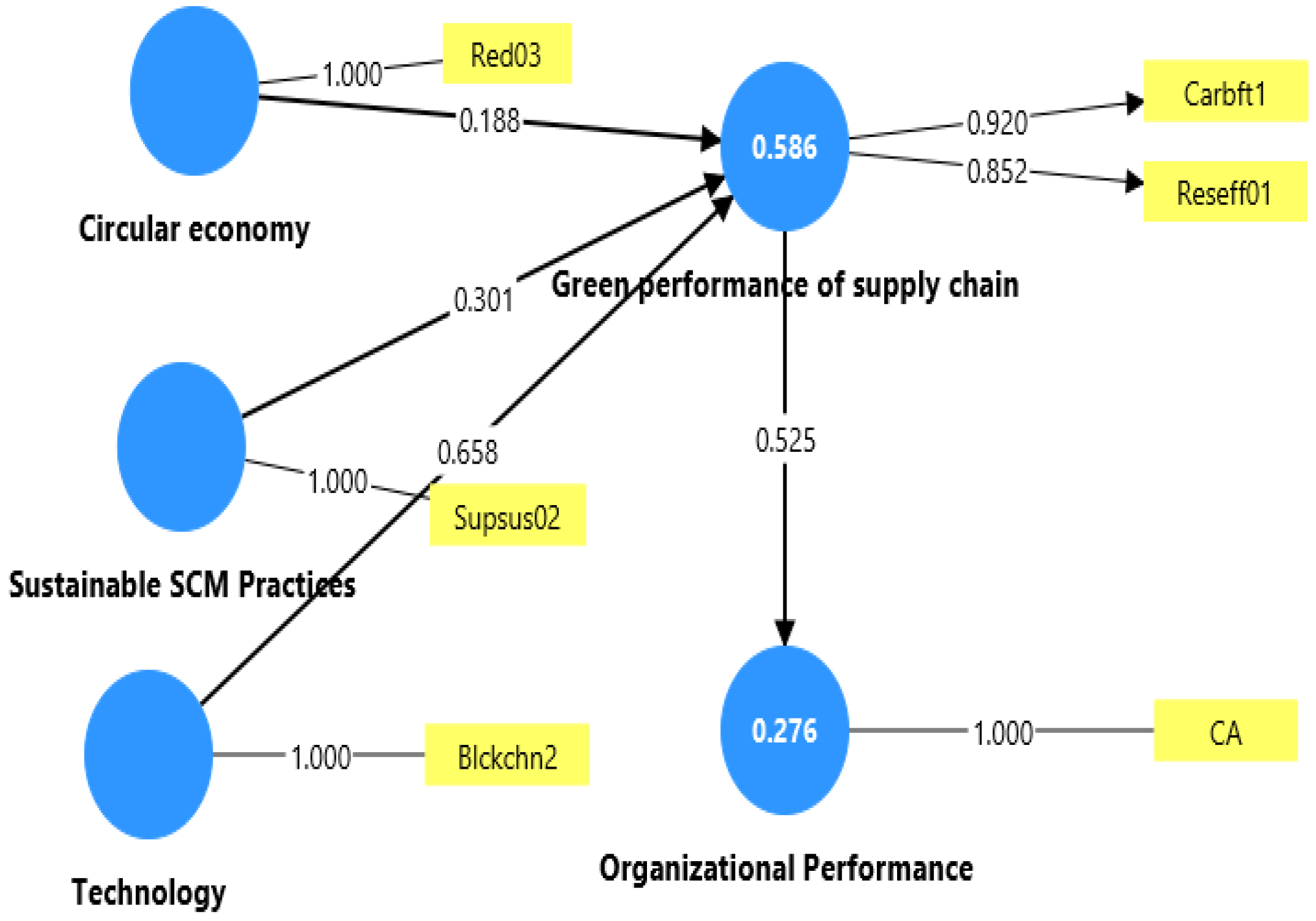
Hypothesis H1 proposed that the adoption of circular economy principles positively influences green supply chain performance. The results show a positive path coefficient (β = 0.188) from circular economy principles to green supply chain performance. This indicates that organizations implementing circular practices such as recycling, reuse, and closed-loop logistics tend to achieve improved environmental performance within their supply chains. Although the effect size is moderate compared to other predictors, the positive relationship suggests that circular economy initiatives contribute to improving resource efficiency, waste reduction, and environmental sustainability in supply chain operations.
Therefore, H1 is supported, confirming that circular economy principles enhance green supply chain performance.
Effect of Technological Integration on Green Supply Chain Performance:
Hypothesis H2 predicted that technological integration significantly enhances green supply chain performance. The analysis shows a strong positive path coefficient (β = 0.658) between technological integration and green supply chain performance. This represents the strongest relationship within the structural model, indicating that advanced digital technologies play a critical role in enabling sustainable supply chain operations. Technologies such as AI, IoT, blockchain, and data analytics enhance supply chain transparency, improve demand forecasting, optimize resource allocation, and enable real-time monitoring of environmental performance. These capabilities allow firms to reduce waste, minimize emissions, and improve operational efficiency across supply chain activities.
Consequently, H2 is strongly supported, highlighting technological integration as a key driver of green supply chain performance.
Effect of Sustainable SCM Practices on Green Supply Chain Performance:
Hypothesis H3 proposed that sustainable supply chain management practices positively influence green supply chain performance. The results reveal a positive path coefficient (β = 0.301) between SSCM practices and green supply chain performance. This finding indicates that sustainability-oriented practices such as green procurement, supplier environmental collaboration, eco-design, and environmentally responsible logistics significantly contribute to improving supply chain environmental outcomes. These practices enable firms to reduce environmental risks, improve compliance with environmental regulations, and enhance resource efficiency across the supply chain.
Thus, H3 is supported, confirming that sustainable supply chain management practices significantly enhance green supply chain performance.
Effect of Green Supply Chain Performance on Organizational Performance:
Hypothesis H4 predicted that improved green supply chain performance leads to better organizational performance.
The structural model results indicate a strong positive relationship (β = 0.525) between green supply chain performance and organizational performance. This suggests that organizations achieving higher environmental efficiency within their supply chains also experience improvements in broader organizational outcomes. Improved green supply chain performance can generate organizational benefits through reduced operational costs, improved resource efficiency, enhanced corporate reputation, increased customer trust, and stronger competitive advantage. These findings align with the Resource-Based View (RBV) and Natural Resource-Based View (NRBV), which emphasize that environmentally sustainable capabilities can become strategic organizational resources that enhance firm performance.
Therefore, H4 is supported, demonstrating that green supply chain performance significantly improves organizational performance.

4.2. Summary of Hypothesis Testing

The results of the structural model analysis confirm that all proposed relationships are positive and meaningful within the integrated sustainability framework. Among the predictors, technological integration demonstrates the strongest influence on green supply chain performance, followed by sustainable SCM practices and circular economy principles.
Green supply chain performance also serves as an important mechanism linking sustainability practices to improved organizational outcomes. The results of hypotheses testing is summarized in Table 9 below.
Table 9. Hypotheses’ Testing Results.
Overall, the structural model confirms that integrating circular economy principles, digital technologies, and sustainable supply chain practices significantly contributes to improving green supply chain performance, which in turn enhances organizational performance.
The updated research model is shown in Figure 2 below.
Figure 2. The updated research model (Source: compiled by authors, 2026).

4.3. Robustness Analysis

To further validate the stability and reliability of the empirical findings, a comprehensive robustness analysis was conducted following advanced methodological recommendations in Partial Least Squares Structural Equation Modeling (PLS-SEM).

4.3.1. Robustness of Sample Size Adequacy

Sample adequacy was reassessed using the inverse square root and gamma-exponential methods proposed by [48], which provide statistically grounded alternatives to traditional rules in PLS-SEM. Using the smallest observed structural path coefficient (β = 0.188), the inverse square root method indicates a minimum sample size requirement of approximately 109 observations at a 95% confidence level. The more conservative gamma-exponential method suggests a minimum requirement of roughly 146 observations for models of comparable complexity. The present study includes 333 valid responses, exceeding both thresholds by a substantial margin which confirms sufficient statistical power, thereby supporting the robustness of structural parameter estimates.

4.3.2. Multicollinearity and Estimation Stability

Robustness against estimation bias was evaluated through inner Variance Inflation Factor (VIF) values. All VIF values remained well below the conservative threshold of 3.0, indicating the absence of harmful multicollinearity among predictor constructs. This result confirms that path coefficients are not artificially inflated and that parameter estimates remain stable across predictors.

4.3.3. Stability of Structural Effects

Effect size (f2) analysis was conducted to assess the substantive contribution of exogenous constructs beyond statistical significance testing. Results indicate consistent effect magnitude patterns aligned with theoretical expectations. Circular economy practices and sustainable supply chain management exert strong explanatory influence on green supply chain performance, while technological integration demonstrates a moderate yet meaningful contribution. Furthermore, green supply chain performance exhibits a substantial effect on organizational performance. The convergence between statistical significance and effect size magnitude strengthens confidence in the structural relationships.

4.3.4. Predictive Robustness

Predictive robustness was examined through coefficients of determination (R2). The structural model explains 98.9% of the variance in green supply chain performance and 58.4% in organizational performance, indicating high and moderate predictive accuracy, respectively. Such explanatory capacity suggests that model relationships are stable and unlikely to result from random sampling variation.

4.3.5. Global Model Fit Robustness

Model fit was evaluated using the Standardized Root Mean Square Residual (SRMR), which falls within recommended thresholds, indicating satisfactory correspondence between empirical and model-implied correlation matrices. This supports the adequacy of overall model specification and confirms that the structural relationships are not driven by model misspecification.
Collectively, these results provide strong methodological assurance that the conclusions derived from the PLS-SEM analysis are reliable, statistically well-powered, and theoretically consistent.

5. Discussion

5.1. Implications for Theory

This study makes several theoretical contributions to the sustainable supply chain management literature. First, it extends the Natural Resource-Based View by demonstrating how multiple environmental capabilities—circular economy principles, technological integration, and sustainable practices—interact to produce green supply chain performance. While NRBV traditionally emphasizes pollution prevention, product stewardship, and sustainable development as distinct capabilities [25], our findings suggest these capabilities are complementary and mutually reinforcing. Organizations that simultaneously develop circular processes, adopt environmental technologies, and implement sustainable sourcing achieve superior environmental outcomes compared to those pursuing these strategies in isolation.
Second, the study contributes to Dynamic Capability Theory by positioning technological integration as a meta-capability that enhances firms’ ability to deploy other sustainability resources. Technology enables real-time monitoring, data-driven decision-making, and supply chain visibility, which amplify the effectiveness of circular economy principles and sustainable practices. This finding suggests that technological capability may function as an “orchestrating capability” that coordinates and leverages other environmental resources, extending theoretical understanding of how firms build sustainability competencies.
Third, the research addresses a significant gap by testing these relationships in a developing economy context, responding to calls for greater contextualization in supply chain research [48]. The findings reveal that relationships established in developed economies generally hold in Lebanon, though effect sizes and mechanisms may differ. This suggests that sustainability theories possess some degree of cross-contextual validity while also highlighting the need for context-sensitive theorizing about implementation barriers and enabling conditions.
Fourth, the study advances understanding of the green performance–organizational performance linkage by demonstrating that environmental outcomes translate into competitive advantage, market share, and profitability. This finding strengthens the Resource-Based View’s claim that environmental capabilities are valuable, rare, and difficult to imitate strategic resources. It also addresses critiques that sustainability investments represent costs rather than value-creating activities.
Finally, the research contributes to measurement theory in sustainable supply chain management by validating a multi-dimensional approach to green supply chain performance encompassing resource efficiency, operational efficiency, and carbon footprint reduction. The strong psychometric properties of these measures provide a foundation for future research seeking to quantify environmental performance.

5.2. Implications for Practice and Policy

The findings offer actionable guidance for managers, particularly those operating in developing economies with resource constraints and institutional challenges.
For supply chain and sustainability managers: The results indicate that technological integration should be a priority investment. The strong relationship between technology and green performance (β = 0.658) suggests that investments in AI for demand forecasting, IoT for real-time monitoring, and blockchain for traceability yield substantial environmental returns. Managers should develop technology roadmaps that prioritize systems enabling environmental visibility and control. Cloud-based solutions may offer cost-effective entry points for firms with limited capital.
For organizations implementing circular economy principles: While circular practices positively influence green performance (β = 0.188), the moderate effect size suggests that circular initiatives should be pursued alongside other strategies rather than in isolation. Managers should focus on high-impact circular interventions such as reverse logistics systems, product take-back programs, and design for disassembly that generate tangible resource savings. Collaboration with industry associations and government agencies may help overcome infrastructure barriers that limit circular effectiveness.
For procurement and operations managers: Sustainable SCM practices significantly enhance green performance (β = 0.301). Managers should institutionalize green procurement criteria, develop supplier environmental audit programs, and establish collaborative relationships with key suppliers on sustainability initiatives. Training programs and capability-building initiatives for suppliers can amplify the impact of these practices.
For senior executives and strategic planners: The strong linkage between green supply chain performance and organizational performance (β = 0.525) provides a compelling business case for sustainability investments. Executives should integrate environmental metrics into balanced scorecards and performance management systems, linking sustainability goals to compensation and resource allocation decisions. Communicating environmental achievements to customers, investors, and other stakeholders can translate improved green performance into market share gains and competitive differentiation.
For policymakers in developing economies: The findings suggest that policies promoting technology adoption and circular infrastructure can accelerate sustainability progress. Governments should consider incentives for digital technology investments, support for recycling infrastructure development, and regulatory frameworks that encourage extended producer responsibility and closed-loop systems. Capacity-building programs that help small and medium enterprises implement sustainable practices can amplify economy-wide environmental benefits.

5.3. Limitations and Future Research Directions

This study has several limitations that should be acknowledged, including its geographic and industry scope being limited to Lebanese consumer goods companies, which restricts generalizability to other countries and sectors; its cross-sectional design capturing data at a single point in time, precluding causal inferences and examination of dynamic effects; its reliance on self-reported perceptual measures from single respondents that may introduce common method bias and limit objectivity; and measurement limitations where the technology construct showed moderate reliability (CR = 0.570) and some constructs had lower AVE values, suggesting opportunities for measurement refinement. To address these limitations, future research should test the model across diverse geographic contexts and industries (including manufacturing, services, and extractive sectors), conduct longitudinal research to track sustainability capability development over time, incorporate objective performance data (such as emissions reductions, waste diversion, and financial indicators) with multi-respondent designs, and develop and validate more comprehensive measures of technological integration.

6. Conclusions

This study sets out to investigate the impact of circular economy principles, technological integration, and sustainable supply chain management (SCM) practices on green supply chain performance and, subsequently, how green performance influences organizational outcomes. To address these objectives, the research sought to answer four key questions: (1) How do circular economy principles influence the environmental performance of supply chains? (2) What role does technology play in enhancing green supply chain sustainability? (3) How can sustainable supply chain practices improve the effectiveness of green supply chain management? (4) What is the impact of green supply chain performance on overall organizational performance?
Through a quantitative approach using structured Likert-scale surveys from 333 participants in the consumer goods industry, the proposed relationships were analyzed using Partial Least Squares Structural Equation Modeling (PLS-SEM) with SmartPLS, revealing several significant relationships among the study variables. Circular economy principles, sustainable SCM practices, and technological integration were all found to significantly enhance green supply chain performance, with technological integration exerting the strongest influence. The results underscore the importance of incorporating circular economy principles, advanced technology, and sustainable practices into supply chain strategies to achieve both environmental and organizational improvements. By integrating these factors, organizations can enhance not only their green supply chain performance but also their overall operational success.
Based on the empirical findings, Lebanese consumer goods firms should prioritize integrating circular economy principles—such as implementing take-back systems and designing for durability—with technology-enabled solutions like IoT and AI to optimize resource use and enhance supply chain transparency. Concurrently, adopting structured sustainable SCM practices, including green procurement and energy-efficient logistics, will strengthen environmental performance. To translate green gains into organizational success, companies are advised to align sustainability metrics with strategic goals, foster cross-sector collaboration, and invest in local recycling and renewable energy initiatives, thereby building resilience, reducing costs, and securing a competitive advantage in Lebanon’s evolving market. Organizations are highly recommended and encouraged to focus on the circular economy, adopt advanced technology to monitor their supply chains, and use green SCM practices to improve their green performance. All these play a crucial role in optimizing environmental performance.
Limitations of the study can be explained in terms of sampling since it consists solely of Lebanese companies, which may not represent global practices. Additionally, the reliance on self-reported data could lead to potential bias. Furthermore, using a survey approach may restrict a deeper understanding of participants’ views, as it lacks qualitative insights. Future studies could test the proposed model across different countries and industries particularly service-oriented industries such as healthcare, hospitality, and financial services.to improve the generalizability of the findings. It may also include additional mediating or moderating variables, such as organizational culture or environmental regulations, to better explain the relationships between sustainability practices and supply chain performance. Furthermore, future studies could adopt longitudinal designs or alternative analytical approaches to further validate and extend the results. Lastly, despite the significance of the findings, they may not apply to industries beyond supply chain management which may restrict generalizability. Further investigation is suggested; future studies may be extended to other firms, including international comparisons. Longitudinal studies or a combination of methodologies may give a clearer indication of the underlying causal processes. Further research could be conducted using other variables, including operational efficiency, social sustainability metrics, or moderating variables to further clarify the role of green supply chain practices for firms.

Author Contributions

Conceptualization, V.D. and M.A.M.; Methodology, V.D., M.A.M. and B.D.; Software, B.D.; Validation, B.D.; Formal analysis, B.D.; Investigation, M.A.M.; Resources, M.A.M.; Data curation, M.A.M. and B.D.; Writing—original draft, M.A.M.; Writing—review and editing, V.D.; Visualization, M.A.M.; Supervision, V.D. All authors have read and agreed to the published version of the manuscript.

Funding

This research received no external funding. The authors conducted the study as part of their institutional academic activities, and no additional project-specific funding was allocated.

Institutional Review Board Statement

Ethical review and approval were waived for this study because this research study was conducted in full compliance with the ethical principles established in the 1964 Declaration of Helsinki and its subsequent amendments, as well as the national and institutional ethical frameworks applicable in Lebanon, including the Charter of Ethics and Guiding Principles of Scientific Research in Lebanon, issued by the National Council for Scientific Research—Lebanon (CNRS-L, 2016). The search involved adult, non-vulnerable participants who voluntarily agreed to take part 1n anon-invasive, non-clinical, no-risk online questionnaire. All participants were informed on the introductory page of the questionnaire about the purpose of the study, the nature of participation, data handling procedures, the voluntary nature of participation, and their right to withdraw at any time before submitting their responses.

Data Availability Statement

The original contributions presented in this study are included in the article. Further inquiries can be directed to the corresponding author.

Conflicts of Interest

The authors declare no conflict of interest.

Appendix A

Questionnaire
Part I: Company’s Background
Industry of operations
Years of company’s operations
Does your company has its own supply chain
Part II: About you
Years of your professional experience
Highest educational degree earned
Part III: Measuring Impact of Circular Economy, Sustainable Supply Chain Management Practices, & Technology on Green Performance of Supply Chain
Circular EconomyLikert ScaleReference
Reduce 1: My organization actively works to reduce waste in its operations1    2    3    
4  5
Del Giudice et al., 2020 [49]
Reduce 2: We implement strategies that minimize the use of non-renewable resources1    2    3    
4  5
Del Giudice et al., 2020 [49]
Reduce 3: We prioritize product durability to reduce the frequency of replacement1    2    3    
4  5
Liu & Wang, 2022 [6]
Reuse 1: Our organization has a formal policy for reusing materials and products1    2    3    
4  5
Lengyel et al., 2021 [50]
Reuse 2: We actively seek opportunities to repurpose products before disposal1    2    3    
4  5
Del Giudice et al., 2020 [49]
Reuse 3: Our supply chain includes processes for recovering and reusing components1    2    3    
4  5
Del Giudice et al., 2020 [49]
Recycle 1: We have effective systems in place for recycling materials within our operations.1    2    3    
4  5
Lengyel et al., 2021 [50]
Recycle 2: Recycling is a key component of our waste management strategy1    2    3    
4  5
Liu & Wang, 2022 [6]
Recycle 3: We regularly measure and report our recycling rates.1    2    3    
4  5
Del Giudice et al., 2017 [30]
Sustainable Supply Chain Management Practices
Closed-loop 1: We have implemented closed-loop systems to ensure that materials are reused within the supply chain1    2    3    
4  5
De Angelis et al., 2018 [34]
Closed-loop 2: Our organization tracks and manages the lifecycle of products to facilitate closed-loop recycling1    2    3    
4  5
De Angelis et al., 2018 [34]
Closed-loop 3: Closed-loop systems are integrated into our core supply chain practices1    2    3    
4  5
De Angelis et al., 2018 [34]
Stakeholder Collaboration 1: We actively collaborate with stakeholders to enhance our sustainability efforts1    2    3    
4  5
Farooq & Yen, 2024 [51]
Stakeholder Collaboration 2: Our organization engages with suppliers and customers to improve supply chain sustainability1    2    3    
4  5
Farooq & Yen, 2024 [51]
Stakeholder Collaboration 3: We involve multiple stakeholders in developing and implementing our sustainability strategies1    2    3    
4  5
Farooq & Yen, 2024 [51]
Supplier Sustainability 1: We assess the sustainability practices of our suppliers as part of our procurement process1    2    3    
4  5
Kafa, Hani, & El Mhamedi, 2013 [52]
Supplier Sustainability 2: Supplier sustainability is a key criterion in our supplier selection process1    2    3    
4  5
Kafa, Hani, & El Mhamedi, 2013 [52]
Supplier Sustainability 3: We regularly review and support our suppliers’ sustainability initiatives1    2    3    
4  5
Kafa, Hani, & El Mhamedi, 2013 [52]
Technology
AI 1: We use AI to enhance demand forecasting and inventory management1    2    3    
4  5
Vandana et al., 2024 [53]
AI 2: AI is integrated into our supply chain operations to improve efficiency1    2    3    
4  5
Vandana et al., 2024 [53]
AI 3: Our organization leverages AI for predictive maintenance and operational optimization1    2    3    
4  5
Vandana et al., 2024 [53]
Big Data Analytics 1: Big data analytics is used to optimize our supply chain processes1    2    3    
4  5
Balcıoğlu, Y.S. et al., 2024 [35]
Big Data Analytics 2: We analyze large datasets to gain insights into supply chain performance1    2    3    
4  5
Balcıoğlu, Y.S. et al., 2024 [35]
Big Data Analytics 3: Big data analytics helps us in making informed decisions regarding supply chain management1    2    3    
4  5
Balcıoğlu, Y.S. et al., 2024 [35]
Block-chain 1: Blockchain technology is utilized to enhance transparency and traceability in our supply chain1    2    3    
4  5
Nozari, 2024 [36]
Block-chain 2: We use blockchain to manage and secure transactional data across our supply chain1    2    3    
4  5
Nozari, 2024 [36]
Block-chain 3: Blockchain is integrated into our supply chain to facilitate decentralized data management1    2    3    
4  5
Nozari, 2024 [36]
Green Performance of Supply Chain
Resource Efficiency 1: Our supply chain operations are designed to use resources more efficiently1    2    3    
4  5
Sarker, Moktadir, & Santibanez-Gonzalez, 2024 [39]
Resource Efficiency 2: We continuously seek ways to improve resource utilization in our supply chain1    2    3    
4  5
Sarker, Moktadir, & Santibanez-Gonzalez, 2024 [39]
Resource Efficiency 3: Resource efficiency is a key performance indicator in our supply chain management1    2    3    
4  5
Sarker, Moktadir, & Santibanez-Gonzalez, 2024 [39]
Operational Efficiency 1: We measure and improve the operational efficiency of our supply chain processes1    2    3    
4  5
Sarker, Moktadir, & Santibanez-Gonzalez, 2024 [39]
Operational Efficiency 2: Our organization implements practices that enhance operational efficiency1    2    3    
4  5
Sarker, Moktadir, & Santibanez-Gonzalez, 2024 [39]
Operational Efficiency 3: Operational efficiency is regularly assessed and optimized in our supply chain1    2    3    
4  5
Sarker, Moktadir, & Santibanez-Gonzalez, 2024 [39]
Carbon Footprint 1: We actively monitor and reduce the carbon footprint of our supply chain activities1    2    3    
4  5
Sarker, Moktadir, & Santibanez-Gonzalez, 2024 [39]
Carbon Footprint 2: Carbon footprint reduction is a priority in our supply chain management strategy1    2    3    
4  5
Sarker, Moktadir, & Santibanez-Gonzalez, 2024 [39]
Carbon Footprint 3: We set targets and track progress on reducing our supply chain’s carbon footprint1    2    3    
4  5
Sarker, Moktadir, & Santibanez-Gonzalez, 2024 [39]
Part IV: Measuring Organizational Performance
Competitive Advantage 1: Our sustainability initiatives contribute to a competitive advantage in the market1    2    3    
4  5
Sundarakani et al., 2024 [44]
Competitive Advantage 2: We leverage green practices to differentiate ourselves from competitors1    2    3    
4  5
Sundarakani et al., 2024 [44]
Competitive Advantage 3: Our organization’s performance in sustainability has strengthened our market position1    2    3    
4  5
Sundarakani et al., 2024 [44]
Market Share 1: Our green supply chain practices have positively impacted our market share1    2    3    
4  5
Sundarakani et al., 2024 [44]
Market Share 2: We have seen growth in market share as a result of our sustainability efforts1    2    3    
4  5
Sundarakani et al., 2024 [44]
Market Share 3: Sustainability initiatives are a key driver in increasing our market share1    2    3    
4  5
Sundarakani et al., 2024 [44]
Profit 1: Our sustainability practices have led to an increase in profitability1    2    3    
4  5
Sundarakani et al., 2024 [44]
Profit 2: We track the financial benefits resulting from our green supply chain practices1    2    3    
4  5
Sundarakani et al., 2024 [44]
Profit 3: Investing in sustainability has positively affected our bottom line1    2    3    
4  5
Sundarakani et al., 2024 [44]

References

  1. Davidavičienė, V.; Al Majzoub, M. Performance of reverse logistics in electronic commerce: A case study from Lebanon and Syria. Transport 2021, 36, 260–282. [Google Scholar] [CrossRef] [Scilit]
  2. Geissdoerfer, M.; Savaget, P.; Bocken, N.M.P.; Hultink, E.J. The circular economy—A new sustainability paradigm? J. Clean. Prod. 2017, 143, 757–768. [Google Scholar] [CrossRef] [Scilit]
  3. Ellen MacArthur Foundation. Completing the Picture: How the Circular Economy Tackles Climate Change; Ellen MacArthur Foundation: Cowes, UK, 2019; Available online: https://www.ellenmacarthurfoundation.org/completing-the-picture (accessed on 20 September 2025).
  4. Reddy, K. Circular economy: Reimagining sustainable business strategies. Sustainability 2023, 15, 3498–3512. [Google Scholar] [CrossRef] [Scilit]
  5. Korhonen, J.; Honkasalo, A.; Seppälä, J. Circular economy: The concept and its limitations. Ecol. Econ. 2018, 143, 37–46. [Google Scholar] [CrossRef] [Scilit]
  6. Liu, Z.; Wang, M. Improving circular supply chain performance through green innovations: The moderating role of economic policy uncertainty. Sustainability 2022, 14, 16888. [Google Scholar] [CrossRef] [Scilit]
  7. Miemczyk, J.; Howard, M.; Johnsen, T.E. Dynamic development and execution of closed-loop supply chains: A natural resource-based view. Supply Chain. Manag. Int. J. 2016, 21, 453–469. [Google Scholar] [CrossRef] [Scilit]
  8. Masi, D.; Kumar, V.; Garza-Reyes, J.A.; Godsell, J. Towards a more circular economy: Exploring the awareness, practices, and barriers from a supply chain perspective. Supply Chain Manag. Int. J. 2018, 23, 576–598. [Google Scholar] [CrossRef] [Scilit]
  9. Zhu, Q.; Lai, K.-H. Enhancing supply chain operations with extended corporate social responsibility practices by multinational enterprises: Social capital perspective from Chinese suppliers. Int. J. Prod. Econ. 2019, 213, 1–12. [Google Scholar] [CrossRef] [Scilit]
  10. Hojnik, J.; Ruzzier, M. What drives eco-innovation? A review of an emerging literature. Environ. Innov. Soc. Transit. 2016, 19, 31–41. [Google Scholar] [CrossRef] [Scilit]
  11. Micheli, G.J.L.; Cagno, E.; Mustillo, G.; Trianni, A. Green supply chain management drivers, practices and performance: A comprehensive study on the moderators. J. Clean. Prod. 2020, 259, 121024. [Google Scholar] [CrossRef] [Scilit]
  12. Porter, M.E.; van der Linde, C. Toward a new conception of the environment-competitiveness relationship. J. Econ. Perspect. 1995, 9, 97–118. [Google Scholar] [CrossRef] [Scilit]
  13. Choi, T.-M.; Kumar, S.; Yue, X.; Chan, H.L. Disruptive technologies and operations management in the Industry 4.0 era and beyond. Prod. Oper. Manag. 2021, 30, 3189–3196. [Google Scholar] [CrossRef] [Scilit]
  14. Ferreira, B.; Reis, J.C.G. Artificial intelligence in supply chain management: A systematic literature review and guidelines for future research. In Industrial Engineering and Operations Management, Proceedings of the 29th IJCIEOM—International Joint Conference on Industrial Engineering and Operations Management, Lisbon, Portugal, 28–30 June 2023; Springer: Berlin/Heidelberg, Germany, 2023. [Google Scholar] [CrossRef] [Scilit]
  15. Singh, S.K.; El-Kassar, A.-N. Role of big data analytics in developing sustainable capabilities. J. Clean. Prod. 2019, 213, 1264–1273. [Google Scholar] [CrossRef] [Scilit]
  16. Sarkis, J.; Kouhizadeh, M.; Zhu, Q. Blockchain Technology for Sustainable Supply Chain Management: A Bibliometric Analysis. J. Ind. Ecol. 2024, 28, 45–58. [Google Scholar] [CrossRef] [Scilit]
  17. Kshetri, N. 1 Blockchain’s roles in meeting key supply chain management objectives. Int. J. Inf. Manag. 2018, 39, 80–89. [Google Scholar] [CrossRef] [Scilit]
  18. Treiblmaier, H. The impact of the blockchain on the supply chain: A theory-based research framework and a call for action. Supply Chain. Manag. Int. J. 2018, 23, 545–559. [Google Scholar] [CrossRef] [Scilit]
  19. Nogueira, E.; Gomes, S.; Lopes, J.M. Triple Bottom Line, Sustainability, and Economic Development: What Binds Them Together? A Bibliometric Approach. Sustainability 2023, 15, 6706. [Google Scholar] [CrossRef] [Scilit]
  20. Rehman Khan, S.A.; Yu, Z. Green supply chain management practices and firm performance: Evidence from the automotive industry. J. Clean. Prod. 2021, 317, 128554. [Google Scholar] [CrossRef] [Scilit]
  21. Hariyani, D.; Hariyani, P.; Mishra, S.; Sharma, M.K. Leveraging digital technologies for advancing circular economy practices and enhancing life cycle analysis: A systematic literature review. Waste Manag. Bull. 2024, 2, 69–83. [Google Scholar] [CrossRef] [Scilit]
  22. Ba Awain, A.M.S.; Al-Ansi, A.M.; Jaboob, M. Green Supply Chain Management: A Comprehensive Review of Research, Applications and Future Directions. Manag. Prod. Eng. Rev. 2023, 14, 118–133. [Google Scholar] [CrossRef] [Scilit]
  23. Shen, Z.M.; Sun, Y. Strengthening supply chain resilience during COVID-19: A case study of JD.com. J. Oper. Manag. 2023, 69, 359–383. [Google Scholar] [CrossRef] [Scilit]
  24. Zhu, Q.; Sarkis, J.; Lai, K.H. Green supply chain management: Pressures, practices and performance within the Chinese automobile industry. J. Clean. Prod. 2007, 15, 1041–1052. [Google Scholar] [CrossRef] [Scilit]
  25. Hart, S.L. A natural resource-based view of the firm. Acad. Manag. Rev. 1995, 20, 986–1014. [Google Scholar] [CrossRef] [Scilit]
  26. Li, X.; Li, Y.; Li, G.; Xu, J. Sustainable supply chain management practices and performance: The moderating effect of stakeholder pressure. Humanit. Soc. Sci. Commun. 2025, 12, 336. [Google Scholar] [CrossRef] [Scilit]
  27. Zejjari, I.; Benhayoun, I. The use of artificial intelligence to advance sustainable supply chain: Retrospective and future avenues explored through bibliometric analysis. Discov. Sustain. 2024, 5, 174. [Google Scholar] [CrossRef] [Scilit]
  28. Kirchherr, J.; Reike, D.; Hekkert, M. Conceptualizing the circular economy: An analysis of 114 definitions. Resour. Conserv. Recycl. 2018, 127, 221–232. [Google Scholar] [CrossRef] [Scilit]
  29. Geng, Y.; Doberstein, B. Developing the circular economy in China: Challenges and opportunities for achieving ‘leapfrog development’. Int. J. Sustain. Dev. World Ecol. 2008, 15, 231–239. [Google Scholar] [CrossRef] [Scilit]
  30. Del Giudice, M.; Khan, Z.; De Silva, M. The Microlevel Actions Undertaken by Owner-Managers in Improving the Sustainability Practices of Cultural and Creative Small and Medium Enterprises: A United Kingdom–Italy Comparison. J. Organ. Behav. 2017, 38, 1396–1414. [Google Scholar] [CrossRef] [Scilit]
  31. Chen, Y.S.; Lai, S.B.; Wen, C.T. The influence of green innovation performance on corporate advantage in Taiwan. J. Bus. Ethics 2006, 67, 331–339. [Google Scholar] [CrossRef] [Scilit]
  32. Boons, F.; Lüdeke-Freund, F. Business models for sustainable innovation: State-of-the-art and steps towards a research agenda. J. Clean. Prod. 2013, 45, 9–19. [Google Scholar] [CrossRef] [Scilit]
  33. Carbone, V.; Moatti, V. Towards greener supply chains: An institutional perspective. Int. J. Logist. Res. Appl. 2011, 14, 253–267. [Google Scholar] [CrossRef] [Scilit]
  34. De Angelis, R.; Howard, M.; Miemczyk, J. Supply chain management and the circular economy: Towards the circular supply chain. Prod. Plan. Control. 2018, 29, 425–437. [Google Scholar] [CrossRef] [Scilit]
  35. Balcıoğlu, Y.S.; Çelik, A.A.; Altındağ, E. Integrating Blockchain Technology in Supply Chain Management: A Bibliometric Analysis of Theme Extraction via Text Mining. Sustainability 2024, 16, 10032. [Google Scholar] [CrossRef] [Scilit]
  36. Nozari, H.; Abdi, H.; Szmelter-Jarosz, A.; Motevalli, S.H. Design of dual-channel supply chain network based on the Internet of Things under uncertainty. Math. Comput. Appl. 2024, 29, 118. [Google Scholar] [CrossRef] [Scilit]
  37. Melnyk, S.A.; Davis, E.W.; Spekman, R.E.; Sandor, J. Metrics and performance measurement in operations management: Dealing with the metrics maze. J. Oper. Manag. 2004, 22, 231–242. [Google Scholar] [CrossRef]
  38. Baird, K.; Harrison, G.; Reeve, R. Success of Activity Management Practices: The Influence of Organizational and Cultural Factors. Account. Financ. 2007, 47, 47–67. [Google Scholar] [CrossRef] [Scilit]
  39. Sarker, R.; Moktadir, M.A.; Santibanez-Gonzalez, E.D.R. Understanding the evolution of flexible supply chain in the business. Int. J. Prod. Res. 2024, in press. [Google Scholar] [CrossRef] [Scilit]
  40. Stroumpoulis, A.; Kopanaki, E.; Chountalas, P.T. Enhancing sustainable supply chain management through digital transformation: A comparative case study analysis. Sustainability 2024, 16, 6778. [Google Scholar] [CrossRef] [Scilit]
  41. Raman, R.; Sreenivasan, A.; Ma, S.; Patwardhan, A.; Nedungadi, P. Green Supply Chain Management Research Trends and Linkages to UN Sustainable Development Goals. Sustainability 2023, 15, 15848. [Google Scholar] [CrossRef] [Scilit]
  42. Zhu, Q.; Sarkis, J.; Lai, K.H. Green supply chain management implications for closing the loop. Transp. Res. Part E Logist. Transp. Rev. 2008, 44, 1–18. [Google Scholar] [CrossRef] [Scilit]
  43. Nazir, S.; Zhaolei, L.; Mehmood, S.; Nazir, Z. Impact of Green Supply Chain Management Practices on the Environmental Performance of Manufacturing Firms Considering Institutional Pressure as a Moderator. Sustainability 2024, 16, 2278. [Google Scholar] [CrossRef] [Scilit]
  44. Sundarakani, B.; Manikas, I.; Gunasekaran, A. The role of digital transformation in achieving sustainable supply chain management in Industry 4.0: An editorial review perspective. Int. J. Logist. Res. Appl. 2024, 27, 843–851. [Google Scholar] [CrossRef] [Scilit]
  45. Glover, J.L.; Champion, D.; Daniels, K.J.; Dainty, A.J.D. An Institutional Theory perspective on sustainable practices across the dairy supply chain. Int. J. Prod. Econ. 2014, 152, 102–111. [Google Scholar] [CrossRef] [Scilit]
  46. Mayer, K.J.; Sparrowe, R.T. Integrating Theories in AMJ Articles. Acad. Manag. J. 2013, 56, 917–922. [Google Scholar] [CrossRef] [Scilit]
  47. Flynn, B.B.; Koufteros, X.; Lu, G. On theory in supply chain uncertainty and its implications for supply chain integration. J. Supply Chain. Manag. 2018, 52, 3–27. [Google Scholar] [CrossRef] [Scilit]
  48. Kock, N.; Hadaya, P. Minimum sample size estimation in PLS-SEM: The inverse square root and gamma-exponential methods. Inf. Syst. J. 2018, 28, 227–261. [Google Scholar] [CrossRef] [Scilit]
  49. Del Giudice, M.; Chierici, R.; Mazzucchelli, A.; Fiano, F. Supply chain management in the era of circular economy: The moderating effect of big data. Int. J. Logist. Manag. 2020, 32, 337–356. [Google Scholar] [CrossRef] [Scilit]
  50. Lengyel, P.; Bai, A.; Gabnai, Z.; Mustafa, O.M.A.; Balogh, P.; Péter, E.; Tóth-Kaszás, N.; Németh, K. Development of the concept of circular supply chain management—A systematic review. Processes 2021, 9, 1740. [Google Scholar] [CrossRef] [Scilit]
  51. Farooq, M.; Buzdar, H.Q.; Yen, Y.Y.; Bakhsh, A. Integrating AI in sustainable writing: An empirical investigation of the technology acceptance model in Asian social sciences. J. Logist. Inform. Serv. Sci. 2024, 11, 324–338. [Google Scholar] [CrossRef] [Scilit]
  52. Kafa, N.; Hani, Y.; El Mhamedi, A. Sustainability Performance Measurement for Green Supply Chain Management. IFAC Proc. Vol. 2013, 46, 71–78. [Google Scholar] [CrossRef] [Scilit]
  53. Vandana, M.; Naveena, M.; Ellaturu, N.; Lavanya Kumari, T.; Bambuwala, S.; Rajalakshmi, M. AI-Driven Solutions for Supply Chain Management. J. Inform. Educ. Res. 2024, 4, 861–868. [Google Scholar] [CrossRef] [Scilit]
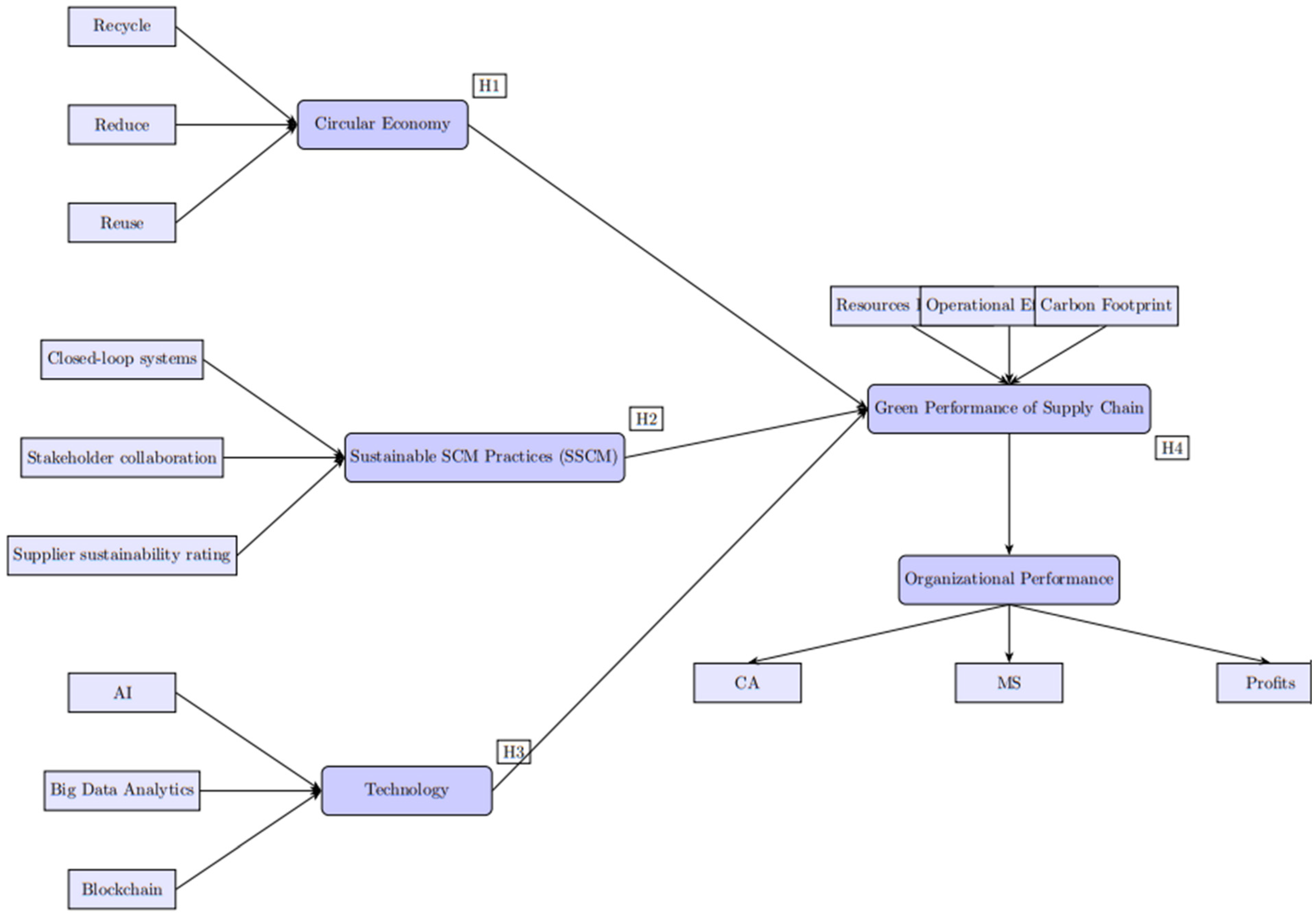
Disclaimer/Publisher’s Note: The statements, opinions and data contained in all publications are solely those of the individual author(s) and contributor(s) and not of MDPI and/or the editor(s). MDPI and/or the editor(s) disclaim responsibility for any injury to people or property resulting from any ideas, methods, instructions or products referred to in the content.

Article Metrics

Citations

Article Access Statistics

Multiple requests from the same IP address are counted as one view.