
Review

Optimizing Biomass Feedstock Logistics Using AI for Integrated Multimodal Transport in Bioenergy and Bioproduct Systems: A Review

Department of Forest Biomaterials, North Carolina State University, Raleigh, NC 27695, USA
*
Author to whom correspondence should be addressed.
Logistics 2026, 10(3), 54; https://doi.org/10.3390/logistics10030054
Submission received: 23 January 2026 / Revised: 24 February 2026 / Accepted: 27 February 2026 / Published: 2 March 2026

Abstract

Background: The constant growth in demand for sustainable energy products and the development of the circular economy have created a critical need for an efficient supply chain for biomass. However, the inherent challenges of biomass make its harvesting, collection, storage, and transport difficult, impacting logistical efficiency and the viability of bioenergy and bioproduct production. This study analyzes how combining artificial intelligence (AI) with multimodal transport can optimize and improve efficiency, as well as reduce costs, in biomass logistics. Methods: The study uses a tiered research framework that encompasses the physical domain (biomass limitations), the structural domain (mathematical modeling for multimodal transport), the intelligence domain (AI-based decision making), and the strategic approach. Results: The outcomes indicate that while truck transport is ideal for short distances, integrating rail and water transport through AI-driven optimization reduces costs and greenhouse gas emissions for long-distance travel. AI technologies, such as digital twins and machine learning, improve demand forecasting, real-time routing, and cargo consolidation, leading to enhanced prediction accuracy for transport costs. Conclusions: The integration of AI and multimodal networks builds resilient and sustainable biomass supply chains. However, full implementation requires addressing data fragmentation and investing in digital infrastructure to enable seamless coordination between supply chain stakeholders.

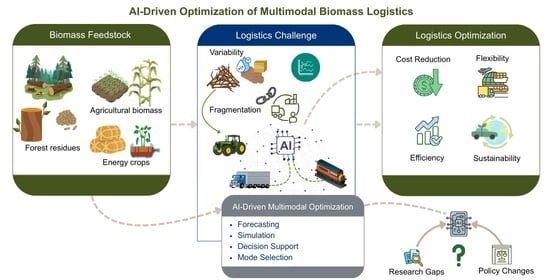
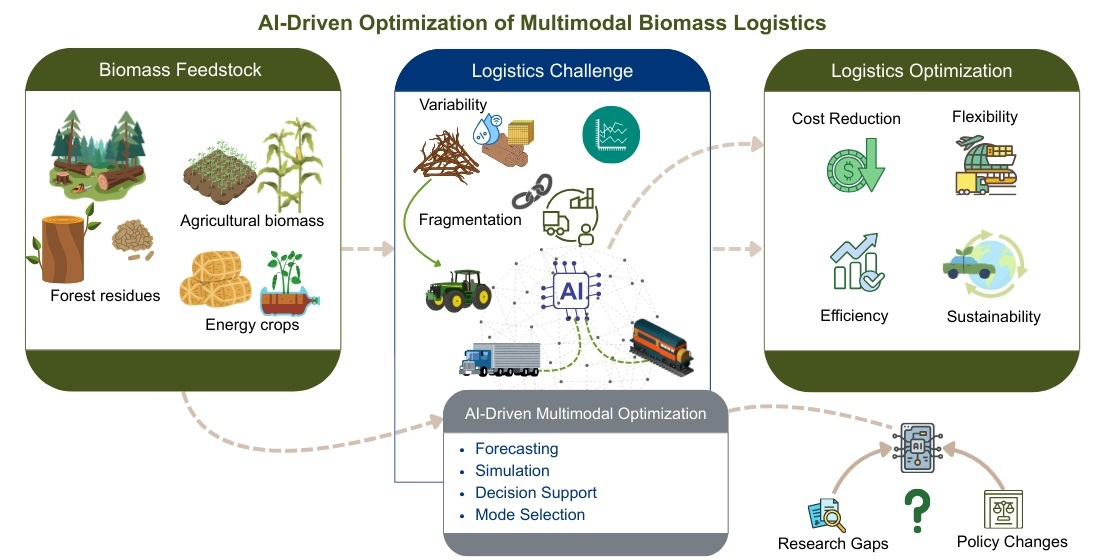
Graphical Abstract

1. Introduction

The expansion of alternative energy sources is fueled by sustainability, the mitigation of short- and long-term environmental impacts, and, most importantly, the economic benefits they provide to society. In the modern context, renewable energy sources, such as solar, wind, geothermal, hydroelectric, and bioenergy, have gained popularity over time and have become viable options for numerous industries and communities. In the United States, the alternative energy sector is a rapidly growing industry. In 2023, 9% of the nation’s total energy consumption was derived from renewable sources. Of this, 60% was biomass energy [1]. Bioenergy production from biomass is one of the most significant applications of the renewable energy sector, with substantial impact and considerable potential for bioeconomic development.
Despite its potential, the biomass supply chain requires continuous optimization, as it governs the management, distribution, and final utilization of biomass products, which directly influences the overall viability of biomass as a renewable energy and bioproduct source. The inherent characteristics of biomass feedstocks, such as moisture content, bulk properties, seasonal availability, and geographic dispersion, directly impact the efficiency, cost-effectiveness, and scalability of the supply chain. To enhance the operational performance and economic feasibility of bioenergy and bioproduct production, it is essential to optimize key processes, including harvest, collection, storage, transportation, and conversion [2].
Among supply chain stages, transportation is one of the critical components of the supply chain; therefore, its optimization offers significant opportunities in the process of improving biomass profitability. Specifically, multimodal transportation, through the combined use of different modes such as rail, road, barge, and, in some cases, pipeline transport, offers flexible route options and improves the efficiency of freight transport from origin to destination [3]. However, the coordination of multiple transport modes introduces additional operational complexity, including routing decisions, scheduling synchronization, capacity allocation, infrastructure constraints, and uncertainty in supply availability [4]. These factors create a highly dynamic decision environment that challenges conventional logistics planning methods.
AI is a viable tool that presents opportunities for optimizing logistics networks, leading to notable improvements in cost reduction and efficiency improvement of supply chain operations. However, alongside its many benefits, there are significant challenges to applying AI in biomass supply chain management. These challenges include data vulnerability, reliance on historical data, and the potential for job losses [5].
Despite advances in logistics research, a significant gap remains in the literature regarding biomass supply chains, which rely primarily on road transport. However, there is limited exploration on how artificial intelligence can optimize the integration of multiple modes of transport. This integration could yield significant improvements in biomass logistics, particularly by addressing the unique physical characteristics of biomass that pose challenges to efficient transportation. This study seeks to fill this gap by combining artificial intelligence-based tools with multimodal transportation approaches.
To address this gap, this study employs a tiered research framework. The first tier focuses on the physical domain, identifying specific biomass limitations such as moisture content and density, as well as the operational dynamics of its logistics. The second tier targets the structural domain, using mathematical models and network design to represent multimodal integration. The third tier focuses on intelligence, classifying AI into functional branches that include interaction, learning, and decision-making to optimize the system. Finally, a fourth tier is dedicated to strategy insights. This tiered approach provides a systematic method for evaluating how AI-based optimization can be used in multimodal systems for biomass logistics (Figure 1).
Accordingly, this review aims to (1) examine the role of AI-based logistics in transport planning through the integration of multimodal networks, (2) investigate how AI can improve and optimize biomass logistics and efficiency, and (3) facilitate informed decision-making in biomass supply chain management.

2. Biomass Feedstock Supply Chains

2.1. Biomass Logistics

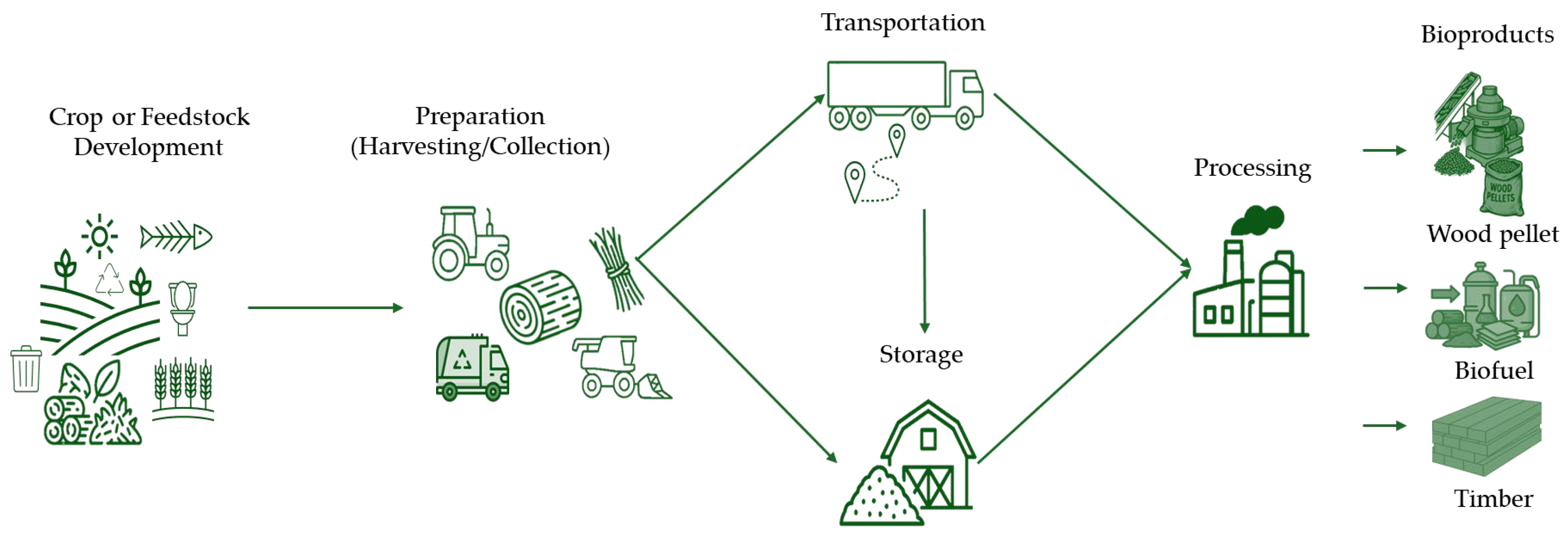
A typical biomass logistics consists of interconnected components (Figure 2), including crop or feedstock development, harvest, collection, transportation, storage, processing, and conversion [3]. Every element is crucial in the process, so any changes within them can significantly affect the cost and availability of biomass and its utilization [6].
The process begins with the establishment of biomass feedstock through planting and maintenance activities, which include site preparation, planting, fertilization, and regular irrigation. However, these activities vary depending on the type of feedstock. For example, logging residue biomass would not need the above activities. Subsequently, some feedstocks, such as energy crops, require harvesting for extraction, and in cases where the biomass comes from agricultural residues, the harvesting process may require additional collection systems [7]. Biomass from agriculture or forestry is characterized by its availability, which is determined by the seasons, making it limited at certain times of the year and abundant at others. Furthermore, increased demand during peak seasons can increase the cost of these resources, so they eventually require long-term storage to ensure their availability [3].
In this context, biomass storage plays a crucial role in maintaining a stable supply and supporting logistics operations across the supply chain. Biomass storage is an essential component in the chain that may be required between post-harvest, between transportation modes, and before processing. Depending on the type of storage, it may incur additional costs; however, it can be genuinely beneficial in reducing biomass moisture, improving availability over time, and providing flexibility in accessing different transportation modes [7].
According to Nunes [3], storage can be divided into covered or open-air warehouses; the choice depends on cost. Open-air warehouses are usually ideal in arid areas, being the most economical option, but they can lead to material losses; the moisture content cannot be controlled, which can cause quality problems. Furthermore, they can cause health problems in biomass related to the risk of fungi or spores and spontaneous ignition. Covered storage can be used to dry biomass, thus providing greater control over environmental conditions. Warehouses can be located near collection sites, in fields, or near roads; similarly, there are intermediate warehouses from which some modes of transport depots move materials to the warehouses of processing plants. Additionally, these warehouses can be owned, public, or subcontracted; these will depend on the costs that biomass-producing companies are willing to assume.
Following storage, transportation represents the next central stage in the biomass supply chain. This stage significantly contributes to the total logistics cost. Implementing this process requires careful planning and coordination, as it often involves moving materials that are highly dispersed, low-density, and low-cost to one or more processing centers [7]. Road transport is the most common method for transporting goods, especially woody biomass. This preference is mainly due to the flexibility that trucks provide in accessing feedstocks across various locations, as the logistics of the biomass industry are typically designed for short distances. However, there is a significant opportunity to incorporate other modes of transport for long-distance deliveries [3], such as rail and water transportation.
Once the biomass reaches the processing facilities, it undergoes various conversion stages aimed at transforming raw material into bioproducts. Biomass processing involves multiple conversion methods, including component separation at the collection site, size reduction, and physical processes like drying [7], and bioconversion or biorefinery.
Biorefinery uses a variety of processes and equipment to convert biomass into fuels, chemicals, and energy, as described by Chakraborty [8]. Conversion processes can be classified as: (1) Physical, which includes mechanical extraction, biomass briquetting, or distillation; (2) Chemical, it involves techniques such as hydrolysis, solvent extraction, and superficial biomass conversion that extracts primary and secondary metabolites, cellulose, hemicelluloses, and lignin; (3) Biological, it encompasses anaerobic digestion, fermentation, and enzymatic conversion, resulting in the production of methane (CH4), biogas, ethanol, and amino acids; and (4) Thermochemical, it includes processes such as liquefaction, pyrolysis, gasification, and combustion, which produce products such as heavy oil, biooil, Fischer-Tropsch (FT) oil, and hydrogen [8].

2.2. Logistics Challenges in Biomass Transport

Nunes [3] stated in their research that biomass encounters several significant challenges, especially in its supply chain. Typically, large quantities of low-cost, high-volume, and low-density biomass need to be transported from various collection points to centralized processing plants. Transportation costs can differ based on the distance and time between these locations. The distance traveled on each trip influences fuel consumption costs, while the length of the trip affects expenses related to depreciation, insurance, maintenance, and other factors. Key biomass properties that significantly impact transportation efficiency and costs include bulk density and moisture content, with the latter being a vital factor in the material’s degradation process [9].
Among these factors, bulk density plays a critical role in determining the overall efficiency of biomass logistics. It refers to the relationship between the mass of biomass particles and the space they occupy, which ultimately determines the volume of the biomass. This property can vary significantly depending on factors such as particle size, moisture content, and shape, which differ among various types of biomass. Understanding bulk density is crucial as it impacts transportation and storage costs. Furthermore, for solid biofuels, bulk density can also affect their durability [9].
In addition to bulk density, moisture content is another essential property that directly influences biomass quality, transport efficiency, and storage stability. It refers to the amount of water present in biomass cell walls and dead cells. This component can significantly affect the quality and durability of solid biomass. Moisture content is classified into two categories: intrinsic, associated with the natural moisture present in the materials, and extrinsic, related to moisture from environmental conditions [9].

2.3. Transportation Modes

Freight transportation in the United States moved a total of 20.1 billion tons of goods in 2023, which were valued at $18.7 trillion. Of this total value, 64.5% was transported by truck, making it the most widely used mode of transportation. Following trucks, pipelines accounted for 20% of the total, while rail transport contributed 7.9%, and water transport made up 4% [10].
Since the development level of each transportation mode significantly impacts the progress of multimodal networks, understanding their characteristics and current state in the United States is essential. In particular, the U.S. rail network plays a vital role in long-distance freight transport, forming one of the most extensive systems worldwide. The country boasts a comprehensive rail network, classified by the Department of Transportation into Class I lines, which extend over 225,000 km (140,000 miles). Class II and III lines are shorter and serve to connect the origin and destination with the main lines. This classification also relates to the type of carrier that operates those lines [11]. In 2022, according to STCC code 24177, relating to firewood, hog fuel, or cordwood, a total of 3.2 million tons were transported for heating, indicating an average of 80 tons per carload, and each train unit consists of 125 cars [11].
While rail networks play a central role in long-distance and bulk freight transport, road transportation remains the most dominant and versatile mode, serving as the primary link between production sites, storage facilities, and processing plants. Due to its high adaptability and fast delivery capabilities, trucking or road transportation is the most used for various distances and products. It is especially dominant for distances under 100 miles, accounting for 75% of the total tons transported per mile in short-distance shipping [10]. Biomass transportation reflects this national trend. Furthermore, research suggests that, to optimize vehicle use for same-day round trips, the ideal travel distance should be less than 400 km. This recommendation does not account for the vehicle carrying cargo on its return trip [11].
Beyond road and rail systems, water transportation represents another essential component of the U.S. multimodal network, particularly for long-distance and bulk commodity movement. Water transportation is mainly used for international shipments of goods. By 2022, the United States had 8500 facilities equipped with infrastructure to operate on major rivers [10]. Barges are commonly used in river transport due to their lightweight and lower load capacity, enabling them to navigate shallow waters. Some of the most frequently transported products on these vessels include coal, chemicals, and oil. Additionally, during the harvest season, they are used to transport grains and other agricultural products [10].
While water transportation efficiently supports bulk freight and international trade, pipeline infrastructure provides an alternative mode focused on the steady and cost-effective transport of liquid and gaseous commodities. In the United States, pipeline systems extend across 48 states, with the highest concentration found in Louisiana, Oklahoma, Texas, and the Appalachian region. These systems transport natural gas and oil independently, linking production sites to refineries and distribution centers [10]. To adapt this mode of transportation for biomass, a previous study recommends creating sludge by mixing biomass with water. While this approach presents significant challenges for building industrial-scale infrastructure, it may also offer potential cost savings when transporting large volumes of biomass [12].

3. Multimodal Transport Networks

3.1. Components of Multimodal Logistics Networks

Considering the distinctive characteristics and capabilities of each transportation mode, the integration of these systems through multimodal logistics emerges as a strategic solution to enhance overall efficiency and sustainability within supply chains. The increasing complexity of global and local supply chains, driven by the need for sustainable and cost-effective solutions, has made multimodal logistics integration an essential alternative for transportation and supply chain management. Unlike unimodal systems that depend on a single mode of transport, multimodal logistics effectively combines the advantages of various transportation methods, such as road, rail, ocean, and river transport. This integrated approach offers greater flexibility, efficiency, and resilience [13,14].
Alan Kurniawan [13] emphasizes that the integration of multimodal networks allows companies to optimize their routes and operating costs. Furthermore, this integration significantly reduces greenhouse gas emissions and ensures supply chain continuity, even during disruptions caused by natural disasters, pandemics, or infrastructure issues. Consequently, multimodal transport has been considered a critical step in transforming supply chains into sustainable, resilient, and efficient systems. Likewise, the incorporation of digital platforms and real-time data systems improves the coordination and responsiveness of these types of networks.
A comprehensive understanding of the structure and essential components of multimodal logistics networks would facilitate the continuous movement of goods across various transportation modes [15]. The key components of multimodal logistics networks identified include:
Nodes and Links: Nodes represent locations in the network, such as collection points, logistics centers, transport terminals, and intermodal transfer points [16]. The links represent the connections between nodes, each associated with a specific mode of transport (e.g., road, rail, barge) [16]. Intermodal terminals are essential hubs where mode switching occurs, enabling the transfer of goods between various transportation modes.
Subnetworks: Each mode of transport (road, rail, water, and air) creates a subdivision within the overall network, composed of its nodes and links. The core network, usually the road network, is typically denser, while secondary modes, such as rail and barges, connect specific nodes. The integration of these subnetworks is crucial for the efficiency of multimodal operations [16].
Intermodal Terminals: These are specialized facilities that support the transfer of freight between different transportation modes. Their location and capacity are critical factors influencing network efficiency and are often key focuses for infrastructure investment and planning [16].
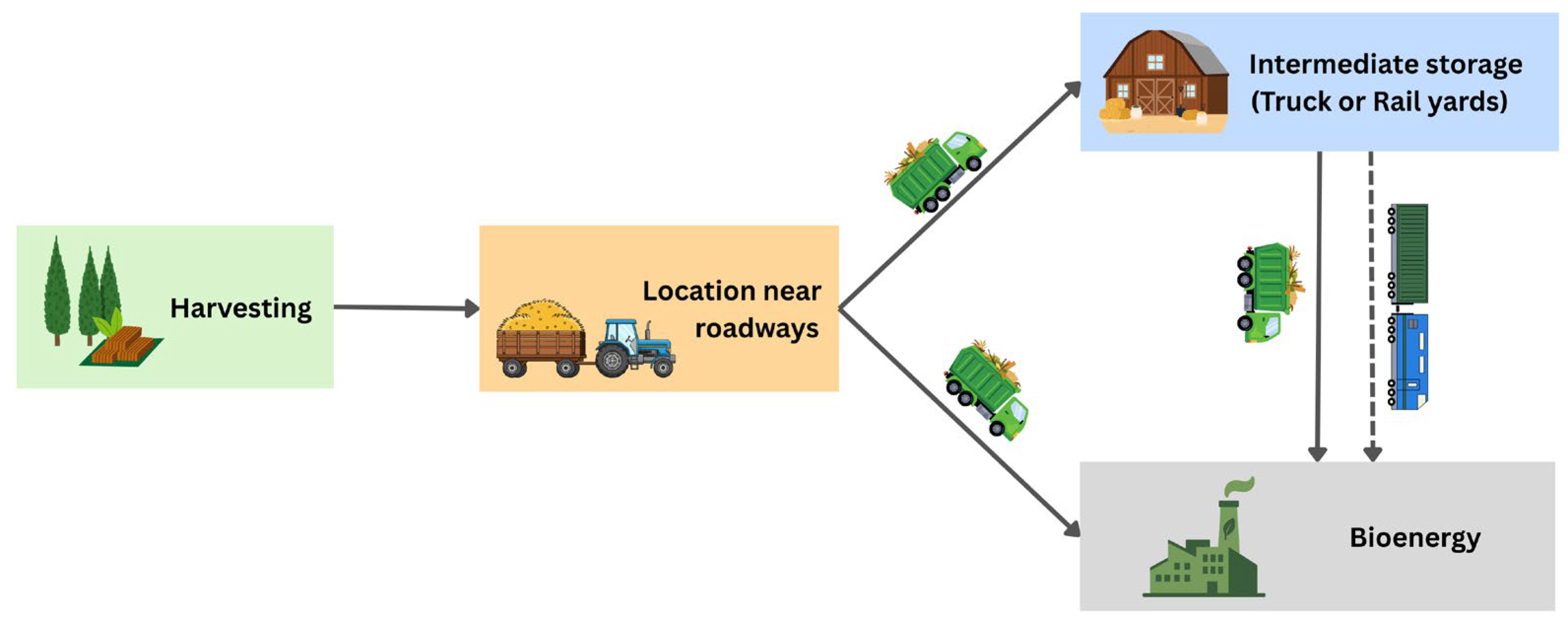
Multimodal structures for forest biomass logistics typically describe the initial phase as the transportation of harvested material to locations near roads (Figure 3). Once at these sites, the biomass is delivered directly to biorefineries by truck, or it may be transported to intermediate storage facilities associated with biomass, log yards, or railways. From these intermediate locations, the biomass is subsequently shipped to biorefineries [17].
This network structure is commonly used for different types of feedstocks, necessitating some adjustments at the beginning of the process. For instance, certain materials come from waste produced by other methods, which means that traditional harvesting techniques may not be appropriate for these materials. Additionally, the results can differ based on whether the biomass is utilized to create bioproducts or to generate bioenergy.

3.2. Mathematical Programming for Multimodal Networks

The development of a structured supply chain design involves making important decisions about the number, size, and location of supply chain facilities. A well-organized structure has a significant impact on operational costs, overall performance, and efficiency. Additionally, the design entails tactical decisions, such as establishing policies for distribution, transportation, and inventory management, as well as operational decisions that focus on meeting demand [18].
Mathematical models have been extensively used for network design and optimization. These models consider various factors, including the optimal locations for processing facilities, warehouses, and distribution centers, as well as vehicle routing and demand management. The primary objectives of these models are to minimize costs and environmental impacts, particularly in terms of the delivery costs of feedstock [19].
In multimodal transport, various mathematical models are used to plan, optimize, and evaluate logistics networks that incorporate different transport modes, including Linear Programming (LP), Integer Programming (IP), Mixed Integer Linear Programming (MILP), Simulation Models, Stochastic Optimization models, Agent-Based Models (ABM), as well as heuristics and Metaheuristics, in addition to multi-objective models (Table 1).

3.3. Operational Constraints and Advantages

Multimodal transport, in contrast to unimodal transport, presents various challenges due to the need for coordination between different modes and the operations involved in transferring goods. These activities require comprehensive planning to evaluate the capacity of each mode, establish schedules, optimize costs, and ensure timely delivery [31].
The decision-making challenges in multimodal transport can be categorized into three major areas: operational, strategic, and tactical [32]. Operational matters pertain to the daily activities involved in executing the transport process. Strategic problems involve resource planning, including infrastructure development. Finally, tactical issues focus on the optimal use of existing resources, considering factors such as capacity, response times, frequency, and transportation modes [32].
To successfully implement multimodal transport, it is critical to consider the categories above and their relationship to the barriers that arise during the process. These barriers include limited operating hours at terminals, low vehicle throughput, insufficient cargo capacity, outdated freight transport technologies, inadequate traceability systems, and potential cargo damage during transfers. Furthermore, network challenges arise from poor infrastructure, a shortage of freight terminals, outdated fleets (particularly in rail transport), long transit times, and ineffective intermodal communication. From a managerial perspective, limited government support, ineffective pricing policies, and a lack of incentives to invest in infrastructure and technology can further hamper system integration. Overcoming these obstacles is essential to improving the effectiveness and reliability of multimodal logistics [14].
Multimodal logistics provides significant economic and environmental benefits, with the strengths of multiple transportation modes, to develop a sustainable and efficient supply chain. In financial terms, it enables cost optimization through improved efficiency, as it seeks to consolidate cargo for better vehicle utilization, particularly by integrating modes such as rail and inland waterways, which are more cost-effective for long-distance freight transport compared to road transport [33]. Additionally, multimodal systems enhance reliability and flexibility, enabling businesses to adapt easily to disruptions and changing demand patterns, ultimately reducing inventory and operating costs [13].
From an environmental viewpoint, multimodal logistics helps reduce emissions, air pollution, and energy consumption by transferring freight from higher-emission modes, such as trucks, to cleaner alternatives like rail and water transport [13]. This mode of transport also supports the climate goals established by various countries and international organizations in recent years. Reducing vehicle travel, consolidating cargo, optimizing shipping routes, and transferring cargo to modes with higher transport capacity can effectively decrease emissions and resource consumption [34].

4. AI Applications in Logistics Optimization

4.1. Mathematical Modeling and Algorithmic Framework

Building on the multimodal network structure outlined earlier, this section examines the AI-driven methodologies needed to optimize such complex systems. Because biomass networks involve a large number of variables and constraints, they are usually classified as large-scale Mixed-Integer Linear Programming (MILP) problems, often further described as stochastic or robust optimization models due to the numerous uncertainties and dynamic constraints (seasonality, humidity, and transportation availability) involved in the design of the biomass supply chain [35]. Within this context, mathematical optimization provides a structured framework to simultaneously capture infrastructure decisions, transportation flows, and multimodal coordination while accounting for these system complexities [36].
To quantify the benefits of mathematical modeling in optimizing multimodal biomass systems, MILP offers a practical approach for managing discrete decisions (such as opening a distribution center) and continuous flows (such as the quantity of biomass transported) [37]. Accordingly, and following the work developed by Zhang [17] and Zarejeddi [19], the total multimodal transportation cost (Z) can be represented as:
Z = m i n i I j J m M ( C i j m · d i j · x i j m ) + k K ( F k · y k ) + h H ( T h · q h )  
where
  • x i j m : The volume of biomass transported from origin i to destination j via mode m.
  • C i j m : Variable cost per unit of biomass per kilometer (influenced by fuel and mode efficiency).
  • d i j : The network distance between nodes.
  • F k : Fixed annual investment and operational cost for facility k.
  • y k : A binary variable ( y     0 , 1 ) indicating if facility k is active
  • T h : Transshipment cost per unit at multimodal hub h.
  • Q h :   Total throughput of biomass handled at hub h.
While the MILP model in Equation (1) provides the theoretical objective, solving problems of this magnitude involves a significant number of computational resources and is often classified as an NP-hard problem [38]. Consequently, researchers employ metaheuristic algorithms, such as the genetic algorithm (GA), to find near-optimal solutions within reasonable timeframes [28].
According to Obeidat and Puiul [39], algorithms such as GAs address optimization problems through a multi-step iterative process. When applied to multimodal logistics planning, this process begins with an initial set of feasible logistical configurations, each representing a distinct combination of routes, transportation modes (rail, truck), and facility locations. Using a fitness evaluation based on the objective function Z defined in Equation (1), the algorithm assesses each candidate solution, assigning higher rankings to those that achieve lower total costs.
Subsequently, following the principle of “survival of the fittest,” the most cost-effective configurations are selected as parent solutions for the next generation, while inefficient routes are eliminated. A crossover (recombination) stage then combines features from high-performing solutions, for example, integrating an efficient rail segment from one candidate solution with an optimized terminal handling process from another to generate potentially superior offspring.
Finally, mutation is introduced to enhance system resilience and prevent convergence to local optima. At this stage, controlled random variations are incorporated, such as unexpected facility closures or sudden increases in fuel prices. This evolutionary optimization mechanism strengthens model robustness and enables the logistics network to remain adaptable under the uncertainty conditions described by Zarejeddi et al. (2025) [19,39].

4.2. AI Technologies for Logistics

AI is associated with the ability of machines to solve problems like humans. The term was first introduced by John McCarthy in 1955, but its complete conceptualization did not occur until the 1960s [40]. Initially, AI did not generate much interest; however, its development and growth in recent years have been exponential and outstanding [40]. AI employs algorithms to perform tasks quickly and efficiently, addressing challenges across various fields [41].
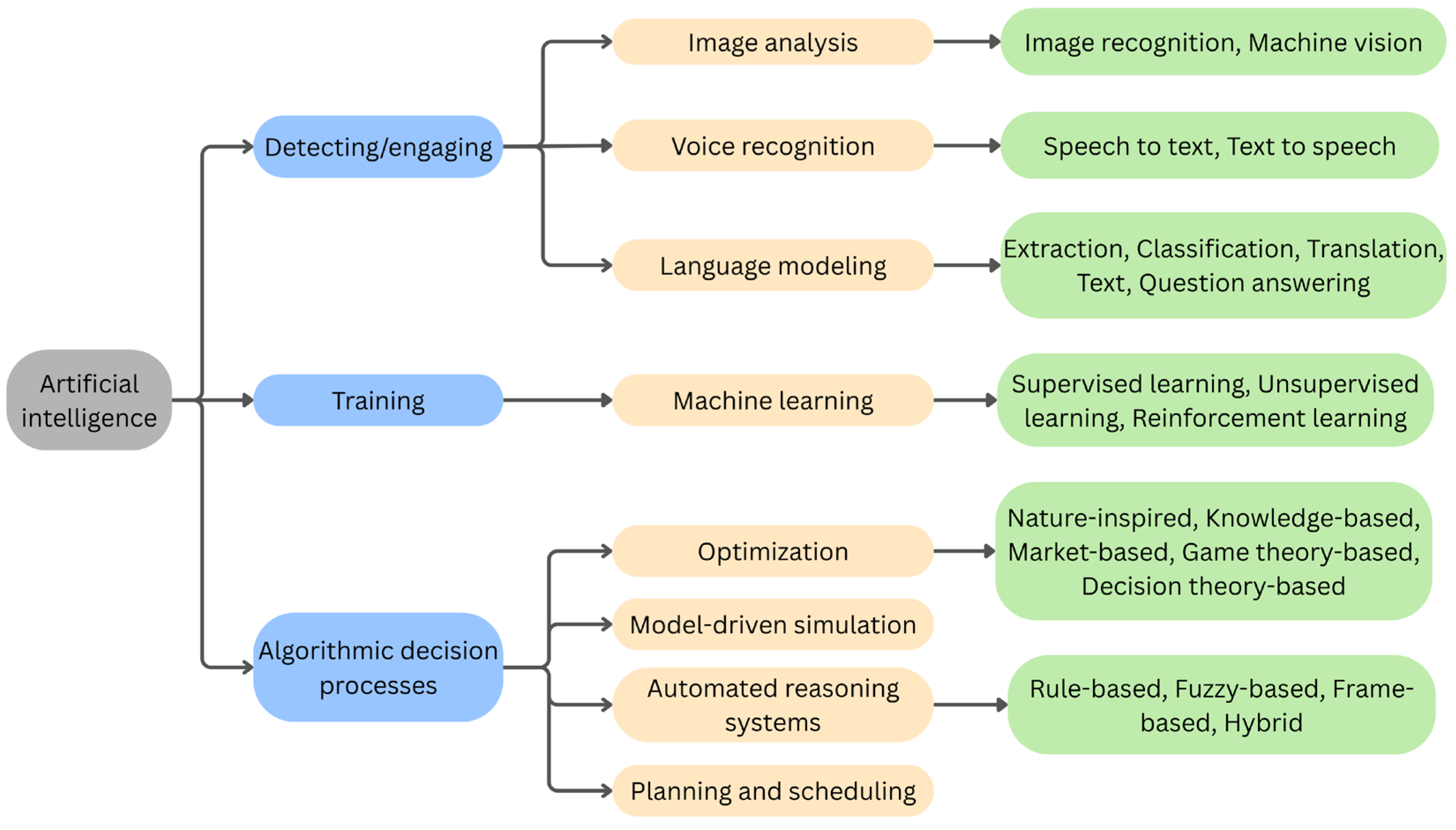
According to the compilation by M. Pournader [40], AI can be divided into three branches or subcategories based on its functions within the system (Figure 4). The first group is defined by how the system interacts with resources such as text, audio, and video, while the second group pertains to the types of resources used for learning from data. The third category is focused on the various methods employed for decision-making, planning, simulation, and optimization. Overall, the primary purpose of these systems is to accurately interpret data, learn from it, and utilize it to achieve specific objectives [40].
This framework suggests that AI has the potential to solve, optimize, and enhance planning across various fields, including engineering, mathematics, business, and science. In logistics, for instance, this technology can effectively tackle common issues such as demand planning, transportation optimization, and inventory management [41]. For this reason, interest in using AI to improve logistics processes has grown over time, particularly to achieve sustainability goals and facilitate informed decision-making [42]. Logistics automation through AI encompasses various technologies and applications designed to optimize and enhance product supply chains. Some of these are listed in Table 2.

4.3. Forecasting Biomass Availability

AI currently offers more efficient alternatives for predicting biomass product demand and availability over time. Some of the models frequently used include machine learning, hybrid models, reinforcement learning, and deep learning methodologies, which have the powerful ability to process and analyze large amounts of data, real-time and historical, and detect patterns to generate more accurate demand predictions [45].
Regarding forecasting biomass availability, AI models commonly integrate satellite remote sensing data to identify biomass distribution, growth information, seasonal weather conditions, and soil, yield, among other data, enabling in-depth analysis, prediction, and estimation of biomass availability over time [54]. For these applications, algorithms such as artificial neural networks (ANNs), random forests (RFs), support vector machines (SVMs), and intelligent decision support systems (IDSS) are frequently used to predict biomass yield at regional and local scales more accurately [54,55]. Numerous studies have shown that RF and SVM are effective for biomass yield estimation and classification using image data. At the same time, ANN architectures are excellent for modeling multi-source datasets for biomass prediction, and IDSS are widely used in agriculture to determine when to plant, fertilize, and harvest [54]. This integration enables accurate, scalable, and timely prediction of biomass availability for applications in bioenergy, agriculture, and environmental management.
On the demand side, AI helps forecast biomass consumption by analyzing historical and real-time data on market trends, seasonal fluctuations, and other aspects, allowing it to predict demand fluctuations with high accuracy [56].

4.4. Multimodal Logistics of Bioenergy and Bioproducts

A cellulosic ethanol supply chain using multimodal transportation in a case study in California indicates that feedstock seasonality posed significant logistical constraints [57]. The integrated truck, railcar, and unit train transportation modes within an optimized network that included specific locations, transshipment points, biorefineries, and terminal capacities. Their findings also suggest that truck transportation is more suitable for short-distance biomass collection, whereas rail becomes more cost-effective for long-distance hauling. The multimodal system offered significantly lower costs compared to truck-only options by leveraging transshipment centers and rail terminals, allowing producers to accommodate seasonal variations in biomass availability and distribution needs [57].
A study by Zhang [17] on the production of cellulosic ethanol from woody biomass in Michigan combined trucking and rail transportation to ensure efficient delivery of biomass over long distances. The incorporation of multimodal transportation allowed the system to achieve equilibrium cost, reliability, and sustainability: trucks handled harvesting from forests to regional depots, while rail handled bulk delivery to biorefineries. Their model highlighted how dividing transportation tasks by distance and volume optimized costs and reduced the environmental footprint of the bioenergy supply chain.
Marufuzzaman and Ekşioğlu [23] designed a reliable and cost-effective biomass supply network for biofuel distribution in the southeastern United States. This system integrates the use of river ports, seaports, and rail yards for biomass transport by rail and barge between multimodal facilities. Furthermore, the design integrates fluctuations in biomass availability associated with seasonal changes and extraordinary events, such as natural disasters like floods, hurricanes, or droughts. Under conditions of uncertainty, their model dynamically adjusts short- and medium-term supply chain decisions, resulting in cost savings.
Wesolowska [58] developed a modular model based on artificial neural networks (ANNs) to optimize biomass supply management at a combined heat and power (CHP) plant in Poland. This model facilitates supplier selection based on various factors, such as biomass type, unit price, and annual demand. Furthermore, it optimizes transport routes, facilitates real-time decision-making, improves profitability, and strengthens supply chain resilience. Essentially, the model learns to correlate variables such as biomass characteristics, supplier location, and delivery distances to identify the most efficient and lowest-cost delivery options, thereby improving operational forecasting and logistics management [58].
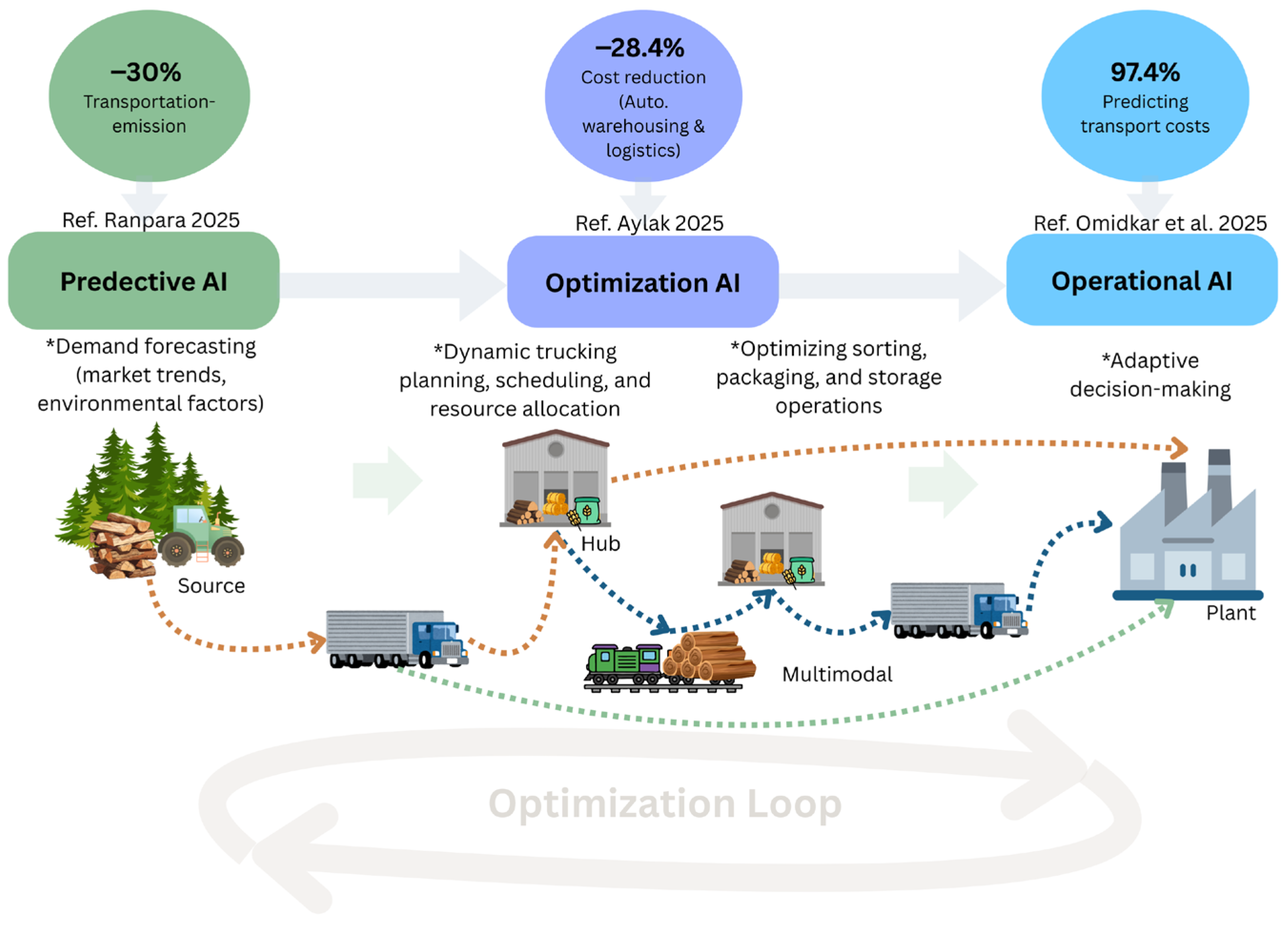
Omidkar [59] employed machine learning algorithms, including random forests and artificial neural networks, to evaluate their effectiveness in predicting biomass transport costs when compared to traditional regression models. The main goal of their study was to enhance cost prediction, which would improve operational efficiency, optimize logistics, and reduce production costs in biorefineries. The researchers analyzed data from various scenarios to estimate the costs associated with transporting biomass by road. They collected and categorized transport cost data from previous studies and European Commission sources. This dataset was split into two parts: 80% was used for training the models, while the lasting 20% was reserved for evaluating their performance. Using this methodology, the machine learning-based models achieved more accurate predictions of transport costs. For instance, the random forests model reached an R2 value of 97.4% on the training data, the neural network attained 88.45%, and the traditional regression model scored 71.34% [59].

4.5. Multimodal Transport Planning and Scheduling

Choosing an appropriate transportation mode is essential in the distribution of any product, including biomass, because it significantly influences delivery quality, operational costs, and greenhouse gas emissions. Mode selection depends on several factors, such as industry type, the physical characteristics of the product, shipment size and value, carrier location, and the distance and duration of the trip. Additional considerations include freight rates, service reliability, and the availability of infrastructure such as roads, rail networks, transshipment facilities, and storage sites. Logistic regression and related statistical models are often used to evaluate these variables and determine the most suitable transport mode [60].
In trucking operations, AI has proven to be a powerful tool for improving scheduling and minimizing travel times by recalculating routes based on real-time information, including traffic conditions, weather events, and unexpected disruptions [61]. These AI-driven optimizations help reduce fuel consumption and increase the overall efficiency of freight operations [62]. Machine learning and deep learning algorithms expand the accuracy of these predictions, supporting informed decision-making and more efficient management of transport fleets [61]. AI integration also benefits cargo consolidation by improving operational planning and coordination between cargo-generating companies and carriers. This collaboration enables vehicles to return with full loads, improving fleet utilization, reducing costs, and lowering emissions by minimizing empty or underutilized trips [63].
In the biomass sector specifically, Acuna [64] emphasized that efficient logistics depend heavily on optimized truck scheduling and dispatching to minimize waiting times during unloading and processing. Technologies such as GPS, mobile communication tools, and in-vehicle computers support continuous coordination between carriers and contractors, enabling rapid deployment of transport fleets to locations with the highest demand. Such technological integration enhances fleet productivity and reduces operational delays. Furthermore, collaboration between log haulers and chip vans that transport sawmill residues, particularly through shared trailer use, helps shorten transport distances and reduce overall costs [64]. Together, these strategies demonstrate how AI advancements and improved coordination mechanisms can significantly strengthen multimodal transport planning and scheduling within the biomass supply chain.
A logistics network encompasses interactions among suppliers, manufacturers, retailers, wholesalers, transportation companies, warehouses, and other key actors who collectively ensure that products reach end users. Effective network design is therefore for achieving desired performance outcomes within specified timeframes and under optimal conditions. Traditionally, network design methods rely on mathematical models and algorithms, such as mathematical programming. However, these methods can be complex, often requiring manual intervention and substantial computational resources. For this reason, AI has become a valuable tool, offering alternative methods for network optimization that enhance agility and flexibility, allowing systems to adapt more readily to fluctuations [65].
In addition, it is crucial to follow a series of steps during the delivery route planning process, taking into account factors such as time, distance, route conditions, and traffic. The first step involves converting spatial geographic information into data that a computer can process and analyze. Next, it is essential to establish the origin and destination points, considering restrictions such as traffic congestion. The third step involves identifying the optimal routes between these points using algorithms and mapping information. In the fourth step, the most appropriate route is selected based on the information gathered in the previous steps, prioritizing factors such as time, traffic conditions, distance, and user preferences. Finally, the system uses real-time updates to adjust and recalculate the optimal route based on current conditions [65].

4.6. Digital Twins for Multimodal Logistics Optimization

The challenges of multimodal logistics highlight the importance of using digital and technological tools to improve real-time process control, coordination, and optimization. For example, digital twins (DTs), particularly digital supply chain twins (DSCTs), are excellent alternatives for simulating processes and identifying more efficient ways to optimize multimodal logistics [53].
In logistics, a digital twin of the DSCT models the entire supply chain, enabling real-time monitoring, predictive analytics, and simulation of operational changes. Unlike traditional transportation management systems (TMSs) or enterprise resource planning (ERP) systems, which can only manage and optimize the process locally, DSCTs allow for simulations with external stakeholders involving different hypothetical scenarios, facilitating proactive planning and appropriate decision-making under the conditions posed by multimodal networks [53]. To enhance the capability of digital twins receiving real-time information on transportation chain operations, it is essential to incorporate information technologies such as advanced sensor networks, GPS data, artificial intelligence, and big data analytics. These tools provide the twin with sufficient process information to help simulate disruptive events, create scenarios under different conditions, identify strategies, and increase supply chain flexibility and resilience [66].
An example of the application of this technology is a technical framework modeling by Li X [66], consisting of (1) incorporated use of the Chat-GPT, application programming interface (API), and local instances of large language models (LLM) through the Python Ollama framework for creation of a chatbot-based user interface that facilitates the interaction of all types of users with the digital twin; (2) using the Python tool to create a model based on statistical, mathematical, machine learning algorithms, domain simulations, and optimization tools to equip it with self-learning, reasoning, and self-organization skills for problem-solving; (3) a knowledge graph that is incorporated and stored in a database with vector storage capabilities with all the scientific, accurate, and personalized information essential for decision-making; and (4) a framework that uses adaptive web services that allow it to interact with external resources. The purpose of the model is to perform specialized research tasks on simulation and analysis results to generate answers within a statistical framework.
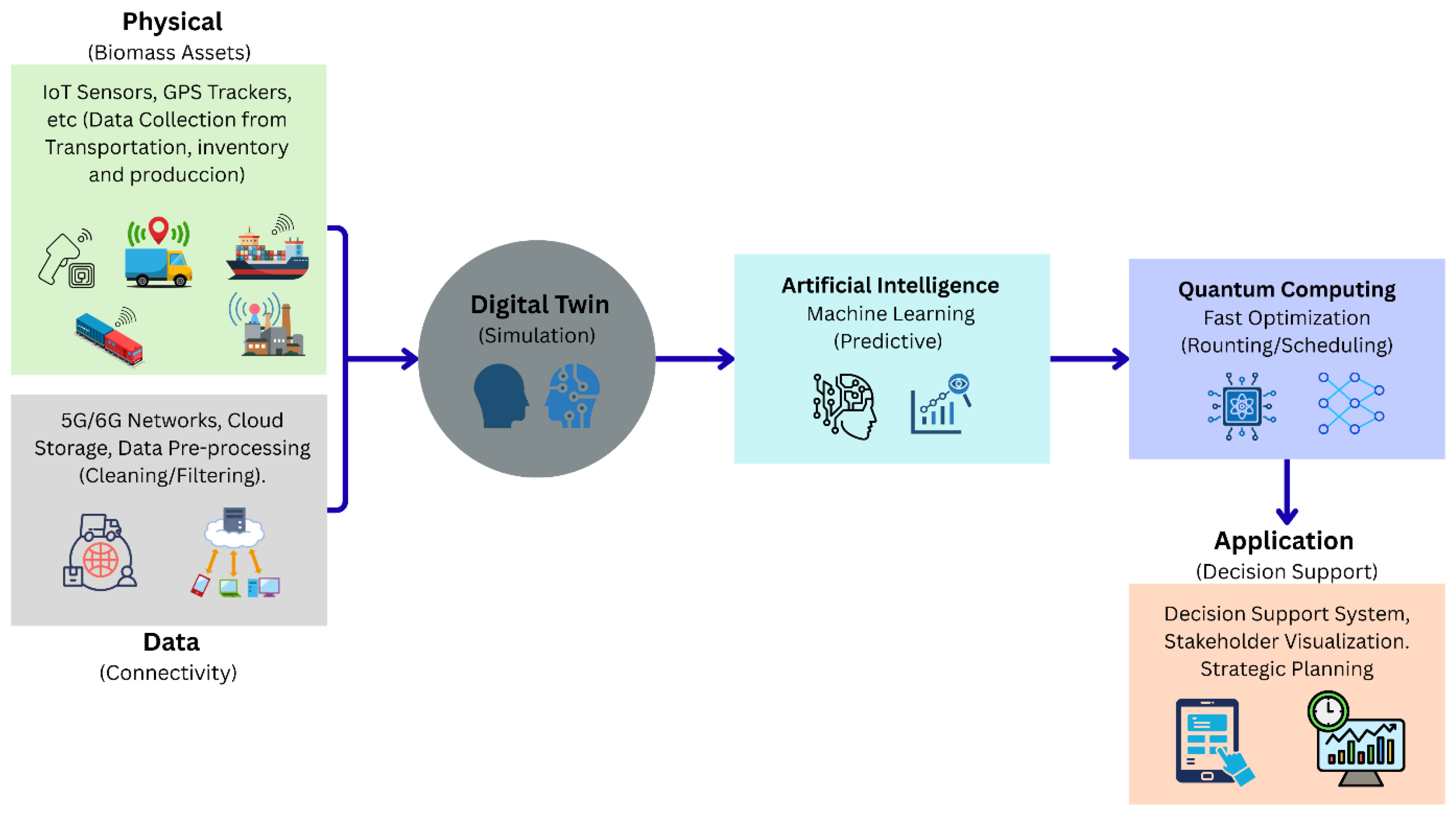
Digital twins serve as a powerful simulation and monitoring tool for optimizing processes, and they can significantly enhance multimodal biomass logistics. With the integration of AI, digital twins can move beyond traditional simulations, which often take too long to process information and identify optimal scenarios. Instead, they leverage rapid learning from historical data alongside real-time data acquisition to generate more accurate predictions that adapt to changing real-world conditions [67]. Furthermore, the incorporation of quantum computing, due to its ability to perform simultaneous calculations, allows it to solve complex problems at speeds significantly faster than traditional computers [68,69]. The complexity of multimodal biomass logistics and the challenges faced by classical computing in combinatorial optimization problems, such as dynamic vehicle routing (VRP), which involves the dynamic use of rail, road, and sea routes, require the integration of these advanced technologies [70]. The combined application of these three elements allows the rapid and efficient use of live data streams to simulate various scenarios under multiple variables and conditions, enabling timely analysis and better decision-making [71]. To guide the practical deployment of this integrated approach, Figure 5 illustrates a step-by-step implementation framework.

5. Discussion

Although AI has great potential to improve the management of biomass logistics, several challenges need to be addressed. These challenges include the significant initial investment costs associated with technology adoption and specialized workforce training, as well as the need for robust and accessible digital infrastructures, particularly in remote harvesting regions where network connectivity is often limited. Additionally, ethical and social concerns arise, as the implementation of these technologies may result in job displacement, potentially affecting communities engaged throughout the biomass supply chain [72].
Beyond the economic and social barriers, technical challenges always emerge, particularly those related to data quality. One of the first obstacles in implementing AI technologies is that data is often scattered across different sources and may be incomplete, with errors or exhibit inconsistencies [56]. Some associated data quality problems may include aspects such as manual data entry, inconsistent formats, and poor interoperability among these data management systems including Enterprise Resource Planning (ERP), Transportation Management System (TMS), Warehouse Management System (WMS), Geographic Information System (GIS), and Internet of Things (IoT) systems, making it challenging to train AI models, implement real-time monitoring, and make predictions. These data-quality issues are often rooted in the constraints of legacy enterprise platforms, which were not built for real-time data exchange or advanced analytics. The IoT based data streams can help intensify these interoperability issues by introducing continuous, device-generated information that traditional systems struggle to process efficiently.
ERP systems are software solutions designed to provide businesses with a platform for managing processes such as accounting, purchasing, sales, warehouse management, and supply chain operations. However, due to their rigid structure, these systems often require extensive customization to meet the specific needs of individual companies, making implementation complex and resource intensive. In addition, traditional ERP platforms have limited data analytics capabilities and struggle to process information in real time. Emerging AI technologies, such as machine learning and natural language processing, help overcome these limitations by enabling predictive analytics, intelligent automation, and adaptive interfaces. In biomass supply chain management, AI-enhanced ERPs improve biomass demand forecasting, optimize inventory levels, and support more efficient distribution and trucking or fleet management [73].
TMSs monitor and control freight operations by integrating with ERP systems to manage transportation data, optimize routes and loads, and support carrier selection. With advances in smart logistics, Intelligent Transportation Systems (ITSs) have further expanded these capabilities by using real-time data from IoT sensors to improve traffic management, fleet utilization, and smart infrastructure [74]. ITSs also help reduce environmental impacts, delays, and accidents while strengthening communication across the supply chain [74,75]. The incorporation of machine learning enables more effective use of collected data, enhancing prediction accuracy, planning efficiency, and pattern detection [74]. In multimodal transport, ITSs provide improved information flows and coordination among stakeholders throughout the network [75].
WMSs are those responsible for managing, controlling, and tracking inventory, order picking, packaging, and the location of products within warehouses [39]. However, rising demand variability has exposed their limitations: they are rigid, require manual adjustments to handle fluctuations, lack real-time adaptability, and integrate poorly with systems such as ERP or TMSs. They also cannot predict demand or optimize warehouse operations. Integrating AI, particularly machine learning, addresses these challenges by enabling real-time responsiveness, predictive capabilities, and improved optimization, making warehouse management more flexible and efficient [43].
GIS has long been a conventional geospatial tool used to collect, process, and analyze spatial data from Earth-orbiting satellites. GIS is often employed to visualize geographic locations, identify spatial patterns, and monitor environmental changes or phenomena over time [76]. In biomass logistics, GIS facilitates feedstock establishment, resource supply management, plant or facility location planning, feedstock type identification, and mapping of other potentially available resources. All this information enables a comprehensive analysis of the effectiveness and viability of each type of biomass for bioproducts [77]. Incorporating AI into GIS greatly enhances the speed of data interpretation and decision-making. The combination of machine learning and advanced geospatial learning facilitates improved classification, detection, and analysis of spatial information [78]. Furthermore, this combination enables real-time dynamic routing in multimodal transport through continuous updating of geospatial data based on live traffic and weather conditions.
IoT in logistics refers to an interconnected system of sensors, devices, and connectivity modules integrated into vehicles and infrastructure to monitor transportation in real time. These systems collect data on location, speed, fuel use, engine performance, load capacity, and cargo conditions such as temperature and humidity, while detecting unexpected events during transport [62]. The implementation of these technologies improves multimodal transportation by enhancing traceability, strengthening connectivity between transport modes, and enabling more efficient scheduling, monitoring, and forecasting. It also supports adaptive decision-making in response to operational disruptions [13]. In biomass logistics, IoT increases operational efficiency and reduces environmental risks to feedstocks such as forest residues and woody energy crops. Sensors can detect pests, diseases, and extreme events like wildfires. When combined with drones and AI, IoT enables real-time assessment of forest conditions and supports monitoring of biomass harvesting and transportation, even in remote areas [72,79]. The role of AI, when integrated with these technologies, is to act as the “brain” that transforms the received data into optimized operations. As Raman and Selvaraj [80] highlight, the combination of AI and IoT creates a structured framework where continuous monitoring (IoT) feeds predictive analytics (AI), enabling optimized process management and real-time decision-making. This distinction is crucial: while IoT provides data for monitoring and quality control, AI leverages this data to ensure system-wide improvements and supply chain resilience [80]. Therefore, the transition from simple IoT-based monitoring to integrated logistics with AI enables companies to overcome traditional operational barriers and adapt to volatile supply chain conditions [81]. Despite these advances across ERP, TMS, WMS, GIS, and IoT platforms, significant challenges remain regarding interoperability and how digital systems share information across the supply chain. This factor remains a primary barrier to full AI-infrastructure integration.
In addition to technical integration, another important aspect to consider is the interpretation of the results. The main stakeholders involved in biomass logistics include biomass producers, logistics managers, fleet operators, and investors in biorefineries. These stakeholders not only need optimized results but also transparency to build trust in the automated recommendations. As the complexity of multimodal nodes increases, the use of explainable artificial intelligence (XAI) becomes essential to clarify the logic underlying AI decisions [72]. For example, XAI can provide “local explanations” for why a specific rail-to-road transfer was prioritized, such as identifying that a particular terminal was selected to mitigate moisture-related degradation risks detected by sensors. By implementing XAI frameworks, stakeholders can gain a better understanding of the relationship between cost, time, and environmental impact, transforming AI from a “black box” into a transparent tool to support decision-making [70,72,82].
Logistics networks typically require a high level of communication and coordination to achieve their objectives, especially in multimodal networks, while the current level of digital communication is still low due to the incompatibility among the information systems managed by the different actors in the supply chain [53]. Consequently, effective communication interfaces become essential for integrating the various platforms or business systems used in logistics networks, such as those for biomass development. In practice, biomass producers, bioenergy or bioproducts processors, and logistics providers often operate on incompatible systems, resulting in fragmented information flows. In multimodal transport, this aspect is usually even more complex, as rail, road, and maritime service providers may rely on different data management systems.
To further address these data communication and collection issues, APIs are commonly used to integrate third-party applications into respective information systems to optimize IT resources, improve processes, and expand digital reach [83]. The API establishes a contract with specific rules that define how the provider delivers the service and how the consumer should use it [84]. A notable example of the usefulness of these tools is the integration of AI into ERP, TMSs, and WMSs. These systems are traditionally used as enterprise software to provide back-office solutions to businesses and therefore have relatively robust and customized structures. Thus, to ensure efficient and consistent integration, they require potent frameworks that utilize APIs, microservices architectures, and intelligent data mapping tools [73]. While technical solutions such as APIs help address integration challenges, institutional and regulatory factors also play a critical role in enabling or constraining AI-driven logistics.
Policy can significantly influence the development of AI-driven biomass logistics. Policymaking in biomass for bioproducts must align with resource-recycling objectives, ensuring that supply chain innovations emphasize not only process optimization but also environmental impact reduction and resource reuse. Carbon tracking and lifecycle impact of biomass supply chains can be enhanced through the implementation of multi-objective optimization with consideration of the supply chain’s costs, emissions, and resilience. Embedding sustainability metrics into regulatory frameworks can further strengthen the economic and environmental benefits of AI-enabled biomass supply chains [85]. However, despite advancements in interoperability and supportive policies, many studies continue to examine isolated processes rather than fully integrated systems.
Consequently, current studies often suffer from limited data availability and insufficient system-wide integration, reducing their real-world applicability [86]. This study distinguishes itself from previous reviews in the bioenergy and bioproducts sectors by going beyond unimodal and isolated logistics, which focus solely on road transport. While prior research often concentrates on general artificial intelligence applications for supply chain management, this article explicitly conceptualizes the “intelligence-focused tier” necessary to manage the complexity of multimodal nodes. Furthermore, by synthesizing traditional mathematical optimization with emerging technologies such as supply chain digital twins and large language models, this review provides an updated roadmap that considers the inherent physical volatility of biomass, such as moisture content and density aspects often overlooked in the general logistics literature.

Empirical Evidence and Quantitative Impact of AI Integration

Although the theoretical advantages of artificial intelligence in logistics are well-established, numerous studies offer quantitative metrics that confirm its effectiveness in optimizing logistics. As illustrated in Table 3, the adoption of AI-based optimization, ranging from agent-based AI for warehouse management to neural networks for emissions prediction, has led to measurable improvements across the entire supply chain.
To address these challenges and create more robust solutions for biomass supply chains, future implementations must prioritize the integration of AI across the following key areas:
(1)
AI-powered predictive analytics. Machine learning algorithms and AI models offer significant benefits in biomass supply chains by optimizing demand forecasting and integrating diverse dynamic data streams, such as market trends, environmental factors, and social influences. This capability is key for bioeconomy supply chains, which often face the variability and seasonality of biomass feedstocks [2,42]. Better forecasting leads to reduced waste and optimized inventory management. Studies of eco-efficient supply chains have shown that models such as XGBoost, linear regression, and neural networks can effectively improve demand forecasting and supply chain management [81].
(2)
Hauling and trucking operations. AI and machine learning systems are promising to offer significant optimization opportunities in dynamic trucking planning, scheduling, and resource allocation. By continuously analyzing real-time data such as inventory, weather, and traffic information, these systems minimize delays, reduce fuel consumption, and adapt networks to disruptions. They also facilitate modal shift planning, intending to reduce costs and emissions while improving resource utilization [62,88]. As a result, biomass logistics could better adapt in real time to changes in processing and demand, resulting in greater profitability and process efficiency.
(3)
Supply chain efficiency and resilience. AI-powered digital twins enable continuous monitoring and evaluation of operations across different scenarios, thereby improving resilience and efficiency, especially in supply chains. Tools like these are essential for integrating diverse data sources in real time, enhancing visibility, and facilitating adaptive decision-making in multimodal transportation operations [53]. In biomass logistics, this technology can be particularly beneficial due to the seasonal variability of the supply.
(4)
Biomass storage management. AI-powered robotics is driving significant advances in the modernization of warehousing and distribution warehouses, optimizing sorting, packaging, and storage operations, which are crucial for preserving products prone to degradation or spoilage. It also reduces manual operations that often cause information errors. The implementation of these technologies not only increases the efficiency and accuracy of biomass storage management but also reduces waste, in line with the goals of the circular economy [81]. Furthermore, it is especially valuable in biomass logistics for controlling feedstock storage and management conditions, thus extending its shelf life, especially given its seasonality (Figure 6).

6. Conclusions

The integration of logistics and artificial intelligence (AI) can improve operational performance and sustainability of the biomass supply chains, especially in multimodal transport networks. Machine learning and deep learning, as components of AI technologies, offer practical solutions for optimizing crucial logistics functions, such as demand forecasting, mode selection, dynamic routing, or truck scheduling, payload consolidation, and multimodal coordination. Digital twins excel at scenario simulation and assessing the potential impact of the supply chain component and process changes. AI tools could significantly improve decision-making, flexibility, and the ability to respond to uncertain conditions dynamically. By employing AI and multimodal transport technologies, the logistics industry can move toward more cost-effective and environmentally friendly biomass transportation practices, focusing on improving load consolidation, reducing empty trips, and decreasing greenhouse gas emissions.
However, to fully leverage these AI tools in biomass supply chain systems, a more robust digital infrastructure needs to be implemented to reduce data fragmentation and pursue platform integration either through standardizing systems such as ERP, TMSs, or WMSs, or integrating them through the use of tools such as APIs. Therefore, future efforts should focus on AI infrastructure, active collaboration for data sharing, and the establishment of regulatory frameworks that govern information privacy among companies participating in supply chains, such as multimodal ones. Furthermore, incorporating IoT technology devices or other types of smart devices can be highly beneficial for real-time monitoring of operations and streamlining decision-making. Ultimately, AI-powered multimodal logistics can help build resilient and sustainable biomass supply chains, enabling the efficient movement of biomass while minimizing cost and environmental impacts, improving adaptability and cost effectiveness, and supporting long-term environmental and energy goals.

Author Contributions

Conceptualization, J.G.; writing—original draft preparation, J.G.; writing—review and editing, J.W.; supervision, J.W. All authors have read and agreed to the published version of the manuscript.

Funding

This research is supported by the United States Department of Agriculture (USDA) National Institute of Food and Agriculture (NIFA) Competitive Grant No. 2020-68012-31881.

Institutional Review Board Statement

Not applicable.

Informed Consent Statement

Not applicable.

Data Availability Statement

The original contributions presented in this study are included in the article. Further inquiries can be directed to the corresponding author.

Conflicts of Interest

The authors declare no conflicts of interest.

References

  1. U.S. Energy Information Administration. Renewable Energy Explained—U.S. Energy Information Administration (EIA). September 2023. Available online: https://www.eia.gov/energyexplained/renewable-sources/ (accessed on 13 March 2025).
  2. Zhao, J.; Wang, J.; Anderson, N. Machine Learning Applications in Forest and Biomass Supply Chain Management: A Review. Int. J. For. Eng. 2024, 35, 371–380. [Google Scholar] [CrossRef]
  3. Nunes, L.J.R.; Causer, T.P.; Ciolkosz, D. Biomass for Energy: A Review on Supply Chain Management Models. Renew. Sustain. Energy Rev. 2019, 120, 109658. [Google Scholar] [CrossRef]
  4. Prinz, R.; Mola-Yudego, B.; Erber, G. Transferring Synchromodal Principles to Forest Biomass Supply: A Holistic Approach to Supply Chain Design. Res. Transp. Bus. Manag. 2025, 61, 101389. [Google Scholar] [CrossRef]
  5. Gonçalves, R.; Domingues, L. Artificial Intelligence Driving Intelligent Logistics: Benefits, Challenges, and Drawbacks. In Proceedings of the Procedia Computer Science, Madeira Island, Portugal, 15 November 2024. [Google Scholar]
  6. USDA. Building a Resilient Biomass Supply: A Plan to Enable the Bioeconomy in America. Available online: https://www.usda.gov/sites/default/files/documents/biomass-supply-chain-report.pdf (accessed on 9 May 2025).
  7. Lautala, P.T.; Hilliard, M.R.; Webb, E.; Busch, I.; Richard Hess, J.; Roni, M.S.; Hilbert, J.; Handler, R.M.; Bittencourt, R.; Valente, A.; et al. Opportunities and Challenges in the Design and Analysis of Biomass Supply Chains. Environ. Manag. 2015, 56, 1397–1415. [Google Scholar] [CrossRef] [PubMed]
  8. Chakraborty, S.; Aggarwal, V.; Mukherjee, D.; Andras, K. Biomass to Biofuel: A Review on Production Technology. Asia-Pac. J. Chem. Eng. 2012, 7, S254–S262. [Google Scholar] [CrossRef]
  9. Shojaeiarani, J.; Bajwa, D.S.; Bajwa, S.G. Properties of Densified Solid Biofuels in Relation to Chemical Composition, Moisture Content, and Bulk Density of the Biomass. BioResources 2019, 14, 4996–5015. [Google Scholar] [CrossRef]
  10. Bureau of Transportation Statistics Transportation Statistics Annual Report. 2024. Available online: https://rosap.ntl.bts.gov/view/dot/79039 (accessed on 16 June 2025).
  11. Lawrence Livermore National Laboratory Resources—Roads to Removal. Available online: https://roads2removal.org/#geologic-storage-and-transportation (accessed on 20 May 2025).
  12. Vaezi, M.; Kumar, A. Pipeline Hydraulic Transport of Biomass Materials: A Review of Experimental Programs, Empirical Correlations, and Economic Assessments. Biomass Bioenergy 2015, 81, 70–82. [Google Scholar] [CrossRef]
  13. Alan Kurniawan, D. Multimodal Logistics for Resilient and Sustainable Global Supply Chains: Strategic Insights from Integrated Transport Systems. Sinergi Int. J. Logist. 2024, 4, 213–224. [Google Scholar] [CrossRef]
  14. Karam, A.; Jensen, A.J.K.; Hussein, M. Analysis of the Barriers to Multimodal Freight Transport and Their Mitigation Strategies. Eur. Transp. Res. Rev. 2023, 15, 43. [Google Scholar] [CrossRef]
  15. Sladkowski, A.; Pencheva, V.; Asenov, A.; Ivanov, B.; Georgiev, I.; Rosca, E.; Rusca, A.; Popa, M.; Rusca, F. Modern Trends and Research in Intermodal Transportation; Sladkowski, A., Ed.; Springer: Cham, Switzerland, 2022; pp. 51–124. [Google Scholar] [CrossRef]
  16. Fuchs, S.; Wong, W.F. Multimodal Transport Networks. In Multimodal Transport Networks; Fuest, C., Ed.; Munich Society for the Promotion of Economic Research: Munich, Germany, 2022; pp. 1–88. [Google Scholar] [CrossRef]
  17. Zhang, F.; Johnson, D.M.; Wang, J. Integrating Multimodal Transport into Forest-Delivered Biofuel Supply Chain Design. Renew. Energy 2016, 93, 58–67. [Google Scholar] [CrossRef]
  18. Farahani, R.Z.; Rezapour, S.; Drezner, T.; Fallah, S. Competitive Supply Chain Network Design: An Overview of Classifications, Models, Solution Techniques, and Applications. Omega 2014, 45, 92–118. [Google Scholar] [CrossRef]
  19. Zarejeddi, M.; Izadi, A.; Titidezh, O.; Razavi, H. Design of a Multi-Objective Supply Chain and Distribution Network Using Robust Optimization with Interval Data Mathematical Programming and Live Traffic Data. Sustain. Futures 2025, 9, 100753. [Google Scholar] [CrossRef]
  20. Nunes, L.J.R.; Silva, S. Optimization of the Residual Biomass Supply Chain: Process Characterization and Cost Analysis. Logistics 2023, 7, 48. [Google Scholar] [CrossRef]
  21. Dixit, A.; Chowdhury, A.; Saini, P. A Review on Optimal Placement of Phasor Measurement Unit (PMU). In System Assurances: Modeling and Management; Johri, P., Anand, A., Vain, J., Singh, J., Quasim, M., Eds.; Academic Press: Uttarakhand, India, 2022; pp. 513–530. [Google Scholar] [CrossRef]
  22. Li, X.; Ji, X.; Zeng, X. Optimizing Supply Chain Networks Using Mixed Integer Linear Programming (MILP). Theor. Nat. Sci. 2024, 53, 10–15. [Google Scholar] [CrossRef]
  23. Marufuzzaman, M.; Ekşioğlu, S.D. Designing a Reliable and Dynamic Multimodal Transportation Network for Biofuel Supply Chains. Transp. Sci. 2017, 51, 494–517. [Google Scholar] [CrossRef]
  24. Khadem Sameni, M.; Moradi, A. Railway Capacity: A Review of Analysis Methods. J. Rail Transp. Plan. Manag. 2022, 24, 100357. [Google Scholar] [CrossRef]
  25. Goda, D.R.; Yerram, S.R.; Mallipeddi, S.R. Stochastic Optimization Models for Supply Chain Management: Integrating Uncertainty into Decision-Making Processes. Glob. Discl. Econ. Bus. 2018, 7, 123–136. [Google Scholar] [CrossRef]
  26. Bozdoğan, A.; Görkemli Aykut, L.; Demirel, N. An Agent-Based Modeling Framework for the Design of a Dynamic Closed-Loop Supply Chain Network. Complex Intell. Syst. 2023, 9, 247–265. [Google Scholar] [CrossRef]
  27. Griffis, S.E.; Bell, J.E.; Closs, D.J. Metaheuristics in Logistics and Supply Chain Management. J. Bus. Logist. 2012, 33, 90–106. [Google Scholar] [CrossRef]
  28. Sarmah, D.K.; Kulkarni, A.J.; Abraham, A. Heuristics and Metaheuristic Optimization Algorithms. In Optimization Models in Steganography Using Metaheuristics; Sarmah, D.K., Kulkarni, A.J., Abraham, A., Eds.; Springer: Cham, Switzerland, 2020; Volume 187, pp. 49–61. [Google Scholar] [CrossRef]
  29. Wang, L.; Feng, Z. Multi-Objective Optimization of Shared Logistics and Express Delivery Platforms: An Algorithm Framework for Balancing Cost, Time, and Resource Utilization. Procedia Comput. Sci. 2024, 247, 511–518. [Google Scholar] [CrossRef]
  30. Sharifi, M.R.; Akbarifard, S.; Qaderi, K.; Madadi, M.R. A New Optimization Algorithm to Solve Multi-Objective Problems. Sci. Rep. 2021, 11, 20326. [Google Scholar] [CrossRef]
  31. Elbert, R.; Müller, J.P.; Rentschler, J. Tactical Network Planning and Design in Multimodal Transportation—A Systematic Literature Review. Res. Transp. Bus. Manag. 2020, 35, 100462. [Google Scholar] [CrossRef]
  32. Archetti, C.; Peirano, L.; Speranza, M.G. Optimization in Multimodal Freight Transportation Problems: A Survey. Eur. J. Oper. Res. 2022, 299, 1–20. [Google Scholar] [CrossRef]
  33. Steadieseifi, M.; Dellaert, N.P.; Nuijten, W.; Van Woensel, T.; Raoufi, R. Multimodal Freight Transportation Planning: A Literature Review. Eur. J. Oper. Res. 2014, 233, 1–15. [Google Scholar] [CrossRef]
  34. Macharis, C.; Caris, A.; Jourquin, B.; Pekin, E. A Decision Support Framework for Intermodal Transport Policy. Eur. Transp. Res. Rev. 2011, 3, 167–178. [Google Scholar] [CrossRef]
  35. Gital, Y.; Bilgen, B. Biomass Supply Chain Network Design under Uncertainty, Risk and Resilience: A Systematic Literature Review. Comput. Ind. Eng. 2024, 193, 110270. [Google Scholar] [CrossRef]
  36. Wang, C.N.; Cao, T.B.O.; Duy Nguyen, D.; Dang, T.T. Bi-Objective Optimization Modeling for Biomass Supply Chain Planning. Meas. Control 2024, 57, 1087–1098. [Google Scholar] [CrossRef]
  37. Aranguren, M.F.; Castillo-Villar, K.K.; Aboytes-Ojeda, M.; Giacomoni, M.H. Simulation-Optimization Approach for the Logistics Network Design of Biomass Co-Firing with Coal at Power Plants. Sustainability 2018, 10, 4299. [Google Scholar] [CrossRef]
  38. Sánchez-Silva, M.; Gómez, C. Risk Assessment and Management of Civil Infrastructure Networks: A Systems Approach. In Handbook of Seismic Risk Analysis and Management of Civil Infrastructure Systems; Tesfamariam, S., Goda, K., Eds.; Woodhead Publishing: Cambridge, UK, 2013; pp. 437–464. [Google Scholar] [CrossRef]
  39. Obeidat, R.; Puiul, M.M. The Influence of Artificial Intelligence on Warehouse Management Systems. Proc. Manuf. Syst. 2024, 19, 43–50. [Google Scholar]
  40. Pournader, M.; Ghaderi, H.; Hassanzadegan, A.; Fahimnia, B. Artificial Intelligence Applications in Supply Chain Management. Int. J. Prod. Econ. 2021, 241, 108250. [Google Scholar] [CrossRef]
  41. Shatat, A.S.; Shatat, A.S. The Dynamic Support of Artificial Intelligence Techniques in Managing Logistics Activities. Hum. Syst. Manag. 2025, 44, 503–521. [Google Scholar] [CrossRef]
  42. Chen, W.; Men, Y.; Fuster, N.; Osorio, C.; Juan, A.A. Artificial Intelligence in Logistics Optimization with Sustainable Criteria: A Review. Sustainability 2024, 16, 9145. [Google Scholar] [CrossRef]
  43. Furlan de Assis, R.; Faria, A.F.; Thomasset-Laperrière, V.; Santa-Eulalia, L.A.; Ouhimmou, M.; de Paula Ferreira, W. Machine Learning in Warehouse Management: A Survey. Procedia Comput. Sci. 2024, 232, 2790–2799. [Google Scholar] [CrossRef]
  44. Naeem, S.; Ali, A.; Anam, S.; Ahmed, M.M. An Unsupervised Machine Learning Algorithms: Comprehensive Review. Int. J. Comput. Digit. Syst. 2023, 13, 911–921. [Google Scholar] [CrossRef] [PubMed]
  45. Guna Sekhar, S.; Santosh Reddy, A.; Mohan Kumar, M.; Pavankumar, R. Optimizing Inventory Management through AI-Driven Demand Forecasting for Improved Supply Chain Responsiveness and Accuracy. AIP Conf. Proc. 2025, 3306, 050003. [Google Scholar] [CrossRef]
  46. Mathew, A.; Amudha, P.; Sivakumari, S. Deep Learning Techniques: An Overview. In Advanced Machine Learning Technologies and Applications; Hassanien, A.E., Bhatnagar, R., Darwish, A., Eds.; Springer: Singapore, 2021; Volume 1141, pp. 599–608. [Google Scholar] [CrossRef]
  47. Singh, A.; Wiktorsson, M.; Hauge, J.B. Trends In Machine Learning To Solve Problems In Logistics. Procedia CIRP 2021, 103, 67–72. [Google Scholar] [CrossRef]
  48. Zafar, M.H.; Langås, E.F.; Sanfilippo, F. Exploring the Synergies between Collaborative Robotics, Digital Twins, Augmentation, and Industry 5.0 for Smart Manufacturing: A State-of-the-Art Review. Robot. Comput.-Integr. Manuf. 2024, 89, 102769. [Google Scholar] [CrossRef]
  49. Ferreira, B.; Reis, J. A Systematic Literature Review on the Application of Automation in Logistics. Logistics 2023, 7, 80. [Google Scholar] [CrossRef]
  50. Shakya, A.K.; Pillai, G.; Chakrabarty, S. Reinforcement Learning Algorithms: A Brief Survey. Expert Syst. Appl. 2023, 231, 120495. [Google Scholar] [CrossRef]
  51. Naumann, A.; Hertlein, F.; Dörr, L.; Thoma, S.; Furmans, K. Literature Review: Computer Vision Applications in Transportation Logistics and Warehousing. arXiv 2023, arXiv:2304.06009. [Google Scholar] [CrossRef]
  52. Kshetri, N. Amplifying the Value of Blockchain in Supply Chains: Combining with Other Technologies. In Blockchain and Supply Chain Management; Kshetri, N., Ed.; Elsevier: Amsterdam, The Netherlands, 2021; pp. 67–88. ISBN 978-0-323-89934-5. [Google Scholar]
  53. Busse, A.; Gerlach, B.; Lengeling, J.C.; Poschmann, P.; Werner, J.; Zarnitz, S. Towards Digital Twins of Multimodal Supply Chains. Logistics 2021, 5, 25. [Google Scholar] [CrossRef]
  54. Shi, Z.; Ferrari, G.; Ai, P.; Marinello, F.; Pezzuolo, A. Artificial Intelligence for Biomass Detection, Production and Energy Usage in Rural Areas: A Review of Technologies and Applications. Sustain. Energy Technol. Assess. 2023, 60, 103548. [Google Scholar] [CrossRef]
  55. Rocha, S.J.S.S.d.; Romero, F.M.B.; Torres, C.M.M.E.; Jacovine, L.A.G.; Ribeiro, S.C.; Villanova, P.H.; Schettini, B.L.S.; Junior, V.T.M.d.M.; Reis, L.P.; Rufino, M.P.M.X.; et al. Machine Learning: Volume and Biomass Estimates of Commercial Trees in the Amazon Forest. Sustainability 2023, 15, 9452. [Google Scholar] [CrossRef]
  56. Wang, J. Machine Learning Applications in Biomass Supply Chain Management and Optimization. Bioresources 2024, 19, 6961–6963. [Google Scholar] [CrossRef]
  57. Xie, F.; Huang, Y.; Eksioglu, S. Integrating Multimodal Transport into Cellulosic Biofuel Supply Chain Design under Feedstock Seasonality with a Case Study Based on California. Bioresour. Technol. 2014, 152, 15–23. [Google Scholar] [CrossRef]
  58. Wesolowska, M.; Żelazna-Jochim, D.; Wisniewski, K.; Krzywanski, J.; Sosnowski, M.; Nowak, W. Optimization of Biomass Delivery Through Artificial Intelligence Techniques. Energies 2025, 18, 5028. [Google Scholar] [CrossRef]
  59. Omidkar, A.; Es’haghian, R.; Song, H. Predicting Biomass Transportation Costs: A Machine Learning Approach for Enhanced Biofuel Competitiveness. Clean. Logist. Supply Chain 2025, 16, 100252. [Google Scholar] [CrossRef]
  60. Xu, X.; Yang, H.C.; Jeong, K.; Bui, W.; Ravulaparthy, S.; Laarabi, H.; Needell, Z.A.; Spurlock, C.A. Teaching Freight Mode Choice Models New Tricks Using Interpretable Machine Learning Methods. Front. Future Transp. 2024, 5, 1339273. [Google Scholar] [CrossRef]
  61. Soland, T. AI-Powered Optimization Solutions in the Logistics and Transportation Industry. Bachelor’s Thesis, Haaga-Helia University of Applied Sciences, Helsinki, Finland, 2025. Available online: https://www.theseus.fi/handle/10024/884875 (accessed on 27 June 2025).
  62. Cyril, C. Integration of AI-Driven Multimodal Transport Systems for Optimizing Real-Time Urban and Intercity Mobility Solutions. Int. J. Res. Publ. Rev. 2025, 6, 9288–9304. [Google Scholar] [CrossRef]
  63. Faccenda, G. Measuring the Sustainability Impact of Artificial Intelligence in Logistics: A Case Study Analysis. Master’s Thesis, Politecnico Milano, Milan, Italy, 2023. [Google Scholar]
  64. Acuna, M.; Sessions, J.; Zamora, R.; Boston, K.; Brown, M.; Ghaffariyan, M.R. Methods to Manage and Optimize Forest Biomass Supply Chains: A Review. Curr. For. Rep. 2019, 5, 124–141. [Google Scholar] [CrossRef]
  65. Pan, H.; Li, M.; Yang, C. Research on Logistics Network Optimization Based on Artificial Intelligence. In Proceedings of the 3rd IEEE International Conference on Distributed Computing and Electrical Circuits and Electronics, ICDCECE 2024, Bellary, India, 26–27 April 2024; Institute of Electrical and Electronics Engineers Inc.: Karnataka, India, 2024. [Google Scholar] [CrossRef]
  66. Li, X.; Xu, H.; Tupayachi, J.; Omitaomu, O.; Wang, X. Empowering Cognitive Digital Twins with Generative Foundation Models: Developing a Low-Carbon Integrated Freight Transportation System. arXiv 2024, arXiv:2410.18089. [Google Scholar]
  67. Dai, D.; Zhao, B.; Yu, Z.; Franciosa, P.; Ceglarek, D. Generative and Predictive AI for Digital Twin Systems in Manufacturing. Front. Artif. Intell. 2025, 8, 1655470. [Google Scholar] [CrossRef]
  68. Saini, K.; Singh, A.; Ahuja, A.; Arora, N.; Saini, R. Research Advancements in Quantum Computing Digital Twins. In Digital Twins for Smart Cities and Villages; Sailesh, I., Anand, N., Anand, P., Mohd, N., Eds.; Elsevier: Amsterdam, The Netherlands, 2025; Volume 53, pp. 37–53. ISBN 9780443288845. [Google Scholar]
  69. Naderi, E. Securing the Future: Integrating Quantum Computing and Digital Twin Technologies into Modern Power & Transportation Systems for Resilient Smart Cities against False Data Injection Cyberattacks. Int. J. Crit. Infrastruct. Prot. 2025, 51, 100807. [Google Scholar] [CrossRef]
  70. Kingsley Egbuna, I.; Dalhatu, A.; Nwafor, C.A.; Goodness Ezeifegbu, C.; Nasir, O.; Iheakanwa, F.I. Application of Artificial Intelligence in Bioenergy Supply Chain Management from Feedstock Collection to Power Generation. World J. Adv. Eng. Technol. Sci. 2025, 16, 141–153. [Google Scholar] [CrossRef]
  71. Nozari, H.; Yordanova, Z. Hybrid Digital Twin and Quantum AI with Fuzzy Multiobjective Modeling in Supply Chain Management. Edelweiss Appl. Sci. Technol. 2025, 9, 609–628. [Google Scholar] [CrossRef]
  72. Yuen, K.F.; Nunes, L.J.R. The Role of Artificial Intelligence (AI) in the Future of Forestry Sector Logistics. Future Transp. 2025, 5, 63. [Google Scholar] [CrossRef]
  73. Pokala, P. The Integration and Impact of Artificial Intelligence in Modern Enterprise Resource Planning Systems: A Comprehensive Review. Int. J. Comput. Eng. Technol. 2024, 15, 79–88. [Google Scholar] [CrossRef]
  74. Iyer, L.S. AI Enabled Applications towards Intelligent Transportation. Transp. Eng. 2021, 5, 100083. [Google Scholar] [CrossRef]
  75. Srivastava, A.; Pandey, P.; Verma, P.; Sharma, V.; Sharma, A.; Kotecha, R.M. Advancements in Intelligent Transport Systems Across Various Modes of Transportation. In Proceedings of the 2024 International Conference on Intelligent Systems for Cybersecurity, ISCS 2024, Gurugram, India, 3–4 May 2024; Institute of Electrical and Electronics Engineers Inc.: Gurugram, India, 2024. [Google Scholar] [CrossRef]
  76. Ward Aber, S.E.; Ward Aber, J. Geographic Information Systems and Remote Sensing. In Manual of Remote Sensing; Ward Aber, S.E., Ward Aber, J., Eds.; Chandos Information Professional Series Map Librarianship; Chandos Publishing: Cambridge, MA, USA, 2016; Volume 1, pp. 71–85. ISBN 9780081000212. [Google Scholar]
  77. Hiloidhari, M.; Baruah, D.C.; Singh, A.; Kataki, S.; Medhi, K.; Kumari, S.; Ramachandra, T.V.; Jenkins, B.M.; Thakur, I.S. Emerging Role of Geographical Information System (GIS), Life Cycle Assessment (LCA) and Spatial LCA (GIS-LCA) in Sustainable Bioenergy Planning. Bioresour. Technol. 2017, 242, 218–226. [Google Scholar] [CrossRef]
  78. Ahmed, Z.Y. Artificial Intelligence Geographic Information Systems-AI GIS. Int. J. Adv. Eng. Bus. Sci. 2024, 5, 39–48. [Google Scholar] [CrossRef]
  79. Bastos, T.; Teixeira, L.C.; Nunes, L.J.R. Forest 4.0: Technologies and Digitalization to Create the Residual Biomass Supply Chain of the Future. J. Clean. Prod. 2024, 467, 143041. [Google Scholar] [CrossRef]
  80. Raman, R.; Selvaraj, M. Leveraging Internet of Things (IoT) and Artificial Intelligence (Al) to Optimize Supply Chain Systems. Int. J. Supply Chain Manag. 2024, 13, 1–9. [Google Scholar] [CrossRef]
  81. Shawon, R.E.R.; Hasan, M.R.; Rahman, M.A.; Al Jobaer, M.A.; Islam, M.R.; Kawsar, M.; Akter, R. Designing and Deploying AI Models for Sustainable Logistics Optimization: A Case Study on Eco-Efficient Supply Chains in the USA. J. Ecohumanism 2025, 4, 3535. [Google Scholar] [CrossRef]
  82. Li, Y.; Guangwen, Z. Balancing Innovation and Accountability: AI’s Transformative Influence on Logistics in G20 Nations. Humanit. Soc. Sci. Commun. 2025, 12, 750. [Google Scholar] [CrossRef]
  83. Ofoeda, J.; Boateng, R.; Effah, J. An Institutional Perspective on Application Programming Interface Development and Integration. Inf. Technol. People 2025, 38, 984–1016. [Google Scholar] [CrossRef]
  84. De, B. (Ed.) Introduction to APIs. In API Management; Apress: Berkeley, CA, USA, 2023; pp. 1–26. ISBN 979-8-8688-0054-2. [Google Scholar]
  85. Ranpara, R. Energy-Efficient Green AI Architectures for Circular Economies Through Multi-Layered Sustainable Resource Optimization Framework. Discov. Sustain. 2025, 6, 1021. [Google Scholar] [CrossRef]
  86. Shah, M.; Wever, M.; Espig, M. A Framework for Assessing the Potential of Artificial Intelligence in the Circular Bioeconomy. Sustainability 2025, 17, 3535. [Google Scholar] [CrossRef]
  87. Aylak, B.L. SustAI-SCM: Intelligent Supply Chain Process Automation with Agentic AI for Sustainability and Cost Efficiency. Sustainability 2025, 17, 2453. [Google Scholar] [CrossRef]
  88. Terese, D.; Valda, S.; Yasuda, M.; Tagaro, J.C.; Valda, S.; Villa, S.E., III; Yasuda, M.D. Logistics Optimization: A Literature Review of Techniques for Streamlining Land Transportation in Supply Chain Operations; Master of Science in Industrial Engineering; Polytechnic University of the Philippines: Manila, Philippines, 2024. [Google Scholar]
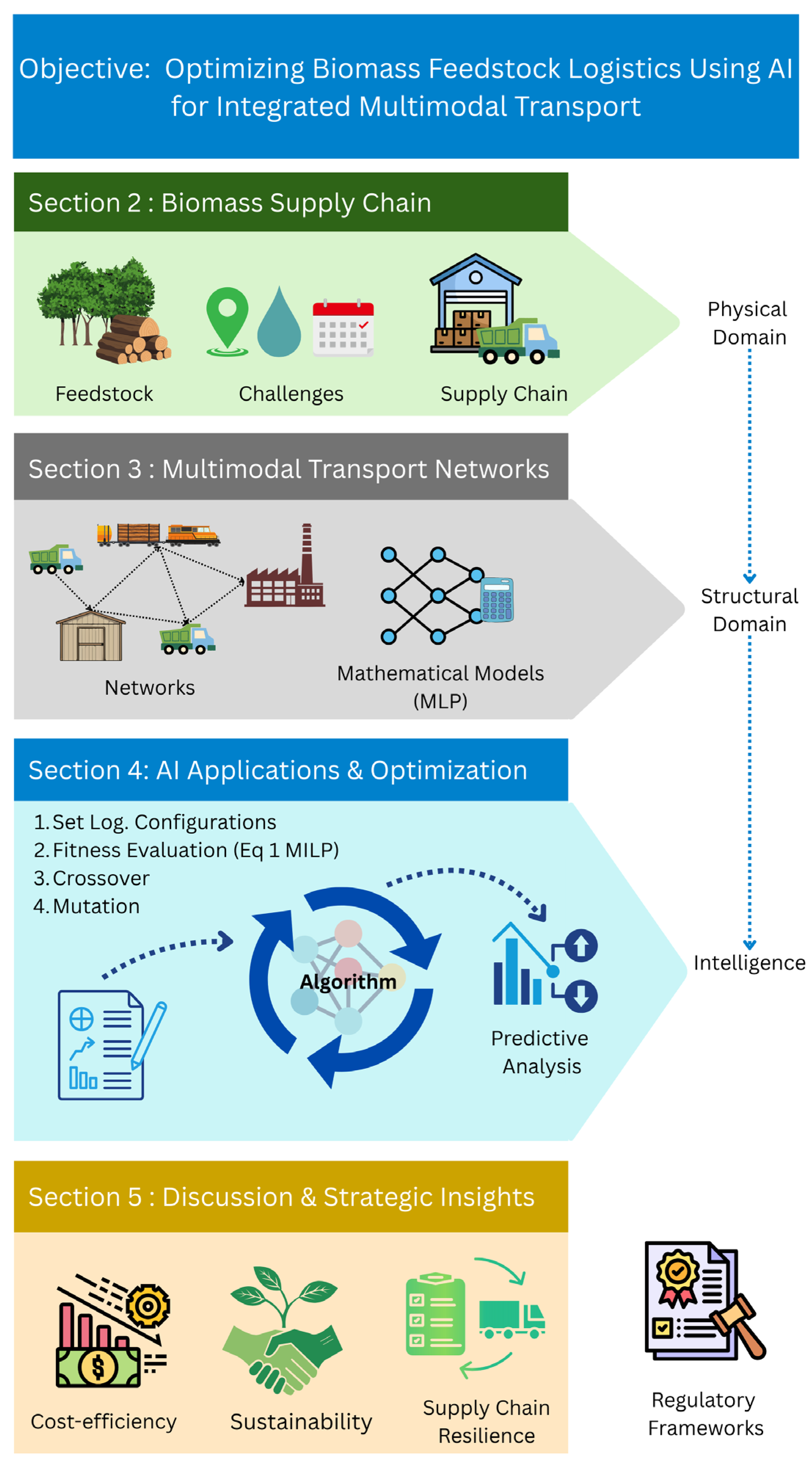
Figure 1. Integrated Framework for AI-Driven Multimodal Biomass Logistics. This diagram maps the research objectives to the paper’s structure: Biomass Feedstock Inputs (Section 2), Multimodal Transport Networks (Section 3), Mathematical and Algorithmic Framework oriented to intelligence (Section 4), and the discussions (Section 5) (Source: Authors’ elaboration).
Logistics 10 00054 g001
Figure 2. A typical biomass supply chain and logistics (Adapted from Nunes [3]).
Logistics 10 00054 g002
Figure 3. Multimodal structure of biomass transportation (Adapted from Zhang [17]).
Logistics 10 00054 g003
Figure 4. Artificial intelligence applications in supply chain management. Adapted from Pournader [40].
Logistics 10 00054 g004
Figure 5. Implementation Framework for Quantum-AI Enhanced Digital Twins in Multimodal Logistics. (Adapted from Nozari and Yordanova [71]).
Logistics 10 00054 g005
Figure 6. Synthesis Framework for AI-Enhanced Multimodal Biomass Logistics. This diagram illustrates the interaction between Predictive, Optimization, and Operational AI across the biomass value chain, highlighting their specific impacts on emission reduction, cost-efficiency, and predictive accuracy. This conceptual framework was developed based on the methodologies and findings reported in [59,76,81,83].
Logistics 10 00054 g006
Table 1. A summary of mathematical models and programming techniques for multimodal transportation planning.
Model/TechniqueDescriptionApplications in LogisticsReferences
Linear Programming (LP)Optimize processes by maximizing profits or minimizing costs under linear constraints through a linear objective function.Addresses operational constraints such as capacity and demand; in biomass logistics, minimizes transportation costs considering vehicle capacity, transport modes, biomass type, and processing facilities.[20]
Integer Programming (IP)Seeks optimal solutions to linear problems where decision variables must take integer values.Useful for discrete decision problems such as routing, scheduling, and allocation.[21]
Mixed-Integer Linear Programming (MILP)Combines both integer and continuous decision variables to solve complex optimization problems.Designs efficient logistics networks, reduces costs, and mitigates the effects of biomass seasonality; minimizes the number of trips within a timeframe.[22,23]
Simulation ModelsReplicate the operations of real-world systems through iterative simulations to identify reliable and efficient solutions.Simulate transportation operations such as truck or train scheduling for planning and optimization.[24]
Stochastic Optimization ModelsSupport decision-making under uncertainty by incorporating random variables into the model.Capture uncertainties such as demand, lead times, and supply variability; balance cost, service level, and risk mitigation.[25]
Agent-Based Modeling (ABM)Simulates systems composed of autonomous agents that interact with each other and their environment.Models decentralized logistics systems and support distributed problem-solving and dynamic system adaptation.[26]
Heuristic and Metaheuristic ModelsProvide approximate (but not exact) solutions for complex optimization problems involving multiple constraints and time factors.In logistics, it is effective for finding near-optimal solutions to problems such as disruptions, intermodal transport operations, and facility locations, among others.[27,28]
Multi-Objective Optimization (MOO)Simultaneously optimizes multiple conflicting objectives, producing Pareto-optimal solutions.MOO in logistics helps balance costs, time, and resource use. It consolidates packages from various sources into one destination, reducing costs and emissions.[29,30]
Table 2. AI technologies and applications are designed to optimize and enhance biomass supply chain management.
Type and FunctionalityStrengthsLimitationsTypical Logistics UsesReferences
Machine Learning (ML)
ML learns patterns from data to make predictions or decisions.ML handles large datasets and improves logistical decision accuracy.Requires high-quality dataPredictive analytics, warehouse planning, and route optimization.[2,43,44]
ML Subcategories
Supervised Learning (SL)SL learns from labeled input–output data.High accuracy for prediction and classification; widely used.Requires labeled datasetsDemand forecasting, travel time prediction, and quality prediction.[45,46,47]
Unsupervised Learning (USL) USL discovers patterns in unlabeled data.USL detects patterns in unlabeled data and groups items based on those patternsUSL is harder to validate results; it may identify irrelevant patterns.Destination clustering, anomaly detection, and pattern grouping.[44,47,48,49]
Reinforcement Learning (RL) RL learns actions through rewards and penalties.Adapts dynamically; suitable for sequential decisions.Requires quality data and iterations, and may be unstable under rapid changeInventory management, dynamic restocking, adaptive routing.[45,50]
Deep Learning (DL) DL uses multilayer neural networks to analyze complex, unstructured data.Excellent for images, sequences, and nonlinear patterns.High computational cost; requires large datasets.Package classification, object detection, and inventory tracking.[45,46,49]
Robotics & Automation
Uses AI-powered robots to automate physical tasks.Improves efficiency, reliability, accuracy, and safety.High costs, equipment failures, and complex self-optimization and configuration processes.Automated picking, warehouse navigation, and RFID-based tracking.[49]
Computer Vision
Extracts information from images using CNNs.Fast, accurate visual recognition reduces errors.Needs large image datasets; sensitive to lighting/occlusion.Automated inventory counting, quality control, scanning, and sorting.[49,51]
Digital Twins
Creates real-time digital replicas of physical systems.High precision; excellent for simulation and optimization.DT requires IoT infrastructure and strong data integration.Supply chain simulation, warehouse performance optimization.[52,53]
Table 3. Quantitative impacts and case studies of AI implementation in biomass and sustainable logistics.
AI TechnologyContext/Case StudyQuantitative Outcome/MetricReference
Linear Regression, Multilayer
Perceptron Regressor (MLPRegressor), XGBoost Regressor (XGBRegressor), and Random Forest
Regressor.
Eco-efficient supply chains (USA)Achieved 99.9% accuracy (R2 = 0.999), mitigating carbon emissions; identified fuel consumption as the primary reduction variable.[81]
Genetic Algorithms (GA)Multimodal network designTravel time decreased by 25%, stockouts reduced by 30%, and overall operational costs lowered by 15%.[39]
Multi-Layered Optimization (ML)Green AI for circular economies30% reduction in transportation-emission[85]
SustAI-SCM FrameworkAutomated warehousing & logistics28.4% cost reduction; 30.3% lower emissions; 21.8% efficiency gain[87]
Modular Neural Networks (ANN)Biomass Delivery Management (Polish CHP Plant)Achieved high predictive accuracy (R2 = 0.99, MAE = 0.16) for logistics costs; optimized supplier selection under data-scarce conditions.[58]
Random Forest (RF)Biomass Road Transport Cost PredictionAchieved 97.4% accuracy (R2 = 0.974) in predicting transport costs; Identified Vehicle Type (31%) and Distance (25%) as the most critical factors influencing cost[59]
Disclaimer/Publisher’s Note: The statements, opinions and data contained in all publications are solely those of the individual author(s) and contributor(s) and not of MDPI and/or the editor(s). MDPI and/or the editor(s) disclaim responsibility for any injury to people or property resulting from any ideas, methods, instructions or products referred to in the content.