1. Introduction
Global manufacturing and supply chain systems have been rendered quite unstable by disruptions in the form of pandemics, geopolitical tensions, and fast technological changes. These issues have increased the demand for manufacturing operations that are not only effective, but also strong and sustainable. At the same time, there are more opportunities offered by digital transformation than ever before, such as artificial intelligence (AI), digital twins, and immersive, metaverse-enabled spaces, which offer new avenues of operation resilience and sustainability. The application of AI-based predictive systems is generally achieved in manufacturing supply chains by supervised demand forecasting learning paradigms, anomaly detecting and early-signaling mechanisms housing the disruption signals, as well as dynamical routing and resource allocation based on reinforcement learning frameworks. However, the successful implementation of these models is preconditioned by the quality of data, system interoperability, and algorithmic decision interpretability, which are issues that have been widely addressed in the literature on AI-enabled supply chain management.
While digital twins offer simulation-based visibility and scenario modeling, existing studies emphasize serious implementation challenges such as heterogeneous data integration, model fidelity, high computational demand, and the difficulty of scaling digital replicas of full supply networks rather than isolated processes. Digital twin technologies enable organizations to develop a virtual representation of physical assets and supply chain networks that can be monitored in real time, simulated, and used to make decisions [
1]. The tools help to make the process more resilient and sustainable, as they can be used to detect inefficiencies in energy consumption, resource usage, and emissions, and offer remedial advice in anticipation of the physical disruption [
2]. As an example, the digital twin models of the supply chain have been demonstrated to advance the risk reduction, increase visibility throughout the nodes, and promote sustainable optimization of the resources [
3].
The last pioneer developments in the field of artificial intelligence (AI), extended reality, and metaverse technologies are radically changing the working paradigm of industrial systems, aspects of their interaction, and their ability to react to uncertainty [
4]. AI-based integration into the metaverse is a combination of predictive intelligence, virtual collaboration, and simulations of digital twins in one interactive ecosystem that allows organizations to visualize operations, coordinate decisions, and manage disruptions in real time. This is even better than traditional digitalization because it enhances continuous and multi-agent synchronization between physical and virtual supply chain space, thus creating a new breed of resilience-driven manufacturing capabilities. At the same time, sustainable manufacture has become a worldwide priority driven by the growing regulatory pressure, climate-related risks, as well as the necessity of creating the production mode that is resource-efficient [
5]. The concept of sustainable manufacturing is both a strategic necessity and an environmental mandate that not only fosters cost efficiency but also the continuity of operations and competitive strength, especially in emerging economies like Jordan, where industries are facing a challenge of resource shortage, not to mention the increased vulnerability to the instabilities of the supply chain. Along with these opportunities, there is still little empirical evidence on the collective contribution of AI-enabled metaverse capabilities to sustainable manufacturing performance via supply chain resilience, which contributes to the need to conduct additional research.
Simultaneously, AI-based analytics will help companies to see through upcoming disruption, adjust to new circumstances, and plan with agility amid uncertainty, thereby enhancing their dynamic capabilities against turbulence [
6]. There is scientific evidence that AI technology is important in improving the resilience of the supply chain, particularly in the emerging markets where the prevalence of external shocks can be high, and institutional support might be lacking for artificial intelligence-based supply chain resilience [
7]. Furthermore, the metaverse (as a broad concept denoting immersive, virtual–physical ecosystems) will provide a new platform of virtual collaboration, planning digital scenarios and fostering the connectivity of ecosystems with all supply chain partners [
7]. Preliminary research proves that the implementation of the metaverse has a positive impact on the resilience of supply chains through enhanced knowledge exchange, partner confidence, and the ability to be flexible in situations [
8]. The mediating variable chosen is resilience since it is an agile, flexible, responsive, recovery-capacity-comprised, and higher-order dynamic capability. Whereas agility is focused on speed and flexibility is focused on adaptability, the entire disruption management process (anticipation, absorption, response, and restoration) is the main feature of manufacturing systems facing sustained uncertainty [
9]. The metaverse capabilities that are discussed in the current research, in particular, digital twins, predictive AI analytics, and virtual collaboration, are more directly linked to the mechanisms of resilience building like real-time visibility, predictive anticipation, and coordinated response. Thus, resilience is theoretically the most suitable mediator in the resource orchestration theory (ROT), which shows the result of structuring, bundling, and harnessing digital resources into the single capability that leads to sustainable manufacturing performance.
The empirical setting proposed by Jordan is extremely topical in the investigation of AI-based resilience mechanisms since its manufacturing business is subjected to the constant instability in the region, high reliance on imported products, scarcity of the domestic supplies, and high transportation and logistics expenses [
10]. Such structural limitations make the Jordanian companies particularly susceptible to supply shocks, geopolitical shocks, and changes in market conditions, and increase the demand of digital tools that could improve the anticipation, responsiveness, and continuity of operations. It is against this background that AI-powered metaverse functionality, including digital twins, predictive AI analytics, and immersive virtual collaboration, has become a pragmatic and fast-adopted solution since it relates directly to simulation-based decision-making, real-time coordination, and risk forecasting. Such technologies are not general-purpose AI models like ChatGPT-4 which can encourage text-based knowledge tasks but lack real-time operational sensing, predictive modeling, and system-level visualization required to make manufacturing resilient [
11,
12]. Thus, the situation in Jordan offers a high-need and under-studied setting in exploring how the integration of AI-facilitated metaverse may lead to a more resilient supply chain and sustainable manufacturing performance.
Although prior studies already examined digital twins, AI, or the metaverse, there is still a major gap in comprehending the connection between these advanced functions when they can be coordinated resources in the manufacturing environment, and how they can evolve into sustainable manufacturing performance through digital supply chain resilience [
13]. Specifically, the mediating processes through which these capabilities are transduced into sustainability performances are poorly developed particularly in the case of a developing economy like Jordan. In addition to that, theoretical investigation is required to clarify how the coordination of such digital capabilities is compatible with the resource-bundling and leveraging processes of the companies in terms of the resource orchestration theory (ROT).
In order to fill this gap, the present study will establish an empirical model within the industry manufacturing industry in Jordan based on ROT. It looks at the impact of three antecedent capabilities, including virtual collaboration in the metaverse, digital twins’ platforms, and AI-based predictive analytics on sustainable manufacturing performance. Importantly, the model assumes that the concept of digital supply chain resilience acts as an intermediary in such associations. The study is relevant to the literature as it (a) introduces metaverse-facilitated online capabilities into the ROT framework, (b) offers empirical findings in a poorly researched context (Jordan), and (c) explains how resilient supply chain capabilities can help manufacturing companies attain sustainability results.
The rest of this paper is organized as follows:
Section 2 is a comprehensive literature review that creates the theoretical foundation of the constructs of the current research.
Section 3 presents the resource orchestration theory and the research hypotheses.
Section 4 will outline the methodology, which will entail sampling approach, measures, and analysis.
Section 5 provides the empirical findings of the measurement and structural models.
Section 6 explains the findings regarding the current literature.
Section 7 gives the conclusion of the study, the theoretical and practical implications of the study, and the limitations and future research directions.
2. Literature Review
2.1. Virtual Collaboration in Metaverse Environments
Immersive virtual collaboration with the use of metaverse-enabled environments and virtual reality is becoming a strategy in the modern manufacturing and supply chain systems. These environments enable stakeholders (suppliers, manufacturers, customers) to coexist in a virtual space which is shared, thereby facilitating real time coordination, scenario planning, and process simulation which is executed before it is physically implemented. Despite the specific literature on metaverse collaboration remaining nascent, other associative findings in digital collaboration depict that it is more flexible, shares information, and responds. However, there is a paucity of empirical research that evaluates the extent to which this type of virtual collaboration can be converted into supply chain resilience or a sustainable manufacturing performance. This is more pronounced in emerging economies with infrastructure, institutional, and cultural processes that may soften effects. However, the application of the metaverse-based collaboration in manufacturing and supply chains is not an easy task. There have been many studies which identify many constant obstacles, such as latency, bandwidth limitations, user acceptance issues like cybersickness and steep learning curve, the need to have a high-fidelity simulation model for vindictive decision-making, and high financial and technical costs to implement and maintain the system. Those environments must, therefore, not be thought of as smooth coordination platforms, but as advanced digital capabilities, the advantages of which can only be seen to be realized when the infrastructural and organizational conditions on which they are premised are sufficiently met.
2.2. Digital Twin Platforms
Digital twin platforms (DTs) are simulated versions of real assets, processes, or networks of supply chains that can be monitored in real time, simulated, and analyzed for what-ifs. According to recent systematic reviews, DTs have proven to be a game changer technology in supply chains, improving visibility, agility, and decision-making [
14]. As an illustration, Ref. [
15] discovered that DTs help to make supply chains resilient and lean in terms of coordination and adaptation to disruption [
16]. Further discussion indicates that DTs contribute to sustainability because they can facilitate reduction in waste, and energy efficiency, as well as greener logistics [
6]. Nevertheless, the literature indicates that the association between DT adoption and digital supply chain resilience remains a poorly researched area, specifically regarding its mediating factors and situational moderators (e.g., organizational preparedness, digital maturity). More recent empirical research goes beyond theoretical statements to show that, under certain well-thought and carefully coordinated design, digital twins have the capability of inducing measurable sustainability improvements. To give an example, the studies carried out in the process and discrete manufacturing fields have been reporting reductions in energy usage and material waste after the implementation of the use of the digital twin to monitor and optimize the thermal control, equipment use, and production schedule [
17]. However, these advantages are not automatic as they depend on the quality of the data, model fidelity, as well as the ability of the managers to properly interpret and act on the insight of the simulation [
16]. The conceptualization of virtual collaboration, digital twin platforms, and predictive AI analytics in this paper is not based on the autonomy of digital tools but on the interdependence of metaverse-enabled features that work synergistically in intelligent manufacturing platforms. Virtual collaboration offers real-time multisensory engagement between the widely distributed stakeholders and digital twins that facilitate uninterrupted simulation and high-fidelity mirroring of physical processes, and predictive AI analytics produce foreseeable insights that can be used to make proactive decisions. Collectively, these capabilities represent an integrated digital architecture that complies with ROT because it helps firms to organize, package, and take advantage of technological resources to promote resilience and sustainability.
2.3. Predictive AI Analytics
Machine learning-based (ML) and artificial intelligence-based (AI) predictive analytics has become an essential ability to improve the performance of supply chains in times of uncertainty. The use of AI forecasting, anomaly detection systems, and decision support systems allow companies to predict demand changes and early warnings of disruption, as well as conduct resource allocation optimization [
18,
19]. A recent systematic review discovered that AI in SCM is being more oriented at resilience, sustainability, and optimization of processes, but numerous studies remain at the level of efficiency improvement instead of being connected to sustainable manufacturing deliverables [
20,
21]. In the manufacturing environment, AI analytics can support agility and resilience through the response to exogenous shocks proactively, which proves effective in manufacturing, but there are still limited empirical studies that can identify a connection between AI analytics, supply chain resilience, and sustainable manufacturing [
22].
2.4. Digital Supply Chain Resilience (Mediator)
In the present study, digital supply chain resilience is a higher-order ability, which is characterized by allowing a supply chain to foresee, absorb, adjust to, and recover disruptions through the competent utilization of information, technologies, and organizational routines, which have been made available. It includes how companies integrate sensing, response, and recovery processes as opposed to the technologies, such that shocks have a less significant effect on continuity, cost, and sustainability results. In this regard, artificial intelligence, digital twins, and virtual collaboration are considered to be antecedent digital resources that can reinforce resilience instead of defining it. Digital supply chain resilience is the capability of a manufacturing supply chain network to absorb, adapt to, and recover from disruptions with the help of digital capabilities which include DTs, AI analytics, and virtual collaboration. Three big clusters of research are found by the bibliometric analysis of SCR (supply chain resilience): technology adoption to SCR, optimization to SCR, and disruption and risk management strategies [
23,
24]. It is increasingly acknowledged in various studies that Industry 4.0 technologies are antecedents to resilience, but the processes by which digital technologies are coordinated (structured, bundled, leveraged) have not been defined in a clearer way. As an illustration, a survey conducted in Bangladesh discovered that DT strategies assist in resilience through real-time data modeling and scenario analysis [
25]. Nonetheless, the least studied area is the role of resilience in digital supply chains as a mediator between digital capabilities (virtual collaboration, DTs, AI analytics) and sustainable manufacturing performance, in particular in emerging economies. As an example, when conducting surveys of manufacturing companies in Bangladesh, it was revealed that the use of digital twin strategies contributes to resilience due to data modeling in real-time and scenario analysis. Similar trends have been reported in other emerging and developed settings, where digital tracking and analytics enhance visibility and reaction to disruptions. All these findings together suggest that resilience in various environments may be supported by digital technologies, but the mechanisms and the extent of effects are context-specific.
2.5. Sustainable Manufacturing
The sustainable manufacturing performance involves economic, environmental, and social aspects of the manufacturing processes, including resource efficiency, reduction in emissions, minimized waste, stakeholder value creation, and adaptive capacity. Though there is a body of work regarding the relationship between digital technologies and supply chain practices and sustainability outcomes, the majority of studies are based on developed economies or single capability relationships (e.g., green supply chain practices). The integrative direction is as follows: the digital ability of resilience to sustainable manufacturing is not well-studied. To attain the results of sustainability, it is not enough that the firms implement the digital technologies but coordinate them (according to the resource orchestration theory) to create dynamic capabilities that will maintain performance under disruption. Therefore, the possibility of filling this gap in the context of the Middle Eastern manufacturing (e.g., Jordan) presents an important research opportunity.
2.6. Research Gaps
Even though the individual digital technologies (digital twins, predictive AI analytics, and virtual collaboration) have been explored in the existing literature, the literature does not provide a comprehensive perspective of how these features are coordinated together in AI-mediated metaverse settings. To begin with, the current literature would focus on analyzing each of the digital capabilities separately and does not include the synergistic impact when these technologies are coordinated to facilitate intelligent manufacturing ecosystems. Second, even though various studies emphasize the influence of Industry 4.0 technologies on visibility, forecasting accuracy, and coordination, there is a limited amount of empirical evidence and research on how the technologies generate sustainable manufacturing results, especially through higher-order dynamic capabilities like digital supply chain resilience. Third, the interlinking role of resilience has yet to be theorized in the resource orchestration theory (ROT) perspective, even though ROT is a perspective where structuring, bundling, and leveraging digital resources create performance outcomes. Resilience is a relatively uncommon subject of study in research as a process through which AI-enabled digital capabilities are converted into benefits of sustainability. Fourth, most of the current literature is focused on technologically advanced economies, and thus there is a large gap on the emergent markets, including Jordan, where institutional constraints, as well as resource and market volatility, might exacerbate the applicability of resilience-building mechanisms.
The current study thus fills this gap and provides a universal metaverse-based framework, including digital twins, AI predictive analytics, and virtual collaboration, as an integrated technology stack. In the process, the study defines digital supply chain resilience as a mediating capability of ROT and delineates how digital resources are configured, combined, and used to enable sustainability outcomes. Additionally, the study provides fresh empirical data from Jordanian industry as a less researched, yet digitally fast evolving context, and extends the current understanding beyond the developed world literature to offer findings applicable in emerging markets.
3. Theoretical Framework
Resource Orchestration Theory (ROT)
The dynamic capability theory (DCT) offers a sound structure of how companies renew and reorganize capabilities in dynamic environments, while resource orchestration theory (ROT) offers a more detailed analysis of the managerial activities of designing, packaging, and exploiting particular resources. AI models, digital twin infrastructures, and collaborative platforms are not simply abstract capabilities; they are tangible and reconfigurable resources, which managers need to purchase, integrate, and put into practice in digitally intensive environments. It is in this light that ROT will serve as the main theoretical perspective in this paper to examine how these digital resources are combined to produce the higher-order capacity of digital supply chain resilience, as well as how they can be conceptually aligned with the larger logic of DCT. Resource orchestration theory (ROT) is a resource-based view (RBV) which focuses on how managerial activity organizes, packages, as well as capitalizes organizational resources in order to generate capabilities and superior performance [
13]. Although RBV has been more interested in the resources available to firms, ROT holds the view that performance depends on how these resources are mobilized and deployed. ROT stipulates that companies should be proactive in integrating both tangible and intangible resources such as digital technologies, knowledge, and human capital to develop dynamic capabilities that can handle complexity, volatility, and changes in the environment [
26].
ROT has been used more often with digital transformation in mind, as the authors of these studies start by classifying how some of the most advanced technologies like artificial intelligence (AI), digital twins, and immersive collaboration platforms can be organized strategically to create higher-order organizational capabilities. Such capabilities, such as digital supply chain resilience, are mechanisms that convert resource configurations to performance outcomes, namely sustainability, adaptability, and competitive advantage [
27,
28].
Resource orchestration is critical in emerging economies where market conditions, infrastructure limitations, and supply chain vulnerability are dynamic like in Jordan. Not only do firms have to go digital but they also have to incorporate digital technologies into their supply chain strategy and sustainability objectives. In such a way, this paper uses ROT to propose the hypothesis that AI-enabled metaverse capabilities, such as virtual collaboration, digital twins’ platforms, and predictive AI analytics, can be orchestrated to create resilience of the digital supply chain, which, in turn, allows the achievement of sustainable manufacturing performance. The coordination of digital resources is not a choice made in emerging economies where companies are faced with infrastructural impediments, lack of skills, and heightened exposure to regional shocks, making it a necessity in these regions. Managers often face severe resource limits and cannot easily add redundancy or physical buffers; they therefore need to carefully design and recycle the work already in place in digital form, such as analytics, simulation environments, and collaboration platforms, to maintain operational continuity. In its turn, ROT is especially relevant here because it highlights the managerial agency that is required to transform the limited resource portfolios into arrangements that contribute to resilience.
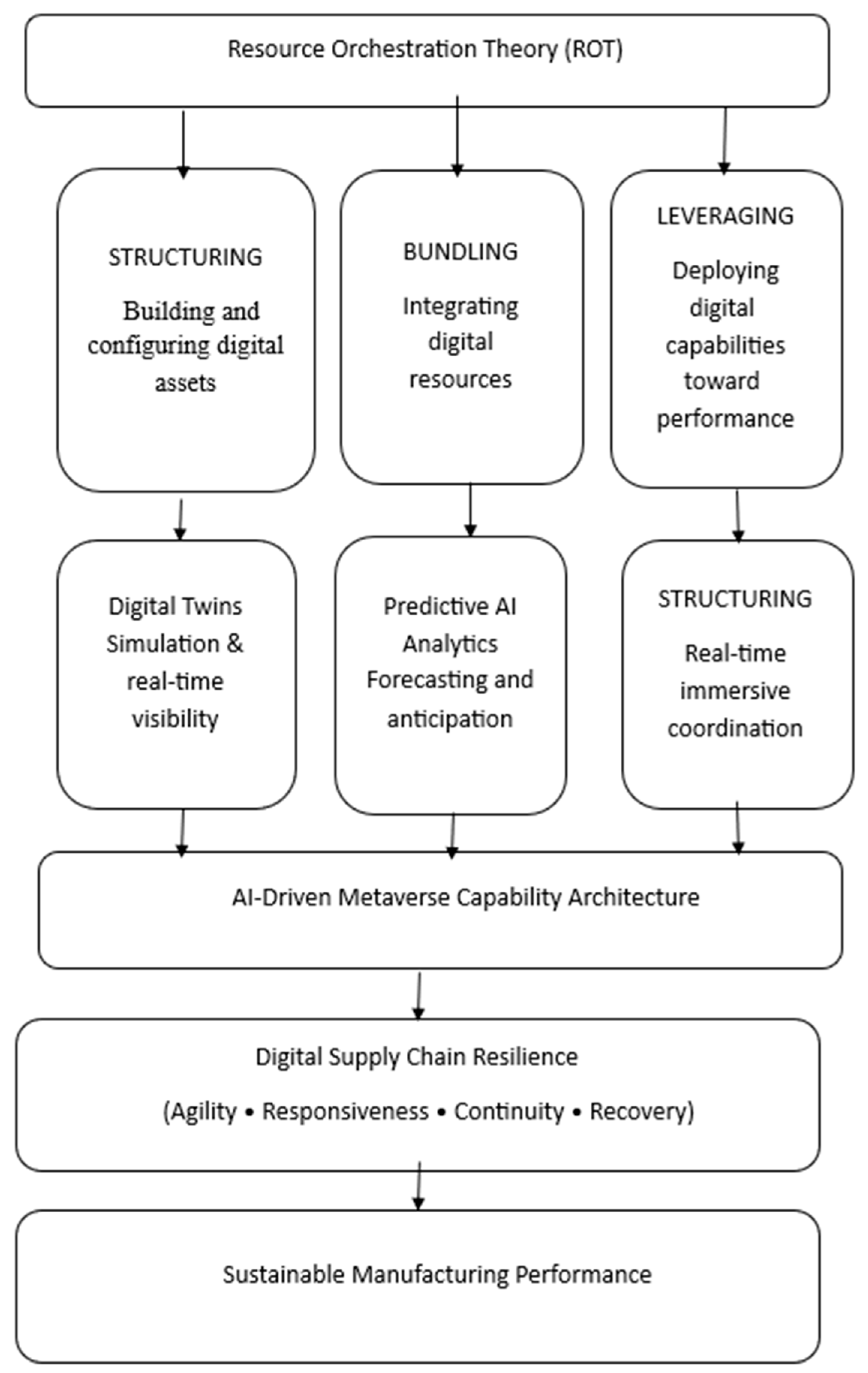
Resource orchestration theory (ROT) highlights the importance of the fact that organizational performance relies on maintaining valuable resources, as well as the way managers structure, bundle, and exploit these resources to develop higher-order capabilities. Structuring concerns the process of acquiring, accumulating, and configuring resources; within the context of Industry 4.0, it would relate to creating digital infrastructures, i.e., AI systems, digital twins, immersive collaboration platforms, etc. Bundling can be defined as coordinating and integrating these resources into sensible capabilities, such as the incorporation of predictive analytics, digital simulation, and virtual coordination to facilitate synchronized decision-making. The use of these capabilities together to attain strategic goals, including making operations responsive, reducing disruption, and ensuring that operations continue, is known as leveraging. In this view, AI-based metaverse technologies create coordinated digital assets that, when effectively integrated, develop the dynamic capability of digital supply chain resilience.
Figure 1 below shows that the Resource Orchestration Theory is the backbone of the proposed AI -based metaverse capability architecture, which enables the connection between digital twins, predictive AI analytics, and immersive coordination to digital supply-chain resilience and sustainable manufacturing performance.
4. Hypothesis Development
Before hypotheses are developed, it is necessary to explain that all three antecedent capabilities explored within this paper, such as virtual collaboration, digital twin platforms, and predictive AI analytics, are not interchangeable technological tools. To prevent the occurrence of conceptual overlap, this paper highlights that even though virtual collaboration, digital twins, and predictive analytics are technologically related, they also vary in the contribution logics.
- (a)
Virtual collaboration improves shared sense-making, as well as the presence and coordination of joint decision-making, in terms of immersive multi-agent interaction and shared mental modeling;
- (b)
Digital twin platforms make it possible to conduct structured simulation, operational mirroring, and experimentation of quantitative scenarios and, as a result, allow firms to assess more resilience strategies before executing them in real life;
- (c)
Predictive analytics provide data-driven foresight by using statistical inference, anomaly detection, and probabilistic risk modeling, which assist in proactive contingency planning.
These complementary systems reflect unique orchestration logic, which, when combined, amplifies the digital supply chain resilience, as opposed to constituting redundant digital tools.
4.1. Virtual Collaboration in Metaverse Environments and Digital Supply Chain Resilience
Virtual collaboration in the metaverse is a notion that can be considered as digitally immersive spaces in which stakeholders can speak in common virtual environments through avatars, simulation, and real-time data exchange [
29]. These platforms improve coordination and decision-making, particularly in distributed manufacturing networks. They enable the stakeholders to simulate the disruptions and redesign the processes in an agile manner by aiding three-dimensional visualization and concurrent design. The concept of immersive virtual collaboration environments can be applied to develop resilience not only in terms of the digital interface available, but also in the more extreme mechanisms of cognition and socialization that develop as a result of this digital interface [
30]. The extended-reality form of collaboration, unlike traditional two-dimensional conferencing, provides better spatial awareness and heightened sense of presence, and also encourages embodied cognition, thus allowing decision-makers to visualize disruptions together, evaluate options, and bargain responses to one-parent mental models. It is also shown in research that avatar-based interactions enhance transfer of tacit operational knowledge, synchronization of situational understanding, and the speed with which consensus can be reached, helping to detect weak signals, coordinate the prompt response, and reorganize disrupted flows. As a result, metaverse-based collaboration systems are a type of social-coordination force that strengthens digital supply chain resilience in the absorptive and adaptive dimensions [
23].
Research indicates that virtual collaboration technologies can result in fewer lead times, enhanced transparency, and resiliency due to the possibility of rapid communication and solving problems remotely [
31]. Moreover, interfaces of metaverses combined with analytics facilitated by AI enables organizations to acquire and process data and take action on it in real time, thereby increasing responsiveness and reducing environmental uncertainty [
32].
H1. AI-enabled virtual collaboration in metaverse environments positively influences digital supply chain resilience.
4.2. Digital Twin Platforms and Digital Supply Chain Resilience
The capabilities of digital twins, in contrast to virtual collaboration, are not based on the principle of having self-realized high-fidelity computational replicas of physical assets, operating parameters, and process flows. Their role in building resilience is providing a simulation-based mechanism that reflects real-time conditions, stress tests of the subject’s operating assumption, and the impact of other supply scenarios [
33]. Digital twins recreate the depth of quantitative what-if environments through the inclusion of constraints in the system, lead-time variability, machine performance cycles, and safety levels, and as such, they allow firms to predict the disruption propagation paths, test strategic reconfigurations, and validate contingency plans. Therefore, the distinct resilience value of digital twins is contained in analytical visibility, scenario experimentation based on models, and forecasting cascading failures, as opposed to human collaboration and sense-making dynamics. Digital twin platforms are virtual versions of physical objects, systems, or processes that are integrated to receive continual updates in real time. Digital twins have been employed in supply chains to detect the status of assets, diagnose failures, and simulate multiple scenarios of the supply chain in situations of uncertainty [
7]. Digital twins are used between the physical and digital worlds because operation managers can test their resilience strategies prior to the real world.
According to recent studies, digital twins enhance the responsiveness and visibility of a supply chain, which results in real-time diagnostics and predictive modeling that help in promoting resilience and sustainability [
3,
7]. Digital twins are an essential resource that can improve the resilience of supply chains because they enable manufacturing companies to gain a systemic understanding of disruption and initiate responses.
H2. The adoption of digital twin platforms positively influences digital supply chain resilience.
4.3. Predictive AI Analytics and Digital Supply Chain Resilience
In comparison to digital twins, predictive AI analytics will be based on statistical learning models which infer patterns, identify anomalies, and predict risks based on large-scale data instead of simulated virtual worlds. While digital twins allow us to plan and conduct experiments with scenarios, predictive systems based on AI allow real-time and continuous inference that uncovers disruption triggers, demand variability, supplier variability, and optimal allocation responses [
18]. Consequently, predictive analytics support the sensing and anticipatory levels of resilience, enabling managers to take action before disruptions occur. Combinations of anomaly detection algorithms and probabilistic forecasting, combined with reinforcement optimization, make predictive analytics the analytical nervous system, of which the emergence of risks is early diagnosed [
34]. Machine learning and deep learning, which are part of predictive AI analytics, enable organizations to identify risks, predict demand variability, and allocate resources efficiently. The predictive models help companies to identify threats in the external environment and develop response measures beforehand [
35]. The AIs in predictive systems are used in supply chain environments to identify anomalies and optimize routes, as well as dynamically adjust production and sourcing strategies into high-volume big data.
Ref. [
36] determines that AI-based predictive capabilities play a major role in supply chain resilience through better agility and foresight. In addition, they contribute to the creation of environmentally responsible decisions, minimizing waste and perfectly matching supply and demand [
37].
H3. Predictive AI analytics positively influence digital supply chain resilience.
4.4. Digital Supply Chain Resilience and Sustainable Manufacturing Performance
Digital supply chain resilience refers to the ability of a supply chain to prepare, respond to, and recover disruption by playing out digital technologies and data-driven approaches [
38]. Resilient supply chains will lead to sustainable results as little downtime will be experienced, wastage of resources will be reduced, and environmentally friendly production processes will persist.
Empirical research shows that resilient supply chains are linked to a decreased level of emissions, greater ethical practices, and greater economic sustainability [
39,
40]. Digital resilience is especially needed in a volatile environment, like the Middle East, to achieve long-term sustainability goals in the manufacturing environment. Resilience as a concept is analytically broader than agility or flexibility, as it is a collection of digital capabilities that amplify the ability of a firm to withstand and recover after disruptions. Since the technologies linked to the metaverse discussed in this paper create value based on predictive foresight, real-time simulation, and coordinated response, resilience is the most relevant process according to which these technologies are converted into sustainability results.
H4. Digital supply chain resilience positively affects sustainable manufacturing performance.
4.5. Mediating Role of Digital Supply Chain Resilience
Under the ROT concept, resilience can be realized when digital resources are not merely taken up, but are organized, packaged, and used as part of organizational practice to identify disruptions, organize, and streamline recovery efforts. Social cognitive coordination is provided by virtual collaboration; simulative foresight is provided by digital twins; predictive analytics is an inferential engine capable of risk sensing. The extent to which the firms reorganize these digital resources into response, adaptation, and continuity mechanisms defines the mediating impact of digital supply chain resilience [
24,
41]. Despite the help of AI tools and digital systems, such as collaboration, simulation, and prediction, the ability to use these tools to develop resilience is what will eventually instill long-term performance.
H5a. Digital supply chain resilience mediates the relationship between AI-enabled virtual collaboration and sustainable manufacturing performance.
H5b. Digital supply chain resilience mediates the relationship between digital twin platforms and sustainable manufacturing performance.
H5c. Digital supply chain resilience mediates the relationship between predictive AI analytics and sustainable manufacturing performance.
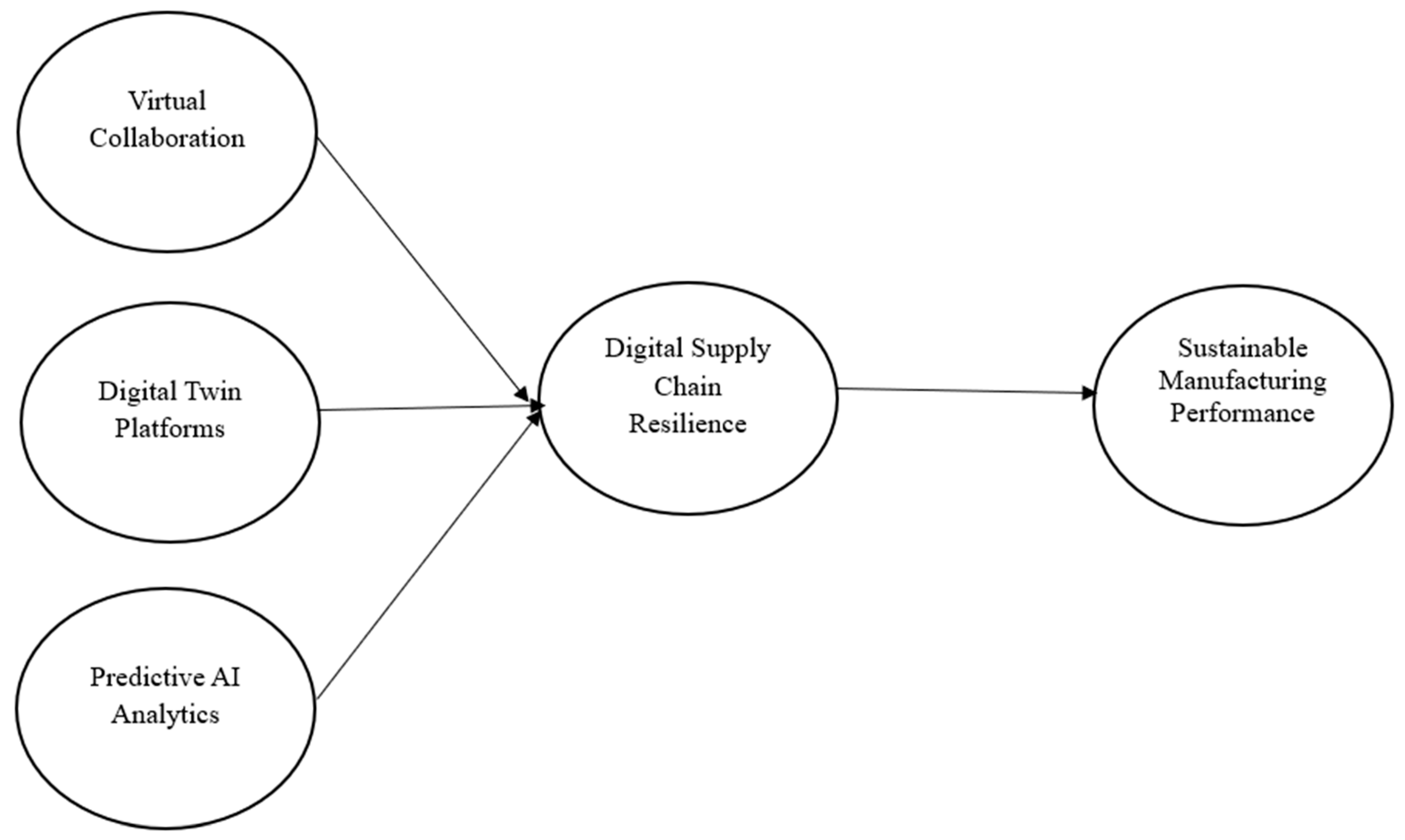
The conceptual framework of the study is outlined in
Figure 2 after the hypotheses of the research are formulated. The figure shows the links between the independent variables, which are Virtual Collaboration, Digital Twin Platforms, and Predictive AI Analytics; the mediating variable, which is Digital Supply Chain Resilience; and the dependent variable, which is Sustainable Manufacturing Performance.
5. Methodology
To examine the effect of AI-based metaverse-driven capabilities on sustainable manufacturing performance, the presented research design was quantitative and explanatory, and digital supply chain resilience was used as a mediating variable. Since the topicality of digital transformation in the manufacturing sector, especially in emerging economies, is increasing, the cross-sectional survey method was considered suitable in terms of primary data collection and causal relationships between the study variables. The study used medium- to large-sized manufacturing organizations in Jordan because the organizations are more likely to have embraced digital tools, experience supply chain pressure, as well as been exposed to sustainability performance expectation. In this paper, virtual collaboration is used not to mean fully immersive metaverse infrastructures but the practical digital collaboration systems that are currently in use by Jordanian manufacturers, including 3D virtual design rooms, remote maintenance solutions, VR-based safety training, and digital interactive methods of communicating with suppliers.
Multi-stage validation was performed to make sure that the instrument of measurement was of high quality and suitable. To begin with, three scholarly and business professionals who have conducted studies on supply chain management, digital transformation, and AI applications, were asked to review the first questionnaire items which were modified based on the existing scales in previous works. Their criticism resulted in articulation and clarification of words, elimination of ambiguous statements, and better contextualization with the Jordanian industrial sector. Second, they have performed a pilot test involving thirty industrial managers to evaluate level of clarity, readability, and response time. There were no significant problems that were observed, and some minor changes were performed to improve the understanding of items.
SmartPLS 4.0 was then used to carry out statistical validation. Outer loadings of more than 0.70 were used to verify the reliability of the indicators, whereas Cronbach alpha and composite reliability scores were found to be above the suggested area. Convergent validity was checked by the values of average variance extracted (AVE) that were much more than 0.50, and discriminant validity was identified by the HTMT and Fornell–Larcker criterion. Also, the values of variance inflation factor (VIF) were less than 3.0, which proved the absence of multicollinearity. All these measures will make the questionnaire valid and reliable in the measurement of constructs in this study.
The sample included supply chain, production, and operation managers in these organizations since they have first-hand knowledge on technological adoption, as well as supply chain performance. The purposive sampling method was used so that only the respondents who have adequate knowledge on digital and operational practices were used. Five hundred formalized questionnaires were sent via electronic means via professional networks like LinkedIn, WhatsApp, and work e-mail. Among them 415 responses were considered to be valid to analyses, which is a very high response rate (83 percent), and far more than the minimum sample size needed to perform more sophisticated statistical methods like partial least squares structural equation modeling (PLS-SEM) [
42]. A number of established criteria were analyzed in order to determine the suitability of the sample size to the complexity of the PLS-SEM model. To begin with, the size of the required sample needs to be large enough such that the largest number of structural paths making their way to a latent variable is at least ten; in the current study, the largest number of structural paths is three, which would mean that it has to contain at least thirty responses. Secondly, the inverse square root approach and the gamma-exponential approach introduced by [
43] suggest that a sample of one hundred and fifty to two hundred and fifty is needed to have a model with five latent constructs and numerous mediating variables. In line with these rules, the ultimate sample of four hundred fifteen valid responses goes beyond all suggested thresholds, hence providing strong statistical power and stability of parameter estimate in SmartPLS 4.0.
To reduce possible common method bias (CMB), a number of procedural remedies were included. Evaluation apprehension was addressed by assuring the respondents of their anonymity, and that it was not about right or wrong when answering. The items in the questionnaire were spread out on sections to create psychological differentiation of constructs. The language was also made less complex to minimize item ambiguity.
The analysis of statistics showed that a single factor of the Harman test could be responsible for only 28.4% of the total variance, which is obviously lower compared to 50 percent. Additionally, the factor of all inner variance inflation was less than 3.0, which proves that the issue of multicollinearity and common method bias was not a significant issue in this study.
To increase the transparency, some examples of the measurement items that were used to measure each construct are provided. The virtual collaboration (VC) construct involved the existence of items, including our team’s use of immersive virtual environments to coordinate manufacturing activities in real time. The digital twin platform (DTP) construct included statements like our organization uses the digital representations of the physical objects to observe and model the activities. Items that were used to measure predictive AI analytics (PAI) were included, among others, as AI-based systems help us to anticipate possible disruptions before they happen. There were questions like digital supply chain resilience (DSCR) that included the following: Our supply chain can respond quickly to unexpected disruptions with the help of digital tools. Sustainable manufacturing performance (SMP) included items such as Our production processes reduce waste and environmental impact. Everything was evaluated on the scale of five as Likert (strongly disagree) to five (strongly agree).
The data collection tool was a structured questionnaire with five questions, each of which expressed one of the study constructs, i.e., AI-enabled virtual collaboration, digital twin platforms, predictive AI analytics, digital supply chain resilience, and sustainable manufacturing performance. All the items that were measured on a five-point Likert scale between strongly disagree and strongly agree had been previously validated [
30] in the context of virtual collaboration, ref. [
44] digital twins, ref. [
45] AI analytics, ref. [
46] supply chain resilience, as well as by [
47] three academic and industry experts in supply chain management and digitalization who reviewed the questionnaire to achieve content and face validity. Further details of the measurement items and questionnaire structure are provided in the
Appendix A.
The SmartPLS4.0 was used to analyze data in two parts, the former of which was the measurement model which was evaluated in relation to indicator, construct, and validity; whereas, in the latter, the structural model was evaluated using path analysis, R2, and the mediation test. A bootstrapping process with 5000 resamples was used to study the mediation effect of the digital supply chain resilience. Also, preliminary data screening was performed using the Statistical Package of the Social Sciences (SPSS v27) including missing-value checks, descriptive statistics, and common-method bias (Harman single-factor test, and variance inflation factor, VIF) checks.
Jordan provides a highly relevant context for this study due to its unique combination of digital transformation pressures and supply chain vulnerabilities. The country’s industrial sector, one of the main contributors to national GDP, faces persistent challenges related to geopolitical instability, import dependency, rising logistics costs, and resource constraints. These conditions make resilience and sustainability critical strategic priorities for manufacturing firms. At the same time, Jordan has launched several national initiatives promoting Industry 4.0 technologies and digitalization in the industrial sector, creating an environment where managers are increasingly engaging with AI-driven solutions such as digital twins, predictive analytics, and immersive collaboration platforms. Therefore, studying Jordan’s industrial sector offers a meaningful opportunity to investigate how AI-enabled metaverse capabilities can strengthen resilience and support sustainable manufacturing performance in an emerging economy context that remains underrepresented in prior research.
Ethical concerns were also followed strictly during research. The participants were made aware of the intention of the study, guaranteed anonymity, and allowed to opt out of the study at any time without penalty. The study followed the required academic ethics by obtaining ethical approval of the appropriate institutional review board and no personal identities were gathered in the study.
The demographic features of the respondents are provided in
Table 1. The sample size is 415 valid responses with 67% of them being male, which reflects the gender representation in the industrial sector in Jordan. The highest number of respondents at 44.8% is the age group between the 30–39 years, of which individuals either have a bachelors (47.7%) or a masters (34.5%). The middle-management positions take up forty-eighty-three percent and more than half have over ten years of professionalism, thus portraying an experienced and highly qualified pool of participants. The highest number of respondents is in the machinery and industrial equipment sector (22.2%), followed by the food and beverages (18.8%), and other industrial subsectors. This distribution highlights the appropriateness of the sample in the research of the application of AI-enabled metaverse and supply chain resilience in the manufacturing environment.
6. Data Analysis and Results
This chapter presents the research findings of a set of data, which was gathered on 415 respondents in the industrial sector in Jordan. The data was analyzed using partial least squares structural equation modeling (PLS)-SEM in SmartPLS 4.0 and was used to explore the relationships between AI-enabled metaverse capabilities, digital supply chain resilience, and sustainable manufacturing performance. First, the data were filtered against missing values and checked on normality; and the measurement model was checked when it came to the reliability and validity of the constructs. When the criteria of the measurement were met, the structural model was analyzed to test the hypothesized relationships and to conduct an evaluation of the mediating effect of digital supply chain resilience. The findings are substantive with regard to the role played by virtual collaboration, digital twin environments, and predictive AI analytics in contributing to sustainable results in a quickly digitizing industrial environment.
6.1. Measurement Model Assessment
The reflective constructs of the measurement model were strictly examined to ascertain their reliability and validity. The first indicator reliability was tested based on the outer loading of the items. As shown in
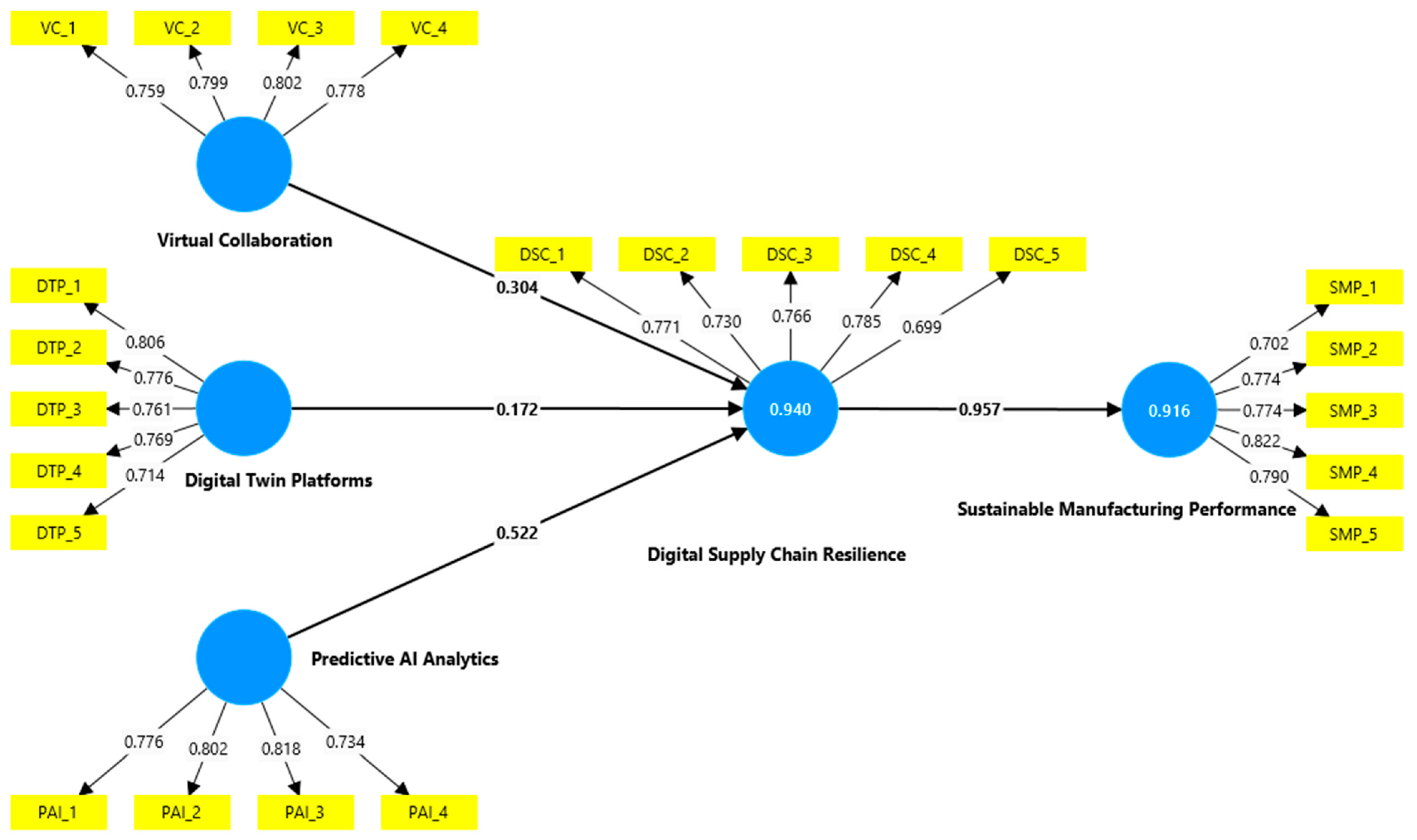
Table 2, the factor loadings were found to be above the recommended 0.70 as the ranges of the factor loadings are between 0.699 and 0.822, which allows the conclusion that indicator reliability is acceptable. None of the items were removed and all the indicators met the minimum requirements to be incorporated in PLS-SEM. In order to strengthen the believability of the CMB diagnostics, there were certain test values that were added. The single-factor test conducted by Harman was used to show that the initial unrotated factor captured 28.4 per cent of the total variance, far below the 50 per cent mark of the dataset, which was used to indicate that no single factor prevailed in the dataset. In addition, inner VIF values lay in the range of 1.62–2.47, which proves a lack of multicollinearity and visualizes the fact that common method bias was not a critical issue in the model.
Cronbach and composite reliability were employed in the appraisal of internal consistency. Cronbach53 of all constructs was between 0.789 and 0.831, which is much higher than 0.70, which was the lowest standard required [
48]. The values of composite reliability (ρc) were 0.864 to 0.881 and confirmed good construct reliability and the cut-off value of 0.70 was suggested to be used in exploratory and confirmatory research [
42].
The assessment of convergent validity was performed through average variance extracted (AVE). The values of AVE obtained results of above 0.50 that ranged between 0.564 and 0.616, which implies that over 50 per cent of the variance is captured by the respective indicators [
49]. As a result, convergent validity was achieved on all the latent variables of the model.
These results prove the fact that the reflective measurement model has a sufficient level of reliability and convergent validity, which makes it appropriate to further structural model examination.
The ultimate validated measurement model is illustrated in
Figure 3 and it presents the standardized loadings of the items and the structural relationships among the latent constructs. The high loading values (0.699–0.822) of the diagram support the consistency of the indicators presented to the table above, and the clear distinction in constructs is also in line with the results of discriminant validity detected through HTMT and Fornell–Larcker techniques as
Table 3 and
Table 4 shows. Furthermore, the intensity and the direction of the structural paths in
Figure 2 provide the hypothesized relationships as tested in the structural-model evaluation which provide a visual foundation to the path coefficients and the levels of significance as later discussed in
Table 5 and
Table 6.
The values of HTMT of the latent constructs are shown in
Table 3. All HTMTs fall below the conservative value of 0.85 which indicates that the discriminant validity is determined [
50]. The largest HTMT is seen between predictive AI analytics and digital supply chain resilience (0.491) and this is still within the acceptable range, which implies that the constructs are conceptually different and have no worrying overlap. All these findings together with the Fornell–Larcker criterion and satisfactory loading patterns indicate that the reflective constructs possess the standards of the desired level of discriminant validity as
Table 4 shows.
The square root of the average variance extracted (AVE) of individual constructs are indicated by the diagonal items that are in bold. Discriminant validity is supported by validity when these diagonal elements are higher at inter-construct correlations of respective rows and columns [
49].
The values of R Square suggest that the model accounts 94 percent and 91.6 percent of the variance in digital supply chain resilience and sustainable manufacturing performance, respectively. These high numbers indicate high explanatory power which is beyond the standard level set to provide a strong model in the social science research [
42].
6.2. Structural Model Assessment
Connection between the hypotheses as proposed in the study framework was tested through analysis of the structural model by measuring the partial least squares structural equation modeling (PLS-SEM) in SmartPLS. The importance of the path coefficients was also evaluated with bootstrapping 5000 subsamples, which also made possible the estimation of t-values and p-values to determine the significance of the inter-construct correlations statistically.
As shown in
Table 1, all the hypothesized relationships are statistically significant (
p < 0.001), thus allowing very strong evidence on the proposed relationships. Specifically, digital supply chain resilience (DSCR) has a significant direct impact on sustainable manufacturing performance (SMP) with 4.501 being the
t-value and 0.000 being the
p-value, which proves that it is the central phenomenon impacted by other digital enablers included into the model.
Both predictive AI analytics and virtual collaboration demonstrate strong positive effects on the DSCR with 0.522 and 0.304 as 0.21 and 0.20 correspondingly, and both have equally significant and direct effects on SMP (β 0.499 and 0.291). These findings demonstrate the paramount importance of digitally enabled collaboration and the capability of analytics in enhancing supply chain resilience and outcomes of sustainability.
Moreover, digital twin platforms have statistically significant positive impacts on both DSCR (β 0.172 t = 3.889) and SMP (β 0.164 t = 3.903), which proves the fact that immersive and real-time modeling technologies contribute significantly to digital readiness and the achievement of a sustainable manufacturing process.
6.3. Mediation Analysis
Mediation analysis of the relationships between the digital supply chain resilience (DSCR) and the digital enablers, as well as the associations among the digital enablers, was performed through the bootstrapping procedure in SmartPLS with 5000 subsamples. The findings are summarized in
Table 7, which gives the indirect effects and the level of significance.
It was identified that all three digital enablers, which include digital twin platforms (DTPs), predictive AI analytics (PAIA), and virtual collaboration (VC), had strong positive indirect impacts on sustainable manufacturing performance through digital supply chain resilience. The results obtained suggest that DSCR should be regarded as an important mediator that increases the impact of digital technologies on sustainability outcomes.
Namely, the indirect impact of predictive AI analytics on SMP through DSCR was the most significant (b = 0.499, t = 4.776, p = 0.000), indicating that data-based insights play an important role in enhancing sustainable performance through enhancing supply chain resilience. On the same note, virtual collaboration (b = 0.291, t = 6.259, p = 0.000) and digital twin platforms (b = 0.164, t = 3.903, p = 0.000) also showed significant mediation impacts, which mean that immersive digital interactions and real-time digital modeling have a positive impact on sustainability due to greater adaptability of the supply chain.
These findings align with the resource orchestration theory (ROT) which postulates that the effective structuring, bundling, and leveraging of digital resources facilitate firms to develop dynamic capabilities, e.g., resilience that creates competitive and sustainable performances. Predictive AI analytics has the most direct effect on digital supply chain resilience (0.522), which is especially in line with the working conditions of the manufacturing industry in Jordan. Jordanian producers have to undergo the unremitting volatility of the supply chain owing to their reliance on imported raw materials, high transport expenses, geopolitical disturbance in adjacent areas, and frequent shocks in the transportation across borders. In that case, predictive AI functions, including demand forecasting, anomaly detection, and early disruption alerts, can be considered crucial in predicting risks and continuity. Jordanian manufacturers have been moving towards AI-based forecasting applications to offset small inventory buffers and infrastructural limitations, which is why predictive AI analytics has become the leading facilitator of supply chain resilience in the specified case.
6.4. Discussion of Findings
The findings of this research provide solid empirical evidence to justify how metaverse integration driven by AI shows a strong and significant association with sustainable manufacturing performance in the industrial sector of Jordan. Informed by the resource orchestration theory (ROT), the results indicate that whilst the implementation of technologies, such as predictive AI analytics and virtual collaboration systems, and the use of a digital twin platform, is imperative, the special focus on the successful alignment of digital means to a dynamic capacity (i.e., digital supply chain resilience) is what leads to a high level of sustainability achievements. The fact that digital supply chain resilience has a huge impact on sustainable manufacturing performance (b = 0.957,
p = 0.001) confirms the idea that resilient supply chains are not only more resistant to disruptions but also better placed to achieve both environmental and operational goals, which is consistent with similar studies that have established that resilience can facilitate resource optimization and emissions reduction in the face of uncertainty [
13,
30,
51]. This tendency is correlated with the resource orchestration theory (ROT); companies in a resource-limited setting, like Jordan, rely on predictive intelligence to plan and use the minimal technological and operations resources. The high level of relevance of predictive AI analytics serves as evidence of the strategic necessity to foresee disruptions and optimize the decisions in advance, making AI-based foresight a central process according to which resilience and sustainability can be achieved under the emerging market conditions. The high applicability of AI-based metaverse applications is further enhanced in situations that are highly volatile and have low predictability of the supply chain. Such capability to combine real-time simulation (through digital twins), proactive forecasting (through AI analytics), and fast coordination (through virtual collaboration) allows the firm to have a sophisticated digital infrastructure that can alleviate any disruption and stabilize operations. Technological synergy explains why metaverse-enabled capabilities will act as useful and high-impact resilience-building tools, particularly in emerging economies where more conventional buffers can be constrained, e.g., inventory or idle capacity.
The regression coefficient between digital supply chain resilience and sustainable manufacturing performance (b = 0.957) is relatively large, but further diagnostic tests can attest to the fact that such an outcome cannot be explained by multicollinearity, as well as the overlap of two constructs. All the VIFs were less than 3.0 which means that the latent variables are not problematic in collinearity. Similarly, the HTMT and Fornell–Larcker criterion were applied to determine that the construct of resilience and sustainable performance were both theoretically and statistically distinct concepts. This large coefficient is thus seen to reflect the substantive theoretical relationship that is postulated by ROT, such that resilience is a key dynamic capability whereby firms convert digital resources into the outcome of sustainability.
Moreover, the direct and indirect impact of predictive AI analytics and virtual collaboration on sustainable performance was high, which contributes to the idea that the ability of the supply chain to predict risks, maximize workflows, and reduce environmental waste can be improved with the help of data-driven intelligence and real-time coordination by distributed teams. The findings are consistent with the recent studies that highlight that AI-assisted decision systems and interactions supported by the metaverse become the focal point of the circular and low-carbon manufacturing models, especially in unstable markets [
44,
52]. Although the results of digital twin platforms are slightly less significant than those of other results, they are still substantial and consistent with the growing body of evidence that digital twin simulations would enhance production transparency, allow optimization of lifecycle, and act as a linkage between the real and virtual world in sustainable production models [
53,
54,
55].
The mediation analysis also substantiates the idea that the concept of digital supply chain resilience is an important tool for digital technologies to exercise their effect on sustainability. This confirms the theoretical perspective that the sidelining and resource bundling, as explained in ROT, are vital in the realization of the performance benefits unattainable with the help of individual technological investments only [
56]. Compared to corresponding studies in technologically advanced economies, this study records comparatively high effect sizes, implying that the emerging markets like Jordan can be enjoying more of the benefits of initial digital transformation especially when supported by strategic resource coordination [
57]. These results, cumulatively, expand the sustainability digital transformation literature by participating in the metaverse–resilience–sustainability nexus empirically and providing practical information to industrial companies in an attempt to use Industry 4.0 tools as a competitive and environmental edge. Although the results of the current study provide sufficient information on the connection between AI expertise as the main driver of metaverse functions, digital health, and sustainable manufacturing responses, it is still necessary to consider a number of methodological issues to achieve a decent balance of interpretation. While procedural and statistical fixes were made to reduce common method bias, including guarantees of anonymity, psychological isolation of items, Harman’s single-factor test, and VIF diagnostics, there was still likely the creation of perceptual inflation of the relationship due to the reliance on self-reported self-data of only one source. Moreover, the cross-sectional research design limits the ability to assume dynamic or causal relationships; therefore, the relationships presented should be perceived as associations and not causal influences. Lastly, the perceptions of managers regarding the adoption of technology might not always be consistent with the actual usage of systems or data regarding its operation and thus may create gaps between the perceived and actual digital capabilities. These limitations can be recognized to aid in putting the results into context, highlighting the need of supplementing methodological approaches in future studies.
7. Conclusions and Implications
The aim of conducting the study was to investigate how AI-enabled metaverse technologies can affect sustainable manufacturing performance, and the mediating variable in the study is digital supply chain resilience. Based on the resource orchestration theory (ROT), the empirical data prove that predictive AI analytics, virtual collaboration systems, and digital twins significantly enhance sustainability outcomes, both directly and indirectly, as it helps to ensure resilient supply chain capacities. The results highlight the strategic alignment of digital resources when going beyond adoption as being the key factor in allowing firms to endure disruption, integrate sustainability in the key processes, and hasten towards achieving green manufacturing aims. The remarkable explanatory capabilities of the model (R 2 = 0.916 in the case of sustainability performance) proves that digital supply chain resilience is a key performance channel in technology-intensive industries, especially in the emerging markets like Jordan.
Theoretically, this study will widen the literature as it combines digital transformation, metaverse applications, and sustainability performance into a single model that is based on ROT. It also contributes towards the developing literature on Industry 4.0 by drawing empirical examples that the performance value of new technologies is contingent upon the coordination into dynamic capabilities to facilitate environmental as well as strategic objectives. In practice, the research can provide industrial managers with practical information on the ways investment in AI analytics, collaborative systems, and virtual simulation systems can be a profitable opportunity that should be exploited not just to achieve efficiency but also to bring tangible, quantifiable sustainability to the table. The findings indicate that the capability-building efforts of real-time data integration, digital tools upskilling, and cross-functional alignment between operations and sustainability strategies should be prioritized by firms interested in developing a resilient and sustainable supply chain.
This study can also be used to make inferences by policy makers in developing economies. The facts also highlight the need to support the digital infrastructure nationally and encourage sustainable innovation, as well as develop new regulatory frameworks that trigger the adoption of AI and metaverse technologies into the industrial processes. These are needed to provide support to small and medium businesses (SMEs) which often face resource limitations in their digital and sustainable transformation activities. Lastly, the findings of the study can be utilized by academic institutions to establish interdisciplinary programs that equip future leaders with the ability to work in technology, sustainability, and operations management.
To sum up, this study reaffirms that digital supply chain resilience is not a technological aftermath, but it appears as a result of deliberate and strategic coordination. With industries becoming more and more exposed to environmental and market unpredictability, adopting metaverse-enabled digital capabilities in supply chain systems is an influential and essential change towards sustainable, future-proof manufacturing.
8. Limitations and Future Research Directions
Although this research provides important additions to the understanding of how digital technologies with metaverses make sustainable manufacturing possible, through improved digital supply chain resiliency, several limitations should be recognized, which, in turn, provide opportunities for further research. Since the research is based on cross-sectional and intra-subjective information, the relationships that are identified are not causal, but statistical correlations. In spite of the fact that the findings correspond to the theoretical assumptions of the resource orchestration theory (ROT), longitudinal, time-lagged, or even experimental designs would be necessary to determine clear causal sequences between AI-driven metaverse capabilities, digital resilience, and outcomes of sustainability.
First, cross-sectional design does not allow causal inference because the data represent relationships at one point in the time. Subsequent research may take the form of a longitudinal or an experiment to investigate the dynamics of digital resilience and sustainability performance over time, especially during the event of a supply chain disruption or technological progress.
Second, it is a study limited to the industrial sector in Jordan, which may not be relevant to other areas or industries with various prevailing levels of digital maturity or regulatory conditions. Comparative research in various countries or industries, i.e., in the automotive sector, pharmaceuticals or energy, would allow a more generalized result and provide answers on whether similar mechanisms can be applied in different settings.
Third, the data were collected through the self-report survey responses of the organizational managers, who can be prone to perceptual bias. The validity of later research can be enhanced by including the objective data of performance or correlating the results of the survey with the secondary information sources, e.g., sustainability reports, digital capability indexes, etc. Additionally, whereas the current model focuses on three digital antecedents, such as digital twin, predictive AI analytics, and virtual collaboration, future studies might expand the potential range of future research to focus on the new technologies, including blockchain, augmented reality, and IoT-enabled smart logistics, and the impact of their combination on the outcomes of sustainability and resilience.
Other avenues of opportunities include investigating the moderating presence of organizational culture, digital readiness, or leadership orientation in enhancing the effects of digital technologies on supply chain resilience. Moreover, qualitative or mixed-method design would be able to offer more information on the organizational processes and decision-making frameworks that contribute to the successful implementation and coordination of these technologies to practice.
The author conceptualizes digital twins, predictive AI analytics, and virtual collaboration platforms as orchestra table digital resources, which managers actively organize, package, and capitalize on to build higher-order capabilities. In resource orchestration theory, structuring involves procuring and organizing resources; in this case, digital twins and predictive analytics are structured digital sensing and modeling resources. Bundling is defined as the combination of complementary resources, and the metaverse ecosystem allows firms to fit simulation (DT), anticipation (AI) and collaboration (VC) in a single operational architecture. The leverage is on the application of such bundled resources to the delivery of the performance results; when coordinated properly, the metaverse-based tools help increase the ability of a firm to recognize the disturbances, organize the reaction, and keep the flow continuing, so it becomes the dynamic capability of the digital supply chain resilience. This viewpoint explains why the metaverse technologies surrounding AI are not as explored as autonomous technology, but instead are complementary digital resources that are compatible with the capability-building processes of resource orchestration theory.
It is advised that future studies should integrate multi-source/secondary data to cross-laud. Perceptual survey can be enhanced by objective indicators like energy consumption records, carbon emissions records, records of production downtimes or even digital capabilities tests and this will give the findings a stronger ground concerning sustainability.
The appropriateness of the implementation of AI-powered metaverse technologies in the resilience strategies of organizations can be explained by the fact that this technology has the unique ability to combine simulation, anticipation, and real-time teamwork within a unified digital space. Digital twins offer uninterrupted visibility on assets and processes that allow firms to model disruptions before they occur. Predictive AI analytics improve forecasting, thereby increasing anticipation of anomalies, predicting demand changes, and providing early warnings. At the same time, virtual collaboration with the help of the metaverse allows distributed teams and supply chain partners to coordinate reactions in real time with the help of immersive, common interfaces. All these capabilities contribute directly to the fundamental dimensions of resilience, namely agility, responsiveness, and operational continuity, therefore making the AI-based metaverse a very relevant new technology strategy of the enterprise functioning in unpredictable and disruptive conditions.
Overall, future studies need to focus on deepening theoretical and practical insights by dealing with limitations to delivering more complex and multi-dimensional views on how digital transformation can accelerate the process of sustainable value creation in contemporary supply chains.