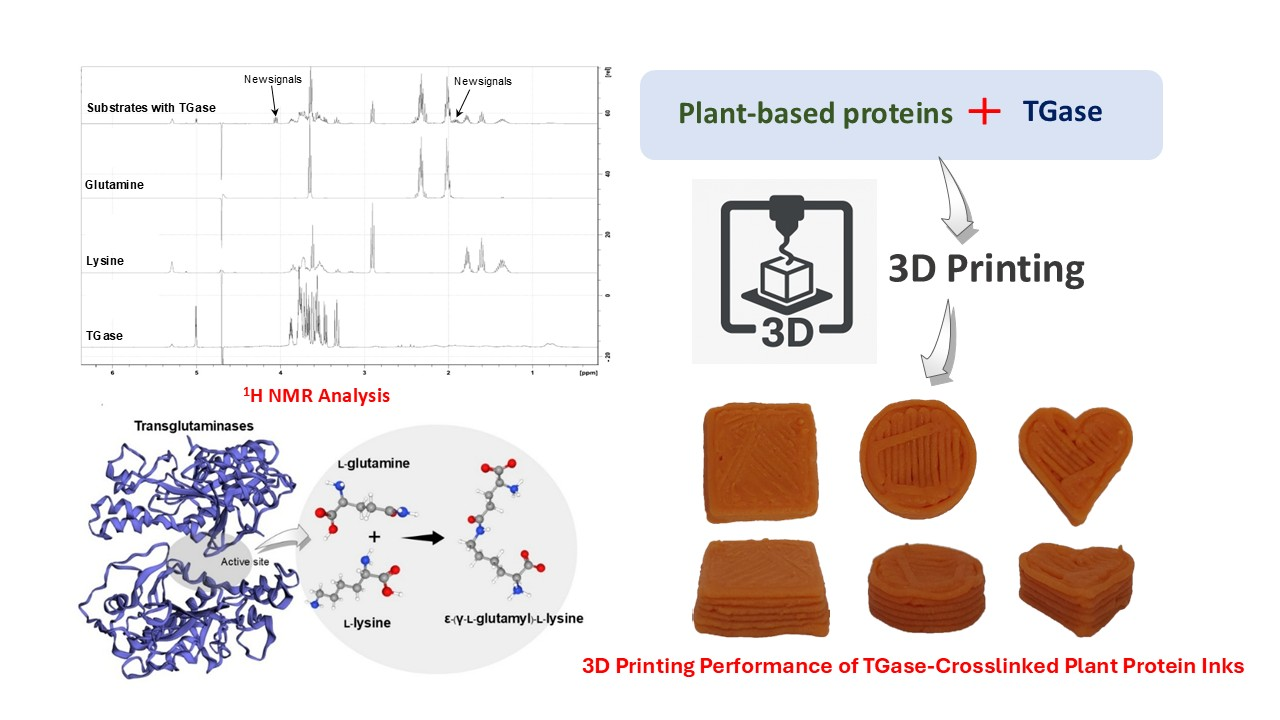
Plant-Based Protein Bioinks with Transglutaminase Crosslinking: 3D Printability and Molecular Insights from NMR and Synchrotron-FTIR

 ,
,  ,
,  , , , , and
Abstract
1. Introduction
2. Materials and Methods
2.1. Chemicals
2.2. Preparation of TGase-Crosslinked Protein Samples
2.3. Determination of Accessible Primary Amines by TNBS Assay
2.4. H-NMR-Based Analysis
2.5. Synchrotron Radiation-Based FTIR
2.6. Rheology Properties Analysis
2.7. Electrophoretic Analysis
2.8. Plant-Based Protein Bioinks Preparation and 3D Printing Process
2.9. Texture Profile Analysis (TPA)
2.10. Scanning Electron Microscopy (SEM)
2.11. Statistical Analysis
3. Results and Discussion
3.1. Impact of Tgase on Protein Crosslinking in Different Plant-Based Protein
3.1.1. Accessible Primary Amines by TNBS
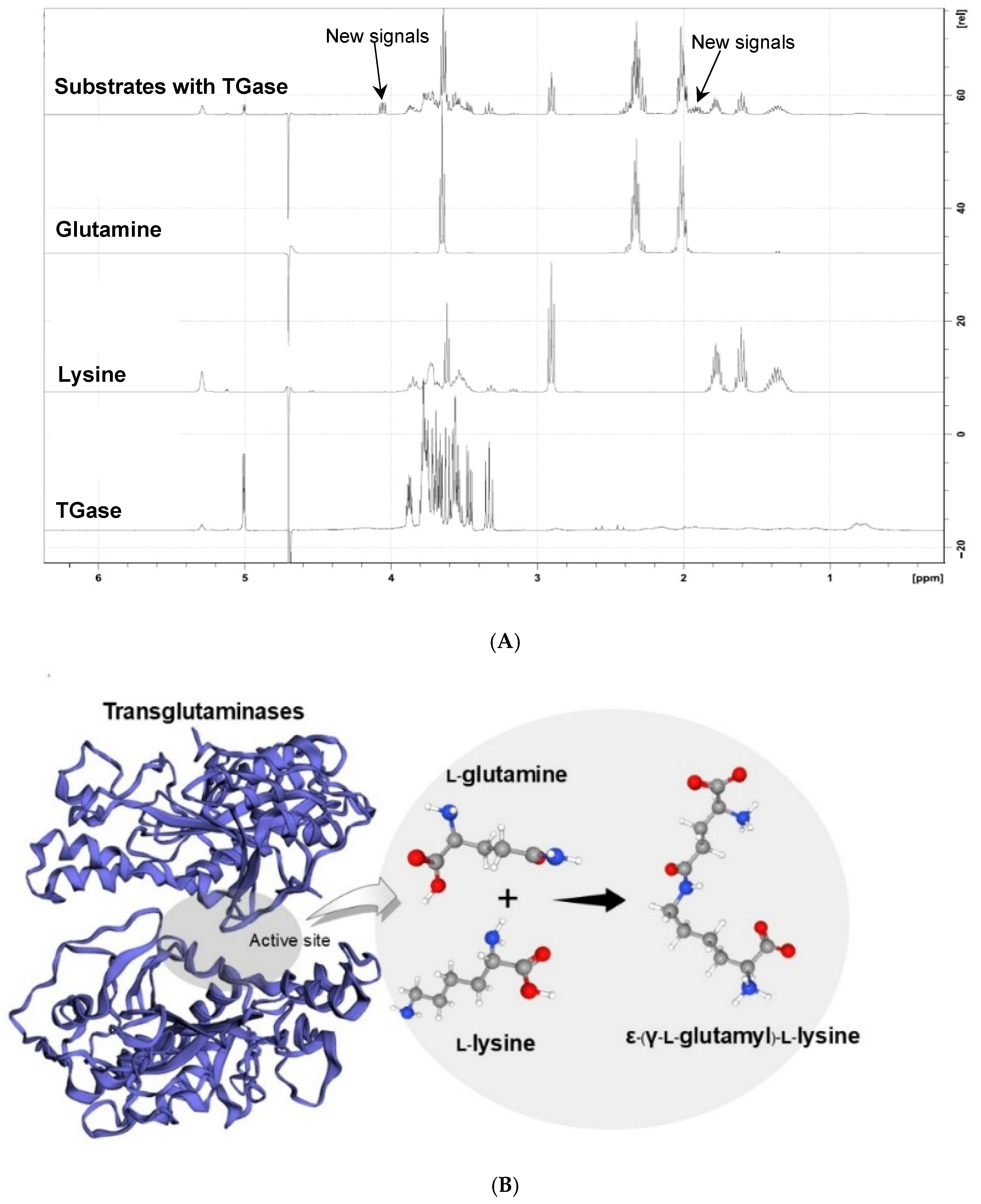
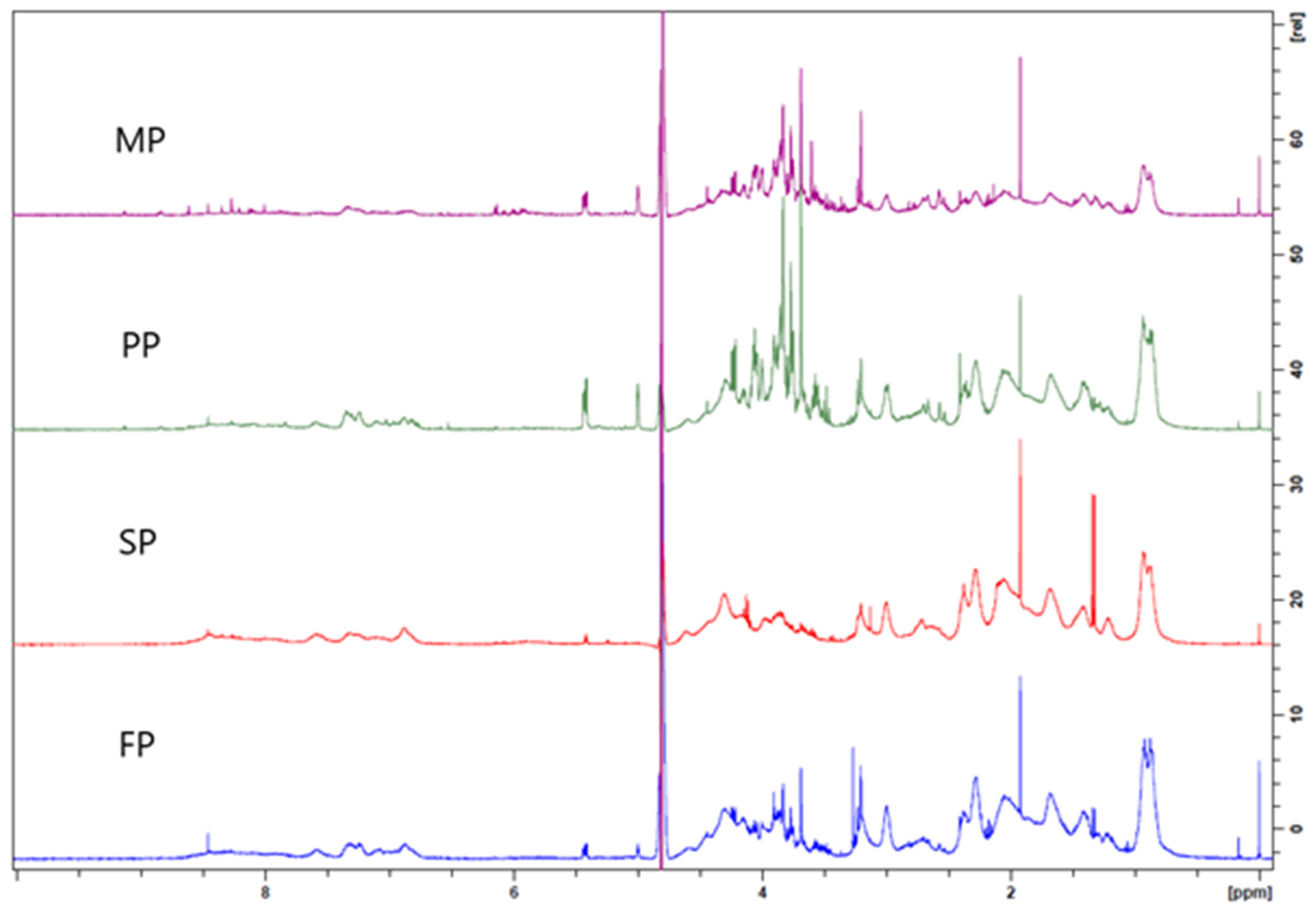
3.1.2. Analysis of Protein Crosslinking by NMR
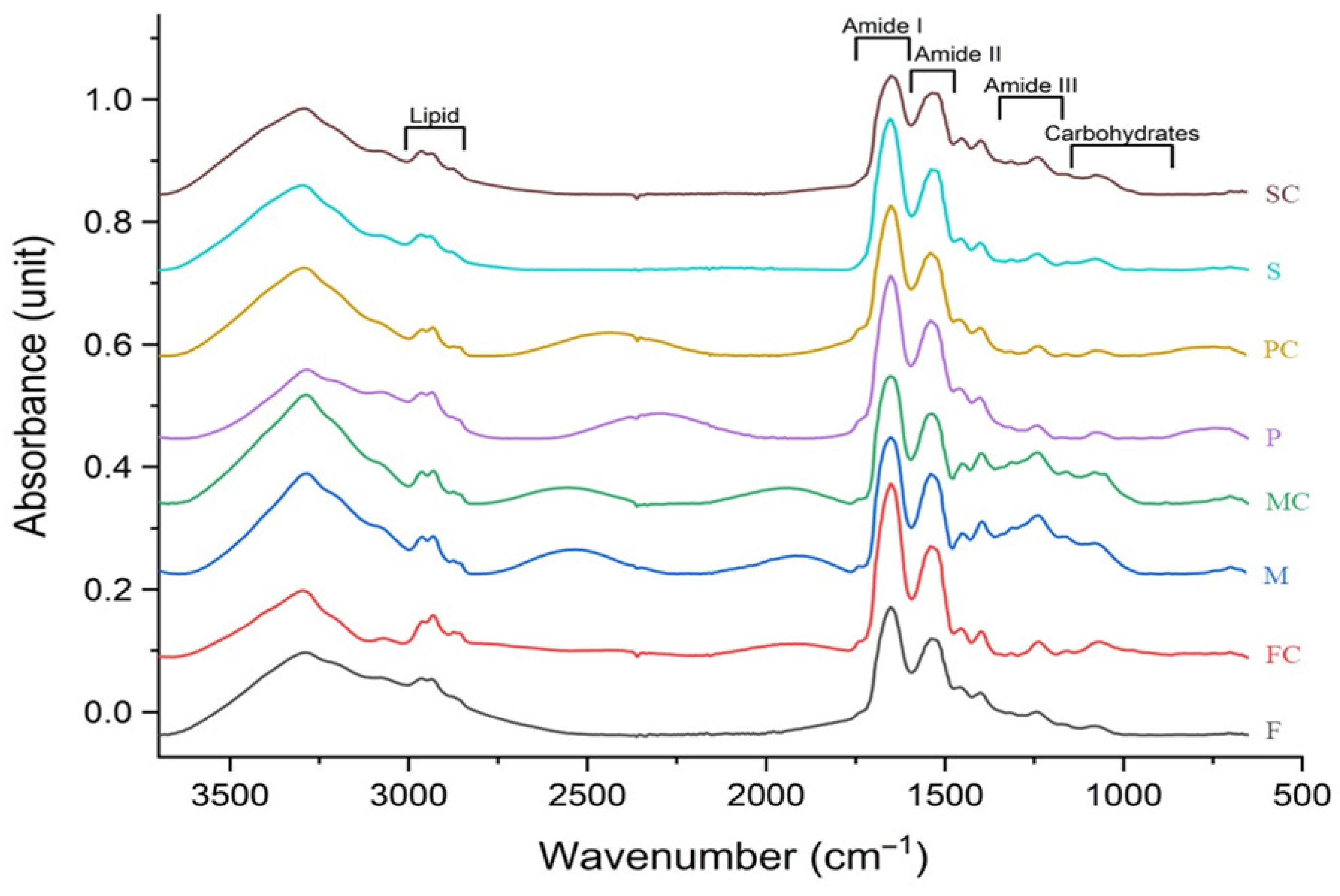
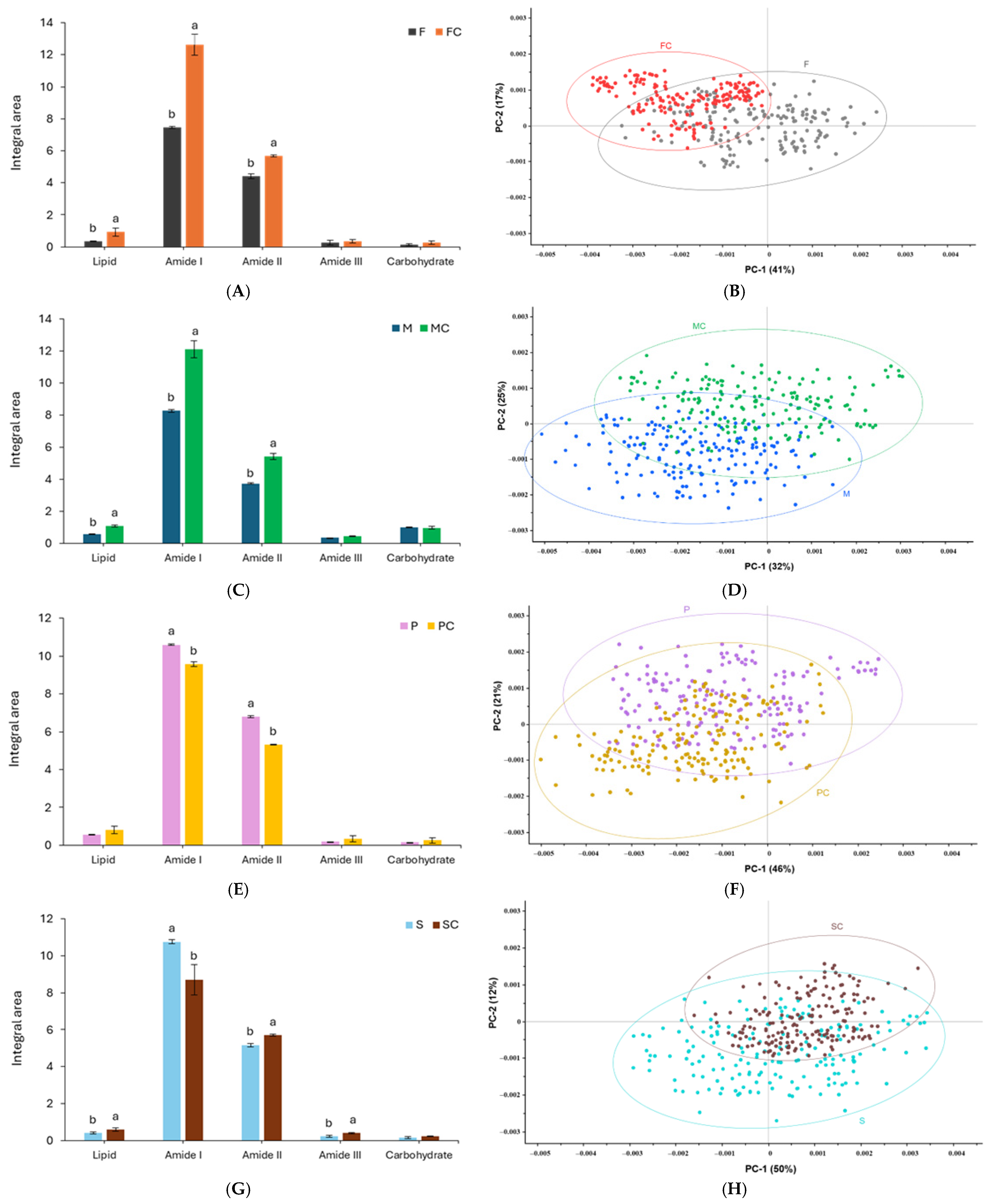
3.1.3. Analysis of Protein Crosslinking by SR-FTIR
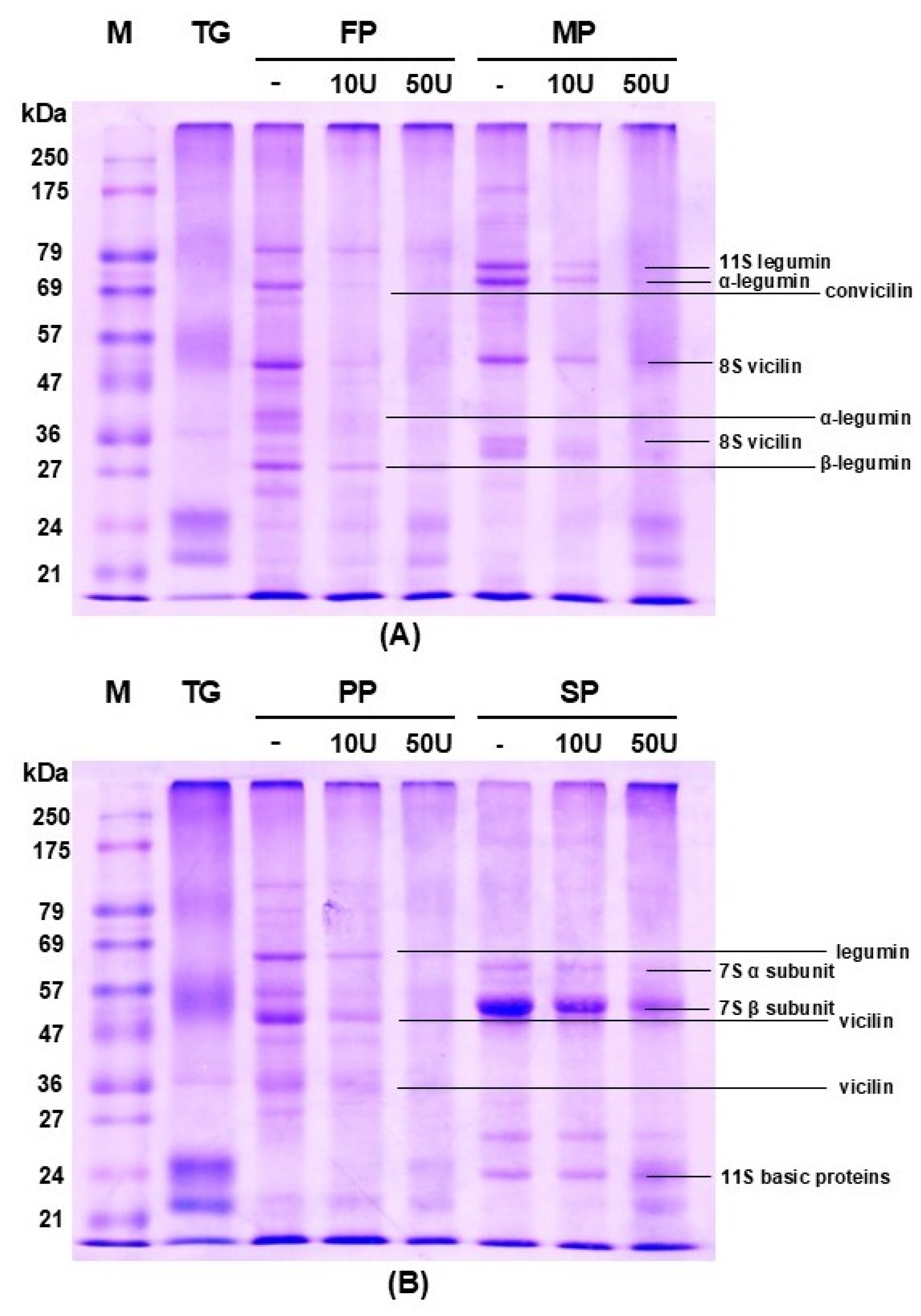
3.1.4. Protein Pattern by SDS-PAGE
3.2. Rheological Analysis
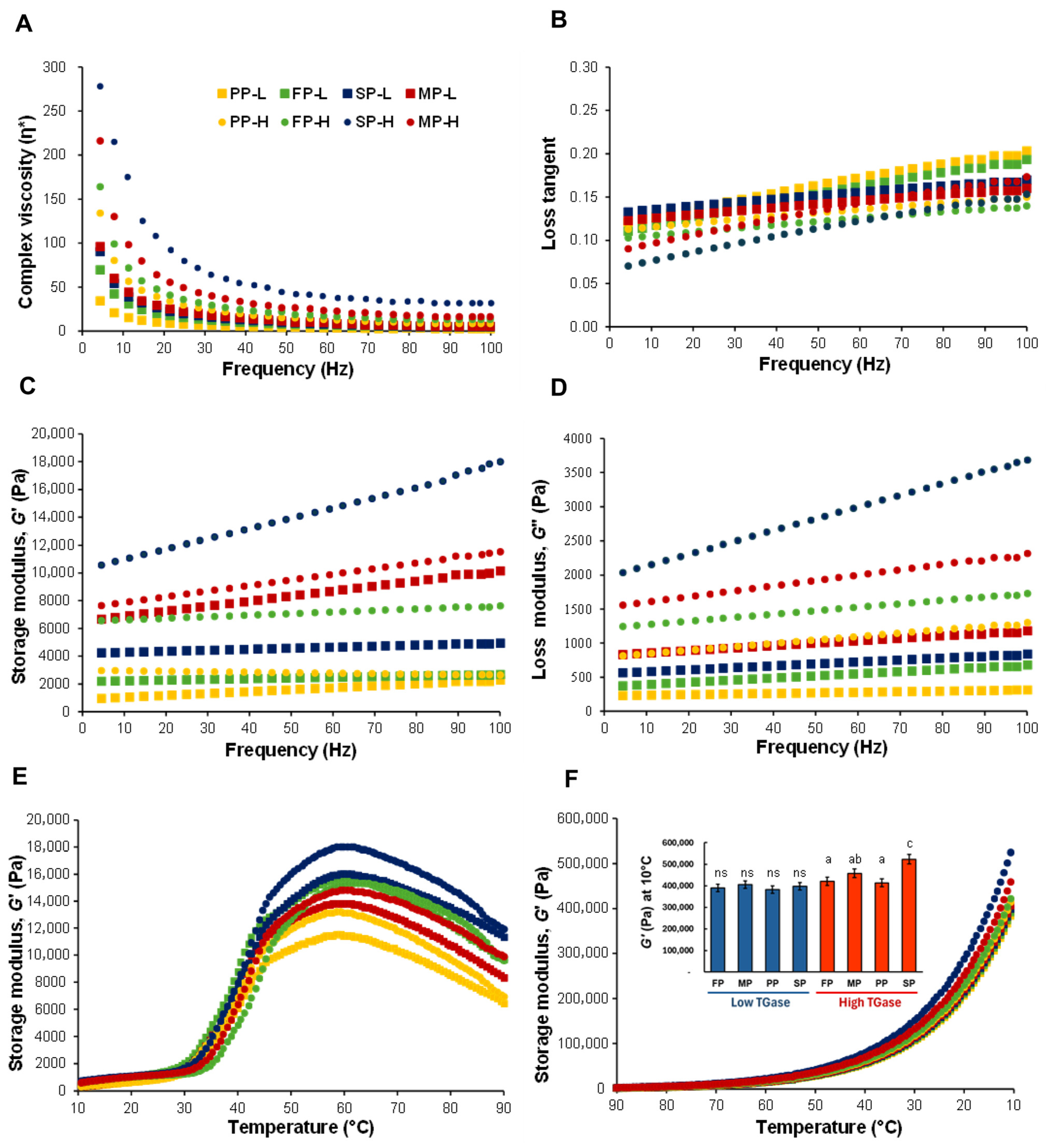
3.2.1. Viscoelastic Properties
3.2.2. Temperature Sweep Measurements
3.3. Three Dimensionally Printed Plant-Based Protein
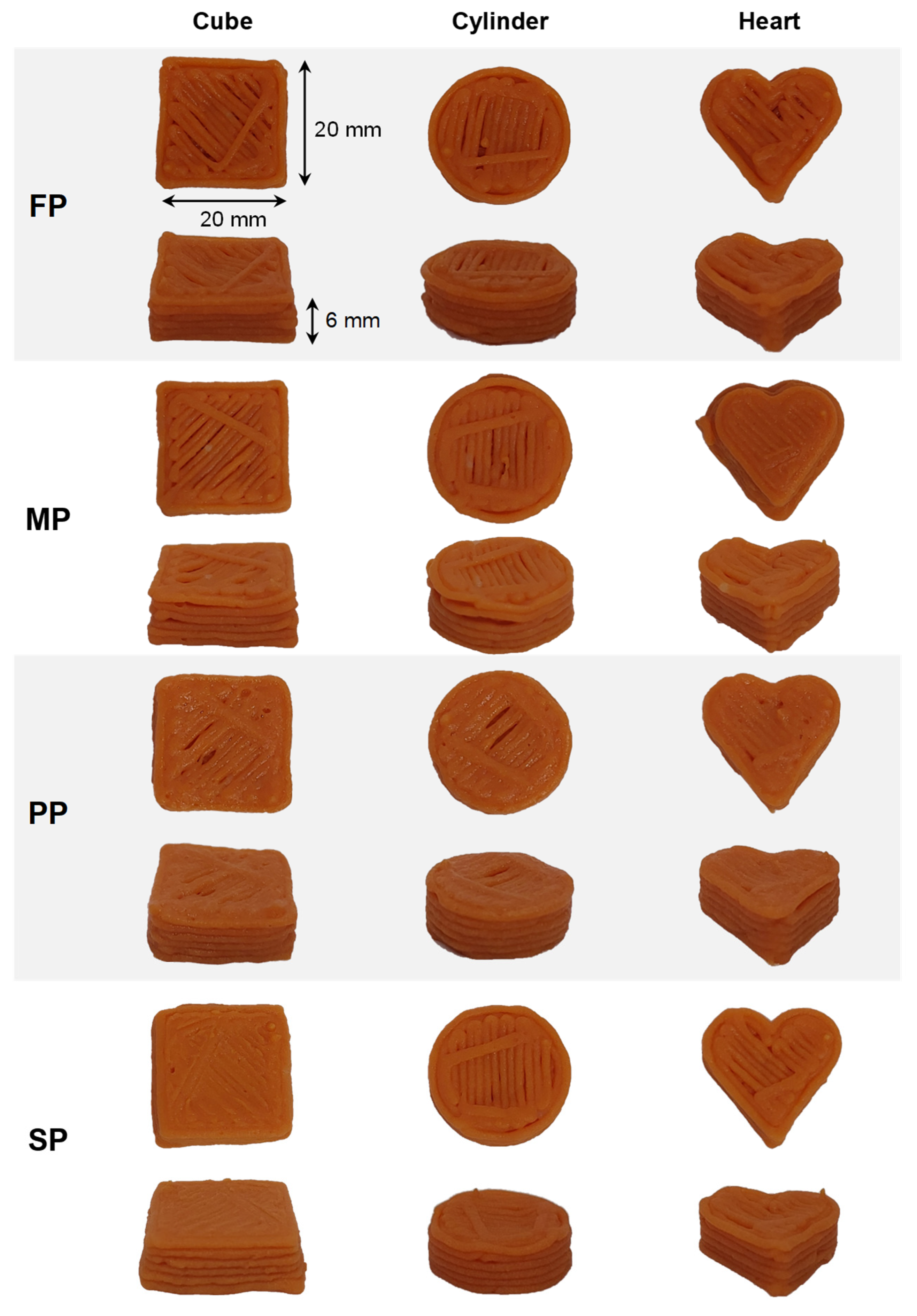
3.3.1. Printing Performance of Printing Inks and Printing Accuracy
3.3.2. Texture Profile Analysis
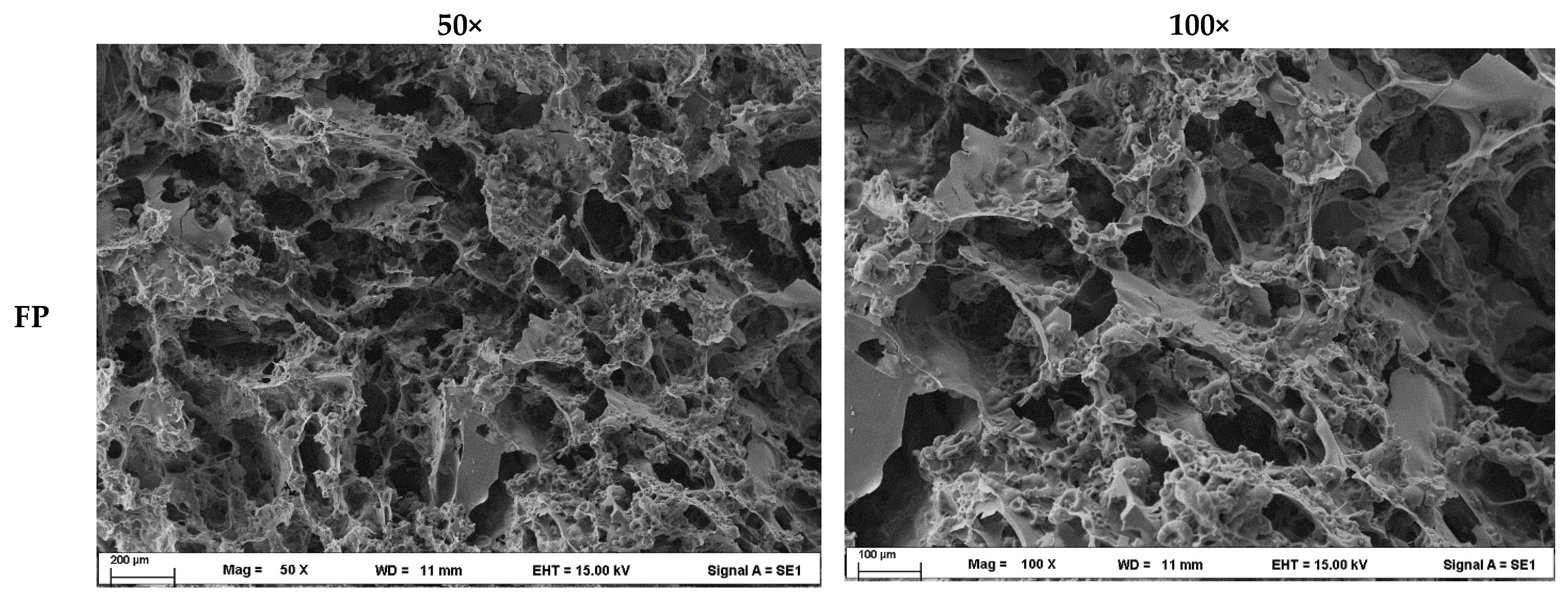
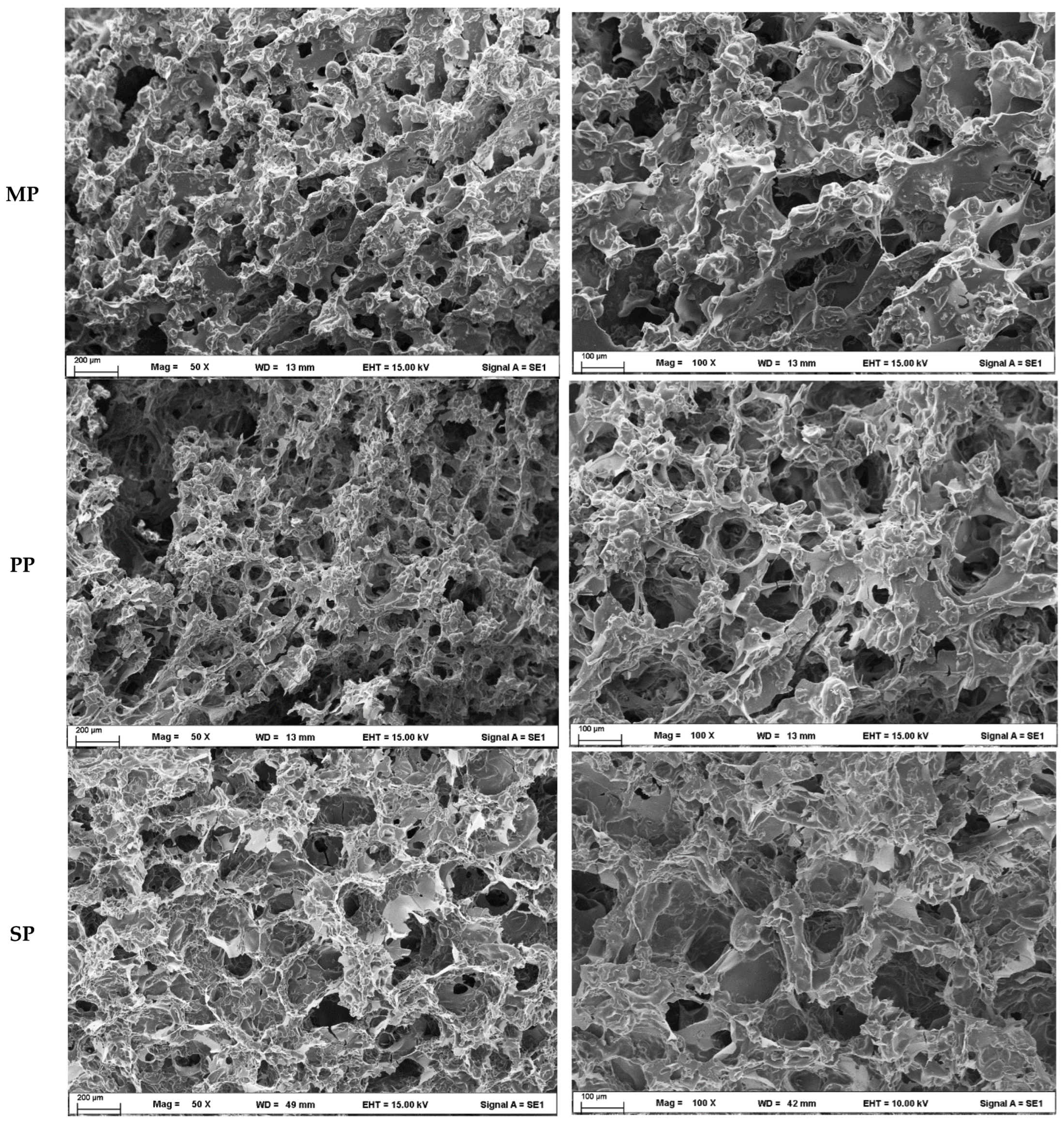
3.3.3. Gel Microstructure
4. Conclusions
Supplementary Materials
Author Contributions
Funding
Institutional Review Board Statement
Informed Consent Statement
Data Availability Statement
Acknowledgments
Conflicts of Interest
Abbreviations
| FP | Fava bean protein isolate |
| MP | Mung bean protein isolate |
| PP | Pea protein isolate |
| SP | Soy bean protein isolate |
| TGase | Transglutaminase |
References
- McClements, D.J. Development of next-generation nutritionally fortified plant-based milk substitutes: Structural design principles. Foods 2020, 9, 421. [Google Scholar] [CrossRef] [PubMed]
- Godoi, F.C.; Prakash, S.; Bhandari, B.R. 3D printing technologies applied for food design: Status and prospects. J. Food Eng. 2016, 179, 44–54. [Google Scholar] [CrossRef]
- Liu, Z.; Zhang, M.; Bhandari, B.; Wang, Y. 3D printing: Printing precision and application in food sector. Trends Food Sci. Technol. 2018, 69, 83–94. [Google Scholar] [CrossRef]
- Qiu, Y.; McClements, D.J.; Chen, J.; Li, C.; Liu, C.; Dai, T. Construction of 3D printed meat analogs from plant-based proteins: Improving the printing performance of soy protein- and gluten-based pastes facilitated by rice protein. Food Res. Int. 2023, 167, 112635. [Google Scholar] [CrossRef]
- Drozdov, A.D.; deClaville Christiansen, J. Rheology of plant protein–polysaccharide gel inks for 3D food printing: Modeling and structure–property relations. J. Food Eng. 2024, 380, 112150. [Google Scholar] [CrossRef]
- Liu, Y.; Wen, Z.; Sun, J.; Lu, Y.; Roopesh, M.S.; Cui, L.; Pan, D.; Du, L. Cold argon plasma-modified pea protein isolate: A strategy to enhance ink performance and digestibility in 3D-printed plant-based meat. Int. J. Biol. Macromol. 2025, 311, 144049. [Google Scholar] [CrossRef]
- Derossi, A.; Caporizzi, R.; Azzollini, D.; Severini, C. Application of 3D printing for customized food. A case on the development of a fruit-based snack for children. J. Food Eng. 2018, 220, 65–75. [Google Scholar] [CrossRef]
- Vancauwenberghe, V.; Katalagarianakis, L.; Wang, Z.; Meerts, M.; Hertog, M.; Verboven, P.; Nicolaï, B. Pectin based food-ink formulations for 3-D printing of customizable porous food simulants. Innov. Food Sci. Emerg. Technol. 2017, 42, 138–150. [Google Scholar] [CrossRef]
- Motoki, M.; Seguro, K. Transglutaminase and its use for food processing. Trends Food Sci. Technol. 1998, 9, 204–210. [Google Scholar] [CrossRef]
- Kieliszek, M.; Misiewicz, A. Microbial transglutaminase and its application in the food industry. A review. Folia Microbiol. 2014, 59, 241–250. [Google Scholar] [CrossRef]
- Qin, X.S.; Luo, S.Z.; Cai, J.; Zhong, X.Y.; Jiang, S.T.; Zhao, Y.Y.; Zheng, Z. Transglutaminase-induced gelation properties of soy protein isolate and wheat gluten mixtures with high intensity ultrasonic pretreatment. Ultrason. Sonochem. 2016, 31, 590–597. [Google Scholar] [CrossRef] [PubMed]
- Zhao, Q.; Hu, X.; Guo, K.; Li, S.; Li, T. Effects of TGase on the rheological behaviors, structural properties and molecular forces of cowpea protein isolate and cowpea albumin gels. Int. J. Biol. Macromol. 2025, 291, 139154. [Google Scholar] [CrossRef] [PubMed]
- Cheng, Z.; Qiu, Y.; Ahmad, I.; Pang, Y.; Yue, A.; Chen, Z.; Zhang, G.; Ding, Y.; Lyu, F. Enhancement of structural properties of 3D-printed plant-based meat analogs by TGase/laccase. J. Food Eng. 2025, 387, 112352. [Google Scholar] [CrossRef]
- Leelapunnawut, S.; Ngamwonglumlert, L.; Devahastin, S.; Derossi, A.; Caporizzi, R.; Chiewchan, N. Effects of texture modifiers on physicochemical properties of 3D-printed meat mimics from pea protein isolate-alginate gel mixture. Foods 2022, 11, 3947. [Google Scholar] [CrossRef]
- Zimoch-Korzycka, A.; Krawczyk, A.; Król-Kilińska, Ż.; Kulig, D.; Bobak, L.; Jarmoluk, A. Influence of microbial transglutaminase on the formation of physico-chemical properties of meat analogs. Foods 2024, 13, 4085. [Google Scholar] [CrossRef]
- Zhao, L.; Chen, M.-H.; Bi, X.; Du, J. Physicochemical properties, structural characteristics and in vitro digestion of brown rice–pea protein isolate blend treated by microbial transglutaminase. Food Hydrocoll. 2023, 141, 108673. [Google Scholar] [CrossRef]
- De Meutter, J.; Goormaghtigh, E. Evaluation of protein secondary structure from FTIR spectra improved after partial deuteration. Eur. Biophys. J. 2021, 50, 1063–1075. [Google Scholar] [CrossRef]
- Niu, Q.; Liu, E.; Huo, C.; Zhang, F.; He, R.; Yang, J.; Zhao, Z. Effects of transglutaminase and heat treatment on the structure and gelation properties of camel casein protein. Foods 2025, 14, 1644. [Google Scholar] [CrossRef]
- Djoullah, A.; Sok, N.; Djemaoune, Y.; Penouilh, M.-J.; Husson, F.; Saurel, R. Monitoring of transglutaminase crosslinking reaction by 1H NMR spectroscopy on model substrates. Colloids Surf. A 2015, 475, 69–74. [Google Scholar] [CrossRef]
- Mondal, A.; Swapna, G.V.T.; Lopez, M.M.; Klang, L.; Hao, J.; Ma, L.; Roth, M.J.; Montelione, G.T.; Perez, A. Structure determination of challenging protein-peptide complexes combining NMR chemical shift data and molecular dynamics simulations. J. Chem. Inf. Model. 2023, 63, 2058–2072. [Google Scholar] [CrossRef]
- Karabulut, G.; Goksen, G.; Mousavi Khaneghah, A. Plant-based protein modification strategies towards challenges. J. Agric. Food Res. 2024, 15, 101017. [Google Scholar] [CrossRef]
- Tay, J.U.; Oh, J.L.-E.; Lu, Y.; Antipina, M.N.; Zhou, W.; Huang, D. 3D printing of prawn mimics with faba proteins: The effects of transglutaminase and curdlan gum on texture. Int. J. Biol. Macromol. 2024, 274, 133235. [Google Scholar] [CrossRef] [PubMed]
- Wu, S.; Xia, J.; Wei, Z.; Sun, W.; Zhang, X.; Xiang, N. Preparation, characterization, and foaming properties of soy protein nanoparticles by the cross-linking reaction induced by microbial transglutaminase. Food Hydrocoll. 2023, 140, 108627. [Google Scholar] [CrossRef]
- Sai-Ut, S.; Benjakul, S.; Sumpavapol, P. Gelatinolytic enzymes from Bacillus amyloliquefaciens isolated from fish docks: Characteristics and hydrolytic activity. Food Sci. Biotechnol. 2013, 22, 1015–1021. [Google Scholar] [CrossRef]
- Sai-Ut, S.; Watchasit, S.; Pongsetkul, J.; Kingwascharapong, P.; Suriyarak, S.; Grossmann, L.; Zhang, W.; Rawdkuen, S. Enhancing protein extraction from Pleurotus ostreatus using synergistic pH-shifting and ultrasonic technology: Optimization via RSM and 1H NMR-based metabolomic profiling. LWT 2024, 211, 116895. [Google Scholar] [CrossRef]
- Pongsetkul, J.; Saengsuk, N.; Siriwong, S.; Thumanu, K.; Yongsawatdigul, J.; Benjakul, S. A comprehensive study of sous-vide cooked Korat chicken breast processed by various conditions: Texture, compositional/structural changes, and consumer acceptance. Poult. Sci. 2024, 103, 103495. [Google Scholar] [CrossRef]
- Shen, H.; Fu, C.; Zhang, J.; Feng, B.; Yu, S. Protocol for determining protein dynamics using FT-IR spectroscopy. STAR Protoc. 2023, 4, 102587. [Google Scholar] [CrossRef]
- Rahman, M.; Li, R.; Farooq, S.; Xu, M.; Fu, S.; Yu, R. Effects of ultrasound-assisted emulsification and enzyme-catalyzed cross-linking on the structural, rheological, and digestive properties of myofibrillar protein–peanut oleosome emulsion gels. Food Hydrocoll. 2026, 172, 112141. [Google Scholar] [CrossRef]
- Laemmli, U.K. Cleavage of structural proteins during the assembly of the head of bacteriophage T4. Nature 1970, 227, 680–685. [Google Scholar] [CrossRef]
- Wang, C.; Li, J.; Zhou, S.; Zhou, J.; Lan, Q.; Qin, W.; Wu, D.; Liu, J.; Yang, W.; Zhang, Q. Application of transglutaminase for quality improvement of whole soybean curd. J. Food Sci. Technol. 2019, 56, 233–244. [Google Scholar] [CrossRef]
- Jiang, J.; Xiong, Y.L.; Chen, J. Role of β-conglycinin and glycinin subunits in the pH-shifting-induced structural and physicochemical changes of soy protein isolate. J. Food Sci. 2011, 76, C293–C302. [Google Scholar] [CrossRef] [PubMed]
- Xia, W.; Pan, S.; Cheng, Z.; Tian, Y.; Huang, X. High-Intensity Ultrasound Treatment on Soy Protein after Selectively Proteolyzing Glycinin Component: Physical, Structural, and Aggregation Properties. Foods 2020, 9, 839. [Google Scholar] [CrossRef] [PubMed]
- Kang, S.; Shao, Y.; Li, Z.; Chang, W.; Song, J.; Hu, Y.; Li, S.; Luan, G. Mechanism of transglutaminase on film-forming and structural properties of soybean protein and its fractions: A study in different pH environments. Food Hydrocoll. 2024, 157, 110394. [Google Scholar] [CrossRef]
- Peng, Z.; Liu, K.; Liao, N. Effect of TGase crosslinking on the structure, emulsification, and gelling properties of soy isolate proteins. Foods 2025, 14, 2130. [Google Scholar] [CrossRef] [PubMed]
- Shanthakumar, P.; Klepacka, J.; Bains, A.; Chawla, P.; Dhull, S.B.; Najda, A. The current situation of pea protein and its application in the food industry. Molecules 2022, 27, 5354. [Google Scholar] [CrossRef]
- Jebalia, I.; Della Valle, G.; Dupont, D.; Santé-Lhoutellier, V.; Rabesona, H.; Henry, G.; Chevalier, S.; Guillevic, M.; Germain, A.; Chesneau, G.; et al. Functional and nutritional properties of fava bean ingredients processed by extrusion. Food Res. Int. 2025, 217, 116804. [Google Scholar] [CrossRef]
- Ohtsuka, T.; Ota, M.; Nio, N.; Motoki, M. Comparison of substrate specificities of transglutaminases using synthetic peptides as acyl donors. Biosci. Biotechnol. Biochem. 2000, 64, 2608–2613. [Google Scholar] [CrossRef]
- Borcherds, W.M.; Daughdrill, G.W. Using NMR chemical shifts to determine residue-specific secondary structure populations for intrinsically disordered proteins. Methods Enzymol. 2018, 611, 101–136. [Google Scholar] [CrossRef]
- Poulsen, F.M. A Brief Introduction to NMR Spectroscopy of Proteins. 2003, pp. 1–33. Available online: https://users.cs.duke.edu/~brd/Teaching/Bio/asmb/Papers/Intro-reviews/flemming.pdf (accessed on 7 November 2025).
- Madrid-Gambin, F.; Oller, S.; Marco, S.; Pozo, Ó.J.; Andres-Lacueva, C.; Llorach, R. Quantitative plasma profiling by 1H NMR-based metabolomics: Impact of sample treatment. Front. Mol. Biosci. 2023, 10, 1125582. [Google Scholar] [CrossRef]
- Chatham, J.C.; Forder, J.R. Lactic acid and protein interactions: Implications for the NMR visibility of lactate in biological systems. Biochim. Biophys. Acta 1999, 1426, 177–184. [Google Scholar] [CrossRef]
- He, L.; Jiang, B.; Peng, Y.; Zhang, X.; Liu, M. NMR based methods for metabolites analysis. Anal. Chem. 2025, 97, 5393–5406. [Google Scholar] [CrossRef]
- Mahrous, E.A.; Farag, M.A. Two dimensional NMR spectroscopic approaches for exploring plant metabolome: A review. J. Adv. Res. 2015, 6, 3–15. [Google Scholar] [CrossRef]
- Gu, X.; Myung, Y.; Rodrigues, C.H.M.; Ascher, D.B. EFG-CS: Predicting chemical shifts from amino acid sequences with protein structure prediction using machine learning and deep learning models. Protein Sci. 2024, 33, e5096. [Google Scholar] [CrossRef]
- Howard, M.J. Protein NMR spectroscopy. Curr. Biol. 1998, 8, R331–R333. [Google Scholar] [CrossRef]
- Byler, D.M.; Susi, H. Examination of the secondary structure of proteins by deconvolved FTIR spectra. Biopolymers 1986, 25, 469–487. [Google Scholar] [CrossRef]
- Brewer, S.H.; Tang, Y.; Vu, D.M.; Gnanakaran, S.; Raleigh, D.P.; Dyer, R.B. Temperature dependence of water interactions with the amide carbonyls of α-helices. Biochemistry 2012, 51, 5293–5299. [Google Scholar] [CrossRef] [PubMed]
- Karjalainen, E.-L.; Barth, A. Vibrational coupling between helices influences the amide I infrared absorption of proteins: Application to bacteriorhodopsin and rhodopsin. J. Phys. Chem. B 2012, 116, 4448–4456. [Google Scholar] [CrossRef] [PubMed]
- Li, L.; He, M.; Wang, N.; Li, M.; Wu, C.; Li, Y.; Teng, F. Spectroscopic analysis of the effect of vitamin B12-soy protein isolate on the soy protein isolate structure. J. Mol. Liq. 2021, 325, 115148. [Google Scholar] [CrossRef]
- Wang, L.; Feng, D.; He, J.; Shen, J.; Li, L.; Zheng, T. Kinetics of dissolution and transglutaminase (TGase)-catalyzed polymerization of soy proteins from the soy meal suspension. Food Hydrocoll. 2024, 147, 109395. [Google Scholar] [CrossRef]
- San, Y.; Xing, Y.; Li, B.; Zheng, L. Effect of transglutaminase cross-linking on the structure and emulsification performance of heated black bean protein isolate. J. Sci. Food Agric. 2025, 105, 2382–2389. [Google Scholar] [CrossRef]
- Shivu, B.; Fink, A.L. Do parallel β-helix proteins have a unique Fourier transform infrared spectrum? Biophys. J. 2000, 78, 994–1000. [Google Scholar] [CrossRef] [PubMed]
- Sadat, A.; Joye, I.J. Peak fitting applied to Fourier transform infrared and Raman spectroscopic analysis of proteins. Appl. Sci. 2020, 10, 5918. [Google Scholar] [CrossRef]
- Brüggemann, J.; Chekmeneva, M.; Wolter, M.; Jacob, C.R. Structural dependence of extended amide III vibrations in two-dimensional infrared spectra. J. Phys. Chem. Lett. 2023, 14, 9257–9264. [Google Scholar] [CrossRef]
- Xing, G.; Hui, T.; Liu, J.; Yang, S. Impact of transglutaminase-mediated crosslinking on the conformational changes in a dual-protein system and IgE reactivity of soy protein. Molecules 2024, 29, 3371. [Google Scholar] [CrossRef] [PubMed]
- Oluwajuyitan, T.D.; Aluko, R.E. Structural and functional properties of fava bean albumin, globulin and glutelin protein fractions. Food Chem. X 2024, 25, 102104. [Google Scholar] [CrossRef]
- Yi-Shen, Z.; Shuai, S.; FitzGerald, R. Mung bean proteins and peptides: Nutritional, functional and bioactive properties. Food Nutr. Res. 2018, 62, 1290. [Google Scholar] [CrossRef]
- D’Alessio, G.; Maldonado-Valderrama, J.; del Castillo-Santaella, T.; Sabatucci, A.; Francioso, A.; Pittia, P.; Di Mattia, C.D. Pea protein’s interfacial behavior and emulsifying capacity as affected by high-pressure homogenization treatments: An in-depth study with dilatational rheology characterization. Food Hydrocoll. 2025, 167, 111427. [Google Scholar] [CrossRef]
- Yaputri, B.P.; Feyzi, S.; Ismail, B.P. Transglutaminase-induced polymerization of pea and chickpea protein to enhance functionality. Gels 2024, 10, 11. [Google Scholar] [CrossRef]
- Neji, C.; Semwal, J.; Kamani, M.H.; Máthé, E.; Sipos, P. Legume protein extracts: The relevance of physical processing in the context of structural, techno-functional and nutritional aspects of food development. Processes 2022, 10, 2586. [Google Scholar] [CrossRef]
- Hou, Y.; Huang, L.; Xing, G.; Yuan, X.; Zhang, X.; Dai, D.; Chen, X.; Xue, C. Structure and functional properties of proteins from different soybean varieties as affected by the 11S/7S globulin ratio. Foods 2025, 14, 755. [Google Scholar] [CrossRef]
- Long, P.W.; Liu, S.Y.; Lin, Y.X.; Mo, L.F.; Wu, Y.; Li, L.Q.; Pan, L.Y.; Jin, M.Y.; Yan, J.K. Gelling characteristics and mechanisms of heat-triggered soy protein isolate gels incorporating curdlan with different helical conformations. Foods 2025, 14, 2484. [Google Scholar] [CrossRef]
- Ma, Y.; Chen, F. Plant protein heat-induced gels: Formation mechanisms and regulatory strategies. Coatings 2023, 13, 1899. [Google Scholar] [CrossRef]
- Yu, X.; Zhao, Z.; Zhang, N.; Yan, B.; Gao, W.; Huang, J.; Zhao, J.; Zhang, H.; Chen, W.; Fan, D. Effects of preheating-induced denaturation treatments on the printability and instant curing property of soy protein during microwave 3D printing. Food Chem. 2022, 397, 133682. [Google Scholar] [CrossRef] [PubMed]
- Cortez-Trejo, M.C.; Gaytán-Martínez, M.; Reyes-Vega, M.; Mendoza, S. Protein-gum-based gels: Effect of gum addition on microstructure, rheological properties, and water retention capacity. Trends Food Sci. Technol. 2021, 116, 303–317. [Google Scholar] [CrossRef]
- Shen, G.; Huang, Y.; Dong, J.; Wang, X.; Cheng, K.-K.; Feng, J.; Xu, J.; Ye, J. Metabolic effect of dietary taurine supplementation on Nile tilapia (Oreochromis niloticus) evaluated by NMR-based metabolomics. J. Agric. Food Chem. 2018, 66, 368–377. [Google Scholar] [CrossRef] [PubMed]
- Shen, G.P.; Ding, Z.N.; Dai, T.; Feng, J.H.; Dong, J.Y.; Xia, F.; Xu, J.J.; Ye, J.D. Effect of dietary taurine supplementation on metabolome variation in plasma of Nile tilapia. Animal 2021, 15, 100167. [Google Scholar] [CrossRef]
- Schock, T.B.; Newton, S.; Brenkert, K.; Leffler, J.; Bearden, D.W. An NMR-based metabolomic assessment of cultured cobia health in response to dietary manipulation. Food Chem. 2012, 133, 90–101. [Google Scholar] [CrossRef]
- Allen, P.J.; Wise, D.; Greenway, T.; Khoo, L.; Griffin, M.J.; Jablonsky, M. Using 1D 1H and 2D 1H J-resolved NMR metabolomics to understand the effects of anemia in channel catfish (Ictalurus punctatus). Metabolomics 2015, 11, 1131–1143. [Google Scholar] [CrossRef]
- Ethier, R.; Krishnamurthy, A.; Jeffrey, M.; Tompkins, T.A. Profiling of metabolites in a fermented soy dietary supplement reinforces its role in the management of intestinal inflammation. Mol. Nutr. Food Res. 2024, 68, 2300770. [Google Scholar] [CrossRef]
- Zhou, Y.; Kim, S.-Y.; Lee, J.-S.; Shin, B.-K.; Seo, J.-A.; Kim, Y.-S.; Lee, D.-Y.; Choi, H.-K. Discrimination of the geographical origin of soybeans using NMR-based metabolomics. Foods 2021, 10, 435. [Google Scholar] [CrossRef]
- Correia, B.S.B.; Bertram, H.C.; Sørensen, E.B.; Aaslyng, M.D. Metabolome of different cultivars of peas, lentils, faba beans and lupins—An ^1H NMR spectroscopic exploration of their sensory attributes and potential biofunctionality. Food Chem. 2025, 477, 143579. [Google Scholar] [CrossRef]



| Sample | TGase Concentration (U/g Plant Protein) | Reduction in Accessible Primary Amines (%) |
|---|---|---|
| FP | 10 | 27.46 ± 3.57 aA |
| 20 | 36.79 ± 3.79 aB | |
| 50 | 55.69 ± 1.34 aC | |
| MP | 10 | 29.85 ± 0.98 abA |
| 20 | 44.70 ± 1.15 bB | |
| 50 | 56.26 ± 5.22 aC | |
| PP | 10 | 30.53 ± 3.72 abA |
| 20 | 45.90 ± 3.63 bB | |
| 50 | 62.34 ± 3.60 abC | |
| SP | 10 | 38.63 ± 1.47 cA |
| 20 | 50.41 ± 1.68 bB | |
| 50 | 64.57 ± 1.55 bC |
| Protein Secondary Structures (%) | α-Helix (1640–1670 cm−1) | β-Turn (1670, 1620 cm−1) | β-Sheet (1620–1640 cm−1) | Antiparallel (1680–1695 cm−1) |
|---|---|---|---|---|
| FP | 36.43 ± 0.54 a | 22.83 ± 1.01 | 20.32 ± 0.42 | 20.42 ± 0.38 b |
| FP-C | 35.05 ± 0.25 b | 21.62 ± 0.40 | 21.49 ± 0.80 | 21.84 ± 0.51 a |
| MP | 33.78 ± 1.01 | 22.28 ± 0.36 | 22.45 ± 0.60 | 21.06 ± 0.55 b |
| MP-C | 32.06 ± 0.93 | 22.18 ± 0.44 | 22.88 ± 0.54 | 23.31 ± 0.50 a |
| PP | 35.60 ± 0.22 a | 25.45 ± 0.49 a | 16.92 ± 1.23 b | 22.03 ± 0.70 |
| PP-C | 31.19 ± 0.40 b | 22.24 ± 0.52 b | 24.39 ± 0.50 a | 22.18 ± 0.46 |
| SP | 31.04 ± 0.58 | 24.74 ± 0.79 a | 23.37 ± 1.04 | 21.12 ± 1.02 b |
| SP-C | 30.77 ± 0.34 | 21.28 ± 0.34 b | 24.04 ± 0.53 | 23.64 ± 0.24 a |
| Parameters | FP | MP | PP | SP |
|---|---|---|---|---|
| Printing accuracy (%) | ||||
| Accuracy Length ns | 95.3 ± 2.1 | 93.2 ± 1.6 | 94.2 ± 2.0 | 95.9 ± 1.7 |
| Accuracy Width ns | 94.7 ± 1.5 | 95.5 ± 1.8 | 95.4 ± 1.9 | 95.2 ± 2.0 |
| Accuracy Height ns | 96.3 ± 3.0 | 95.7 ± 3.2 | 96.7 ± 3.1 | 95.7 ± 2.2 |
| Texture properties | ||||
| After printing | ||||
| Hardness (g) | 116.238 ± 13.444 abc | 120.398 ± 15.706 bc | 102.398 ± 15.935 a | 129.498 ± 13.851 c |
| Adhesiveness (g·s) | −103.303 ± 30.686 c | −162.876 ± 42.969 b | −233.376 ± 28.424 a | −85.376 ± 26.124 c |
| After incubation | ||||
| Hardness (g) | 1202.933 ± 118.759 b | 1200.118 ± 177.217 b | 946.884 ± 157.208 a | 1259.942 ± 162.222 b |
| Adhesiveness (g·s) | −3.510 ± 1.276 ab | −4.103 ± 2.375 ab | −5.256 ± 1.804 a | −3.050 ± 1.576 b |
| Springiness (mm) | 0.664 ± 0.086 a | 0.679 ± 0.079 a | 0.607 ± 0.084 a | 0.811 ± 0.052 b |
| Cohesiveness | 0.267 ± 0.024 a | 0.279 ± 0.018 a | 0.256 ± 0.032 a | 0.300 ± 0.044 b |
| Gumminess ns | 344.152 ± 60.090 | 325.352 ± 72.815 | 301.952 ± 85.206 | 379.952 ± 86.317 |
| Chewiness | 252.620 ± 62.015 a | 242.788 ± 37.710 a | 219.714 ± 72.139 a | 307.714 ± 71.843 b |
Disclaimer/Publisher’s Note: The statements, opinions and data contained in all publications are solely those of the individual author(s) and contributor(s) and not of MDPI and/or the editor(s). MDPI and/or the editor(s) disclaim responsibility for any injury to people or property resulting from any ideas, methods, instructions or products referred to in the content. |
© 2026 by the authors. Licensee MDPI, Basel, Switzerland. This article is an open access article distributed under the terms and conditions of the Creative Commons Attribution (CC BY) license.
Share and Cite
Pongsetkul, J.; Watchasit, S.; Petcharat, T.; Arnold, M.; Rajagukguk, Y.V.; Kingwascharapong, P.; Karnjanapratum, S.; Kaewprachu, P.; Grossmann, L.; Jung, Y.H.; et al. Plant-Based Protein Bioinks with Transglutaminase Crosslinking: 3D Printability and Molecular Insights from NMR and Synchrotron-FTIR. Foods 2026, 15, 322. https://doi.org/10.3390/foods15020322
Pongsetkul J, Watchasit S, Petcharat T, Arnold M, Rajagukguk YV, Kingwascharapong P, Karnjanapratum S, Kaewprachu P, Grossmann L, Jung YH, et al. Plant-Based Protein Bioinks with Transglutaminase Crosslinking: 3D Printability and Molecular Insights from NMR and Synchrotron-FTIR. Foods. 2026; 15(2):322. https://doi.org/10.3390/foods15020322
Chicago/Turabian StylePongsetkul, Jaksuma, Sarayut Watchasit, Tanyamon Petcharat, Marcellus Arnold, Yolanda Victoria Rajagukguk, Passakorn Kingwascharapong, Supatra Karnjanapratum, Pimonpan Kaewprachu, Lutz Grossmann, Young Hoon Jung, and et al. 2026. "Plant-Based Protein Bioinks with Transglutaminase Crosslinking: 3D Printability and Molecular Insights from NMR and Synchrotron-FTIR" Foods 15, no. 2: 322. https://doi.org/10.3390/foods15020322
APA StylePongsetkul, J., Watchasit, S., Petcharat, T., Arnold, M., Rajagukguk, Y. V., Kingwascharapong, P., Karnjanapratum, S., Kaewprachu, P., Grossmann, L., Jung, Y. H., Rawdkuen, S., & Sai-Ut, S. (2026). Plant-Based Protein Bioinks with Transglutaminase Crosslinking: 3D Printability and Molecular Insights from NMR and Synchrotron-FTIR. Foods, 15(2), 322. https://doi.org/10.3390/foods15020322