Advances in the Preparation, Structure, and Biological Activity of Polysaccharides from Nitraria L.: A Review

Abstract
1. Introduction
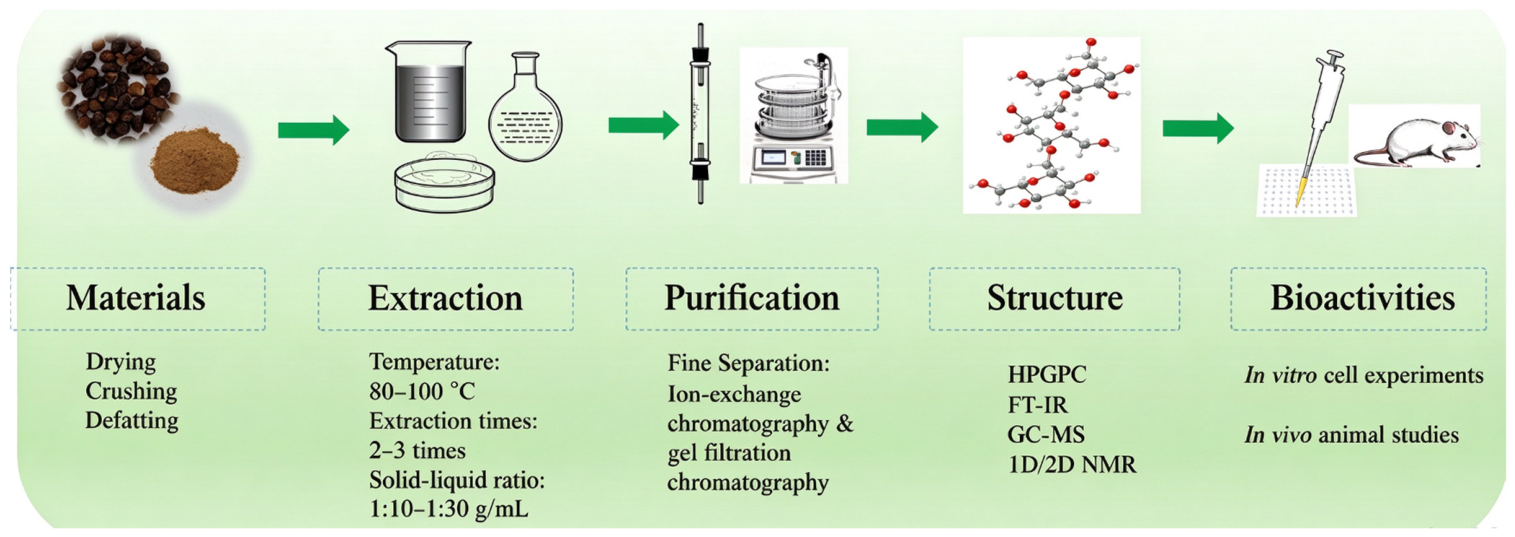
2. Extraction and Isolation
2.1. Extraction of NPSs
2.2. Purification of NPSs
3. Structural Characteristics
3.1. The Molecular Weight of NPSs
3.2. The Monosaccharide Composition of NPSs
3.3. The Primary Structure of NPSs
4. Bioactivities
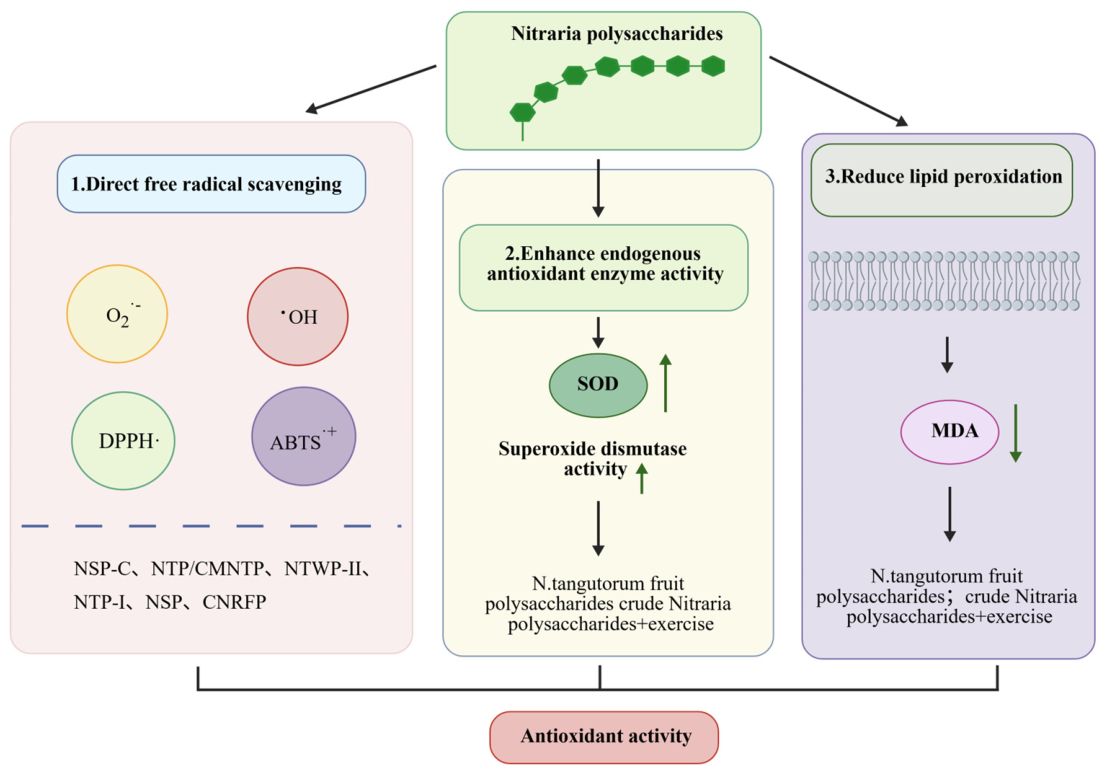
4.1. Antioxidant Activity
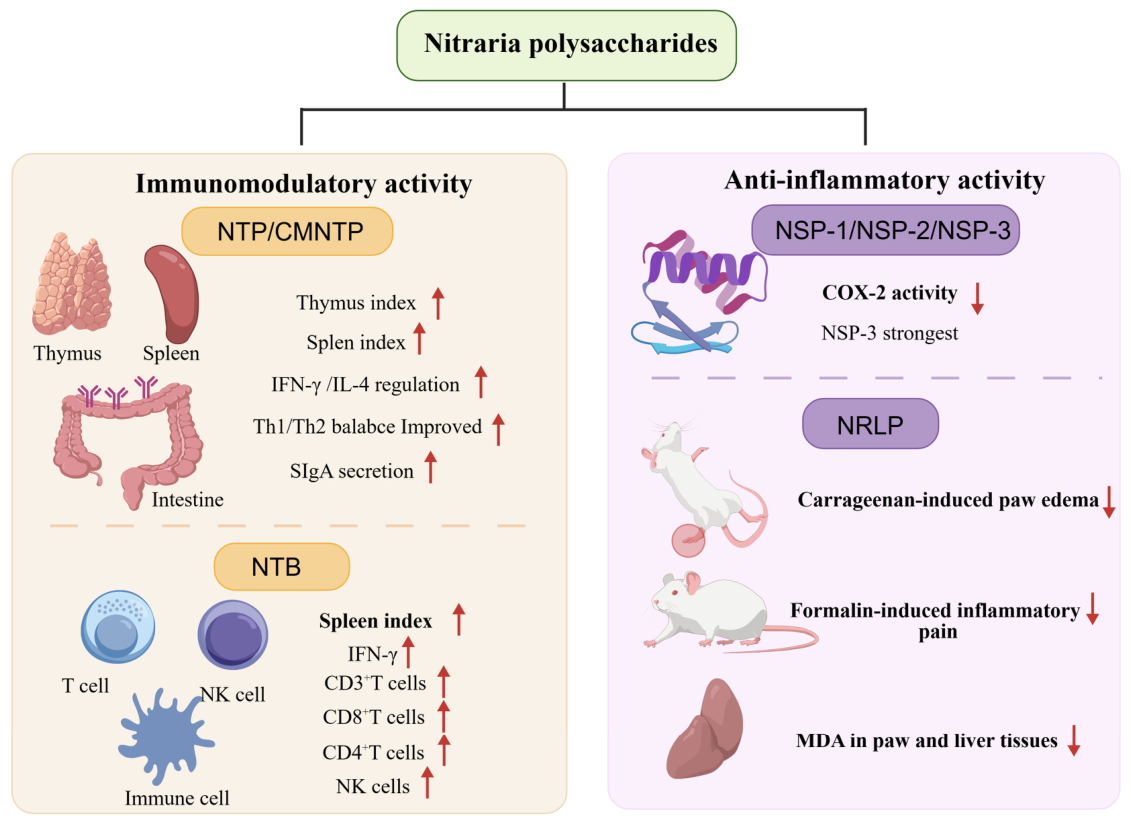
4.2. Immunomodulatory and Anti-Inflammatory Activities
4.3. Antitumor Activity
4.4. Hypoglycaemic Activity
4.5. Anti-Fatigue Activity
4.6. Anti-Stress Activity
4.7. Hepatoprotective Activity

| Number | Designation of Polysaccharides | Experimental System/Model | Dose/Concentration (Route) | Bioactivity | References |
|---|---|---|---|---|---|
| 1 | NTWP-II | In vitro; DPPH, hydroxyl-radical and superoxide-anion-radical scavenging assays; ferrous-ion chelation assay | 0.02–5.0 mg/mL (N/A) | Antioxidant activity; active groups in the molecular structure donate electrons or hydrogen atoms to terminate free-radical chain reactions, while moderate molecular weight and high hydrogen-donating capacity enhance antioxidant activity | [24] |
| 2 | NTP-I | In vitro; DPPH-radical scavenging and α-glucosidase-inhibition assays | NR (N/A) | Antioxidant activity; the DPPH-radical scavenging rate was 71.72 ± 2.1%, and the α-glucosidase inhibition rate was 84.3 ± 3.4%; antioxidant effects were exerted through active functional groups | [21] |
| 3 | NSP-C | In vitro; DPPH and hydroxyl-radical scavenging assays | Multiple concentrations; 2.0 mg/mL explicitly reported (N/A) | Antioxidant activity; the IC50 values for DPPH and hydroxyl-radical scavenging were 0.209 and 0.149 mg/mL, respectively, showing dose-dependent activity | [14] |
| 4 | NRFP-1, NRFP-2, NRFP-3 | In vitro; DPPH, ABTS•+ radical-cation, and hydroxyl-radical scavenging assays; Fe3+-reducing-power assay | 0.2, 0.4, 0.6, 0.8, and 1.0 mg/mL (N/A) | Antioxidant activity; related to arabinose and mannose contents and molecular weight; free radicals are scavenged through hydrogen or electron donation, lipid peroxidation is inhibited, and the activity is concentration dependent | [22] |
| 5 | Crude NSP | In vitro; DPPH, ABTS, and hydroxyl-radical scavenging assays | Up to 1.0 mg/mL (N/A) | Antioxidant activity; radicals were scavenged in a concentration-dependent manner, with IC50 values of 0.183 mg/mL for ABTS and 0.604 mg/mL for hydroxyl radicals; NSP-3 exhibited the strongest activity | [15] |
| 6 | CNRFP | In vitro; DPPH, ABTS, and hydroxyl-radical scavenging assays; reducing-power assay | NR (N/A) | Antioxidant activity; the IC50 values for DPPH, ABTS, and hydroxyl radicals were 1.14, 0.54, and 1.11 mg/mL, respectively; reducing power increased with concentration, and hydroxyl groups and uronic-acid carboxyl groups contributed to radical quenching and metal-ion chelation | [32] |
| 7 | NRFP | In vitro; total antioxidant-capacity, DPPH, H2O2-scavenging, and H2O2-induced erythrocyte-hemolysis assays | 2–12 mg/mL (total antioxidant capacity); 0.25–4 mg/mL (DPPH); 0.1–5 mg/mL (H2O2); 10–250 μg/mL (hemolysis) (N/A) | Antioxidant activity; hydroxyl and other functional groups scavenge free radicals, inhibit lipid peroxidation, protect erythrocyte membrane integrity, and exhibit concentration-dependent activity | [23] |
| 8 | NRLP | In vitro; total antioxidant-capacity, DPPH, and hydroxyl-radical scavenging assays | 0.5, 1.0, 1.5, 2.0, 2.5 and 3.0 mg/mL (N/A) | Antioxidant activity; the IC50 values were 2.03 mg/mL for total antioxidant capacity, 2.7 mg/mL for DPPH scavenging, and 246.85 μg/mL for hydroxyl-radical scavenging | [24] |
| 9 | NTP, CMNTP | In vitro; hydroxyl-radical, superoxide-anion-radical, and DPPH scavenging assays | Hydroxyl radical: multiple concentrations, with a 0.05–0.40 mg/mL range explicitly discussed; superoxide anion: 0.2–1.0 mg/mL; DPPH: 0.05–1.0 mg/mL (N/A) | Antioxidant activity; both polysaccharides scavenged all three types of radicals, while carboxymethylation enhanced hydroxyl-radical and superoxide-anion scavenging; antioxidant effects were achieved through radical capture by active molecular groups | [17] |
| 10 | Nitraria tangutorum polysaccharides | In vitro; DPPH and hydroxyl-radical scavenging assays; reducing-power assay | NR (N/A) | Antioxidant activity; scavenged DPPH and hydroxyl radicals and exhibited reducing capacity; active hydrogen atoms terminated free-radical chain reactions | [28] |
| 11 | Nitraria tangutorum polysaccharides | In vivo; mouse free-swimming oxidative-stress model; serum SOD and MDA determination | 1.5 and 3 g/kg (route NR) | Antioxidant activity; significantly increased SOD activity and decreased MDA content by enhancing endogenous antioxidant-enzyme activity and inhibiting lipid peroxidation | [34] |
| 12 | Crude Nitraria polysaccharides | In vivo; progressive-load aerobic-exercise model in aged rats; CAT, GSH-Px, SOD, and MDA determination | 100, 200 and 300 mg/(kg·d) (oral) | Antioxidant activity; increased myocardial CAT, GSH-Px, and SOD activities; decreased MDA content; and reduced skeletal-muscle lipofuscin accumulation and cell apoptosis | [35] |
| 13 | BCH | In vitro; superoxide-anion, DPPH, and hydroxyl-radical scavenging assays; reducing-power assay | NR (N/A) | Antioxidant activity; scavenged free radicals, with EC50 values below 0.1 mg/mL for superoxide anion and DPPH radicals | [36] |
| 14 | NTP, CMNTP | In vivo; cyclophosphamide-induced immunosuppressed mouse model | 100 and 200 mg/kg (oral gavage) | Immunomodulatory activity; increased thymus and spleen indices, elevated serum IFN-γ and IL-4 levels, improved Th1/Th2 immune imbalance, increased intestinal villus length, attenuated the reduction in the V/C ratio, and promoted intestinal SIgA secretion; carboxymethylation further enhanced the activity | [17] |
| 15 | NTB | In vivo; cyclophosphamide-induced immunosuppressed mouse model | 3.6 g/kg (route NR) | Immunomodulatory activity; increased thymus and spleen indices, improved splenic histological structure, elevated serum IFN-γ levels and splenic IFN-γ mRNA expression, and increased CD3+, CD4+, CD8+ T cells, and NK cells | [37] |
| 16 | NSP-1, NSP-2, NSP-3 | In vitro; COX-2 enzyme-inhibition assay | 100 μg/mL (N/A) | Anti-inflammatory activity; at 100 μg/mL, the COX-2 inhibition rate of NSP-3 reached 85.6%, higher than that of NSP-1 (79.6%) and NSP-2 (54.7%) | [15] |
| 17 | NRLP | In vivo; carrageenan-induced paw-oedema model | 100 and 400 mg/kg bw (oral) | Anti-inflammatory activity; inhibited the release of inflammatory mediators such as histamine and prostaglandins, decreased MDA content, and alleviated lipid-peroxidation injury | [24] |
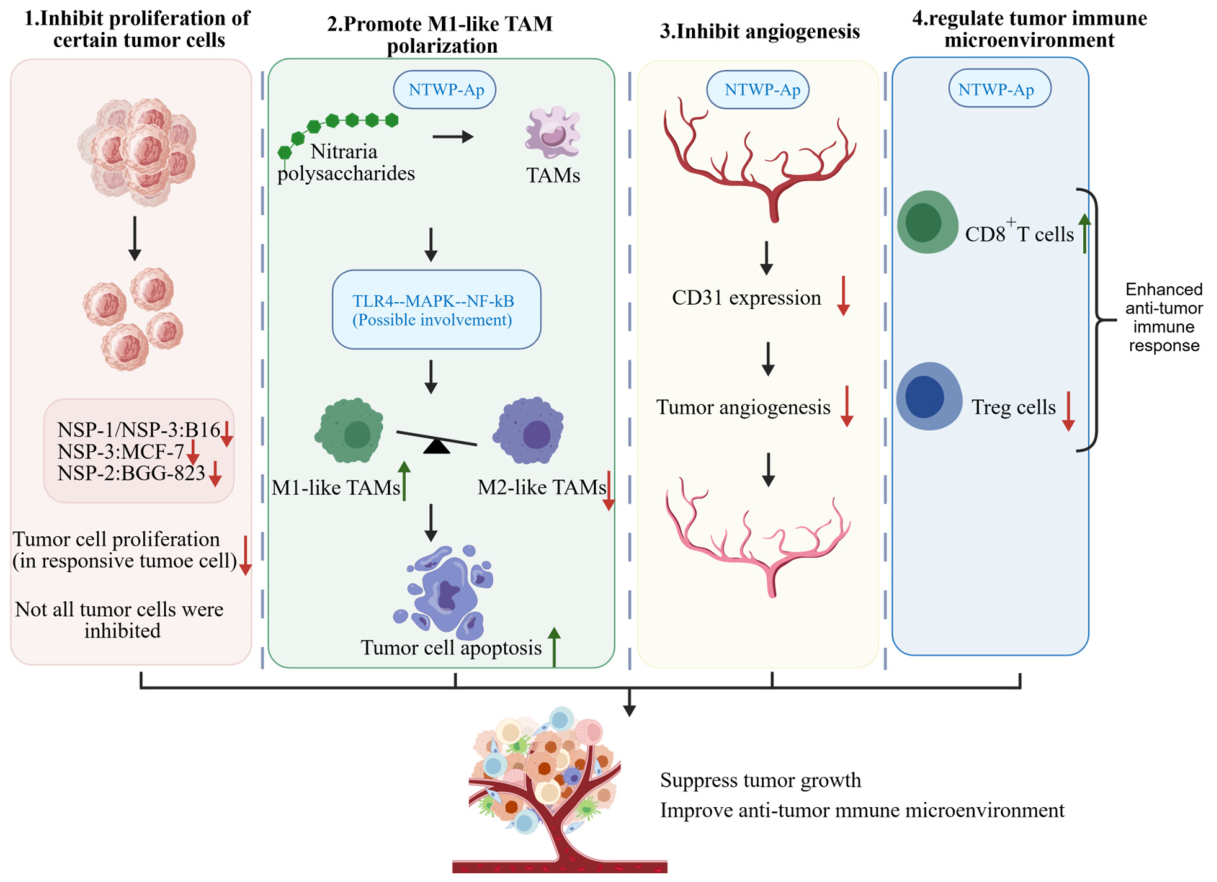
| 18 | NSP-1, NSP-2, NSP-3 | In vitro; proliferation assays using MCF-7, B-16, CT-26, and BGC-823 tumour cells | 100 and 1000 μg/mL for B-16, CT-26 and BGC-823 assays; MCF-7 concentration series NR (N/A) | Antitumor activity; inhibited MCF-7 cell proliferation with an IC50 of 50.89 μg/mL; the high uronic-acid content was associated with enhanced activity | [15] |
| 19 | NTWP-Ap | In vivo/in vitro; LLC subcutaneous tumour-bearing mouse model; in vitro RAW264.7 macrophage-polarization assay | In vivo: 50 and 100 mg/kg (oral gavage); in vitro: 100, 200, and 400 μg/mL (N/A) | Antitumor activity; induced macrophage polarization toward the M1 phenotype through the TLR4/MAPK/NF-κB signalling pathway and promoted TNF-α, IL-6, and IL-1β secretion; in vivo, it increased M1-type TAMs, decreased M2-type TAMs, enhanced CD8+ T-cell infiltration, reduced Treg cells, and downregulated CD31 expression to inhibit intratumoral angiogenesis | [18] |
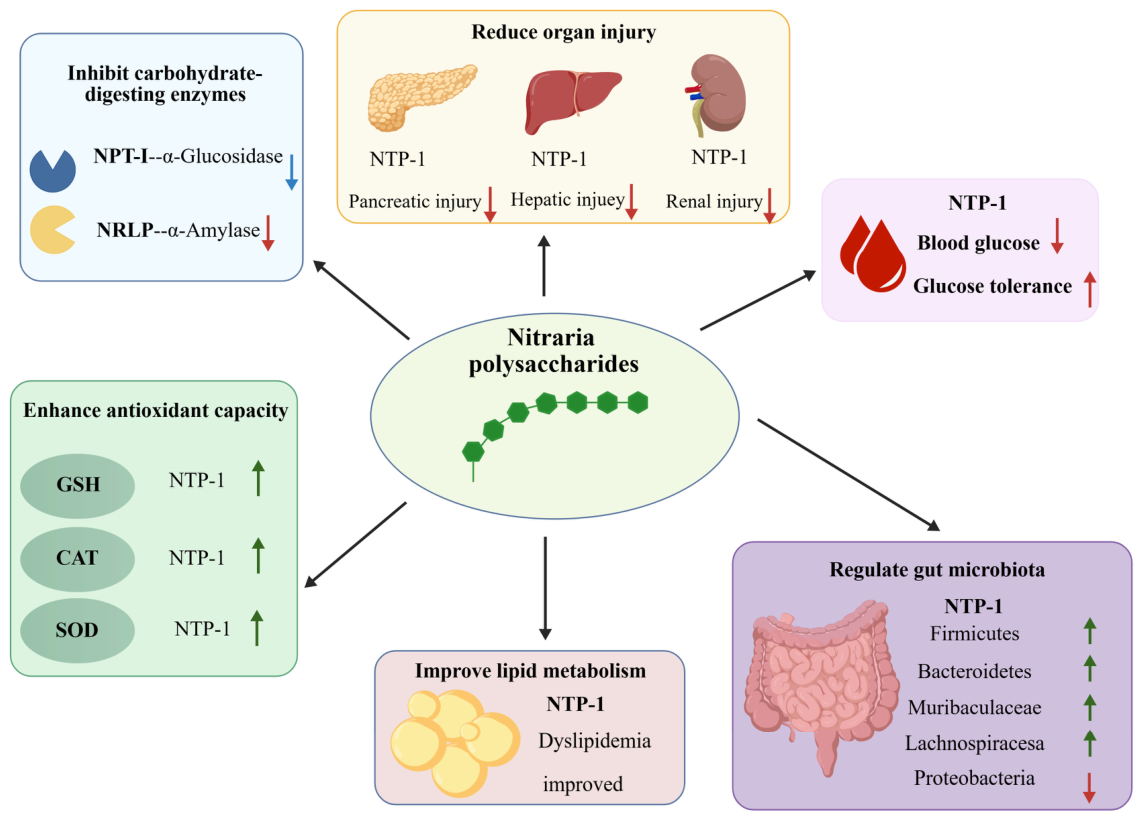
| 20 | NTP-I | In vivo; STZ-induced diabetic mouse model | 100, 200, and 300 mg/kg bw (oral gavage) | Hypoglycaemic activity; 200 mg/kg·bw was the optimal dose; reducing fasting blood glucose by 51.6%; improving glucose and lipid metabolism; repairing pancreatic, hepatic, and renal injury; enhancing antioxidant-enzyme activity; modulating gut microbiota; and increasing the abundance of beneficial bacteria | [21] |
| 21 | Lyophilized Nitraria tangutorum fruit powder | In vivo; alloxan-induced diabetic mouse/rat models and adrenaline-/glucose-induced hyperglycaemic mouse models | 1.8 and 3.6 g/kg (route NR) | Hypoglycaemic activity; exerted protective and restorative effects on pancreatic β-cell injury and improved glucose tolerance | [38] |
| 22 | NRLP | In vitro; α-amylase-inhibition assay | 0.5, 1, 3, 6, 9, and 12 mg/mL (N/A) | α-Amylase inhibitory activity; inhibited α-amylase in a concentration-dependent manner with an IC50 of 4.55 mg/mL, thereby potentially delaying carbohydrate digestion | [24] |
| 23 | NTWP | In vivo; mouse forced-swimming test | 50, 100, and 200 mg/kg (oral) | Anti-fatigue activity; exerted anti-fatigue effects through regulation of energy metabolism and protection against oxidative injury, reduced fatigue-related biomarkers, and improved exercise endurance | [19] |
| 24 | Nitraria tangutorum polysaccharides | In vivo; weight-loaded swimming and free-swimming tests; serum lactic acid, BUN, and hepatic-glycogen determination | 1.5 and 3.0 g/kg (route NR) | Anti-fatigue activity; prolonged exhaustive swimming time (p < 0.01), decreased serum LD (p < 0.01) and BUN levels, and increased hepatic glycogen content (p < 0.01) | [34] |
| 25 | Nitraria tangutorum polysaccharides | In vivo; high-temperature (45 °C), low-temperature (−5 °C), and normobaric-hypoxia mouse models | 1.5 and 3 g/kg (route NR) | Anti-stress activity; prolonged survival under extreme environmental conditions and enhanced organismal stress tolerance | [34] |
| 26 | Nitraria tangutorum polysaccharides | In vivo; CCl4-induced acute liver-injury mouse model; serum ALT and AST determination | NR (route NR) | Hepatoprotective activity; attenuated CCl4-induced hepatocyte injury, decreased serum ALT and AST activities, maintained hepatocyte membrane integrity, and alleviated chemical liver injury | [34] |
| 27 | NRFP | In vivo; Triton X-100-induced hyperlipidaemic mouse model | 250 and 500 mg/kg (p.o.) | Hypolipidemic activity; decreased serum TC, TG, and LDL-C levels; increased HDL-C levels; reduced the atherosclerosis index, cardiac index, and coronary artery index; and alleviated lipid-metabolism disorders | [23] |
| 28 | NRLP | In vivo; hot-plate, acetic-acid-induced writhing, and formalin-induced pain models | 100 and 400 mg/kg (p.o.) | Analgesic activity; at 400 mg/kg, inhibited formalin-induced pain with an inhibition rate of 76.4% during the inflammatory phase and exhibited both central and peripheral analgesic effects | [24] |
| 29 | NTP | In vivo; LPS-induced acute lung-injury mouse model | 200 and 400 mg/kg/day (intragastric) | Protective activity against acute lung injury; at 200–400 mg/kg, NTP reduced pulmonary oedema and inflammatory-cell infiltration and decreased TNF-α, IL-1β, and IL-6 levels; its protective effect was proposed to be associated with suppression of the TLR4/IKK/NF-κB signalling pathway. | [20] |
| 30 | NTP-L | In vivo; healthy C57BL/6J mice; intestinal morphology, gut-microbiota, and faecal-SCFA analyses | 200 mg/kg (route NR) | Gut-microbiota-modulating activity; increased ileal villus length and improved intestinal mucosal structure; increased faecal SCFA contents, including acetic acid, butyric acid, valeric acid, isobutyric acid, and isocaproic acid; enriched potentially beneficial taxa such as Rikenellaceae_RC9_gut_group and Lachnospiraceae_NK4A136_group | [40] |
4.8. Hypolipidaemic Activity
4.9. Other Biological Activities
5. Conclusions and Future Perspectives
Author Contributions
Funding
Institutional Review Board Statement
Informed Consent Statement
Data Availability Statement
Conflicts of Interest
References
- Chun, L.; Narisu; Zhao, S.; Hao, Y.Z.; Hu, Z.M.; Ma, Y.H. The resources and applications of Nitraria L. Chin. Wild Plant Resour. 2016, 35, 58–60, 63. [Google Scholar] [CrossRef]
- Jiang, S.X.; Hu, J.; Wang, F.L.; Hu, X.K.; Wei, Q.S. Geographical distribution and resource status of Nitraria plantsin Northwest China. Gansu For. Sci. Technol. 2026, 51, 83–93. [Google Scholar] [CrossRef]
- Zhang, H.F.; Yan, H.B.; Feng, F.; Yu, Z.Y.; Yang, X.Q. Effects of alkali stress on the growth and ultrastructure of Nitraria tangutorum. Sci. Soil Water Conserv. 2021, 19, 35–42. [Google Scholar] [CrossRef]
- Xu, D.F.; Zhou, W. Research progress on chemical constituents and pharmacological activities of Nitraria tangutorum. West China J. Pharm. Sci. 2023, 38, 455–463. [Google Scholar] [CrossRef]
- Abuduwaili, A.; Gao, Y.H.; Nuerxiati, R.; Mutailifu, P.; Yili, A. Research progress on the polysaccharide composition of Nitraria. Food Res. Dev. 2021, 42, 181–188. [Google Scholar] [CrossRef]
- Du, M.; Yang, T.; Wang, J.L.; Wang, L.R. Research progress on flavonoids and pharmacology of Nitraria tangutorum Bobr. Nat. Prod. Res. Dev. 2023, 35, 888–900. [Google Scholar] [CrossRef]
- Yang, R.M.; Suo, Y.R.; Wang, H.L. Studieson chemical constituents and pharmacological effectsof Nitraria tangutorum Bobr.fruits. Nat. Prod. Res. Dev. 2012, 24, 985–989, 1005. [Google Scholar] [CrossRef]
- Bai, X.M. Determination of Pigment Components and Functional Properties of Nitraria tangutorum Fruits. Master’s Thesis, Gansu Agricultural University, Lanzhou, China, 2008. [Google Scholar] [CrossRef]
- Chen, S.S.; Zhou, H.N.; Zhang, G.; Dong, Q.; Wang, Z.H.; Wang, H.L.; Hu, N. Characterization, antioxidant, and neuroprotective effects of anthocyanins from Nitraria tangutorum Bobr. fruit. Food Chem. 2021, 353, 129435. [Google Scholar] [CrossRef] [Scilit] [PubMed]
- Liu, B.P.L.; Chong, E.Y.Y.; Cheung, F.W.K.; Duan, J.A.; Che, C.T.; Liu, W.K. Tangutorine induces p21 expression and abnormal mitosis in human colon cancer HT-29 cells. Biochem. Pharmacol. 2005, 70, 287–299. [Google Scholar] [CrossRef] [Scilit] [PubMed]
- Gao, H.; Suo, Y.R. Amino acid contents and its nutritional evaluation of Nitraria sibirica Pall. and Nitraria tangutorum Bobr. in Tsaidam Basin. Amino Acids Biot. Resour. 2002, 24, 4–7. [Google Scholar] [CrossRef]
- Shi, S.M. Comparative analysis of trace element contents in fruits and leaves of wild Nitraria and black goji berry from Minqin. Hebei Agric. Mach. 2024, 9, 145–147. [Google Scholar] [CrossRef]
- Liu, J.R.; Yan, P.; Li, Y.; Jiang, F.S.; Zhou, J. Determination ontrace elements andtotal flavonoids in fruit of Nitraria sibirica Pall. Chin. J. Mod. Appl. Pharm. 2002, 19, 385–386. [Google Scholar] [CrossRef]
- Abuduwaili, A.; Song, N.N.; Yi, Y.X.; Mangsir, S. Structural characterization and functional properties of the polysaccharides from the fruits of Nitraria sibirica Pall. Mod. Food Sci. Technol. 2024, 40, 200–207. [Google Scholar] [CrossRef]
- Abuduwaili, A.; Mutailifu, P.; Nuerxiati, R.; Gao, Y.H.; Aisa, H.A.; Yili, A. Structure and biological activity of polysaccharides from Nitraria sibirica Pall fruit. Food Biosci. 2021, 40, 100903. [Google Scholar] [CrossRef] [Scilit]
- Golovchenko, V.V.; Khramova, D.S.; Shashkov, A.S.; Otgonbayar, D.; Chimidsogzol, A.; Ovodov, Y.S. Structural characterisation of the polysaccharides from endemic Mongolian desert plants and their effect on the intestinal absorption of ovalbumin. Carbohydr. Res. 2012, 356, 265–272. [Google Scholar] [CrossRef] [Scilit] [PubMed]
- Ma, Q. Extraction, Modification and Immunological Activity of Polysaccharides from Nitraria tangutorum. Master’s Thesis, Shaanxi Normal University, Xi’an, China, 2018. [Google Scholar]
- Feng, J.Y. M1 Polarization of Macrophages Induced by Nitraria tangutorum Polysaccharides and Its Role in Antitumor Activity. Doctoral Thesis, Jilin University, Changchun, China, 2025. [Google Scholar] [CrossRef]
- Ni, W.H.; Gao, T.T.; Wang, H.L.; Du, Y.Z.; Li, J.Y.; Li, C.; Wei, L.X.; Bi, H.T. Anti-fatigue activity of polysaccharides from the fruits of four Tibetan plateau indigenous medicinal plants. J. Ethnopharmacol. 2013, 150, 529–535. [Google Scholar] [CrossRef] [Scilit] [PubMed]
- Meng, J.; Deng, K.; Hu, N.; Wang, H.L. Nitraria tangutorum bobs protect against LPS-induced lung injury. Int. J. Biol. Macromol. 2021, 186, 71–78. [Google Scholar] [CrossRef] [Scilit] [PubMed]
- Zhang, J. Extraction, Isolation, Purification and Hypoglycemic Activity of Low-Molecular-Weight Polysaccharides from Nitraria Fruits. Master’s Thesis, Shenyang Agricultural University, Shenyang, China, 2024. [Google Scholar] [CrossRef]
- Song, L.J.; Liu, S.Q.; Zhang, L.; Pan, L.Q.; Xu, L. Polysaccharides from Nitraria retusa fruit: Extraction, purification, structural characterization, and antioxidant activities. Molecules 2023, 28, 1266. [Google Scholar] [CrossRef] [Scilit] [PubMed]
- Rjeibi, I.; Feriani, A.; Hentati, F.; Hfaiedh, N.; Michaud, P.; Pierre, G. Structural characterization of water-soluble polysaccharides from Nitraria retusa fruits and their antioxidant and hypolipidemic activities. Int. J. Biol. Macromol. 2019, 129, 422–432. [Google Scholar] [CrossRef] [Scilit] [PubMed]
- Rjeibi, I.; Hentati, F.; Feriani, A.; Hfaiedh, N.; Delattre, C.; Michaud, P.; Pierre, G. Novel antioxidant, anti-α-amylase, anti-inflammatory and antinociceptive water-soluble polysaccharides from the aerial part of Nitraria retusa. Foods 2020, 9, 28. [Google Scholar] [CrossRef] [Scilit] [PubMed]
- Zhang, L.; Ji, S.S.; Wang, S.; Wang, X.H. Study of monosaccharide composition of Nitraria fruit water soluble polysaccharide. Food Ind. 2013, 34, 170–172. [Google Scholar]
- Wang, L.Y.; Ding, C.X.; Wang, H.L.; Che, G.D.; Suo, Y.R. Extraction process of polysaccharide from Nitraria tangutorum Bobr. Food Sci. 2008, 29, 233–236. [Google Scholar]
- Zhao, B.T.; Liu, J.; Chen, X.; Zhang, J.; Wang, J.L. Purification, structure and anti-oxidation of polysaccharides from the fruit of Nitraria tangutorum Bobr. RSC Adv. 2018, 8, 11731–11743. [Google Scholar] [CrossRef] [Scilit] [PubMed]
- Jin, J.H.; Liu, Z.; Qin, S.R. Optimization of extraction technology of polysaccharide from Nitraria tangutorum Bobr. fruits and its antioxidant activity. J. Inn. Mong. Univ. Natl. Nat. Sci. 2021, 36, 290–297. [Google Scholar] [CrossRef]
- Zhou, S.Y.; Rahman, A.; Li, J.H.; Wei, C.Y.; Chen, J.L.; Linhardt, R.J.; Ye, X.Q.; Chen, S.G. Extraction methods affect the structure of Goji (Lycium barbarum) polysaccharides. Molecules 2020, 25, 936. [Google Scholar] [CrossRef] [Scilit] [PubMed]
- Cui, J.F.; Zhao, C.Y.; Feng, L.P.; Han, Y.H.; Du, H.J.; Xiao, H.; Zheng, J.K. Pectins from fruits: Relationships between extraction methods, structural characteristics, and functional properties. Trends Food Sci. Technol. 2021, 110, 39–54. [Google Scholar] [CrossRef] [Scilit]
- Barnes, W.J.; Koj, S.; Black, I.M.; Archer-Hartmann, S.A.; Azadi, P.; Urbanowicz, B.R.; Peña, M.J.; O’Neill, M.A. Protocols for isolating and characterizing polysaccharides from plant cell walls: A case study using rhamnogalacturonan-II. Biotechnol. Biofuels 2021, 14, 142. [Google Scholar] [CrossRef] [Scilit] [PubMed]
- Wu, X.X.; Chen, N.; Bai, B.Y.; Zhang, L.; Chen, J.L.; Song, L.J. Physical properties and antioxidant activity of polysaccharide from Nitraria roborowskii Kom fruit. Sci. Technol. Food Ind. 2021, 42, 87–94. [Google Scholar] [CrossRef]
- Zeng, X.X.; Sun, Y.; Ye, H.; Liu, J.; Xiang, X.L.; Zhou, B.; Uzawa, H. Effective chemoenzymatic synthesis of p-aminophenyl glycosides of sialyl N-acetyllactosaminide and analysis of their interactions with lectins. Carbohydr. Res. 2007, 342, 1244–1248. [Google Scholar] [CrossRef] [Scilit] [PubMed]
- Song, Y.P. Extraction and Pharmacological Activities of Polysaccharides from Nitraria tangutorum Fruits. Master’s Thesis, Qinghai Normal University, Xining, China, 2015. [Google Scholar]
- Yang, Y. On protective effect of supplementof polysaccharides from Nitraria tangutorum Bobr. on myocardium and skeletal muscle during incremental aerobic exercise in aging. J. Southwest China Norm. Univ. Nat. Sci. Ed. 2016, 41, 11–16. [Google Scholar] [CrossRef]
- Xie, R.; Wei, Y.X.; Ding, Y.Z.; Liu, Y.; Li, M.; Zhang, J. Effects of different processing methods on the antioxidant activity ofpolysaccharide from Nitraria sibirica Pall. Nat. Prod. Res. Dev. 2016, 28, 41–45, 130. [Google Scholar] [CrossRef]
- Xiu, R.J.; Suo, Y.R.; Geng, P.L. Effect of Nitraria tangutorum Bobr. polysaccharide on IFN-γ and T/NK subsets in immunosuppressed mice. J. Qinghai Med. Coll. 2015, 36, 176–182. [Google Scholar] [CrossRef]
- Suo, Y.R.; Wang, H.Q. Studies on hypoglycemic effect of Nitraria tangutorum Bobr. from the Qinghai TsaidamBasin. Food Sci. 2004, 25, 164–167. [Google Scholar] [CrossRef]
- Tian, J.J.; Qin, Y.; Wang, N.P. Research progressabout the anti-fatigue effect and mechanism of polysaccharides from traditional Chinese medicine. Chem. Life 2021, 41, 1018–1024. [Google Scholar] [CrossRef]
- Tai, Y.Q.; Xu, J.F.; Deng, Z.H.; Zhu, J.J.; Wen, Y.H.; Xu, J. Positive regulatory effects of low-molecular-weight polysaccharide from Nitraria tangutorum Bobr. on the intestinalmicroecology of healthy mice. Chin. J. Plateau Med. Biol. 2026, 47, 210–216. [Google Scholar]
- Su, A.X.; Ma, G.X.; Ma, N.; Pei, F.; Yang, W.J.; Hu, Q.H. Effects of Flammulina velutipes polysaccharides on gut microbiota composition and metabolism in vitro fermentation. Food Sci. Biotechnol. 2023, 32, 361–369. [Google Scholar] [CrossRef] [Scilit] [PubMed]


| Species | Geographic Origin | Plant Organ | Polysaccharide Studied | Reference |
|---|---|---|---|---|
| Nitraria sibirica Pall. | Hetian, Xinjiang, China | Fruit | NSP-C; crude NSP and NSP-1, NSP-2, and NSP-3 | [14,15] |
| Nitraria sibirica Pall. | Mongolian Gobi Desert, Mongolia | Green leaves | Pectic polysaccharide NS | [16] |
| Nitraria tangutorum Bobr. | Qinghai, China, mainly the Qaidam Basin/Haixi region | Fruit | NTP/CMNTP; NTWP and its fractions; NTP | [17,18,19,20] |
| Nitraria tangutorum Bobr. | Wuwei, Gansu, China | Fruit | Crude NTP; NTP-I and NTP-II | [21] |
| Nitraria retusa | Baicheng County, Xinjiang, China | Fruit | Crude NRFP; NRFP-1, NRFP-2, and NRFP-3 | [22] |
| Nitraria retusa | Tabeddit, Gafsa, Tunisia | Fruit/leaves | NRFP (fruit); NRLP (leaves) | [23,24] |
| Nitraria species | Coastal area of Cangzhou, Hebei, China | Fruit | Water-soluble fruit polysaccharide | [25] |
| Extraction Methods | Designation of Polysaccharides | Theory | Key Parameters | Yield (%) | Benefits and Limitations | References |
|---|---|---|---|---|---|---|
| Hot-Water Extraction | NTP, NTWP-II, NTWP-Ap, NTWP, NRFP, NRLP | Taking advantage of the water solubility of polysaccharides, high temperatures are used to promote their leaching from plant cells | Extraction temperatures (60–100 °C; 79 °C, 94 °C, 60 °C, 90 °C, 80 °C, 100 °C), solid-to-liquid ratios (1:15, 1:5, 15:1 mL/g, 1:20, 1:10), extraction times (1.5 h, 2 h, 7 h, 5 h, 6 h), and number of extraction cycles (two, three, or as otherwise reported in the individual studies) | NTP: 39.67 ± 0.02; NTWP-II: 14.01 ± 0.11; NTWP-Ap: 4.68; NTWP: 4.80; water-soluble polysaccharide: ≈1.0; NRFP: 8.65; NRLP: ≈4.00; NTP: ≈3.59; NR | Simple operation, low cost, and no reagent residues; however, the process involves long extraction times and high energy consumption, and some polysaccharides may degrade due to high temperatures | [17,18,19,20,23,24,25,26,27] |
| Enzyme-Assisted Extraction | NSP-C, NTP, CMNTP | Use cellulases, pectinases, and other enzymes to break down plant cell-wall structures and promote the release of polysaccharides | Enzyme dosages (0.5% cellulase; 2.5% total pectinase/cellulase), pH (5.5; 3.0), extraction temperatures (50 °C; 40 °C), extraction times (2 h; 58 min) | NSP-C: 13.82; NTP: 39.57 ± 0.11 | Low extraction temperature, short extraction time, and low energy consumption; increased costs, and the need to control pH and temperature | [14,17] |
| Ultrasound-Assisted Extraction | NTP-I, NRFP, NRFP-1, NRFP-2, NRFP-3 | The ultrasonic cavitation effect disrupts cell structures, accelerating the dissolution of polysaccharides | Ultrasonic power (200 W; NR), extraction temperatures (70 °C; 59.5 °C), solid-to-liquid ratio (1:15; 19.5 mL/g), and times (20 min ultrasonication followed by 1.5 h water-bath extraction; 30.5 min) | NTP: 5.60; NRFP: 3.35 ± 0.12 | High extraction efficiency, short processing time, and relatively low energy consumption; high equipment costs | [21,22] |
| Accelerated Solvent Extraction | Crude Nitraria tangutorum polysaccharide | Enhances solvent penetration under high temperature and pressure for rapid and efficient polysaccharide extraction | Temperature (102 °C), pressure (10 MPa), time (10 min per cycle), and number of extraction cycles (two) | NTP: 78.15 | High extraction yield, fast speed, and low solvent consumption; high equipment costs; high temperature and pressure may damage the activity of polysaccharides | [15] |
| Ultrasound-Enzyme-Assisted | NSP-1, NSP-2, NSP-3 | Utilizes the ultrasonic cavitation effect and enzymes such as cellulase and pectinase to break down plant cell structures and promote the release of polysaccharides | Enzyme type (cellulase), enzyme concentration (0.5%), feed-to-liquid ratio (1:20), pH (5.5), temperature (50 °C), time (50 min), and ultrasonic power (500 W) | NSP: 12.55 ± 1.12 | High extraction efficiency; high cost, strict control of process parameters, and challenges in large-scale production | [28] |
| Sequential Water/Chelating Extraction | NS pectic polysaccharide | Weakly acidic ammonium oxalate disrupts protopectin–cell-wall interactions and promotes the release of pectic polysaccharides | Temperatures (70 °C for water extraction, 50 °C for acid pretreatment, and 70 °C for ammonium oxalate extraction) and ammonium oxalate concentration (0.7%, w/v; acid pretreatment at pH 4.0) | NS: 2.0 | Ammonium oxalate extraction can elute bound pectin and achieves a higher extraction yield, but it tends to co-extract protein impurities and may slightly alter the pectin structure, making the process more complex | [16] |
| Number | Source (Species, Origin, Organ) | Designation of Polysaccharides | Separation and Purification Methods | Molecular Weight (Da) | Monosaccharide Composition | Glycosidic-Linkage Pattern | References |
|---|---|---|---|---|---|---|---|
| 1 | Nitraria tangutorum; Gansu Province; Fruit | NTWP-II | DEAE-52 G-200 | 229,000 | Rha:Ara:Man:Glc:Gal = 1.14:2.5:3.00:2.69:5.28 | →4)-α-L-Araf-(1→ →3)-β-D-Galp-(1→ →6)-α-L-Rhap-(1→ α-D-Glcp-(1→ α-D-Manp-(1→ | [27] |
| 2 | Nitraria tangutorum; Gansu Province; Fruit | NTP-I | DEAE-52 | 9932 | Ara:Gal:Man:Glc:Xyl:Fru = 10.78:4.76:20.86:20.36:2.56:13.4 | →2)-α-D-Manp-(1→ →4)-β-D-Xylp-(1→ →4,6)-β-D-Glcp-(1→ α-D-Galp-(1→ | [21] |
| 3 | Nitraria sibirica; Xinjiang Uygur Autonomous Region; Fruit | NSP-C | / | 5070 | Rha:Ara:Man:Glc:Gal = 1:1:0.73:2.04:3.75 | - | [14] |
| 4 | Nitraria retusa; Xinjiang Uygur Autonomous Region; Fruit | NRFP-1 | DEAE Sepharose Fast Flow | 20,010 | Man:Rib:Rha:GluA:GalA:Glc:Gal:Xyl:Ara:Fuc = 3.73:2.01:0.46:2.97:0.54:47.22:15.97:4.06:21.28:1.51 | - | [22] |
| 5 | Nitraria retusa; Xinjiang Uygur Autonomous Region; Fruit | NRFP-2 | DEAE Sepharose Fast Flow | 28,960 | Man:Rib:Rha:GalA:Glc:Gal:Xyl:Ara:Fuc = 3.93:0.30:1.24:3.03:2.95:8.05:9.26:6.10:43.07:0.30 | - | [22] |
| 6 | Nitraria retusa; Xinjiang Uygur Autonomous Region; Fruit | NRFP-3 | DEAE Sepharose Fast Flow | 67,450 | Man:Rib:Rha:GluA:GalA:Glc:Gal:Xyl:Ara:Fuc = 6.96:0.90:0.47:3.41:3.40:46.33:3.16:21.30:0.10 | - | [22] |
| 7 | Nitraria sibirica; Xinjiang Uygur Autonomous Region; Fruit | NSP-1 | DEAE-52 | 21,500 | Man:Rha:Glc:Gal:Ara = 1.66:0.18:1.27:1.00:0.10 | - | [15] |
| 8 | Nitraria sibirica; Xinjiang Uygur Autonomous Region; Fruit | NSP-2 | DEAE-52 | 14,400 | Man:Rha:Glc:Gal = 0.21:1.57:0.42:1.00 | - | [15] |
| 9 | Nitraria sibirica; Xinjiang Uygur Autonomous Region; Fruit | NSP-3 | DEAE-52 | 49,400 | Rha:Glc:Gal = 3.21:0.64:1.00 | - | [15] |
| 10 | Nitraria tangutorum; Qinghai Province; Fruit | NTP | - | 74,359–438,665 | Man:GlcUA:GalUA:Rha:Glc:Gal:Ara = 3.0:3.7:9.5:14.5:7.0:73.0:50.6 | - | [17] |
| 11 | Nitraria tangutorum; Qinghai Province; Fruit | CMNTP | - | 11,459–80,385 | Man:GlcUA:GalUA:Rha:Glc:Gal:Ara = 7.3:4.5:13.7:15.1:2.6:52.5:37.1 | - | [17] |
| 12 | Nitraria tangutorum; Qinghai Province; Fruit | NTWP-Ap | DEAE Sepharose Fast Flow | 106,320 | Ara:GalUA:Gal:Xyl = 58.92:30.19:7.49:3.40 | - | [18] |
| 13 | Nitraria tangutorum; Qinghai Province; Fruit | NTWP | DEAE Cellulose | >1,000,000, 79,700, <10,000 | Man:Rha:GlcUA:GalUA:Glc:Gal:Ara = 3.9:1.8:0.2:3.3:70.6:7.6:13.1 | - | [19] |
| 14 | Nitraria tangutorum; Qinghai Province; Fruit | NTP | - | 207,800, 40,800, 8490, 2730, 1490 | Man:Rha:GalUA:Glc:Gal:Ara = 3.52:15.08:10.00:26.73:38.08:6.59 | - | [20] |
| 15 | Nitraria species; Hebei Province; Fruit | Nitraria fruit water-soluble polysaccharides | - | - | Man:Rha:GalA:Glc:Gal:Ara = 9.2:3.3:1.1:1.0:1.9:2.3 | - | [25] |
| 16 | Nitraria retusa; Gafsa; Fruit | NRFP | - | 66,500 | Glc:GalA:Gal:Ara:Rha = 41.4:30.5:12.6:11.8:3.70 | →3)-β-D-Glcp-(1→ →3,6)-β-D-Glcp-(1→ →4)-β-D-GalpA-(1→ →2)-α-L-Rhap-(1→ →2,4)-α-L-Rhap-(1→ →4)-β-D-Galp-(1→ →5)-α-L-Araf-(1→ →2,5)-α-L-Araf-(1→ →3,5)-α-L-Araf-(1→ | [23] |
| 17 | Nitraria retusa; Gafsa; Leaf | NRLP | - | 23,060 | Rha:Gal:GalA:Glc:Ara:Xyl:GlcA = 33.66:18.05:15.03:13.34:13.30:3.79:2.83 | / | [24] |
Disclaimer/Publisher’s Note: The statements, opinions and data contained in all publications are solely those of the individual author(s) and contributor(s) and not of MDPI and/or the editor(s). MDPI and/or the editor(s) disclaim responsibility for any injury to people or property resulting from any ideas, methods, instructions or products referred to in the content. |
© 2026 by the authors. Licensee MDPI, Basel, Switzerland. This article is an open access article distributed under the terms and conditions of the Creative Commons Attribution (CC BY) license.
Share and Cite
Liu, B.; Dong, W.; Jia, G.; Bao, S.; Yan, D. Advances in the Preparation, Structure, and Biological Activity of Polysaccharides from Nitraria L.: A Review. Foods 2026, 15, 3518. https://doi.org/10.3390/foods15193518
Liu B, Dong W, Jia G, Bao S, Yan D. Advances in the Preparation, Structure, and Biological Activity of Polysaccharides from Nitraria L.: A Review. Foods. 2026; 15(19):3518. https://doi.org/10.3390/foods15193518
Chicago/Turabian StyleLiu, Bing, Wenbei Dong, Guanrong Jia, Sayihan Bao, and Dehui Yan. 2026. "Advances in the Preparation, Structure, and Biological Activity of Polysaccharides from Nitraria L.: A Review" Foods 15, no. 19: 3518. https://doi.org/10.3390/foods15193518
APA StyleLiu, B., Dong, W., Jia, G., Bao, S., & Yan, D. (2026). Advances in the Preparation, Structure, and Biological Activity of Polysaccharides from Nitraria L.: A Review. Foods, 15(19), 3518. https://doi.org/10.3390/foods15193518