Transcriptomic Analysis of Selenium-Induced Antioxidant Responses in Diploid, Triploid, and Tetraploid Pacific Oysters (Crassostrea gigas)

 , ,
, ,
Abstract
1. Introduction
2. Materials and Methods
2.1. Experimental Materials and Design
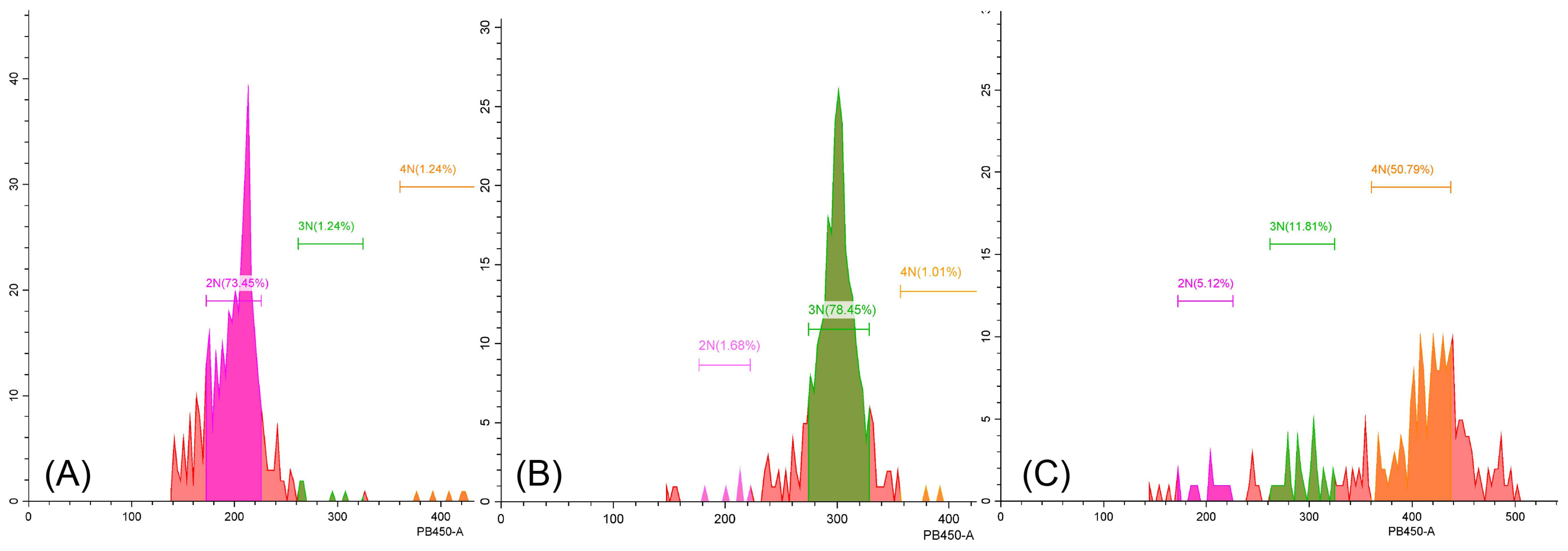
2.2. Ploidy Verification
2.3. Determination of Enzyme Activity Indicators
2.3.1. Sample Preparation
2.3.2. Assay Procedures
2.3.3. Data Processing
2.4. Total RNA Extraction, cDNA Library Construction, and Sequencing
2.5. Transcriptome Sequencing Data Processing and Analysis
2.6. Differential Expression Gene Analysis
2.7. Data Availability
3. Results
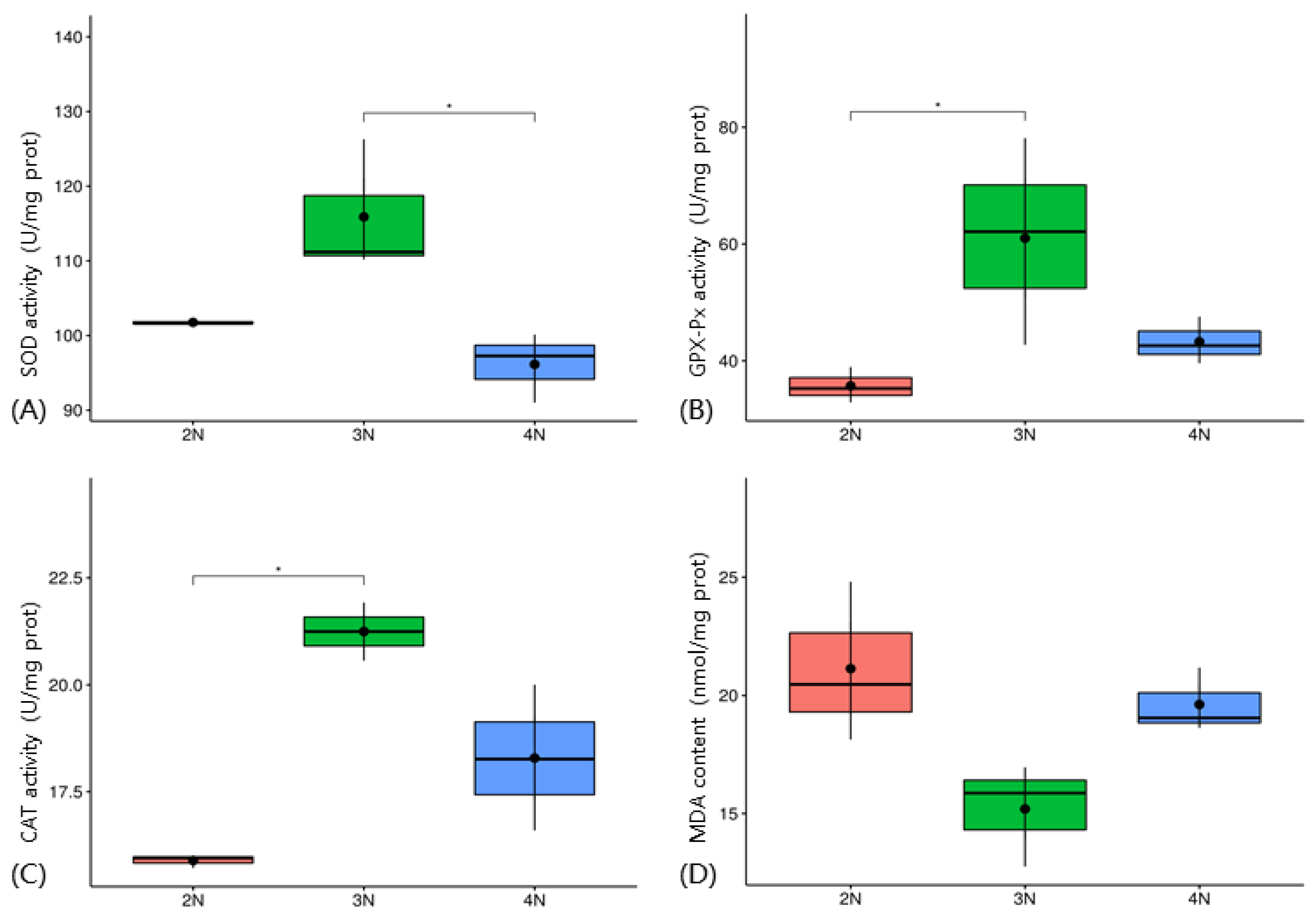
3.1. Effects of Selenium Yeast on Enzyme Activity in Pacific Oysters
3.2. Assembly of Sequencing Data
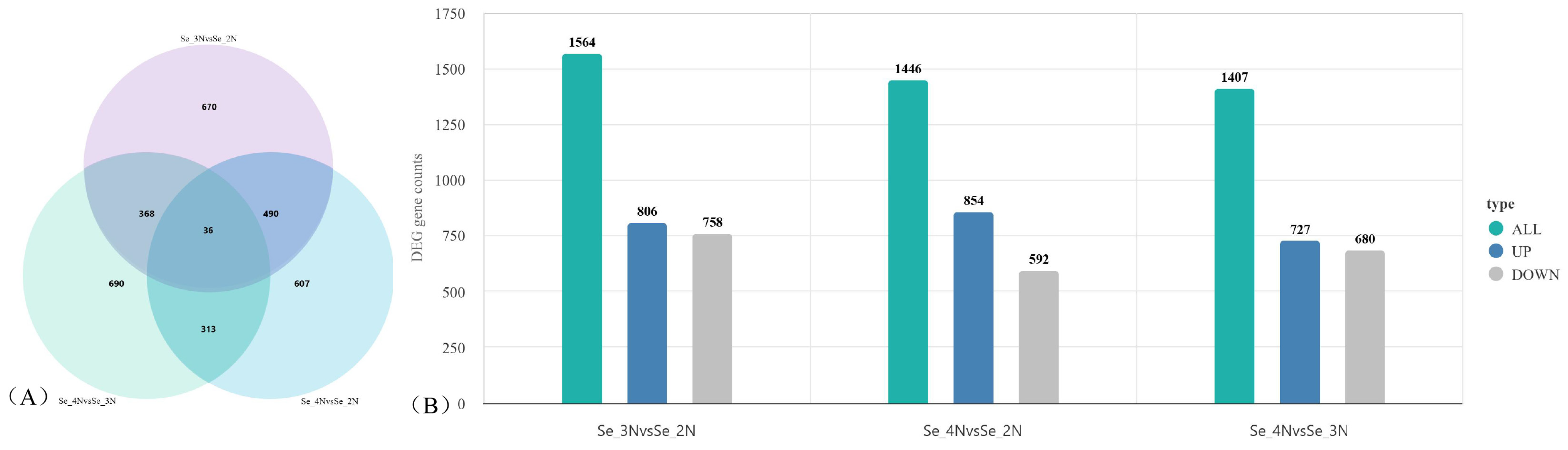
3.3. Analysis of Differentially Expressed Genes
3.4. Functional Annotation and Enrichment Analysis of DEGs
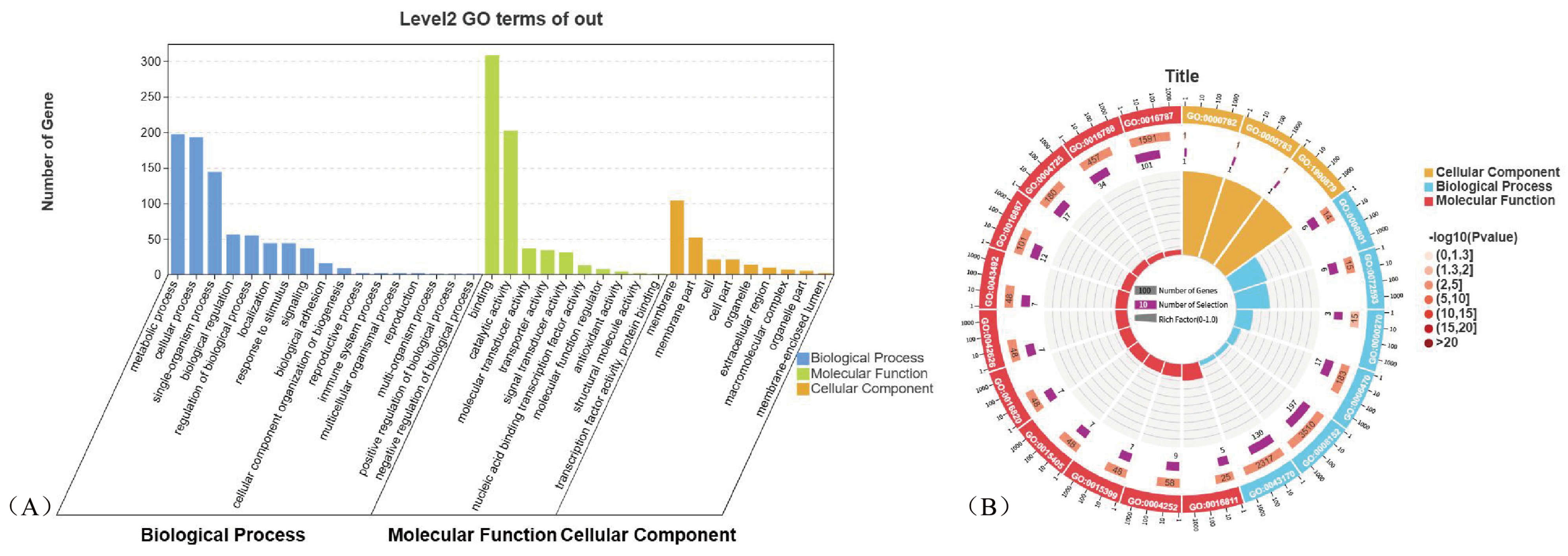
3.4.1. GO Enrichment Analysis
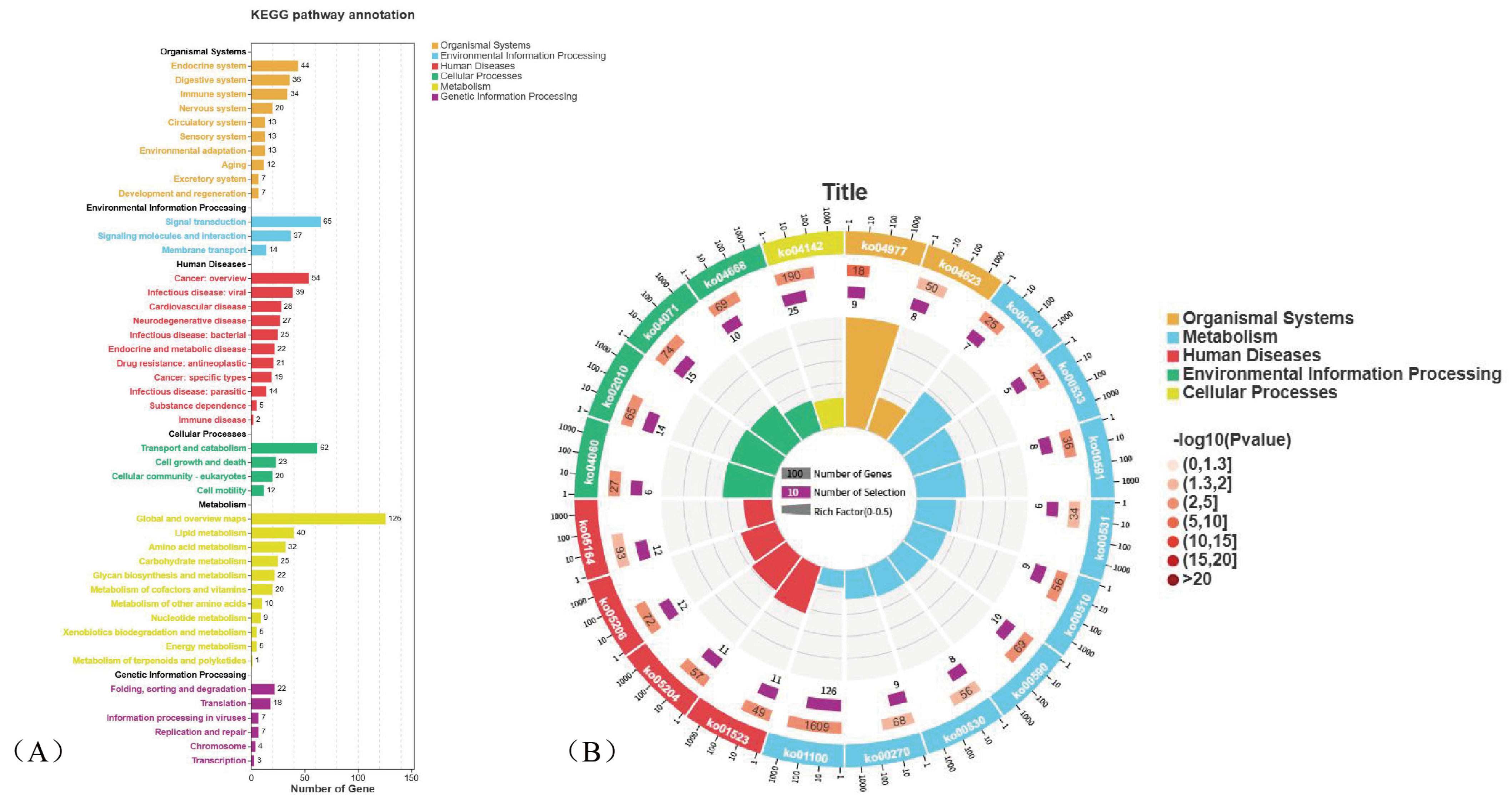
3.4.2. KEGG Pathway Enrichment Analysis
4. Discussion
4.1. Ploidy-Dependent Regulatory Mechanisms of Genes Related to Glutathione Metabolism
4.1.1. Isoform Differences in the GST Gene Family and Their Ploidy Response Characteristics
4.1.2. Regulatory Characteristics of the CHAC1 Gene in Ploidy-Dependent Selenium Response
4.2. Ploidy-Dependent Expression Characteristics of the SOD Gene Family in the Antioxidant Enzyme System
4.3. Expression Changes in Thioredoxin-Related Genes Reveal Regulatory Hierarchy Differences
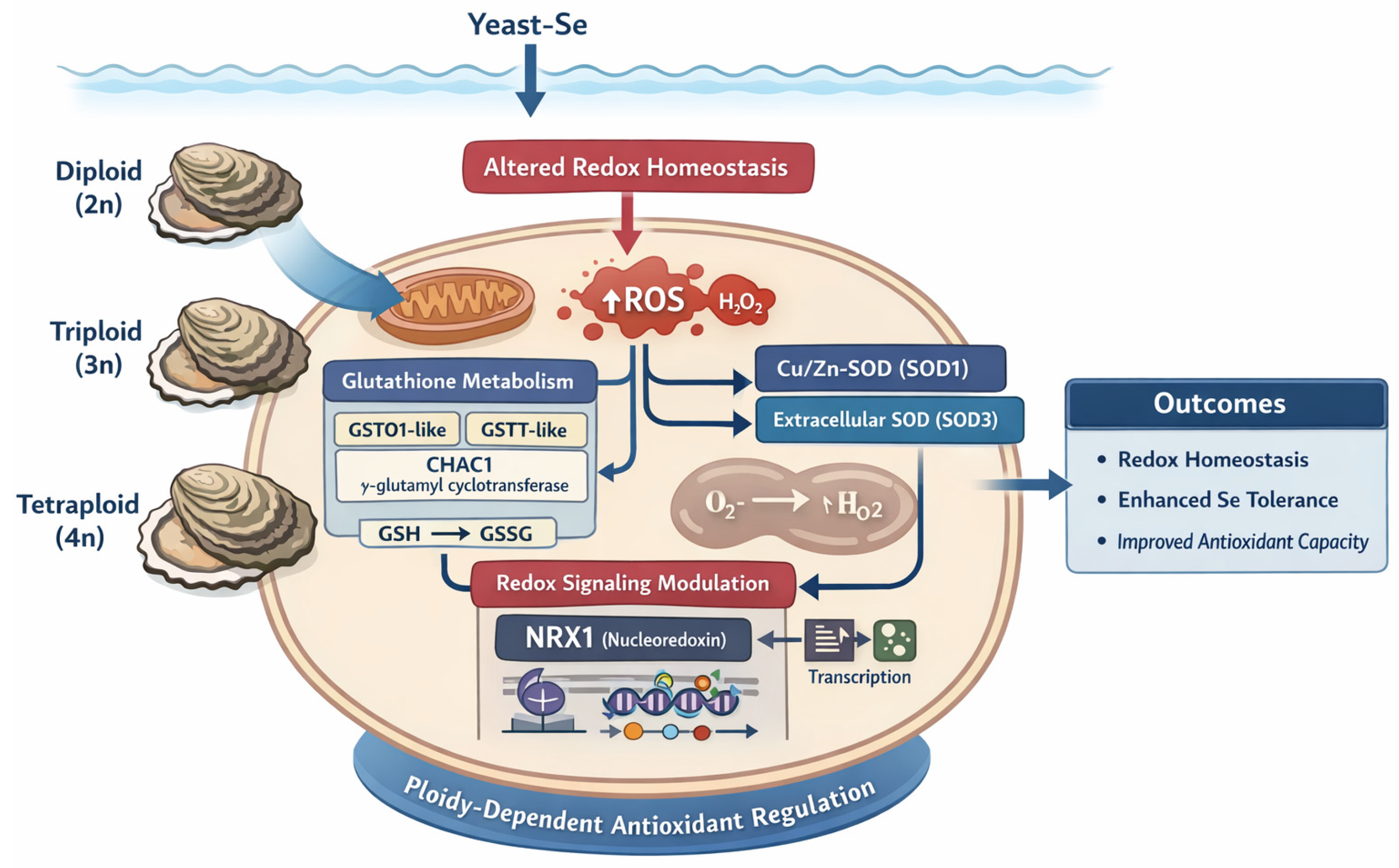
4.4. Integrated Model of Redox Regulation in Pacific Oysters of Different Ploidy Under Selenium Yeast Supplementation
5. Conclusions
Author Contributions
Funding
Institutional Review Board Statement
Informed Consent Statement
Data Availability Statement
Conflicts of Interest
Abbreviations
| Catalase | CAT |
| Malondialdehyde | MDA |
| Superoxide Dismutase | SOD |
| Glutathione Peroxidase | GPx |
References
- Brown, K.M.; Arthur, J.R. Selenium, selenoproteins and human health: A review. Public Health Nutr. 2001, 4, 593–599. [Google Scholar] [CrossRef]
- Beckett, G.J.; Arthur, J.R. Selenium and endocrine systems. J. Endocrinol. 2005, 184, 455–465. [Google Scholar] [CrossRef] [PubMed]
- Bano, I.; Hassan, M.F.; Kieliszek, M. A Comprehensive Review of Selenium as a Key Regulator in Thyroid Health. Biol. Trace Elem. Res. 2025, 203, 6466–6480. [Google Scholar] [CrossRef]
- Bai, S.; Zhang, M.; Tang, S.; Li, M.; Wu, R.; Wan, S.; Chen, L.; Wei, X.; Feng, S. Effects and Impact of Selenium on Human Health, A Review. Molecules 2024, 30, 50. [Google Scholar] [CrossRef]
- Yang, G.P. Excessive addition of trace elements in feed is not advisable. Zhejiang Anim. Husb. Vet. Med. 2019, 44, 28–30. Available online: https://kns.cnki.net/KCMS/detail/detail.aspx?dbcode=CJFQ&dbname=CJFDLAST2019&filename=CMSZ201905011 (accessed on 13 January 2026).
- Ke, C.; Wang, W.X. Bioaccumulation of Cd, Se, and Zn in an estuarine oyster (Crassostrea rivularis) and a coastal oyster (Saccostrea glomerata). Aquat. Toxicol. 2001, 56, 33–51. [Google Scholar] [CrossRef] [PubMed]
- Wang, X.; Shen, Z.; Wang, C.; Li, E.; Qin, J.G.; Chen, L. Dietary supplementation of selenium yeast enhances the antioxidant capacity and immune response of juvenile Eriocheir sinensis under nitrite stress. Fish Shellfish Immunol. 2019, 87, 22–31. [Google Scholar] [CrossRef]
- Bryszewska, M.A.; Måge, A. Determination of selenium and its compounds in marine organisms. J. Trace Elem. Med. Biol. 2015, 29, 91–98. [Google Scholar] [CrossRef]
- Moreno, P.; Quijano, M.A.; Gutiérrez, A.M.; Pérez-Conde, M.C.; Cámara, C. Fractionation studies of selenium compounds from oysters, and their determination by high-performance liquid chromatography coupled to inductively coupled plasma mass spectrometry. J. Anal. At. Spectrom. 2001, 16, 1044–1050. [Google Scholar] [CrossRef]
- Cheng, G.; Liang, Y.; Zhang, H.; Xu, C.; Li, Q. Effects of temperature and salinity on the larval early development, growth, and settlement of the diploid, triploid, and tetraploid Pacific oyster “Haida No. 2” strain. Aquac. Int. 2024, 32, 6097–6113. [Google Scholar] [CrossRef]
- Li, A.; Zhao, M.; Zhao, J.; Zhang, M.; Huo, M.; Deng, J.; Wang, L.; Wang, W.; Qi, H.; Li, Y.; et al. Chromosomal-level genome assembly of an allotetraploid oyster. Sci. Data 2025, 12, 1492. [Google Scholar] [CrossRef] [PubMed]
- Zhou, J.; Xu, C.; Liu, H.; Li, Q. Comparative aquaculture performance of genetically improved triploid oysters of ‘Haida No. 3’ line of the Pacific oyster Crassostrea gigas. Aquaculture 2026, 610, 742905. [Google Scholar] [CrossRef]
- Yang, H.; Simon, N.; Sturmer, L.N. Production and Performance of Triploid Oysters for Aquaculture. EDIS 2018, 2018. Available online: https://ask.ifas.ufl.edu/publication/FA208 (accessed on 13 January 2026). [CrossRef]
- Meng, Y.; Zhang, Y.; Wang, W.; Zhao, Y.; Qiu, D.; Li, Z.; Sun, G.; Cui, C.; Wang, Q.; Liu, Z.; et al. Transcriptomic Analysis Reveals the Growth Regulatory Mechanisms in Diploid, Triploid, and Tetraploid Pacific Oyster (Crassostrea gigas). Animals 2025, 15, 2691. [Google Scholar] [CrossRef]
- Wan, W.; Qin, Y.; Shi, G.; Li, S.; Liao, Q.; Ma, H.; Li, J.; Suo, A.; Ding, D.; Yu, Z.; et al. Genetic improvement of aquaculture performance for tetraploid Pacific oysters, Crassostrea gigas: A case study of four consecutive generations of selective breeding. Aquaculture 2023, 563, 738910. [Google Scholar] [CrossRef]
- Fu, J.; Zhang, E.; Yu, W.; Wang, W.; Sun, Y.; Dong, L.; Zhang, Y.; Sun, G.; Li, Z.; Luo, Q.; et al. Comparative Analysis of the Biochemical Composition, Amino Acid, and Fatty Acid Contents of Diploid, Triploid, and Tetraploid Crassostrea gigas. Molecules 2024, 29, 2671. [Google Scholar] [CrossRef]
- Dong, L.; Li, Z.; Wang, W.; Meng, Y.; Zhang, E.; Cui, X.; Xu, X.; Feng, Y.; Sun, G.; Wang, Z.; et al. Transcriptome analysis reveals polyploidy-related differential gene expression among diploid, triploid, and tetraploid Pacific oysters (Crassostrea gigas) based on growth-related phenotypes. Aquaculture 2024, 587, 740859. [Google Scholar] [CrossRef]
- Schoenfelder, K.P.; Fox, D.T. The expanding implications of polyploidy. J. Cell Biol. 2015, 209, 485–491. [Google Scholar] [CrossRef] [PubMed]
- Oberprieler, C.; Talianova, M.; Griesenbeck, J. Effects of polyploidy on the coordination of gene expression between organellar and nuclear genomes in Leucanthemum Mill. (Compositae, Anthemideae). Ecol. Evol. 2019, 9, 9100–9110. [Google Scholar] [CrossRef] [PubMed]
- Vaidya, R.V.; Bodenstein, S.; Rasulova, D.; La Peyre, J.F.; Kelly, M.W. Comparative Transcriptomic Analyses Reveal Differences in the Responses of Diploid and Triploid Eastern Oysters to Environmental Stress. Evol. Appl. 2024, 17, e70028. [Google Scholar] [CrossRef]
- Zhao, Y.; Jiang, X.; Jiang, L.; Wang, Y.; Cui, C.; Liu, X.; Li, Z.; Wang, W.; Yang, J. Metabolic Alterations in Crassostrea Gigas After Feeding Selenium-Enriched Yeast Based on Transcriptomic Analysis. Biology 2025, 14, 898. [Google Scholar] [CrossRef] [PubMed]
- Zhao, X.; Yu, H.; Kong, L.; Li, Q. Transcriptomic Responses to Salinity Stress in the Pacific Oyster Crassostrea gigas. PLoS ONE 2012, 7, e46244. [Google Scholar] [CrossRef]
- Zhang, E.; Li, Z.; Li, B.; Fu, J.; Feng, Y.; Sun, G.; Xu, X.; Cui, C.; Wang, W.; Yang, J. Investigating the molecular mechanism of sterility in female triploid Pacific oyster (Crassostrea gigas). Aquac. Rep. 2024, 34, 101885. [Google Scholar] [CrossRef]
- Brown, R.A.M.; Epis, M.R.; Horsham, J.L.; Kabir, T.D.; Richardson, K.L.; Leedman, P.J. Total RNA extraction from tissues for microRNA and target gene expression analysis: Not all kits are created equal. BMC Biotechnol. 2018, 18, 16. [Google Scholar] [CrossRef] [PubMed]
- Love, M.I.; Huber, W.; Anders, S. Moderated estimation of fold change and dispersion for RNA-seq data with DESeq2. Genome Biol. 2014, 15, 550. [Google Scholar] [CrossRef]
- Kim, D.; Paggi, J.M.; Park, C.; Bennett, C.; Salzberg, S.L. Graph-based genome alignment and genotyping with HISAT2 and HISAT-genotype. Nat. Biotechnol. 2019, 37, 907–915. [Google Scholar] [CrossRef]
- Burmeister, C.; Lüersen, K.; Heinick, A.; Hussein, A.; Domagalski, M.; Walter, R.D.; Liebau, E. Oxidative stress in Caenorhabditis elegans: Protective effects of the Omega class glutathione transferase (GSTO-1). FASEB J. 2008, 22, 343–354. [Google Scholar] [CrossRef]
- Kim, K.; Kim, S.H.; Kim, J.; Kim, H.; Yim, J. Glutathione s-transferase omega 1 activity is sufficient to suppress neurodegeneration in a Drosophila model of Parkinson disease. J. Biol. Chem. 2012, 287, 6628–6641. [Google Scholar] [CrossRef]
- Welker, A.F.; Moreira, D.C.; Campos, É.G.; Hermes-Lima, M. Role of redox metabolism for adaptation of aquatic animals to drastic changes in oxygen availability. Comp. Biochem. Physiol. Part A Mol. Integr. Physiol. 2013, 165, 384–404. [Google Scholar] [CrossRef]
- Bal, A.; Panda, F.; Pati, S.G.; Das, K.; Agrawal, P.K.; Paital, B. Modulation of physiological oxidative stress and antioxidant status by abiotic factors especially salinity in aquatic organisms. Comp. Biochem. Physiol. Part C Toxicol. Pharmacol. 2021, 241, 108971. [Google Scholar] [CrossRef] [PubMed]
- Prego-Faraldo, M.V.; Vieira, L.R.; Eirin-Lopez, J.M.; Méndez, J.; Guilhermino, L. Transcriptional and biochemical analysis of antioxidant enzymes in the mussel Mytilus galloprovincialis during experimental exposures to the toxic dinoflagellate Prorocentrum lima. Mar. Environ. Res. 2017, 129, 304–315. [Google Scholar] [CrossRef] [PubMed]
- Trevisan, R.; Mello, D.F. Redox control of antioxidants, metabolism, immunity, and development at the core of stress adaptation of the oyster Crassostrea gigas to the dynamic intertidal environment. Free Radic. Biol. Med. 2024, 210, 85–106. [Google Scholar] [CrossRef] [PubMed]
- Pan, Y.; Lin, X.; Chen, F.; Saetan, W.; Huang, Y.; Zhang, Y.; Li, G.; Tian, C. Genome-wide identification and expression profiling of glutathione S-transferase family under hypoxia stress in silver sillago (Sillago sihama). Comp. Biochem. Physiol. Part D Genom. Proteom. 2021, 40, 100920. [Google Scholar] [CrossRef] [PubMed]
- Kumar, A.; Tikoo, S.; Maity, S.; Sengupta, S.; Sengupta, S.; Kaur, A.; Bachhawat, A.K. Mammalian proapoptotic factor ChaC1 and its homologues function as γ-glutamyl cyclotransferases acting specifically on glutathione. EMBO Rep. 2012, 13, 1095–1101. [Google Scholar] [CrossRef]
- Crawford, R.R.; Prescott, E.T.; Sylvester, C.F.; Higdon, A.N.; Shan, J.; Kilberg, M.S.; Mungrue, I.N. Human CHAC1 Protein Degrades Glutathione, and mRNA Induction Is Regulated by the Transcription Factors ATF4 and ATF3 and a Bipartite ATF/CRE Regulatory Element. J. Biol. Chem. 2015, 290, 15878–15891. [Google Scholar] [CrossRef]
- Hamano, M.; Tomonaga, S.; Osaki, Y.; Oda, H.; Kato, H.; Furuya, S. Transcriptional Activation of Chac1 and Other Atf4-Target Genes Induced by Extracellular l-Serine Depletion is negated with Glycine Consumption in Hepa1-6 Hepatocarcinoma Cells. Nutrients 2020, 12, 3018. [Google Scholar] [CrossRef]
- Ge, Y.; Zheng, X.; Mao, S.; Zhang, Q.; Hu, G.; Wei, Y. DJ-1 inhibits glutathione degradation by downregulating CHAC1 expression in astrocytes. Neurosci. Res. 2022, 184, 62–69. [Google Scholar] [CrossRef]
- Yao, H.; Wang, Y.; Zhou, W.; Xu, C.; Ge, X.; Zhu, J. Chac1 silencing mitigates hemorrhagic shock-induced intestinal injury by inhibiting oxidative stress and ferroptosis. Signa Vitae 2023, 19, 184–193. [Google Scholar] [CrossRef]
- Liu, J.D.; Liu, W.B.; Zhang, D.D.; Xu, C.-Y.; Zhang, C.-Y.; Zheng, X.-C.; Chi, C. Dietary reduced glutathione supplementation can improve growth, antioxidant capacity, and immunity on Chinese mitten crab, Eriocheir sinensis. Fish Shellfish Immunol. 2020, 100, 300–308. [Google Scholar] [CrossRef]
- Liu, Y.; Bao, Z.; Lin, Z.; Xue, Q. Genome-wide identification and characterization of superoxide dismutases in four oyster species reveals functional differentiation in response to biotic and abiotic stress. BMC Genom. 2022, 23, 378. [Google Scholar] [CrossRef]
- Ruan, Z.; Liu, Y.; Chang, G.; Lin, Z.; Xue, Q. Molecular characterization of two CuZn-SOD family proteins in the Pacific oyster Crassostrea gigas. Comp. Biochem. Physiol. Part B Biochem. Mol. Biol. 2022, 260, 110736. [Google Scholar] [CrossRef] [PubMed]
- Petersen, S.V.; Valnickova, Z.; Oury, T.D.; Crapo, J.D.; Chr Nielsen, N.; Enghild, J.J. The subunit composition of human extracellular superoxide dismutase (EC-SOD) regulate enzymatic activity. BMC Biochem. 2007, 8, 19. [Google Scholar] [CrossRef] [PubMed]
- Sun, L.; Jiang, G.; Xu, C.; Li, Q. Survival Rates and Molecular Responses of Diploid and Triploid Pacific Oysters Crassostrea gigas Under Different Salinity and Temperature Conditions. J. Ocean Univ. China 2025, 24, 1121–1129. [Google Scholar] [CrossRef]
- Funato, Y.; Michiue, T.; Asashima, M.; Miki, H. The thioredoxin-related redox-regulating protein nucleoredoxin inhibits Wnt-beta-catenin signalling through dishevelled. Nat. Cell Biol. 2006, 8, 501–508. [Google Scholar] [CrossRef]
- Brinkmeier, M.L.; Cheung, L.Y.M.; O’Connell, S.P.; Gutierrez, D.K.; Rhoads, E.C.; A Camper, S.; Davis, S.W. Nucleoredoxin regulates WNT signaling during pituitary stem cell differentiation. Hum. Mol. Genet. 2025, 34, 870–881. [Google Scholar] [CrossRef] [PubMed]



| Sample | 2N | 3N | 4N |
|---|---|---|---|
| Clean reads | 43,182,512 | 44,689,791 | 44,264,606 |
| Raw reads | 44,736,770 | 45,901,000 | 45,497,693 |
| Mapped reads | 27,731,707 | 28,886,310 | 28,252,637 |
| Mapping rate (%) | 64.18 | 64.66 | 63.81 |
| Uniquely mapped reads | 26,013,031 | 27,096,093 | 26,436,269 |
| Uniquely mapped rate (%) | 60.20 | 60.65 | 59.72 |
| G/C content (%) | 43.45 | 43.58 | 43.40 |
| % ≥ Q20 | 97.52 | 97.63 | 97.62 |
| % ≥ Q30 | 92.98 | 93.30 | 93.23 |
Disclaimer/Publisher’s Note: The statements, opinions and data contained in all publications are solely those of the individual author(s) and contributor(s) and not of MDPI and/or the editor(s). MDPI and/or the editor(s) disclaim responsibility for any injury to people or property resulting from any ideas, methods, instructions or products referred to in the content. |
© 2026 by the authors. Licensee MDPI, Basel, Switzerland. This article is an open access article distributed under the terms and conditions of the Creative Commons Attribution (CC BY) license.
Share and Cite
Zhang, Y.; Cui, C.; Luo, Q.; Meng, Y.; Li, Z.; Sun, G.; Feng, Y.; Xu, X.; Yang, J.; Wang, W. Transcriptomic Analysis of Selenium-Induced Antioxidant Responses in Diploid, Triploid, and Tetraploid Pacific Oysters (Crassostrea gigas). Foods 2026, 15, 2065. https://doi.org/10.3390/foods15122065
Zhang Y, Cui C, Luo Q, Meng Y, Li Z, Sun G, Feng Y, Xu X, Yang J, Wang W. Transcriptomic Analysis of Selenium-Induced Antioxidant Responses in Diploid, Triploid, and Tetraploid Pacific Oysters (Crassostrea gigas). Foods. 2026; 15(12):2065. https://doi.org/10.3390/foods15122065
Chicago/Turabian StyleZhang, Yousen, Cuiju Cui, Qihao Luo, Yuting Meng, Zan Li, Guohua Sun, Yanwei Feng, Xiaohui Xu, Jianmin Yang, and Weijun Wang. 2026. "Transcriptomic Analysis of Selenium-Induced Antioxidant Responses in Diploid, Triploid, and Tetraploid Pacific Oysters (Crassostrea gigas)" Foods 15, no. 12: 2065. https://doi.org/10.3390/foods15122065
APA StyleZhang, Y., Cui, C., Luo, Q., Meng, Y., Li, Z., Sun, G., Feng, Y., Xu, X., Yang, J., & Wang, W. (2026). Transcriptomic Analysis of Selenium-Induced Antioxidant Responses in Diploid, Triploid, and Tetraploid Pacific Oysters (Crassostrea gigas). Foods, 15(12), 2065. https://doi.org/10.3390/foods15122065