Alcalase–Flavourzyme Red Seaweed Hydrolysates as Antioxidants to Enhance Oxidative Stability of DHA Nanoemulsions

 , ,
, , 
Abstract
1. Introduction
2. Materials and Methods
2.1. Red Seaweed Biomass
2.2. Enzymes, DHA Oil, and Chemicals
2.3. Preparation of Red Seaweed Proteolytic Hydrolysates
2.4. Characterization of Hydrolysates
2.4.1. Protein Content, Protein Recovery, and Degree of Hydrolysis (DH)
2.4.2. Amino Acid Composition
2.4.3. Total Phenolic Content (TPC)
2.4.4. In Vitro Free Radical Scavenging and Metal Ion Chelating
2.4.5. Dynamic Interfacial Tension (IFT)
2.5. Preparation of Nanoemulsions
2.6. Characterization of Nanoemulsions
2.6.1. Droplet Size
2.6.2. Zeta Potential
2.6.3. Viscosity
2.6.4. Confocal Laser Scanning Microscopy (CLSM)
2.6.5. Peroxide Value (PV)
2.6.6. Tocopherol Depletion
2.6.7. Volatile Secondary Oxidation Compounds
2.7. Statistical Analysis
3. Results and Discussion
3.1. Characteristics of Red Seaweed Hydrolysates
3.1.1. Protein Content, Protein Yield, and DH
3.1.2. TPC
3.1.3. Amino Acid Composition
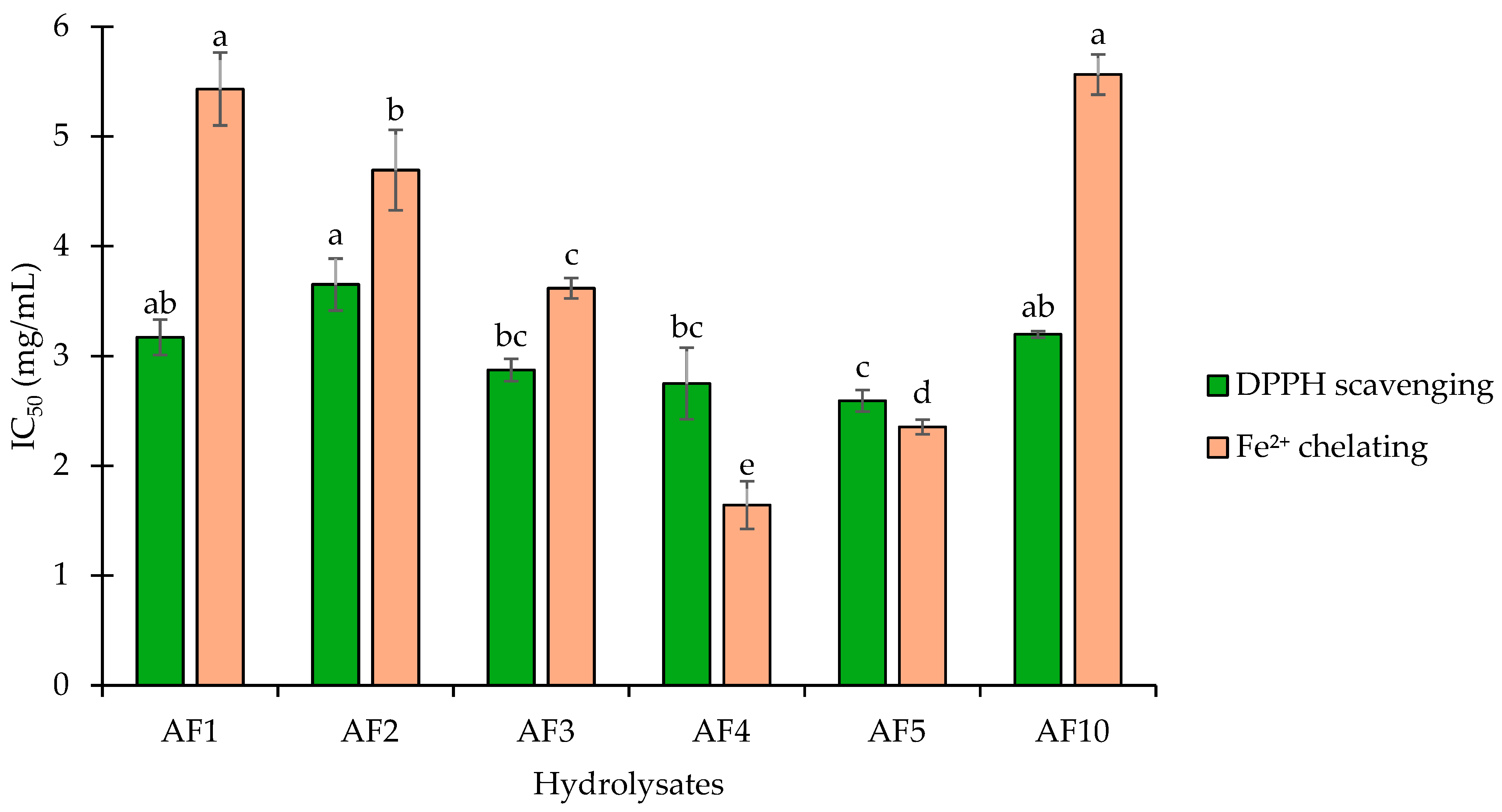
3.1.4. In Vitro Antioxidant Activity
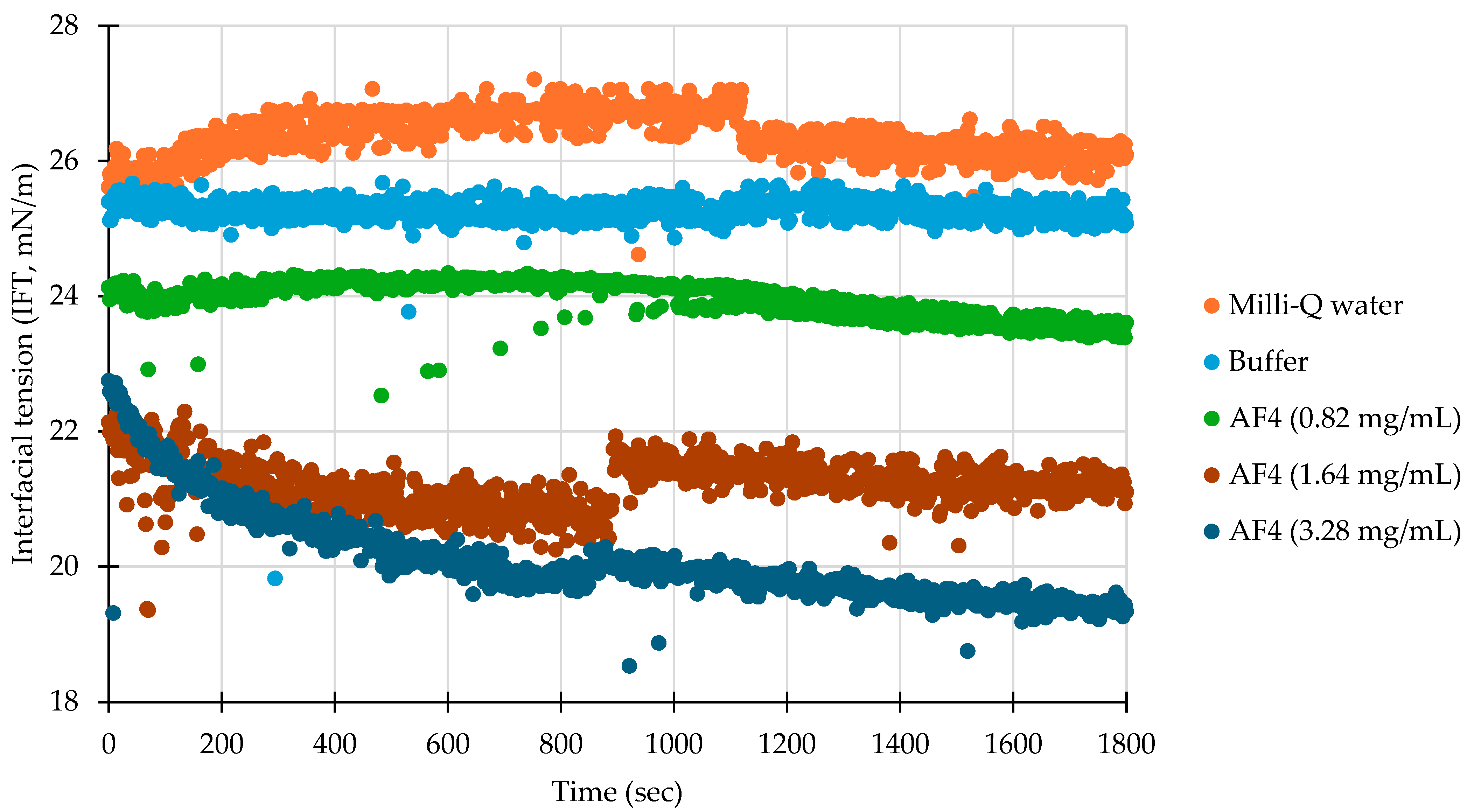
3.1.5. IFT
3.2. Physical Stability of Nanoemulsions
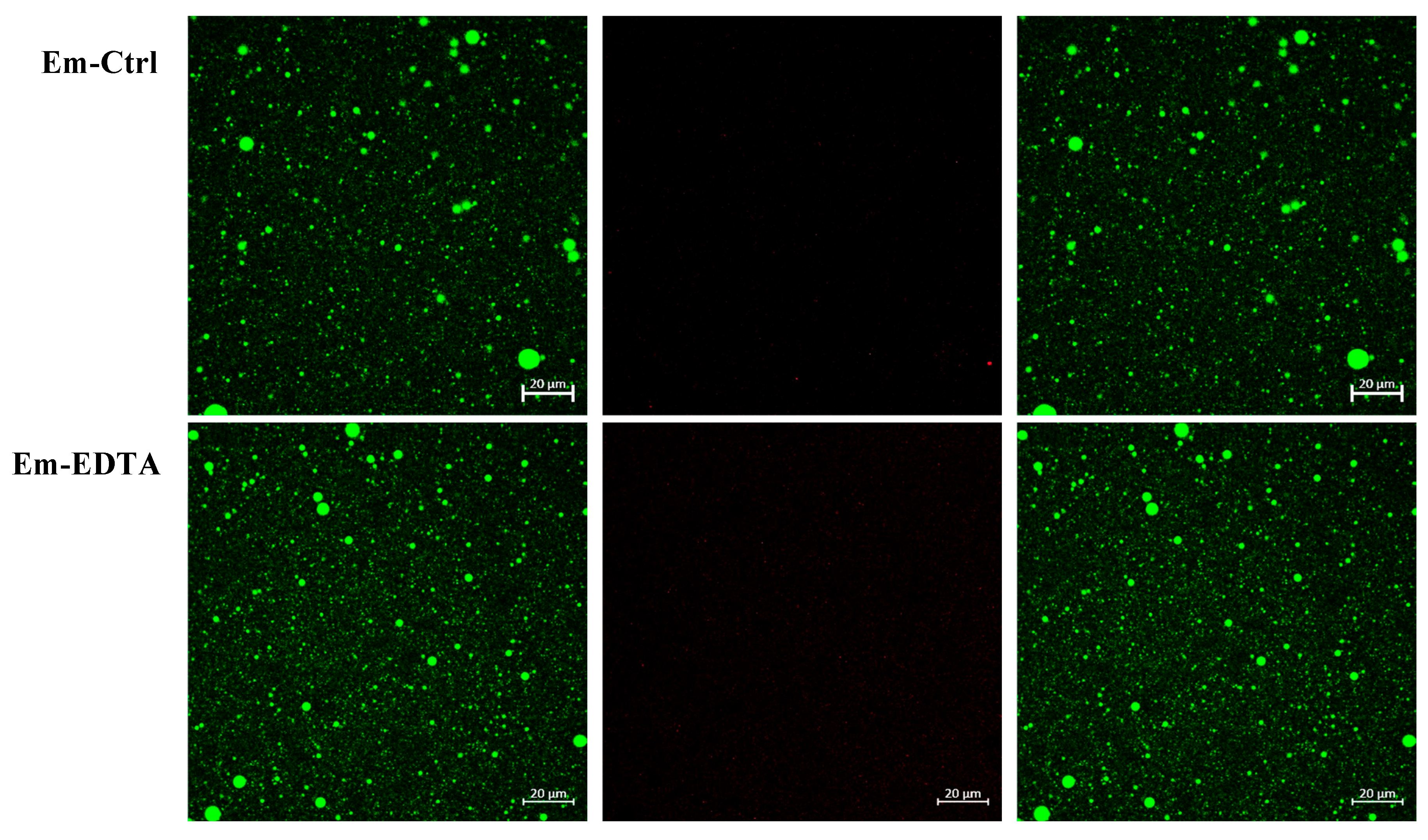
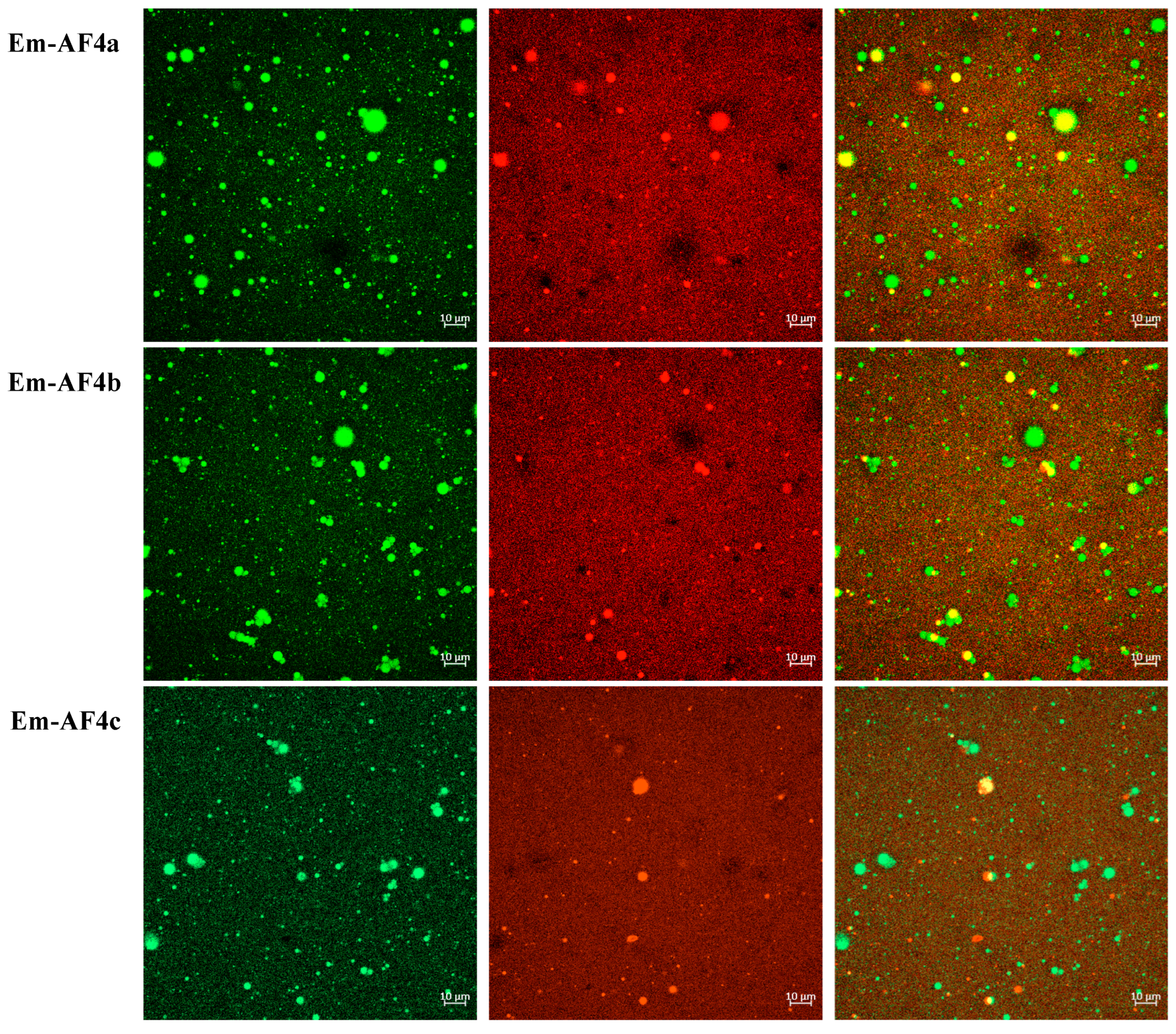
3.3. Microstructure of Nanoemulsions
3.4. Oxidative Stability of Nanoemulsion
3.4.1. PV
3.4.2. Tocopherol Consumption
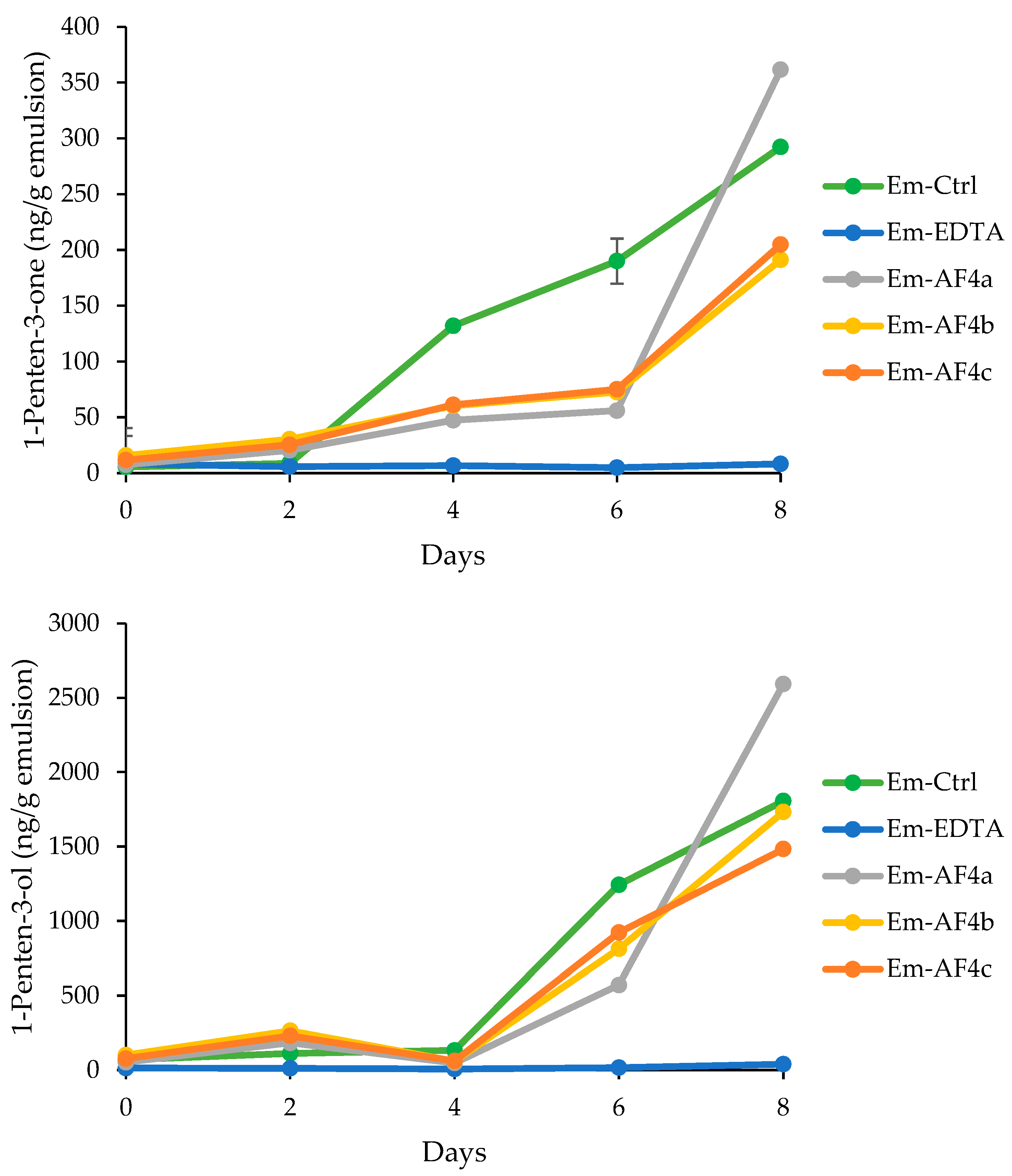
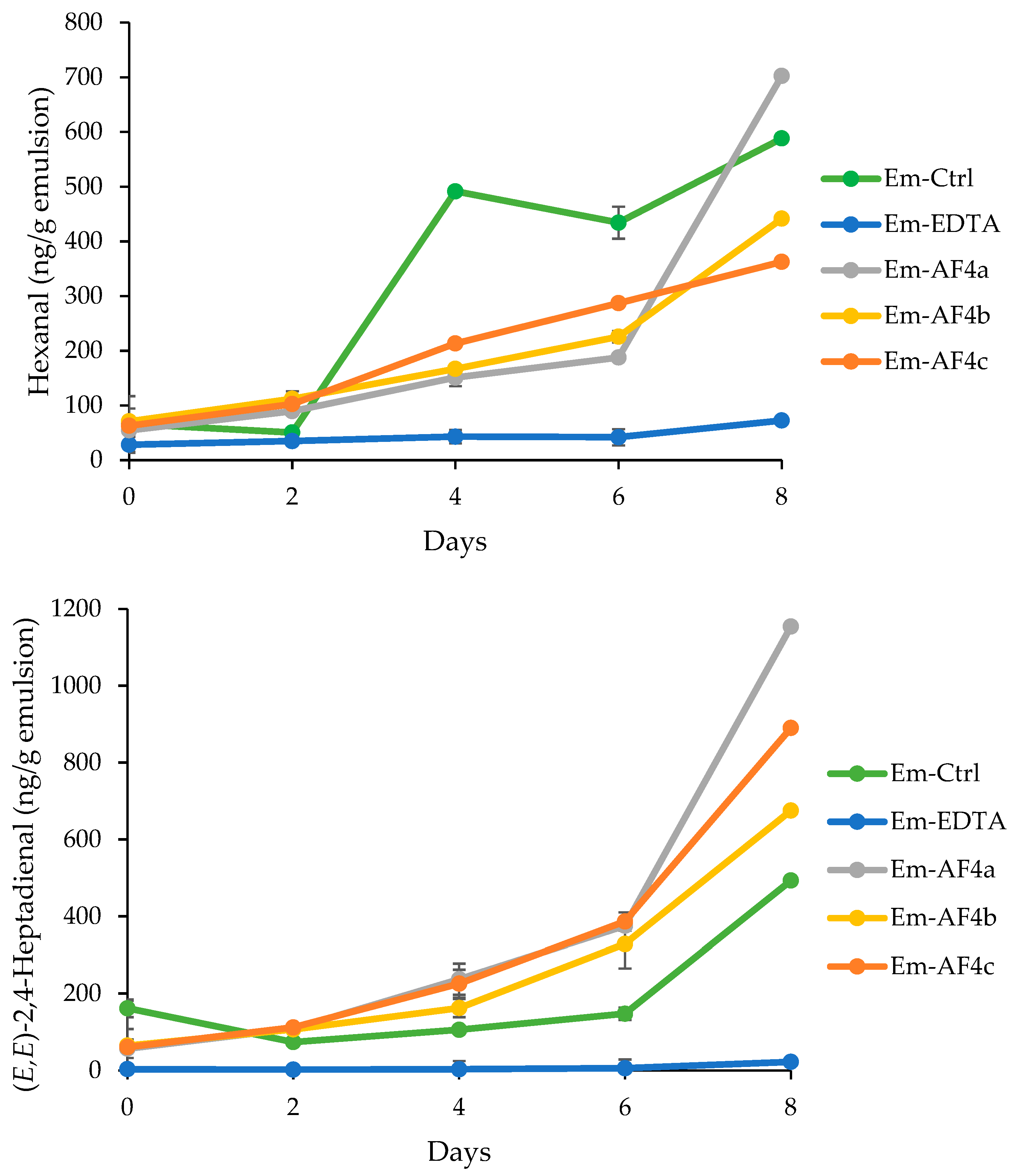
3.4.3. Volatile Secondary Oxidation Products
4. Conclusions
Author Contributions
Funding
Institutional Review Board Statement
Informed Consent Statement
Data Availability Statement
Acknowledgments
Conflicts of Interest
References
- Ahonen, E.; Damerau, A.; Suomela, J.P.; Kortesniemi, M.; Linderborg, K.M. Oxidative Stability, Oxidation Pattern and α-Tocopherol Response of Docosahexaenoic Acid (DHA, 22:6n−3)-Containing Triacylglycerols and Ethyl Esters. Food Chem. 2022, 387, 132882. [Google Scholar] [CrossRef]
- Jesionowska, M.; Ovadia, J.; Hockemeyer, K.; Clews, A.C.; Xu, Y. EPA and DHA in Microalgae: Health Benefits, Biosynthesis, and Metabolic Engineering Advances. J. Am. Oil Chem. Soc. 2023, 100, 831–842. [Google Scholar] [CrossRef]
- Bagchi, S.K.; Patnaik, R.; Rawat, I.; Bux, F. Innovative Strategies for Augmenting Omega-3-Fatty Acid Production in Microalgae: Sustainable Approaches for Vegan Food Applications. Bioresour. Technol. 2025, 437, 133176. [Google Scholar] [CrossRef]
- Kunj, P.; Sahu, S.; Singh, G.; Arya, S.K. A Review on Algal Oils as a Sustainable Source of Essential Omega-3 Fatty Acids. Bioresour. Technol. Rep. 2025, 30, 102154. [Google Scholar] [CrossRef]
- Ren, X.; Liu, Y.; Fan, C.; Hong, H.; Wu, W.; Zhang, W.; Wang, Y. Production, Processing, and Protection of Microalgal n−3 PUFA-Rich Oil. Foods 2022, 11, 1215. [Google Scholar] [CrossRef]
- Keramat, M.; Ehsandoost, E.; Golmakani, M.T. Recent Trends in Improving the Oxidative Stability of Oil-Based Food Products by Inhibiting Oxidation at the Interfacial Region. Foods 2023, 12, 1191. [Google Scholar] [CrossRef]
- Ghelichi, S.; McClements, D.J.; Sørensen, A.D.M.; Jacobsen, C. Omega-3 Microalgal Oil-in-Water Nanoemulsions Stabilized by Red Seaweed Extracts: Physical and Oxidative Stability. Algal Res. 2026, 93, 104461. [Google Scholar] [CrossRef]
- Walker, R.; Decker, E.A.; McClements, D.J. Development of Food-Grade Nanoemulsions and Emulsions for Delivery of Omega-3 Fatty Acids: Opportunities and Obstacles in the Food Industry. Food Funct. 2015, 6, 41–54. [Google Scholar] [CrossRef] [PubMed]
- Ghelichi, S.; Hajfathalian, M.; Yesiltas, B.; Sørensen, A.D.M.; García-Moreno, P.J.; Jacobsen, C. Oxidation and Oxidative Stability in Emulsions. Compr. Rev. Food Sci. Food Saf. 2023, 22, 1864–1901. [Google Scholar] [CrossRef]
- Wang, J.; Han, L.; Wang, D.; Sun, Y.; Huang, J.; Shahidi, F. Stability and Stabilization of Omega-3 Oils: A Review. Trends Food Sci. Technol. 2021, 118, 17–35. [Google Scholar] [CrossRef]
- Guiotto, E.N.; Julio, L.M.; Ixtaina, V.Y. Natural Antioxidants in the Preservation of Omega-3-Rich Oils: Applications in Bulk, Emulsified, and Microencapsulated Chia, Flaxseed, and Sacha Inchi Oils. Phytochem. Rev. 2025, 24, 6139–6167. [Google Scholar] [CrossRef]
- Ying, X.; Li, X.; Deng, S.; Zhang, B.; Xiao, G.; Xu, Y.; Brennan, C.; Benjakul, S.; Ma, L. How Lipids, as Important Endogenous Nutrient Components, Affect the Quality of Aquatic Products: An Overview of Lipid Peroxidation and the Interaction with Proteins. Compr. Rev. Food Sci. Food Saf. 2025, 24, e70096. [Google Scholar] [CrossRef]
- Kaur, M.; Shitanaka, T.; Surendra, K.C.; Khanal, S.K. Macroalgae-Derived Bioactive Compounds for Functional Food and Pharmaceutical Applications—A Critical Review. Crit. Rev. Food Sci. Nutr. 2025, 65, 4172–4194. [Google Scholar] [CrossRef]
- Thiviya, P.; Gamage, A.; Gama-Arachchige, N.S.; Merah, O.; Madhujith, T. Seaweeds as a Source of Functional Proteins. Phycology 2022, 2, 216–243. [Google Scholar] [CrossRef]
- Lafarga, T.; Acién-Fernández, F.G.; Garcia-Vaquero, M. Bioactive Peptides and Carbohydrates from Seaweed for Food Applications: Natural Occurrence, Isolation, Purification, and Identification. Algal Res. 2020, 48, 101909. [Google Scholar] [CrossRef]
- El Abed, N.; Ben Hadj Ahmed, S.; Ozogul, F. Seaweed-Derived Polysaccharides and Peptides and Their Potential Benefits for Human Health and Food Applications. In Seaweeds and Seaweed-Derived Compounds: Meeting the Growing Need for Healthy Biologically Active Compounds; Ozogul, F., Trif, M., Rusu, A., Eds.; Springer International Publishing: Cham, Switzerland, 2024; pp. 117–155. [Google Scholar]
- Xie, C.; Lee, Z.J.; Ye, S.; Barrow, C.J.; Dunshea, F.R.; Suleria, H.A.R. A Review on Seaweeds and Seaweed-Derived Polysaccharides: Nutrition, Chemistry, Bioactivities, and Applications. Food Rev. Int. 2024, 40, 1312–1347. [Google Scholar] [CrossRef]
- Choudhary, B.; Chauhan, O.P.; Mishra, A. Edible Seaweeds: A Potential Novel Source of Bioactive Metabolites and Nutraceuticals With Human Health Benefits. Front. Mar. Sci. 2021, 8, 740054. [Google Scholar] [CrossRef]
- Subbiah, V.; Xie, C.; Dunshea, F.R.; Barrow, C.J.; Suleria, H.A.R. The Quest for Phenolic Compounds from Seaweed: Nutrition, Biological Activities and Applications. Food Rev. Int. 2023, 39, 5786–5813. [Google Scholar] [CrossRef]
- Subbiah, V.; Ebrahimi, F.; Agar, O.T.; Legione, A.R.; Dunshea, F.R.; Barrow, C.J.; Suleria, H.A.R. Bioactive Phenolic Compounds from Australian Seaweeds and Their Impact on Gut Health. Sci. Rep. 2025, 15, 20954. [Google Scholar] [CrossRef]
- Ghelichi, S.; Sørensen, A.-D.M.; Hajfathalian, M.; Holdt, S.L.; Jacobsen, C. Screening Enzymatic Extracts of Palmaria Palmata Based on Composition and Bioactivity. Algal Res. 2025, 89, 104048. [Google Scholar] [CrossRef]
- Čmiková, N.; Kowalczewski, P.Ł.; Kmiecik, D.; Tomczak, A.; Drożdżyńska, A.; Ślachciński, M.; Szala, Ł.; Matić, S.; Marković, T.; Popović, S.; et al. Seaweed Nutritional Value and Bioactive Properties: Insights from Ascophyllum Nodosum, Palmaria Palmata, and Chondrus Crispus. Life 2024, 14, 1522. [Google Scholar] [CrossRef]
- Ahmed, L.; Barry-Ryan, C. The Legal Status and Compliance of Seaweed and Seaweed-Derived Compounds. In Seaweeds and Seaweed-Derived Compounds: Meeting the Growing Need for Healthy Biologically Active Compounds; Ozogul, F., Trif, M., Rusu, A., Eds.; Springer International Publishing: Cham, Switzerland, 2024; pp. 511–519. [Google Scholar]
- Maribu, I.; Blikra, M.J.; Eilertsen, K.E.; Elvevold, K. Protein Enrichment of the Red Macroalga Palmaria Palmata Using Pulsed Electric Field and Enzymatic Processing. J. Appl. Phycol. 2024, 36, 3665–3673. [Google Scholar] [CrossRef]
- Bjarnadóttir, M.; Aðalbjörnsson, B.V.; Nilsson, A.; Slizyte, R.; Roleda, M.Y.; Hreggviðsson, G.Ó.; Friðjónsson, Ó.H.; Jónsdóttir, R. Palmaria Palmata as an Alternative Protein Source: Enzymatic Protein Extraction, Amino Acid Composition, and Nitrogen-to-Protein Conversion Factor. J. Appl. Phycol. 2018, 30, 2061–2070. [Google Scholar] [CrossRef]
- Harnedy, P.A.; FitzGerald, R.J. Extraction of Protein from the Macroalga Palmaria Palmata. LWT-Food Sci. Technol. 2013, 51, 375–382. [Google Scholar] [CrossRef]
- Chaudhary, S.; Singh, R.; Mishra, S.; Talwar, B.; Balhara, K. From Sea to Supplement: Algal Protein Extraction Methods and Functional Benefits. Int. J. Biol. Macromol. 2025, 328, 147750. [Google Scholar] [CrossRef]
- Idowu, A.T.; Amigo-Benavent, M.; FitzGerald, R.J. Impact of Alkaline Solution, Carbohydrase and Biomass:Solvent on Extraction Efficiency, and Protein and Amino Acid Profiles of Palmaria Palmata Protein Extracts. Food Bioprod. Process. 2024, 148, 285–297. [Google Scholar] [CrossRef]
- Wijethunga, A.M.; He, Q.S.; Prithiviraj, B.; Sun, X. Acid Hydrolysis and Microwave Digestion Enhanced Protein Extraction from Red Seaweed Palmaria Palmata. Food Chem. X 2025, 25, 102222. [Google Scholar] [CrossRef]
- Náthia-Neves, G.; Getachew, A.T.; Ghelichi, S.; Jacobsen, C. The Use of Green Technologies for Processing Lupin Seeds (Lupinus angustifolius L.): Extraction of Non-Polar and Polar Compounds for Concentrated-Protein Flour Production. Food Res. Int. 2025, 200, 115434. [Google Scholar] [CrossRef]
- Ghelichi, S.; Jacobsen, C. Seaweed Proteins: Properties, Extraction, Challenges, and Prospects. J. Food Sci. 2025, 90, e70418. [Google Scholar] [CrossRef]
- Wang, T.; Wang, Z.; Wang, R.; Zhang, L.; Zhang, Y.; Lu, H. Highly Efficient and Chemoselective Blocking of Free Amino Group by Ortho-Phthalaldehyde (OPA) for Comprehensive Analysis of Protein Terminome. Talanta 2024, 267, 125262. [Google Scholar] [CrossRef] [PubMed]
- Singleton, V.L.; Rossi, J.A. Colorimetry of Total Phenolics with Phosphomolybdic-Phosphotungstic Acid Reagents. Am. J. Enol. Vitic. 1965, 16, 144–158. [Google Scholar] [CrossRef]
- Raposo, F.; Borja, R.; Gutiérrez-González, J.A. A Comprehensive and Critical Review of the Unstandardized Folin-Ciocalteu Assay to Determine the Total Content of Polyphenols: The Conundrum of the Experimental Factors and Method Validation. Talanta 2024, 272, 125771. [Google Scholar] [CrossRef]
- Shimada, K.; Fujikawa, K.; Yahara, K.; Nakamura, T. Antioxidative Properties of Xanthan on the Autoxidation of Soybean Oil in Cyclodextrin Emulsion. J. Agric. Food Chem. 1992, 40, 945–948. [Google Scholar] [CrossRef]
- Dinis, T.C.P.; Madeira, V.M.C.; Almeida, L.M. Action of Phenolic Derivatives (Acetaminophen, Salicylate, and 5-Aminosalicylate) as Inhibitors of Membrane Lipid Peroxidation and as Peroxyl Radical Scavengers. Arch. Biochem. Biophys. 1994, 315, 161–169. [Google Scholar] [CrossRef]
- Ghelichi, S.; Shokrollahi Yancheshmeh, B.; Hajfathalian, M.; Helalat, S.H.; Shrestha, A.; Katwal, S.; Jacobsen, C. Metal-Chelating Macroalgal Extract as a Marine Antioxidant for Stabilizing DHA Nanoemulsions. Antioxidants 2026, 15, 145. [Google Scholar] [CrossRef]
- Bligh, E.G.; Dyer, W.J. A Rapid Method of Total Lipid Extraction and Purification. Can. J. Biochem. Physiol. 1959, 37, 911–917. [Google Scholar] [CrossRef] [PubMed]
- Shantha, N.C.; Decker, E.A. Rapid, Sensitive, Iron-Based Spectrophotometric Methods for Determination of Peroxide Values of Food Lipids. J. AOAC Int. 1994, 77, 421–424. [Google Scholar] [CrossRef]
- Nielsen, N.S.; Timm-Heinrich, M.; Jacobsen, C. Comparison of Wet-Chemical Methods for Determination of Lipid Hydroperoxides. J. Food Lipids 2003, 10, 35–50. [Google Scholar] [CrossRef]
- AOCS. Official Method Ce 8-89 Determination of Tocopherols and Tocotrienols in Vegetable Oils and Fats by HPLC; AOCS: Champaign, IL, USA, 1998. [Google Scholar]
- Hunsakul, K.; Laokuldilok, T.; Sakdatorn, V.; Klangpetch, W.; Brennan, C.S.; Utama-ang, N. Optimization of Enzymatic Hydrolysis by Alcalase and Flavourzyme to Enhance the Antioxidant Properties of Jasmine Rice Bran Protein Hydrolysate. Sci. Rep. 2022, 12, 12582. [Google Scholar] [CrossRef]
- Wang, Y.; Li, Z.; Li, H.; Selomulya, C. Effect of Hydrolysis on the Emulsification and Antioxidant Properties of Plant-Sourced Proteins. Curr. Opin. Food Sci. 2022, 48, 100949. [Google Scholar] [CrossRef]
- Bekiroglu, H.; Bozkurt, F.; Karadag, A.; Ahhmed, A.M.; Sagdic, O. The Effects of Different Protease Treatments on the Techno-Functional, Structural, and Bioactive Properties of Bovine Casein. Prep. Biochem. Biotechnol. 2022, 52, 1097–1108. [Google Scholar] [CrossRef]
- Ghelichi, S.; McClements, D.J.; Getachew, A.T.; Sørensen, A.D.M.; Jacobsen, C. Design of Multi-Functional Protein-Based Emulsifiers by Conjugation and Complexation for Improved Performance. Food Hydrocoll. 2026, 175, 112453. [Google Scholar] [CrossRef]
- Teixeira-Guedes, C.; Gomes-Dias, J.S.; Cunha, S.A.; Pintado, M.E.; Pereira, R.N.; Teixeira, J.A.; Rocha, C.M.R. Enzymatic Approach for the Extraction of Bioactive Fractions from Red, Green and Brown Seaweeds. Food Bioprod. Process. 2023, 138, 25–39. [Google Scholar] [CrossRef]
- Cotas, J.; Leandro, A.; Monteiro, P.; Pacheco, D.; Figueirinha, A.; Goncąlves, A.M.M.; Da Silva, G.J.; Pereira, L. Seaweed Phenolics: From Extraction to Applications. Mar. Drugs 2020, 18, 384. [Google Scholar] [CrossRef] [PubMed]
- Wang, T.; Jónsdóttir, R.; Kristinsson, H.G.; Hreggvidsson, G.O.; Jónsson, J.Ó.; Thorkelsson, G.; Ólafsdóttir, G. Enzyme-Enhanced Extraction of Antioxidant Ingredients from Red Algae Palmaria Palmata. LWT 2010, 43, 1387–1393. [Google Scholar] [CrossRef]
- Aluko, R.E. 5-Amino Acids, Peptides, and Proteins as Antioxidants for Food Preservation. In Handbook of Antioxidants for Food Preservation; Shahidi, F., Ed.; Woodhead Publishing: Cambridge, UK, 2015; pp. 105–140. [Google Scholar]
- Monteiro, L.S.; Paiva-Martins, F. Amino Acids, Amino Acid Derivatives and Peptides as Antioxidants. In Lipid Oxidation in Food and Biological Systems: A Physical Chemistry Perspective; Bravo-Diaz, C., Ed.; Springer International Publishing: Cham, Switzerland, 2022; pp. 381–404. [Google Scholar]
- Sila, A.; Bougatef, A. Antioxidant Peptides from Marine By-Products: Isolation, Identification and Application in Food Systems. A Review. J. Funct. Foods 2016, 21, 10–26. [Google Scholar] [CrossRef]
- Li, L.; Ma, C.M.; Yang, Y.; Wang, B.; Liu, X.F.; Wang, Y.; Bian, X.; Zhang, G.; Zhang, N. Exploring the Potential of Plant-Derived Metal Ion Binding Peptides: Preparation, Structure-Activity Relationship, and Biological Activities. Trends Food Sci. Technol. 2024, 152, 104650. [Google Scholar] [CrossRef]
- Soliman, M.A.N.; Khedr, A.; Elsawy, M.A. Peptide and Protein Emulsifiers. In Peptide Bionanomaterials: From Design to Application; Elsawy, M.A., Ed.; Springer International Publishing: Cham, Switzerland, 2023; pp. 431–474. [Google Scholar]
- Liu, F.; McClements, D.J.; Ma, C.; Liu, X. Novel Colloidal Food Ingredients: Protein Complexes and Conjugates. Annu. Rev. Food Sci. Technol. 2023, 14, 35–61. [Google Scholar] [CrossRef] [PubMed]
- Hennebelle, M.; Villeneuve, P.; Durand, E.; Lecomte, J.; van Duynhoven, J.; Meynier, A.; Yesiltas, B.; Jacobsen, C.; Berton-Carabin, C. Lipid Oxidation in Emulsions: New Insights from the Past Two Decades. Prog. Lipid Res. 2024, 94, 101275. [Google Scholar] [CrossRef]
- Chaiyasit, W.; Mcclements, D.J.; Decker, E.A. The Relationship between the Physicochemical Properties of Antioxidants and Their Ability to Inhibit Lipid Oxidation in Bulk Oil and Oil-in-Water Emulsions. J. Agric. Food Chem. 2005, 53, 4982–4988. [Google Scholar] [CrossRef]
- Es-Sai, B.; Wahnou, H.; Benayad, S.; Rabbaa, S.; Laaziouez, Y.; El Kebbaj, R.; Limami, Y.; Duval, R.E. Gamma-Tocopherol: A Comprehensive Review of Its Antioxidant, Anti-Inflammatory, and Anticancer Properties. Molecules 2025, 30, 653. [Google Scholar] [CrossRef] [PubMed]



| Treatment | Protein Content (%) | Protein Yield (%) | DH (%) | TPC (µg GAE/mL) |
|---|---|---|---|---|
| AF1 | 11.13 ± 0.58 ab | 41.41 ± 3.12 bc | 67.17 ± 0.85 a | 8.00 ± 0.09 b |
| AF2 | 9.02 ± 0.08 c | 34.71 ± 0.95 c | 61.15 ± 9.69 a | 6.79 ± 0.25 c |
| AF3 | 10.75 ± 0.26 b | 43.66 ± 1.67 ab | 71.23 ± 1.86 a | 7.50 ± 0.74 b |
| AF4 | 12.60 ± 0.37 a | 50.91 ± 1.84 a | 68.26 ± 2.41 a | 9.07 ± 0.39 a |
| AF5 | 12.47 ± 0.37 a | 48.73 ± 0.19 ab | 64.88 ± 0.11 a | 8.11 ± 0.28 b |
| AF10 | 11.75 ± 0.04 ab | 47.69 ± 0.17 ab | 73.42 ± 0.47 a | 8.11 ± 0.08 b |
| AF1 | AF2 | AF3 | AF4 | AF5 | AF10 | |
|---|---|---|---|---|---|---|
| Phenylalanine | 4.70 ± 0.09 a | 1.24 ± 0.28 b | 1.15 ± 0.26 b | 5.56 ± 0.16 a | 1.48 ± 0.35 b | 5.14 ± 0.49 a |
| Leucine | 7.99 ± 0.38 c | 1.85 ± 0.08 d | 1.79 ± 0.16 d | 10.23 ± 0.33 a | 7.90 ± 0.50 c | 9.01 ± 0.14 b |
| Isoleucine | 4.80 ± 0.23 b | 1.25 ± 0.17 d | 1.92 ± 0.08 c | 6.11 ± 0.13 a | 4.27 ± 0.29 b | 5.78 ± 0.22 a |
| Methionine | 1.09 ± 0.13 b | 1.02 ± 0.08 b | 1.02 ± 0.07 b | 2.39 ± 0.01 a | 1.12 ± 0.04 b | 2.46 ± 0.13 a |
| Tyrosine | 3.13 ± 0.30 a | 0.69 ± 0.11 b | 0.54 ± 0.07 b | 3.22 ± 0.01 a | 0.96 ± 0.05 b | 3.58 ± 0.33 a |
| Proline | 7.17 ± 0.20 b | 2.97 ± 0.05 d | 2.89 ± 0.05 d | 9.10 ± 0.23 a | 3.88 ± 0.26 c | 7.25 ± 0.19 b |
| Valine | 7.39 ± 0.20 b | 2.25 ± 0.39 d | 3.55 ± 0.91 c | 9.45 ± 0.08 a | 7.88 ± 0.24 b | 8.55 ± 0.19 ab |
| Alanine | 10.30 ± 0.43 b | 13.42 ± 0.34 a | 14.47 ± 0.47 a | 14.14 ± 0.71 a | 14.60 ± 1.04 a | 11.45 ± 0.22 b |
| Threonine | 1.92 ± 0.23 c | 1.77 ± 0.37 c | 1.66 ± 0.23 c | 4.03 ± 0.03 b | 2.51 ± 0.76 c | 5.55 ± 0.08 a |
| Glycine | 7.19 ± 0.26 a | 4.09 ± 0.65 bc | 2.72 ± 2.13 c | 8.94 ± 0.28 a | 6.42 ± 0.62 ab | 7.83 ± 0.85 a |
| Serine | 3.56 ± 0.77 b | 3.22 ± 0.34 b | 2.87 ± 0.13 b | 6.37 ± 0.27 a | 4.35 ± 0.63 b | 3.29 ± 0.57 b |
| Arginine | 3.62 ± 0.11 c | 2.64 ± 0.08 d | 2.51 ± 0.19 d | 7.17 ± 0.06 b | 3.05 ± 0.24 cd | 8.74 ± 0.54 a |
| Histidine | 2.31 ± 0.51 a | 2.66 ± 0.04 a | 3.25 ± 0.32 a | 2.62 ± 0.56 a | 2.97 ± 0.19 a | 2.49 ± 0.47 a |
| Lysine | 6.78 ± 1.13 c | 9.10 ± 0.08 ab | 10.46 ± 0.26 a | 8.35 ± 0.57 abc | 9.38 ± 1.33 ab | 7.98 ± 0.35 bc |
| Glutamic acid | 19.19 ± 0.60 c | 26.83 ± 0.18 ab | 28.88 ± 0.65 a | 25.56 ± 0.26 b | 28.12 ± 1.91 ab | 19.42 ± 0.66 c |
| Cystine | 0.76 ± 0.66 a | 1.33 ± 0.69 a | 2.01 ± 1.78 a | 0.14 ± 0.14 a | 2.12 ± 0.22 a | 0.20 ± 0.17 a |
| Aspartic acid | 16.85 ± 1.59 c | 18.24 ± 0.63 bc | 20.20 ± 0.46 b | 24.98 ± 0.35 a | 25.40 ± 1.75 a | 19.36 ± 0.04 bc |
| TAA | 108.77 ± 2.69 c | 94.57 ± 0.45 d | 101.89 ± 2.70 cd | 148.36 ± 4.03 a | 126.42 ± 8.83 b | 128.07 ± 2.72 b |
| EAA | 40.88 ± 2.49 b | 23.16 ± 1.43 c | 27.35 ± 1.16 c | 52.09 ± 1.99 a | 40.59 ± 3.12 b | 50.73 ± 1.16 a |
| EAA/TAA | 0.38 ± 0.02 ab | 0.24 ± 0.01 d | 0.27 ± 0.01 d | 0.35 ± 0.00 bc | 0.32 ± 0.00 c | 0.40 ± 0.00 a |
| ζ-Potential (mV) Day 1 | D3,2 (nm) Day 1 | D3,2 (nm) Day 8 | D4,3 (nm) Day 1 | D4,3 (nm) Day 8 | Viscosity (cP) Day 1 | Viscosity (cP) Day 8 | |
|---|---|---|---|---|---|---|---|
| Em-Ctrl | −18.40 ± 0.57 a | 79.35 ± 0.07 a | 79.45 ± 0.07 a | 206.0 ± 0.00 a | 204.0 ± 1.41 a | 1.18 ± 0.06 a | 1.35 ± 0.08 a |
| Em-EDTA | −18.95 ± 0.21 a | 79.25 ± 0.07 a | 78.15 ± 0.07 a | 214.5 ± 0.07 a | 213.0 ± 0.00 a | 1.30 ± 0.00 a | 1.43 ± 0.09 a |
| Em-AF4a | −19.45 ± 0.07 a | 78.75 ± 0.00 a | 79.15 ± 0.00 a | 199.0 ± 0.00 a | 198.0 ± 1.41 a | 1.40 ± 0.09 a | 1.30 ± 0.05 a |
| Em-AF4b | −19.05 ± 0.49 a | 79.45 ± 0.05 a | 78.40 ± 0.03 a | 209.0 ± 9.90 a | 207.0 ± 8.49 a | 1.42 ± 0.02 a | 1.46 ± 0.07 a |
| Em-AF4c | −18.35 ± 0.21 a | 77.65 ± 0.02 a | 77.10 ± 0.00 a | 212.5 ± 7.78 a | 199.5 ± 0.07 a | 1.42 ± 0.05 a | 1.46 ± 0.05 a |
| Sample | Day | Peroxide Value (meq/kg oil) | α-Tocopherol (µg/g Emulsion) | γ-Tocopherol (µg/g Emulsion) | δ-Tocopherol (µg/g Emulsion) |
|---|---|---|---|---|---|
| Em-Ctrl | Day 0 | 99.43 ± 26.45 b,wx | 3.27 ± 0.13 a,y | 0.00 ± 0.00 a,y | 25.34 ± 1.00 a,x |
| Day 2 | 118.85 ± 4.68 b,w | 2.98 ± 0.79 a,x | 0.00 ± 0.00 a,z | 23.32 ± 1.55 a,x | |
| Day 4 | 289.44 ± 8.52 a,w | 3.36 ± 0.99 a,x | 0.00 ± 0.00 a,z | 20.71 ± 0.78 ab,w | |
| Day 6 | 336.93 ± 20.14 a,w | 2.98 ± 0.13 a,x | 0.00 ± 0.00 a,y | 17.48 ± 1.11 b,wx | |
| Day 8 | 357.15 ± 24.36 a,w | 2.58 ± 0.24 a,x | 0.00 ± 0.00 a,z | 10.21 ± 1.06 c,y | |
| Em-EDTA | Day 0 | 21.33 ± 0.43 b,x | 8.76 ± 0.00 b,w | 37.06 ± 0.14 a,w | 38.54 ± 0.74 a,w |
| Day 2 | 16.62 ± 1.38 b,x | 9.07 ± 0.41 ab,w | 36.01 ± 0.21 a,w | 39.81 ± 2.78 a,w | |
| Day 4 | 22.17 ± 1.59 b,y | 10.51 ± 0.22 a,w | 35.75 ± 1.35 a,w | 14.37 ± 0.47 b,x | |
| Day 6 | 34.38 ± 2.15 a,y | 10.38 ± 0.02 a,w | 34.16 ± 0.55 a,w | 13.76 ± 0.17 b,x | |
| Day 8 | 32.00 ± 1.00 a,x | 10.49 ± 0.52 a,w | 34.27 ± 1.77 a,w | 13.81 ± 0.65 b,wx | |
| Em-AF4a | Day 0 | 75.21 ± 1.70 a,wx | 4.13 ± 0.66 a,xy | 31.82 ± 1.11 a,x | 13.07 ± 0.57 a,z |
| Day 2 | 161.04 ± 39.69 a,w | 2.52 ± 0.68 a,x | 28.56 ± 0.76 a,x | 12.70 ± 0.46 a,y | |
| Day 4 | 124.08 ± 30.37 a,x | 2.95 ± 1.90 a,x | 28.44 ± 3.47 a,wx | 12.38 ± 0.06 a,x | |
| Day 6 | 136.07 ± 37.82 a,xy | 1.59 ± 0.24 a,y | 26.05 ± 0.60 ab,wx | 12.92 ± 0.46 a,x | |
| Day 8 | 163.90 ± 37.13 a,x | 0.00 ± 0.00 a,y | 18.74 ± 1.19 b,x | 11.18 ± 0.21 a,xy | |
| Em-AF4b | Day 0 | 96.24 ± 20.22 a,wx | 2.61 ± 0.18 a,y | 29.66 ± 0.07 a,x | 17.39 ± 0.04 a,yz |
| Day 2 | 89.45 ± 14.74 a,wx | 0.66 ± 0.94 ab,x | 23.38 ± 0.90 ab,y | 16.21 ± 2.50 a,xy | |
| Day 4 | 111.73 ± 27.72 a,xy | 0.00 ± 0.00 b,x | 24.22 ± 1.05 ab,xy | 12.08 ± 0.00 a,x | |
| Day 6 | 110.62 ± 19.80 a,xy | 0.00 ± 0.00 b,z | 21.01 ± 3.72 b,x | 12.82 ± 0.17 a,x | |
| Day 8 | 100.19 ± 21.40 a,x | 0.00 ± 0.00 b,y | 18.94 ± 0.33 b,x | 12.14 ± 0.35 a,wxy | |
| Em-AF4c | Day 0 | 165.44 ± 47.96 a,w | 6.19 ± 0.80 a,x | 33.97 ± 3.18 a,x | 18.99 ± 1.86 a,y |
| Day 2 | 94.97 ± 20.88 a,wx | 3.72 ± 0.01 b,x | 29.80 ± 0.03 a,y | 18.03 ± 0.02 a,xy | |
| Day 4 | 94.76 ± 15.90 a,xy | 2.76 ± 0.17 b,x | 28.34 ± 2.13 a,y | 19.60 ± 1.62 a,w | |
| Day 6 | 180.05 ± 13.82 a,x | 0.00 ± 0.00 c,z | 25.26 ± 2.81 ab,x | 18.73 ± 1.97 a,w | |
| Day 8 | 158.63 ± 44.69 a,x | 0.00 ± 0.00 c,y | 15.36 ± 0.61 b,y | 14.35 ± 0.27 a,w |
Disclaimer/Publisher’s Note: The statements, opinions and data contained in all publications are solely those of the individual author(s) and contributor(s) and not of MDPI and/or the editor(s). MDPI and/or the editor(s) disclaim responsibility for any injury to people or property resulting from any ideas, methods, instructions or products referred to in the content. |
© 2026 by the authors. Licensee MDPI, Basel, Switzerland. This article is an open access article distributed under the terms and conditions of the Creative Commons Attribution (CC BY) license.
Share and Cite
Ghelichi, S.; Shokrollahi Yancheshmeh, B.; Helalat, S.H.; Jacobsen, C. Alcalase–Flavourzyme Red Seaweed Hydrolysates as Antioxidants to Enhance Oxidative Stability of DHA Nanoemulsions. Foods 2026, 15, 1950. https://doi.org/10.3390/foods15111950
Ghelichi S, Shokrollahi Yancheshmeh B, Helalat SH, Jacobsen C. Alcalase–Flavourzyme Red Seaweed Hydrolysates as Antioxidants to Enhance Oxidative Stability of DHA Nanoemulsions. Foods. 2026; 15(11):1950. https://doi.org/10.3390/foods15111950
Chicago/Turabian StyleGhelichi, Sakhi, Behdad Shokrollahi Yancheshmeh, Seyed Hossein Helalat, and Charlotte Jacobsen. 2026. "Alcalase–Flavourzyme Red Seaweed Hydrolysates as Antioxidants to Enhance Oxidative Stability of DHA Nanoemulsions" Foods 15, no. 11: 1950. https://doi.org/10.3390/foods15111950
APA StyleGhelichi, S., Shokrollahi Yancheshmeh, B., Helalat, S. H., & Jacobsen, C. (2026). Alcalase–Flavourzyme Red Seaweed Hydrolysates as Antioxidants to Enhance Oxidative Stability of DHA Nanoemulsions. Foods, 15(11), 1950. https://doi.org/10.3390/foods15111950