Impact of Aspergillus oryzae-Derived Aminopeptidase Complex in Developing the Flavor Profile of Clam Hydrolysate


 ,
,
Abstract
1. Introduction
2. Materials and Methods
2.1. Materials
2.2. AOAP Preparation
2.3. AOAP Activity Determination
2.4. Enzymatic Properties of AOAP
2.4.1. Substrate Specificity
2.4.2. Optimum Reaction Temperature and Thermal Stability
2.4.3. Optimal Reaction pH and pH Stability
2.5. Determination of Degree of Hydrolysis
2.6. Preparation of Clam Hydrolysate
2.6.1. Pretreatment of Clam Meat
2.6.2. First-Stage Enzymatic Hydrolysis
2.6.3. Two-Stage Hydrolysis
2.7. Sensory Evaluation
2.8. Taste Profile Analysis by Electronic Tongue
2.9. Flavor Profile Analysis by Electronic Nose

| MOS | General Description | Sensitive Gas |
|---|---|---|
| W1C | Aromatic compounds | Toluene, 10 ppm |
| W5S | Very sensitive to nitrogen oxides | NO2, 1 ppm |
| W3C | Ammonia, used as a sensor for aromatic compounds | Benzene, 10 ppm |
| W6S | Mainly hydrogen, selectively (breath gases) | H2, 100 ppb |
| W5C | Alkenes, aromatic compounds, less polar compounds | Propane, 1 ppm |
| W1S | Sensitive to methane broad range | CH3, 100 ppm |
| W1W | Reacts to sulphur compounds | H2S, 1 ppm |
| W2S | Detects alcohols, partially aromatic compounds | CO, 100 ppm |
| W2W | Aromatics compounds, sulphur organic compounds | H2S, 1 ppm |
| W3S | Reacts to high concentrations | CH3, 100 ppm |
2.10. Peptide Composition Analysis by LC–MS/MS
2.11. Determination of Amino Acid Composition
2.12. Detection of Volatile Flavor Compounds
2.13. Statistical Analysis
3. Results and Discussion
3.1. Enzymatic Properties of AOAP
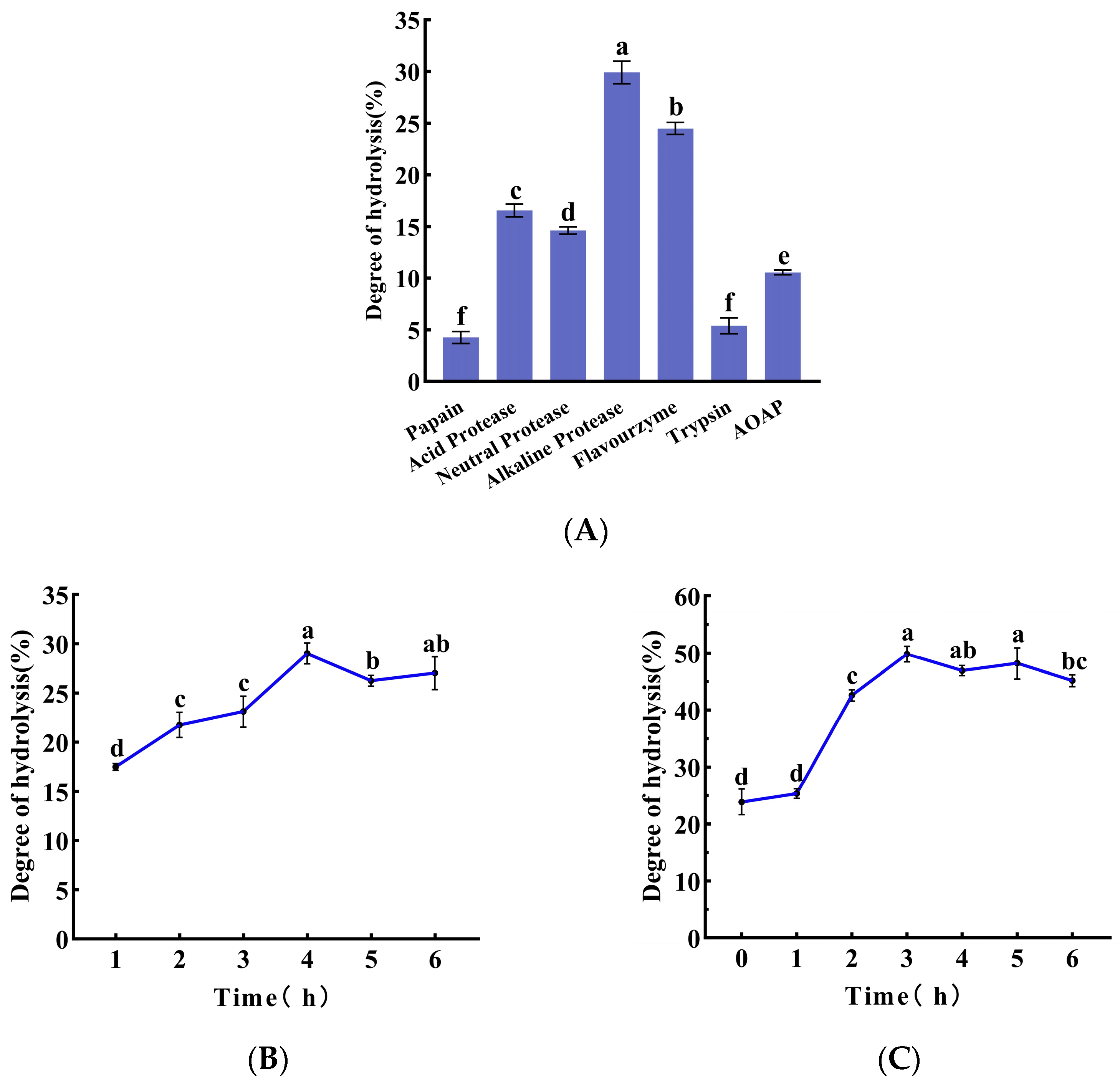
3.2. Enzymatic Hydrolysis of Clams
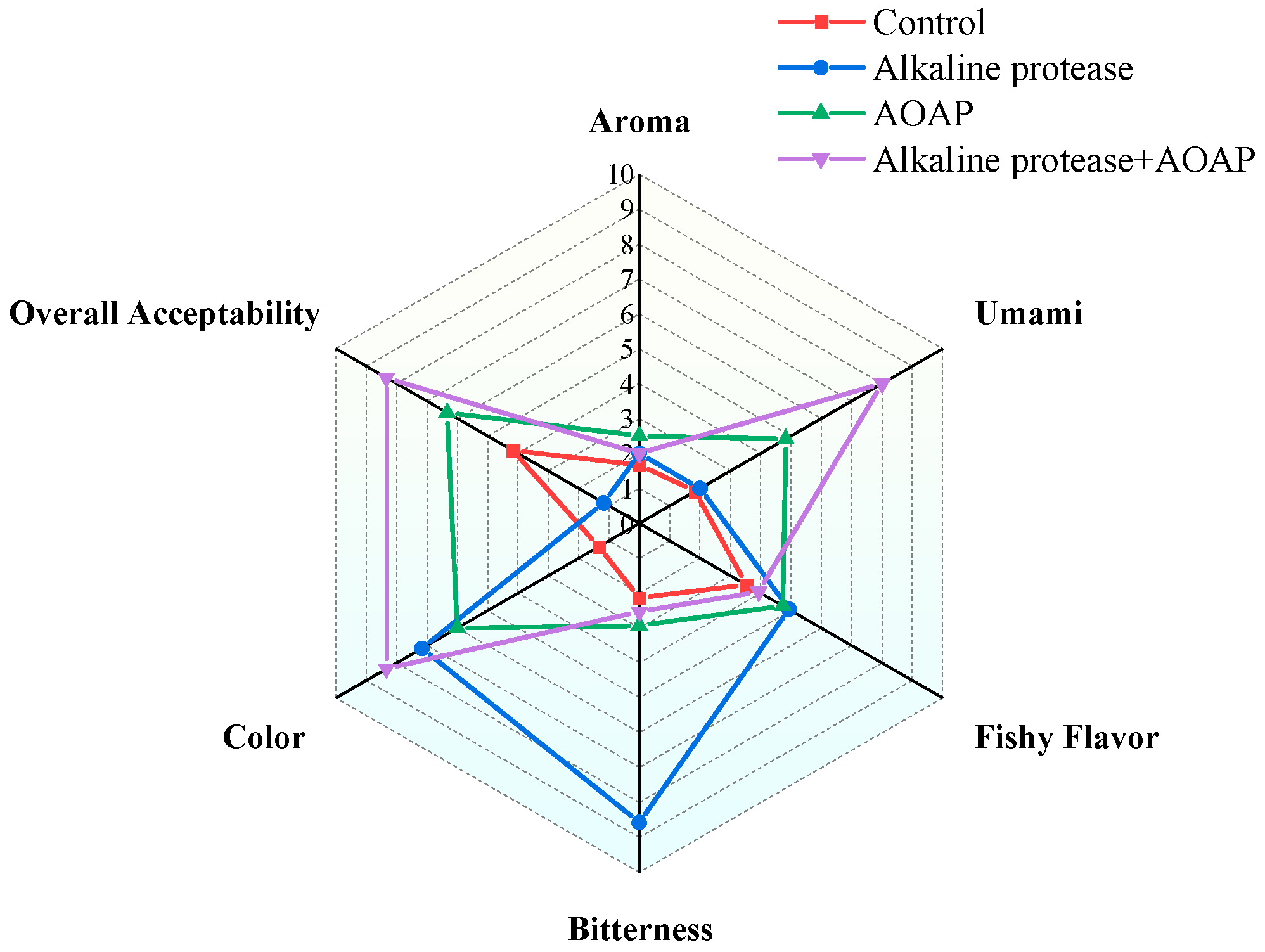
3.3. Sensory Evaluation of Clam Hydrolysates
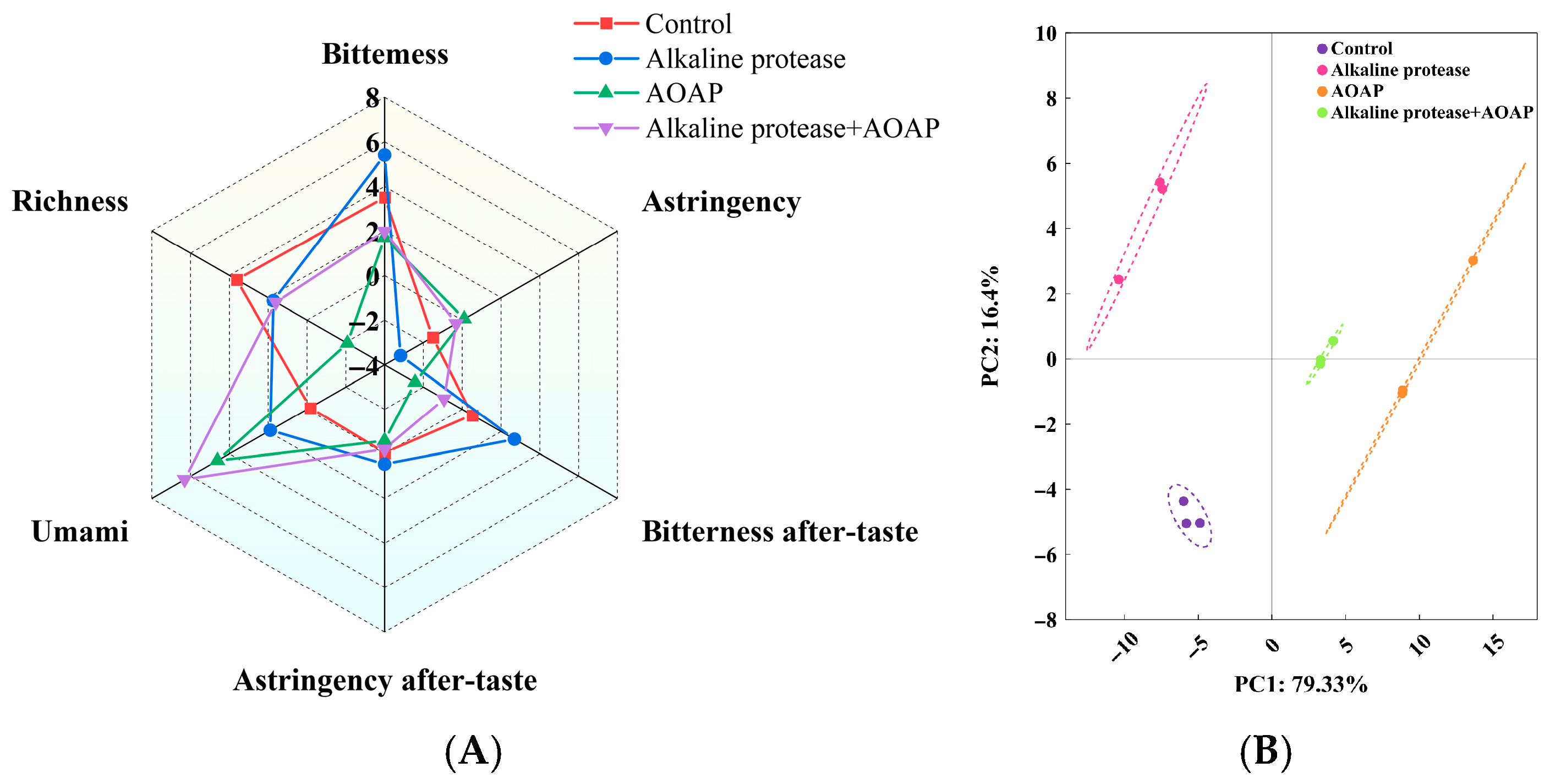
3.4. Taste Characteristics of Clam Hydrolysates
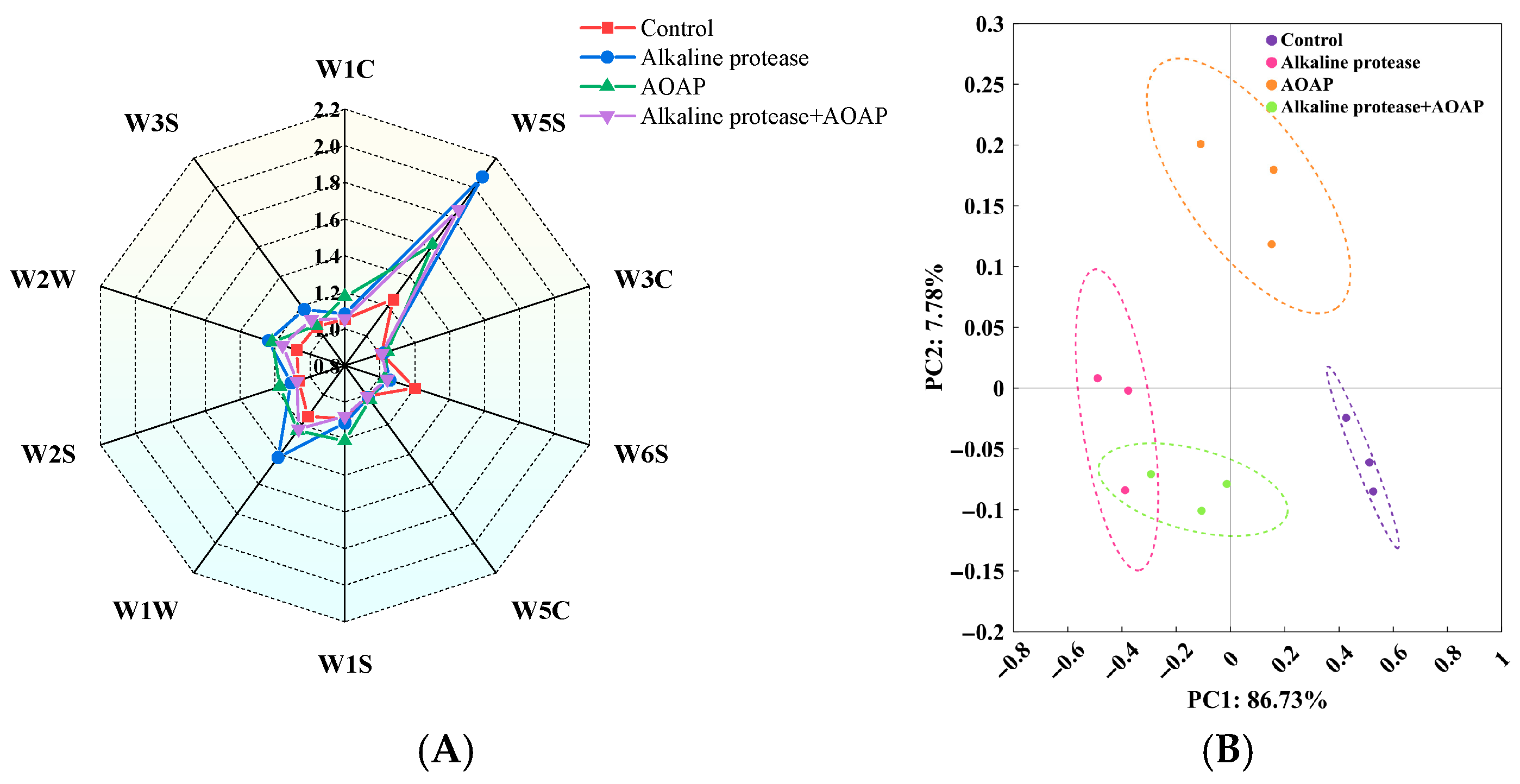
3.5. Flavor Profile Analysis of Clam Hydrolysates
3.6. Peptide Composition of Clam Hydrolysates
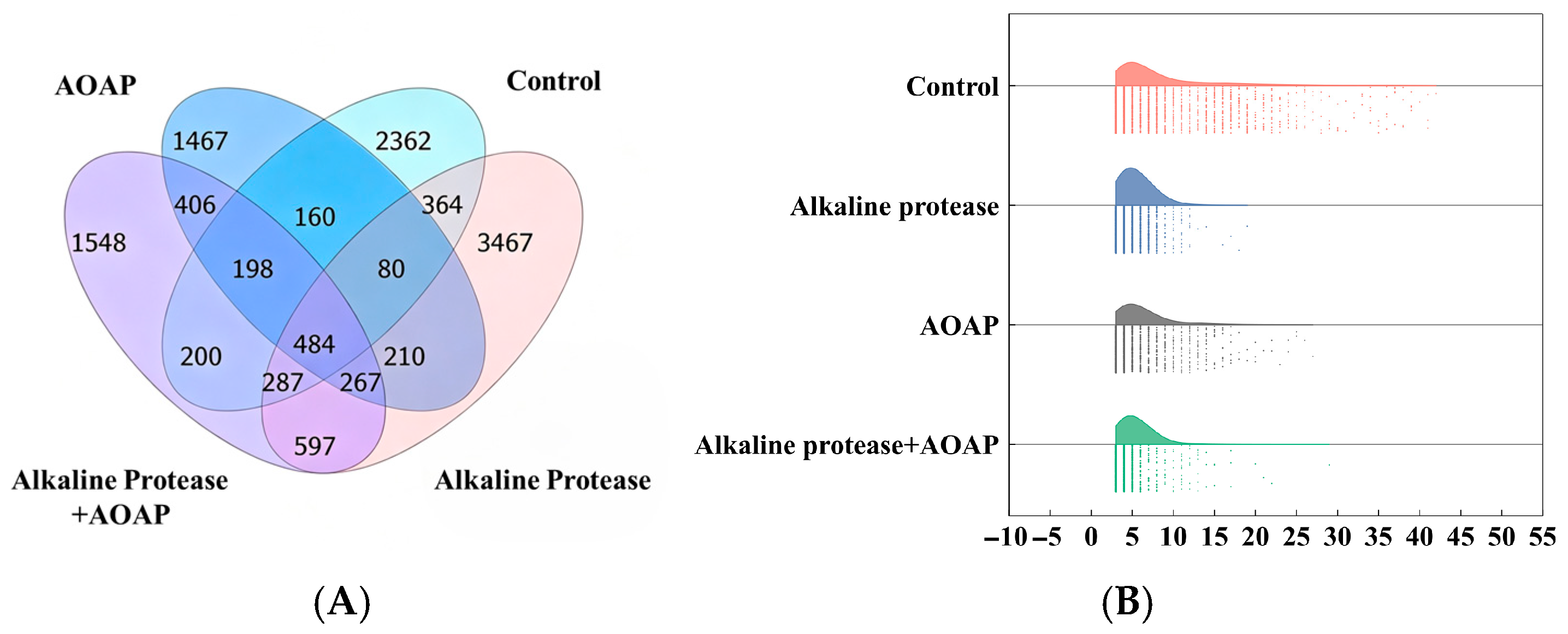
3.6.1. Peptide Species and Length Distribution
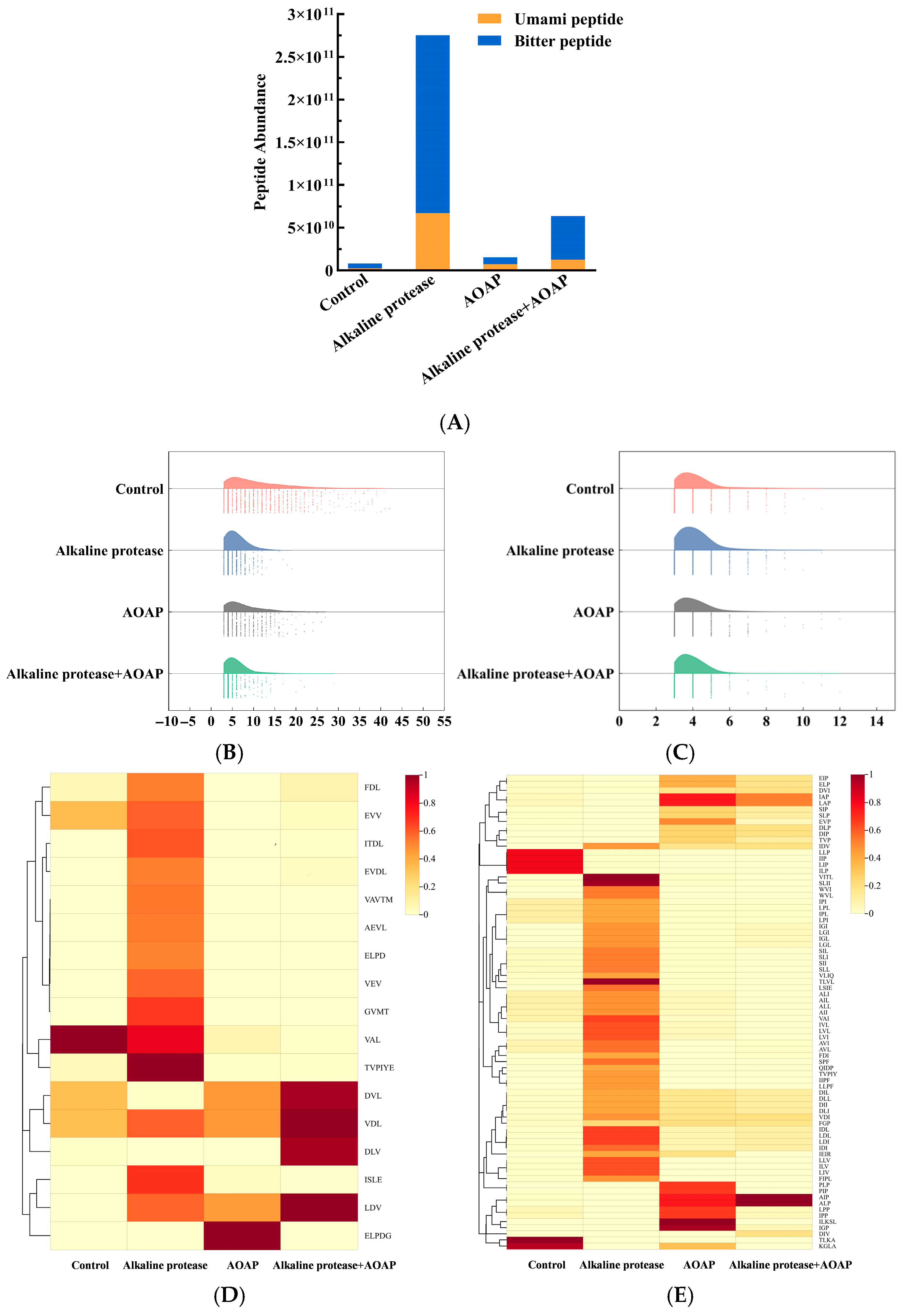
3.6.2. Composition Analysis of Umami and Bitter Peptides
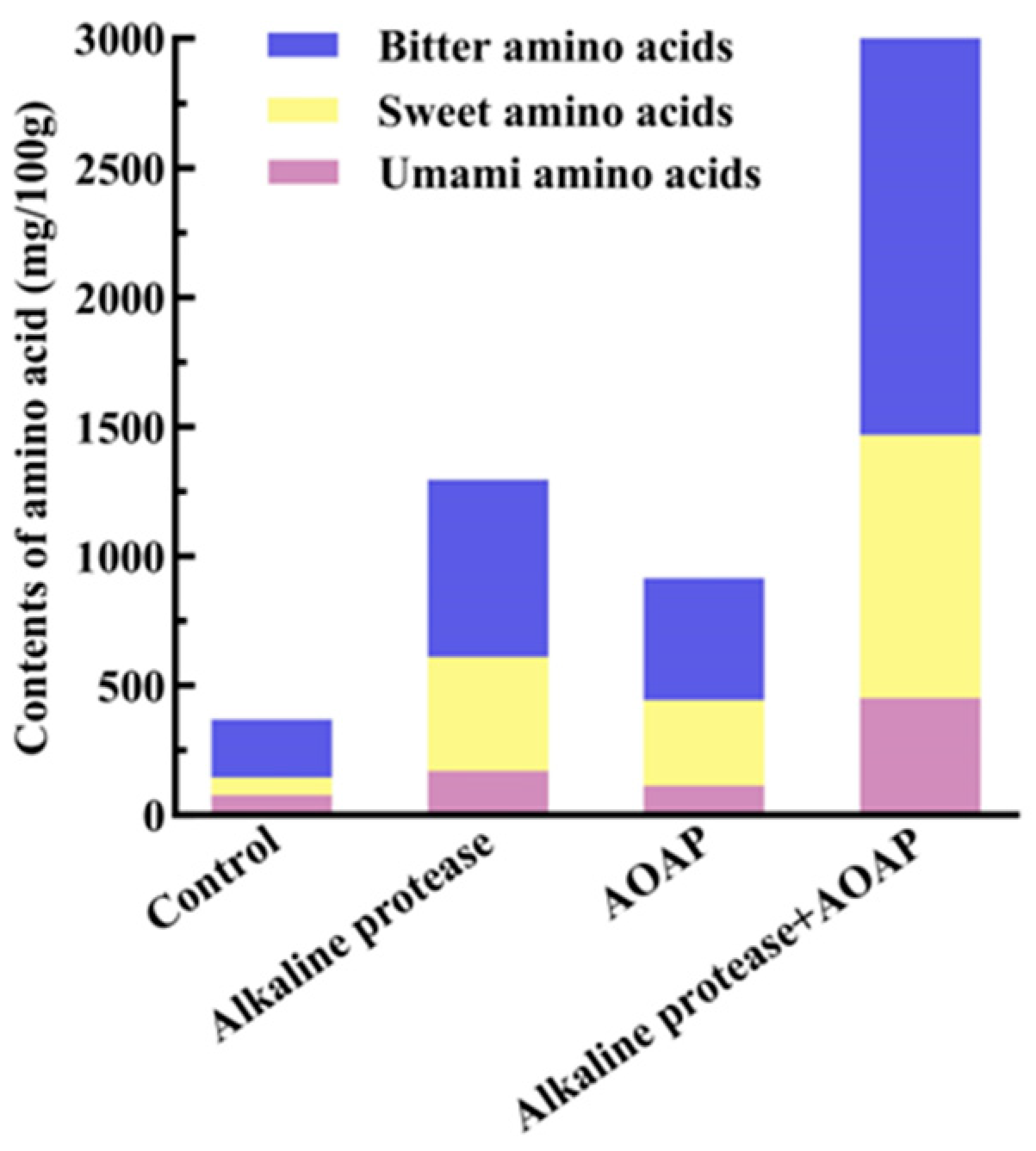
3.7. Amino Acid Composition Analysis of Clam Hydrolysates
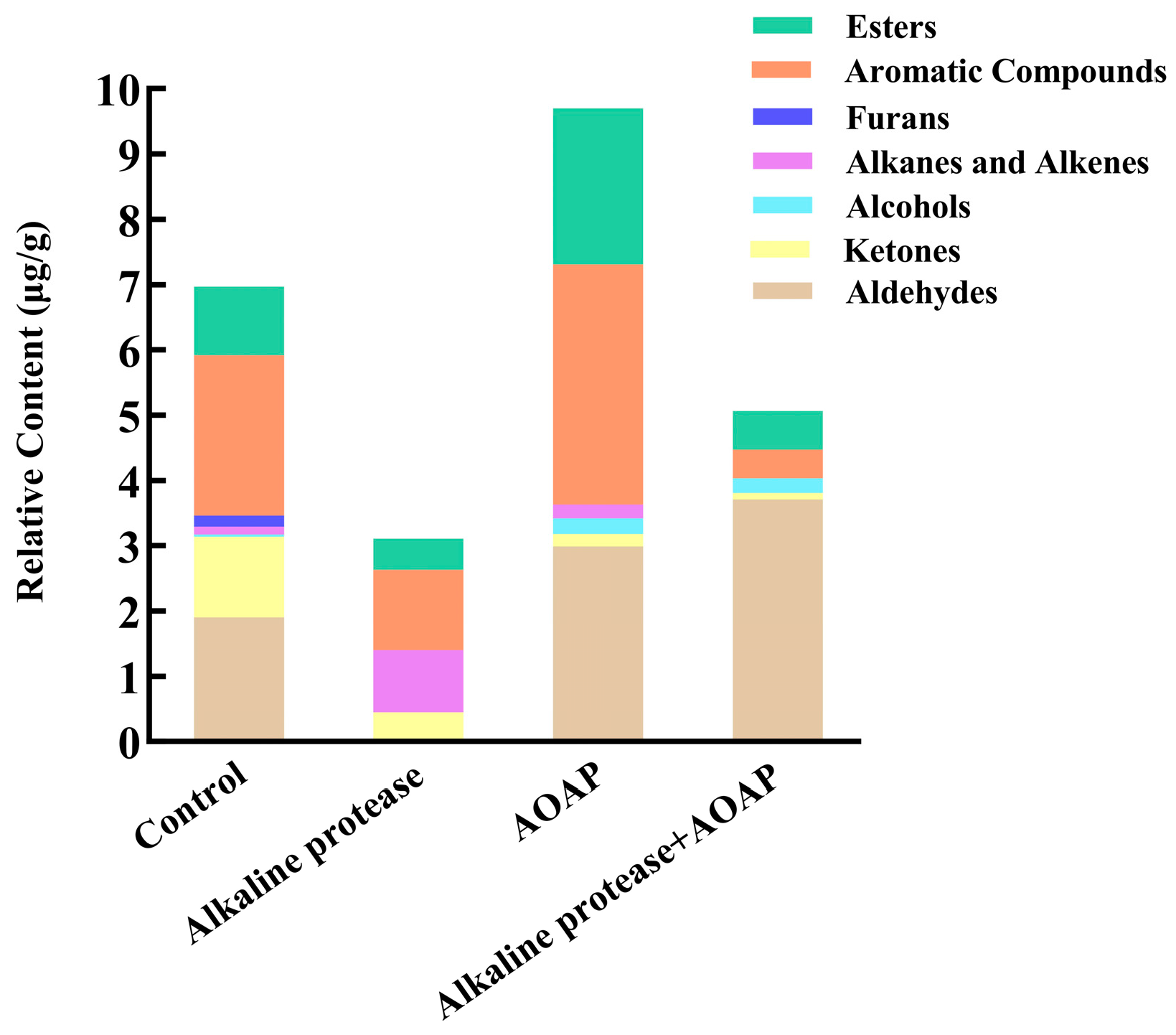
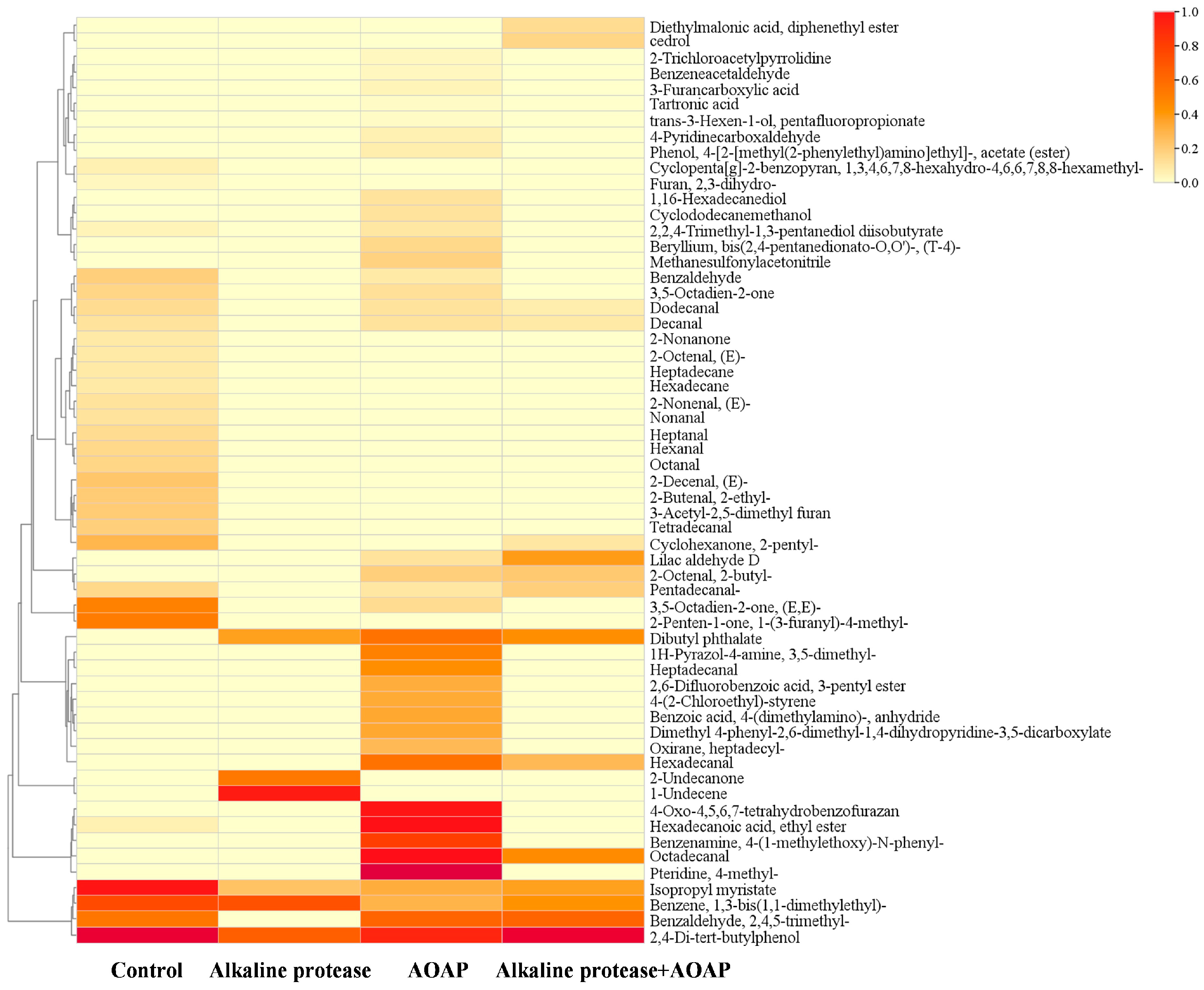
3.8. Volatile Flavor Compounds in Clam Hydrolysates
4. Conclusions
Supplementary Materials
Author Contributions
Funding
Institutional Review Board Statement
Informed Consent Statement
Data Availability Statement
Acknowledgments
Conflicts of Interest
References
- Wang, S.; He, Y.; Zhang, J.P.; Chen, S.L.; He, B. Comparison of taste and odour characteristics of three mass-produced aquaculture clams in China. Aquac. Res. 2019, 51, 664–673. [Google Scholar] [CrossRef]
- Karnjanapratum, S.; Benjakul, S.; Kishimura, H.; Tsai, Y.-H. Chemical compositions and nutritional value of Asian hard clam (Meretrix lusoria) from the coast of Andaman Sea. Food Chem. 2013, 141, 4138–4145. [Google Scholar] [CrossRef]
- Liu, Z.-Y.; Zhou, D.-Y.; Zhao, Q.; Yin, F.-W.; Hu, X.-P.; Song, L.; Qin, L.; Zhang, J.-R.; Zhu, B.-W.; Shahidi, F. Characterization of glycerophospholipid molecular species in six species of edible clams by high-performance liquid chromatography-electrospray ionization-tandem mass spectrometry. Food Chem. 2017, 219, 419–427. [Google Scholar] [CrossRef]
- Li, L.; Fu, Z.Y.; Liu, Y.J.; Song, Z.Y.; Yang, X.R.; Yu, D.; Wang, Q.Z.; Chi, H.; Zheng, J. A Comprehensive and Comparative Study on the Biochemical Composition and Non-Volatile Taste Compounds of Thirteen Shellfish Species. Foods 2025, 14, 1595. [Google Scholar] [CrossRef]
- Cho, W.I.; Kim, S.M. Taste Compounds and Biofunctional Activities of the Sandy Beach Clam Hydrolysate for the Shellfish Flavoring Condiment. J. Aquat. Food Prod. Technol. 2016, 25, 24–34. [Google Scholar] [CrossRef]
- Wijerathna, H.M.S.M.; Radampola, K.; Cyril, H.W. Potential use of mud clam (Geloina coaxans) in producing sauce with papaya crude extraction as a protein hydrolysing agent. J. Fish. 2021, 9, 91402. [Google Scholar] [CrossRef]
- Lu, Y.Y.; Teo, J.N.; Liu, S.Q. Fermented shellfish condiments: A comprehensive review. Compr. Rev. Food Sci. Food Saf. 2022, 21, 4447–4477. [Google Scholar] [CrossRef] [PubMed]
- Je, J.-Y.; Park, P.-J.; Jung, W.-K.; Kim, S.-K. Amino acid changes in fermented oyster (Crassostrea gigas) sauce with different fermentation periods. Food Chem. 2005, 91, 15–18. [Google Scholar] [CrossRef]
- Park, P.-J.; Je, J.-Y.; Kim, S.-K. Amino Acid Changes in the Korean Traditional Fermentation Process for Blue Mussel, Mytilus Edulis. J. Food Biochem. 2005, 29, 108–116. [Google Scholar] [CrossRef]
- Lee, K.W.; Lee, Y.H.; Han, O.Y.; Ban, G.-H.; Rhee, M.S.; Kim, S.A.; Cho, T.J. Integrative culture-based and 16S rRNA microbiome analysis combined with on-site temperature evaluation to enhance safety management of salt-fermented octopus and clams. Food Control 2026, 182, 111852. [Google Scholar] [CrossRef]
- Gildberg, A.; Thongthai, C. The Effect of Reduced Salt Content and Addition of Halophilic Lactic Acid Bacteria on Quality and Composition of Fish Sauce Made from Sprat. J. Aquat. Food Prod. Technol. 2001, 10, 77–88. [Google Scholar] [CrossRef]
- Zainol, K.; Sukor, F.W.; Ahmad, F.; Zainazor, T.C.; Wahab, M.R.; Zamri, A.I. Optimization of enzymatic protein hydrolysis conditions of Asiatic hard clam (Meretrix meretrix). Food Res. 2021, 5, 153–162. [Google Scholar] [CrossRef] [PubMed]
- Cao, T.F.; Liu, J.L.; Fan, F.; Yin, D.C.; Zou, S.C. Optimization of Enzymatic Hydrolysis of Hongdao Clam and Anti-hypertensive Activity of the Resulted Products. Sci. Technol. Food Ind. 2021, 42, 216–222. [Google Scholar] [CrossRef]
- Li, X.P.; Liu, Y.W.; Wang, Y.Y.; Wang, J.X.; Xu, Y.X.; Yi, S.M.; Zhu, W.H.; Mi, H.B.; Li, T.T.; Li, J.R. Combined ultrasound and heat pretreatment improve the enzymatic hydrolysis of clam (Aloididae aloidi) and the flavor of hydrolysates. Innov. Food Sci. Emerg. Technol. 2021, 67, 102596. [Google Scholar] [CrossRef]
- Amin, A.M.; Cheng, S.K. Optimization of Enzymatic Hydrolysis Condition of Angelwing Clam (Pholas orientalis) Meat Using Alcalase® to Obtain Maximum Degree of Hydrolysis. Malays. Appl. Biol. 2019, 48, 55–62. Available online: https://jms.mabjournal.com/index.php/mab/article/view/1839 (accessed on 8 April 2026).
- Neves, A.C.; Harnedy, P.A.; FitzGerald, R.J. Angiotensin Converting Enzyme and Dipeptidyl Peptidase-IV Inhibitory, and Antioxidant Activities of a Blue Mussel (Mytilus edulis) Meat Protein Extract and Its Hydrolysates. J. Aquat. Food Prod. Technol. 2016, 25, 1221–1233. [Google Scholar] [CrossRef]
- Li, Y.; Sadiq, F.A.; Fu, L.; Zhu, H.; Zhong, M.H.; Sohail, M. Identification of Angiotensin I-Converting Enzyme Inhibitory Peptides Derived from Enzymatic Hydrolysates of Razor Clam Sinonovacula constricta. Mar. Drugs 2016, 14, 110. [Google Scholar] [CrossRef]
- Yan, Z.; Yuping, G.; Wenjia, H.; Yuanxia, S. Antioxidant peptides from freshwater clam extract using enzymatic hydrolysis. Afr. J. Food Sci. 2014, 8, 148–154. [Google Scholar] [CrossRef]
- Zhang, T.; Hua, Y.; Zhou, C.Y.; Xiong, Y.Z.; Pan, D.D.; Liu, Z.; Dang, Y.L. Umami peptides screened based on peptidomics and virtual screening from Ruditapes philippinarum and Mactra veneriformis clams. Food Chem. 2022, 394, 133504. [Google Scholar] [CrossRef]
- Li, X.P.; Xie, X.J.; Wang, J.X.; Xu, Y.X.; Yi, S.M.; Zhu, W.H.; Mi, H.B.; Li, T.T.; Li, J.R. Identification, taste characteristics and molecular docking study of novel umami peptides derived from the aqueous extract of the clam meretrix meretrix Linnaeus. Food Chem. 2020, 312, 126053. [Google Scholar] [CrossRef] [PubMed]
- Zhang, L.J.; Kang, L.; Xu, Y. Phenotypic, Genomic, and Transcriptomic Comparison of Industrial Aspergillus oryzae Used in Chinese and Japanese Soy Sauce: Analysis of Key Proteolytic Enzymes Produced by Koji Molds. Microbiol. Spectr. 2023, 11, e0083622. [Google Scholar] [CrossRef] [PubMed]
- Wang, Y.W.; Zhao, P.Y.; Zhou, Y.; Hu, X.M.; Xiong, H.R. From bitter to delicious: Properties and uses of microbial aminopeptidases. World J. Microbiol. Biotechnol. 2023, 39, 72. [Google Scholar] [CrossRef]
- Tong, X.H.; Lian, Z.T.; Miao, L.M.; Qi, B.K.; Zhang, S.; Li, Y.; Wang, H.; Jiang, L.Z. An innovative two-step enzyme-assisted aqueous extraction for the production of reduced bitterness soybean protein hydrolysates with high nutritional value. LWT 2020, 134, 110151. [Google Scholar] [CrossRef]
- Nakamura, R.; Saito, M.; Maruyama, M.; Yamanaka, S.; Tanemura, T.; Watanabe, M.; Fukumori, F.; Hayashi, K. Reduction in the bitterness of protein hydrolysates by an aminopeptidase from Aspergillus oryzae. Food Sci. Technol. Res. 2023, 29, 71–77. [Google Scholar] [CrossRef]
- Zhao, G.Z.; Yao, Y.P.; Wang, C.L.; Tian, F.W.; Liu, X.M.; Hou, L.H.; Yang, Z.; Zhao, J.X.; Zhang, H.; Cao, X.H. Transcriptome and Proteome Expression Analysis of the Metabolism of Amino Acids by the Fungus Aspergillus oryzae in Fermented Soy Sauce. BioMed Res. Int. 2015, 2015, 456802. [Google Scholar] [CrossRef]
- Lei, F.F.; Hu, C.R.; Zhang, N.; He, D.P. The specificity of an aminopeptidase affects its performance in hydrolyzing peanut protein isolate and zein. LWT 2019, 102, 37–44. [Google Scholar] [CrossRef]
- Lin, S.J.; Chen, Y.H.; Chen, L.L.; Feng, H.H.; Chen, C.C.; Chu, W.S. Large-scale production and application of leucine aminopeptidase produced by Aspergillus oryzae LL1 for hydrolysis of chicken breast meat. Eur. Food Res. Technol. 2008, 227, 159–165. [Google Scholar] [CrossRef]
- Gao, X.L.; Yin, Y.Y.; Zhou, C.S. Purification, characterisation and salt-tolerance molecular mechanisms of aspartyl aminopeptidase from Aspergillus oryzae 3.042. Food Chem. 2018, 240, 377–385. [Google Scholar] [CrossRef] [PubMed]
- Matsushita-Morita, M.; Tada, S.; Suzuki, S.; Hattori, R.; Marui, J.; Furukawa, I.; Yamagata, Y.; Amano, H.; Ishida, H.; Takeuchi, M.; et al. Overexpression and Characterization of an Extracellular Leucine Aminopeptidase from Aspergillus oryzae. Curr. Microbiol. 2011, 62, 557–564. [Google Scholar] [CrossRef]
- Zhou, T.; Ma, Y.J.; Jiang, W.; Fu, B.S.; Xu, X.B. Selection of a Fermentation Strategy for the Preparation of Clam Sauce with Acceptable Flavor Perception. Foods 2023, 12, 1983. [Google Scholar] [CrossRef]
- Adler-Nissen, J. Determination of the degree of hydrolysis of food protein hydrolysates by trinitrobenzenesulfonic acid. J. Agric. Food Chem. 1979, 27, 1256–1262. [Google Scholar] [CrossRef]
- Fratini, G.; Lois, S.; Pazos, M.; Parisi, G.; Medina, I. Volatile profile of Atlantic shellfish species by HS-SPME GC/MS. Food Res. Int. 2012, 48, 856–865. [Google Scholar] [CrossRef]
- Stressler, T.; Eisele, T.; Ewert, J.; Kranz, B.; Fischer, L. Proving the synergistic effect of Alcalase, PepX and PepN during casein hydrolysis by complete degradation of the released opioid precursor peptide VYPFPGPIPN. Eur. Food Res. Technol. 2019, 245, 61–71. [Google Scholar] [CrossRef]
- Whitaker, J.R.; Feeney, R.E.; Sternberg, M.M. Chemical and physical modification of proteins by the hydroxide ion. Crit. Rev. Food Sci. Nutr. 1983, 19, 173–212. [Google Scholar] [CrossRef] [PubMed]
- Huang, P.; Luo, H.T.; Chen, C.G.; Li, P.J.; Xu, B.C. Bacterial nitric oxide synthase in colorizing meat products: Current development and future directions. Crit. Rev. Food Sci. Nutr. 2024, 64, 4362–4372. [Google Scholar] [CrossRef]
- Tian, Z.Q.; Zhu, Q.J.; Chen, Y.S.; Zhou, Y.; Hu, K.; Li, H.Y.; Lu, K.; Zhou, J.; Liu, Y.; Chen, X. Studies on Flavor Compounds and Free Amino Acid Dynamic Characteristics of Fermented Pork Loin Ham with a Complex Starter. Foods 2022, 11, 1501. [Google Scholar] [CrossRef] [PubMed]
- Lundquist, P.; Artursson, P. Oral absorption of peptides and nanoparticles across the human intestine: Opportunities, limitations and studies in human tissues. Adv. Drug Deliv. Rev. 2016, 106, 256–276. [Google Scholar] [CrossRef]
- Fu, B.F.; Fan, M.; Yi, J.Y.; Du, Y.X.; Tian, H.; Yang, T.; Cheng, S.Z.; Du, M. Umami-Transformer: A deep learning framework for high-precision prediction and experimental validation of umami peptides. Food Chem. 2025, 493, 145905. [Google Scholar] [CrossRef]
- Fu, B.F.; Li, M.B.; Chang, Z.H.; Yi, J.J.; Cheng, S.Z.; Du, M. Identification of novel umami peptides from oyster hydrolysate and the mechanisms underlying their taste characteristics using machine learning. Food Chem. 2025, 473, 142970. [Google Scholar] [CrossRef]
- Zhang, Y.; Venkitasamy, C.; Pan, Z.L.; Wang, W. Recent developments on umami ingredients of edible mushrooms—A review. Trends Food Sci. Technol. 2013, 33, 78–92. [Google Scholar] [CrossRef]
- FitzGerald, R.J.; O’Cuinn, G. Enzymatic debittering of food protein hydrolysates. Biotechnol. Adv. 2006, 24, 234–237. [Google Scholar] [CrossRef]
- Wang, Y.; Tong, M.Q.; Cao, Z.X.; Sun, Z.Y.; Derkach, T.; Liu, B. Decoding the Molecular Mechanism of Sweet Taste of Amino Acids by Their Intrinsic Properties and Interactions with Human Sweet Taste Receptor. ChemistrySelect 2024, 9, e202403468. [Google Scholar] [CrossRef]
- Varlet, V.; Knockaert, C.; Prost, C.; Serot, T. Comparison of Odor-Active Volatile Compounds of Fresh and Smoked Salmon. J. Agric. Food Chem. 2006, 54, 3391–3401. [Google Scholar] [CrossRef]
- Liang, S.Q.; Zhang, T.; Fu, X.D.; Zhu, C.L.; Mou, H.J. Partially degraded chitosan-based flocculation to achieve effective deodorization of oyster (Crassostrea gigas) hydrolysates. Carbohydr. Polym. 2020, 234, 115948. [Google Scholar] [CrossRef] [PubMed]
- Breternitz, N.R.; Fidelis, C.H.d.V.; Silva, V.M.; Eberlin, M.N.; Hubinger, M.D. Volatile composition and physicochemical characteristics of mussel (Perna perna) protein hydrolysate microencapsulated with maltodextrin and n-OSA modified starch. Food Bioprod. Process. 2017, 105, 12–25. [Google Scholar] [CrossRef]
- Kanter, J.-P.; Honold, P.J.; Luh, D.; Heiles, S.; Spengler, B.; Fraatz, M.A.; Zorn, H.; Hammer, A.K. Biocatalytic Production of Odor-Active Fatty Aldehydes from Fungal Lipids. J. Agric. Food Chem. 2023, 71, 8112–8120. [Google Scholar] [CrossRef]
- Zhao, Z.H.; Wang, Z.J.; Gao, J.L.; Tan, M.T.; Chen, Z.Q.; Chen, M.; Zheng, H.N.; Lin, H.S.; Cao, W.H. Integrated untargeted metabolomics and lipidomics to reveal molecular mechanisms underlying flavor development in hot-air-dried oysters. Food Res. Int. 2025, 221, 117294. [Google Scholar] [CrossRef]
- Wen, X.Y.; Chen, A.H.; Xu, Y.S.; Wu, Y.P.; Yang, Y.Y.; Zhang, Y.; Cao, Y.; Chen, S.H. Comparative Evaluation of Volatile Profiles of Asian Hard Clams (Meretrix meretrix) with Different Shell Colors by Electronic Nose and GC-MS. J. Aquat. Food Prod. Technol. 2021, 30, 107–121. [Google Scholar] [CrossRef]
- Ba, H.V.; Seo, H.-W.; Seong, P.-N.; Cho, S.-H.; Kang, S.-M.; Kim, Y.-S.; Moon, S.-S.; Choi, Y.-M.; Kim, J.-H. Live weights at slaughter significantly affect the meat quality and flavor components of pork meat. Anim. Sci. J. 2019, 90, 667–679. [Google Scholar] [CrossRef]


| Protease Type | Optimum Temperature | Optimum pH | Enzyme Activity |
|---|---|---|---|
| Papain | 50 °C | 6.5 | 5000 U/g |
| Trypsin | 37 °C | 7.0 | 5000 U/g |
| Alkaline protease | 50 °C | 9.5 | 5000 U/g |
| Acid protease | 50 °C | 3.0 | 5000 U/g |
| Neutral protease | 50 °C | 7.0 | 5000 U/g |
| Flavourzyme | 50 °C | 7.0 | 5000 U/g |
| AOAP | 50 °C | 7.0 | 5000 U/g |
| Score | Aroma | Umami | Fishy Odor | Bitterness | Color | Overall Acceptability |
|---|---|---|---|---|---|---|
| 9–10 | Intense aroma | Pronounced umami | Strong fishy odor | Unbearably bitter | Dark brown | High |
| 7–8 | Strong aroma | Strong umami | Distinct fishy odor | Noticeably bitter | Brown | Relatively high |
| 5–6 | Mild aroma | Moderate umami | Moderate fishy odor | Slightly bitter | Yellowish brown | Moderate |
| 3–4 | Very faint aroma | Faint umami | Faint fishy odor | Barely perceptible bitterness | Light yellow | Relatively low |
| 1–2 | No aroma | No umami | No fishy odor | No bitterness | Colorless | Low |
| Taste | Amino Acids | Control | Alkaline Protease | AOAP | Alkaline Protease + AOAP |
|---|---|---|---|---|---|
| Umami | Asp | - | 34.00 ± 5.02 c | 46.33 ± 3.70 b | 131.00 ± 3.00 a |
| Glu | 78.33 ± 10.27 c | 136.10 ± 3.40 b | 66.50 ± 1.22 c | 321.25 ± 5.25 a | |
| Total | 78.33 ± 10.27 | 170.00 ± 6.06 | 112.83 ± 3.90 | 452.25 ± 6.05 | |
| Sweetness | Thr | - | 58.17 ± 6.55 c | 70.67 ± 2.25 b | 261.75 ± 1.75 a |
| Ser | - | 36.33 ± 7.66 bc | 48.33 ± 4.48 b | 128.75 ± 3.75 a | |
| Gly | 67.50 ± 8.60 c | 142.83 ± 5.86 b | 64.33 ± 3.70 c | 205.25 ± 2.25 a | |
| Ala | - | - | - | - | |
| Lys | - | 37.50 ± 8.83 c | 85.00 ± 12.83 b | 169.00 ± 4.50 a | |
| Pro | - | 166.67 ± 2.32 b | 62.50 ± 2.94 c | 250.75 ± 3.25 a | |
| Total | 67.50 ± 8.60 | 441.50 ± 14.81 | 330.83 ± 14.56 | 1015.50 ± 7.28 | |
| Bitterness | Val | - | 48.33 ± 4.73 b | 44.33 ± 3.32 b | 187.00 ± 6.00 a |
| Met | - | 33.00 ± 6.01 b | - | 105.25 ± 2.75 a | |
| IIe | - | 63.50 ± 1.47 b | 51.33 ± 4.13 bc | 156.25 ± 4.25 a | |
| Leu | 82.67 ± 4.94 d | 186.33 ± 7.35 b | 101.83 ± 5.54 c | 363.25 ± 7.75 a | |
| Tyr | - | 132.17 ± 3.66 b | 52.83 ± 5.54 c | 241.75 ± 1.25 a | |
| Phe | 140.67 ± 7.19 c | 218.83 ± 8.57 b | 221.83 ± 21.83 b | 292.75 ± 4.75 a | |
| His | - | - | - | 51.25 ± 5.25 a | |
| Arg | - | - | - | 161.00 ± 3.40 a | |
| Total | 223.34 ± 8.72 | 682.16 ± 14.20 | 472.15 ± 23.79 | 1558.50 ± 13.60 | |
| Total | 369.17 ± 15.98 | 1293.66 ± 21.39 | 915.81 ± 28.16 | 3026.25 ± 16.57 |
| Amino Acids | Control | Alkaline Protease | AOAP | Alkaline Protease + AOAP |
|---|---|---|---|---|
| Asp | - | 0.34 | 0.46 | 1.31 |
| Glu | 2.61 | 4.54 | 2.22 | 10.71 |
| Thr | - | 0.22 | 0.27 | 1.01 |
| Ser | - | 0.24 | 0.32 | 0.86 |
| Gly | 0.52 | 1.10 | 0.49 | 1.58 |
| Ala | - | - | - | - |
| Lys | - | 0.75 | 1.70 | 3.38 |
| Pro | - | 0.56 | 0.21 | 0.84 |
| Val | - | 0.32 | 0.30 | 1.26 |
| Met | - | 0.44 | - | 1.40 |
| IIe | - | 0.71 | 0.57 | 1.74 |
| Leu | 0.44 | 0.98 | 0.54 | 1.91 |
| Tyr | - | - | - | - |
| Phe | 1.56 | 2.43 | 2.46 | 3.25 |
| His | - | - | - | 2.56 |
| Arg | - | - | - | 3.22 |
| Classification | Compound Name | Chemical Formula | CAS No. | Control | Alkaline Protease | AOAP | Alkaline Protease + AOAP |
|---|---|---|---|---|---|---|---|
| Content (μg/g) | |||||||
| Aldehydes | 2-ethylbutenal | C6H10O | 19780-25-7 | 0.15 ± 0.04 | - | - | - |
| 4-pyridinecarboxaldehyde | C6H5NO | 872-85-5 | - | - | 0.04 ± 0.03 | - | |
| hexanal | C6H12O | 66-25-1 | 0.11 ± 0.01 | - | - | - | |
| benzaldehyde | C7H6O | 100-52-7 | 0.14 ± 0.04 | - | 0.06 ± 0.01 | - | |
| heptanal | C7H14O | 111-71-7 | 0.10 ± 0.03 | - | - | - | |
| trans-2-octenal | C8H14O | 2548-87-0 | 0.06 ± 0.01 | - | - | - | |
| phenylacetaldehyde | C8H8O | 122-78-1 | - | - | 0.02 ± 0.02 | - | |
| octanal | C8H16O | 124-13-0 | 0.12 ± 0.03 | - | - | - | |
| trans-2-nonenal | C9H16O | 18829-56-6 | 0.08 ± 0.01 | - | - | - | |
| nonanal | C9H18O | 124-19-6 | 0.08 ± 0.01 | - | - | - | |
| decanal | C10H20O | 112-31-2 | 0.08 ± 0.03 | - | 0.08 ± 0.00 | 0.10 ± 0.04 | |
| trans-2-decenal | C10H18O | 3913-81-3 | 0.17 ± 0.04 | - | - | - | |
| 2,4,5-trimethylbenzaldehyde | C10H12O | 5779-72-6 | 0.46 ± 0.25 | - | 0.55 ± 0.02 | 0.55 ± 0.03 | |
| syringaldehyde | C10H16O2 | 53447-47-5 | - | - | 0.08 ± 0.01 | 0.31 ± 0.03 | |
| 2-butyl-2-octenal | C12H22O | 13019-16-4 | - | - | 0.14 ± 0.12 | 0.16 ± 0.02 | |
| dodecanal | C12H24O | 112-54-9 | 0.10 ± 0.02 | - | 0.08 ± 0.02 | 1.86 ± 0.15 | |
| tetradecanal | C14H28O | 124-25-4 | 0.14 ± 0.02 | - | - | - | |
| pentadecanal | C15H30O | 2765-11-9 | 0.11 ± 0.02 | - | 0.07 ± 0.01 | 0.09 ± 0.01 | |
| hexadecanal | C16H32O | 629-80-1 | - | - | 0.48 ± 0.01 | 0.27 ± 0.11 | |
| heptadecanal | C17H34O | 629-90-3 | - | - | 0.36 ± 0.11 | - | |
| octadecanal | C18H36O | 638-66-4 | - | - | 1.03 ± 0.08 | 0.37 ± 0.00 | |
| Ketones | (3E,5E)-octa-3,5-dien-2-one | C8H12O | 38284-27-4 | 0.12 ± 0.03 | - | 0.09 ± 0.06 | - |
| octa-3,5-dien-2-one | C8H12O | 30086-02-3 | 0.41 ± 0.16 | - | 0.10 ± 0.00 | - | |
| 2-nonanone | C9H18O | 821-55-6 | 0.06 ± 0.01 | - | - | - | |
| isopersienone | C10H12O2 | 34348-59-9 | 0.43 ± 0.07 | - | - | - | |
| 2-undecanone | C11H22O | 112-12-9 | - | 0.45 ± 0.03 | - | - | |
| 2-pentylcyclohexan-1-one | C11H20O | 32362-97-3 | 0.22 ± 0.17 | - | - | 0.10 ± 0.04 | |
| Furans | 2,3-dihydrofuran | C4H6O | 1191-99-7 | 0.02 ± 0.01 | - | - | - |
| 3-acetyl-2,5-dimethylfuran | C8H10O2 | 10599-70-9 | 0.15 ± 0.10 | - | - | - | |
| Alkanes and Alkenes | 1-undecene | C11H22 | 821-95-4 | - | 0.95 ± 0.20 | - | - |
| n-hexadecane | C16H34 | 544-76-3 | 0.06 ± 0.01 | - | - | - | |
| n-heptadecane | C17H36 | 629-78-7 | 0.06 ± 0.02 | - | - | - | |
| heptadecyloxirane | C19H38O | 67860-04-2 | - | - | 0.21 ± 0.05 | - | |
| Alcohols | trans-3-hexen-1-ol | C6H12O | 928-97-2 | - | - | 0.01 ± 0.01 | - |
| Cyclododecanemethanol | C13H26O | 1892-12-2 | - | - | 0.08 ± 0.02 | - | |
| cedro l | C15H26O | 77-53-2 | - | - | - | 0.22 ± 0.02 | |
| 1,16-hexadecanediol | C16H34O2 | 7735-42-4 | - | - | 0.08 ± 0.01 | - | |
| Aromatic | 1-(2-chloroethyl)-4-vinylbenzene | C10H11Cl | 90794-48-2 | - | - | 0.26 ± 0.11 | - |
| 2,4-di-tert-butylphenol | C14H22O | 96-76-4 | 1.74 ± 0.40 | 0.58 ± 0.02 | 1.29 ± 0.51 | 0.10 ± 0.02 | |
| 1,3-di-tert-butylbenzene | C14H22 | 1014-60-4 | 0.68 ± 0.08 | 0.65 ± 0.05 | 0.23 ± 0.05 | 0.34 ± 0.01 | |
| 4-isopropoxy-N-phenylaniline | C15H17NO | 101-73-5 | - | - | 0.75 ± 0.15 | - | |
| galaxolide | C18H26O | 1222-05-5 | 0.04 ± 0.01 | - | - | - | |
| Esters | 3-pentyl 2,6-difluorobenzoate | C12H14F2O2 | 1000325-73-9 | - | - | 0.25 ± 0.02 | - |
| dibutyl phthalate | C16H22O4 | 84-74-2 | - | 0.30 ± 0.02 | 0.48 ± 0.27 | 0.36 ± 0.05 | |
| 2,2,4-trimethyl-1,3-pentanediol diisobutyrate | C16H30O4 | 6846-50-0 | 0.03 ± 0.01 | - | 0.07 ± 0.00 | - | |
| diethyl 2,6-dimethyl-1,4-dihydro-3,5-pyridinedicarboxylate | C17H19NO4 | 70677-78-0 | - | - | 0.27 ± 0.25 | - | |
| isopropyl myristate | C17H34O2 | 110-27-0 | 0.98 ± 0.54 | 0.18 ± 0.05 | 0.25 ± 0.04 | 0.14 ± 0.07 | |
| ethyl palmitate | C18H36O2 | 628-97-7 | 0.04 ± 0.01 | - | 1.02 ± 0.10 | - | |
| 4-[2-[methyl(2-phenylethyl)amino]ethyl]phenyl acetate | C19H23NO2 | 52059-48-0 | - | - | 0.27 ± 0.06 | - | |
| diethyl phenylethylmalonate | C23H28O4 | 76-67-5 | - | - | - | 0.09 ± 0.03 | |
Disclaimer/Publisher’s Note: The statements, opinions and data contained in all publications are solely those of the individual author(s) and contributor(s) and not of MDPI and/or the editor(s). MDPI and/or the editor(s) disclaim responsibility for any injury to people or property resulting from any ideas, methods, instructions or products referred to in the content. |
© 2026 by the authors. Licensee MDPI, Basel, Switzerland. This article is an open access article distributed under the terms and conditions of the Creative Commons Attribution (CC BY) license.
Share and Cite
Zhao, T.; He, Y.; Han, Y.; Liu, Q.; Jian, X.; Zhao, W.; Zhang, C.; Xu, X.; Nian, Y.; Wang, Z.; et al. Impact of Aspergillus oryzae-Derived Aminopeptidase Complex in Developing the Flavor Profile of Clam Hydrolysate. Foods 2026, 15, 1753. https://doi.org/10.3390/foods15101753
Zhao T, He Y, Han Y, Liu Q, Jian X, Zhao W, Zhang C, Xu X, Nian Y, Wang Z, et al. Impact of Aspergillus oryzae-Derived Aminopeptidase Complex in Developing the Flavor Profile of Clam Hydrolysate. Foods. 2026; 15(10):1753. https://doi.org/10.3390/foods15101753
Chicago/Turabian StyleZhao, Ting, Yibing He, Ying Han, Qinhao Liu, Xinqi Jian, Wei Zhao, Chiyue Zhang, Xianbing Xu, Yiying Nian, Zhenyu Wang, and et al. 2026. "Impact of Aspergillus oryzae-Derived Aminopeptidase Complex in Developing the Flavor Profile of Clam Hydrolysate" Foods 15, no. 10: 1753. https://doi.org/10.3390/foods15101753
APA StyleZhao, T., He, Y., Han, Y., Liu, Q., Jian, X., Zhao, W., Zhang, C., Xu, X., Nian, Y., Wang, Z., Du, M., Liu, P., & Sun, L. (2026). Impact of Aspergillus oryzae-Derived Aminopeptidase Complex in Developing the Flavor Profile of Clam Hydrolysate. Foods, 15(10), 1753. https://doi.org/10.3390/foods15101753