Review

Mapping Global Research Trends on Aflatoxin M1 in Dairy Products: An Integrative Review of Prevalence, Toxicology, and Control Approaches


1
Department of Agriculture and Food Engineering, School of Engineering, Holy Spirit University of Kaslik, Jounieh P.O. Box 446, Lebanon
2
Processing and Biosystems (ProBio) Multidisciplinary Research Group, Holy Spirit University of Kaslik, Jounieh P.O. Box 446, Lebanon
3
Laboratoire de Génie Chimique, Université de Toulouse, CNRS, INPT, UPS, 31326 Toulouse, France
4
Department of Nutrition and Food Science, School of Arts and Sciences, Lebanese American University, Beirut 1102-2801, Lebanon
*
Author to whom correspondence should be addressed.
Foods 2026, 15(1), 166; https://doi.org/10.3390/foods15010166
Submission received: 18 November 2025 / Revised: 29 December 2025 / Accepted: 31 December 2025 / Published: 3 January 2026
(This article belongs to the Section Food Toxicology)

Abstract

Aflatoxin M1 (AFM1), a hydroxylated metabolite of aflatoxin B1 (AFB1), is a potent hepatotoxic and carcinogenic compound frequently detected in milk and dairy products. Its thermal stability and resistance to processing make it a persistent public health concern, especially in regions prone to fungal contamination of animal feed. This review integrates bibliometric mapping (2015–2025) with toxicological and mitigation perspectives to provide a comprehensive understanding of AFM1. The bibliometric analysis reveals a sharp global rise in research output over the last decade, with Iran, China, and Brazil emerging as leading contributors and Food Control identified as the most prolific journal. Five research clusters were distinguished: feed contamination pathways, analytical detection, toxicological risk, regulatory frameworks, and mitigation strategies. Toxicological evidence highlights AFM1’s mutagenic and hepatocarcinogenic effects, intensified by co-exposure to other mycotoxins or hepatitis B infection. Although regulatory limits range from 0.025 µg/kg in infant formula (EU) to 0.5 µg/kg in milk (FDA), non-compliance remains prevalent in developing regions. Current mitigation approaches—adsorbents (bentonite, zeolite), oxidation (ozone, hydrogen peroxide), and biological detoxification via lactic acid bacteria and yeasts—show promise but require optimization for industrial application. Persistent challenges include climatic variability, inadequate feed monitoring, and heterogeneous regulations. This review emphasizes the need for harmonized surveillance, improved analytical capacity, and sustainable intervention strategies to ensure dairy safety and protect consumer health.

1. Introduction

The World Health Organization (WHO) has recognized aflatoxins, particularly aflatoxin B1, as a contributing factor in human liver cancer [1]. In 2022, liver cancer accounted for over 758,700 deaths worldwide [2]. According to global burden estimates, 25,200 to 155,000 liver cancer cases are attributed annually to aflatoxin B1 exposure, especially in regions with high maize consumption and endemic hepatitis B infection [3]. Although chronic low-dose exposure to aflatoxins poses long-term risks, acute aflatoxicosis outbreaks have been reported in many fatality cases, with rates as high as 76%, affecting vulnerable populations in low- and middle-income countries [4]. Aflatoxins have a notable economic implication, including reduced livestock productivity, increased veterinary and health care costs, and contaminated product recall or rejection [5]. Moreover, there is a synergistic effect between different mycotoxins or between mycotoxins and other contaminants, such as Microcystin-LR, which can amplify toxicity [6]. That is why national and international authorities have developed regulations to set an aflatoxin limit in milk and feed [7,8].
Aflatoxin contamination extends beyond public health concerns, as it affects global trade, agricultural sustainability, and national economies. In the United States, due to aflatoxin contamination, there are U.S. corn losses between USD 52 million and USD 1.68 billion annually, especially during the drought season [9]. Moreover, in the sub-Saharan region, the impact is more significant due to limited testing and control. In Kenya, Senerwa et al. [10] estimated that the dairy industry loses over USD 172 million annually due to aflatoxin contamination of feed and milk. The figures illustrate how aflatoxin contamination affects the entire dairy value chain, starting from feed production and extending to final dairy products. Moreover, strict regulatory limits, especially in developed countries, lead to rejected exports, reducing foreign exchange revenues and limiting growth in agri-food sectors of many developing countries.
Different classes of mycotoxins are identified based on variation in their chemical structure and toxicological effects. Among these mycotoxins, one of the most well-known groups is aflatoxin, which is produced by certain Aspergillus species, such as Aspergillus flavus, Aspergillus parasiticus, and Aspergillus nomius [11]. Aflatoxin B1 (AFB1), Aflatoxin B2, Aflatoxin G1, Aflatoxin G2, and Aflatoxin M1 have been the most studied among the 20 different identified aflatoxins [1]. The International Agency for Research on Cancer (IARC) has classified aflatoxin B1 (AFB1), which has the highest level of toxicity, as a Group 1 carcinogen. Aflatoxin M1 (AFM1), a hydroxylated metabolite of aflatoxin B1 found in milk and dairy products, was originally classified as a Group 2B carcinogen, previously considered possibly carcinogenic to humans. However, in 2002, it was reclassified as Group 1 due to its confirmed association with hepatocellular carcinoma (HCC) and its mutagenicity and genotoxic effect, confirming its status as a known human carcinogen [12]. Recent studies continue to report the occurrence of AFM1 in milk and its associated risks, emphasizing its ongoing relevance as a food safety concern [13,14,15].
Aflatoxin biosynthesis pathway consists of at least 27 enzymatic steps [16] and around 25 to 30 genes [17] encoded within a gene cluster in the fungal genome. These genes govern the transformation of acetate units via the polyketide pathway into aflatoxin precursors, which are further enzymatically altered to yield the final toxic compounds [18]. The assigned letters “G” and “B” refer to the detected fluorescent color seen under exposure to ultraviolet light, while “M” refers to AFB1’s secondary metabolite, which finds its way in milk and dairy products [19].
Aflatoxin B1 is known to contaminate a wide range of food and feed and is not limited to any region [20]. Escola et al. [7] showed that 60 to 80% of worldwide crops are contaminated by mycotoxins. In fact, aflatoxins are ubiquitous and can be present in various crops, cereals, maize, nuts, and others. Mahato et al. [21] showed that aflatoxins were found in 36.7% of tested cereal crops, corn, rice, barley, wheat, and sorghum, which are major components of the global diet. As a consequence, animal health is severely impacted by the consumption of contaminated animal feed. In Pakistan, an aflatoxicosis outbreak in a dairy herd resulted in a 75% abortion rate and an 18.8% decrease in milk yield [22]. Once consumed, aflatoxin B1 is metabolized in the liver of dairy animals and excreted in the milk as AFM1. Due to its stability, AFM1 can resist many heat treatments, posing a significant public concern. A meta-analysis revealed that 53% of lactating women’s breast milk samples were contaminated with AFM1, with the highest percentage observed in Eastern Africa [23]. In fact, tropical and subtropical regions are considered the most affected regions for aflatoxin contamination due to their warm and humid climates. These environmental factors combined with inadequate storage conditions and limited regulations, create an ideal state for the growth of aflatoxin-producing fungi [24].
Climate change will further exacerbate this issue as rising temperatures and drought events are expected to elevate the fungi producing aflatoxin B1 levels in dairy cattle feed, thereby increasing the occurrence of aflatoxin M1 in milk and dairy products [25]. Modeling projects indicate that by 2031–2040, over 89% of U.S. Corn Belt counties may experience higher aflatoxin due to climate warming [26]. Other modeling studies suggest that an increase of 2 °C would elevate aflatoxin contamination, making it a serious food safety risk, even in currently low-risk regions such as Southern Europe [27]. Therefore, aflatoxin is considered a dynamic and evolving food safety issue requiring monitoring strategies and multidisciplinary mitigation techniques.
Although extensive research has been conducted on AFM1 in dairy products, covering its occurrence, toxicity, and mitigation approaches, there is still a lack of comprehensive reviews that bring these dimensions together. In particular, no study has integrated these aspects with a bibliometric and scientometric analysis to provide a cohesive picture of research progress. This review addresses this gap by offering an integrated analysis of AFM1 in dairy over the past decade, combining global research trends, prevalence data, regulatory frameworks, health impacts, mitigation strategies, and processing effects. By contextualizing existing knowledge, this study not only synthesizes what is known but also identifies critical gaps and future research priorities needed to enhance dairy safety worldwide.

2. Bibliometric and Scientometric Analysis of Aflatoxin M1 Research in Dairy

A bibliometric study provides a quantitative approach to research development based on statistical and mathematical methods. It helps to evaluate and regroup the scientific literature available, providing a valuable insight into the evolution and the impact of a certain research area. Bibliometric analysis was performed previously on several topics related to health [28] and food [29,30,31]. Therefore, it is necessary to evaluate the literature available and spot the research gaps in this area. Data were collected in February 2025 from the Scopus database. Scopus was selected because it offers a broad multidisciplinary coverage among citation databases and includes a wide range of food science and mycotoxin journals. In addition, it provides a built-in tool for metadata extraction suitable for bibliometric mapping. The exported database included citation information such as authors, author IDs, article titles, publication year, journal source title, volume, issue, article number, page range, page count, number of citations, DOI, direct links, author affiliations, presence of abstract, author and index keywords, correspondence address, publisher, document type, publication stage, open-access status, source database, and EID.

2.1. Research Strategy

An initial search was conducted in the Scopus database using the following keywords: Aflatoxin M1, Milk, Milk Products, Dairy Product, Cheese, Milk Powder, and Yogurt across the article title, abstract, and keyword fields. The literature search covered publications from January 2015 to February 2025. This search yielded a total of 960 records. After screening for relevance based on title and abstract, and removing duplicates, editorials, English-based articles, and articles not directly related to AFM1 in milk or dairy products, 804 articles were selected for inclusion in the final analysis. The dataset was exported with full metadata, including authorship, article title, publication year, journal source, volume, citations, digital object identifiers (DOI), affiliations, abstracts, author and index keywords, correspondence information, publisher, and document type. The dataset was processed and analyzed using the Bibliometrix R-package (4.3.3) through the Biblioshiny interface, which enabled comprehensive scientometric visualization. Based on the research data collected, the following results were evaluated: Number of publications per year on Aflatoxin M1, countries’ scientific production, affiliation with aflatoxin research, most influential journals, and top globally cited papers from 2015 through to February 2025, in addition to a keyword co-occurrence map generated using VOSviewer. This bibliometric analysis has several inherent limitations. First, only articles published in the English language were included, which may have led to the exclusion of relevant studies published in other languages and introduced potential regional or linguistic bias. Second, the analysis relied on a single bibliographic database (Scopus), which, despite its broad coverage, may not comprehensively capture all research outputs related to AFM1. As a result, some relevant publications indexed in other databases may have been omitted.

2.2. Bibliography Analysis

To gain a comprehensive understanding of the scientific data collected on aflatoxin M1 in milk and dairy products, a bibliographic analysis is performed on different aspects, such as publication trends, research productivity, and the evolution of AFM1 research in the last decade.
Figure 1 shows the scientific production related to aflatoxin in dairy products from 2015 to February 2025. The results reveal that the number of annual publications had increased gradually from 2018 to 2022, indicating a steady growth in research related to aflatoxin in dairy products. In addition, the number of publications increased steadily since 2018, leading to the largest number of publications in 2022, with 118 documents published. However, this apparent rise should be interpreted cautiously, as variations in publication volume, especially during 2020–2022, may reflect delays associated with the COVID-19 period rather than a sustainable growth trend. However, a decrease in document publication was observed from 2022 to 2023, followed by a stabilization at 79 documents published in 2024. This decrease observed in 2023 and the stabilization in 2024 likely represent a normalization in publication rather than a true decline in research activity. In addition, since the dataset is exclusively derived from Scopus, the observed trends are indicative rather than comprehensive. Furthermore, counts for 2024 and early 2025 represent incomplete publication years, as articles published later in the year were not indexed at the time of data extraction.
Table 1 highlights the top 20 contributing countries in AFM1 dairy research from 2015 to February 2025. Iran is the leader (17%), followed by China (11%), Brazil (8.2%), the United States (6.7%), and Egypt (6.6%). Many of the publications in the field of aflatoxin in dairy products research were published in Iran [32,33,34]. Iran might have prioritized the research on aflatoxin since it affects public health. Many regions in Iran have warm and humid weather, which favors the proliferation of the Aspergillus species, leading to a higher risk of aflatoxin contamination of animal feed and eventually in dairy products [35]. In fact, aflatoxin can cause many health problems, including liver cancer. Iran has made a lot of effort to address these concerns, which explains the number of publications. Outbreaks of acute aflatoxicosis may explain their alertness to this issue [36,37]. Iran’s contribution to the publication shows a national research effort and collaboration with an international organization focusing on public health and agricultural safety. On the other hand, China ranks as the second most prolific contributor, given its large agricultural sector and extensive maize production, which increases vulnerability to aflatoxin contamination entering the food chain and affecting milk and dairy products. The high number of publications can be explained by the rise in liver cancer, especially hepatocellular carcinoma linked to aflatoxin contamination, which made China intensify its research in this field [38,39]. The Efforts of Chinese authorities, in particular the National Natural Science Foundation of China (NSFC), may have led to an increase in funding for mitigation strategies for aflatoxin contamination in food products [40]. Brazil also represents a major contributor, which is consistent with its role as a global agricultural powerhouse. Aflatoxin contamination is an issue in Brazil, mainly in maize and peanuts. While maize constitutes a major component of animal feed, peanut by-products, such as peanut meal, are used as protein ingredients in animal feed in certain regions. Contamination of these feedstuffs with AFB1 is of particular concern due to its metabolic conversion to AFM1 in lactating animals and its excretion into milk. Since Brazil is a major exporter of agricultural products, there should be an increased interest in research to mitigate the aflatoxin contamination [41]. The United States is well-known for its interest in food safety research and regulations, mainly due to institutions such as the Food and Drug Administration (FDA) and the United States Department of Agriculture (USDA). Since it is one of the largest corn producers globally, the United States faces the challenge of AFB1 contamination in maize, which is a major component of animal feed and the primary source of aflatoxin M1 carry-over into the milk [42]. While aflatoxin outbreaks are less prevalent than in developing countries, the economic importance of corn has driven continuous work on detection techniques and consistent monitoring. This explains the steady contribution of the United States to research in the AFM1 field. On the other hand, Egypt also demonstrates a research contribution, indicating an increased awareness to address aflatoxin contamination. Given its reliance on agriculture and its warm climate, aflatoxin research may be an essential area for the country’s agricultural scientists. In fact, research assessments have shown many contaminations among dairy samples [43,44], which can explain its role in the research.
In addition to the geographic distribution of publications presented in Table 1, the analysis of institutional affiliations further clarifies the landscape of AFM1 research. Interestingly, the countries with the highest number of publications (Iran, Brazil, Pakistan, and China) also show the leading institutions contributing to this field. Table 2 presents the top 10 institutions based on the number of articles published between 2015 and February 2025. The analysis of institutional affiliations reveals the University of Sao Paulo as the most active institution in publishing documents on AFM1 research (8.9%), followed by Islamic Azad University (8.6%), Bahauddin Zakariya University (8.4%), and the Institute of Animal Science (6.8%), reflecting the strong research engagement of these countries, Brazil, Iran, Pakistan, and China, respectively, in securing public health. Many of these institutions are specialized in agriculture, medical medicine, and veterinary fields, showing the interdisciplinary nature of aflatoxin research.
The top 10 journals that have published on aflatoxin in dairy products are listed in Table 3. The data shows that Food Control is the most active journal, publishing the highest number of articles (76, 9.4%), followed by Toxins (55, 6.8%) and Food Chemistry (30, 3.7%). The top 10 journals with the greatest contribution to aflatoxin in dairy research account for 32.43% of all publications included in this study, highlighting their significant role in disseminating research on this topic. Several of these journals also demonstrate strong scientific influence, as reflected by their 2024 Impact Factors and CiteScores. Food Chemistry holds the highest impact factor (IF) (9.8) and CiteScore (18.3), confirming its status as a leading high-impact journal in food science. Similarly, Food Control (IF 6.3, CiteScore 14.1) and the Journal of Dairy Science (IF 4.4, CiteScore 7.8) show high citation performance.
The analysis of the 10 most-cited publications from 2015 to August 2025 revealed that journal activity does not always correlate with scientific impact (Table 4).
Environmental Research and Public Health, which is not listed among the most active journals, published the most highly cited article: Alshannaq et al.’s [45] “Occurrence, Toxicity, and Analysis of Major Mycotoxins in Food”, with 919 citations. Likewise, Marchese et al. [46] and the European Food Safety Authority (EFSA) Panel on Contaminants in the Food Chain [47], who published in Toxins and the EFSA Journal, respectively, have high citations of 392 and 325 citations, emphasizing their influence in risk assessment and toxicological studies. Other highly cited articles, such as Flores-Flores et al. [50] and Iqbal et al. [51], focused on AFM1 in dairy, aligning with this study. Citation patterns reflect the complexity of research influence beyond journal activity. Even though the top listed journals, Food Control and Toxins, published the highest number of articles, the most influential research appears among various journals. This shows that citation count can be influenced by other factors, such as global research priorities, methodology, and study relevance, instead of journal frequency alone. Notably, open-access journals often achieve higher citation rates due to their broader visibility and unrestricted accessibility. In addition, the highest-rated articles are review articles, suggesting a high demand for a comprehensive overview of mycotoxin research. Reviews attract citations due to the greater coverage of different areas within the topic. Although these results cannot determine the quality or impact of a study, the citation count can serve as an indicator of a publication’s relevance. The top articles provide researchers with a solid foundation to identify knowledge gaps, current trends, and future research directions in AFM1, especially in detection methods, mitigation strategies, and regulations for aflatoxins in dairy.
Numerous authors, including Corassin, Oliveira, Zhang, Ismail, and Wang, emerged as significant contributors in AFM1 research. Some of them also feature in highly cited publications, indicating a correlation between research productivity and impact. Many of their works appear in high-impact journals such as Food Control, Toxins, and the Journal of Dairy Science, highlighting their ongoing effort in advancing the aflatoxin research field [53,54].
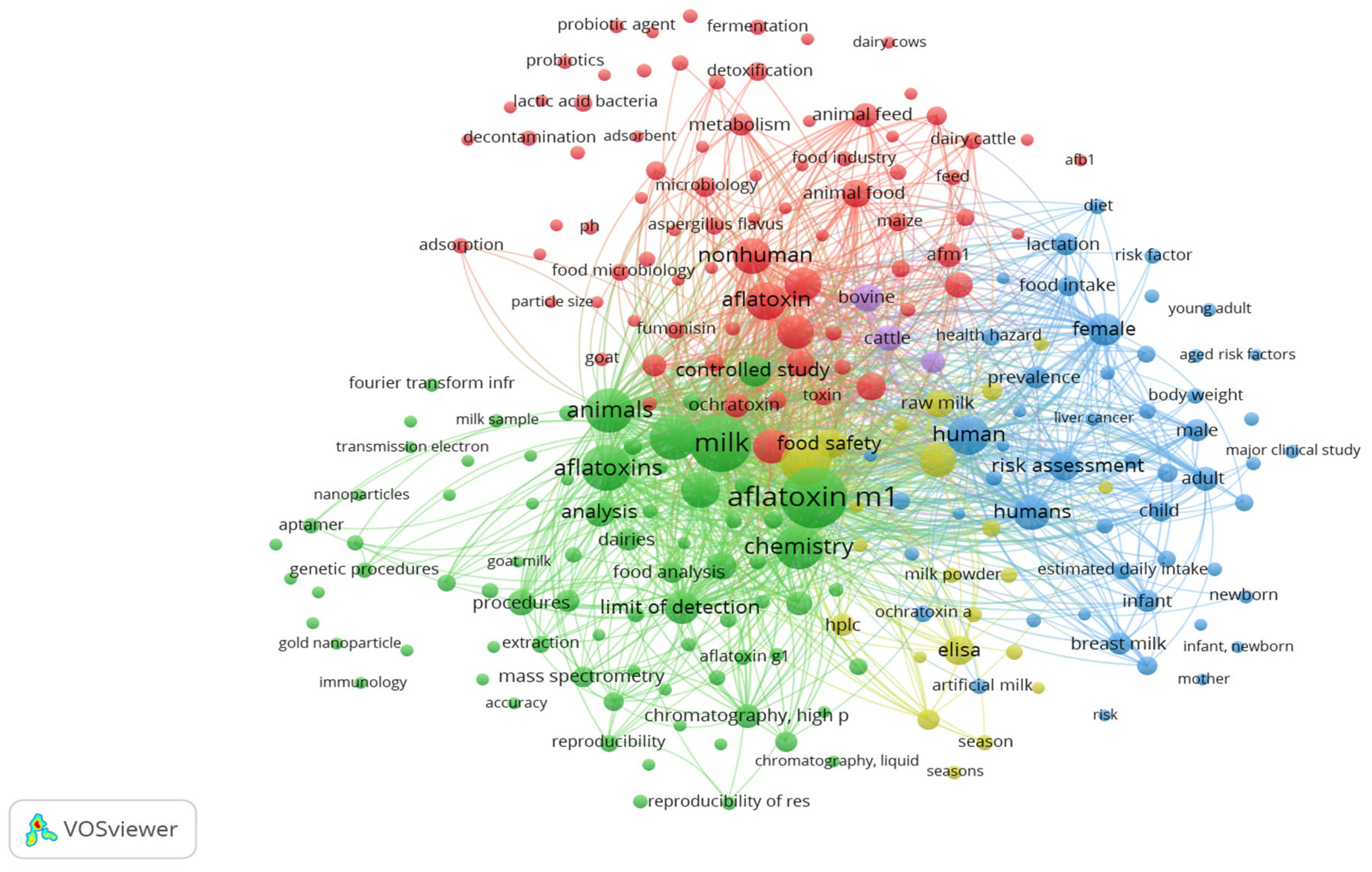
A co-occurrence network of keywords was generated using VOSviewer to visualize the thematic structure of aflatoxin research in milk and dairy products (Figure 2). The analysis identified five major clusters, each representing a fundamental area within the literature:
  • The purple cluster with keywords such as bovine and cattle focuses on the carry-over of AFB1 from contaminated feed into milk in dairy livestock. This area of study is principal for understanding the biosynthesis of AFM1, which occurs in the liver of lactating animals after the ingestion of contaminated feed and is excreted into the milk. The finding shows the important role of the ruminants in the aflatoxin transmission chain;
  • The blue cluster highlights human health and risk assessment, including terms like risk factor, infant, female, liver cancer, breast milk, and estimated daily intake. This cluster focuses on AFM1 exposure, especially in vulnerable populations (infants, newborns, and breast milk), and its potential carcinogenic impact (health hazard, liver cancer);
  • The yellow cluster relates to prevalence studies, food safety monitoring, and exposure assessments with keywords such as food safety, season, Enzyme-Linked Immunosorbent Assay (ELISA), and milk powder. These terms indicate the application of analytical methodologies in prevalence studies, seasonal monitoring, and regulatory surveillance to ensure public health protection.
  • The green cluster centers around analytical methodologies in detecting AFM1 in dairy products, with terms such as chromatography, High-Performance Liquid Chromatography (HPLC), mass spectrometry, limit of detection, analysis, extraction, and nanoparticles.
  • The red cluster focuses on mitigation strategies targeting aflatoxin contamination in the pre-harvest and feed to food contamination, with terms like lactic acid bacteria, probiotics, fermentation, physicochemical methods, adsorbent, detoxification, and decontamination. These keywords indicate a strong research focus on mitigation, especially environmentally friendly methods, and food-grade interventions to bind, degrade, or eliminate aflatoxins either in animal feed or during dairy product processing. The presence of other terms such as animal feed, goat, and dairy cattle indicates, as well, the focus on limiting AFB1 exposure at the farm level to reduce AFM1 excretion into milk.
Finally, the central keywords, like aflatoxin M1, milk, and aflatoxins, appear as large nodes, indicating their high frequency and centrality within the field. All these keyword networks reaffirm the complex and interdisciplinary nature of AFM1 research and help guide more future studies related to mitigation, exposure assessment, and food safety. Guided by these bibliometric patterns and keyword clusters, the next section synthesizes evidence on AFM1 biosynthesis and toxicity in both animals and humans, and regulation, prevalence, and mitigation in dairy products.

3. Aflatoxin M1 Biosynthesis and Toxicological Impact on Animals

The presence of aflatoxins in milk and dairy products results from the contamination of animal feed, which serves as the primary source of aflatoxin exposure for animals [55]. The biosynthesis and survival of aflatoxin are influenced by many environmental and agricultural factors, such as temperature, relative humidity, pH value, substrate availability, and pre- and post-harvest handling [56]. Their stability and resistance to many processing methods pose a serious health threat throughout the food chain.
Under favorable conditions, such as warm temperatures ideally between 24 °C and 35 °C, relative humidity levels exceeding 50–60% [57,58], adequate oxygen availability, and high moisture content in grain (>13%), aflatoxin is produced and can contaminate crops, maize, grains, tree nuts, wheat, and other crops [59,60,61]. Relative humidity (RH) is a key constraint for fungal growth and aflatoxin production; however, reported RH thresholds differ across studies and commodities. Importantly, water activity (aw) represents the primary determinant of fungal growth and aflatoxin biosynthesis in foods and feed matrices, as it directly reflects the availability of free water within the commodity. While RH can be used as an indirect indicator of moisture conditions, its effect on aflatoxin production is mediated through its influence on the equilibrium water activity of the stored product [62]. Muga et al. [58] reported that storage at 60% relative humidity (RH), regardless of temperature, resulted in very low aflatoxin levels (<5 µg/kg), demonstrating the importance of controlled humidity to suppress fungal growth and toxin production. Moreover, guidelines published by the Food and Agriculture Organization (FAO) indicate that A. flavus, one of the fungi responsible for aflatoxin production, cannot survive at relative humidity below 70% and a temperature below 10 °C [63]. Aflatoxins can enter the feed chain at any stage from pre-harvest to post-harvest, with factors such as mechanical damage (grain breakage), improper drying post-harvest, environmental stressors (such as drought and excessive rain), insect infestation, competition with other microorganisms, application of pesticides and fungicides, and poor storage conditions (high humidity, high temperature, and inadequate ventilation) are critical in determining the extent of toxin accumulation [64,65,66]. The relative contribution of these factors varies substantially across agro-ecological contexts, explaining why aflatoxin prevalence remains heterogeneous, even within regulated systems. With the increase in global temperature and progression of climate change, regions that previously had minimal risk are now more vulnerable to Aspergillus growth and aflatoxin contamination [67].
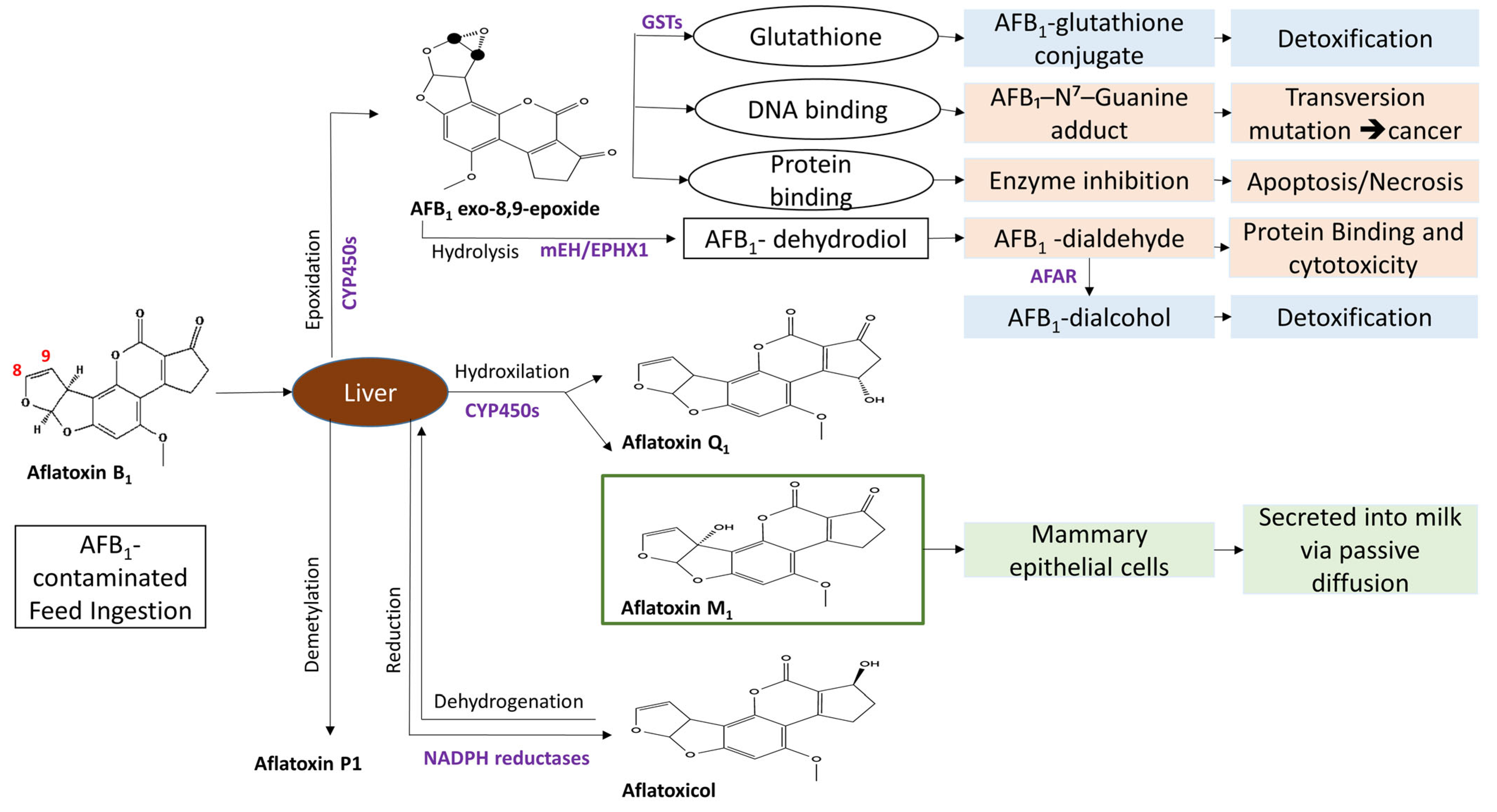
Enzyme abbreviations: CYP450s, cytochrome P450 enzymes (mainly CYP1A2 and CYP3A4); GSTs, glutathione S-transferases; mEH/EPHX1, microsomal epoxide hydrolase; AFAR, aflatoxin aldehyde reductase; NADPH reductases, cytosolic oxidoreductases involved in aflatoxicol formation.
When animals consume AFB1-contaminated animal feed, part of the toxin undergoes reversible reduction by the gut microbiome into aflatoxicol (AFL). The remaining AFB1 is absorbed in the small intestine by passive diffusion into the bloodstream and transported to the liver [68]. In the liver, members of the cytochrome P450 family (mainly CYP1A2 and CYP3A4) complete two main transformations: Hydroxylation at the 4-position converts it into the hydroxylated metabolite AFM1, a water-soluble molecule due to the hydroxyl group, which is excreted into the milk of lactating animals. Second, epoxidation at the 8,9-position produces AFB1-8,9-epoxide, the major carcinogenic metabolite of aflatoxin (Figure 3). The epoxide is very unstable and reacts with liver protein, DNA, and RNA, leading to tissue injury and liver toxicity. It forms DNA adducts at codon 249 of the p53 tumor suppressor gene, contributing to hepatocellular carcinoma development [46]. AFB1 exposure in animals is associated with liver damage, reduced animal feed intake, and reduced body weight, and can even lead to the death of the animal. AFM1 is eventually excreted in the milk of lactating animals, ultimately contaminating dairy products and posing a serious food safety concern [69]. Studies estimate that 0.3–6.2% of ingested AFB1 is converted to AFM1 [19,70,71]. In fact, just 6 h after animals are fed a diet with AFB1, AFM1 appears in milk [72]. The level of carry-over is determined by many factors, such as the animal species, the type of feed, the animal metabolism, animal breed, lactation period, detoxification ability in the animal liver, and milk production yield [19,71,73]. Seasonal variation that affects AFM1 levels in milk is attributed to changes in feeding practices. Higher concentrations of AFM1 are often seen in winter due to the reliance on stored feed, whereas lower levels are linked with grazing animals consuming fresh pasture [74,75]. In addition, the increase in rainfall and humidity during the winter season promotes fungal growth, further elevating the risk of animal feed contamination and eventually its presence in dairy products [76]. These observations underscore the importance of seasonal risk-based feed-monitoring strategies rather than uniform year-round surveillance.
Despite being present in trace amounts, aflatoxin poses a significant health concern due to its toxicity [72]. Since it is a small molecule, it is quickly absorbed in the digestive system. It targets the liver, leading to liver cancer [77]. Exposure to aflatoxin in dairy cattle affects animal reproduction, health, and productivity. Prolonged ingestion of contaminated animal feed can lead to reduced milk yield and low fat content [25], metabolic perturbation, and impaired liver, kidney, and lung function, [78]. A recent outbreak report from Pakistan showed that ingestion of concentrate feed contaminated with extremely high levels of AFB1 (165 μg/kg dry matter) resulted in a 75% abortion rate and an 18.8% reduction in milk yield in a dairy herd [22]. Immunity suppression increases the vulnerability to diseases [79] and impairs nutrient absorption, resulting in decreased growth rate [59]. Additional indicators include weight loss, diarrhea, hepatotoxicity, and nephrotoxicity [66]. Furthermore, the toxicity is increased by a combination with other mycotoxins that can be present in the environment, such as citrinin, as reported by Penagos-Tabares et al. [22], reinforcing the need for feed safety controls. Flores-Flores et al. [50] reported that milk from animals fed on grazing contains lower AFM1 content compared to those consuming stored or compound feed, supporting pasture-based feeding as a protective factor where climatic and management conditions allow.

4. Aflatoxin M1 Biosynthesis and Toxicological Impact on Humans

Human exposure to aflatoxins occurs directly through the consumption of contaminated agricultural products such as maize, wheat, and nuts, where AFB1 is the most prevalent toxin [51,80]. Inhalation of dust or fungal spores containing mycotoxin is another exposure route, though less common [81]. AFB1, the precursor of AFM1, is highly toxic and carcinogenic. In animals, ingested AFB1 is metabolized in the liver to AFM1, which is subsequently excreted into milk and dairy products. Humans are, therefore, indirectly exposed to AFM1 through the consumption of these contaminated animal products [51,80]. Exposure to aflatoxins may result in aflatoxicosis, with effects ranging from acute gastroenteritis to chronic diseases, depending on the duration and level of exposure. Acute aflatoxicosis results from ingesting highly contaminated food and causes gastroenteritis, acute hepatic necrosis, and death in severe cases. An acute aflatoxicosis outbreak occurred in humans in Kenya in 2004 due to consumption of maize highly contaminated with AFB1, resulting in 317 cases and 125 deaths [82]. In contrast, chronic aflatoxicosis occurs through long-term exposure to lower levels of aflatoxin, resulting in hepatocellular carcinoma, reproductive toxicity, immunosuppression, genotoxicity, nephrotoxicity, and impaired growth [83,84].
Despite having a carcinogenic potency at 2–10% of AFB1, AFM1 is classified as a Group 1 human carcinogen by IARC due to sufficient evidence of carcinogenicity. AFM1 retains cytotoxic, mutagenic, and genotoxic characteristics [46,47]. In vitro, AFM1 exposure has been demonstrated to increase the generation of reactive oxygen species (ROS), a principal contributor to oxidative stress. This can lead to cellular damage and inflammatory responses [85]. In addition to oxidative stress, in vivo exposure to AFM1 in mice led to liver and kidney injury, reduced cell proliferation, and genotoxicity. Mechanistically, molecular docking analyses indicated that AFM1 can bind to DNA, histones, and tubulin, contributing to its genotoxic and cytotoxic effects [86].
AFM1 can also induce DNA damage and epigenetic alterations, including changes in methylation patterns. The coexistence of AFM1 with other mycotoxins, such as fumonisin (FUM), ochratoxin A (OTA), or Zearalenone (ZEN), may enhance the overall toxicity result of an exerted synergistic effect [87]. Abdallah et al. [6] reported the synergistic effect of AFM1 and microcystin-LR (MC-LR), a hepatotoxin produced by certain cyanobacteria, both carcinogenic hepatotoxicants. Their mixture led to a significant mitochondrial dysfunction, principally among the vulnerable population.
Due to their high milk consumption, children are especially vulnerable to AFM1 exposure. A risk assessment study in Ireland showed that children aged 8 to 12 years often exceed safety thresholds based on margin of exposure (MOE) values [25]. Moreover, a study in Malawi detected AFM1 in 98% of all milk samples, exceeding EU limits. While the estimated risk of hepatocellular carcinoma (HCC) was low (0.038–0.023 cases per 100,000 people per year), the study stressed the impact of AFM1 in hepatitis B virus (HBV) on endemic populations and vulnerable age groups. Aflatoxin and HBV infection act synergistically, increasing the risk of liver cancer, even at low doses of AFM1 [88].
Early-life exposure to AFM1 can occur through both breast milk and infant formula. Surveys of commercial infant formulae and breast-milk samples conducted in different regions consistently report detectable AFM1 levels in a high percentage of samples, even when concentrations remain below international safety limits [23,89,90,91]. Breastfed infants are, therefore, also at risk due to AFM1 carry-over into human milk. Exposure to contaminated breast milk has been associated with growth impairments and neurodevelopmental effects, in addition to a possible association between AFM1 exposure and autism spectrum disorders [92]. Hsu et al. [93] conducted a review of epidemiological studies and identified different results regarding AFM1 association with stunting. In addition, AFM1 has been linked to intestinal barrier dysfunction and disruption in insulin-like growth factor (IGF) signaling. These factors inhibit cell growth, division, and physical development, especially in children.
Multiple studies have documented AFM1 contamination exceeding regulatory limits worldwide: In southern Ghana, more than 55% of milk samples were contaminated with AFM1 exceeding regulatory limits. Although cancer risk was low (less than 0.07 cases of cancer per 100,000 people per year), the low margin of exposure values indicates chronic risk, especially among the vulnerable population [94]. Similar findings were published in Serbia, where domestic cheese products showed higher AFM1 levels, with margin of exposure values for preschool children indicating potential concern [95]. Another study in Kenya estimated hepatocellular carcinoma incidence due to AFM1 exposure in milk at 1.4 × 10⁻³ to 3.5 × 10⁻³ per 100,000 people/year, with the highest burden in children under five [96]. On top of that, a meta-analysis conducted in Iran assessed AFM1 concentration in various milk samples and found a consistent violation of regulatory limits. The carcinogenic risk was the highest for individuals under 20, mostly influenced by AFM1 concentration, indicating milk as the major route of exposure [97].

5. International Regulations of Aflatoxin M1

Aflatoxin cannot be completely removed from animal feed or the human diet, but its level can be reduced through the implementation of regulations and monitoring plans that set permissible limits and ensure compliance. Various countries and international bodies have established regulatory standards to control AFM1 levels in milk and dairy products. The maximum permissible limit for AFM1 varies across countries depending on several factors, such as economic development, political priorities, toxin data available, and analytical capabilities. Developed countries have established maximum permissible limits for AFM1, while most developing countries rely on standards set by international agencies [98]. In the United States, the Food and Drug Administration (FDA) sets a maximum limit of 0.5 ppb (0.5 µg/kg or 500 ng/kg) for AFM1 in milk, as indicated in Compliance Policy Guide Sec. 527.400 [99]. The limit for feed intended for dairy animals is 20 μg/kg of AFB1 [100]. Similarly, the Codex Alimentarius Commission, established by the Food and Agriculture Organization (FAO) and the World Health Organization (WHO), has also set a maximum limit of 0.5 μg/kg for AFM1 in milk [101]. This standard aims to protect public health and facilitate international trade. Many countries, especially those aligned with Codex Alimentarius recommendations, have adopted this limit, such as Brazil [102], China [103], India [104], and Ghana [105], along with other Asian nations.
However, the European Union has published stricter regulation limits. According to Commission Regulation (EU) 2023/915, the maximum levels for AFM1 are set at 0.05 μg/kg (50 ng/kg) for raw milk, heat-treated milk, and milk used for the manufacture of milk-based products [106]. While cheese does not have a specific AFM1 limit, its safety is indirectly regulated through the limits applied to milk, its primary raw material. For infants and young children, for formulae and milk-based products, the limit is even lower, at 0.025 μg/kg [106]. This low limit indicates a preventive strategy for food safety for the susceptible population. Many countries, such as Iran [32] and Turkey [107], have adopted limits aligned with the European Union’s maximum level for AFM1 in milk.
These differences between the regulations are due to the diverse risk assessment methodology used, which takes into account factors like public health impact, economic implications, and the socio-economic situations. The Joint Committee between FAO and WHO Expert on Food Additives (JECFA) conducted scientific evaluations in 2001, determining that there is no significant difference in public health outcomes between the 0.05 and 0.5 µg/kg levels. Furthermore, studies show that excessive regulations of AFM1 in milk may have unexpected consequences in food-insecure areas, where strict enforcement could limit the availability of milk and divert the focus from more critical challenges, such as aflatoxin B1 exposure [108]. In developing countries, enforcement remains weak and compliance is irregular. Strict legislations are frequently applied solely to export commodities, while local markets lack monitoring infrastructure [109]. These inconsistencies are caused by many factors, including poor feed storage practices, lack of monitoring, low awareness among farmers, inadequate regulatory enforcement, and climatic conditions that favor fungal growth [109].
Even with very strict regulations, the complete elimination of AFM1 in milk is not achievable due to many factors, such as environmental contamination, limitations of detection methods, and mitigation technologies. The strict regulation reduces, but does not eliminate, the exposure to mycotoxins or the synergistic effects with other mycotoxins. Therefore, a combination of different methods, whether educational, regulatory, or agricultural, remains important for effective aflatoxin control in the dairy sector.

6. Global Prevalence of Aflatoxin M1

The presence of AFM1 in milk and milk products is frequently reported throughout the world. The prevalence of AFM1 in milk is partially attributed to the lack of knowledge among farmers and contaminated feed, in addition to unsafe storage conditions [110]. Market prevalence data gathered from different countries highlight a vast variation of AFM1 concentration in different dairy products. Table 5 shows that countries with established monitoring systems, such as Italy, Spain, Ireland, and France, generally report low-to-non-detectable levels of AFM1. For example, as seen in Table 5, a study in Ireland showed that AFM1 concentration in milk ranges between 0.00087 and 5.72 ng/L, which is below the European Union’s permissible limit of 50 ng/L [25]. Similarly, research in Spain found no samples (full-cream or raw milk) above the detection limit [111]. These results show the importance of constant monitoring, good agricultural practices, and enforced regulations in European countries. In contrast, some African countries report alarming levels of AFM1 in milk and dairy products: in Nigeria, AFM1 concentrations reached 3108 ng/L in goat milk, with 55% of samples exceeding the regulatory limit, while cow milk reached up to 81 ng/L [112]. Moreover, in Ghana, 94.6% of cow milk samples were contaminated with AFM1, with concentrations ranging from 61.8 to 1606.8 ng/L, exceeding the EU limit in all tested samples [105]. Additionally, 82.4% of cow milk samples were contaminated with AFM1 in Sudan, with 47.1% of the samples ranging between 100 and 150 ng/kg [113]. These numbers show an alarming risk to public health, especially in rural communities where raw milk can be consumed without adequate safety controls. Other countries, such as Bangladesh, Egypt, and Iran, showed high AFM1 contamination across different dairy products. For example, Ewida et al. [114] reported a very high level in a traditional Egyptian fermented cheese, Mish cheese, reaching 40,500 ng/kg, a level exceeding EU and US standards. Egypt reports some of the highest contamination levels in various dairy products [43,44,114]. Another study in Bangladesh reported contaminated raw milk with AFM1 reaching 1489.28 ng/kg [115]. These results can be linked to different factors, such as animal feed storage conditions at the farm, a lack in enforcing regulations, climatic conditions favoring the growth of the fungus, and economical constraint. In Lebanon, AFM1 contamination has also been documented. A recent study reported AFM1 levels ranging between 10.7 and 440 ng/L in cow milk, with approximately 36% of samples exceeding the EU limit [116]. Earlier baseline monitoring had also shown 21% of dairy products above the EU maximum level and higher concentrations in soft cheeses compared to milk [117]. Therefore, it is important to have strict regulations and control measures, including routine animal feed testing, cold chain infrastructure, and a farmer training schedule, given the chronic exposure effect of aflatoxins [118]. Surprisingly, some countries, despite having regulated limitations, continue to report high contamination levels in dairy products. For example, in Italy, Roila et al. [119] found AFM1 in 2244 out of 3151 of cow milk samples, with concentrations reaching 146 ng/kg. This shows that even if regulations are present, enforcement remains challenging. On top of that, the impact of climate change in different regions also plays a role in the occurrence of AFM1. Areas with hot and humid climates, such as Egypt, Bangladesh, and Iran, have favorable conditions for Aspergillus species growth, thus increasing aflatoxin contamination levels in animal feed and, eventually, in milk. In addition, AFM1 concentration can be influenced by different processing methods used in dairy products across different countries. AFM1 binds casein and therefore partitions into curd at coagulation, so cheeses, especially rennet-set, tend to show higher concentration factors than the source milk. During brining or ripening, a fraction may diffuse to whey or brine, while fermentation can yield modest reductions through microbial activity [120,121]. Furthermore, the difference in analytical methods used, ELISA, HPLC, or Liquid Chromatography–Tandem Mass Spectrometry LC-MS/MS, can lead to inconsistency in detection sensitivity and quantification accuracy.

7. Mitigation Strategies

The presence of AFM1 in milk is a serious food safety threat. Knowing the right and effective method to reduce it will decrease and prevent economic losses, preserve milk safety, and protect public health. Several mitigation strategies to reduce AFM1 are available, whether directly targeting the milk or indirectly targeting the animal feed or the animal itself. These methods can be classified into biological, chemical, and physical techniques (Table 6). Table 6 provides a comprehensive overview of the main mitigation strategies investigated for reducing aflatoxin B1 (AFB1) in feed and aflatoxin M1 (AFM1) in milk and dairy products, summarizing their reduction efficiency, principal advantages, and key limitations, and highlighting the trade-offs between effectiveness, safety, regulatory acceptance, and industrial applicability across chemical, biological, physical, and integrated approaches.

7.1. Chemical Mitigation Techniques

Several chemicals have been studied for their ability to detoxify aflatoxins. These include alkaline agents, oxidizing agents, acidic agents, and inorganic adsorbents, among others (Supplementary Table S1). Their mechanisms of action vary from degrading, transforming, or binding the toxin to reduce its availability and toxicity [142].

7.1.1. Alkaline Agents

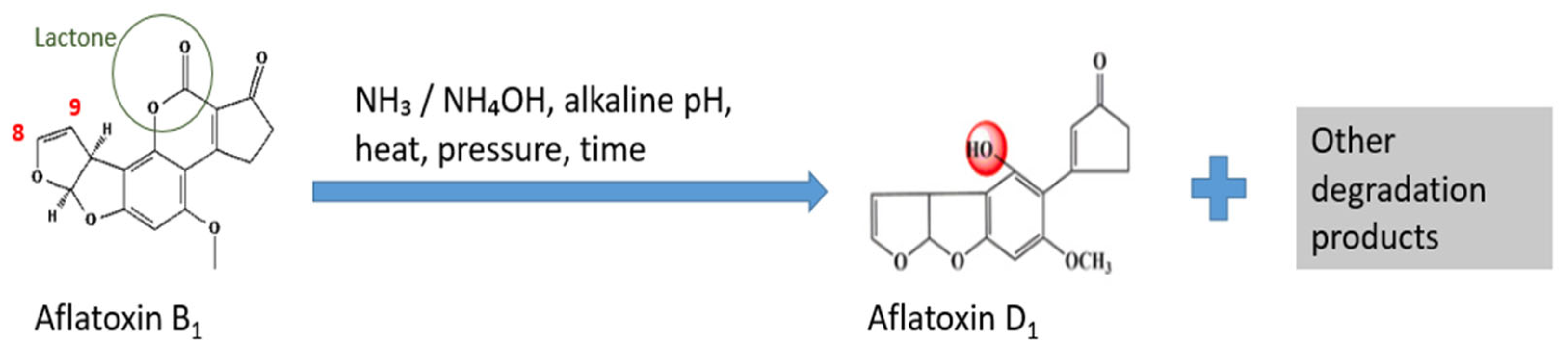
Ammonization of feed is a technique using an alkaline agent to detoxify AFB1 contamination in animal feed. Under alkaline conditions, ammonia induces nucleophilic attack on the lactone carbonyl and the difuran double bond of AFB1, triggering alkaline hydrolysis. This reaction opens the lactone ring and disrupts the 8,9-double bond, preventing the formation of the toxic AFB1-8,9-epoxide. The toxin is converted into less harmful products, such as aflatoxin D1 (AFD1), aflatoxin D2 (AFD2), and related derivatives that show reduced mutagenicity because they can no longer form DNA adducts (Figure 4) [143,144,145]. Reversion to AFB1 can occur under acidic conditions, when treatment is insufficient [143]. Ammonia gas or ammonium hydroxide is applied to contaminated animal feed under controlled environmental conditions, including pressure, temperature, and duration [145]. Studies have shown that ammonization can reduce AFB1 levels by 70 to 90% due to the instability of AFB1 under alkaline conditions [143,146]. This technique has been successfully applied to many feedstuffs, such as cottonseed meal, peanut meal, maize, and others [146,147]. Furthermore, optimized ammonia treatment protocols, such as 4% NH4OH, 2 bar pressure, and 100 °C for 60 min, can reduce AFB1 levels by up to 96.3% in groundnut press cake [147]. Therefore, the degradation is shown to be effective under certain intrinsic or extrinsic conditions. As AFB1 loses its structural features required for hepatic hydroxylation to AFM1, ammonization significantly decreases its carry-over into milk, with a stated decrease of 30-fold in dairy cows [148,149]. However, this method has certain setbacks and safety concerns, such as a possible reduction in feed nutritional value, high implementation costs, and challenges in maintaining optimal processing conditions. In addition, ammonia handling safety and residue monitoring are important for approval and industrial-scale use [79]. Despite its high efficacy, ammonia treatment is primarily limited to feed decontamination due to its unsuitability for direct application to dairy products. Another limitation is the reliance on strictly controlled processing conditions, which makes it more applicable to industrial-scale feed processing.

7.1.2. Oxidizing Agents

Ozonation
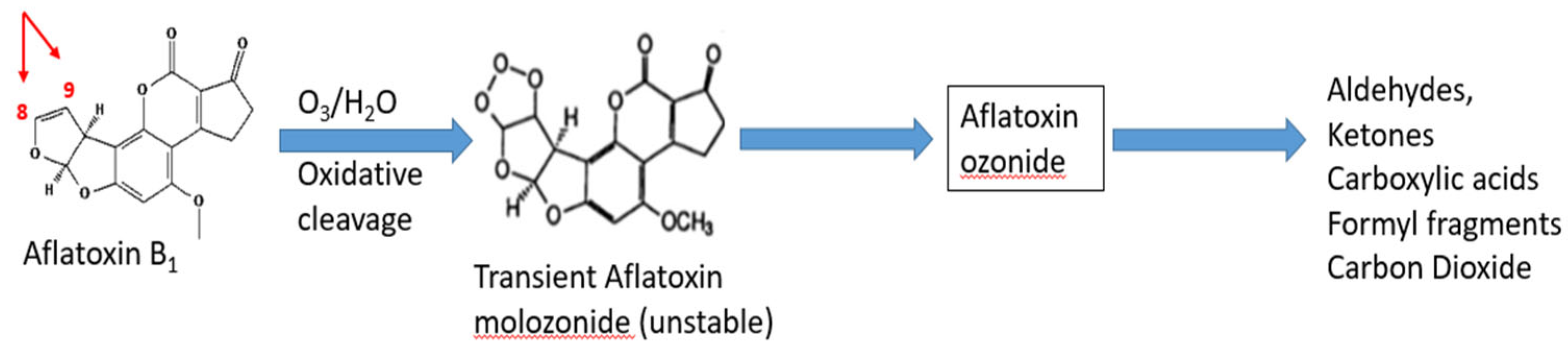
Ozonation is a non-thermal, residue-free chemical detoxification method, in which ozone (O3), a strong oxidizing agent, breaks down aflatoxins through electrophilic attack and oxidative reactions that cleave the C8 to C9 double bond in the furofuran ring [150]. This reaction disrupts the structure responsible for AFB1 and AFM1 toxicity, converting them into less harmful products, such as carboxylic acids, aldehydes, and smaller chain fragments (Figure 5) [151]. Because ozonation relies on chemical degradation, its efficiency depends on ozone concentration, exposure time, humidity, and matrix composition. In dairy matrices, ozone exposure can decrease AFM1 levels, although reductions remain moderate. Mohammadi et al. [152] reported a reduction of about 53% of AFM1 after 10 min of treatment. However, the treatment affected milk quality, such as altered color and texture, a decrease in β-carotene, and a lower microbial count. Sert and Mercan [153] demonstrated that exposure of milk and whey concentrates’ matrices to ozone for 60 min led to a decrease of 18.9% and 9.9% in AFM1 levels, respectively, confirming modest efficacy but improved microbiological quality without chemical residues. For feed detoxification, which indirectly lowers AFM1 in milk, higher efficiencies have been reported. Ozonation of corn grits (20–60 mg/L) with an exposure time of 480 min achieved a maximum AFB1 reduction of 57% [154]. In contrast, Rahmani et al. [155] optimized ozonation conditions for ground corn using 600 mg of ozone per kilogram of corn for 250 min, reducing AFB1 by up to 96 to 99%. However, the industrial application of this treatment may be limited by scalability, the need for high doses, and long exposure time to achieve the best reduction. Recent developments show the importance of hurdle-based approaches. Khoori et al. [156] studied the synergistic effect of different processes, such as the use of ozonation, ultraviolet radiation, and pulsed electric field techniques for reducing AFM1 in probiotic milk. The decrease in AFM1 reached 96.1% while maintaining a stable Lactobacillus acidophilus count of 106 CFU/g. Optimal conditions for maximum AFM1 reduction included an ozone concentration of 9.99 mg/min, 13.15 microsecond pulse duration, and 4.99 J/cm2 UV intensity. Thus, indicating the importance of hurdle technology can compensate for the moderate efficacy of ozone alone. Overall, ozonation is considered environmentally friendly and residue-free. However, the moderate reduction in AFM1 and the potential sensory and nutritional alterations in milk limit its use [157]. Further research is needed to clarify this method’s stability and the toxicological safety of AFM1 ozonation by-products in complex dairy matrices before regulatory approval can be considered. Industrial feasibility remains constrained unless applied in combination with other physical processes within a hurdle-technology framework.
Hydrogen Peroxide
Hydrogen peroxide has also been studied as a method for mitigating AFM1 contamination in milk and animal feed. Its mechanism relies on the generation of reactive oxygen species (ROS), mainly hydroxyl and perhydroxyl radicals that cleave the C8–C9 double bond in the terminal furan ring of aflatoxins, leading to ring opening and conversion into smaller oxidized fragments with reduced toxicity. Applebaum and Marth [158] have shown that hydrogen peroxide in the presence of riboflavin and lactoperoxidase completely inactivates AFM1 (0.7–1.7 μg/L) in raw milk. Another study combined hydrogen peroxide (0.5 g/L) with UV irradiation for 20 min in milk, eliminating 89% of AFM1 compared to 61% reduction with UV alone [159]. More recently, Shen and Singh [160] applied a high concentration of hydrogen peroxide (30% w/w) at 50 °C to peanuts, achieving up to 90% reduction in AFB1, with residual peroxide effectively removed by drying. In this study, post-treatment aflatoxin levels met U.S. FDA feed guidance, but not those for human food. Despite its effectiveness, hydrogen peroxide-based oxidative treatments can oxidize milk components, such as ascorbic acid, and certain amino acids, potentially altering its sensory and nutritional quality [161,162]. Higher concentrations in food can be a risk to human health, causing serious gastrointestinal problems [163]. Although, hydrogen peroxide can be effective when used in combination with other techniques such as UV irradiation, its industrial feasibility in dairy remains limited due to safety and regulatory constraints [164].

7.1.3. Adsorbents

Bentonite
Bentonite is an aluminosilicate clay mineral with a negatively charged layered structure and a high cation-exchange capacity [165]. Its mitigation mechanism is physical adsorption, thus binding aflatoxins and decreasing their bioavailability in dairy products and animal feed [166]. Aflatoxin molecules are immobilized on clay surfaces and in interlayer spaces through electrostatic attraction, hydrogen bonding, Van der Waals forces, and cation interactions [167,168].
Bentonite has reduced aflatoxin when incorporated into animal feed. Dietary supplementation with bentonite and montmorillonite reduced AFM1 levels in goat milk by approximately 64.5% and 82.2%, respectively [169]. Similarly, bentonite has been shown to adsorb between 90.0% and 95.3% of AFB1 at pH 5, indicating a solid binding capacity under acidic conditions, especially under ruminal and gastrointestinal conditions [165]. In field conditions, calcium montmorillonite-based toxin binders, such as NovaSil®, were introduced to animal feed, reducing the AFM1 contamination level in milk by about 90% and improving yield [170], while purified NovaSil Plus decreased AFM1 by 55–68% without altering milk composition or vitamin content [171].
The safety and efficacy of bentonite have been confirmed in dairy cows. Supplementation of Holstein cows with 2% montmorillonite-rich clay lowered AFM1 excretion from 27.81 to 16.51 μg/day and reduced transfer rate from 1.37% to 0.74%, although slight reductions in milk yield and changes in liver enzymes were reported, indicating the importance of dose optimization [78]. Additional trials reported reductions of 66.7% after 56-day supplementation, accompanied by improvements in serum protein, immunity, and milk production [172]. In vivo studies have shown bentonite’s efficacy in reducing aflatoxin. Kihal et al. [173] compared several binders, including hydrated sodium calcium aluminosilicate (HSCAS), bentonite, yeast cell wall (YCW), and multi-toxin binder mixes (MX), and demonstrated that bentonite showed the highest reduction in AFM1 in milk, with a mean reduction of 40% compared with other adsorbents.
Various optimized versions of bentonite have been developed to improve its effectiveness. G.Bind, an Iranian, locally processed bentonite, reduced AFM1 levels in milk and decreased the AFB1 transfer rate from 1.17% to 0.39% [174]. Likewise, size-fractioned bentonite particles (smaller than 5 µm) were shown to reduce the carry-over rate of 0.43%, which is comparable to commercial alternatives [175]. Recently, Ibrahimi Khoram Abadi and Heydari [176] found that magnetic bentonite nanocomposites (MBNC) exhibited the lowest AFM1 carry-over rate, along with a better milk yield and quality in Baluchi ewes, surpassing both natural and conventional modified bentonite.
Combining bentonite with microbial agents has increased AFM1 reduction. Bentonite-activated carbon mixture with non-viable Bacillus coagulans and Lactobacillus paracasei achieved complete AFM1 removal from milk spiked at 0.2 µg/L. The mixture remained stable through repeated washing cycles [177]. Other combinations with acid-killed or heat-killed lactic acid bacteria achieved a reduction of 97.6% [178]. Therefore, synergistic formulations can improve the mitigation results considerably compared to bentonite alone.
Although not yet approved for industrial milk processing, in vitro studies show high adsorption potential. Ca-bentonite removed up to 97.7% of AFM1 in artificially contaminated raw milk without nutritional losses [179]. Similarly, HAFR 3, a bentonite variant, removed 98.5% of AFM1 in milk within 12 h, with slight alteration to the milk nutritional values [166]. In another study, bentonite and date pit reduced AFM1 by up to 68% and 56%, respectively, among the adsorbents tested [180].
Given its wide use in animal feed, bentonite safety has been assessed. The European Food Safety Authority (EFSA) evaluated the safety of bentonite as a feed additive in 2011 and again in 2017. Findings concluded that bentonite is safe for all animal species when used at levels up to 0.5% in complete feed, and up to 2% (20 g/kg) for specific applications, with no adverse effects on consumers, animals, or the environment. However, due to its silica content, bentonite is considered a respiratory hazard for users handling it in its dry form. In the United States, calcium montmorillonite bentonite (marketed as NovaSil®) has been recognized by the Food and Drug Administration (FDA) as Generally Recognized as Safe (GRAS) for use in animal feed [165,181]. However, direct addition to milk is not authorized for food processing. Thus, bentonite is feasible at an industrial scale, but only as a feed additive, not as a milk decontaminant.
In comparison to commercially available binders, bentonite is regarded as a more cost-effective alternative and has demonstrated safety, particularly in relation to compliance with regulatory approval criteria. However, other commercial products with multi-component formulations offer a broader binding spectrum. For example, yeast cell wall-based Mycosorb® reduced AFM1 secretion by 47% in buffaloes and improved milk composition [182]. Similarly, Mycofix® (a blend of enzymes and adsorbents) reduced AFM1 levels by 22 µg/day and lowered the carry-over from 4.60% to 3.44% [183]. These findings accentuate the diversity of binding strategies beyond clay-based materials.
Bentonite and its derivatives are among the most researched binders for aflatoxin detoxification in animal feed. Its use has proven to be effective, safe, and accepted by regulatory bodies. However, results vary depending on bentonite particle size, formulation, and co-supplementation strategies.
Other Dietary Adsorbents
Other dietary adsorbents (yeast-based formulations, composite binders, natural aluminosilicates, and emerging engineered nanostructured materials) reduce AFM1 contamination in milk indirectly by adsorbing AFB1 in the gastrointestinal tract, limiting its absorption and biotransformation to AFM1. The effectiveness of these binders is affected by their composition, physicochemical characteristics, and levels of contamination.
Composite binders have demonstrated varying levels of effectiveness depending on the degree of aflatoxin exposure. Solis Mos®, a composite binder containing sodium montmorillonite, mannan oligosaccharides (MOS), yeast culture, and vitamin E, was found to be effective at moderate aflatoxin contamination levels [184]. In cows fed 20 µg/kg AFB1, the binder reduced AFM1 concentrations in milk by 16%, total excretion by 18.3%, and the feed-to-milk transfer rate by 17.9%. However, when the contamination level is high (40 µg/kg), no significant reduction was observed. This shows that certain binders might be ineffective when exposed to high levels of toxins, especially in areas where aflatoxin outbreaks occur frequently [184].
Natural aluminosilicate-based adsorbents, such as Clinoptilolite, also demonstrated efficacy. In their study across 15 commercial farms, Katsoulos et al. [185] reported that dietary supplementation of 200 g/day of Clinoptilolite with a smaller particle size (<0.15 mm) reduced AFM1 concentrations by 56.2%. These findings show the role of particle size optimization in enhancing adsorption, which is consistent with results from processed bentonite forms.
Another strategy is the use of blended mineral–organic formulations. Cha et al. [186] tested two dietary adsorbents: AD1, a combination of montmorillonite and diatomite (50:50), and AD2, a commercial product composed of montmorillonite, diatomite, yeast cell-wall extracts, and sodium alginate. Both were administered at 15 g/day to cows exposed to a moderate AFB1 level (8 µg/kg). Both products demonstrated AFM1 reduction in milk (from 93 ng/L to 46 ng/L and 51 ng/L, respectively) and decreased the carry-over rates (1.16% to 0.57% and 0.63%, respectively). The combination of mineral adsorbents with organic components, such as polysaccharides or cell-wall fragments, improved AFM1 building within the gastrointestinal tract.
Moreover, Costamagna et al. [187] evaluated Antitox CooPil®, which is composed of 60% zeolite and 40% cell wall, and demonstrated that supplementation reduced milk aflatoxin M1 concentrations from 0.016 µg/kg to 0.008 µg/kg and carry-over rates from 2.19% to 0.77%, even at low contamination levels. In parallel, advanced nanostructured materials have been developed to enhance adsorption efficiency. Moradian et al. [188] developed an engineered nanomaterial composed of mesoporous metformin–chitosan/silica-cobalt ferrite nanospheres (Mt-CS/CFS NSs), which demonstrated reduction in AFB1 by over 91% in milk under optimized conditions. Their mechanism involves multilayer adsorption, magnetic separation potential, and enhanced intermolecular interactions. These emerging materials are promising techniques for efficient and food-safe detoxification, especially in systems where conventional binders may be less effective.
Evidence from different studies showed that the efficacy of dietary adsorbents is dependent on formulation characteristics such as mineral type, pore structure, particle size, presence of organic additives, and the level and nature of aflatoxin exposure. The shift toward composite and precision-engineered materials suggests a direction toward more efficient binders. However, significant challenges remain regarding cost-efficiency, safety, and regulatory validation.

7.2. Biological Mitigation Techniques

Biological mitigation strategies are very promising approaches for reducing AFM1 contamination in dairy products because they offer specific, effective, cost-effective, and environmentally friendly techniques. These strategies often rely on enzymes, probiotics, and bioactive compounds that can either degrade, bind, or prevent the formation of the aflatoxin (Supplementary Table S2) [189].

7.2.1. Microorganisms

Lactic Acid Bacteria
Lactic acid bacteria (LAB) are one of the most studied microorganisms for the detoxification of AFM1 in milk. Their detoxification activity is primarily attributed to non-covalent physical adsorption of AFM1 onto structural components of the bacterial cell wall, such as peptidoglycan, teichoic acids, surface proteins, and exopolysaccharides.
Various genera showed promising results in AFM1 binding in milk systems under different conditions, especially Lactobacillus [190]. Lactobacillus species can bind and reduce AFM1 levels in milk by a range of 20–100%, depending on strain, viability, temperature, exposure time, and matrix composition. For instance, L. acidophilus showed 71.46% reduction in AFM1 at 4 °C, and L. casei reached 64.31% at 37 °C, both inoculated in skim milk [191]. On the other hand, strains of L. brevis and L. plantarum isolated from traditional Iranian cheese reduced AFM1 by up to 50% over 72 h of refrigeration [192]. AFM1 detoxification does not require cell viability. In fact, heat-treated LAB cells are equally or even more efficient than viable ones: Weissella confusa H1 and L. plantarum S2 reduced AFM1 by 78% and 72%, respectively, in PBS buffer at 37 °C after 72 h, using both viable and heat-treated cells [193]. Muaz et al. [194] used acid-killed LAB in combination with a surfactant sorbitan monostearate, achieving 100% removal of AFM1 from skimmed milk spiked at 0.05 ng/mL.
Synergistic combination of strains can further enhance AFM1 removal. Yogurt with probiotics spiked with 20 ng/mL of AFB1 demonstrated binding efficiency of L. acidophilus PTCC 1643 (Persian Type Culture Collection) and L. rhamnosus PTCC 1637 between 64.56% and 96.58% [195]. LAB performance is strongly modulated by environmental conditions. High cell density, extended contact time, and active fermentation generally improve toxin removal, whereas binding may be reduced once fermentation is completed. Streptococcus thermophilus and L. delbrueckii subsp. bulgaricus showed high AFM1-binding capacity in milk samples (90–100%), but were ineffective in already fermented yogurt, since the bacteria are no longer active [196].
Beyond traditional experimental optimization, computational tools have been applied to optimize LAB performance in aflatoxin detoxification. Jafari et al. [197] used machine learning to model and predict optimal strain ratios, environmental conditions, and incubation times for AFM1 removal. The study demonstrated that L. lactis at 109 CFU/mL reduced AFM1 in kashk by up to 70.91% after 5 days and by almost 72% after 30 days, with machine-learning predictions closely matching experimental observations. This demonstrates how computational tools can complement microbial detoxification techniques, opening new perspectives for precision in industrial dairy processing.
From an industrial perspective, LAB-based mitigation is advantageous because the microorganisms are already widely used in dairy fermentation, are safe (GRAS/QPS), and do not introduce chemical residues. However, several limitations must be acknowledged: adsorption is reversible, toxin desorption may occur under gastrointestinal or heat conditions, results from laboratory media may not translate to real dairy matrices, and variability among strains remains substantial [198,199,200]. Future research should select the most effective strain under realistic contamination levels, test its performance in industrial systems and in vivo, and develop effective synergistic probiotic formulations.
LAB and Yeast Synergies
Yeasts, such as Saccharomyces cerevisiae and S. boulardii, have shown promising results when it comes to AFM1 reduction, primarily through physical adsorption onto cell-wall components rich in β-glucans and mannoproteins [201,202]. S. boulardii (at 109 CFU/mL) alone showed a high AFM1 reduction of 96.88% in skimmed milk [191]. In Minas Frescal cheese, where the curd was originally spiked with 0.5 µg/kg with AFM1, S. cerevisiae alone achieved complete removal of AFM1 by day 20 of storage [200]. While yeasts alone show strong detoxification, synergies with LAB often accelerate the process. A combination of heat-killed LAB (L. rhamnosus, L. lactis) and yeast (S. cerevisiae) achieved the same results by day 10 of cheese maturation, twice as fast as yeast alone [203]. This reduction is mostly due to complementary adsorption sites provided by LAB peptidoglycans and exopolysaccharides. Recent evidence by Salem-Bekhit et al. [204] achieved even faster removal of AFM1 in milk by 24 h, using a combination of L. rhamnosus and S. cerevisiae, with an AFM1 reduction of 98.4%. Moreover, a probiotic combination of L. rhamnosus, L. plantarum, and S. boulardii also achieved 100% removal of AFM1 in skimmed milk spiked at 0.5 ng/mL, while L. rhamnosus alone achieved up to 91.82% reduction. These results highlight the complementary adsorption properties between LAB (peptidoglycan, teichoic acids, and EPS) and yeasts (β-glucans, mannoproteins), producing a broader range of binding sites and potentially more stable toxin immobilization. LAB–yeast combination is safe and used industrially. Future work should, therefore, assess adsorption stability during ripening and digestion, and evaluate the feasibility of standardized mixed-culture applications at an industrial scale [200].
Bifidobacteria and Cell-Wall Components
Bifidobacteria, commonly found in the gastrointestinal tract of humans and animals, are widely used as probiotics due to their health benefits. Their antimicrobial properties inspired their use in many dairy products, such as yogurt, cold desserts, buttermilk, and cheeses [205]. Research has explored their potential to mitigate AFM1 contamination through physical adsorption onto cell-wall polysaccharides, peptidoglycan, and other surface structures. Reported AFM1 reduction ranges from 20 to 96%, depending on strain, viability, dairy matrix, AFM1 concentration, and contact time [206]. For example, Bifidobacterium species, such as B. bifidum, achieved a reduction of 40.14% in cow milk and 42.9% in sheep milk [207]. While LAB and Bifidobacterium strains isolated from local dairy products demonstrate an antitoxin effect from binding AFB1 in contaminated PBS, many strains showed different AFB1 reduction rates, ranging from 12.1% after 6 h to 89.9% after 36 h of incubation at 37 °C, with longer contact times yielding greater toxin removal [208]. Importantly, cell viability is not essential; in several experiments, cell-wall fractions (postbiotics), including isolated peptidoglycan, outperformed live cells. Adácsi et al. [209] demonstrated that Bifidobacterium animalis BB12 and L. lactis R703 peptidoglycan isolates reduced AFM1 from skimmed milk by up to 42%. On the other hand, live cells achieved only up to a 21% reduction. These findings support the use of postbiotics in AFM1 detoxification, especially when viability is not desirable, such as with UHT products.
Despite their potential, Bifidobacteria-based detoxification is strain- and matrix-dependent. The stability of AFM1 binding during processing and digestion remains uncertain. Future work should evaluate standardized postbiotic formulations and validate their performance under realistic industrial conditions.
Synergistic Strategies
Synergistic approaches have been explored by combining probiotic strains with other agents, such as nanoparticles or surfactants, to enhance mycotoxin removal. Zamani et al. [210] used a newly isolated Lactobacillus plantarum strain from cheese combined with chitosan nanoparticles for AFB1 detoxification in vitro. Synergistic effects showed a reduction of 69%, suggesting its potential addition to animal feed as a toxin binder. For instance, yeast strains identified as Saccharomyces genus isolated from fermented products in combination with titanium dioxide nanoparticles showed a boosted reduction in AFB1 in the medium by 15 to 20% more than each treatment alone [211]. Further reduction in AFM1 was achieved when sorbitan monostearate was combined with acid-killed LAB, achieving a detoxification of 100% at lower toxin levels [194]. The latter study also found that removal of exopolysaccharides from cell surfaces further reduced binding efficiency, confirming the role of the cell wall in mycotoxin adsorption.

7.2.2. Indirect Mitigation via Feed

Biological mitigation of AFB1 in animal feed is the most practical strategy for reducing AFM1 in milk. Unlike microbial adsorption in milk, these approaches rely primarily on enzymatic degradation of AFB1 within the feed, reducing the amount available for ruminal absorption and hepatic conversion to AFM1. Bacillus subtilis YGT1, isolated from yogurt, showed its ability to degrade 83.8% of aflatoxin B1 after 48 h of incubation, demonstrating its enzymatic ability to cleave the furan ring and convert AFB1 into less toxic metabolites [212]. Similarly, Guo et al. [213] evaluated the use of another strain of Bacillus isolated from fish gut, Bacillus subtilis ANSB060 biodegradation product (BDP). Findings showed that the addition of 0.2% BDP to an AFB1-contaminated feed reduced AFM1 concentrations in milk by 27% in Holstein cows and lowered the AFB1 to AFM1 transfer rate from 1.06% to 0.76%. This BDP did not affect feedstuff or milk production and composition. These strains are especially promising for on-farm applications, where dietary interventions are feasible. However, their efficiency depends on AFB1 contamination level, enzyme stability in feed matrices, and rumen conditions. Further research is needed to characterize degradation by-products, confirm their safety, and confirm efficacy across different feeding systems.

7.2.3. Enzymes and Bioactive Compounds

The use of enzymes and bioactive compounds demonstrated promising results in AFM1 detoxification by breaking down the toxin’s chemical structure through oxidation or hydrolysis, by disrupting the C8=C9 double bond, or by modifying the furan ring, thereby reducing toxicity [2,214,215]. Some of these enzymes include superoxide dismutases (SODs), peroxidases, lipases, and proteases, either in free form, immobilized, or expressed via recombinant technology. Enzymes such as protease and lipase produced by Levilactobacillus brevis and L. plantarum reduced AFM1 levels by up to 78.5% in contaminated yogurt over a period of five days of storage. However, these results are time-dependent and may be limited by the slow metabolic rate under refrigeration [214]. Recent advances in recombinant technology demonstrated higher efficiency of more than 60% AFM1 degradation using recombinant peroxidases (rPODs) in a model solution under specific conditions (pH of 9–10, temperature of 30 °C, and 60 mmol/L H2O2). However, when applied to milk, the degradation reached 25.6% due to the decrease in the enzyme activity under a more acidic medium [216]. Similarly, recombinant superoxide dismutase SODs removed more than 60% AFM1 in buffers but only 26.03% in the milk matrix limitations [2].
Immobilized enzymes have been applied for AFM1 detoxification in milk. Integrating enzymes with nanocomposite supports improved detoxification rates due to the enhanced enzyme stability. A nanocomposite composed of magnetic nanoparticles, chitosan, molybdenum disulfide, and laccase enzyme (Fe3O4/Cs/MoS2/Lac NPs) achieved 68.5% reduction in AFM1 after only 1 h of application to milk, demonstrating improved stability and reusability [217].
Physical activation methods can further increase enzymatic activity. Kerstner et al. [218] used peroxidases extracted from soybean meal and rice bran. In this study, ultrasound, microwave, ultraviolet light, and magnetic fields were applied to enhance enzyme activity. The most effective method was seen with UV light treatment (365 nm, 45 min) applied to rice bran peroxidase, achieving detoxification rates of 78.2% for AFB1 and 71.2% for AFM1 at 4 °C. This approach presents a promising, cost-effective strategy for aflatoxin mitigation in milk under refrigeration conditions, suitable for industrial applications.
A recent advance involves CotA laccase from Bacillus licheniformis, identified as an efficient AFM1 oxidase active directly in milk. Guo et al. [219] showed that CotA catalyzes C3-hydroxylation of AFM1 into the less toxic metabolites AFN1 and epi-AFN1. The enzyme achieved up to 86% oxidation in buffer and removed 83.5% and 65.1% of AFM1 in skim and whole milk, respectively, at 37 °C after 12 h.
Despite promising results in model systems, the efficacy of enzymatic reduction in milk remains limited due to acidic pH, enzyme instability, and protein–toxin interactions. Further optimization for use in food systems is needed for optimum reduction.

7.2.4. Natural Additives

In addition to the use of probiotics and enzymes, natural feed additives are being investigated for their role as an alternative in reducing AFM1 levels in milk, especially due to their biodegradability and low toxicity. They act primarily through inhibiting AFB1-producing fungi in feed or through physical adsorption of AFM1 via polysaccharide- or chitin-based matrices [220].
Plant-based compounds, such as polyphenols, curcuminoids, and essential oils, have demonstrated varying reduction capacities mainly by inhibiting fungal growth and AFB1 biosynthesis. Girolami et al. [221] studied the effect of turmeric powder supplementation in Holstein-Friesian cows fed a low-AFB1 diet. Although the reduction was not significant, the addition of 20 g/day of turmeric powder lowered AFM1 levels by only 13% without affecting milk yield, composition, or somatic cell count. Beyond curcuminoids, essential oils represent another category of natural antimicrobials with strong inhibitory effects on aflatoxin-producing fungi. A blend of cinnamon, oregano, and lemongrass oils inhibited Aspergillus flavus, reducing AFB1 production by up to 73% in vitro, suggesting potential for practical application in grain storage [222]. Moreover, low concentrations of cinnamon essential oil (0.125%) reduced AFB1 by up to 90%, while also causing severe morphological damage to Aspergillus flavus hyphae and spores. Compared to other essential oils, such as clove, garlic, and peppermint, cinnamon was ten times more effective, suggesting its potential use as a natural, eco-friendly inhibitor of aflatoxin contamination [223]. However, essential oils are limited in dairy applications because of their strong aroma and potential sensory defects.
Exopolysaccharides (EPS) derived from probiotic fermentations also show promise as bio-adsorbents. Jiménez-Pérez et al. [224] evaluated EPS derived from probiotic fermentation of kefir grains, in binding AFM1 in milk and aqueous buffer. The addition of kefiran at a low concentration of 0.1 mg/mL resulted in an 81% reduction in AFM1 in milk after 6 h of interaction and 75% reduction in phosphate buffer. The result shows a high efficacy of EPS, likely due to their high surface area and polysaccharide composition. In addition, their food-grade status and prebiotic benefits make them suitable candidates for dairy formulations.
Marine-derived materials, such as chitin and shrimp shell, offer another class of natural binders. Marine polysaccharides remove AFM1 predominantly via adsorption through hydroxyl and amine functional groups, which interact with AFM1 via hydrogen bonding and electrostatic attraction [220]. Assaf et al. [198] examined these by-products in detoxifying AFM1 in UHT and PBS, and found that binding efficiency ranged from 14.29% to 94.74% depending on conditions, with lower temperatures improving binding efficiency, particularly for chitin, likely due to enhanced hydrogen bonding and stabilization of binding sites. A recent study has engineered chitin-derived hierarchical porous carbons with very high surface area and strong adsorption capacity for multiple mycotoxins, including AFB1 and B2. Thus, chitin can be valorized not only in its natural form but also as engineered porous carbons for effective aflatoxin adsorption. While these materials are biodegradable and low-toxicity, their use in milk remains limited by sediment formation [225].
Nanotechnology has also been used to enhance the effect of natural antimicrobials. In fact, nisin nanoparticles showed antifungal activity against Aspergillus flavus in Ras cheese compared to the use of pure nisin, achieving complete elimination by week 7 [226]. The primary mechanism is fungal suppression rather than direct AFM1 reduction, and therefore, it shows the potential of nanocarrier systems to target fungal contamination at its origin.

7.3. Physical Mitigation Techniques

Physical mitigation relies on processing and technological approaches applied directly to milk and dairy products to reduce AFM1 content. Unlike biological or chemical strategies, physical methods affect AFM1 distribution through protein partitioning, migration, moisture loss, etc. These techniques include irradiation, processing steps, barrier systems, and others to facilitate the toxin removal or alter its stability. Their feasibility largely depends on whether they preserve sensory quality, nutritional attributes, and structural integrity of dairy products. The following subsections outline how common processing steps and emerging techniques influence AFM1 levels (Supplementary Table S3).

7.3.1. Processing Impact on AFM1

Dairy processing steps have an impact on AFM1, yet conventional methods often fail to eliminate the toxin, since it can be found in cheese or whey [227]. AFM1 is heat stable, and according to studies, it is unaffected by different processing techniques such as pasteurization, sterilization, and UHT treatment [32,35,216]. According to Harshitha et al. [228], high temperature treatments, like boiling and sterilization, only reduced AFM1 levels by up to 20%. In fact, complete degradation of AFM1 requires extreme temperatures between 237 and 306 °C, far beyond those used in food processing [19]. Even when processing temperatures are very high, reduction rarely exceeds 20 to 30% [229,230]. Therefore, dairy products retain AFM1 concentrations close to or above regulatory limits, especially if the raw milk is already contaminated with high levels of AFM1 [229]. This shows that such thermal techniques are insufficient in eliminating AFM1 and may require a combination with other mitigation techniques to achieve the desired reduction. Ewida et al. [114] studied several processing methods, such as carbonated water treatment, microwave heating, and lemon juice application. Microwave heating of aflatoxin-contaminated milk resulted in a modest reduction of 9.4%, while non-thermal methods, such as carbonated water treatment and lemon juice application, showed 54.9% and 43.9% reduction in aflatoxin in kareesh cheese. The acidic nature of citric acid enhanced aflatoxin degradation, making these approaches alternatives or complementary techniques to conventional processing.
The drying process involved in powdered milk production may lead to a concentration of AFM1 due to water removal [227]. A study in Morocco showed that all powdered milk samples were contaminated, with an average AFM1 level of 25.5 ± 12.06 ng/kg, a result higher than those in UHT milk (14.76 ± 10.21 ng/kg) [231]. These studies show that dehydration steps could contribute to the elevated AFM1 concentration in milk powder in addition to the initial contamination in raw milk.
During cheese production, AFM1 concentration increases significantly compared to the original milk used, due to the toxin’s strong affinity for casein, which causes it to be retained preferentially in the curd and results in significant concentration in the cheese product [232]. AFM1 interacts with casein micelles through hydrophobic interactions and hydrogen bonding, favoring its retention in the curd. The method of coagulation, whether using rennet, plant enzymes, or acids, affects AFM1 distribution because of its influence on casein micelle stability [229]. Furthermore, hard cheeses tend to concentrate AFM1 more than soft ones due to greater moisture loss. AFM1 concentration in hard cheese increases by 168% compared to the original milk, in comparison to an increase of 60.6% in soft cheese, during pressing and ripening [69,233]. In addition, cheeses produced from naturally contaminated milk show higher AFM1 than those made from artificially spiked milk, due to a stronger toxin–casein binding in natural contamination [233].
The use of starter cultures in cheese has contributed to the reduction in AFM1 levels [234]. Cheese produced without starter culture showed a 156.5% increase in AFM1, while those with starter culture showed only a 37% increase in AFM1, likely due to the detoxification and binding effect of lactic acid bacteria. However, results vary across studies. While some report higher AFM1 in cheese compared to milk, others found lower levels of AFM1 in curd and cheese [233]. Such inconsistencies affecting AFM1 retention in cheese are influenced by many factors, including moisture content, pH, renneting temperature, curd size, pressing time, and the presence of starter cultures [235]. Moreover, the presence of starter cultures can reduce the carry-over of AFM1 from milk into cheese, as LAB adsorb the toxin onto their cell walls and alter casein interactions [19,233]. For instance, reported AFM1 concentrations may vary depending on the analytical method used, with discrepancies often observed between ELISA and chromatographic techniques such as HPLC-FLD or TLC, especially in complex dairy matrices [233].
Ripening further affects AFM1. While some studies report AFM1 reduction during ripening, especially in cheeses produced with starter culture [19,233], others have observed stable or even increased AFM1 levels due to moisture loss and proteolytic activity [19,229,232]. These variations show that AFM1 behavior in cheese is highly dependent on production conditions, cheese type, ripening duration, contamination source, and the analytical methods employed.
On the contrary, a big portion of AFM1 can migrate to whey during cheese-making. In fact, up to 60% of AFM1 can transfer to whey during cheese-making, particularly when whey proteins retain their binding capacity, as observed in Cremoso Argentino cheese [236]. Einolghozati et al. [237] even reported a transfer of about 70.72% of AFM1 from raw milk into whey during cheese production, although this finding contrasts with many studies. In most cases, whey contains significantly less AFM1 (up to 49% lower), confirming that AFM1 binds more strongly to casein than to whey proteins [236]. These different results in the literature are probably due to differences in the manufacturing process, analytical techniques, curd particles in the whey, renneting temperature, pressing time, and form of milk contamination type, which may affect AFM1 levels during cheese production [238]. Given that whey is widely used in infant formula, protein powders, or beverages, understanding AFM1 distribution between curd and whey is very important for risk assessment.
Salting techniques, like brine, can enhance AFM1 migration from cheese to brine due to osmotic gradients and ionic strength effects, contributing to further toxin reduction in the curd. For example, Motawee & McMahon, ref. [239], observed up to 29% AFM1 reduction in Feta cheese over 60 days of brining, with enhanced effect under higher salt concentrations and ripening temperatures. Similarly, in traditional white cheeses such as Halloumi and Akkawi, Daou et al. [240] observed that brine storage (10%) contributed to a reduction in AFM1 levels in the curd. The authors suggested that this decrease may be attributed to ionic strength effects or dehydration-induced changes in protein interactions, which promote AFM1 migration from the curd into the liquid matrix. Storage also affects AFM1 dynamics. A study noticed that the AFM1 concentration in some types of cheese decreases during storage due to the toxin’s degradation over time [233], sometimes reaching 77.66%, likely due to microbial or enzymatic degradation [237]. This shows the potential of brining and storage strategies for natural detoxification of AFM1 in dairy products.
In fermented dairy products, reduction reached 80% in yogurt, attributed to a low pH, bacterial binding, and organic acid production by LAB [241]. El-Desouky and Kholif [214] reported that LAB fermentation of contaminated yogurt samples resulted in AFM1 reduction of up to 78.5% after five days of storage without affecting sensory properties. AFM1 reduction is affected by the type of strain, the product fermented, and the fermentation conditions.
In general, dairy products pose a higher AFM1 risk than liquid milk, due to toxin concentration during processing. Nonetheless, processing steps, such as the use of starter cultures, extended ripening, and brining, present techniques that can reduce AFM1 and should be considered as part of an integrated aflatoxin control strategy.

7.3.2. Barrier System and Innovative Material

Other innovative physical mitigation techniques have emerged as promising approaches for reducing aflatoxin contamination in dairy products. Combining physical barrier materials with antifungal agents has shown potential in mitigating aflatoxins. Fayed et al. [242] explored the use of physical matrices (cellulose sheets) fortified with antimicrobial agents, such as Natamycin-loaded alginate nanoparticles to control the growth of Aspergillus flavus in cheese and aflatoxin B1 reduction. The mechanism relies on controlled antifungal diffusion from the polymer matrix and physical restriction of mold colonization, leading to a 78.6% reduction in total aflatoxins after 12 weeks. Nutritional and sensory properties of the cheese were largely preserved, suggesting good feasibility for ripened cheeses, although application is constrained to surface-ripened products. Other physical mitigation methods were studied, such as the use of DNA-conjugated magnetic beads to remove AFM1 from milk. In this system, AFM1 intercalates into DNA immobilized on magnetic beads, and the bead–toxin complexes are then recovered by magnetic separation. This approach achieved removal efficiencies of 95.5% in aqueous solution and 85.5% in milk at 10 µg/L. This technique is promising since it is non-toxic, efficient, reusable, and compatible with milk components [243].

7.3.3. Irradiation-Based Technique

AFM1 levels in pasteurized milk were examined using radioactive granite (RG) and low-level gamma irradiation (LLGI). Radioactive granite (RG) can naturally emit low levels of gamma radiation, which can be used as a detoxification method for contaminated food matrices. In this approach, milk packs were placed inside a chamber surrounded by RG stones, allowing continuous low-level gamma irradiation (LLGI) without direct contact or chemical additives. The mechanism involves radiolytic cleavage of AFM1 functional groups, achieving a reduction of 51.5% after 4 days and up to 99% after 8 days of exposure, while maintaining the chemical and sensory quality of the milk. Although effective, the safety of degradation by-products requires further characterization, and translation to industrial continuous-flow systems remains uncertain [244]. Ultraviolet-C (UVC) light, with a wavelength range of 200–280 nm, is another physical method used for microbial inactivation and aflatoxin degradation by inducing photochemical reactions that break down their toxic structures. Nguyen et al. [245] reported that UVC treatment of skim milk at 254 nm reduced AFM1 concentrations by up to 50% after 20 min, achieving a safe level of (0.5 µg L−1). Furthermore, the use of UV-A LED technology (365 nm) demonstrated promising results in reducing both AFB1 and AFM1 in milk. Kurup et al. [246] treated contaminated milk with UVA and achieved a reduction of 78.2% for AFB1 and 65.7% for AFM1 under specific doses, without inducing cytotoxic effect on liver cells in vitro.

7.3.4. Thermal and Non-Thermal Approaches

In addition to conventional heating, emerging thermal and non-thermal technologies are being explored for AFM1 reduction while preserving milk quality. One such method is thermoultrasound, which combines mild heat with ultrasound cavitation. Hernández-Falcón et al. [247] reported that thermoultrasound treatment at 20 kHz reduced aflatoxin M1 after 10 min of exposure by almost 99% in unhomogenized milk on day 1 while maintaining compliance with microbiological standards and preserving milk quality. A non-thermal technology, High Voltage Atmospheric Cold Plasma (HVACP) using dielectric barrier discharge, effectively reduces AFM1 by generating reactive species like ozone, hydroxyl radicals, and singlet oxygen that oxidatively degrade AFM1. Nikmaram and Keener [248] achieved over 87% AFM1 reduction in skim and whole milk after 3 min of treatment, followed by 4 h of storage. The technology’s result is enhanced by reactive species like ozone and hydroxyl radicals, which interact more with skim milk than with whole milk. Milk’s nutritional contents are preserved, but a slight pH reduction and lipid oxidation may occur, particularly in whole milk. Similarly, Nguyen et al. [245] demonstrated that HVACP effectively degrades AFM1 in skim milk, achieving up to 78.9% reduction with a modified atmosphere gas mixture in 20 min without altering milk color with reduced toxicity. High-pressure processing (HPP) has also been explored as a non-thermal strategy. Pressure-induced conformational changes in the matrix may promote partial destabilization or redistribution of the toxin, resulting in modest reductions. Pallarés et al. [249] reported modest reductions in aflatoxins (up to 24% for AFB1) in juice–milk beverages at 600 MPa. Although AFM1-specific evidence remains limited, HPP could play a complementary role in aflatoxin mitigation, especially when combined with other technologies.
Many techniques have shown positive results in aflatoxin mitigation in contaminated samples; however, issues related to safety, practicality, economic feasibility, and technological scalability must be addressed before adopting these techniques. Some techniques can have drawbacks, such as nutritional loss or ineffective removal of the toxin. Therefore, a combination of several techniques, targeting different points in the production process, appears to be the most promising pathway toward achieving effective aflatoxin control.

8. Conclusions

AFM1 remains a persistent challenge in dairy safety, especially in regions with high environmental risk factors and limited regulations. This review provided a comprehensive synthesis of global research trends, aflatoxin biological mechanisms, toxicity and regulation profiles, and mitigation strategies, supported by a bibliometric analysis of the last decade. The bibliometric findings revealed an increase in scientific interest, especially in countries experiencing high contamination levels, and highlighted the key contributors in driving the research forward. Nevertheless, reliance on Scopus data solely, potential keyword restrictions, and citation-based metrics introduce biases that may overlook regional studies and undervalue emerging research.
Despite a wide range of research on aflatoxin, complete elimination from the dairy chain remains unachievable. Mitigation strategies have shown benefits and drawbacks, and some of them require further validation in industrial settings. The prevalence studies confirm the global contamination by AFM1, with a striking difference between nations with strict regulations and those with an inadequate monitoring system. Emerging risks, such as combined contaminants and climate change leading to fungal growth, emphasize the urgency of a multifaceted approach to AFM1 management.
Future research in AFM1 management will depend on several factors. First, advances in rapid, cost-effective detection technologies, such as biosensors, nanotechnology-based tools, or AI-enabled monitoring platforms, will enhance AFM1 surveillance across the dairy supply chain. Second, unifying regulatory standards internationally will reduce disparities and ensure safer global trade. Third, sustainable mitigation strategies, such as probiotics, enzymatic detoxification, and valorization of agro-industrial by-products, offer promising eco-friendly alternatives. Moreover, predictive modeling of AFM1 occurrence, integrating climate variables, geospatial analysis, and meteorological data, must be utilized to anticipate contamination hotspots and adapt agricultural and dairy management practices proactively.
Notably, countries most vulnerable to climate change, especially in Sub-Saharan Africa and several arid MENA (Middle East and North Africa) states, remain underrepresented in AFM1 research. Screening and surveillance studies in these regions are needed to understand local exposure risks and to design context-specific mitigation strategies.
Finally, safeguarding the dairy sector against AFM1 will require a multifaceted approach that combines technological innovation, policy alignment, and international cooperation, ensuring both public health protection and long-term sustainability of dairy production worldwide.

Supplementary Materials

The following supporting information can be downloaded at https://www.mdpi.com/article/10.3390/foods15010166/s1, Table S1: Chemical control methods for AFM1; Table S2: Biological control methods for AFM1; Table S3: Physical control methods for AFM1.

Author Contributions

Conceptualization: M.A.R. and Y.E.R.; methodology: S.P.S., L.N., F.M. and Y.E.R.; investigation: M.A.R. and L.N.; formal Analysis: H.F.H., S.P.S., F.M. and Y.E.R.; writing—original draft: M.A.R.; writing—review and editing: L.N., H.F.H., S.P.S., F.M. and Y.E.R.; supervision: F.M. and Y.E.R. All authors have read and agreed to the published version of the manuscript.

Funding

The authors reported that there is no funding associated with the work featured in this article.

Institutional Review Board Statement

Not applicable.

Informed Consent Statement

Not applicable.

Data Availability Statement

The raw data supporting the conclusions of this article will be made available by the authors on request.

Acknowledgments

The authors gratefully acknowledge the Higher Center for Research of the Holy Spirit University of Kaslik for their support.

Conflicts of Interest

The authors declare no conflicts of interest.

Abbreviations

The following abbreviations are used in this manuscript:
AFARAflatoxin aldehyde reductase
AFB1Aflatoxin B1
AFLAflatoxicol
AFM1Aflatoxin M1
BDLBelow detection limit
BDPBiodegradation product
BENTBentonite
CBENT/CAC combination with bentonite and activated carbon
CFUColony forming unit
CYP450Cytochrome P450 enzymes
DOIdigital object identifiers
EFSAEuropean Food Safety Authority
ELISAEnzyme-Linked Immunosorbent Assay
EPSExopolysaccharides
FAOFood and Agriculture Organization
FDAFood and Drug Administration
FLDFluorescence detection
FUMFumonisin
GRASGenerally recognized as safe
GSTsGlutathione S transferases
HBVHepatitis B virus
HCChepatocellular carcinoma
HPLCHigh-Performance Liquid Chromatography
HPPHigh-pressure processing
HSCAShydrated sodium calcium aluminosilicate
HVACPHigh Voltage Atmospheric Cold Plasma
ICSEInorganic Composite Sorbent Extractant
IARCInternational Agency for Research on Cancer
IFImpact factor
IGFInsulin-like growth factor
JECFAThe Joint Committee between FAO and WHO Experts on Food Additives
RHRelative humidity
ROSReactive oxygen species
LABLactic acid bacteria
LC-MS/MSLiquid Chromatography–Tandem Mass Spectrometry
LDLinear dichroism
LFACommercial lateral flow assay
LLGIlow-level gamma irradiation
LODLimit of detection
LOQLimit of quantification
MBNCMagnetic bentonite nanocomposites
MBModified bentonite
MBNCMagnetic bentonite nano-composite
MC-LRMicrocystin-LR
mEHMicrosomal epoxide hydroxylase
MENAMiddle East and North Africa
MLMaximum limit
MOEMargin of exposure
MOSMannan oligosaccharides
Mt-CS/CFS NSsMetformin–chitosan/silica-cobalt ferrite nanospheres
NADPHNicotinamide adenine dinucleotide phosphate
NSFCNational Natural Science Foundation of China
MXMulti-toxin binder mixes
NBNatural bentonite
NDNot determined
NPNanoparticles
OTAOchratoxin A
PBSPhosphate-buffered saline washes
PEFPulsed electric fields
PGPeptidoglycan
PTCCPersian-type culture collection
RGRadioactive granite
RSMReconstituted skim milk
rPODsRecombinant peroxidases
SMSorbitan monostearate
SODsSuperoxide dismutases
UHTUltra-high temperature
UPLCUltra-Performance Liquid Chromatography
UVUltraviolet
USDAUnited States Department of Agriculture
WHOWorld Health Organization
YCWYeast cell wall
ZENZearalenone

References

  1. Ostry, V.; Malir, F.; Toman, J.; Grosse, Y. Mycotoxins as Human Carcinogens—The IARC Monographs Classification. Mycotoxin Res. 2017, 33, 65–73. [Google Scholar] [CrossRef] [PubMed]
  2. Liu, X.; Zhao, F.; Wang, X.; Sang, Y. Superoxide Dismutase, a Novel Aflatoxin Oxidase from Bacillus Pumilus E-1-1-1: Study on the Degradation Mechanism of Aflatoxin M1 and Its Application in Milk and Beer. Food Control 2024, 161, 110372. [Google Scholar] [CrossRef]
  3. Liu, Y.; Wu, F. Global Burden of Aflatoxin-Induced Hepatocellular Carcinoma: A Risk Assessment. Environ. Health Perspect. 2010, 118, 818–824. [Google Scholar] [CrossRef]
  4. Goessens, T.; Tesfamariam, K.; Njobeh, P.B.; Matumba, L.; Jali-Meleke, N.; Gong, Y.Y.; Herceg, Z.; Ezekiel, C.N.; Saeger, S.D.; Lachat, C.; et al. Incidence and Mortality of Acute Aflatoxicosis: A Systematic Review. Environ. Int. 2025, 199, 109461. [Google Scholar] [CrossRef]
  5. Milicevic, D.; Nesic, K.; Jaksic, S. Mycotoxin Contamination of the Food Supply Chain—Implications for One Health Programme. Procedia Food Sci. 2015, 5, 187–190. [Google Scholar] [CrossRef]
  6. Abdallah, M.F.; Recote, J.M.; Van Camp, C.; Van Hassel, W.H.R.; Pedroni, L.; Dellafiora, L.; Masquelier, J.; Rajkovic, A. Potential (Co-)Contamination of Dairy Milk with AFM1 and MC-LR and Their Synergistic Interaction in Inducing Mitochondrial Dysfunction in HepG2 Cells. Food Chem. Toxicol. 2024, 192, 114907. [Google Scholar] [CrossRef]
  7. Eskola, M.; Kos, G.; Elliott, C.T.; Hajšlová, J.; Mayar, S.; Krska, R. Worldwide Contamination of Food-Crops with Mycotoxins: Validity of the Widely Cited “FAO Estimate” of 25. Crit. Rev. Food Sci. Nutr. 2020, 60, 2773–2789. [Google Scholar] [CrossRef]
  8. Joint FAO/WHO Food Standards Programme Report of the 15th Session of the Codex Committee on Contaminants in Foods. Available online: https://www.fao.org/fao-who-codexalimentarius/sh-proxy/es/?lnk=1&url=https%253A%252F%252Fworkspace.fao.org%252Fsites%252Fcodex%252FMeetings%252FCX-735-15%252FREPORT%252FFINAL%252520REPORT%252FREP22_CF15e.pdf (accessed on 7 August 2025).
  9. Nicole, H. NCGA Expands National Mycotoxin Effort to Protect Corn Quality and Market Access; National Corn Growers Association: Washington, DC, USA, 2025. [Google Scholar]
  10. Senerwa, D.M.; Sirma, A.J.; Mtimet, N.; Kang’ethe, E.K.; Grace, D.; Lindahl, J.F. Prevalence of Aflatoxin in Feeds and Cow Milk from Five Counties in Kenya. Afr. J. Food Agric. Nutr. Dev. 2016, 16, 11004–11021. [Google Scholar] [CrossRef]
  11. Frisvad, J.C.; Hubka, V.; Ezekiel, C.N.; Hong, S.-B.; Nováková, A.; Chen, A.J.; Arzanlou, M.; Larsen, T.O.; Sklenář, F.; Mahakarnchanakul, W.; et al. Taxonomy of Aspergillus Section Flavi and Their Production of Aflatoxins, Ochratoxins and Other Mycotoxins. Stud. Mycol. 2019, 93, 1–63. [Google Scholar] [CrossRef] [PubMed]
  12. IARC. Some Traditional Herbal Medicines, Some Mycotoxins, Naphthalene and Styrene; International Agency for Research on Cancer, World Health Organization, Eds.; IARC monographs on the evaluation of carcinogenic risks to humans; International Agency for Research on Cancer: Lyon, France, 2002; ISBN 978-92-832-1282-9. [Google Scholar]
  13. Messina, L.; Licata, P.; Bruno, F.; Litrenta, F.; Costa, G.L.; Ferrantelli, V.; Peycheva, K.; Panayotova, V.; Fazio, F.; Bruschetta, G.; et al. Occurrence and Health Risk Assessment of Mineral Composition and Aflatoxin M1 in Cow Milk Samples from Different Areas of Sicily, Italy. J. Trace Elem. Med. Biol. 2024, 85, 127478. [Google Scholar] [CrossRef] [PubMed]
  14. Summa, S.; Lo Magro, S.; Vita, V.; Franchino, C.; Scopece, V.; D’Antini, P.; Iammarino, M.; De Pace, R.; Muscarella, M. Occurrence of Aflatoxin M1 in Raw and Processed Milk: A Contribution to Human Exposure Assessment After 12 Years of Investigation. Appl. Sci. 2025, 15, 853. [Google Scholar] [CrossRef]
  15. Pipoyan, D.; Hovhannisyan, A.; Beglaryan, M.; Mantovani, A. Risk Assessment of AFM1 in Raw Milk and Dairy Products Produced in Armenia, a Caucasus Region Country: A Pilot Study. Foods 2024, 13, 1518. [Google Scholar] [CrossRef]
  16. Cary, J.W.; Ehrlich, K.C.; Bland, J.M.; Montalbano, B.G. The Aflatoxin Biosynthesis Cluster Gene, aflX, Encodes an Oxidoreductase Involved in Conversion of Versicolorin A to Demethylsterigmatocystin. Appl. Environ. Microbiol. 2006, 72, 1096–1101. [Google Scholar] [CrossRef]
  17. Yu, J.; Ehrlich, K.C. Aflatoxin Biosynthetic Pathway and Pathway Genes. In Aflatoxins—Biochemistry and Molecular Biology; IntechOpen: Rijeka, Croatia, 2011; pp. 41–56. [Google Scholar]
  18. Yu, J. Current Understanding on Aflatoxin Biosynthesis and Future Perspective in Reducing Aflatoxin Contamination. Toxins 2012, 4, 1024–1057. [Google Scholar] [CrossRef]
  19. Campagnollo, F.B.; Ganev, K.C.; Khaneghah, A.M.; Portela, J.B.; Cruz, A.G.; Granato, D.; Corassin, C.H.; Oliveira, C.A.F.; Sant’Ana, A.S. The Occurrence and Effect of Unit Operations for Dairy Products Processing on the Fate of Aflatoxin M1: A Review. Food Control 2016, 68, 310–329. [Google Scholar] [CrossRef]
  20. Khan, R. Mycotoxins in Food: Occurrence, Health Implications, and Control Strategies-A Comprehensive Review. Toxicon 2024, 248, 108038. [Google Scholar] [CrossRef] [PubMed]
  21. Mahato, D.K.; Lee, K.E.; Kamle, M.; Devi, S.; Dewangan, K.N.; Kumar, P.; Kang, S.G. Aflatoxins in Food and Feed: An Overview on Prevalence, Detection and Control Strategies. Front. Microbiol. 2019, 10, 2266. [Google Scholar] [CrossRef]
  22. Penagos-Tabares, F.; Mahmood, M.; Sulyok, M.; Rafique, K.; Khan, M.R.; Zebeli, Q.; Krska, R.; Metzler-Zebeli, B. Outbreak of Aflatoxicosis in a Dairy Herd Induced Depletion in Milk Yield and High Abortion Rate in Pakistan. Toxicon 2024, 246, 107799. [Google Scholar] [CrossRef] [PubMed]
  23. Hassen, J.Y.; Debella, A.; Eyeberu, A.; Mussa, I. Prevalence and Concentration of Aflatoxin M1 in Breast Milk in Africa: A Meta-Analysis and Implication for the Interface of Agriculture and Health. Sci. Rep. 2024, 14, 16611. [Google Scholar] [CrossRef]
  24. Benkerroum, N. Aflatoxins: Producing-Molds, Structure, Health Issues and Incidence in Southeast Asian and Sub-Saharan African Countries. Int. J. Environ. Res. Public Health 2020, 17, 1215. [Google Scholar] [CrossRef] [PubMed]
  25. Chhaya, R.S.; Membré, J.-M.; Nag, R.; Cummins, E. Farm-to-Fork Risk Assessment of Aflatoxin M1 in Milk under Climate Change Scenarios—A Comparative Study of France and Ireland. Food Control 2023, 149, 109713. [Google Scholar] [CrossRef]
  26. Yu, J.; Hennessy, D.A.; Tack, J.; Wu, F. Climate Change Will Increase Aflatoxin Presence in US Corn. Environ. Res. Lett. 2022, 17, 054017. [Google Scholar] [CrossRef]
  27. Battilani, P.; Toscano, P.; Van Der Fels-Klerx, H.J.; Moretti, A.; Camardo Leggieri, M.; Brera, C.; Rortais, A.; Goumperis, T.; Robinson, T. Aflatoxin B1 Contamination in Maize in Europe Increases Due to Climate Change. Sci. Rep. 2016, 6, 24328. [Google Scholar] [CrossRef]
  28. Zheng, M.; Li, X.; Xu, R.; Liu, S.; Rui, Z.; Guo, Z.; Chen, D. Bibliometric Analysis of Tuberculosis Molecular Epidemiology Based on CiteSpace. Front. Public Health 2022, 10, 1040176. [Google Scholar] [CrossRef]
  29. Baspakova, A.; Bazargaliyev, Y.S.; Kaliyev, A.A.; Mussin, N.M.; Karimsakova, B.; Akhmetova, S.Z.; Tamadon, A. Bibliometric Analysis of the Impact of ultra-processed Foods on the Gut Microbiota. Int. J. Food Sci. Technol. 2024, 59, 1456–1465. [Google Scholar] [CrossRef]
  30. Olaoye, S.A.; Oladele, S.O.; Badmus, T.A.; Filani, I.; Jaiyeoba, F.K.; Sedara, A.M.; Olalusi, A.P. Thermal and Non-Thermal Pasturization of Citrus Fruits: A Bibliometrics Analysis. Heliyon 2024, 10, e30905. [Google Scholar] [CrossRef]
  31. Shen, C.; Wei, M.; Sheng, Y. A Bibliometric Analysis of Food Safety Governance Research from 1999 to 2019. Food Sci. Nutr. 2021, 9, 2316–2334. [Google Scholar] [CrossRef] [PubMed]
  32. Behtarin, P.; Movassaghghazani, M. Aflatoxin M1 Level and Risk Assessment in Milk, Yogurt, and Cheese in Tabriz, Iran. Toxicon 2024, 250, 108119. [Google Scholar] [CrossRef] [PubMed]
  33. Massahi, T.; Omer, A.K.; Habibollahi, M.H.; Mansouri, B.; Ebrahimzadeh, G.; Parnoon, K.; Soleimani, H.; Sharafi, K. Human Health Risk Assessment of Aflatoxin M1 in Various Dairy Products in Iran: A Literature Review. J. Food Compos. Anal. 2024, 129, 106124. [Google Scholar] [CrossRef]
  34. Rezaei, Z.; Hamzeh Pour, S.; Ezati, P.; Akrami-Mohajeri, F. Determination of Aflatoxin M1 and Ochratoxin A in Breast Milk in Rural Centers of Yazd, Iran: Exposure Assessment and Risk Characterization. Mycotoxin Res. 2024, 40, 211–221. [Google Scholar] [CrossRef]
  35. Salehi, M.; Solati, A.; Bahari, P.; Sharifan, M.; Valizadeh, T.; Shoraka, H. Aflatoxin M1 Contamination in Milk From North Khorasan Province: Raw vs Pasteurized vs Sterilized. J. Res. Health 2024, 14, 387–394. [Google Scholar] [CrossRef]
  36. Kaleibar, M.T.; Helan, J.A. A Field Outbreak of Aflatoxicosis with High Fatality Rate in Feedlot Calves in Iran. Comp. Clin. Pathol. 2013, 22, 1155–1163. [Google Scholar] [CrossRef]
  37. Aminianfar, H. A Report of Aflatoxicosis in Hand-Fed Ewe Lambs Exhibiting Icterus After Hepatic Failure and Hemoglobinuria. Iran. J. Vet. Med. 2024, 18, 453–458. [Google Scholar] [CrossRef]
  38. An, L.; Zeng, H.M.; Zheng, R.S.; Zhang, S.W.; Sun, K.X.; Zou, X.N.; Chen, R.; Wang, S.M.; Gu, X.Y.; Wei, W.W.; et al. Liver cancer epidemiology in China, 2015. Zhonghua Zhong Liu Za Zhi 2019, 41, 721–727. [Google Scholar] [CrossRef]
  39. Shi, J.; Cao, M.; Wang, Y.; Bai, F.; Lei, L.; Peng, J.; Feletto, E.; Canfell, K.; Qu, C.; Chen, W. Is It Possible to Halve the Incidence of Liver Cancer in China by 2050? Int. J. Cancer 2021, 148, 1051–1065. [Google Scholar] [CrossRef]
  40. Mamo, F.T.; Abate, B.A.; Zheng, Y.; Nie, C.; He, M.; Liu, Y. Distribution of Aspergillus Fungi and Recent Aflatoxin Reports, Health Risks, and Advances in Developments of Biological Mitigation Strategies in China. Toxins 2021, 13, 678. [Google Scholar] [CrossRef] [PubMed]
  41. Meneely, J.P.; Kolawole, O.; Haughey, S.A.; Miller, S.J.; Krska, R.; Elliott, C.T. The Challenge of Global Aflatoxins Legislation with a Focus on Peanuts and Peanut Products: A Systematic Review. Expo. Health 2023, 15, 467–487. [Google Scholar] [CrossRef]
  42. Kebede, H.; Abbas, H.; Fisher, D.; Bellaloui, N. Relationship between Aflatoxin Contamination and Physiological Responses of Corn Plants under Drought and Heat Stress. Toxins 2012, 4, 1385–1403. [Google Scholar] [CrossRef]
  43. Elsayed, R.B.; Elsharkawy, E.E.; Sharkawy, A.A. Assessment of Aflatoxin M1 in Raw Milk Samples of Some Dairy Animals from Sohag City, Egypt. Nutr. Food Sci. 2024, 54, 33–44. [Google Scholar] [CrossRef]
  44. Ismaiel, A.A.; Tharwat, N.A.; Sayed, M.A.; Gameh, S.A. Two-Year Survey on the Seasonal Incidence of Aflatoxin M1 in Traditional Dairy Products in Egypt. J. Food Sci. Technol. 2020, 57, 2182–2189. [Google Scholar] [CrossRef] [PubMed]
  45. Alshannaq, A.; Yu, J.-H. Occurrence, Toxicity, and Analysis of Major Mycotoxins in Food. Int. J. Environ. Res. Public Health 2017, 14, 632. [Google Scholar] [CrossRef]
  46. Marchese, S.; Polo, A.; Ariano, A.; Velotto, S.; Costantini, S.; Severino, L. Aflatoxin B1 and M1: Biological Properties and Their Involvement in Cancer Development. Toxins 2018, 10, 214. [Google Scholar] [CrossRef]
  47. Schrenk, D.; Bignami, M.; Bodin, L.; Chipman, J.K.; Del Mazo, J.; Wallace, H.; Schrenk, D.; Bignami, M.; Bodin, L.; Chipman, J.K.; et al. Risk Assessment of Aflatoxins in Food. EFSA J. 2020, 18, e06040. [Google Scholar] [CrossRef]
  48. Haque, M.A.; Wang, Y.; Shen, Z.; Li, X.; Saleemi, M.K.; He, C. Mycotoxin Contamination and Control Strategy in Human, Domestic Animal and Poultry: A Review. Microb. Pathog. 2020, 142, 104095. [Google Scholar] [CrossRef] [PubMed]
  49. Ismail, A.; Gonçalves, B.L.; De Neeff, D.V.; Ponzilacqua, B.; Coppa, C.F.S.C.; Hintzsche, H.; Sajid, M.; Cruz, A.G.; Corassin, C.H.; Oliveira, C.A.F. Aflatoxin in Foodstuffs: Occurrence and Recent Advances in Decontamination. Food Res. Int. 2018, 113, 74–85. [Google Scholar] [CrossRef]
  50. Flores-Flores, M.E.; Lizarraga, E.; López De Cerain, A.; González-Peñas, E. Presence of Mycotoxins in Animal Milk: A Review. Food Control 2015, 53, 163–176. [Google Scholar] [CrossRef]
  51. Iqbal, S.Z.; Jinap, S.; Pirouz, A.A.; Ahmad Faizal, A.R. Aflatoxin M1 in Milk and Dairy Products, Occurrence and Recent Challenges: A Review. Trends Food Sci. Technol. 2015, 46, 110–119. [Google Scholar] [CrossRef]
  52. Becker-Algeri, T.A.; Castagnaro, D.; de Bortoli, K.; de Souza, C.; Drunkler, D.A.; Badiale-Furlong, E. Mycotoxins in Bovine Milk and Dairy Products: A Review. J. Food Sci. 2016, 81, R544–R552. [Google Scholar] [CrossRef]
  53. Corassin, C.H.; Borowsky, A.; Ali, S.; Rosim, R.E.; De Oliveira, C.A.F. Occurrence of Aflatoxin M1 in Milk and Dairy Products Traded in São Paulo, Brazil: An Update. Dairy 2022, 3, 842–848. [Google Scholar] [CrossRef]
  54. Ismail, A.; Levin, R.E.; Riaz, M.; Akhtar, S.; Gong, Y.Y.; De Oliveira, C.A.F. Effect of Different Microbial Concentrations on Binding of Aflatoxin M 1 and Stability Testing. Food Control 2017, 73, 492–496. [Google Scholar] [CrossRef]
  55. Zentai, A.; Jóźwiak, Á.; Süth, M.; Farkas, Z. Carry-Over of Aflatoxin B1 from Feed to Cow Milk—A Review. Toxins 2023, 15, 195. [Google Scholar] [CrossRef]
  56. Giorni, P.; Magan, N.; Pietri, A.; Bertuzzi, T.; Battilani, P. Studies on Aspergillus Section Flavi Isolated from Maize in Northern Italy. Int. J. Food Microbiol. 2007, 113, 330–338. [Google Scholar] [CrossRef] [PubMed]
  57. Liu, Q.; Jiang, L.; Xiao, L.; Kong, W. Physico-Chemical Characteristics and Aflatoxins Production of Atractylodis Rhizoma to Different Storage Temperatures and Humidities. AMB Expr. 2021, 11, 155. [Google Scholar] [CrossRef]
  58. Muga, F.C.; Marenya, M.O.; Workneh, T.S. Effect of Temperature, Relative Humidity and Moisture on Aflatoxin Contamination of Stored Maize Kernels. Bulg. J. Agric. Sci. 2019, 25, 271–277. [Google Scholar]
  59. Kemboi, D.C.; Antonissen, G.; Ochieng, P.E.; Croubels, S.; Okoth, S.; Kangethe, E.K.; Faas, J.; Lindahl, J.F.; Gathumbi, J.K. A Review of the Impact of Mycotoxins on Dairy Cattle Health: Challenges for Food Safety and Dairy Production in Sub-Saharan Africa. Toxins 2020, 12, 222. [Google Scholar] [CrossRef]
  60. Kumar, A.; Pathak, H.; Bhadauria, S.; Sudan, J. Aflatoxin Contamination in Food Crops: Causes, Detection, and Management: A Review. Food Prod. Process Nutr. 2021, 3, 17. [Google Scholar] [CrossRef]
  61. Ghaneian, M.T.; Jafari, A.; Jamshidi, S.; Ehrampoush, M.H.; Momeni, H.; Jamshidi, O.; Ghove, M.A. Survey the Frequency and Type of Fungal Contaminants in Animal Feed of Yazd Dairy Cattles. Iran. J. Anim. Sci. Res. 2015, 7, 422–427. [Google Scholar] [CrossRef]
  62. Liu, X.; Guan, X.; Xing, F.; Lv, C.; Dai, X.; Liu, Y. Effect of Water Activity and Temperature on the Growth of Aspergillus Flavus, the Expression of Aflatoxin Biosynthetic Genes and Aflatoxin Production in Shelled Peanuts. Food Control 2017, 82, 325–332. [Google Scholar] [CrossRef]
  63. Food and Agriculture Organization (FAO). Code of Practice for the Prevention and Reduction of Aflatoxin Contamination in Cereals; FAO: Rome, Italy, 2019. [Google Scholar]
  64. Prandini, A.; Tansini, G.; Sigolo, S.; Filippi, L.; Laporta, M.; Piva, G. On the Occurrence of Aflatoxin M1 in Milk and Dairy Products. Food Chem. Toxicol. 2009, 47, 984–991. [Google Scholar] [CrossRef] [PubMed]
  65. Valencia-Quintana, R.; Milić, M.; Jakšić, D.; Šegvić Klarić, M.; Tenorio-Arvide, M.G.; Pérez-Flores, G.A.; Bonassi, S.; Sánchez-Alarcón, J. Environment Changes, Aflatoxins, and Health Issues, a Review. Int. J. Environ. Res. Public Health 2020, 17, 7850. [Google Scholar] [CrossRef] [PubMed]
  66. Shabeer, S.; Asad, S.; Jamal, A.; Ali, A. Aflatoxin Contamination, Its Impact and Management Strategies: An Updated Review. Toxins 2022, 14, 307. [Google Scholar] [CrossRef]
  67. Milićević, D.; Petronijević, R.; Petrović, Z.; Đjinović-Stojanović, J.; Jovanović, J.; Baltić, T.; Janković, S. Impact of Climate Change on Aflatoxin M1 Contamination of Raw Milk with Special Focus on Climate Conditions in Serbia. J. Sci. Food Agric. 2019, 99, 5202–5210. [Google Scholar] [CrossRef]
  68. Tolosa, J.; Rodríguez-Carrasco, Y.; Ruiz, M.J.; Vila-Donat, P. Multi-Mycotoxin Occurrence in Feed, Metabolism and Carry-over to Animal-Derived Food Products: A Review. Food Chem. Toxicol. 2021, 158, 112661. [Google Scholar] [CrossRef]
  69. Stella, R.; Bovo, D.; Noviello, S.; Contiero, L.; Barberio, A.; Angeletti, R.; Biancotto, G. Fate of Aflatoxin M1 from Milk to Typical Italian Cheeses: Validation of an HPLC Method Based on Aqueous Buffer Extraction and Immune-Affinity Clean up with Limited Use of Organic Solvents. Food Control 2024, 157, 110149. [Google Scholar] [CrossRef]
  70. Mousavi Khaneghah, A.; Moosavi, M.; Omar, S.S.; Oliveira, C.A.F.; Karimi-Dehkordi, M.; Fakhri, Y.; Huseyn, E.; Nematollahi, A.; Farahani, M.; Sant’Ana, A.S. The Prevalence and Concentration of Aflatoxin M1 among Different Types of Cheeses: A Global Systematic Review, Meta-Analysis, and Meta-Regression. Food Control 2021, 125, 107960. [Google Scholar] [CrossRef]
  71. Britzi, M.; Friedman, S.; Miron, J.; Solomon, R.; Cuneah, O.; Shimshoni, J.; Soback, S.; Ashkenazi, R.; Armer, S.; Shlosberg, A. Carry-Over of Aflatoxin B1 to Aflatoxin M1 in High Yielding Israeli Cows in Mid- and Late-Lactation. Toxins 2013, 5, 173–183. [Google Scholar] [CrossRef]
  72. Rodrigues, R.O.; Rodrigues, R.O.; Ledoux, D.R.; Rottinghaus, G.E.; Borutova, R.; Averkieva, O.; McFadden, T.B. Feed Additives Containing Sequestrant Clay Minerals and Inactivated Yeast Reduce Aflatoxin Excretion in Milk of Dairy Cows. J. Dairy Sci. 2019, 102, 6614–6623. [Google Scholar] [CrossRef] [PubMed]
  73. Shahbazi, Y.; Nikousefat, Z.; Karami, N. Occurrence, Seasonal Variation and Risk Assessment of Exposure to Aflatoxin M 1 in Iranian Traditional Cheeses. Food Control 2017, 79, 356–362. [Google Scholar] [CrossRef]
  74. Bilandžić, N.; Varenina, I.; Kolanović, B.S.; Božić, Đ.; Đokić, M.; Sedak, M.; Tanković, S.; Potočnjak, D.; Cvetnić, Ž. Monitoring of Aflatoxin M1 in Raw Milk during Four Seasons in Croatia. Food Control 2015, 54, 331–337. [Google Scholar] [CrossRef]
  75. Tomašević, I.; Petrović, J.; Jovetić, M.; Raičević, S.; Milojević, M.; Miočinović, J. Two Year Survey on the Occurrence and Seasonal Variation of Aflatoxin M1 in Milk and Milk Products in Serbia. Food Control 2015, 56, 64–70. [Google Scholar] [CrossRef]
  76. Pour, S.H.; Mahmoudi, S.; Masoumi, S.; Rezaie, S.; Barac, A.; Ranjbaran, M.; Oliya, S.; Mehravar, F.; Sasani, E.; Noorbakhsh, F.; et al. Aflatoxin M1 Contamination Level in Iranian Milk and Dairy Products: A Systematic Review and Meta-Analysis. World Mycotoxin J. 2020, 13, 67–82. [Google Scholar] [CrossRef]
  77. Ye, Y.; Wang, T.; Wang, J.-S.; Ji, J.; Ning, X.; Sun, X. Antibiotic Altered Liver Damage Induced by Aflatoxin B1 Exposure in Mice by Modulating the Gut Microbiota. Environ. Pollut. 2024, 343, 123291. [Google Scholar] [CrossRef]
  78. Sulzberger, S.A.; Melnichenko, S.; Cardoso, F.C. Effects of Clay after an Aflatoxin Challenge on Aflatoxin Clearance, Milk Production, and Metabolism of Holstein Cows. J. Dairy Sci. 2017, 100, 1856–1869. [Google Scholar] [CrossRef]
  79. Jiang, Y.; Ogunade, I.M.; Vyas, D.; Adesogan, A.T. Aflatoxin in Dairy Cows: Toxicity, Occurrence in Feedstuffs and Milk and Dietary Mitigation Strategies. Toxins 2021, 13, 283. [Google Scholar] [CrossRef] [PubMed]
  80. Capriotti, A.L.; Caruso, G.; Cavaliere, C.; Foglia, P.; Samperi, R.; Laganà, A. Multiclass Mycotoxin Analysis in Food, Environmental and Biological Matrices with Chromatography/Mass Spectrometry. Mass. Spectrom. Rev. 2012, 31, 466–503. [Google Scholar] [CrossRef] [PubMed]
  81. Franco, L.T.; Ismail, A.; Amjad, A.; Oliveira, C.A.F.D. Occurrence of Toxigenic Fungi and Mycotoxins in Workplaces and Human Biomonitoring of Mycotoxins in Exposed Workers: A Systematic Review. Toxin Rev. 2021, 40, 576–591. [Google Scholar] [CrossRef]
  82. Azziz-Baumgartner, E.; Lindblade, K.; Gieseker, K.; Rogers, H.S.; Kieszak, S.; Njapau, H.; Schleicher, R.; McCoy, L.F.; Misore, A.; DeCock, K.; et al. Case–Control Study of an Acute Aflatoxicosis Outbreak, Kenya, 2004. Environ. Health Perspect 2005, 113, 1779–1783. [Google Scholar] [CrossRef]
  83. Khan, R.; Ghazali, F.M.; Mahyudin, N.A.; Samsudin, N.I.P. Biocontrol of Aflatoxins Using Non-Aflatoxigenic Aspergillus Flavus: A Literature Review. J. Fungi 2021, 7, 381. [Google Scholar] [CrossRef]
  84. Sherif, S.O.; Salama, E.E.; Abdel-Wahhab, M.A. Mycotoxins and Child Health: The Need for Health Risk Assessment. Int. J. Hyg. Environ. Health 2009, 212, 347–368. [Google Scholar] [CrossRef]
  85. Wang, Z.-W.; Gao, Y.-N.; Huang, S.-N.; Wang, J.-Q.; Zheng, N. Ex Vivo and In Vitro Studies Revealed Underlying Mechanisms of Immature Intestinal Inflammatory Responses Caused by Aflatoxin M1 Together with Ochratoxin A. Toxins 2022, 14, 173. [Google Scholar] [CrossRef]
  86. Güç, İ.; Yalçin, E.; Çavuşoğlu, K.; Acar, A. Toxicity Mechanisms of Aflatoxin M1 Assisted with Molecular Docking and the Toxicity-Limiting Role of Trans-Resveratrol. Sci. Rep. 2022, 12, 14471. [Google Scholar] [CrossRef] [PubMed]
  87. Chhaya, R.S.; Nag, R.; Cummins, E. Human Health Risk from Co-Occurring Mycotoxins in Dairy: A Feed-to-Fork Approach. Food Control 2025, 168, 110954. [Google Scholar] [CrossRef]
  88. Njombwa, C.A.; Moreira, V.; Williams, C.; Aryana, K.; Matumba, L. Aflatoxin M1 in Raw Cow Milk and Associated Hepatocellular Carcinoma Risk among Dairy Farming Households in Malawi. Mycotoxin Res. 2021, 37, 89–96. [Google Scholar] [CrossRef]
  89. Elaridi, J.; Bassil, M.; Kharma, J.A.; Daou, F.; Hassan, H.F. Analysis of Aflatoxin M1 in Breast Milk and Its Association with Nutritional and Socioeconomic Status of Lactating Mothers in Lebanon. J. Food Prot. 2017, 80, 1737–1741. [Google Scholar] [CrossRef]
  90. Elaridi, J.; Dimassi, H.; Hassan, H. Aflatoxin M1 and Ochratoxin A in Baby Formulae Marketed in Lebanon: Occurrence and Safety Evaluation. Food Control 2019, 106, 106680. [Google Scholar] [CrossRef]
  91. Movassaghghazani, M.; Shabansalmani, N. Assessment of Aflatoxin M1 in Human Breast and Powdered Milk in Tehran, Iran. Toxicon 2024, 237, 107530. [Google Scholar] [CrossRef] [PubMed]
  92. Benkerroum, N.; Ismail, A. Human Breast Milk Contamination with Aflatoxins, Impact on Children’s Health, and Possible Control Means: A Review. Int. J. Environ. Res. Public Health 2022, 19, 16792. [Google Scholar] [CrossRef]
  93. Hsu, P.; Pokharel, A.; Scott, C.K.; Wu, F. Aflatoxin M1 in Milk and Dairy Products: The State of the Evidence for Child Growth Impairment. Food Chem. Toxicol. 2024, 193, 115008. [Google Scholar] [CrossRef]
  94. Kortei, N.K.; Annan, T.; Kyei-Baffour, V.; Essuman, E.K.; Boakye, A.A.; Tettey, C.O.; Boadi, N.O. Exposure Assessment and Cancer Risk Characterization of Aflatoxin M1 (AFM1) through Ingestion of Raw Cow Milk in Southern Ghana. Toxicol. Rep. 2022, 9, 1189–1197. [Google Scholar] [CrossRef]
  95. Torović, L.; Popov, N.; Živkov-Baloš, M.; Jakšić, S. Risk Estimates of Hepatocellular Carcinoma in Vojvodina (Serbia) Related to Aflatoxin M1 Contaminated Cheese. J. Food Compos. Anal. 2021, 103, 104122. [Google Scholar] [CrossRef]
  96. Sirma, A.; Makita, K.; Grace Randolph, D.; Senerwa, D.; Lindahl, J. Aflatoxin Exposure from Milk in Rural Kenya and the Contribution to the Risk of Liver Cancer. Toxins 2019, 11, 469. [Google Scholar] [CrossRef] [PubMed]
  97. Mortezazadeh, F.; Gholami-Borujeni, F. Review, Meta-Analysis and Carcinogenic Risk Assessment of Aflatoxin M1 in Different Types of Milks in Iran. Rev. Environ. Health 2023, 38, 511–518. [Google Scholar] [CrossRef] [PubMed]
  98. Ismail, A.; Akhtar, S.; Levin, R.E.; Ismail, T.; Riaz, M.; Amir, M. Aflatoxin M1: Prevalence and Decontamination Strategies in Milk and Milk Products. Crit. Rev. Microbiol. 2015, 42, 418–427. [Google Scholar] [CrossRef]
  99. U.S. Food and Drug Administration. CPG Sec. 527.400—Whole Milk, Lowfat Milk, Skim Milk—Aflatoxin M1; U.S. Food and Drug Administration: Silver Spring, MD, USA, 2015.
  100. U.S. Food and Drug Administration. CPG Sec. 683.100—Action Levels for Aflatoxins in Animal Feeds; U.S. Food and Drug Administration: Silver Spring, MD, USA, 2019.
  101. Available online: https://www.fao.org/fao-who-codexalimentarius/sh-proxy/en/?lnk=1&url=https%253A%252F%252Fworkspace.fao.org%252Fsites%252Fcodex%252Fstandards%252FCXS%2B193-1995%252FCXS_193e.pdf (accessed on 25 June 2025).
  102. Frey, M.; Rosim, R.; Oliveira, C. Mycotoxin Co-Occurrence in Milks and Exposure Estimation: A Pilot Study in São Paulo, Brazil. Toxins 2021, 13, 507. [Google Scholar] [CrossRef]
  103. Meng, L.; Zheng, N.; Gao, Y.; Liu, H.; Wang, J. Safety and Quality Evaluations of Liquid Milk and Infant Formula Products in China in 2022. Anim. Res. One Health 2023, 1, 43–55. [Google Scholar] [CrossRef]
  104. Hattimare, D.; Shakya, S.; Patyal, A.; Chandrakar, C.; Kumar, A. Occurrence and Exposure Assessment of Aflatoxin M1 in Milk and Milk Products in India. J. Food Sci. Technol. 2022, 59, 2460–2468. [Google Scholar] [CrossRef]
  105. Nuhu, A.H.; Dorleku, W.-P.; Blay, B.; Derban, E.; McArthur, C.O.; Alobuia, S.E.; Incoom, A.; Dontoh, D.; Ofosu, I.W.; Oduro-Mensah, D. Exposure to Aflatoxins and Ochratoxin A from the Consumption of Selected Staples and Fresh Cow Milk in the Wet and Dry Seasons in Ghana. Food Control 2025, 168, 110968. [Google Scholar] [CrossRef] [PubMed]
  106. European Union. European Commission Commission Regulation (EU) 2023/915 of 25 April 2023 on Maximum Levels for Certain Contaminants in Food and Repealing Regulation (EC) No 1881/2006 2023; European Union: Brussels, Belgium, 2023.
  107. Malissiova, E.; Tsinopoulou, G.; Gerovasileiou, E.S.; Meleti, E.; Soultani, G.; Koureas, M.; Maisoglou, I.; Manouras, A. A 20-Year Data Review on the Occurrence of Aflatoxin M1 in Milk and Dairy Products in Mediterranean Countries—Current Situation and Exposure Risks. Dairy 2024, 5, 491–514. [Google Scholar] [CrossRef]
  108. Miller, J.D. Over-Regulation of Aflatoxin M1 Is Expensive and Harmful in Food-Insecure Countries. Am. J. Clin. Nutr. 2022, 115, 1451–1452. [Google Scholar] [CrossRef]
  109. Zinedine, A.; Ben Salah-Abbes, J.; Abbès, S.; Tantaoui-Elaraki, A. Aflatoxin M1 in Africa: Exposure Assessment, Regulations, and Prevention Strategies—A Review. In Reviews of Environmental Contamination and Toxicology; Springer International Publishing: Cham, Switzerland, 2021; pp. 73–108. ISBN 978-3-030-88325-6. [Google Scholar]
  110. Jahromi, A.S.; Jokar, M.; Abdous, A.; Rabiee, M.H.; Biglo, F.H.B.; Rahmanian, V. Prevalence and Concentration of Aflatoxin M1 in Milk and Dairy Products: An Umbrella Review of Meta-Analyses. Int. Health 2025, 17, 403–415. [Google Scholar] [CrossRef]
  111. Flores-Flores, M.E.; González-Peñas, E. Short Communication: Analysis of Mycotoxins in Spanish Milk. J. Dairy Sci. 2018, 101, 113–117. [Google Scholar] [CrossRef]
  112. Akinyemi, M.O.; Braun, D.; Windisch, P.; Warth, B.; Ezekiel, C.N. Assessment of Multiple Mycotoxins in Raw Milk of Three Different Animal Species in Nigeria. Food Control 2022, 131, 108258. [Google Scholar] [CrossRef]
  113. Yousof, S.S.M.; El Zubeir, I.E.M. Chemical Composition and Detection of Aflatoxin M1 in Camels and Cows Milk in Sudan. Food Addit. Contam. Part B 2020, 13, 298–304. [Google Scholar] [CrossRef] [PubMed]
  114. Ewida, R.M.; Ali, M.A.; Hussein, M.S.A.; Abdel-Maguid, D.S.M. Detection of Aflatoxins and Novel Simple Regimes for Their Detoxification in Milk and Soft Cheese. J. Adv. Vet. Res. 2024, 14, 1016–1019. [Google Scholar]
  115. Tarannum, N.; Nipa, M.N.; Das, S.; Parveen, S. Aflatoxin M1 Detection by ELISA in Raw and Processed Milk in Bangladesh. Toxicol. Rep. 2020, 7, 1339–1343. [Google Scholar] [CrossRef] [PubMed]
  116. Dominguez, S.; Théolier, J.; Daou, R.; Godefroy, S.B.; Hoteit, M.; El Khoury, A. Stochastic Health Risk Assessment of Aflatoxin M1 in Cow’s Milk among Lebanese Population. Food Chem. Toxicol. 2024, 193, 115042. [Google Scholar] [CrossRef]
  117. Hassan, H.F.; Kassaify, Z. The Risks Associated with Aflatoxins M1 Occurrence in Lebanese Dairy Products. Food Control 2014, 37, 68–72. [Google Scholar] [CrossRef]
  118. Yunus, A.W.; Lindahl, J.F.; Anwar, Z.; Ullah, A.; Ibrahim, M.N.M. Farmer’s Knowledge and Suggested Approaches for Controlling Aflatoxin Contamination of Raw Milk in Pakistan. Front. Microbiol. 2022, 13, 980105. [Google Scholar] [CrossRef]
  119. Roila, R.; Branciari, R.; Verdini, E.; Ranucci, D.; Valiani, A.; Pelliccia, A.; Fioroni, L.; Pecorelli, I. A Study of the Occurrence of Aflatoxin M1 in Milk Supply Chain over a Seven-Year Period (2014–2020): Human Exposure Assessment and Risk Characterization in the Population of Central Italy. Foods 2021, 10, 1529. [Google Scholar] [CrossRef] [PubMed]
  120. El Khoury, A.; Atoui, A.; Yaghi, J. Analysis of Aflatoxin M1 in Milk and Yogurt and AFM1 Reduction by Lactic Acid Bacteria Used in Lebanese Industry. Food Control 2011, 22, 1695–1699. [Google Scholar] [CrossRef]
  121. Govaris, A.; Roussi, V.; Koidis, P.A.; Botsoglou, N.A. Distribution and Stability of Aflatoxin M1 during Production and Storage of Yoghurt. Food Addit. Contam. 2002, 19, 1043–1050. [Google Scholar] [CrossRef]
  122. Sumon, A.H.; Islam, F.; Mohanto, N.C.; Kathak, R.R.; Molla, N.H.; Rana, S.; Degen, G.H.; Ali, N. The Presence of Aflatoxin M1 in Milk and Milk Products in Bangladesh. Toxins 2021, 13, 440. [Google Scholar] [CrossRef]
  123. Silva, I.M.D.M.; Da Cruz, A.G.; Ali, S.; Freire, L.G.D.; Fonseca, L.M.; Rosim, R.E.; Corassin, C.H.; Oliveira, R.B.A.D.; Oliveira, C.A.F.D. Incidence and Levels of Aflatoxin M1 in Artisanal and Manufactured Cheese in Pernambuco State, Brazil. Toxins 2023, 15, 182. [Google Scholar] [CrossRef] [PubMed]
  124. Conteçotto, A.C.T.; Pante, G.C.; Castro, J.C.; Souza, A.A.; Lini, R.S.; Romoli, J.C.Z.; Abreu Filho, B.A.; Mikcha, J.M.G.; Mossini, S.A.G.; Machinski Junior, M. Occurrence, Exposure Evaluation and Risk Assessment in Child Population for Aflatoxin M1 in Dairy Products in Brazil. Food Chem. Toxicol. 2021, 148, 111913. [Google Scholar] [CrossRef]
  125. Xiong, J.; Chen, F.; Zhang, J.; Ao, W.; Zhou, X.; Yang, H.; Wu, Z.; Wu, L.; Wang, C.; Qiu, Y. Occurrence of Aflatoxin M1 in Three Types of Milk from Xinjiang, China, and the Risk of Exposure for Milk Consumers in Different Age-Sex Groups. Foods 2022, 11, 3922. [Google Scholar] [CrossRef]
  126. Bilandžić, N.; Varga, I.; Varenina, I.; Solomun Kolanović, B.; Božić Luburić, Đ.; Đokić, M.; Sedak, M.; Cvetnić, L.; Cvetnić, Ž. Seasonal Occurrence of Aflatoxin M1 in Raw Milk during a Five-Year Period in Croatia: Dietary Exposure and Risk Assessment. Foods 2022, 11, 1959. [Google Scholar] [CrossRef]
  127. Ibrahim, A.; Awad, S.; Elsenduony, M. Assessment of Some Chemical Residues in Egyptian Raw Milk and Traditional Cheese. Open Vet. J. 2024, 14, 640. [Google Scholar] [CrossRef]
  128. Kortei, N.K.; Gillette, V.S.; Wiafe-Kwagyan, M.; Ansah, L.O.; Kyei-Baffour, V.; Odamtten, G.T. Fungal Profile, Levels of Aflatoxin M1, Exposure, and the Risk Characterization of Local Cheese ‘Wagashi’ Consumed in the Ho Municipality, Volta Region, Ghana. Toxicol. Rep. 2024, 12, 186–199. [Google Scholar] [CrossRef] [PubMed]
  129. Maggira, M.; Ioannidou, M.; Sakaridis, I.; Samouris, G. Determination of Aflatoxin M1 in Raw Milk Using an HPLC-FL Method in Comparison with Commercial ELISA Kits—Application in Raw Milk Samples from Various Regions of Greece. Vet. Sci. 2021, 8, 46. [Google Scholar] [CrossRef] [PubMed]
  130. Buzás, H.; Szabó-Sárvári, L.C.; Szabó, K.; Nagy-Kovács, K.; Bukovics, S.; Süle, J.; Szafner, G.; Hucker, A.; Kocsis, R.; Kovács, A.J. Aflatoxin M1 Detection in Raw Milk and Drinking Milk in Hungary by ELISA − A One-Year Survey. J. Food Compos. Anal. 2023, 121, 105368. [Google Scholar] [CrossRef]
  131. Aghebatbinyeganeh, K.; Movassaghghazani, M.; Abdallah, M.F. Seasonal Variation and Risk Assessment of Exposure to Aflatoxin M1 in Milk, Yoghurt, and Cheese Samples from Ilam and Lorestan Provinces of Iran. J. Food Compos. Anal. 2024, 128, 106083. [Google Scholar] [CrossRef]
  132. Jorjani, R.; Movassaghghazani, M. Determination of Aflatoxin M1 in Raw Cow Milk, Raw Camel Milk, and Heat-Processed Milk in the North Region of Iran. Int. J. Environ. Stud. 2024, 81, 1114–1121. [Google Scholar] [CrossRef]
  133. Ferrari, L.; Rizzi, N.; Grandi, E.; Clerici, E.; Tirloni, E.; Stella, S.; Bernardi, C.E.M.; Pinotti, L. Compliance between Food and Feed Safety: Eight-Year Survey (2013–2021) of Aflatoxin M1 in Raw Milk and Aflatoxin B1 in Feed in Northern Italy. Toxins 2023, 15, 168. [Google Scholar] [CrossRef]
  134. Smith, L.C.; Stringer, A.; Owuor, K.O.; Ndenga, B.A.; Winter, C.; Gerken, K.N. Moving Milk and Shifting Risk: A Mixed Methods Assessment of Food Safety Risks along Informal Dairy Value Chains in Kisumu, Kenya. One Health 2024, 19, 100914. [Google Scholar] [CrossRef]
  135. Lindahl, J.F.; Kagera, I.N.; Grace, D. Aflatoxin M1 Levels in Different Marketed Milk Products in Nairobi, Kenya. Mycotoxin Res. 2018, 34, 289–295. [Google Scholar] [CrossRef]
  136. Hoteit, M.; Abbass, Z.; Daou, R.; Tzenios, N.; Chmeis, L.; Haddad, J.; Chahine, M.; Al Manasfi, E.; Chahine, A.; Poh, O.B.J.; et al. Dietary Exposure and Risk Assessment of Multi-Mycotoxins (AFB1, AFM1, OTA, OTB, DON, T-2 and HT-2) in the Lebanese Food Basket Consumed by Adults: Findings from the Updated Lebanese National Consumption Survey through a Total Diet Study Approach. Toxins 2024, 16, 158. [Google Scholar] [CrossRef] [PubMed]
  137. Álvarez-Días, F.; Torres-Parga, B.; Valdivia-Flores, A.G.; Quezada-Tristán, T.; Alejos-De La Fuente, J.I.; Sosa-Ramírez, J.; Rangel-Muñoz, E.J. Aspergillus Flavus and Total Aflatoxins Occurrence in Dairy Feed and Aflatoxin M1 in Bovine Milk in Aguascalientes, Mexico. Toxins 2022, 14, 292. [Google Scholar] [CrossRef]
  138. Ullah, I.; Nasir, A.; Kashif, M.; Sikandar, A.; Sajid, M.; Adil, M.; Rehman, A.; Iqbal, M.; Ullah, H. Incidence of Aflatoxin M1 in Cows’ Milk in Pakistan, Effects on Milk Quality and Evaluation of Therapeutic Management in Dairy Animals. Vet. Med. 2023, 68, 238–245. [Google Scholar] [CrossRef]
  139. Djekic, I.; Petrovic, J.; Jovetic, M.; Redzepovic-Djordjevic, A.; Stulic, M.; Lorenzo, J.M.; Iammarino, M.; Tomasevic, I. Aflatoxins in Milk and Dairy Products: Occurrence and Exposure Assessment for the Serbian Population. Appl. Sci. 2020, 10, 7420. [Google Scholar] [CrossRef]
  140. Rodríguez-Cañás, I.; González-Jartín, J.M.; Alvariño, R.; Alfonso, A.; Vieytes, M.R.; Botana, L.M. Identification of Mycotoxins in Yogurt Samples Using an Optimized QuEChERS Extraction and UHPLC-MS/MS Detection. Mycotoxin Res. 2024, 40, 569–579. [Google Scholar] [CrossRef] [PubMed]
  141. Ergin, S.; Çakmak, Ö.; Çakmak, T.; Acaröz, U.; Yalçın, H.; Acaröz, D.; İnce, S. Determination of Aflatoxin M1 Levels in Turkish Cheeses Provided from Different Regions of Turkey. J. Hell. Vet. Med. Soc. 2023, 74, 5211–5218. [Google Scholar] [CrossRef]
  142. Yang, Q. Decontamination of Aflatoxin B1. In Aflatoxin B1 Occurrence, Detection and Toxicological Effects; Long, X.-D., Ed.; IntechOpen: London, UK, 2020; ISBN 978-1-83880-255-4. [Google Scholar]
  143. Kutasi, K.; Recek, N.; Zaplotnik, R.; Mozetič, M.; Krajnc, M.; Gselman, P.; Primc, G. Approaches to Inactivating Aflatoxins—A Review and Challenges. Int. J. Mol. Sci. 2021, 22, 13322. [Google Scholar] [CrossRef]
  144. Bailey, G.S.; Price, R.L.; Park, D.L.; Hendricks, J.D. Effect of Ammoniation of Aflatoxin B1-Contaminated Cottonseed Feedstock on the Aflatoxin M1 Content of Cows’ Milk and Hepatocarcinogenicity in the Trout Bioassay. Food Chem. Toxicol. 1994, 32, 707–715. [Google Scholar] [CrossRef] [PubMed]
  145. Schrenk, D.; Bignami, M.; Bodin, L.; Chipman, J.K.; del Mazo, J.; Grasl-Kraupp, B.; Hoogenboom, L.R.; Leblanc, J.; Nebbia, C.S.; et al.; EFSA Panel on Contaminants in the Food Chain (CONTAM) Assessment of an Application on a Detoxification Process of Groundnut Press Cake for Aflatoxins by Ammoniation. EFSA J. 2021, 19, e07035. [Google Scholar] [CrossRef]
  146. Zhang, M.; Jiao, P.; Wang, X.; Sun, Y.; Liang, G.; Xie, X.; Zhang, Y. Evaluation of Growth Performance, Nitrogen Balance and Blood Metabolites of Mutton Sheep Fed an Ammonia-Treated Aflatoxin B1-Contaminated Diet. Toxins 2022, 14, 361. [Google Scholar] [CrossRef]
  147. Xie, H.; Gao, L.; Li, Z.; Mao, G.; Zhang, H.; Wang, F.; Lam, S.S.; Song, A. Instant Catapult Steam Explosion Combined with Ammonia Water: A Complex Technology for Detoxification of Aflatoxin-Contaminated Peanut Cake with the Aim of Producing a Toxicity-Free and Nutrients Retention of Animal Feed. Heliyon 2024, 10, e32192. [Google Scholar] [CrossRef]
  148. Fremy, J.M.; Gautier, J.P.; Herry, M.P.; Terrier, C.; Calett, C. Effects of Ammoniation on the ‘Carry-over’ of Aflatoxins into Bovine Milk. Food Addit. Contam. 1988, 5, 39–44. [Google Scholar] [CrossRef]
  149. Hoogenboom, L.A.P.; Tulliez, J.; Gautier, J.-P.; Coker, R.D.; Melcion, J.-P.; Nagler, M.J.; Polman, T.H.G.; Delort-Laval, J. Absorption, Distribution and Excretion of Aflatoxin-Derived Ammoniation Products in Lactating Cows. Food Addit. Contam. 2001, 18, 47–58. [Google Scholar] [CrossRef] [PubMed]
  150. Agriopoulou, S.; Koliadima, A.; Karaiskakis, G.; Kapolos, J. Kinetic Study of Aflatoxins’ Degradation in the Presence of Ozone. Food Control 2016, 61, 221–226. [Google Scholar] [CrossRef]
  151. Mallakian, S.; Rezanezhad, R.; Jalali, M.; Ghobadi, F. The effect of ozone gas on destruction and detoxification of aflatoxin. Bull. Soc. Roy. Sc. Liège 2017, 86, 1–6. [Google Scholar] [CrossRef]
  152. Mohammadi, H.; Mazloomi, S.M.; Eskandari, M.H.; Aminlari, M.; Niakousari, M. The Effect of Ozone on Aflatoxin M1, Oxidative Stability, Carotenoid Content and the Microbial Count of Milk. Ozone Sci. Eng. 2017, 39, 447–453. [Google Scholar] [CrossRef]
  153. Sert, D.; Mercan, E. Effects of Ozone Treatment to Milk and Whey Concentrates on Degradation of Antibiotics and Aflatoxin and Physicochemical and Microbiological Characteristics. LWT 2021, 144, 111226. [Google Scholar] [CrossRef]
  154. Porto, Y.D.; Trombete, F.M.; Freitas-Silva, O.; De Castro, I.M.; Direito, G.M.; Ascheri, J.L.R. Gaseous Ozonation to Reduce Aflatoxins Levels and Microbial Contamination in Corn Grits. Microorganisms 2019, 7, 220. [Google Scholar] [CrossRef]
  155. Rahmani, A.; Hajihosseini, R.; MahmoudiMeymand, M. Optimization of Ozonation Method for Reduction of Aflatoxin B1 in Ground Corn and Its Impact on Other Mycotoxins. J. Food Bioprocess. Eng. 2024, 7, 19–27. [Google Scholar] [CrossRef]
  156. Khoori, E.; Hakimzadeh, V.; Mohammadi Sani, A.; Rashidi, H. Effect of Ozonation, UV Light Radiation, and Pulsed Electric Field Processes on the Reduction of Total Aflatoxin and Aflatoxin M1 in Acidophilus Milk. J. Food Process. Preserv. 2020, 44, e14729. [Google Scholar] [CrossRef]
  157. Kolarič, L.; Rusinková, K.; Šimko, P. Characterization of the Physicochemical Procedure of Aflatoxin M1 Elimination from Ringer’s Solution as a Model System and Raw Milk Using Beta-Cyclodextrin Polymer. Appl. Food Res. 2025, 5, 101395. [Google Scholar] [CrossRef]
  158. Applebaum, R.S.; Marth, E.H. Inactivation of Aflatoxin M1 in Milk Using Hydrogen Peroxide and Hydrogen Peroxide plus Riboflavin or Lactoperoxidase. J. Food Prot. 1982, 45, 557–560. [Google Scholar] [CrossRef] [PubMed]
  159. Yousef, A.E.; Marth, E.H. Use of Ultraviolet Energy to Degrade Aflatoxin M1 in Raw or Heated Milk with and Without Added Peroxide. J. Dairy Sci. 1986, 69, 2243–2247. [Google Scholar] [CrossRef]
  160. Shen, M.-H.; Singh, R.K. Detoxifying Aflatoxin Contaminated Peanuts by High Concentration of H2O2 at Moderate Temperature and Catalase Inactivation. Food Control 2022, 142, 109218. [Google Scholar] [CrossRef]
  161. Khan, I.T.; Nadeem, M.; Imran, M.; Ullah, R.; Ajmal, M.; Jaspal, M.H. Antioxidant Properties of Milk and Dairy Products: A Comprehensive Review of the Current Knowledge. Lipids Health Dis. 2019, 18, 41. [Google Scholar] [CrossRef]
  162. Scheidegger, D.; Larsen, G.; Kivatinitz, S.C. Oxidative Consequences of UV Irradiation on Isolated Milk Proteins: Effects of Hydrogen Peroxide and Bivalent Metal Ions. Int. Dairy J. 2016, 55, 64–71. [Google Scholar] [CrossRef]
  163. Nguyen, T.; Flint, S.; Palmer, J. Control of Aflatoxin M1 in Milk by Novel Methods: A Review. Food Chem. 2020, 311, 125984. [Google Scholar] [CrossRef]
  164. Shen, M.-H.; Singh, R.K. Detoxification of Aflatoxins in Foods by Ultraviolet Irradiation, Hydrogen Peroxide, and Their Combination—A Review. LWT 2021, 142, 110986. [Google Scholar] [CrossRef]
  165. EFSA Panel on Additives and Products or Substances used in Animal Feed (FEEDAP); Rychen, G.; Aquilina, G.; Azimonti, G.; Bampidis, V.; Bastos, M.D.L.; Bories, G.; Chesson, A.; Cocconcelli, P.S.; Flachowsky, G.; et al. Safety and Efficacy of Bentonite as a Feed Additive for All Animal Species. EFS2 2017, 15, e05096. [Google Scholar] [CrossRef]
  166. Hamad, G.M.; El-Makarem, H.S.A.; Allam, M.G.; El Okle, O.S.; El-Toukhy, M.I.; Mehany, T.; El-Halmouch, Y.; Abushaala, M.M.F.; Saad, M.S.; Korma, S.A.; et al. Evaluation of the Adsorption Efficacy of Bentonite on Aflatoxin M1 Levels in Contaminated Milk. Toxins 2023, 15, 107. [Google Scholar] [CrossRef]
  167. Wang, M.; Hearon, S.E.; Phillips, T.D. A High Capacity Bentonite Clay for the Sorption of Aflatoxins. Food Addit. Contam. Part A 2020, 37, 332–341. [Google Scholar] [CrossRef] [PubMed]
  168. Deng, Y.; Velázquez, A.L.B.; Billes, F.; Dixon, J.B. Bonding Mechanisms between Aflatoxin B1 and Smectite. Appl. Clay Sci. 2010, 50, 92–98. [Google Scholar] [CrossRef]
  169. Gouda, G.A.; Khattab, H.M.; Abdel-Wahhab, M.A.; Abo El-Nor, S.A.; El-Sayed, H.M.; Kholif, S.M. Clay Minerals as Sorbents for Mycotoxins in Lactating Goat’s Diets: Intake, Digestibility, Blood Chemistry, Ruminal Fermentation, Milk Yield and Composition, and Milk Aflatoxin M1 Content. Small Rumin. Res. 2019, 175, 15–22. [Google Scholar] [CrossRef]
  170. Anyango, G.; Kagera, I.; Mutua, F.; Kahenya, P.; Kyallo, F.; Andang’o, P.; Grace, D.; Lindahl, J.F. Effectiveness of Training and Use of Novasil Binder in Mitigating Aflatoxins in Cow Milk Produced in Smallholder Farms in Urban and Periurban Areas of Kenya. Toxins 2021, 13, 281. [Google Scholar] [CrossRef]
  171. Maki, C.R.; Monteiro, A.P.A.; Elmore, S.E.; Tao, S.; Bernard, J.K.; Harvey, R.B.; Romoser, A.A.; Phillips, T.D. Calcium Montmorillonite Clay in Dairy Feed Reduces Aflatoxin Concentrations in Milk without Interfering with Milk Quality, Composition or Yield. Anim. Feed Sci. Technol. 2016, 214, 130–135. [Google Scholar] [CrossRef]
  172. Oliveira, M.S.; Di Domenico, D.; Thomaz, G.R.; Garbossa, G.; Depaoli, C.R.; Abreu, A.C.A.; Bertagnon, H.G. Effect of Bentonite on the Health and Dairy Production of Cows Submitted to a Diet Naturally Contaminated by Mycotoxins. Semin. Ciênc. Agrár 2021, 42, 3337–3354. [Google Scholar] [CrossRef]
  173. Kihal, A.; Rodríguez-Prado, M.; Calsamiglia, S. A Network Meta-Analysis on the Efficacy of Different Mycotoxin Binders to Reduce Aflatoxin M1 in Milk after Aflatoxin B1 Challenge in Dairy Cows. J. Dairy Sci. 2023, 106, 5379–5387. [Google Scholar] [CrossRef]
  174. Soufiani, G.R.N.; Razmara, M.; Kermanshahi, H.; Barrientos Velázquez, A.L.; Daneshmand, A. Assessment of Aflatoxin B 1 Adsorption Efficacy of Natural and Processed Bentonites: In Vitro and in Vivo Assays. Appl. Clay Sci. 2016, 123, 129–133. [Google Scholar] [CrossRef]
  175. Hajmohammadi, M.; Valizadeh, R.; Naserian, A.; Nourozi, M.E.; Oliveira, C.A.F. Effect of Size Fractionation of a Raw Bentonite on the Excretion Rate of Aflatoxin M1 in Milk from Dairy Cows Fed with Aflatoxin B1. Int. J. Dairy Technol. 2021, 74, 709–714. [Google Scholar] [CrossRef]
  176. Ibrahimi Khoram Abadi, E.; Heydari, S.; Kazemi, M. Dietary Incorporation of Magnetic Bentonite Nanocomposite: Impacts on in Vitro Fermentation Pattern Nutrient Digestibility and Growth Performance of Baluchi Male Lambs. Iran. J. Vet. Res. 2024, 25, 16–24. [Google Scholar] [CrossRef]
  177. Muaz, K.; Riaz, M. Decontamination of Aflatoxin M1 in milk through integration of microbial cells with sorbitan monostearate, activated carbon and bentonite. J. Anim. Plant Sci. 2020, 31, 235–245. [Google Scholar] [CrossRef]
  178. Muaz, K.; Riaz, M.; Oliveira, C.A.F.D.; Ismail, A.; Akhtar, S.; Nadeem, H.; Waseem, S.; Ahmed, Z. Aflatoxin M1 Removal from Milk Using Activated Carbon and Bentonite Combined with Lactic Acid Bacteria Cells. Int. J. Dairy Technol. 2024, 77, 393–402. [Google Scholar] [CrossRef]
  179. Moussa, A.I. Efficacy of Kaolin and Bentonite Clay to Reduce Aflatoxin M1 Content in Contaminated Milk and Effects on Milk Quality. Pak. Vet. J. 2020, 40, 181–186. [Google Scholar] [CrossRef]
  180. Abdelnaby, A.; Abdelaleem, N.M.; Elshewy, E.; Mansour, A.H.; Ibrahim, S. The Efficacy of Clay Bentonite, Date Pit, and Chitosan Nanoparticles in the Detoxification of Aflatoxin M1 and Ochratoxin A from Milk. Environ. Sci. Pollut. Res. 2022, 29, 20305–20317. [Google Scholar] [CrossRef] [PubMed]
  181. Phillips, T.D.; Wang, M.; Elmore, S.E.; Hearon, S.; Wang, J.S. NovaSil clay for the protection of humans and animals from aflatoxins and other contaminants. Clays Clay Miner. 2019, 67, 99–110. [Google Scholar] [CrossRef] [PubMed]
  182. Naveed, S.; Chohan, K.; Jabbar, M.; Ditta, Y.; Ahmed, S.; Ahmad, N.; Akhtar, R. Aflatoxin M1 in Nili-Ravi Buffaloes and Its Detoxification Using Organic and Inorganic Toxin Binders. J. Hell. Vet. Med. Soc. 2018, 69, 873. [Google Scholar] [CrossRef]
  183. Aslam, N.; Rodrigues, I.; McGill, D.M.; Warriach, H.M.; Cowling, A.; Haque, A.; Wynn, P.C. Transfer of Aflatoxins from Naturally Contaminated Feed to Milk of Nili-Ravi Buffaloes Fed a Mycotoxin Binder. Anim. Prod. Sci. 2016, 56, 1637. [Google Scholar] [CrossRef]
  184. Xiong, J.L.; Wang, Y.M.; Nennich, T.D.; Li, Y.; Liu, J.X. Transfer of Dietary Aflatoxin B1 to Milk Aflatoxin M1 and Effect of Inclusion of Adsorbent in the Diet of Dairy Cows. J. Dairy Sci. 2015, 98, 2545–2554. [Google Scholar] [CrossRef]
  185. Katsoulos, P.D.; Karatzia, M.A.; Boscos, C.; Wolf, P.; Karatzias, H. In-Field Evaluation of Clinoptilolite Feeding Efficacy on the Reduction of Milk Aflatoxin M1 Concentration in Dairy Cattle. J. Anim. Sci. Technol. 2016, 58, 24. [Google Scholar] [CrossRef]
  186. Cha, M.; Wang, E.; Hao, Y.; Ji, S.; Huang, S.; Zhao, L.; Wang, W.; Shao, W.; Wang, Y.; Li, S. Adsorbents Reduce Aflatoxin M1 Residue in Milk of Healthy Dairy Cow Exposed to Moderate Level Aflatoxin B1 in Diet and Its Exposure Risk for Humans. Toxins 2021, 13, 665. [Google Scholar] [CrossRef] [PubMed]
  187. Costamagna, D.; Gaggiotti, M.; Smulovitz, A.; Abdala, A.; Signorini, M. Mycotoxin Sequestering Agent: Impact on Health and Performance of Dairy Cows and Efficacy in Reducing AFM1 Residues in Milk. Environ. Toxicol. Pharmacol. 2024, 105, 104349. [Google Scholar] [CrossRef] [PubMed]
  188. Moradian, M.; Faraji, A.R.; Davood, A. Removal of Aflatoxin B1 from Contaminated Milk and Water by Nitrogen/Carbon-Enriched Cobalt Ferrite -Chitosan Nanosphere: RSM Optimization, Kinetic, and Thermodynamic Perspectives. Int. J. Biol. Macromol. 2024, 256, 127863. [Google Scholar] [CrossRef]
  189. Nešić, K.; Habschied, K.; Mastanjević, K. Possibilities for the Biological Control of Mycotoxins in Food and Feed. Toxins 2021, 13, 198. [Google Scholar] [CrossRef] [PubMed]
  190. Massoud, R.; Zoghi, A. Potential Probiotic Strains with Heavy Metals and Mycotoxins Bioremoval Capacity for Application in Foodstuffs. J. Appl. Microbiol. 2022, 133, 1288–1307. [Google Scholar] [CrossRef]
  191. Rezasoltani, S.; Amir Ebrahimi, N.; Khadivi Boroujeni, R.; Asadzadeh Aghdaei, H.; Norouzinia, M. Detoxification of Aflatoxin M1 by Probiotics Saccharomyces Boulardii, Lactobacillus Casei, and Lactobacillus Acidophilus in Reconstituted Milk. Gastroenterol. Hepatol. Bed Bench 2022, 15, 263–270. [Google Scholar] [CrossRef]
  192. Erfanpoor, M.; Noori, N.; Gandomi, H.; Azizian, A. Reduction and Binding of Aflatoxin M1 in Milk by Lactobacillus Plantarum and Lactobacillus Brevis Isolated from Siahmazgi Cheese. Toxin Rev. 2024, 43, 311–317. [Google Scholar] [CrossRef]
  193. Chaudhary, H.J.; Patel, A.R. Removal of Aflatoxin M1 from Milk and Aqueous Medium by Indigenously Isolated Strains of W. Confusa H1 and L. Plantarum S2. Food Biosci. 2022, 45, 101468. [Google Scholar] [CrossRef]
  194. Muaz, K.; Riaz, M.; Rosim, R.E.; Akhtar, S.; Corassin, C.H.; Gonçalves, B.L.; Oliveira, C.A.F. In Vitro Ability of Nonviable Cells of Lactic Acid Bacteria Strains in Combination with Sorbitan Monostearate to Bind to Aflatoxin M1 in Skimmed Milk. LWT 2021, 147, 111666. [Google Scholar] [CrossRef]
  195. Mosallaie, F.; Jooyandeh, H.; Hojjati, M.; Fazlara, A. Biological Reduction of Aflatoxin B1 in Yogurt by Probiotic Strains of Lactobacillus Acidophilus and Lactobacillus Rhamnosus. Food Sci. Biotechnol. 2020, 29, 793–803. [Google Scholar] [CrossRef] [PubMed]
  196. Seyedjafarri, S. Detoxification of Aflatoxin M1 in Milk by Lactic Acid Bacteria. Asian J. Dairy Food Res. 2021, 40, 30–34. [Google Scholar] [CrossRef]
  197. Jafari, M.; Nazari, R.R.; Rezaei, M.; Moazzen, M.; Shariatifar, N. Machine Learning for Detoxification of Aflatoxin M1 by Lactococcus Lactis Probiotic in Kashk Production. Food Saf. Risk 2025, 12, 4. [Google Scholar] [CrossRef]
  198. Assaf, J.C.; El Khoury, A.; Atoui, A.; Louka, N.; Chokr, A. A Novel Technique for Aflatoxin M1 Detoxification Using Chitin or Treated Shrimp Shells: In Vitro Effect of Physical and Kinetic Parameters on the Binding Stability. Appl. Microbiol. Biotechnol. 2018, 102, 6687–6697. [Google Scholar] [CrossRef]
  199. Hernandez-Mendoza, A.; Guzman-de-Peña, D.; Garcia, H.S. Key Role of Teichoic Acids on Aflatoxin B1 Binding by Probiotic Bacteria. J. Appl. Microbiol. 2009, 107, 395–403. [Google Scholar] [CrossRef]
  200. Anvar, A.; Khadivi, R.; Razavilar, V.; Akbari Adreghani, B. Binding of Lactic Acid Bacteria and Saccharomyces Boulardii Strains to Aflatoxin M1 in Experimentally Contaminated Milk Treated with Biophysical Factors. Arch. Razi Inst. 2020, 75, 63–73. [Google Scholar] [CrossRef]
  201. Piotrowska, M.; Masek, A. Saccharomyces Cerevisiae Cell Wall Components as Tools for Ochratoxin A Decontamination. Toxins 2015, 7, 1151–1162. [Google Scholar] [CrossRef]
  202. Corassin, C.H.; Bovo, F.; Rosim, R.E.; Oliveira, C.A.F. Efficiency of Saccharomyces Cerevisiae and Lactic Acid Bacteria Strains to Bind Aflatoxin M1 in UHT Skim Milk. Food Control 2013, 31, 80–83. [Google Scholar] [CrossRef]
  203. Gonçalves, B.L.; Muaz, K.; Coppa, C.F.S.C.; Rosim, R.E.; Kamimura, E.S.; Oliveira, C.A.F.; Corassin, C.H. Aflatoxin M1 Absorption by Non-Viable Cells of Lactic Acid Bacteria and Saccharomyces Cerevisiae Strains in Frescal Cheese. Food Res. Int. 2020, 136, 109604. [Google Scholar] [CrossRef]
  204. Salem-Bekhit, M.M.; Riad, O.K.M.; Selim, H.M.R.M.; Tohamy, S.T.K.; Taha, E.I.; Al-Suwayeh, S.A.; Shazly, G.A. Box–Behnken Design for Assessing the Efficiency of Aflatoxin M1 Detoxification in Milk Using Lactobacillus Rhamnosus and Saccharomyces Cerevisiae. Life 2023, 13, 1667. [Google Scholar] [CrossRef]
  205. Prasanna, P.H.P.; Grandison, A.S.; Charalampopoulos, D. Bifidobacteria in Milk Products: An Overview of Physiological and Biochemical Properties, Exopolysaccharide Production, Selection Criteria of Milk Products and Health Benefits. Food Res. Int. 2014, 55, 247–262. [Google Scholar] [CrossRef]
  206. Patel, A. Aflatoxin Removal and Biotransformation Aptitude of Food Grade Bacteria from Milk and Milk Products- at a Glance. Toxicon 2024, 249, 108084. [Google Scholar] [CrossRef]
  207. Sanaldi, K.; Coban, A.Y. Detoxification of Aflatoxin M1 in Different Milk Types Using Probiotics. An. Acad. Bras. Ciênc. 2023, 95, e20220794. [Google Scholar] [CrossRef]
  208. Fouad, M.T.; El-Shenawy, M.; El-Desouky, T.A. Efficiency of Selected Lactic Acid Bacteria Isolated from Some Dairy Products on Aflatoxin B1 and Ochratoxin A. J. Pure Appl. Microbiol. 2021, 15, 312–319. [Google Scholar] [CrossRef]
  209. Adácsi, C.; Kovács, S.; Pusztahelyi, T. Aflatoxin M1 Binding by Probiotic Bacterial Cells and Cell Fractions. Acta Aliment. 2023, 52, 579–588. [Google Scholar] [CrossRef]
  210. Zamani, N.; Fazeli, M.R.; Sepahi, A.A.; Shariatmadari, F. A New Probiotic Lactobacillus Plantarum Strain Isolated from Traditional Dairy Together with Nanochitosan Particles Shows the Synergistic Effect on Aflatoxin B1 Detoxification. Arch. Microbiol. 2022, 204, 624. [Google Scholar] [CrossRef] [PubMed]
  211. Nasiri Poroj, S.; Larypoor, M.; Fazeli, M.R.; Shariatmadari, F. The Synergistic Effect of Titanium Dioxide Nanoparticles and Yeast Isolated from Fermented Foods in Reduction of Aflatoxin B1. Food Sci. Nutr. 2023, 11, 7109–7119. [Google Scholar] [CrossRef]
  212. Al-Mamari, A.; Al-Sadi, A.M.; Al-Harrasi, M.M.A.; Sathish Babu, S.P.; Al-Mahmooli, I.H.; Velazhahan, R. Biodegradation of Aflatoxin B1 by Bacillus Subtilis YGT1 Isolated from Yoghurt. Int. Food Res. J. 2023, 30, 142–150. [Google Scholar] [CrossRef]
  213. Guo, Y.; Zhang, Y.; Wei, C.; Ma, Q.; Ji, C.; Zhang, J.; Zhao, L. Efficacy of Bacillus Subtilis ANSB060 Biodegradation Product for the Reduction of the Milk Aflatoxin M1 Content of Dairy Cows Exposed to Aflatoxin B1. Toxins 2019, 11, 161. [Google Scholar] [CrossRef] [PubMed]
  214. El-desouky, T.A.; Kholif, A.M.M. Degradation of Aflatoxin M1 by Lipase and Protease in Buffer Solution and Yoghurt. Open Biotechnol. J. 2023, 17. [Google Scholar] [CrossRef]
  215. Singh, J.; Mehta, A. The Main Aflatoxin B1 Degrading Enzyme in Pseudomonas Putida Is Thermostable Lipase. SSRN J. 2022, 8, e10809. [Google Scholar] [CrossRef]
  216. Liu, X.; Zhao, F.; Chitrakar, B.; Wei, G.; Wang, X.; Sang, Y. Three Recombinant Peroxidases as a Degradation Agent of Aflatoxin M1 Applied in Milk and Beer. Food Res. Int. 2023, 166, 112352. [Google Scholar] [CrossRef] [PubMed]
  217. Rezagholizade-shirvan, A.; Ghasemi, A.; Mazaheri, Y.; Shokri, S.; Fallahizadeh, S.; Alizadeh Sani, M.; Mohtashami, M.; Mahmoudzadeh, M.; Sarafraz, M.; Darroudi, M.; et al. Removal of Aflatoxin M1 in Milk Using Magnetic Laccase/MoS2/Chitosan Nanocomposite as an Efficient Sorbent. Chemosphere 2024, 365, 143334. [Google Scholar] [CrossRef]
  218. Kerstner, F.; Cerqueira, M.B.R.; Treichel, H.; Santos, L.O.; Garda Buffon, J. Strategies for Aflatoxins B1 and M1 Degradation in Milk: Enhancing Peroxidase Activity by Physical Treatments. Food Control 2024, 166, 110750. [Google Scholar] [CrossRef]
  219. Guo, Y.; Lv, H.; Rao, Z.; Wang, Z.; Zhang, W.; Tang, Y.; Zhao, L. Enzymatic Oxidation of Aflatoxin M1 in Milk Using CotA Laccase. Foods 2024, 13, 3702. [Google Scholar] [CrossRef] [PubMed]
  220. Wang, X.; You, J.; Li, X.; Xu, Y.; Li, Z.; Wang, L. Polysaccharides: A Natural Solution for Mycotoxin Mitigation and Removal. Food Chem. 2025, 496, 146909. [Google Scholar] [CrossRef]
  221. Girolami, F.; Barbarossa, A.; Badino, P.; Ghadiri, S.; Cavallini, D.; Zaghini, A.; Nebbia, C. Effects of Turmeric Powder on Aflatoxin M1 and Aflatoxicol Excretion in Milk from Dairy Cows Exposed to Aflatoxin B1 at the EU Maximum Tolerable Levels. Toxins 2022, 14, 430. [Google Scholar] [CrossRef]
  222. Xiang, F.; Zhao, Q.; Zhao, K.; Pei, H.; Tao, F. The Efficacy of Composite Essential Oils against Aflatoxigenic Fungus Aspergillus Flavus in Maize. Toxins 2020, 12, 562. [Google Scholar] [CrossRef] [PubMed]
  223. Gwad, M.M.A.; El-Sayed, A.S.A.; Abdel-Fattah, G.M.; Abdelmoteleb, M.; Abdel-Fattah, G.G. Potential Fungicidal and Antiaflatoxigenic Effects of Cinnamon Essential Oils on Aspergillus Flavus Inhabiting the Stored Wheat Grains. BMC Plant Biol. 2024, 24, 394. [Google Scholar] [CrossRef]
  224. Jiménez-Pérez, C.; Universidad Autónoma Metropolitana-Iztapalapa; Roldán-Hernández, L.; Cruz-Guerrero, A.; Alatorre-Santamaría, S. Evaluation of the Aflatoxin M1 Retention Capacity in a Polysaccharide Obtained by Fermenting Milk with Kefir Grains. Rev. Mex. Ing. Química 2024, 23, 1–15. [Google Scholar] [CrossRef]
  225. Zhou, L.-Y.; Luo, Z.-Q.; Wang, J.; Peng, T.; Li, Y.; Wei, Z.-Y.; Zhang, Z.-W.; Zou, T. Preparation of Chitin-Derived Hierarchical Porous Materials and Their Application and Mechanism in Adsorption of Mycotoxins. Int. J. Biol. Macromol. 2025, 291, 139139. [Google Scholar] [CrossRef]
  226. Abd-Elhamed, E.Y.; El-Bassiony, T.A.E.-R.; Elsherif, W.M.; Shaker, E.M. Enhancing Ras Cheese Safety: Antifungal Effects of Nisin and Its Nanoparticles against Aspergillus Flavus. BMC Vet. Res. 2024, 20, 493. [Google Scholar] [CrossRef]
  227. Gonçalves, K.D.M.; Sibaja, K.V.M.; Feltrin, A.C.P.; Remedi, R.D.; De Oliveira Garcia, S.; Garda-Buffon, J. Occurrence of Aflatoxins B1 and M1 in Milk Powder and UHT Consumed in the City of Assomada (Cape Verde Islands) and Southern Brazil. Food Control 2018, 93, 260–264. [Google Scholar] [CrossRef]
  228. Harshitha, C.G.; Singh, R.; Sharma, R.; Gandhi, K. Fate of Aflatoxin M1 in Milk during Various Processing Treatments. Int. J. Dairy Technol. 2024, 77, 1250–1255. [Google Scholar] [CrossRef]
  229. Massarolo, K.; Bortoli, K.; De Paula, L.; Kupski, L.; Furlong, E.; Drunkler, D. Distribution and Stability of Aflatoxin M1 in the Processing of Fine Cheeses. SSRN 2024. [Google Scholar] [CrossRef]
  230. Zebib, H.; Abate, D.; Woldegiorgis, A.Z. Aflatoxin M1 in Raw Milk, Pasteurized Milk and Cottage Cheese Collected along Value Chain Actors from Three Regions of Ethiopia. Toxins 2022, 14, 276. [Google Scholar] [CrossRef] [PubMed]
  231. Alahlah, N.; El Maadoudi, M.; Bouchriti, N.; Triqui, R.; Bougtaib, H. Aflatoxin M1 in UHT and Powder Milk Marketed in the Northern Area of Morocco. Food Control 2020, 114, 107262. [Google Scholar] [CrossRef]
  232. Pecorelli, I.; Branciari, R.; Roila, R.; Bibi, R.; Ranucci, D.; Onofri, A.; Valiani, A. Evaluation of Aflatoxin M1 Enrichment Factor in Semihard Cow’s Milk Cheese and Correlation with Cheese Yield. J. Food Prot. 2019, 82, 1176–1182. [Google Scholar] [CrossRef] [PubMed]
  233. Sarmast, E.; Fallah, A.A.; Jafari, T.; Mousavi Khaneghah, A. Impacts of Unit Operation of Cheese Manufacturing on the Aflatoxin M1 Level: A Global Systematic Review and Meta-Analysis. LWT 2021, 148, 111772. [Google Scholar] [CrossRef]
  234. Mohamadin, M.; Rama, A.; Seboussi, R. Aflatoxin M1 in Ultra High Temperature Milk Consumed in Sharjah, United Arab Emirates. J. Food Qual. Hazards Control 2022, 9, 43–48. [Google Scholar] [CrossRef]
  235. Sabatelli, S.; Gambi, L.; Baiguera, C.; Paterlini, F.; Lelli Mami, F.; Uboldi, L.; Daminelli, P.; Biancardi, A. Assessment of Aflatoxin M1 Enrichment Factor in Cheese Produced with Naturally Contaminated Milk. Ital. J. Food Saf. 2023, 12, 11123. [Google Scholar] [CrossRef]
  236. Costamagna, D.; Gaggiotti, M.; Chiericatti, C.A.; Costabel, L.; Audero, G.M.L.; Taverna, M.; Signorini, M.L. Quantification of Aflatoxin M1 Carry-over Rate from Feed to Soft Cheese. Toxicol. Rep. 2019, 6, 782–787. [Google Scholar] [CrossRef]
  237. Einolghozati, M.; Heshmati, A.; Mehri, F. The Behavior of Aflatoxin M1 during Lactic Cheese Production and Storage. Toxin Rev. 2022, 41, 1163–1171. [Google Scholar] [CrossRef]
  238. Tahoun, A.; Ahmed, M.; Abou Elez, R.; AbdEllatif, S. Aflatoxin M1 in Milk and Some Dairy Products: Level, Effect of Manufature and Public Health Concerns. Zagazig Vet. J. 2017, 45, 188–196. [Google Scholar] [CrossRef]
  239. Motawee, M.M.; McMahon, D.J. Fate of Aflatoxin M1 during Manufacture and Storage of Feta Cheese. J. Food Sci. 2009, 74, T42–T45. [Google Scholar] [CrossRef]
  240. Daou, R.; Karam, L.; Antoun, R.; Obeid, S.; Dahboul, T.; El Khoury, A. From Cow’s Milk to Cheese, Yogurt, and Labneh: Evaluating Aflatoxin M1 Fate in Traditional Lebanese Dairy Processing and the Efficacy of Regulations through a Risk Assessment Approach. Food Addit. Contam. Part A 2025, 42, 651–662. [Google Scholar] [CrossRef]
  241. Moradi, L.; Paimard, G.; Sadeghi, E.; Rouhi, M.; Mohammadi, R.; Noroozi, R.; Safajoo, S. Fate of Aflatoxins M1 and B1 within the Period of Production and Storage of Tarkhineh: A Traditional Persian Fermented Food. Food Sci. Nutr. 2022, 10, 945–952. [Google Scholar] [CrossRef]
  242. Fayed, A.; Elsayed, H.; Ali, T. Packaging Fortified with Natamycin Nanoparticles for Hindering the Growth of Toxigenic Aspergillus Flavus and Aflatoxin Production in Romy Cheese. J. Adv. Vet. Anim. Res. 2021, 8, 1. [Google Scholar] [CrossRef] [PubMed]
  243. Huang, G.; Ma, J.; Li, J.; Yan, L. Study on the Interaction between Aflatoxin M1 and DNA and Its Application in the Removal of Aflatoxin M1. J. Mol. Liq. 2022, 355, 118938. [Google Scholar] [CrossRef]
  244. Hassanpour, M.; Rezaie, M.R.; Baghizadeh, A. Practical Analysis of Aflatoxin M1 Reduction in Pasteurized Milk Using Low Dose Gamma Irradiation. J. Environ. Health Sci. Eng. 2019, 17, 863–872. [Google Scholar] [CrossRef]
  245. Nguyen, T.; Palmer, J.; Phan, N.; Shi, H.; Keener, K.; Flint, S. Control of Aflatoxin M1 in Skim Milk by High Voltage Atmospheric Cold Plasma. Food Chem. 2022, 386, 132814. [Google Scholar] [CrossRef]
  246. Kurup, A.H.; Patras, A.; Pendyala, B.; Vergne, M.J.; Bansode, R.R. Evaluation of Ultraviolet-Light (UV-A) Emitting Diodes Technology on the Reduction of Spiked Aflatoxin B1 and Aflatoxin M1 in Whole Milk. Food Bioprocess. Technol. 2022, 15, 165–176. [Google Scholar] [CrossRef]
  247. Hernández-Falcón, T.A.; Monter-Arciniega, A.; Cruz-Cansino, N.D.S.; Alanís-García, E.; Rodríguez-Serrano, G.M.; Castañeda-Ovando, A.; García-Garibay, M.; Ramírez-Moreno, E.; Jaimez-Ordaz, J. Effect of Thermoultrasound on Aflatoxin M1 Levels, Physicochemical and Microbiological Properties of Milk during Storage. Ultrason. Sonochem. 2018, 48, 396–403. [Google Scholar] [CrossRef] [PubMed]
  248. Nikmaram, N.; Keener, K.M. Degradation of Aflatoxin M1 in Skim and Whole Milk Using High Voltage Atmospheric Cold Plasma (HVACP) and Quality Assessment. Food Res. Int. 2022, 162, 112009. [Google Scholar] [CrossRef]
  249. Pallarés, N.; Sebastià, A.; Martínez-Lucas, V.; González-Angulo, M.; Barba, F.J.; Berrada, H.; Ferrer, E. High Pressure Processing Impact on Alternariol and Aflatoxins of Grape Juice and Fruit Juice-Milk Based Beverages. Molecules 2021, 26, 3769. [Google Scholar] [CrossRef] [PubMed]
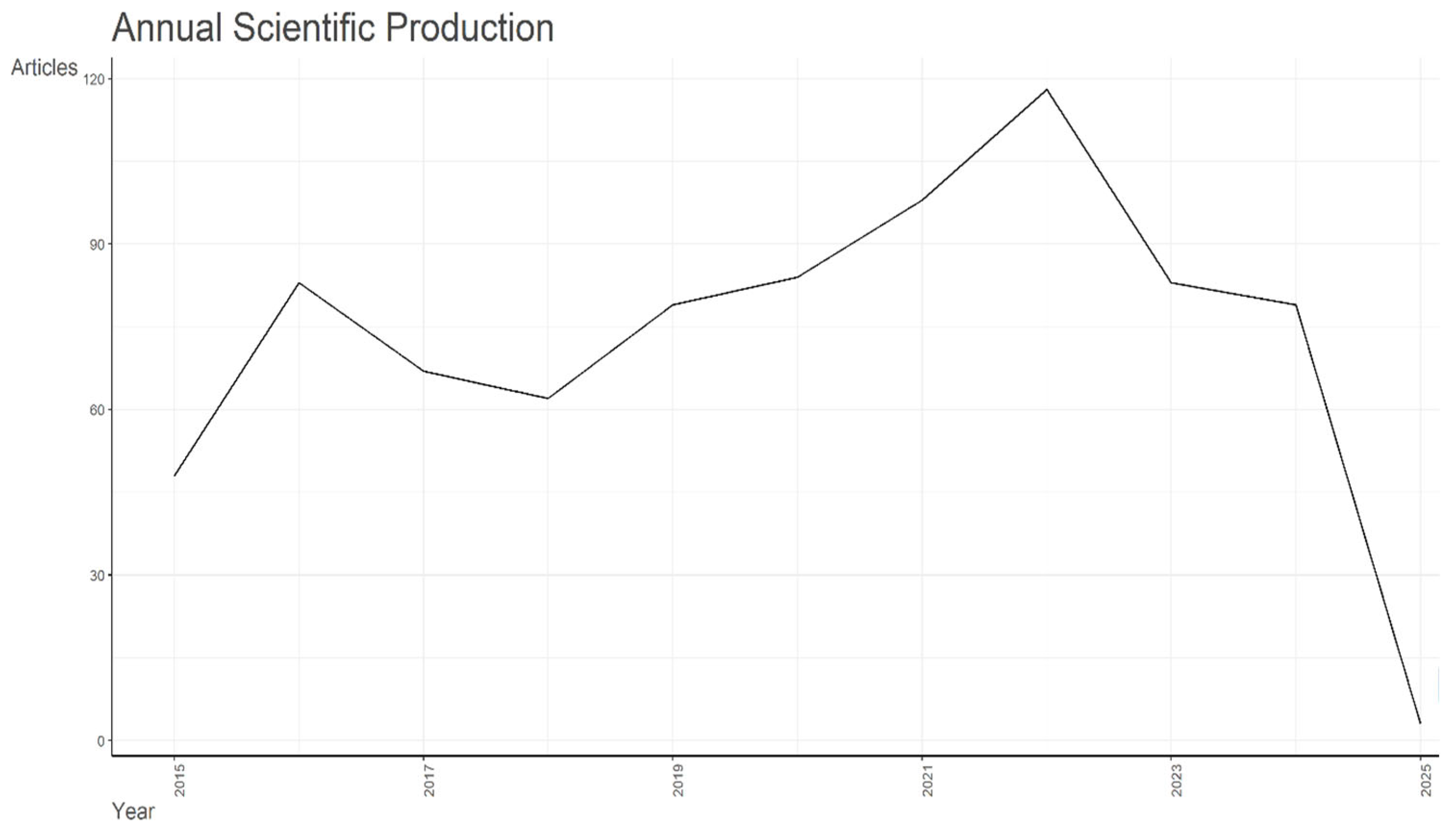
Figure 1. Number of publications per year on AFM1 research (2015–February 2025).
Foods 15 00166 g001
Figure 2. Keyword co-occurrence map of aflatoxin research in milk and dairy products generated using VOSviewer (version 1.6.20). Node size indicates the frequency of keyword occurrence, while colors represent clusters of related research topics.
Foods 15 00166 g002
Figure 3. Metabolism of aflatoxin B1 and formation of aflatoxin M1 in lactating animals. In the liver, AFB1 is converted by Cytochrome P450 (CYP1A2, CYP3A4) to the reactive AFB1-8,9-exo-epoxide (AFBO), which can bind DNA or proteins (toxic pathways), undergo glutathione conjugation via glutathione S-transferases GSTs (detoxification), or be hydrolyzed by microsomal epoxide hydrolase mEH/EPHX1 to AFB1-dihydrodiol. The latter can form a toxic dialdehyde or be reduced to a detoxified dialcohol by aflatoxin aldehyde reductase (AFAR). Additional Phase I reactions yield AFM1, AFQ1, AFP1, and AFL (via NADPH reductases). In cows, AFM1 crosses mammary epithelial cells and is secreted into milk. Color legend: orange: toxic activation pathways (DNA binding, protein binding, and dihydrodiol/dialdehyde formation); blue: detoxification or non-epoxide metabolic pathways (glutathione conjugation, dialcohol formation, hydroxylation, and reduction); and light green indicates transport and secretion into milk.
Foods 15 00166 g003
Figure 4. Ammoniation of aflatoxin B1 (AFB1) and formation of aflatoxin D1 (AFD1).
Foods 15 00166 g004
Figure 5. Ozonation mechanism on aflatoxins.
Foods 15 00166 g005
Table 1. Top 20 contributing countries in aflatoxin M1 dairy research.
RankingCountryNumber of PublicationPercentage (% of 804)
1Iran13717
2China8911
3Brazil668.2
4United States546.7
5Egypt536.6
6Pakistan506.2
7Italy465.7
8India415
9Turkey415
10Spain364.5
11Serbia283.5
12Ethiopia212.6
13Saudi Arabia212.6
14Germany192.4
15Kenya192.4
16Belgium141.7
17Greece131.6
18Mexico131.6
19Sweden131.6
20United Kingdom131.6
Table 2. Leading affiliations by number of publications on aflatoxin M1.
AffiliationCountriesArticlesPercentage of Articles out of 804
University of Sγo PauloBrazil718.8
Islamic Azad UniversityIran698.6
Bahauddin Zakariya UniversityPakistan658.4
Institute of Animal ScienceChina556.8
Kermanshah University of Medical SciencesIran516.3
University of Novi sadSerbia445.5
Croatian Veterinary InstituteCroatia425.2
Shahid Beheshti University of Medical SciencesIran415.1
University of Veterinary and Animal SciencesPakistan334.1
Nanchang UniversityChina324
Table 3. Most influential journals on aflatoxin research.
RankingJournalNumber of PublicationImpact Factor (IF) (2024)Citescore (2024)
1Food Control76 (9.4%)6.314.1
2Toxins55 (6.8%)4.08.2
3Food Chemistry30 (3.7%)9.818.3
4Mycotoxin Research20 (2.5%)3.14.3
5Journal of Dairy Science17 (2.1%)4.47.8
6Food Additives and Contaminants: Part B—Surveillance16 (2%)2.55.2
7International Journal of Dairy Technology16 (2%)2.85.5
8World Mycotoxin Journal11 (1.4%)2.24.8
9Journal of Food Composition and Analysis10 (1.2%)4.67.2
10Journal of Food Safety10 (1.2%)1.84.2
Table 4. Top globally cited papers from 2015 through to 2025 according to the number of citations in Scopus (retrieved on August 2025).
RankReferenceTitleYearSourceCited byDocument Type
1ALSHANNAQ et al. [45]“Occurrence, Toxicity, and Analysis of Major Mycotoxins in Food”2017Environmental Research and Public Health1019Review
2MARCHESE et al. [46]“Aflatoxin B1 and M1: Biological Properties and Their Involvement in Cancer Development”2018Toxins461Review
3EFSA Panel on Contaminants in the Food Chain (CONTAM) et al. [47]“Risk Assessment of Aflatoxin in food”2020EFSA Journal391Article
4HAQUE et al. [48]“Mycotoxin contamination and control strategy in human, domestic animal and poultry: A review”2020Microbial Pathogenesis323Review
5MAHATO et al. [21]“Aflatoxin in Food and Feed: an Overview on Prevalence, Detection and Control Strategies”2019Frontiers in Microbiology311Review
6ISMAIL et al. [49]“Aflatoxin in foodstuffs: Occurrence and recent advances in decontamination”2018Food Research International258Review
7FLORES-FLORES et al. [50]“Presence of mycotoxins in animal milk: A review”2015Food Control226Review
8IQBAL et al. [51]“Aflatoxin M1 in milk and dairy products, occurrence and recent challenges: A review”2015Trends in Food Science and Technology221Review
9CAMPAGNOLLO et al. [19]“The occurrence and effect of unit operations for dairy products processing on the fate of aflatoxin M1: A review”2016Food Control214Review
10BECKER-ALGERI et al. [52]“Mycotoxins in Bovine Milk and Dairy Products: A Review”2016Journal of Food Science168Review
Table 5. Global occurrence of aflatoxin M1 in milk and dairy products.
CountryType of Dairy ProductPositive Samples/Total SamplesConcentration of AFM1 (ng/L)Samples Exceeding EU Limit (%)Detection MethodReference
BangladeshRaw milk75/105 (71.4%)5.0–198.723.8%ELISASumon et al. [122]
Pasteurized milk15/15 (100%)17.2–187.773.3%
UHT milk15/15 (100%)12.2–146.973.3%
Yogurt5/5 (100%)8.3–41.10%
Milk powder4/5 (80%)5.9–7.00%
BangladeshRaw milk35/50 (70%)22.79–1489.2897.1%ELISATarannum et al. [115]
Pasteurized milk13/25 (52%)18.11–672.1846.1%
UHT milk5/25 (20%)25.07–48.950%
BrazilCheese28/28 (100%)26–1320%HPLC-FLDSilva et al. [123]
BrazilPasteurized and UHT milk6/68 (8.8%)15–2271.4%LC-MS/MSFrey et al. [102]
BrazilUHT15/34 (44.11%)150–550100%HPLC-FLDConteçotto et al. [124]
Powdered milk1/10 (10%)1020100%
Infant formula1/16 (6.2%)320100%
ChinaPasteurized milk1/294 (0.3%)33.4100%Ultra-Performance Liquid Chromatography (UPLC) with C18 solid-phase FLDMeng et al. [103]
UHT2/92 (2.2%)38.7
36.5
100%
Infant formula0/20 (0%)Not detected (ND)0%
ChinaPasteurized milk40/93 (43%)5–11.30%ELISAXiong et al. [125]
Extended shelf life milk44/96 (45.8%)5–16.50%
Donkey raw milk0/70-0%
CroatiaRaw milk109/5817 (1.9%)50.3–1100.0100%ELISA and UHPLC- FLD MS/MSBilandžić et al. [126]
EgyptRaw milk80/100 (80%)BDL-1057%ELISAIbrahim et al. [127]
Domiati Cheese7/33 (21.2%)BDL-9918%
Karish cheese33/33 (100%)BDL-18373%
Ras cheese28/34 (82.3%)BDL-25050%
EgyptRaw milk20/20 (100%)2940–4560100%ELISAEwida et al. [114]
Karish cheese20/20 (100%)3470–30,460100%
Mish cheese20/20 (100%)3770–40,500100%
EgyptRaw buffalo milk43/56 (76.8%)28–120039.29%ELISAElsayed et al. [43]
FranceMilkAll simulated milk batches assumed to contain AFM10.33–37.8 Less than 5%-Chhaya et al. [25]
IndiaRaw milk204/300 (68%)>500100%Charm ROSA Lateral Flow TestKumar et al. [60]
IndiaRaw milk19/46 (41.3%)ND-291384.2%HPLC-FLDHattimare et al. [104]
Pasteurized milk6/15 (40%)ND-1212100%
UHT milk18/52 (34.6%)ND-1523100%
Milk powder2/10 (20%)ND-2608 100%
Yogurt3/10 (30%)ND-303 100%
GhanaRaw cow milk67/120 (55.8%)60–3520 52.5%HPLC-FLDKortei et al. [94]
GhanaWagashi (Traditional cheese)11/18 (61.1%)0.00–59.2 ± 2 5.56%HPLC-FLDKortei et al. [128]
GhanaFresh cow milk53/56 (94.6%)61.8–1606.8 100%HPLC-FLDNuhu et al. [105]
Greece (Thessaly)Raw milk (cow, goat, sheep)39/396 (10.1%)7.94–105 (ELISA Kits)
7.96–75 (HPLC-FL)
Not statedELISA and HPLC-FLDMalissiova et al. [107]
GreeceInfant/toddler milk31/52 (59.6%)2.03–9.38 0%ELISAMaggira et al. [129]
Pasteurized milk21/32 (65.6%)2.04–17.84 0%
Feta cheese7/25 (28%)2.10–4.09 0%
HungaryRaw milk191/278 (68.7%)5–173 9.4% ELISABuzás et al. [130]
Processed milk155/196 (79.1%)5.3–1000.5% ELISA
Iran (Tabriz)Raw milk8/8 (100%)28.30–46.600%HPLC-FLDBehtarin & Movassaghghazani, [32]
Pasteurized milk8/8 (100%)19.50–36.600%
UHT milk8/8 (100%)16.10–36.100%
Traditional yogurt8/8 (100%)35.30–50.2025%
Pasteurized yogurt8/8 (100%)21.60–41.700%
Traditional cheese8/8 (100%)45.50–105.700%
Pasteurized cheese8/8 (100%)31.80–55.4012.5%
Iran (Ilam and Lorestan Provinces)Raw Milk40/40 (100%)38.6–85.046.6%HPLC-FLDAghebatbinyeganeh et al. [131]
Pasteurized milk40/40 (100%)24.1–59.7
UHT milk40/40 (100%)21.4–69.4
Traditional cheese40/40 (100%)80.4–169.4100%
Pasteurized cheese40/40 (100%)28.4–67.50%
Traditional Yogurt40/40 (100%)55.2–99.1100%
Iran (Tehran)Powdered milk24/25 (96%)0.00–95.568%HPLC-FLDMovassaghghazani & Shabansalmani [91]
Iran (Golestan Province)Camel milk10/10 (100%)57.1057.5%HPLC-FLDJorjani & Movassaghghazani [132]
Raw milk10/10 (100%)72.81
Pasteurized milk10/10 (100%)34.73
UHT milk10/10 (100%)49.36
IrelandMilkAll simulated milk batches assumed to contain AFM10.00087–5.72Around 1% Chhaya et al. [25]
Italy (Sicily area)Cow milk0/180 (0%)Below LOD 0%HPLC-FLDMessina et al. [13]
Italy (northern Italy)Raw cow milkAt least 1057<5 ng/L to >80 ng/L0.7%ELISA and HPLC-FLDFerrari et al. [133]
ItalyCow milk2244/3151 (71.2%)9–1460.9%ELISA and HPLC-FLDRoila et al. [119]
Ewe milk1424/5254 (27.1%)6–2391.1%
Cheesemaking cow’s milk5817/8529 (68.2%)6–2082.2%
KenyaRaw milk13/190 (6.84%)>200 ng/L (None above 350 ng/L)Not mentionedCommercial lateral flow assay (LFA)Smith et al. [134]
KenyaRaw milkNot stated/512Mean value: Sub-Humid: 370.7 (n = 2), Humid: 52.9, Temperate: 34.6, Semi-Arid: 8.310%ELISASirma et al. [96]
KenyaRaw milk, Pasteurized milk, UHT milk, Yogurt, Lala (fermented milk)151/291 (51.9%)<1.94–1068 50.2%ELISALindahl et al. [135]
LebanonCow’s milk (Raw, Pasteurized, UHT)422/722 (58.4%)10.7–440.135.8%ELISA, HPLC-FLDDominguez et al. [116]
LebanonMilkNot specified22.5–828.2Not providedHPLC-FLD, LC-MS, ELISAHoteit et al. [136]
YogurtNot specified-
KarichehNot specified828.2 (max)
LabnehNot specified70 max
MexicoRaw milk99/99 (100%)10.6–73.811.3%ELISAÁlvarez-Días et al. [137]
Pasteurized milk170/170 (100%)10.6–73.810.3%
NigeriaCow milk23/23 (100%)up to 81 ng/L13%LC-MS/MSAkinyemi et al. [112]
Goat milk43/87 (49.42%)up to 3108 ng/L55%
PakistanRaw milk50/72 (69%)344–741100%Lateral Flow ImmunosensorUllah et al. [138]
SerbiaCheese42/60 (70%)26–59148.3%ELISA, HPLC-FLDTorović et al. [95]
SerbiaRaw milkNot stated/385~19.4–>242 ng/kg46.2%ELISADjekic et al. [139]
Dairy product7/556 (1.2%)1.25%
SpainNatural yogurt0/27 (0%)0.0070%UHPLC-MS/MS techniqueRodríguez-Cañás et al. [140]
SpainMilk (full-cream and raw)0/191 (0%)<25 (LOD)0%HPLC-MS/MSFlores-Flores & González-Peñas [111]
SudanCow milk34/40 (85%)35.3%: 48.5–97.1; 47.1%: 97.1–145.6 100%ELISAYousof & El Zubeir, [113]
TurkeyCheese34/84 (40.5%)251–559100%ELISAErgin et al. [141]
ELISA: Enzyme-Linked Immunosorbent Assay; HPLC-FLD: High-Performance Liquid Chromatography with Fluorescence Detection; UHPLC-MS/MS: Ultra-High Performance Liquid Chromatography–Tandem Mass Spectrometry; LC-MS/MS: Liquid Chromatography–Tandem Mass Spectrometry; LOD: Limit of detection; UHT: Ultra-High Temperature (milk); BDL: Below Detection Limit. Note: Although the EC has no specific ML for AFM1 in cheese, the milk limit of 50 ng/L was used as a reference for exceedance evaluation. For infant and toddler formula, a stricter EU maximum limit (ML) of 25 ng/kg (Regulation EC No 1881/2006) was applied.
Table 6. Comparative mitigation approaches for aflatoxin reduction in dairy systems.
Mitigation StrategiesReduction RangeMain AdvantagesMain Limitations
Chemical MitigationAlkaline Agent (Ammoniation)70–95% AFB1 reduction in feed
  • Highly effective
  • Decrease AFM1 carry-over
  • Low-toxicity by- products
  • Suitable for large-scale feed treatment.
  • Not applicable to dairy products
  • Requires controlled conditions
  • Possible nutrient loss
  • Ammonia handling and residue monitoring required.
Oxidizing Agent (Ozonation)
  • 10–55% AFM1 reduction in dairy. 50–99%
  • AFB1 reduction in feed
  • Strong oxidizing degradation
  • Improves microbial quality
  • Environmentally friendly and residue-free
  • Moderate AFM1 reduction
  • Quality changes
  • Feasibility challenge at industrial scale
  • Limited data on by-product safety in milk
Oxidizing agent (Hydrogen peroxide H2O2)40–100% depending on matrix and dose
  • Effective in milk and feed
  • Cost-effective
  • Strong oxidative degradation
  • Regulatory constraints
  • Can oxidize milk nutrients
  • Requires removal of residual H2O2
Adsorbents (Bentonite)40–90% reduction in AFM1 carry-over (via AFB1 binding)
  • Physical adsorption
  • No toxic by-products
  • Safe and regulatory-approved in feed
  • Low cost
  • Efficacy varies with mineral composition and particle size
  • Not used in milk processing
Other Adsorbents (Zeolite, Composite, Mineral–Organic Blends)15–60% AFM1 reduction/carry-over reduction
  • Multimodal adsorption mechanisms
  • Safe, inert mineral bases
  • Can enhance binding via MOS, yeast cell walls, or polysaccharides
  • Efficacy varies with formulation and contamination level
  • Potential micronutrient interactions
  • Reduced performance at high toxin loads
  • Not used for milk
Biological MitigationLAB lactic acid bacteria20–100% AFM1 reduction
  • Safe
  • Residue-free
  • Effective even with heat-treated/non-viable cells
  • Potential synergistic effects
  • Binding is reversible
  • Strain-specific performance
  • Limited industrial-scale validation
LAB-yeast Synergies)70–100% AFM1 reduction
  • Faster and more complete removal than yeast or LAB alone
  • Broad range of adsorption sites
  • Safe
  • Adsorption is reversible
  • Matrix dependence,
  • High variability among strain combinations
  • Limited industrial-scale validation
Bifidobacteria and Cell-Wall Components20–96% AFM1 reduction
  • Safe
  • Cell-wall fractions (peptidoglycan) may outperform live cells
  • Suitable for products where microbial growth is undesirable
  • Strain- and matrix-dependence
  • Adsorption is reversible
  • Limited industrial-scale validation
Synergistic strategies (Probiotics + Nanoparticles/Surfactants)15–100% reduction
  • Enhanced adsorption capacity compared to microbes alone
  • Potential stabilization of binding
  • Mostly in vitro
  • Safety and regulatory acceptance of nanoparticles/surfactants remain unclear
  • Adsorption can be reversible
  • Industrial scalability not yet established
Indirect Biological Mitigation via Feed
(AFB1-degrading microbes)
83–90% AFB1 degradation in feed (20–30%) AFM1 reduction
  • Prevents AFM1 formation at the source (feed)
  • Does not affect milk composition or yield
  • Practical for on-farm application
  • Effectiveness depends on AFB1 level
  • Degradation by-products require safety evaluation
  • Variable results across feeding systems
Enzymes and Bioactive CompoundsUp to 83.5% AFM1 reduction
  • Chemical degradation of AFM1
  • Does not alter milk composition or yield
  • Reduces AFB1 bioavailability before milk synthesis
  • Enzyme activity depends on pH, temperature, presence of inhibitors or metal ions, making industrial use challenging.
  • Degradation by-products must be identified and proved safe
Natural Additives (plant compounds, essential oils, EPS, chitin-based adsorbents)AFM1 in milk: 10–80%
AFB1 inhibition in feed up to 70–90%
  • Natural and biodegradable
  • Strong antifungal activity reducing AFB1 formation
  • Some materials (EPS, chitin-based adsorbents) show good AFM1 binding.
  • Highly variable efficacy
  • Limited direct action on AFM1 for many plant compounds;
  • Sensory issues with essential oils
Physical MitigationProcessing impact0–80% depending on the process
  • Brining and ripening can naturally lower AFM1
  • No chemical residues
  • AFM1 is heat-stable, Drying concentrates AFM1
  • Effects vary widely by cheese type, pH, moisture, strain, and manufacturing conditions
Barrier systems (natamycin-loaded alginate nanoparticles on cheese surface)Around 78.6% total AF reduction
  • Strong antifungal protection
  • Suitable for ripened cheese
  • Only surface active
  • Require long ripening time
Barrier systems (DNA-conjugated magnetic bead adsorption95.5% (water); 85.5% (milk at 10 µg/L)
  • Non-toxic, reusable, Effective in complex milk matrices
  • Currently at experimental stage
  • Higher cost and technical complexity
Irradiation-Based Techniques50–99%
  • No chemical residues,
  • Non-thermal treatments
  • Effective reduction
  • Incomplete AFM1 degradation
  • Potential
  • sensory changes
  • Unclear toxicological profile
Thermal and Non-Thermal ApproachesUp to 99%
  • High AFM1 reduction potential under optimized conditions
  • Preserve nutritional and sensory quality (non-thermal methods)
  • Fast processing with no chemical residues
  • Compatible with existing dairy technologies
  • Reduction efficiency varies with milk composition and processing conditions
  • Incomplete removal for some methods (HPP)
  • Possible pH or oxidation changes
  • High equipment cost and limited industrial validation
Reduction ranges reflect laboratory and pilot-scale studies; industrial-scale validation remains limited for several emerging technologies.
Disclaimer/Publisher’s Note: The statements, opinions and data contained in all publications are solely those of the individual author(s) and contributor(s) and not of MDPI and/or the editor(s). MDPI and/or the editor(s) disclaim responsibility for any injury to people or property resulting from any ideas, methods, instructions or products referred to in the content.