Review

Bridging Tradition and Innovation: A Systematic Review and Bibliometric Analysis of Turkish Fermented Foods

by
Özge Kahraman Ilıkkan
1,
Elif Şeyma Bağdat
2,
Remziye Yılmaz
3,4,5,*,
Bülent Çetin
6,
Ahmet Hilmi Çon
7,
Hüseyin Erten
8,
Mehmet Yekta Göksungur
9 and
Ömer Şimşek
10
1
Food Quality Control and Analysis Programme, Department of Food Processing, Kahramankazan Vocational School, Başkent University, Ankara 06800, Türkiye
2
Food Technology Programme, Department of Food Processing, Kahramankazan Vocational School, Başkent University, Ankara 06800, Türkiye
3
International Food Biosafety and Biotechnology Research and Extension Center (IFBBC), Beytepe Campus, Hacettepe University, Ankara 06800, Türkiye
4
Food Omics Laboratory, Department of Food Engineering, Beytepe Campus, Hacettepe University, Ankara 06800, Türkiye
5
Department of Food Engineering, Beytepe Campus, Hacettepe University, Ankara 06800, Türkiye
6
Faculty of Agriculture, Department of Food Engineering, Atatürk University, Erzurum 25030, Türkiye
7
Department of Food Engineering, Faculty of Engineering, Ondokuz Mayıs University, Samsun 55270, Türkiye
8
Department of Food Engineering, Faculty of Engineering, Çukurova University, Adana 01250, Türkiye
9
Department of Food Engineering, Faculty of Engineering, Ege University, Izmir 35040, Türkiye
10
Department of Food Engineering, Faculty of Chemical and Metallurgical Engineering, Yıldız Technical University, Istanbul 34349, Türkiye
*
Author to whom correspondence should be addressed.
Foods 2025, 14(24), 4324; https://doi.org/10.3390/foods14244324
Submission received: 7 November 2025 / Revised: 4 December 2025 / Accepted: 12 December 2025 / Published: 15 December 2025

Abstract

Background: Traditional fermented foods from Türkiye are integral components of the nation’s culinary heritage, reflecting a remarkable diversity shaped by local practices and ecosystems. These products embody region-specific microbial communities, often conceptualized as a “microbial terroir,” which influence their sensory qualities, nutritional value, and health-promoting properties. Methods: This study followed the PRISMA 2020 guidelines and included a systematic review and bibliometric analysis. A structured search was conducted in the Web of Science Core Collection (WoSCC) on 15 January 2025 using predefined keywords related to Turkish fermented foods and fermentation processes. Records were screened based on language (English or Turkish) and document type (articles, reviews, book chapters, and early access). A total of 1464 studies met the eligibility criteria, reflecting a 2.81% annual growth rate and a 12.7% international co-authorship rate. Bibliometric analysis was performed using the bibliometrix R package (RStudio 2024.12.1) and the biblioshiny interface. Results: The analysis revealed that the diversity of microbial consortia in Turkish fermented foods contributes to their distinctive characteristics, including enhanced nutritional profiles, probiotic potential, and food safety attributes. Emerging studies employing omics technologies—such as next-generation sequencing, metagenomics, and metabolomics—have expanded our understanding of fermentation ecosystems. Additionally, the growing integration of artificial intelligence supports predictive modeling and process optimization for advanced quality control. Conclusion: This synthesis highlights the significant technological, nutritional, and cultural value of Türkiye’s traditional fermented foods. Future directions should include omics-based translational research, indigenous starter culture development, and strengthened international collaborations to support sustainable and competitive functional food innovation.

1. Introduction

Türkiye’s traditional fermented foods show the close connections between culinary practices, environment, and microbial ecology, highlighting their potential for innovation and health applications. These products contribute not only to daily nutrition but also support health via beneficial microorganisms, which are inspired by localized environmental and cultural factors. The concept of “microbial terroir” has gained attraction in this context, describing how regional microbial communities influence the safety, flavor, and nutritional value of fermented products [1,2]. In an era marked by global food security challenges, these culturally grounded, nutrient-dense products offer affordable and sustainable options.
Scientific tools such as next-generation sequencing, metagenomics, and metabolomics have enhanced the resolution of microbial and biochemical profiling in recent years [3]. Integrative omics platforms have enabled a comprehensive understanding of fermentation ecosystems, illuminating both microbial structure and functional attributes [4,5]. Within this evolving landscape, fermentation extends various domains, from traditional spontaneous methods (e.g., kefir, boza, shalgam, tarhana, sourdough) to precision fermentation using engineered strains for targeted production of bioactives like enzymes or pigments [6,7]. These diverse approaches are unified by their potential for nutritional enhancement, food safety, and biotechnological innovation [8]. Furthermore, fermented products are increasingly seen as carriers of bioactive peptides and postbiotics, contributing to gut and immune health [9]. Despite the growing body of research, significant gaps persist: (i) mechanistic insights into strain–metabolite interactions, (ii) limited multi-omics integration for translational applications, and (iii) insufficient clinical validation of claimed health effects. These gaps highlight the need for a comprehensive synthesis that integrates current scientific advances with cultural heritage and innovation pathways.
Dairy-based fermentations, including yogurt, ayran, kefir, kurut, and koumiss, remain central to Türkiye’s fermented food portfolio. For instance, yogurt and ayran, produced via Streptococcus thermophilus and Lactobacillus delbrueckii, are widely studied for their probiotic benefits [10,11]. Kefir, with its symbiotic bacterial and yeast matrix, has been linked to immune and metabolic functions [12,13,14]. Traditional products such as kurut and koumiss offer insights into the historical continuity of dairy fermentation practices, including their therapeutic properties [15,16,17,18]. Microbiological and omics-based studies on cheeses such as tulum, herby, and white cheese further expand our understanding of microbial diversity and function in dairy fermentation [5,11,19,20,21,22].
Grain- and vegetable-based beverages like boza, shalgam, and hardaliye exhibit complex LAB-yeast dynamics that contribute to both sensory and biofunctional outcomes [23,24]. Alcoholic fermentations such as beer and wine have undergone both artisanal revival and industrial evolution in response to regulatory, cultural, and market influences [25,26,27,28]. Products such as gilaburu juice are also fermented to improve palatability and enhance antioxidant profiles [29].
Fermented meats such as pastırma and sucuk (soujouk), along with plant-based items like vinegar, pickles, shalgam, and olives, underscore the microbiological richness of Türkiye’s fermentation heritage [30,31,32]. Similarly, cereal-based fermentations such as tarhana and sourdough involve intricate interactions between lactic acid bacteria and yeasts, which shape flavor, texture, and nutritional properties while enhancing functional bioactive compounds [33,34,35].
Despite the abundance of descriptive studies, there remains a gap in mechanistic, translational, and clinical research, particularly around health outcomes and process optimization. Artificial intelligence (AI) is emerging as a novel tool for process modeling, safety monitoring, and precision fermentation [36,37]. Integrating omics-based strain profiling with AI-driven analytics offers a pathway toward elevating traditional fermented products into globally competitive, functional food platforms.
This review aims to synthesize the microbiological, nutritional, and cultural landscape of Türkiye’s traditional fermented foods while presenting a data-driven bibliometric analysis of the national research output between 2000 and 2025. This dual approach provides a foundation for identifying future directions in research, technology adoption, and heritage-based innovation within the broader context of sustainable food systems [3].

2. Traditional Fermented Foods in Türkiye

Key fermented products in Türkiye exhibit distinct microbial and regional signatures. Among these, cheese (Erzincan Tulum, Kars Gravyer, and Van Otlu (Herby) cheeses, etc.), yogurt, sucuk (soujouk), ayran, tarhana, kefir, shalgam, and boza are the most well-known and culturally embedded. Traditional region-specific cheeses host diverse LAB communities.
Yogurt is a conventional fermented dairy product that has been made in households or small communities in the Middle East for millennia. The presence of live lactic acid bacteria (LAB) and the high nutritional content of yogurt make it valuable. Streptococcus thermophilus and Lactobacillus delbrueckii subsp. bulgaricus are bacteria that are used in the fermentation of milk [10].
Ayran is the combination of salt, water, and milk or yogurt [38]. In commercial production, raw milk is pasteurized, fermented with starter cultures to produce buttermilk, and then cooled and stored [39]. The microbiota of Ayran consists mainly of Streptococcus thermophilus and Lactobacillus delbrueckii subsp. bulgaricus.
Tarhana, a cereal–yogurt-based product with remarkable geographical diversity, is produced through the fermentation of a cereal–yogurt mixture, which is subsequently sun-dried and milled into a stable powder. Tarhana is dominated by Lactiplantibacillus plantarum, Pediococcus spp., and Saccharomyces cerevisiae [40,41,42,43].
Kefir is prepared by inoculating milk with kefir grains containing a symbiotic consortium of bacteria and yeasts, allowing fermentation at ambient temperatures. It typically contains Lactobacillus spp., Lactococcus spp., Leuconostoc spp., Acetobacter spp., and yeasts, including Kazachstania turicensis [44,45].
Shalgam is a beverage prepared mostly from black carrots, bulgur flour, salt, and sourdough that is prized for its probiotic characteristics and nutritional value [46]. The manufacturing method includes lactic acid fermentation, which might take 10–12 days traditionally or 4–5 days commercially. Brine is characterized by the presence of L. plantarum, Leuconostoc spp., and L. paracasei [47,48,49].
Boza, on the other hand, is made by fermentation of maize, rice, wheat, millet, cracked wheat, and durum flour with Lactobacillus fermentum, Limosilactobacillus brevis, and S. cerevisiae, resulting in a mildly acidic, thick, and carbohydrate-rich beverage [24,50,51].
Among fermented meats, sucuk (soujouk) is a traditional dry fermented sausage that is extensively appreciated in Türkiye. It is usually made from sheep and/or beef meat with tail fat, curing agents such as nitrite/nitrate, and spices such as cumin, garlic, salt, black pepper, and red pepper. The mixture can be stuffed into natural casings made from beef small intestines or synthetic casings, fermented by indigenous microorganisms at 22–23 °C. Then, it is dried and aged for several weeks at room temperature and humidity (relative humidity of 45% to 80%) [52,53]. Lactic acid bacteria (LAB) and coagulase-negative staphylococci (CNS) play a key role in sucuk fermentation [54].

3. Cultural, Nutritional, and Economic Importance of Traditional Fermented Foods

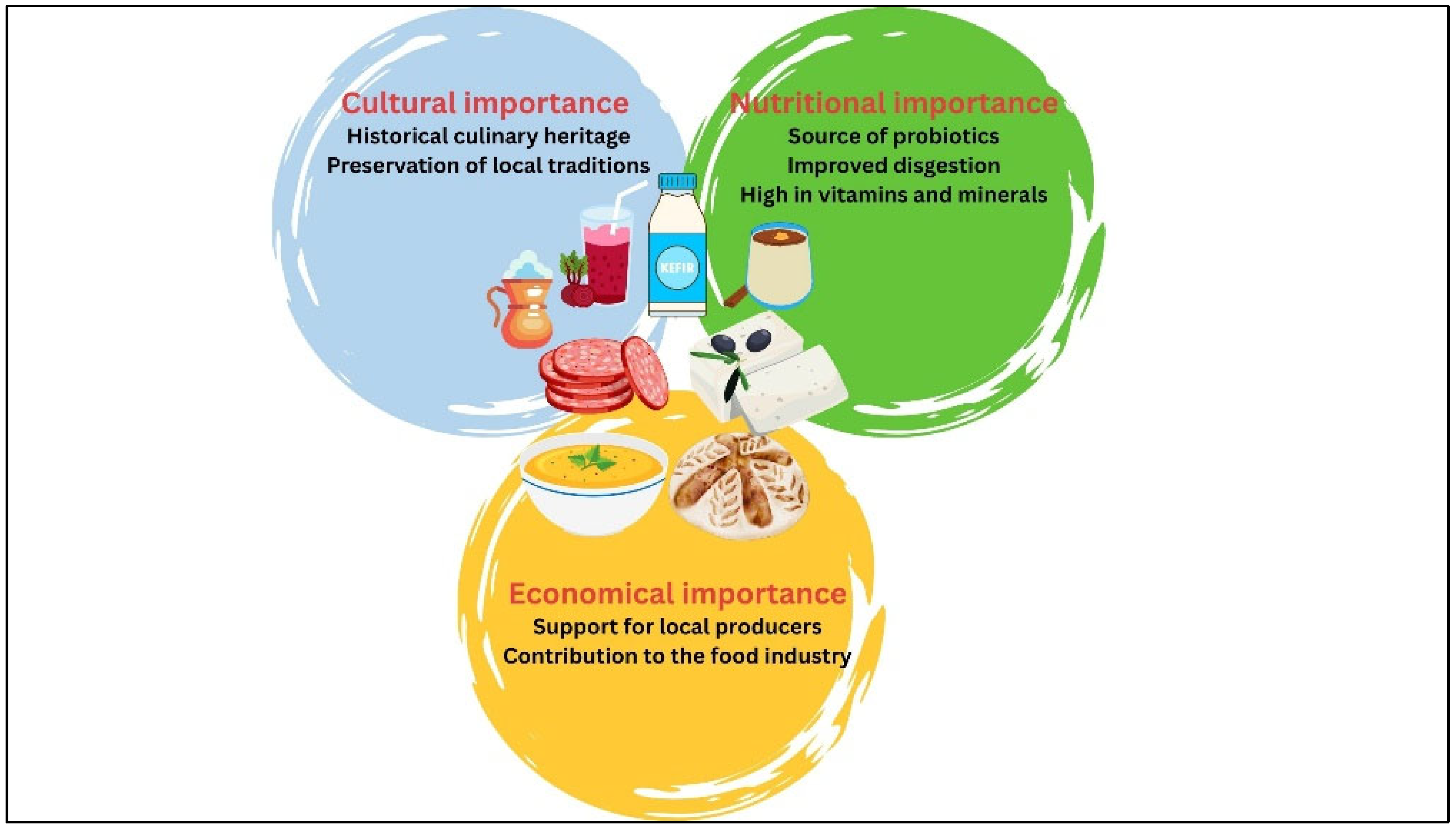
Traditional fermented foods in Türkiye are more than just dietary staples; they represent a deep-rooted connection of cultural heritage, nutritional practices, and economic livelihood. Passed down through generations, these foods are embedded in local customs, religious observances, seasonal rituals, and communal meals, reflecting both regional identity and historical continuity. An overview of selected traditional products and their defining characteristics is presented in Table 1, while Figure 1 highlights their interconnected cultural, nutritional, and economic dimensions.
Fermented products play a prominent role in social life and culinary culture all over the Türkiye. Items such as yogurt, ayran, tarhana, and boza are integral to traditional dietary patterns and are often prepared and consumed in the context of cultural events, family gatherings, or communal celebrations. The preparation of fermented foods, such as autumn pickling or tarhana drying, often involves multi-generational participation, helping to preserve both technical knowledge and community bonds. Notably, women play a pivotal role in these processes, with collective activities—particularly tarhana drying—serving as occasions for social interaction, knowledge exchange, and cooperative labor, thereby reinforcing community bonds and preserving culinary heritage. In many rural regions, especially in Anatolia, these food traditions remain central to local identity and seasonal rhythms.
Additionally, products like pastırma and sucuk are emblematic of Türkiye’s nomadic and Central Asian culinary roots, while others such as hardaliye, shalgam and gilaburu illustrate unique regional practices that have persisted over centuries. Beyond their historical and cultural dimensions, these products are also underpinned by place-specific microbial communities that guide the fermentation process. Microbial terroir plays a defining role in shaping the sensory and functional characteristics of Turkish fermented foods. Tarhana samples from Uşak, Tokat, Afyon, and Çorum demonstrate unique LAB compositions influenced by local cereal varieties, sun-drying conditions, and household fermentation vessels [43]. Eastern Anatolian kefir grains contain richer yeast diversity than western counterparts, reflecting differences in animal breeds, climate, and traditional grain propagation methods [55]. Likewise, Van Otlu (Herby) cheese, Erzurum Küflü cheese, and Kargı Tulum exhibit region-specific microbial communities shaped by milk microbiota, endemic herbs, and distinctive fermentation environments [56,57,58].
Nutritionally, fermented foods contribute significantly to dietary diversity and health. The fermentation process enhances digestibility, reduces anti-nutritional factors, and generates beneficial compounds such as organic acids, vitamins, enzymes, and bioactive peptides. For example:
  • Yogurt, kefir, and ayran are rich sources of calcium, protein, and lactic acid bacteria, which probably promote gut microbiota balance and immune modulation;
  • Sourdough breads and tarhana reduce phytates, thereby improving the absorption of minerals and overall protein digestibility;
  • Fermented vegetables and pickles contain fiber, antioxidants, and vitamins such as C and K, supporting metabolic and cardiovascular health.

These nutritional contributions are particularly relevant in current contexts where lactose intolerance, gastrointestinal conditions, and non-communicable diseases are prevalent. Moreover, the probiotics and postbiotic compounds in fermented foods are increasingly recognized for their roles in immune regulation, mental health, and chronic disease prevention. However, the degree of scientific evidence supporting these health outcomes differs substantially across fermented products. The strength of evidence supporting health effects varies considerably across fermented foods. Kefir and yogurt show the strongest support through human clinical studies demonstrating improvements in gut microbiota modulation, lipid metabolism, and immune function [59]. Tarhana, boza, and sourdough display moderate evidence derived mainly from in vitro and animal models, indicating antimicrobial, antioxidant, and anti-inflammatory activities [60,61,62]. Hardaliye and gilaburu juice exhibit promising antioxidant potential but require well-designed clinical trials to validate health claims [29,63,64]. This categorization ensures accurate representation of evidence levels.
From an economic standpoint, traditional fermented foods contribute to livelihoods at the household, local, and national levels. Artisanal production sustains rural economies, particularly through the involvement of women and small-scale producers who engage in the making of yogurt, cheese, olives, and pickles. Local markets often serve as platforms for distributing these products, which also find growing demand in urban centers due to rising consumer interest in natural, minimally processed, and functional foods. Additionally, certain products, such as tarhana (11 varieties), hardaliye (1 variety), and various local cheeses (38 varieties), sourdough (17 varieties), are protected under geographical indication (GI) schemes, enhancing their economic value and branding appeal [65]. Türkiye possesses robust industrial and export capacity for fermented foods, supported by modern processing technologies, GI registrations, and expanding international markets.
At an industrial scale, Türkiye’s fermented food sector has become a major pillar of the agri-food economy. The domestic and export markets for yogurt, ayran, pastırma, sucuk, table olives, wine, and beer have expanded steadily, supported by both traditional know-how and modern manufacturing. Fermented milk product exports (Harmonized System, HS 0403) in 2023 were USD 26.8 million (OEC Report, https://oec.world/en/profile/country/tur (accessed on 1 September 2025)).
As Table 1 shows, GI registration has been granted to a broad range of products across multiple categories, demonstrating both the geographic diversity and commercial potential of Türkiye’s fermentation heritage. The emergence of gourmet, organic, and diaspora-oriented food channels has further opened avenues for international branding and gastronomic tourism.
Overall, traditional fermented foods in Türkiye place at the crossroads of culture, nutrition, and sustainable development. Their continued production, protection, and innovation not only preserve intangible cultural heritage but also provide scalable opportunities to improve health outcomes and foster rural resilience.
Table 1. List of some geographical indication of Turkish Fermented Foods (Turkish Patent and Trademark Office) (https://ci.turkpatent.gov.tr/ (accessed on 1 September 2025)), [65].
Fermented FoodGeographical IndicationCityRegistration Numbers
TarhanaCide TarhanasıKastamonu1380
Kızılcık Tarhanası (Cornelian Cherry Tarhana)Bolu- Kütahya252
Sıkma TarhanaAmasya1300
Fethiye TarhanasıMuğla1484
Şirin TarhanasıGaziantep1078
Gediz TarhanasıKütahya1108
Malatya TarhanasıMalatya1174
Maraş TarhanasıKahramanmaraş154
Göce TarhanasıMuğla458
Üzüm Tarhanası (Grape Tarhana)Tokat1612
Uşak TarhanasıUşak209
AyranSusurluk AyranıBalıkesir238
VinegarSirkencübinKonyaG7
BozaVelimeşe BozasıTekirdağ721
ShalgamAdana ŞalgamıAdana489
Tarsus ŞalgamıMersin84
HardaliyeKırklareli HardaliyesiKırklareli278
OliveAkhisar Uslu ZeytiniManisa165
Akhisar Domat ZeytiniManisa166
Yamalak Sarısı ZeytiniAydın732
Memecik ZeytiniAydın749
Edremit Körfezi Yeşil Çizik ZeytiniBalıkesir189
Edincik ZeytiniBalıkesir1556
Büyükbelen Tekir ZeytiniManisa1611
Gemlik ZeytiniBursa76
Halhalı ZeytiniHatay1353
Karamürsel Samanlı ZeytiniKocaeli1622
Milas Ekşili ZeytiniMuğla1691
Milas Yağlı ZeytiniMuğla446
Milas Çekişke ZeytiniMuğla1109
Tarsus Sarıulak ZeytiniMersin345
PickleAcur-Biber TurşusuGaziantep1057
Midyat Turşusu/Midyat Acur TurşusuMardin1131
Çorti TurşusuMuş294
Orhangazi Gedelek TurşusuBursa249
Taflan TurşusuOrdu1102
Yayla Pancarı TurşusuOrdu269
Kapari TurşusuOsmancık1636
Reşadiye Kırmızı Pezik TurşusuTokat1455
Pezik TurşusuSivas492
İskilip TurşusuÇorum131
Çubuk TurşusuAnkara99
SucukBez SucukTokat990
GilaburuAkkışla GilaburusuKayseri669
Bünyan GilaburusuKayseri389
Gemerek GilaburusuSivas241
CheeseCarra PeyniriHatay679
Sıkma PeyniriGaziantep356
Atlantı Dededağ Tulum PeyniriKonya1327
Ayvalık Kelle PeyniriBalıkesir1664
Tulum PeyniriAğrı1565
Bergama Tulum Peyniriİzmir1597
Örgü PeyniriDiyarbakır170
Beyaz PeyniriEdirne93
Elbistan Kelle PeyniriKahramanmaraş1500
Tulum PeyniriErzincan30
Civil PeyniriErzurum116
Küflü Civil PeyniriErzurum164
Ezine PeyniriÇanakkale86
Deleme PeyniriGümüşhane694
Hanak Tel PeyniriArdahan1563
Divle Obruğu Tulum PeyniriKaraman270
Kargı Tulum PeyniriÇorum933
Gravyer PeyniriKars1640
Kepsut Bükdere Küflü Katık PeyniriBalıkesir1683
Eski Kaşar PeyniriKırklareli1408
Beyaz PeyniriKırklareli636
Manyas Kelle PeynirBalıkesir628
Malatya PeyniriMalatya1164
Malkara Eski Kaşar PeyniriTekirdağ261
Maraş Parmak/Sıkma PeynirKahramanmaraş727
Mengen PeyniriBolu1482
Pınarbaşı Uzunyayla Çerkes PeyniriKayseri724
Sakarya Abhaz (Abaza) PeyniriSakarya746
Savaştepe Mihaliç Kelle PeyniriBalıkesir1405
Talas Çörek(Çömlek PeyniriKayseri1560
Urfa Peyniri/Şanlıurfa PeyniriUrfa807
Vakfıkebir Külek PeyniriTrabzon764
Van Otlu (Herby) PeyniriVan405
Yozgat Çanak PeyniriYozgat281
Çankırı Küpecik PeyniriÇankırı907
Çayeli Koloti PeyniriRize1199
İvrindi Kelle PeynirBalıkesir1025
İzmir Tulum Peyniriİzmir1006
PastırmaAfyon PastırmasıAfyon73
Ankara Erkeç PastırmasıAnkara408
Erzurum PastırmasıErzurum1311
Kastamonu PastırmasıKastamonu711
Kayseri PastırmasıKayseri36
Sivas PastırmasıSivas1129
SourdoughAfyonkarahisar Ak PideAfyon1265
Mamak Kutludüğün Ekşi Maya EkmeğiAnkara827
Kürtün Araköy EkmeğiGümüşhane449
Kalecik EkmeğiAnkara559
Gümüşhane EkmeğiGümüşhane221
Tokat EkmeğiTokat896
Vakfıkebir EkmeğiTrabzon372
Çavuşlu EkmeğiGiresun623
Bolu Patates Ekmeği BoluBolu544
Çöven EkmeğiBartın1045
Afyonkarahisar Patates EkmeğAfyon371
Alaşehir EkmeğiManisa1119
Cihanbeyli Gömeç EkmeğiKonya1241
Gelveri EkmeğiAksaray1040
Malatya EkmeğiMalatya1127
Erzurum Hasankale LavaşıErzurum1020
Erzurum Acem EkmeğiErzurum1365

4. Bibliometric Analysis

While the preceding sections have demonstrated the cultural, nutritional, and economic relevance of Türkiye’s traditional fermented foods, this section provides a quantitative and structured bibliometric overview, clarifying the evolving research landscape and international collaborations in this domain. This review was conducted in accordance with the PRISMA 2020 guidelines. The PRISMA flow diagram and the completed PRISMA 2020 Checklist are provided in the Supplementary Materials (Table S1). The Web of Science Core Collection (WoSCC) was searched on 15 January 2025. The search strategy was framed around publications related to both traditional and contemporary fermentation practices in Türkiye. A combination of primary keywords was utilized, including specific fermented products and fermentation-related terms: ‘yogurt’ OR ‘vinegar’ OR ‘Ayran’ OR ‘boza’ OR ‘shalgam’ OR ‘kefir’ OR ‘kurut’ OR ‘kımız’ OR ‘kimiz’ OR ‘Koumiss’ OR ‘hardaliye’ OR ‘tarhana’ OR ‘olive’ OR ‘pickle’ OR ‘gilaburu’ OR ‘butter’ OR ‘fermented sausage’ OR ‘sourdough’ OR ‘beer’ OR ‘wine’ OR ‘pastırma’ OR ‘soujouk’ OR ‘cheese’ OR ‘sucuk’ OR ‘water kefir’ AND ‘fermentation’ OR ‘fermented’ AND ‘Turkey’ OR ‘Turkish’ OR ‘Türkiye’. The bibliometric search strategy used combined controlled vocabulary and free-text keywords (‘fermentation’, ‘fermented’, ‘traditional foods’, ‘Türkiye’, ‘Turkish’) with Boolean operators to maximize coverage. Records were retrieved exclusively from Web of Science Core Collection to ensure high-quality indexing. All 1501 initial records were screened using predefined inclusion criteria: (i) English or Turkish language; (ii) categorized as research articles, reviews, book chapters, or early access publications; (iii) explicit relevance to fermentation science or fermented food products. Exclusion criteria also eliminated irrelevant domains such as biofuel fermentation, pharmaceutical fermentation, and industrial enzyme production. This structured approach increases the reliability and reproducibility of the mapping.
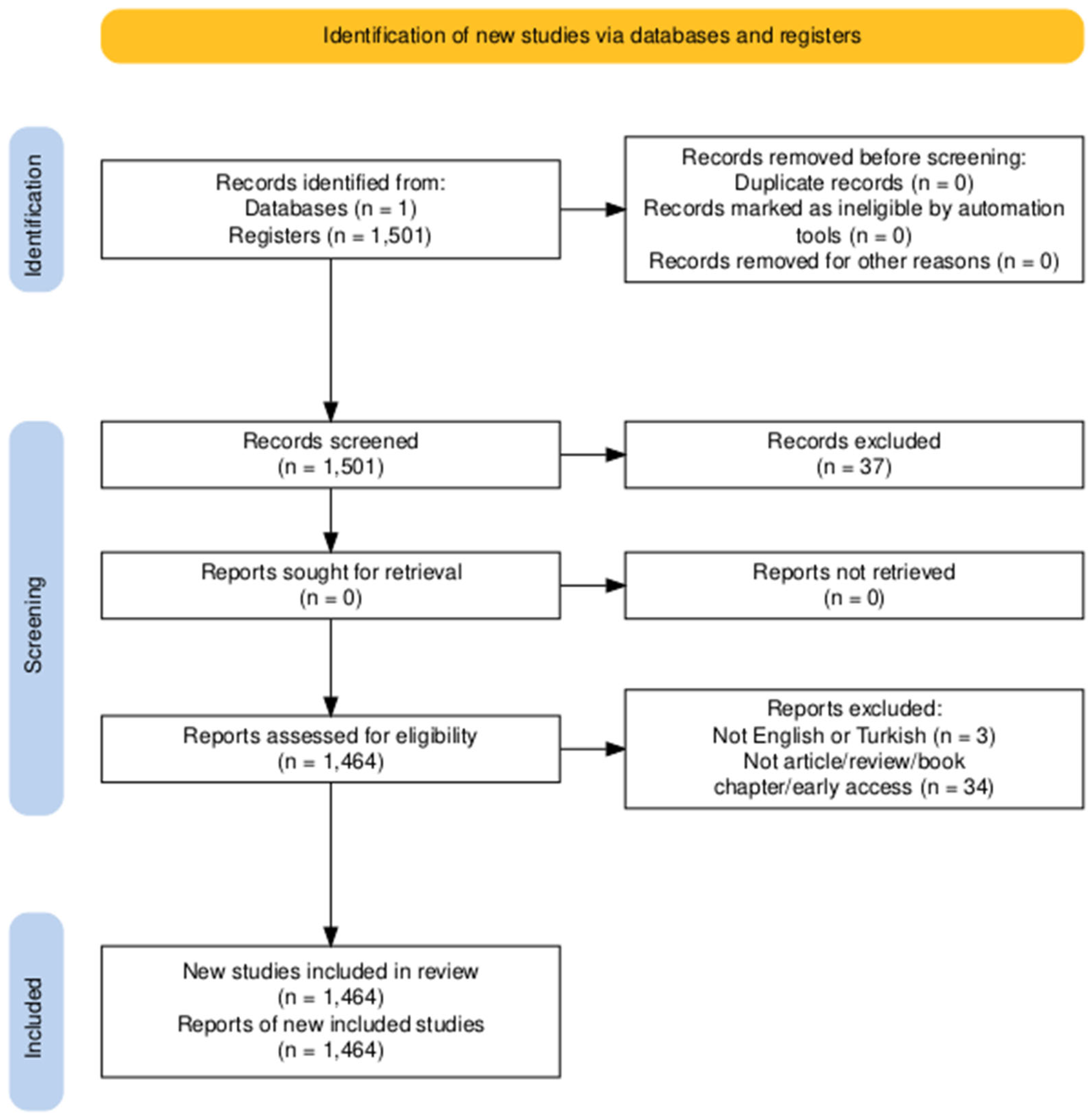
All retrieved records were screened using database filters and manual relevance evaluation. Duplicate records were automatically removed by the database (n = 0). Two researchers independently reviewed titles and abstracts to determine inclusion, and discrepancies were resolved by consensus. A total of 1464 items were retained for analysis. The publication window was defined from January 2000 to January 2025, offering a broad lens on historical and current research patterns. The data were extracted directly from the WoSCC database and processed using the R package bibliometrix and biblioshiny interface, ensuring standardized extraction of authors, institutions, keywords, citations, and document types. A PRISMA flow chart summarizing this filtering process is illustrated in Figure 2. This methodology provides comprehensive coverage of Türkiye’s fermentation literature, laying a strong foundation for the bibliometric exploration and insights into traditional and modern practices.
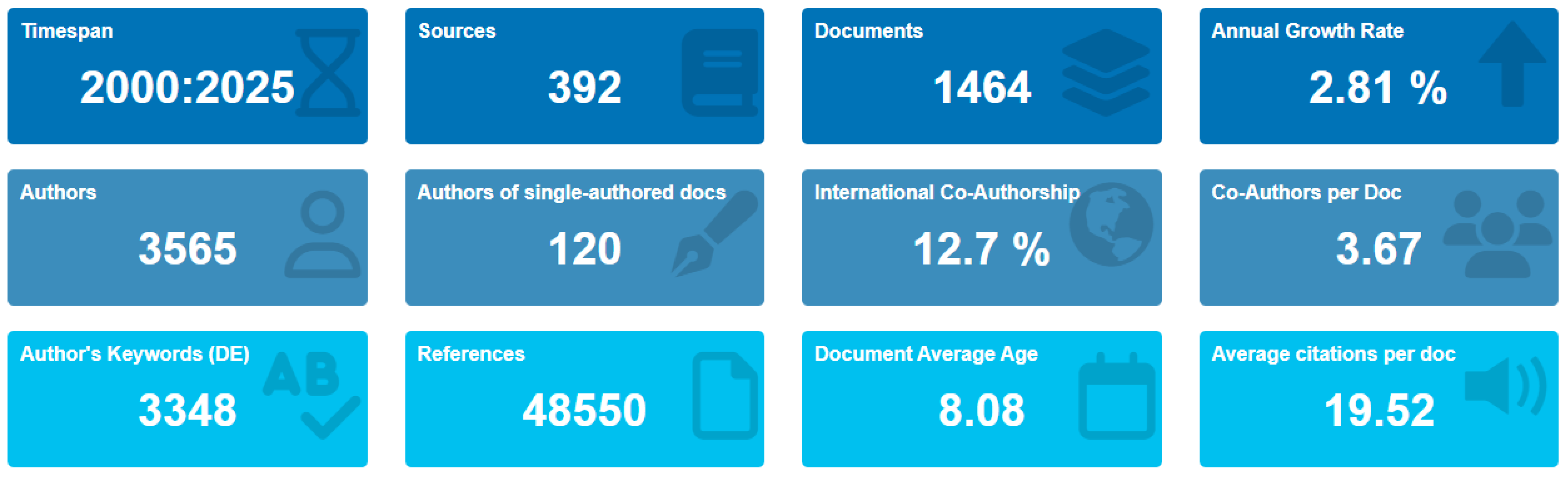
The annual growth rate of publications in this domain was calculated at 2.81%, indicating a steady rise in interest and scholarly contributions. The mean age of documents is 8 years, reflecting the relative recentness and development of the relevant field. The international co-authorship rate was determined to be 12.7%, highlighting a moderate level of global collaboration in fermentation research specific to Türkiye (Figure 3).
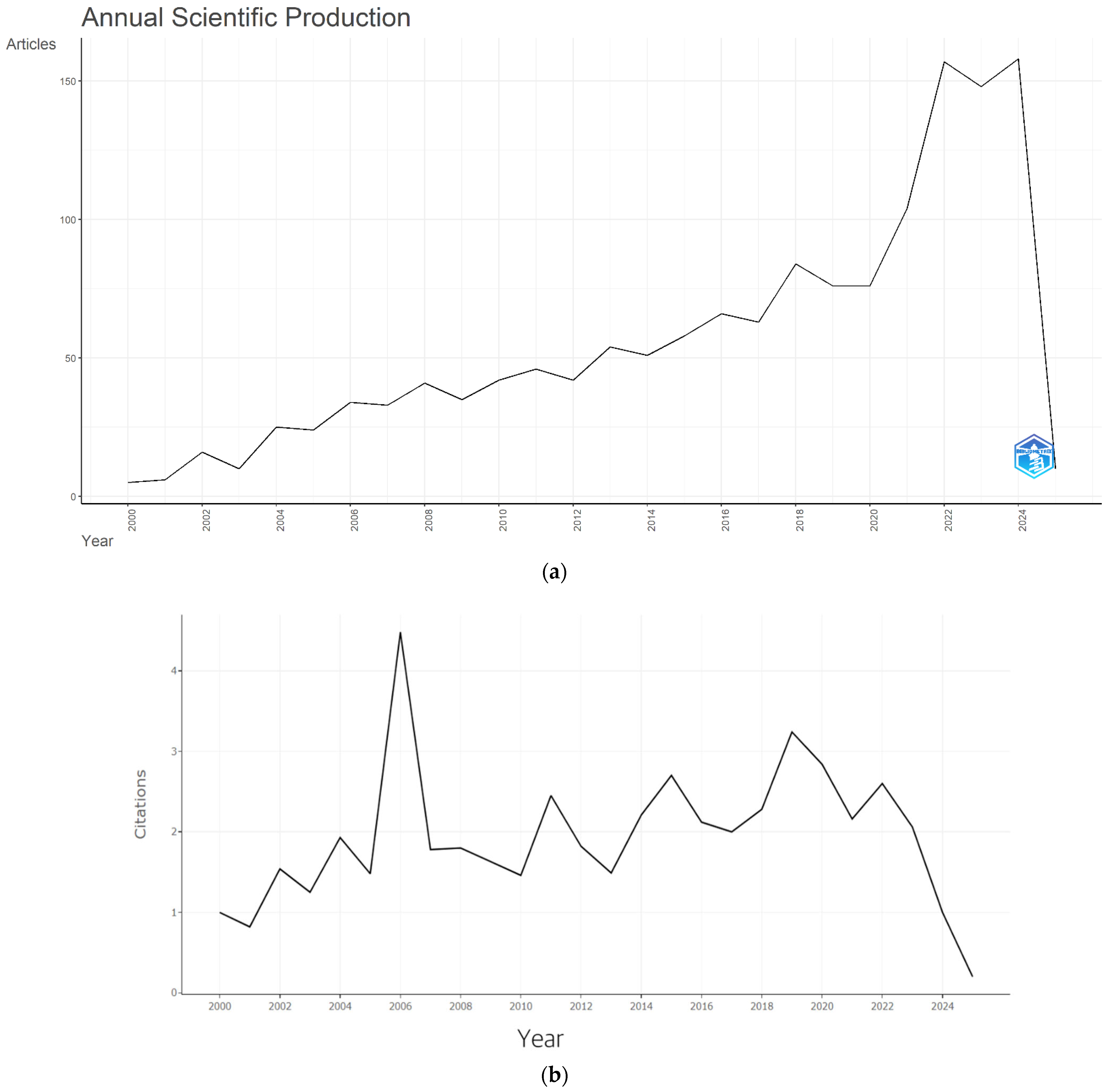
The annual trajectory of publications follows a logarithmic trend, reflecting both the growing scientific interest and the expanding methodological toolkit in fermentation research, with 158 papers published in 2024 and an additional 10 appearing in early 2025 (Figure 4a). The pronounced acceleration observed after 2020 coincides with the widespread adoption of omics approaches, which have enabled deeper insights into microbial community structures, metabolic pathways, and functional properties of fermented foods. This surge not only underscores the increasing recognition of fermentation research in food science and technology but also suggests a sustained momentum for future studies that integrate advanced molecular techniques with traditional food systems.
Average citation analysis in Figure 4b suggests that fermentation research began to generate noticeable academic impact between 2000 and 2006. The mid-2000s saw an emphasis on health benefits of fermented foods, probably due to the growing popularity of probiotic and functional food research. Although some fluctuations in citation rates are observed post-2010, a general upward trend persisted until 2020. The relative decline in citations after 2020 is primarily due to recency, as more recent publications have not yet had sufficient time to accumulate citations. Additional contributing factors may include the rapid increase in publication volume, which disperses citations across a larger number of articles, the temporary research shifts induced by the COVID-19 pandemic, and the initially narrower visibility of highly technical or niche studies employing omics approaches.

4.1. Author’s Keywords and Research Connections

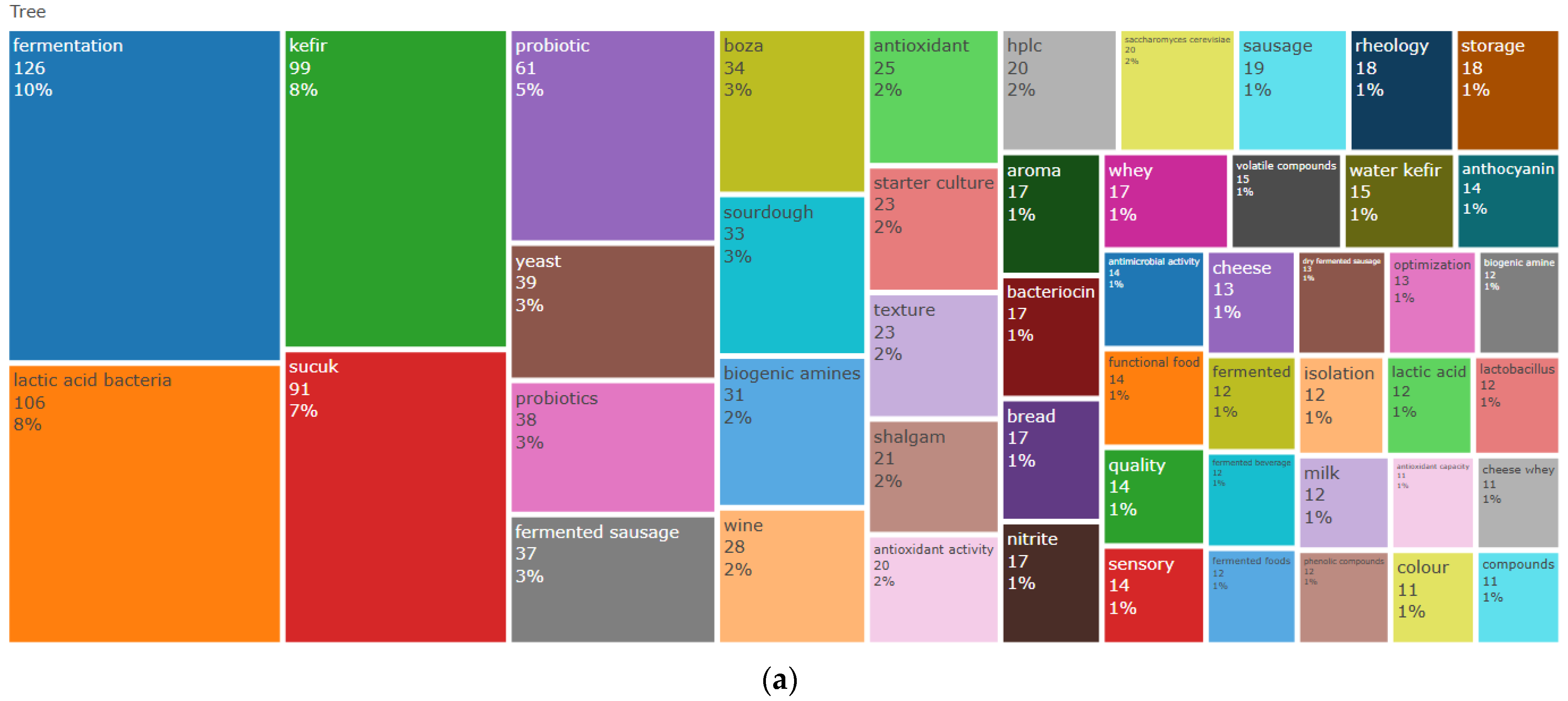
To evaluate how cultural and scientific dimensions are manifested in academic outputs, this section explores keyword distributions, thematic trends, and interconnections among research topics. Figure 5a presents the relative frequency and dispersion of keywords chosen by authors across the bibliometric dataset. ‘Fermentation’ emerged as the most prevalent term, underscoring its foundational role in the field, followed by high-frequency terms such as ‘lactic acid bacteria’, ‘kefir’, and ‘sucuk’.
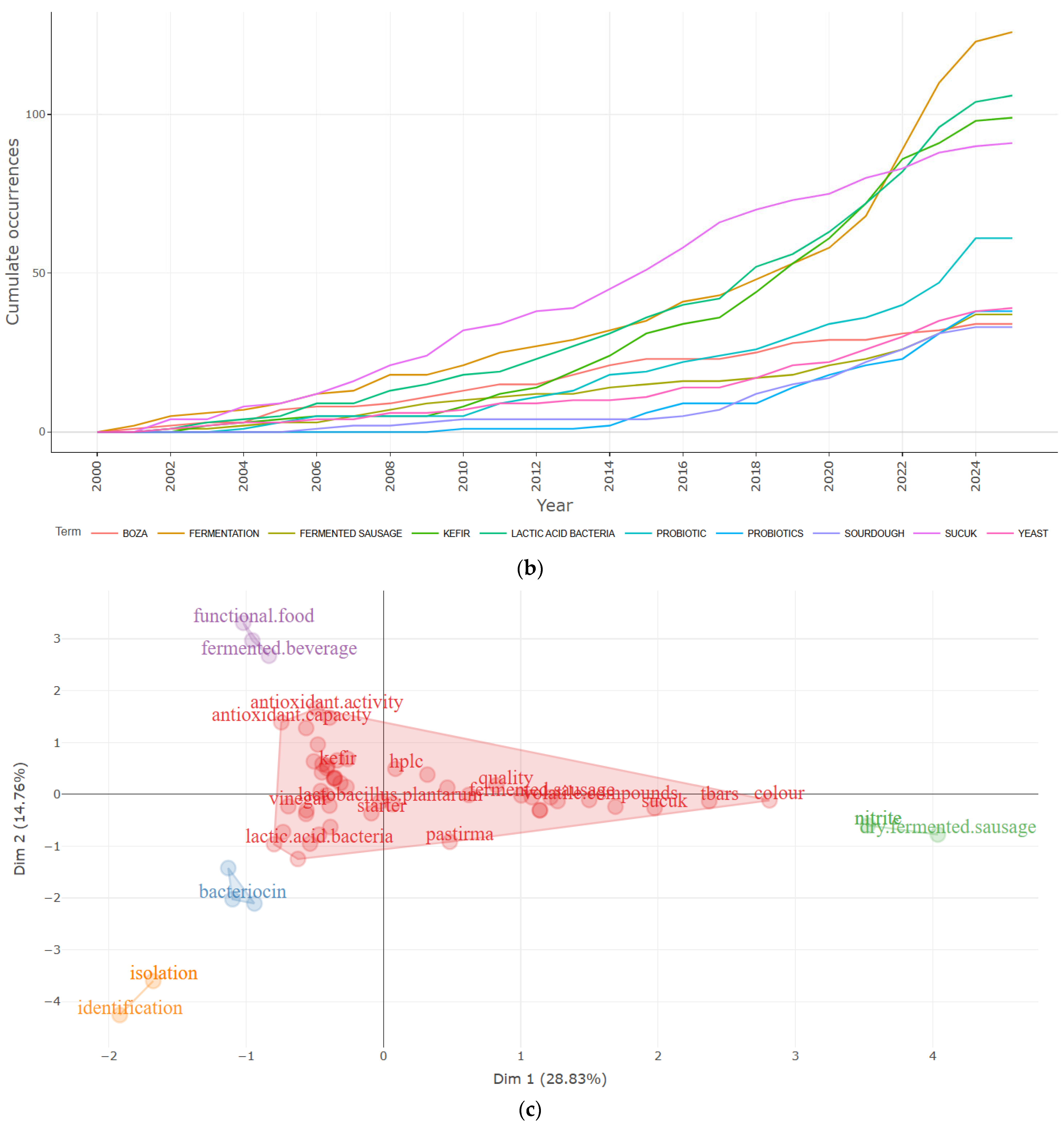
Figure 5b tracks the temporal rise in selected keyword frequencies from 2000 to 2025. Each trajectory illustrates how interest in specific themes, ranging from traditional to modern fermentation practices, has evolved, both within Türkiye and globally. Notably, the keyword ‘Fermentation’ (represented by the brown line) has shown a consistently increasing trend, reinforcing its centrality and anticipated prominence in future investigations. This trend likely reflects technological advancements in genomics, transcriptomics, proteomics, and artificial intelligence.
Probiotics have also gained momentum, reflecting growing interest in the health-promoting aspects of fermented foods. Figure 5c depicts a Multiple Correspondence Analysis (MCA) of author keywords, with axes representing Dimension 1 (28.83%) and Dimension 2 (14.76%), resulting in five distinct thematic clusters.
The red cluster, covering a broad conceptual space, includes terms such as ‘Lactiplantibacillus plantarum’, ‘starter’, ‘kefir’, ‘pastırma’, ‘antioxidant activity’, ‘sucuk’, ‘tbars’, and ‘quality’, which are tightly interlinked and contribute significantly to overall variation. This cluster likely reflects research focused on core quality and functional parameters of fermented foods, such as oxidative stability, color changes, and starter culture selection. Traditional Turkish fermented foods serve as a rich microbial reservoir, whose genetic diversity facilitates the discovery of novel genes and metabolic traits, thereby supporting the development of industrial microorganisms capable of producing enzymes, bioactive proteins, and other functional biomolecules. While these functional properties suggest promising health-related benefits, it is important to note that many findings remain limited to in vitro or animal models. Although several studies report potential antioxidant, immunomodulatory, and antimicrobial effects, these claims require further clinical validation before broader health implications can be established.
The blue cluster centers around ‘bacteriocin’, which appears in relative isolation. This spatial separation suggests that bacteriocin-related studies diverge from the main axis of antioxidant and meat-fermentation-focused themes. Notably, several recent studies have successfully isolated and characterized novel bacteriocins from traditional Turkish fermented foods such as tarhana and sourdough, highlighting their untapped potential as natural antimicrobial agents and reinforcing the value of these foods as reservoirs of functional microbial diversity [33,34]. Meanwhile, the green cluster, characterized by ‘nitrite’ and ‘dry fermented sausage’, indicates an association with meat-based fermentations, albeit distinct from antioxidant or antimicrobial mechanisms.
The purple cluster links ‘functional food’ with ‘fermented beverage’, reflecting contemporary categorization trends where beverages like kefir and boza are recognized as functional foods. Lastly, the orange cluster, composed of terms like ‘isolation’ and ‘identification’, emphasizes microbial discovery and characterization, foundational to both applied and basic fermentation research.

4.2. Thematic Map and Trend Topics

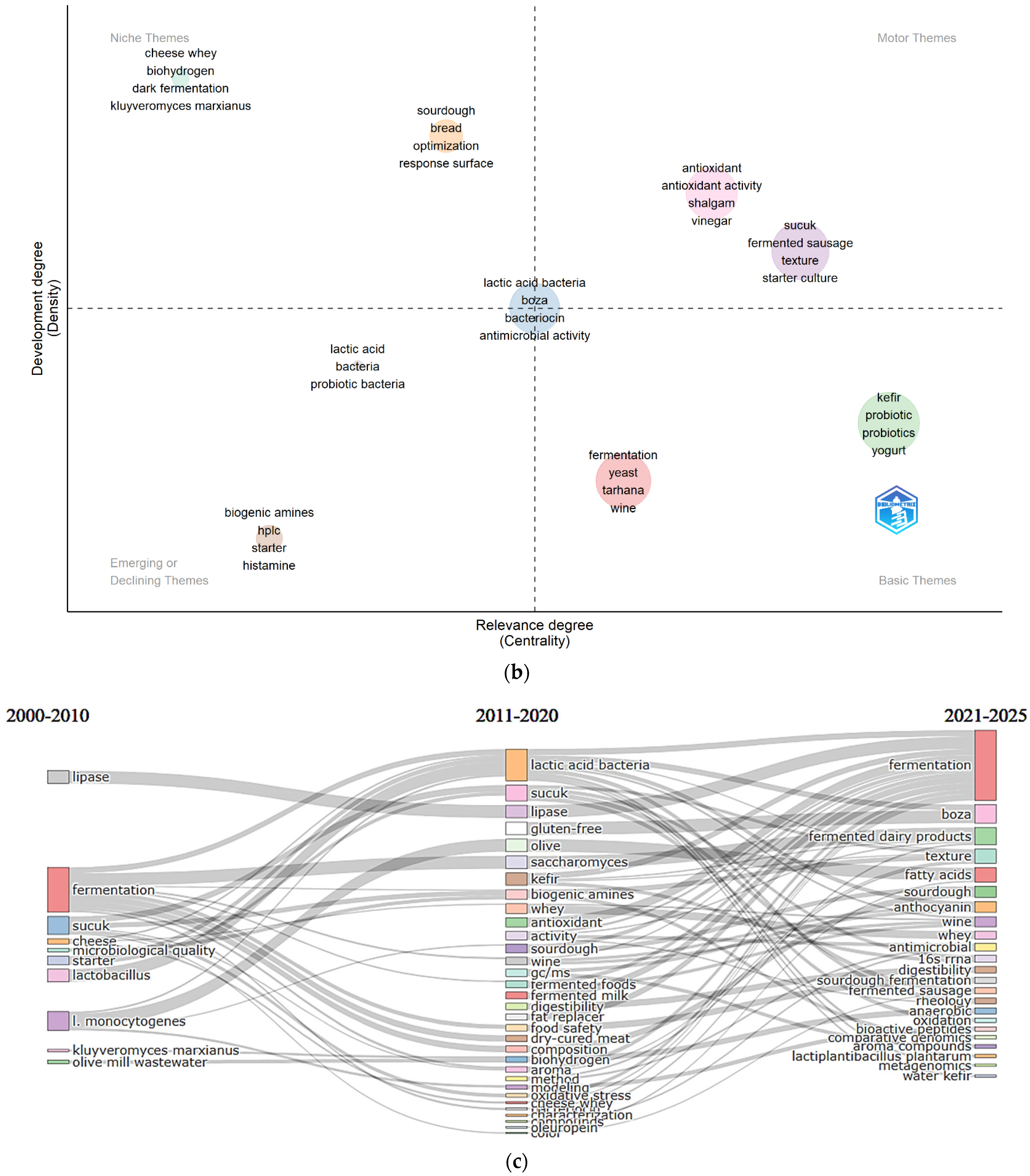
The thematic map offers insights into how key research themes align with technological, functional, and health-related attributes of fermented foods. In Figure 6a, motor themes are defined by high centrality and strong development, reflecting areas that are both well-established and influential within the field. These include ‘antioxidant activity’, ‘shalgam’, ‘sucuk’, ‘fermented sausage’, ‘starter culture’, and ‘vinegar’. Their prominence signifies that these topics are not only widely studied but also critical for advancing fermentation research in Türkiye.
The term ‘antioxidant activity’ has emerged as a principal focus in evaluating the health impacts of fermented products. ‘Shalgam’ (a lactic acid fermented beverage based on black carrot), a culturally significant beverage, has gained attention due to its potential probiotic and antimicrobial effects. Motor themes are both current and conceptually robust, positioning them as strategic focal points for future investigations.
Basic themes, while central to the field, display lower developmental density, indicating maturity or a decline in novelty. Terms such as ‘kefir’, ‘probiotics’, and ‘yoghurt’ fall into this quadrant. These keywords represent foundational knowledge in fermented food research and continue to influence ongoing studies despite not being newly emergent.
The emerging or declining themes quadrant houses topics with lower centrality and developmental intensity. This includes terms like ‘biogenic amines’, ‘HPLC’, ‘histamine’, ‘lactic acid bacteria’, ‘probiotic bacteria’, ‘boza’, ‘antimicrobial activity’, ‘sourdough’, ‘bread’, ‘optimization’, ‘response surface’, ‘fermentation’, ‘yeast’, ‘tarhana’, and ‘wine’. Some of these, like ‘boza’ and ‘tarhana’, may represent recently renewed interest, possibly driven by new methodological approaches. Conversely, ‘biogenic amines’ and ‘HPLC’ may reflect diminishing research interest, potentially due to the field’s pivot from toxicity concerns to probiotic functionality.
Certain terms in this quadrant, such as ‘lactic acid bacteria’ and ‘antimicrobial activity’, remain highly relevant but may have become conceptually merged with broader themes like starter culture development. Keywords such as ‘optimization’ and ‘response surface’ are likely retained for experimental design applications, suggesting that while methodologically significant, they maintain a niche role.
Niche themes, including ‘cheese whey’, ‘biohydrogen’, ‘dark fermentation’, and ‘Kluyveromyces marxianus’, reflect specialized but well-developed research areas. These topics may hold high advanced but limited general applicability, serving as critical knowledge hubs within their subfields.
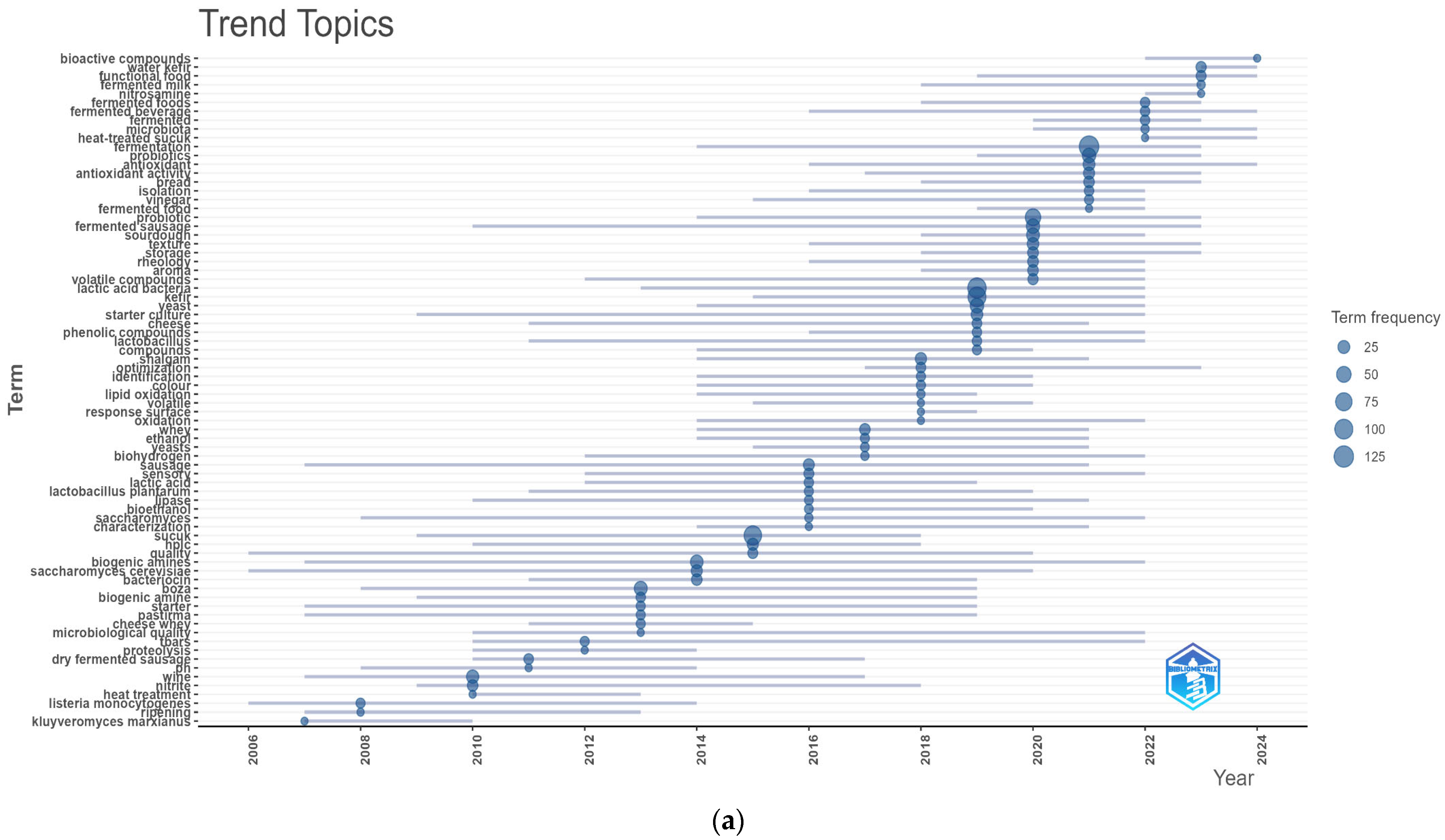
In Figure 6b, the Trend Topics graph tracks keyword usage across defined timeframes. Between 2004 and 2010, research activity was sparse, with only ‘lactic acid bacteria’ showing a minor rise. A significant shift occurs during 2015–2020, where terms like ‘probiotics’, ‘fermented milk’, and ‘bioactive compounds’ gain prominence. This upward trend continues from 2020 to 2024, with ‘bioactive compounds’ and ‘fermented foods’ peaking in 2024 (~125 citations each), reflecting growing interest in health-associated attributes of fermented products.
Similarly, ‘lactic acid bacteria’ remained a central focus during this period, reinforced by advancements in omics technologies such as next-generation sequencing and metagenomics. These metagenomic approaches have not only illuminated the fermentation microbiota of traditional foods but also revealed how fermentation conditions shape microbial community assembly. For instance, comparative studies on tarhana have demonstrated notable differences in microbiota composition between household-scale and industrial production, highlighting the influence of production scale and environmental factors on fermentation outcomes [43]. The increasing integration of the term ‘microbiota’ into fermentation studies further boosted attention on ‘probiotics’, which reached ~100 citations between 2020–2024.
Keywords like ‘fermentation’ and ‘bioactive compounds’ sustained moderate popularity (75–100 citations), while terms such as ‘dry fermentation’, ‘pastirma quality’, and ‘biogenic amine’ experienced stagnation, indicating lesser research momentum. These observations correlate with keyword frequencies shown in Figure 5a, suggesting a reorientation toward health, sustainability, and innovation in fermentation studies.
Figure 6c, a Sankey diagram, illustrates the evolution of fermentation research themes in Türkiye over three time periods. From 2000 to 2010, traditional fermentation practices were subjected to basic scientific inquiry, with emerging concerns around food safety (e.g., control of Listeria monocytogenes) and microbial ecology. Though sustainability topics, like olive oil waste valorization, began to surface, the phase was dominated by descriptive microbiological studies.
During 2011–2020, research transitioned into a convergence phase, incorporating biotechnology, health science, and consumer trends. Traditional products such as yogurt, kefir, dry sausage, sourdough, and wine were studied in relation to probiotics, antioxidants, and food safety innovations. Attention also turned to biopreservation, gluten-free adaptations, and starter culture optimization, indicating a more applied and functional research orientation.
The period 2021–2025 is characterized by cutting-edge tools and translational science. Traditional fermented products are investigated using metabolomics, amplicon-based metagenomics, and advanced functional profiling. Topics such as bioactive metabolite quantification and microbiota characterization dominate this phase. The widespread application of 16S rRNA sequencing, microbial community mapping, and health claims validation underscores a paradigm shift toward precision fermentation and evidence-based functional food design.
Throughout all periods, health-related themes remained pivotal. In the early phase, the focus was on safety (e.g., pathogen detection); in the middle phase, on functional benefits (e.g., antioxidants and probiotics); and in the modern phase, on molecular and metabolic evidence supporting health claims. Environmental considerations, such as waste valorization, persisted as cross-cutting elements. This evolution affirms how Türkiye’s fermentation heritage has transitioned into a multidisciplinary scientific landscape, offering valuable insights for global innovation, health, and sustainability.
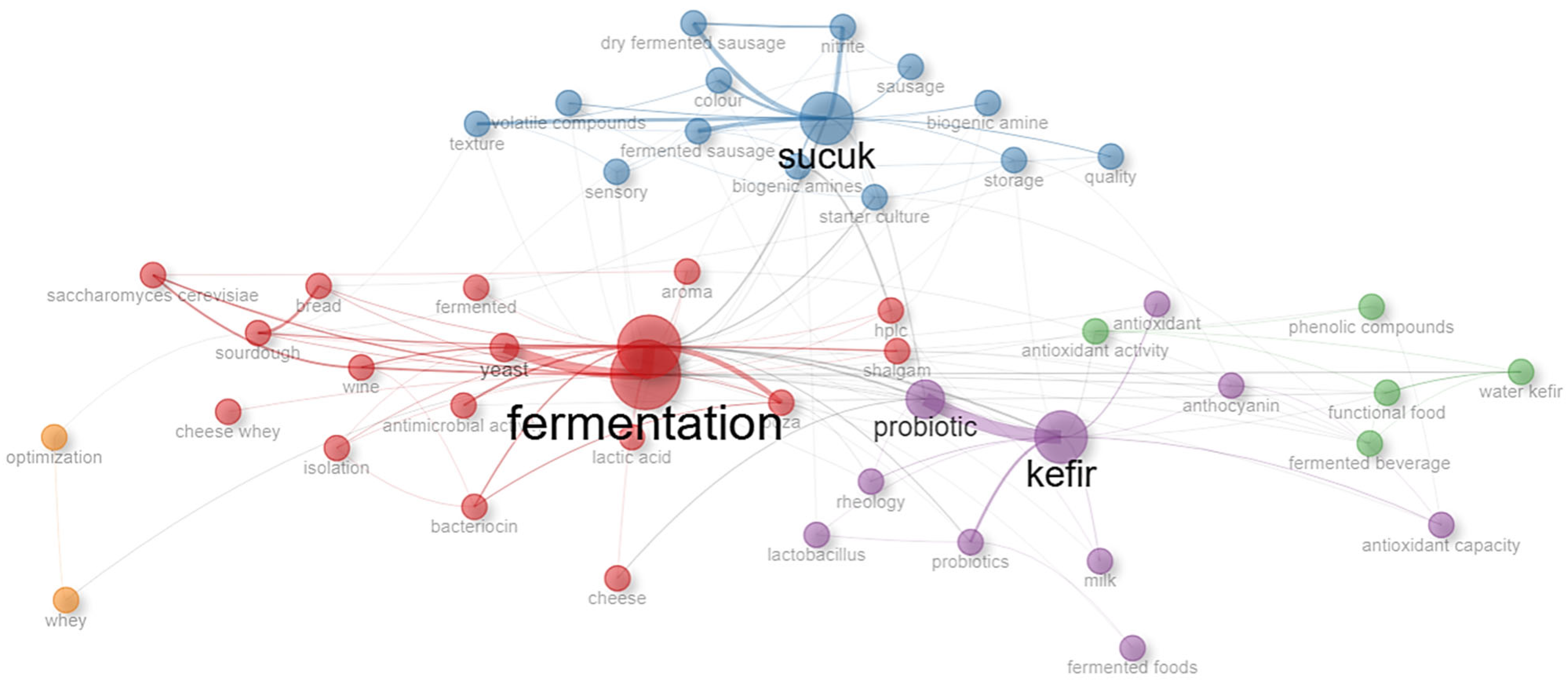
Figure 7 illustrates four major thematic clusters in the field: (1) dairy-based fermented foods and probiotic research; (2) cereal- and vegetable-based fermentations linked to nutritional and microbial diversity studies; (3) safety-oriented research addressing biogenic amines and fermentation control; and (4) emerging omics-driven approaches. These clusters reflect both historical research strengths and new scientific trajectories, thereby supporting the interpretation of fermentation as a multidisciplinary field in Türkiye. Node size represents the frequency of keyword occurrence, while edge thickness indicates the strength of co-occurrence between terms. Distinct color clusters highlight thematic research areas: (i) general fermentation and yeast-related studies (red), (ii) fermented meat products, particularly sucuk and biogenic amines (blue), (iii) kefir, probiotics, and functional dairy research (purple), and (iv) antioxidant- and phenolic compound-focused studies, including water kefir (green). The network reflects the interconnected structure of fermentation science and emerging research hotspots within the field.

4.3. International Collaborations on Turkish Fermented Foods

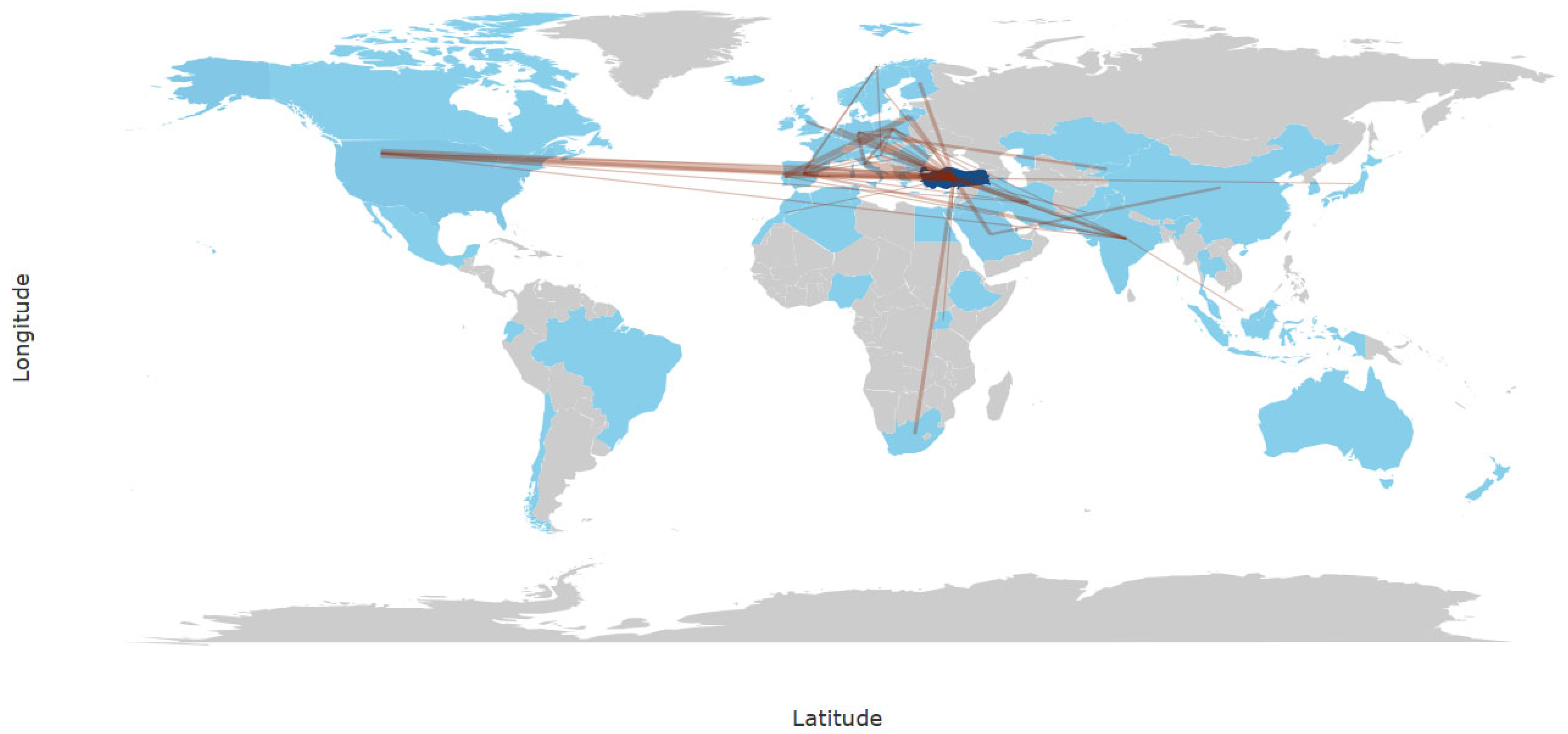
Understanding Türkiye’s positioning within the global fermentation research ecosystem is essential for recognizing how national expertise integrates with international scientific collaborations. The collaboration networks in Figure 8 underscore Türkiye’s growing integration into global fermentation research, with strong partnerships observed with the United States, Germany, Japan, and EU-based institutions. These partnerships are particularly prominent in kefir research, cheese microbiology, and culture-independent microbial analyses, reflecting how traditional practices are increasingly becoming subjects of cross-border academic and technological exchange.
The network map or diagram highlights key countries participating in studies of Turkish fermented foods, thereby positioning Türkiye as both a knowledge hub and research partner in global fermentation discourse. These international connections represent pathways through which microbial diversity, artisanal knowledge, and emerging biotechnologies are shared and expanded upon.
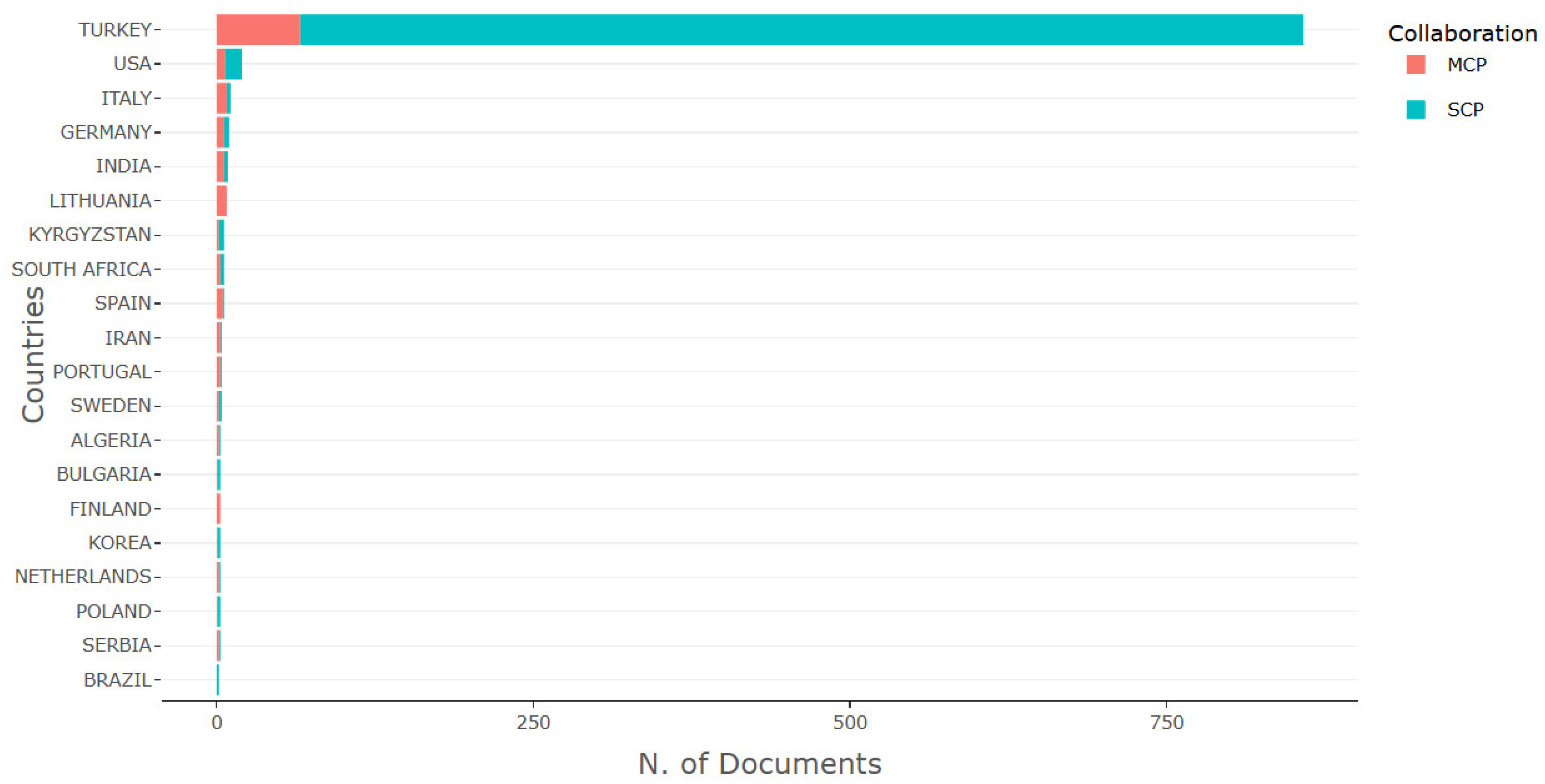
Figure 9 categorizes the publication data according to Single Country Publications (SCP) and Multiple Country Publications (MCP). This classification allows for a comparative analysis of independent versus collaborative scholarly outputs related to Turkish fermented foods. As expected, Türkiye leads with the highest SCP count, underlining a strong domestic research infrastructure sustained by universities, food technology departments, and public research institutions.
Nonetheless, a notable proportion of MCPs indicates that Türkiye is also actively engaging in international partnerships, involving shared research agendas, microbial repositories, biotechnological tools, and joint publications. These collaborations enable a broader scientific evaluation of traditional practices, enhancing methodological rigor and global relevance.
Interestingly, the downward trend in biogenic amine research, as depicted earlier, may signify a broader pivot in global fermentation research—from toxicity surveillance toward probiotic and functional innovations. The decline also parallels a growing emphasis on health claims validation and translational fermentation science, suggesting that collaborative efforts now prioritize contemporary challenges and opportunities.
Despite this, the limited representation of international joint works in certain regions, particularly in Asia and parts of Europe, highlights an untapped potential for Türkiye to extend its research diplomacy. As shown in Figure 8, fostering deeper partnerships, especially in regions sharing similar fermentation traditions, could enable cross-cultural and transregional studies that enrich both scientific and sociocultural perspectives.
In conclusion, the bibliometric analysis confirms that Türkiye’s rich heritage in fermentation has evolved into a scientifically vibrant and internationally relevant domain. However, expanding global collaborations, particularly in the context of functional food development, omics applications, and sustainability, remains a critical next step. By doing so, Türkiye can further translate its local expertise into global innovations, anchoring its traditional food systems within cutting-edge scientific dialogs.

5. Future Perspectives

Building on the cultural, nutritional, economic, and bibliometric insights outlined earlier, this section explores how emerging scientific approaches can shape the future of Türkiye’s fermented foods. The fermentation field in Türkiye is poised for a major transformation fueled by innovations in omics sciences and artificial intelligence (AI). These tools are reshaping our understanding and development of traditional Turkish fermented products like boza, kefir, tarhana, and shalgam. Omics-based platforms, particularly genomics, metabolomics, and proteomics, offer an in-depth view into the microbial ecology, bioactive compound profiles, and functional benefits of these products. Meanwhile, the integration of AI into fermentation research is facilitating predictive modeling, quality enhancement, and health impact forecasting. By harmonizing deep-rooted traditions with advanced scientific tools, these developments can position Türkiye at the forefront of global functional food innovation.
Future research should prioritize the development of indigenous starter cultures, omics-driven characterization of microbial metabolite networks, standardized fermentation protocols, and the clinical validation of functional claims. Integrating AI-supported safety systems—particularly for predicting biogenic amines—may further enhance product quality and global competitiveness.

5.1. The Role of Omics Technologies in Turkish Fermented Products Research

Omics methodologies allow for holistic insights into the biological complexity of fermented foods, uncovering both beneficial attributes and safety considerations. Bibliometric findings confirm that metagenomics currently dominates Turkish fermented food research, with products such as tarhana, kefir, vinegar, and cheese frequently investigated.
The microbial diversity of geographically protected Uşak tarhana, for example, was explored using next-generation sequencing, revealing climate-associated microbial variations [43,66]. Similarly, kefir grains [44,67], shalgam [68], and vinegar microbiota [69] have been extensively characterized. Cheese varieties such as Tulum and Otlu (Herby) peynir are among the most deeply studied, reflecting their cultural and commercial importance.
Despite this progress, research utilizing other omics layers—especially proteomics, transcriptomics, and metabolomics—remains scarce. Peptide release dynamics during kefir fermentation have only recently been assessed [70], and metabolite profiling of tarhana is still limited [66]. A wider adoption of these technologies could uncover enzyme profiles improving texture, or trace bioactive or harmful metabolites, advancing both safety and quality. As omics integration deepens, novel functional ingredients may be discovered, enhancing both domestic value and export potential.
Significant gaps remain in multi-omics and metagenomic research for several culturally important products such as hardaliye, gilaburu, Hatay Carra cheese, Kargı Tulum, homemade pickles, and sourdoughs from Eastern and Southeastern Anatolia. Limited genomic data restricts the ability to map microbial–metabolite interactions and hinders efforts to develop standardized starter cultures or assess probiotic and postbiotic potential. Expanded, high-resolution omics studies are therefore essential for future innovation. In addition, the lack of standardized genomic datasets across regional product categories, insufficient multi-omics approaches to resolve microbial–metabolite networks, and limited clinical validation for health-related claims continue to constrain translational applications. Developing indigenous starter cultures based on well-characterized strains and integrating AI-based safety monitoring (e.g., prediction of biogenic amines) represent key priorities for innovation.

5.2. Artificial Intelligence (AI) in Fermented Foods

AI is increasingly being applied in food sciences for its capabilities in automated prediction, pattern recognition, and complex process optimization [71,72]. In the context of fermentation, tools such as decision trees, random forest (RF), support vector machines (SVM), and k-nearest neighbor (kNN) algorithms have been utilized for microbial control and sensory optimization [72,73,74]. E-nose technologies, simulating human olfaction, have also been used to classify volatile compounds and aroma profiles in fermented foods [75].
A notable example is the use of an adaptive neuro-fuzzy inference system (ANFIS) for optimizing ultrasound parameters in Gilaburu juice processing [76]. Although applications in Türkiye are still emerging, AI holds considerable potential to customize fermentation protocols, minimize variability, and enhance product consistency. Priority areas include starter culture optimization for traditional products, predictive shelf-life modeling, and omics-AI integration for data-driven quality control. Further, policy development to support AI applications among artisanal producers would enhance both standardization and export readiness.

6. Conclusions

Based on bibliometric outcomes, Tarhana and Kefir clearly emerge as flagship candidates for bridging traditional knowledge with modern functional food innovation. Türkiye’s traditional fermentation heritage reflects a compelling synergy of deep-rooted cultural practices, nutritional richness, and growing scientific sophistication. This study demonstrates how traditional methods have evolved from local artisanal knowledge into a vibrant field enriched by metagenomics, multi-omics platforms, and AI-driven tools.
Türkiye’s capacity to unify ancient fermentation wisdom with emerging scientific strategies offers a unique opportunity for global leadership in sustainable food systems. To harness this potential, future efforts should focus on expanding international partnerships, fostering omics-based translational studies, and strengthening regulatory infrastructures. Exportation of innovative fermented foods requires full compliance with the Turkish Food Codex, validated safety specifications, and—when applicable—the Novel Food Regulation (EU 2015/2283). Multi-omics and AI-supported safety tools enhance traceability and regulatory robustness.
While home fermentation contributes to cultural preservation and reduced packaging waste, industrial-scale production ensures microbial safety, standardization, and accessibility. A hybrid model that integrates traditional household practices with precision fermentation represents the most sustainable pathway forward. This approach will ensure the continued relevance, safety, and competitiveness of Turkish fermented foods worldwide.
By presenting an integrated overview of tradition, innovation, and scientific opportunity, this review aims to catalyze interdisciplinary efforts that sustain and elevate the cultural and functional value of Türkiye’s fermented food ecosystem.

Supplementary Materials

The following supporting information can be downloaded at https://www.mdpi.com/article/10.3390/foods14244324/s1, Table S1: PRISMA 2020 Checklist.

Author Contributions

Ö.K.I.: Conceptualization, methodology, software, formal analysis, data curation, writing—original draft, writing—review and editing. E.Ş.B.: Conceptualization, methodology, software, formal analysis, data curation, writing—original draft, writing—review and editing. R.Y.: Conceptualization, methodology, formal analysis, investigation, supervision, writing—original draft, writing—review and editing. B.Ç.: Conceptualization, investigation, resources, writing—original draft, writing—review and editing. A.H.Ç.: Conceptualization, investigation, writing—original draft, writing—review and editing. H.E.: Conceptualization, investigation, writing—original draft, writing—review and editing. M.Y.G.: Conceptualization, investigation, writing—original draft, writing—review and editing. Ö.Ş.: Conceptualization, investigation, writing—original draft, writing—review and editing. All authors have read and agreed to the published version of the manuscript.

Funding

This research received no external funding.

Institutional Review Board Statement

Not applicable.

Informed Consent Statement

Not applicable.

Data Availability Statement

No new data were created or analyzed in this study. Data sharing is not applicable to this article.

Conflicts of Interest

The authors declare no conflicts of interest.

References

  1. Montet, D.; Ray, R.C.; Zakhia-Rozis, N. Lactic Acid Fermentation of Vegetables and Fruits. In Microorganisms and Fermentation of Traditional Foods; CRC Press: Boca Raton, FL, USA, 2014; pp. 108–140. ISBN 9780429157165. [Google Scholar]
  2. Ray, R.C.; Joshi, V.K. Fermented Foods: Past, Present and Future. In Microorganisms and Fermentation of Traditional Foods; CRC Press: Boca Raton, FL, USA, 2014; pp. 1–36. ISBN 9781482223095. [Google Scholar]
  3. Ferrocino, I.; Rantsiou, K.; McClure, R.; Kostic, T.; de Souza, R.S.C.; Lange, L.; FitzGerald, J.; Kriaa, A.; Cotter, P.; Maguin, E.; et al. The Need for an Integrated Multi-OMICs Approach in Microbiome Science in the Food System. Compr. Rev. Food Sci. Food Saf. 2023, 22, 1082–1103. [Google Scholar] [CrossRef]
  4. Deng, D.; Yang, Z.; Yang, Y.; Wan, W.; Liu, W.; Xiong, X. Metagenomic Insights into Nitrogen-Cycling Microbial Communities and Their Relationships with Nitrogen Removal Potential in the Yangtze River. Water Res. 2024, 265, 122229. [Google Scholar] [CrossRef] [PubMed]
  5. Fan, M.; Rakotondrabe, T.F.; Chen, G.; Guo, M. Advances in Microbial Analysis: Based on Volatile Organic Compounds of Microorganisms in Food. Food Chem. 2023, 418, 135950. [Google Scholar] [CrossRef]
  6. Bourrie, B.C.T.; Cotter, P.D.; Willing, B.P. Traditional Kefir Reduces Weight Gain and Improves Plasma and Liver Lipid Profiles More Successfully than a Commercial Equivalent in a Mouse Model of Obesity. J. Funct. Foods 2018, 46, 29–37. [Google Scholar] [CrossRef]
  7. Walsh, A.M.; Crispie, F.; Kilcawley, K.; O’Sullivan, O.; O’Sullivan, M.G.; Claesson, M.J.; Cotter, P.D. Microbial Succession and Flavor Production in the Fermented Dairy Beverage Kefir. mSystems 2016, 1, e00052-16. [Google Scholar] [CrossRef] [PubMed]
  8. Marco, M.L.; Sanders, M.E.; Gänzle, M.; Arrieta, M.C.; Cotter, P.D.; De Vuyst, L.; Hill, C.; Holzapfel, W.; Lebeer, S.; Merenstein, D.; et al. The International Scientific Association for Probiotics and Prebiotics (ISAPP) Consensus Statement on Fermented Foods. Nat. Rev. Gastroenterol. Hepatol. 2021, 18, 196–208. [Google Scholar] [CrossRef]
  9. Kaundal, R.; Kumar, M.; Kumar, S.; Singh, D.; Kumar, D. Polyphenolic Profiling, Antioxidant, and Antimicrobial Activities Revealed the Quality and Adaptive Behavior of Viola Species, a Dietary Spice in the Himalayas. Molecules 2022, 27, 3867. [Google Scholar] [CrossRef]
  10. Sanlibaba, P.; Tezel, B.U. Traditional Fermented Foods in Anatolia. Acta Sci. Pol.-Technol. Aliment. 2023, 22, 193–215. [Google Scholar] [CrossRef]
  11. Yılmaz, R.; Temiz, A.; Açık, L.; Keskin, A.Ç. Genetic Differentiation of Lactobacillus Delbrueckii Subsp. Bulgaricus and Streptococcus Thermophilus Strains Isolated from Raw Milk Samples Collected from Different Regions of Turkey. Food Biotechnol. 2015, 29, 336–355. [Google Scholar] [CrossRef]
  12. Ertekin, B.; Guzel-Seydim, Z.B. Effect of Fat Replacers on Kefir Quality. J. Sci. Food Agric. 2010, 90, 543–548. [Google Scholar] [CrossRef]
  13. Guzel-Seydim, Z.B.; Satir, G.; Gokirmakli, C. Use of Mandarin and Persimmon Fruits in Water Kefir Fermentation. Food Sci. Nutr. 2023, 11, 5890–5897. [Google Scholar] [CrossRef] [PubMed]
  14. Satir, G.; Guzel-Seydim, Z.B. How Kefir Fermentation Can Affect Product Composition? Small Rumin. Res. 2016, 134, 1–7. [Google Scholar] [CrossRef]
  15. Isleten, M.; Karagul-Yuceer, Y. Effects of Dried Dairy Ingredients on Physical and Sensory Properties of Nonfat Yogurt. J. Dairy Sci. 2006, 89, 2865–2872. [Google Scholar] [CrossRef]
  16. Karabulut, I.; Adnan Hayaloglu, A.; Yildirim, H. Thin-Layer Drying Characteristics of Kurut, a Turkish Dried Dairy by-Product. Int. J. Food Sci. Technol. 2007, 42, 1080–1086. [Google Scholar] [CrossRef]
  17. Koc, B.; Yilmazer, M.S.; Balkir, P.; Ertekin, F.K. Spray Drying of Yogurt: Optimization of Process Conditions for Improving Viability and Other Quality Attributes. Dry. Technol. 2010, 28, 495–507. [Google Scholar] [CrossRef]
  18. Kocyigit, E.; Abdurakhmanov, R.; Kocyigit, B.F. Potential Role of Camel, Mare Milk, and Their Products in Inflammatory Rheumatic Diseases. Rheumatol. Int. 2024, 44, 425–434. [Google Scholar] [CrossRef] [PubMed]
  19. Demirci, A.S.; Gurbuz, B. Fortification of Yoghurt with Xanthan Gum Biosynthesized from Grape Juice Pomace: Physicochemical, Textural and Sensory Characterization. J. Tekirdag Agric. 2023, 20, 1252469. [Google Scholar] [CrossRef]
  20. Demirci, T. Highlighting the Microbial Community of Kuflu Cheese, an Artisanal Turkish Mold-Ripened Variety, by High-Throughput Sequencing. Food Sci. Anim. Resour. 2024, 44, 390–407. [Google Scholar] [CrossRef]
  21. Topcu, A.; Bulat, T.; Özer, B. Process Design for Processed Kashar Cheese (a Pasta-Filata Cheese) by Means of Microbial Transglutaminase: Effect on Physical Properties, Yield and Proteolysis. LWT 2020, 125, 109226. [Google Scholar] [CrossRef]
  22. Yuceer, O.; Tuncer, B.O. Determination of antibiotic resistance and biogenic amine production of Lactic Acid bacteria isolated from fermented turkish sausage (Sucuk). J. Food Saf. 2015, 35, 276–285. [Google Scholar] [CrossRef]
  23. Erten, H.; Tanguler, H.; Canbas, A. A Traditional Turkish Lactic Acid Fermented Beverage: Shalgam (Salgam). Food Rev. Int. 2008, 24, 352–359. [Google Scholar] [CrossRef]
  24. Kemahlioglu, K.; Kendirci, P.; Kadiroglu, P.; Yucel, U.; Korel, F. Effect of Different Raw Materials on Aroma Fingerprints of ‘boza’ Using an e-Nose and Sensory Analysis. Qual. Assur. Saf. Crops Foods 2019, 11, 421–429. [Google Scholar] [CrossRef]
  25. Özkan, G.; Göktürk Baydar, N. Türk Kırmızı Şaraplarında Fenolik Bileşiklerin Direkt RP-HPLC Ile Belirlenmeleri. Akdeniz Üniv. Ziraat Fak. Derg. 2006, 19, 229–234. [Google Scholar]
  26. Pekşen, T. Historical Perspectives and Future Directions in Turkey’s Wine Industry: A Comprehensive Literature Review. Master’s Thesis, University of Padova, Padova, Italy, 2025. [Google Scholar]
  27. Şafak, B. Türk Bira Sektörü Analizi Ve Türk Bira Firmalarının İhracat Olanakları. Master’s Thesis, Dokuz Eylül Üniversitesi, Izmir, Turkey, 2006. [Google Scholar]
  28. Konuray, G.; Erginkaya, Z. Traditional Fermented Food Products of Turkey. In Fermented Food Products; CRC Press: Boca Raton, FL, USA, 2019; pp. 55–66. [Google Scholar] [CrossRef]
  29. Koparal, A.T. In Vitro Evaluation of Gilaburu (Viburnum opulus L.) Juice on Different Cell Lines. Anadolu J. Educ. Sci. Int. 2019, 9, 549–571. [Google Scholar] [CrossRef]
  30. Budak, N.H.; Aykin, E.; Seydim, A.C.; Greene, A.K.; Guzel-Seydim, Z.B. Functional Properties of Vinegar. J. Food Sci. 2014, 79, R757–R764. [Google Scholar] [CrossRef]
  31. Kaya, E.; Hasanoglu, A. Removal of Acetic Acid from Aqueous Post-Fermentation Streams and Fermented Beverages Using Membrane Contactors. J. Chem. Technol. Biotechnol. 2022, 97, 2218–2230. [Google Scholar] [CrossRef]
  32. Sanlibaba, P. Fermented Nondairy Functional Foods Based on Probiotics. Ital. J. Food Sci. 2023, 35, 91–105. [Google Scholar] [CrossRef]
  33. Simsek, Ö.; Çon, A.H.; Tulumoglu, S. Isolating Lactic Starter Cultures with Antimicrobial Activity for Sourdough Processes. Food Control 2006, 17, 263–270. [Google Scholar] [CrossRef]
  34. Kaya, H.I.; Simsek, O. Characterization of Pediococcus acidilactici PFC69 and Lactococcus lactis PFC77 Bacteriocins and Their Antimicrobial Activities in Tarhana Fermentation. Microorganisms 2020, 8, 1083. [Google Scholar] [CrossRef] [PubMed]
  35. Taşdelen, E.; Şimşek, Ö. The Effects of Ropy Exopolysaccharide-Producing Lactiplantibacillus plantarum Strains on Tarhana Quality. Food Biosci. 2021, 43, 1282. [Google Scholar] [CrossRef]
  36. Srivastava, A.; Atri, C. The Role of AI in Microbial Fermentation: Transforming Industrial Applications. Methods Microbiol. 2025, 56, 267–285. [Google Scholar]
  37. Yu, Q.; Qian, J.; Xu, Q.; Guo, Y.; Yao, W.; Qian, H.; Cheng, Y. Integration of Cross-Correlation Analysis and Untargeted Flavoromics Reveals Unique Flavor Formation of Lactic Acid Bacteria Co-Fermented Oat Beverage. Food Biosci. 2024, 59, 103855. [Google Scholar] [CrossRef]
  38. Akkaya, L. Survival of Listeria Monocytogenes in Ayran, a Traditional Turkish Fermented Drink. Mljekarstvo 2015, 65, 130–137. [Google Scholar] [CrossRef]
  39. Altay, F.; Karbancioglu-Guler, F.; Daskaya-Dikmen, C.; Heperkan, D. A Review on Traditional Turkish Fermented Non-Alcoholic Beverages: Microbiota, Fermentation Process and Quality Characteristics. Int. J. Food Microbiol. 2013, 167, 44–56. [Google Scholar] [CrossRef]
  40. Georgala, A. The Microbiology of Greek/Cyprus Trahanas and of Turkish Tarhana: A Review. Food Sci. Appl. Biotechnol. 2020, 3, 134–148. [Google Scholar] [CrossRef]
  41. Sengun, I.Y.; Karapinar, M. Microbiological Quality of Tarhana, Turkish Cereal Based Fermented Food. Qual. Assur. Saf. Crops Foods 2012, 4, 17–25. [Google Scholar] [CrossRef]
  42. Ozdemir, S.; Gocmen, D.; Kumral, A.Y. A Traditional Turkish Fermented Cereal Food: Tarhana. Food Rev. Int. 2007, 23, 107–121. [Google Scholar] [CrossRef]
  43. Mitaf, N.A.; Kirca, D.S.; Simsek, O. The Metagenomic Properties of Uşak Tarhana Dough. Fermentation 2024, 10, 620. [Google Scholar] [CrossRef]
  44. Nalbantoglu, U.; Cakar, A.; Dogan, H.; Abaci, N.; Ustek, D.; Sayood, K.; Can, H. Metagenomic Analysis of the Microbial Community in Kefir Grains. Food Microbiol. 2014, 41, 42–51. [Google Scholar] [CrossRef]
  45. Ilıkkan, Ö.K.; Bağdat, E.Ş. Comparison of Bacterial and Fungal Biodiversity of Turkish Kefir Grains with High-Throughput Metagenomic Analysis. LWT 2021, 152, 112375. [Google Scholar] [CrossRef]
  46. Kirlangic, O.; Ilgaz, C.; Kadiroglu, P. Influence of Pasteurization and Storage Conditions on Microbiological Quality and Aroma Profiles of Shalgam. Food Biosci. 2021, 44, 101350. [Google Scholar] [CrossRef]
  47. Incedayi, B.; Uylaser, V.; Copur, O.U. A Traditional Turkish Beverage Shalgam: Manufacturing Technique and Nutritional Value. J. Food Agric. Environ. 2008, 6, 31–34. [Google Scholar]
  48. Tanguler, H.; Selli, S.; Sen, K.; Cabaroglu, T.; Erten, H. Aroma Composition of Shalgam: A Traditional Turkish Lactic Acid Fermented Beverage. J. Food Sci. Technol. 2017, 54, 2011–2019. [Google Scholar] [CrossRef] [PubMed]
  49. Tanguler, H.; Saris, P.E.J.; Erten, H. Microbial, Chemical and Sensory Properties of Shalgams Made Using Different Production Methods. J. Sci. Food Agric. 2015, 95, 1008–1015. [Google Scholar] [CrossRef] [PubMed]
  50. Petrova, P.; Petrov, K. Traditional Cereal Beverage Boza: Fermentation Technology, Microbial Content and Healthy Effects; CRC Press: Boca Raton, FL, USA, 2017; ISBN 978-135179377-3; 978-113863784-9. [Google Scholar]
  51. Arici, M.; Daglioglu, O. Boza: A Lactic Acid Fermented Cereal Beverage as a Traditional Turkish Food. Food Rev. Int. 2002, 18, 39–48. [Google Scholar] [CrossRef]
  52. Bozkurt, H.; Erkmen, O. Effects of Starter Cultures and Additives on the Quality of Turkish Style Sausage (Sucuk). Meat Sci. 2002, 61, 149–156. [Google Scholar] [CrossRef]
  53. Ozdal, T. Changes in Physicochemical, Microbiological and Sensory Characteristics of Traditionally Produced Turkish Sucuk During Ripening and Storage: Natural or Synthetic Additives? J. Food 2020, 45, 329–339. [Google Scholar] [CrossRef][Green Version]
  54. Soyuçok, A. Metagenomic Analysis of Microbial Diversity in Sucuk, a Traditional Turkish Dry-Fermented Sausage, and Its Relationship with Organic Acid Compounds. Ital. J. Food Sci. 2025, 37, 396–409. [Google Scholar] [CrossRef]
  55. Yaman, H.; Elmali, M.; Karadagoglu, G.; Cetinkaya, A. Observations of Kefir Grains and Their Structure from Different Geographical Regions: Turkey and Germany. Atatürk Üniv. Vet. Bil. Derg 2006, 1, 11–15. [Google Scholar]
  56. Ozlu, H.; Atasever, M. Bacteriocinogenic Bacteria Isolated from Civil, Kashar and White Cheeses in Erzurum, Turkey. Ank. Univ. Vet. Fak. Derg. 2019, 66, 147–153. [Google Scholar] [CrossRef]
  57. Sudağidan, M.; Mediha Nur, Z.Y.; Taşbaşi, B.B.; Acar, E.E.; Ömeroğlu, E.E.; Uçak, S.; Özalp, V.C.; Aydin, A. 16S Bacterial Metagenomic Analysis of Herby Cheese (Otlu Peynir) Microbiota. Acta Vet. Eurasia 2021, 47, 188–196. [Google Scholar] [CrossRef]
  58. Ekici, K.; Okut, H.; Isleyici, O.; Sancak, Y.C.; Tuncay, R.M. The Determination of Some Microbiological and Chemical Features in Herby Cheese. Foods 2019, 8, 23. [Google Scholar] [CrossRef] [PubMed]
  59. Gao, Y.; Liu, Y.; Ma, T.; Liang, Q.; Sun, J.; Wu, X.; Song, Y.; Nie, H.; Huang, J.; Mu, G. Fermented Dairy Products as Precision Modulators of Gut Microbiota and Host Health: Mechanistic Insights, Clinical Evidence, and Future Directions. Foods 2025, 14, 1946. [Google Scholar] [CrossRef]
  60. Cherbal, A.; Abboud, Y.; Lakroun, R.; Nafa, D.; Aytar, E.C.; Khaldi, S. Unlocking the Anti-Inflammatory Potential of Sourdough: Phytochemical Profile, Functional Investigation, and Molecular Docking Insights into Key Bioactive Compounds. Plant Foods Hum. Nutr. 2025, 80, 108. [Google Scholar] [CrossRef]
  61. Reyes-Portillo, K.A.; Hernández-Miranda, J.; Ricaño-Rodríguez, J.; López-Perea, P.; Román-Gutiérrez, A.D. Exploring the Anti-Proliferative Effects of Cereal-Derived Functional Beverages via Bioactive Compound Profiling. Discov. Food 2025, 5, 365. [Google Scholar] [CrossRef]
  62. Cem Eraslan, E. A Study on Antioxidant and Antimicrobial Potential of Kahramanmaraş Tarhana. Int. J. Chem. Technol 2024, 8, 159–163. [Google Scholar] [CrossRef]
  63. Kahraman Ilıkkan, Ö. Effect of Hardaliye on FoxM1 Gene Expression Level of HT-29, DU-145, HeLa Cancer Cells and CF-1 (Mouse Embryonic Fibroblast). Akad. Dergiler 2017, 2, 119–123. [Google Scholar] [CrossRef]
  64. Ulger, H.; Ertekin, T.; Karaca, O.; Canoz, O.; Nisari, M.; Unur, E.; Elmalı, F. Influence of Gilaburu (Viburnum opulus) Juice on 1,2-Dimethylhydrazine (DMH)-Induced Colon Cancer. Toxicol. Ind. Health 2013, 29, 824–829. [Google Scholar] [CrossRef] [PubMed]
  65. Badem, A.; Fidan, E. An Evaluation of Turkey’s Geographically Indicated Sourdough Breads. J. Abant Soc. Sci. 2025, 2025, 478–503. [Google Scholar] [CrossRef]
  66. Işık Doğan, Ö.; Yılmaz, R. Tarhana Microbiota–Metabolome Relationships: An Integrative Analysis of Multi-Omics Data. Food Biotechnol. 2023, 37, 191–217. [Google Scholar] [CrossRef]
  67. Yegin, Z.; Yurt, M.N.Z.; Tasbasi, B.B.; Acar, E.E.; Altunbas, O.; Ucak, S.; Ozalp, V.C.; Sudagidan, M. Determination of Bacterial Community Structure of Turkish Kefir Beverages via Metagenomic Approach. Int. Dairy J. 2022, 129, 105337. [Google Scholar] [CrossRef]
  68. Çelik Doğan, C.; Yüksel Dolgun, H.T.; İkiz, S.; Kırkan, Ş.; Parın, U. Detection of the Microbial Composition of Some Commercial Fermented Liquid Products via Metagenomic Analysis. Foods 2023, 12, 3538. [Google Scholar] [CrossRef]
  69. Kadiroglu, H.; Cetin, B. Identification of Bacterial Microbiota of Traditional Homemade Vinegars. J. Food Nutr. Res. 2023, 62, 354–362. [Google Scholar]
  70. Aksoy, S.; Kayili, H.M.; Atakay, M.; Kirmaci, H.A.; Salih, B. Dynamics of Peptides Released from Cow Milk Fermented by Kefir Microorganisms during Fermentation and Storage Periods. Int. Dairy J. 2024, 155, 105970. [Google Scholar] [CrossRef]
  71. Dong, Y.; Hou, J.; Zhang, N.; Zhang, M. Research on How Human Intelligence, Consciousness, and Cognitive Computing Affect the Development of Artificial Intelligence. Complexity 2020, 2020, 1680845. [Google Scholar] [CrossRef]
  72. Yee, C.S.; Zahia-Azizan, N.A.; Abd Rahim, M.H.; Mohd Zaini, N.A.; Raja-Razali, R.B.; Ushidee-Radzi, M.A.; Ilham, Z.; Wan-Mohtar, W.A.A.Q.I. Smart Fermentation Technologies: Microbial Process Control in Traditional Fermented Foods. Fermentation 2025, 11, 323. [Google Scholar] [CrossRef]
  73. Niyigaba, T.; Küçükgöz, K.; Kołożyn-Krajewska, D.; Królikowski, T.; Trząskowska, M. Advances in Fermentation Technology: A Focus on Health and Safety. Appl. Sci. 2025, 15, 3001. [Google Scholar] [CrossRef]
  74. Suzuki, K. Artificial Neural Networks Industrial and Control Engineering; Intech Open: London, UK, 2011; p. 490. ISBN 9789533072203. [Google Scholar]
  75. Seesaard, T.; Wongchoosuk, C. Recent Progress in Electronic Noses for Fermented Foods and Beverages Applications. Fermentation 2022, 8, 302. [Google Scholar] [CrossRef]
  76. Yıkmış, S.; Duman Altan, A.; Türkol, M.; Gezer, G.E.; Ganimet, Ş.; Abdi, G.; Hussain, S.; Aadil, R.M. Effects on Quality Characteristics of Ultrasound-Treated Gilaburu Juice Using RSM and ANFIS Modeling with Machine Learning Algorithm. Ultrason. Sonochem. 2024, 107, 106922. [Google Scholar] [CrossRef]
Figure 1. Cultural, nutritional, and economic importance of traditional fermented foods.
Foods 14 04324 g001
Figure 2. PRISMA flow chart for including and excluding studies.
Foods 14 04324 g002
Figure 3. Overview of the publications found. The growth rate of the topic is observed to be 2.81%, indicating a significant increase in interest and research in recent years. The average age of the documents is 8 years, suggesting that the topic is relatively recent and still evolving. The international co-authorship rate was 12.7%. This highlights the ongoing development and expanding scope of fermentation research, particularly in the context of traditional and modern practices in Türkiye.
Foods 14 04324 g003
Figure 4. Annual publication growth rate (a) and average citations per year (b).
Foods 14 04324 g004
Figure 5. Percentage distribution of keywords selected by authors in the publications (a); yearly frequency increase in keywords (b); factorial map (multiple correspondence analysis) (c).
Foods 14 04324 g005aFoods 14 04324 g005b
Figure 6. Thematic map (a); trend topics (b); and thematic evolution map (Sankey diagram) (c).
Foods 14 04324 g006aFoods 14 04324 g006b
Figure 7. Keyword co-occurrence network and thematic clusters in fermentation research. This figure presents the relationship network and clusters of keywords used in fermentation research.
Foods 14 04324 g007
Figure 8. International collaboration and countries studying Turkish fermented products.
Foods 14 04324 g008
Figure 9. Publications by countries on the topic, including single and collaborative publications. SCP: Single country publication. MCP: Multi-country publication.
Foods 14 04324 g009
Disclaimer/Publisher’s Note: The statements, opinions and data contained in all publications are solely those of the individual author(s) and contributor(s) and not of MDPI and/or the editor(s). MDPI and/or the editor(s) disclaim responsibility for any injury to people or property resulting from any ideas, methods, instructions or products referred to in the content.