

Methodological Approach to LIBS Elemental Analysis and Plasma Characterization of Quinoa and Amaranth Pseudocereals Using a TEA CO2 Laser

 ,
,  ,
,  and
and
Abstract
1. Introduction
2. Materials and Methods
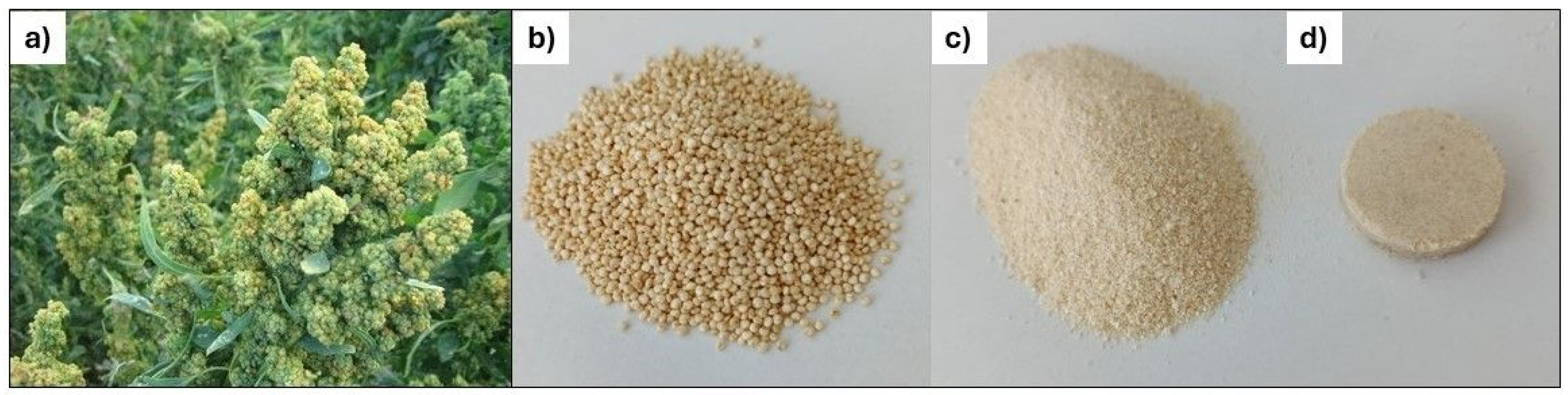
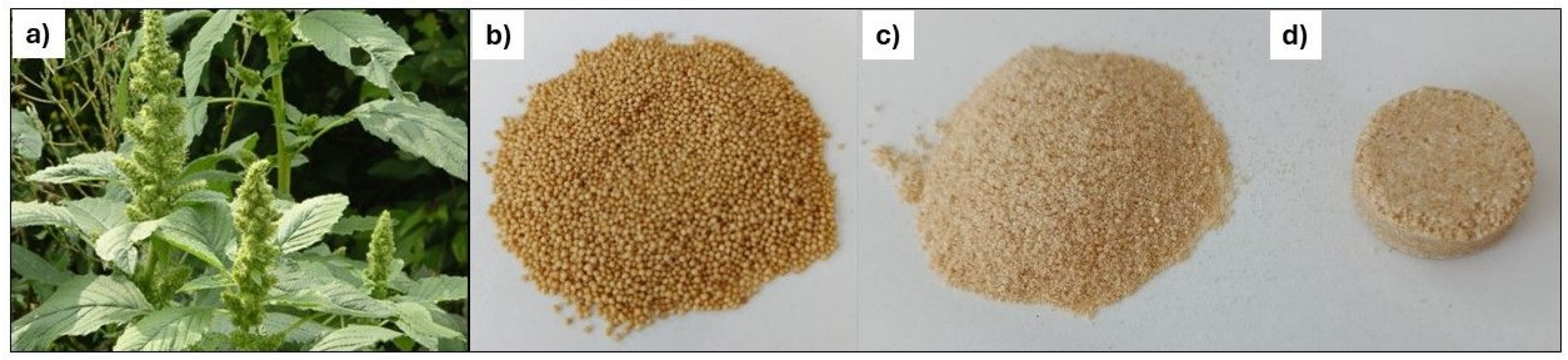
2.1. Samples, Standards and Reagents
2.2. Sample Preparation
2.2.1. Sample Preparation for ICP–OES Analysis
2.2.2. Sample Preparation for LIBS Analysis
2.2.3. Preparation of Solid Calibration Standards for Quantitative LIBS Analysis
2.2.4. Reference Method
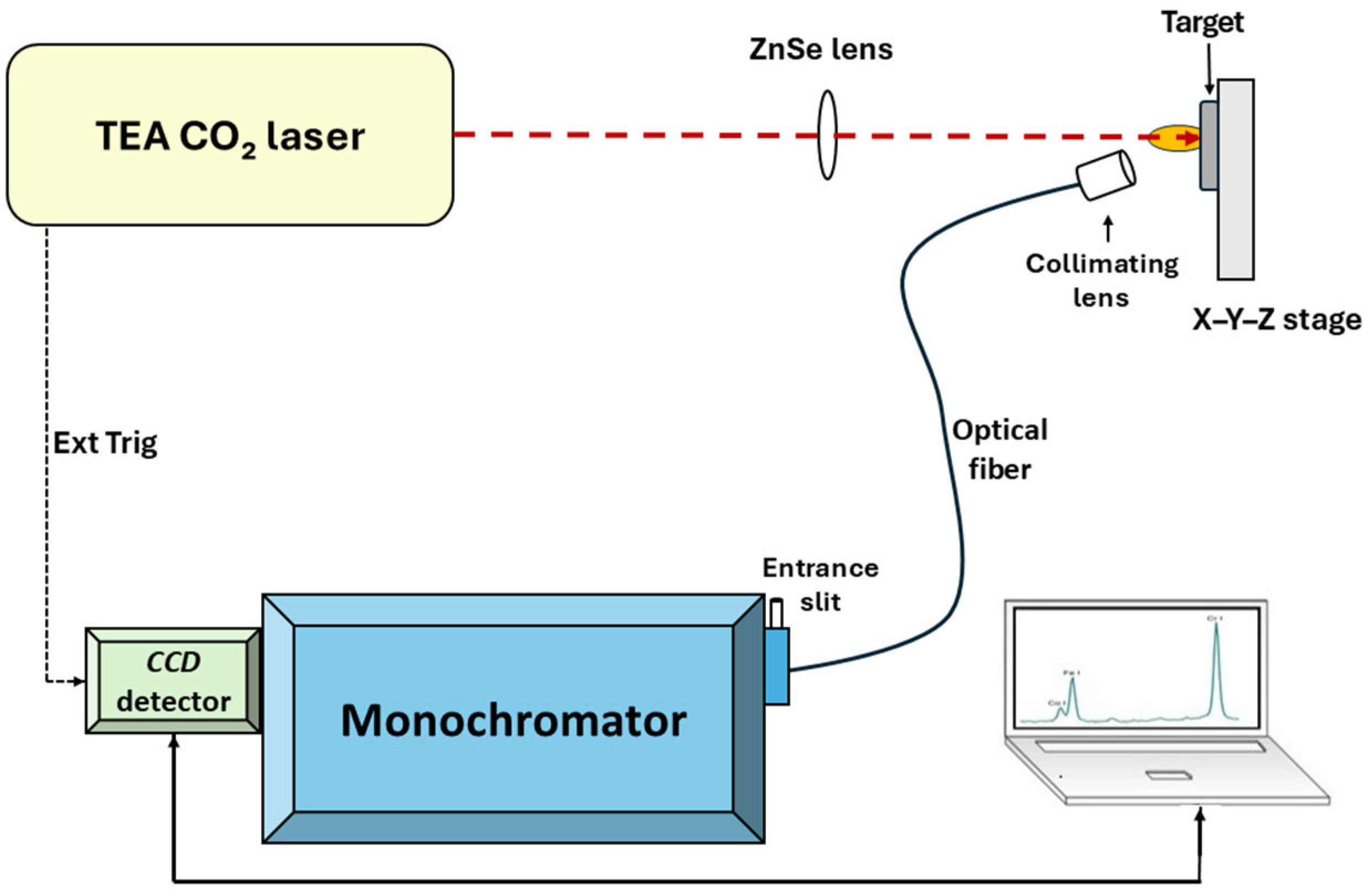
2.3. LIBS Experimental Setup
2.4. Numerical Determination of Plasma Composition and Parameters
3. Results and Discussion
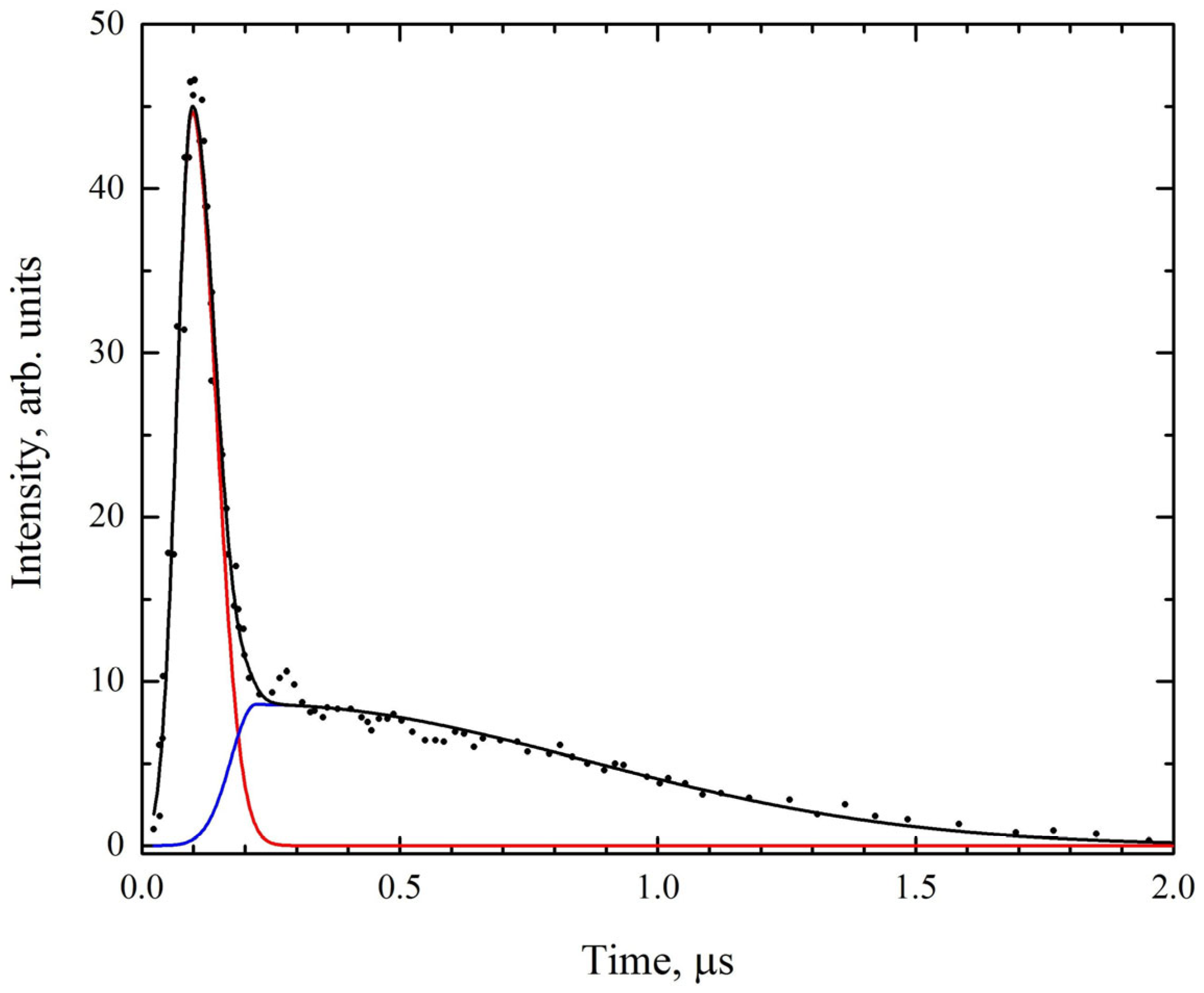
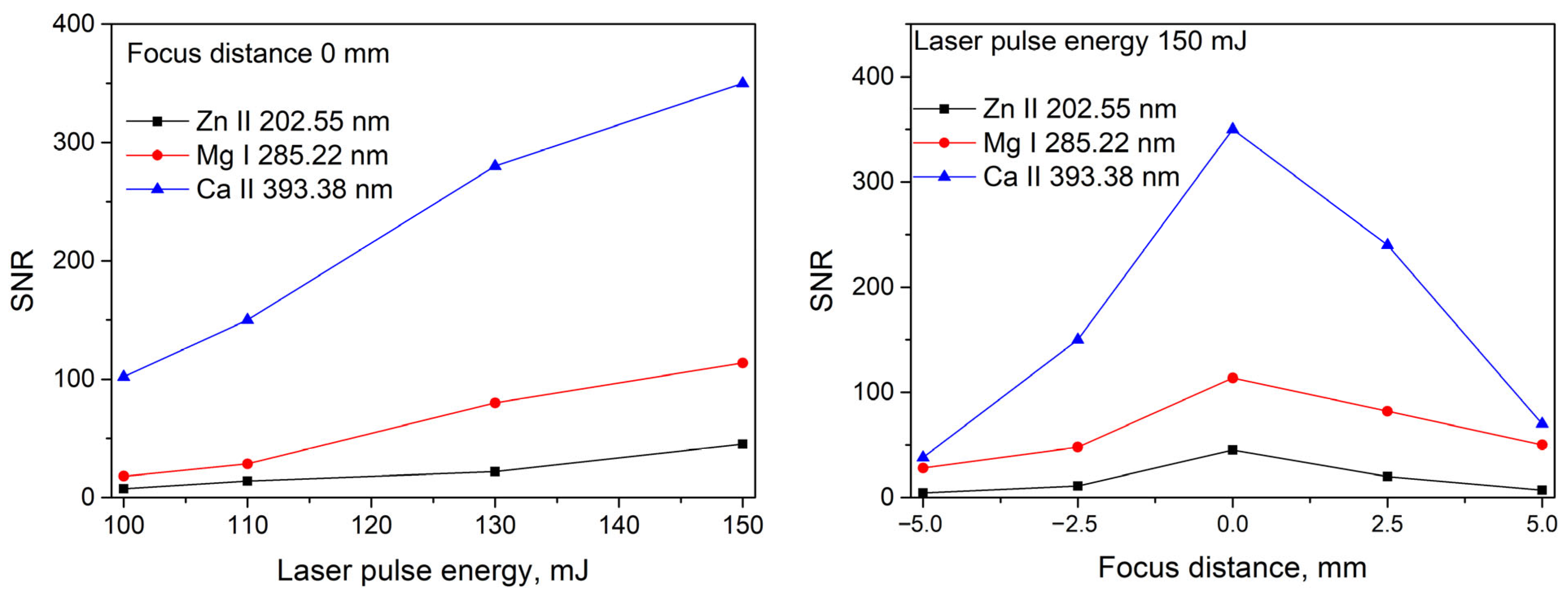
3.1. Experimental Parameter Optimization
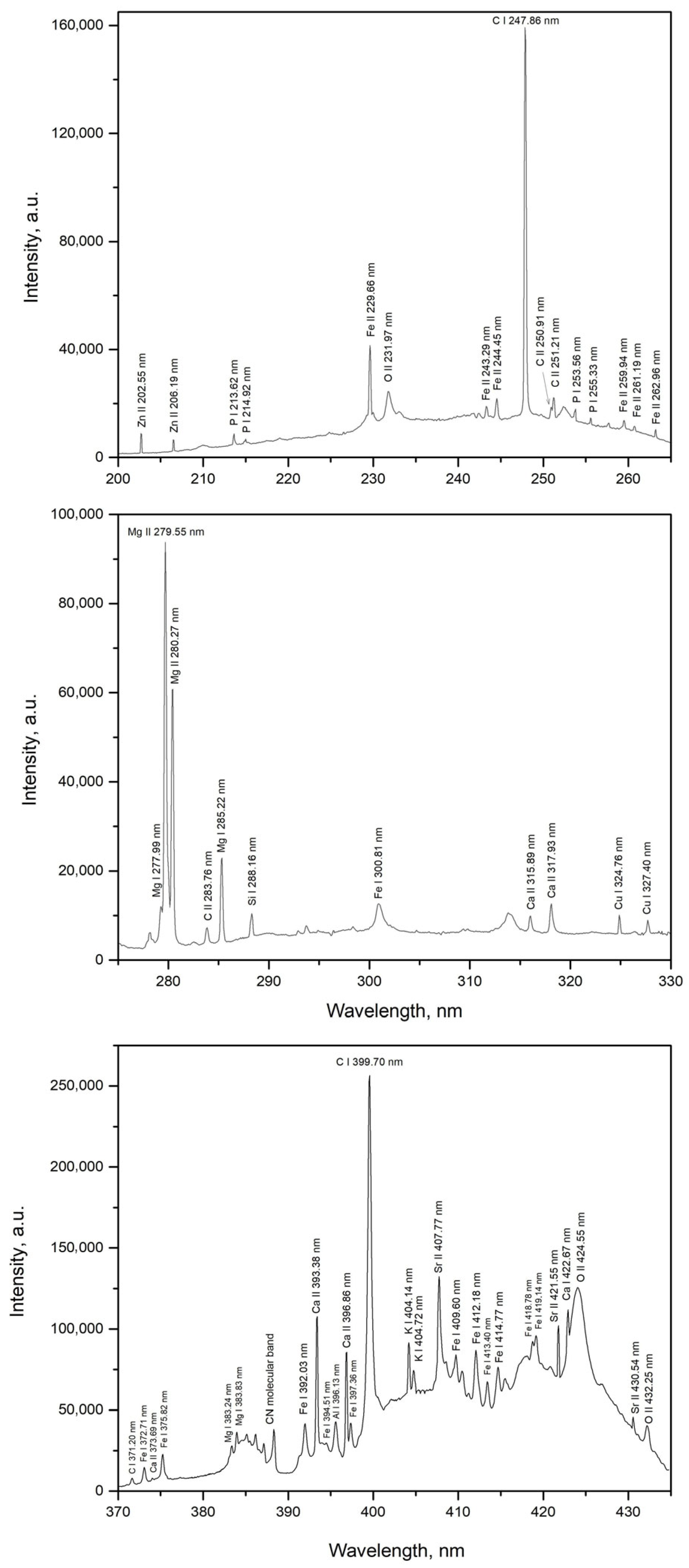
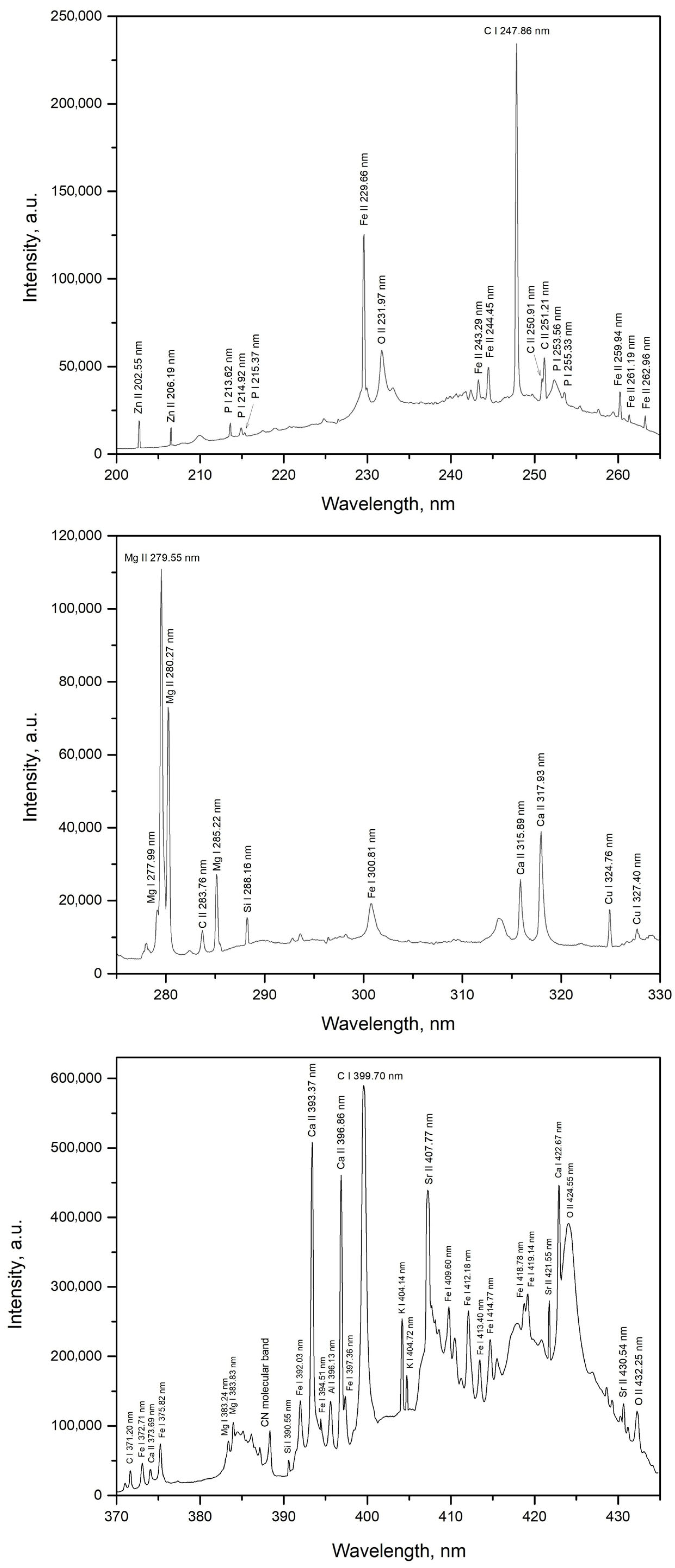
3.2. Qualitative Analysis
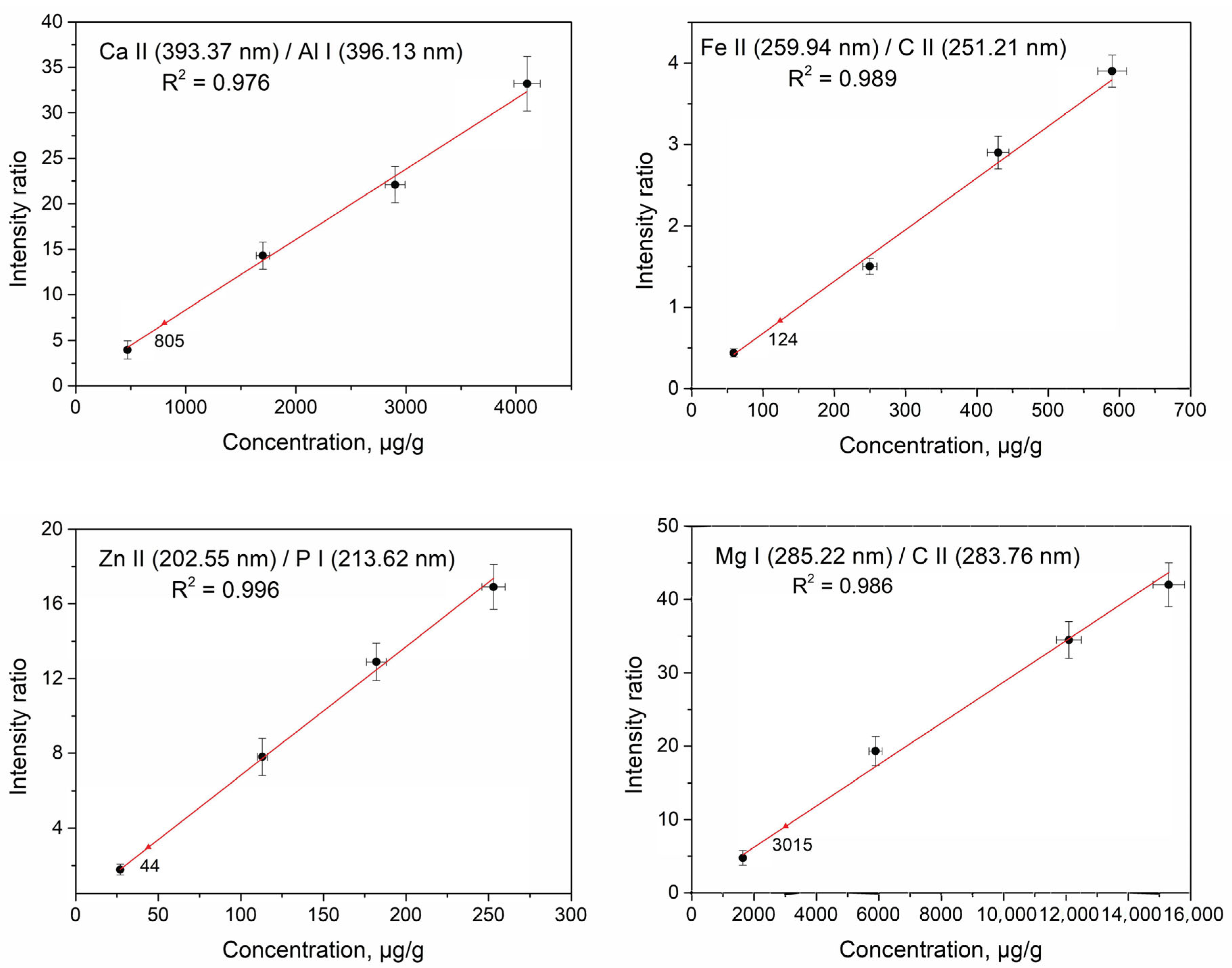
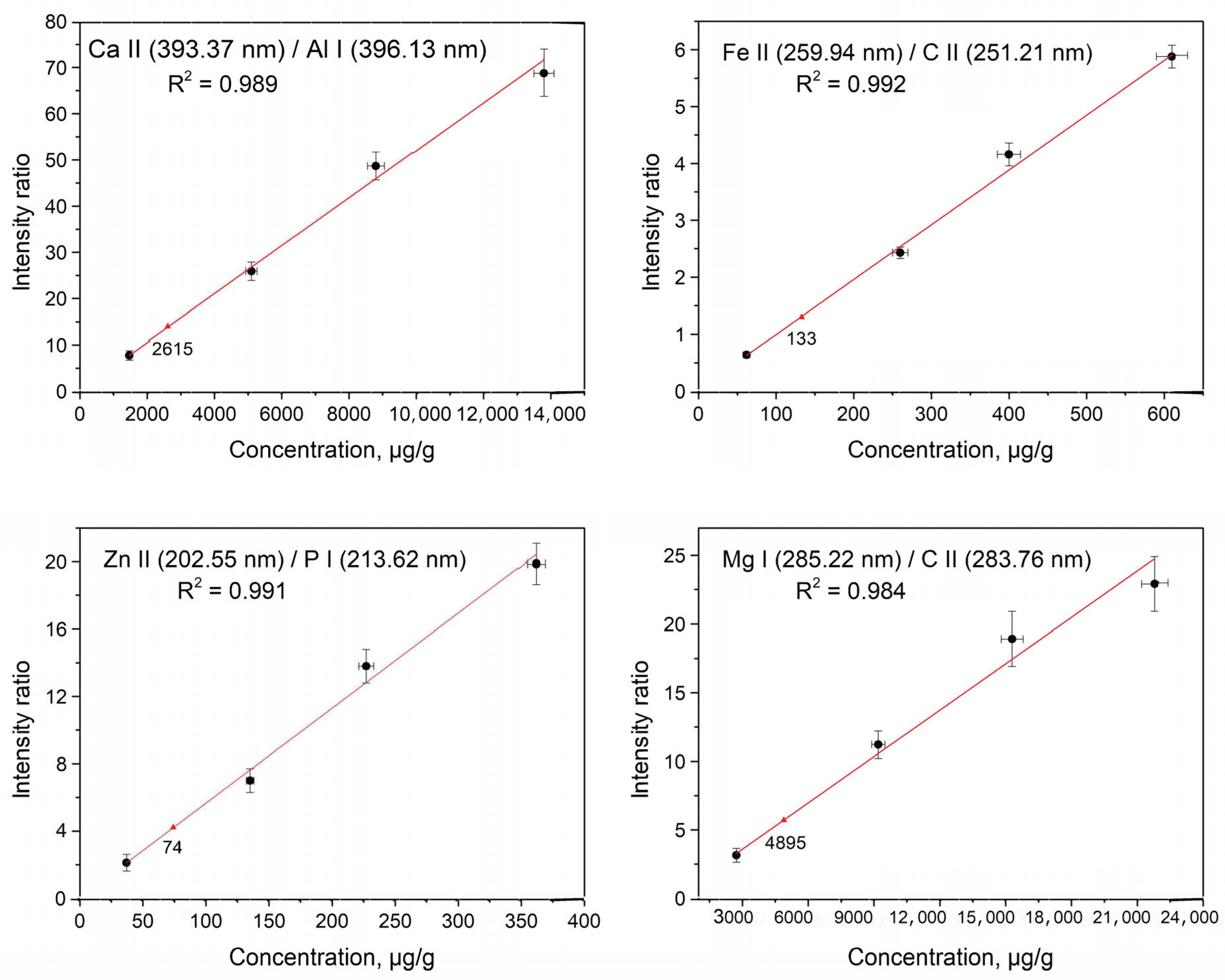
3.3. Quantitative Analysis
3.4. Plasma Diagnostic
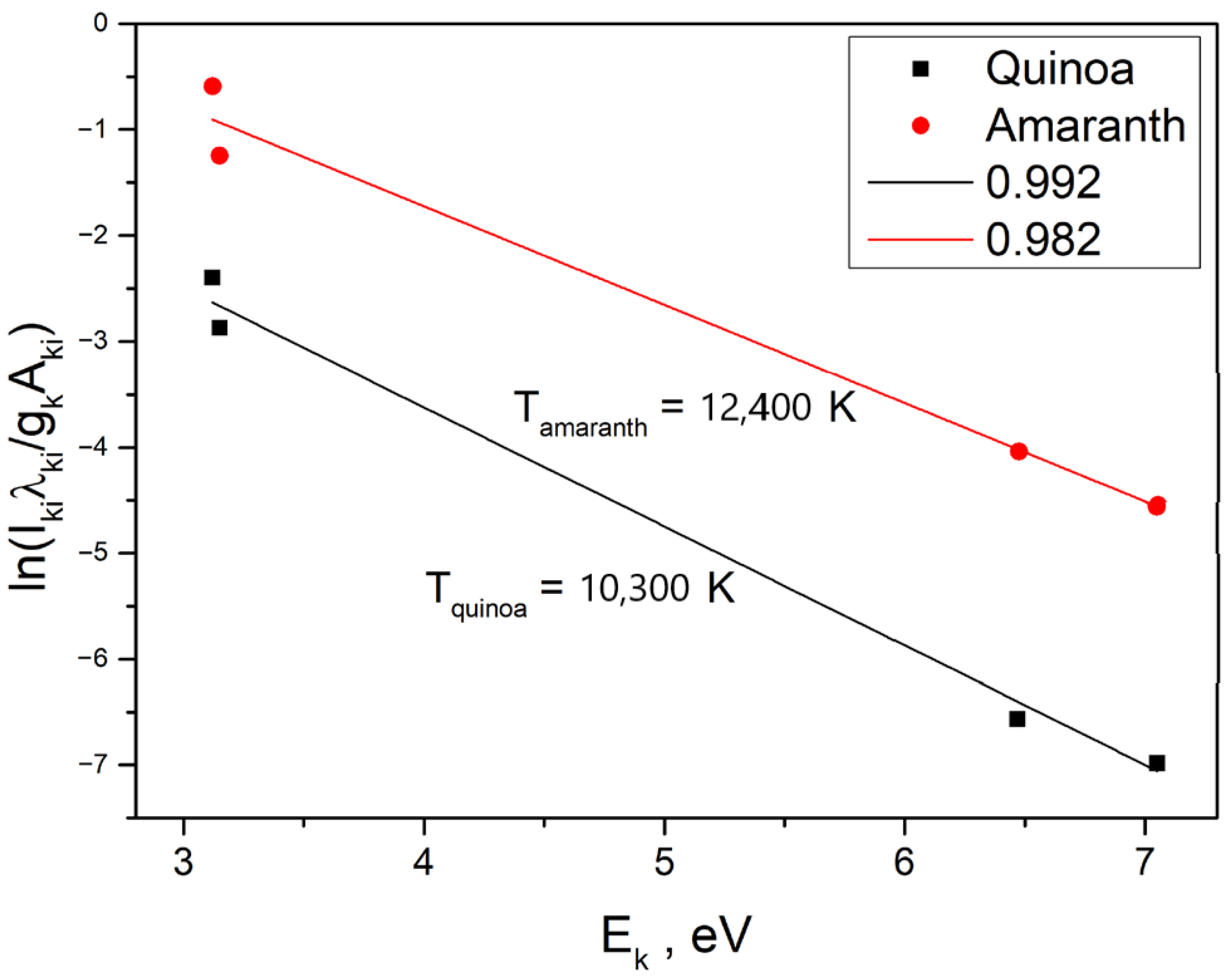
3.4.1. Determination of Plasma Temperature Using the Boltzmann Plot Method
3.4.2. Determination of Electron Number Density
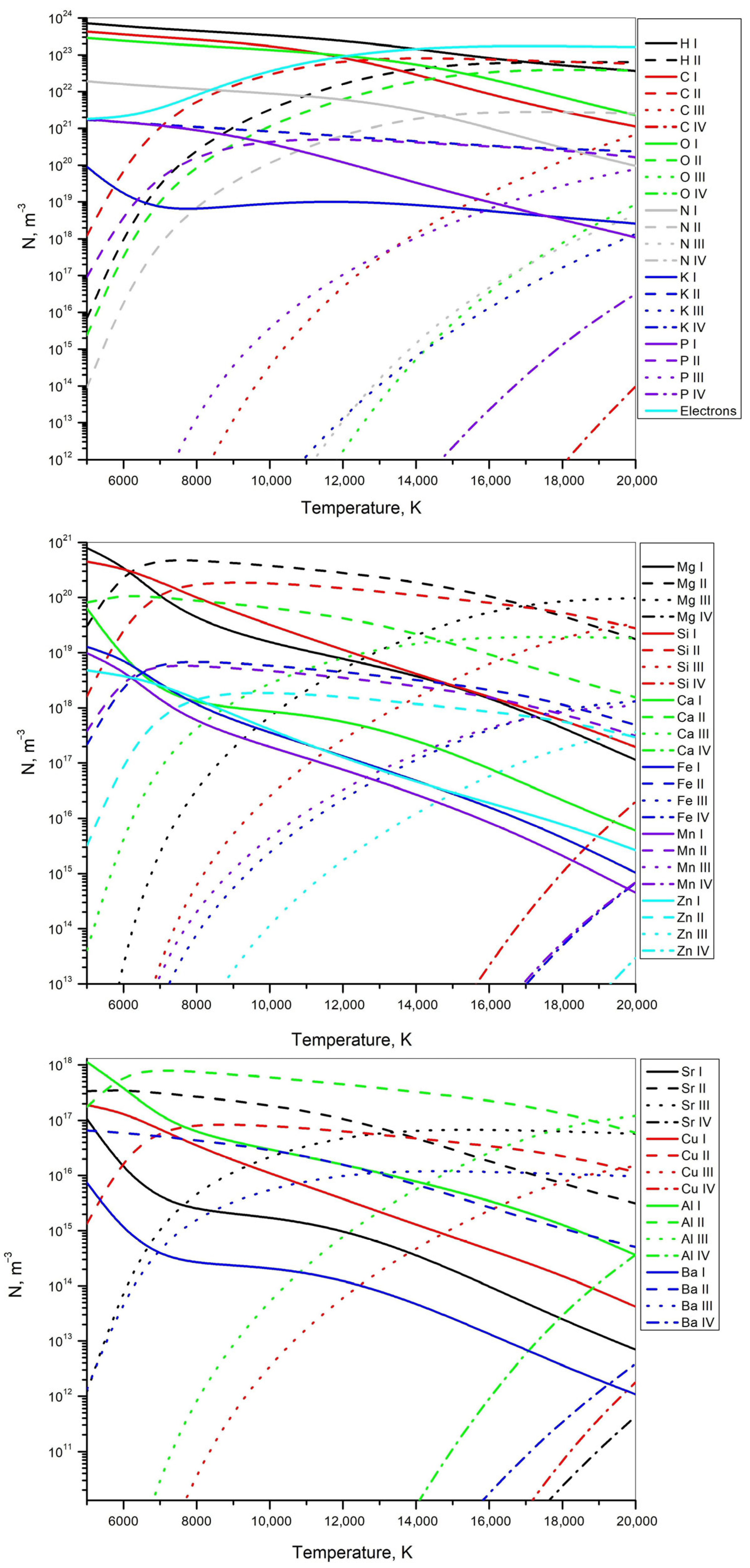
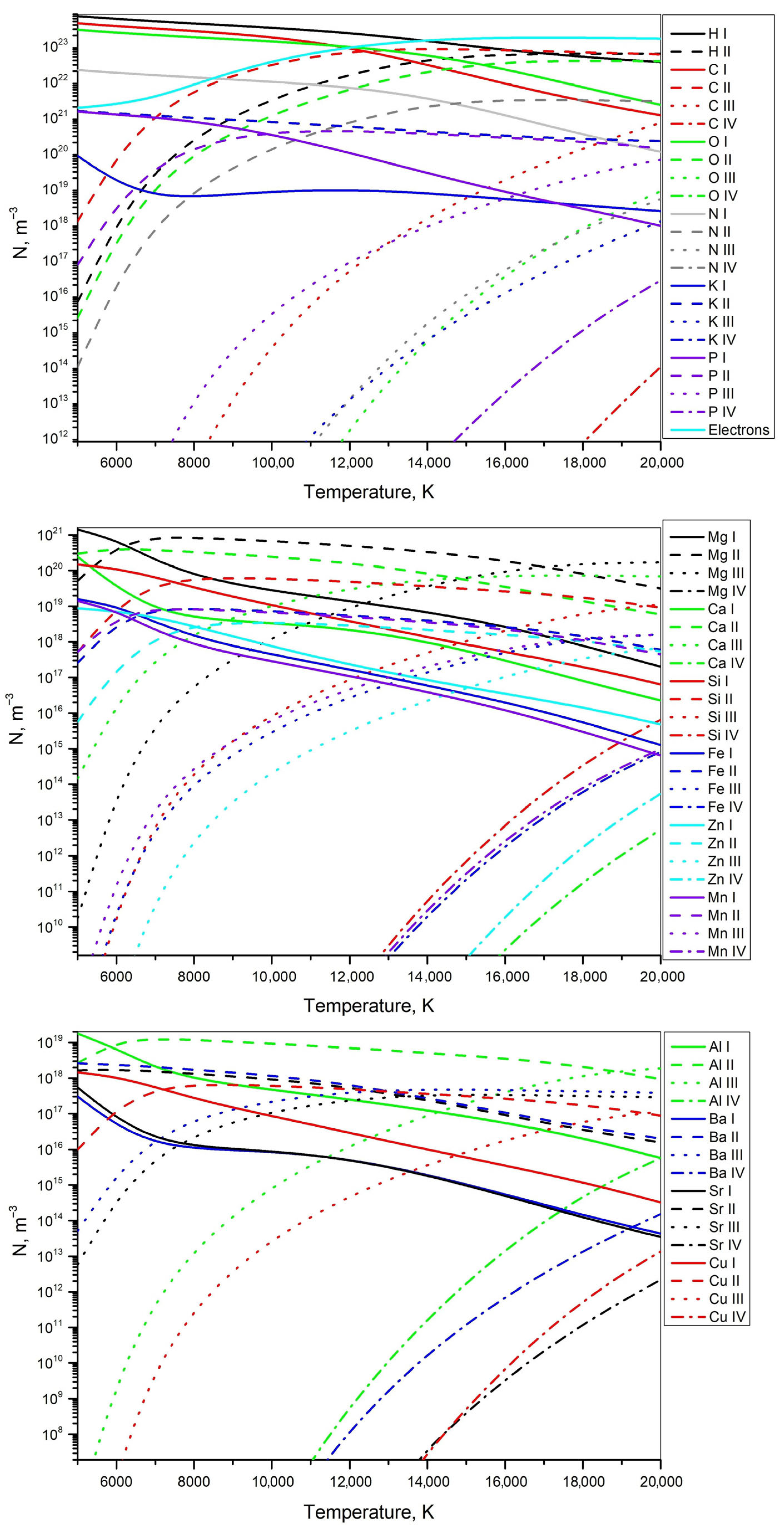
3.4.3. Numerical Analysis of the Ablated Quinoa and Amaranth Plasmas
4. Conclusions
Author Contributions
Funding
Institutional Review Board Statement
Informed Consent Statement
Data Availability Statement
Acknowledgments
Conflicts of Interest
Abbreviations
| A | Einstein coefficient |
| CCD | Charge-Coupled Device |
| DC | Direct Current |
| Eexc | Excitation Energy |
| Eion | Ionization Potential |
| FWHM | Full Width at Half Maximum |
| ICP–MS | Inductively Coupled Plasma Mass Spectrometry |
| ICP–OES | Inductively Coupled Plasma Optical Emission Spectrometry |
| I | Intensity |
| Kβ | Boltzmann constant |
| λ | Wavelength |
| LOD | Limits of Detection |
| LTE | Local Thermodynamic Equilibrium |
| Ne | Electron density |
| rms | root mean square |
| R2 | Coefficient of determination |
| RF | Radio Frequency |
| SNR | Signal-to-Noise Ratio |
| TEA CO2 | Transversely Excited Atmospheric pressure Carbon Dioxide |
| T | Temperature |
| U(T) | Partition Function |
| LIBS | Laser-Induced Breakdown Spectroscopy |
| g | Statistical weight |
References
- Guo, Z.; Deng, X.; Ping, C.; Li, X.; Li, D.; Wu, X.; Xiao, X.; Kong, R. Quinoa: Nutritional and phytochemical value, beneficial effects, and future applications. Appl. Food Res. 2025, 5, 100766. [Google Scholar] [CrossRef]
- Ahmed, I.A.M.; Al Juhaimi, F.; Özcan, M.M. Insights into the nutritional value and bioactive properties of quinoa (Chenopodium quinoa): Past, present and future prospective. Int. J. Food Sci. Technol. 2021, 56, 3726–3741. [Google Scholar] [CrossRef]
- Olmos, E.; Roman-Garcia, I.; Reguera, M.; Mestanza, C.; Fernandez-Garcia, N. An update on the nutritional profiles of quinoa (Chenopodium quinoa Willd.), amaranth (Amaranthus spp.), and chia (Salvia hispanica L.), three key species with the potential to contribute to food security worldwide. JSFA Rep. 2022, 2, 591–602. [Google Scholar] [CrossRef]
- Soriano-García, M.; Aguirre-Díaz, I.S. Nutritional Functional Value and Therapeutic Utilization of Amaranth, Nutritional Value of Amaranth; Waisundara, V.Y., Ed.; IntechOpen: Rijeka, Croatia, 2020. [Google Scholar] [CrossRef]
- Balakrishnan, G.; Schneider, R.G. The Role of Amaranth, Quinoa, and Millets for the Development of Healthy, Sustainable Food Products—A Concise Review. Foods 2022, 11, 2442. [Google Scholar] [CrossRef]
- Bratovcic, A.; Saric, E. Determination of essential nutrients and cadmium in the white quinoa and amaranth seeds. Croat. J. Food Sci. Technol. 2019, 11, 135–139. [Google Scholar] [CrossRef]
- Bolaños, D.; Marchevsky, E.J.; Camiña, J.M. Elemental analysis of amaranth, chia, sesame, linen, and quinoa seeds by ICP-OES: Assessment of classification by chemometrics. Food Anal. Methods 2016, 9, 477–484. [Google Scholar] [CrossRef]
- Alvarez-Jubete, L.; Arendt, E.K.; Gallagher, E. Nutritive value and chemical composition of pseudocereals as gluten-free ingredients. Int. J. Food Sci. Nutr. 2009, 60, 240–257. [Google Scholar] [CrossRef] [PubMed]
- Multari, R.A.; Cremers, D.A.; Dupre, J.A.M.; Gustafson, J.E. Detection of Biological Contaminants on Foods and Food Surfaces Using Laser-Induced Breakdown Spectroscopy (LIBS). J. Agric. Food Chem. 2013, 61, 8687–8694. [Google Scholar] [CrossRef]
- Kim, G.; Kwak, J.; Choi, J.; Park, K. Detection of Nutrient Elements and Contamination by Pesticides in Spinach and Rice Samples Using Laser-Induced Breakdown Spectroscopy (LIBS). J. Agric. Food Chem. 2012, 60, 718–724. [Google Scholar] [CrossRef]
- Hassoun, A.; Måge, I.; Schmidt, W.F.; Temiz, H.T.; Li, L.; Kim, H.-Y.; Nilsen, H.; Biancolillo, A.; Aït-Kaddour, A.; Sikorski, M.; et al. Fraud in Animal Origin Food Products: Advances in Emerging Spectroscopic Detection Methods over the Past Five Years. Foods 2020, 9, 1069. [Google Scholar] [CrossRef] [PubMed]
- Velioglu, H.M.; Sezer, B.; Bilge, G.; Baytur, S.E.; Boyaci, I.H. Identification of offal adulteration in beef by laser induced breakdown spectroscopy (LIBS). Meat Sci. 2018, 138, 28–33. [Google Scholar] [CrossRef]
- Markiewicz-Keszycka, M.; Cama-Moncunill, X.; Casado-Gavalda, M.P.; Dixit, Y.; Cama-Moncunill, R.; Cullen, P.J.; Sullivan, C. Laser-induced breakdown spectroscopy (LIBS) for food analysis: A review. Trends Food Sci. Technol. 2017, 65, 80–93. [Google Scholar] [CrossRef]
- Sezer, B.; Durna, S.; Bilge, G.; Berkkan, A.; Yetisemiyen, A.; Boyaci, I.H. Identification of milk fraud using laser-induced breakdown spectroscopy (LIBS). Int. Dairy J. 2018, 81, 1–7. [Google Scholar] [CrossRef]
- Sezer, B.; Bilge, G.; Boyaci, I.H. Laser-Induced Breakdown Spectroscopy Based Protein Assay for Cereal Samples. J. Agric. Food Chem. 2016, 64, 9459–9463. [Google Scholar] [CrossRef] [PubMed]
- Velásquez-Ferrín, A.; Babos, D.V.; Marina-Montes, C.; Anzano, J. Rapidly growing trends in laser-induced breakdown spectroscopy for food analysis. Appl. Spectrosc. Rev. 2021, 56, 492–512. [Google Scholar] [CrossRef]
- Wu, X.; Shin, S.; Gondhalekar, C.; Patsekin, V.; Bae, E.; Robinson, J.P.; Rajwa, B. Rapid Food Authentication Using a Portable Laser-Induced Breakdown Spectroscopy System. Foods 2023, 12, 402. [Google Scholar] [CrossRef] [PubMed]
- Cremers, D.A.; Radziemski, L.J. Handbook of Laser-Induced Breakdown Spectroscopy; John Wiley & Sons: Chichester, UK; Hoboken, NJ, USA, 2006. [Google Scholar] [CrossRef]
- Dong, M.; Wei, L.; González, J.J.; Oropeza, D.; Chirinos, J.; Mao, X.; Lu, J.; Russo, R.E. Coal discrimination analysis using tandem laser-induced breakdown spectroscopy and laser ablation inductively coupled plasma time-of-flight mass spectrometry. Anal. Chem. 2020, 92, 7003–7010. [Google Scholar] [CrossRef]
- Shameem, K.M.; Dhanada, V.; Harikrishnan, S.; George, S.D.; Kartha, V.; Santhosh, C.; Unnikrishnan, V. Echelle LIBS-Raman system: A versatile tool for mineralogical and archaeological applications. Talanta 2020, 208, 120482. [Google Scholar] [CrossRef]
- Peng, J.; Xie, W.; Jiang, J.; Zhao, Z.; Zhou, F.; Liu, F. Fast Quantification of Honey Adulteration with Laser-Induced Breakdown Spectroscopy and Chemometric Methods. Foods 2020, 9, 341. [Google Scholar] [CrossRef]
- Pasha, A.Z.; Bukhari, S.A.; El Enshasy, H.A.; El Adawi, H.; Al Obaid, S. Compositional analysis and physicochemical evaluation of date palm (Phoenix dactylifera L.) mucilage for medicinal purposes. Saudi J. Biol. Sci. 2022, 29, 774–780. [Google Scholar] [CrossRef]
- Abdel-Salam, Z.; Al Sharnoubi, J.; Harith, M. Qualitative evaluation of maternal milk and commercial infant formulas via LIBS. Talanta 2013, 115, 422–426. [Google Scholar] [CrossRef]
- Bilge, G.; Velioglu, H.M.; Sezer, B.; Eseller, K.E.; Boyaci, I.H. Identification of meat species by using laser-induced breakdown spectroscopy. Meat Sci. 2016, 119, 118–122. [Google Scholar] [CrossRef]
- Chen, T.; Huang, L.; Yao, M.; Hu, H.; Wang, C.; Liu, M. Quantitative analysis of chromium in potatoes by laser-induced breakdown spectroscopy coupled with linear multivariate calibration. Appl. Opt. 2015, 54, 7807–7812. [Google Scholar] [CrossRef]
- Yu, X.; Li, Y.; Gu, X.; Bao, J.; Yang, H.; Sun, L. Laser-induced breakdown spectroscopy application in environmental monitoring of water quality: A review. Environ. Monit. Assess. 2014, 186, 8969–8980. [Google Scholar] [CrossRef]
- Nespeca, M.G.; Vieira, A.L.; Júnior, D.S.; Neto, J.A.G.; Ferreira, E.C. Detection and quantification of adulterants in honey by LIBS. Food Chem. 2020, 311, 125886. [Google Scholar] [CrossRef] [PubMed]
- Wang, J.; Zheng, P.; Liu, H.; Fang, L. Classification of Chinese tea leaves using laser-induced breakdown spectroscopy combined with the discriminant analysis method. Anal. Methods 2016, 8, 3204–3209. [Google Scholar] [CrossRef]
- Bilge, G.; Boyacı, İ.H.; Eseller, K.E.; Tamer, U.; Çakır, S. Analysis of bakery products by laser-induced breakdown spectroscopy. Food Chem. 2015, 181, 186–190. [Google Scholar] [CrossRef] [PubMed]
- Markiewicz-Keszycka, M.; Zhao, M.; Cama-Moncunill, X.; El Arnaout, T.; Becker, D.; O’DOnnell, C.; Cullen, P.J.; Sullivan, C.; Casado-Gavalda, M.P. Rapid analysis of magnesium in infant formula powder using laser-induced breakdown spectroscopy. Int. Dairy J. 2019, 97, 57–64. [Google Scholar] [CrossRef]
- Kongbonga, Y.G.M.; Ghalila, H.; Onana, M.B.; Ben Lakhdar, Z. Classification of vegetable oils based on their concentration of saturated fatty acids using laser induced breakdown spectroscopy (LIBS). Food Chem. 2014, 147, 327–331. [Google Scholar] [CrossRef]
- Temiz, H.T.; Sezer, B.; Berkkan, A.; Tamer, U.; Boyaci, I.H. Assessment of laser induced breakdown spectroscopy as a tool for analysis of butter adulteration. J. Food Compos. Anal. 2018, 67, 48–54. [Google Scholar] [CrossRef]
- Bilge, G.; Sezer, B.; Eseller, K.E.; Berberoğlu, H.; Köksel, H.; Boyacı, İ.H. Determination of Ca addition to the wheat flour by using laser-induced breakdown spectroscopy (LIBS). Eur. Food Res. Technol. 2016, 242, 1685–1692. [Google Scholar] [CrossRef]
- Suliburska, J.; Krejpcio, Z. Evaluation of the content and bioaccessibility of iron, zinc, calcium and magnesium from groats, rice, leguminous grains and nuts. J. Food Sci. Technol. 2014, 51, 589–594. [Google Scholar] [CrossRef]
- Guan, D.-X.; Menezes-Blackburn, D.; Li, G. The Importance of Mineral Elements for Sustainable Crop Production. Agronomy 2024, 14, 209. [Google Scholar] [CrossRef]
- White, P.J.; Broadley, M.R. Biofortification of crops with seven mineral elements often lacking in human diets––Iron, zinc, copper, calcium, magnesium, selenium and iodine. New Phytol. 2009, 182, 49–84. [Google Scholar] [CrossRef]
- Trtica, M.S.; Gakovic, B.M.; Radak, B.B.; Miljanic, S.S. Efficient small-scale TEA CO2 laser for material surface modification. In International Conference on Atomic and Molecular Pulsed Lasers IV; Tarasenko, V.F., Mayer, G.V., Petrash, G.G., Eds.; SPIE: Tomsk, Russia, 2002; p. 44. [Google Scholar] [CrossRef]
- Savovic, J.; Stoiljkovic, M.; Kuzmanovic, M.; Momcilovic, M.; Ciganovic, J.; Rankovic, D.; Zivkovic, S.; Trtica, M. The feasibility of TEA CO2 laser-induced plasma for spectrochemical analysis of geological samples in simulated Martian conditions. Spectrochim. Acta Part B At. Spectrosc. 2016, 118, 127–136. [Google Scholar] [CrossRef]
- Pavlović, M.S.; Pavlović, N.Z.; Marinković, M. Excitation and ionization characteristics of a d.c. argon plasma evaluated by means of emission and absorption of iron lines, and broadening of the hydrogen Hβ line—Experimental facts. Spectrochim. Acta Part B At. Spectrosc. 1991, 46, 1487–1498. [Google Scholar] [CrossRef]
- Ristić, M.; Krstevski, N.; Ranković, D.; Marković, M.; Šajić, A.; Kuzmanović, M. The influence of continuum lowering on the equilibrium composition of plasma: Case study of laser-induced plasma on a WC–Cu target. Plasma Phys. Control. Fusion 2024, 66, 125014. [Google Scholar] [CrossRef]
- Miziolek, A.W.; Schechter, I.; Palleschi, V. (Eds.) Laser-Induced Breakdown Spectroscopy (LIBS): Fundamentals and Applications; Cambridge University Press: Cambridge, UK; New York, NY, USA, 2006. [Google Scholar]
- Stewart, J.C.; Pyatt, K.D., Jr. Lowering of Ionization Potentials in Plasmas. Astrophys. J. 1966, 144, 1203. [Google Scholar] [CrossRef]
- Ciricosta, O.; Vinko, S.M.; Chung, H.-K.; Jackson, C.; Lee, R.W.; Preston, T.R.; Rackstraw, D.S.; Wark, J.S. Detailed model for hot-dense aluminum plasmas generated by an x-ray free electron laser. Phys. Plasmas 2016, 23, 022707. [Google Scholar] [CrossRef]
- Poggialini, F.; Legnaioli, S.; Campanella, B.; Cocciaro, B.; Lorenzetti, G.; Raneri, S.; Palleschi, V. Calculating the Limits of Detection in Laser-Induced Breakdown Spectroscopy: Not as Easy as It Might Seem. Appl. Sci. 2023, 13, 3642. [Google Scholar] [CrossRef]
- Šajić, A.; Ranković, D.; Ristić, M.; Marković, M.; Ciganović, J.; Kuzmanović, M. Quantitative analysis of soda-lime glass by the LIBS technique based on the TEA CO2 laser. Spectrochim. Acta Part B At. Spectrosc. 2025, 224, 107113. [Google Scholar] [CrossRef]
- Fisher, B.T.; Johnsen, H.A.; Buckley, S.G.; Hahn, D.W. Temporal Gating for the Optimization of Laser-Induced Breakdown Spectroscopy Detection and Analysis of Toxic Metals. Appl. Spectrosc. 2001, 55, 1312–1319. [Google Scholar] [CrossRef]
- Tognoni, E.; Cristoforetti, G. Signal and noise in Laser Induced Breakdown Spectroscopy: An introductory review. Opt. Laser Technol. 2016, 79, 164–172. [Google Scholar] [CrossRef]
- Guezenoc, J.; Gallet-Budynek, A.; Bousquet, B. Critical review and advices on spectral-based normalization methods for LIBS quantitative analysis. Spectrochim. Acta Part B At. Spectrosc. 2019, 160, 105688. [Google Scholar] [CrossRef]
- Sun, Q.; Tran, M.; Smith, B.; Winefordner, J. Determination of Mn and Si in iron ore by laser-induced plasma spectroscopy. Anal. Chim. Acta 2000, 413, 187–195. [Google Scholar] [CrossRef]
- Ismail, M.A.; Imam, H.; Elhassan, A.; Youniss, W.T.; Harith, M.A. LIBS limit of detection and plasma parameters of some elements in two different metallic matrices. J. Anal. At. Spectrom. 2004, 19, 489–494. [Google Scholar] [CrossRef]
- Juvé, V.; Portelli, R.; Boueri, M.; Baudelet, M.; Yu, J. Space-resolved analysis of trace elements in fresh vegetables using ultraviolet nanosecond laser-induced breakdown spectroscopy. Spectrochim. Acta Part B At. Spectrosc. 2008, 63, 1047–1053. [Google Scholar] [CrossRef]
- Manelski, H.; Wiens, R.; Bousquet, B.; Hansen, P.; Schröder, S.; Clegg, S.; Martin, N.; Nelson, A.; Martinez, R.; Ollila, A.; et al. LIBS plasma diagnostics with SuperCam on Mars: Implications for quantification of elemental abundances. Spectrochim. Acta Part B At. Spectrosc. 2024, 222, 107061. [Google Scholar] [CrossRef]
- Idris, N.; Usmawanda, T.N.; Lahna, K.; Ramli, M. Temperature estimation using Boltzmann plot method of many calcium emission lines in laser plasma produced on river clamshell sample. J. Phys. Conf. Ser. 2018, 1120, 012098. [Google Scholar] [CrossRef]
- Rezaei, F.; Eskandary, A.; Zahedi, M.; Beheshtipour, S.; Palleschi, V. A Comprehensive Review of the Fundamentals, Progress, and Applications of the LIBS Method in Analysis of Plants: Quantitative and Qualitative Analysis. Photonics 2025, 12, 1061. [Google Scholar] [CrossRef]
- Cristoforetti, G.; De Giacomo, A.; Dell’Aglio, M.; Legnaioli, S.; Tognoni, E.; Palleschi, V.; Omenetto, N. Local Thermodynamic Equilibrium in Laser-Induced Breakdown Spectroscopy: Beyond the McWhirter criterion. Spectrochim. Acta Part B At. Spectrosc. 2010, 65, 86–95. [Google Scholar] [CrossRef]
- Molina, M.J.; Sarchi, C.; Tesio, A.Y.; Costa-Vera, C.; Pace, D.M.D. Quantitative Analysis of Lithium in Natural Brines from the Lithium Triangle by Laser-Induced Breakdown Spectroscopy. Atoms 2025, 13, 56. [Google Scholar] [CrossRef]
- Stetzler, J.; Tang, S.; Chinni, R.C. Plasma Temperature and Electron Density Determination Using Laser-Induced Breakdown Spectroscopy (LIBS) in Earth’s and Mars’s Atmospheres. Atoms 2020, 8, 50. [Google Scholar] [CrossRef]
- De Bock, P.; Daelemans, L.; Selis, L.; Raes, K.; Vermeir, P.; Eeckhout, M.; Van Bockstaele, F. Comparison of the Chemical and Technological Characteristics of Wholemeal Flours Obtained from Amaranth (Amaranthus sp.), Quinoa (Chenopodium quinoa) and Buckwheat (Fagopyrum sp.) Seeds. Foods 2021, 10, 651. [Google Scholar] [CrossRef] [PubMed]
- Ogungbenle, H.N. Nutritional evaluation and functional properties of quinoa (Chenopodium quinoa) flour. Int. J. Food Sci. Nutr. 2003, 54, 153–158. [Google Scholar] [CrossRef]



| P | K | Mg | Ca | Fe | Zn | Si | Al | Cu | Sr | |
|---|---|---|---|---|---|---|---|---|---|---|
| Quinoa | 4435 | 5645 | 1634 | 468 | 59.2 | 27.2 | 86.1 | 6.44 | 5.06 | 3.12 |
| Amaranth | 5961 | 4875 | 2726 | 1473 | 61.9 | 37.3 | 28.3 | 16.8 | 4.97 | 2.61 |
| Calibration | Concentration (µg g−1) | |||
|---|---|---|---|---|
| Standard | Ca | Fe | Zn | Mg |
| SQ1 | 470 ± 15 | 59 ± 2 | 27 ± 1 | 1640 ± 50 |
| SQ2 | 820 ± 30 | 122 ± 4 | 46 ± 2 | 2960 ± 70 |
| SQ3 | 1700 ± 60 | 250 ± 10 | 113 ± 3 | 5900 ± 210 |
| SQ4 | 2900 ± 90 | 430 ± 15 | 182 ± 6 | 12,100 ± 400 |
| SQ5 | 4100 ± 120 | 590 ± 20 | 253 ± 7 | 15,300 ± 500 |
| Calibration | Concentration (µg g−1) | |||
|---|---|---|---|---|
| Standard | Ca | Fe | Zn | Mg |
| SA1 | 1470 ± 50 | 62 ± 2 | 37 ± 1 | 2730 ± 50 |
| SA2 | 2660 ± 80 | 131 ± 4 | 73 ± 2 | 4830 ± 160 |
| SA3 | 5100 ± 170 | 260 ± 10 | 135 ± 3 | 9200 ± 300 |
| SA4 | 8800 ± 250 | 400 ± 15 | 227 ± 6 | 15,300 ± 500 |
| SA5 | 13,800 ± 300 | 610 ± 20 | 362 ± 7 | 21,800 ± 600 |
| Element | Wavelength (nm) | SNR quinoa | cquinoa (µg g−1) | LODquinoa (µg g−1) | SNR Amaranth | camaranth (µg g−1) | LODamaranth (µg g−1) |
|---|---|---|---|---|---|---|---|
| P I | 213.62 | 35 | 4435 | 380 | 51 | 5961 | 350 |
| K I | 404.14 | 339 | 5645 | 50 | 325 | 4875 | 45 |
| Mg I | 285.22 | 114 | 1634 | 43 | 137 | 2726 | 60 |
| Ca II | 393.38 | 350 | 468 | 4 | 330 | 1473 | 14 |
| Fe II | 259.94 | 107 | 59.2 | 2 | 99 | 61.9 | 2 |
| Zn II | 202.55 | 45 | 27.2 | 2 | 51 | 37.3 | 2 |
| Si I | 288.16 | 65 | 86.1 | 4 | 57 | 28.3 | 2 |
| Al I | 396.13 | 38 | 6.44 | 0.5 | 63 | 16.8 | 1 |
| Cu I | 324.76 | 68 | 5.06 | 0.3 | 61 | 4.97 | 0.3 |
| Sr II | 407.77 | 54 | 3.12 | 0.2 | 47 | 2.61 | 0.2 |
| Ion | Wavelength (nm) | Aki (108 s−1) | gk | Ek (eV) |
|---|---|---|---|---|
| Ca II | 315.89 | 3.1 | 4 | 7.05 |
| Ca II | 317.93 | 3.6 | 6 | 7.05 |
| Ca II | 373.69 | 1.7 | 2 | 6.47 |
| Ca II | 393.37 | 1.5 | 4 | 3.15 |
| Ca II | 396.85 | 1.4 | 2 | 3.12 |
| Element | Quinoa (mol %) | Amaranth (mol %) | Source/Basis |
|---|---|---|---|
| H | 49.14 | 49.7 | Calculated from literature data |
| C | 29.4 | 29.5 | Calculated from literature data |
| O | 19.8 | 19.4 | Calculated from literature data |
| N | 1.3 | 1.5 | Calculated from literature data |
| K | 0.121 | 0.0487 | ICP–OES (this work) |
| P | 0.120 | 0.1 | ICP–OES (this work) |
| Mg | 5.65 × 10⁻² | 0.1 | ICP–OES (this work) |
| Si | 3.07 × 10⁻³ | 2.83 × 10⁻³ | ICP–OES (this work) |
| Ca | 9.84 × 10⁻³ | 0.0147 | ICP–OES (this work) |
| Al | 8.9 × 10⁻³ | 1.68 × 10⁻³ | ICP–OES (this work) |
| Fe | 8.92 × 10⁻³ | 6.19 × 10⁻³ | ICP–OES (this work) |
| Zn | 3.27 × 10⁻³ | 3.73 × 10⁻³ | ICP–OES (this work) |
| Cu | 1.3 × 10⁻³ | 4.97 × 10⁻⁴ | ICP–OES (this work) |
| Mn | 6.99 × 10⁻⁴ | 1.0 × 10⁻³ | ICP–OES (this work) |
| Sr | 3.0 × 10⁻⁴ | 1.5 × 10⁻⁴ | ICP–OES (this work) |
| Ba | 5.0 × 10⁻⁶ | 2.0 × 10⁻⁵ | ICP–OES (this work) |
Disclaimer/Publisher’s Note: The statements, opinions and data contained in all publications are solely those of the individual author(s) and contributor(s) and not of MDPI and/or the editor(s). MDPI and/or the editor(s) disclaim responsibility for any injury to people or property resulting from any ideas, methods, instructions or products referred to in the content. |
© 2025 by the authors. Licensee MDPI, Basel, Switzerland. This article is an open access article distributed under the terms and conditions of the Creative Commons Attribution (CC BY) license (https://creativecommons.org/licenses/by/4.0/).
Share and Cite
Ranković, D.; Savić, M.; Stoiljković, M.; Ristić, M.; Luchkouski, V.V.; Đorđević, N.; Chumakov, A.N. Methodological Approach to LIBS Elemental Analysis and Plasma Characterization of Quinoa and Amaranth Pseudocereals Using a TEA CO2 Laser. Foods 2025, 14, 4199. https://doi.org/10.3390/foods14244199
Ranković D, Savić M, Stoiljković M, Ristić M, Luchkouski VV, Đorđević N, Chumakov AN. Methodological Approach to LIBS Elemental Analysis and Plasma Characterization of Quinoa and Amaranth Pseudocereals Using a TEA CO2 Laser. Foods. 2025; 14(24):4199. https://doi.org/10.3390/foods14244199
Chicago/Turabian StyleRanković, Dragan, Marjetka Savić, Milovan Stoiljković, Miroslav Ristić, Vyacheslav V. Luchkouski, Neda Đorđević, and Aleksandr N. Chumakov. 2025. "Methodological Approach to LIBS Elemental Analysis and Plasma Characterization of Quinoa and Amaranth Pseudocereals Using a TEA CO2 Laser" Foods 14, no. 24: 4199. https://doi.org/10.3390/foods14244199
APA StyleRanković, D., Savić, M., Stoiljković, M., Ristić, M., Luchkouski, V. V., Đorđević, N., & Chumakov, A. N. (2025). Methodological Approach to LIBS Elemental Analysis and Plasma Characterization of Quinoa and Amaranth Pseudocereals Using a TEA CO2 Laser. Foods, 14(24), 4199. https://doi.org/10.3390/foods14244199