Perilla Seed Oil Alleviates High-Fat-Diet-Induced Hyperlipidemia by Regulating Fatty Acid Metabolism via the PI3K/Akt/NOS3 Pathway
Abstract
1. Introduction
2. Materials and Methods
2.1. Materials and Reagents
2.1.1. Animal Experiment Materials
2.1.2. Plant Experiment Materials
2.2. UHPLC-MS Analysis of Chemical Composition of PSO
2.2.1. Extraction of PSO
2.2.2. UHPLC-MS Analysis and Data Processing
2.3. Determination of Major Fatty Acids in PSO by GC-MS/MS
2.3.1. Sample Preparation
2.3.2. GC-MS/MS Analysis
2.4. Network Pharmacology Analysis
2.4.1. Identification of Hyperlipidemia-Associated Targets
2.4.2. Construction of Protein–Protein Interaction Networks
2.4.3. Gene Ontology (GO) and Kyoto Encyclopedia of Genes and Genomes (KEGG) Analysis
2.4.4. Compound-Target-Pathway Networks
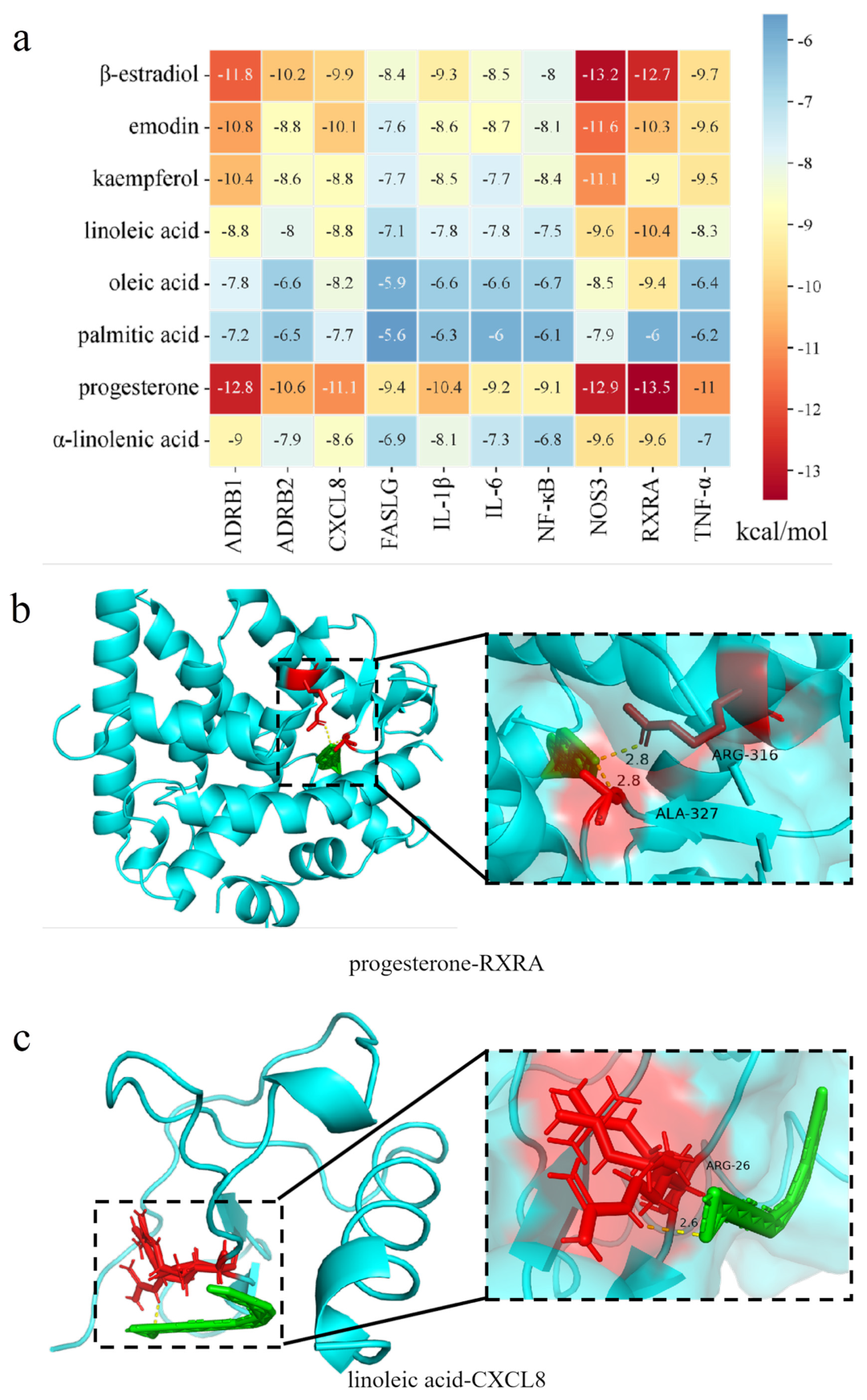
2.4.5. Molecular Docking Validation
2.5. Animal Experiments
2.6. Serum Biochemical Parameter
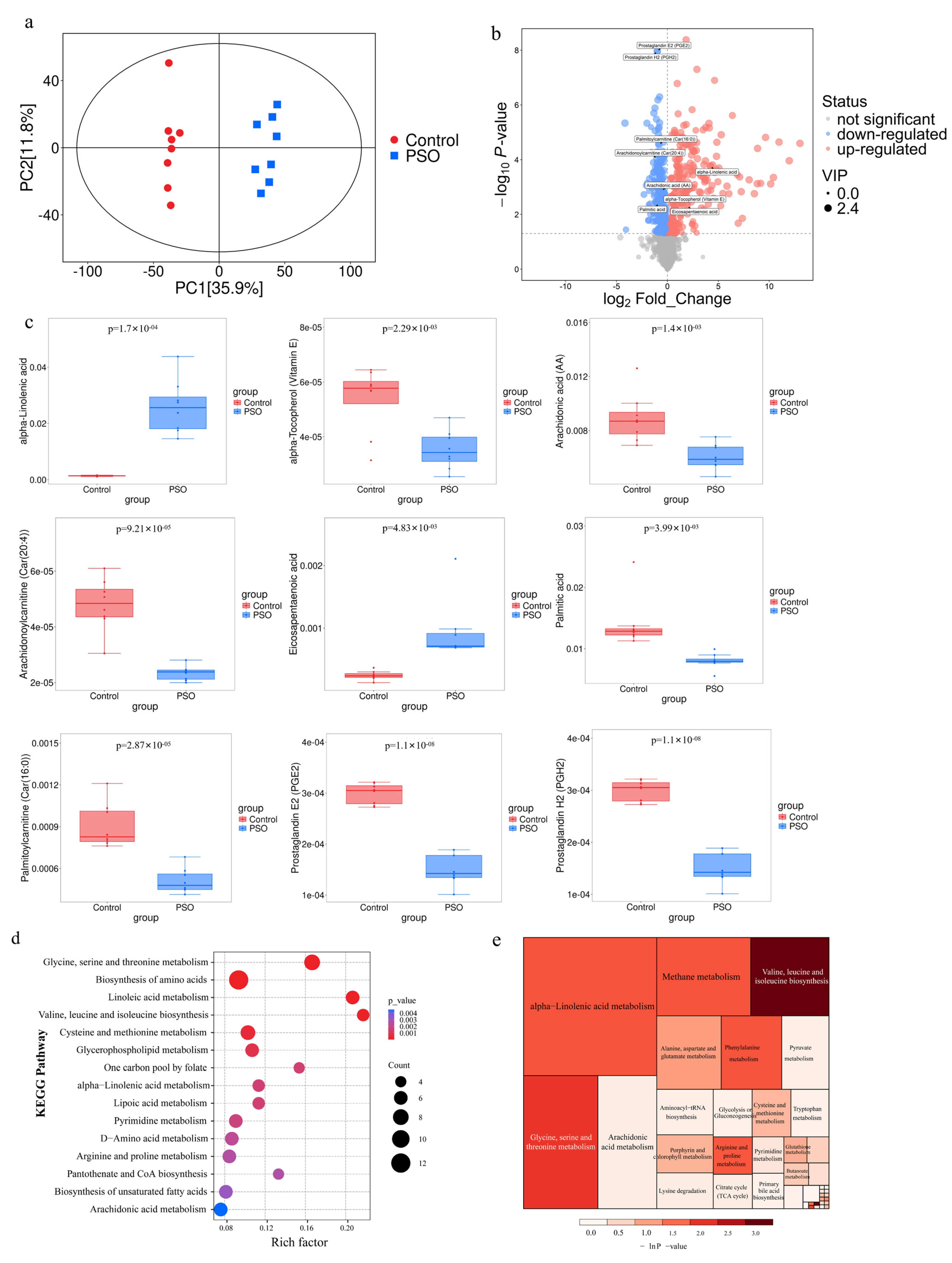
2.7. Serum Metabolomics Analysis
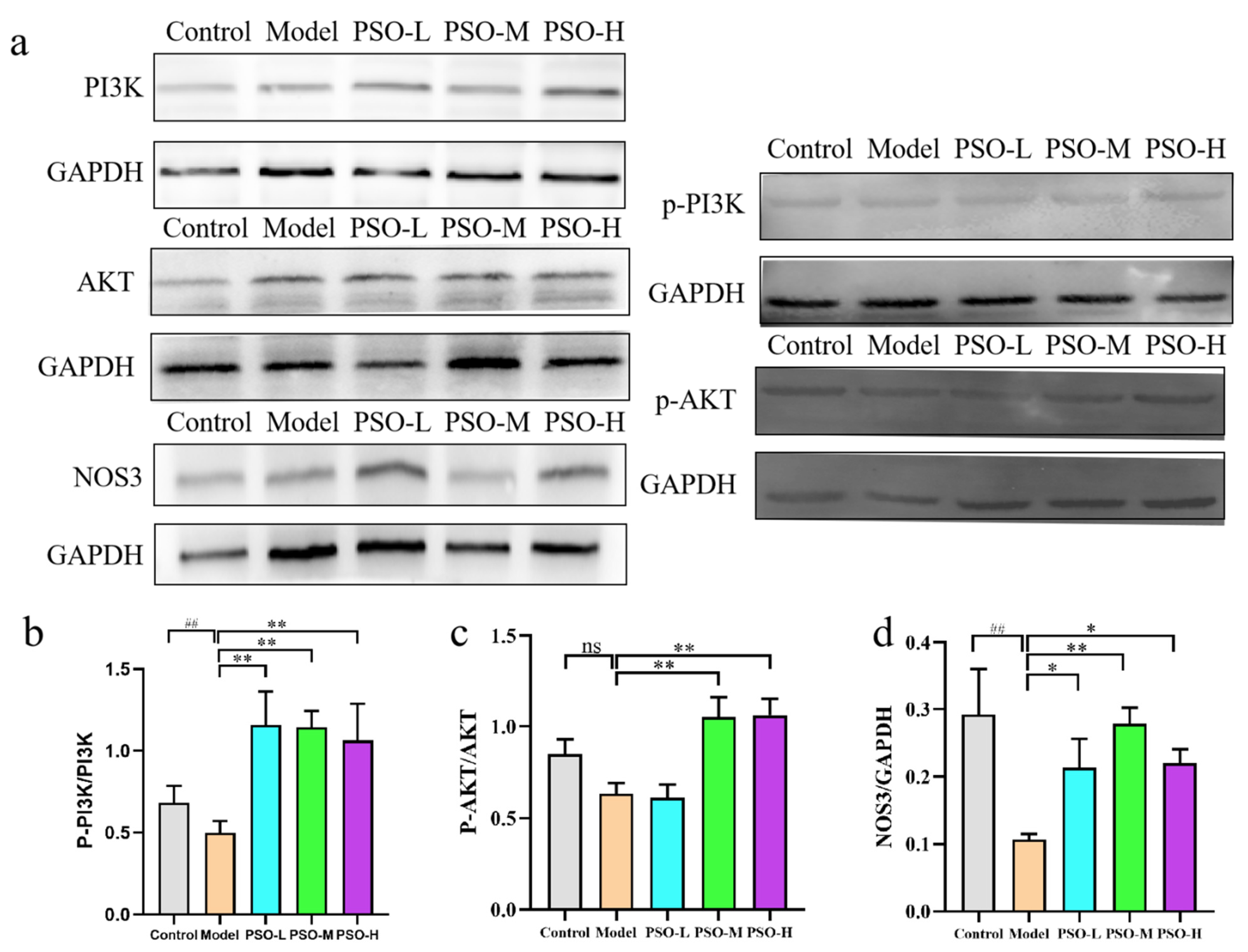
2.8. Western Blot Analysis
2.9. Statistical Analysis
3. Results
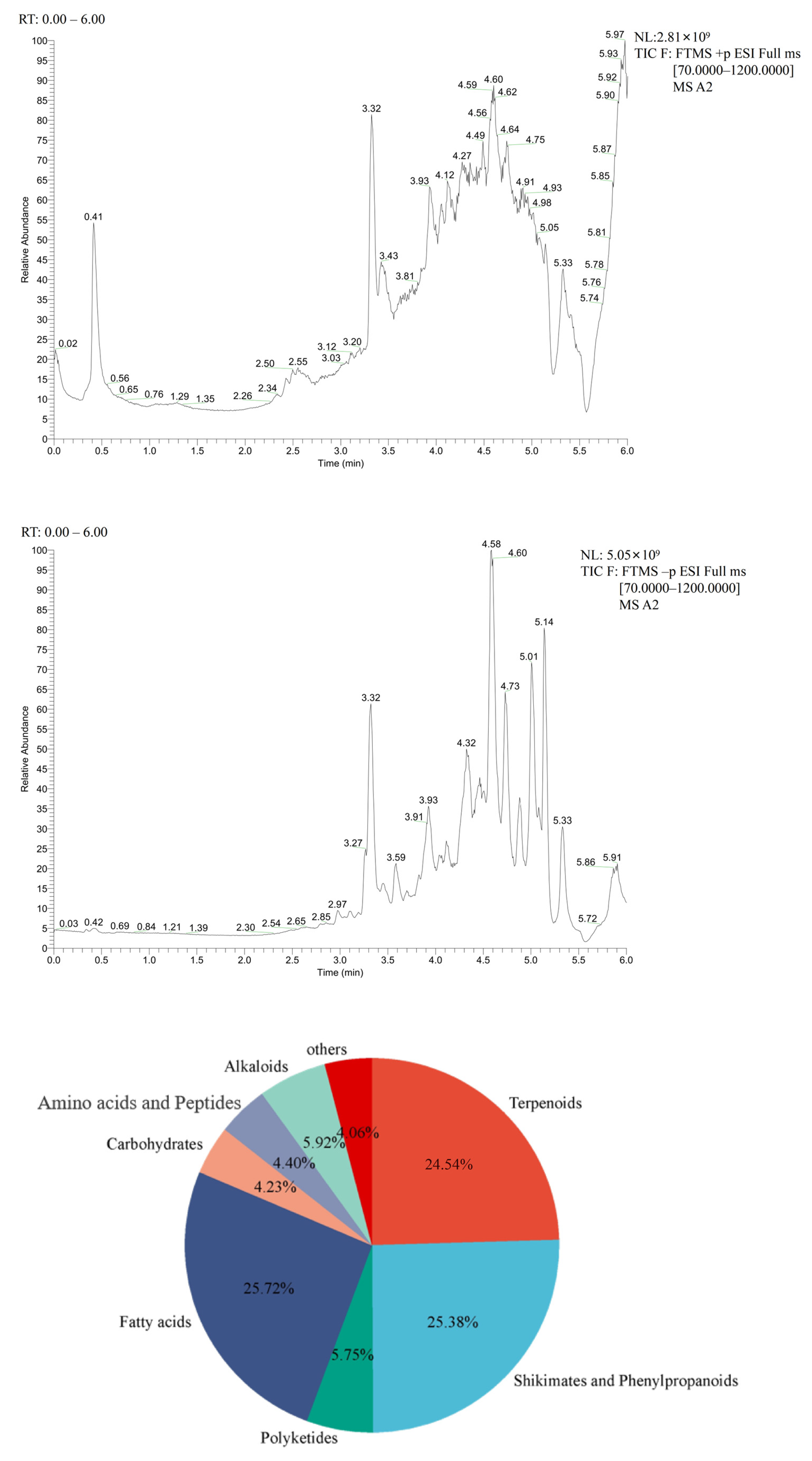
3.1. Analysis of Chemical Components in PSO
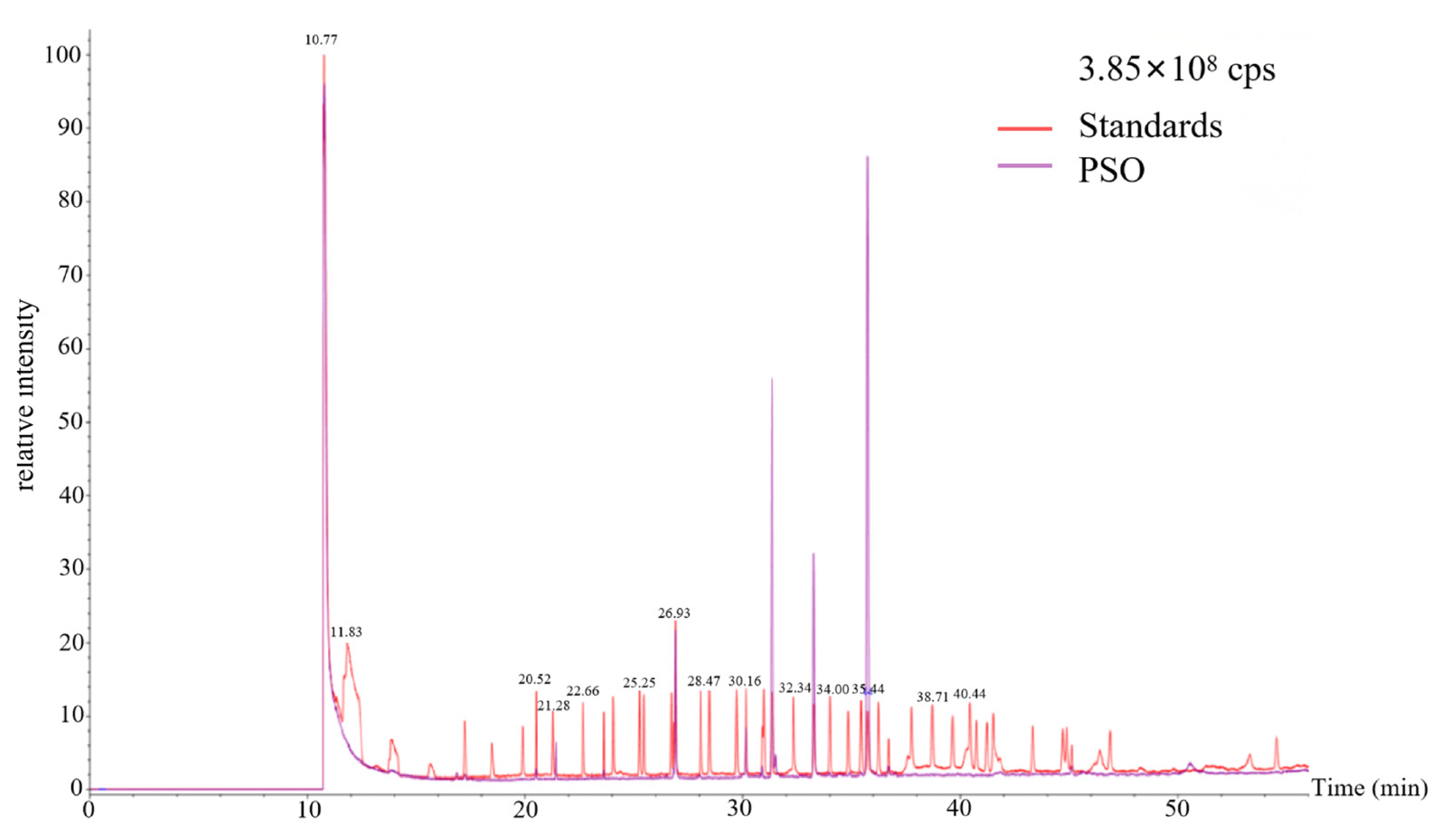
3.2. GC-MS/MS Fragmentation Profiling of PSO
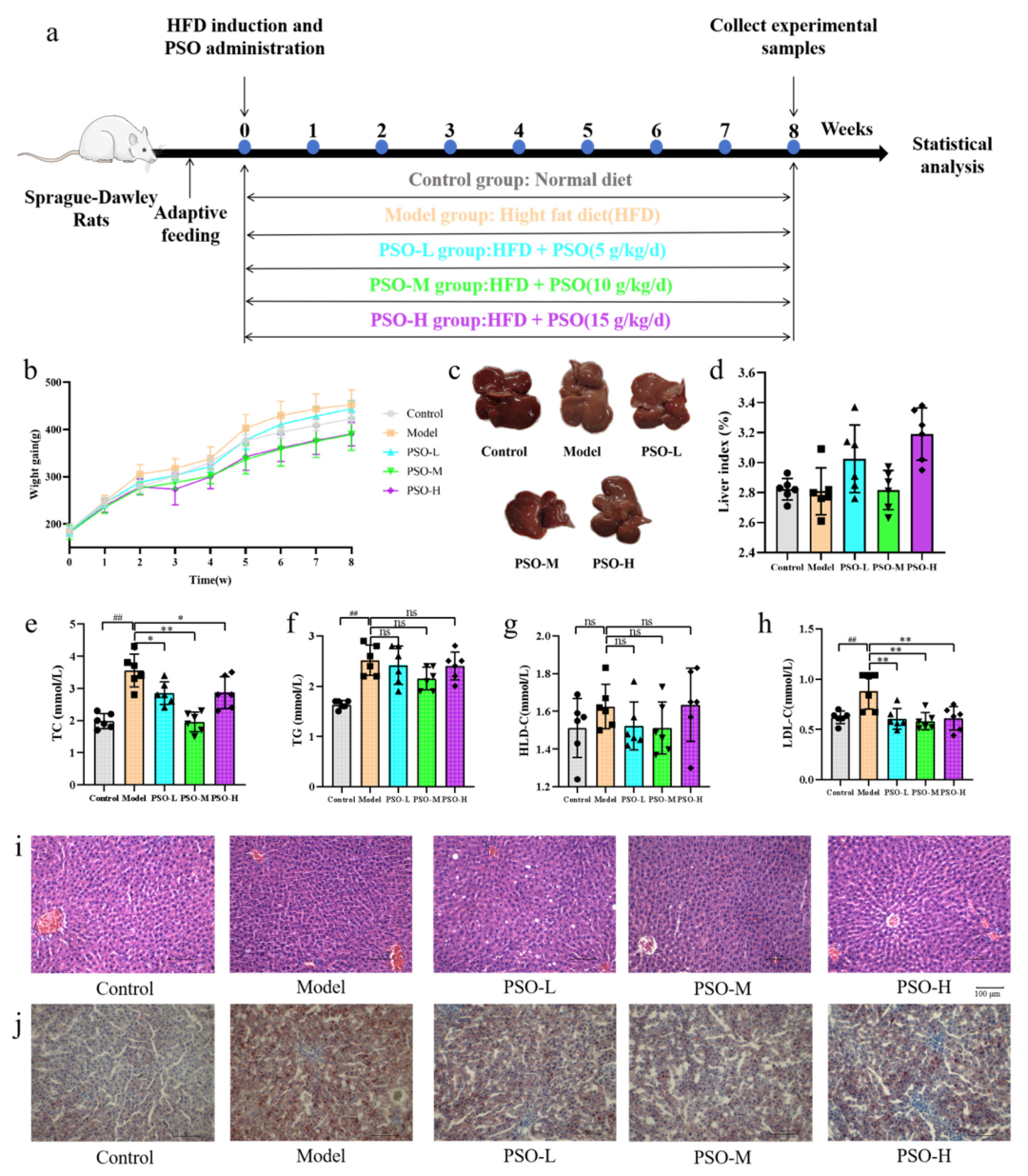
3.3. Effects of PSO on Body Weight and Liver Function
3.4. PSO Alleviates Hepatic Steatosis in HFD-Fed Rats
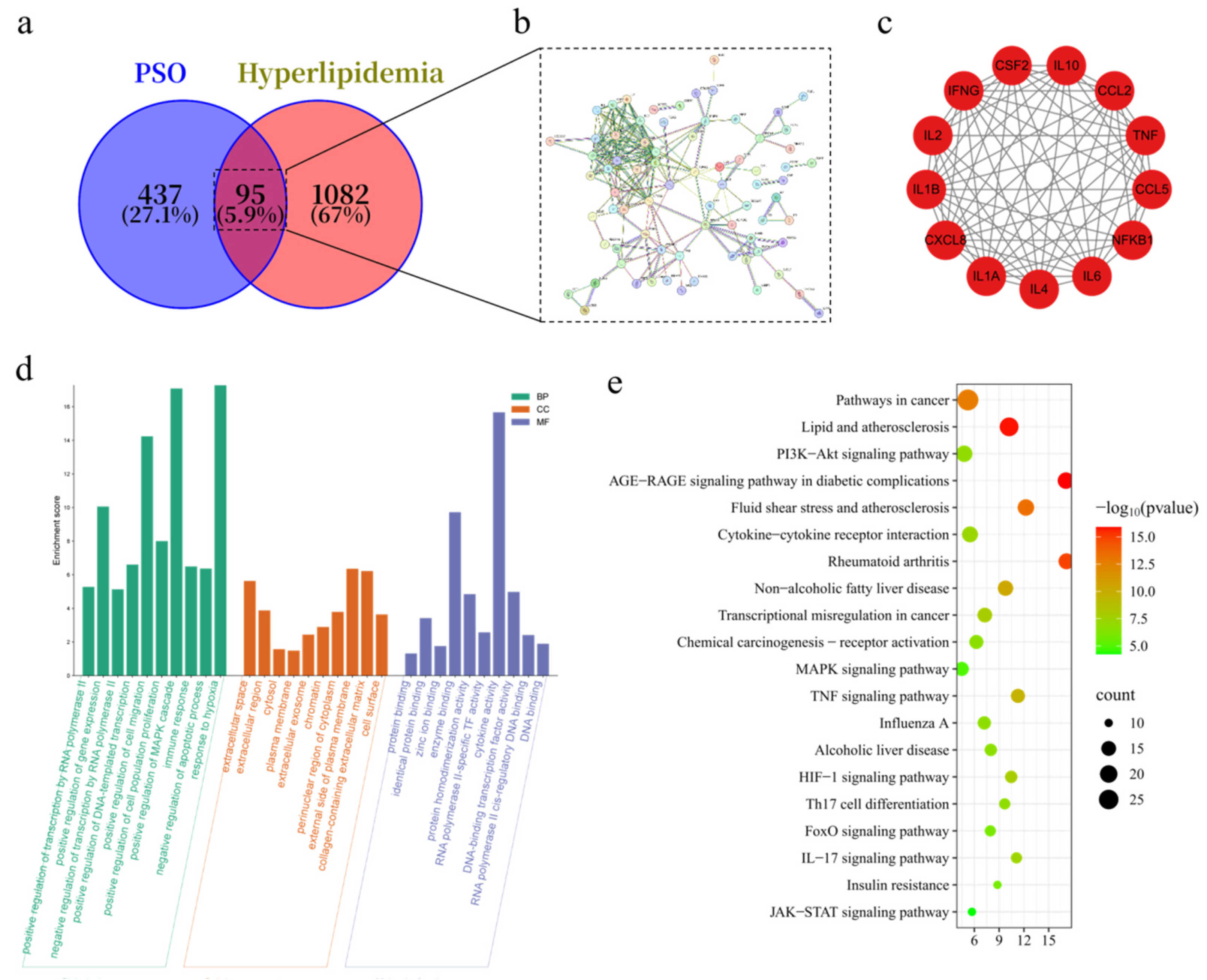
3.5. PSO Improved the Lipid Metabolism Profile by Targeting PI3K-AKT
Signaling Pathway
3.6. Molecular Docking
3.7. PSO Affects Serum Metabolic Markers in Rats
3.8. PSO-Regulated PI3K/AKT/NOS3 Cellular Metabolic Signaling to Exert Hypolipidemic Effect
4. Discussion
5. Conclusions
Supplementary Materials
Author Contributions
Funding
Institutional Review Board Statement
Informed Consent Statement
Data Availability Statement
Conflicts of Interest
Abbreviations
| PSO | Perilla seed oil |
| ALA | Alpha-linolenic acid |
| HFD | High-fat diet |
| TC | Total cholesterol |
| TG | Triglycerides |
| LDL-C | Low-density lipoprotein cholesterol |
| HDL-C | High-density lipoprotein cholesterol |
| NAFLD | Non-alcoholic fatty liver disease |
| TCM | Traditional Chinese Medicine |
| PUFA | Polyunsaturated fatty acid |
| PPI | Protein–protein interaction |
| GO | Gene ontology |
| KEGG | Kyoto Encyclopedia of Genes and Genomes |
| BP | Biological process |
| CC | Cellular component |
| AA | Arachidonic acid |
| SDS-PAGE | Sodium dodecyl sulfate-polyacrylamide gel electrophoresis |
References
- Ahmed, B.; Konje, J.C. The epidemiology of obesity in reproduction. Best Pract. Res. Clin. Obstet. Gynaecol. 2023, 89, 102342. [Google Scholar]
- Oishi, K.; Konishi, T.; Hashimoto, C.; Takahashi, M.; Hattori, K.; Tadaishi, M.; Ezaki, O.; Shimizu, M.; Kobayashi-Hattori, K.; Takamatsu, K.; et al. Dietary fish oil differentially ameliorates high-fructose diet-induced hepatic steatosis and hyperlipidemia in mice depending on time of feeding. J. Nutr. Biochem. 2018, 52, 45–53. [Google Scholar] [PubMed]
- Krauzová, E.; Kračmerová, J.; Rossmeislová, L.; Štich, V.; Koc, M.; Baláš, M.; Šiklová, M.; Janovská, P.; Hálková, T.; Drbalová, K.; et al. Acute hyperlipidemia initiates proinflammatory and proatherogenic changes in circulation and adipose tissue in obese women. Atherosclerosis 2016, 250, 151–157. [Google Scholar] [CrossRef]
- Pham, H.N.; Ibrahim, R.; Sainbayar, E.; Dangayach, D.; Al-Sanouri, T.; Zhao, H.; Mylona, E.K.; Tolia, V.; Soriano, R.; Dangayach, N.S. Burden of Hyperlipidemia, Cardiovascular Mortality, and COVID-19: A Retrospective-Cohort Analysis of US Data. J. Am. Heart Assoc. 2025, 14, e037381. [Google Scholar] [CrossRef] [PubMed]
- Zhu, Y.; Shen, T.; Guo, R.; Chen, Y.; Ye, X.; He, Y.; Wang, Y.; Liu, X.; Zhang, Y.; Zhang, L.; et al. Global, regional, and national burden of young COPD, 1990–2021, with forecasts to 2050: A systematic analysis for the global burden of disease study 2021. BMC Public Health 2025, 25, 276. [Google Scholar] [CrossRef]
- Savova, M.S.; Mihaylova, L.V.; Tews, D.; Wabitsch, M.; Georgiev, M.I. Targeting PI3K/AKT signaling pathway in obesity. Biomed. Pharmacother. 2023, 159, 114244. [Google Scholar]
- Huang, X.; Liu, G.; Guo, J.; Su, Z. The PI3K/AKT pathway in obesity and type 2 diabetes. Int. J. Biol. Sci. 2018, 14, 1483–1496. [Google Scholar] [PubMed]
- Gómez Candela, C.; Bermejo López, L.M.; Loria Kohen, V. Importance of a balanced omega 6/omega 3 ratio for the maintenance of health: Nutritional recommendations. Nutr. Hosp. 2011, 26, 323–329. [Google Scholar]
- Rajaram, S. Health benefits of plant-derived α-linolenic acid. Am. J. Clin. Nutr. 2014, 100, 443S–448S. [Google Scholar]
- Hooper, L.; Summerbell, C.D.; Thompson, R.; Sabet, E.; Higgins, J.P.T. Reduced or modified dietary fat for preventing cardiovascular disease. Sao Paulo Med. J. 2016, 134, 182–183. [Google Scholar]
- Adkins, Y.; Kelley, D.S. Mechanisms underlying the cardioprotective effects of omega-3 polyunsaturated fatty acids. J. Nutr. Biochem. 2010, 21, 781–792. [Google Scholar] [CrossRef] [PubMed]
- Chang, Y.T.; Chang, M.C.; Tung, C.C.; Wei, S.C.; Wong, J.M. Distinctive roles of unsaturated and saturated fatty acids in hyperlipidemic pancreatitis. World J. Gastroenterol. 2015, 21, 9534–9543. [Google Scholar] [CrossRef] [PubMed]
- Zeng, Z.H.; Xiao, G.L.; Liu, Y.C.; Wang, Y.Y.; Li, S.S.; Zhou, L.; Zhang, Y.Y.; Huang, J.Z.; Liu, C.; Peng, C.; et al. Metabolomics and network pharmacology reveal partial insights into the hypolipidemic mechanisms of ferulic acid in a dyslipidemia mouse model. Front. Pharmacol. 2024, 15, 1458953. [Google Scholar] [CrossRef] [PubMed]
- Zhang, T.M. Chinese Meteria Medica; Higher Education Press: Beijing, China, 2008; pp. 17–18. [Google Scholar]
- Hashimoto, M.; Matsuzaki, K.; Maruyama, K.; Hossain, S.; Sumiyoshi, E.; Wakatsuki, H.; Kato, S.; Ohno, M.; Tanabe, M.; Takeda, T.; et al. Perilla seed oil in combination with nobiletin-rich ponkan powder enhances cognitive function in healthy elderly Japanese individuals: A possible supplement for brain health in the elderly. Food Funct. 2022, 13, 2768–2781. [Google Scholar] [CrossRef]
- Matsuzaki, K.; Hossain, S.; Wakatsuki, H.; Tin, T.; Kato, S.; Ohno, M.; Shimojo, N.; Yamane, T.; Kuwahata, M. Perilla seed oil improves bone health by inhibiting bone resorption in healthy Japanese adults: A 12-month, randomized, double-blind, placebo-controlled trial. Phytother. Res. 2023, 37, 2230–2241. [Google Scholar] [CrossRef]
- Özkiliç, S.Y.; Arslan, D. Acidic and enzymatic pre-treatment effects on cold-pressed pumpkin, terebinth and flaxseed oils. Grasas Y Aceites 2022, 73, e462. [Google Scholar] [CrossRef]
- Atamyradova, N.; Özkılıç, S.Y.; Arslan, D. Blanching of olive fruits before storage at different conditions: Effects on oil yield, lipase activity and oxidation. J. Agric. Food Res. 2024, 18, 101509. [Google Scholar] [CrossRef]
- Shahidi, S.; Mahmoodi, M.S.; Komaki, A. The comparison of omega-3 and flaxseed oil on serum lipids and lipoproteins in hyperlipidemic male rats. Heliyon 2022, 8, e09876. [Google Scholar] [CrossRef]
- Wei, M.; Xiong, P.; Zhang, L.; Fei, C.; Qiao, W.; Ling, Y.; Qin, L. Perilla oil and exercise decrease expressions of tumor necrosis factor-alpha, plasminogen activator inhibitor-1 and highly sensitive C-reactive protein in patients with hyperlipidemia. J. Tradit. Chin. Med. 2013, 33, 170–175. [Google Scholar] [CrossRef]
- Wu, Y.; Yan, S.; Li, Y.; Wang, C.; Zhang, H.; Zhao, J.; Zhang, H.; Chen, W.; Zhai, Q. Bifidobacterium bifidum CCFM1163 repairs barrier integrity and regulates claudin-3 expression to alleviate constipation in mice in vitro and in vivo. Food Front. 2024, 4, e446. [Google Scholar]
- Chen, T.; Yuan, F.; Wang, H.; Li, Z.; Wang, X.; Zhang, Y.; Peng, K.; Guo, Y.; Li, J.; Chen, X.; et al. Perilla Oil Supplementation Ameliorates High-Fat/High-Cholesterol Diet Induced Nonalcoholic Fatty Liver Disease in Rats via Enhanced Fecal Cholesterol and Bile Acid Excretion. BioMed Res. Int. 2016, 2016, 2384561. [Google Scholar] [CrossRef] [PubMed]
- Wang, H.; Li, J.; Wang, Z.; Wang, Y.; Zhao, Z.; Li, X.; Chen, Y.; Zhang, L.; Liu, G.; Wang, J. Perivascular brown adipocytes-derived kynurenic acid relaxes blood vessel via endothelium PI3K-Akt-eNOS pathway. Biomed. Pharmacother. 2022, 150, 113040. [Google Scholar]
- Sakurai, K.; Asahi, K.; Kanesaki, Y.; Hayashi, Y.; Asai, J.; Yuza, T.; Watanabe, K.; Katoh, T.; Watanabe, T. Dietary Perilla seed oil supplement increases plasma omega-3 polyunsaturated fatty acids and ameliorates immunoglobulin A nephropathy in high immunoglobulin A strain of ddY mice. Nephron Exp. Nephrol. 2011, 119, e33–e39. [Google Scholar] [CrossRef]
- Xia, J.W.; Wang, Y.; Li, X.; Yang, S.; Zhang, L.; Zhao, Y.; Liu, Y.; Chen, H.; Wang, C.; Li, P.; et al. The mechanism of perilla oil in regulating lipid metabolism. Food Chem. 2025, 476, 143318. [Google Scholar] [CrossRef]
- Guan, L.; Zhu, L.; Zhang, X.D.; Li, Y.; Wang, J.; Liu, Y.; Chen, H.; Zhao, J. Perilla Seed Oil and Protein: Composition, Health Benefits, and Potential Applications in Functional Foods. Molecules 2024, 29, 5258. [Google Scholar] [CrossRef]
- Tang, M.X.; Jiang, Z.H.; Xu, Y.H.; Wei, J.N.; He, Y.; Li, X.Y.; Wang, Y.; Liu, X.; Zhang, L.; Chen, Y.; et al. Exploration of the Potential Mechanism of Succus Bambusae Ameliorating Obesity and Hyperlipidemia in High-Fat Diet Apoe-/-Mice and Caenorhabditis Elegans by Network Pharmacology Combined with Transcriptomic Approach. J. Biomater. Tissue Eng. 2023, 13, 978–993. [Google Scholar] [CrossRef]
- Lu, X.R.; Ma, N.; Liu, X.W.; Yang, Y.J.; Wang, Y.; Li, X.Y.; Zhang, L.; Chen, Y.; Zhao, Y.; Liu, Y.; et al. Untargeted and Targeted Metabolomics Reveal the Underlying Mechanism of Aspirin Eugenol Ester Ameliorating Rat Hyperlipidemia via Inhibiting FXR to Induce CYP7A1. Front. Pharmacol. 2021, 12, 733789. [Google Scholar] [CrossRef] [PubMed]
- Sun, K.; Mehari, T.G.; Fang, H.; Zhu, S.; Xu, W.; Zhang, X.; Liu, A.; Zhang, B.; Chen, J.; Zhang, X.; et al. Transcriptome, proteome and functional characterization reveals salt stress tolerance mechanisms in upland cotton (Gossypium hirsutum L.). Front. Plant Sci. 2023, 14, 1092616. [Google Scholar] [CrossRef] [PubMed]
- Hou, T.Y.; Netala, V.R.; Zhang, H.J.; Zhang, Y.; Jin, Y.; Zhang, L.; Chen, Y.; Wang, Y.; Liu, X.; Li, X.; et al. Perilla frutescens: A Rich Source of Pharmacological Active Compounds. Molecules 2022, 27, 3578. [Google Scholar] [CrossRef]
- Doppler, M.; Kluger, B.; Bueschl, C.; Schneider, C.; Krska, R.; Delcambre, S.; Lorthiois, M.; Gouttenoire, J.; Moritz, T.; Schuhmacher, R. Stable Isotope-Assisted Evaluation of Different Extraction Solvents for Untargeted Metabolomics of Plants. Int. J. Mol. Sci. 2016, 17, 1017. [Google Scholar] [CrossRef]
- Pastor, K.; Ilic, M.; Vujic, D.; Acanski, M.; Bodroza-solarov, M.; Vujic, J.; Beszterda, M. Characterization of Fatty Acids in Cereals and Oilseeds from the Republic of Serbia by Gas Chromatography—Mass Spectrometry (GC/MS) with Chemometrics. Anal. Lett. 2020, 53, 1177–1189. [Google Scholar] [CrossRef]
- GB 5009.168-2016; Determination of Fatty Acids in Food. China National Medical Products Administration: Beijing, China, 2017.
- Yang, Q.; Wang, S.H.; Chen, H.Q.; Wang, Y.F.; Li, X.Y.; Zhang, L.; Chen, Y.; Zhao, Y.; Liu, Y.; Wang, C. Evaluation of methylations and external/internal standard quantification of lipids using gas chromatography-mass spectrometry. Anal. Methods 2017, 9, 419–426. [Google Scholar]
- Kaur, S.; Seem, K.; Ali, A.; Kumar, V.; Gupta, S.; Sharma, N.; Kumar, S. A comprehensive review on nutritional, nutraceutical, and industrial perspectives of perilla (Perilla frutscens L.) seeds—An orphan oilseed crop. Heliyon 2024, 10, e33214. [Google Scholar] [CrossRef]
- Li, M.; Jiang, N.J.; Guo, G.Q.; Wang, Y.; Li, X.Y.; Zhang, L.; Chen, Y.; Zhao, Y.; Liu, Y.; Wang, C.; et al. Perilla Seed Oil: A Review of Health Effects, Encapsulation Strategies and Applications in Food. Foods 2024, 13, 3720. [Google Scholar] [CrossRef]
- Nelson, R.H. Hyperlipidemia as a risk factor for cardiovascular disease. Prim. Care 2013, 40, 195–211. [Google Scholar] [CrossRef]
- Karr, S. Epidemiology and management of hyperlipidemia. Am. J. Manag. Care 2017, 23, S139–S148. [Google Scholar]
- Zhang, Q.; Fan, X.; Ye, R.; Liu, Y.; Li, X.; Zhang, L.; Chen, Y.; Zhao, Y.; Wang, C.; Li, P. The Effect of Simvastatin on Gut Microbiota and Lipid Metabolism in Hyperlipidemic Rats Induced by a High-Fat Diet. Front. Pharmacol. 2020, 11, 522. [Google Scholar] [CrossRef]
- Pothinam, S.; Putpim, C.; Sriwoharn, T.; Wichienchot, S.; Klongklaew, N.; Prasit, T.; Suttisansanee, U.; Chaturongakul, S. Effects of Perilla Seed Oil on Blood Lipids, Oxidative Stress, and Inflammation in Hyperlipidemic Rats. Foods 2025, 14, 1234. [Google Scholar] [CrossRef] [PubMed]
- Li, F.; Zhang, M.; Wang, X. Feasibility of Safflower Seed Oil and Basil Seed Oil Mixture in Intervention of Hyperlipidemia. China J. Chin. Med. 2023, 38, 1240–1245. [Google Scholar]
- Aldamarany, W.A.S.; Taocui, H.; Deng, L.L.; Zhang, Y.; Wang, Y.; Li, X.; Zhang, L.; Chen, Y.; Zhao, Y.; Liu, Y.; et al. Perilla, sunflower, and tea seed oils as potential dietary supplements with anti-obesity effects by modulating the gut microbiota composition in mice fed a high-fat diet. Eur. J. Nutr. 2023, 62, 2509–2525. [Google Scholar] [CrossRef] [PubMed]
- Wang, F.; Zhu, H.J.; Hu, M.Y.; Wang, Y.; Li, X.Y.; Zhang, L.; Chen, Y.; Zhao, Y.; Liu, Y.; Wang, C. Perilla Oil Supplementation Improves Hypertriglyceridemia and Gut Dysbiosis in Diabetic KKAy Mice. Mol. Nutr. Food Res. 2018, 62, 1800297. [Google Scholar] [CrossRef]
- Kangwan, N.; Pratchayasakul, W.; Kongkaew, A.; Pongchaidecha, A.; Sripradite, S.; Chatsudthipong, V.; Chattipakorn, N.; Chattipakorn, S.C. Perilla Seed Oil Alleviates Gut Dysbiosis, Intestinal Inflammation and Metabolic Disturbance in Obese-Insulin-Resistant Rats. Nutrients 2021, 13, 3370. [Google Scholar] [CrossRef] [PubMed]
- Hashimoto, M.; Matsuzaki, K.; Hossain, S.; Ito, Y.; Wakatsuki, H.; Tanabe, Y.; Ohno, M.; Kato, S.; Yamashita, K.; Shido, O. Perilla Seed Oil Enhances Cognitive Function and Mental Health in Healthy Elderly Japanese Individuals by Enhancing the Biological Antioxidant Potential. Foods 2021, 10, 990. [Google Scholar] [CrossRef]
- Hussein, N.; Ah-Sing, E.; Wilkinson, P.; Leach, C.; Griffin, B.A.; Millward, D.J. Long-chain conversion of linoleic acid and alpha-linolenic acid in response to marked changes in their dietary intake in men. J. Lipid Res. 2005, 46, 269–280. [Google Scholar] [CrossRef] [PubMed]
- Brenna, J.T. Efficiency of conversion of alpha-linolenic acid to long chain n-3 fatty acids in man. Curr. Opin. Clin. Nutr. Metab. Care 2002, 5, 127–132. [Google Scholar] [PubMed]
- Swanson, D.; Block, R.; Mousa, S.A. Omega-3 fatty acids EPA and DHA: Health benefits throughout life. Adv. Nutr. 2012, 3, 1–7. [Google Scholar] [CrossRef]
- Gu, P.S.; Su, K.W.; Yeh, K.W.; Huang, J.L.; Huang, S.L.; Tsai, M.H.; Hua, M.C.; Liao, S.L.; Lai, S.H.; Chen, L.C.; et al. Metabolomics Analysis Reveals Molecular Signatures of Metabolic Complexity in Children with Hypercholesterolemia. Nutrients 2023, 15, 1785. [Google Scholar] [CrossRef]
- García-Prieto, C.F.; Hernández-Nuño, F.; Rio, D.D.; Ruiz-Hurtado, G.; Aranguez, I.; Ruiz-Gayo, M.; Somoza, B.; Fernández-Alfonso, M.S. High-fat diet induces endothelial dysfunction through a down-regulation of the endothelial AMPK-PI3K-Akt-eNOS pathway. Mol. Nutr. Food Res. 2015, 59, 520–532. [Google Scholar] [CrossRef]
- Wang, R.; Li, B.; Lam, S.M.; Shui, G. Integration of lipidomics and metabolomics for in-depth understanding of cellular mechanism and disease progression. J. Genet. Genom. 2020, 47, 69–83. [Google Scholar] [CrossRef]
- Burns-Whitmore, B.; Froyen, E.; Heskey, C.; Parker, T.; San Pablo, G. Alpha-Linolenic and Linoleic Fatty Acids in the Vegan Diet: Do They Require Dietary Reference Intake/Adequate Intake Special Consideration? Nutrients 2019, 11, 2365. [Google Scholar] [CrossRef]
- Burdge, G.C. α-linolenic acid interconversion is sufficient as a source of longer chain ω-3 polyunsaturated fatty acids in humans: An opinion. Lipids 2022, 57, 267–287. [Google Scholar] [CrossRef]
- Prasad, P.; Anjali, P.; Sreedhar, R.V. Plant-based stearidonic acid as sustainable source of omega-3 fatty acid with functional outcomes on human health. Crit. Rev. Food Sci. Nutr. 2021, 61, 1725–1737. [Google Scholar] [CrossRef]
- Xue, Z.; He, H.; Hollerbach, D.; Macool, D.J.; Yadav, N.S.; Zhang, H.; Szostek, B.; Zhu, Q. Identification and characterization of new Δ-17 fatty acid desaturases. Appl. Microbiol. Biotechnol. 2013, 97, 1973–1985. [Google Scholar] [CrossRef]
- Wei, B.; Cai, L.H.; Sun, D.; Wang, Y.; Li, X.Y.; Zhang, L.; Chen, Y.; Zhao, Y.; Liu, Y.; Wang, C.; et al. Microsomal Prostaglandin E Synthase-1 Deficiency Exacerbates Pulmonary Fibrosis Induced by Bleomycin in Mice. Molecules 2014, 19, 4967–4985. [Google Scholar] [CrossRef]
- Zhang, W.; Li, R.; Li, J.; Wang, W.; Jia, M.; Wu, Y.; Zhang, Y.; Zhang, H.; Wang, L.; Li, X. Alpha-linolenic acid exerts an endothelial protective effect against high glucose injury via PI3K/Akt pathway. PLoS ONE 2013, 8, e68489. [Google Scholar] [CrossRef]
- Qin, Y.; Zhou, Y.; Chen, S.H.; Zhao, X.L.; Wang, Y.; Li, X.Y.; Zhang, L.; Chen, Y.; Liu, Y.; Wang, C.; et al. Fish Oil Supplements Lower Serum Lipids and Glucose in Correlation with a Reduction in Plasma Fibroblast Growth Factor 21 and Prostaglandin E2 in Nonalcoholic Fatty Liver Disease Associated with Hyperlipidemia: A Randomized Clinical Trial. PLoS ONE 2015, 10, e0133496. [Google Scholar] [CrossRef]
- Bae, S.J.; Kim, J.E.; Choi, H.J.; Park, M.H.; Kang, H.; Lee, J.D. α-Linolenic Acid-Enriched Cold-Pressed Perilla Oil Suppress High-Fat Diet-Induced Hepatic Steatosis through Amelioration of the ER Stress-Mediated Autophagy. Molecules 2020, 25, 2662. [Google Scholar] [CrossRef] [PubMed]
- Chang, H.; Li, X.; Cai, Q.; Li, C.; Tian, L.; Chen, J.; Wang, X.; Dong, Z.; Zhang, S.; Wang, Y. The PI3K/Akt/mTOR pathway is involved in CVB3-induced autophagy of HeLa cells. Int. J. Mol. Med. 2017, 40, 182–192. [Google Scholar] [CrossRef] [PubMed]
- Han, F.; Xiao, Q.Q.; Peng, S.; Che, X.Y.; Jiang, L.S.; Shao, Q.; He, B. Atorvastatin ameliorates LPS-induced inflammatory response by autophagy via AKT/mTOR signaling pathway. J. Cell. Biochem. 2018, 119, 1604–1615. [Google Scholar] [CrossRef] [PubMed]
- Zhou, H.; Li, X.M.; Meinkoth, J.; Pittman, R.N. Akt regulates cell survival and apoptosis at a postmitochondrial level. J. Cell Biol. 2000, 151, 483–494. [Google Scholar] [CrossRef]
- Song, Y.; Hu, J.; Yang, P.; Zhang, L.; Chen, Y.; Zhao, Y.; Liu, Y.; Wang, C.; Li, P.; Xia, J. Astragaloside IV Promotes Osteogenic Differentiation of Periodontal Ligament Stem Cells via Activating PI3K/AKT/eNOS/NO Signaling Pathway: In vitro and in vivo Study. Drug Des. Dev. Ther. 2025, 19, 6073–6088. [Google Scholar] [CrossRef]
- Lal, B.K.; Varma, S.; Pappas, P.J.; Hobson, R.W.; Padberg, F.T. VEGF increases permeability of the endothelial cell monolayer by activation of PKB/akt, endothelial nitric-oxide synthase, and MAP kinase pathways. Microvasc. Res. 2001, 62, 252–262. [Google Scholar] [CrossRef]
- Fernandes, M.F.; Tache, M.C.; Klingel, S.L.; Moes, A.M.; Murooka, T.T.; Leri, M.; Scarcelli, R.; Bortolotto, J.W.; Roversi, K.; Roversi, K.; et al. Safflower (n-6) and flaxseed (n-3) high-fat diets differentially regulate hypothalamic fatty acid profiles, gene expression, and insulin signalling. Prostaglandins Leukot. Essent. Fat. Acids 2018, 128, 67–73. [Google Scholar] [CrossRef]
- Gu, Z.X.; Mu, H.; Shen, H.H.; Zhang, Y.; Mai, K.S. High level of dietary soybean oil affects the glucose and lipid metabolism in large yellow croaker Larimichthys crocea through the insulin-mediated PI3K/AKT signaling pathway. Comp. Biochem. Physiol. B 2019, 231, 34–41. [Google Scholar] [CrossRef] [PubMed]



| Number | Identification | Molecular Formula | Fragment Ions | Content (g/kg) | Retention Time/min | Relative Content of Fatty Acid Methyl Esters (%) |
|---|---|---|---|---|---|---|
| 1 | Methyl myristoleate | C15H28O2 | 74, 87, 55 | 0.154 | 24.01 | 0.05 |
| 2 | Methyl pentadecanoate | C16H32O2 | 74, 87, 213 | 0.188 | 25.45 | 0.06 |
| 3 | Methyl palmitate | C17H34O2 | 74, 87, 227 | 10.808 | 26.91 | 3.52 |
| 4 | Methyl heptadecanoate | C18H36O2 | 74, 87, 241 | 0.374 | 28.46 | 0.12 |
| 5 | Methyl stearate | C19H38O2 | 74, 87, 255 | 6.317 | 30.15 | 2.06 |
| 6 | Methyl oleate | C19H36O2 | 264, 97, 83 | 67.540 | 31.35 | 21.98 |
| 7 | Methyl linoleate | C19H34O2 | 81, 67, 95 | 42.611 | 33.27 | 13.87 |
| 8 | Methyl α-linolenate | C19H32O2 | 79, 93, 67 | 176.653 | 35.73 | 57.48 |
| 9 | Methyl arachidonate | C21H42O2 | 87, 74, 283 | 0.912 | 34.00 | 0.30 |
| 10 | Methyl gadoleate | C21H40O2 | 292, 97, 83 | 0.991 | 35.43 | 0.32 |
| 11 | Methyl docosanoate | C23H46O2 | 87, 74, 143 | 0.762 | 38.70 | 0.25 |
Disclaimer/Publisher’s Note: The statements, opinions and data contained in all publications are solely those of the individual author(s) and contributor(s) and not of MDPI and/or the editor(s). MDPI and/or the editor(s) disclaim responsibility for any injury to people or property resulting from any ideas, methods, instructions or products referred to in the content. |
© 2025 by the authors. Licensee MDPI, Basel, Switzerland. This article is an open access article distributed under the terms and conditions of the Creative Commons Attribution (CC BY) license (https://creativecommons.org/licenses/by/4.0/).
Share and Cite
Chang, J.; Hu, P.; Zhang, B.; Liu, Y.; Cheng, Y.; Li, L.; Li, L. Perilla Seed Oil Alleviates High-Fat-Diet-Induced Hyperlipidemia by Regulating Fatty Acid Metabolism via the PI3K/Akt/NOS3 Pathway. Foods 2025, 14, 4125. https://doi.org/10.3390/foods14234125
Chang J, Hu P, Zhang B, Liu Y, Cheng Y, Li L, Li L. Perilla Seed Oil Alleviates High-Fat-Diet-Induced Hyperlipidemia by Regulating Fatty Acid Metabolism via the PI3K/Akt/NOS3 Pathway. Foods. 2025; 14(23):4125. https://doi.org/10.3390/foods14234125
Chicago/Turabian StyleChang, Jianfeng, Peng Hu, Bo Zhang, Yitong Liu, Yuting Cheng, Lianzhen Li, and Leyuan Li. 2025. "Perilla Seed Oil Alleviates High-Fat-Diet-Induced Hyperlipidemia by Regulating Fatty Acid Metabolism via the PI3K/Akt/NOS3 Pathway" Foods 14, no. 23: 4125. https://doi.org/10.3390/foods14234125
APA StyleChang, J., Hu, P., Zhang, B., Liu, Y., Cheng, Y., Li, L., & Li, L. (2025). Perilla Seed Oil Alleviates High-Fat-Diet-Induced Hyperlipidemia by Regulating Fatty Acid Metabolism via the PI3K/Akt/NOS3 Pathway. Foods, 14(23), 4125. https://doi.org/10.3390/foods14234125