Article

Proximate Composition and In Vitro Bioactive Properties of Leaf Extracts from Seven Viola Species

1
College of Chemistry, Chemical Engineering and Resource Utilization, Northeast Forestry University, Harbin 150040, China
2
Key Laboratory of Forest Plant Ecology, Ministry of Education, Northeast Forestry University, Harbin 150040, China
*
Authors to whom correspondence should be addressed.
Foods 2025, 14(2), 302; https://doi.org/10.3390/foods14020302
Submission received: 12 December 2024 / Revised: 14 January 2025 / Accepted: 15 January 2025 / Published: 17 January 2025

Abstract

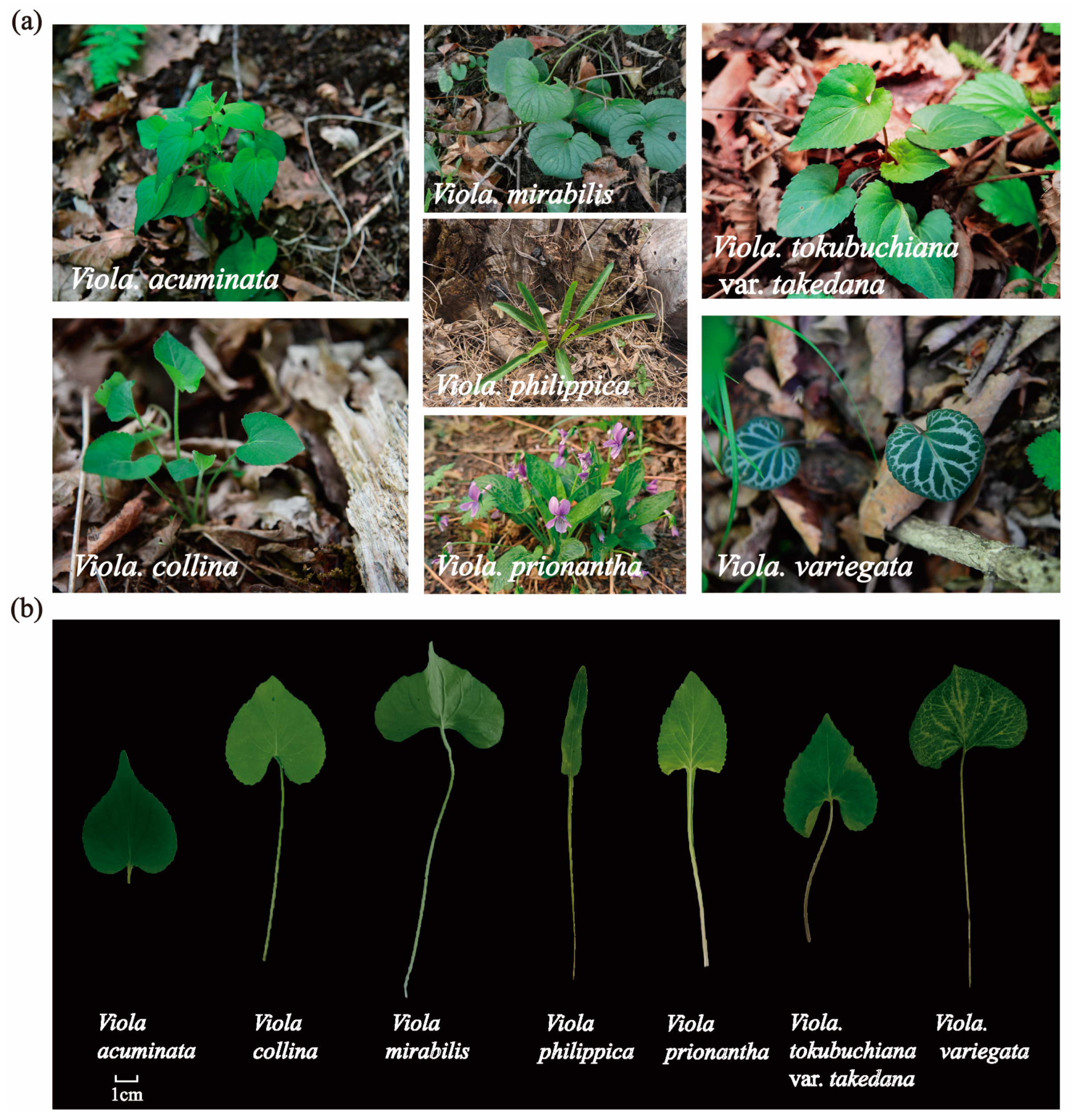
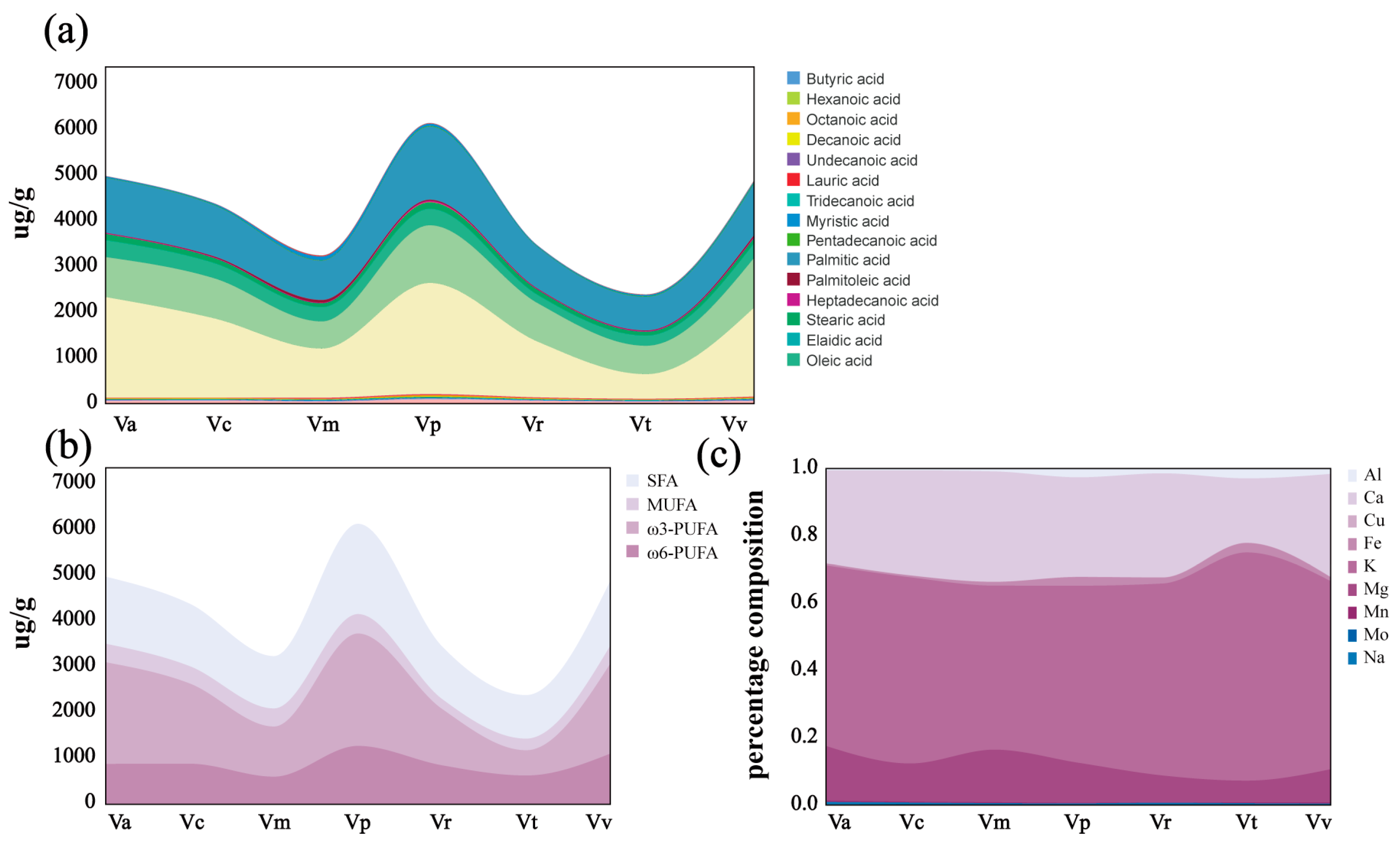
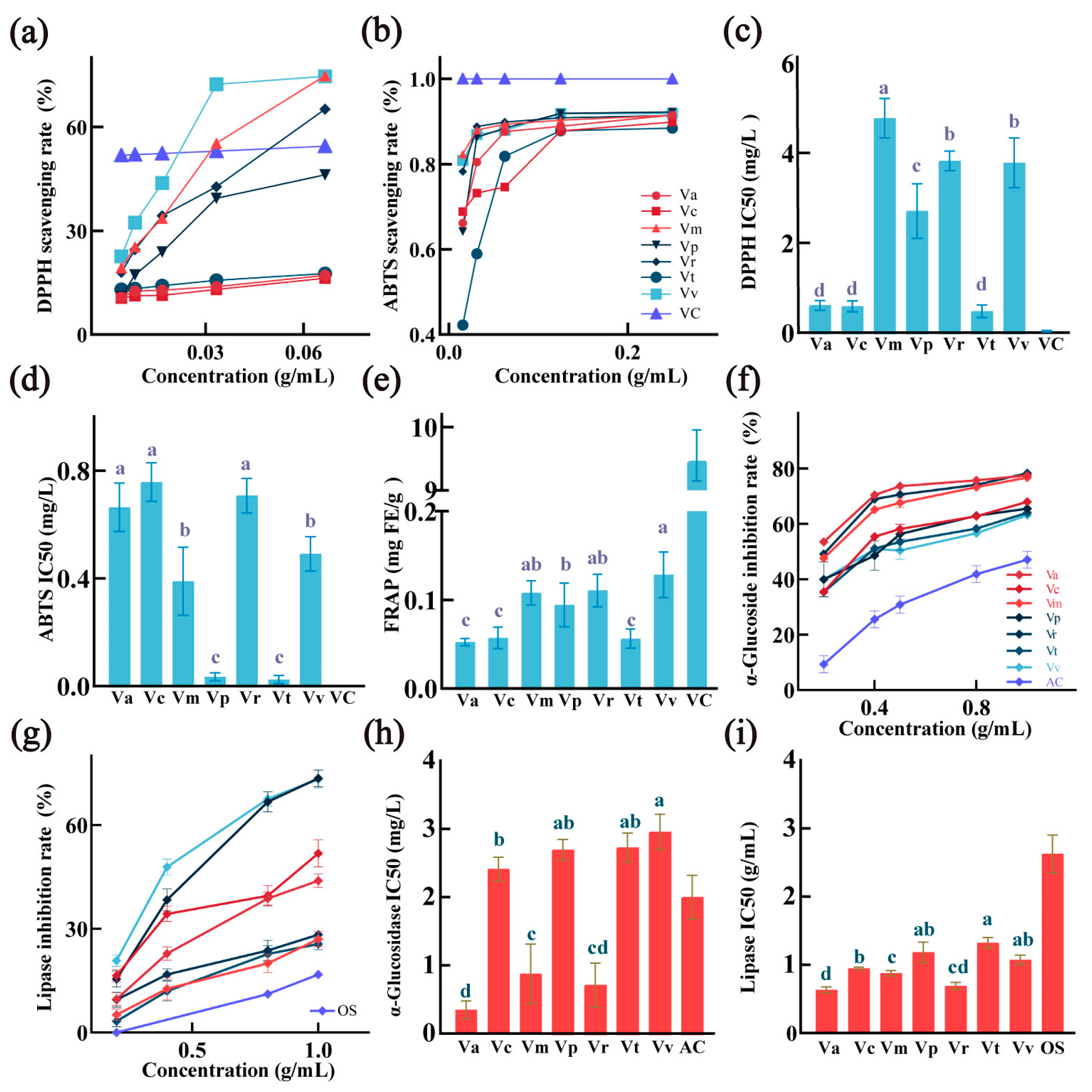
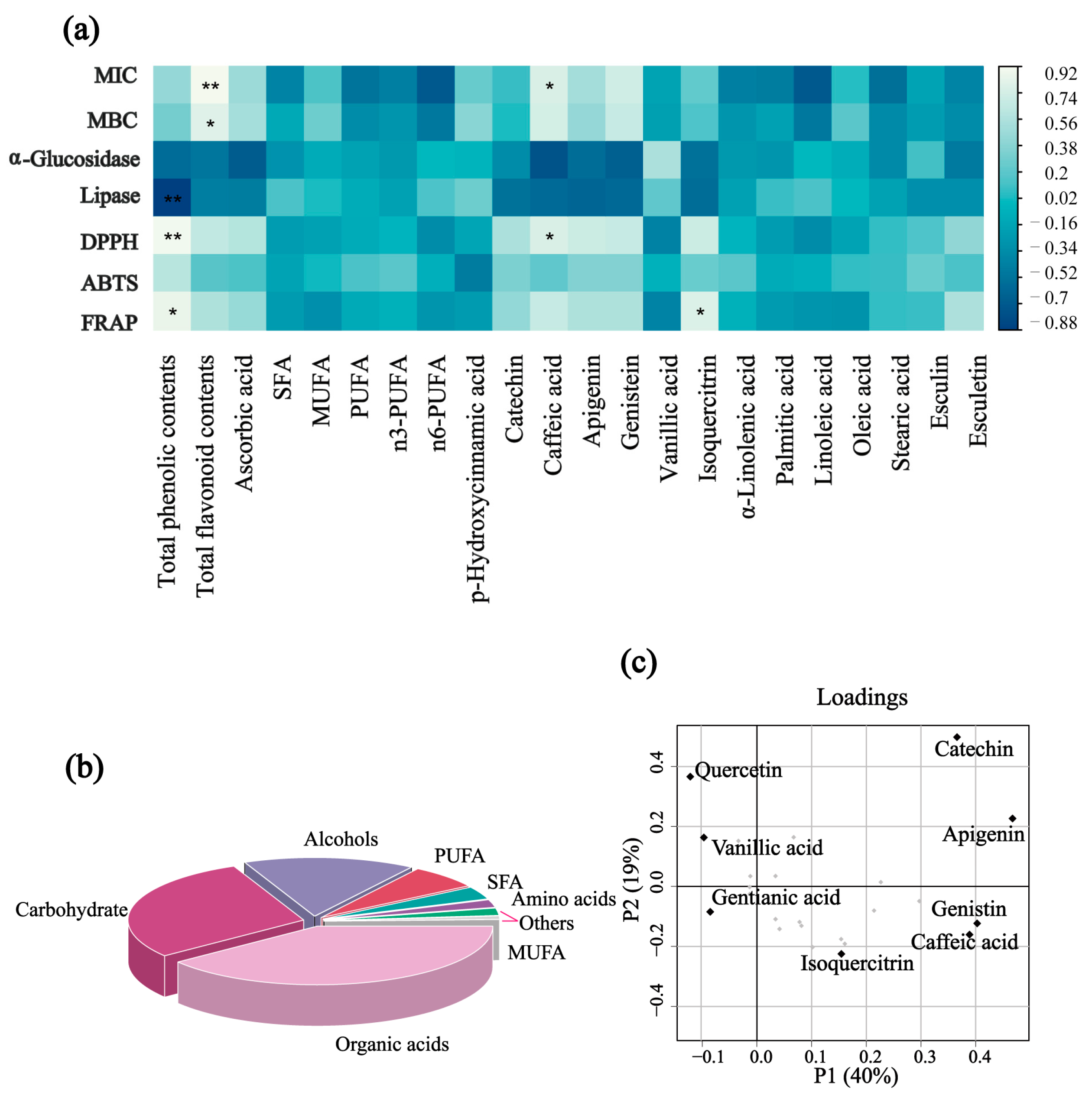
Viola, an edible wild plant, is valued for its distinctive flavor and health-promoting properties. This study examines the proximate composition, bioactive compounds, and in vitro biological activities of seven Viola leaves (Viola prionantha, Viola collina, Viola acuminata, Viola variegata, Viola tokubuchiana var. takedana, Viola mirabilis, and Viola philippica). Findings reveal that the leaves of the seven Viola species are rich in phenolic compounds (131.13 mg gallic acid equivalents (GAE)/100 g fresh weight (FW)–384.80 mg GAE/100 g FW), flavonoids (13.09 mg rutin equivalents (RE)/100 g FW–40.08 mg RE/100 g FW), fatty acids (palmitic acid, linoleic acid, oleic acid, and α-linolenic acid), and essential minerals, such as potassium, calcium, and magnesium. The leaf extracts demonstrated significant inhibitory effects on α-glucosidase (84.17%) and pancreatic lipase (77.54%) at a concentration of 1 g of extract per milliliter of solution. Additionally, the biological activity of Viola leaves, particularly their antioxidant capacity, is associated with their phenolic and flavonoid content, with caffeic acid contributing up to 35.2% of the total phenolic acids and isoquercitrin being one of the most bioavailable flavonoids. These results indicate that Viola offers potential notable health benefits, presenting a valuable addition to enhancing modern dietary patterns and overall health.
Keywords: wild edible plant; Viola; proximate composition; phenolic compounds; coumarins; bioactive properties wild edible plant; Viola; proximate composition; phenolic compounds; coumarins; bioactive properties