


Mycotoxins in Food: Cancer Risks and Strategies for Control



Abstract
1. Introduction
1.1. Types of Mycotoxins
1.2. Sources and Affected Foods of Mycotoxins
1.3. Global Toxic Levels of Mycotoxins in Foods
2. Cancer Risk Associated with Mycotoxins
2.1. Mechanisms of Carcinogenicity
2.2. Epidemiological Evidence Linking Mycotoxins to Cancer Risk
2.3. Cancer Risk Associated with Mycotoxins
2.4. Non-Cancer Risks Associated with Aflatoxins
2.4.1. Acute Toxicities of Aflatoxins
- Hepatotoxicity: The liver is the primary target organ for aflatoxins. Acute exposure can lead to liver damage, manifesting as jaundice, abdominal pain, and elevated liver enzymes. Severe cases can progress to liver failure, which may be fatal. The hepatotoxic effects are often attributed to the bioactivation of aflatoxins to reactive epoxide intermediates, leading to cellular damage and necrosis [73].
- Gastrointestinal Symptoms: Ingestion of contaminated food can cause gastrointestinal disturbances such as nausea, vomiting, abdominal cramps, and diarrhea. These symptoms result from direct irritation of the gastrointestinal tract and liver dysfunction.
- Immune System Suppression: Aflatoxins can impair immune function, making individuals more susceptible to infections. This is particularly concerning in infants, who already have immature immune systems. Immune suppression can lead to higher rates of morbidity and mortality from infectious diseases.
- Neurological Effects: In some cases, aflatoxin exposure has been linked to neurological symptoms, including headaches, confusion, and altered mental status. These effects may be due to hepatic encephalopathy resulting from liver dysfunction or direct neurotoxicity.
2.4.2. Stunting in Infants
- Nutritional Deficiencies: Aflatoxins can interfere with nutrient absorption and metabolism. They can cause malabsorption syndromes by damaging the intestinal lining, leading to nutrient deficiencies, particularly of proteins, vitamins, and minerals essential for growth. Infants exposed to aflatoxins may not receive adequate nutrition, exacerbating the risk of stunting [75].
- Chronic Inflammation: Aflatoxin exposure can provoke an inflammatory response, resulting in chronic inflammation that impairs growth. Prolonged inflammation can alter metabolic processes and hinder the body’s ability to utilize nutrients effectively, which is critical for growth and development during infancy [76].
- Impaired Immune Function: As mentioned earlier, aflatoxins can suppress the immune system. Infants who experience repeated infections due to immune compromise may have increased metabolic demands and reduced nutrient absorption, contributing to stunting. Frequent illness can also lead to increased energy expenditure, diverting resources away from growth and development [77].
- Hormonal Disruption: Aflatoxins have been shown to affect the endocrine system, potentially disrupting growth hormone pathways. Any disruption in growth hormone signaling can have significant effects on growth and development, leading to stunted growth in infants [66].
- Maternal Exposure: The effects of aflatoxins are not limited to direct exposure in infants. Pregnant and lactating women exposed to aflatoxins can transfer these toxins to their infants through placental transfer and breast milk. This transference can adversely affect the growth and development of infants, compounding the risk of stunting [78].
2.4.3. Public Health Implications
- Food Safety Regulations: implementing strict regulations and monitoring systems to limit aflatoxin levels in food supplies, particularly in high-risk regions where staple crops are often contaminated [79].
- Education and Awareness: raising awareness among farmers, food processors, and consumers about the risks of aflatoxins, safe storage practices, and proper food handling techniques [80].
- Nutritional Interventions: providing nutritional support and supplementation for vulnerable populations, particularly in areas with high aflatoxin exposure, to mitigate the adverse effects of malnutrition and improve overall health outcomes.
- Research and Monitoring: continued research into the health effects of aflatoxins, particularly in children, and ongoing monitoring of aflatoxin levels in food sources will help to inform public health policies and interventions [81].
3. Methods of Analyzing Mycotoxins
Sample Preparation for Mycotoxin Analysis
4. Strategies for Mycotoxin Control
4.1. Pre-Harvest Control Measures
4.2. Post-Harvest Control Measures
4.3. Regulatory and Monitoring Approaches
Mycotoxin Regulation Framework
5. Current Challenges and Limitations
5.1. Detection Challenges
5.2. Control Measures Limitations
6. Future Directions
6.1. Research Gaps
6.2. Emerging Trends
7. Conclusions
Author Contributions
Funding
Data Availability Statement
Conflicts of Interest
References
- El-Sayed, R.A.; Jebur, A.B.; Kang, W.; El-Demerdash, F.M. An overview on the major mycotoxins in food products: Characteristics, toxicity, and analysis. J. Future Foods 2022, 2, 91–102. [Google Scholar] [CrossRef]
- Yu, J.; Pedroso, I.R. Mycotoxins in Cereal-Based Products and Their Impacts on the Health of Humans, Livestock Animals and Pets. Toxins 2023, 15, 480. [Google Scholar] [CrossRef] [PubMed]
- Santos, A.R.; Carreiró, F.; Freitas, A.; Barros, S.; Brites, C.; Ramos, F.; Sanches Silva, A. Mycotoxins Contamination in Rice: Analytical Methods, Occurrence and Detoxification Strategies. Toxins 2022, 14, 647. [Google Scholar] [CrossRef] [PubMed]
- Smaoui, S.; D’Amore, T.; Tarapoulouzi, M.; Agriopoulou, S.; Varzakas, T. Aflatoxins Contamination in Feed Commodities: From Occurrence and Toxicity to Recent Advances in Analytical Methods and Detoxification. Microorganisms 2023, 11, 2614. [Google Scholar] [CrossRef] [PubMed]
- Pandey, A.K.; Samota, M.K.; Kumar, A.; Silva, A.S.; Dubey, N.K. Fungal mycotoxins in food commodities: Present status and future concerns. Front. Sustain. Food Syst. 2023, 7, 1162595. [Google Scholar] [CrossRef]
- Ekwomadu, T.I.; Akinola, S.A.; Mwanza, M. Fusarium Mycotoxins, Their Metabolites (Free, Emerging, and Masked), Food Safety Concerns, and Health Impacts. Int. J. Environ. Res. Public Health 2021, 18, 11741. [Google Scholar] [CrossRef]
- Khan, R.; Anwar, F.; Ghazali, F.M. A comprehensive review of mycotoxins: Toxicology, detection, and effective mitigation approaches. Heliyon 2024, 10, e28361. [Google Scholar] [CrossRef]
- Omotayo, O.P.; Omotayo, A.O.; Mwanza, M.; Babalola, O.O. Prevalence of Mycotoxins and Their Consequences on Human Health. Toxicol. Res. 2019, 35, 1–7. [Google Scholar] [CrossRef]
- Kappes, A.; Tozooneyi, T.; Shakil, G.; Railey, A.F.; McIntyre, K.M.; Mayberry, D.E.; Rushton, J.; Pendell, D.L.; Marsh, T.L. Livestock health and disease economics: A scoping review of selected literature. Front. Vet. Sci. 2023, 10, 1168649. [Google Scholar] [CrossRef]
- Zhang, C.; Qu, Z.; Hou, J.; Yao, Y. Contamination and Control of Mycotoxins in Grain and Oil Crops. Microorganisms 2024, 12, 567. [Google Scholar] [CrossRef]
- Mukhtar, K.; Nabi, B.G.; Ansar, S.; Bhat, Z.F.; Aadil, R.M.; Mousavi Khaneghah, A. Mycotoxins and consumers’ awareness: Recent progress and future challenges. Toxicon 2023, 232, 107227. [Google Scholar] [CrossRef] [PubMed]
- Faour-Klingbeil, D.; Todd, E. A Review on the Rising Prevalence of International Standards: Threats or Opportunities for the Agri-Food Produce Sector in Developing Countries, with a Focus on Examples from the MENA Region. Foods 2018, 7, 33. [Google Scholar] [CrossRef] [PubMed]
- Magnoli, A.P.; Poloni, V.L.; Cavaglieri, L. Impact of mycotoxin contamination in the animal feed industry. Curr. Opin. Food Sci. 2019, 29, 99–108. [Google Scholar] [CrossRef]
- Sirma, A.J.; Lindahl, J.F.; Makita, K.; Senerwa, D.; Mtimet, N.; Kang’ethe, E.K.; Grace, D. The impacts of aflatoxin standards on health and nutrition in sub-Saharan Africa: The case of Kenya. Glob. Food Sec. 2018, 18, 57–61. [Google Scholar] [CrossRef]
- Lamm, K.W.; Randall, N.L.; Diez-Gonzalez, F. Critical Food Safety Issues Facing the Food Industry: A Delphi Analysis. J. Food Prot. 2021, 84, 680–687. [Google Scholar] [CrossRef]
- Latham, R.L.; Boyle, J.T.; Barbano, A.; Loveman, W.G.; Brown, N.A. Diverse mycotoxin threats to safe food and feed cereals. Essays Biochem. 2023, 67, 797–809. [Google Scholar] [CrossRef]
- Nji, Q.N.; Babalola, O.O.; Ekwomadu, T.I.; Nleya, N.; Mwanza, M. Six Main Contributing Factors to High Levels of Mycotoxin Contamination in African Foods. Toxins 2022, 14, 318. [Google Scholar] [CrossRef]
- Ekwomadu, T.; Mwanza, M.; Musekiwa, A. Mycotoxin-Linked Mutations and Cancer Risk: A Global Health Issue. Int. J. Environ. Res. Public Health 2022, 19, 7754. [Google Scholar] [CrossRef]
- Huong, B.T.M.; Tuyen, L.D.; Madsen, H.; Brimer, L.; Friis, H.; Dalsgaard, A. Total Dietary Intake and Health Risks Associated with Exposure to Aflatoxin B1, Ochratoxin A and Fuminisins of Children in Lao Cai Province, Vietnam. Toxins 2019, 11, 638. [Google Scholar] [CrossRef]
- Soni, P.; Gangurde, S.S.; Ortega-Beltran, A.; Kumar, R.; Parmar, S.; Sudini, H.K.; Lei, Y.; Ni, X.; Huai, D.; Fountain, J.C.; et al. Functional Biology and Molecular Mechanisms of Host-Pathogen Interactions for Aflatoxin Contamination in Groundnut (Arachis hypogaea L.) and Maize (Zea mays L.). Front. Microbiol. 2020, 11, 227. [Google Scholar] [CrossRef]
- Goessens, T.; Mouchtaris-Michailidis, T.; Tesfamariam, K.; Truong, N.N.; Vertriest, F.; Bader, Y.; De Saeger, S.; Lachat, C.; De Boevre, M. Dietary mycotoxin exposure and human health risks: A protocol for a systematic review. Environ. Int. 2024, 184, 108456. [Google Scholar] [CrossRef] [PubMed]
- Luo, Y.; Liu, X.; Yuan, L.; Li, J. Complicated interactions between bio-adsorbents and mycotoxins during mycotoxin adsorption: Current research and future prospects. Trends Food Sci. Technol. 2020, 96, 127–134. [Google Scholar] [CrossRef]
- Tolosa, J.; Rodríguez-Carrasco, Y.; Ruiz, M.J.; Vila-Donat, P. Multi-mycotoxin occurrence in feed, metabolism and carry-over to animal-derived food products: A review. Food Chem. Toxicol. 2021, 158, 112661. [Google Scholar] [CrossRef] [PubMed]
- Gallage, S.; García-Beccaria, M.; Szydlowska, M.; Rahbari, M.; Mohr, R.; Tacke, F.; Heikenwalder, M. The therapeutic landscape of hepatocellular carcinoma. Med 2021, 2, 505–552. [Google Scholar] [CrossRef]
- Malvandi, A.M.; Shahba, S.; Mehrzad, J.; Lombardi, G. Metabolic Disruption by Naturally Occurring Mycotoxins in Circulation: A Focus on Vascular and Bone Homeostasis Dysfunction. Front. Nutr. 2022, 9, 915681. [Google Scholar] [CrossRef]
- Vörösházi, J.; Neogrády, Z.; Mátis, G.; Mackei, M. Pathological consequences, metabolism and toxic effects of trichothecene T-2 toxin in poultry. Poult. Sci. 2024, 103, 103471. [Google Scholar] [CrossRef]
- Gómez-Osorio, L.-M.; Vasiljevic, M.; Raj, J.; Chaparro-Gutierréz, J.J.; López-Osorio, S. Mycotoxins and coccidiosis in poultry—co-occurrence, interaction, and effects. Front. Vet. Sci. 2024, 11, 1387856. [Google Scholar] [CrossRef]
- Abraham, N.; Chan, E.T.S.; Zhou, T.; Seah, S.Y.K. Microbial detoxification of mycotoxins in food. Front. Microbiol. 2022, 13, 957148. [Google Scholar] [CrossRef]
- Kortei, N.K.; Badzi, S.; Nanga, S.; Wiafe-Kwagyan, M.; Amon, D.N.K.; Odamtten, G.T. Survey of knowledge, and attitudes to storage practices preempting the occurrence of filamentous fungi and mycotoxins in some Ghanaian staple foods and processed products. Sci. Rep. 2023, 13, 8710. [Google Scholar] [CrossRef]
- Liguori, J.; Trübswasser, U.; Pradeilles, R.; Le Port, A.; Landais, E.; Talsma, E.F.; Lundy, M.; Béné, C.; Bricas, N.; Laar, A.; et al. How do food safety concerns affect consumer behaviors and diets in low- and middle-income countries? A systematic review. Glob. Food Sec. 2022, 32, 100606. [Google Scholar] [CrossRef]
- Nada, S.; Nikola, T.; Bozidar, U.; Ilija, D.; Andreja, R. Prevention and practical strategies to control mycotoxins in the wheat and maize chain. Food Control 2022, 136, 108855. [Google Scholar] [CrossRef]
- Agriopoulou, S.; Stamatelopoulou, E.; Varzakas, T. Advances in Occurrence, Importance, and Mycotoxin Control Strategies: Prevention and Detoxification in Foods. Foods 2020, 9, 137. [Google Scholar] [CrossRef]
- Kępińska-Pacelik, J.; Biel, W. Mycotoxins—Prevention, Detection, Impact on Animal Health. Processes 2021, 9, 2035. [Google Scholar] [CrossRef]
- Awuchi, C.G.; Ondari, E.N.; Nwozo, S.; Odongo, G.A.; Eseoghene, I.J.; Twinomuhwezi, H.; Ogbonna, C.U.; Upadhyay, A.K.; Adeleye, A.O.; Okpala, C.O.R. Mycotoxins’ Toxicological Mechanisms Involving Humans, Livestock and Their Associated Health Concerns: A Review. Toxins 2022, 14, 167. [Google Scholar] [CrossRef]
- Alameri, M.M.; Kong, A.S.-Y.; Aljaafari, M.N.; Ali, H.A.; Eid, K.; Al Sallagi, M.; Cheng, W.-H.; Abushelaibi, A.; Lim, S.-H.E.; Loh, J.-Y.; et al. Aflatoxin Contamination: An Overview on Health Issues, Detection and Management Strategies. Toxins 2023, 15, 246. [Google Scholar] [CrossRef]
- Ding, L.; Han, M.; Wang, X.; Guo, Y. Ochratoxin A: Overview of Prevention, Removal, and Detoxification Methods. Toxins 2023, 15, 565. [Google Scholar] [CrossRef]
- Li, T.; Li, J.; Wang, J.; Xue, K.S.; Su, X.; Qu, H.; Duan, X.; Jiang, Y. The occurrence and management of fumonisin contamination across the food production and supply chains. J. Adv. Res. 2024, 60, 13–26. [Google Scholar] [CrossRef]
- Balló, A.; Busznyákné Székvári, K.; Czétány, P.; Márk, L.; Török, A.; Szántó, Á.; Máté, G. Estrogenic and Non-Estrogenic Disruptor Effect of Zearalenone on Male Reproduction: A Review. Int. J. Mol. Sci. 2023, 24, 1578. [Google Scholar] [CrossRef]
- Bacha, S.A.S.; Li, Y.; Nie, J.; Xu, G.; Han, L.; Farooq, S. Comprehensive review on patulin and Alternaria toxins in fruit and derived products. Front. Plant Sci. 2023, 14, 1139757. [Google Scholar] [CrossRef]
- Hamad, G.M.; Mehany, T.; Simal-Gandara, J.; Abou-Alella, S.; Esua, O.J.; Abdel-Wahhab, M.A.; Hafez, E.E. A review of recent innovative strategies for controlling mycotoxins in foods. Food Control 2022, 144, 109350. [Google Scholar] [CrossRef]
- Shabeer, S.; Asad, S.; Jamal, A.; Ali, A. Aflatoxin Contamination, Its Impact and Management Strategies: An Updated Review. Toxins 2022, 14, 307. [Google Scholar] [CrossRef] [PubMed]
- Li, X.; Ma, W.; Ma, Z.; Zhang, Q.; Li, H. The Occurrence and Contamination Level of Ochratoxin A in Plant and Animal-Derived Food Commodities. Molecules 2021, 26, 6928. [Google Scholar] [CrossRef] [PubMed]
- Yli-Mattila, T.; Sundheim, L. Fumonisins in African Countries. Toxins 2022, 14, 419. [Google Scholar] [CrossRef] [PubMed]
- Ropejko, K.; Twarużek, M. Zearalenone and Its Metabolites—General Overview, Occurrence, and Toxicity. Toxins 2021, 13, 35. [Google Scholar] [CrossRef]
- Umereweneza, D.; Kamizikunze, T.; Muhizi, T. Assessment of mycotoxins types in some foodstuff consumed in Rwanda. Food Control 2018, 85, 432–436. [Google Scholar] [CrossRef]
- Peivasteh-roudsari, L.; Barzegar-bafrouei, R.; Sharifi, K.A.; Azimisalim, S.; Karami, M.; Abedinzadeh, S.; Asadinezhad, S.; Tajdar-oranj, B.; Mahdavi, V.; Alizadeh, A.M.; et al. Origin, dietary exposure, and toxicity of endocrine-disrupting food chemical contaminants: A comprehensive review. Heliyon 2023, 9, e18140. [Google Scholar] [CrossRef]
- Godebo, T.R.; Stoner, H.; Kodsup, P.; Bases, B.; Marzoni, S.; Weil, J.; Frey, M.; Daley, P.; Earnhart, A.; Ellias, G.; et al. Occurrence of heavy metals coupled with elevated levels of essential elements in chocolates: Health risk assessment. Food Res. Int. 2024, 187, 114360. [Google Scholar] [CrossRef]
- Lambré, C.; Barat Baviera, J.M.; Bolognesi, C.; Chesson, A.; Cocconcelli, P.S.; Crebelli, R.; Gott, D.M.; Grob, K.; Lampi, E.; Mengelers, M.; et al. Re-evaluation of the risks to public health related to the presence of bisphenol A (BPA) in foodstuffs. EFSA J. 2023, 21, e06857. [Google Scholar] [CrossRef]
- Wang, X.; Nag, R.; Brunton, N.P.; Siddique, M.A.B.; Harrison, S.M.; Monahan, F.J.; Cummins, E. Human health risk assessment of bisphenol A (BPA) through meat products. Environ. Res. 2022, 213, 113734. [Google Scholar] [CrossRef]
- Kovač, M.; Bulaić, M.; Nevistić, A.; Rot, T.; Babić, J.; Panjičko, M.; Kovač, T.; Šarkanj, B. Regulated Mycotoxin Occurrence and Co-Occurrence in Croatian Cereals. Toxins 2022, 14, 112. [Google Scholar] [CrossRef]
- Casado, N.; Morante-Zarcero, S.; Sierra, I. The concerning food safety issue of pyrrolizidine alkaloids: An overview. Trends Food Sci. Technol. 2022, 120, 123–139. [Google Scholar] [CrossRef]
- Warnatzsch, E.A.; Reay, D.S.; Camardo Leggieri, M.; Battilani, P. Climate Change Impact on Aflatoxin Contamination Risk in Malawi’s Maize Crops. Front. Sustain. Food Syst. 2020, 4, 591792. [Google Scholar] [CrossRef]
- Schrögel, P.; Wätjen, W. Insects for Food and Feed-Safety Aspects Related to Mycotoxins and Metals. Foods 2019, 8, 288. [Google Scholar] [CrossRef] [PubMed]
- Açar, Y.; Akbulut, G. Evaluation of Aflatoxins Occurrence and Exposure in Cereal-Based Baby Foods: An Update Review. Curr. Nutr. Rep. 2024, 13, 59–68. [Google Scholar] [CrossRef]
- Dai, C.; Tian, E.; Hao, Z.; Tang, S.; Wang, Z.; Sharma, G.; Jiang, H.; Shen, J. Aflatoxin B1 Toxicity and Protective Effects of Curcumin: Molecular Mechanisms and Clinical Implications. Antioxidants 2022, 11, 2031. [Google Scholar] [CrossRef]
- Ben Miri, Y.; Benabdallah, A.; Chentir, I.; Djenane, D.; Luvisi, A.; De Bellis, L. Comprehensive Insights into Ochratoxin A: Occurrence, Analysis, and Control Strategies. Foods 2024, 13, 1184. [Google Scholar] [CrossRef]
- Abrehame, S.; Manoj, V.R.; Hailu, M.; Chen, Y.-Y.; Lin, Y.-C.; Chen, Y.-P. Aflatoxins: Source, Detection, Clinical Features and Prevention. Processes 2023, 11, 204. [Google Scholar] [CrossRef]
- Oke, O.E.; Akosile, O.A.; Oni, A.I.; Opowoye, I.O.; Ishola, C.A.; Adebiyi, J.O.; Odeyemi, A.J.; Adjei-Mensah, B.; Uyanga, V.A.; Abioja, M.O. Oxidative stress in poultry production. Poult. Sci. 2024, 103, 104003. [Google Scholar] [CrossRef]
- Lumsangkul, C.; Tso, K.-H.; Fan, Y.-K.; Chiang, H.-I.; Ju, J.-C. Mycotoxin Fumonisin B1 Interferes Sphingolipid Metabolisms and Neural Tube Closure during Early Embryogenesis in Brown Tsaiya Ducks. Toxins 2021, 13, 743. [Google Scholar] [CrossRef]
- Sun, Y.; Song, Y.; Long, M.; Yang, S. Immunotoxicity of Three Environmental Mycotoxins and Their Risks of Increasing Pathogen Infections. Toxins 2023, 15, 187. [Google Scholar] [CrossRef]
- Ghazi, T.; Arumugam, T.; Foolchand, A.; Chuturgoon, A.A. The Impact of Natural Dietary Compounds and Food-Borne Mycotoxins on DNA Methylation and Cancer. Cells 2020, 9, 2004. [Google Scholar] [CrossRef] [PubMed]
- Mahato, D.K.; Devi, S.; Pandhi, S.; Sharma, B.; Maurya, K.K.; Mishra, S.; Dhawan, K.; Selvakumar, R.; Kamle, M.; Mishra, A.K.; et al. Occurrence, Impact on Agriculture, Human Health, and Management Strategies of Zearalenone in Food and Feed: A Review. Toxins 2021, 13, 92. [Google Scholar] [CrossRef] [PubMed]
- Ráduly, Z.; Szabó, L.; Madar, A.; Pócsi, I.; Csernoch, L. Toxicological and Medical Aspects of Aspergillus-Derived Mycotoxins Entering the Feed and Food Chain. Front. Microbiol. 2020, 10, 2908. [Google Scholar] [CrossRef] [PubMed]
- Han, X.; Huangfu, B.; Xu, T.; Xu, W.; Asakiya, C.; Huang, K.; He, X. Research Progress of Safety of Zearalenone: A Review. Toxins 2022, 14, 386. [Google Scholar] [CrossRef]
- Yang, L.; Liao, W.; Dong, J.; Chen, X.; Huang, L.; Yang, W.; Jiang, S. Zearalenone Promotes Uterine Hypertrophy through AMPK/mTOR Mediated Autophagy. Toxins 2024, 16, 73. [Google Scholar] [CrossRef]
- Kościelecka, K.; Kuć, A.; Kubik-Machura, D.; Męcik-Kronenberg, T.; Włodarek, J.; Radko, L. Endocrine Effect of Some Mycotoxins on Humans: A Clinical Review of the Ways to Mitigate the Action of Mycotoxins. Toxins 2023, 15, 515. [Google Scholar] [CrossRef]
- Yang, X.; Zheng, H.; Niu, J.; Chen, X.; Li, H.; Rao, Z.; Guo, Y.; Zhang, W.; Wang, Z. Curcumin alleviates zearalenone-induced liver injury in mice by scavenging reactive oxygen species and inhibiting mitochondrial apoptosis pathway. Ecotoxicol. Environ. Saf. 2024, 277, 116343. [Google Scholar] [CrossRef]
- Saleh, I.; Goktepe, I. The characteristics, occurrence, and toxicological effects of patulin. Food Chem. Toxicol. 2019, 129, 301–311. [Google Scholar] [CrossRef]
- Kobets, T.; Smith, B.P.C.; Williams, G.M. Food-Borne Chemical Carcinogens and the Evidence for Human Cancer Risk. Foods 2022, 11, 2828. [Google Scholar] [CrossRef]
- Bardelčíková, A.; Šoltys, J.; Mojžiš, J. Oxidative Stress, Inflammation and Colorectal Cancer: An Overview. Antioxidants 2023, 12, 901. [Google Scholar] [CrossRef]
- Cui, J.; Yin, S.; Zhao, C.; Fan, L.; Hu, H. Combining Patulin with Cadmium Induces Enhanced Hepatotoxicity and Nephrotoxicity In Vitro and In Vivo. Toxins 2021, 13, 221. [Google Scholar] [CrossRef] [PubMed]
- Mulisa, G.; Pero-Gascon, R.; McCormack, V.; Bisanz, J.E.; Talukdar, F.R.; Abebe, T.; De Boevre, M.; De Saeger, S. Multiple mycotoxin exposure assessment through human biomonitoring in an esophageal cancer case-control study in the Arsi-Bale districts of Oromia region of Ethiopia. Int. J. Hyg. Environ. Health 2025, 263, 114466. [Google Scholar] [CrossRef] [PubMed]
- Benkerroum, N. Chronic and Acute Toxicities of Aflatoxins: Mechanisms of Action. Int. J. Environ. Res. Public Health 2020, 17, 423. [Google Scholar] [CrossRef]
- Andrews-Trevino, J.Y.; Webb, P.; Shively, G.; Kablan, A.; Baral, K.; Davis, D.; Paudel, K.; Shrestha, R.; Pokharel, A.; Acharya, S.; et al. Aflatoxin exposure and child nutrition: Measuring anthropometric and long-bone growth over time in Nepal. Am. J. Clin. Nutr. 2021, 113, 874–883. [Google Scholar] [CrossRef]
- Mupunga, I.; Mngqawa, P.; Katerere, D. Peanuts, Aflatoxins and Undernutrition in Children in Sub-Saharan Africa. Nutrients 2017, 9, 1287. [Google Scholar] [CrossRef]
- Ivanovics, B.; Gazsi, G.; Reining, M.; Berta, I.; Poliska, S.; Toth, M.; Domokos, A.; Nagy, B.; Staszny, A.; Cserhati, M.; et al. Embryonic exposure to low concentrations of aflatoxin B1 triggers global transcriptomic changes, defective yolk lipid mobilization, abnormal gastrointestinal tract development and inflammation in zebrafish. J. Hazard. Mater. 2021, 416, 125788. [Google Scholar] [CrossRef]
- Morales, F.; Montserrat-de la Paz, S.; Leon, M.J.; Rivero-Pino, F. Effects of Malnutrition on the Immune System and Infection and the Role of Nutritional Strategies Regarding Improvements in Children’s Health Status: A Literature Review. Nutrients 2023, 16, 1. [Google Scholar] [CrossRef]
- Salas, R.; Acosta, N.; Garza, A.d.J.; Tijerina, A.; Dávila, R.; Jiménez-Salas, Z.; Otero, L.; Santos, M.; Trujillo, A.-J. Levels of Aflatoxin M1 in Breast Milk of Lactating Mothers in Monterrey, Mexico: Exposure and Health Risk Assessment of Newborns. Toxins 2022, 14, 194. [Google Scholar] [CrossRef]
- Lukwago, F.B.; Mukisa, I.M.; Atukwase, A.; Kaaya, A.N.; Tumwebaze, S. Mycotoxins contamination in foods consumed in Uganda: A 12-year review (2006–18). Sci. Afr. 2019, 3, e00054. [Google Scholar] [CrossRef]
- Anato, A.; Headey, D.; Hirvonen, K.; Pokharel, A.; Tessema, M.; Wu, F.; Baye, K. Feed handling practices, aflatoxin awareness and children’s milk consumption in the Sidama region of southern Ethiopia. One Health 2024, 18, 100672. [Google Scholar] [CrossRef]
- Visser, M.E.; Schoonees, A.; Ezekiel, C.N.; Randall, N.P.; Naude, C.E. Agricultural and nutritional education interventions for reducing aflatoxin exposure to improve infant and child growth in low- and middle-income countries. Cochrane Database Syst. Rev. 2020, 2020. [Google Scholar] [CrossRef] [PubMed]
- Enespa; Chandra, P. Aflatoxins: Food Safety, Human Health Hazards and Their Prevention. In Aflatoxins—Occurrence, Detoxification, Determination and Health Risks; IntechOpen: London, UK, 2022; p. 2. [Google Scholar]
- Boshra, M.H.; El-Housseiny, G.S.; Farag, M.M.S.; Aboshanab, K.M. Innovative approaches for mycotoxin detection in various food categories. AMB Express 2024, 14, 7. [Google Scholar] [CrossRef] [PubMed]
- Keskin, E.; Eyupoglu, O.E. Determination of mycotoxins by HPLC, LC-MS/MS and health risk assessment of the mycotoxins in bee products of Turkey. Food Chem. 2023, 400, 134086. [Google Scholar] [CrossRef] [PubMed]
- Janik, E.; Niemcewicz, M.; Podogrocki, M.; Ceremuga, M.; Gorniak, L.; Stela, M.; Bijak, M. The Existing Methods and Novel Approaches in Mycotoxins’ Detection. Molecules 2021, 26, 3981. [Google Scholar] [CrossRef]
- Agriopoulou, S.; Stamatelopoulou, E.; Varzakas, T. Advances in Analysis and Detection of Major Mycotoxins in Foods. Foods 2020, 9, 518. [Google Scholar] [CrossRef]
- Malachová, A.; Stránská, M.; Václavíková, M.; Elliott, C.T.; Black, C.; Meneely, J.; Hajšlová, J.; Ezekiel, C.N.; Schuhmacher, R.; Krska, R. Advanced LC–MS-based methods to study the co-occurrence and metabolization of multiple mycotoxins in cereals and cereal-based food. Anal. Bioanal. Chem. 2018, 410, 801–825. [Google Scholar] [CrossRef]
- Liew, W.-P.-P.; Sabran, M.-R. Recent advances in immunoassay-based mycotoxin analysis and toxicogenomic technologies. J. Food Drug Anal. 2022, 30, 549–561. [Google Scholar] [CrossRef]
- Liang, M.; Zhang, Q.; Li, P. Advances in Visual Immunoassays for Sensitive Detection of Mycotoxins in Food—A Review. Chem. Proc. 2021, 5, 25. [Google Scholar] [CrossRef]
- Shahjahan, T.; Javed, B.; Sharma, V.; Tian, F. Overview of Various Components of Lateral-Flow Immunochromatography Assay for the Monitoring of Aflatoxin and Limit of Detection in Food Products: A Systematic Review. Chemosensors 2023, 11, 520. [Google Scholar] [CrossRef]
- Inglis, A.; Parnell, A.C.; Subramani, N.; Doohan, F.M. Machine Learning Applied to the Detection of Mycotoxin in Food: A Systematic Review. Toxins 2024, 16, 268. [Google Scholar] [CrossRef]
- Hafez, E.; Abd El-Aziz, N.M.; Darwish, A.M.G.; Shehata, M.G.; Ibrahim, A.A.; Elframawy, A.M.; Badr, A.N. Validation of New ELISA Technique for Detection of Aflatoxin B1 Contamination in Food Products versus HPLC and VICAM. Toxins 2021, 13, 747. [Google Scholar] [CrossRef] [PubMed]
- Wang, Y.; Wang, X.; Wang, S.; Fotina, H.; Wang, Z. A Novel Lateral Flow Immunochromatographic Assay for Rapid and Simultaneous Detection of Aflatoxin B1 and Zearalenone in Food and Feed Samples Based on Highly Sensitive and Specific Monoclonal Antibodies. Toxins 2022, 14, 615. [Google Scholar] [CrossRef] [PubMed]
- Sadhasivam, S.; Barda, O.; Zakin, V.; Reifen, R.; Sionov, E. Rapid Detection and Quantification of Patulin and Citrinin Contamination in Fruits. Molecules 2021, 26, 4545. [Google Scholar] [CrossRef] [PubMed]
- Guo, R.; Ji, Y.; Chen, J.; Ye, J.; Ni, B.; Li, L.; Yang, Y. Multicolor Visual Detection of Deoxynivalenol in Grain Based on Magnetic Immunoassay and Enzymatic Etching of Plasmonic Gold Nanobipyramids. Toxins 2023, 15, 351. [Google Scholar] [CrossRef]
- Vargas Medina, D.A.; Bassolli Borsatto, J.V.; Maciel, E.V.S.; Lanças, F.M. Current role of modern chromatography and mass spectrometry in the analysis of mycotoxins in food. TrAC Trends Anal. Chem. 2021, 135, 116156. [Google Scholar] [CrossRef]
- Di Nardo, F.; Chiarello, M.; Cavalera, S.; Baggiani, C.; Anfossi, L. Ten Years of Lateral Flow Immunoassay Technique Applications: Trends, Challenges and Future Perspectives. Sensors 2021, 21, 5185. [Google Scholar] [CrossRef]
- Bian, Y.; Zhang, Y.; Zhou, Y.; Wei, B.; Feng, X. Recent Insights into Sample Pretreatment Methods for Mycotoxins in Different Food Matrices: A Critical Review on Novel Materials. Toxins 2023, 15, 215. [Google Scholar] [CrossRef]
- Alahmad, W.; Kaya, S.I.; Cetinkaya, A.; Varanusupakul, P.; Ozkan, S.A. Green chemistry methods for food analysis: Overview of sample preparation and determination. Adv. Sample Prep. 2023, 5, 100053. [Google Scholar] [CrossRef]
- Donnelly, R.; Elliott, C.; Zhang, G.; Baker, B.; Meneely, J. Understanding Current Methods for Sampling of Aflatoxins in Corn and to Generate a Best Practice Framework. Toxins 2022, 14, 819. [Google Scholar] [CrossRef]
- Zhang, K.; Banerjee, K. A Review: Sample Preparation and Chromatographic Technologies for Detection of Aflatoxins in Foods. Toxins 2020, 12, 539. [Google Scholar] [CrossRef]
- Colombo, R.; Papetti, A. Pre-Concentration and Analysis of Mycotoxins in Food Samples by Capillary Electrophoresis. Molecules 2020, 25, 3441. [Google Scholar] [CrossRef] [PubMed]
- Delaunay, N.; Combès, A.; Pichon, V. Immunoaffinity Extraction and Alternative Approaches for the Analysis of Toxins in Environmental, Food or Biological Matrices. Toxins 2020, 12, 795. [Google Scholar] [CrossRef]
- Fumagalli, F.; Ottoboni, M.; Pinotti, L.; Cheli, F. Integrated Mycotoxin Management System in the Feed Supply Chain: Innovative Approaches. Toxins 2021, 13, 572. [Google Scholar] [CrossRef] [PubMed]
- Habschied, K.; Krstanović, V.; Zdunić, Z.; Babić, J.; Mastanjević, K.; Šarić, G.K. Mycotoxins Biocontrol Methods for Healthier Crops and Stored Products. J. Fungi 2021, 7, 348. [Google Scholar] [CrossRef] [PubMed]
- Zadravec, M.; Markov, K.; Lešić, T.; Frece, J.; Petrović, D.; Pleadin, J. Biocontrol Methods in Avoidance and Downsizing of Mycotoxin Contamination of Food Crops. Processes 2022, 10, 655. [Google Scholar] [CrossRef]
- Martín, I.; Gálvez, L.; Guasch, L.; Palmero, D. Fungal Pathogens and Seed Storage in the Dry State. Plants 2022, 11, 3167. [Google Scholar] [CrossRef]
- Bartholomew, H.P.; Bradshaw, M.; Jurick, W.M.; Fonseca, J.M. The Good, the Bad, and the Ugly: Mycotoxin Production During Postharvest Decay and Their Influence on Tritrophic Host–Pathogen–Microbe Interactions. Front. Microbiol. 2021, 12, 611881. [Google Scholar] [CrossRef]
- Loi, M.; Logrieco, A.F.; Pusztahelyi, T.; Leiter, É.; Hornok, L.; Pócsi, I. Advanced mycotoxin control and decontamination techniques in view of an increased aflatoxin risk in Europe due to climate change. Front. Microbiol. 2023, 13, 1085891. [Google Scholar] [CrossRef]
- Abou Dib, A.; Assaf, J.C.; El Khoury, A.; El Khatib, S.; Koubaa, M.; Louka, N. Single, Subsequent, or Simultaneous Treatments to Mitigate Mycotoxins in Solid Foods and Feeds: A Critical Review. Foods 2022, 11, 3304. [Google Scholar] [CrossRef]
- Chatterjee, S.; Dhole, A.; Krishnan, A.A.; Banerjee, K. Mycotoxin Monitoring, Regulation and Analysis in India: A Success Story. Foods 2023, 12, 705. [Google Scholar] [CrossRef]
- Imade, F.; Ankwasa, E.M.; Geng, H.; Ullah, S.; Ahmad, T.; Wang, G.; Zhang, C.; Dada, O.; Xing, F.; Zheng, Y.; et al. Updates on food and feed mycotoxin contamination and safety in Africa with special reference to Nigeria. Mycology 2021, 12, 245–260. [Google Scholar] [CrossRef] [PubMed]
- Chen, C.; Frank, K.; Wang, T.; Wu, F. Global wheat trade and Codex Alimentarius guidelines for deoxynivalenol: A mycotoxin common in wheat. Glob. Food Sec. 2021, 29, 100538. [Google Scholar] [CrossRef]
- Muñoz-Solano, B.; Lizarraga Pérez, E.; González-Peñas, E. Monitoring Mycotoxin Exposure in Food-Producing Animals (Cattle, Pig, Poultry, and Sheep). Toxins 2024, 16, 218. [Google Scholar] [CrossRef] [PubMed]
- Ngure, F.M.; Makule, E.; Mgongo, W.; Phillips, E.; Kassim, N.; Stoltzfus, R.; Nelson, R. Processing complementary foods to reduce mycotoxins in a medium scale Tanzanian mill: A hazard analysis critical control point (HACCP) approach. Food Control 2024, 162, 110463. [Google Scholar] [CrossRef]
- Hao, W.; Li, A.; Wang, J.; An, G.; Guan, S. Mycotoxin Contamination of Feeds and Raw Materials in China in Year 2021. Front. Vet. Sci. 2022, 9, 929904. [Google Scholar] [CrossRef]
- Hu, X.; Li, H.; Yang, J.; Wen, X.; Wang, S.; Pan, M. Nanoscale Materials Applying for the Detection of Mycotoxins in Foods. Foods 2023, 12, 3448. [Google Scholar] [CrossRef]
- Bhatia, D.; Paul, S.; Acharjee, T.; Ramachairy, S.S. Biosensors and their widespread impact on human health. Sens. Int. 2024, 5, 100257. [Google Scholar] [CrossRef]
- Kizis, D.; Vichou, A.-E.; Natskoulis, P.I. Recent Advances in Mycotoxin Analysis and Detection of Mycotoxigenic Fungi in Grapes and Derived Products. Sustainability 2021, 13, 2537. [Google Scholar] [CrossRef]
- Papatheocharidou, C.; Samanidou, V. Two-Dimensional High-Performance Liquid Chromatography as a Powerful Tool for Bioanalysis: The Paradigm of Antibiotics. Molecules 2023, 28, 5056. [Google Scholar] [CrossRef]
- Janssen, E.M.; Mourits, M.C.M.; van der Fels-Klerx, H.J.; Lansink, A.G.J.M.O. Pre-harvest measures against Fusarium spp. infection and related mycotoxins implemented by Dutch wheat farmers. Crop Prot. 2019, 122, 9–18. [Google Scholar] [CrossRef]
- Odjo, S.; Alakonya, A.E.; Rosales-Nolasco, A.; Molina, A.L.; Muñoz, C.; Palacios-Rojas, N. Occurrence and postharvest strategies to help mitigate aflatoxins and fumonisins in maize and their co-exposure to consumers in Mexico and Central America. Food Control 2022, 138, 108968. [Google Scholar] [CrossRef]
- Čolović, R.; Puvača, N.; Cheli, F.; Avantaggiato, G.; Greco, D.; Đuragić, O.; Kos, J.; Pinotti, L. Decontamination of Mycotoxin-Contaminated Feedstuffs and Compound Feed. Toxins 2019, 11, 617. [Google Scholar] [CrossRef] [PubMed]
- Chilaka, C.A.; Obidiegwu, J.E.; Chilaka, A.C.; Atanda, O.O.; Mally, A. Mycotoxin Regulatory Status in Africa: A Decade of Weak Institutional Efforts. Toxins 2022, 14, 442. [Google Scholar] [CrossRef] [PubMed]
- Eshelli, M.; Qader, M.M.; Jambi, E.J.; Hursthouse, A.S.; Rateb, M.E. Current Status and Future Opportunities of Omics Tools in Mycotoxin Research. Toxins 2018, 10, 433. [Google Scholar] [CrossRef]
- Furlong, E.B.; Buffon, J.G.; Cerqueira, M.B.; Kupski, L. Mitigation of Mycotoxins in Food—Is It Possible? Foods 2024, 13, 1112. [Google Scholar] [CrossRef]
- Magoke, G.Z.; Alders, R.G.; Krockenberger, M.; Bryden, W.L. Aflatoxin and Mycotoxin Analysis: An Overview Including Options for Resource-limited Settings. In Aflatoxins—Occurrence, Detection and Novel Detoxification Strategies; IntechOpen: London, UK, 2022. [Google Scholar]
- Ayaz, M.; Li, C.-H.; Ali, Q.; Zhao, W.; Chi, Y.-K.; Shafiq, M.; Ali, F.; Yu, X.-Y.; Yu, Q.; Zhao, J.-T.; et al. Bacterial and Fungal Biocontrol Agents for Plant Disease Protection: Journey from Lab to Field, Current Status, Challenges, and Global Perspectives. Molecules 2023, 28, 6735. [Google Scholar] [CrossRef]
- Lootens, O.; Vermeulen, A.; Croubels, S.; De Saeger, S.; Van Bocxlaer, J.; De Boevre, M. Possible Mechanisms of the Interplay between Drugs and Mycotoxins—Is There a Possible Impact? Toxins 2022, 14, 873. [Google Scholar] [CrossRef]
- Zingales, V.; Taroncher, M.; Martino, P.A.; Ruiz, M.-J.; Caloni, F. Climate Change and Effects on Molds and Mycotoxins. Toxins 2022, 14, 445. [Google Scholar] [CrossRef]
- Li, Y.; Zhang, D.; Zeng, X.; Liu, C.; Wu, Y.; Fu, C. Advances in Aptamer-Based Biosensors for the Detection of Foodborne Mycotoxins. Molecules 2024, 29, 3974. [Google Scholar] [CrossRef]
- Camardo Leggieri, M.; Mazzoni, M.; Battilani, P. Machine Learning for Predicting Mycotoxin Occurrence in Maize. Front. Microbiol. 2021, 12, 661132. [Google Scholar] [CrossRef]
- Makhuvele, R.; Naidu, K.; Gbashi, S.; Thipe, V.C.; Adebo, O.A.; Njobeh, P.B. The use of plant extracts and their phytochemicals for control of toxigenic fungi and mycotoxins. Heliyon 2020, 6, e05291. [Google Scholar] [CrossRef]
- Stoev, S.D. Food Security and Foodborne Mycotoxicoses—What Should Be the Adequate Risk Assessment and Regulation? Microorganisms 2024, 12, 580. [Google Scholar] [CrossRef] [PubMed]
- Susha, I.; Rukanova, B.; Zuiderwijk, A.; Gil-Garcia, J.R.; Gasco Hernandez, M. Achieving voluntary data sharing in cross sector partnerships: Three partnership models. Inf. Organ. 2023, 33, 100448. [Google Scholar] [CrossRef]
- González-Rodríguez, V.E.; Izquierdo-Bueno, I.; Cantoral, J.M.; Carbú, M.; Garrido, C. Artificial Intelligence: A Promising Tool for Application in Phytopathology. Horticulturae 2024, 10, 197. [Google Scholar] [CrossRef]
- Logrieco, A.F.; Miller, J.D.; Eskola, M.; Krska, R.; Ayalew, A.; Bandyopadhyay, R.; Battilani, P.; Bhatnagar, D.; Chulze, S.; De Saeger, S.; et al. The Mycotox Charter: Increasing Awareness of, and Concerted Action for, Minimizing Mycotoxin Exposure Worldwide. Toxins 2018, 10, 149. [Google Scholar] [CrossRef] [PubMed]

| Mycotoxins | Description |
|---|---|
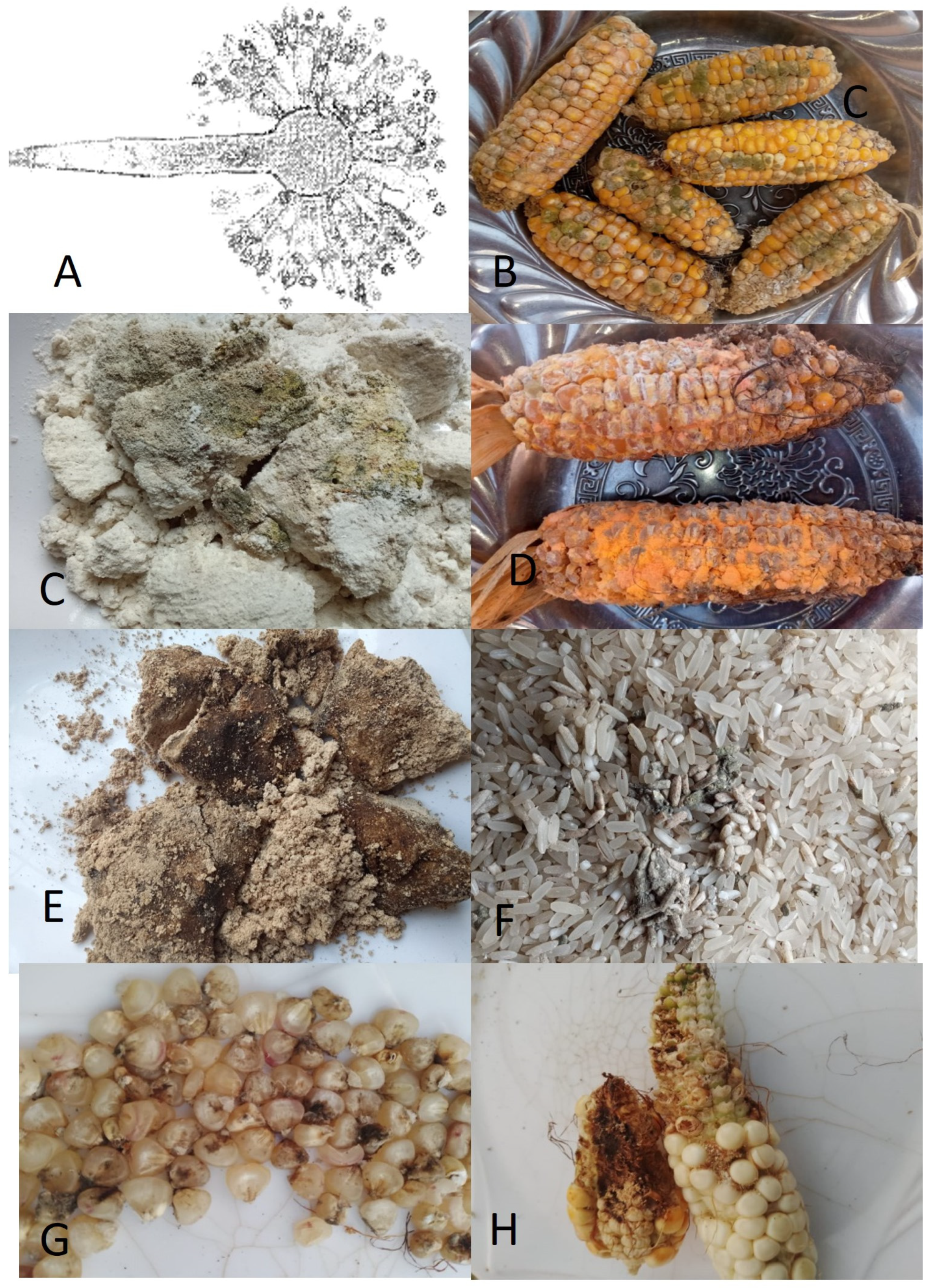
| Aflatoxins | Aflatoxins are among the most studied and dangerous mycotoxins, primarily produced by Aspergillus flavus and Aspergillus parasiticus species. They commonly contaminate crops such as maize, peanuts, and tree nuts, especially in warm, humid climates. Aflatoxins are highly toxic and carcinogenic, with aflatoxin B1 being the most potent. Chronic exposure to aflatoxins has been linked to liver cancer, particularly in regions with high consumption of contaminated grains. Aflatoxins can also cause acute poisoning (aflatoxicosis), liver damage, immune suppression, and stunted growth in children. Due to their severe health effects, aflatoxins are highly regulated globally in food and feed products [35]. |
| Ochratoxins | Ochratoxins, particularly ochratoxin A, are produced by species of Aspergillus and Penicillium and are commonly found in cereals, dried fruits, coffee, and wine. Ochratoxin A is nephrotoxic, meaning it can cause damage to the kidneys, and is also considered a potential carcinogen. Long-term exposure to ochratoxins has been associated with kidney disorders, such as Balkan Endemic Nephropathy, and may also have immunosuppressive effects. Ochratoxin contamination often occurs during improper food storage, especially in humid conditions, making post-harvest management crucial in preventing its occurrence [36]. |
| Fumonisins | Fumonisins are primarily produced by Fusarium species, with Fusarium verticillioides being a common contaminant of maize. These mycotoxins are particularly prevalent in regions where maize is a dietary staple. Fumonisin B1 is the most toxic form, and it is associated with a range of health effects, including esophageal cancer, neural tube defects, and liver and kidney toxicity. In animals, fumonisins have been linked to diseases such as equine leukoencephalomalacia (ELEM) in horses and pulmonary edema in pigs. Controlling fumonisin contamination is vital to reduce both human and animal health risks [37]. |
| Zearalenone | Zearalenone is another mycotoxin produced by Fusarium species, often found in maize, wheat, and barley. Zearalenone mimics estrogen in animals and humans, making it a significant concern for reproductive health. Exposure to zearalenone can cause reproductive disorders, including infertility, in livestock and may also disrupt hormonal balance in humans. It is particularly problematic in livestock feed, leading to economic losses in animal husbandry. While not classified as a potent carcinogen, zearalenone’s endocrine-disrupting effects highlight the importance of controlling its levels in food and feed [38]. |
| Patulin | Patulin is a mycotoxin primarily produced by Penicillium and Aspergillus species and is most commonly associated with moldy fruits, particularly apples. Contamination by patulin can occur during the production of fruit juices, mainly when damaged or decayed fruits are processed. Although patulin is not a potent carcinogen, it can cause gastrointestinal distress and is mutagenic in certain studies. Regulations limit patulin levels in fruit products, particularly apple-based foods, to protect consumers from its toxic effects [39]. |
| Mycotoxin | Responsible Fungi | Affected Foods |
|---|---|---|
| Aflatoxins | Aflatoxins are mainly produced by Aspergillus flavus and Aspergillus parasiticus. These fungi thrive in warm and humid environments, making aflatoxin contamination more common in tropical and subtropical regions. | Aflatoxins commonly contaminate maize (corn), peanuts, tree nuts (almonds, pistachios, and walnuts), cottonseed, and some spices. Improper storage conditions, particularly in humid environments, increase the likelihood of aflatoxin contamination in these crops. Additionally, dairy products can be affected by aflatoxin M1 when livestock consume contaminated feed [41]. |
| Ochratoxins | Ochratoxins, particularly ochratoxin A, are produced by species of Aspergillus (notably Aspergillus ochraceus) and Penicillium (Penicillium verrucosum). | Ochratoxins are commonly found in cereals such as wheat, barley, and oats, as well as in coffee, dried fruits (like raisins and figs), wine, beer, and grape juice. Contamination often occurs in stored grains, particularly under poor storage conditions with high moisture levels. Additionally, ochratoxins have been found in spices and cured meats [42]. |
| Fumonisins | Fumonisins are produced primarily by Fusarium verticillioides (formerly Fusarium moniliforme) and Fusarium proliferatum, widespread in maize-growing regions. | Fumonisins are most commonly associated with maize (corn) and its products, including cornmeal, popcorn, cornflakes, and animal feed made from corn. In regions where maize is a dietary staple, fumonisin contamination is particularly concerning. The toxin may also be found in other cereal grains like sorghum [43]. |
| Zearalenone | Zearalenone is produced by Fusarium graminearum and Fusarium culmorum and is commonly found in temperate climates. | This mycotoxin frequently contaminates maize, wheat, barley, oats, and rye. It is also commonly found in animal feed, disrupting reproductive functions in livestock, particularly pigs. Zearalenone contamination often occurs during harvest or storage when grains are exposed to moist conditions [44]. |
| Patulin | Patulin is mainly produced by Penicillium expansum, and some species of Aspergillus and Byssochlamys. It grows primarily on decaying or damaged fruits. | Patulin is most found in apples and apple-derived products, such as apple juice and cider, mainly when damaged or moldy apples are processed. Other fruits that may be contaminated with patulin include pears, peaches, grapes, and apricots. Contamination can also occur in fruit juices and jams if compromised fruit is used during processing [39]. |
| Mycotoxin | Toxic Level in Food | Food Sources |
|---|---|---|
| Aflatoxins | Maximum allowable limit: 4 µg/kg (EU regulation). | Nuts, grains, corn, and spices. |
| Toxic level associated with health risks: 0.5 µg/kg [46]. | Peanuts, tree nuts, and maize. | |
| Zearalenone | Maximum allowable limit: 100 µg/kg (EU regulation). | Cereals, grains, maize, and animal feed. |
| Toxic level associated with health risks: 50 µg/kg [47]. | Maize products, wheat, barley. | |
| Patulin | Maximum allowable limit: 50 µg/kg (EU regulation). | Apples, apple juice, and apple-based products. |
| Toxic level associated with health risks: 25 µg/kg. | Processed fruit products. | |
| Fumonisins | Maximum allowable limit: 4000 µg/kg (EU regulation) [48]. | Corn and corn-based products. |
| Toxic level associated with health risks: 2000 µg/kg. | Maize and maize flour. | |
| Ochratoxin A | Maximum allowable limit: 3 µg/kg (EU regulation). | Coffee, cereals, and dried fruit. |
| Toxic level associated with health risks: 1 µg/kg [49]. | Wine, grains, and legumes. | |
| Deoxynivalenol (DON) | Maximum allowable limit: 1750 µg/kg (EU regulation). | Wheat, barley, and oats. |
| Toxic level associated with health risks: 1000 µg/kg [50]. | Cereal products and animal feed. | |
| T-2 Toxin | Maximum allowable limit: 1000 µg/kg (EU regulation). | Cereal grains and animal feed. |
| Toxic level associated with health risks: 500 µg/kg [51]. | Wheat, barley, and oats. |
| Mechanism/Toxin | Description |
|---|---|
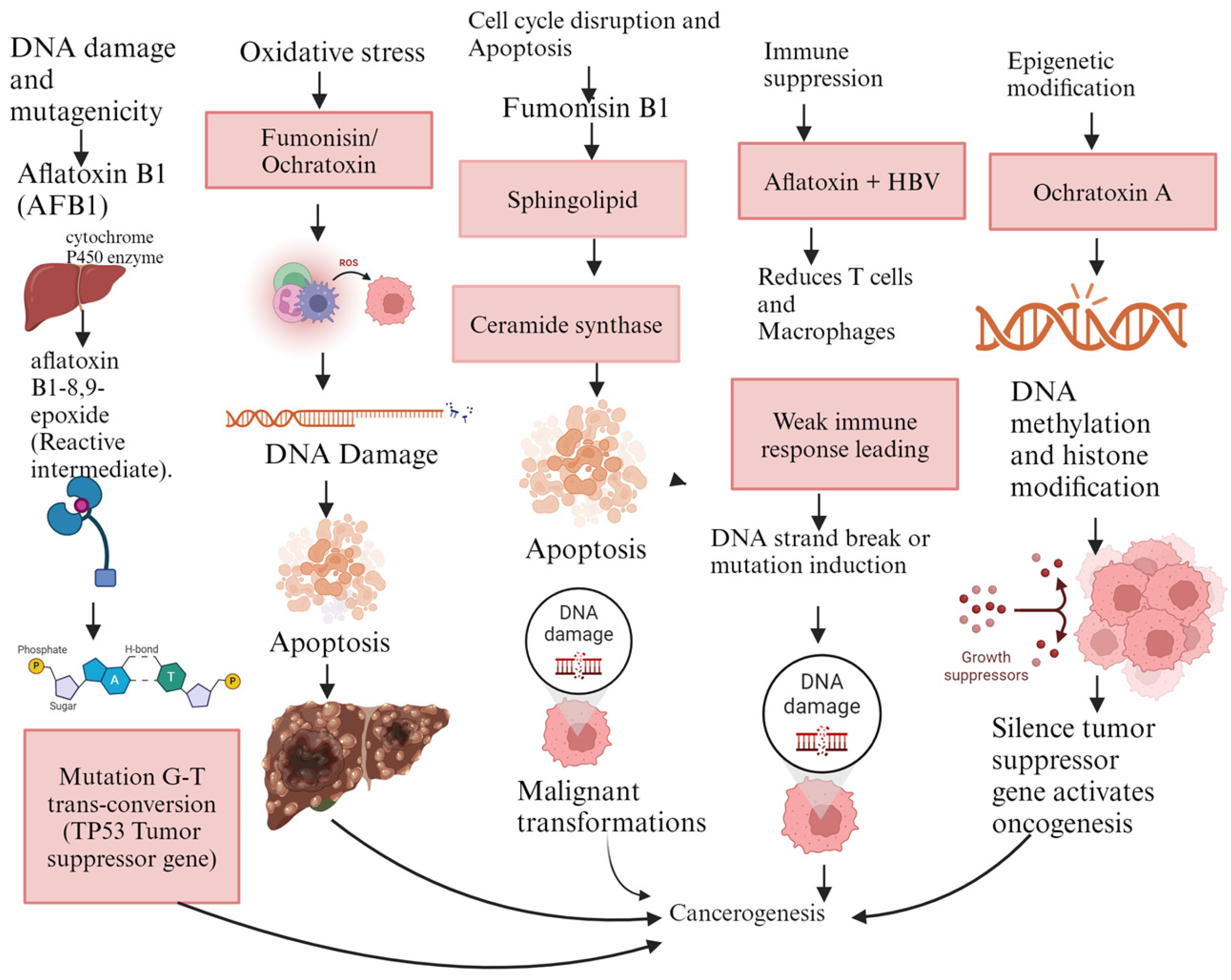
| DNA Damage and Mutagenicity | Aflatoxins, particularly aflatoxin B1 (AFB1), are potent carcinogens that exert their effects by directly damaging DNA. Once ingested, AFB1 is metabolized in the liver by cytochrome P450 enzymes into a reactive intermediate, aflatoxin B1-8,9-epoxide. This metabolite can bind covalently to DNA, forming DNA adducts, particularly at the guanine base, leading to mutations. One of the most common mutations caused by AFB1 is the G-to-T transversion in the TP53 tumor suppressor gene, which is crucial in regulating cell growth and apoptosis. Mutations in TP53 result in uncontrolled cell proliferation and are strongly associated with hepatocellular carcinoma (liver cancer). Aflatoxin-induced DNA damage is thus a key mechanism driving the initiation of cancer [57]. |
| Oxidative Stress | Mycotoxins can also induce oxidative stress, a condition where there is an imbalance between the production of reactive oxygen species (ROS) and the body’s ability to detoxify them. Aflatoxins and other mycotoxins, such as fumonisins and ochratoxins, can generate ROS during their metabolism, leading to oxidative damage to cellular components like DNA, proteins, and lipids. This oxidative damage can cause mutations, promote inflammation, and contribute to the initiation and progression of cancer. In addition, chronic oxidative stress can disrupt cellular signaling pathways that control cell growth and apoptosis, further promoting carcinogenesis [58]. |
| Cell Cycle Disruption and Apoptosis Inhibition | Mycotoxins can interfere with normal cell cycle regulation, contributing to the development of cancer. For instance, fumonisin B1, commonly found in maize, disrupts sphingolipid metabolism by inhibiting ceramide synthase. Sphingolipids are essential in regulating cell growth, differentiation, and apoptosis. The disruption of sphingolipid pathways can impair apoptosis (programmed cell death), allowing damaged cells to survive and proliferate uncontrollably, a hallmark of cancer development. Additionally, by blocking apoptosis, mycotoxins facilitate the survival of cells with DNA damage, increasing the likelihood of malignant transformation [59]. |
| Immune Suppression | Chronic exposure to certain mycotoxins can lead to immune suppression, which further increases cancer risk. Aflatoxins, for example, are known to impair the immune system by reducing the production and function of immune cells like T-cells and macrophages. This weakened immune response hampers the body’s ability to recognize and eliminate cancerous or pre-cancerous cells. Furthermore, immune suppression can promote the persistence of viral infections, such as hepatitis B virus (HBV), which is a significant cofactor in aflatoxin-induced liver cancer. Individuals who are exposed to both aflatoxins and HBV are at a much higher risk of developing liver cancer due to the combined effects of viral infection and toxin-induced DNA damage [60]. |
| Epigenetic Modifications | In addition to directly damaging DNA, mycotoxins can cause epigenetic changes that alter gene expression without affecting the underlying DNA sequence. For instance, mycotoxins like ochratoxin A have been shown to induce changes in DNA methylation and histone modifications, which can silence tumor suppressor genes or activate oncogenes. These epigenetic alterations can promote carcinogenesis by disrupting normal cellular functions and facilitating uncontrolled cell growth [61]. |
| Zearalenone (ZEA) | Zearalenone is a nonsteroidal estrogenic mycotoxin primarily produced by Fusarium species, commonly found in cereals and grains. The carcinogenicity of ZEA is primarily linked to its estrogenic properties, as it mimics the action of natural estrogens by binding to estrogen receptors (ERs) in target tissues. This interaction leads to hormonal disruption, which promotes the proliferation of estrogen-sensitive cells, particularly in reproductive tissues. Over time, the hyperproliferation of these cells increases the risk of hormone-dependent cancers, such as breast, ovarian, and endometrial cancers. ZEA’s ability to activate ER signaling can also induce DNA damage and oxidative stress, further contributing to its carcinogenic potential. Oxidative stress generates reactive oxygen species (ROS), which can cause mutations, impair DNA repair mechanisms, and lead to genomic instability. Additionally, ZEA may disrupt normal cell cycle regulation, promoting abnormal cell division and enhancing the risk of cancer development [62]. |
| Patulin | Patulin, produced by Penicillium and Aspergillus species, is a mycotoxin primarily found in apples and apple products. Its carcinogenicity is associated with its ability to induce oxidative stress and DNA damage. Patulin promotes the generation of ROS, which can damage cellular components, including lipids, proteins, and nucleic acids. This oxidative damage leads to mutations and chromosomal aberrations, increasing the risk of malignant transformations. Furthermore, patulin interferes with key cellular pathways involved in apoptosis (programmed cell death) and cell cycle regulation. By inhibiting apoptosis, patulin allows damaged cells to survive and proliferate, which may contribute to cancer initiation and progression. Patulin also impairs the function of tumor suppressor proteins, such as p53, which generally help to maintain genomic integrity by halting the cell cycle in response to DNA damage. When p53 function is disrupted, cells with damaged DNA can continue to divide uncontrollably, further contributing to the carcinogenic process [63]. |
| Mycotoxin | Findings | Cancer Type |
|---|---|---|
| Zearalenone | Reported increased estrogenic activity of zearalenone in human breast cancer cells, leading to cell proliferation [64]. | Breast Cancer |
| Found that dietary exposure to zearalenone in rats led to a significant increase in uterine weight and hyperplasia [65]. | Uterine Cancer | |
| Identified a link between zearalenone exposure and increased risk of reproductive cancers through hormonal disruption [66]. | Reproductive Cancers | |
| Showed that zearalenone exposure caused oxidative stress and DNA damage in liver cells, potentially increasing liver cancer risk [67]. | Liver Cancer | |
| Patulin | Documented the DNA-damaging effects of patulin in human liver cells, leading to mutagenic changes [68]. | Liver Cancer |
| Investigated the carcinogenic potential of patulin in mouse models, noting an increase in tumor incidence [69]. | Multiple Cancer Types | |
| Found that patulin exposure induced oxidative stress and apoptosis in colon cancer cells, highlighting its potential role in colorectal cancer [70]. | Colorectal Cancer | |
| Reported that dietary exposure to patulin in rats resulted in liver toxicity and increased cancer risk [71]. | Liver Cancer |
| Method | Description | ||
|---|---|---|---|
| Chromatography | Chromatography is one of the most widely used techniques for analyzing mycotoxins due to its high sensitivity, accuracy, and ability to separate and identify multiple mycotoxins simultaneously. Two common forms of chromatography used in mycotoxin analysis are high-performance liquid chromatography (HPLC) and gas chromatography–mass spectrometry (GC-MS) [84]. | ||
| Principle | Application | Advantage | |
| High-Performance Liquid Chromatography (HPLC) | HPLC involves the separation of mycotoxins based on their interaction with a stationary phase (usually a column) and a mobile phase (usually a solvent). The different affinities of mycotoxins for the stationary phase allow them to be separated, detected, and quantified [85]. | HPLC is commonly used to analyze aflatoxins, fumonisms in various foods, including cereals, nuts, and dairy products. It is highly effective when coupled with fluorescence or UV detection methods, which enhance sensitivity for specific mycotoxins. | HPLC offers high resolution, accuracy, and the ability to detect low levels of mycotoxins. It is widely accepted in regulatory testing and can be used for routine food safety monitoring. |
| Gas Chromatography–Mass Spectrometry (GC-MS) | GC-MS vaporizes mycotoxin samples, separates them via gas chromatography, and identifies them by mass spectrometry. Mycotoxins are derivatized to ensure volatility [86]. | GC-MS is beneficial for the detection of volatile mycotoxins like patulin. It is susceptible and specific, making it suitable for detecting trace levels of mycotoxins in complex food matrices. | GC-MS provides high specificity and sensitivity, making it the gold standard for detecting mycotoxins like patulin in fruit juices. |
| Spectrometry | Mass spectrometry (MS) is often combined with chromatography to improve the sensitivity and specificity of mycotoxin detection. MS measures the mass-to-charge ratio of ionized mycotoxin molecules, providing precise molecular identification and quantification. | ||
| Mass Spectrometry (MS) | MS works by ionizing chemical compounds and measuring the mass-to-charge ratio of the resulting ions. Coupled with HPLC or GC, it allows for separating and identifying mycotoxins based on their mass [87]. | HPLC-MS and GC-MS are widely used to analyze various mycotoxins, including aflatoxins, ochratoxins, and fumonisins. These techniques are valuable in multi-mycotoxin analysis, where several toxins may exist in a single sample. | MS provides high accuracy and detects multiple mycotoxins at low concentrations, which is crucial for regulatory testing and detailed mycotoxin profiling in food products. |
| Immunoassays | Immunoassays are rapid, sensitive, and cost-effective techniques for detecting mycotoxins in food. They rely on antibodies’ specific binding to mycotoxins and are suitable for quickly screening large numbers of samples [88]. | ||
| Enzyme-Linked Immunosorbent Assay (ELISA) | ELISA is based on antibodies binding to mycotoxins, followed by an enzyme–substrate reaction that produces a detectable signal, usually colorimetric or fluorescent. The intensity of the signal corresponds to the concentration of mycotoxins in the sample [89]. | ELISA is commonly used to detect aflatoxins, ochratoxns, zearalenone, and fumonisms in food products such as grains, nuts, and milk. It is often employed for routine screening in food industries and regulatory bodies. | ELISA is a quick, affordable method for mycotoxin detection but may lack the specificity of chromatographic techniques due to cross-reactivity. |
| Lateral Flow Immunoassay (LFIA) | LFIA is similar to ELISA but uses a test strip format. Mycotoxin–antibody interactions produce a visible line or signal on the test strip, indicating the presence of mycotoxins [90]. | LFIA is used for rapid, on-site testing of mycotoxins in agricultural products. It is commonly applied to detect aflatoxins, fumonisins, and zearalenone in grains, nuts, and animal feed. | LFIA is a portable, quick method for mycotoxin detection, ideal for field testing, though less precise than lab methods. |
| Hyperspectral Analysis | Utilizes the spectral signature of materials across a wide range of wavelengths to identify and quantify mycotoxin contamination [91]. | Sorting and detecting mycotoxin presence in grains, nuts, and other food products. | Non-destructive, rapid analysis, can be applied in real-time sorting, and high-throughput screening. |
| Immuno-detection | Employs specific antibodies that bind to mycotoxins, allowing their detection through various methods (e.g., ELISA, lateral flow assays) [90]. | Food safety testing, monitoring mycotoxin levels in processed and raw food products. | High specificity and sensitivity, can detect low concentrations of mycotoxins, and suitable for various matrices. |
| Technique | Findings |
|---|---|
| ELISA | Developed a novel ELISA method for detecting aflatoxins in peanuts with high sensitivity [92]. |
| Lateral Flow Immunoassay | Created a lateral flow immunoassay for rapid detection of zearalenone in cereal products [93]. |
| Immunoaffinity Columns | Utilized immunoaffinity columns for the extraction and detection of patulin in fruit juices, achieving high recovery rates [94]. |
| Magnetic Nanoparticles | Developed magnetic nanoparticles coupled with immunoassays for the detection of multiple mycotoxins in grains [95]. |
| Sample Preparation | Importance | Procedure | Challenges |
|---|---|---|---|
| Sampling | Accurate mycotoxin analysis relies on proper sampling, as uneven distribution in food can cause incorrect results. | The process begins with collecting food samples from different parts of a batch to account for variability in mycotoxin contamination. To form a composite sample, random sub-samples are collected and combined for solid foods like grains, nuts, and cereals. Mixing ensures even distribution before sampling for liquids, milk, or fruit juices [100]. | Heterogeneous mycotoxin contamination complicates sampling, requiring larger samples for bulk goods like grains to minimize errors. |
| Homogenization | After sampling, food must be homogenized to ensure even distribution of mycotoxins, particularly in solid or semi-solid foods [101]. | Homogenization involves grinding or blending the sample into a fine, uniform consistency. Equipment such as mills or blenders reduces the particle size of solid foods like grains or nuts. Mixing ensures consistency in liquids. | Prevent contamination during homogenization, as excessive grinding heat can degrade sensitive mycotoxins. |
| Extraction | The extraction aims to separate mycotoxins from the food matrix into a solvent, isolating them from interfering compounds like proteins, fats, and carbohydrates for easier analysis. | The solvent choice depends on the food type and mycotoxin analyzed. Common organic solvents like methanol and acetonitrile effectively dissolve mycotoxins. The homogenized food is mixed with the solvent and agitated for solid samples, while liquid samples require filtration or centrifugation to remove debris before analysis [102]. | The selection of an appropriate solvent system is crucial. It must efficiently extract mycotoxins while minimizing the coextraction of other food components that may interfere with the analysis. |
| Cleanup | Following extraction, a cleanup step is often necessary to remove unwanted compounds from the extract, such as fats, sugars, and proteins, which can interfere with the sensitivity and accuracy of detection methods. | Cleanup methods vary by analytical technique and food matrix:Solid-Phase Extraction (SPE): extracts pass through an adsorbent column that binds unwanted substances while allowing mycotoxins to pass.Immunoaffinity Columns (IAC): use antibodies to selectively bind and isolate mycotoxins, which are then eluted with a solvent.Liquid–Liquid Partitioning: separates mycotoxins based on solubility in two immiscible phases, typically an organic solvent and water [103]. | Cleanup must be optimized for different food types, as excessive removal of matrix components can result in the loss of mycotoxins, reducing the sensitivity of the analysis. |
| Concentration | After extraction and cleanup, mycotoxin levels may be too low for accurate detection. Concentration improves these levels, making quantification easier. | Concentration is typically achieved by evaporating the solvent used during extraction, leaving behind a more concentrated sample of mycotoxins. This is usually performed under reduced pressure or using rotary evaporation to avoid degradation of the mycotoxins [98]. | Avoid over-concentration, as it can cause matrix effects or unwanted compound precipitation that interferes with analysis. |
| Principle | Implementation | Challenges | |
|---|---|---|---|
| Crop Rotation | Crop rotation alternates crops in a field across seasons, reducing fungal populations that target specific crops and lowering mycotoxin contamination risk [105]. | By rotating crops, such as alternating cereals with legumes or other non-host plants, the life cycle of fungal pathogens is disrupted, reducing their ability to infect subsequent crops. | Effective crop rotation requires careful planning to prevent new crops from hosting pathogens and adapting practices to local conditions. |
| Use of Resistant Varieties | Plant breeding programs focus on developing crop varieties resistant to specific fungal pathogens. Resistant varieties can reduce fungal infection and subsequent mycotoxin production [106]. | Farmers can select and plant varieties of crops that have been genetically modified or selectively bred for resistance to mycotoxin-producing fungi, such as maize varieties resistant to Fusarium species. | Regional factors may limit the availability of resistant varieties, and continuous breeding efforts are needed to address evolving fungal strains. Moreover, resistance does not always guarantee complete protection, so it should be used in conjunction with other measures. |
| Proper Irrigation and Field Management | Fungal pathogens thrive in warm, humid conditions, making proper irrigation and field management critical in preventing fungal contamination [107]. | Techniques include optimizing irrigation, ensuring good drainage, and avoiding over-fertilization to reduce fungal growth. Managing plant residue and minimizing mechanical damage also help prevent fungal infection. | Effective field management requires monitoring weather conditions, soil moisture levels, and crop health, which may be resource-intensive. Farmers need access to proper tools and training to implement these practices effectively. |
| Measure | Principle | Implementation | Challenges |
|---|---|---|---|
| Storage Conditions | Proper storage conditions are vital for preventing fungal growth and mycotoxin production post-harvest [112]. | Critical practices include maintaining dry, cool, and ventilated storage to prevent fungal growth. Grains should be stored below 14% moisture in ventilated containers, with regular inspections of storage facilities. | Maintaining optimal storage conditions requires ongoing monitoring and control, which can be challenging in regions with limited infrastructure or resources. |
| Processing Techniques | Processing methods can help reduce mycotoxin levels in food products and remove contaminated portions [113]. | Techniques like cleaning and sorting can remove contaminated food parts. Heat treatments may degrade some mycotoxins, while good manufacturing practices (GMPs) and hazard analysis and critical control point (HACCP) systems help manage contamination risks. | The effectiveness of processing techniques depends on the type of mycotoxin and the food matrix. Not all mycotoxins are easily removed or degraded by processing methods. |
| Chemical Treatments | Chemical treatments can help neutralize or remove mycotoxins from food and feed [114]. | Adsorbents like activated carbon or clay can be added to animal feed to bind mycotoxins and reduce their bioavailability. Chemical decontamination agents, such as ozone or ammonia, can be used to treat contaminated grains. | Chemical treatments should be used cautiously to prevent new contaminants and preserve nutritional quality, as their effectiveness varies by mycotoxin type and treatment method. |
| Approach | Principle | Implementation | Challenges |
|---|---|---|---|
| Regulatory Guidelines and Standards | Regulatory guidelines establish permissible mycotoxin levels in food and feed to safeguard public health. | International bodies like Codex Alimentarius set global mycotoxin limits, while national authorities establish regulations based on these guidelines [115]. | Ensuring compliance with regulations requires robust enforcement mechanisms and regular updates to guidelines based on new scientific data. Regulation variation between countries can also complicate international trade and food safety efforts. |
| Food Safety Monitoring | Monitoring involves regularly testing food and feed samples to detect and quantify mycotoxin contamination [116]. | Food safety authorities monitor mycotoxin levels using analytical techniques and surveillance programs targeting high-risk products and regions. | Effective monitoring requires access to reliable and sensitive analytical methods and resources for sample collection and testing. Ensuring consistent testing quality and managing large volumes of samples can be resource-intensive. |
| Enforcement and Compliance | Enforcement ensures compliance with mycotoxin regulations and prompts corrective actions for contamination [117]. | Regulatory authorities inspect and enforce mycotoxin standards, with non-compliance leading to fines, recalls, or closures. | Effective enforcement requires coordination and adequate resources to ensure compliance among all stakeholders, especially in regions with limited infrastructure. |
| Issue | Challenges | Impacts | |
|---|---|---|---|
| Sensitivity | Mycotoxins are often present at very low concentrations in food, making it challenging to detect them reliably. Analytical methods must be sensitive enough to identify trace amounts of mycotoxins to ensure accurate safety assessments [122]. | Some mycotoxins have low natural abundance or are masked by matrix effects, which can interfere with detection. Analytical methods must be optimized to enhance sensitivity while minimizing false negatives. | Low sensitivity can result in underestimating contamination levels, potentially leading to unsafe food products reaching consumers. |
| Specificity | The specificity of detection methods is crucial to differentiate between mycotoxins and other compounds with similar chemical properties. Cross-reactivity with other substances can lead to false positives or inaccurate quantification [123]. | Some methods, like immunoassays, may lack specificity and produce cross-reactivity with structurally similar compounds. Therefore, it is essential to ensure that methods can accurately target the specific mycotoxin of interest. | Lack of specificity can compromise the accuracy of results and lead to unnecessary regulatory actions or misinformed safety assessments. |
| Cost | Advanced analytical techniques, such as high-performance liquid chromatography–mass spectrometry (HPLC-MS), can be expensive due to equipment, reagents, and maintenance costs. This can limit their accessibility, especially in resource-limited settings [124]. | High costs can restrict the frequency of testing and the number of samples analyzed, potentially leading to gaps in monitoring and an increased risk of undetected mycotoxin contamination. | Costs may limit the implementation of comprehensive testing programs, especially in developing regions with scarce resources. |
| Measures | Issue | Challenges | Impact |
|---|---|---|---|
| Pre-Harvest Control Measures | Pre-harvest measures, such as crop rotation and resistant varieties, are designed to reduce fungal contamination but may not always be practical or feasible [10]. | Implementing crop rotation requires careful planning and may not be feasible for all crops. Resistant varieties may not always be available or fully protective. | Inadequate pre-harvest measures can lead to ongoing fungal contamination and mycotoxin production, especially in resource-limited regions. |
| Post-Harvest Control Measures | Post-harvest control measures, such as proper storage and processing techniques, are essential for managing mycotoxin contamination but may have limitations in effectiveness and feasibility [125]. | Maintaining optimal storage conditions requires significant infrastructure, which may be lacking in some regions. Processing methods like heat treatments may not completely degrade all mycotoxins. | Inadequate post-harvest measures can lead to persistent mycotoxin contamination in stored food products, reducing the overall effectiveness of control strategies. |
| Chemical Treatments | Chemical treatments, such as the use of adsorbents or decontamination agents, can help reduce mycotoxin levels but are not consistently universally effective [126]. | The effectiveness of chemical treatments can vary depending on the type of mycotoxin and the food matrix. Additionally, there may be concerns about potential residues or impacts on food quality and safety. | Variability in treatment effectiveness can limit the reliability of chemical methods in ensuring food safety and may require additional validation for different mycotoxins and food types. |
| Regulatory and Monitoring Approaches | Regulatory and monitoring systems are essential for ensuring compliance with mycotoxin limits but face challenges related to implementation and enforcement [127]. | Regulatory guidelines vary between countries, causing inconsistencies in standards. Monitoring programs need substantial resources for sampling and testing, which may pose challenges in resource-limited settings. | Inconsistent regulations and inadequate monitoring can result in gaps in food safety oversight and an increased risk of mycotoxin contamination in the food supply. |
| Research Gaps | Need | Opportunity |
|---|---|---|
| Development of New Analytical Methods | While current analytical techniques such as HPLC, GC-MS, and ELISA are widely used, more advanced methods that offer improved sensitivity, specificity, and cost efficiency are needed. | Research into novel analytical techniques, such as portable sensors, lab-on-a-chip devices, or advanced mass spectrometry methods, could provide faster, more accurate, and cost-effective mycotoxin detection. Improved methods that can analyze multiple mycotoxins simultaneously or in real time would greatly enhance monitoring capabilities [126]. |
| Innovative Control Strategies | Existing control strategies, including pre-harvest and post-harvest measures, are limited in effectiveness. Innovative approaches that can provide more reliable and scalable solutions are needed. | Research into biocontrol agents, such as beneficial microorganisms that inhibit fungal growth, or the development of novel chemical treatments that are both effective and safe, could offer new solutions for mycotoxin management. Additionally, integrating intelligent agriculture technologies, such as precision farming and remote sensing, may provide real-time data to optimize control measures [128]. |
| Understanding Mycotoxin Interactions and Synergistic Effects | Many studies focus on individual mycotoxins, but there is limited research on the interactions and synergistic effects of multiple mycotoxins present in food. | Investigating how different mycotoxins interact and their combined effects on health could improve risk assessments and lead to more comprehensive control strategies. This includes studying the potential for additive or synergistic effects on toxicity and health outcomes [129]. |
| Impact of Climate Change | Climate change can influence fungal growth and mycotoxin production, but the specific impacts on mycotoxin contamination and food safety are not fully understood. | Research into how changing climate conditions affect fungal populations, mycotoxin production, and crop susceptibility can help develop adaptive strategies and predictive models to better manage risks in varying environmental conditions [130]. |
| Trend | Impact | |
|---|---|---|
| Advancements in Analytical Technology | New technologies, such as portable and field-deployable sensors, are emerging for rapid on-site mycotoxin detection. These devices can provide real-time results and are becoming increasingly affordable [131]. | Portable sensors and devices can facilitate more frequent and widespread monitoring of mycotoxin contamination, particularly in developing regions or during critical stages of the food supply chain. These advancements improve the ability to detect contamination early and take appropriate actions. |
| Integration of Machine Learning and Artificial Intelligence | Machine learning (ML) and artificial intelligence (AI) enhance mycotoxin analysis by predicting contamination risks and optimizing control measures [132]. | AI and ML algorithms can enhance predictive models for mycotoxin contamination, improve risk assessments, and optimize agricultural practices and monitoring systems. This integration can lead to more effective and targeted interventions. |
| Biocontrol and Natural Remedies | Research on biocontrol agents, like beneficial microbes and plant extracts, is increasing for environmentally friendly fungal inhibition and mycotoxin degradation [133]. | The development and application of biocontrol agents offer a sustainable approach to managing mycotoxins. These natural remedies can reduce reliance on chemical treatments and contribute to more eco-friendly agricultural practices. |
| Enhanced Food Safety Regulations | Regulatory bodies continually update and refine guidelines and standards for mycotoxin levels in food and feed based on new research and emerging risks [134]. | Enhanced regulations and standards can improve food safety and consumer protection. Continuous updates to regulatory frameworks ensure that they reflect the latest scientific knowledge and address emerging threats. |
| Global Collaboration and Data Sharing | Increased global collaboration and data sharing among researchers, regulatory bodies, and industry stakeholders are becoming more prevalent [135]. | Collaborative efforts and shared data can improve the understanding of mycotoxin risks, enhance monitoring and control strategies, and promote the development of global best practices for mycotoxin management. |
Disclaimer/Publisher’s Note: The statements, opinions and data contained in all publications are solely those of the individual author(s) and contributor(s) and not of MDPI and/or the editor(s). MDPI and/or the editor(s) disclaim responsibility for any injury to people or property resulting from any ideas, methods, instructions or products referred to in the content. |
© 2024 by the authors. Licensee MDPI, Basel, Switzerland. This article is an open access article distributed under the terms and conditions of the Creative Commons Attribution (CC BY) license (https://creativecommons.org/licenses/by/4.0/).
Share and Cite
Mafe, A.N.; Büsselberg, D. Mycotoxins in Food: Cancer Risks and Strategies for Control. Foods 2024, 13, 3502. https://doi.org/10.3390/foods13213502
Mafe AN, Büsselberg D. Mycotoxins in Food: Cancer Risks and Strategies for Control. Foods. 2024; 13(21):3502. https://doi.org/10.3390/foods13213502
Chicago/Turabian StyleMafe, Alice N., and Dietrich Büsselberg. 2024. "Mycotoxins in Food: Cancer Risks and Strategies for Control" Foods 13, no. 21: 3502. https://doi.org/10.3390/foods13213502
APA StyleMafe, A. N., & Büsselberg, D. (2024). Mycotoxins in Food: Cancer Risks and Strategies for Control. Foods, 13(21), 3502. https://doi.org/10.3390/foods13213502

