Article

Development of a Clean Label Mayonnaise Using Fruit Flour

by
Maria Rocha Vieira
1,
Sara Simões
1,
Cecilio Carrera-Sánchez
2 and
Anabela Raymundo
1,*
1
LEAF—Linking Landscape, Environment, Agriculture and Food Research Center, Associated Laboratory TERRA, Instituto Superior de Agronomia, Universidade de Lisboa, Tapada da Ajuda, 1349-017 Lisbon, Portugal
2
Departamento de Ingeniería Química, Escuela Politécnica Superior, Universidad de Sevilla, Calle Virgen de África, 7, 41011 Sevilla, Spain
*
Author to whom correspondence should be addressed.
Foods 2023, 12(11), 2111; https://doi.org/10.3390/foods12112111
Submission received: 19 April 2023 / Revised: 9 May 2023 / Accepted: 16 May 2023 / Published: 24 May 2023

Abstract

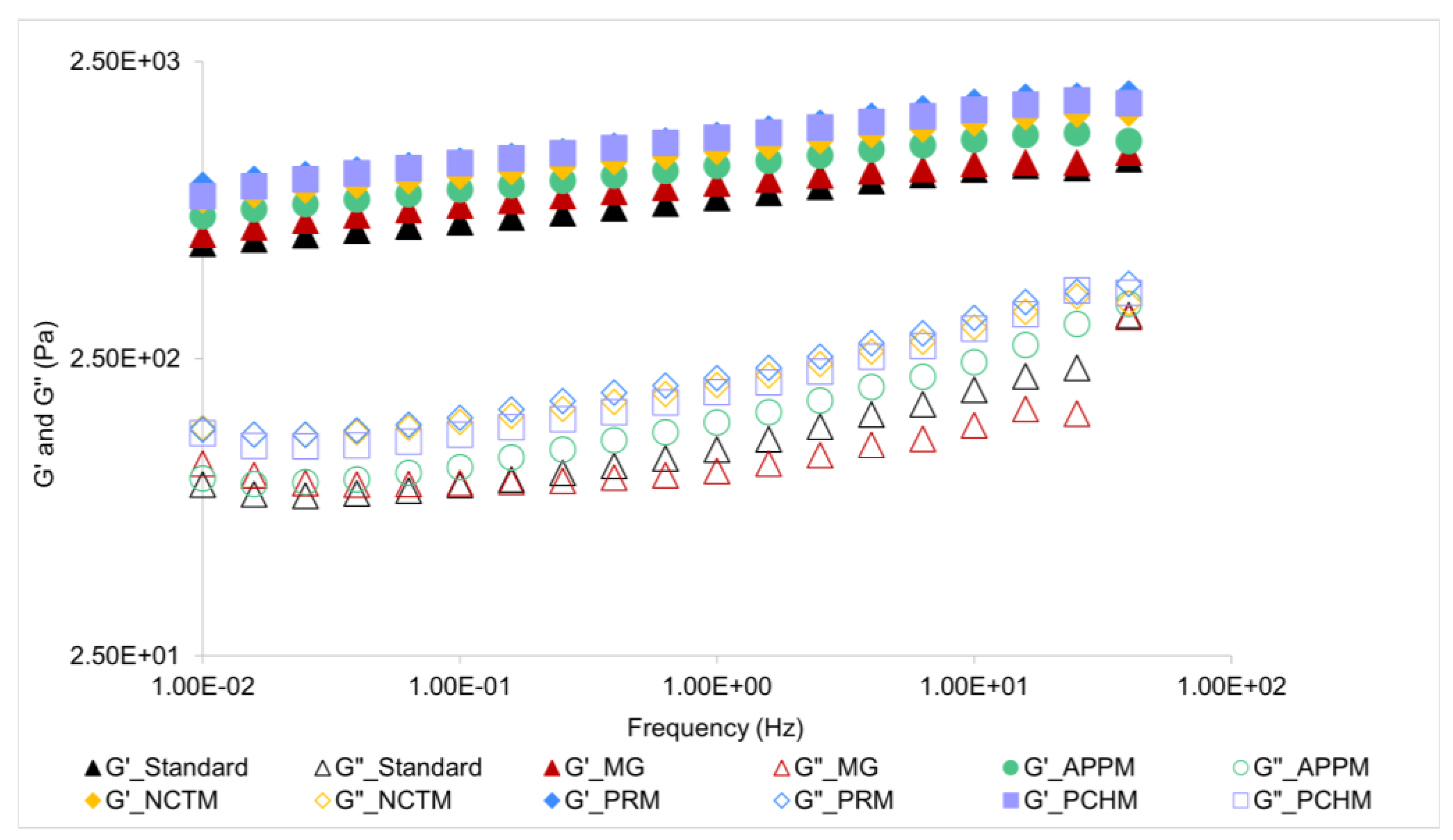
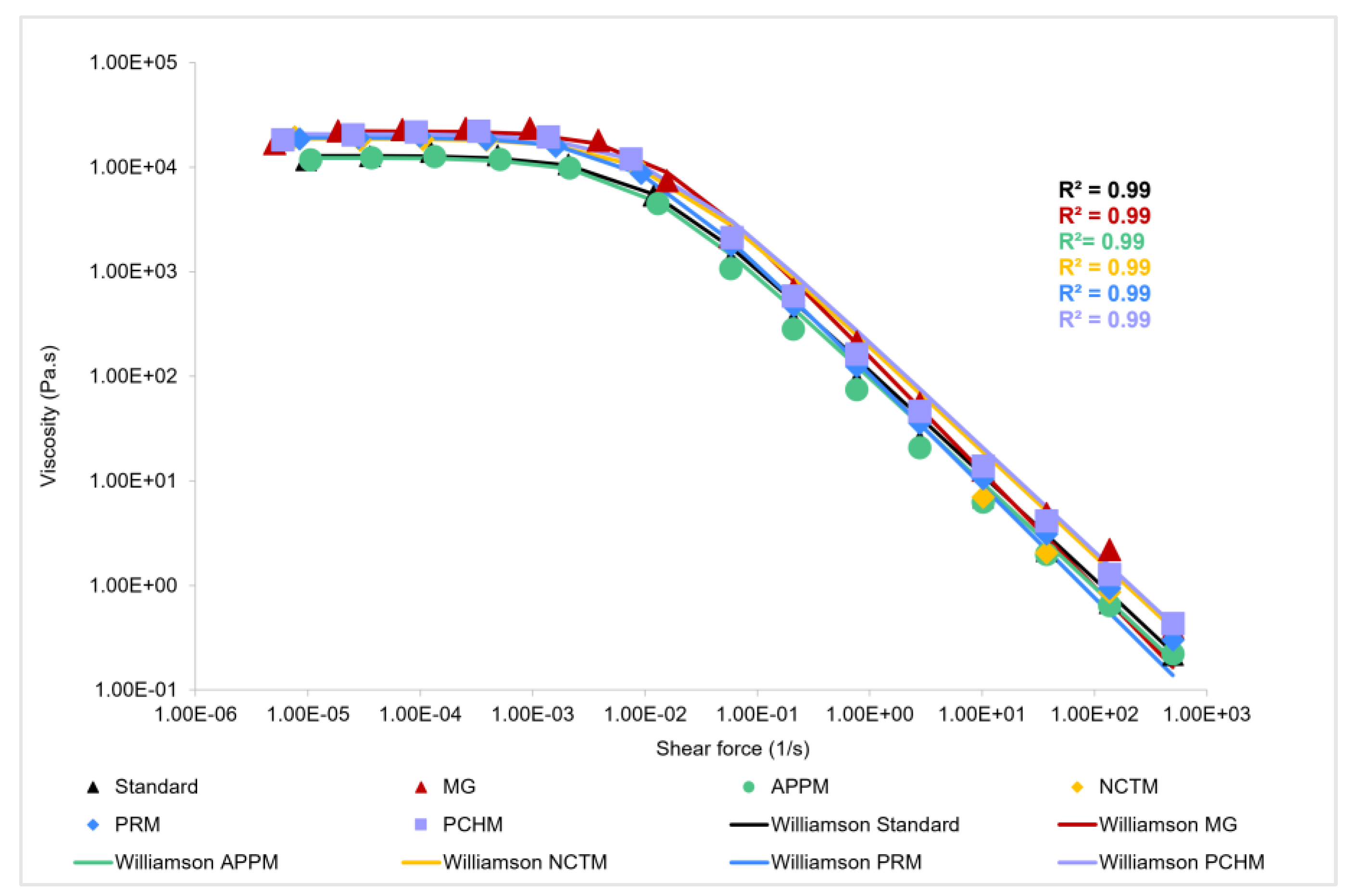
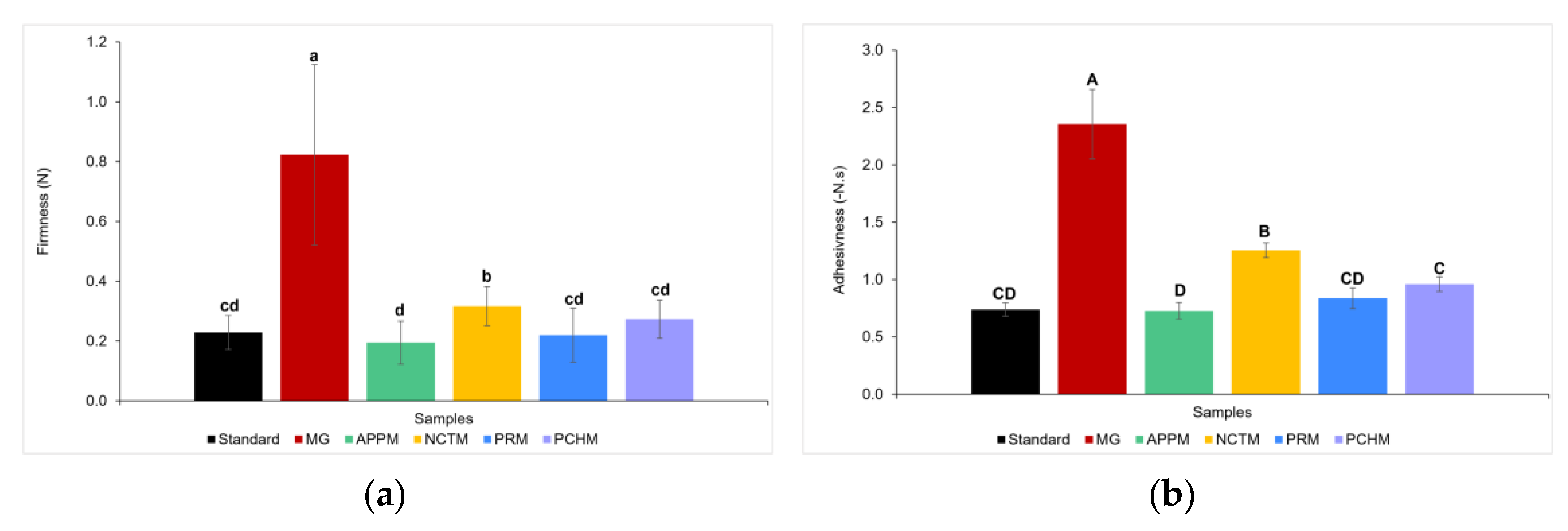
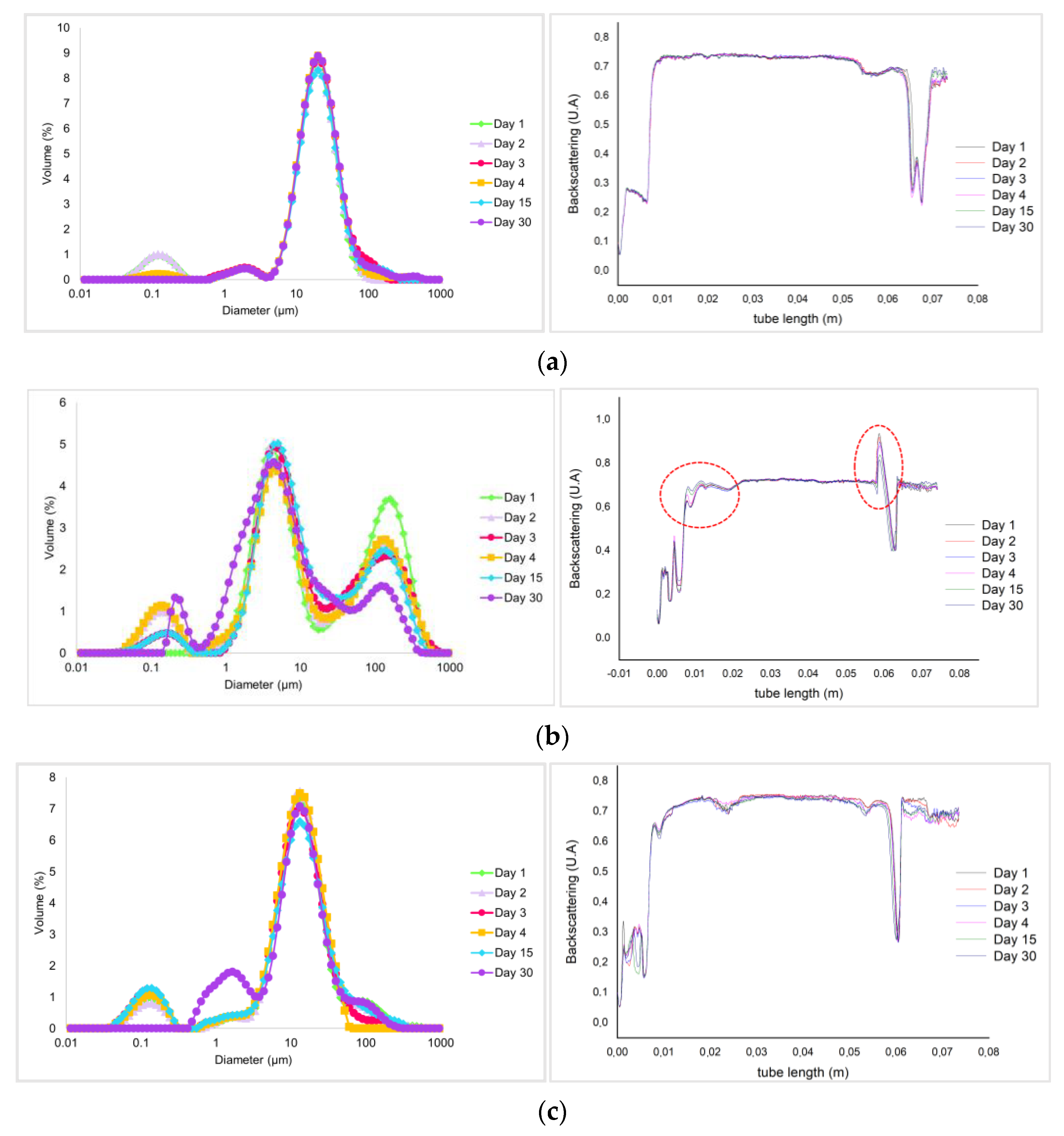
Over the past few years, clean label food has been growing, meaning that consumers are searching for shorter and simpler ingredient lists composed of familiar and natural ingredients. The objective of the present work was to develop a vegan clean label mayonnaise, replacing the additives with fruit flour obtained from fruit reduced commercial value. The mayonnaises were prepared by replacing the egg yolk with 1.5% (w/w) lupin and faba proteins, while fruit flour (apple, nectarine, pear, and peach flour) was incorporated to substitute sugar, preservatives, and colorants. Texture profile analysis and rheology—small amplitude oscillatory measurements were performed to evaluate the impact of the fruit flour on mechanical properties. The mayonnaise antioxidant activity was also analyzed in terms of color, pH, microbiology, and stability measurements. The results showed that mayonnaises produced with fruit flour had better structure parameters in terms of viscosity, and texture, but also improved pH and antioxidant activity (p < 0.05) compared to the standard mayonnaise (mayonnaise without fruit flour). The incorporation of this ingredient into mayonnaise increases the antioxidant potential, though it is in lower concentrations compared to the fruit flours that compose them. Nectarine mayonnaise showed the most promising results in terms of texture and antioxidant capacity (11.30 mg equivalent of gallic acid/100 g).
Keywords: mayonnaise; clean label; food by-products; nectarine flour; antioxidant capacity mayonnaise; clean label; food by-products; nectarine flour; antioxidant capacity