Article

Some Insights into the Factors Influencing Continuous Citation of Retracted Scientific Papers

Department of Biochemistry, Yong Loo Lin School of Medicine, National University of Singapore, Singapore 117596, Singapore
Publications 2023, 11(4), 47; https://doi.org/10.3390/publications11040047

Submission received: 11 July 2023 / Revised: 22 September 2023 / Accepted: 7 October 2023 / Published: 8 October 2023

Abstract

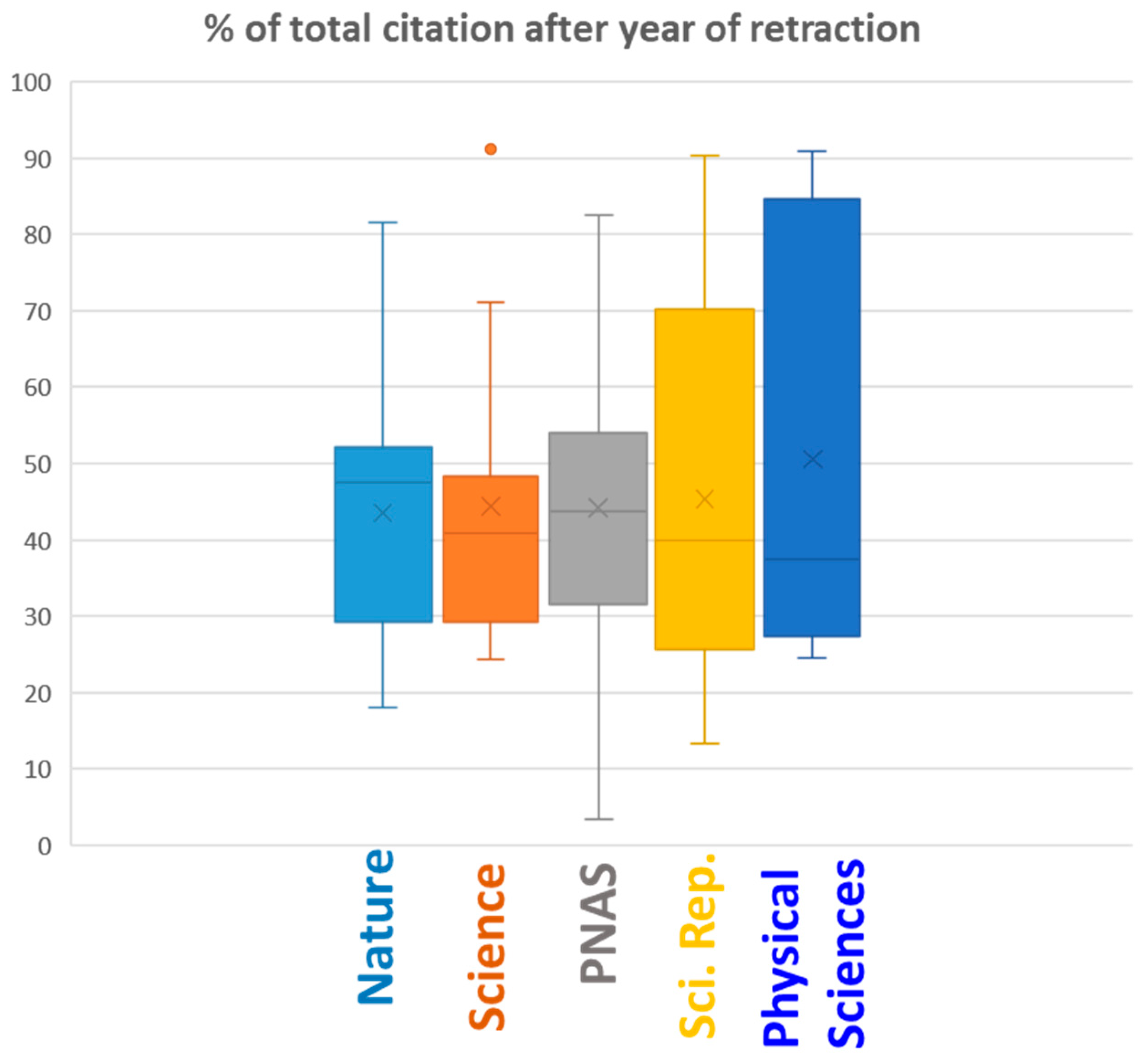
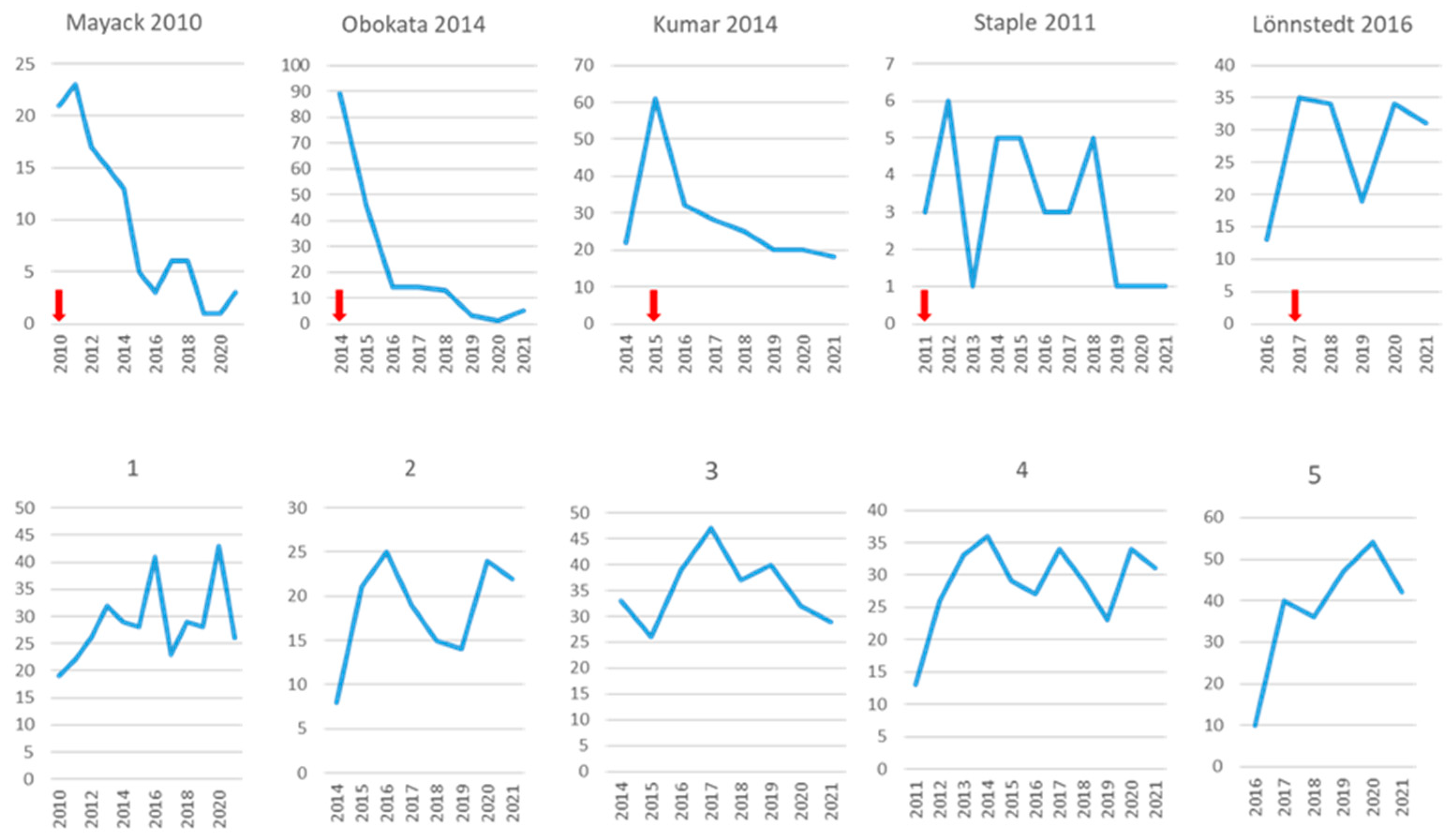
Once retracted, the citation count of a research paper might be intuitively expected to drop precipitously. Here, we assessed the post-retraction citation of life and medical sciences papers from two top-ranked, multidisciplinary journals Nature and Science, from 2010 to 2018. Post-retraction citations accounted for a staggering 47.7% and 40.9% of total citations (median values), respectively, of the papers included in our analysis. These numbers are comparable with those from two journals with lower impact factors, and with retracted papers from the physical sciences discipline. A more qualitative assessment of five papers from the two journals with a high percentage (>50%) of post-retraction citations, all of which are associated with misconduct, reveal different contributing reasons and factors. Retracted papers associated with highly publicized misconduct cases are more prone to being cited with the retraction status indicated, or projected negatively (such as in the context of research ethics and misconduct discussions), with the latter also indicated by cross-disciplinary citations by humanities and social sciences articles. Retracted papers that retained significant validity in their main findings/conclusions may receive a large number of neutral citations that are somewhat blind to the retraction. Retracted papers in popular subject areas with massive publication outputs, particularly secondary publications such as reviews, may also have a high background citation noise. Our findings add further insights to the nature of post-retraction citations beyond the plain notion that these are largely made through sheer ignorance or negligence by the citing authors.
Keywords: citation; retraction; publication; post-retraction citation citation; retraction; publication; post-retraction citation