
From Plant-Derived Compound to Bioactive Agent in Dentistry: The Expanding Role of Thymol

 , , and
Abstract
1. Introduction
2. Materials and Methods
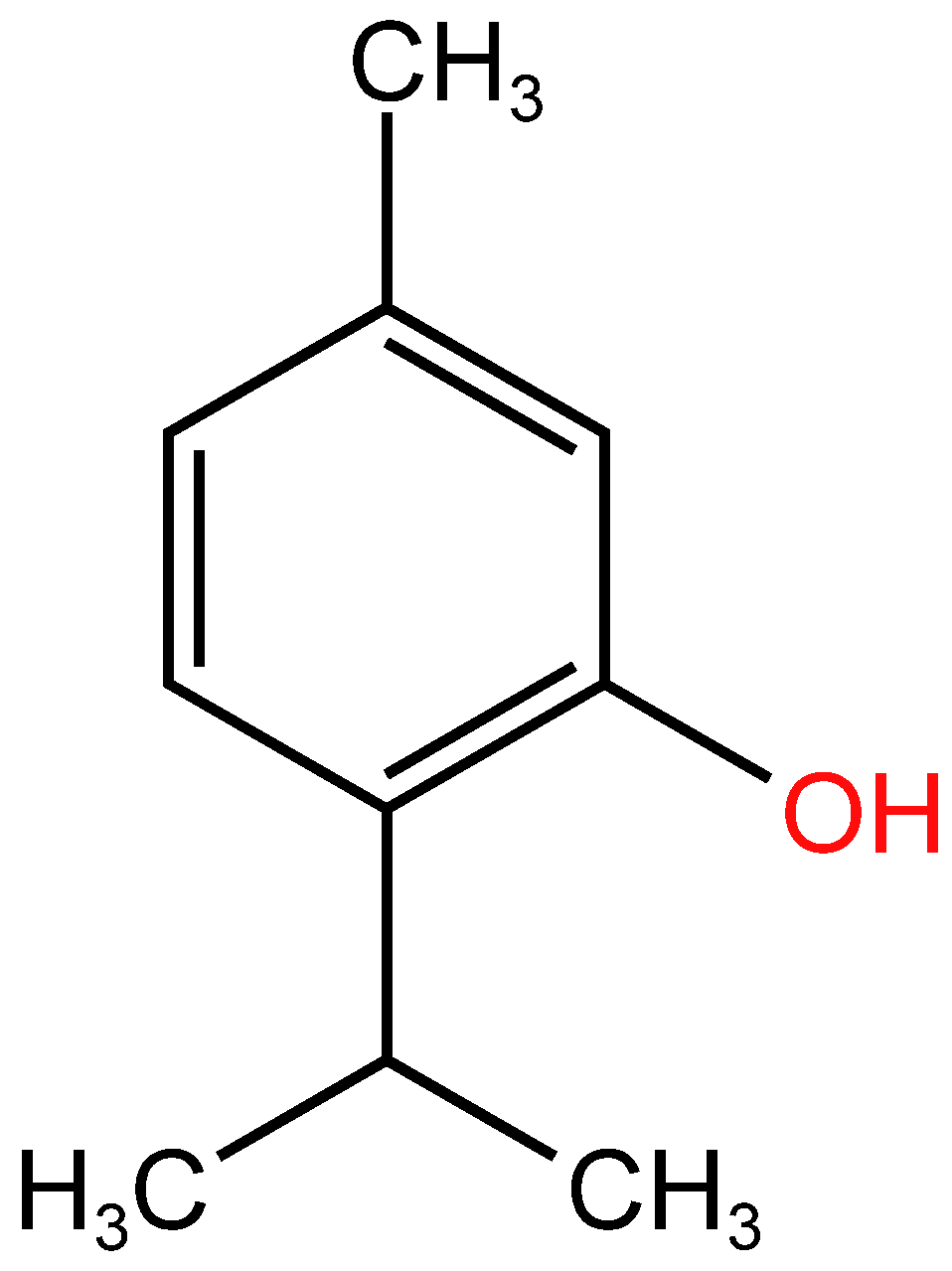
3. Chemical Structure and Properties
4. Biological Properties and Mechanisms of Action in the Oral Environment
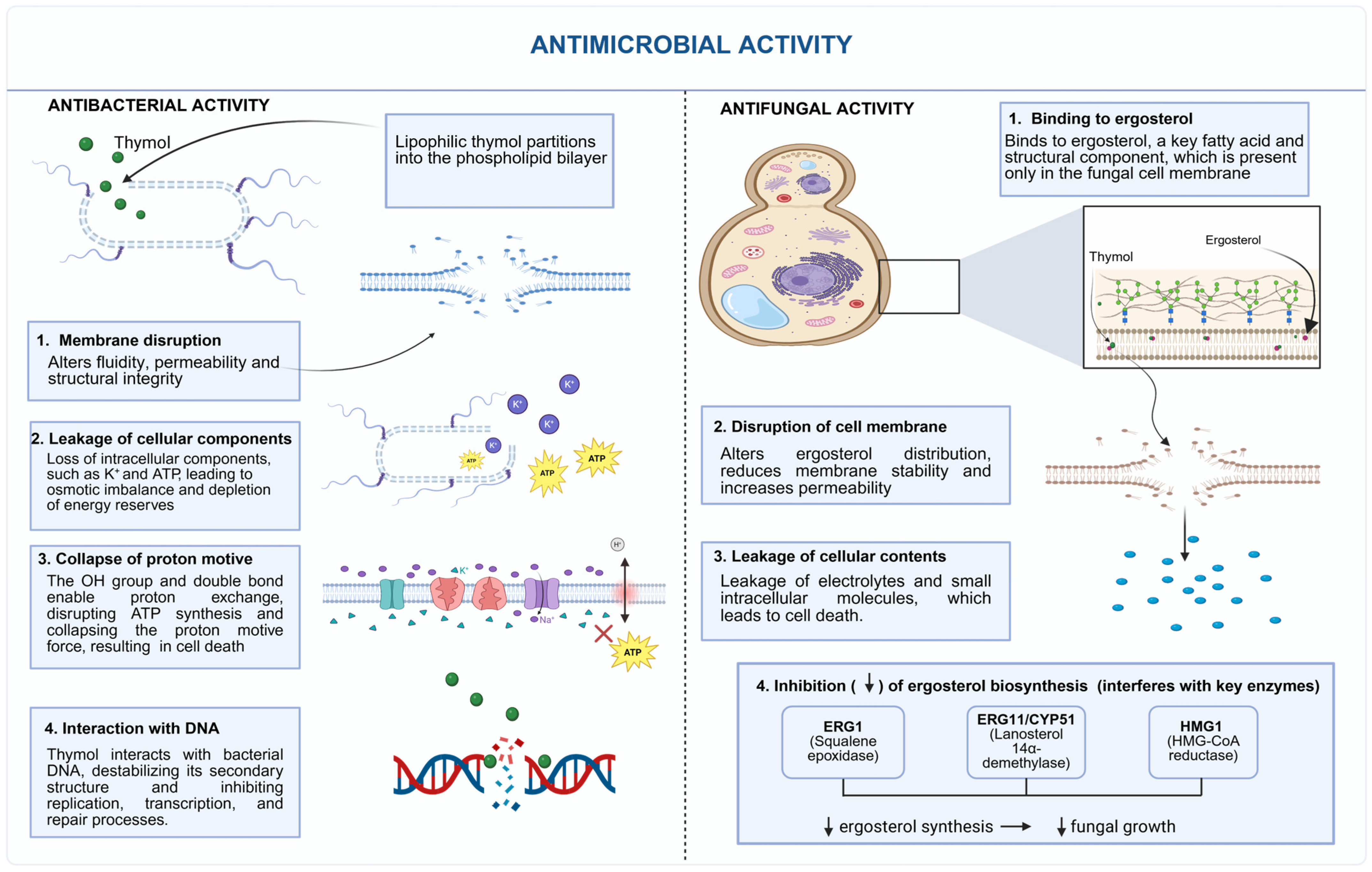
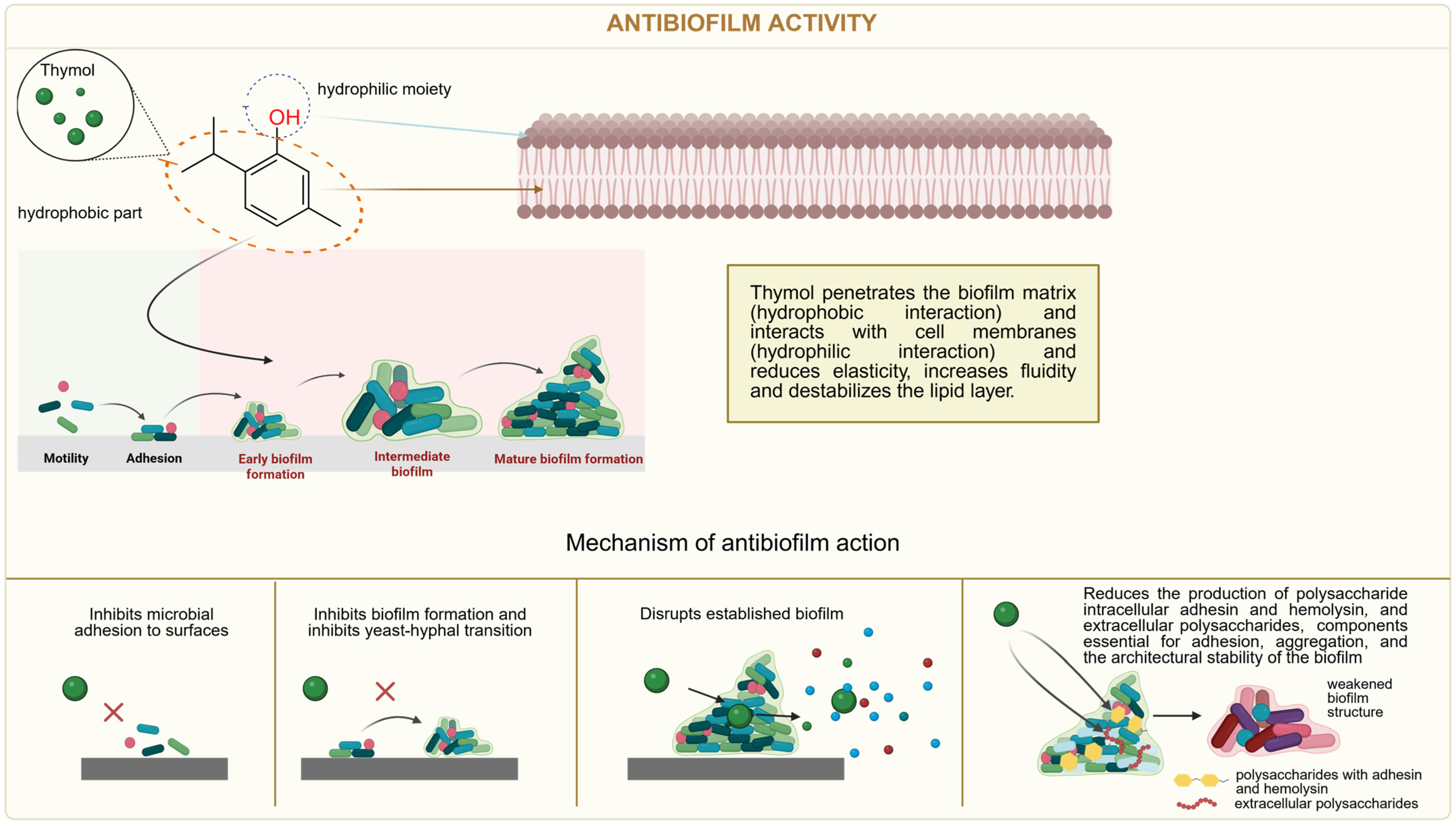
4.1. Antimicrobial and Antibiofilm Activity
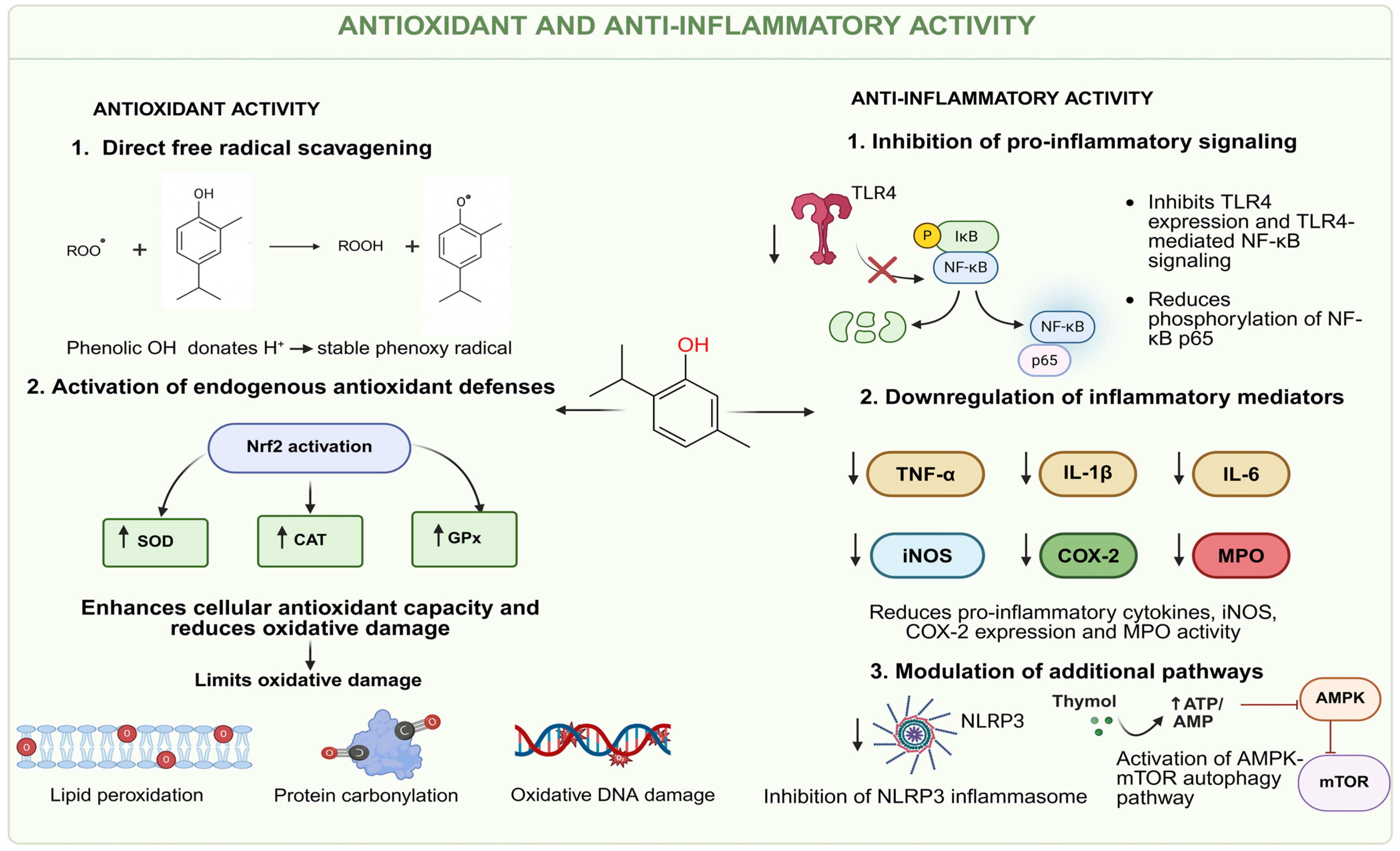
4.2. Antioxidant and Anti-Inflammatory
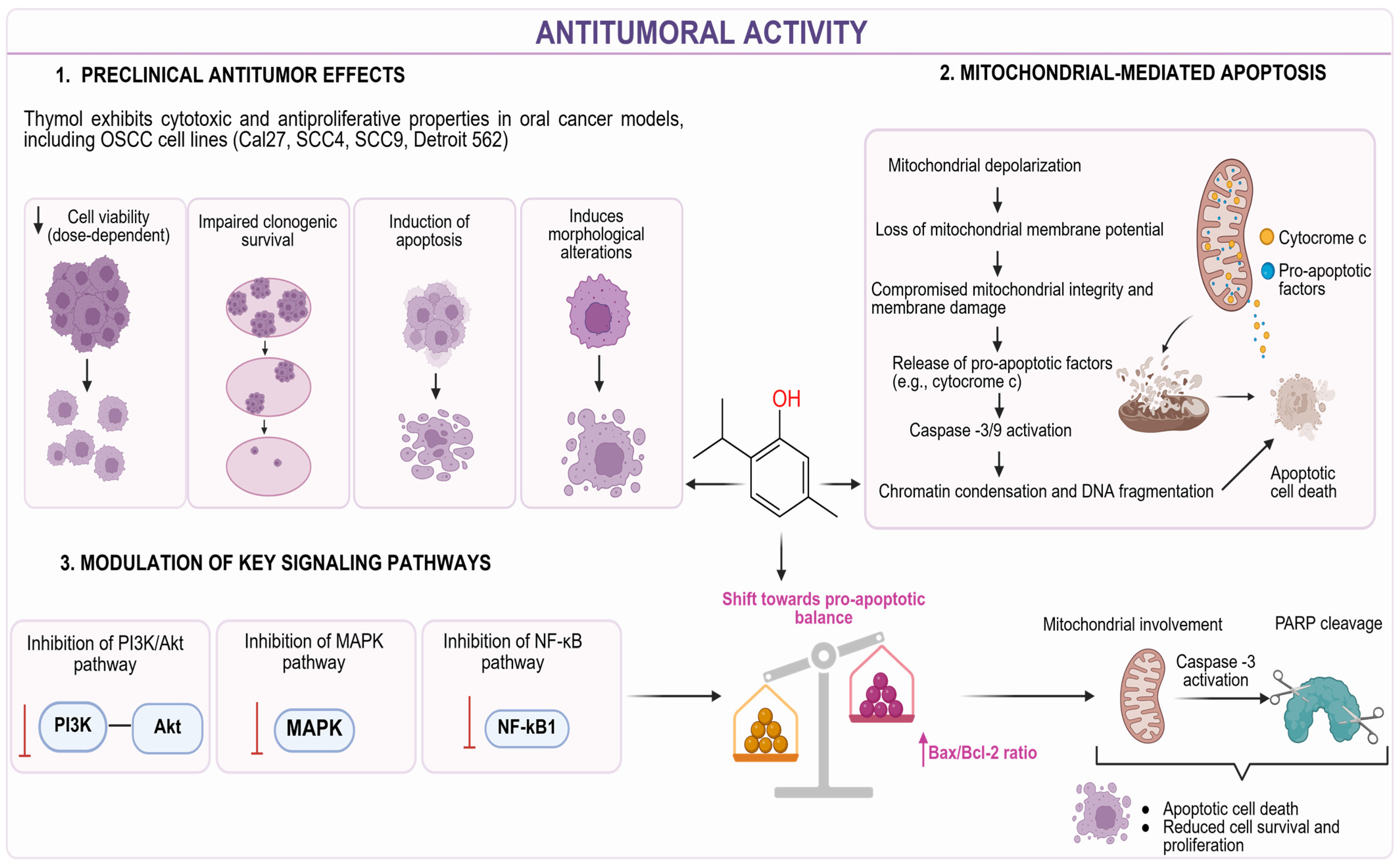
4.3. Antitumoral
5. Thymol in Oral Care Products
6. Applications in Dentistry
6.1. Preventive Dentistry
6.2. Periodontal Disease
6.3. Endodontics
6.4. Prosthodontics and Prosthesis-Associated Candidiasis
6.5. Dental Materials and Drug Delivery Systems
7. Safety
8. Discussion
9. Limitations
10. Challenges and Future Perspectives
11. Conclusions
Author Contributions
Funding
Institutional Review Board Statement
Informed Consent Statement
Data Availability Statement
Conflicts of Interest
References
- Oral Health. Available online: https://www.who.int/health-topics/oral-health#tab=tab_1 (accessed on 12 May 2026).
- Mehta, V.; Mathur, A.; Tripathy, S.; Rizwan, S.A.; Sharma, T. Effectiveness of herbal oral care products in reducing dental plaque and gingivitis: An overview of systematic reviews. Can. J. Dent. Hyg. 2024, 58, 120–134. [Google Scholar] [PubMed]
- Li, L.; Zhang, Q.; Yang, D.; Yang, S.; Zhao, Y.; Jiang, M.; Wang, X.; Zhao, L.; Liu, Q.; Lu, Z.; et al. Tooth loss and the risk of cognitive decline and dementia: A meta-analysis of cohort studies. Front. Neurol. 2023, 14, 1103052. [Google Scholar] [CrossRef] [Scilit] [PubMed]
- Priya, A.; Selvaraj, A.; Divya, D.; Raja, R.K.; Pandian, S.K. In vitro and in vivo anti-infective potential of thymol against early childhood caries causing dual species Candida albicans and Streptococcus mutans. Front. Pharmacol. 2021, 12, 760768. [Google Scholar] [CrossRef] [Scilit] [PubMed]
- Jayakumar, S.; Sridhar, D.; John, B.M.; Arumugam, K.; Ponnusamy, P.; Pulidindi, H. Biofilm in endodontic infection and its advanced therapeutic options—An updated review. J. Pharm. Bioallied Sci. 2024, 16, S1104–S1109. [Google Scholar] [CrossRef] [Scilit] [PubMed]
- Li, Y.; Xing, Z.; Wang, S.; Wang, Y.; Wang, Z.; Dong, L. Disruption of biofilms in periodontal disease through the induction of phase transition by cationic dextrans. Acta Biomater. 2023, 158, 759–768. [Google Scholar] [CrossRef] [Scilit] [PubMed]
- Qiu, J.; Roza, M.P.; Colli, K.G.; Dalben, Y.R.; Maifrede, S.B.; Valiatti, T.B.; Novo, V.M.; Cayô, R.; Grão-Velloso, T.R.; Gonçalves, S.S. Candida-associated denture stomatitis: Clinical, epidemiological, and microbiological features. Braz. J. Microbiol. 2023, 54, 841–848. [Google Scholar] [CrossRef] [Scilit] [PubMed]
- Liu, H.Y.; Prentice, E.L.; Webber, M.A. Mechanisms of antimicrobial resistance in biofilms. npj Antimicrob. Resist. 2024, 2, 27. [Google Scholar] [CrossRef] [Scilit] [PubMed]
- Abbood, H.M.; Hijazi, K.; Gould, I.M. Chlorhexidine resistance or cross-resistance, that is the question. Antibiotics 2023, 12, 798. [Google Scholar] [CrossRef] [Scilit] [PubMed]
- Dumitrel, S.-I.; Matichescu, A.; Dinu, S.; Buzatu, R.; Popovici, R.; Dinu, D.C.; Bratu, D.C. New insights regarding the use of relevant synthetic compounds in dentistry. Molecules 2024, 29, 3802. [Google Scholar] [CrossRef] [Scilit] [PubMed]
- Kowalczyk, A.; Przychodna, M.; Sopata, S.; Bodalska, A.; Fecka, I. Thymol and thyme essential oil—New insights into selected therapeutic applications. Molecules 2020, 25, 4125. [Google Scholar] [CrossRef] [Scilit] [PubMed]
- Nica, D.F.; Cosoroabă, R.M.; Dinu, Ș.; Dumitrel, Ș.-I.; Chioran, D.; Tănase, A.; Popa, M. Exploring thymol’s cytocompatibility and potential selective cytotoxicity in human primary gingival fibroblasts and pharyngeal carcinoma cells: An in vitro and in ovo investigation. Dent. J. 2026, 14, 105. [Google Scholar] [CrossRef] [Scilit] [PubMed]
- Saatkamp, R.H.; Sanches, M.P.; Gambin, J.P.D.; Amaral, B.R.; Farias, N.S.; Caon, T.; Müller, C.M.O.; Parize, A.L. Development of thymol nanoemulsions with potential application in oral infections. J. Drug Deliv. Sci. Technol. 2023, 87, 104855. [Google Scholar] [CrossRef] [Scilit]
- Bravo, E.; Arce, M.; Herrera, D.; Sanz, M. The effect of xanthohumol and thymol on Candida albicans filamentation and its impact on the structure, size, and cell viability of biofilms developed over implant surfaces. Cells 2024, 13, 1877. [Google Scholar] [CrossRef] [Scilit] [PubMed]
- van Swaaij, B.W.M.; Van der Weijden, G.A.; Smith, R.J.; Timmerman, M.F.; Slot, D.E. Essential oils mouthwash with or without alcohol in relation to effect on parameters of plaque and gingivitis: A systematic review and meta-analysis. Int. J. Dent. Hyg. 2024, 23, 186–202. [Google Scholar] [CrossRef] [Scilit] [PubMed]
- Milić, M.; Bolanča, I.; Gjirlić, D.; Benković, V. Assessment of Listerine Cool Mint mouthwash influence on possible DNA damage measured by buccal micronucleus cytome assay—Preliminary results. Genet. Appl. 2019, 3, 24–35. [Google Scholar] [CrossRef] [Scilit]
- Gonzalez, A.; Miñán, A.G.; Grillo, C.A.; Prieto, E.D.; Schilardi, P.L.; Fernández Lorenzo de Mele, M.A. Characterization and antimicrobial effect of a bioinspired thymol coating formed on titanium surface by one-step immersion treatment. Dent. Mater. 2020, 36, 1643–1653. [Google Scholar] [CrossRef] [Scilit] [PubMed]
- Najafloo, R.; Behyari, M.; Imani, R.; Nour, S. A mini-review of thymol incorporated materials: Applications in antibacterial wound dressing. J. Drug Deliv. Sci. Technol. 2020, 60, 101904. [Google Scholar] [CrossRef] [Scilit]
- Kowalczyk, A.; Twarowski, B.; Fecka, I.; Tuberoso, C.I.G.; Jerković, I. Thymol as a component of chitosan systems—Several new applications in medicine: A comprehensive review. Plants 2024, 13, 362. [Google Scholar] [CrossRef] [Scilit] [PubMed]
- Thymol. Available online: https://pubchem.ncbi.nlm.nih.gov/compound/Thymol (accessed on 12 May 2026).
- Hikal, W.; Tkachenko, K.; Said-Al Ahl, H.A.H.; Sany, H.; Sabra, A.S.; Baeshen, R.; Bratovcic, A. Chemical composition and biological significance of thymol as antiparasitic. Open J. Ecol. 2021, 11, 240–266. [Google Scholar] [CrossRef]
- Wadhawan, R.; Singla, P.; Mishra, S.; Mansuri, S.; Kumar, S.; Raj, N.; Devi, L.M. Role of wonder drug thyme in dentistry: A review. J. Orofac. Health Sci. 2024, 11, 43–46. [Google Scholar] [CrossRef] [Scilit]
- Liu, S.; Lei, J.; Liu, H.; Chen, T.; Gao, C.; Luo, D.; Liao, Q.; Liu, X.; Dong, P. Thymol: Properties, synthesis, mechanism of action, and applications. Front. Nutr. 2026, 13, 1774718. [Google Scholar] [CrossRef] [Scilit] [PubMed]
- Escobar, A.; Pérez, M.; Romanelli, G.; Blustein, G. Thymol bioactivity: A review focusing on practical applications. Arab. J. Chem. 2020, 13, 9243–9269. [Google Scholar] [CrossRef] [Scilit]
- Khwaza, V.; Aderibigbe, B.A. Antibacterial activity of selected essential oil components and their derivatives: A review. Antibiotics 2025, 14, 68. [Google Scholar] [CrossRef] [Scilit] [PubMed]
- Li, Q.; Huang, K.X.; Pan, S.; Su, C.; Bi, J.; Lu, X. Thymol disrupts cell homeostasis and inhibits the growth of Staphylococcus aureus. Contrast Media Mol. Imaging 2022, 2022, 8743096. [Google Scholar] [CrossRef] [Scilit] [PubMed]
- Barciela, P.; Perez-Vazquez, A.; Jorge, A.O.S.; Pereira, A.G.; Oliveira, M.B.P.P.; Carpena, M.; Prieto, M.A. Microbial Production of Thymol. In Microbial Production of Food Bioactive Compounds; Jafari, S.M., Darvishi Harzevili, F., Karaca, A.C., Eds.; Springer: Cham, Switzerland, 2025; pp. 917–940. [Google Scholar] [CrossRef] [Scilit]
- Liang, C.; Huang, S.; Geng, Y.; Huang, X.; Chen, D.; Lai, W.; Guo, H.; Deng, H.; Fang, J.; Yin, L.; et al. A study on the antibacterial mechanism of thymol against Aeromonas hydrophila in vitro. Aquac. Int. 2022, 30, 115–129. [Google Scholar] [CrossRef] [Scilit]
- Yin, L.; Liang, C.; Wei, W.; Huang, S.; Ren, Y.; Geng, Y.; Huang, X.; Chen, D.; Guo, H.; Fang, J.; et al. The antibacterial activity of thymol against drug-resistant Streptococcus iniae and its protective effect on channel catfish (Ictalurus punctatus). Front. Microbiol. 2022, 13, 914868. [Google Scholar] [CrossRef] [Scilit] [PubMed]
- Jung, K.-W.; Chung, M.-S.; Bai, H.-W.; Chung, B.-Y.; Lee, S. Investigation of antifungal mechanisms of thymol in the human fungal pathogen, Cryptococcus neoformans. Molecules 2021, 26, 3476. [Google Scholar] [CrossRef] [Scilit] [PubMed]
- Kmoch, M.; Loubová, V.; Švecová, R.; Jílková, B. Effect of essential oil components on the growth inhibition of Fusarium solani var. coeruleum during potato storage. Agronomy 2025, 15, 1126. [Google Scholar] [CrossRef] [Scilit]
- Ramadhan, M.H.; Abdul-Ameer, F. Antifungal efficacy of thymol powder addition on Candida albicans adhesion to room temperature vulcanized maxillofacial silicone: An in vitro study. Front. Biomed. Technol. 2025, 12, 210–218. [Google Scholar] [CrossRef] [Scilit]
- Zhang, J.; Ren, F.; Gao, H.; Li, Y.; Yin, X.; Zhou, Z.; Zhang, Z.; Qiu, H.; Cai, Y.; Shcherbakova, L.; et al. Antifungal activity and action mechanism of thymol, a mycotoxin inhibitor, against Fusarium asiaticum. Food Chem. 2026, 466, 145632. [Google Scholar] [CrossRef] [Scilit] [PubMed]
- de Castro, R.D.; de Souza, T.M.P.A.; Bezerra, L.M.D.; Ferreira, G.L.S.; Costa, E.M.M.B.; Cavalcanti, A.L. Antifungal activity and mode of action of thymol and its synergism with nystatin against Candida species involved with infections in the oral cavity: An in vitro study. BMC Complement. Altern. Med. 2015, 15, 417. [Google Scholar] [CrossRef] [Scilit] [PubMed]
- Utami, D.T.; Pratiwi, S.U.T.; Haniastuti, T.; Hertiani, T. Eugenol and thymol as potential inhibitors for polymicrobial oral biofilms: An in vitro study. J. Int. Oral Health 2021, 13, 45–52. [Google Scholar] [CrossRef] [Scilit] [PubMed]
- Valliammai, A.; Selvaraj, A.; Yuvashree, U.; Aravindraja, C.; Pandian, S.K. sarA-dependent antibiofilm activity of thymol enhances the antibacterial efficacy of rifampicin against Staphylococcus aureus. Front. Microbiol. 2020, 11, 1744. [Google Scholar] [CrossRef] [Scilit] [PubMed]
- Yuan, Z.; Dai, Y.; Ouyang, P.; Rehman, T.; Hussain, S.; Zhang, T.; Yin, Z.; Fu, H.; Lin, J.; He, C.; et al. Thymol inhibits biofilm formation, eliminates pre-existing biofilms, and enhances clearance of methicillin-resistant Staphylococcus aureus (MRSA) in a mouse peritoneal implant infection model. Microorganisms 2020, 8, 99. [Google Scholar] [CrossRef] [Scilit] [PubMed]
- Gabbai-Armelin, P.R.; Sales, L.S.; Ferrisse, T.M.; De Oliveira, A.B.; De Oliveira, J.R.; Giro, E.M.A.; Brighenti, F.L. A systematic review and meta-analysis of the effect of thymol as an anti-inflammatory and wound healing agent. Phytother. Res. 2022, 36, 3415–3443. [Google Scholar] [CrossRef] [Scilit] [PubMed]
- Gago, C.; Serralheiro, A.; Miguel, M.G. Anti-inflammatory activity of thymol and thymol-rich essential oils: Mechanisms, applications, and recent findings. Molecules 2025, 30, 2450. [Google Scholar] [CrossRef] [Scilit] [PubMed]
- Herrera-Bravo, J.; Belén, L.H.; Reyes, M.E.; Silva, V.; Fuentealba, S.; Paz, C.; Loren, P.; Salazar, L.A.; Sharifi-Rad, J.; Calina, D. Thymol as adjuvant in oncology: Molecular mechanisms, therapeutic potentials, and prospects for integration in cancer management. Naunyn Schmiedebergs Arch. Pharmacol. 2024, 397, 8259–8284. [Google Scholar] [CrossRef] [Scilit] [PubMed]
- Alamri, M.A.; Abdel-Kader, M.S.; Salkini, M.A.; Alamri, M.A. Thymol and carvacrol derivatives as anticancer agents; synthesis, in vitro activity, and computational analysis of biological targets. RSC Adv. 2024, 14, 30662–30672. [Google Scholar] [CrossRef] [Scilit] [PubMed]
- Faur, A.; Todor, L.; Dinu, S.; Porumb, A.; Todor, S.A.; Talpos-Niculescu, I.C.; Cosoroabă, R.M.; Popovici, R.A.; Olariu, I. Applications of thyme extracts on diseases of the oral cavity. Med. Evol. 2022, 28, 1083. [Google Scholar] [CrossRef] [Scilit]
- De La Chapa, J.J.; Singha, P.K.; Lee, D.R.; Gonzales, C.B. Thymol inhibits oral squamous cell carcinoma growth via mitochondria-mediated apoptosis. J. Oral Pathol. Med. 2018, 47, 674–682. [Google Scholar] [CrossRef] [Scilit] [PubMed]
- Pouyamanesh, G.; Ameli, N.; Metanat, Y.; Khorrami, A.; Abbasinezhad-Moud, F.; Seraj, F.Q.M.; Ferns, G.A.; Bahrami, A. Thymol enhances 5-fluorouracil cytotoxicity by reducing migration and increasing apoptosis and cell cycle arrest in esophageal cancer cells: An in-vitro study. Indian J. Clin. Biochem. 2025, 40, 422–433. [Google Scholar] [CrossRef] [Scilit] [PubMed]
- Sampaio, L.A.; Pina, L.T.S.; Serafini, M.R.; Tavares, D.S.; Guimarães, A.G. Antitumor effects of carvacrol and thymol: A systematic review. Front. Pharmacol. 2021, 12, 702487. [Google Scholar] [CrossRef] [Scilit] [PubMed]
- Marinković, J.; Rakašević, D.; Nemoda, M.; Nikolić, B.; Marković, T.; Matijević, S.; Marković, D. EO-based mouthwashes: Is there something that should be known? Balk. J. Dent. Med. 2023, 27, 32–37. [Google Scholar] [CrossRef] [Scilit]
- Song, S.R.; Moon, K.; Oh, K.; Ha, W. In-vitro and in-vivo characteristics of EUTHYMOL® mouthwash on fluoride retention. Int. J. Clin. Prev. Dent. 2021, 17, 145. [Google Scholar] [CrossRef] [Scilit]
- Kim, H.; Choi, W.; Lee, W.; Kim, W.; Oh, K.; Ha, W. Inhibitory effect of EUTHYMOL original toothpaste on VSC-producing oral bacteria. Int. J. Clin. Prev. Dent. 2021, 17, 75. [Google Scholar] [CrossRef] [Scilit]
- VivaDent Protecting Family. Available online: https://www.ivoclar.com/en_li/products/prevention-and-care/vivadent-protecting-family (accessed on 13 May 2026).
- Clavero, J.; Baca, P.; González, M.P.; Valderrama, M.J. Efficacy of chlorhexidine-thymol varnish (Cervitec) against plaque accumulation and gingival inflammation in a geriatric population. Gerodontology 2006, 23, 43–47. [Google Scholar] [CrossRef] [Scilit] [PubMed]
- Nikfallah, A.; Mohammadi, A.; Ahmadakhondi, M.; Ansari, M. Synthesis and physicochemical characterization of mesoporous hydroxyapatite and its application in toothpaste formulation. Heliyon 2023, 9, e20924. [Google Scholar] [CrossRef] [Scilit] [PubMed]
- Miladi, H.; Zmantar, T.; Kouidhi, B.; Al Qurashi, Y.M.A.; Bakhrouf, A.; Chaabouni, Y.; Mahdouani, K.; Chaieb, K. Synergistic effect of eugenol, carvacrol, thymol, p-cymene and γ-terpinene on inhibition of drug resistance and biofilm formation of oral bacteria. Microb. Pathog. 2017, 112, 156–163. [Google Scholar] [CrossRef] [Scilit] [PubMed]
- Lynch, M.C.; Cortelli, S.C.; McGuire, J.A.; Zhang, J.; Ricci-Nittel, D.; Mordas, C.J.; Aquino, D.R.; Cortelli, J.R. The effects of essential oil mouthrinses with or without alcohol on plaque and gingivitis: A randomized controlled clinical study. BMC Oral Health 2018, 18, 6. [Google Scholar] [CrossRef] [Scilit] [PubMed]
- Kashi, M.; Varseh, M.; Hariri, Y.; Chegini, Z.; Shariati, A. Natural compounds: New therapeutic approach for inhibition of Streptococcus mutans and dental caries. Front. Pharmacol. 2025, 16, 1548117. [Google Scholar] [CrossRef] [Scilit] [PubMed]
- Motallaei, M.N.; Yazdanian, M.; Tebyanian, H.; Tahmasebi, E.; Alam, M.; Abbasi, K.; Seifalian, A.; Ranjbar, R.; Yazdanian, A. The current strategies in controlling oral diseases by herbal and chemical materials. Evid.-Based Complement. Altern. Med. 2021, 2021, 3423001. [Google Scholar] [CrossRef] [Scilit] [PubMed]
- Tzimas, K.; Antoniadou, M.; Varzakas, T.; Voidarou, C. Plant-derived compounds: A promising tool for dental caries prevention. Curr. Issues Mol. Biol. 2024, 46, 5257–5290. [Google Scholar] [CrossRef] [Scilit] [PubMed]
- Amoian, B.; Omidbakhsh, M.; Khafri, S. The clinical evaluation of Vi-one chlorhexidine mouthwash on plaque-induced gingivitis: A double-blind randomized clinical trial. Electron. Physician 2017, 9, 5223–5228. [Google Scholar] [CrossRef] [Scilit] [PubMed]
- Altındal, D.; Deveci, K.C.; Öner Talmaç, A.G.; Talmaç, A.C.; Çalışır, M. Effects of thyme on halitosis in gingivitis patients: Can thyme mouthwash prevent halitosis—A randomized trial. Int. J. Dent. Hyg. 2024, 21, 426–432. [Google Scholar] [CrossRef] [Scilit] [PubMed]
- George, A.M.; Kalangi, S.K.; Vasudevan, M.; Krishnaswamy, N.R. Chlorhexidine varnishes effectively inhibit Porphyromonas gingivalis and Streptococcus mutans—An in vivo study. J. Indian Soc. Periodontol. 2010, 14, 178–180. [Google Scholar] [CrossRef] [Scilit] [PubMed]
- Dutot, M.; Le Besco, M.; Mathurin, O.; Fong, S.-B.; Meuric, V.; Tanter, C. Control of dental plaque and gingival inflammation by natural ingredients-based mouthwash. Dent. J. 2026, 14, 2. [Google Scholar] [CrossRef] [Scilit] [PubMed]
- Ben Khadra, G.M.; Arrag, E.A.; Alammori, M.; AlKadi, M.F. The effect of chlorhexidine-thymol and fluoride varnishes on the levels of Streptococcus mutans in saliva in children aged 6–8 years. Indian J. Dent. Res. 2019, 30, 67–72. [Google Scholar] [PubMed]
- Botelho, M.A.; Nogueira, N.A.P.; Bastos, G.M.; Fonseca, S.G.C.; Lemos, T.L.G.; Matos, F.J.A.; Montenegro, D.; Heukelbach, J.; Rao, V.S.; Brito, G.A.C. Antimicrobial activity of the essential oil from Lippia sidoides, carvacrol and thymol against oral pathogens. Braz. J. Med. Biol. Res. 2007, 40, 349–356. [Google Scholar] [CrossRef] [Scilit] [PubMed]
- Vlachojannis, C.; Chrubasik-Hausmann, S.; Hellwig, E.; Al-Ahmad, A. A preliminary investigation on the antimicrobial activity of Listerine®, its components, and of mixtures thereof. Phytother. Res. 2015, 29, 1590–1594. [Google Scholar] [CrossRef] [Scilit] [PubMed]
- Park, S.-Y.; Raka, R.N.; Hui, X.-L.; Song, Y.; Sun, J.-L.; Xiang, J.; Wang, J.; Jin, J.-M.; Li, X.-K.; Xiao, J.-S.; et al. Six Spain Thymus essential oils composition analysis and their in vitro and in silico study against Streptococcus mutans. BMC Complement. Med. Ther. 2023, 23, 106. [Google Scholar] [CrossRef] [Scilit] [PubMed]
- Shrestha, A.; Rimal, J.; Rao, A.; Sequeira, P.S.; Doshi, D.; Bhat, G.K. In vitro antifungal effect of mouth rinses containing chlorhexidine and thymol. J. Dent. Sci. 2011, 6, 1–5. [Google Scholar] [CrossRef] [Scilit]
- Almudahi, A. Enhancing Root Caries Lesion Prevention by Combining Two American Dental Association-Recommended Preventive Agents. Master’s Thesis, Indiana University, Indianapolis, IN, USA, 2022. [Google Scholar]
- Rani, N.; Singla, R.K.; Narwal, S.; Tanushree; Kumar, N.; Rahman, M.M. Medicinal plants used as an alternative to treat gingivitis and periodontitis. Evid.-Based Complement. Altern. Med. 2022, 2022, 2327641. [Google Scholar] [CrossRef] [Scilit] [PubMed]
- Richa, G.; Pudakalkatti, P.S.; Joshi, V. Evaluation and comparison of the antimicrobial effect of two different mouthwashes on selected periodontal pathogens: An in vitro study. J. Curr. Res. Sci. Med. 2017, 3, 40–44. [Google Scholar] [CrossRef] [Scilit] [PubMed]
- Gusmão, I.C.C.P.; Pithon, M.M.; Santos, A.E.; Silva, T.S.; Sampaio, F.C. Antibacterial activity of Lippia sidoides Cham against periodontopathogens: An in vitro study. Res. Soc. Dev. 2022, 11, e27141. [Google Scholar] [CrossRef] [Scilit]
- Hashim, N.T.; Babiker, R.; Chaitanya, N.C.S.K.; Mohammed, R.; Priya, S.P.; Padmanabhan, V.; Ahmed, A.; Dasnadi, S.P.; Islam, M.S.; Gismalla, B.G.; et al. New insights in natural bioactive compounds for periodontal disease: Advanced molecular mechanisms and therapeutic potential. Molecules 2025, 30, 807. [Google Scholar] [CrossRef] [Scilit] [PubMed]
- Guo, J.; Gao, M.; Niu, H.; Liu, D.; Chen, X. Thymol inhibits LPS-induced inflammation in rat gingival fibroblasts by regulating inflammatory pathways. J. Oral Sci. Res. 2025, 41, 781–787. [Google Scholar] [CrossRef]
- Mehrotra, N.; Singh, S. Periodontitis. In StatPearls; StatPearls Publishing: Treasure Island, FL, USA, 2023. Available online: https://www.ncbi.nlm.nih.gov/books/NBK541126/ (accessed on 13 May 2026).
- Sapkota, M.; Li, L.; Kim, S.-W.; Soh, Y. Thymol inhibits RANKL-induced osteoclastogenesis in RAW264.7 and BMM cells and LPS-induced bone loss in mice. Food Chem. Toxicol. 2018, 120, 418–429. [Google Scholar] [CrossRef] [Scilit] [PubMed]
- Alshehri, F.A. The use of mouthwash containing essential oils (LISTERINE®) to improve oral health: A systematic review. Saudi Dent. J. 2018, 30, 2–6. [Google Scholar] [CrossRef] [Scilit] [PubMed]
- Ramadhan, L.I.; Rashid, S.K. Clinical and anti-inflammatory effects of Thymus extract mouthwash in patients with gingivitis. J. Univ. Duhok 2023, 26, 256–265. [Google Scholar] [CrossRef] [Scilit]
- Lauritano, D.; Pazzi, D.; Iapichino, A.; Gaudio, R.M.; Di Muzio, M.; Lo Russo, L.; Pezzetti, F. Evaluation of the efficacy of a new oral gel containing carvacrol and thymol for home oral care in the management of chronic periodontitis using PCR analysis: A microbiological pilot study. J. Biol. Regul. Homeost. Agents 2016, 30, 129–134. [Google Scholar] [PubMed]
- Manuel, M.P.D.; Shih, Y.-H.; Hsia, S.-M.; Wang, T.-H.; Tseng, Y.-H.; Tu, M.-G.; Shieh, T.-M. Evaluating thymol vapor for biofilm removal and biocompatibility in curved root canal models in vitro. J. Dent. Sci. 2026, 21, 374–382. [Google Scholar] [CrossRef] [Scilit] [PubMed]
- Gadekar, T.; Shetty, R.M.; Yadadi, S.S.; Adtani, P.; Desai, V.B.; Afrashtehfar, K.I. Comparative evaluation of the antimicrobial efficacy of 20% chlorhexidine, 3% sodium hypochlorite, and dexamethasone acetate with thymol as a root canal disinfectant against Enterococcus faecalis: An in-vitro feasibility study. Open Dent. J. 2025, 19. [Google Scholar] [CrossRef] [Scilit]
- Hahn, C.-L.; Hanford, K. An in vitro model to study the colonization and tubular invasion of Enterococcus faecalis. J. Endod. 2021, 47, 451–457. [Google Scholar] [CrossRef] [Scilit] [PubMed]
- Elashiry, M.M.; Bergeron, B.E.; Tay, F.R. Enterococcus faecalis in secondary apical periodontitis: Mechanisms of bacterial survival and disease persistence. Microb. Pathog. 2023, 183, 106337. [Google Scholar] [CrossRef] [Scilit] [PubMed]
- Zong, B.; Li, X.; Xu, Q.; Wang, D.; Gao, P.; Zhou, Q. Enhanced eradication of Enterococcus faecalis biofilms by quaternized chitosan-coated upconversion nanoparticles for photodynamic therapy in persistent endodontic infections. Front. Microbiol. 2022, 13, 909492. [Google Scholar] [CrossRef] [Scilit] [PubMed]
- Xie, Y.; Cheng, X.; Li, Y.; Xu, X. Research progress on the dentin adhesion of Enterococcus faecalis and its influencing factors. J. Prev. Treat. Stomatol. Dis. 2024, 32, 632–639. [Google Scholar] [CrossRef]
- Veras, H.N.H.; Rodrigues, F.F.G.; Botelho, M.A.; Menezes, I.R.A.; Coutinho, H.D.M.; da Costa, J.G.M. Antimicrobial effect of Lippia sidoides and thymol on Enterococcus faecalis biofilm of the bacterium isolated from root canals. Sci. World J. 2014, 2014, 471580. [Google Scholar] [CrossRef] [Scilit] [PubMed]
- Liu, F.; Jin, P.; Gong, H.; Sun, Z.; Du, L.; Wang, D. Antibacterial and antibiofilm activities of thyme oil against foodborne multiple antibiotics-resistant Enterococcus faecalis. Poult. Sci. 2020, 99, 5127–5136. [Google Scholar] [CrossRef] [Scilit] [PubMed]
- Bajunaid, S.O. How effective are antimicrobial agents on preventing the adhesion of Candida albicans to denture base acrylic resin materials? A systematic review. Polymers 2022, 14, 908. [Google Scholar] [CrossRef] [Scilit] [PubMed]
- Salehi, B.; Mishra, A.P.; Shukla, I.; Sharifi-Rad, M.; Contreras, M.d.M.; Segura-Carretero, A.; Fathi, H.; Nasri Nasrabadi, N.; Kobarfard, F.; Sharifi-Rad, J. Thymol, thyme, and other plant sources: Health and potential uses. Phytother. Res. 2018, 32, 1688–1706. [Google Scholar] [CrossRef] [Scilit] [PubMed]
- Braga, P.C.; Alfieri, M.; Culici, M.; Dal Sasso, M. Inhibitory activity of thymol against the formation and viability of Candida albicans hyphae. Mycoses 2007, 50, 502–506. [Google Scholar] [CrossRef] [Scilit] [PubMed]
- Jafri, H.; Ahmad, I. Thymus vulgaris essential oil and thymol inhibit biofilms and interact synergistically with antifungal drugs against drug resistant strains of Candida albicans and Candida tropicalis. J. Mycol. Med. 2020, 30, 100911. [Google Scholar] [CrossRef] [Scilit] [PubMed]
- Kauser, S.; Raj, N.; Ahmedi, S.; Manzoor, N. Mechanistic insight into the membrane disrupting properties of thymol in Candida species. Microbe 2024, 2, 100045. [Google Scholar] [CrossRef] [Scilit]
- Priya, A.; Nivetha, S.; Pandian, S.K. Synergistic interaction of piperine and thymol on attenuation of the biofilm formation, hyphal morphogenesis and phenotypic switching in Candida albicans. Front. Cell. Infect. Microbiol. 2021, 11, 780545. [Google Scholar] [CrossRef] [Scilit] [PubMed]
- Braga, P.C.; Culici, M.; Alfieri, M.; Dal Sasso, M. Thymol inhibits Candida albicans biofilm formation and mature biofilm. Int. J. Antimicrob. Agents 2008, 31, 472–477. [Google Scholar] [CrossRef] [Scilit] [PubMed]
- Kaypetch, R.; Rudrakanjana, P.; Tua-Ngam, P.; Tosrisawatkasem, O.; Thairat, S.; Tonput, P.; Tantivitayakul, P. Effects of two novel denture cleansers on multispecies microbial biofilms, stain removal and the denture surface: An in vitro study. BMC Oral Health 2023, 23, 852. [Google Scholar] [CrossRef] [Scilit] [PubMed]
- Chatrath, A.; Gangwar, R.; Kumari, P.; Prasad, R. In vitro anti-biofilm activities of citral and thymol against Candida tropicalis. J. Fungi 2019, 5, 13. [Google Scholar] [CrossRef] [Scilit] [PubMed]
- Jaffer, N.T. The influence of natural products as denture cleansers on Candida albicans colonization to cobalt–chromium alloy denture base material. Al-Rafidain Dent. J. 2011, 11, 124–130. [Google Scholar] [CrossRef] [Scilit]
- Bazán, T.A.X.N.; Silva, I.S.S.; Carvalho, E.M.; Maia Filho, E.M.; Nascimento, L.C.; Tavarez, R.R.D.J. Effect of Thymus vulgaris essential oil as an antifungal agent on the flexural strength, surface roughness, and color stability of polymethyl methacrylate acrylic resin. Sci. Rep. 2026, 16, 17255. [Google Scholar] [CrossRef] [Scilit] [PubMed]
- Lee, J.-S.; Choi, Y.S.; Lee, H.G. Synergistic antimicrobial properties of nanoencapsulated clove oil and thymol against oral bacteria. Food Sci. Biotechnol. 2020, 29, 1597–1604. [Google Scholar] [CrossRef] [Scilit] [PubMed]
- Rezaeian, Z.; Beigi-Boroujeni, S.; Atai, M.; Ebrahimibagha, M.; Özcan, M. A novel thymol-doped enamel bonding system: Physico-mechanical properties, bonding strength, and biological activity. J. Mech. Behav. Biomed. Mater. 2019, 100, 103378. [Google Scholar] [CrossRef] [Scilit] [PubMed]
- Wu, L.; Tu, Y.; Xiao, S.; Zeng, J.; Sun, G.; Li, Y. Recent perspectives on precision-targeting therapy against oral biofilm. J. Oral Microbiol. 2026, 18, 2662093. [Google Scholar] [CrossRef] [Scilit] [PubMed]
- Patole, V.C.; Chaudhari, S.P. Development of thymol microsponges loaded in situ gel for the treatment of periodontitis. Curr. Drug Deliv. 2021, 18, 71–87. [Google Scholar] [CrossRef] [Scilit] [PubMed]
- Zheng, M.; Huang, Y.; Hu, W.; Li, R.; Wang, J.; Han, M.; Li, Z. Evaluation of the antibacterial, anti-inflammatory, and bone-promoting capacity of UiO-66 loaded with thymol or carvacrol. ACS Appl. Mater. Interfaces 2024, 16, 36017–36029. [Google Scholar] [CrossRef] [Scilit] [PubMed]
- Lim, D.Y.; Lee, J.-S.; Lee, H.G. Nano-encapsulation of a combination of clove oil and thymol and their application in fresh-cut apples and raw minced beef. Food Control 2023, 148, 109683. [Google Scholar] [CrossRef] [Scilit]
- Valenti, C.; Federici, M.I.; Coniglio, M.; Betti, P.; Pancrazi, G.P.; Tulli, O.; Masciotti, F.; Nanussi, A.; Pagano, S. Mechanical and biological properties of polymer materials for oral appliances produced with additive 3D printing and subtractive CAD-CAM techniques compared to conventional methods: A systematic review and meta-analysis. Clin. Oral Investig. 2024, 28, 396. [Google Scholar] [CrossRef] [Scilit] [PubMed]
- Omar, A.M.; Abd El-Azem, A.M.; Abd El-Hamid, E.S.; El-Khazragy, N.N.; Fathi, R.F. Effect of nanoformulated thymol, nanoformulated doxorubicin and their combination on oral squamous cell carcinoma cell line: A comparative ex-vivo study. J. Adv. Zool. 2023, 44, 101. [Google Scholar]
- Thosar, N.R.; Chandak, M.; Bhat, M.; Basak, S. Evaluation of antimicrobial activity of two endodontic sealers: Zinc oxide with thyme oil and zinc oxide eugenol against root canal microorganisms—An in vitro study. Int. J. Clin. Pediatr. Dent. 2018, 11, 79–82. [Google Scholar] [CrossRef] [Scilit] [PubMed]
- Haider, S.; Abidi, Y.A.; Ahmad, A.; Islam, F.; Batool, A.; Raza, S.S. Enhanced fluoride release from glass ionomer cements and compomers modified with clove oil and thymol: A step toward advanced caries prevention. Indus J. Biosci. Res. 2025, 3, 112–115. [Google Scholar] [CrossRef] [Scilit]
- Alizadeh, N.; Nazari, F. Thymol essential oil/β-cyclodextrin inclusion complex into chitosan nanoparticles: Improvement of thymol properties in vitro studies. J. Mol. Liq. 2022, 346, 118250. [Google Scholar] [CrossRef] [Scilit]
- Naik, J.B.; Rajput, R.L.; Narkhede, J.S.; Mujumdar, A.; Patil, P.B. Synthesis and evaluation of UV cross-linked poly(acrylamide)-loaded thymol nanogel for antifungal application in oral candidiasis. J. Polym. Res. 2021, 28, 15. [Google Scholar] [CrossRef] [Scilit]
- Soo Hoo, G.W.; Hinds, R.L.; Dinovo, E.; Renner, S.W. Fatal large-volume mouthwash ingestion in an adult: A review and the possible role of phenolic compound toxicity. J. Intensive Care Med. 2003, 18, 150–155. [Google Scholar] [CrossRef] [PubMed]
- Carl Roth GmbH + Co. KG. Safety Data Sheet: Thymol ≥ 99%, Version 4.0; Carl Roth GmbH + Co. KG: Karlsruhe, Germany, 2024. Available online: https://www.carlroth.com (accessed on 13 May 2026).
- Lachenmeier, D.W.; Monakhova, Y.B.; Markova, M.; Kuballa, T.; Rehm, J. What happens if people start drinking mouthwash as surrogate alcohol? A quantitative risk assessment. Food Chem. Toxicol. 2013, 51, 173–178. [Google Scholar] [CrossRef] [Scilit] [PubMed]
- Chowdhury, R.I.; Bappi, M.H.; Ahammed, S.; Hossain, M.S.; Akbor, M.S.; Emon, M.; Islam, A.; Prottay, A.A.S.; Shahria, N.; Altemani, F.H.; et al. Anti-nociceptive property of thymol: Animal study with molecular docking and MD simulation studies. Silico Pharmacol. 2026, 14, 207. [Google Scholar] [CrossRef] [Scilit] [PubMed]
- Tariq, M.; Kiyani, A.; Ahmed, A.; Raja, Z.S.; Hassan, U. Evaluating the analgesic, hemostatic, and antimicrobial potential of a novel herbal formulation for dental use. Cureus 2025, 17, e84884. [Google Scholar] [CrossRef] [Scilit] [PubMed]



| Formulation | Composition | Antimicrobial Activity Parameters | Reported Outcomes | Targeted Microorganisms | Study Type | Duration, Sample Size | Adverse Effects | Ref. |
|---|---|---|---|---|---|---|---|---|
| Mouthwash | Thyme-based | - | Reduced PI and VSC levels, with improvement in oral malodor after 1 week | - | RCT | n = 60 | - | [58] |
| Varnish (Cervitec® Plus, Ivoclar Vivadent AG, Schaan, Liechtenstein) | CHX (1%) + THY (1%) | - | Reduced PI, GI, and BI; improved gingival health; reduced S. mutans and P. gingivalis levels | S. mutans, P. gingivalis | In vivo | 3 months; n = 30 patients | No staining or taste alteration; good tolerance | [59] |
| Varnish (Cervitec®, Ivoclar Vivadent AG, Schaan, Liechtenstein) | CHX (1%) + THY (1%) | - | No significant reduction in plaque or gingivitis with 3-monthly application; only a modest effect on GI over time in institutionalized elderly patients | - | RCT | 6 months; n = 56; | - | [50] |
| Mouthwash | Sorbitol, propylene glycol, sodium lauryl sulfate, poloxamer 407, benzoic acid, sodium fluoride, eucalyptol, zinc chloride, methyl salicylate, THY, sodium saccharin, sodium benzoate, menthol, aroma, benzyl alcohol, sucralose, green coloring agents | - | Reduced PI and GI after 7 days; decreased the proportion of teeth with PI grades 2–3 by 37%; significantly improved mean plaque scores from baseline; microbiota shifts included increased pathogenic taxa | Mixed oral biofilm; P. intermedia, T. denticola, F. nucleatum subsp. animalis | RCT | 7 days; n = 50 | One participant developed mouth ulcers after 3 days | [60] |
| Varnish (Cervitec® Plus, Ivoclar Vivadent AG, Schaan, Liechtenstein) | CHX (1%) + THY (1%) | - | Significantly reduced salivary bacterial counts over 1, 4, and 12 weeks; sustained antimicrobial effect; had comparable efficacy to fluoride varnish, suggesting potential for caries prevention through suppression of cariogenic microbiota | S. mutans | RCT | 12 weeks, n = 60 | Lower acceptability due to bitter taste | [61] |
| Varnish (Cervitec®, Ivoclar Vivadent AG, Schaan, Liechtenstein) | CHX (1%) + THY (1%) | - | Reduced the incidence of root caries and progression of existing lesions (significantly lower increase in height and width); improved lesion texture and color; overall slower lesion growth over 12 months | S. mutans; Lactobacillus spp. | RCT | 12 months; n = 68 | No staining or other side effects observed; one placebo subject reported a bitter taste | [50] |
| Formulation | Composition | Antimicrobial Activity Parameters | Reported Outcomes | Targeted Microorganisms | Study Type | Duration, Sample Size | Adverse Effects | Ref. |
|---|---|---|---|---|---|---|---|---|
| Mouthwash | 5% alcoholic extract of Thymus vulgaris | - | Significant reduction in PI, GI, and salivary IL-6; comparable efficacy to CHX | - | RCT | 21 days; n = 45 patients | - | [75] |
| Mouthwash | Thyme-based | - | Reduced the GI and PI, improving gingivitis | - | RCT | 1 week; n = 60 patients | - | [58] |
| Varnish (Cervitec® Ivoclar Vivadent AG, Schaan, Liechtenstein) | CHX (1%) + THY (1%) | - | No significant reduction in PI; slight but statistically significant effect over time on the gingival index GI, but no significant difference vs. placebo; limited efficacy in controlling plaque and gingivitis | - | RCT | 6 months; n = 56 patients | - | [50] |
| Mouthrinse | THY 0.064%, eucalyptol 0.092%, menthol 0.042%, methyl salicylate 0.060% (alcohol-containing vs. alcohol-free) | - | Adjunctive use significantly reduced PI (≈37%), GI (≈27–28%), and BI after 6 months, with no significant difference between alcohol-containing and alcohol-free formulations. | - | RCT | 6 months; n = 370 patients (348 completed) | - | [53] |
| Mouthwash | 0.2% CHX + 0.020% THY (alcohol-free) | - | Greater reduction in PI and GI compared to CHX alone; similar reduction in BI | - | RCT | 14 days, n = 60 patients | Increased staining in both groups | [57] |
| Mouthrinse (LISTERINE®, Johnson & Johnson, NJ, USA) | THY (0.064%), eucalyptol (0.092%), menthol (0.042%), and methyl salicylate (0.060%) | - | Adjunctive reduction in plaque and gingivitis beyond brushing/flossing, with short- and long-term improvement in oral hygiene, gingival health, and plaque control, including orthodontic, xerostomia, periodontal maintenance, and special-needs populations | P. gingivalis, S. mutans, L. plantarum | SR | 3–12 months; n = 20–766 patients | Two xerostomia subjects developed transient asymptomatic whitish mucosal sloughing at day 7, resolving by day 14 without permanent mucosal changes. | [74] |
| Gel | THY 0.05% + carvacrol 0.05% in gel base (trehalose, hydroxypropylcellulose, polyvinylpyrrolidone, white mint) | - | Adjunctive home-care gel after scaling and root planing; slight reduction in periodontal bacterial load, but no statistically significant microbiological improvement after treatment | P. gingivalis, T. forsythia, T. denticola, A. actinomycetemcomitans, F. nucleatum, C. rectus | Pilot study | 15 days; n = 5 patients | No adverse effects reported | [76] |
| Formulation | Composition | Antimicrobial Activity Parameters | Reported Outcomes | Targeted Microorganisms | Study Type | Duration, Sample Size | Adverse Effects | Ref. |
|---|---|---|---|---|---|---|---|---|
| Solution (Cresophene®, Septodont, Saint-Maur-des-Fossés, France | Dexamethasone acetate + THY | - | Reduced intracanal bacterial load comparable to 20% CHX gel; bacterial reduction of 89.85% after 48 h | E. faecalis | In vitro | 48 h; n = 80 extracted single-rooted human teeth | - | [78] |
| Liquid THY/THY vapor | THY tested in liquid (10–100 mg/mL) and vapor form (1.0–5.0 mg/mL) | MIC: 0.8–1.0 mg/mL (planktonic cultures) | Significant reduction in bacterial viability in early-stage biofilm models; 1.0 mg/mL THY vapor combined with mechanical instrumentation enhanced early biofilm removal, particularly against E. faecalis; lower cytotoxicity and no significant induction of pro-inflammatory cytokine gene expression in L-929 cells under low-dose vapor exposure | E. faecalis, S. mutans, A. actinomycetemcomitans | In vitro | - | Direct exposure to liquid THY and CHX caused marked cytotoxicity, whereas 1.0 mg/mL THY vapor showed lower cytotoxicity in L-929 fibroblasts | [77] |
| Pure compound | THY | - | Significant reduction in CFU counts in mature biofilm after 30–60 min exposure; antimicrobial effect comparable to Lippia sidoides essential oil | E. faecalis isolated from infected root canals | In vitro | 72 h | - | [83] |
| Oil | Thyme oil containing THY (70.76%) | MIC: 512 μg/mL | Inhibited biofilm formation at sub-MIC concentrations (128–256 μg/mL); reduced cell motility and EPS synthesis; downregulated ebp and epa biofilm-related genes; at 2048–4096 μg/mL reduced viable counts in mature 3-day biofilms after 30 min | E. faecalis | In vitro | 3-day biofilm model; biofilm assessed at 12, 24, 48, and 72 h; mature biofilms exposed for 5, 15, 30, or 60 min; | - | [84] |
| Formulation | Composition | Antimicrobial Activity Parameters | Reported Outcomes | Targeted Microorganisms | Study Type | Duration, Sample Size | Adverse Effects | Ref. |
|---|---|---|---|---|---|---|---|---|
| Denture cleanser | Denture-cleansing tablet containing THY; 1 tablet dissolved in 150 mL sterile distilled water | - | In planktonic time-kill assays, THY cleanser showed >99.9% killing of C. albicans after 5 min. In 72-h multispecies biofilms on acrylic resin, longer immersion was required; 3–6 h exposure produced antibiofilm effects comparable to 10 min of 0.5% NaClO. The cleanser also showed stain-removal activity comparable to Polident® denture cleanser | C. albicans; multispecies biofilm also included S. mutans, S. sanguinis, S. aureus, and E. coli | In vitro | Time-kill: 5, 15, 30 min, 1 h, and 3 h; biofilm model: 72-h multispecies biofilm; biofilm immersion: 30 min, 3 h, and 6 h; material and cytotoxicity testing simulated 6 months of daily cleansing | No cytotoxicity in L929 fibroblasts or significant changes in acrylic resin roughness or color after simulated 6-month daily immersion. | [92] |
| Pure compound | THY | MIC: 39 μg/mL for C. albicans and C. krusei; 78 μg/mL for C. tropicalis. MFC values MFC/MIC < 4 for all tested strains | Fungicidal activity against oral Candida species; exogenous ergosterol increased thymol MIC against C. albicans from 39 to 312.5 μg/mL, while combination with nystatin reduced both MICs by 87.4% (FIC index 0.25). | C. albicans, C. tropicalis, C. krusei | In vitro | MIC determined after 24 h; MFC after 48 h; mechanistic and synergism assays over 48 h; sorbitol assay evaluated at 7 day | - | [34] |
| Solution | THY | MIC: 125–150 μg/mL against C. albicans strains | Inhibited hyphal formation and viability, reducing hyphal forms from ~94% in controls to 14.3% at MIC after 6 h, with membrane damage and reduced viability. | C. albicans | In vitro | 6 h incubation; n = 3 strains (2 clinical isolates + 1 ATCC strain) | - | [87] |
| Solution | THY | MIC: 125 μg/mL for both C. albicans strains | Inhibited early biofilm formation and disrupted mature biofilms, reducing metabolic activity by >90% at 2× MIC after 24 h, with disrupted biofilm architecture and reduced filamentous structures. | C. albicans | In vitro | Biofilm exposure for 6, 12, and 24 h; n = 2 strains of C. albicans (ATCC 3153A and ATCC MYA 2876) | - | [91] |
| Pure compound | THY alone; piperine + THY | MBI for THY: 32 µg/mL for C. albicans ATCC 90028; 32–128 µg/mL for clinical isolates. Synergistic antibiofilm combinations of piperine + THY: 8 + 8, 8 + 4, 8 + 2, and 4 + 8 µg/mL; FICI ≤ 0.5 | Thymol inhibited >87–90% of biofilm formation at MBIC; piperine + THY showed synergistic antibiofilm effects, reducing adhered cells by >2 log, hyphal elongation, phenotypic switching, and related gene expression. | C. albicans ATCC 90028 and four clinical isolates | In vitro | Biofilm assays: 48 h incubation; antihyphal assay: 5–7 days on solid medium; yeast-to-hyphal assay: 4 h; hyphal-to-yeast assay: 2 h after 4 h hyphal induction | No haemolytic activity on human erythrocytes and no morphological toxicity on human buccal epithelial cells at tested concentrations | [90] |
| Pure compound | THY | MIC: 500 μM for S. oralis, A. naeslundii, V. parvula, F. nucleatum, A. actinomycetemcomitans, and C. albicans; 1 mM for P. gingivalis. Minimum concentration inhibiting C. albicans filamentation: 250 μM | Inhibited C. albicans filamentous growth, reduced F. nucleatum and P. gingivalis viability, partially reversed dysbiotic biofilm structure, and increased biofilm roughness with reduced compact architecture. | C. albicans SC5314 within multispecies peri-implant biofilm, including S. oralis, A. naeslundii, V. parvula, F. nucleatum, P. gingivalis, and A. actinomycetemcomitans | In vitro | Biofilms developed for 72 h on implant surfaces; filamentation assay: 48 h; MIC testing: 24 h incubation plus 72 h plating confirmation | - | [14] |
| Pure compound | THY | MIC50: 16 µg/mL; BIC50: 32 µg/mL; BEC50: 128 µg/mL | THY showed antifungal and antibiofilm activity against C. tropicalis. It inhibited planktonic growth, impaired biofilm formation, and affected mature biofilms. THY also increased ROS production | C. tropicalis | In vitro | MIC assay: 48 h; biofilm inhibition: 48 h; preformed biofilm treatment: 24 h biofilm + 24 h treatment | - | [93] |
| Denture cleanser | Sodium bicarbonate (2.38 g) + THY oil (1.24 g) in 100 mL distilled water | - | Demonstrated the lowest fungal adhesion among tested cleansers; significantly reduced Candida colonization on Co–Cr denture base and lowered surface roughness | C. albicans | In vitro | Immersion for 1 month using 0.5 h/day and 8 h/day regimens; n = 36 Co–Cr denture base specimens; 6 samples per cleanser group | No adverse effects reported; reduced roughness compared with control | [94] |
| Formulation | Composition | Antimicrobial Activity Parameters | Reported Outcomes | Targeted Microorganism | Study Type | Duration, Sample Size | Adverse Effects | Ref. |
|---|---|---|---|---|---|---|---|---|
| UiO-66 metal–organic framework | THY loaded into zirconium-based UiO-66 metal–organic framework | MBC: 0.313 mg/mL (C. albicans, E. coli), 1.25 mg/mL (S. aureus) | It presented excellent biocompatibility (≥50% cell viability); in vivo studies also confirmed Thy@UiO-66 decreased inflammation, while stimulating the formation of bone | C. albicans, E. coli, and S. aureus | In vitro and in vivo | - | No significant cytotoxicity; >50% cell viability at 1.25 mg/mL | [100] |
| THY-loaded microsponge in situ gel | THY | - | Reduced gingival inflammation, tooth mobility, and alveolar bone destruction; decreased inflammatory biomarkers; prevented osteoclastogenesis and osteoblast apoptosis | S. mutans, C. albicans | In vitro and in vivo | - | - | [99] |
| Nanoparticles | Clove oil + THY nanoencapsulated in chitosan/poly-γ-glutamic acid nanoparticles | MIC: 0.5 mg/mL (both agents); FIC ≤ 0.5 (synergistic after nanoencapsulation); >2 log10 CFU reduction in time-kill assay | Enhanced and prolonged antimicrobial activity due to synergistic effect; significantly reduced salivary bacterial load and maintained activity in the oral cavity compared with free compounds | S. mutans, S. sobrinus | In vitro and in vivo | Time-kill: up to 48 h; mouth-rinse: 30–90 min; n = 18 healthy volunteers | - | [96] |
| THY–chitosan systems | THY incorporated into chitosan-based systems, including nanogels, nanoparticles, micelles, films, hydrogels, and nanocomposites | THY-loaded chitosan nanogels reduced MIC values 4–6-fold compared with free THY | THY chitosan systems improved antimicrobial, antibiofilm, anti-inflammatory, antioxidant, wound-healing, and regenerative potential compared with free thymol in several included studies | S. aureus, S. mutans, A. baumannii, P. aeruginosa, E. coli, C. albicans | SR | - | - | [19] |
| Nanoemulsions | THY incorporated into lecithin/Pluronic® P123 nanoemulsions with grape seed oil | - | Improved THY stability, local buccal distribution, antioxidant activity, and sustained release, supporting potential use in oral infections | - | In vitro and ex vivo | Stability (45 days); in vitro release (72 h); ex vivo buccal permeability (7 h); antioxidant assay (48 h) | - | [13] |
| Nanogel | Poly (acrylamide) nanogel loaded with THY | - | Boosted antifungal activity with increased zone of inhibition vs. control; improved permeability and sustained drug release (75.47–99.62%) | C. albicans | In vitro and ex vivo | Drug release: 24 h; ex vivo permeation: 12 h; antifungal assay: 24 h and 120 h | - | [103] |
Disclaimer/Publisher’s Note: The statements, opinions and data contained in all publications are solely those of the individual author(s) and contributor(s) and not of MDPI and/or the editor(s). MDPI and/or the editor(s) disclaim responsibility for any injury to people or property resulting from any ideas, methods, instructions or products referred to in the content. |
© 2026 by the authors. Licensee MDPI, Basel, Switzerland. This article is an open access article distributed under the terms and conditions of the Creative Commons Attribution (CC BY) license.
Share and Cite
Ahmad, M.K.A.; Dinu, Ș.; Dumitrel, Ș.-I.; Popovici, R.A.; Chioran, D. From Plant-Derived Compound to Bioactive Agent in Dentistry: The Expanding Role of Thymol. Dent. J. 2026, 14, 604. https://doi.org/10.3390/dj14090604
Ahmad MKA, Dinu Ș, Dumitrel Ș-I, Popovici RA, Chioran D. From Plant-Derived Compound to Bioactive Agent in Dentistry: The Expanding Role of Thymol. Dentistry Journal. 2026; 14(9):604. https://doi.org/10.3390/dj14090604
Chicago/Turabian StyleAhmad, Mhd Kher Alsaeyd, Ștefania Dinu, Ștefania-Irina Dumitrel, Ramona Amina Popovici, and Doina Chioran. 2026. "From Plant-Derived Compound to Bioactive Agent in Dentistry: The Expanding Role of Thymol" Dentistry Journal 14, no. 9: 604. https://doi.org/10.3390/dj14090604
APA StyleAhmad, M. K. A., Dinu, Ș., Dumitrel, Ș.-I., Popovici, R. A., & Chioran, D. (2026). From Plant-Derived Compound to Bioactive Agent in Dentistry: The Expanding Role of Thymol. Dentistry Journal, 14(9), 604. https://doi.org/10.3390/dj14090604