Dental Glass Ionomer Cement for Root Perforation Management: Physicochemical Characteristics and In Vitro Cell Response


 , , , , and
Abstract
1. Introduction
2. Materials and Methods
2.1. Sample Preparation
2.2. Morphological and Structural Characterization
2.2.1. Scanning Electron Microscopy (SEM) and Energy Dispersive X-Ray Spectrum (EDX)
2.2.2. Fourier-Transform Infrared Spectroscopy (FT–IR)
2.2.3. X-Ray Diffraction (XRD)
2.3. Metabolic Activity, Viability and Cytotoxicity
2.3.1. Cell Culture
2.3.2. Metabolic Activity and Viability Assay
2.3.3. Level of Nitric Oxide (NO)
2.4. Statistics
3. Results
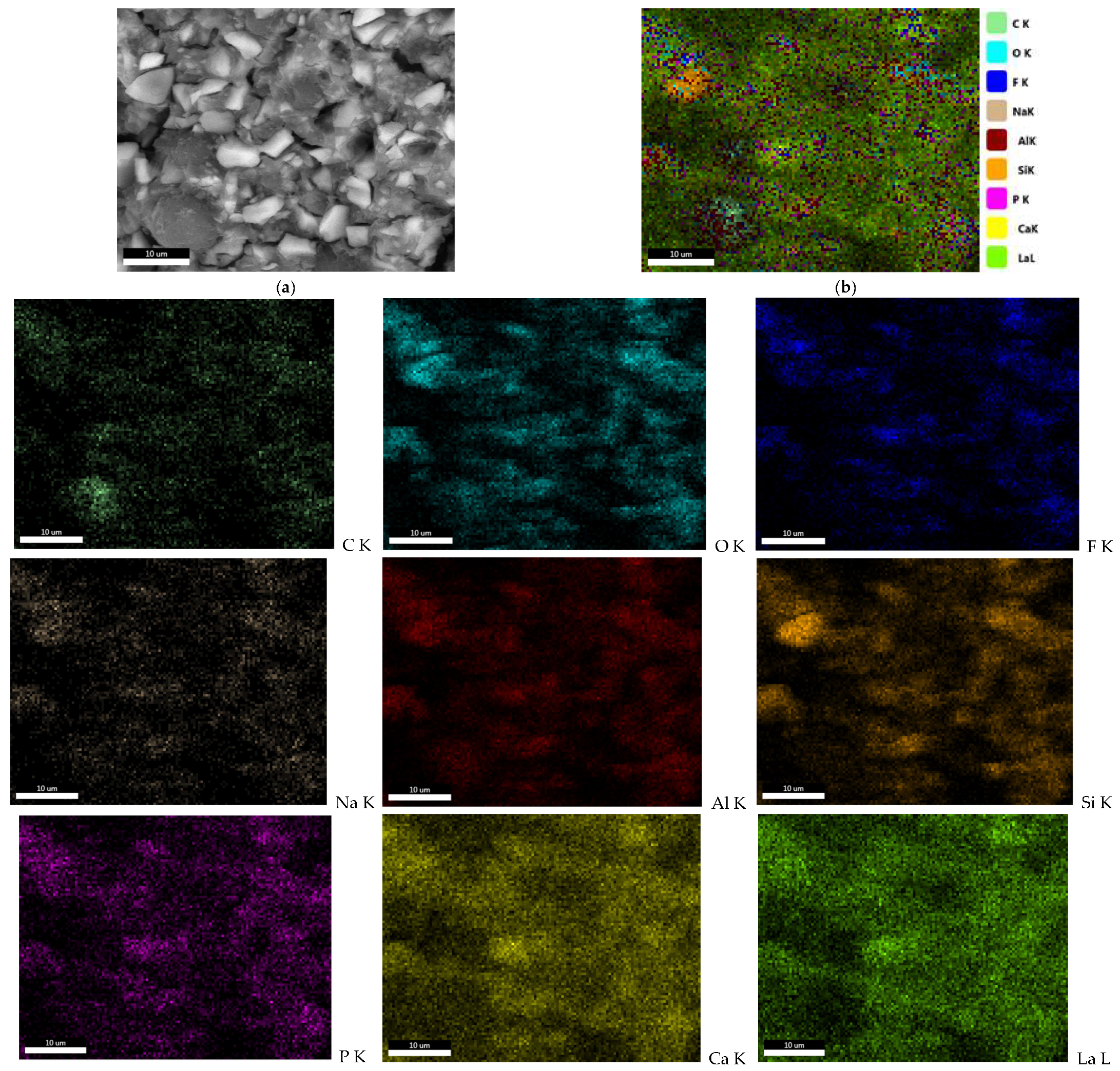
3.1. Surface Characterization and Chemical Composition
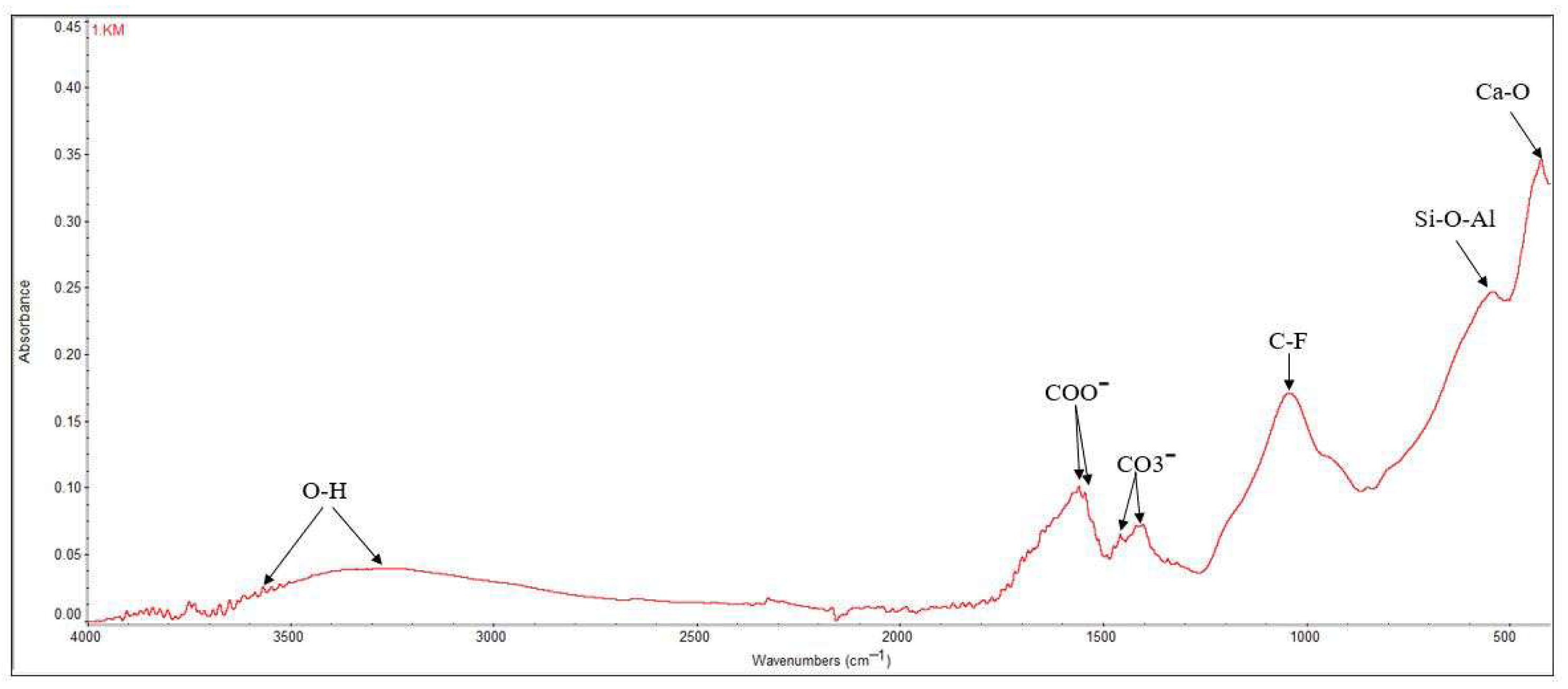
3.2. FT-IR
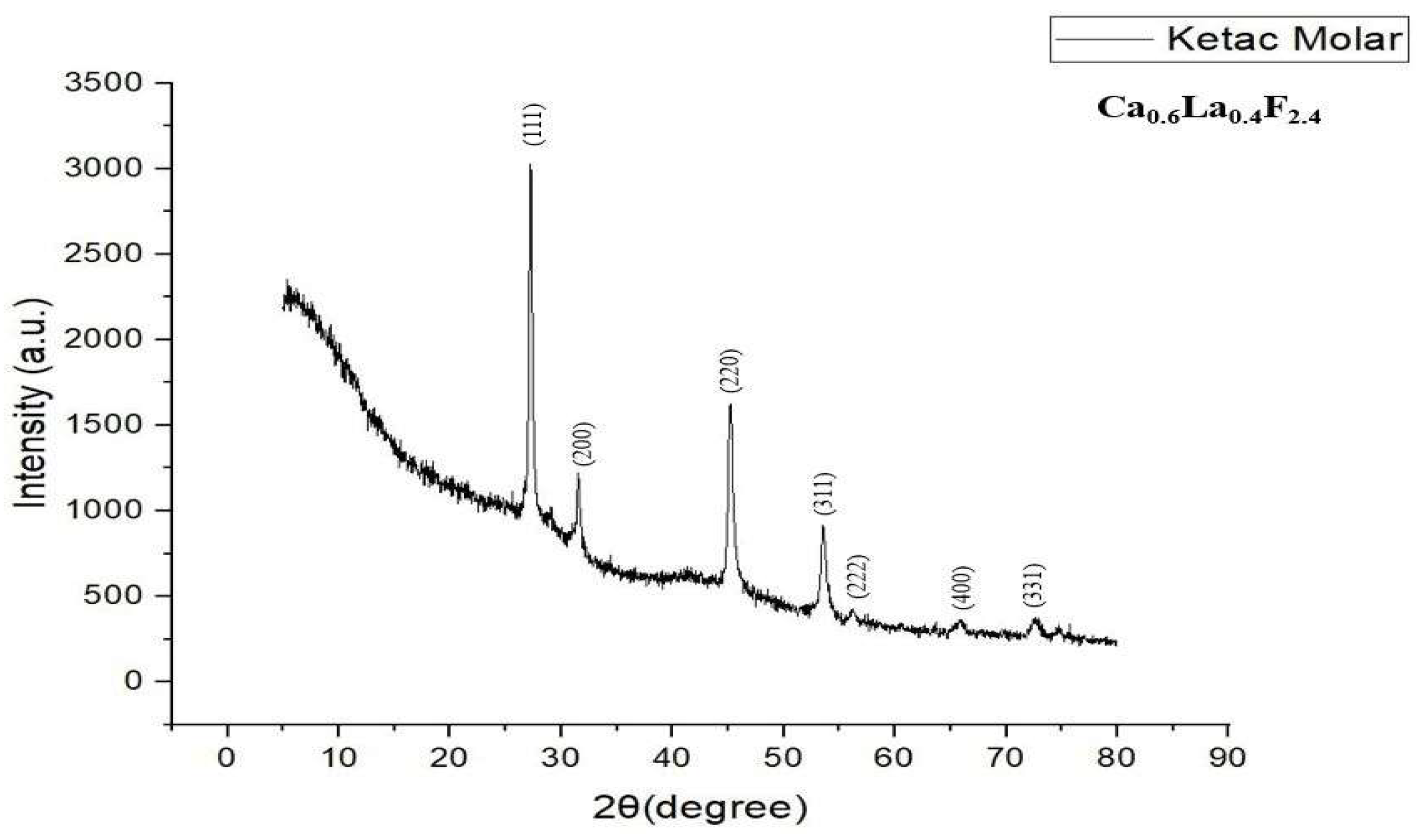
3.3. XRD Analysis
3.4. Metabolic Activity, Viability and Cytotoxicity Test Results
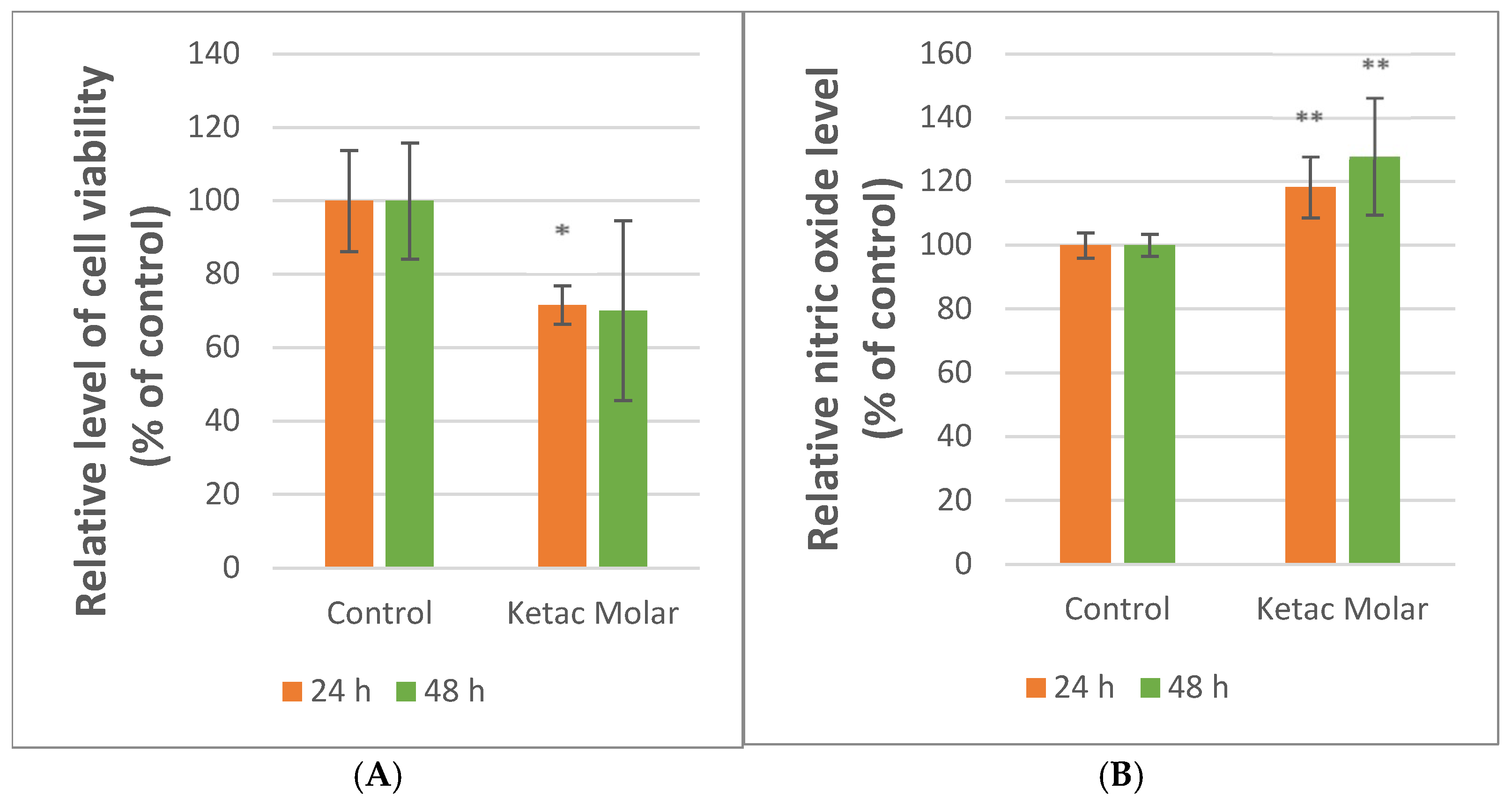
3.4.1. MTT Assay
3.4.2. NO Test
4. Discussion
5. Conclusions
Author Contributions
Funding
Institutional Review Board Statement
Informed Consent Statement
Data Availability Statement
Acknowledgments
Conflicts of Interest
Abbreviations
| MTA | Mineral trioxide aggregate |
| GICs | Glass ionomer cements |
| UV | Ultraviolet |
| SEM | Scanning electron microscopy |
| EDX | Energy dispersive X-ray spectrometer |
| FEG | Field-emission electron gun |
| FT-IR | Fourier-transform infrared spectroscopy |
| XRD | X-ray diffraction |
| G292 | Human osteosarcoma cells |
| MTT | 3-(4,5-dimethylthiazol-2-yl)-2,5-diphenyltetrazolium bromide |
| NO | Nitric oxide |
| SPSS | Statistical Package for the Social Sciences |
| ASTM | American Society for Testing and Materials |
| TGF-β1 | Transforming growth factor-beta |
| MC3T3-E1 | Subclone 4 preosteoblast cells |
References
- Sarao, S.K.; Berlin-Broner, Y.; Levin, L. Occurrence and risk factors of dental root perforations: A systematic review. Int. Dent. J. 2020, 71, 96–105. [Google Scholar] [CrossRef] [Scilit] [PubMed] [PubMed Central]
- Estrela, C.; Decurcio, D.d.A.; Rossi-Fedele, G.; Silva, J.A.; Guedes, O.A.; Borges, Á.H. Root perforations: A review of diagnosis, prognosis and materials. Braz. Oral Res. 2018, 32, e73. [Google Scholar] [CrossRef] [Scilit] [PubMed]
- Alshehri, M.M.; Alhawsawi, B.F.; Alghamdi, A.; Aldobaikhi, S.O.; Alanazi, M.H.; Alahmad, F.A. The Management of Root Perforation: A Review of the Literature. Cureus 2024, 16, e72296. [Google Scholar] [CrossRef] [Scilit] [PubMed] [PubMed Central]
- Arabpour, M.; Zareanshahraki, M.; Albadr, R.J.; Taher, W.M.; Alwan, M.; Jawad, M.J.; Zade, S.K.G.; Mushtaq, H.; Ghazanfari, K. The Role of Nrf2 in the Regulation of Periodontitis, Peri-implantitis, Dentin Infection, and Apical Periodontitis. Biol. Proced. Online 2025, 27, 23. [Google Scholar] [CrossRef] [Scilit] [PubMed] [PubMed Central]
- Siew, K.; Lee, A.H.; Cheung, G.S. Treatment Outcome of Repaired Root Perforation: A Systematic Review and Meta-analysis. J. Endod. 2015, 41, 1795–1804. [Google Scholar] [CrossRef] [Scilit] [PubMed]
- Bhuva, B.; Ikram, O. Complications in Endodontics. Prim. Dent. J. 2020, 9, 52–58. [Google Scholar] [CrossRef] [Scilit] [PubMed]
- Saed, S.M.; Ashley, M.P.; Darcey, J. Root perforations: Aetiology, management strategies and outcomes. The hole truth. Br. Dent. J. 2016, 220, 171–180. [Google Scholar] [CrossRef] [Scilit] [PubMed]
- Nandakumar, M.; Nasim, I. Management of perforation—A review. J. Adv. Pharm. Educ. Res. 2017, 7, 208–211. [Google Scholar]
- Berbari, R.; Nassif, N.; Sfeir, E. Inflammatory Status of Excavated Pulp Tissue and Internal Root Resorption in Pulpotomized Primary Molars. J. Dent. 2022, 23, 284–291. [Google Scholar] [CrossRef] [Scilit] [PubMed] [PubMed Central]
- Tavares, W.L.F.; Pedrosa, N.d.O.M.; Moreira, R.A.; Braga, T.; Machado, V.d.C.; Sobrinho, A.P.R.; Amaral, R.R. Limitations and Management of Static-guided Endodontics Failure. J. Endod. 2022, 48, 273–279. [Google Scholar] [CrossRef] [Scilit] [PubMed]
- American Association of Endodontists. Glossary of Endodontic Terms, 9th ed.; American Association of Endodontists: Chicago, IL, USA, 2016. [Google Scholar]
- Estrela, C.; Pécora, J.D.; Estrela, C.R.; Guedes, O.A.; Silva, B.S.; Soares, C.J.; Sousa-Neto, M.D. Common operative procedural errors and clinical factors associated with root canal treatment. Braz. Dent. J. 2017, 28, 179–190. [Google Scholar] [CrossRef] [Scilit]
- Cosgun, A.; Bolgul, B.; Duran, N. In vitro investigation of antimicrobial effects, nanohardness, and cytotoxicity of different glass ionomer restorative materials in dentistry. Niger. J. Clin. Pr. 2019, 22, 422–431. [Google Scholar] [CrossRef] [Scilit] [PubMed]
- Stundžia, L.; Vėberienė, R.; Graunaitė, I.; Domeika, A.; Skučaitė, N. Retrograde Versus Orthograde Obturation in Relation to Root Resection: Evaluation of Microhardness of Mineral Trioxide Aggregate In Vitro. Int. J. Dent. 2025, 2025, 6647418. [Google Scholar] [CrossRef] [Scilit] [PubMed] [PubMed Central]
- von Arx, T. Apical surgery: A review of current techniques and outcome. Saudi Dent. J. 2011, 23, 9–15. [Google Scholar] [CrossRef] [Scilit] [PubMed] [PubMed Central]
- Verma, J.; Ahuja, V. Apicoectomy—A review [Internet]. J. Dent. Panacea 2021, 3, 15–19. [Google Scholar] [CrossRef] [Scilit]
- Li, H.; Guo, Z.; Li, C.; Ma, X.; Wang, Y.; Zhou, X.; Johnson, T.M.; Huang, D. Materials for retrograde filling in root canal therapy. Cochrane Database Syst. Rev. 2021, 10, CD005517. [Google Scholar] [CrossRef] [Scilit] [PubMed] [PubMed Central]
- Knapp, J.; Kirkpatrick, T.; Ontiveros, J.C.; Jaramillo, D.E.; Kim, H.-C.; Jeong, J.W. Efficacy of root-end filling techniques using premixed putty type bioceramic cements: An ex vivo study. Clin. Oral Investig. 2024, 28, 365. [Google Scholar] [CrossRef] [Scilit] [PubMed]
- Dastorani, M.; Shourvarzi, B.; Nojoumi, F.; Ajami, M. Comparison of Bacterial Microleakage of Endoseal MTA Sealer and Pro-Root MTA in Root Perforation. J. Dent. 2021, 22, 96–101. [Google Scholar] [CrossRef] [Scilit] [PubMed] [PubMed Central]
- Chang, S.-W. Chemical characteristics of mineral trioxide aggregate and its hydration reaction. Restor. Dent. Endod. 2012, 37, 188–193. [Google Scholar] [CrossRef] [Scilit] [PubMed] [PubMed Central]
- Kim, H.-J.; Bae, H.E.; Lee, J.-E.; Park, I.-S.; Kim, H.-G.; Kwon, J.; Kim, D.-S. Effects of bioactive glass incorporation into glass ionomer cement on demineralized dentin. Sci. Rep. 2021, 11, 7016. [Google Scholar] [CrossRef] [Scilit]
- Wilson, A.D.; Kent, B.E. A new translucent cement for dentistry. The glass ionomer cement. Br. Dent. J. 1972, 132, 133–135. [Google Scholar] [CrossRef] [Scilit] [PubMed]
- Nicholson, J.W.; Coleman, N.J.; Sidhu, S.K. Kinetics of ion release from a conventional glass-ionomer cement. J. Mater. Sci. Mater. Med. 2021, 32, 30. [Google Scholar] [CrossRef] [Scilit] [PubMed] [PubMed Central]
- Billington, R.W.; Williams, J.A.; Pearson, G.J. Ion processes in glass ionomer cements. J. Dent. 2006, 34, 544–555. [Google Scholar] [CrossRef] [Scilit] [PubMed]
- Singh, P.; Paul, J.; Al-Khuraif, A.A.; Vellappally, S.; Halawany, H.S.; Hashim, M.; Abraham, N.B.; Jacob, V.; Thavarajah, R. Sealing ability of mineral trioxide aggregate, calcium phosphate cement, and glass ionomer cement in the repair of furcation perforations. Acta Medica 2013, 56, 97–103. [Google Scholar] [CrossRef] [Scilit] [PubMed]
- Kelić, M.; Kilić, D.; Kelić, K.; Šutej, I.; Par, M.; Peroš, K.; Tarle, Z. The Fluoride Ion Release from Ion-Releasing Dental Materials after Surface Loading by Topical Treatment with Sodium Fluoride Gel. J. Funct. Biomater. 2023, 14, 102. [Google Scholar] [CrossRef] [Scilit] [PubMed] [PubMed Central]
- Gunay, A.; Celenk, S.; Adiguzel, O.; Cangul, S.; Ozcan, N.; Cakmakoglu, E. Comparison of Antibacterial Activity, Cytotoxicity, and Fluoride Release of Glass Ionomer Restorative Dental Cements in Dentistry. Med. Sci. Monit. 2023, 29, e939065. [Google Scholar] [CrossRef] [Scilit] [PubMed] [PubMed Central]
- Kleverlaan, C.J.; van Duinen, R.N.; Feilzer, A.J. Mechanical properties of glass ionomer cements affected by curing methods. Dent. Mater. 2004, 20, 45–50. [Google Scholar] [CrossRef] [Scilit] [PubMed]
- Kovarik, R.E.; Haubenreich, J.E.; Gore, D. Glass ionomer cements: A review of composition, chemistry, and biocompatibility as a dental and medical implant material. J. Autom. Inf. Sci. 2005, 15, 655–671. [Google Scholar] [CrossRef] [Scilit] [PubMed]
- Nourmohammadi, J.; Sadrnezhaad, S.K.; Ghader, A.B. Bone-like apatite layer formation on the new resin-modified glass-ionomer cement. J. Mater. Sci. Mater. Med. 2008, 19, 3507–3514. [Google Scholar] [CrossRef] [Scilit] [PubMed]
- Tuygunov, N.; Zakaria, M.N.; Yahya, N.A.; Aziz, A.A.; Cahyanto, A. Efficacy and bone-contact biocompatibility of glass ionomer cement as a biomaterial for bone regeneration: A systematic review. J. Mech. Behav. Biomed. Mater. 2023, 146, 106099. [Google Scholar] [CrossRef] [Scilit] [PubMed]
- Valanezhad, A.; Odatsu, T.; Udoh, K.; Shiraishi, T.; Sawase, T.; Watanabe, I. Modification of resin modified glass ionomer cement by addition of bioactive glass nanoparticles. J. Mater. Sci. Mater. Med. 2016, 27, 3. [Google Scholar] [CrossRef] [Scilit] [PubMed]
- Xie, D.; Zhao, J.; Weng, Y.; Park, J.; Jiang, H.; Platt, J.A. Bioactive glass-ionomer cement with potential therapeutic function to dentin capping mineralization. Eur. J. Oral Sci. 2008, 116, 479–487. [Google Scholar] [CrossRef] [Scilit] [PubMed]
- Marczuk-Kolada, G.; Luczaj-Cepowicz, E.; Pawinska, M.; Holownia, A. Evaluation of the cytotoxicity of selected conventional glass ionomer cements on human gingival fibroblasts. Adv. Clin. Exp. Med. 2017, 26, 1041–1045. [Google Scholar] [CrossRef] [Scilit] [PubMed]
- Oliva, A.; Della Ragione, F.; Salerno, A.; Riccio, V.; Tartaro, G.; Cozzolino, A.; D’Amato, S.; Pontoni, G.; Zappia, V. Biocompatibility studies on glass ionomer cements by primary cultures of human osteoblasts. Biomaterials 1996, 17, 1351–1356. [Google Scholar] [CrossRef] [Scilit] [PubMed]
- Product Manual KetacTM Molar EasyMix. Available online: https://cdmsweb.3m.com/ingredientcommunication/file/Media/QPUoWpLvIkE= (accessed on 5 January 2026).
- Instructions for Use KetacTM Molar EasyMix. Available online: https://multimedia.3m.com/mws/media/1480238O/ketac-molar-easymix-ifu.pdf (accessed on 5 January 2026).
- Niţu, C.D.; Mernea, M.; Vlasceanu, R.I.; Voicu-Balasea, B.; Badea, M.A.; Raduly, F.M.; Rădiţoiu, V.; Rădiţoiu, A.; Avram, S.; Mihailescu, D.F.; et al. Biomedical Promise of Sustainable Microwave-Engineered Symmetric Curcumin Derivatives. Pharmaceutics 2024, 16, 205. [Google Scholar] [CrossRef] [Scilit]
- Dumitru, C.D.; Neacșu, I.A.; Oprea, O.C.; Motelica, L.; Balasea, B.V.; Ilie, C.-I.; Marinescu, F.; Ripszky, A.; Pituru, S.-M.; Andronescu, E. Biomaterials Based on Bee Products and Their Effectiveness in Soft Tissue Regeneration. Materials 2025, 18, 2689. [Google Scholar] [CrossRef] [Scilit]
- Lupuliasa, A.I.; Baroi, A.-M.; Avramescu, S.M.; Vasile, B.S.; Prisada, R.M.; Fierascu, R.C.; Fierascu, I.; Toma, D.I.; Totan, A.R.; Voicu-Bălășea, B.; et al. Application of Common Culinary Herbs for the Development of Bioactive Materials. Plants 2024, 13, 997. [Google Scholar] [CrossRef] [Scilit] [PubMed] [PubMed Central]
- Nandiyanto, A.B.D.; Oktiani, R.; Ragadhita, R.I. How to Read and Interpret FTIR Spectroscope of Organic Material. Indones. J. Sci. Technol. 2019, 4, 97–118. [Google Scholar] [CrossRef] [Scilit]
- Shaik, M.R.; Kuniyil, M.; Khan, M.; Ahmad, N.; Al-Warthan, A.; Siddiqui, M.R.H.; Adil, S.F. Modified Polyacrylic Acid-Zinc Composites: Synthesis, Characterization and Biological Activity. Molecules 2016, 21, 292. [Google Scholar] [CrossRef] [Scilit]
- Hahn, H.; Seemann, W.; Kohn, H.-L. Zur Mischkristallbildung in den Systemen CaF2/YF3, CaF2/LaF3, SrF2/LaF3 und BaF2/LaF3. Z. Anorg. Allg. Chem. 1969, 369, 48–58. [Google Scholar] [CrossRef] [Scilit]
- ISO 10993-5:2009; Biological Evaluation of Medical Devices—Part 5: Tests for in Vitro Cytotoxicity. International Organization for Standardization: Geneva, Switzerland, 2009.
- Komabayashi, T.; Colmenar, D.; Cvach, N.; Bhat, A.; Primus, C.; Imai, Y. Comprehensive review of current endodontic sealers. Dent. Mater. J. 2020, 39, 703–720. [Google Scholar] [CrossRef] [Scilit] [PubMed]
- Williams, D.F. Definitions in Biomaterials; Elsevier: Amsterdam, The Netherlands, 1987. [Google Scholar]
- Williams, D.F. On the mechanisms of biocompatibility. Biomaterials 2008, 29, 2941–2953. [Google Scholar] [CrossRef] [Scilit]
- Li, W.; Zhou, J.; Xu, Y. Study of the in vitro cytotoxicity testing of medical devices. Biomed. Rep. 2015, 3, 617–620. [Google Scholar] [CrossRef] [Scilit] [PubMed] [PubMed Central]
- Wennerberg, A.; Albrektsson, T. Effects of titanium surface topography on bone integration: A systematic review. Clin. Oral Implant. Res. 2009, 20, 172–184. [Google Scholar] [CrossRef] [Scilit] [PubMed]
- Cvjeticanin, M.; Ramic, B.; Milanović, M.; Veljović, D.; Andjelkovic, A.; Maletic, S.; Jevrosimov, I.; Bajkin, B.; Guduric, V. Cell viability assessment and ion release profiles of GICs modified with TiO2− and Mg-doped hydroxyapatite nanoparticles. J. Dent. 2024, 145, 105015. [Google Scholar] [CrossRef] [Scilit]
- Leenutaphong, N.; Phantumvanit, P.; Young, A.M.; Panpisut, P. Evaluation of setting kinetics, mechanical strength, ion release, and cytotoxicity of high-strength glass ionomer cement containing elastomeric micelles. BMC Oral Health 2024, 24, 713. [Google Scholar] [CrossRef] [Scilit] [PubMed] [PubMed Central]
- Ricardo, S.; Margono, A.; Asrianti, D.; Tiagitha, W. Biocompatibility of novel premixed putty calcium silicate-based cement on human dental pulp stem cells: An in vitro study. J. Conserv. Dent. Endod. 2025, 28, 977–981. [Google Scholar] [CrossRef] [Scilit] [PubMed] [PubMed Central]
- Chatterjee, I.; Agrawal, P.; Sinha, Y.; Majee, N.; Bansal, S. In Vitro Response of Dental Pulp Stem Cells to Calcium Silicate-Based Cements: A Systematic Review and Meta-Analysis of Preclinical Evidence. Cureus 2025, 17, e88990. [Google Scholar] [CrossRef] [Scilit] [PubMed] [PubMed Central]
- Velasco-Ortega, E.; Alfonso-Rodríguez, C.; Monsalve-Guil, L.; España-López, A.; Jiménez-Guerra, A.; Garzón, I.; Alaminos, M.; Gil, F. Relevant aspects in the surface properties in titanium dental implants for the cellular viability. Mater. Sci. Eng. C 2016, 64, 1–10. [Google Scholar] [CrossRef] [Scilit] [PubMed]
- Andrukhov, O.; Huber, R.; Shi, B.; Berner, S.; Rausch-Fan, X.; Moritz, A.; Spencer, N.D.; Schedle, A. Proliferation, behavior, and differentiation of osteoblasts on surfaces of different microroughness. Dent. Mater. 2016, 32, 1374–1384. [Google Scholar] [CrossRef] [Scilit] [PubMed]
- Nicholson, J.W. Maturation processes in glass-ionomer dental cements. Acta Biomater. Odontol. Scand. 2018, 4, 63–71. [Google Scholar] [CrossRef] [Scilit] [PubMed] [PubMed Central]
- Makanjuola, J.; Deb, S. Chemically Activated Glass-Ionomer Cements as Bioactive Materials in Dentistry: A Review. Prosthesis 2023, 5, 327–345. [Google Scholar] [CrossRef] [Scilit]
- Sikka, N.; Brizuela, M. Glass Ionomer Cement. In StatPearls; StatPearls Publishing: Treasure Island, FL, USA, 2025. [Google Scholar] [PubMed]
- Tuygunov, N.; Khairunnisa, Z.; Yahya, N.A.; Aziz, A.A.; Zakaria, M.N.; Israilova, N.A.; Cahyanto, A. Bioactivity and remineralization potential of modified glass ionomer cement: A systematic review of the impact of calcium and phosphate ion release. Dent. Mater. J. 2024, 43, 1–10. [Google Scholar] [CrossRef] [Scilit] [PubMed]
- Potiprapanpong, W.; Naruphontjirakul, P.; Khamsuk, C.; Channasanon, S.; Toneluck, A.; Tanodekaew, S.; Monmaturapoj, N.; Young, A.M.; Panpisut, P. Assessment of Mechanical/Chemical Properties and Cytotoxicity of Resin-Modified Glass Ionomer Cements Containing Sr/F-Bioactive Glass Nanoparticles and Methacrylate Functionalized Polyacids. Int. J. Mol. Sci. 2023, 24, 10231. [Google Scholar] [CrossRef] [Scilit] [PubMed] [PubMed Central]
- Bahamman, S.; Nathanson, D.; Fan, Y. Assessing the release of the fluoride ion in four restorative glass ionomer cements. Fluoride 2020, 53, 611–620. [Google Scholar]
- Kan, K.C.; Messer, L.B.; Messer, H.H. Variability in cytotoxicity and fluoride release of resin-modified glass-ionomer cements. J. Dent. Res. 1997, 76, 1502–1507. [Google Scholar] [CrossRef] [Scilit] [PubMed]
- Jiang, N.; Xu, W.; Zhang, Z.; Jin, H.; Yang, Y.; Zhang, J.; Xu, H. Role of TGF-β1 in Fluoride-Treated Osteoblasts at Different Stages. Biol. Trace Elem. Res. 2022, 200, 740–748. [Google Scholar] [CrossRef] [Scilit] [PubMed]
- Bai, J.; Wang, X.-H.; Zhang, C.-J.; Huang, J.; Müller, W.E.G. Lanthanum-containing bioparticles are associated with the influence of lanthanum on high phosphate mediated bone marrow stromal cells viability. BioMetals 2018, 31, 771–784. [Google Scholar] [CrossRef] [Scilit]
- Lou, W.; Dong, Y.; Zhang, H.; Jin, Y.; Hu, X.; Ma, J.; Liu, J.; Wu, G. Preparation and Characterization of Lanthanum-Incorporated Hydroxyapatite Coatings on Titanium Substrates. Int. J. Mol. Sci. 2015, 16, 21070–21086. [Google Scholar] [CrossRef] [Scilit] [PubMed] [PubMed Central]
- Erdem, U.; Turkoz, M.B. La3+ and F− dual-doped multifunctional hydroxyapatite nanoparticles: Synthesis and characterization. Microsc. Res. Tech. 2021, 84, 3211–3220. [Google Scholar] [CrossRef] [Scilit] [PubMed]
- Gruber, S.; Nickel, A. Toxic or not toxic? The specifications of the standard ISO 10993-5 are not explicit enough to yield comparable results in the cytotoxicity assessment of an identical medical device. Front. Med. Technol. 2023, 5, 1195529. [Google Scholar] [CrossRef] [Scilit] [PubMed]
- Pilbauerova, N.; Dasi, D.; Araujo, I.J.d.S.; Huang, G.T. An In Vitro Tube Model for Cell Biocompatibility Study of Capping Materials for Regenerative Endodontics. J. Endod. 2025, 51, 1072–1080. [Google Scholar] [CrossRef] [Scilit] [PubMed] [PubMed Central]
- Karimi, M.; Hesaraki, S.; Alizadeh, M.; Kazemzadeh, A. Effect of synthetic amorphous calcium phosphate nanoparticles on the physicochemical and biological properties of resin-modified glass ionomer cements. Mater. Sci. Eng. C 2019, 98, 227–240. [Google Scholar] [CrossRef] [Scilit] [PubMed]



| Material | Manufacturer | Composition | |
|---|---|---|---|
| Ketac™ Molar EasyMix | 3M ESPE Germany | Liquid | Powder |
| Water | Glass oxide (inert compounds) | ||
| Copolymer of acrylic acid-maleic acid | |||
| Tartaric acid | |||
| Incubation Time | 24 h | 48 h | |
|---|---|---|---|
| Material/Test | Control | Ketac™ Molar EasyMix | |
| MTT | 100% | 71.64% * | 70.10% |
| NO | 100% | 118.23% ** | 127.89% ** |
Disclaimer/Publisher’s Note: The statements, opinions and data contained in all publications are solely those of the individual author(s) and contributor(s) and not of MDPI and/or the editor(s). MDPI and/or the editor(s) disclaim responsibility for any injury to people or property resulting from any ideas, methods, instructions or products referred to in the content. |
© 2026 by the authors. Licensee MDPI, Basel, Switzerland. This article is an open access article distributed under the terms and conditions of the Creative Commons Attribution (CC BY) license.
Share and Cite
Popa, A.; Radulescu, R.-V.; Rus, F.; Vasilescu, V.G.; Ciocan, L.T.; Musteanu, M.; Imre, M.; Pituru, S.; Cernega, A.; Ripszky, A.; et al. Dental Glass Ionomer Cement for Root Perforation Management: Physicochemical Characteristics and In Vitro Cell Response. Dent. J. 2026, 14, 284. https://doi.org/10.3390/dj14050284
Popa A, Radulescu R-V, Rus F, Vasilescu VG, Ciocan LT, Musteanu M, Imre M, Pituru S, Cernega A, Ripszky A, et al. Dental Glass Ionomer Cement for Root Perforation Management: Physicochemical Characteristics and In Vitro Cell Response. Dentistry Journal. 2026; 14(5):284. https://doi.org/10.3390/dj14050284
Chicago/Turabian StylePopa, Alexandra, Radu-Vasile Radulescu, Florentina Rus, Vlad Gabriel Vasilescu, Lucian Toma Ciocan, Monica Musteanu, Marina Imre, Silviu Pituru, Ana Cernega, Alexandra Ripszky, and et al. 2026. "Dental Glass Ionomer Cement for Root Perforation Management: Physicochemical Characteristics and In Vitro Cell Response" Dentistry Journal 14, no. 5: 284. https://doi.org/10.3390/dj14050284
APA StylePopa, A., Radulescu, R.-V., Rus, F., Vasilescu, V. G., Ciocan, L. T., Musteanu, M., Imre, M., Pituru, S., Cernega, A., Ripszky, A., & Andronescu, E. (2026). Dental Glass Ionomer Cement for Root Perforation Management: Physicochemical Characteristics and In Vitro Cell Response. Dentistry Journal, 14(5), 284. https://doi.org/10.3390/dj14050284