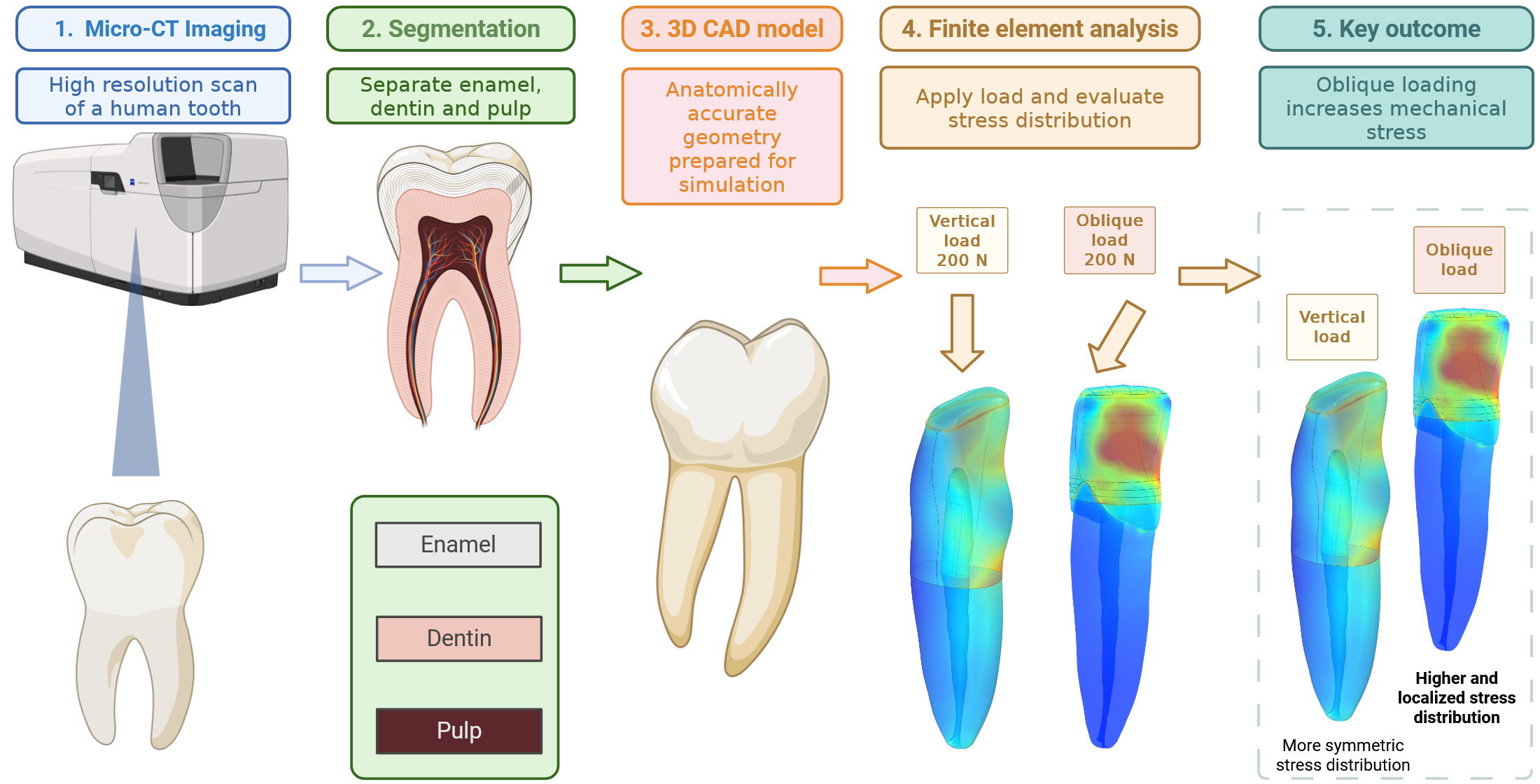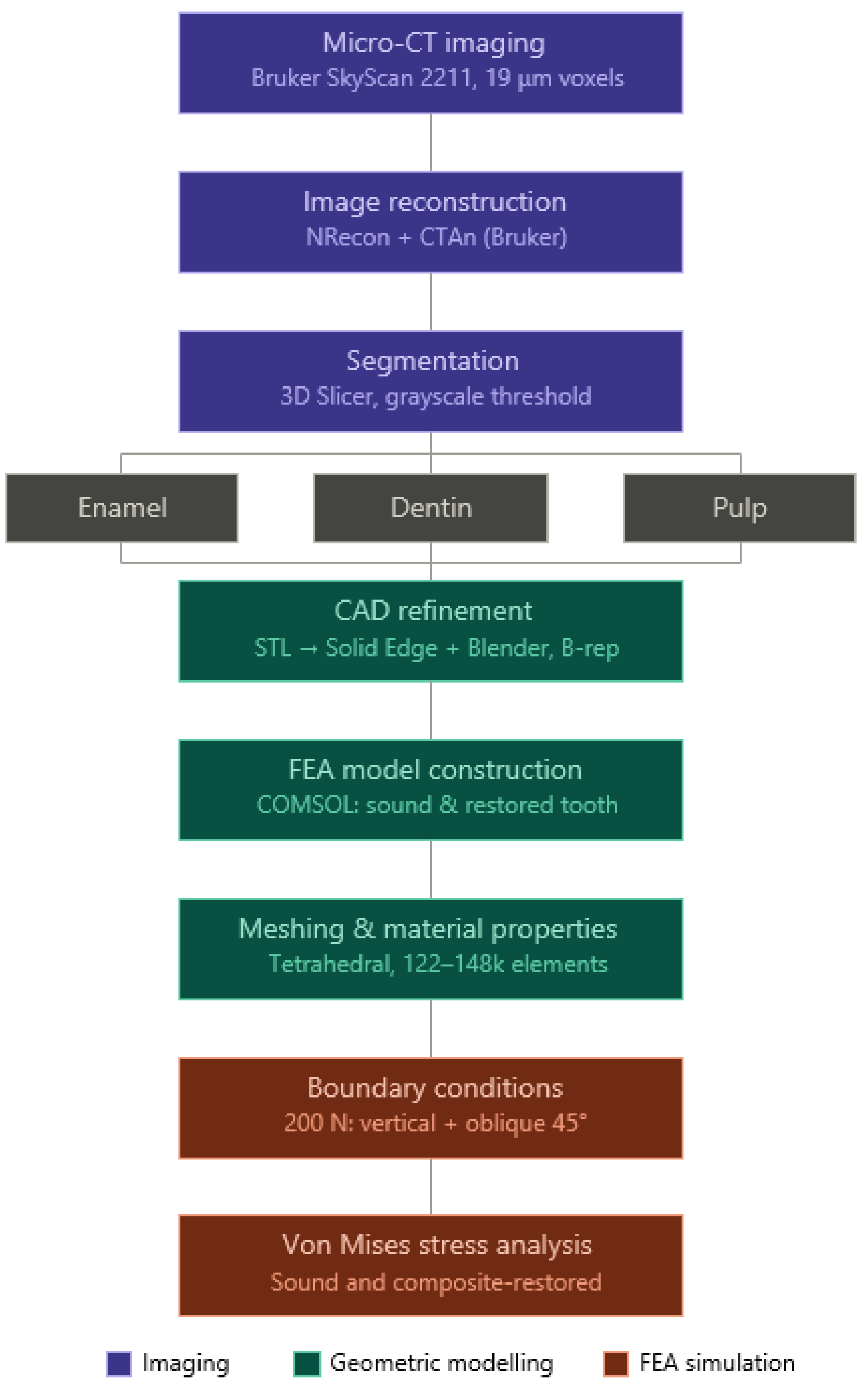

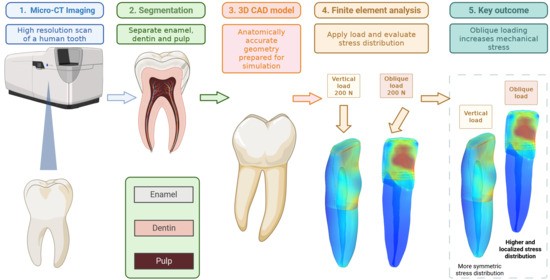
Development of Micro-CT-Based Anatomically Accurate Tooth Model for Finite Element Analysis of Composite Restorations
 , , and
Abstract
1. Introduction
2. Materials and Methods
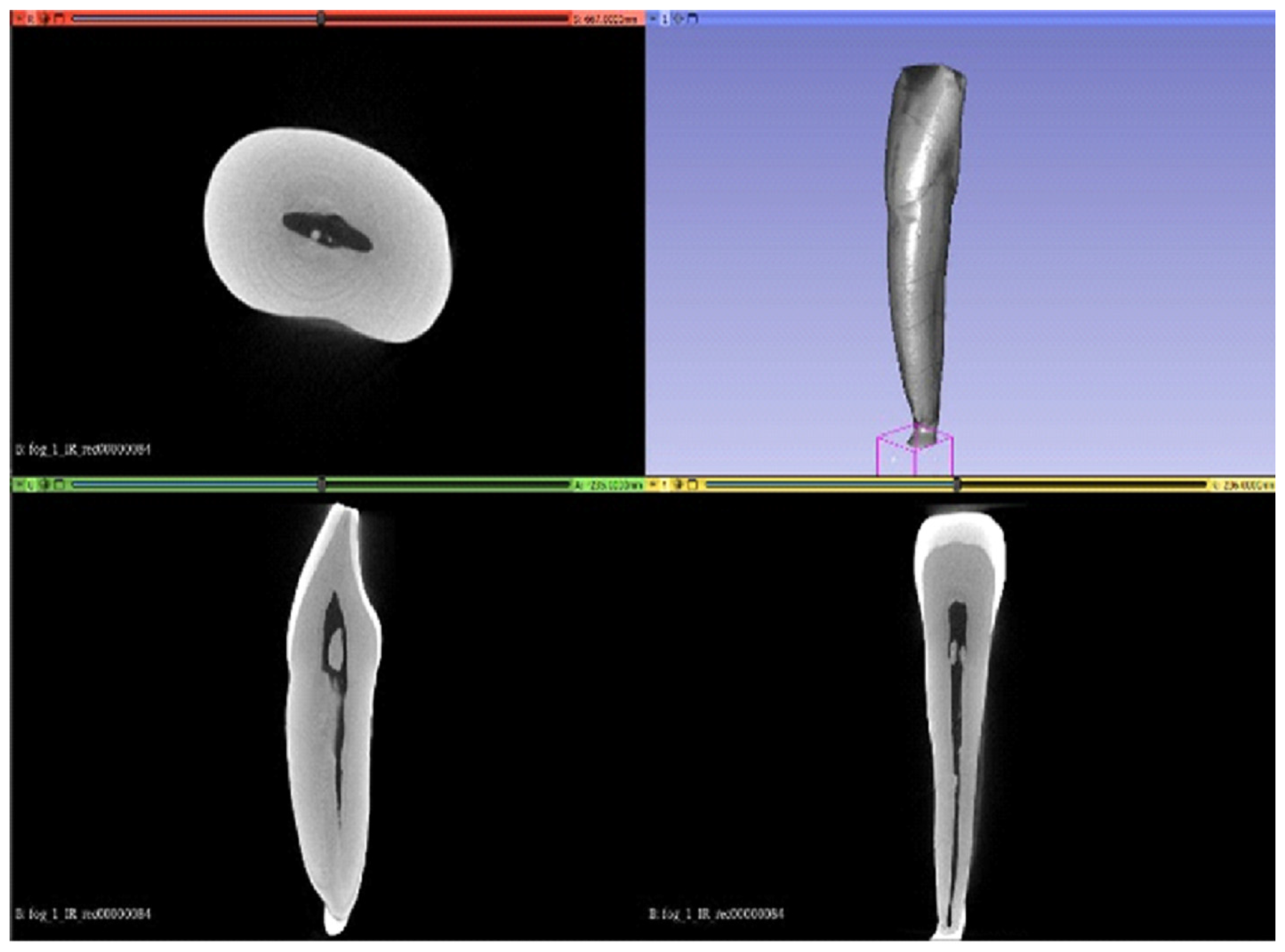
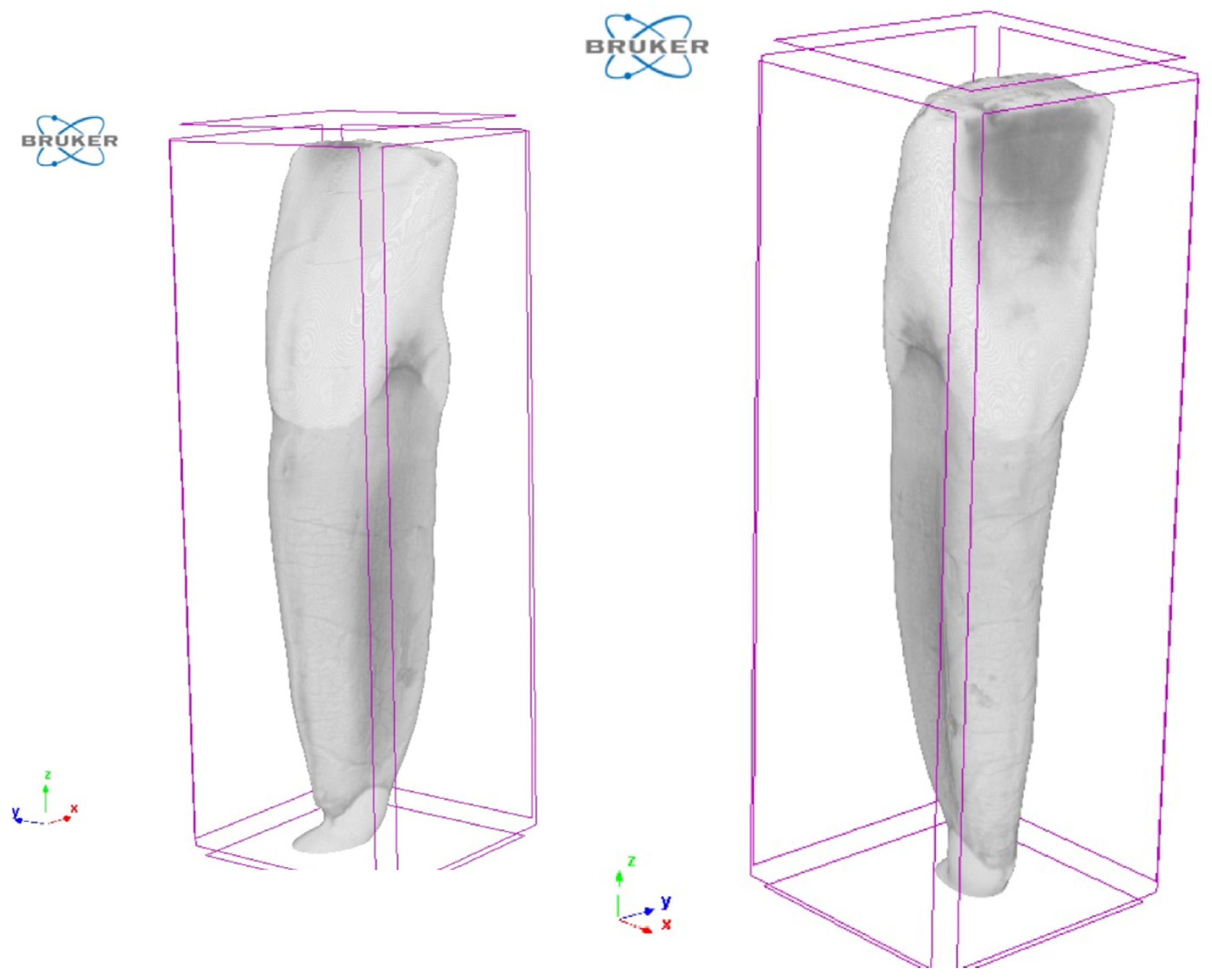
2.1. Sample Prearation and Micro-CT Scan Protocol
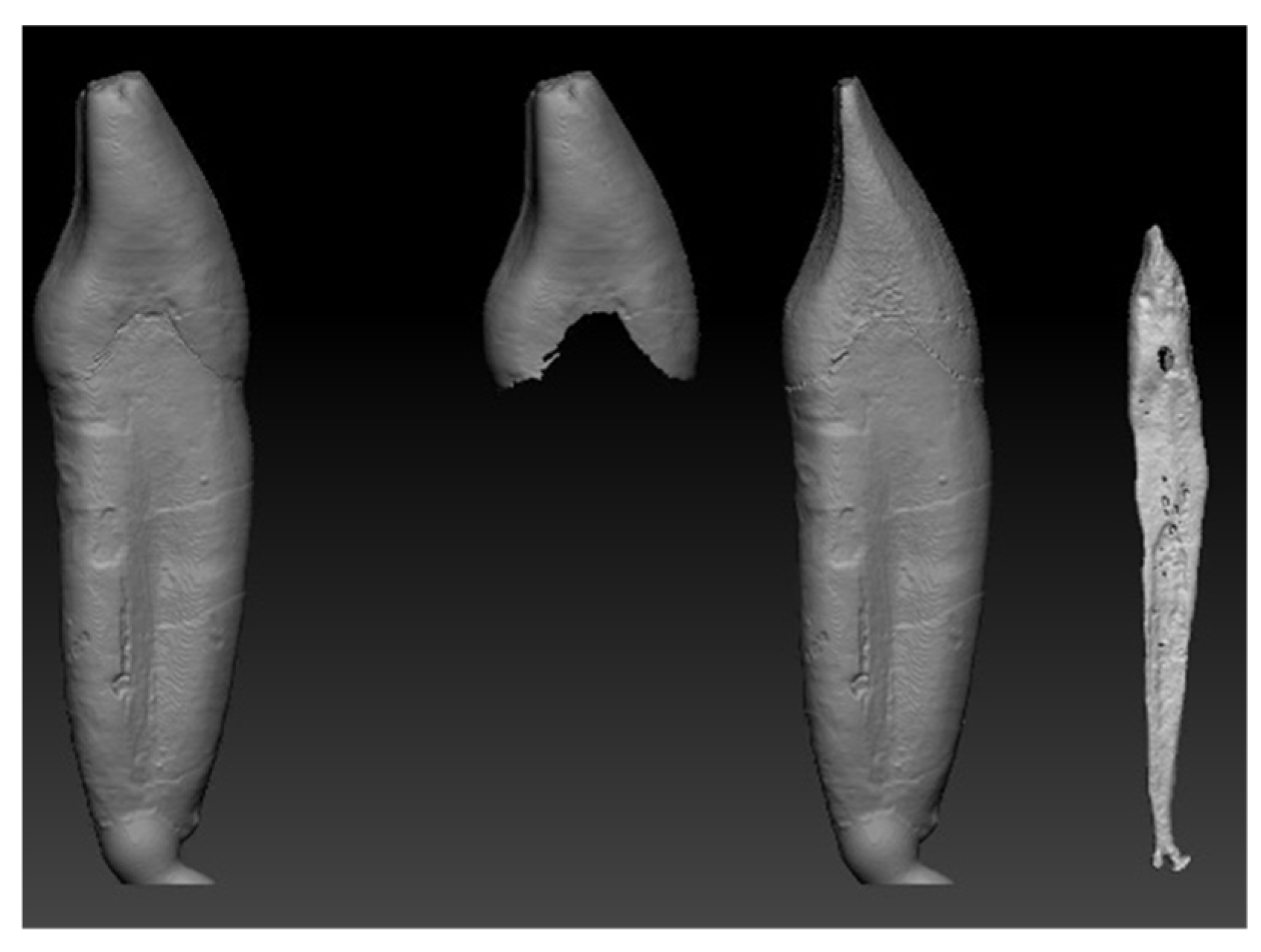
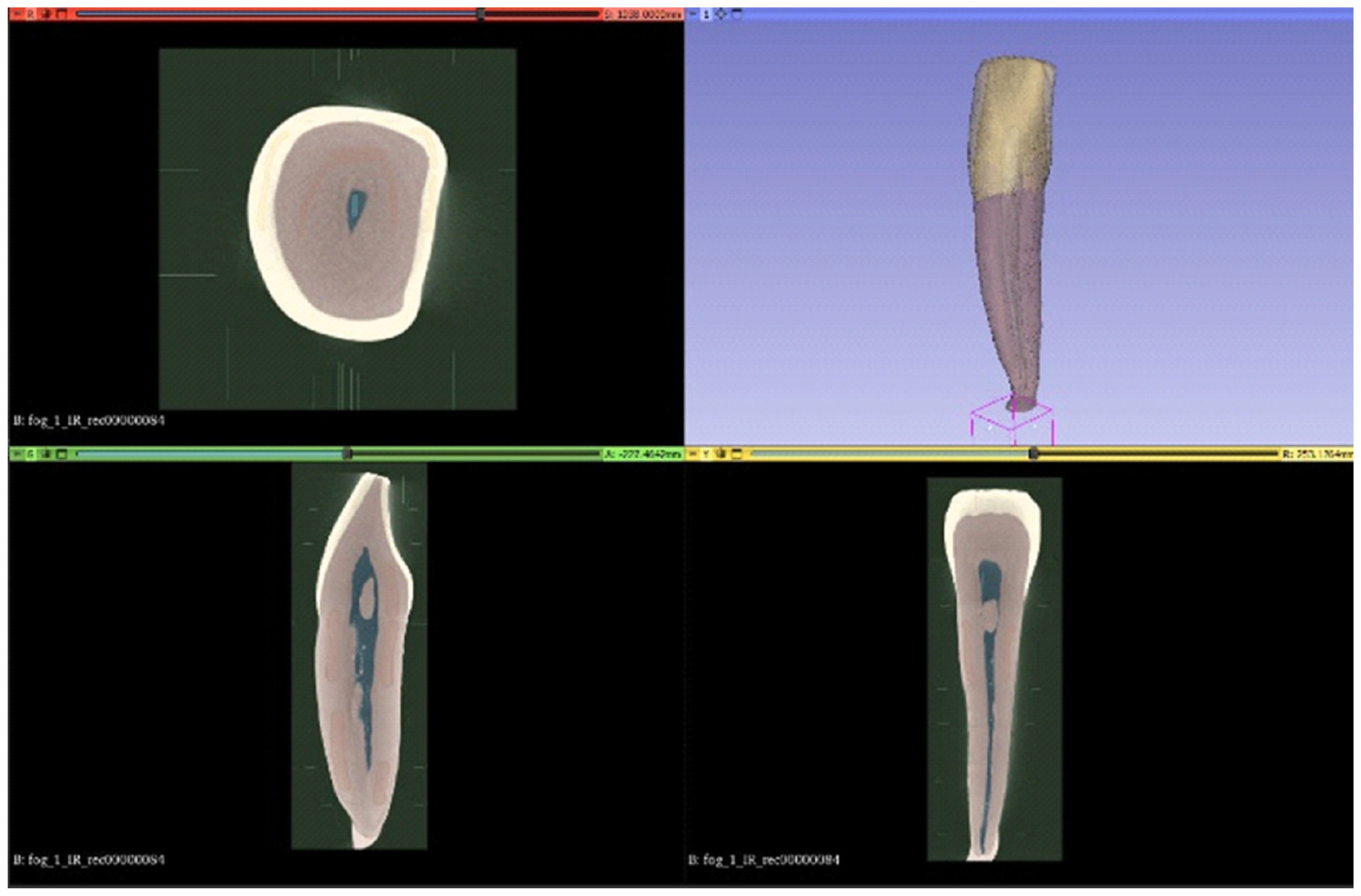
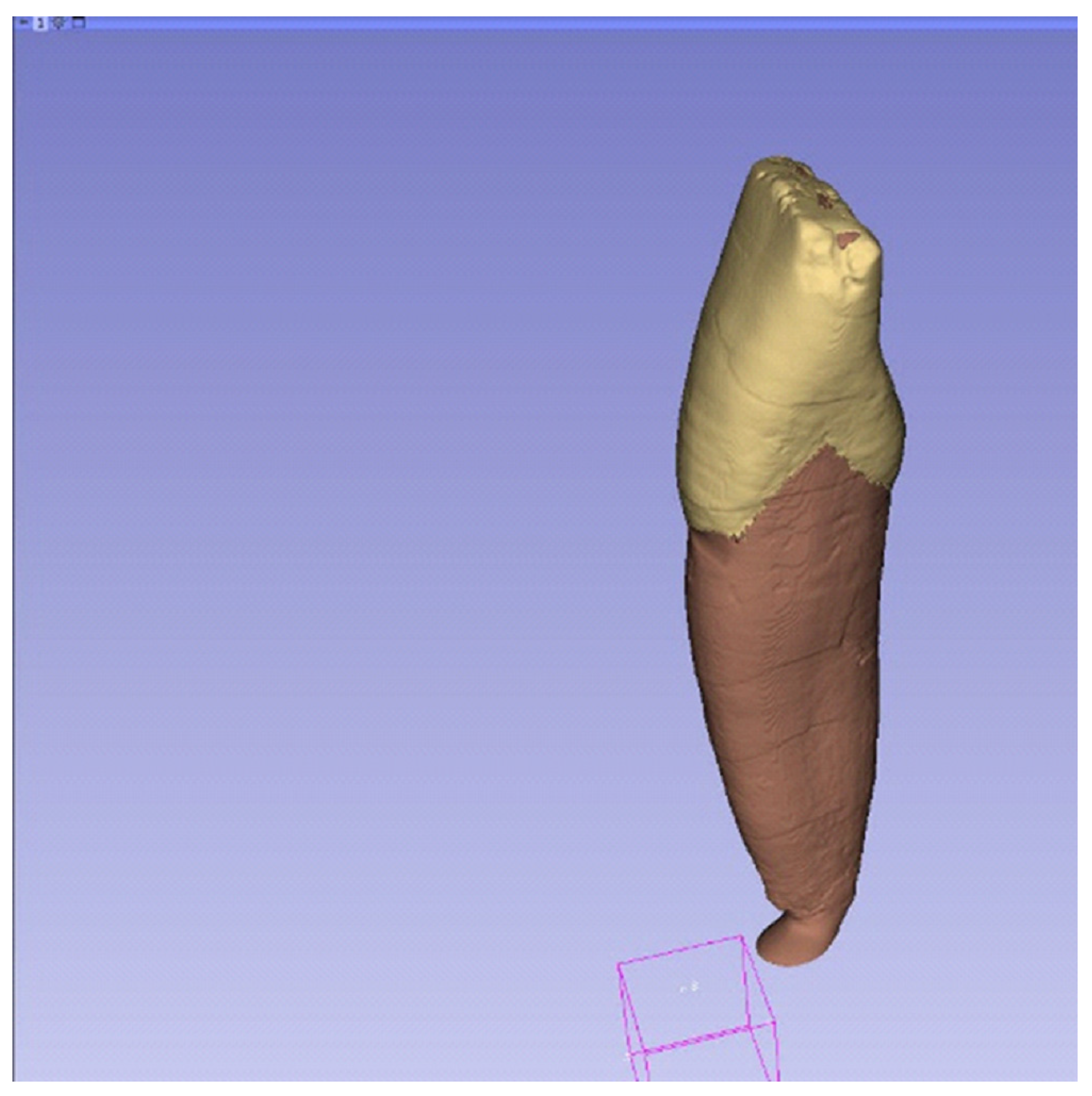
2.2. Three-Dimensional Tooth Model
2.3. Numerical Simulation Protocol
3. Results
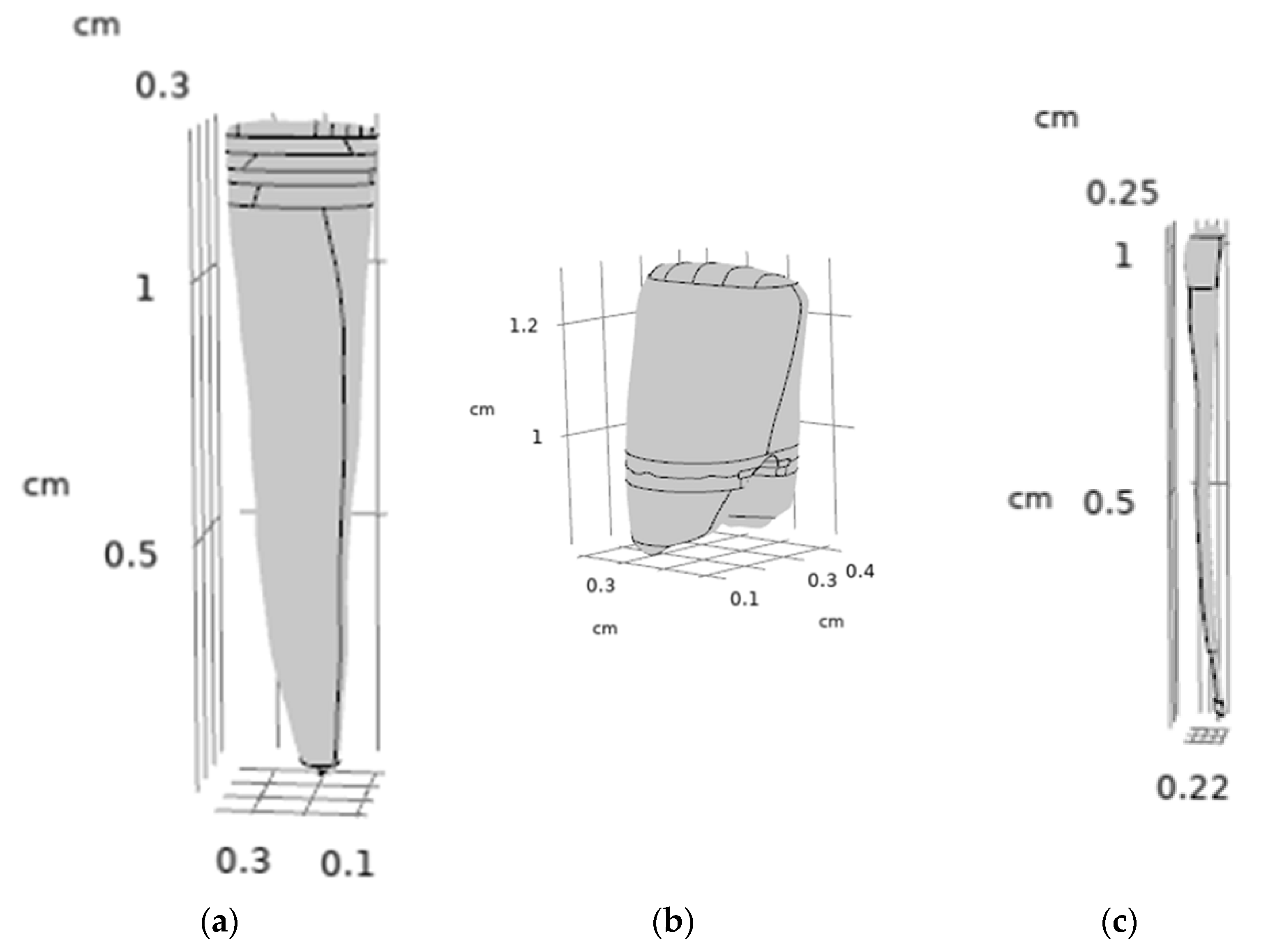
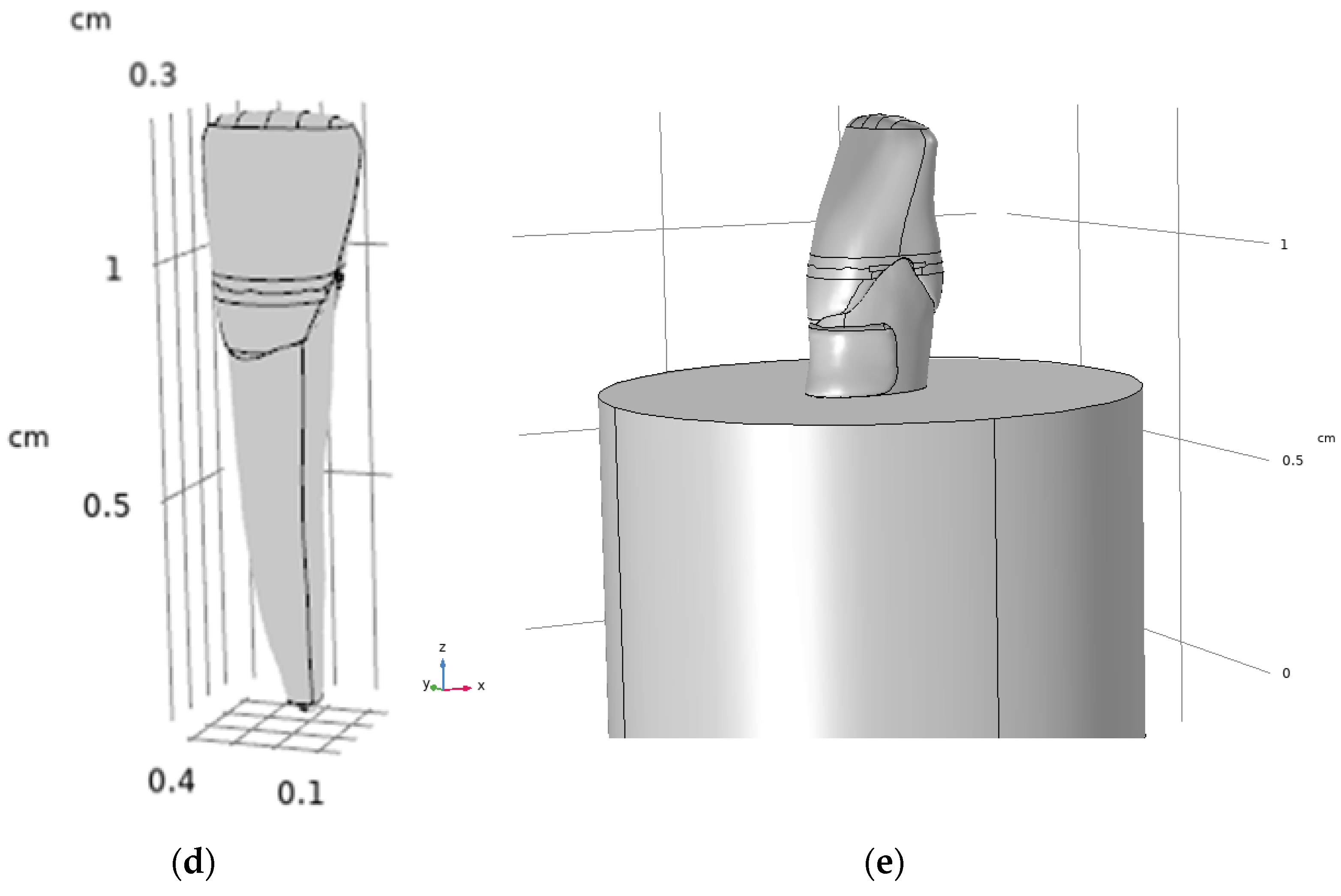
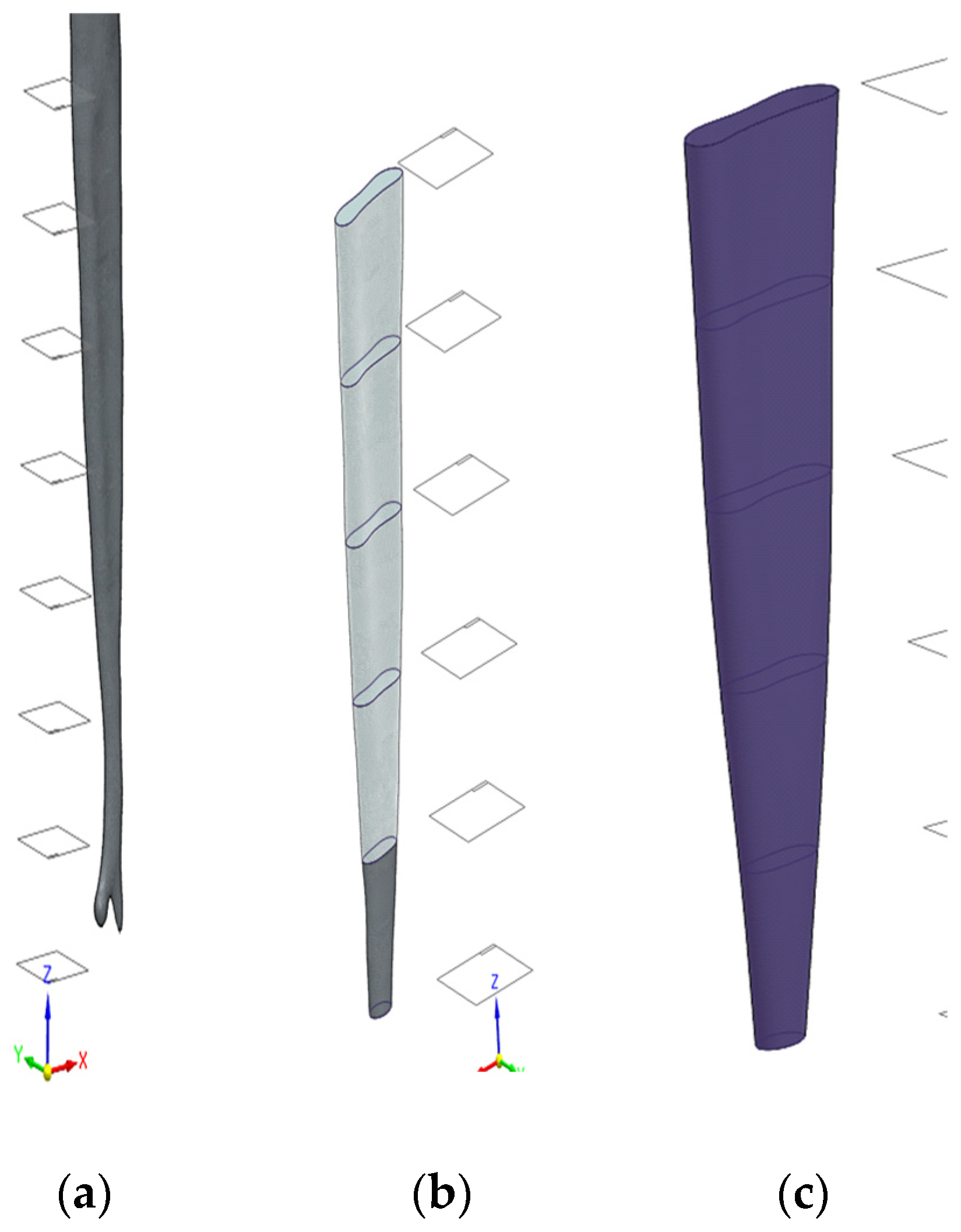
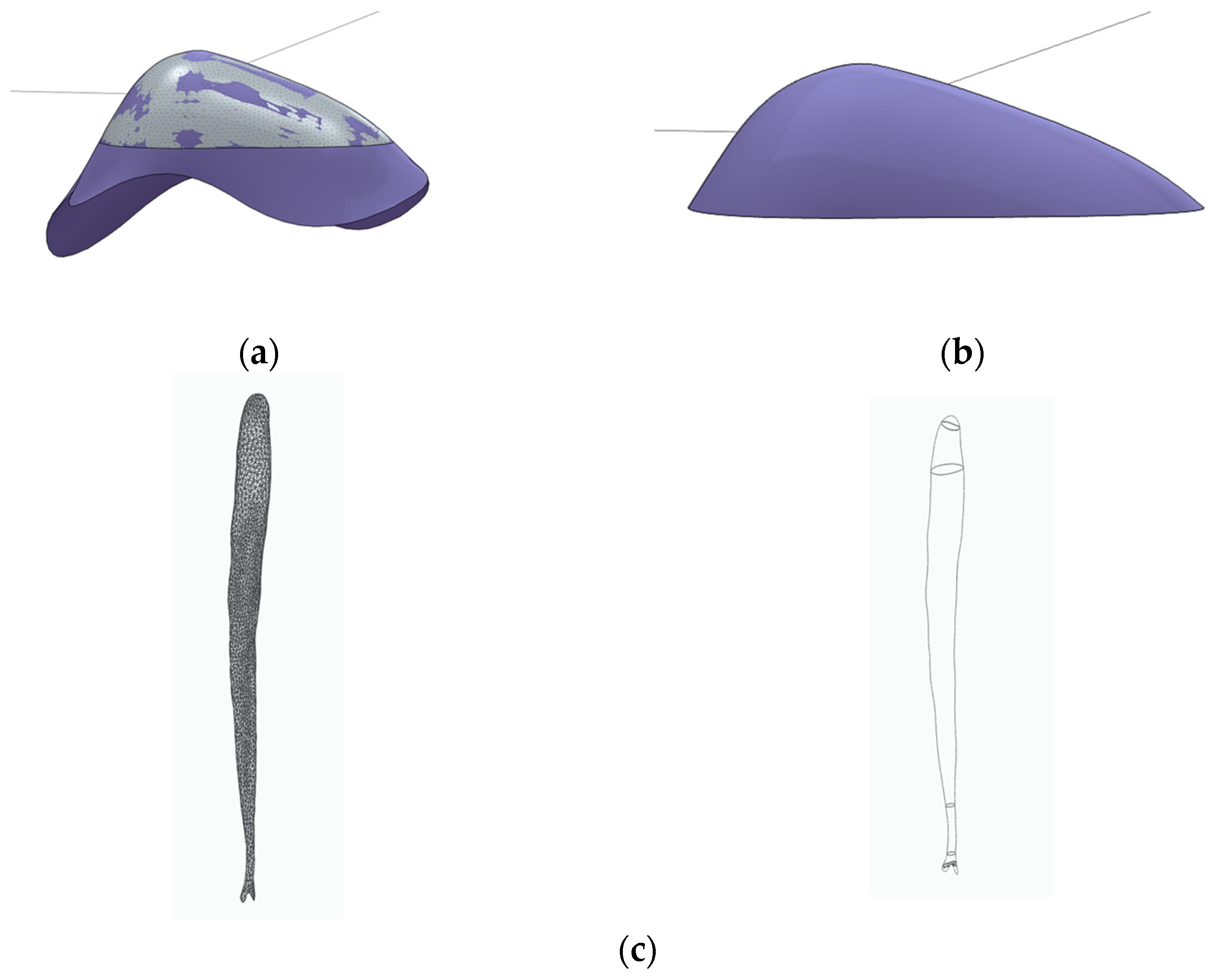
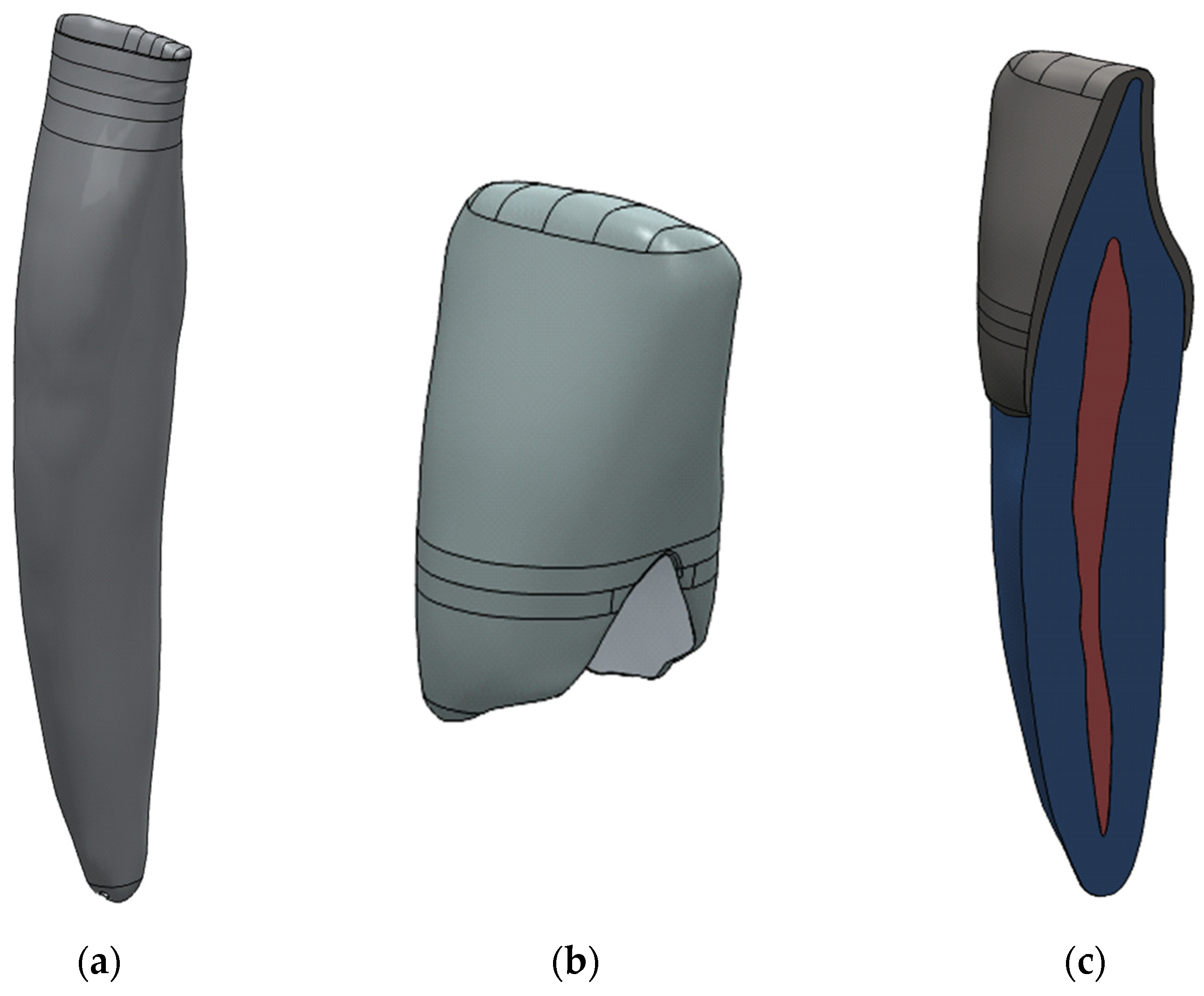
3.1. CAD-Based Geometric Refinement of the Tooth Model
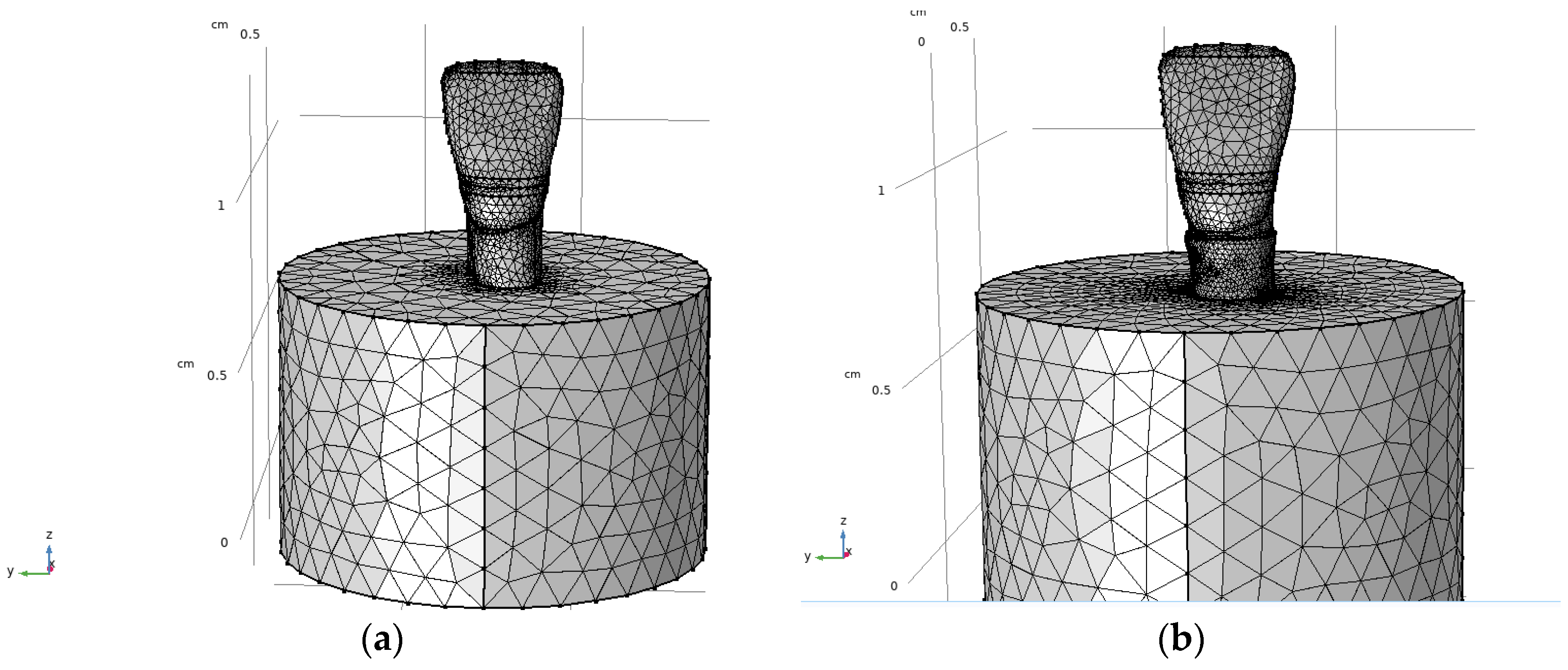
3.2. Geometry Preparation and Finite Element Model Construction
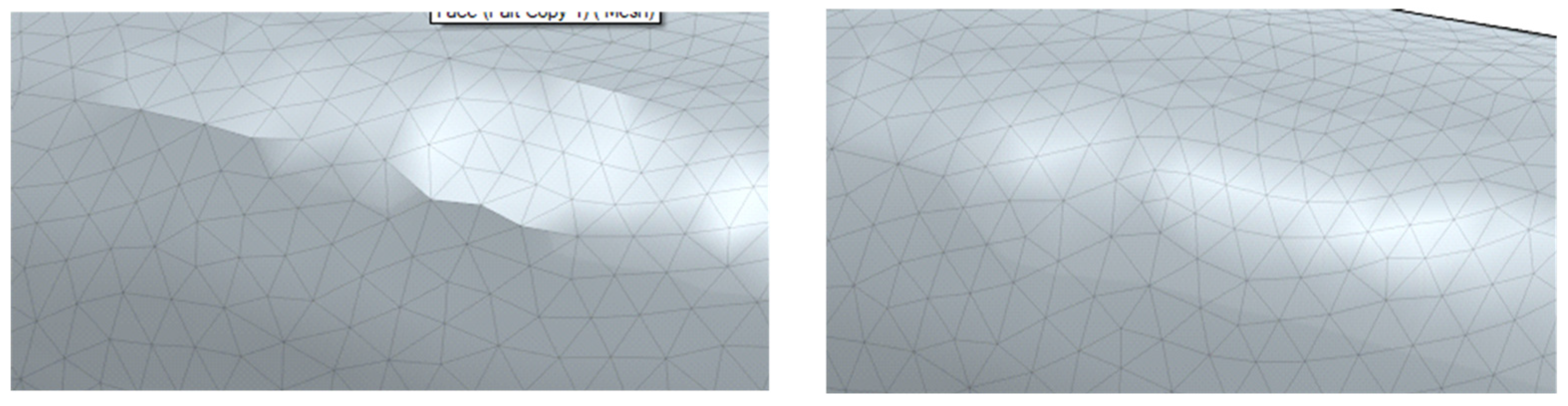
3.3. Mesh Generation
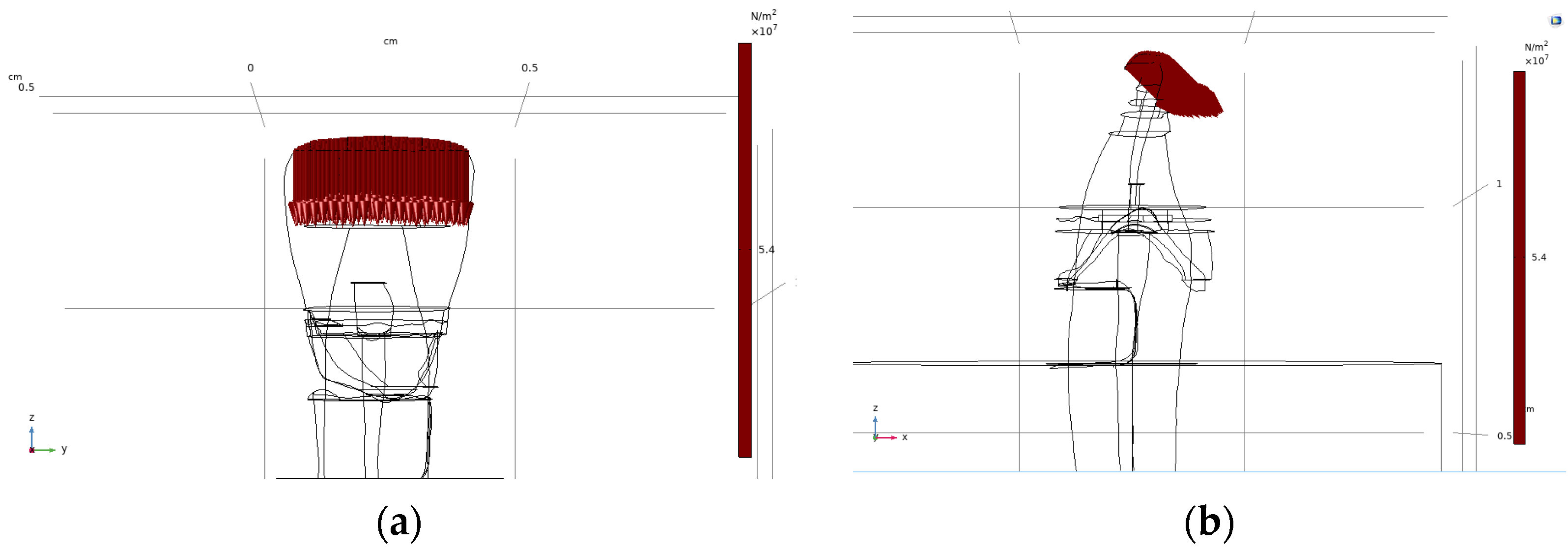
3.4. Loading Configurations
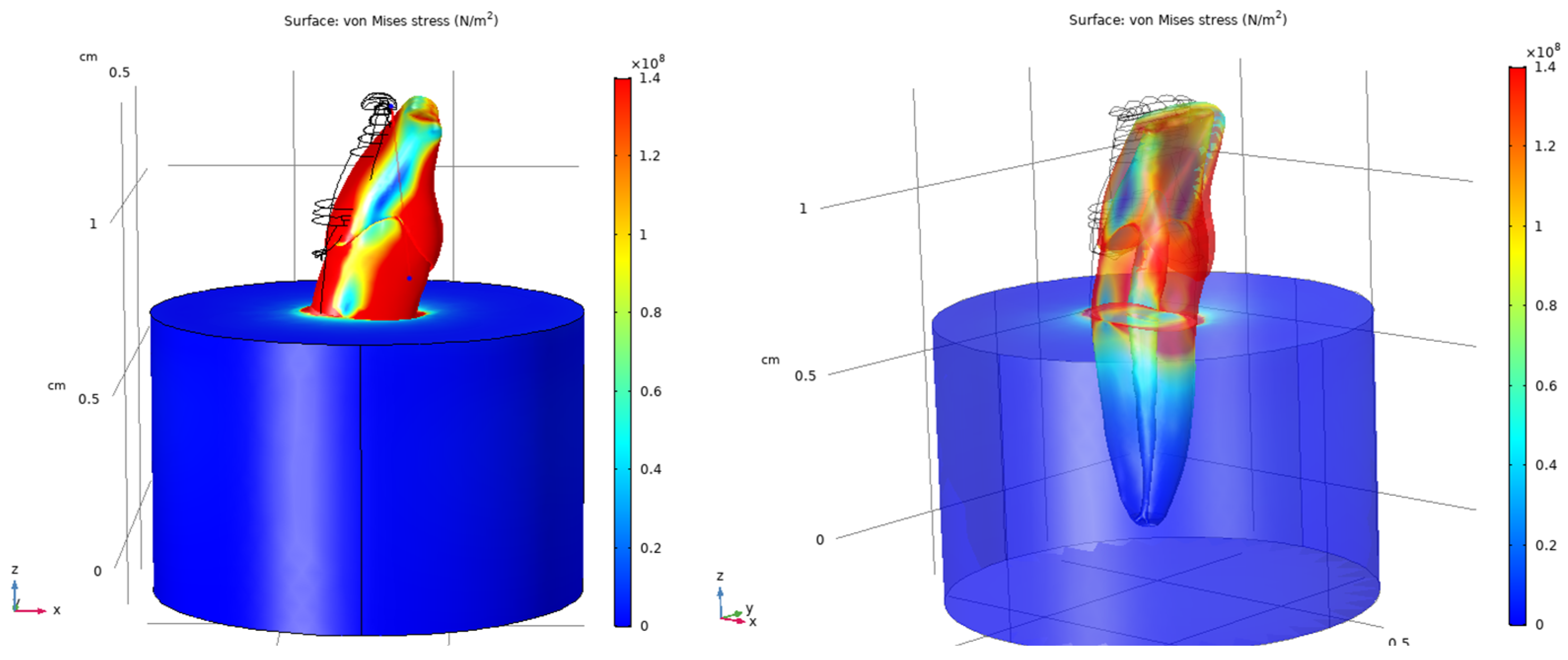
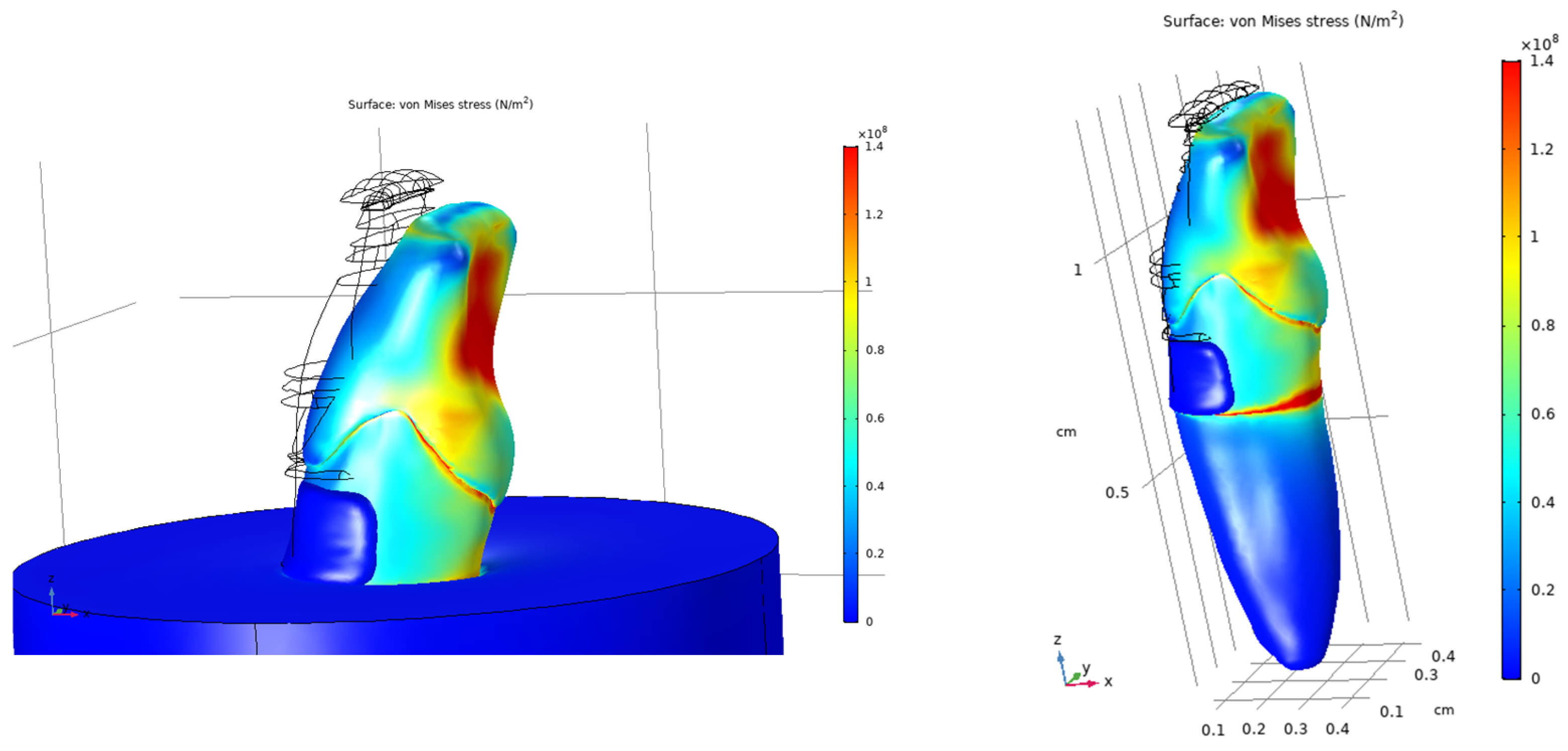
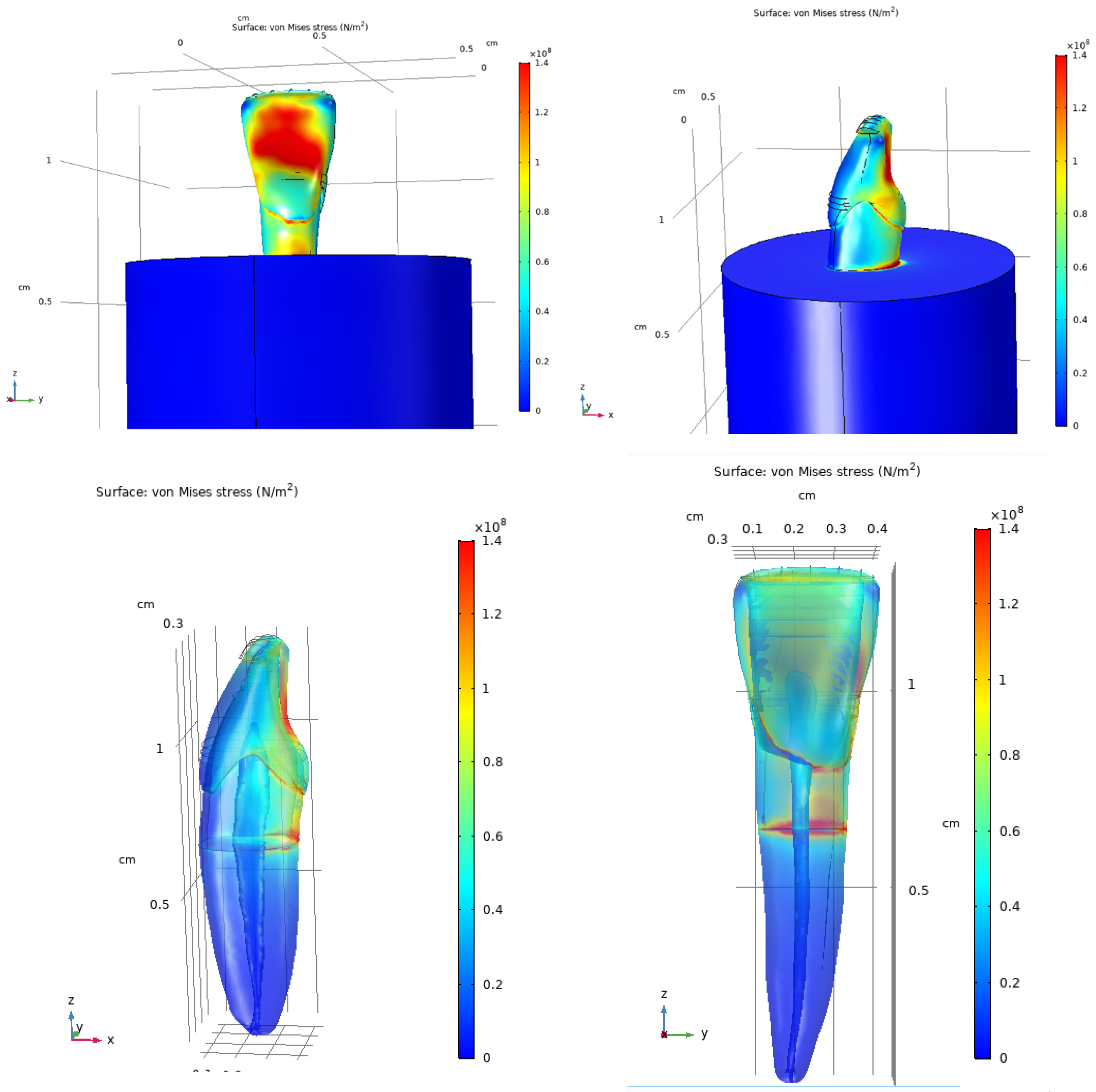
3.5. Stress Distribution in the Sound Tooth Model
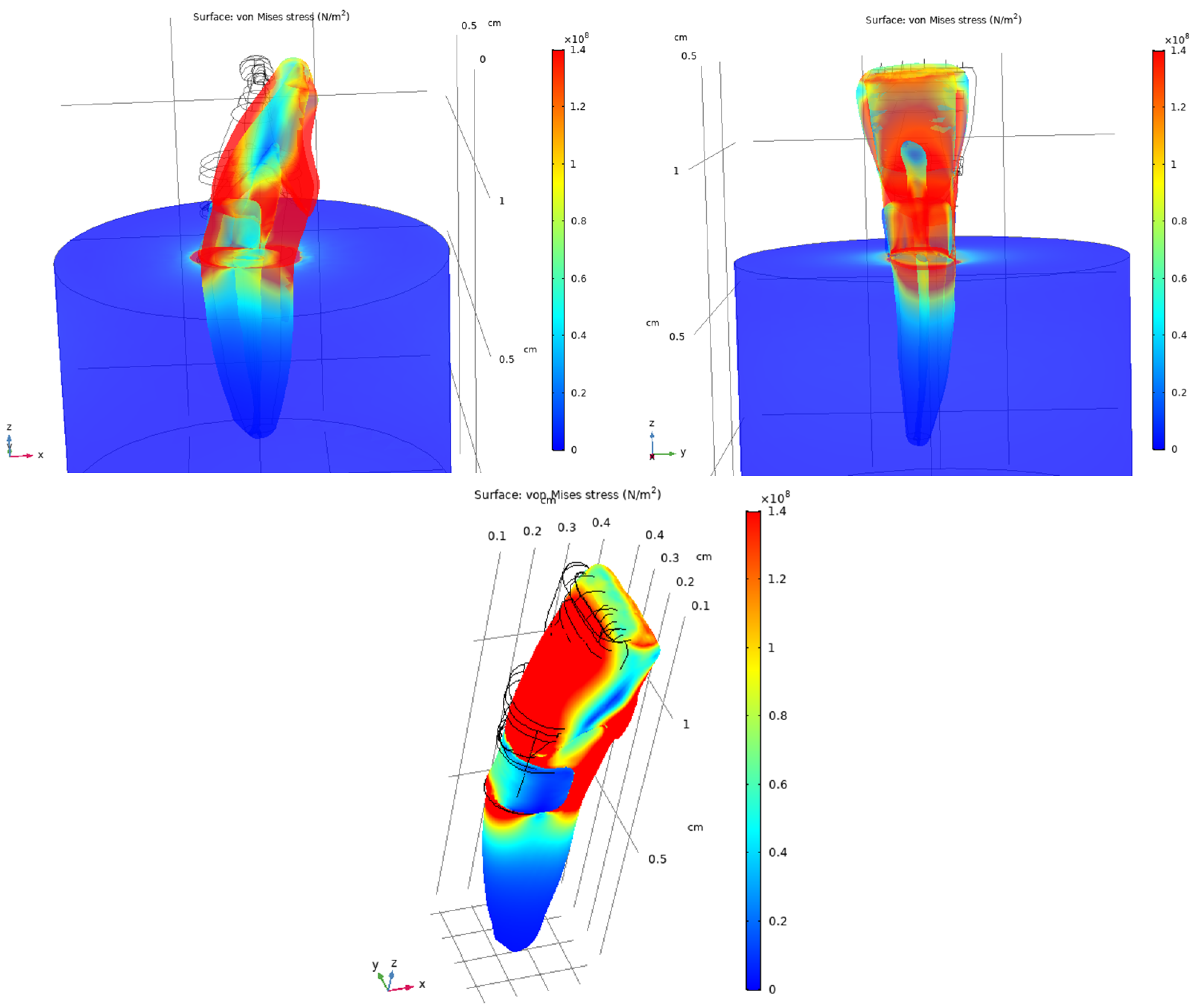
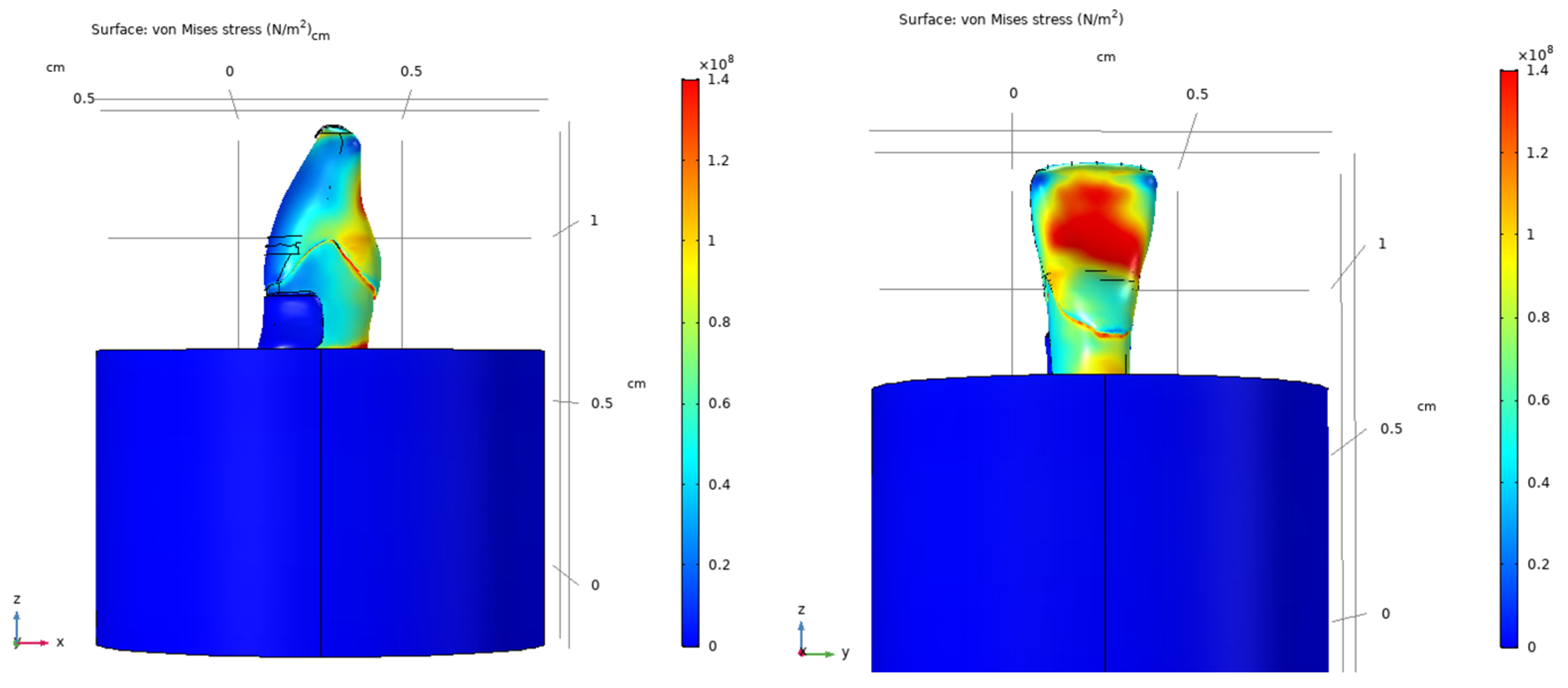
3.6. Stress Distribution in the Composite-Restored Tooth Model
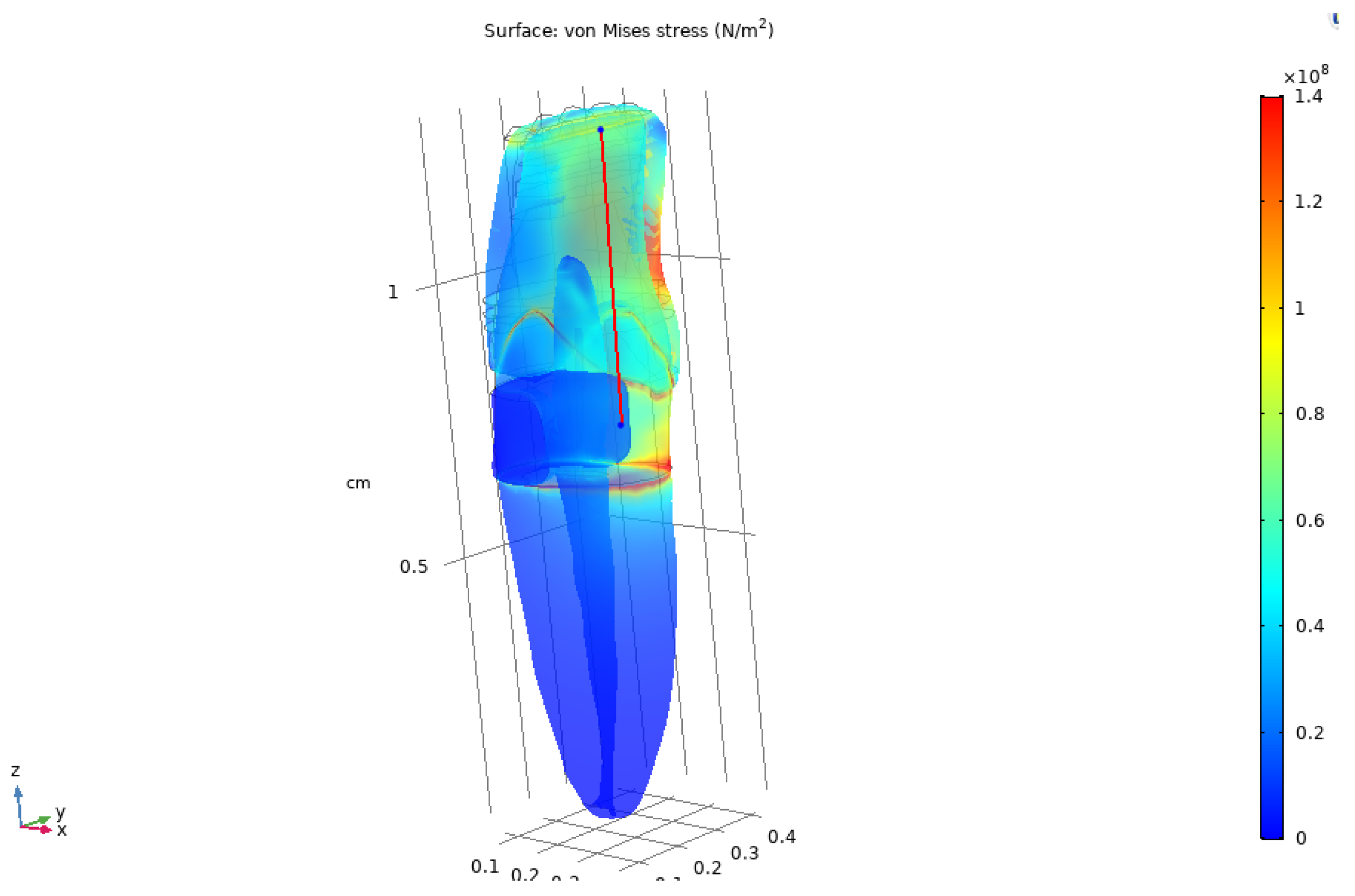
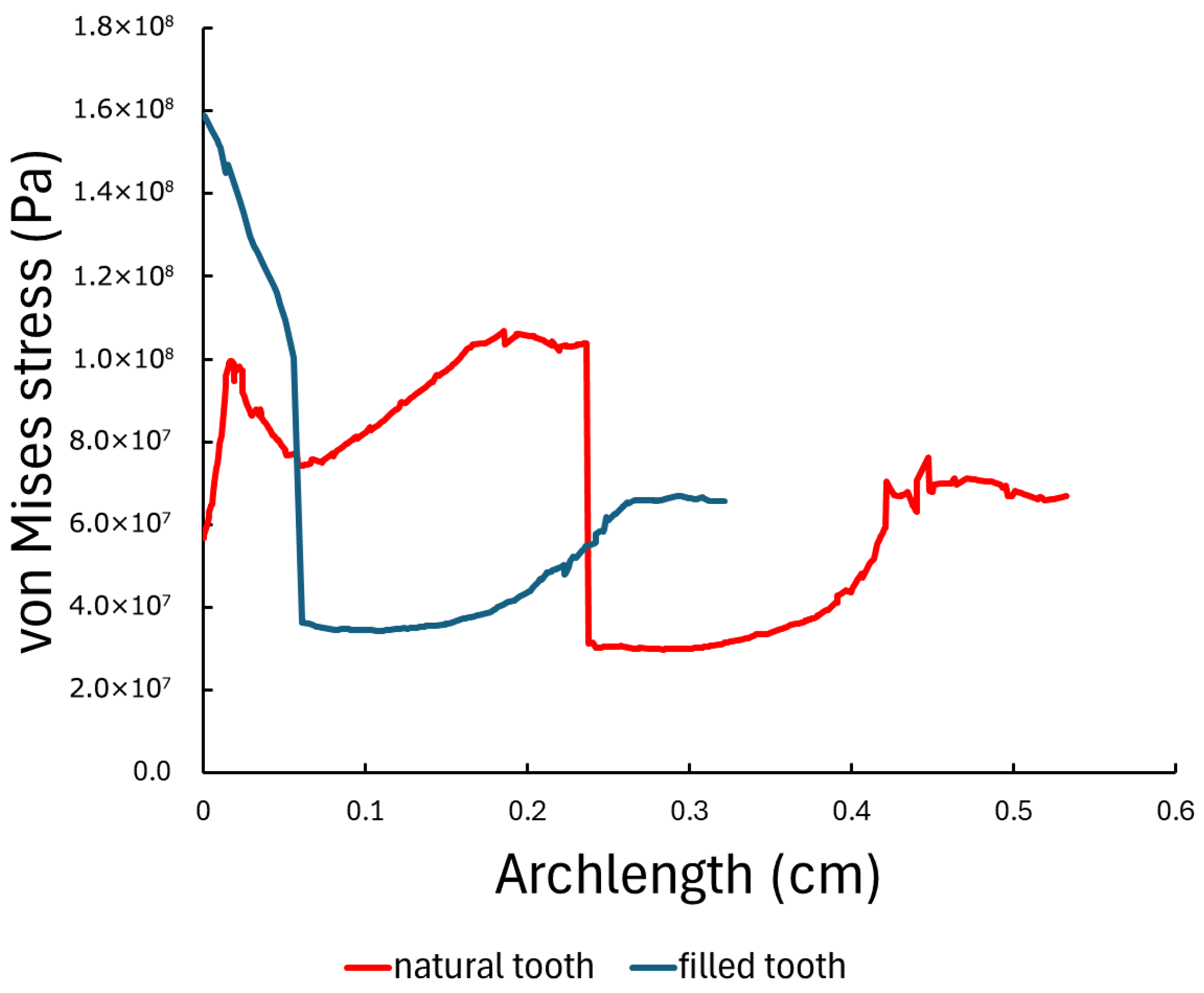
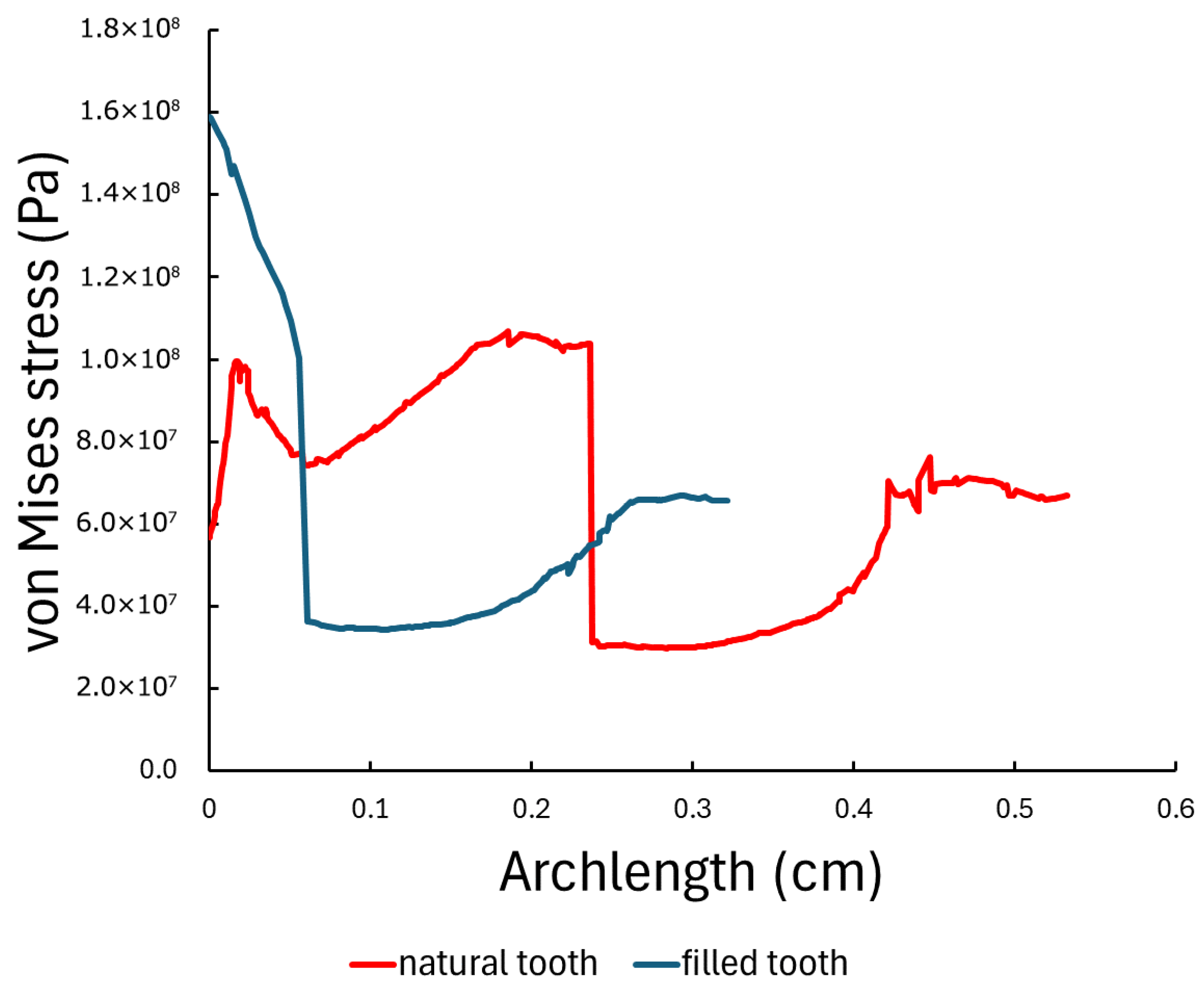
3.7. Line-Based Stress Analysis
4. Discussion
4.1. Summary of the Present Results
4.2. Comparing with Previous Results
4.3. Limitations
5. Conclusions
Author Contributions
Funding
Institutional Review Board Statement
Informed Consent Statement
Data Availability Statement
Acknowledgments
Conflicts of Interest
Abbreviations
| FEA | Finite Element Analysis |
| micro-CT | Micro-Computed Tomography |
| CT | Computed Tomography |
| CAD | Computer-Aided Design |
| STL | Stereolithography (file format) |
| B-rep | Boundary Representation |
References
- Ferracane, J.L. Resin Composite—State of the Art. Dent. Mater. 2011, 27, 29–38. [Google Scholar] [CrossRef]
- Barszczewska-Rybarek, I.M.; Chrószcz, M.W.; Chladek, G. Physicochemical and Mechanical Properties of Bis-GMA/TEGDMA Dental Composite Resins Enriched with Quaternary Ammonium Polyethylenimine Nanoparticles. Materials 2021, 14, 2037. [Google Scholar] [CrossRef]
- Benetti, A.R.; Peutzfeldt, A.; Lussi, A.; Flury, S. Resin Composites: Modulus of Elasticity and Marginal Quality. J. Dent. 2014, 42, 1185–1192. [Google Scholar] [CrossRef] [PubMed]
- Haugen, H.J.; Qasim, S.B.; Matinlinna, J.P.; Vallittu, P.; Nogueira, L.P. Nano-CT as Tool for Characterization of Dental Resin Composites. Sci. Rep. 2020, 10, 15520. [Google Scholar] [CrossRef] [PubMed]
- Sakaguchi, R.; Ferracane, J.; Powers, J. (Eds.) Craig’s Restorative Dental Materials; Mosby: St. Louis, MI, USA, 2019. [Google Scholar] [CrossRef]
- Magne, P. Efficient 3D Finite Element Analysis of Dental Restorative Procedures Using Micro-CT Data. Dent. Mater. 2007, 23, 539–548. [Google Scholar] [CrossRef] [PubMed]
- Della Bona, Á.; Borba, M.; Benetti, P.; Duan, Y.; Griggs, J.A. Three-Dimensional Finite Element Modelling of All-Ceramic Restorations Based on Micro-CT. J. Dent. 2013, 41, 412–419. [Google Scholar] [CrossRef]
- Tavangar, S.M.; Davalloo, R.T.; Darabi, F.; Tajziehchi, G. Stress Distribution Pattern in Class I Cavities Restored by Different Techniques According to the Stress Reducing Direct Composite Concept: A Finite Element Analysis. Int. J. Dent. 2025, 2025, 7196931. [Google Scholar] [CrossRef]
- Fidancioğlu, Y.D.; Alkurt Kaplan, S.; Mohammadi, R.; Gönder, H.Y. Three-Dimensional Finite Element Analysis (FEM) of Tooth Stress: The Impact of Cavity Design and Restorative Materials. Appl. Sci. 2025, 15, 9677. [Google Scholar] [CrossRef]
- Baldi, A.; Scattina, A.; Ferrero, G.; Comba, A.; Alovisi, M.; Pasqualini, D.; Peroni, L.; Muggeo, M.; Germanetti, F.; Scotti, N. Highly-Filled Flowable Composite in Deep Margin Elevation: FEA Study Obtained from a microCT Real Model. Dent. Mater. 2022, 38, e94–e107. [Google Scholar] [CrossRef]
- Zhu, J.; Rong, Q.; Wang, X.; Gao, X. Influence of Remaining Tooth Structure and Restorative Material Type on Stress Distribution in Endodontically Treated Maxillary Premolars: A Finite Element Analysis. J. Prosthet. Dent. 2017, 117, 646–655. [Google Scholar] [CrossRef]
- Swain, M.V.; Xue, J. State of the Art of Micro-CT Applications in Dental Research. Int. J. Oral Sci. 2009, 1, 177–188. [Google Scholar] [CrossRef]
- Campioni, I.; Pecci, R.; Bedini, R. Ten Years of Micro-CT in Dentistry and Maxillofacial Surgery: A Literature Overview. Appl. Sci. 2020, 10, 4328. [Google Scholar] [CrossRef]
- De-Deus, G.; Belladonna, F.G.; Cavalcante, D.M.; Simões-Carvalho, M.; Silva, E.J.N.L.; Carvalhal, J.C.A.; Zamolyi, R.Q.; Lopes, R.T.; Versiani, M.A.; Dummer, P.M.H.; et al. Contrast-enhanced micro-CT to assess dental pulp tissue debridement in root canals of extracted teeth: A series of cascading experiments towards method validation. Int. End. J. 2021, 54, 279–293. [Google Scholar] [CrossRef]
- Limbert, G.; van Lierde, C.; Muraru, O.L.; Walboomers, X.F.; Frank, M.; Hansson, S.; Middleton, J.; Jaecques, S. Trabecular Bone Strains around a Dental Implant and Associated Micromotions—A Micro-CT-Based Three-Dimensional Finite Element Study. J. Biomech. 2010, 43, 1251–1261. [Google Scholar] [CrossRef] [PubMed]
- Aktuna Belgın, C.; Serindere, G.; Orhan, K. Accuracy and reliability of enamel and dentin thickness measurements on micro-computed tomography and digital periapical radiographs. J. Forensic Radiol. Imaging 2019, 18, 32–36. [Google Scholar] [CrossRef]
- Orozco-Gallego, M.J.; Pineda-Vélez, E.L.; Rojas-Gutiérrez, W.J.; Rincón-Rodríguez, M.L.; Agudelo-Suárez, A.A. Effectiveness of Irrigation Protocols in Endodontic Therapy: An Umbrella Review. Dent. J. 2025, 13, 273. [Google Scholar] [CrossRef] [PubMed]
- Puleio, F.; Lizio, A.S.; Coppini, V.; Lo Giudice, R.; Lo Giudice, G. CBCT-Based Assessment of Vapor Lock Effects on Endodontic Disinfection. Appl. Sci. 2023, 13, 9542. [Google Scholar] [CrossRef]
- Camargos, G.D.V.; Lazari-Carvalho, P.C.; de Carvalho, M.A.; Castro, M.B.; Neris, N.W.; Del Bel Cury, A.A. 3D Finite Element Model Based on CT Images of Tooth. Braz. J. Oral Sci. 2020, 19, e208910. [Google Scholar] [CrossRef]
- Palkovics, D.; Mangano, F.G.; Nagy, K.; Windisch, P. Digital three-dimensional visualization of intrabony periodontal defects for regenerative surgical treatment planning. BMC Oral Health 2020, 20, 351. [Google Scholar] [CrossRef] [PubMed]
- Ausiello, P.; Ciaramella, S.; Fabianelli, A.; Gloria, A.; Martorelli, M.; Lanzotti, A.; Watts, D.C. Mechanical behavior of bulk direct composite versus block composite and lithium disilicate indirect Class II restorations by CAD-FEM modeling. Dent. Mater. 2017, 33, 690–701. [Google Scholar] [CrossRef]
- Cakmak, B.; Ermek, E.; Jamil, M. Micro-Computed Tomography (Micro-CT) in Medicine and Engineering; Springer: Berlin/Heidelberg, Germany, 2020; pp. 171–181. [Google Scholar]
- Withers, P.J.; Bouman, C.; Carmignato, S.; Cnudde, V.; Grimaldi, D.; Hagen, C.K.; Maire, E.; Manley, M.; Du Plessis, A.; Stock, S.R. X-Ray Computed Tomography. Nat. Rev. Methods Primers 2021, 1, 18. [Google Scholar] [CrossRef]
- du Plessis, A.; Broeckhoven, C.; Guelpa, A.; le Roux, S.G. Laboratory X-Ray Micro-Computed Tomography: A User Guideline for Biological Samples. GigaScience 2017, 6, gix027. [Google Scholar] [CrossRef]
- Schladitz, K. Quantitative Micro-CT. J. Microsc. 2011, 243, 111–117. [Google Scholar] [CrossRef]
- Fedorov, A.; Beichel, R.; Kalpathy-Cramer, J.; Finet, J.; Fillion-Robin, J.-C.; Pujol, S.; Bauer, C.; Jennings, D.; Fennessy, F.; Sonka, M.; et al. 3D Slicer as an Image Computing Platform for the Quantitative Imaging Network. Magn. Reson. Imaging 2012, 30, 1323–1341. [Google Scholar] [CrossRef] [PubMed]
- Schneider, S.J.M.; Höhne, C.; Schneider, M.; Schmitter, M. Photoacoustic Tomography versus Cone-Beam Computed Tomography versus Micro-Computed Tomography: Accuracy of 3D Reconstructions of Human Teeth. PLoS ONE 2022, 17, e0274818. [Google Scholar] [CrossRef]
- Sandholzer, M.A.; Baron, K.; Heimel, P.; Metscher, B.D. Volume Analysis of Heat-Induced Cracks in Human Molars: A Preliminary Study. J. Forensic Dent. Sci. 2014, 6, 139. [Google Scholar] [CrossRef][Green Version]
- Campaner, L.M.; Silveira, M.P.M.; de Andrade, G.S.; Borges, A.L.S.; Bottino, M.A.; Dal Piva, A.M.d.O.; Lo Giudice, R.; Ausiello, P.; Tribst, J.P.M. Influence of Polymeric Restorative Materials on the Stress Distribution in Posterior Fixed Partial Dentures: 3D Finite Element Analysis. Polymers 2021, 13, 758. [Google Scholar] [CrossRef]
- Shi, R.; Meng, X.; Feng, R.; Hong, S.; Hu, C.; Yang, M.; Jiang, Y. Stress Distribution and Fracture Resistance of Repairing Cracked Tooth with Fiber-reinforced Composites and Onlay. Aust. Endod. J. 2021, 48, 458–464. [Google Scholar] [CrossRef]
- Özkir, S.E. Effect of Restoration Material on Stress Distribution on Partial Crowns: A 3D Finite Element Analysis. J. Dent. Sci. 2018, 13, 311–317. [Google Scholar] [CrossRef]
- Dartora, G.; Rocha Pereira, G.K.; Varella de Carvalho, R.; Zucuni, C.P.; Valandro, L.F.; Cesar, P.F.; Caldas, R.A.; Bacchi, A. Comparison of Endocrowns Made of Lithium Disilicate Glass-Ceramic or Polymer-Infiltrated Ceramic Networks and Direct Composite Resin Restorations: Fatigue Performance and Stress Distribution. J. Mech. Behav. Biomed. Mater. 2019, 100, 103401. [Google Scholar] [CrossRef] [PubMed]
- Xu, J.; Liang, X.; Hu, L.; Sun, C.; Zhang, Z.; Yang, J.; Wang, J. How to Adaptively Balance ‘Classic’ or ‘Conservative’ Approaches in Tooth Defect Management: A 3D-Finite Element Analysis Study. BMC Oral Health 2025, 25, 865. [Google Scholar] [CrossRef]
- Nikolova, N.; Raykovska, M.; Petkov, N.; Tsvetkov, M.; Georgiev, I.; Koytchev, E.; Iankov, R.; Dimova-Gabrovska, M.; Gusiyska, A. The Integration of Micro-CT Imaging and Finite Element Simulations for Modelling Tooth-Inlay Systems for Mechanical Stress Analysis: A Preliminary Study. J. Funct. Biomater. 2025, 16, 267. [Google Scholar] [CrossRef]










| Part | Density [kg/m3] | Modulus of Elasticity [GPa] | Poisson’s Ratio |
|---|---|---|---|
| Enamel | 2700 | 84.82 | 0.3 |
| Dentine | 1800 | 24.35 | 0.3 |
| Acrylic embedding resin | 1200 | 2 | 0.2 |
| Dental composite filling | 1240 | 12.5 | 0.3 |
Disclaimer/Publisher’s Note: The statements, opinions and data contained in all publications are solely those of the individual author(s) and contributor(s) and not of MDPI and/or the editor(s). MDPI and/or the editor(s) disclaim responsibility for any injury to people or property resulting from any ideas, methods, instructions or products referred to in the content. |
© 2026 by the authors. Licensee MDPI, Basel, Switzerland. This article is an open access article distributed under the terms and conditions of the Creative Commons Attribution (CC BY) license.
Share and Cite
Tarjányi, T.; Szabó, B.; Vásárhelyi, L.; Nagy, T.; Farkas, F.; Nagy, A. Development of Micro-CT-Based Anatomically Accurate Tooth Model for Finite Element Analysis of Composite Restorations. Dent. J. 2026, 14, 279. https://doi.org/10.3390/dj14050279
Tarjányi T, Szabó B, Vásárhelyi L, Nagy T, Farkas F, Nagy A. Development of Micro-CT-Based Anatomically Accurate Tooth Model for Finite Element Analysis of Composite Restorations. Dentistry Journal. 2026; 14(5):279. https://doi.org/10.3390/dj14050279
Chicago/Turabian StyleTarjányi, Tamás, Balázs Szabó, Lívia Vásárhelyi, Tibor Nagy, Ferenc Farkas, and Attila Nagy. 2026. "Development of Micro-CT-Based Anatomically Accurate Tooth Model for Finite Element Analysis of Composite Restorations" Dentistry Journal 14, no. 5: 279. https://doi.org/10.3390/dj14050279
APA StyleTarjányi, T., Szabó, B., Vásárhelyi, L., Nagy, T., Farkas, F., & Nagy, A. (2026). Development of Micro-CT-Based Anatomically Accurate Tooth Model for Finite Element Analysis of Composite Restorations. Dentistry Journal, 14(5), 279. https://doi.org/10.3390/dj14050279