Article

Face First: The Role of Age and Sex in the Epidemiology of Facial Fractures

1
Department of Oral and Maxillofacial Surgery, Army Hospital Hamburg, Lesserstraße 180, 22049 Hamburg, Germany
2
Department of Plastic Surgery, Army Hospital Berlin, 10115 Berlin, Germany
3
Department of Otolaryngology-Head and Neck Surgery, Army Hospital Berlin, 10115 Berlin, Germany
*
Author to whom correspondence should be addressed.
These authors contributed equally to this study.
Dent. J. 2026, 14(1), 4; https://doi.org/10.3390/dj14010004
Submission received: 27 October 2025 / Revised: 6 December 2025 / Accepted: 18 December 2025 / Published: 22 December 2025
(This article belongs to the Section Oral and Maxillofacial Surgery)

Abstract

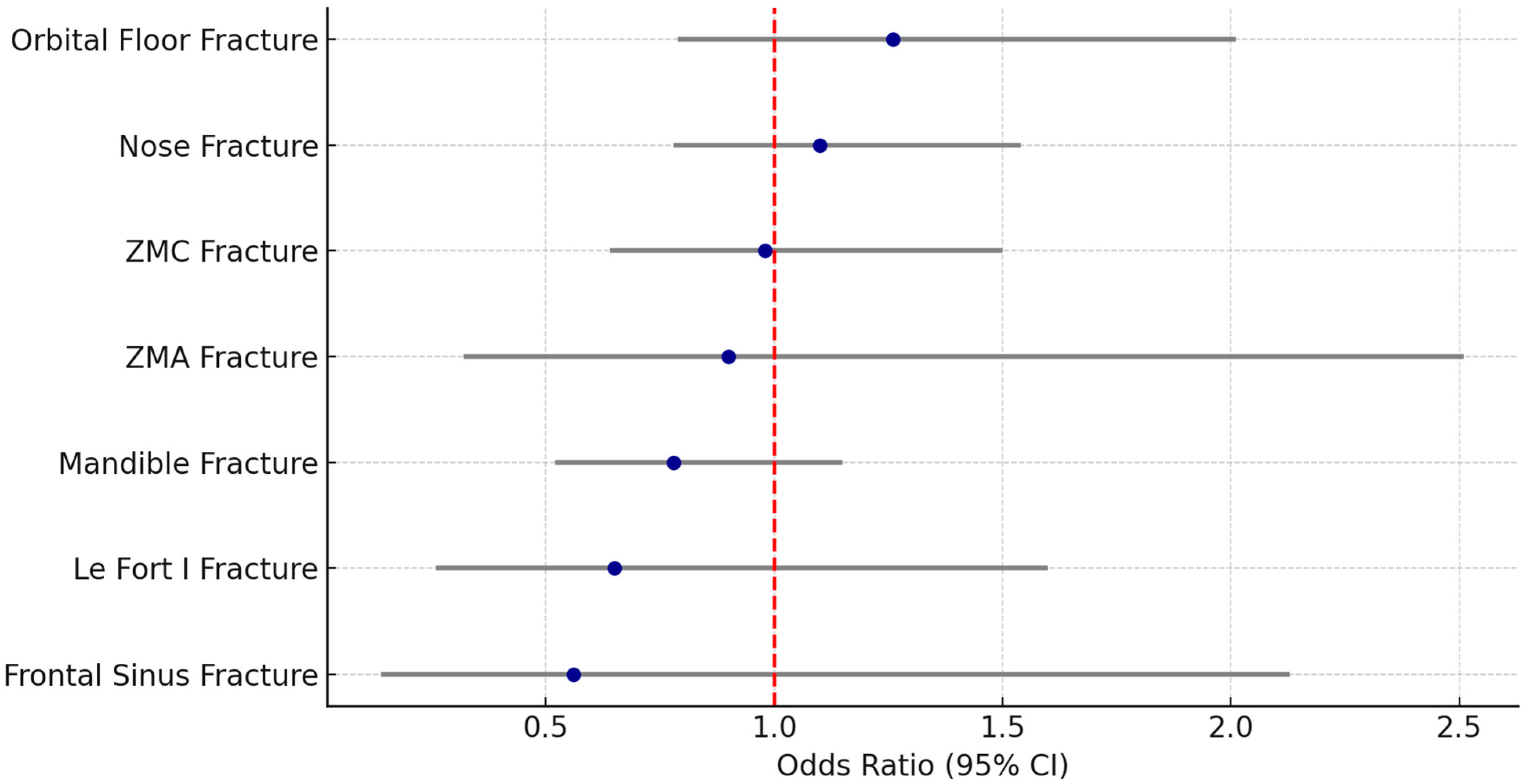
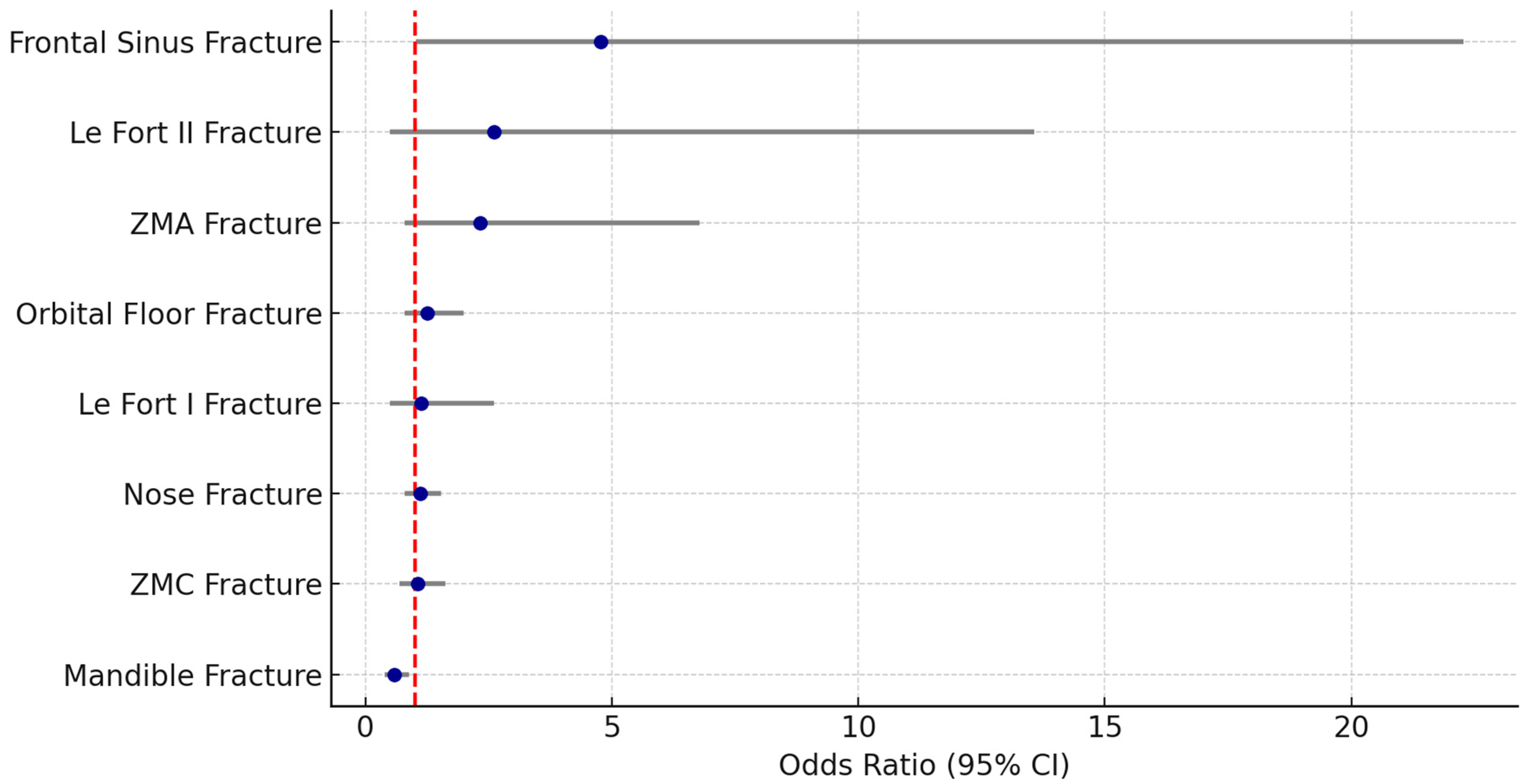
Background: Facial fractures are common in emergency and trauma care, with age and sex known to influence fracture patterns, injury mechanisms, and treatment approaches. However, detailed comparative data analyzing these demographic variables separately remain limited. Methods: In this retrospective single-center study, we analyzed 561 patients with radiologically confirmed facial fractures who were treated between January 2021 and December 2022. Patients were stratified by sex and age (<50 vs. ≥50 years). Fracture types, trauma causes, and treatment modalities were compared using odds ratios (ORs) with 95% confidence intervals (CIs). Results: Male patients comprised 60.1% of the cohort. Interpersonal violence, alcohol-related trauma, and sports injuries were significantly more frequent in males, while females experienced more falls and syncopes (p < 0.001). Although most fracture types did not differ significantly by sex, female patients underwent surgical treatment significantly less often than males (OR = 0.45, 95% CI: 0.32–0.64, p < 0.001). Patients over 50 years were significantly less likely to suffer mandibular fractures (OR = 0.59, 95% CI: 0.40–0.88, p = 0.009), while frontal sinus fractures were more common in older individuals (OR = 4.77, 95% CI: 1.02–22.27, p = 0.029). Younger patients more often experienced interpersonal violence, alcohol-related incidents, and received operative care, whereas falls and conservative treatment were more frequent among older individuals. Conclusions: Age and sex significantly influence the epidemiology and management of facial fractures. Understanding these demographic differences can guide targeted prevention strategies and assist clinical decision-making in facial trauma care.
Keywords: facial fractures; facial trauma; age; sex; risk factors facial fractures; facial trauma; age; sex; risk factors