1. Introduction
Terahertz (THz) radiation [
1,
2,
3,
4,
5,
6,
7], typically defined within the frequency range of 0.1–10 THz, occupies the spectral region between microwaves and infrared waves and exhibits unique physical properties that enable applications in spectroscopy, biomedical imaging, security screening, non-destructive evaluation, and high-speed wireless communication [
8,
9,
10]. Because of its non-ionizing nature and strong interaction with molecular and lattice dynamics, THz technology has attracted significant attention for the development of compact and efficient radiation sources.
Among the various THz generation approaches, photoconductive antennas (PCAs) are widely employed because of their broadband operation, compact structure, room-temperature functionality, and compatibility with ultrafast laser systems [
11,
12,
13,
14]. In a typical PCA, a femtosecond optical pulse excites a biased semiconductor substrate, generating electron–hole pairs that are rapidly accelerated by the applied electric field. The resulting transient photocurrent produces THz radiation through ultrafast current modulation [
15,
16].
Despite these advantages, conventional PCAs often suffer from limited optical-to-THz conversion efficiency, restricting their practical performance [
17,
18]. Considerable efforts have been devoted to improving THz emission through material engineering, electrode optimization, and nanoscale field-enhancement techniques [
19,
20,
21]. In particular, the geometry of the photoconductive gap strongly influences the local electric-field distribution, carrier acceleration, and transient photocurrent dynamics responsible for THz radiation [
22,
23].
One effective approach for improving PCA performance is the incorporation of plasmonic [
24] nanostructures into the electrode region. Metallic gratings and nanoscale electrode features can support localized plasmonic resonances that strongly concentrate the optical field near the metal–semiconductor interface [
22,
25]. This near-field localization enhances photocarrier generation in regions where the bias field is strongest, thereby improving carrier collection efficiency and strengthening the ultrafast photocurrent responsible for THz emission [
26]. Previous experimental and numerical studies have demonstrated substantial improvements in photocurrent and THz output through plasmonic electrode engineering [
27].
Surface plasmon resonance (SPR) and localized surface plasmon resonance (LSPR) have emerged as powerful mechanisms for enhancing electromagnetic-field confinement and light–matter interactions at subwavelength dimensions. Owing to their ability to concentrate optical energy into nanoscale regions, plasmonic structures have been extensively investigated in sensing, absorption enhancement, and THz photonic applications. Recent studies have demonstrated the effectiveness of plasmonic resonances in a wide range of platforms, including hybrid Ag/MOF multi-plasmon-resonant cavity systems for high-performance SPR sensing [
28], graphene-based THz refractive index sensors utilizing tunable plasmonic absorption [
29], and Dirac-semimetal-based multi-band THz absorbers exhibiting strong resonance-enhanced electromagnetic confinement [
30]. These investigations have highlighted the important role of plasmonic resonances in improving field localization, enhancing electromagnetic coupling, and increasing device sensitivity. Similar plasmonic concepts have been successfully applied to THz PCAs through the incorporation of plasmonic contact electrodes, nanoantennas, and metallic nanogratings, which enhance optical absorption, reduce carrier-transport distances, and improve optical-to-THz conversion efficiency [
27,
31,
32,
33]. More recently, advanced plasmonic and nanophotonic approaches have continued to improve THz photoconductive-device performance through enhanced optical coupling, optimized carrier dynamics, and broadband THz emission characteristics [
34,
35,
36]. Consequently, plasmonic engineering has become an effective strategy for improving THz PCA performance and motivates further investigation of geometrical scaling effects on plasmonic enhancement mechanisms.
In addition to plasmonic enhancement itself, geometrical scaling of the electrode structure plays a critical role in determining device performance. Parameters such as grating width, periodicity, and photoconductive gap size directly affect optical confinement, carrier transport, and transient-current formation. Although plasmonic enhancement in THz PCAs has been widely investigated, the combined influence of photoconductive-gap scaling, grating periodicity, and geometrical fill factor on THz-response characteristics remains insufficiently understood. In particular, it remains unclear how fixed-gap scaling, proportional-gap scaling, and variations in the grating-width/gap-size ratio under constant periodicity influence THz-response performance.
The objective of this work is to investigate the influence of plasmonic geometrical scaling strategies on carrier transport and THz-response behavior rather than to provide a comprehensive benchmark against state-of-the-art THz antenna architectures. Therefore, the analysis focuses on identifying the underlying physical mechanisms associated with plasmonic confinement and geometrical scaling within the investigated structures.
In this work, a three-dimensional finite element method (FEM) investigation of plasmonic THz PCAs is presented to examine the influence of grating geometry and gap-scaling strategy on ultrafast carrier dynamics and THz performance. Two geometrical configurations were systematically compared under 800 nm optical excitation, including structures with a fixed 100 nm photoconductive gap and structures in which the gap size was chosen to be equal to the grating width. To further distinguish the influence of grating periodicity (defined as the sum of the grating width and gap size) from geometrical scaling effects, an additional control study was performed in which the grating periodicity was maintained at a constant value of 400 nm while the grating width and gap size were varied simultaneously. This complementary analysis provides further insight into the interplay between plasmonic field confinement, photocarrier generation, and THz-response performance. The analysis is based on transient-current density behavior along the bias direction, its temporal evolution, the corresponding frequency-domain response, and complementary investigations of field localization and geometrical scaling effects.
2. Theory and Simulation Methodology
2.1. Physical Mechanism of THz Generation and Plasmonic Enhancement
THz radiation in a PCA originates from the ultrafast acceleration of photoexcited carriers generated inside the semiconductor gap region under femtosecond optical excitation. When the photoconductive substrate is illuminated by an ultrashort laser pulse, electron–hole pairs are generated and accelerated by the applied bias field, producing a transient photocurrent that acts as the source of THz radiation. Since THz emission depends on the temporal variation in the photocurrent, structures supporting faster carrier acceleration and sharper transient-current dynamics are expected to exhibit improved THz performance.
In plasmonic PCAs, metallic nanostructures enhance the local optical field near the metal–semiconductor interface. Plasmonic grating electrodes concentrate the electromagnetic field near the grating edges and inside the active gap region, increasing photocarrier generation in regions where the bias field is strongest. Consequently, stronger electromagnetic confinement improves carrier localization and enhances the THz-driving photocurrent response. In this work, fixed-gap and proportional-gap scaling strategies are compared to investigate the influence of geometrical confinement on carrier transport and THz-response characteristics in plasmonic PCAs.
2.2. Device Geometry
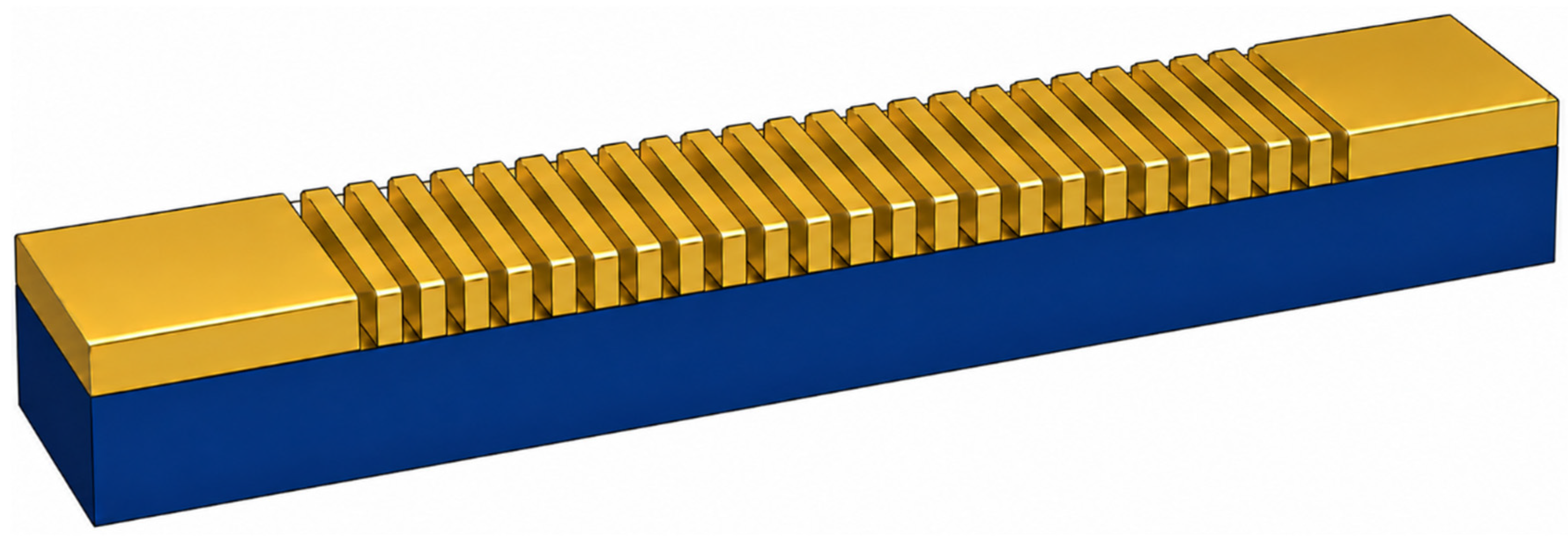
Figure 1 illustrates the proposed plasmonic THz PCA consisting of a GaAs photoconductive substrate integrated with gold (Au) electrodes and plasmonic grating structures separated by a nanoscale photoconductive gap. An external bias field is applied along the
-direction to drive ultrafast carrier transport. The computational structure has a total lateral length of 30 μm, including the GaAs substrate and top air region. The GaAs active layer is modeled with a depth of 2 μm, while both GaAs and the air region above the GaAs have a height of 1 μm. Each metallic electrode is defined with a length of 4 μm, a depth of 2 μm, and a thickness of 100 nm.
Two geometrical scaling strategies were investigated. In the first configuration, the photoconductive gap was fixed at 100 nm while the grating width was varied. In the second configuration, the gap size was chosen to be equal to the grating width. In addition, an auxiliary control study was performed in which the grating width and gap size were varied while maintaining a constant period of 400 nm, allowing the influence of the grating-width/gap-size ratio to be examined independently of periodicity effects. Transient-current, electric-field, carrier-distribution, and THz-response analyses were performed inside the GaAs active region to evaluate the influence of nanoscale confinement on device performance.
2.3. Material Properties and Excitation Conditions
The photoconductive substrate was modeled using low-temperature-grown gallium arsenide (LT-GaAs) [
37], which is widely employed in THz PCAs due to its favorable carrier mobility and ultrafast carrier dynamics, while gold (Au) [
38] was used for the electrodes and plasmonic grating structures. The material properties incorporated into the FEM simulations include dielectric permittivity, carrier mobility, carrier lifetime, recombination parameters, and optical-response characteristics. The material and semiconductor parameters used throughout the numerical simulations are summarized in
Table 1.
The proposed PCA structures were excited using an 800 nm ultrafast optical source with a pulse duration (pulse FWHM) of 100 fs, an average laser power of 10 mW, beam spot dimensions of
along the
x- and
y-directions, a repetition rate of 80 MHz, and
-polarized excitation. A DC bias voltage of 30 V was applied across the electrodes, while the optical pulse center time was set to
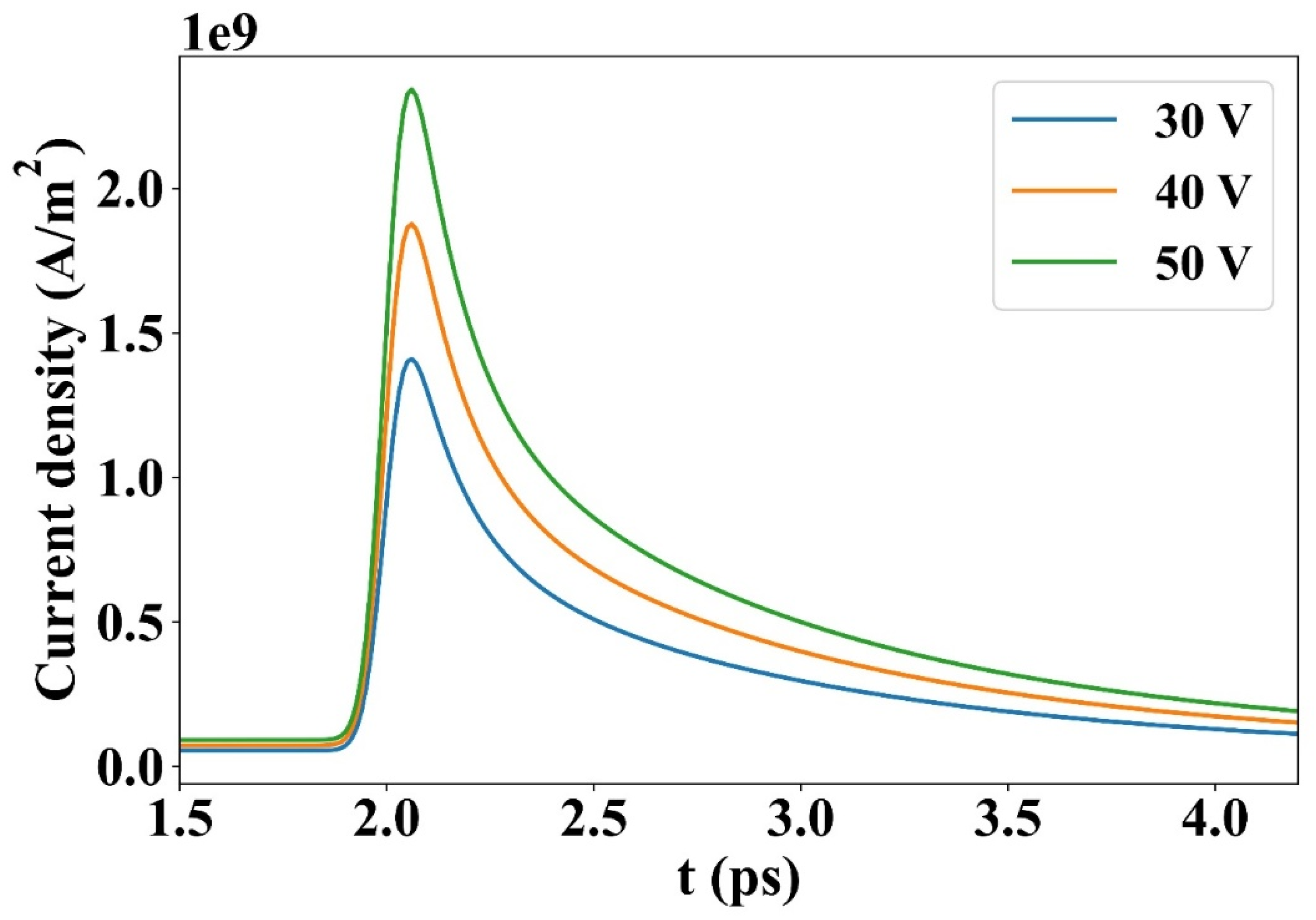
ps. The influence of the applied bias voltage on the transient-current and THz-response characteristics was further investigated in
Section 5.
2.4. Numerical Modeling Framework
The proposed structures were analyzed using three-dimensional FEM simulations that couple electromagnetic-field distributions with transient carrier transport inside the photoconductive region. The simulations were performed in the time domain to model optical absorption, photocarrier generation, carrier transport under the applied bias field, and the resulting transient-current response. A refined computational mesh was employed near the plasmonic grating edges and inside the photoconductive gap region to accurately resolve localized electromagnetic fields.
The optical response of the plasmonic PCA was modeled in the frequency domain by solving Maxwell’s electromagnetic wave equation within the computational domain. The optical excitation was represented using a Gaussian beam profile, and the optical power flux density was calculated from the electric-field components to estimate the photocarrier generation rate inside the LT-GaAs substrate. Assuming that each absorbed photon with energy greater than the semiconductor bandgap generates one electron–hole pair, the carrier-generation rate can be expressed as [
39]
where
is the optical power flux density,
is the imaginary part of the refractive index of the photoconductor,
is the pulse-center time, and
is the pulse duration. Periodic boundary conditions were applied along the lateral boundaries, while absorbing impedance-matched boundary conditions were imposed on the remaining surfaces to minimize artificial reflections during optical excitation. Fixed bias voltages were applied at the electrode contacts.
The electrical response of the plasmonic PCA was analyzed using the coupled Poisson and drift-diffusion equations to model the time-dependent transport of photogenerated carriers within the LT-GaAs layer. Carrier recombination was modeled using Shockley–Read–Hall (SRH) and Auger recombination mechanisms, and the total recombination rate is expressed as [
39]
where
and
are the electron and hole concentrations,
and
are the SRH carrier lifetimes,
and
are the Auger recombination coefficients, and
is the effective intrinsic carrier concentration. Field-dependent carrier mobility [
37] was incorporated using the Caughey–Thomas mobility model [
40] to account for high-field transport effects. To reduce computational complexity, wavelength-dependent optical-property variations and carrier-screening effects were neglected because of the relatively narrow bandwidth of the femtosecond excitation pulse.
The present numerical framework is based on a coupled electromagnetic and drift-diffusion formulation with field-dependent carrier mobility. The primary objective of this work is to investigate the relative influence of plasmonic geometrical scaling on transient-current generation, electromagnetic-field localization, carrier-transport dynamics, and THz-response characteristics. Advanced high-field transport phenomena, including intervalley carrier transfer, hot-electron effects, velocity overshoot, and electrothermal coupling, were not explicitly incorporated in the current model. These mechanisms may become increasingly important under extreme bias-field conditions and could influence the quantitative magnitude of the predicted current density response. Nevertheless, the adopted framework provides a practical approach for evaluating relative performance trends among different plasmonic geometries. Future investigations will incorporate more advanced transport models to further improve the quantitative prediction of practical device behavior.
2.5. THz-Response Analysis Framework
The THz performance of the proposed plasmonic PCA structures was evaluated through the transient photocurrent generated inside the photoconductive region. Since the external bias field was applied along the
-direction, the
-component of the current density was selected as the principal quantity for characterizing carrier transport. The transient-current density is expressed as
where
is the elementary charge,
is the time-dependent carrier concentration,
is the carrier mobility, and
is the local electric field. Since THz radiation originates from rapid temporal variation in the photocurrent, the emitted THz electric field is proportional to the time derivative of the transient current:
Accordingly, structures exhibiting sharper current transients were expected to produce stronger THz emission.
To evaluate the spectral characteristics of the generated response, the transient-current signal was transformed into the frequency domain using the Fourier transform:
This combined time- and frequency-domain analysis provides a framework for relating nanoscale geometrical confinement, electromagnetic-field localization, and carrier-transport dynamics to the THz-emission performance of plasmonic PCAs.
3. Results and Discussion
The transient-current response and THz-emission characteristics of the proposed plasmonic PCA structures were systematically investigated for both fixed-gap and proportional-gap configurations. The analysis focuses on the influence of nanoscale geometrical confinement on ultrafast carrier transport, transient-current behavior, and THz-response characteristics.
3.1. Transient-Current Density Response for the Fixed-Gap Configuration
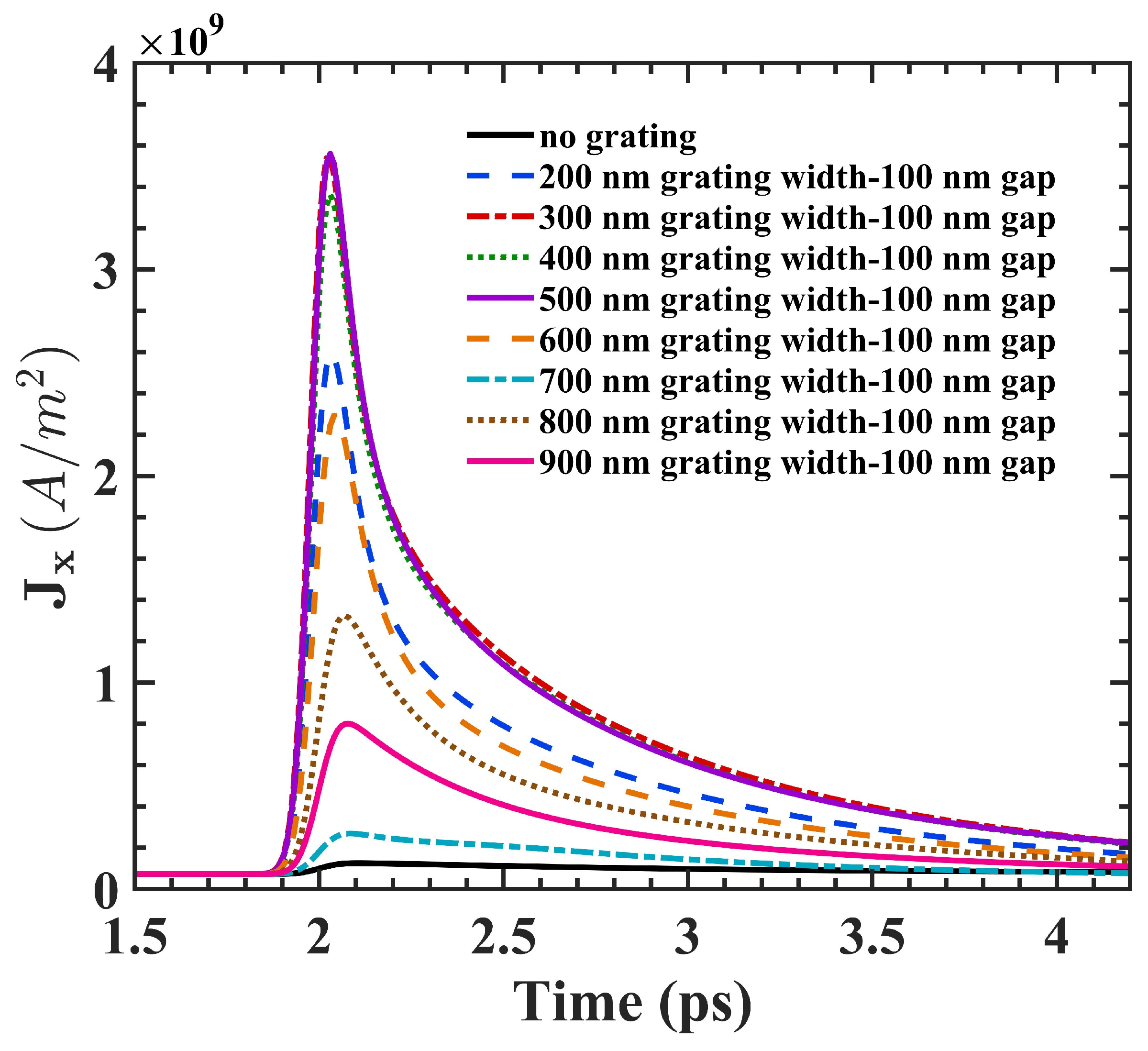
Figure 2 presents the transient
-component of the current density (
Jx) for plasmonic PCA structures with a fixed 100 nm photoconductive gap and varying grating widths. Following optical excitation, all structures exhibit rapid current formation due to ultrafast photocarrier generation and acceleration inside the biased gap region. However, significant variations in both current amplitude and temporal profile are observed as the grating width changes.
The fixed 100 nm gap preserves strong deep-subwavelength confinement near the metal–semiconductor interface and grating edges, resulting in enhanced optical-field localization and more efficient carrier acceleration. Consequently, structures with stronger confinement exhibit larger current density amplitudes and sharper transient responses, which are favorable for THz generation. In addition to increasing the current amplitude, enhanced confinement reduces temporal broadening of the photocurrent response, leading to stronger THz-driving behavior. The results confirm that maintaining a fixed nanoscale gap plays a critical role in enhancing carrier confinement, ultrafast carrier dynamics, and THz-response performance in plasmonic PCAs. The peak transient-current density values obtained for the investigated fixed-gap structures are summarized in
Table 2.
3.2. Transient-Current Density Response for the Proportional-Gap Configuration
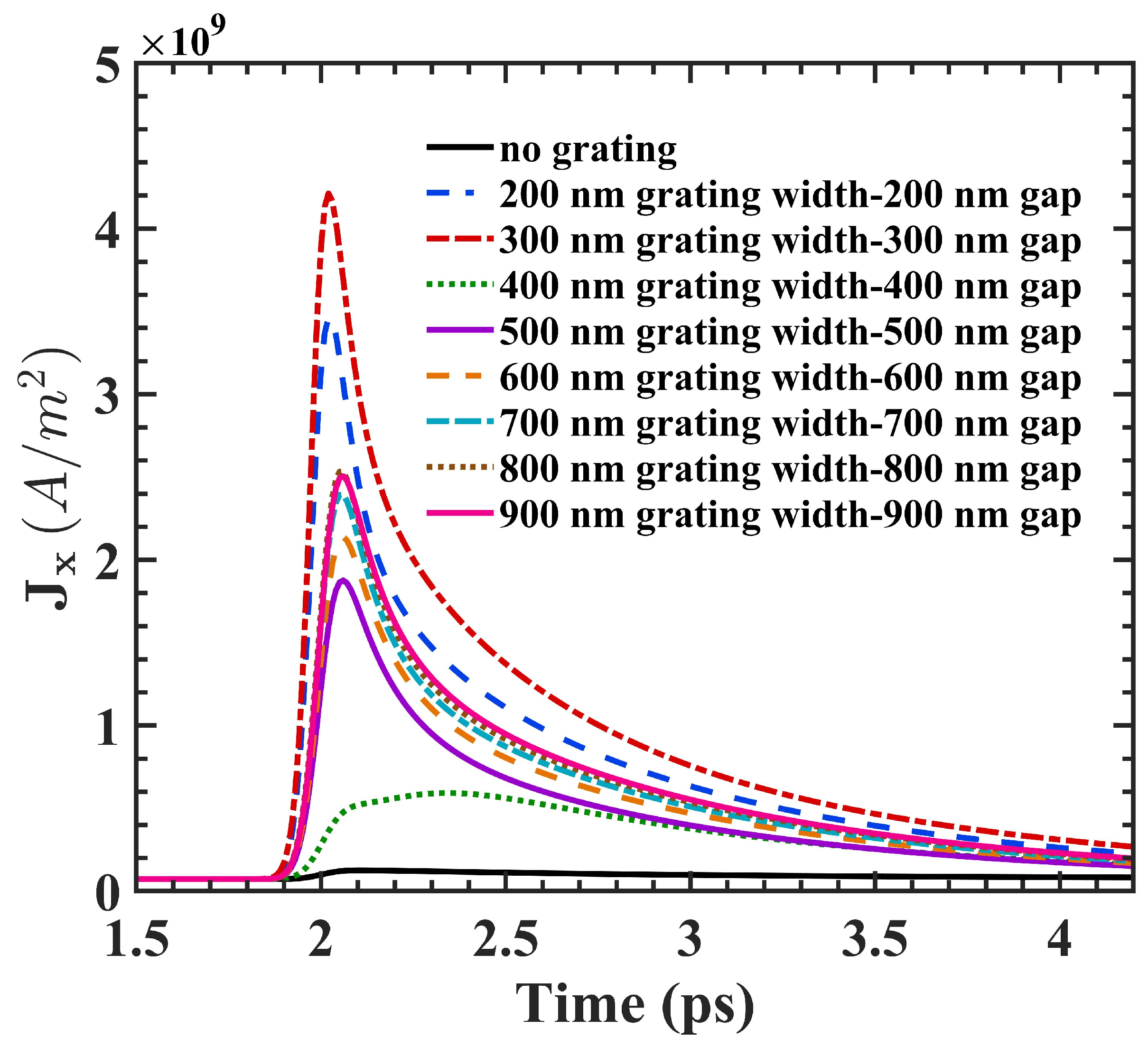
Figure 3 presents the transient
-component of the current density (
Jx) for plasmonic PCA structures in which the photoconductive gap size is equal to the grating width. Following optical excitation, all structures exhibit transient-current formation due to ultrafast photocarrier generation and acceleration inside the biased gap region. However, compared with the fixed-gap configuration, the proportional-gap structures exhibit weaker confinement and broader transient responses as the geometry scales.
Increasing the gap together with the grating width reduces electromagnetic-field localization near the metal–semiconductor interface, leading to weaker carrier concentration in high-field regions. Consequently, the proportional-gap structures exhibit greater variability in peak current density and transient-current formation as the geometry scales, reflecting the stronger influence of gap enlargement on electromagnetic confinement and carrier transport.
The broader transient responses are less favorable for THz generation because slower current variation produces weaker THz-driving behavior. These results indicate that maintaining a fixed deep-subwavelength gap generally provides stronger confinement and more consistent ultrafast carrier dynamics in plasmonic PCAs.
The peak transient-current density values obtained for the proportional-gap structures are summarized in
Table 3.
3.3. THz Pulse Response and Spectral Characteristics for the Fixed-Gap Configuration
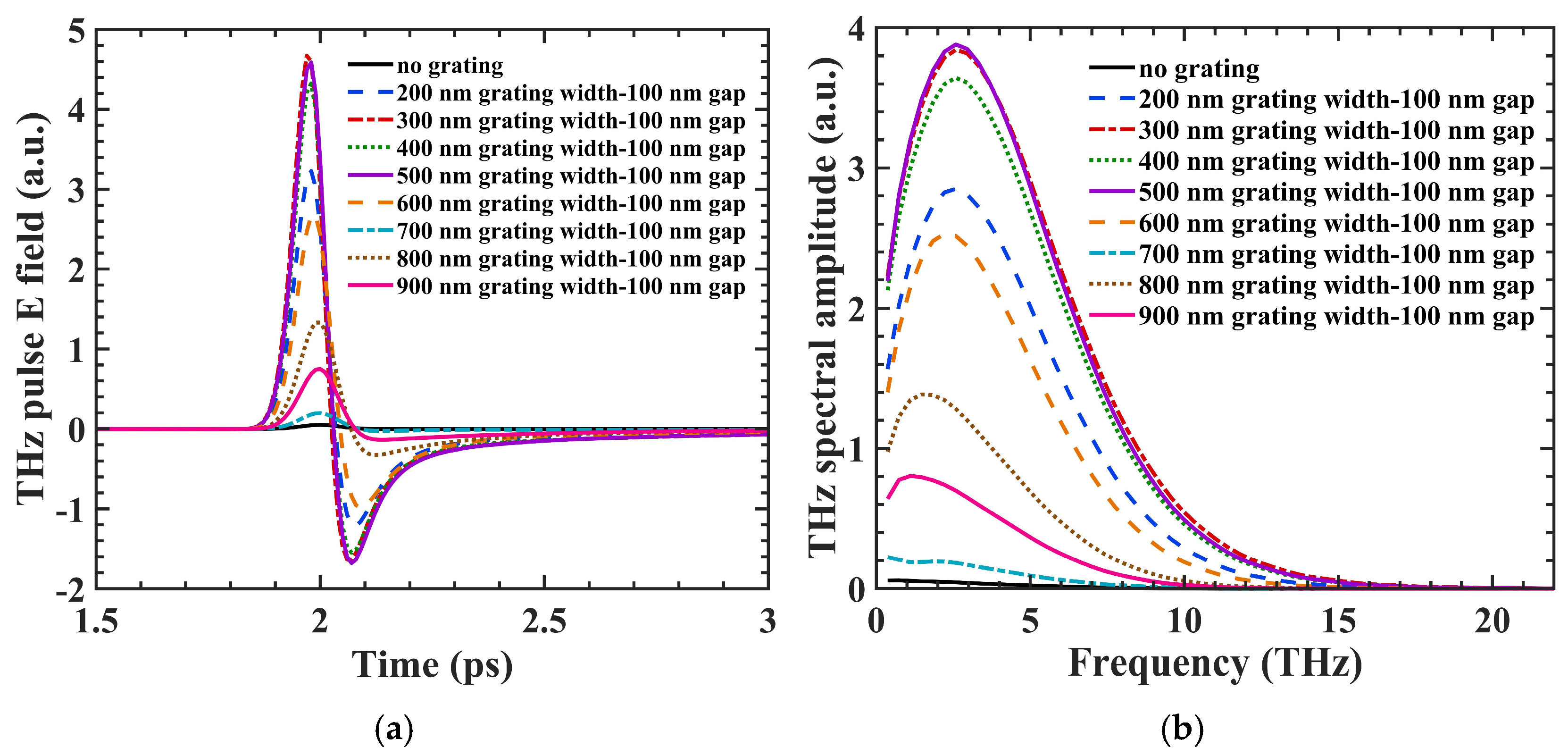
Figure 4 presents the THz pulse electric-field response and the corresponding frequency-domain spectral characteristics for plasmonic PCA structures with a fixed 100 nm photoconductive gap. Significant variations in both THz pulse amplitude and spectral intensity are observed as the grating width changes, indicating the strong influence of nanoscale confinement on THz-response behavior.
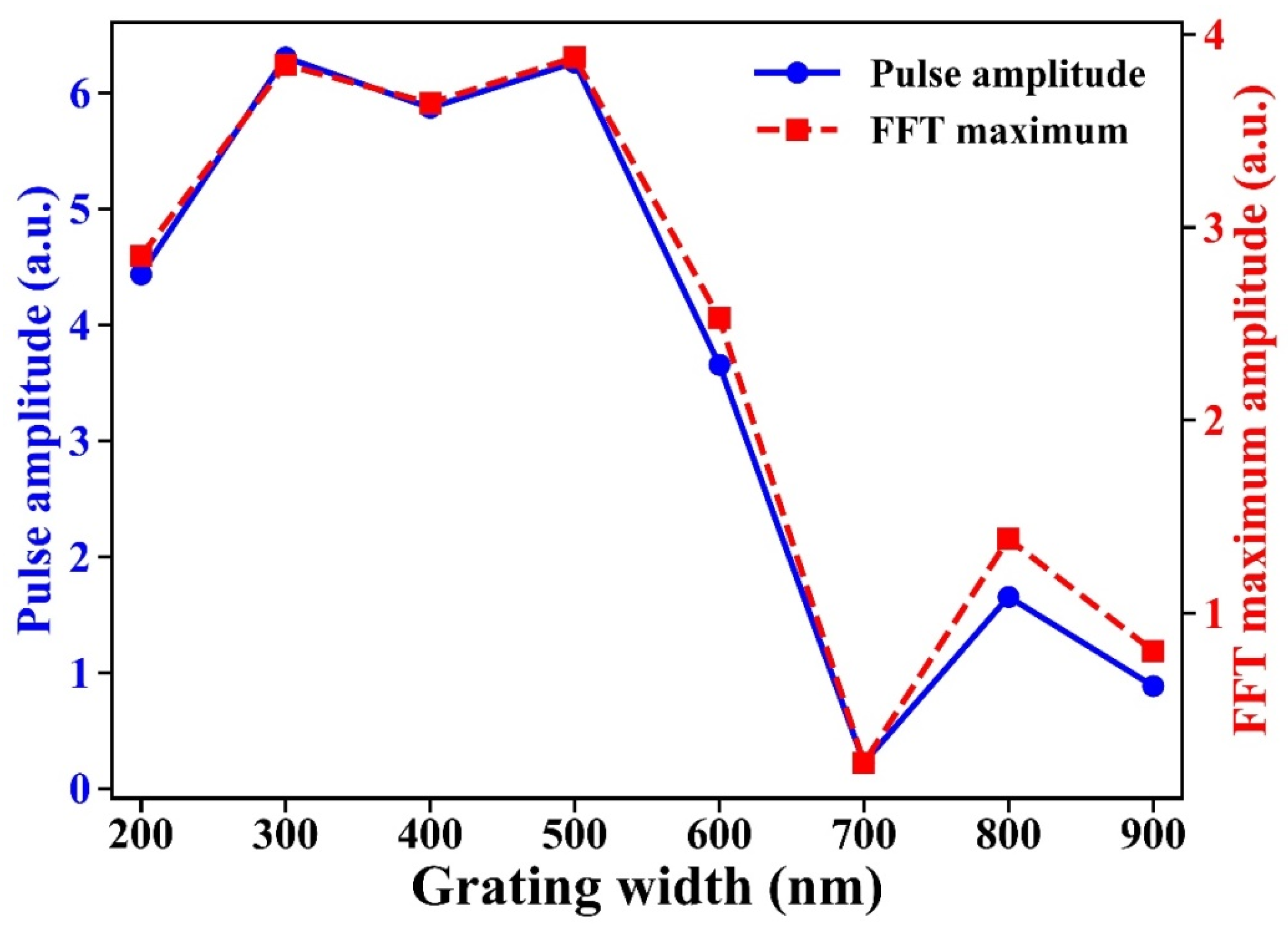
Among the investigated structures, the 300–500 nm grating-width configurations exhibited the strongest THz pulse responses. The 300 nm, 500 nm, and 400 nm structures produced peak pulse amplitudes of approximately 6.31, 6.26, and 5.87 a.u., respectively, whereas larger grating widths such as 700 nm and 900 nm showed substantially weaker behavior because of reduced electromagnetic confinement and carrier localization.
The superior THz performance observed for grating widths between 300 and 500 nm cannot be attributed solely to stronger near-field localization. Instead, it originates from the interplay between plasmonic field enhancement, optical coupling into the semiconductor, and carrier-transport dynamics. In this geometrical range, localized surface plasmon resonances are efficiently excited at the metal–semiconductor interface, leading to enhanced electromagnetic-field confinement and increased photocarrier generation within regions of strong bias field. At the same time, sufficient semiconductor area remains exposed to the incident optical excitation, enabling efficient absorption and carrier generation. For smaller dimensions, the available interaction volume becomes limited, whereas for larger grating widths excessive metallic coverage and broader field distributions reduce the effectiveness of carrier excitation and acceleration. Consequently, the grating-width range of 300–500 nm provides an optimal balance between plasmonic enhancement, optical absorption, and carrier transport, which explains the enhanced transient-current generation and superior THz-emission performance observed within the investigated structures.
Compared with the non-grating structure, the optimized plasmonic configurations provided substantial enhancement, exceeding two orders of magnitude relative to the non-grating structure in THz pulse amplitude, demonstrating the important role of plasmon-assisted near-field localization in improving ultrafast carrier acceleration. The results further indicate the existence of an optimal confinement regime, where excessively large grating dimensions weaken field localization and reduce THz-driving efficiency. The frequency-domain spectra in
Figure 4b are consistent with the THz pulse-response analysis. Structures with stronger and sharper transient responses generate larger broadband THz spectral amplitudes, particularly for grating widths between 300 nm and 500 nm. These results confirm that maintaining a fixed deep-subwavelength gap significantly enhances both ultrafast carrier dynamics and THz spectral performance.
To quantitatively compare the THz-response performance of the investigated structures, the peak THz pulse amplitudes and maximum FFT spectral amplitudes were extracted from the simulated responses. The extracted THz pulse amplitudes and maximum FFT spectral amplitudes for the fixed gap configuration are summarized in
Table 4. To further illustrate the variation in these performance metrics with grating width, the corresponding trends are plotted in
Figure 5.
3.4. THz Pulse Response and Spectral Characteristics for the Proportional-Gap Configuration
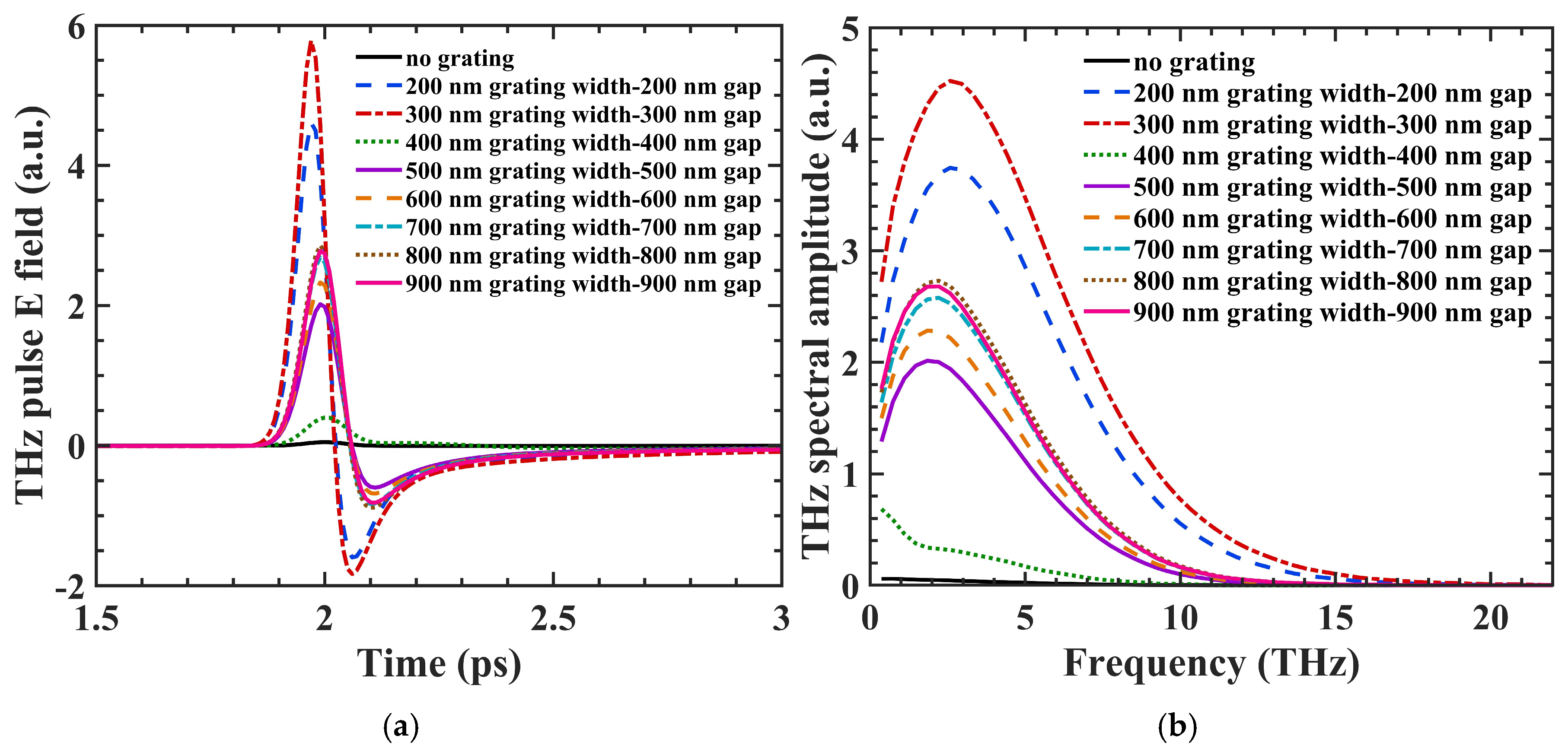
Figure 6 presents the THz pulse electric-field response and corresponding frequency-domain spectra for plasmonic PCA structures with proportional photoconductive gaps equal to the grating widths. Compared with the fixed-gap configuration, the proportional-gap structures exhibit greater variability in THz-response behavior because simultaneous scaling of the gap and grating width modifies nanoscale electromagnetic confinement.
Among the investigated structures, the 300 nm/300 nm configuration produced the strongest THz pulse response with a peak pulse amplitude of approximately 7.61 a.u., corresponding to an enhancement exceeding two orders of magnitude (141-fold) relative to the non-grating structure. The 200 nm/200 nm structure also exhibited strong behavior with a pulse amplitude of approximately 6.21 a.u., whereas the 400 nm/400 nm configuration showed a substantially weaker response. Larger structures produced only moderate pulse amplitudes because of weaker field localization and reduced photocarrier concentration near the metal–semiconductor interface. The frequency-domain spectra in
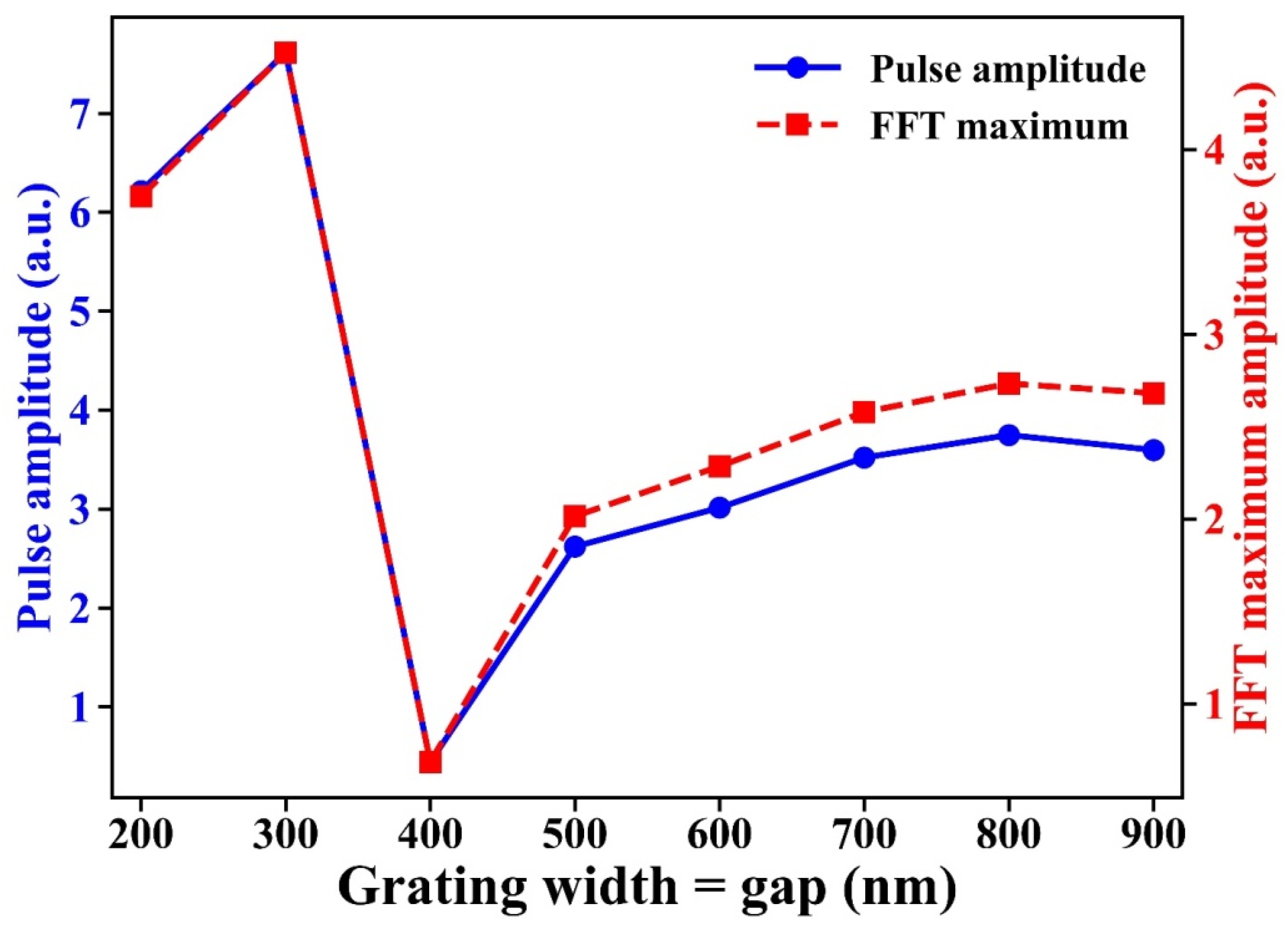
Figure 6b are consistent with the THz pulse-response analysis. Structures exhibiting stronger and more localized transient responses generate larger THz spectral amplitudes, with the 300 nm/300 nm structure showing the strongest broadband spectral behavior. However, compared with the fixed-gap configuration, the proportional-gap structures exhibit less uniform confinement and larger variations in THz-response performance as the geometry scales. The corresponding THz pulse amplitudes and maximum FFT spectral amplitudes for the proportional-gap configuration are summarized in
Table 5, whereas
Figure 7 presents their variation with grating width, enabling a direct comparison of the THz-response performance across the investigated proportional-gap structures.
The non-monotonic dependence of THz performance on grating width indicates that optimal emission is governed by a balance between plasmonic field confinement, optical absorption, and photocarrier transport rather than by geometrical scaling alone, consistent with the physical interpretation discussed for the fixed-gap configuration.
Although the proportional-gap configuration demonstrated enhanced THz performance, it remains important to determine whether this behavior originates from the varying gap size itself or from changes in the overall grating periodicity. Therefore, an additional control study was conducted under a fixed periodicity condition, as discussed in the following section.
3.5. Effect of Grating Width and Gap Size at Constant Periodicity
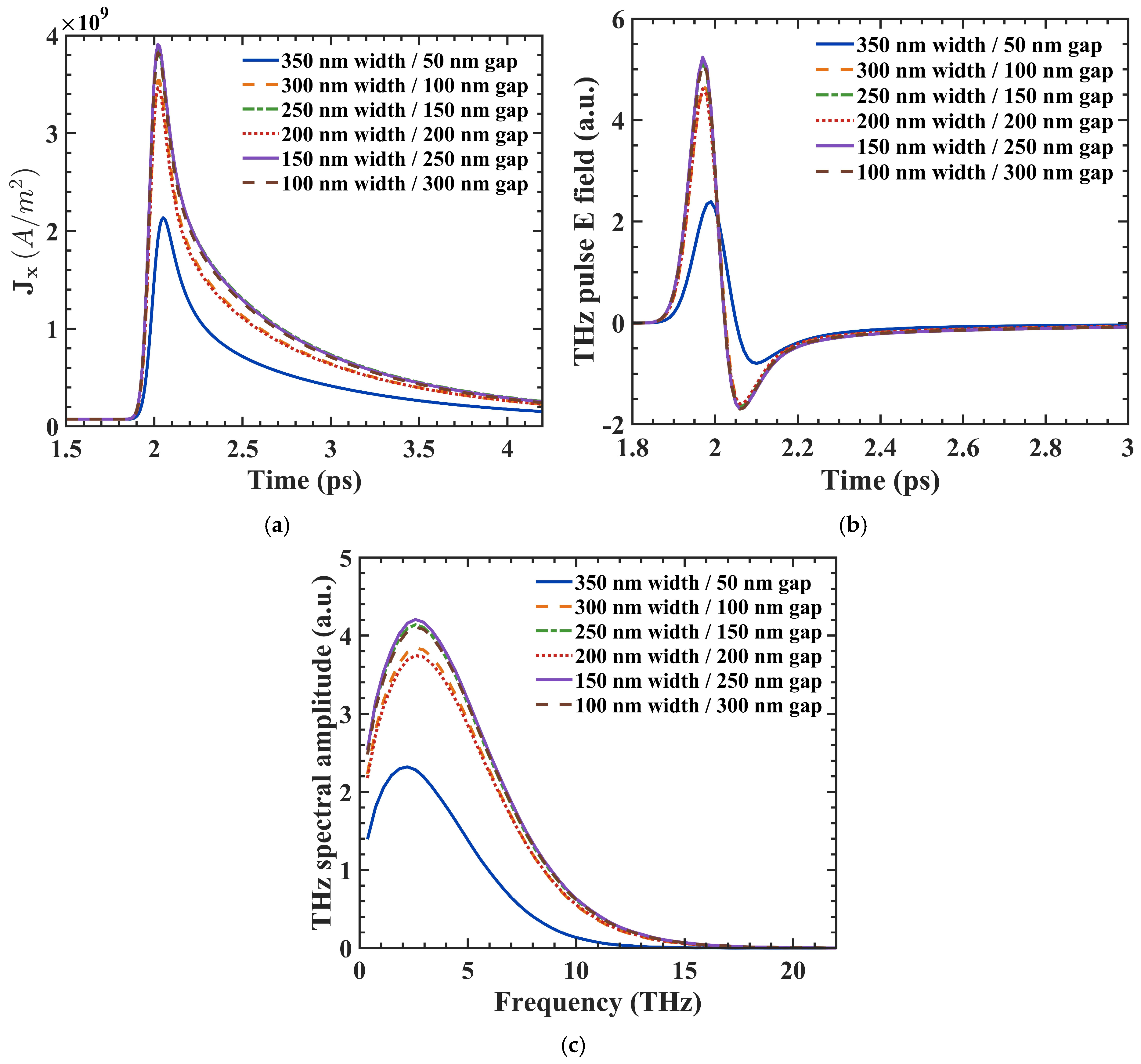
To further clarify whether the observed enhancement originates from the grating periodicity or from the grating-width/gap-size ratio, an additional control study was per-formed in which the periodicity was kept constant at 400 nm while the grating width and gap size were varied simultaneously. Six geometries were investigated, namely 350/50, 300/100, 250/150, 200/200, 150/250, and 100/300 nm (width/gap), while maintaining a constant period of 400 nm. This analysis isolates the influence of the grating-width/gap-size ratio and geometrical confinement from that of periodicity.
Figure 8a presents the transient photocurrent density
Jx obtained for the investigated geometries. A pronounced dependence on the width-gap ratio is observed. The 350 nm width/50 nm gap configuration exhibits the lowest peak current density, whereas all other geometries generate significantly larger current densities. The peak current density increases from approximately
A/m
2 for the 50 nm gap structure to values exceeding
A/m
2 for the remaining geometries. These results indicate that reducing the gap size alone does not guarantee improved carrier transport and that excessively narrow gaps may restrict efficient optical excitation within the active region.
The corresponding THz transient responses are shown in
Figure 8b. Similar to the current density behavior, the emitted THz pulse amplitude exhibits a strong dependence on the grating-width/gap-size ratio. The lowest pulse amplitude is obtained for the 50 nm gap configuration, while substantially stronger THz pulses are generated for gap sizes between 100 and 300 nm. The maximum peak-to-peak THz pulse amplitude reaches approximately
a.u. for the 150 nm width/250 nm gap structure, representing an enhancement of more than two-fold compared with the 350 nm width/50 nm gap configuration.
The frequency-domain characteristics are presented in
Figure 8c. The FFT spectra follow the same trend observed in the time-domain response. The maximum spectral amplitude increases from approximately
a.u. for the 50 nm gap structure to values above
a.u. for gap sizes between 150 and 300 nm. The strongest spectral response is obtained for the 150 nm width/250 nm gap configuration, which exhibits an FFT peak amplitude of approximately
a.u.
Interestingly, the obtained trend is non-monotonic. Although narrowing the gap is generally expected to enhance local plasmonic fields, the present results demonstrate that extremely small gaps do not necessarily maximize THz emission when the periodicity is fixed. The weaker performance of the 50 nm gap structure suggests that excessive metallic coverage reduces the optically active semiconductor region and limits efficient photocarrier generation. Conversely, larger gap sizes improve optical access to the photoconductive region while still maintaining sufficient plasmonic enhancement. Therefore, the device performance is governed by a balance between plasmonic field localization, optical absorption, and photocarrier generation rather than by gap reduction alone.
Furthermore, from a practical device perspective, excessively small photoconductive gaps may increase the parasitic capacitance between adjacent electrodes, thereby increasing the RC time constant and potentially limiting the achievable high-frequency bandwidth. Consequently, device optimization requires balancing plasmonic field enhancement against bandwidth limitations associated with increased capacitance. The observed reduction in performance for the 50 nm gap configuration suggests that stronger field confinement alone is insufficient to maximize THz emission and that competing electromagnetic and electrical effects must be considered during device design. Furthermore, the optimized geometries identified in this study remain within the dimensional capabilities of established nanofabrication technologies, suggesting that the proposed plasmonic PCA structures are amenable to experimental realization.
4. Spatial Field and Carrier-Distribution Analysis
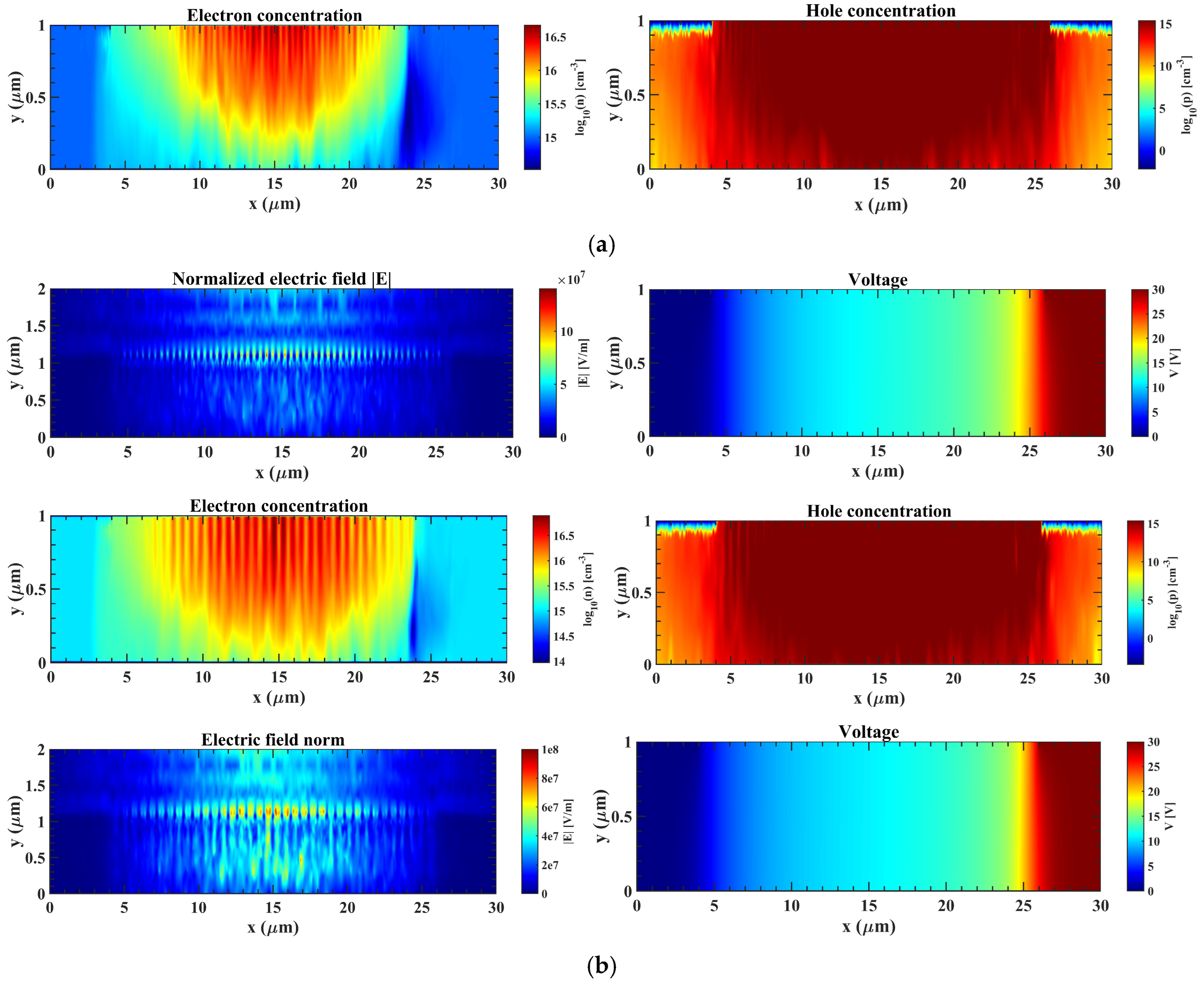
Figure 9 presents the spatial distributions of electron concentration, hole concentration, electric-field norm, and voltage for the 300 nm grating-width plasmonic PCA under two gap configurations: a fixed 100 nm gap and a 300 nm gap equal to the grating width. The distributions shown in
Figure 9 were extracted from a two-dimensional cross-sectional plane located at x = 15 μm, corresponding to the center of the photoconductive gap and plasmonic grating structure.
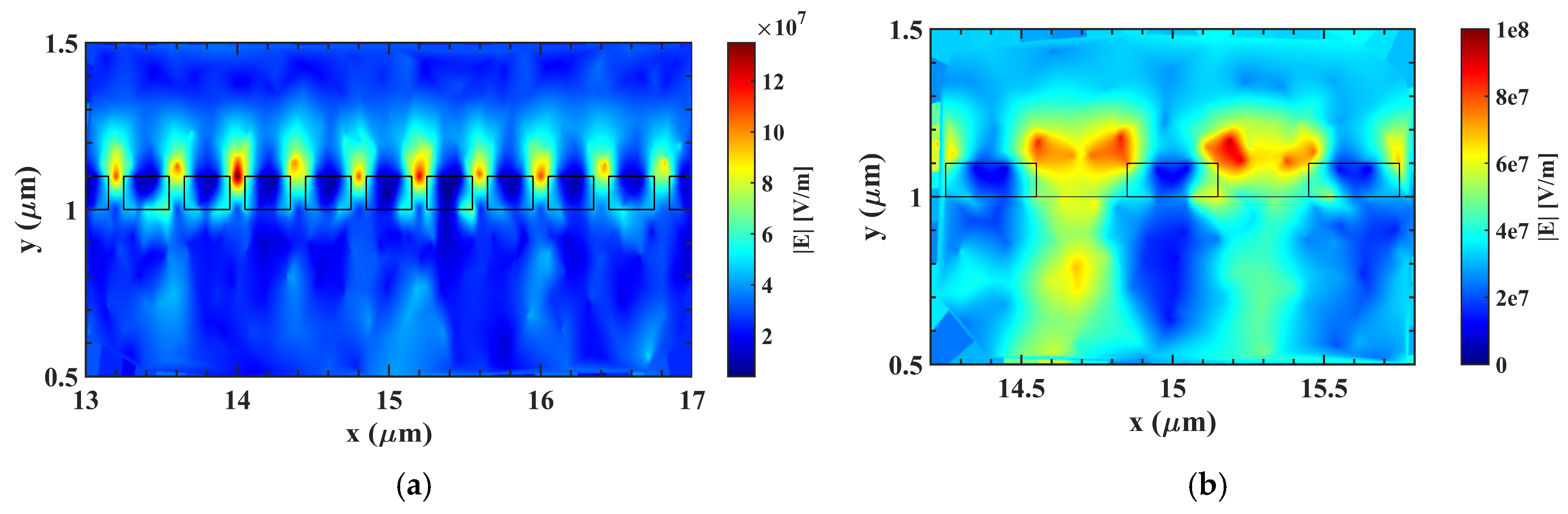
The fixed 100 nm gap structure exhibits stronger electric-field localization near the grating edges and metal–semiconductor interface, as further illustrated in the zoomed field distributions of
Figure 10. The corresponding electron distribution is also more localized, indicating stronger near-field confinement and enhanced carrier localization.
In contrast, the 300 nm gap structure exhibits broader electric-field and carrier distributions with weaker hotspot confinement, resulting in a reduced overlap between photocarrier generation and high-field regions.
The hole concentration distributions remain comparatively uniform in both configurations, whereas the electron distribution exhibits stronger sensitivity to localized plasmonic field enhancement. Indeed, reducing the gap from 300 nm to 100 nm improves electric-field localization and carrier confinement near the metal–semiconductor interface, increasing the overlap between photocarrier generation and high-field regions. This enhanced overlap promotes more efficient carrier acceleration and contributes directly to the stronger THz-response performance observed for the fixed-gap configuration.
5. Voltage-Dependent Transient-Current Analysis
The influence of the applied bias voltage on the transient response of the optimized plasmonic PCA structure was investigated to evaluate voltage-dependent THz-driving behavior. Since THz emission is directly related to ultrafast carrier acceleration, the transient-current density provides an effective indicator of voltage-dependent device performance.
Within the investigated voltage range and under the assumptions of the adopted drift-diffusion framework, increasing the applied bias voltage results in a larger transient-current response due to the stronger electric field available for carrier acceleration. The observed trend reflects the behavior predicted by the numerical model employed in this study and should therefore be interpreted within the scope of the adopted transport assumptions.
Figure 11 clearly shows a progressive increase in the peak transient-current density with increasing applied bias voltage, while the overall temporal profile of the response remains largely unchanged.
At lower bias voltages, the transient-current response remains weaker because of reduced electric-field strength and limited carrier acceleration. Increasing the bias voltage produces larger and sharper transient responses, leading to enhanced THz emission, while the temporal position of the current peak remains nearly unchanged.
Higher bias voltages also strengthen the electric-field concentration near the plasmonic grating edges, enhancing plasmon-assisted carrier transport. Although larger bias voltages enhance THz-response performance, excessively high voltages may introduce practical limitations such as Joule heating and dielectric breakdown. These results indicate that increasing the applied bias voltage enhances the simulated transient-current response and THz characteristics within the investigated operating range. Additional high-field transport effects, including intervalley scattering and electrothermal phenomena, may influence device behavior under more extreme bias conditions and warrant further investigation.
The present simulations were performed at a fixed ambient temperature of 300 K and do not include self-heating effects. In practical devices, localized Joule heating under high-bias operation may affect carrier mobility, scattering rates, and recombination dynamics within the LT-GaAs active region. Consequently, the voltage-dependent trends reported here should be interpreted within the assumptions of the adopted transport model.
6. Polarization-Control Validation of the Plasmonic Enhancement Mechanism
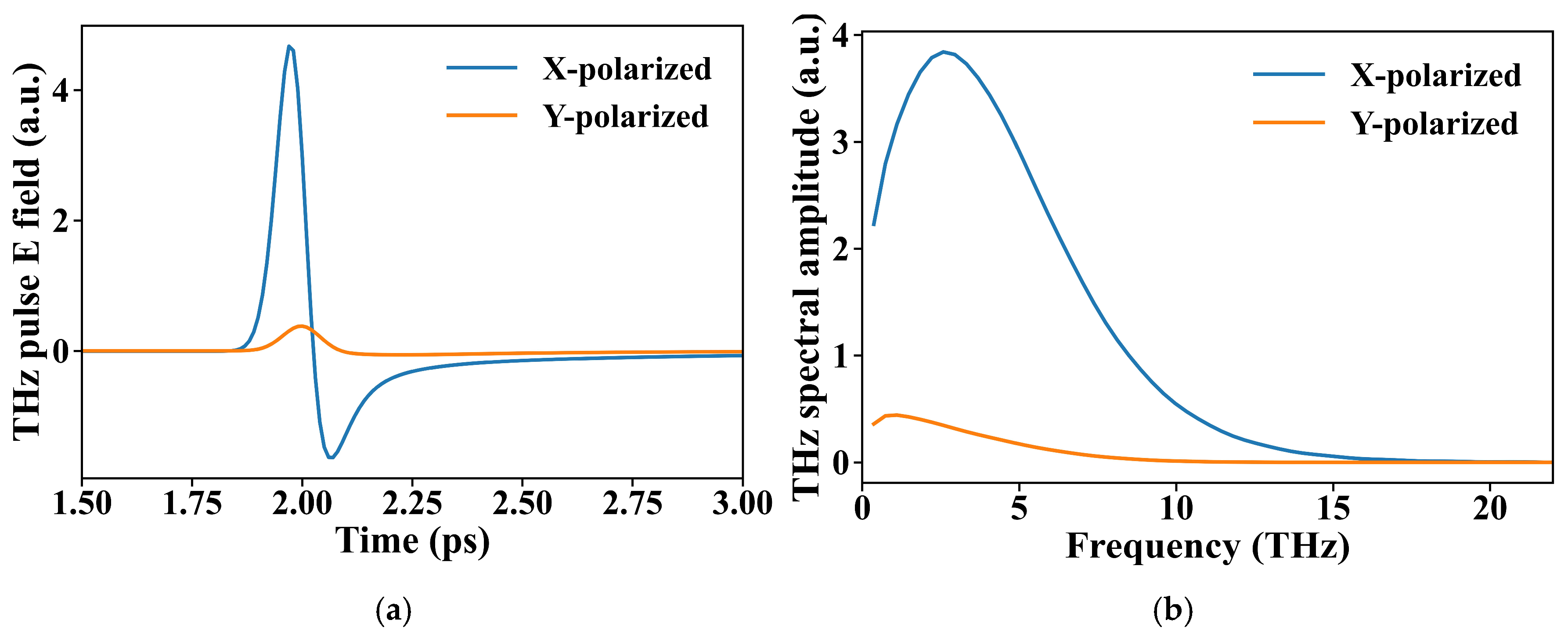
To further verify that the enhanced THz response originates from plasmonic excitation rather than numerical artifacts, an additional polarization-control simulation was performed for the optimized structure consisting of a 300 nm grating width and a 100 nm photoconductive gap. All simulation parameters were kept identical to those used in the original model, including the optical excitation wavelength, bias voltage, carrier-transport parameters, and mesh settings. The only modification was the polarization direction of the incident optical field.
Figure 12 compares the simulated THz pulse waveforms and corresponding frequency-domain spectra obtained under x-polarized and y-polarized optical excitation. The x-polarized excitation corresponds to an electric field oriented perpendicular to the grating direction, which promotes charge accumulation at the metal edges and efficient excitation of LSPRs. In contrast, the y-polarized excitation corresponds to an electric field parallel to the grating direction, where charge accumulation and plasmonic confinement are significantly reduced.
Figure 12 clearly demonstrates substantially stronger THz pulse amplitude and spectral response under x-polarized excitation than under y-polarized excitation, confirming the strong polarization dependence of the plasmonic enhancement mechanism.
The quantitative performance metrics extracted from the polarization-control simulations are summarized in
Table 6. Under x-polarized excitation, the normalized THz pulse amplitude reached 6.3058, whereas under y-polarized excitation it decreased to 0.4403, corresponding to an enhancement factor of approximately 14.3. Similarly, the normalized maximum spectral amplitude increased from 0.4425 to 3.8415, yielding an enhancement factor of approximately 8.7.
These results provide strong evidence that the enhanced THz response observed in the proposed plasmonic structures originates from polarization-dependent plasmonic confinement. When the electric field is oriented perpendicular to the grating direction, efficient charge accumulation occurs at the metal edges, leading to strong localized surface plasmon excitation and enhanced carrier acceleration within the photoconductive region. In contrast, the y-polarized excitation suppresses this confinement mechanism and substantially reduces both the transient-current response and the emitted THz signal.
Therefore, the polarization-control study confirms that the enhancement mechanism reported in this work originates primarily from localized plasmonic effects rather than numerical artifacts associated with meshing, solver settings, or boundary-condition truncation.
7. Conclusions
In this work, plasmonic PCA structures with different grating width and gap configurations were numerically investigated to evaluate their influence on carrier transport, electromagnetic-field localization, and THz-emission performance. Two geometrical scaling strategies were compared: a fixed 100 nm gap configuration and a proportional-gap configuration in which the gap size was equal to the grating width.
The results demonstrated that nanoscale geometrical confinement strongly influences THz-emission performance. For the fixed-gap configuration, the strongest response was obtained for grating widths between 300 and 500 nm. For the proportional-gap configuration, the 300 nm width/300 nm gap structure produced the highest THz pulse amplitude. These findings indicate that geometrical scaling significantly influences the balance between plasmonic confinement, optical absorption, and carrier transport.
An additional control study performed at a constant periodicity of 400 nm revealed that THz performance is not governed solely by periodicity. Instead, THz performance was found to depend strongly on the grating-width/gap-size ratio. The results further showed that excessively narrow gaps do not necessarily maximize THz emission because reduced optical access to the active semiconductor region can limit efficient photocarrier generation.
Spatial field and carrier distribution analyses confirmed stronger electric-field localization and carrier confinement in the optimized fixed-gap structures, explaining their superior THz-response performance.
Polarization-control simulations further confirmed that the observed enhancement originates from localized plasmonic excitation and near-field confinement rather than numerical artifacts.
Within the assumptions of the adopted drift-diffusion framework, increasing the applied bias voltage enhanced the transient-current response and THz-emission performance within the investigated operating range.
Collectively, the results demonstrate that optimal THz performance is achieved through a balanced interplay between plasmonic field localization, optical absorption, and ultrafast carrier transport rather than through gap reduction alone. These findings provide practical design guidelines for the geometrical optimization of plasmonic THz PCAs.
The reported trends were obtained using a coupled electromagnetic and carrier-transport model at 300 K. Future work will incorporate high-field transport, electrothermal coupling, and temperature-dependent carrier dynamics for improved prediction of practical device performance.