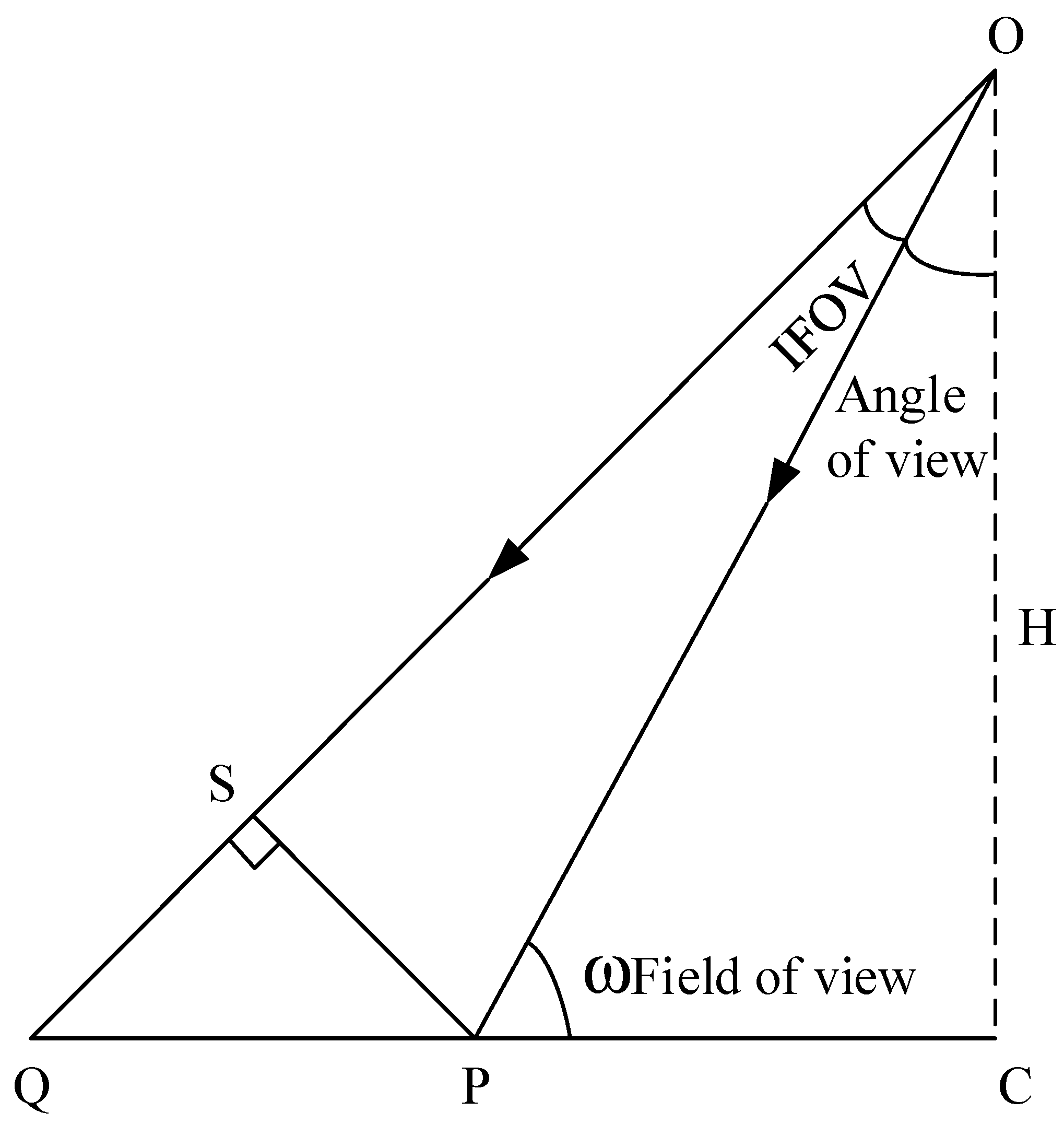
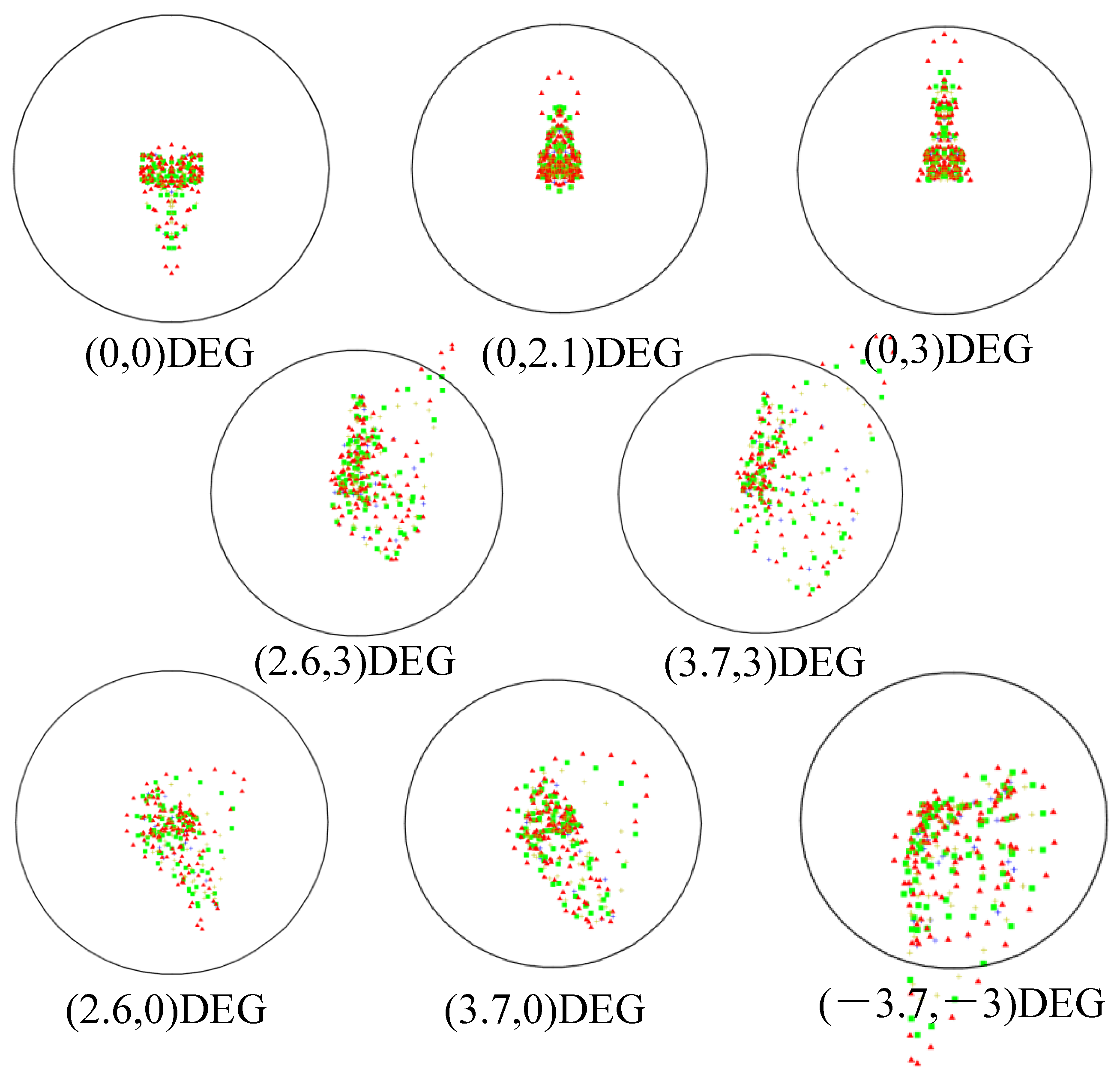
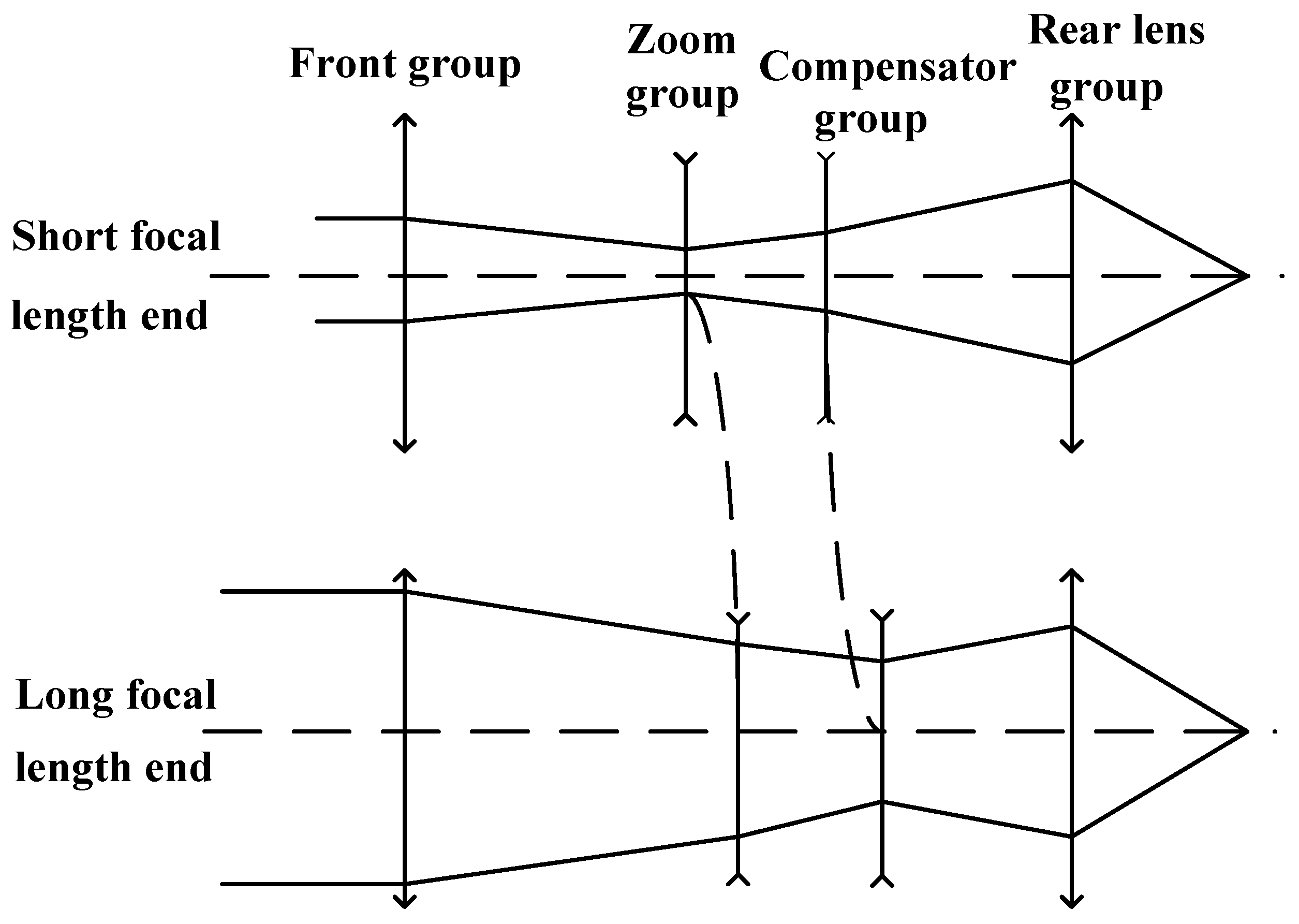
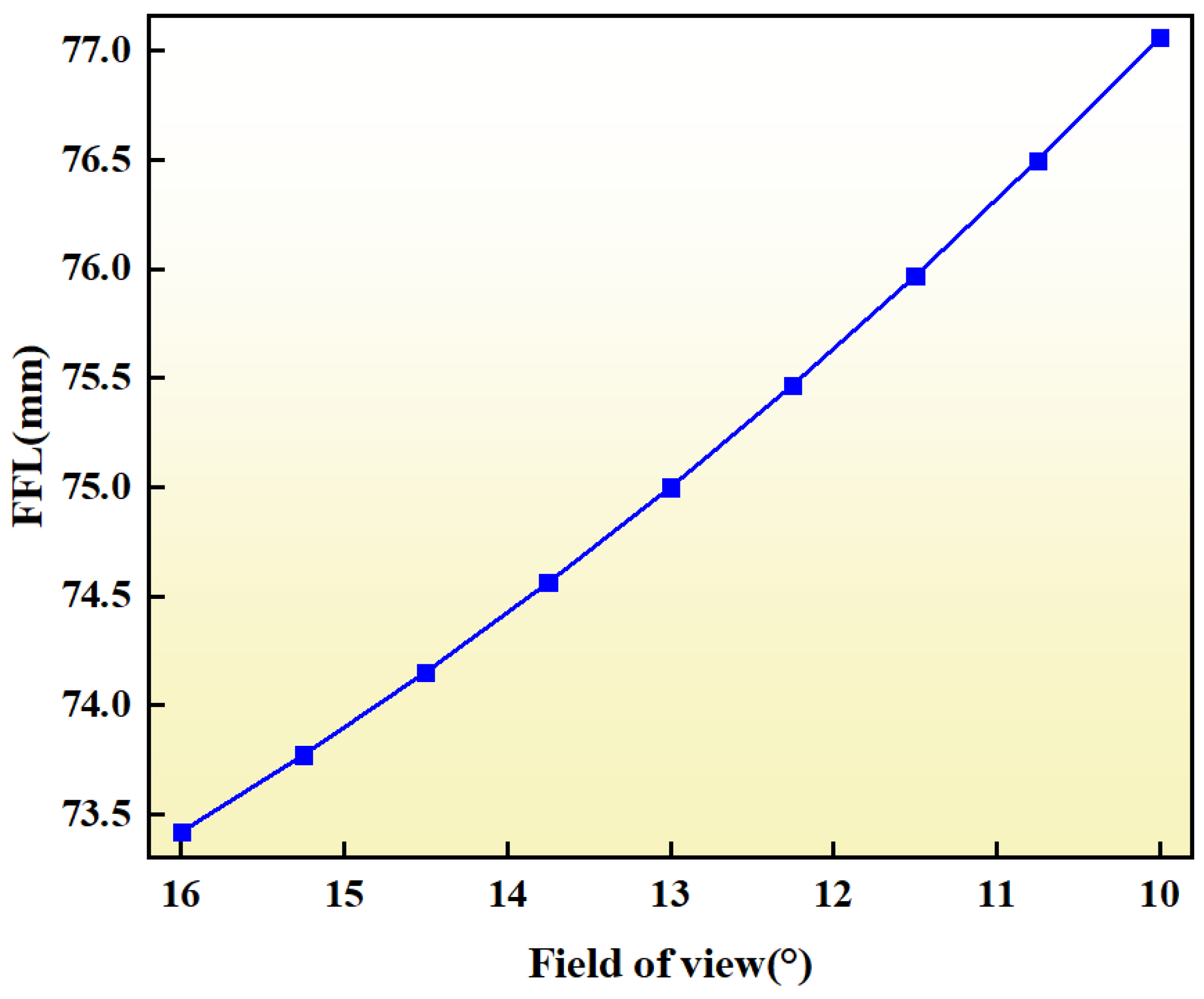
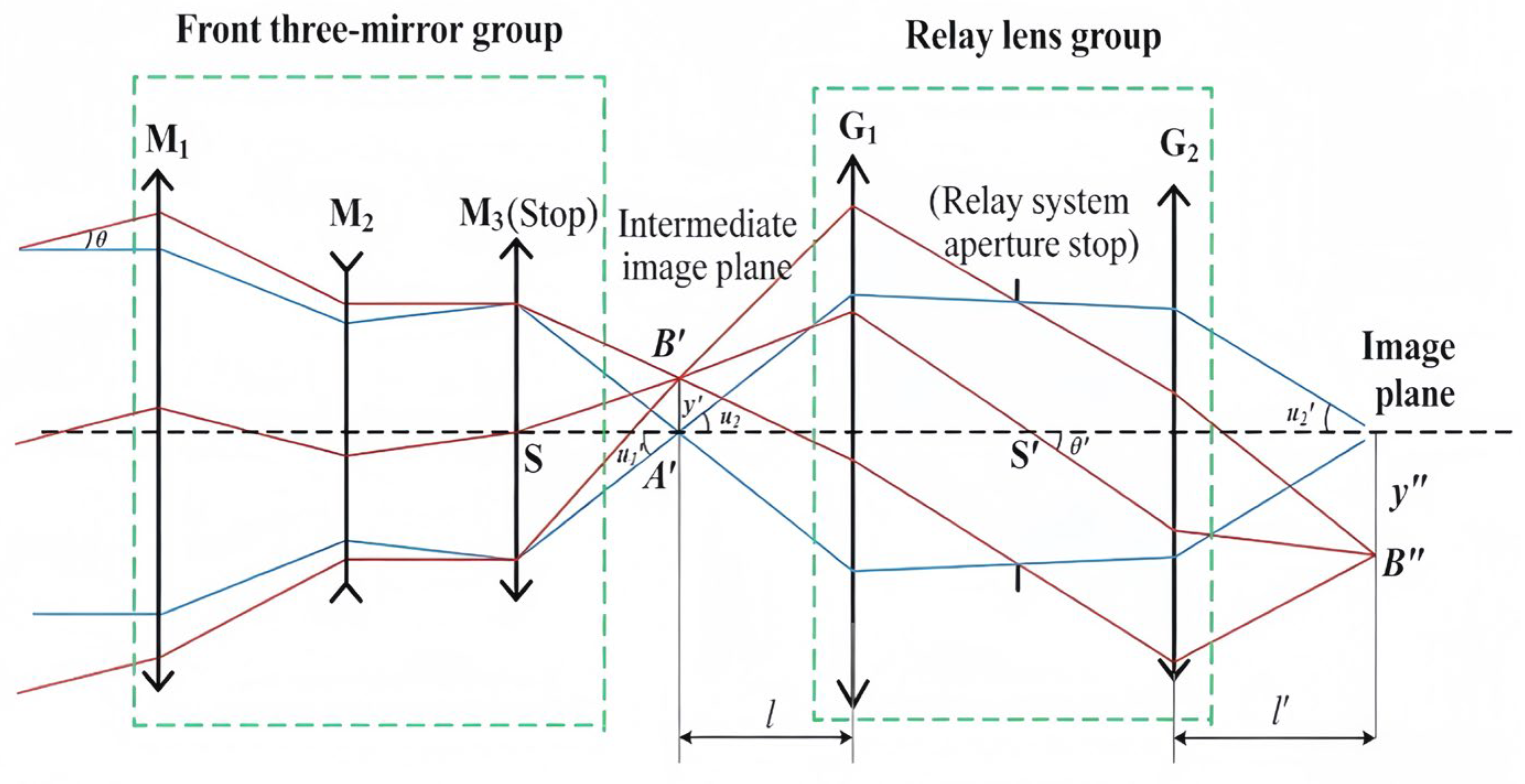
The front-end optics of this system employ an off-axis three-mirror structure, chosen based on the following considerations: First, the off-axis design eliminates central obscuration, offers high energy utilization efficiency, which is suitable for LWIR detection with high sensitivity requirements. Second, reflective systems are free from chromatic aberration, maintaining good image quality across the wide 8–12 μm band. Third, the off-axis configuration offers significant potential for field-of-view expansion, meeting the 10–16° oblique imaging field-of-view requirements. Finally, the off-axis structure facilitates the integration of freeform surfaces, effectively correcting asymmetric aberrations and enabling the design of constant ground resolution.
In addition, the optical design, optimization and image quality analysis of this system were primarily performed in Ansys Zemax OpticStudio 2024 R1.00, and some design results are cross-verified by Code V 2024.03.
3.1. Calculation and Design Results of the Coaxial Three-Mirror Initial Structure
According to the design method of off-axis reflective systems, obtaining an off-axis structure first requires determining the coaxial reflective initial configuration.
There are two common methods to calculate the initial structural parameters of a coaxial three-mirror system: determination based on the obscuration ratio coefficient and determination based on the mirror spacing [
15,
16].
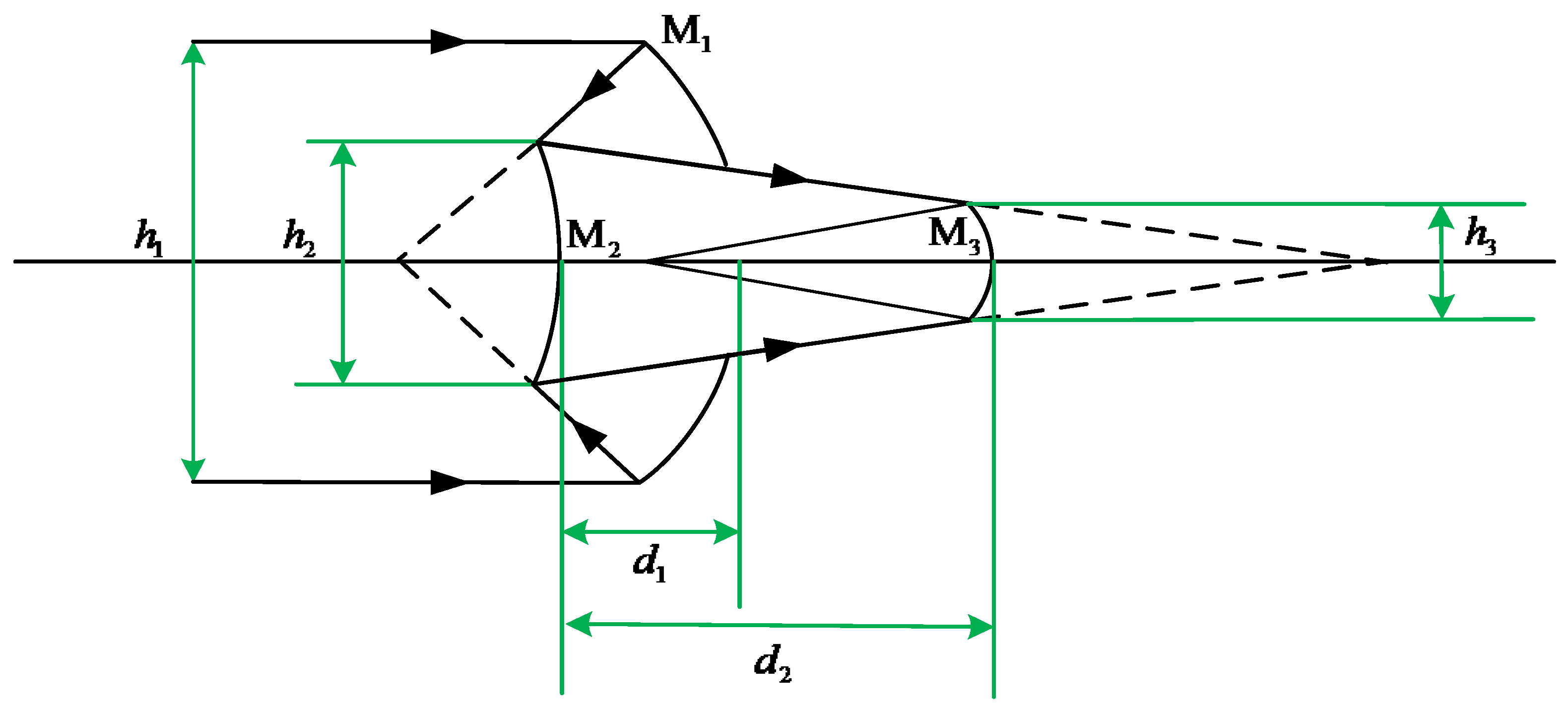
The initial structure of the three-mirror system is shown in
Figure 3. Suppose
,
and
are the quadratic surface coefficients of the primary, secondary, and tertiary mirrors, respectively;
and
are the obscuration coefficients of the secondary mirror, relative to the primary mirror and the tertiary mirror relative to the secondary mirror, respectively;
,
and
are the apertures of the three mirrors;
and
are the magnifications of the secondary and tertiary mirrors, respectively. For the reflective system,
,
.
- (1)
Determination of the three-mirror optical parameters based on the obscuration ratio.
The obscuration ratio of the secondary mirror to the primary mirror is:
The obscuration ratio of the tertiary mirror to the secondary mirror is:
The magnification of the secondary mirror is:
The magnification of the tertiary mirror is:
Based on Gaussian optics theory, the structural parameters of the system can be expressed in terms of the geometric relationships
,
,
and
in the above figure, as follows:
is the distance from the primary mirror to the secondary mirror,
is the distance from the secondary mirror to the tertiary mirror, and
is the back intercept. Among these,
,
and
. Here
is the height at which the chief ray intersects each mirror surface.
When the aperture stop is placed at the secondary mirror:
There are five types of monochromatic aberrations: spherical aberration, coma, astigmatism, field curvature and distortion, with their third-order aberration coefficients being
SI,
SII,
SIII,
SIV and
SV, respectively. In analyzing the aberrations of coaxial three-mirror optical systems, the primary focus is on spherical aberration, coma, astigmatism, and field curvature. When expressed in terms of Seidel aberrations, they are given as follows:
Typically, the detector used is planar, necessitating that the optical system satisfy the flat image field condition, that is . If three contour parameters are specified, the fourth can be derived from the flat field condition using the following formula. Let , i.e., under the condition that spherical aberration, coma, and astigmatism are zero, , , and (which have an inverse relationship to K) can be obtained from the formula. Consequently, all eight structural parameters that determine the initial configuration of the coaxial three-mirror system can be derived, allowing for the calculation of the initial structure of the optical system.
- (2)
Determination of the initial structure based on the mirror separation.
Combining Equations (9)–(18) gives:
Substituting Equation (28) into Equation (25) yields a quadratic equation in
.
Considering that the obscuration ratio is positive, then
Based on Equations (26)–(28), , , and are solved, and then derive the aspheric coefficients , , and using Equations (22)–(24). So far, the initial coaxial structure has been solved. It should be noted that for the single imaging system, takes a negative value, whereas for the secondary imaging system with an intermediate image plane, takes a positive value. However, in Zemax, the sign of the focal length is exactly the opposite; therefore, care must be taken to control the sign of the focal length during optimization.
In this paper, the initial structure of the coaxial three-mirror system is determined based on the mirror spacing. The system adopts a three-mirror structure without an intermediate image plane and with the aperture stop located at the secondary mirror. The distance from the primary mirror to the secondary mirror is equal to that from the secondary mirror to the tertiary mirror. This not only simplifies the calculation but also allows the primary and tertiary mirrors to be integrated and manufactured on a single piece of mirror material, thereby realizing the monolithic integration of the primary and tertiary mirrors and facilitating the assembly of the optical system.
Taking
,
and
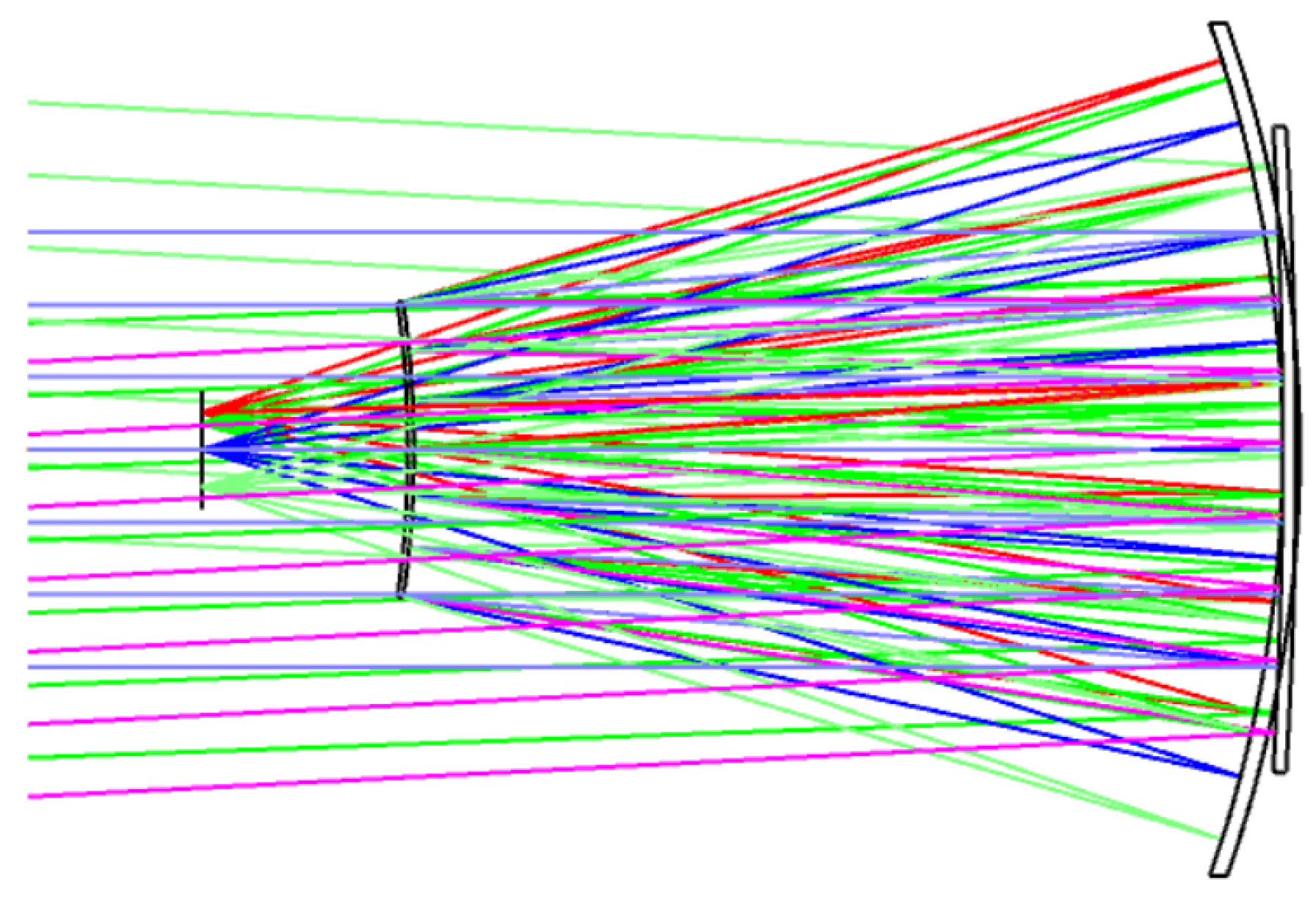
, the radius of curvature and conic constants for each surface can be obtained. The 3D structure diagram of the coaxial three-mirror system is shown in
Figure 4, and the corresponding structural parameters are listed in
Table 2.
Based on the Seidel data in
Table 3, spherical aberration, coma, astigmatism, and field curvature are all zero.
3.2. Off-Axis Design
To avoid the central obscuration inherent in coaxial systems, which leads to low light utilization, three ways of off-axis design are usually used for the system: field off-axis, aperture off-axis, or a combined field and aperture off-axis. In this paper, we adopt the combined field and aperture off-axis method for design, which not only avoids obscuration of the central rays but also introduces an inclination in the incident light, effectively simulating the operational state of a tilted camera.
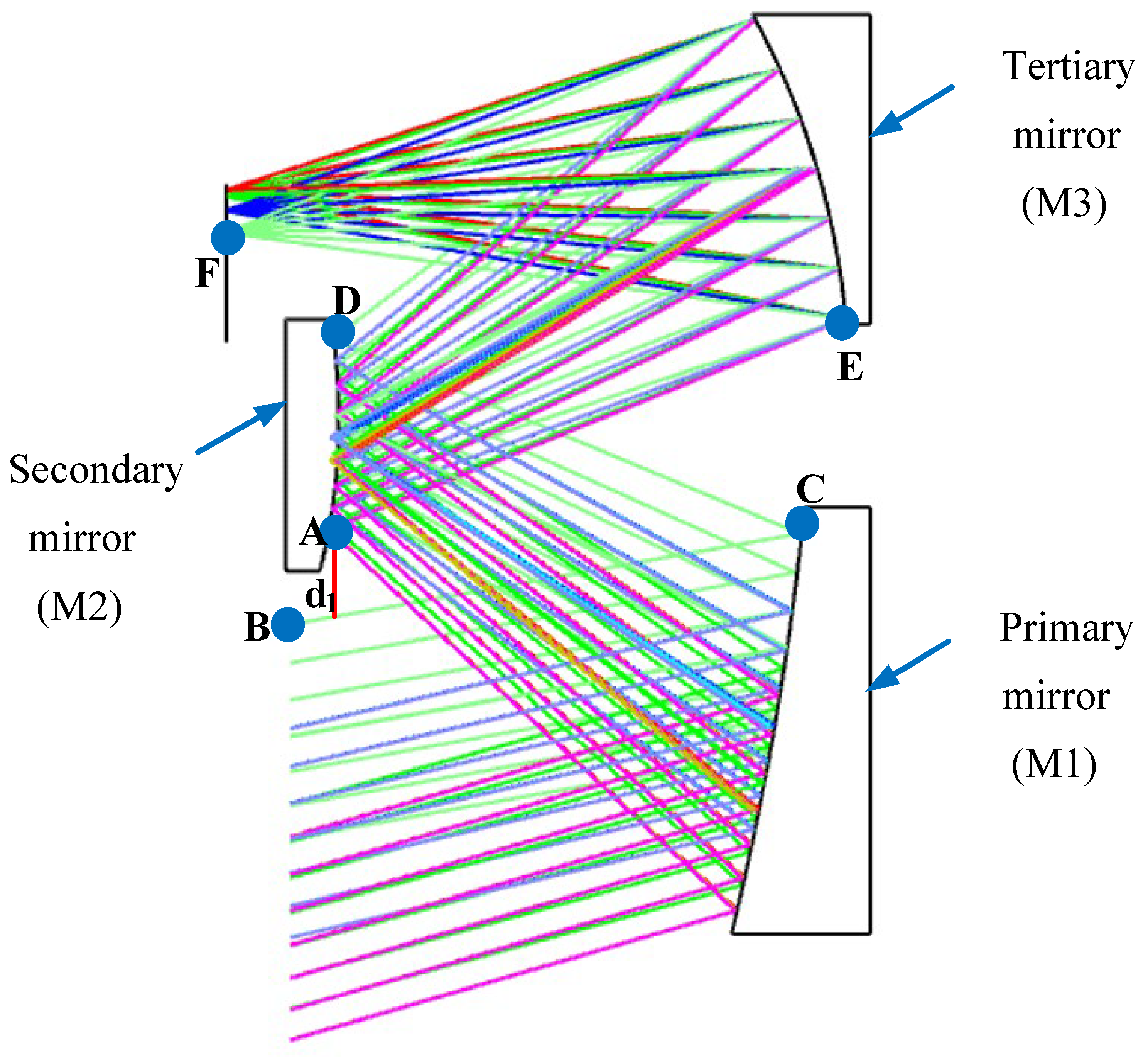
Since operating off-axis can drastically increase optical aberrations, it is necessary to maintain a minimum separation of 10 mm between rays. This constraint prevents the system from reverting toward a coaxial configuration during optimization, which would cause ray vignetting, and ensures feasibility for manufacturing and assembly.
The implementation strategy involves ensuring that the distance from point A to the ray line BC exceeds 10 mm. That is, the distance from point A to BC. The equation of line BC can be expressed as , and the coordinates of point A are .
By substituting
into the equation
, the coordinates
of point
A′ are obtained. Subsequently, subtracting
from
to make the result greater than a positive number. Implementing this strategy in optical design software and subsequently optimizing the system yields the results shown in
Figure 5.
3.3. Introduction and Optimization Design of Freeform Surface
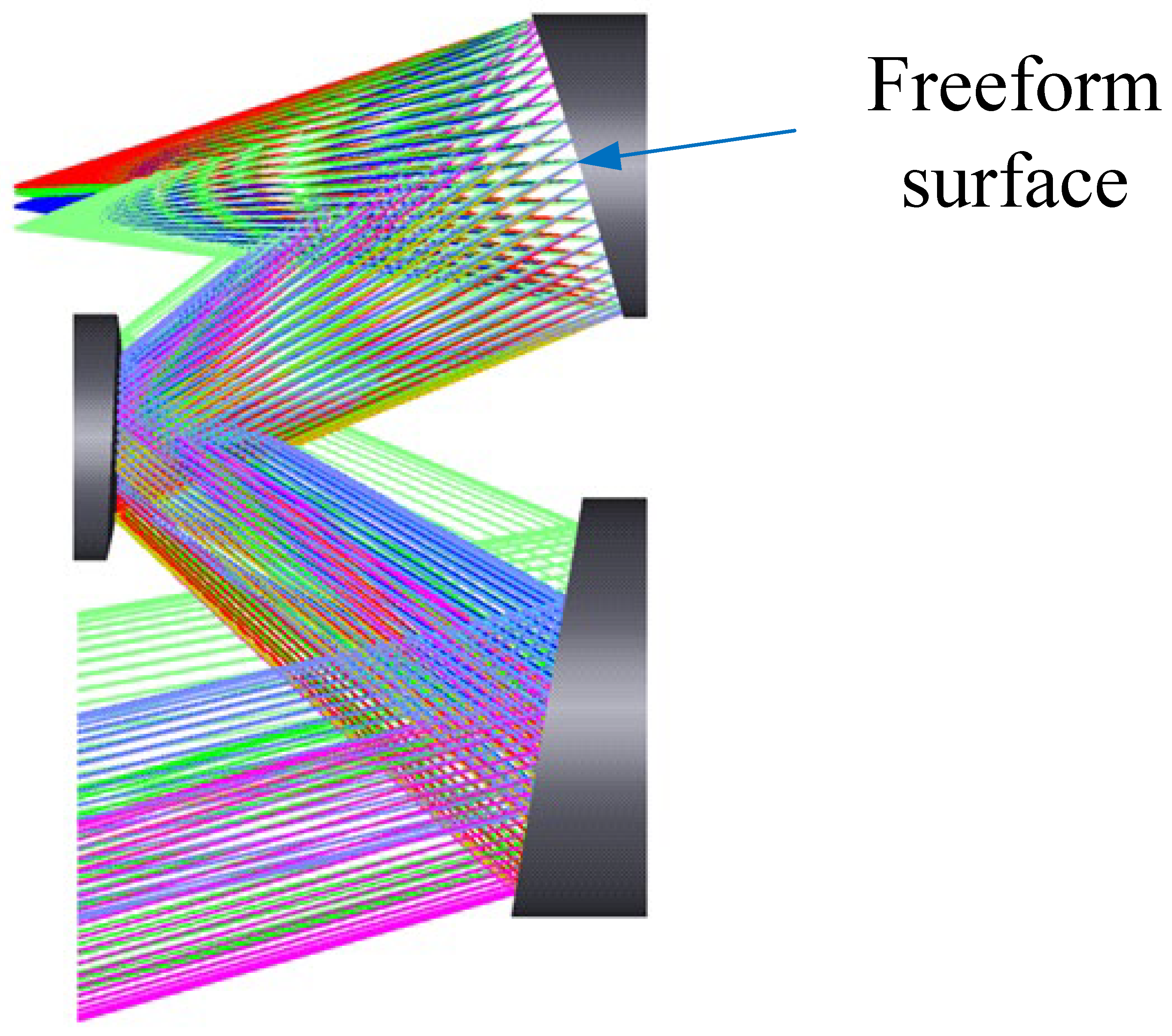
Following the obtaining of an unobscured off-axis three-mirror system, the tertiary mirror is characterized as a freeform surface to further correct off-axis aberrations and achieve a constant ground resolution design.
3.3.1. Selection of Freeform Surface Types
Since the optical system is symmetric about the YOZ plane, only the even-order terms of X in the XY polynomial are adopted. Considering various factors such as design performance, optimization speed, and manufacturability, a 4th-order XY polynomial is utilized to optimize the optical system. The surface expression is
In the above expression, the first term is the aspheric surface type term, is the coordinates of the characteristic data points on the unknown surface, c is the curvature at the vertex of the fitted surface, k is the conic constant (quadratic coefficient), is the term of the XY polynomial freeform surface, and is the coefficient of the corresponding term.
3.3.2. Introduction Sequence of Freeform Surfaces
In this design, the introduction of freeform surfaces follows the principle of gradual complexity: “coaxial before off-axis, and aspheric before freeform.” The specific sequence is as follows:
- (1)
Construction of the coaxial initial structure
Based on the aberration theory, the initial coaxial three-mirror structure is solved. This structure is free of spherical aberration, coma, and astigmatism, serving as the foundation for subsequent design.
- (2)
Off-axis design
A combination of field off-axis and aperture off-axis is adopted to avoid central obscuration, and the spacings between mirrors are controlled to ensure a marginal ray separation greater than 10 mm. At this stage, the tertiary mirror remains a conic aspherical surface, and the image quality of the system is restored after preliminary optimization.
- (3)
Freeform surface replacement
The third mirror is replaced with an XY polynomial freeform surface, starting the optimization with initial coefficients set to 0, that is, the optimization starts with the original aspherical surface as the baseline.
- (4)
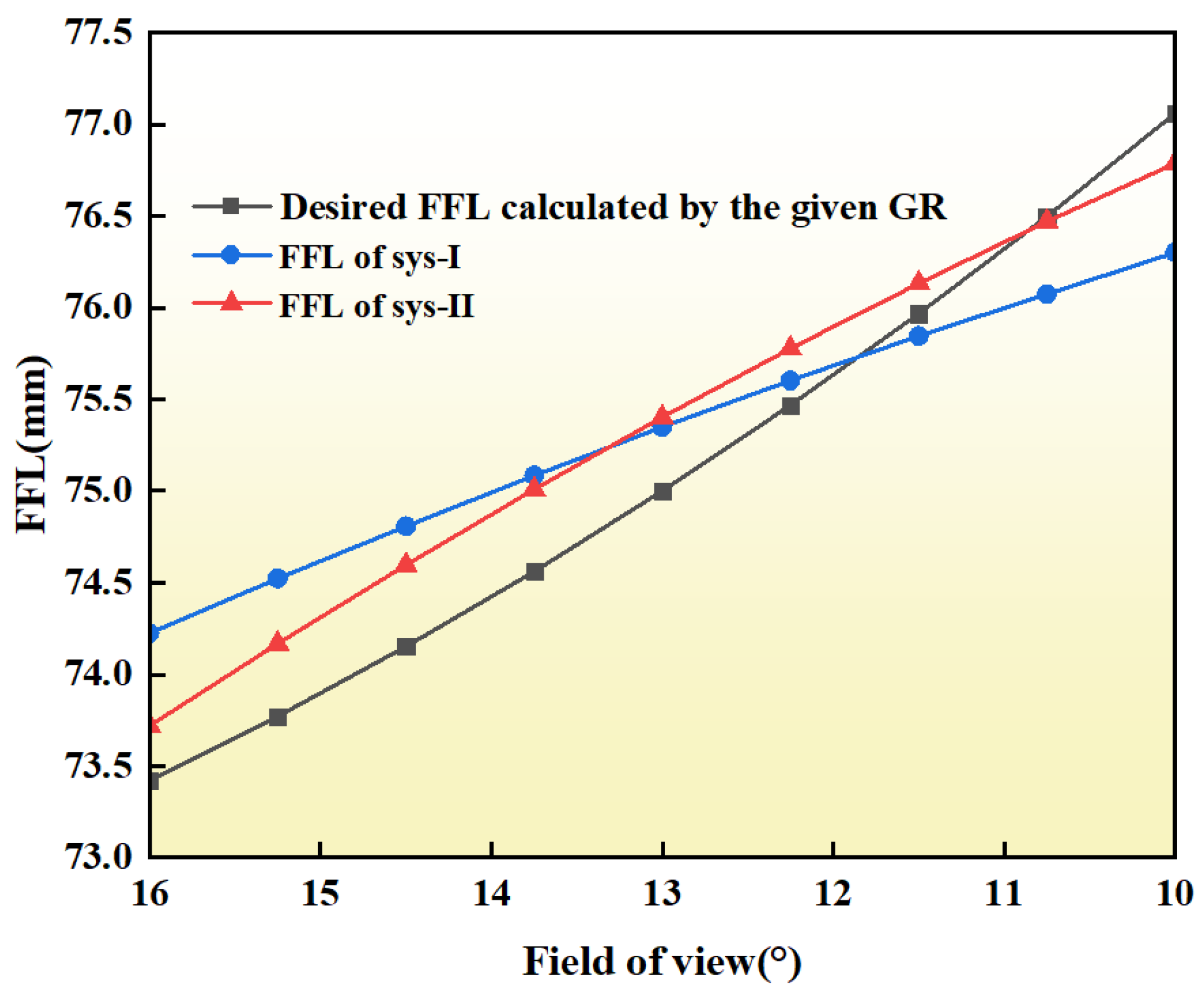
Ideal image point constraint based on FFL
According to the relationship between FFL and ground resolution, the desired FFL distribution is calculated. The ideal image point coordinates for each field of view are then derived using Equation (8). During optimization, the deviation between the actual image height and the ideal image height is added to the merit function as a constraint.
3.3.3. Optimize the Iteration Process
The optimization of the freeform surface employs a strategy of gradually increasing the polynomial order. The specific iteration process is as follows:
- (1)
Low-order optimization phase
Enable the low-order terms of the XY polynomial to correct the asymmetric aberrations introduced by the off-axis configuration. The merit function is primarily controlled by the deviation between actual image height and ideal image height, while maintaining structural constraints. The optimization goal is to make the image height at each field of view approach the expected value.
- (2)
High-order optimization phase
When the low-order optimization result tends to stabilize, the polynomial order is gradually increased to further correct residual aberrations. At this stage, appropriately increase the weight of the constraint on the ideal image points, and introduce MTF operands to constrain each field of view at the Nyquist frequency.
- (3)
Fine optimization phase
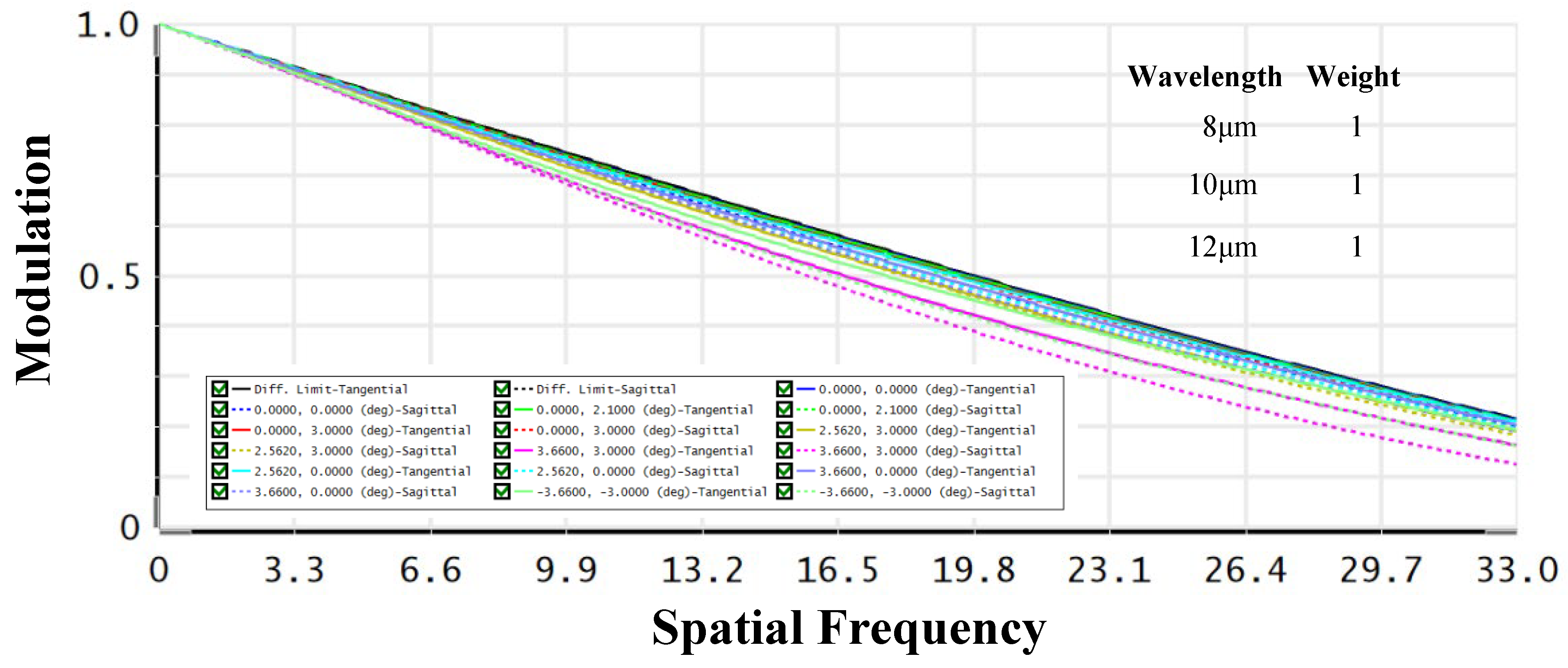
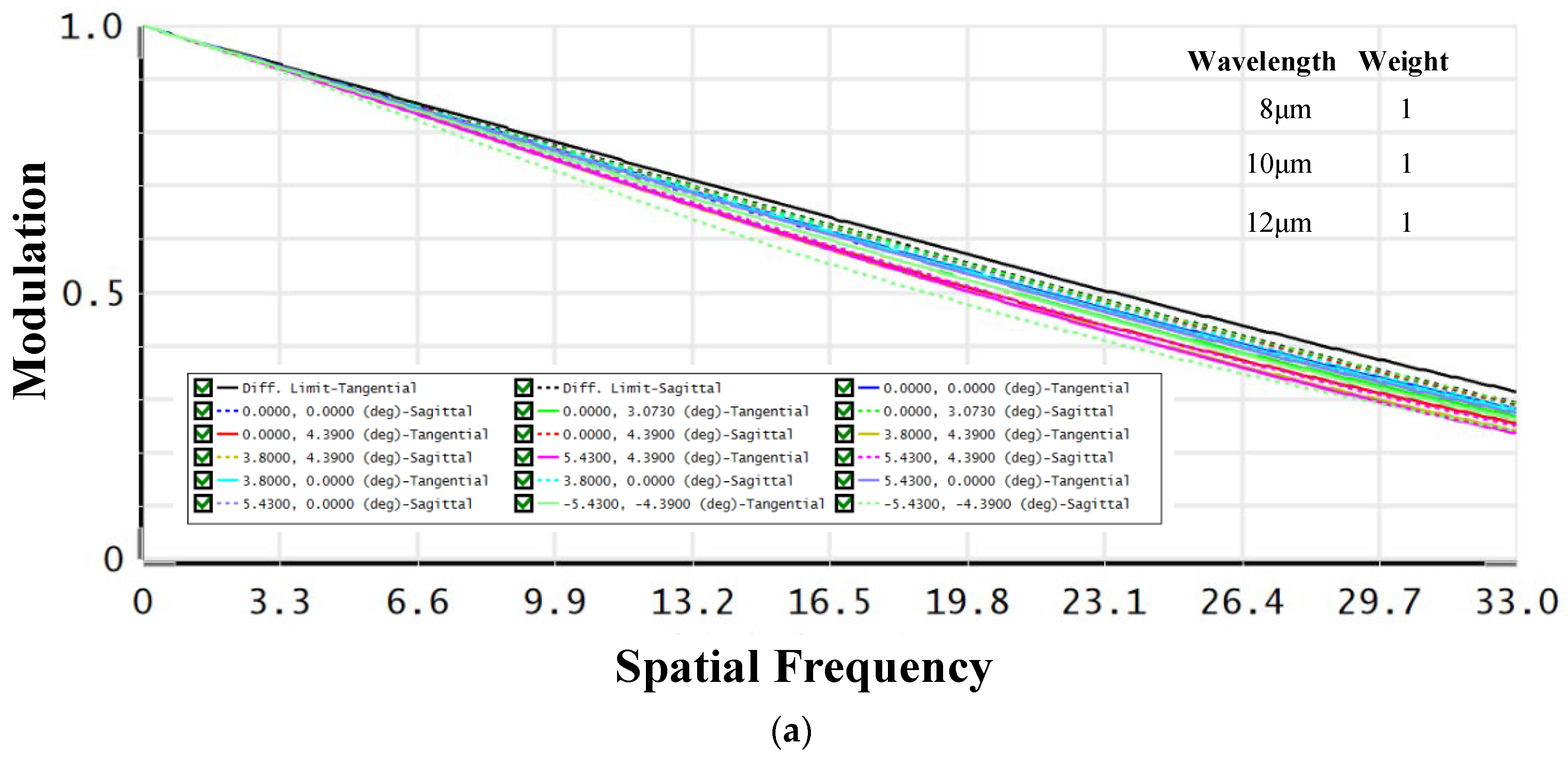
After the order of the freeform surface is determined, perform global optimization to balance image height accuracy, image quality, and structural constraints. Meanwhile, monitor the surface smoothness to avoid inflection points. Optimize the iteration until the image height of all fields meets the design requirements and the MTF curves approach the diffraction limit.
- (4)
Verification and adjustment phase
After the optimization, verify whether the actual FFL distribution matches the desired curve. If local deviations are significant, fine-tuning by increasing sampling points or adjusting local weights for the affected fields. Through the above phased optimization, the final off-axis three-mirror freeform surface system achieves highly uniform ground resolution across the full field of view and excellent image quality.
3.5. Comparison of the Impact of Two Operating Modes on GSD
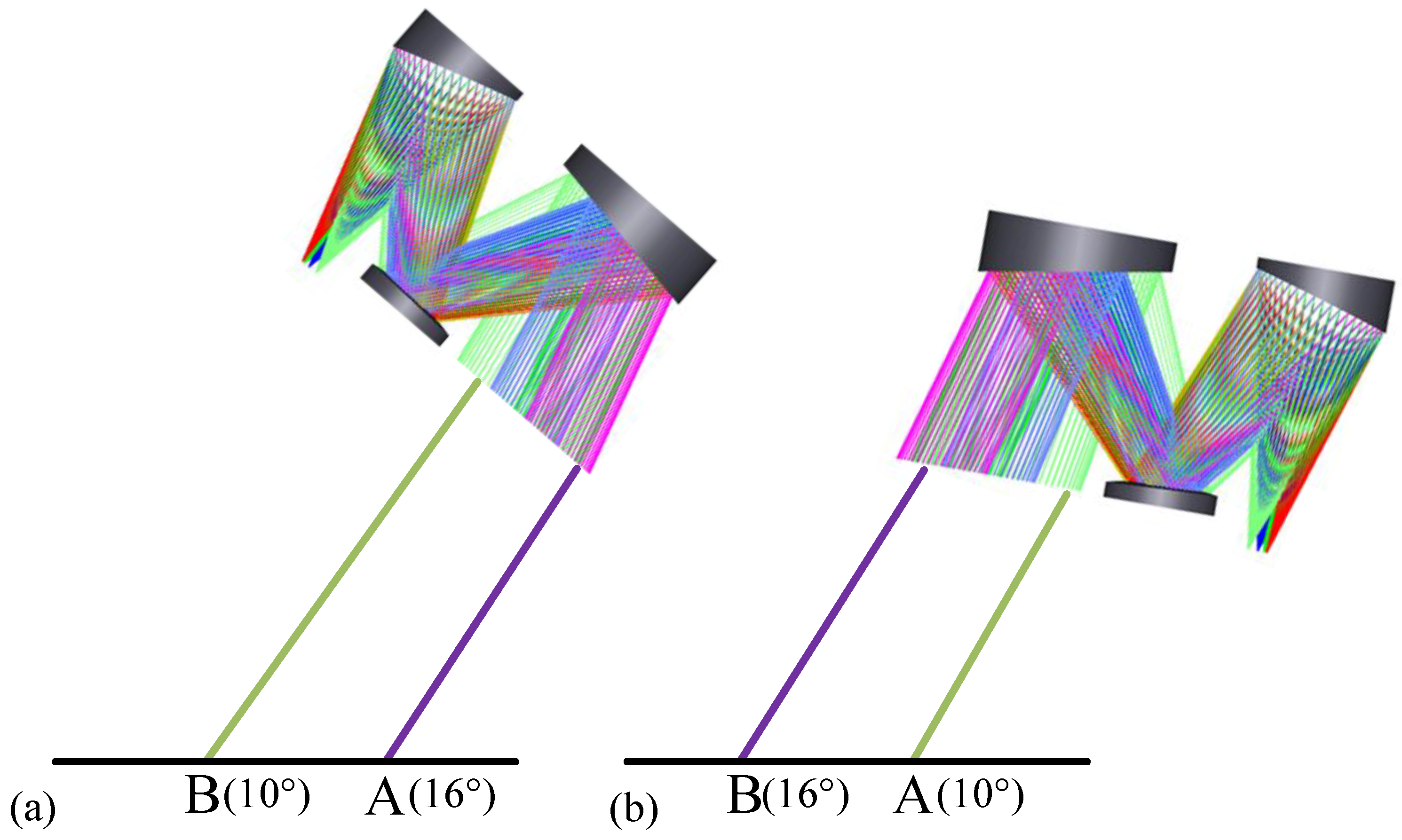
When the off-axis reflection system operates as a tilted camera, as shown in
Figure 9a, in operation mode 1, the system observes point
B with a 10° field of view and point
A with a 16° field of view. The camera altitude is 2.5 km, and the detector pixel size is 15 μm. In operation mode 2, as shown in
Figure 9b, the system observes point
A with a 10° field of view and point
B with a 16° field of view. The specific schematic diagram is shown in
Figure 9.
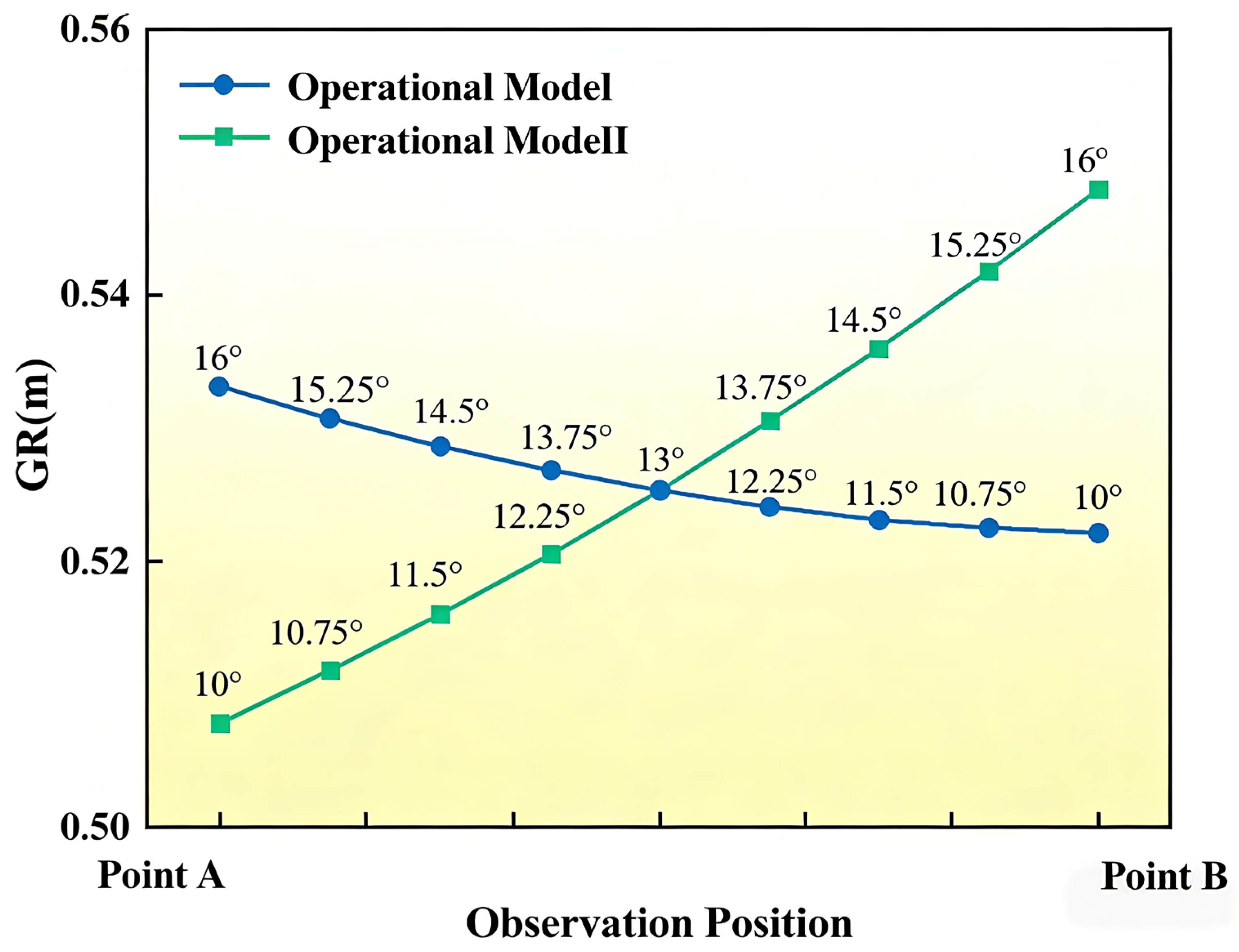
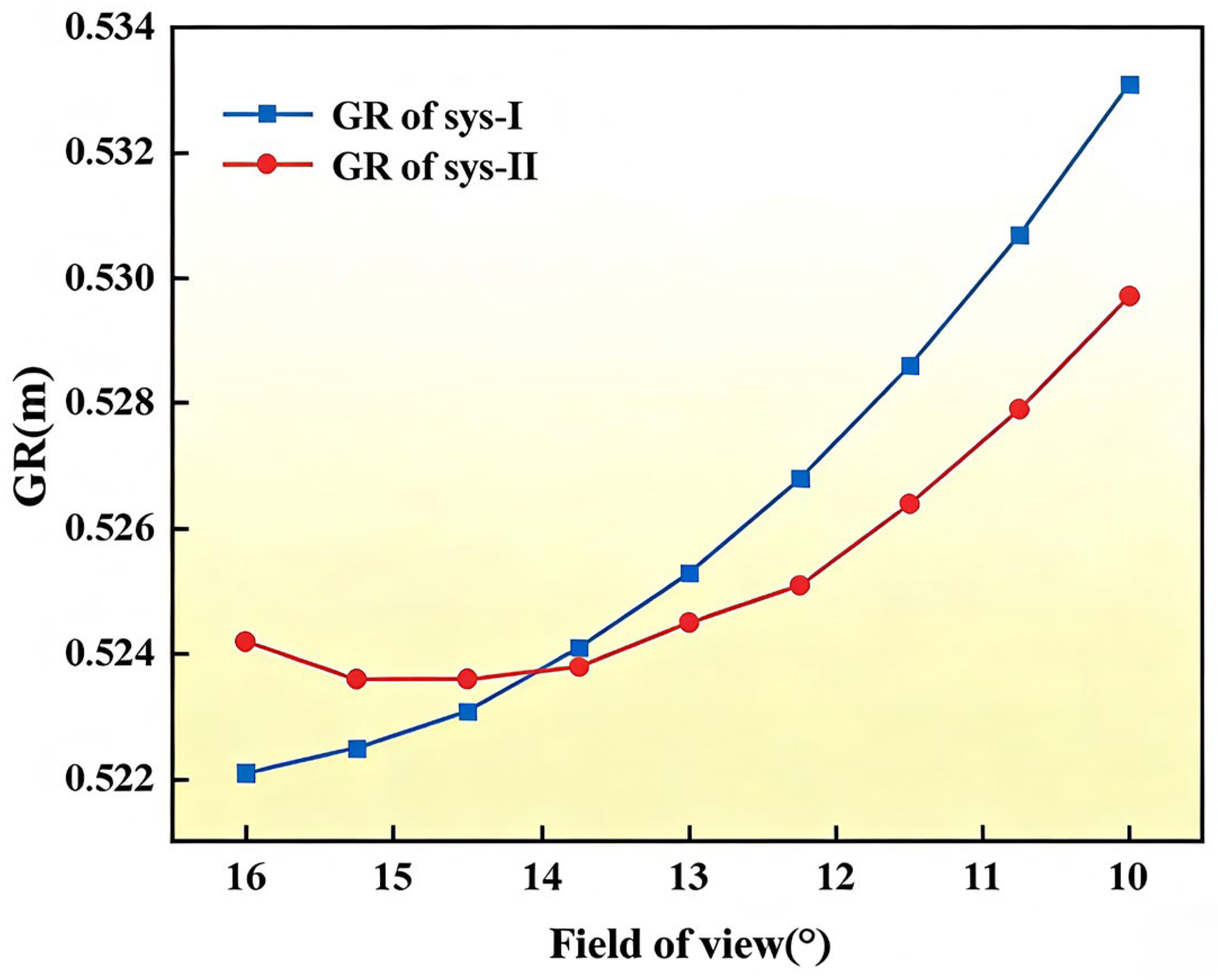
According to Equation (7), the ground resolution GR at the sampling field of view was calculated and plotted as the green curve in
Figure 10. As shown in
Figure 9a, the 10° field of view is used to observe section
B, and the 16° field of view is used for section
A. Based on Equation (7), the GR at the sampling field of view is presented as the blue curve in
Figure 10, whose variation range is significantly smaller than that of the second operation mode. In operation mode 1, the difference between the maximum and minimum GSD is 0.004, whereas in operation mode 2, the difference is 0.011.