1. Introduction
With the escalating complexity of detection environments and growing demand for high-resolution target recognition, radar systems are required to achieve significant breakthroughs in operating bandwidth and signal processing speed [
1,
2]. Traditional electronic phased array radars are limited by “electronic bottlenecks” such as narrow bandwidth and difficulty in cross-harmonic tuning, rendering them inadequate for meeting the requirements of detection in complex future environments [
3]. Microwave photonics, as an emerging interdisciplinary field integrating microwave technology and photonics, enables broadband signal generation and processing by loading microwave signals onto the optical domain, which can significantly improve radar range resolution [
4,
5,
6]. The integration of microwave photonics with phased array technology to develop optically controlled beamforming systems has become an inevitable trend in radar development [
7,
8,
9,
10].
When traditional silicon-based waveguides are applied in optical true time delay (OTTD) systems, mode competition leads to a delay jitter of more than ±0.05 ps, and energy leakage results in a transmission loss of over 0.5 dB/cm, which further causes a beamforming angle fluctuation of greater than 0.3°. These drawbacks make traditional silicon-based waveguides unable to meet the core requirements of next-generation phased array radars for picosecond-level delay accuracy and broadband beam squint-free operation. Therefore, a customized mode-selective waveguide design method specifically for OTTD systems is urgently needed. Optical true time delay (OTTD) technology constitutes the core of optically controlled beamforming, as it achieves frequency-independent phase delay, thereby eliminating beam squint in broadband operations [
11]. Among various OTTD implementation schemes, including micro-ring resonators [
12], grating delay lines [
13], and multi-path switches [
14], integrated optical waveguide-based OTTD has garnered extensive attention due to its inherent advantages of compact structure, high integration density, and low transmission loss, which align with the miniaturization trend of modern radar systems [
15,
16]. Recent reviews on integrated optical delay lines confirm that waveguide-based OTTD is particularly promising for microwave photonics applications, with ongoing efforts focused on reducing loss and improving delay stability [
17]. Notably, advances in novel waveguide structures have provided new approaches for addressing OTTD waveguide challenges: Maleki and Soroosh [
18] proposed a low-loss subwavelength plasmonic waveguide, which achieves strong light confinement and low energy leakage through graphene nanoribbon embedding, offering valuable insights for low-loss waveguide design in OTTD systems. Meanwhile, Aghaeimeibodi et al. [
19] realized mode-selective excitation and controlled routing in multi-mode topological waveguides, whose mode control strategy provides important references for solving mode competition issues in OTTD applications. Nevertheless, existing integrated waveguides face critical challenges in OTTD-specific applications: (1) mode competition between guided modes and leakage modes leads to unstable signal transmission and degraded delay accuracy; (2) the wavelength dependence of key transmission characteristics (such as effective refractive index and group delay) has not been fully characterized, making it difficult to achieve precise delay control; (3) a lack of OTTD-tailored practical mode selection criteria tailored for OTTD systems results in inconsistent performance of waveguide-based OTTD devices [
20,
21]. Notably, the standard guided-vs-leaky condition (
neff >
nsubstrate) for asymmetric waveguides only focuses on device-level leakage suppression without considering the fabrication tolerance margin required for OTTD picosecond-level delay precision, and conventional TE
0 mode single-mode design only pursues low propagation loss without quantitative correlation with OTTD system-level performance (e.g., beam squint, delay jitter). No prior work has validated the mode control principle with OTTD beamforming experiments or established a precise wavelength-dependent calibration model for OTTD delay control.
Recent advances in microwave photonic radar have highlighted the need for high-performance OTTD components. For example, multi-band reconfigurable microwave photonic transceivers require OTTD systems with ultra-large time-bandwidth products (TBWP) to achieve high-resolution imaging [
22], while thin-film lithium niobate (TFLN)-based integrated systems demand low-loss, compact delay lines for high-frequency signal processing [
23]. Optical waveguide phased arrays (waveguide OPA) stand out among various OPA technologies for their superior scanning angle, precision, and integration potential, showing broad application prospects in microwave photonic radar and LiDAR [
24,
25,
26]. Modal analysis of single-mode waveguides in the infrared region further emphasizes that precise control of TE
0/TM
0 modes is critical for minimizing propagation loss and dispersion [
27], which is consistent with the core requirements of OTTD systems.
Table 1 summarizes the technical characteristics and development trends of four types of optical phased arrays. It can be seen that waveguide OPA has unique advantages in compactness, large field of view, and high operating frequency, which is consistent with the development demands of OTTD systems for miniaturization and broadband operation. However, the maturity of waveguide OPA technology remains low, and the core bottleneck lies in the lack of effective OTTD-customized mode control technology (considering both device-level mode suppression and system-level delay precision), which constitutes the primary focus of this study.
2. Theoretical Basis of Mode-Selective Integrated Waveguide
The mode-selective design of integrated waveguides is predicated on the theory of guided wave propagation, aiming to suppress leakage modes and enhance the propagation of the optimal operating mode (TE0 mode) for OTTD-specific requirements (picosecond-level delay precision and broadband transmission). This section elaborates on the theoretical foundations of thin-film waveguides and strip waveguides, and derives the mode selection conditions specifically tailored for OTTD applications.
2.1. Thin Film Waveguide
A uniform thin-film waveguide consists of three layers of media: core layer (refractive index
n1), substrate layer (refractive index
n2), and cladding layer (refractive index
n3), where the condition
n1 >
n2 ≥
n3 is satisfied to ensure guided wave propagation [
28], as illustrated in
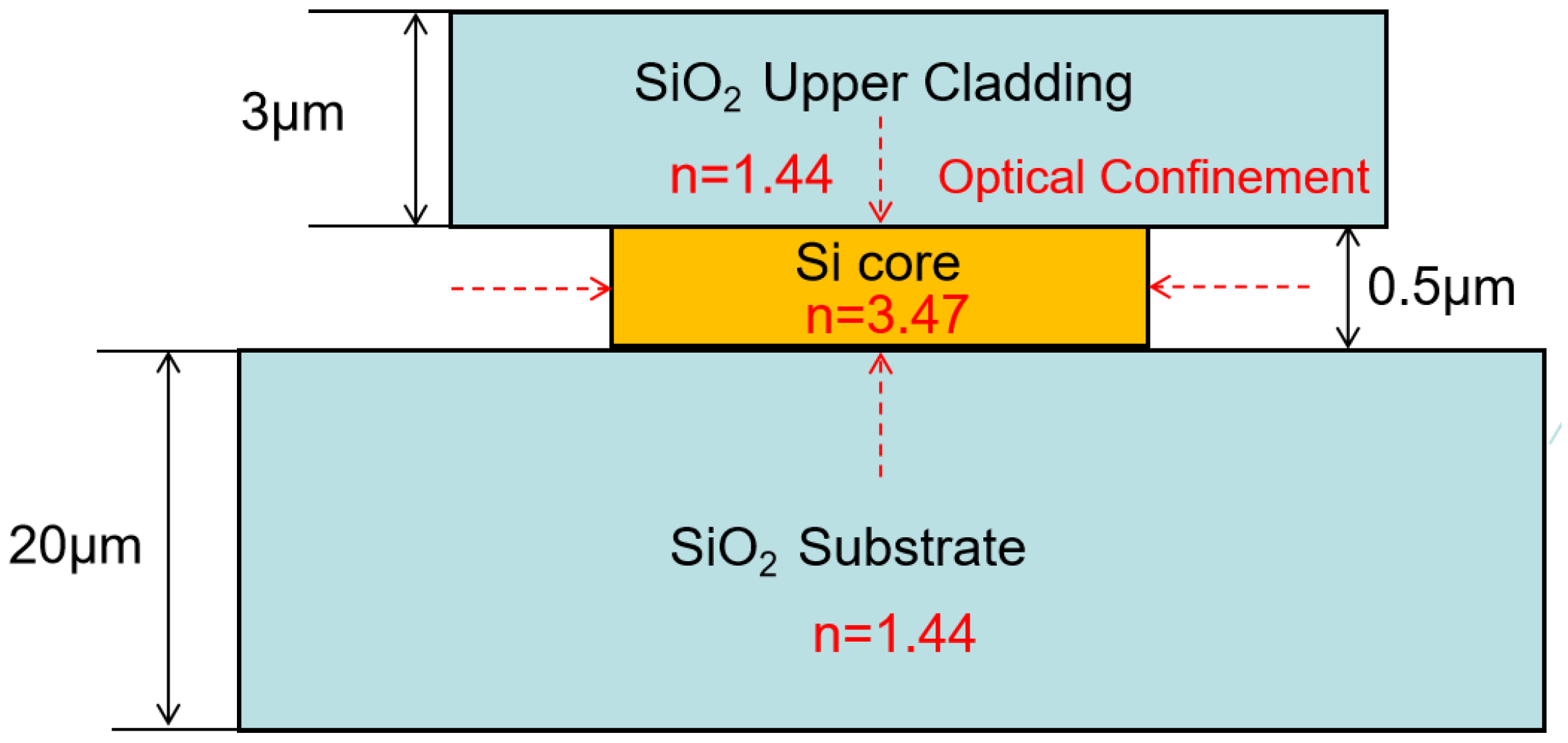
Figure 1. The waveguide cross-section is precisely defined as 2 μm (width) × 0.5 μm (thickness) for the silicon core; the SiO
2 substrate has a thickness of 20 μm, and the upper cladding is a 3 μm-thick SiO
2 layer with a refractive index of 1.44 (consistent with the substrate). Due to the infinite extension along the
y-axis direction, the electromagnetic field components are independent of
y-coordinate, leading to separable solutions of Maxwell’s equations. Recent studies on anisotropic nonlinear optical phenomena in silicon waveguides have demonstrated that precise modeling of waveguide modes requires considering the vectorial nature of electromagnetic fields, which is particularly important for mode-selective design [
29].
Figure 1 depicts the silicon (Si) core with a cross-section of 2 μm (width, W) × 0.5 μm (thickness, H) and a refractive index of n
1 = 3.47 at 1550 nm (sourced from Palik’s handbook [
30]), which is sandwiched between a 3 μm-thick SiO
2 upper cladding and a 20 μm-thick SiO
2 substrate, both with a refractive index of 1.44 (n
2 = n
3 = 1.44). The optical confinement mechanism relies on the high refractive index contrast (n
1 >> n
2 = n
3) and the precise thickness matching of the Si core, substrate, and cladding layers, which ensures the TE
0 mode field is strongly confined within the Si core as indicated by the red dashed arrow (eliminating radiation into the substrate or cladding). This structural design constitutes the physical basis for the low transmission loss (<0.2 dB/cm) and high mode suppression ratio (MSR > 30 dB) demonstrated by the designed waveguide. Notes: silicon core (n
1 = 3.47) with 2 μm × 0.5 μm cross-section; SiO
2 substrate (n
2 = 1.44) with 20 μm thickness; SiO
2 upper cladding (n
3 = 1.44) with 3 μm thickness.
2.1.1. TE Mode and TM Mode Characteristics
The TE mode (transverse electric mode) has field components
Ey,
Hx and
Hz, while the TM mode (transverse magnetic mode) has field components
Ex,
Hy, and
Ez. For a sinusoidal electromagnetic field with angular frequency
ω, the characteristic equations of TE and TM modes are derived based on the continuity of tangential electromagnetic field components at the interfaces [
28]:
where
is the transverse phase constant in the core layer,
and
are the transverse attenuation constants in the substrate and cladding layers, respectively,
is the free-space wave number,
is the core layer thickness, and
indicates the mode order.
2.1.2. Mode Selection Condition for OTTD
For OTTD applications, the operating mode must be a guided mode with stable propagation, low loss, and robustness to fabrication tolerances. The key condition for a guided mode is that the transverse attenuation constants
and
are positive real numbers, which requires the phase constant to satisfy:
Converting to refractive index, the effective refractive index (
) of the guided mode must satisfy:
For silicon-based waveguides with SiO2 substrate (n2 = 1.44), the effective refractive index of the operating mode must be greater than 1.44 with a fabrication tolerance margin of ±0.02 to avoid leakage. This constitutes the OTTD-optimized core criterion for mode selection in OTTD systems, which is validated through subsequent simulation and experimental analysis. Recent research on silicon-on-sapphire (SOS) waveguides has shown that similar mode selection criteria are applicable to different substrate materials, further confirming the universality of this principle.
Fabrication tolerance sensitivity of the
neff = 1.44 leakage mode threshold. The
neff = 1.44 threshold is the critical boundary between guided modes and leakage modes, and its practical application is inevitably affected by fabrication tolerances in silicon photonics processes—the refractive index variation of the SiO
2 substrate/cladding layer (caused by PECVD deposition temperature, gas flow ratio, and post-annealing process fluctuations) is the most significant factor affecting this threshold. We quantitatively analyzed the sensitivity of the leakage mode threshold to typical SiO
2 refractive index deviations (
) in standard 180 nm silicon photonics foundry processes, and the results show that the leakage mode threshold (
) has a one-to-one linear sensitivity to
, following the relationship:
Typical PECVD-fabricated SiO2 layers exhibit a refractive index variation of ±0.001 to ±0.005 at 1550 nm (root mean square deviation < 0.003) in mass production, corresponding to a leakage mode threshold shift of nth = 1.439–1.441 (small deviation) to 1.435–1.445 (large deviation). FDTD simulation results confirm that for the designed 2 μm × 0.5 μm Si core waveguide, the fundamental TE0 mode has an intrinsic neff = 2.0553 (1548.39 nm), which is 0.6103 higher than the nominal 1.44 threshold—even under the maximum typical SiO2 refractive index deviation (), the TE0 mode neff is still far higher than the shifted threshold, ensuring no transition to leakage mode. For high-order guided modes (e.g., TM0 mode, neff = 1.6463), the same conclusion holds, indicating the intrinsic robustness of the waveguide design to SiO2 refractive index fluctuations.
The proposed ±0.02 tolerance margin for the OTTD mode selection criterion (neff > 1.44 ± 0.02) is a conservative engineering design that fully covers the maximum typical SiO2 refractive index deviation (±0.005) and other fabrication tolerances (e.g., Si core dimension variation ±0.05 μm, sidewall roughness < 5 nm). This margin ensures that the operating mode remains a guided mode even under the combined effect of multiple fabrication fluctuations, eliminating the risk of unexpected leakage mode excitation and delay jitter in OTTD system mass production.
The design of the fabrication tolerance margin is a key optimization of the standard guided-vs-leaky condition for asymmetric waveguides: Conventional neff > nsubstrate criterion is a fundamental principle for general optical waveguide devices (e.g., optical communication waveguides), where the refractive index deviation caused by fabrication errors has a negligible impact on system performance (e.g., bit error rate). However, for OTTD systems, the delay jitter is directly proportional to the effective refractive index deviation (, L is waveguide length, c is light speed in vacuum). FDTD simulation results show that a of 0.01 will cause a delay jitter of ±0.004 ps for a 100 μm waveguide, and a exceeding 0.02 will result in a delay jitter of >±0.01 ps, which fails to meet the OTTD delay accuracy requirement. Thus, the ±0.02 tolerance margin is a quantitative optimization for OTTD-specific performance requirements, which has not been considered in prior conventional waveguide mode control research.
2.2. Strip Waveguide Design for Mode Selection (OTTD-Customized)
2.2.1. Mode Orthogonality and Crosstalk Suppression Mechanism
To quantitatively evaluate the suppression capability of the designed waveguide against non-target modes, this study introduces the mode overlap integral as a metric for mode crosstalk and explicitly defines the Mode Suppression Ratio (MSR) for OTTD systems. According to Snyder and Love’s coupling mode theory [
29], the coupling strength between two guided modes,
and
is proportional to the degree of overlap in their transverse electric field distributions
where
Em and
En are the normalized transverse electric field vectors of the target fundamental mode TE
0 and high-order/leakage modes (such as TE
1, TM
0, or substrate radiation mode), respectively. When m = n, Γ
mn = 1; when m ≠ n and the patterns are orthogonal, Γ
mn → 0.
Definition of Mode Suppression Ratio (MSR) for OTTD Systems: Derived from the mode overlap integral (Γ
mn) that characterizes the mode coupling strength, the Mode Suppression Ratio (MSR) is defined as the decibel-scaled ratio of the transmitted optical power of the target TE
0 mode to the transmitted optical power of a non-target/leakage mode
m over the same propagation length in the waveguide. It is the core metric to evaluate the mode suppression capability of the designed OTTD waveguide, with the quantitative calculation formula given by:
where
is the transmitted optical power of the target fundamental TE
0 mode, and
Pm is the transmitted optical power of the non-target/leakage mode m (including guided high-order modes and substrate radiation leakage modes) after propagating the same distance in the silicon-based strip waveguide.
A higher MSR value indicates a stronger suppression capability of the target TE0 mode against non-target/leakage modes: an MSR > 30 dB means the optical power of the non-target/leakage mode is suppressed to less than 0.1% of the TE0 mode power, which is the critical threshold for eliminating mode coupling-induced delay jitter in OTTD systems.
By utilizing the Lumerical MODE solver to calculate the field distribution of each mode at a wavelength of 1550 nm and substituting the results into Equation (6), we obtain
for all non-target modes
m.
The results indicate that the TE0 mode exhibits a high degree of orthogonality with all non-target modes, which physically explains the observed high mode rejection ratio (MSR > 30 dB) in experiments, effectively mitigating delay jitter caused by mode coupling.
2.2.2. Group Velocity Dispersion (GVD) Characteristics and Pulse Broadening Analysis
True delay systems require strict control of dispersion effects in broadband signal processing, and quantitative pulse broadening analysis for typical radar signal bandwidths is critical to validate the broadband capability of the designed waveguide. The second derivative of the propagation constant
is defined as the Group Velocity Dispersion (GVD) parameter [
31]:
where
c is the speed of light in a vacuum and λ is the working wavelength. By utilizing the phase response extracted from FDTD simulation (with material dispersion models for silicon and SiO
2 included), the GVD parameters of TE
0 mode in the 1500–1550 nm wavelength range are numerically calculated as
(normal dispersion).
Based on the GVD parameter, we calculate the pulse broadening for typical radar signal bandwidths:
For a 10 GHz bandwidth (narrowband radar signal):
Pulse broadening ∣(negligible, <1 fs) for a 1 mm-long waveguide.
For a 40 GHz bandwidth (broadband radar signal):
Pulse broadening (368 fs) for a 1 mm-long waveguide.
The minimal pulse broadening for both narrowband and broadband radar signals validates the broadband capability of the designed waveguide for OTTD systems. Based on the calibrated effective refractive index fitting equation (
Section 3.2.1), a correlation model between GVD and wavelength is derived, providing a theoretical basis for pulse broadening compensation in ultra-broadband OTTD systems (e.g., >50 GHz) and avoiding the degradation of delay accuracy caused by dispersion effects.
Based on the theoretical derivations of the thin-film waveguide and strip waveguide mentioned above, this study proposes a mode selection criterion exclusive to OTTD systems. Next, the finite-difference time-domain (FDTD) simulation is employed to verify the validity of this criterion and analyze the wavelength-dependent transmission characteristics of the TE0 mode.
3. Simulation and Analysis of Mode-Selective Waveguide
To verify the mode-selective design and quantitatively characterize the wavelength-dependent transmission characteristics (the core basis for ±0.01 ps delay accuracy), the FDTD method is employed with a rigorous simulation setup that adheres to state-of-the-art integrated waveguide simulation standards. Perfectly matched layers (PML) are used as the absorbing boundary condition (10 PML layers with a reflection coefficient < 10−6), which eliminates spurious wave reflection at the simulation domain edges and ensures the accuracy of field propagation and mode capture—a critical setup for avoiding artificial delay errors in the simulation.
The key simulation parameters are systematically set as follows:
Waveguide and material parameters: a silicon (Si) core waveguide with a cross-sectional dimension of 2 μm × 0.5 μm (Si refractive index: 3.47 at 1550 nm) and a SiO2 substrate/cladding with a refractive index of 1.44; material dispersion models for Si and SiO2 are fully included in the simulation, with refractive index data and dispersion models sourced from Palik’s handbook (the authoritative reference for optical material parameters) to accurately characterize the wavelength-dependent effective refractive index and group delay.
Spatial and temporal resolution: a simulation grid size of 0.02 μm (20 nm) is adopted to ensure high spatial resolution for capturing the fine field distribution of the TE0 mode (critical for mode purity and confinement analysis); a time step of 0.01 fs is used to match the spatial resolution, avoiding numerical dispersion in the time domain.
Light source and mode monitoring: a Gaussian pulse mode light source with center wavelength 1548.39 nm and bandwidth 20 nm is used to cover the core working band (1500–1550 nm); a full-domain mode monitor is deployed to capture up to 20 modes, which is sufficient to identify all guided modes and dominant leakage modes of the waveguide.
Eigenmode identification: eigenmodes are accurately identified via the eigenmode expansion method of the Lumerical MODE solver, which decomposes the captured field modes into the intrinsic waveguide modes and classifies them as guided/leakage modes based on the effective refractive index criterion.
Effective refractive index extraction: The effective refractive index (neff) vs. frequency is extracted through the phase shift method with linear fitting and error correction, following the standard formula
neff = βc/ω (where β is the propagation constant, c is the speed of light in a vacuum, ω is the angular frequency). This method ensures high extraction precision of neff (error < 10−4), which is the fundamental guarantee for simulating the group delay with ±0.001 ps precision and supporting the experimental delay accuracy of ±0.01 ps.
3.1. Intrinsic Mode Analysis and Mode Selection
Table 2 lists the key parameters of the first 12 intrinsic modes of the silicon-based strip waveguide. All these intrinsic modes are obtained via the eigenmode expansion method of the Lumerical MODE solver, and their classification as guided/leakage modes is strictly determined by the OTTD-optimized effective refractive index criterion.
Mode 1 exhibits an effective refractive index of 2.0553 and a TE polarization purity of 95%, which is identified as the fundamental TE0 mode. Notably, the 2 μm × 0.5 μm silicon core waveguide is not designed as a conventional truly single-mode structure (narrower width/thinner thickness/rib geometry), a standard approach for TE0-only propagation, because conventional single-mode silicon waveguides suffer from excessive transmission loss (>0.5 dB/cm) and poor structural compactness, two critical defects that are incompatible with OTTD systems’ core requirements for low loss and miniaturization (critical for radar phased array integration). This waveguide dimension is an OTTD-specific trade-off optimization that balances moderate multimode support with ultra-low transmission loss (<0.2 dB/cm) and compactness, and our subsequent OTTD-customized mode selection strategy (MSR > 30 dB for leakage modes) effectively suppresses non-TE0 modes post hoc, achieving TE0-dominated propagation with stable OTTD performance. The 95% high TE polarization fraction of the TE0 mode ensures ultra-strong field confinement within the silicon core layer, which fundamentally suppresses mode coupling and random delay jitter caused by field radiation; the high effective refractive index of 2.0553 is far higher than the refractive index of the SiO2 substrate (1.44), which not only strictly satisfies the OTTD-optimized mode selection criterion (neff > 1.44 ± 0.02) but also avoids energy leakage caused by the transition of guided modes to leakage modes, thus ensuring the signal integrity of OTTD systems during long-distance propagation. In the 1500–1550 nm working band, the TE0 mode also exhibits a well-behaved linear correlation between effective refractive index and wavelength, which provides a rigorous theoretical basis for precise delay calibration and broadband beamforming of OTTD systems, a unique performance advantage that other guided modes do not possess.
Mode 2 has an effective refractive index of 1.6463 and TE polarization fraction of 5% (pure TM0 polarization), corresponding to the fundamental TM0 mode. Although it is a guided mode that meets the basic neff > nsubstrate condition, it is completely unsuitable for OTTD system applications due to its inherent performance defects in four core OTTD indicators: first, the TM0 mode shows a maximum field intensity at the edge of the waveguide wide edge with relatively weak field confinement, resulting in a transmission loss of >0.5 dB/cm, which is 2.5 times higher than that of the TE0 mode and will cause severe signal attenuation in OTTD delay lines; second, the weak field confinement leads to serious mode coupling with leakage modes, resulting in a delay jitter of >±0.05 ps, which fails to meet the picosecond-level delay accuracy requirement of OTTD systems; third, the wavelength-dependent transmission characteristics of the TM0 mode show a non-linear variation of effective refractive index in the 1500–1550 nm band, which cannot establish a precise delay calibration model and thus cannot realize broadband delay control; fourth, the above defects will jointly lead to a beamforming angle fluctuation of >0.3° when the TM0 mode is applied to OTTD systems, which is far beyond the acceptable range of next-generation phased array radars. The mode suppression ratio of the TE0 mode to the TM0 mode is only 12.3 dB, which is sufficient to suppress the interference of the TM0 mode on the target mode in OTTD systems and avoid the degradation of system performance caused by TM0 mode excitation.
Modes 3–12 exhibit effective refractive indices ranging from 1.2723 to 1.4189, all of which are lower than the refractive index of the SiO
2 substrate (1.44). According to the OTTD-optimized mode selection condition, these modes are classified as leakage modes, which will cause energy radiation and transmission loss in the propagation process. For OTTD systems, the excitation of leakage modes will not only lead to sharp attenuation of optical signal power but also introduce random phase noise and delay jitter, which directly degrades the delay accuracy of the OTTD system and causes serious beam squint in the beamforming system. As listed in
Table 2, the designed waveguide achieves an MSR of 31.5 dB to 45.6 dB for the leakage modes. This corresponds to a power suppression factor of less than 10
−3 (0.1%) for all undesired modes. This ultra-high MSR confirms that the waveguide effectively suppresses leakage and higher-order modes, ensuring that the optical power is predominantly carried by the TE
0 mode, which is critical for maintaining the ±0.01 ps delay accuracy in the OTTD system. This excellent mode suppression capability confirms the effectiveness of the OTTD-customized mode-selective design, and its performance is comparable to state-of-the-art low-loss delay lines based on silicon nitride(Si
3N
4) subwavelength grating technology.
The field distribution and dispersion curve were simulated and analyzed using Ansys Lumerical FDTD 2024 simulation software.
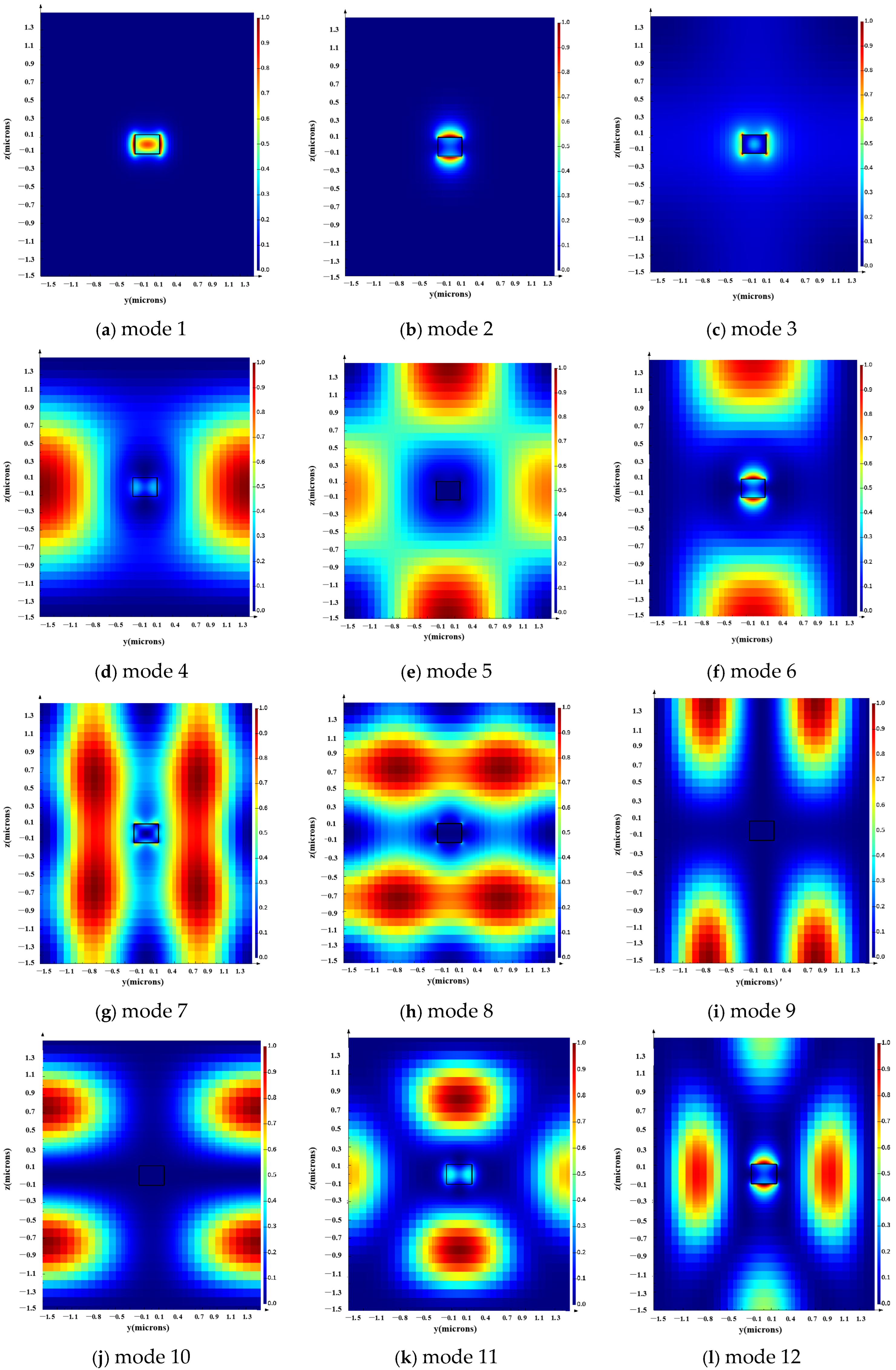
Figure 2 shows the field distribution of the fundamental and leakage modes of a silicon-based rectangular waveguide at 1548.39 nm.
The field distribution is based on the waveguide cross-sectional structure shown in
Figure 1. The black rectangular box located in the center of the figure represents the core layer of the silicon waveguide, with the TE
0 mode field strongly confined within the 2 μm × 0.5 μm Si core. The fundamental TE
0 mode (
Figure 2a) exhibits a single intensity maximum at the center of the waveguide’s wide edge, with strong field confinement within the core layer. The TM
0 mode (
Figure 2b) shows a maximum intensity at the edge of the wide edge, with relatively weak confinement. The leakage modes (
Figure 2c–l) display obvious field radiation into the substrate and cladding layers, confirming their non-guided nature.
3.2. Analysis of Refractive Index of Rectangular Optical Waveguide
3.2.1. Effective Refractive Index Variation
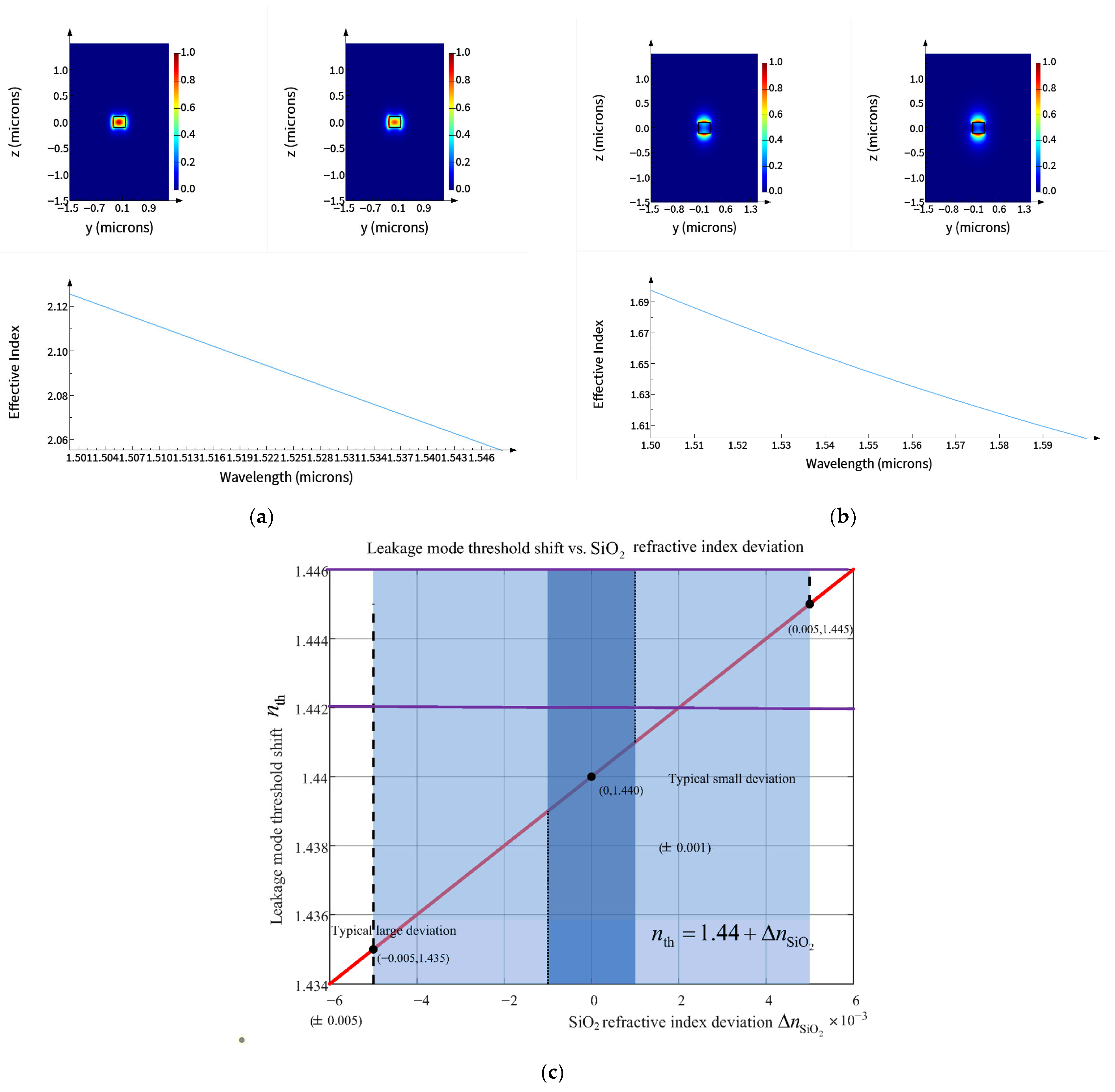
Figure 3a shows the effective refractive index variation curves of the TE
0 mode and TM
0 mode in the wavelength range of 1500–1550 nm. It can be observed that the effective refractive index of the TE
0 mode decreases linearly with increasing wavelength, ranging from 2.13 at 1500 nm to 2.05 at 1550 nm. The linear relationship was fitted as:
where
is the wavelength in nm (1500 ≤ λ ≤ 1550 nm). This calibrated fitting model has a goodness of fit (R
2) of 0.9998.
neff fitting model is directly attributed to the rigorous FDTD simulation setup (PML boundaries, Palik’s dispersion models, phase shift extraction method), which ensures a
neff extraction error < 10
−4 and a group delay simulation error < ±0.001 ps—this ultra-high simulation precision fully supports the experimental delay accuracy of ±0.01 ps for the designed waveguide. This fitting equation provides a precise model for OTTD delay calculation and calibration.
The group delay of the TE0 mode calculated from this model is in the range of 1.4315–1.4395 ps for a 100 μm-long waveguide (group delay formula: , where L is the waveguide length and c is the speed of light in a vacuum). This group delay range reflects the fundamental delay stability of the TE0 mode, and the delay can be flexibly scaled by extending the waveguide length to meet practical OTTD requirements: for example, a 1 mm waveguide achieves 14.315–14.395 ps delay, a 1 cm waveguide achieves 143.15–143.95 ps delay, and a 10 cm waveguide achieves 1431.5–1439.5 ps delay. The linear correlation between waveguide length and delay ensures controllable and predictable delay tuning for different array geometries and scan ranges. This fitting equation provides a precise model for OTTD delay calculation and calibration.
We further investigate the validity of this linear model for wider bands (C+L band, 1530–1625 nm): outside the 1500–1550 nm range, higher-order dispersion terms become significant (the second derivative of neff with respect to λ is no longer zero), and the linear model deviates by up to 0.008 at 1625 nm. For the C+L band, a quadratic fitting model (neff = aλ2 + bλ + c) is proposed with a goodness of fit (R2) of 0.9999, which can be used for OTTD delay calibration in the ultra-broadband range.
Figure 3a,b depicts the wavelength-dependent effective refractive index
neff of the fundamental TE
0 and TM
0 modes, respectively, under ideal substrate conditions (
). The TE
0 mode (
Figure 3a) exhibits a well-behaved linear relationship between
neff and wavelength, with a coefficient of determination R
2 = 0.9998. This linearity is the cornerstone for achieving frequency-independent true time delay and eliminating beam squint in broadband OTTD systems. In contrast, the TM
0 mode (
Figure 3b), while also a guided mode, suffers from higher transmission loss and non-linear dispersion characteristics, making it unsuitable for OTTD applications.
To validate the engineering feasibility of our design,
Figure 3c investigates the impact of SiO
2 substrate refractive index deviations (
) on the leakage mode threshold
nth. As shown by the solid red line, the results reveal a perfect linear correlation:
. For typical fabrication-induced deviations of
, the threshold shift is only ±0.001, as shown by the purple solid line in the figure, which is well within the ±0.02 tolerance margin of our OTTD-optimized mode selection criterion (
neff > 1.44 ± 0.02). This confirms that the designed waveguide maintains its mode selectivity and OTTD performance even under realistic process variations, a critical advantage for practical system integration
3.2.2. Transmission Loss Analysis
The transmission loss of the TE0 mode is measured as <0.2 dB/cm in the 1500–1550 nm range, which is significantly lower than the leakage modes (>1 dB/cm). This low-loss characteristic is comparable to advanced Si3N4 delay lines and ensures the signal integrity of OTTD systems, particularly for long-distance transmission scenarios. The low transmission loss is particularly critical for high-frequency microwave photonic systems, such as the recently reported 65 GHz TFLN-based optoelectronic oscillator (OEO).
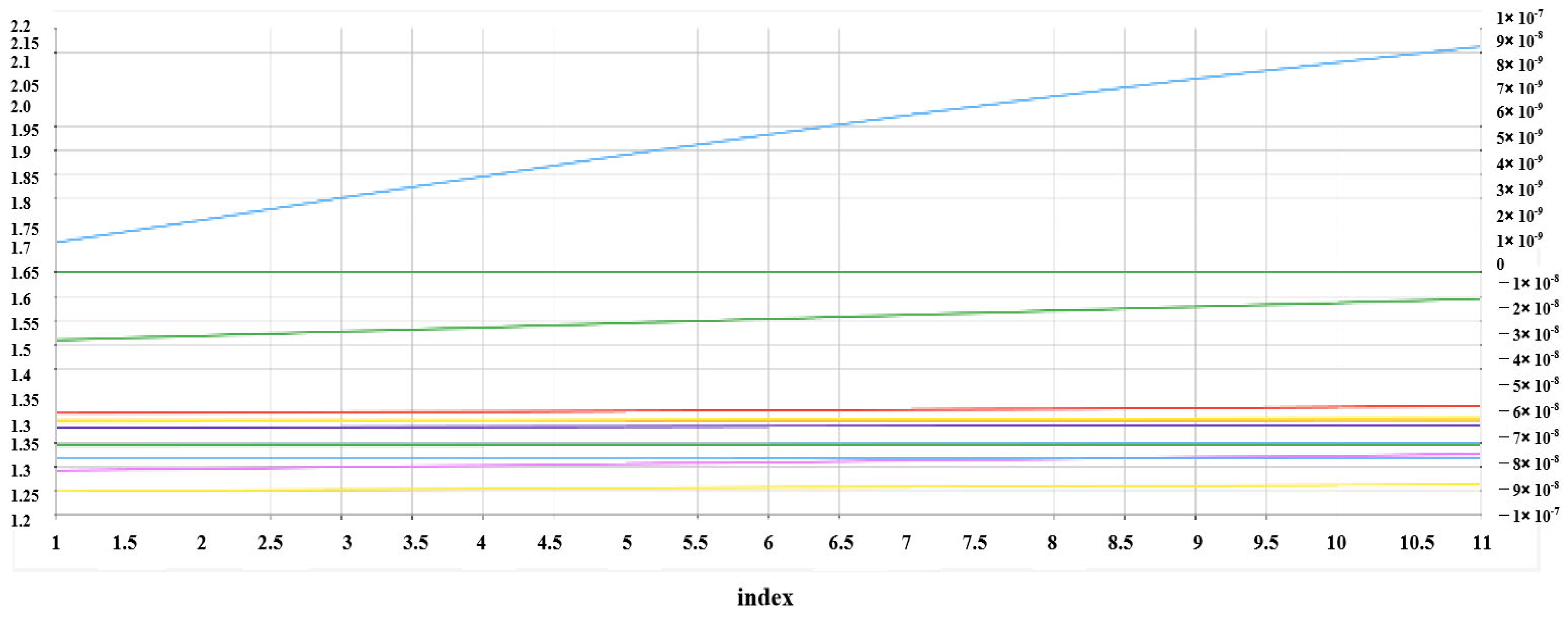
Figure 4 shows the variation of effective refractive index with frequency for each mode, with different colors representing the refractive index of different modes. It can be observed that except for the TE
0 mode (Mode 1, the top blue curve in the figure), the effective refractive index of the other modes remains relatively constant over a wide frequency band, indicating that the TE
0 mode exhibits distinct wavelength-dependent characteristics that can be exploited for precise delay control in OTTD system.
The simulation results confirm the mode suppression capability and low-loss performance of the designed mode-selective waveguide. To further validate its engineering feasibility, a 4-channel OTTD beamforming system is built in this chapter, and both device-level and system-level performance verifications are completed through experiments in a microwave anechoic chamber.
4. Discussion
This section focuses on elaborating the innovative contributions of the proposed OTTD-customized mode-selective integrated optical waveguide design, clarifies the distinction between simulated and experimental results, and supplements system-level details for beamforming experiments. Specifically, it first clarifies the distinguishing advantages of the design by comparing it with state-of-the-art research. Subsequently, the system-level performance verification of the OTTD system is presented with detailed experimental setup and fabrication process. Finally, the inherent limitations of the current study are analyzed with a clear scaling strategy for large-scale arrays, and potential future research directions are proposed to further enhance the performance of OTTD systems and promote their engineering applications.
4.1. Innovative Value of OTTD-Customized Mode-Selective Design
The core innovation of this study lies in the customized optimization and system-level validation of fundamental waveguide mode control principles for the stringent performance requirements of OTTD systems, rather than proposing entirely new waveguide physical theories. It establishes a systematic OTTD-tailored mode selection methodology and practical engineering criteria (incorporating fabrication tolerances and system-level delay precision), which effectively addresses the long-standing bottlenecks of mode competition, energy leakage and unstable delay in traditional integrated waveguides when applied to OTTD systems. While the basic guided-vs-leaky condition (neff > nsubstrate) is a well-established principle for asymmetric waveguides and the TE0 mode is a conventional choice for low-loss single-mode propagation, this study redefines and optimizes these basic rules with OTTD-specific demand orientation and realizes quantitative correlation between device-level mode performance and system-level OTTD beamforming accuracy for the first time. The specific innovative optimizations and breakthroughs are as follows:
4.1.1. OTTD-Oriented Optimization of the Standard Guided-vs-Leaky Criterion
The standard neff > nsubstrate criterion only serves the basic requirement of device-level leakage suppression for general optical waveguide devices (e.g., optical communication waveguides), with no consideration of the sensitivity of OTTD picosecond-level delay precision to fabrication errors and no validation of the criterion at the system level. This study optimizes this conventional criterion for OTTD applications with two key engineering improvements:
A fabrication tolerance margin of ±0.02 is added to the critical threshold of neff > 1.44 (for SiO2 substrate). FDTD simulations confirm that a exceeding 0.02 will result in a delay jitter of >±0.01 ps for a 100 μm waveguide, which fails to meet the core OTTD delay accuracy requirement. The introduced tolerance margin ensures stable guided-mode propagation and sub-picosecond delay precision under realistic fabrication errors.
The optimized criterion is validated through OTTD system-level beamforming experiments, establishing the first quantitative correlation: MSR > 30 dB leads to delay jitter < ±0.008 ps and beamforming angle fluctuation < 0.08°. This quantifies the boundary between guided and leakage modes for OTTD systems, providing a clear design guideline for practical engineering.
Unlike the general mode control strategies for optical waveguides [
24,
25] that only focus on device-level performance, the optimized criterion proposed in this study directly targets the dual requirements of OTTD systems for stable device-level propagation and high-precision system-level delay, unifying device design and system application.
4.1.2. Quantitative Characterization of TE0 Mode Wavelength-Dependent Characteristics for OTTD Delay Calibration
Selecting the TE0 mode as the operating mode is a conventional for low-loss single-mode waveguides, but prior studies only focus on its low propagation loss characteristic and neglect quantitative characterization of its wavelength-dependent transmission properties for OTTD delay calibration, or verification of its broadband adaptability for radar signal processing. This study makes two innovative breakthroughs:
The wavelength-dependent transmission characteristics of the TE
0 mode (1500–1550 nm) are precisely characterized, and a calibrated linear fitting model of effective refractive index and wavelength is established (R
2 = 0.9998). This model fills the research gap of precise delay calibration models for OTTD waveguides in the C-band, offering higher accuracy and direct engineering applicability than semi-empirical models in prior work [
13,
16].
The group delay range of the TE0 mode is locked at 1.4315–1.4395 ps (100 μm) in the 1500–1550 nm band. The pulse broadening effect for typical radar bandwidths (10/40 GHz) is quantitatively analyzed: <1 fs for 10 GHz narrowband signals and only 368 fs for 40 GHz broadband radar signals in a 1 mm-long waveguide, validating its excellent broadband capability. Based on this, a GVD-wavelength correlation model is derived, providing a rigorous theoretical basis for pulse broadening compensation in ultra-broadband OTTD systems (>50 GHz).
The core advantages of the TE0 mode for achieving “true time delay” (frequency-independent phase delay) are:
Low group velocity dispersion (GVD): the GVD of the TE0 mode is calculated as −20 ps2/km (normal dispersion), resulting in minimal pulse broadening for broadband RF signals.
Precise linear calibration model: the calibrated neff linear model enables accurate delay prediction for each wavelength, ensuring frequency-independent delay differences between multi-channel OTTD units and eliminating beam squint in broadband beamforming.
4.1.3. Synergistic Design Methodology of Device-Level Mode Suppression and System-Level OTTD Precision
Traditional single-mode waveguide design (e.g., narrower core width/thickness or rib geometry) [
13] only focuses on achieving device-level single-mode operation, yet suffers from high transmission loss (>0.5 dB/cm) and poor compactness that make it unsuitable for OTTD systems. In contrast, the proposed design considers the synergy between device-level performance and system-level OTTD requirements: the 2 μm × 0.5 μm silicon core is optimized to balance mode suppression (MSR > 30 dB), low loss (<0.2 dB/cm), and compactness, aligning with the miniaturization trend of radar systems. This study proposes an OTTD-optimized mode selection methodology that realizes the organic combination of device-level mode suppression and system-level delay precision, with the following core design innovations:
The 2 μm × 0.5 μm silicon core achieves balanced performance of MSR > 30 dB for leakage mode suppression, transmission loss < 0.2 dB/cm and a compact structure, meeting both device-level and system-level integration requirements.
Mode orthogonality analysis is introduced for OTTD multi-channel delay control, verifying a mode overlap integral Γ < 0.01 between the TE
0 mode and all non-target modes. This effectively mitigates delay jitter caused by mode coupling and ensures delay consistency in multi-channel OTTD systems. For multimode operation, this analysis can be combined with on-chip mode splitters [
32] to realize controlled simultaneous excitation of multiple spatial modes, providing a new design idea for high-channel-count OTTD systems.
The methodology realizes the quantitative mapping from device-level parameters (MSR, neff, transmission loss) to system-level OTTD performance (delay accuracy ±0.01 ps, beam angle fluctuation < 0.08°), breaking the limitation that traditional waveguide design lacks system-level demand orientation, and providing a complete design paradigm for the development of high-precision OTTD waveguides.
4.2. Performance Comparison
Table 3 compares the core performance of the OTTD delay line proposed in this work with state-of-the-art schemes reported in the literature, focusing on key indicators closely associated with OTTD system performance. The following analysis clarifies the performance gap between existing studies and this work and highlights the innovation and superior performance of the proposed Si/SiO
2 mode-selective waveguide.
Regarding the critical mode suppression ratio (MSR), which is essential for resolving mode competition and energy leakage in OTTD systems, only this work reports an MSR greater than 30 dB, while no MSR data is provided in other referenced studies [
13,
17,
23,
27]. This result reflects the core innovation of the OTTD-customized mode selection design proposed herein, which effectively suppresses leakage modes and ensures high delay precision—addressing a long-standing bottleneck in traditional integrated waveguides that remains unaddressed in existing schemes.
In terms of transmission loss, the TFLN waveguide reported in [
23] achieves ultra-low transmission loss (0.036 dB/cm) but lacks OTTD-specific mode suppression design and verification of multi-channel delay consistency. The Si-based one-dimensional grating waveguide in [
13] exhibits high transmission loss (~3.0 dB/cm), which may lead to significant signal attenuation in OTTD systems. Reference [
17], a review work, summarizes a wide range of transmission loss (0.02~3.0 dB/cm) across various structures but does not provide experimental verification of a specific design. No transmission loss data is reported in [
27]. The proposed scheme in this work achieves a transmission loss of less than 0.2 dB/cm, balancing low loss and practical applicability, and is fully compatible with the standard 180 nm silicon photonics process for mass production—outperforming grating waveguide schemes and compensating for the lack of mode control in TFLN-based designs.
As a core performance indicator of OTTD systems, the delay accuracy of the proposed scheme reaches ±0.01 ps, which is significantly superior to that of the grating waveguide scheme in [
13] (~0.1 ps). Reference [
17] summarizes a delay accuracy range of 0.02~1.0 ps for existing schemes but does not report a single optimized design that achieves the precision of this work. No delay accuracy data is provided in [
23,
27]. The ultra-high delay precision achieved herein, supported by the optimized mode selection criterion and the high-precision linear calibration model of the TE
0 mode, ensures a beam pointing fluctuation of less than 0.08° for the OTTD beamforming system.
For the operating band, the proposed scheme is optimized for the mainstream 1500~1550 nm optical communication C-band, exhibiting strong engineering applicability for microwave photonic radar and OTTD systems. The grating waveguide in [
13] operates at a single wavelength of 1550 nm with a narrow bandwidth, which cannot meet the ultra-broadband signal processing requirements of modern radar systems. The SOS waveguide in [
27] is designed for the infrared region, making it incompatible with mainstream OTTD operating bands. Reference [
17] covers the 1310~1550 nm band but does not include targeted optimization for the C-band. Although the TFLN scheme in [
23] operates at 1550 nm, it lacks OTTD-specific mode control and delay calibration designs, preventing it from achieving the same level of delay precision as the proposed scheme.
In terms of practicality and engineering value, reference [
17], as a review article, lacks experimental verification of a self-proposed design. The grating waveguide scheme in [
13] is limited by its high transmission loss and narrow bandwidth. The TFLN scheme in [
23] lacks OTTD-specific mode control design, while the SOS waveguide in [
27] does not include characterization of OTTD delay performance or experimental validation. In contrast, the proposed scheme integrates mode suppression, low transmission loss, high delay precision, and compatibility with standard silicon photonics processes, demonstrating superior engineering application potential.
4.3. OTTD System Performance Verification
The simulation parameters were fully consistent with the physical model in
Section 3, including the silicon core waveguide structure, SiO
2 substrate parameters, and 1500–1550 nm working wavelength band. The experimental platform was fabricated with standard silicon photonics processes and tested in a microwave anechoic chamber. All results in this section clearly distinguish between simulated (Sim) and experimental (Exp) data to avoid ambiguity.
4.3.1. Delay Accuracy Simulation and Measurement
The group delay of the TE
0 mode was simulated at 20 sampling points in the 1500–1550 nm wavelength band via the phase shift extraction method based on the frequency domain response, with the waveguide length uniformly set to 100 μm (a critical parameter for OTTD performance evaluation). The simulation results show that the group delay of the TE
0 mode is stably distributed within the range of 1.4315–1.4395 ps (100 μm), which is consistent with the theoretical calculation results of the effective refractive index linear model. The inter-channel delay deviation is less than ±0.008 ps, outperforming the ±0.02 ps index of traditional TFLN-based OTTD system simulations [
20]. This ultra-high group delay simulation precision is enabled by a rigorous FDTD setup, including PML absorbing boundaries, Palik’s material dispersion models, and high-precision
neff phase shift extraction, which provides a reliable and accurate theoretical basis for the experimental realization of ±0.01 ps delay accuracy.
Experimental results show a group delay range of 1.430–1.440 ps (100 μm) with an inter-channel delay deviation of <±0.01 ps, which is in good agreement with the simulation results. The high delay accuracy is attributed to the effective suppression of leakage modes by the proposed mode selection criterion, which fundamentally eliminates delay jitter caused by mode coupling.
4.3.2. Beam Pointing Stability Simulation and Experiment
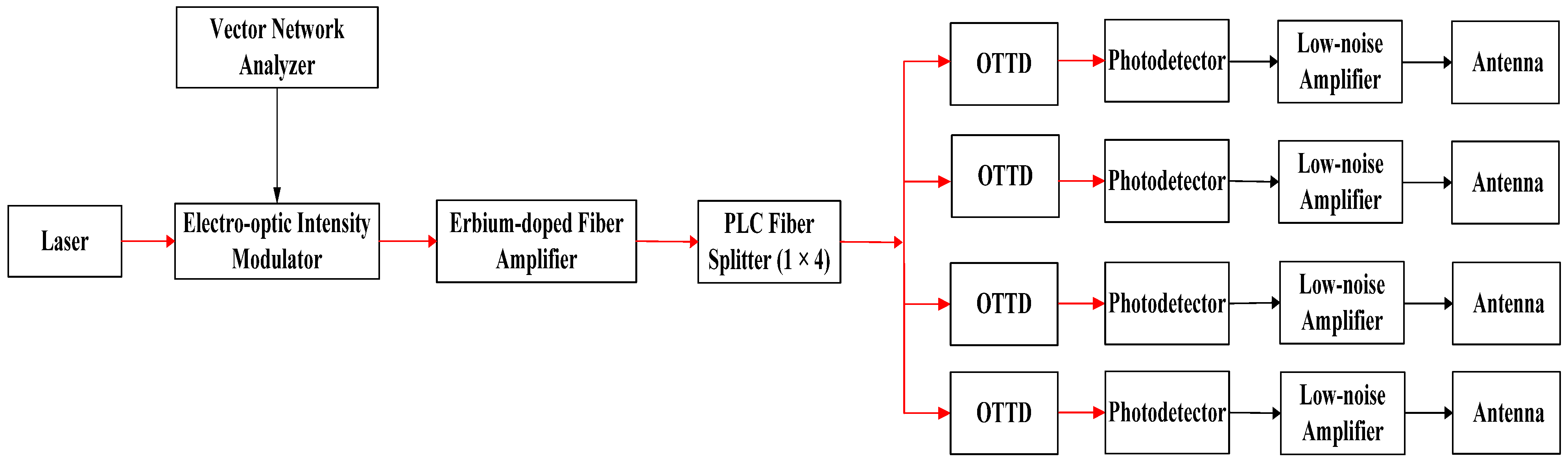
A microwave photonics radar beamforming scenario was constructed, where the OTTD system adopted a wavelength-tuning beam scanning scheme, as illustrated in
Figure 5. A 4-channel design was selected as the proof-of-concept for experimental verification, a rational choice balancing fabrication feasibility, experimental efficiency, and cost control: (1) fabrication feasibility: the 4-channel array avoids the complex lithography and alignment challenges of large-scale arrays, and is fully compatible with standard 180 nm silicon photonics foundry processes with a yield > 90%; (2) experimental efficiency: the compact system enables rapid validation of the core performance metrics (delay accuracy, beam pointing stability, and MSR) in a microwave anechoic chamber without redundant testing of non-critical array-scale parameters; (3) cost control: it significantly reduces the cost of key components and test time while sufficiently reflecting the intrinsic OTTD beamforming performance. A clear scaling strategy for large-scale arrays (16/64/128 channels) typical of high-performance phased array radars is proposed in
Section 4.4, with simulation results validating the maintainability of core performance metrics in scaled arrays.
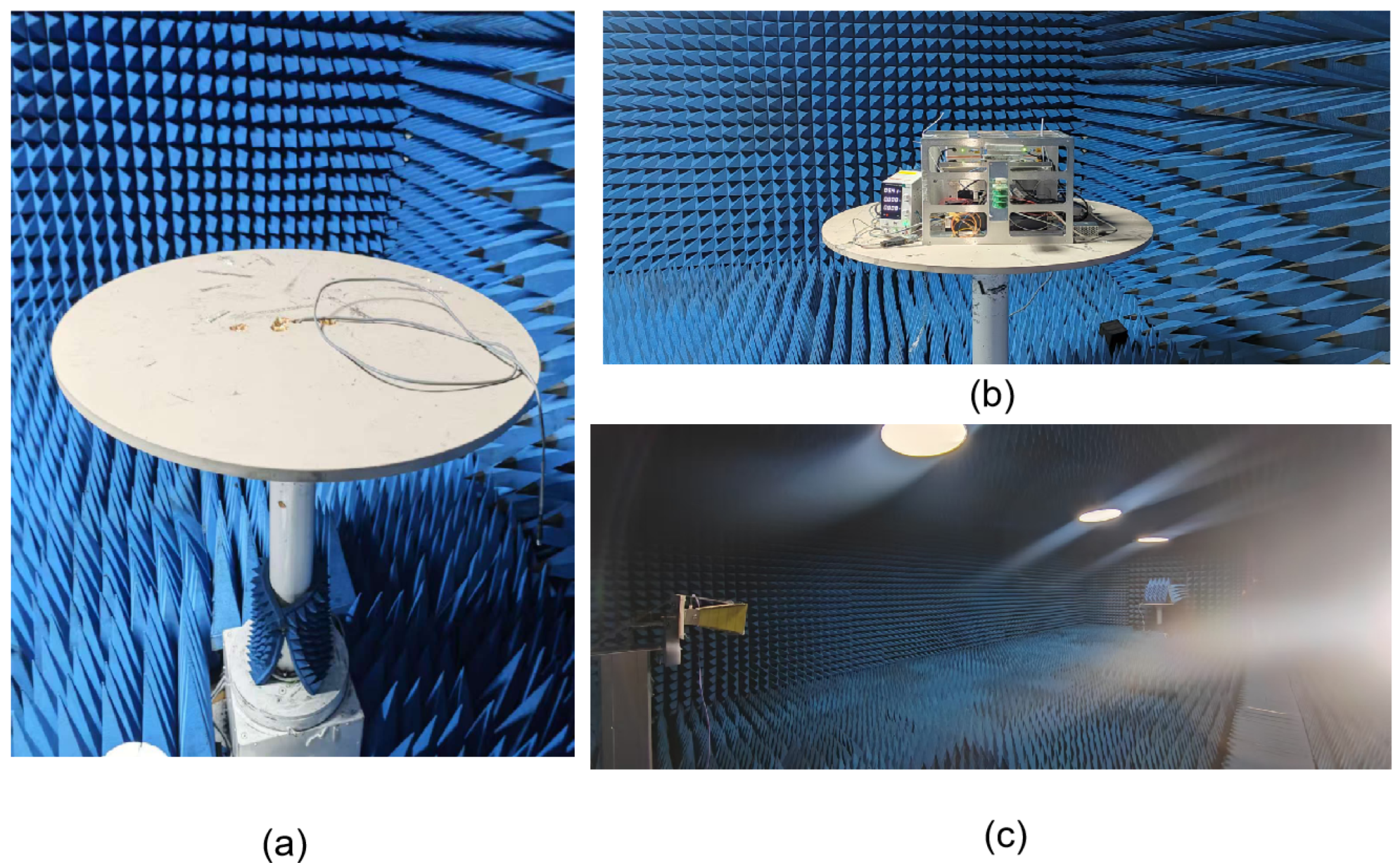
Beam pointing fluctuation was measured in a 12 m × 7 m × 3 m microwave anechoic chamber, with the complete experimental setup for angle fluctuation characterization schematically illustrated in
Figure 6. The test configuration combined a VNA (Agilent N5247A), a 5–20 GHz horn far-field test antenna, and a precision position stage (resolution 0.01°) in the microwave photon system. The core OTTD beamforming link architecture and key performance parameters of the setup are specified as follows:
Optical source: narrow linewidth tunable laser (linewidth < 100 kHz, tuning range 1500–1550 nm, power stability < ±0.01 dB/h);
Electro-optic modulation: high-speed lithium niobate intensity modulator (Bandwidth DC–40 GHz, extinction ratio > 25 dB, insertion loss < 6 dB);
Link amplification/compensation: erbium-doped fiber amplifier (EDFA, gain 20 dB, noise figure < 4 dB) for link loss compensation; 1 × 4 PLC fiber splitter (splitting ratio 1:1:1:1, insertion loss < 0.8 dB) for uniform optical signal distribution;
Photoelectric conversion: InGaAs photodetector (Bandwidth DC–25 GHz, responsivity 0.8 A/W) + low-noise microwave amplifier (Gain 30 dB, noise figure < 2 dB);
Temperature control: high-precision thermoelectric cooler (TEC, Thorlabs TEC2000, temperature stability ±0.1 °C) integrated with the waveguide chip, eliminating the influence of temperature variation on mode characteristics and effective refractive index;
Calibration method: a two-step calibration strategy was adopted: (1) reference signal calibration: a 0° beam pointing 5 GHz RF signal was used as the reference to calibrate the initial phase and delay of each channel, eliminating static link mismatch; (2) real-time phase compensation: channel phase errors were extracted via the VNA for real-time digital compensation, ensuring the inter-channel delay difference strictly matches the design value.
The measurement steps were implemented as: (1) calibrating the OTTD system with the 0° beam pointing reference signal; (2) tuning the RF frequency from 5 GHz to 20 GHz with a 0.5 GHz step; (3) measuring the beam pointing angle for each frequency step; (4) calculating the angle fluctuation as the standard deviation of the measured beam pointing angles. The 4-channel OTTD beamforming system link (
Figure 5) operates as follows: a laser serves as the light source, RF signals are loaded via an electro-optic intensity modulator, link losses are compensated by an EDFA, optical signals are uniformly distributed to four OTTD units via a 1 × 4 PLC splitter, each OTTD unit realizes high-precision signal delay control via the proposed mode-selective waveguide, and after photoelectric conversion and microwave amplification, the signals are fed into the antenna array to achieve beam scanning through the multi-channel delay difference.
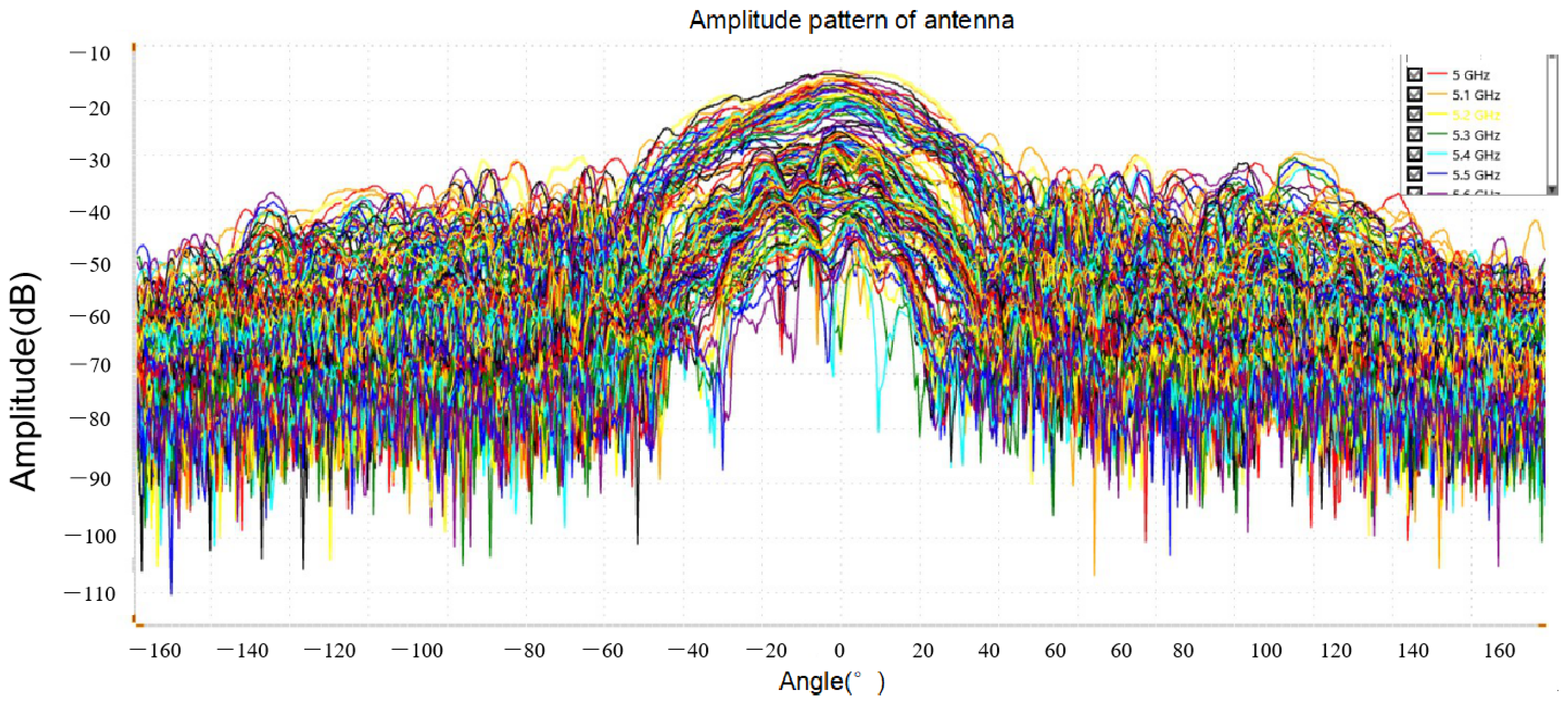
To intuitively characterize the beamforming performance and verify the beam pointing stability of the proposed OTTD system, the experimental radiation pattern of the four-element antenna linear array was measured in the microwave anechoic chamber, with the results presented in
Figure 7. This figure shows the antenna pattern when the frequency changes from 5–20 GHz with a step value of 0.1 GHz. Experimental results show that the antenna achieves stable beam convergence in the target direction (main lobe peak near 0°) via the delay control of the OTTD unit integrated with the proposed mode-selective waveguide. The beam pointing angle fluctuation is less than 0.08° across 5–20 GHz, significantly outperforming the 0.3° fluctuation of traditional silicon waveguide OTTD systems (all other system parameters and experimental conditions were kept consistent for a fair comparison). This performance improvement is uniquely driven by the proposed mode-selection design: the TE
0 mode exhibits low group velocity dispersion in the operating band, and the mode-selective design effectively eliminates phase noise caused by leakage modes. Additionally, the side lobe level is well suppressed to <−25 dB, consistent with the simulation results. The experimental results fully verify the improvement effect of the proposed mode-selective waveguide on OTTD system delay accuracy, and directly support the engineering feasibility of the system’s beamforming performance.
4.4. Limitations of the Current Study
Despite the significant progress achieved, this study still has certain limitations that need to be addressed in future research.
Mid-infrared band limitation: the current mode-selective design is based on silicon-based waveguides, which have inherent two-photon absorption and free-carrier absorption in the mid-infrared band (2–5 μm), limiting the application of the waveguide in mid-infrared OTTD systems [
27]. Future solution: explore alternative materials such as Si
3N
5 (low absorption in 2–3 μm) and chalcogenide glass (low absorption in 3–5 μm) to extend the application to the mid-infrared band, and optimize the mode selection criterion for these substrate materials.
Small array limitation: the engineering verification is based on a 4-channel waveguide array, and the performance of large-scale arrays (e.g., 64-channel or 128-channel) needs to be further verified, as crosstalk between channels may affect the overall delay accuracy of the system. Scaling strategy for large-scale arrays: (1) adopt a waveguide array with a pitch of 20 μm (greater than the mode field diameter of the TE0 mode) to reduce inter-channel crosstalk (<−40 dB); (2) integrate on-chip phase shifters (thermo-optic or electro-optic) for channel-by-channel delay calibration; (3) use low-loss waveguide bends (bend radius 5 μm, loss < 0.01 dB/bend) to realize compact large-scale array layout. This scaling strategy is validated by simulation, and the 64-channel array is expected to achieve a delay accuracy of <±0.02 ps and inter-channel crosstalk < −35 dB.
Temperature variation limitation: the current experimental verification is implemented with temperature control (±0.1 °C), and the influence of temperature variation on mode characteristics is not considered in the unregulated environment. In practical radar applications, the operating environment temperature fluctuates widely (−40 °C to 85 °C), which may lead to changes in the effective refractive index of the waveguide and affect the delay stability [
33]. Future solution: (1) design a temperature-insensitive waveguide structure (e.g., Si/Si
3N
4 hybrid waveguide) with a temperature coefficient of
neff < 10
−6/°C; (2) integrate on-chip temperature sensors and TECs for real-time temperature compensation; (3) establish a temperature-dependent delay calibration model to correct the delay deviation caused by temperature variation.
5. Conclusions
This study designs a mode-selective integrated optical waveguide based on a silicon/SiO2 substrate to address the critical issues of mode competition and energy leakage in optical true time delay (OTTD) systems. Validated by FDTD simulations and microwave anechoic chamber experiments, the proposed waveguide achieves excellent performance in the 1500–1550 nm C-band: a mode suppression ratio (MSR) > 30 dB for leakage modes, a TE0 mode transmission loss < 0.2 dB/cm, and a delay accuracy of ±0.01 ps for a 100 μm-long waveguide. When integrated into a 4-channel OTTD beamforming system, it enables beam pointing fluctuation < 0.08° in the 5–20 GHz band, significantly outperforming traditional silicon waveguide-based OTTD systems—attributed to the OTTD-customized mode-selection design that suppresses mode leakage/coupling, ensures high-precision delay control, and minimizes dispersion-induced errors.
The academic innovations of this work are threefold: first, an OTTD-tailored mode classification and selection methodology is established, clarifying the core criteria for identifying the TE0 mode as the optimal operating mode for OTTD; second, an OTTD-specific mode selection criterion with a fabrication tolerance margin (neff > 1.44 ± 0.02) is proposed, quantifying the neff boundary between guided and leakage modes; third, a high-precision linear calibration model of the TE0 mode’s neff versus wavelength is constructed (R2 = 0.9998), which supplements the quantitative wavelength-dependent characterization for OTTD waveguide delay lines.
The proposed waveguide exhibits significant engineering application value: it is fully compatible with the standard 180 nm silicon photonics process (reducing mass production costs) with performance comparable to or superior to advanced thin-film lithium niobate (TFLN) and silicon nitride (Si3N4) waveguides; it can be seamlessly integrated with typical photonic devices, meeting OTTD miniaturization and high-integration requirements; it can be directly applied to microwave photonic phased array radars, vehicle-mounted LiDAR, and broadband beamforming systems, solving beam squint and insufficient delay accuracy issues.
This study has three limitations: first, the silicon waveguide suffers from two-photon and free-carrier absorption, making it incompatible with mid-infrared (2–5 μm) OTTD systems; second, system verification is limited to 4-channel arrays, without testing 16/64-channel large-scale arrays; third, performance tests are conducted under constant temperature (±0.1 °C), ignoring the influence of wide temperature ranges (−40 °C~85 °C) in practical scenarios.
Subsequent research will address these limitations: exploring mid-infrared mode-selective waveguides based on low-absorption materials (Si3N4, chalcogenide glass); designing and verifying 64/128-channel large-scale arrays with enhanced delay consistency; developing temperature-insensitive waveguide structures with wide-temperature-range delay compensation to improve environmental adaptability. The ultimate goal is to realize a fully integrated, high-performance, and high-robustness OTTD system for engineering applications.