


Abstract
Fiber Bragg Gratings (FBGs) are essential components in fiber-optic sensing systems owing to their high sensitivity, compact structure, and immunity to electromagnetic interference, and have been widely applied in structural health monitoring, aerospace, energy, and biomedical fields. Conventional FBG fabrication methods, including standing-wave, two-beam interference and phase mask methods, rely heavily on the photosensitivity of optical fibers and are limited in terms of fabrication flexibility and grating structural diversity. Femtosecond Laser Direct Writing (FLDW) has emerged as a prospective approach for FBG fabrication due to its nonlinear absorption mechanism, low thermal damage, three-dimensional processing capability and broad material compatibility. This review summarizes recent progress in FLDW-FBGs, with particular emphasis on the characteristics of point-by-point (PbP), line-by-line (LbL) and plane-by-plane (Pl-by-Pl) methods. The implementation of these methods in various fiber, including standard single-mode fibers, sapphire fibers, and polymer optical fibers, is discussed in detail. In addition, recent advances in FBG-based sensing applications under extreme environments, as well as in biomedical sensing and optical fiber communication, are reviewed. Key challenges related to fabrication efficiency, process stability, and microstructural characterization are further analyzed. Finally, potential development directions toward improved controllability, structural design flexibility, and engineering applicability of FLDW-FBGs are outlined.
1. Introduction
With the rapid development of optical fiber technology, optical fiber sensing has become a key technical means in the field of sensing technology by virtue of its high sensitivity, flexible design, low cost, corrosion resistance, immunity to electromagnetic interference, and multi-parameter decoupling potential. Among various technological methods, Fiber Bragg Gratings (FBGs), thanks to their core advantages of compact size, wavelength encoding, suitability for mass production, and ease of multiplexing capability, are emerging as a key component driving the advancement of optical fiber sensing technology and have been widely applied in multiple fields.
The characteristics of FBGs—encompassing Bragg Wavelength, reflectivity, full width at half maxima (FWHM), insertion loss and side mode suppression ratio (SMSR) largely depend on their fabrication technology. Among various fabrication methods, Femtosecond Laser Direct Writing (FLDW) offers unique advantages, such as non-thermal effects, the ability to overcome material limitations, three-dimensional processing capability, and excellent processing precision. It enables the fabrication of FBGs with strong resistance, flexible grating structures and a wide range of substrate materials, thereby opening new avenues for expanding FBGs applications in fields like extreme environment monitoring [1,2,3], biomedical sensing [4,5,6,7], aerospace [8,9,10], and energy facilities [11,12,13].
This paper focuses on FLDW for FBGs fabrication and its sensing applications, aiming to provide a comprehensive review of the development, research progress, and future trends of this field. First, traditional FBGs fabrication technologies and different types of FLDW are elaborated. Subsequently, the paper reviews the innovative applications of various FLDW-fabricated FBGs across different fields. Finally, it conducts an in-depth analysis of the current technical challenges facing FLDW-FBGs technology and outlines its potential development directions. Compared with earlier reviews, this work further enriches the technical analysis in this field through quantitative performance comparisons, experimental result characterizations, and discussions on process limitations, clarifying the performance advantages and application scenarios of different direct writing technologies.
2. Overview of FBGs
2.1. Principle of FBGs
An FBG is a wavelength-specific reflector by introducing specific refractive index modulation into a fiber core. When a broad light is injected into fiber, only those wavelengths close to the Bragg condition can be reflected:
where denotes the central peak wavelength also called Bragg wavelength, is the averaged refractive index over the whole grating period and can be approximated as , is the effective refractive index of the coupled mode in the fiber core, is the mean value of the refractive index change over length L due to the grating inscription and represents the grating period. Figure 1 shows the structure and working principle of an FBG.
Figure 1.
The structure and working principle of an FBG.
The FBG is sensitive to temperature and strain because both and change with variations in temperature and strain, as shown as follows:
where is the temperature change, is the applied strain, represents the temperature-induced Bragg wavelength change, and represents the wavelength change caused by strain. When only a temperature change occurs, we could obtain:
where is the thermo-optic coefficient and is the coefficient of thermal expansion (CTE). When only a strain change occurs, we could obtain:
By introducing the photoelastic coefficient, we can obtain:
The fiber is axisymmetric and ; therefore, by combining the Equations (1), (4), and (5), we can obtain:
where
Among the parameters, is the axial strain, is the radial strain, is the effective photoelastic coefficient, denotes the longitudinal photoelastic coefficient, represents the transverse photoelastic coefficient, and is Poisson’s ratio of the material.
2.2. Traditional Fabrication Methods of FBGs
In 1978, the world’s first FBG was developed at the Communications Research Centre Canada (CRC) by Hill et al. [14] utilizing the photosensitivity of germanium-doped fibers to ultraviolet (UV) light. They injected UV light generated by a 488 nm argon ion laser into the Germanium-doped fiber. The reflected light caused by Fresnel reflection at the fiber end face interfered with the forward-propagating light to form a standing wave interference field inside the fiber, thereby creating a periodic refractive index modulation structure along the fiber axis. This method is known as the “standing wave method”, as shown in Figure 2a. However, the standing wave method relies heavily on material photosensitivity. Due to its limited flexibility in adjusting the periodicity and intensity of the standing wave, it is technically challenging and inefficient to create precise refractive index differences at specific locations. As a result, it is not the preferred method for fabricating high-precision complex-structure gratings such as Chirped Fiber Bragg Gratings (CFBGs), Phase-Shifted Fiber Bragg Gratings (PSFBGs), and Long-Period Fiber Gratings (LPFGs).
Figure 2.
Three traditional methods for the fabrication of FBGs: (a) Standing wave method. (b) Two-beam interference method. (c) Phase mask method.
To overcome the limitations of the standing wave method, Meltz et al. [15] first fabricated FBGs for the communication band using the two-beam interference method in 1996. The fabrication process involves three sequential procedures: (1) A hydrogen-loaded fiber without coating is mounted on a precision three-axis translation stage. (2) The incident laser beam is split into two coherent sub-beams of equal intensity. (3) These beams are focused onto the fiber core through a mirror pair to generate interference fringes. The spacing of the interference fringes is determined by the wavelength of the laser beam and the incident angle :
The periodic light intensity distribution induces refractive index modulation in the fiber core through the photosensitive effect, forming a refractive index grating with the same period as the interference fringes. In the same year, Asobe et al. [16] fabricated FBGs with reflectivity > 90% in chalcogenide fibers using two coherent beams from a He-Ne laser. In 2004, Chuang et al. [17] proposed a new technology based on two-beam interference and polarization control: by rotating a half-wave plate, they adjusted the alternating refractive index modulation amplitude to achieve pure apodization. In addition, they introduced phase shifts via 90° rotation of the half-wave plate, simplifying the fabrication of PSFBGs. In 2008, Becker et al. [18] combined deep ultraviolet (DUV) lasers with the two-beam interference method using a Talbot interferometer to prepare FBGs suitable for different wavelength ranges. They also applied this technology to aluminum-/ytterbium-doped silica fibers, demonstrating its potential for writing in non-photosensitive fibers. In 2019, D. Sola et al. [6] achieved efficient and low-damage periodic refractive index modulation on ophthalmic polymers using the two-beam interference technique and the fabricated diffraction gratings provide a new technical solution for refractive correction. However, the two-beam interference method for grating fabrication usually requires point-by-point scanning or segmented exposure, resulting in low fabrication efficiency and extremely high requirements for the coherence of the light source and stability of the optical path system.
In 1993, Hill et al. [19] first fabricated FBGs using the phase mask method (Figure 2c). The laser beam is diffracted by the mask to produce ±first-order beams in this method, which interferes within the fiber core to induce a periodic modulation of the refractive index. Compared with the earlier methods, its grating period is no longer limited by the wavelength of the writing light source; by introducing a laser transverse scanning system, the grating length can be precisely controlled. In addition, this method has relatively relaxed requirements on the coherence of the writing light source. With these advantages, it has become the most mature and widely used technical solution in the field of FBGs fabrication. In 2003, Fan et al. [20] employed the phase mask method to inscribe FBGs in ytterbium-doped double-clad fibers, which served as output couplers to realize a narrow-linewidth, high-stability laser output, offering an effective wavelength control solution for fiber lasers. However, the conventional phase mask method typically relies only on the ±first-order diffracted beams to inscribe FBGs. In 2013, Barabach et al. [21] utilized higher-order diffracted beams (±second- and ±third-orders) from a phase mask to successfully inscribe multiple Bragg reflection peaks in microstructured polymer optical fibers (mPOFs). Moreover, the phase mask method can also be applied to the inscription of broadband CFBGs [22,23,24] and large-scale Weak Fiber Bragg Gratings (WFBGs) [25,26], greatly enhancing the versatility and flexibility of grating fabrication. While the grating period of FBGs fabricated by the phase mask method is strictly limited by the geometric parameters of the phase mask, where is the period of the FBG and ΛPM is the period of the phase mask:
This limitation above prevents flexible tuning of the Bragg wavelength, as FBGs with different wavelengths require phase masks of corresponding periods. Such rigid dependence introduces major challenges for applications demanding multi-wavelength or tunable gratings, increasing fabrication costs and limiting process adaptability. In particular, for dense wavelength division multiplexing (DWDM) systems or complex gratings, frequent phase mask replacement is necessary [27,28,29], which significantly lowers fabrication efficiency.
Table 1 summarizes the characteristics of the three traditional FBGs fabrication methods. These methods also have limitations, for example, the grating period is only achievable in the range of 0.2–2 μm (limited by the mask/laser wavelength), the thermal stability threshold is below 300 °C, and the fabrication cycle of customized gratings is considerably long [30]. It is worth noting that all the above methods rely on the photosensitivity of the optical fiber during FBG preparation. Hydrogen loading treatment or doping of ordinary optical fibers with specific ions can improve the photosensitivity of the fiber [31].
Table 1.
Comparison of Traditional Methods for the Fabrication of FBGs.
Despite the maturity and reliability of conventional phase mask-based ultraviolet inscription techniques, their inherent dependence on photosensitive materials and limited flexibility in grating period and structure design restrict their applicability in complex grating architectures and extreme-environment sensing. These limitations have motivated the exploration of alternative fabrication strategies capable of overcoming material and geometric constraints. With the rapid development of micro-nano processing technology, advanced lithography processes represented by extreme ultraviolet lithography (EUL), electron beam lithography (EBL), and nanoimprint lithography (NPL) [32,33,34] have emerged continuously. In this wave of technological innovation, ultrafast laser [35,36,37,38] technology stands out due to its unique advantages of extremely short pulse width and ultra-high peak power. In particular, femtosecond laser [39,40,41] processing has enabled high-precision, low-damage fabrication of complex microstructures, bringing new breakthroughs to FBGs manufacturing.
3. Characteristics of Femtosecond Laser Processing
The processing mechanisms of traditional UV lasers and femtosecond lasers differ significantly. UV lasers, including gas UV lasers, such as 248 nm excimer lasers [42] and 193 nm lasers [43], typically introduce a single-photon absorption to fiber material to achieve the refractive index modulation of FBGs. However, FBGs fabricated by this mechanism, often called Type-I FBGs, suffer from decay at high temperatures due to this reversible UV-induced photo-chemical process. In addition, UV lasers have relatively low peak power and wide pulse durations (e.g., 10–20 ns for gas UV lasers [44,45]). Due to sufficient thermal relaxation time, part of the energy is transferred to the fiber material in the form of heat. The fiber material undergoes modification relying on single-photon absorption [46], leading to the formation of melting and recast layers, which affects processing precision. Femtosecond lasers, with their fs level extremely short pulse duration and MW, and GW level extremely high instantaneous peak power [47], induce nonlinear absorption [48,49,50] in fiber materials and trigger local energy deposition inside the materials. It is mainly manifested as multiphoton ionization (MPI) [51], tunneling ionization (TI) [52], and avalanche ionization (AVI) [53]. Table 2 presents a comparison of the three main nonlinear absorption mechanisms occurring inside the fiber under femtosecond laser irradiation. As a key parameter characterizing the interaction between intense laser radiation and materials, the Keldysh parameter (γ) essentially reflects the ratio of the material ionization potential to the laser ponderomotive potential and serves as a key criterion for determining the laser-induced ionization mechanism. When γ ≫ 1, ionization is dominated by MPI; when γ ≪ 1, TI prevails; and when γ ≈ 1, the system enters a transitional regime where both ionization mechanisms coexist. Since the time for electrons to absorb laser energy (fs level) is much shorter than the thermal relaxation time of the lattice (ps level), the fiber material dissociates before thermal diffusion occurs, which means this is a cold processing technology [54]. This technology avoids the formation of a heat-affected zone, and the processing edges are smooth, burr-free, and microcrack-free, making it particularly suitable for the fabrication of ultra-fine structures inside fiber materials. The latest research demonstrates that Wet-Chemical Etching-Assisted Aberration-Enhanced Single-Pulse Femtosecond Laser Nanolithography (WEALTH) has achieved a critical performance breakthrough, enabling feature sizes as small as 25 nm and aspect ratios exceeding 104, thereby breaking through fabrication bottlenecks in nanophotonics and cross-disciplinary fields [55].
Table 2.
Comparison of Three Main Mechanisms of Nonlinear Absorption Processes.
These three mechanisms exhibit different characteristics in strong-field physics and may coexist or transform into each other in actual experiments. Among them, MPI or TI provides initial free electrons, which are the trigger conditions for AVI. AVI then becomes the dominant pathway for generating high-density plasmas in femtosecond laser processing. Although femtosecond laser–matter interaction enables localized and permanent refractive index modulation through nonlinear mechanisms, the complexity of these interactions also introduces challenges in process predictability and repeatability.
4. Technical Methods for Femtosecond Laser Inscription of FBGs
With the advancement of femtosecond laser technology, researchers have begun to use femtosecond lasers for FBGs fabrication, and a large number of practical applications of femtosecond laser holographic interference [18,57,58,59,60] and femtosecond laser phase mask method [56,61,62,63,64] for fiber grating fabrication have emerged. In 1996, Davis et al. [65] discovered that femtosecond lasers can induce refractive index modifications in glass and other materials, enabling direct laser writing of optical waveguides, marking the beginning of a new era in femtosecond laser-based grating fabrication. Compared with conventional UV laser-based interferometric and phase mask methods, the femtosecond laser interferometric and phase mask methods maintain essentially the same optical configuration, with the UV laser source simply replaced by a femtosecond laser. Owing to the ultrahigh peak power of femtosecond pulses, these femtosecond laser-based inscription methods substantially reduce the dependence on the photosensitivity of the fiber. However, the achievable Bragg resonance wavelength remains constrained by the laser wavelength or the period of the phase mask, which still imposes limitations on the tunability of the grating period; therefore, femtosecond laser-based two-beam interference methods and phase mask methods will not be discussed here. This review mainly focuses on FBGs fabrication based on FLDW.
FLDW allows the refractive-index modulation to be precisely confined to specific regions of the core or cladding. This method enables effective regulation of the location and strength of mode coupling, thereby significantly enhancing the design flexibility of fiber grating structures. Figure 3 illustrates the complete architecture of the FLDW system, which integrates writing, imaging, and in situ monitoring functional modules. This system is compatible with multiple writing modes and enables full-process regulation and characterization of the fabrication process: The writing module comprises a numerically controlled (NC) femtosecond laser source, an electrically controlled attenuator (ECA), and an electrically controlled polarizer (ECP). As the core excitation source, the femtosecond laser can induce localized refractive index modulation within the fiber core; precise dynamic control over the laser energy and polarization state is achievable through coordinated regulation of the ECA and ECP. The imaging module consists of a charge-coupled device (CCD) camera, a dichroic mirror, and a high-numerical-aperture objective: after passing through the ECP, the laser is reflected by the dichroic mirror to the objective, realizing high-precision alignment between the laser focus and the fiber core, while the CCD captures real-time images via the dichroic mirror to enable visual observation and positioning calibration during the writing process. The in situ monitoring module relies on a broadband light source (BBS) and a high-resolution optical spectrum analyzer (OSA), both connected to the writing fiber via a 3 dB coupler; when the fiber is fixed on a high-precision translation stage for patterning, the OSA can real-time capture the spectral response characteristics of the fiber, which are used to feedback and optimize the writing parameters. In addition, FLDW of FBGs can be divided into point-by-point (PbP) [66,67], line-by-line (LbL) [68,69] and plane-by-plane (Pl-by-Pl) [70,71] methods according to the inscription scheme. Figure 3b–d show the schematic diagrams of three methods, and Figure 3e,f show the corresponding microscopic pictures of grating written by our group.
Figure 3.
(a) Schematic diagram of the experimental setup for the FLDW system of fiber gratings. Schematic diagrams of FBG fabricated by (b) point-by-point, (c) line-by-line, (d) plane-by-plane methods. The microstructure diagrams of the gratings fabricated by the above-mentioned methods are shown in (e–g), respectively.
4.1. Femtosecond Laser PbP Fabrication of FBGs
The femtosecond laser PbP method focuses femtosecond laser pulses into the fiber core through a high-numerical-aperture objective lens. By employing a high-precision three-axis translation stage, the fiber is translated with a fixed step size. During the stage movement, the laser beam is switched off, and exposure occurs only during the brief pauses between movement, resulting in the formation of localized refractive index modulation points. Repeating this process produces a sequence of periodically inscribed refractive index modulation regions. Compared with the two-beam interference and phase mask methods, the grating period () of FBGs fabricated by the femtosecond laser PbP method is no longer constrained by the mirror positions in the optical path or by the phase mask period, but is instead determined by the fiber translation velocity () and the laser pulse frequency (), as expressed by the following:
Therefore, the period flexibility of FBGs fabricated by femtosecond laser PbP is greatly improved.
In 1999, Kondo et al. [66] first fabricated long-period fiber gratings (LPFGs) using the femtosecond laser PbP method. Since then, the PbP method has developed rapidly. In 2004, Martínez et al. [72] demonstrated the inscription of first-, second-, and third-order FBGs in the C-band on non-photosensitive standard single-mode fibers (SMFs) using infrared femtosecond laser irradiation, showing the high degree of flexibility offered by femtosecond laser direct-writing technology for microstructure fabrication. Subsequently, in 2005, they [73] systematically investigated the thermal stability of these gratings and reported excellent performance even after annealing up to 900 °C, laying the foundation for high-temperature fiber sensing applications. In 2006, they [74] further simplified the process by directly inscribing FBGs through the intact coating layer, reducing fabrication complexity and enhancing the mechanical strength of the gratings.
With the maturation of the PbP method, the research focus of the PbP method has gradually shifted toward enhancing FBGs performance and expanding its applications in sensing. In 2007, Lai et al. [75] optimized the laser focusing condition by immersing the fiber in index-matching oil, enabling the inscription of high index modulation, clean spectral responses, and large birefringence FBGs. Later, during 2011 to 2012, Williams et al. [76,77] enhanced the PbP process by introducing Gaussian and sinc apodization to suppress side lobes and by identifying the κ/α ratio (κ: coupling coefficient; α: scattering loss coefficient) as a key parameter for optimizing reflectivity. In 2015, Morana et al. [78] investigated the radiation tolerance of FBGs fabricated by different methods in high-radiation environments. They found that PbP-FBG subjected to a 100 °C thermal treatment exhibited only a ~10 pm blueshift under a 1 MGy radiation dose, which is significantly smaller than the 70–120 pm redshift observed in UV-written FBGs. In 2019, Yiping Wang et al. from Shenzhen University [79] fabricated FBGs in SMFs with different core diameters using the PbP method. The study found that, compared with large-core fibers, small-core fibers require lower laser pulse energy to achieve the same reflectivity. In addition, under the same reflectivity, FBGs in small-core fibers exhibit lower short-wavelength loss. Later, in 2022, Yiping Wang et al. [80] also found that first-order FBGs fabricated by PbP have lower insertion loss and higher κ/α ratio than second-order FBGs. In 2025, they [81] employed the PbP method to inscribe FBG arrays in the cladding of SMF. By redistributing light within the cladding, information retrieval via backscattered signals was achieved, while the FBGs in the cladding had minimal impact on core light transmission, resulting in a single-grating insertion loss as low as 0.00155 dB.
At the same time, FBGs inscribed by the PbP method have been widely applied in multi-dimensional sensing fields such as temperature, strain, shape, magnetic field, and liquid level. Alexandre et al. [82] inscribed High-Order FBGs (HO-FBGs) in optical fibers using the PbP method and they achieved high-precision calibration of FBGs under high-temperature conditions (Figure 4a). Waltermann et al. [83] combined cladding waveguide technology to inscribe multiple PbP-FBGs on a SMF, constructing a complete three-dimensional shape sensor (Figure 4b). Dash et al. [84] realized efficient and low-cost fabrication of dual-wavelength FBGs on POFs via the PbP method, making them suitable for health monitoring of mechanical structures (Figure 4d). Yiping Wang et al. [85] developed an all-fiber vector magnetic field sensor based on highly localized PbP-FBGs, overcoming the drawback that traditional semiconductors are vulnerable to electromagnetic interference (Figure 4c). They [86] also realized the simultaneous measurement of three parameters (liquid level, temperature, and refractive index) based on spectral loss, Bragg wavelength shift, and cut-off mode shift, demonstrating the flexibility of FLDW-FBGs in the design of multi-functional sensors (Figure 4e). Furthermore, Chen et al. [87] proposed a core-cladding FBG inscribed in parallel based on the PbP method. By utilizing the difference in effective refractive index between the fiber core and cladding, this sensor realizes simultaneous measurement of temperature and strain, solving the cross-sensitivity issue of temperature and strain. In the optical communication field, Yiping Wang et al. [81] also integrated Space Division Multiplexing (SDM) and WDM technologies. By independently encoding information through multi-wavelength channels, they successfully inscribed an optical fiber tag with 10-bit binary code with the PbP method and verified the feasibility of this encoding technology using an Optical Backscatter Reflectometer (OBR). This research provides a new idea for the intellectualization and security of future optical communication systems.
Figure 4.
Schematic diagrams of experimental setups for measuring various physical parameters using PbP-FBGs: (a) Temperature sensing [82], (b) Shape sensing [83], (c) Magnetic field sensing [85], (d) Strain sensing [84], (e) Liquid level sensing [86].
In addition, the femtosecond laser PbP method for FBG fabrication has also achieved significant breakthroughs in the application of sapphire fibers. In 2017, Anbo Wang et al. from Virginia Tech [3] first fabricated fourth-order FBGs with a period of 1.776 μm on sapphire fibers using the PbP method. Experiments found that the reflectivity of these sapphire fiber Bragg gratings (SFBGs) in the 1550 nm band is approximately 0.6%, and the reflectivity is permanently increased by approximately 5 times at 1400 °C. The structure of the SFBGs under a microscope is shown in Figure 5a. In addition, they [87] also fabricated three cascaded seventh-order parallel FBGs in sapphire fibers in 2022. The signal intensity has a linear relationship with the number of FBGs, and the temperature response is 15.0–20.0 pm/°C within 1500 °C, with an error of <3 °C and good stability. The multiplexed PFBG is shown in Figure 5b. In addition, in 2021, Yiping Wang et al. [88] systematically optimized the pulse energy and focal depth parameters, successfully fabricating SFBGs with a reflectivity of 2.3% and a WDM array composed of five SFBGs, expanding the upper temperature measurement limit to 1600 °C, as shown in Figure 5c.
Figure 5.
(a) Top and side views of SFBGs fabricated by PbP technology under a microscope [3], (b) Schematic diagram of three cascaded PFBGs [87], (c) Spectral drift of the SFBG array at 16 °C, 800 °C, and 1600 °C [88].
When it comes to other special fibers, Donko et al. [89] successfully inscribed 3rd-order FBGs in multi-core fibers (MCFs) using the PbP method in 2018, providing a flexible FBG fabrication scheme for SDM systems, suitable for scenarios such as filtering and dispersion compensation. In 2020, Liu et al. [90] inscribed first-order FBGs on panda-type and bow-tie-type polarization-maintaining fibers, with the reflection spectrum showing characteristic double peaks. In the same year, Qiu et al. [91] focused on few-mode fibers and used this method to accurately inscribe off-axis FBGs, verifying the ability to regulate the mode coupling and birefringence characteristics of few-mode fibers. Recently, Li et al. [67] successfully fabricated heterogeneous step-index gratings (Hetero-SI-FBGs) with a grating length of 3 mm, breaking the traditional single-channel limitation and realizing multi-wavelength output. The optical signal-to-noise ratios (OSNRs) reached 22.19 dB and 20.67 dB. These examples above show that there is no longer a requirement for the photosensitivity of fibers, and FBGs with different periods and different Bragg wavelengths can be flexibly fabricated. They also indicate the applicability of the femtosecond laser PbP method to various fiber types, providing a new approach for the processing of customized fiber devices.
4.2. Femtosecond Laser LbL Fabrication of FBGs
In FLDW, the PbP method is widely adopted for FBG fabrication due to its simplicity and precise control of the grating period. However, its limited single-pulse modification volume often leads to low reflectivity. Benefiting from the further precise control of the laser spot, the LbL method was developed as an improved method, where the laser focus is continuously scanned along the fiber core to form line-shaped periodic modulations. The LbL method arises from the frequent on-off switching of the laser, providing larger and more uniform refractive index changes with reduced insertion and polarization losses [68,92].
Extensive efforts have been devoted to improving the fabrication quality of FBGs. In 2010, Zhou et al. [68] first demonstrated the fabrication of FBGs using the LbL method. Subsequently, Chah et al. [93] fabricated highly birefringent FBGs in standard SMF via the LbL method, providing a viable solution for temperature-insensitive strain sensors. In 2019, Bharathan et al. [94] and Yiping Wang et al. [92] independently developed the stacked and multi-layer LbL method, greatly improving the reflectivity and coupling strength. Later, Yiping Wang et al. [95] further optimized the LbL-FBG spectral response through apodization design, achieving effective sidelobe suppression and demonstrating the controllability and stability of the LbL method in grating performance optimization.
Beyond its remarkable advantages in enhancing FBG performance, the LbL method also demonstrates unique potential in fabricating various functional gratings. Researchers have employed this method to realize the fabrication of PSFBG, CFBG, TFBGs, and LPFGs, thereby extending the applicability of the LbL method in optical sensing and photonic device fabrication. In 2016, Shu et al. [96] fabricated a π-PSFBG using the LbL method, enabling the highly sensitive measurement of fiber torsion. Their subsequent work [97] revealed that the LbL inscription produces partial and asymmetric index modulation in the fiber core, enabling the simultaneous observation of Bragg interference and Mach–Zehnder-type modal interference, a phenomenon not found in PbP-FBG. Meanwhile, Yiping Wang et al. [98] combined the LbL method with off-axis laser incidence to generate orbital angular momentum (OAM) modes directly in SMF, offering a compact and compatible approach for fiber-based OAM transmission. They [99] further demonstrated high-reflectivity, low-loss uniform and CFBGs in double-clad fibers, showing great promise for high-power all-fiber laser systems. More recently, Shu et al. [100] extended the LbL process to bulk glass substrates, successfully fabricating high-reflectivity waveguide Bragg gratings (WBGs), providing a new route for micro-scale grating integration in photonic devices. In contrast to conventional FBGs with gratings perpendicular to the fiber core, TFBGs introduce an oblique grating structure that breaks the axial symmetry and induces polarization-dependent coupling between the core and cladding modes. Such multimode resonance behavior endows TFBGs with enhanced sensitivity and broad applicability in polarization, refractive index, and biochemical sensing. Early TFBGs fabricated via the phase mask method suffered from fixed grating periods and limited design flexibility [101,102,103,104]; the advent of femtosecond laser LbL inscription has enabled precise control of grating tilt and period. In 2019, Pallarés et al. [105] employed the LbL method to fabricate TFBGs, achieving excellent inter-order filtering and linear displacement response. Subsequently, the Yiping Wang et al. [106] systematically investigated second-order TFBGs and CTFBGs with different tilt angles, demonstrating that tilted structures significantly enhance fiber sensitivity to refractive index and strain, while chirped designs improve broadband response, offering feasible solutions for multi-parameter sensing and optical communications. Recently, LbL inscription multi-grating composite structures and ultra-short tilted LPFGs [69] have further exhibited high reflectivity and rapid fabrication, highlighting the broad potential of this method for high-temperature, high-sensitivity, and multifunctional fiber-optic sensing applications.
Beyond conventional silica-based fibers, researchers have also extended the LbL method to sapphire-based optical fibers with superior high-temperature tolerance. In 2018, Yiping Wang et al. [107] fabricated a SFBG on a sapphire substrate using the LbL method, achieving reliable sensing performance at temperatures above 1600 °C. They [92] later introduced a dual-layer grating configuration that significantly enhanced the reflectivity, offering a promising approach for high-temperature fiber sensing. Figure 6a shows the schematic diagram of the laser path for femtosecond laser LbL fabrication of a double-layer SFBG. In 2024, Yongsen Yu et al. [2] developed sapphire fibers via a laser-heated pedestal growth (LHPG) system and fabricated high signal-to-noise, thermally stable SFBGs using the LbL method, as shown in Figure 6b, demonstrating the great potential of this approach for sensing in extreme environments.
Figure 6.
(a) Top, side, and front views of the laser path for fabricating double-layer FBGs via femtosecond laser LbL [92], (b) Reflection spectra of SFBGs with diameters of 30 μm and 60 μm, (c) and (d) The spectral drift of SFBGs with diameters of 30 μm and 60 μm at 20–1600 °C, respectively [2].
Although the LbL method enables the fabrication of high-reflectivity FBGs in sapphire fibers, the absence of a cladding structure in sapphire fibers inherently leads to broadened reflection spectra accompanied by pronounced multimode effects. To address this limitation, Qiang Bian [108] proposed a tapered fusion splicing scheme that connects LbL-inscribed SFBGs with single-mode fibers, thereby achieving effective mode-field matching and significantly suppressing multimode interference. Building upon this approach, Zhencheng Wang [109] further integrated a principal component analysis k-nearest neighbor (PCA-KNN) algorithm to realize real-time temperature monitoring up to 1700 °C, demonstrating the excellent stability and sensing capability of sapphire fiber Bragg gratings under extreme high-temperature conditions.
In conclusion, the LbL method has established itself as one of the core fabrication strategies in the domain of FBG devices. Endowed with the capability to achieve high-precision manipulation of key grating structural parameters—encompassing grating period, tilt angle, and the spatial profile of refractive index modulation regions—this method not only enables the fabrication of sensor devices for various physical parameters, but also provides customized fiber-based devices for fields such as fiber optic communications and fiber lasers.
4.3. Femtosecond Laser Pl-by-Pl Fabrication of FBGs
Although the LbL method mitigates the limitations of the PbP method, such as the small refractive index modulation region and weak coupling coefficient [110]. This method still suffers from issues including non-uniform refractive index modulation and relatively low fabrication efficiency. To further enhance the grating quality and processing speed, researchers have proposed a novel Pl-by-Pl inscription scheme. In this method, the fiber is rapidly translated along its axis while a two-dimensionally modulated laser beam generates a complete refractive index modulation plane at each fixed position, thereby sequentially inscribing multiple grating layers with specific refractive index distributions. This method, known as femtosecond laser Pl-by-Pl writing, provides a new pathway for fabricating high-quality and complex fiber gratings.
The research group led by K. Kalli at the Cyprus University of Technology has conducted systematic studies on femtosecond laser Pl-by-Pl inscription, which has significantly advanced the development of FBG fabrication techniques. In 2016, they [70] first employed the Pl-by-Pl method to fabricate a series of FBG arrays with seven different grating periods in a coated single-mode fiber, achieving high precision and controllability (Figure 7a). In 2017, by utilizing a femtosecond laser with a repetition rate of 50 kHz, they [111] inscribed TFBGs whose transmission spectra exhibited high-order resonances and cladding-mode responses, outperforming those fabricated by conventional PbP and LbL methods (Figure 7b). In the same year, by adjusting the width and period of the refractive index modulation region, they [112] fabricated single-resonance FBGs in multimode ring-core polymer fibers, demonstrating the high flexibility of the Pl-by-Pl technique in complex fiber structures (Figure 7c). In 2019, in collaboration with Chengbo Mou’s group at Shanghai University, the team [113] fabricated 45° TFBGs and exploited their strong polarization-dependent loss (PDL) to make a nonlinear polarization rotation mode-locked fiber laser (Figure 7d). More recently, in 2024, they [114] fabricated polymer fiber Bragg gratings (PFBGs) in perfluorinated few-mode fibers and found that after irradiation with approximately 200 kGy of γ-rays, the PFBGs exhibited high sensitivity to relative humidity (RH) with negligible temperature cross-sensitivity, offering a novel approach for physical field sensing in complex environments (Figure 7e).
Figure 7.
Work of the K. Kalli team on femtosecond laser Pl-by-Pl: (a) Spectrum of sensing array with seven serially connected FBGs via Pl-by-Pl [70], (b) Microscopic structure of FBGs with different grating lengths inscribed on polymer fibers via Pl-by-Pl [111], (c) Spectrum of TFBGs fabricated by Pl-by-Pl [112], (d) Schematic diagram of 45° TFBG used in a mode-locked laser system [113], (e) Schematic diagram of the climatic set up and the relationship diagram of different doses of γ-ray treatment on the relative humidity (RH) sensitivity of PFBGs [114].
The systematic exploration and continuous innovation of the femtosecond laser Pl-by-Pl method by K. Kalli’s group have provided valuable insights into other research teams in advancing FBG fabrication and expanding its applications. Their series of achievements have fully demonstrated the great potential of the Pl-by-Pl method for high-precision FBG fabrication and have inspired its widespread adoption in diverse areas of fiber sensing research.
In 2017, Lu et al. [115] introduced a cylindrical lens into the optical setup to transform the laser focal spot into a planar stripe, enabling single-pulse formation of refractive index modification planes within the fiber core. This configuration effectively enhanced mode coupling efficiency, demonstrating that optical component optimization can significantly improve the inscription process. Subsequently, in 2018, Goya et al. [116] employed a high-numerical-aperture (NA) objective to directly penetrate the polymer coating and inscribe high-reflectivity FBGs in Er-doped fluoride fibers via the Pl-by-Pl method. This approach avoided mechanical strength degradation and enabled real-time monitoring of mid-infrared fiber lasers, providing a new platform for biomedical and environmental sensing applications. In 2022, Luo et al. [117] further developed the Pl-by-Pl method to fabricate ultra-high-order fiber Bragg gratings (UHO-FBGs), where the grating period could be flexibly tuned to control the reflection peak density. The fabricated gratings served as distributed Bragg reflector (DBR) mirrors for multi-wavelength lasing, thereby simplifying the laser cavity structure. In 2023, Yiping Wang et al. [118] utilized the Pl-by-Pl method to inscribe high-quality FBGs in double-clad fibers, achieving high reflectivity, low insertion loss, enhanced mechanical stability, and improved power handling capability. Most recently, Zhu et al. [119] precisely controlled the refractive index modulation region via the Pl-by-Pl process to fabricate high-performance FBGs and constructed an Er-doped fiber laser with 4 W power output and 25.6% slope efficiency, further confirming the great potential of the Pl-by-Pl method in the fabrication of high-performance fiber devices.
As summarized in Table 3, the reported performances exhibit substantial dispersion in reflectivity, bandwidth, insertion loss, and fabrication efficiency, indicating that grating quality is governed more by process optimization than by the inscription method alone [120]. FLDW-based methods can fabricate high-performance FBGs, their intrinsic trade-offs lead to distinct applicability rather than a clear superiority hierarchy. The PbP approach offers exceptional flexibility for customized gratings but suffers from higher scattering loss and lower fabrication efficiency, limiting scalability. In contrast, the LbL method achieves larger, more uniform index modulation with higher reflectivity and lower insertion loss yet requires longer processing and stricter system stability. The Pl-by-Pl method improves consistency and efficiency via single-exposure modulation planes but faces challenges from high system complexity and limited accessibility. Thus, no FLDW strategy is universally optimal; method selection should be application-oriented, balancing structural complexity, spectral performance, and fabrication throughput.
Table 3.
Performance Comparison of Fiber Gratings Fabricated via Different Methods.
Overall, the femtosecond laser PbP, LbL and Pl-by-Pl inscription methods have enabled the successful fabrication of high-quality gratings in a wide variety of fiber platforms, including SMF, multi-core fibers, polarization-maintaining fibers, polymer fibers, and sapphire fibers. As these inscription strategies continue to advance in terms of spatial control capability and refractive-index modulation mechanisms, FLDW is expected to further accelerate the diversification of grating types. This will allow for the flexible realization of a broad range of structures—from standard FBGs, TFBGs, and CFBGs to ultra-WFBGs, strongly coupled gratings, and multimode/cladding gratings—thereby expanding the design freedom for fiber sensing, fiber communications, and fiber-based devices.
5. Advanced Fabrication Optimization Strategies for FLDW-FBGs
FLDW of FBGs has shown great potential in applications such as extreme environment monitoring and high-precision sensing. However, the transition toward industrialization and practical implementation still encounters multiple challenges, including the complexity of process control, the limitations of current characterization methods and the relatively low level of intelligent fabrication. Fundamentally, these challenges arise from the multiscale coupling among the microscopic mechanisms of laser–material interaction, the structural design of FBG devices, the macroscopic regulation of their performance, and the constraints imposed by practical operating environments. Accordingly, this section systematically analyzes these key issues and based on recent research progress, proposes targeted optimization strategies to address them.
5.1. Femtosecond Laser Fabrication of FBGs Assisted by Beam Shaping Technology
As an important technical development direction of FLDW, precise spatial domain modulation of laser beams via core devices such as spatial light modulators (SLMs) and diffractive optical elements (DOEs) enables high-resolution three-dimensional micro/nanofabrication with sub-diffraction-limit feature sizes (≈400 nm) based on the nonlinear absorption effect of silica fiber materials [122]. This technology not only significantly enhances processing efficiency, but also broadens material compatibility. Recent studies have demonstrated that this technique can effectively optimize the performance of FBGs, providing a new technological pathway for the development of high-performance FBG-based devices [121,123].
In 2018, Salter et al. [124] achieved aberration compensation by applying pre-distorted wavefronts using SLM. The beam shaping technology reduced the polarization sensitivity of FBGs to 4 pm, superior to the 8 pm achieved by conventional aberration correction. In 2020, Varona et al. [121] employed axial slit beam shaping to produce a uniform refractive index distribution, improving the reflectivity of PbP-FBGs to 5 dB, narrowing the FWHM to 0.69 nm, and reducing the insertion loss to 0.3 dB, demonstrating a new strategy for performance customization of FBGs. In recent years, the research team led by Yiping Wang has continuously advanced FLDW-FBGs fabrication by introducing the beam shaping technology. In 2021, they [123] incorporated the beam shaping into PbP-FBG fabrication, effectively improving the cross-sectional profile of the refractive index modulation (RIM) while maintaining or enlarging its area, thereby achieving FBGs with >99% reflectivity and <0.3 dB insertion loss. In 2022, by finely tuning the slit width and angle, they [125] precisely matched the refractive index modulation with the coupling strength, producing FBGs featuring broad spectrum, strong cladding mode resonances, and low insertion loss, while enabling flexible spectral tailoring for diverse sensing applications. In 2023, Yiping Wang et al. [126] further integrated slit beam shaping with femtosecond laser Pl-by-Pl inscription to fabricate high-quality SFBGs in sapphire fibers, achieving an expanded modulation region of 25 × 15 μm2. The resulting gratings exhibited stable spectral responses even at extreme temperatures up to 1600 °C, offering a reliable solution for sensing in harsh environments such as aerospace engines and nuclear reactors. In addition, Duan et al. [71] combined the PbP method with a rotational beam shaping technology to fabricate a CTFBG with a broadband tunable filtering range of up to 88 nm in 2024. By employing multiplexing, they further enhanced the filtering flexibility, making it suitable for high-power laser systems and high-temperature sensing applications. More recently, in 2025, Zhang et al. [127] further optimized the modulation region to an approximately circular cross-section, thereby improving the grating overlap factor and fabrication consistency. The obtained FBGs exhibited a reflectivity exceeding 90%, a side-mode suppression ratio greater than 20 dB, and a bandwidth as narrow as 0.29 nm.
Extensive experimental studies have confirmed that slit shaping enables improved spectral consistency and reproducibility across different types of fiber, including standard single-mode fibers and specialty fibers. Compared with unshaped Gaussian beams, slit-shaped beams offer a deterministic and robust means of optimizing FLDW-FBG performance without significantly increasing system complexity. As a result, slit shaping is widely regarded as a mature and reliable technique for enhancing grating quality in FLDW-based fabrication.
5.2. Artificial Intelligence and Adaptive Control Methods
Notably, in contrast to the relatively mature beam-shaping techniques discussed above, intelligent optimization and adaptive control strategies for FLDW of FBGs remain at an exploratory stage. Recent advances in ultrafast laser processing have demonstrated that machine learning and data-driven approaches can effectively address the inherent nonlinearity of process dynamics and the strong sensitivity to processing parameters. These methods offer promising pathways for stabilizing grating inscription processes and compensating for cumulative errors arising during long-term or large-scale fabrication.
As early as 2015, Theodoridis [128] pointed out that conventional laser direct writing predominantly relies on the line-by-line (LbL) strategy, which suffers from prohibitively long processing times when fabricating large-volume structures. By introducing artificial neural networks (ANNs) for path optimization, the fabrication efficiency can be significantly improved. Subsequently, Maudes et al. [129] applied various machine learning techniques to optimize laser micromanufacturing processes for scaffold fabrication. Their results showed that linear support vector machines (SVMs) are effective in distinguishing favorable from unfavorable processing conditions, while random forest algorithms—based on ensembles of regression trees—exhibit superior performance in predicting geometric features.
To overcome the extensive trial-and-error experiments typically required in femtosecond laser percussion drilling, Zhang et al. [130] established a coupled optimization model integrating machine learning (DNN + RF) and high-throughput genetic algorithm (NSGA-II), enabling the efficient design of low-power femtosecond laser helical drilling processes, which is applicable to the processing of key components such as cooling holes in turbine blades. Wang et al. [131] also proposed a closed-loop framework integrating two-temperature-model molecular dynamics (TTM–MD) simulations for data augmentation, machine learning for model construction, and high-throughput optimization algorithms for parameter searching. In this approach, key physical parameters extracted from MD simulations were incorporated into a support vector regression (SVR) model, enabling accurate mapping between laser parameters and processing performance with only a limited number of experimental samples. This “physics-informed simulation + machine learning” strategy is not only effective for the studied process, but also provides a transferable methodology for other laser manufacturing scenarios. The framework was later extended to laser-induced plasma micromachining (LIPMM) [132], where an advanced scheme combining physical modeling, machine learning, and iterative design was developed to address common challenges such as small-sample constraints and the trade-off between processing quality and efficiency. Remarkably, comprehensive exploration of the entire process parameter space was achieved using only 27 initial samples and 52 total datasets, leading to simultaneous improvements of 23.9% in material removal rate and 21.7% in micro-groove depth. These results offer a more efficient and cost-effective optimization paradigm for advanced laser manufacturing. In addition, feedback-driven control strategies have been reported to dynamically adjust laser energy and detector gain based on real-time echo signals, as demonstrated by Zhou et al. [133]. Such studies collectively indicate that learning-based and feedback-enabled approaches are effective in stabilizing ultrafast laser processes under complex and nonlinear operating conditions.
Despite these encouraging advances, current studies on artificial intelligence and adaptive control in femtosecond laser processing are largely confined to methodological exploration and proof-of-concept demonstrations, and they mainly target general laser micromachining applications. In comparison, FLDW-based FBG fabrication imposes far more stringent requirements on inscription precision, refractive-index modulation uniformity, and spectral stability. Correspondingly, intelligent optimization strategies specifically tailored to FLDW-FBGs, particularly those incorporating closed-loop validation directly coupled with grating spectral characteristics—remain scarce. As a result, AI-assisted FLDW-FBG fabrication has yet to evolve into a mature, engineering-ready framework, and its practical feasibility and reproducibility still require systematic experimental verification.
5.3. Characterization of the Grating Fabrication Process
Traditional spectroscopic and interferometric techniques are effective in evaluating the overall reflection and transmission characteristics of FBGs. However, these approaches are intrinsically limited to far-field optical responses and are incapable of directly resolving the spatial distribution of refractive-index modulation within the fiber core. Such limitations restrict a deep understanding of grating formation mechanisms, particularly for FLDW, where ultrafast, highly localized, and nonlinear light–matter interactions govern the inscription process.
In recent years, advanced microscopic and micro-optical characterization techniques have enabled direct, high-resolution analysis of laser-inscribed grating structures. Digital holographic microscopy (DHM) [134] has demonstrated submicrometer spatial resolution (typically ~0.3–0.5 μm) and quantitative phase sensitivity (down to ~10−4 refractive index units or ~mrad-level phase resolution), allowing for direct visualization of both positive and negative refractive-index changes induced by femtosecond laser exposure. These observations provide strong experimental evidence for density-modulation and defect-related mechanisms driven by multiphoton absorption and ultrafast energy deposition. Complementarily, scanning electron microscopy (SEM), often combined with UV–Vis–NIR spectral characterization, have been widely employed to resolve nanoscale morphological features (spatial resolution ~1–10 nm) of inscribed gratings and to correlate structural inhomogeneities with spectral characteristics such as bandwidth broadening, side-lobe formation, and insertion loss [135]. Such multimodal characterization offers intuitive insight into the relationship between inscription parameters, microstructural evolution, and grating performance.
Despite their high spatial resolution and rich physical insight, SEM- and DHM-based techniques are generally costly, time-consuming, and incompatible with in situ or real-time monitoring, limiting their applicability for large-scale or industrial grating fabrication. To address these challenges, recent studies in ultrafast laser processing have explored data-driven and learning-assisted characterization and prediction strategies. For example, conditional generative adversarial networks (cGANs) have been successfully applied to predict laser-induced micro- and nano-scale morphologies directly from spatial intensity or process-parameter distributions, achieving high fidelity when benchmarked against experimentally obtained SEM images [136]. In parallel, convolutional neural network (CNN)-based frameworks [137], particularly when combined with physics-informed features such as simulated three-dimensional temperature or energy-density fields, have demonstrated accurate prediction of material response distributions, including hardness and refractive-index modification maps.
These emerging intelligent characterization approaches highlight a promising trend toward integrating physical modeling, advanced sensing, and machine learning, offering a feasible pathway for rapid process evaluation, inverse design, and real-time optimization of FLDW-FBGs.
6. Conclusions and Outlook
6.1. Conclusions
This review systematically summarizes recent advances in FLDW for fabricating FBGs. In contrast to conventional UV-based inscription, femtosecond laser processing achieves permanent refractive-index modification via nonlinear absorption, offering distinct advantages in material universality, three-dimensional structural flexibility, and extreme-environment resistance. On this basis, three representative FLDW strategies (PbP, LbL, Pl-by-Pl) are comprehensively reviewed, with a focus on their implementation in standard single-mode fibers, specialty fibers, polymer fibers, and sapphire fibers.
Reported studies collectively show that FLDW enables diverse grating architectures, including uniform FBGs, CFBGs and PSFBGs, TFBGs, and UHO-FBGs—many of which are challenging or unachievable with traditional phase mask-based methods. Furthermore, recent progress in beam shaping, advanced characterization, and data-driven optimization has markedly improved the spectral quality, stability, and functional diversity of FLDW-FBGs, facilitating their applications in extreme-environment sensing, biomedical monitoring, optical communications, and fiber laser systems.
Nevertheless, despite these substantial advances, FLDW-FBG fabrication remains largely at the laboratory and proof-of-concept stage. The transition from flexible small-batch prototyping to large-scale, reliable, and cost-effective industrial production is still constrained by a series of unresolved engineering challenges.
6.2. Outlook
Looking ahead, the development of FLDW-FBG technology is increasingly constrained by practical engineering considerations rather than fundamental physical limitations. While advances in laser beam shaping, motion control, and process optimization are expected to further improve fabrication precision and adaptability, the trade-off between fabrication flexibility and process stability remains a central challenge for industrial deployment.
Compared with the mature UV phase mask technique, FLDW offers superior design freedom and compatibility with non-photosensitive and specialty fibers but relies on serial scanning and precise synchronization among laser parameters and positioning systems. Consequently, fabrication efficiency is lower, and phase errors may accumulate over long writing lengths due to mechanical drift or environmental disturbances, limiting throughput, wavelength accuracy, and grating-to-grating consistency. Despite ongoing improvements in system stability and in situ monitoring, the reproducibility of FLDW processes still lags behind that of phase mask-based methods in high-volume production.
As a result, FLDW-FBG technology is more likely to be adopted in application scenarios where flexibility and environmental robustness outweigh the need for mass manufacturing. In sensing, FLDW-FBGs show strong potential for extreme environments, including high-temperature, deep-sea, and radiation conditions, as well as for emerging bio-inspired and multi-parameter sensing architectures. Meanwhile, the versatility of FLDW-FBGs also enables applications in optical communication, photonic integration, and fiber lasers, such as advanced filtering, free-space optical compensation, and mode control.
Overall, FLDW-FBG technology is at a critical transition from laboratory research to engineering applications. Future progress toward industrialization will depend on system-level optimization, such as enhanced synchronization, environmental isolation, and parallel writing strategies, positioning FLDW as a complementary rather than substitutive technology to traditional methods in next-generation fiber-optic systems.
Author Contributions
Conceptualization, T.L., Q.B. and Z.Z.; investigation (literature search and analysis), T.L., Z.W., D.S., Y.X., X.H., Q.L., J.L. (Jinlong Lu), J.L. (Jie Li) and Y.Z.; data curation (literature induction and data sorting), T.L., Z.W., D.S., Y.X., Q.L. and J.L. (Jie Li); writing—original draft preparation, T.L.; writing—review and editing, Q.B. and Z.Z.; visualization (literature charts and framework sorting), T.L., Z.W. and X.H.; supervision, Q.B., Z.Z. and Y.Y.; project administration, Q.B. and Z.Z.; funding acquisition, Z.Z. All authors have read and agreed to the published version of the manuscript.
Funding
This research was funded by the Key Research & Development Program of Guangxi (Grant AB24010033), the Special Project for Guangxi Science and Technology Base and Talent (Grant AD25069071) and National Natural Science Foundation of China (No. 62405372).
Data Availability Statement
The original contributions presented in this study are included in the article. Further inquiries can be directed to the corresponding author(s).
Acknowledgments
We sincerely thank all the faculty members from Guangxi University and the National University of Defense Technology for their assistance during the writing of this review.
Conflicts of Interest
The authors declare no conflicts of interest.
References
- Qiang, B.; Bauer, C.; Stadler, A.; Lindner, M.; Jakobi, M.; Volk, W.; Koch, A.W.; Roths, J. In-Situ High Temperature and Large Strain Monitoring During a Copper Casting Process Based on Regenerated Fiber Bragg Grating Sensors. J. Light. Technol. 2021, 39, 6660–6669. [Google Scholar] [CrossRef] [Scilit]
- Wang, T.; Guo, Q.; Zhang, J.; Zhang, L.; Zhang, K.; Guan, X.; Lin, N.; Yu, Y.; Jia, Z.; Tao, X. Size-unlimited sapphire single-crystal fiber growth and the anisotropic & size-dependent mechanical and thermometry performance. CrystEngComm 2024, 26, 5726–5733. [Google Scholar]
- Yang, S.; Hu, D.; Wang, A. Point-by-point fabrication and characterization of sapphire fiber Bragg gratings. Opt. Lett. 2017, 42, 4219–4222. [Google Scholar] [CrossRef] [Scilit]
- Zhou, H.; Zhang, C.; Nong, H.; Weng, J.; Wang, D.; Yu, Y.; Zhang, J.; Zhang, C.; Yu, J.; Zhang, Z.; et al. Multi-photon neuron embedded bionic skin for high-precision complex texture and object reconstruction perception research. Opto-Electron. Adv. 2025, 8, 31–47. [Google Scholar] [CrossRef] [Scilit]
- Anastasopoulos, D.; Reynders, E.P.B.; François, S.; De Roeck, G.; Van Lysebetten, G.; Van Itterbeeck, P.; Huybrechts, N. Vibration-based monitoring of an FRP footbridge with embedded fiber-Bragg gratings: Influence of temperature vs. damage. Compos. Struct. 2022, 287, 115295. [Google Scholar] [CrossRef] [Scilit]
- Sola, D.; Alamri, S.; Lasagni, A.F.; Artal, P. Fabrication and characterization of diffraction gratings in ophthalmic polymers by using UV direct laser interference patterning. Appl. Surf. Sci. 2019, 476, 128–135. [Google Scholar] [CrossRef] [Scilit]
- Ngiejungbwen, L.A.; Hamdaoui, H.; Chen, M.-Y. Polymer optical fiber and fiber Bragg grating sensors for biomedical engineering Applications: A comprehensive review. Opt. Laser Technol. 2024, 170, 110187. [Google Scholar] [CrossRef] [Scilit]
- Gong, Z.; Yan, G.; Ma, J.; Yan, C.-L.; Shen, F.-K.; Li, H.; Wang, H.-P. Vacuum Loss State Monitoring of Aerospace Vacuum Pressure Vessels Based on Quasi-Distributed FBG Sensing Technology. Struct. Durab. Health Monit. 2025, 19, 473–498. [Google Scholar] [CrossRef] [Scilit]
- Chen, K.; Fan, H.; Bao, H. Discontinuous Deformation Monitoring of Smart Aerospace Structures Based on Hybrid Reconstruction Strategy and Fiber Bragg Grating. Sensors 2024, 24, 3603. [Google Scholar] [CrossRef] [Scilit]
- Dinesh kumar, D.; Sridhar raj, S.; Sivananth, V.; Ramkumar, V. Damage detection in Aerospace structures using Chirped fiber Bragg grating. Mater. Today Proc. 2022, 64, 632–636. [Google Scholar] [CrossRef] [Scilit]
- Kim, J.; Lee, S.; Lee, T.; Yoo, J. A remote FBG-OFDR thermometry sensor for EV energy systems. Measurement 2023, 221, 113457. [Google Scholar] [CrossRef] [Scilit]
- Chen, L.; Tong, X.; Huang, W.; Zeng, F.; Li, C.; Wang, Y.; Shi, X.; Zeng, C.; Li, Z. Highly accurate diaphragm FBG high pressure gas sensor. Opt. Fiber Technol. 2024, 84, 103743. [Google Scholar] [CrossRef] [Scilit]
- Marques, R.d.S.; Prado, A.R.; Antunes, P.F.d.C. Corrosion resistant FBG-based quasi-distributed sensor for crude oil tank dynamic temperature profile monitoring. Sensors 2015, 15, 30693–30703. [Google Scholar] [CrossRef] [Scilit]
- Hill, K.O.; Fujii, Y.; Johnson, D.C.; Kawasaki, B.S. Photosensitivity in optical fiber waveguides: Application to reflection filter fabrication. Appl. Phys. Lett. 1978, 32, 647–649. [Google Scholar] [CrossRef] [Scilit]
- Meltz, G.; Morey, W.W.; Glenn, W.H. Formation of Bragg gratings in optical fibers by a transverse holographic method. Opt. Lett. 1989, 14, 823–825. [Google Scholar] [CrossRef] [Scilit] [PubMed]
- Asobe, M.; Ohara, T.; Yokohama, I.; Kaino, T. Fabrication of Bragg grating in chalcogenide glass fibre using the transverse holographic method. Electron. Lett. 1996, 32, 1611–1613. [Google Scholar] [CrossRef] [Scilit]
- Chuang, K.; Lai, Y.; Sheu, L. Pure Apodized Phase-Shifted Fiber Bragg Gratings Fabricated by a Two-Beam Interferometer with Polarization Control. IEEE Photonics Technol. Lett. 2004, 16, 834–836. [Google Scholar] [CrossRef]
- Becker, M.; Bergmann, J.; Brückner, S.; Franke, M.; Lindner, E.; Rothhardt, M.W.; Bartelt, H. Fiber Bragg grating inscription combining DUV sub-picosecond laser pulses and two-beam interferometry. Opt. Express 2008, 16, 19169–19178. [Google Scholar] [CrossRef] [Scilit]
- Hill, K.O.; Johnson, D.C.; Malo, B.; Bilodeau, F.; Albert, J. Bragg gratings fabricated in monomode photosensitive optical fiber by UV exposure through a phase mask. Appl. Phys. Lett. 1993, 62, 1035–1037. [Google Scholar] [CrossRef] [Scilit]
- Fan, W.; Fu, S.; Zhang, Q.; Ning, D.; Li, J.; Wang, Z.; Yuan, S.; Dong, X. Yb3+-Doped Double-Clad Fibre Laser Based on Fibre Bragg Grating. Chin. Phys. Lett. 2003, 20, 2169–2171. [Google Scholar]
- Statkiewicz-Barabach, G.; Tarnowski, K.; Kowal, D.; Mergo, P.; Urbanczyk, W. Fabrication of multiple Bragg gratings in microstructured polymer fibers using a phase mask with several diffraction orders. Opt. Express 2013, 21, 8521–8534. [Google Scholar] [CrossRef] [Scilit] [PubMed]
- Wang, Y.; Grant, J.; Sharma, A.; Myers, G. Modified Talbot interferometer for fabrication of fiber-optic grating filter over a wide range of Bragg wavelength and bandwidth using a single phase mask. J. Light. Technol. 2001, 19, 1569–1573. [Google Scholar] [CrossRef]
- Wang, M.; Li, P.; Xu, Y.; Li, S.; Yao, C. Design and Fabrication of Chirped Fiber Bragg Grating Stretchers. Acta Opt. Sin. 2022, 42, 0706002. [Google Scholar]
- Wang, S.; Wan, J.; Lei, H.; Zhao, L.; Luo, H.; Li, J. High reflectivity, ultraflat-spectrum chirped fiber Bragg grating written using low energy UV femtosecond pulses. Opt. Laser Technol. 2024, 176, 111035. [Google Scholar] [CrossRef] [Scilit]
- Zheng, Y.; Yu, H.; Guo, H.; Li, X.; Jiang, D. Analysis of the spectrum distortions of weak fiber Bragg gratings fabricated in-line on a draw tower by the phase mask technique. J. Light. Technol. 2015, 33, 2670–2673. [Google Scholar] [CrossRef] [Scilit]
- Guo, H.; Tang, J.; Li, X.; Zheng, Y.; Yu, H.; Yu, H. On-line writing identical and weak fiber Bragg grating arrays. Chin. Opt. Lett. 2013, 11, 4–7. [Google Scholar] [CrossRef] [Scilit]
- Mihailov, S.J.; Smelser, C.W.; Lu, P.; Walker, R.B.; Grobnic, D.; Ding, H.; Henderson, G.; Unruh, J. Fiber Bragg gratings made with a phase mask and 800-nm femtosecond radiation. Opt. Lett. 2003, 28, 995–997. [Google Scholar] [CrossRef] [Scilit] [PubMed]
- Zhou, J.; Guo, K.; He, J.; Hou, M.; Zhang, Z.; Liao, C.; Wang, Y.; Xu, G.; Wang, Y. Novel fabrication technique for phase-shifted fiber Bragg gratings using a variable-velocity scanning beam and a shielded phase mask. Opt. Express 2018, 26, 13311–13321. [Google Scholar] [CrossRef] [Scilit]
- Talbot, L.; Paradis, P.; Bernier, M. All-fiber laser pump reflector based on a femtosecond-written inner cladding Bragg grating. Opt. Lett. 2019, 44, 5033–5036. [Google Scholar] [CrossRef] [Scilit]
- Archambault, J.-L.; Reekie, L.; Russell, P.S.J. 100% reflectivity Bragg reflectors produced in optical fibres by single excimer laser pulses. Electron. Lett. 1993, 29, 453–455. [Google Scholar] [CrossRef] [Scilit]
- Liao, C.; Li, Y.; Wang, D.; Sun, T.; Grattan, K. Morphology and Thermal Stability of Fiber Bragg Gratings for Sensor Applications Written in H-2-Free and H-2-Loaded Fibers by Femtosecond Laser. IEEE Sens. J. 2010, 10, 1675–1681. [Google Scholar] [CrossRef]
- Liu, F.-F.; Shi, G.-Y.; Zhen, N.; Zhou, Z.-H.; Guo, T.-L.; Qiao, Y.; Zhao, J.; Liu, J.-C.; Luo, F.; Zhang, L. Single Rare-Earth Ion Doped Tin-Oxo Nanocluster Photoresists for High-Resolution Extreme Ultraviolet Lithography. Nano Lett. 2025, 25, 2067–2073. [Google Scholar] [CrossRef] [Scilit] [PubMed]
- Guang, Y.; Peng, Y.; Yan, Z.; Liu, Y.; Zhang, J.; Zeng, X.; Zhang, S.; Zhang, S.; Burn, D.M.; Jaouen, N.; et al. Electron Beam Lithography of Magnetic Skyrmions. Adv. Mater. 2020, 32, e2003003. [Google Scholar] [CrossRef] [Scilit] [PubMed]
- Fan, Y.; Wang, C.; Sun, J.; Peng, X.; Tian, H.; Li, X.; Chen, X.; Chen, X.; Shao, J. Electric-driven flexible-roller nanoimprint lithography on the stress-sensitive warped wafer. Int. J. Extrem. Manuf. 2023, 5, 614–624. [Google Scholar] [CrossRef] [Scilit]
- Müller, M.; Aleshire, C.; Klenke, A.; Haddad, E.; Légaré, F.; Tünnermann, A.; Limpert, J. 10.4 kW Coherently Combined Ultrafast Fiber Laser. Opt. Lett. 2020, 45, 3083–3086. [Google Scholar] [CrossRef] [Scilit]
- Prudent, M.; Iabbaden, D.; Colombier, J.-P. High-Density Nanowells Formation in Ultrafast Laser-Irradiated Thin Film Metallic Glass. Nano-Micro Lett. 2022, 14, 103. [Google Scholar] [CrossRef] [Scilit] [PubMed]
- Jia, X.; Luo, J.; Li, K.; Wang, C.; Li, Z.; Wang, M.; Jiang, Z.; Veiko, V.P.; Duan, J.A. Ultrafast laser welding of transparent materials: From principles to applications. Int. J. Extrem. Manuf. 2025, 7, 032001. [Google Scholar] [CrossRef] [Scilit]
- Beresna, M.; Gecevičius, M.; Kazansky, P.G. Ultrafast laser direct writing and nanostructuring in transparent materials. Adv. Opt. Photonics 2014, 6, 293–339. [Google Scholar] [CrossRef] [Scilit]
- Chong, A.; Buckley, J.; Renninger, W.; Wise, F. All-normal-dispersion femtosecond fiber laser. Opt. Express 2006, 14, 10095–10100. [Google Scholar] [CrossRef] [Scilit]
- Soong, H.K.; Malta, J.B. Femtosecond Lasers in Ophthalmology. Am. J. Ophthalmol. 2009, 147, 189–197. [Google Scholar] [CrossRef] [Scilit]
- Coelho, L.B.; Mouanga, M.; Druart, M.-E.; Recloux, I.; Cossement, D.; Olivier, M.-G. Three-dimensional femtosecond laser processing for lab-on-a-chip applications. Nanophotonics 2018, 7, 613–634. [Google Scholar]
- Luo, B.; Shum, P.; Zhou, Z.; Li, K. Preparation of hydrophobic surface on steel by patterning using laser ablation process. Surf. Coat. Technol. 2009, 204, 1180–1185. [Google Scholar] [CrossRef] [Scilit]
- Zhang, L.; Qiao, X.; Liu, Q.; Shao, M.; Jiang, Y.; Huang, D. Off-axis ultraviolet-written thin-core fiber Bragg grating for directional bending measurements. Opt. Commun. 2018, 410, 197–201. [Google Scholar] [CrossRef] [Scilit]
- Wei, Z.; Xu, L.; Tao, R.; Fang, X. Research of compact excimer laser for producing FBG. Infrared Laser Eng. 2016, 45, 0105001. [Google Scholar]
- Wei, Z.; Jiang, N.; Song, Z.; Zhang, X.; Meng, Z. KrF excimer laser-fabricated Bragg grating in optical microfiber made from pre-etched conventional photosensitive fiber. Chin. Opt. Lett. 2013, 11, 12–15. [Google Scholar]
- Li, Q.; Orcutt, K.; Cook, R.L.; Sabines-Chesterking, J.; Tong, A.L.; Schlau-Cohen, G.S.; Zhang, X.; Fleming, G.R.; Whaley, K.B. Single-photon absorption and emission from a natural photosynthetic complex. Nature 2023, 619, 300–304. [Google Scholar] [CrossRef] [Scilit]
- Canning, J. Fibre gratings and devices for sensors and laser. Laser Photonics Rev. 2008, 2, 275–289. [Google Scholar] [CrossRef] [Scilit]
- Fu, L.; Fang, Y.; Guan, Z.; Wei, Z.; Yang, R.; Shan, N.; Liu, F.; Zhao, Y.; Zhang, M.; Huang, Z.; et al. Dramatic femtosecond nonlinear absorption at a strongly coupled porphyrin-graphene nanoconjugate. Nano Res. 2023, 16, 5900–5908. [Google Scholar] [CrossRef] [Scilit]
- Bharati, M.S.S.; Bhattacharya, S.; Suman Krishna, J.V.; Giribabu, L.; Venugopal Rao, S. Femtosecond, broadband nonlinear optical studies of a zinc porphyrin and zinc phthalocyanine. Opt. Laser Technol. 2018, 108, 418–425. [Google Scholar] [CrossRef] [Scilit]
- Li, L.; Wu, Y.; Wang, Y.; Mechanics, F. Nonlinear two-photon absorption properties induced by femtosecond laser with the films of two novel anthracene derivatives. Chin. Opt. Lett. 2012, 10, 101602. [Google Scholar]
- Gold, A.; Bebb, H.B. Theory of Multiphoton Ionization. Phys. Rev. Lett. 1965, 14, 60–63. [Google Scholar] [CrossRef] [Scilit]
- Augst, S.; Strickland, D.; Meyerhofer, D.D.; Chin, S.L.; Eberly, J.H. Tunneling ionization of noble gases in a high-intensity laser field. Phys. Rev. Lett. 1989, 63, 2212–2215. [Google Scholar] [CrossRef] [Scilit]
- Kaplan, D.M.; Amladi, D. Toward minimum ionizing particle detection using scintillating fibers and avalanche photodiodes. IEEE Trans. Nucl. Sci. 1990, 37, 1100–1101. [Google Scholar] [CrossRef] [Scilit]
- Schaffer, C.B.; Brodeur, A.; García, J.F.; Mazur, E. Micromachining bulk glass by use of femtosecond laser pulses with nanojoule energy. Opt. Lett. 2001, 26, 93–95. [Google Scholar] [CrossRef] [Scilit]
- Chen, Z.; Zhong, L.; Sun, X.; Fu, Y.; He, H.; Ji, H.; Wang, Y.; Liu, X.; Xu, B.; Wu, Z.; et al. 25 nm-Feature, 104-aspect-ratio, 10 mm2-area single-pulsed laser nanolithography. Nat. Commun. 2025, 16, 7434. [Google Scholar] [CrossRef] [Scilit] [PubMed]
- Rahnama, A.; Hnatovsky, C.; Lausten, R.; Walker, R.B.; De Silva, K.; Mihailov, S.J. Highly efficient fiber Bragg grating spectrometer fabricated with violet and near-infrared femtosecond laser pulses and the phase mask technique. Opt. Lett. 2025, 50, 812–815. [Google Scholar] [CrossRef] [Scilit] [PubMed]
- Peterka, P.; Honzatko, P.; Becker, M.; Todorov, F.; Pisarik, M.; Podrazky, O.; Kasik, I. Monolithic Tm-Doped Fiber Laser at 1951 nm with Deep-UV Femtosecond-Induced FBG Pair. IEEE Photonics Technol. Lett. 2013, 25, 1623–1625. [Google Scholar] [CrossRef] [Scilit]
- Becker, M.; Elsmann, T.; Schwuchow, A.; Rothhardt, M.; Dochow, S.; Bartelt, H. Fiber Bragg Gratings in the Visible Spectral Range with Ultraviolet Femtosecond Laser Inscription. IEEE Photonics Technol. Lett. 2014, 26, 1653–1656. [Google Scholar] [CrossRef] [Scilit]
- Becker, M.; Chiamenti, I.; Elsmann, T.; Chernysheva, M.A. Short Broadband Fiber Gratings with Low Group Delay. J. Light. Technol. 2021, 39, 2956–2960. [Google Scholar] [CrossRef] [Scilit]
- Chiamenti, I.; Elsmann, T.; Reupert, A.; Kara, O.; Becker, M.; Wondraczek, L.; Chernysheva, M. First-order fiber Bragg grating inscription in indium fluoride fiber using a UV/Vis femtosecond laser and two-beam interferometry. Opt. Lett. 2021, 46, 1816–1819. [Google Scholar] [CrossRef] [Scilit] [PubMed]
- Li, Y.; Chen, T.; Si, J.; Sun, Z.; Lv, R.; Zhang, D.; Gao, B.; Hou, X. Fiber Bragg gratings fabricated in fibers with different geometries by femtosecond laser written through the coating and their applications in strain sensing and fiber laser. Opt. Express 2024, 32, 16777–16789. [Google Scholar] [CrossRef] [Scilit]
- Liu, C.; Jiang, Y.; Li, J.; Du, B.; Liao, X.; Wang, J.; Yang, D. Selective fiber Bragg grating inscription in multicore fiber by femtosecond laser and phase mask. Opt. Lett. 2022, 47, 4000–4003. [Google Scholar] [CrossRef] [Scilit]
- Bao, W.; Liu, S.; Feng, W.; Wang, Y. Fiber Bragg Grating with Enhanced Cladding Modes Inscribed by Femtosecond Laser and a Phase Mask. Sensors 2020, 20, 7004. [Google Scholar] [CrossRef] [Scilit]
- Mihailov, S.J.; Hnatovsky, C.; Grobnic, D. Novel type II bragg grating structures in silica fibers using femtosecond lasers and phase masks. J. Light. Technol. 2019, 37, 2549–2556. [Google Scholar] [CrossRef] [Scilit]
- Davis, K.M.; Miura, K.; Sugimoto, N.; Hirao, K. Writing waveguides in glass with a femtosecond laser. Opt. Lett. 1996, 21, 1729–1731. [Google Scholar] [CrossRef] [Scilit]
- Kondo, Y.; Nouchi, K.; Mitsuyu, T.; Watanabe, M.; Kazansky, P.G.; Hirao, K. Fabrication of long-period fiber gratings by focused irradiation of infrared femtosecond laser pulses. Opt. Lett. 1999, 24, 646–648. [Google Scholar] [CrossRef] [Scilit]
- Li, S.; He, W.; Zhou, Z.; Xu, L.; Wang, C. A heterogeneous step-index fiber Bragg grating fabricated by femtosecond laser point-by-point technique for laser generation. Opt. Laser Technol. 2025, 184, 112543. [Google Scholar] [CrossRef] [Scilit]
- Zhou, K.; Dubov, M.; Mou, C.; Zhang, L.; Mezentsev, V.K.; Bennion, I. Line-by-Line Fiber Bragg Grating Made by Femtosecond Laser. IEEE Photonics Technol. Lett. 2010, 22, 1190–1192. [Google Scholar] [CrossRef] [Scilit]
- Kuang, J.; Guo, C.; Wang, Y.; Jia, P.; Zhang, Y.; An, G. Femtosecond Laser-Inscribed Excessively Tilted Fiber Grating Sensor with CFBG for Simultaneous Measurement of Refractive Index and Temperature. IEEE Sens. J. 2025, 25, 531–537. [Google Scholar] [CrossRef] [Scilit]
- Theodosiou, A.; Lacraz, A.; Polis, M.; Kalli, K.; Tsangari, M.; Stassis, A.; Komodromos, M. Modified fs-Laser Inscribed FBG Array for Rapid Mode Shape Capture of Free-Free Vibrating Beams. IEEE Photonics Technol. Lett. 2016, 28, 1509–1512. [Google Scholar] [CrossRef] [Scilit]
- Duan, T.; Li, X.; Wang, R.; Chen, F.; Qiao, X. Femtosecond Laser Plane-By-Plane Inscription of Chirped and Tilted Fiber Bragg Gratings. J. Light. Technol. 2024, 42, 6083–6089. [Google Scholar] [CrossRef] [Scilit]
- Martinez, A.; Dubov, M.; Khrushchev, I.; Bennion, I. FIBRE OPTICS—Direct writing of fibre Bragg gratings by femtosecond laser. Electron. Lett. 2004, 40, 1170–1171. [Google Scholar] [CrossRef] [Scilit]
- Martinez, A.; Khrushchev, I.Y.; Bennion, I. FIBRE OPTICS—Thermal properties of fibre Bragg gratings inscribed point-by-point by infrared femtosecond laser. Electron. Lett. 2005, 41, 176–177. [Google Scholar] [CrossRef] [Scilit]
- Martinez, A.; Khrushchev, I.Y.; Bennion, I. Direct inscription of Bragg gratings in coated fibers by an infrared femtosecond laser. Opt. Lett. 2006, 31, 1603–1605. [Google Scholar] [CrossRef] [Scilit]
- Lai, Y.; Zhou, K.; Sugden, K.; Bennion, I. Point-by-point Inscription of First-order Fiber Bragg Grating for C-band Applications. Opt. Express 2007, 15, 18318–18325. [Google Scholar] [CrossRef] [Scilit] [PubMed]
- Williams, R.J.; Voigtländer, C.; Marshall, G.D.; Tünnermann, A.; Nolte, S.; Steel, M.J.; Withford, M.J. Point-by-point inscription of apodized fiber Bragg gratings. Opt. Lett. 2011, 36, 2988–2990. [Google Scholar] [CrossRef] [Scilit]
- Williams, R.J.; Jovanovic, N.; Marshall, G.D.; Smith, G.N.; Steel, M.J.; Withford, M.J. Optimizing the net reflectivity of point-by-point fiber Bragg gratings: The role of scattering loss. Opt. Express 2012, 20, 13451–13456. [Google Scholar] [CrossRef] [Scilit]
- Morana, A.; Girard, S.; Marin, E.; Lancry, M.; Marcandella, C.; Paillet, P.; Lablonde, L.; Robin, T.; Williams, R.J.; Withford, M.J.; et al. Influence of photo-inscription conditions on the radiation-response of fiber Bragg gratings. Opt. Express 2015, 23, 8659–8669. [Google Scholar] [CrossRef] [Scilit]
- Liu, X.; Wang, Y.; Li, Z.; Liu, S.; Wang, Y.; Fu, C.; Liao, C.; Bai, Z.; He, J.; Li, Z.; et al. Low short-wavelength loss fiber Bragg gratings inscribed in a small-core fiber by femtosecond laser point-by-point technology. Opt. Lett. 2019, 44, 5121–5124. [Google Scholar] [CrossRef] [Scilit]
- Chen, L.; Fu, C.; Cai, Z.; Shen, P.; Fan, Y.; Zhong, H.; Du, C.; Meng, Y.; Wang, Y.; Liao, C.; et al. High-quality fiber Bragg grating inscribed in ZBLAN fiber using femtosecond laser point-by-point technology. Opt. Lett. 2022, 47, 3435–3438. [Google Scholar] [CrossRef] [Scilit]
- Guan, J.; Bao, W.; Fan, Y.; Liao, C.; Liu, D.; Wang, Y.; Fu, C.; Wang, Y. Optical fiber tag based on ultra-low-loss encoded fiber cladding grating arrays. Opt. Express 2025, 33, 11442–11451. [Google Scholar] [CrossRef] [Scilit]
- Lerner, A.; Cotillard, R.; Blanchet, T.; Roussel, N.; Bouwmans, G.; Laffont, G. An intrinsic sensitivity calibration scheme for high temperature measurements using femtosecond point-by-point written fiber Bragg gratings. Opt. Laser Technol. 2024, 170, 110278. [Google Scholar] [CrossRef] [Scilit]
- Waltermann, C.; Doering, A.; Köhring, M.; Angelmahr, M.; Schade, W. Cladding waveguide gratings in standard single-mode fiber for 3D shape sensing. Opt. Lett. 2015, 40, 3109–3112. [Google Scholar] [CrossRef] [Scilit]
- Dash, J.N.; Cheng, X.; Gunawardena, D.S.; Tam, H.-Y. Rectangular single-mode polymer optical fiber for femtosecond laser inscription of FBGs. Photonics Res. 2021, 9, 1931. [Google Scholar] [CrossRef] [Scilit]
- Liu, H.; Jing, L.; Guan, J.; Deng, Y.; Peng, Q.; Bai, Z.; Liao, C.; Wang, Y.; Wang, Y. Fiber Optic Vector Magnetic Field Sensor Based on Highly Localized Point-by-Point Fiber Bragg Grating. J. Light. Technol. 2025, 43, 5491–5497. [Google Scholar] [CrossRef] [Scilit]
- Yang, K.; Liu, B.; Liao, C.; Wang, Y.; Cai, Z.; Tang, J.; Yang, Y.; Wang, Y. Highly Localized Point-by-Point Fiber Bragg Grating for Multi-Parameter Measurement. J. Light. Technol. 2021, 39, 6686–6690. [Google Scholar] [CrossRef] [Scilit]
- Chen, D.; Zhao, Q.; Du, D.; Li, Y.; Liu, S.; Wang, J. Simultaneous Measurement of Temperature and Strain Based on Compact Parallel Core–Cladding FBGs Inscribed by Femtosecond Laser Point-by-Point Method. IEEE Sens. J. 2024, 24, 6201–6206. [Google Scholar] [CrossRef] [Scilit]
- Xu, X.; He, J.; He, J.; Xu, B.; Chen, R.; Wang, Y.; Yang, Y.; Wang, Y. Efficient point-by-point Bragg grating inscription in sapphire fiber using femtosecond laser filaments. Opt. Lett. 2021, 46, 2742–2745. [Google Scholar] [CrossRef] [Scilit]
- Donko, A.; Beresna, M.; Jung, Y.; Hayes, J.; Richardson, D.J.; Brambilla, G. Point-by-point femtosecond laser micro-processing of independent core-specific fiber Bragg gratings in a multi-core fiber. Opt. Express 2018, 26, 2039–2044. [Google Scholar] [CrossRef] [Scilit] [PubMed]
- Liu, J.; Zhu, L.; He, W.; Dong, M. Temperature-sensing characteristics of polarization-maintaining fiber Bragg grating inscribed directly by 800-nm femtosecond laser pulses. Opt. Fiber Technol. 2020, 56, 102186. [Google Scholar] [CrossRef] [Scilit]
- Qiu, T.; Yang, S.; Wang, A. Experimental investigation of point-by-point off-axis Bragg gratings inscribed by a femtosecond laser in few-mode fibers. Opt. Express 2020, 28, 37553–37565. [Google Scholar] [CrossRef] [Scilit]
- Xu, X.; He, J.; Liao, C.; Wang, Y. Multi-layer, offset-coupled sapphire fiber Bragg gratings for high-temperature measurements. Opt. Lett. 2019, 44, 4211–4214. [Google Scholar] [CrossRef] [Scilit]
- Chah, K.; Kinet, D.; Wuilpart, M.; Mégret, P.; Caucheteur, C. Femtosecond-laser-induced highly birefringent Bragg gratings in standard optical fiber. Opt. Lett. 2013, 38, 594–596. [Google Scholar] [CrossRef] [Scilit]
- Bharathan, G.; Fernandez, T.T.; Ams, M.; Woodward, R.I.; Hudson, D.D.; Fuerbach, A. Optimized laser-written ZBLAN fiber Bragg gratings with high reflectivity and low loss. Opt. Lett. 2019, 44, 423–426. [Google Scholar] [CrossRef] [Scilit]
- He, J.; Chen, Z.; Xu, X.; He, J.; Xu, B.; Du, B.; Guo, K.; Chen, R.; Wang, Y. Femtosecond laser line-by-line inscription of apodized fiber Bragg gratings. Opt. Lett. 2021, 46, 5663–5666. [Google Scholar] [CrossRef] [Scilit] [PubMed]
- Huang, B.; Shu, X. Ultra-compact strain- and temperature-insensitive torsion sensor based on a line-by-line inscribed phase-shifted FBG. Opt. Express 2016, 24, 17670–17679. [Google Scholar] [CrossRef] [Scilit]
- Huang, B.; Xu, Z.; Shu, X. Dual Interference Effects in a Line-By-Line Inscribed Fiber Bragg Grating. Opt. Lett. 2020, 45, 2950–2953. [Google Scholar] [CrossRef] [Scilit] [PubMed]
- Li, Y.; Bai, Z.; Liu, Z.; Zhu, G.; Yang, K.; Yu, J.; Chen, J.; Fu, C.; Lião, C.; Wang, Y. High purity optical vortex generation in a fiber Bragg grating inscribed by a femtosecond laser. Opt. Lett. 2020, 45, 6679–6682. [Google Scholar] [CrossRef] [Scilit]
- Fan, Y.; Bao, W.; Li, Q.; Liao, C.; Wang, Y. Fiber Bragg Grating Inscribed in Large Mode Area Double-Clad Fiber Using Femtosecond Laser Multi-Layer Line-by-Line Technology. J. Light. Technol. 2025, 43, 1400–1405. [Google Scholar] [CrossRef] [Scilit]
- Wu, J.; Zhao, R.; Shu, X. Strong line-by-line waveguide Bragg gratings inscribed in bulk glass using femtosecond laser. Opt. Laser Technol. 2025, 180, 111461. [Google Scholar] [CrossRef] [Scilit]
- Wang, R.; Si, J.; Chen, T.; Yan, L.; Cao, H.; Pham, X.; Hou, X. Fabrication of high-temperature tilted fiber Bragg gratings using a femtosecond laser. Opt. Express 2017, 25, 23684–23689. [Google Scholar] [CrossRef] [Scilit]
- Chen, C.; Yu, Y.; Yang, R.; Wang, C.; Guo, J.; Xue, Y.; Chen, Q.; Sun, H. Reflective optical fiber sensors based on tilted fiber Bragg gratings fabricated with femtosecond laser. J. Light. Technol. 2013, 31, 455–460. [Google Scholar] [CrossRef] [Scilit]
- Guo, T.; Liu, F.; Guan, B.; Albert, J. Tilted fiber grating mechanical and biochemical sensors. Opt. Laser Technol. 2016, 78, 19–33. [Google Scholar] [CrossRef] [Scilit]
- Cai, Z.; Liu, F.; Guo, T.; Guan, B.; Peng, G.; Albert, J. Evanescently coupled optical fiber refractometer based a tilted fiber Bragg grating and a Dshaped fiber. Opt. Express 2015, 23, 20971–20976. [Google Scholar] [CrossRef] [Scilit] [PubMed]
- Pallarés-Aldeiturriaga, D.; Rodriguez-Cobo, L.; Lomer, M.; Lopez-Higuera, J.M. Characterization of tilted end-fiber diffraction grating inscribed by femtosecond laser. Opt. Laser Technol. 2019, 119, 105637. [Google Scholar] [CrossRef] [Scilit]
- Liu, B.; Yang, K.; Liao, C.; Cai, Z.; Liu, Y.; Sun, B.; Wang, Y. Localized tilted fiber Bragg gratings induced by femtosecond laser line-by-line inscription. Opt. Lett. 2021, 46, 2204–2207. [Google Scholar] [CrossRef] [Scilit]
- Xu, X.; He, J.; Liao, C.; Yang, K.; Gu, K.; Li, C.; Zhang, Y.; Ouyang, Z.; Wang, Y. Sapphire fiber Bragg gratings inscribed with a femtosecond laser line-by-line scanning technique. Opt. Lett. 2018, 43, 4562–4565. [Google Scholar] [CrossRef] [Scilit]
- Bian, Q.; Zhu, H.; Liang, J.; Yu, Y.; Yan, P. High-Order Mode Suppression in Sapphire Fiber Bragg Gratings Based on Mode Field Matching Fusion Splicing for Single-Mode Demodulation Systems. IEEE Sens. J. 2023, 23, 16953–16959. [Google Scholar] [CrossRef] [Scilit]
- Wang, Z.; Xu, W.; Wang, L.; Cui, C.; Zhang, C.; Zhou, H.; Nong, H.; Deng, Y.; Yang, J.; Yu, Y.; et al. High-Temperature Stability and Demodulation Techniques Analysis of Sapphire Fiber Bragg Grating Sensor. J. Light. Technol. 2025, 43, 2312–2320. [Google Scholar] [CrossRef] [Scilit]
- Li, X.; Duan, T.; Wang, R.; Chen, F.; Qiao, X. Ultrahigh return loss LPFGs fabricated via femtosecond laser direct writing of ultrashort TFBGs. Opt. Lett. 2025, 50, 2053–2056. [Google Scholar] [CrossRef] [Scilit]
- Theodosiou, A.; Lacraz, A.; Stassis, A.; Koutsides, C.; Komodromos, M.; Kalli, K. Plane-by-Plane Femtosecond Laser Inscription Method for Single-Peak Bragg Gratings in Multimode CYTOP Polymer Optical Fiber. J. Light. Technol. 2017, 35, 5404–5410. [Google Scholar] [CrossRef] [Scilit]
- Ioannou, A.; Theodosiou, A.; Caucheteur, C. Direct writing of plane-by-plane tilted fiber Bragg gratings using a femtosecond laser. Opt. Lett. 2017, 42, 5198–5201. [Google Scholar] [CrossRef] [Scilit]
- Huang, Z.; Huang, Q.; Theodosiou, A.; Cheng, X.; Zou, C.; Dai, L.; Kalli, K.; Mou, C. All-fiber passively mode-locked ultrafast laser based on a femtosecond-laser-inscribed in-fiber Brewster device. Opt. Lett. 2019, 44, 5177–5180. [Google Scholar] [CrossRef] [Scilit]
- Chapalo, I.; Gusarov, A.; Ioannou, A.; Chah, K.; Pospori, A.; Kalli, K.; Megret, P. Temperature and RH response of few-mode polymer CYTOP/XYLEX FBGs: Gamma-radiation tuning of sensing properties. J. Light. Technol. 2024, 42, 6262–6268. [Google Scholar] [CrossRef] [Scilit]
- Lu, P.; Mihailov, S.J.; Ding, H.; Grobnic, D.; Walker, R.; Coulas, D.; Hnatovsky, C.; Naumov, A.Y. Plane-by-plane inscription of grating structures in optical fibers. In Proceedings of the 2017 25th Optical Fiber Sensors Conference (OFS); National Research Council: Ottawa, ON, Canada, 2017. [Google Scholar]
- Goya, K.; Matsukuma, H.; Uehara, H.; Hattori, S.; Schäfer, C.; Konishi, D.; Murakami, M.; Tokita, S. Plane-by-plane femtosecond laser inscription of first-order fiber Bragg gratings in fluoride glass fiber for in situ monitoring of lasing evolution. Opt. Express 2018, 26, 33305–33313. [Google Scholar] [CrossRef] [Scilit] [PubMed]
- Luo, P.; Chen, F.; Li, X.; Zhu, W.; Bao, W.; Wang, R.; Qiao, X. Femtosecond laser plane-by-plane inscribed ultrahigh-order fiber Bragg grating and its application in multi-wavelength fiber lasers. Opt. Lett. 2022, 47, 3127–3130. [Google Scholar] [CrossRef] [Scilit]
- Fu, C.; Fan, Y.; Liao, C.; He, J.; Bao, W.; Wang, Y. Fabrication of high-power fiber Bragg grating in double-clad fiber by femtosecond laser plane-by-plane technology. In Proceedings of the Advanced Fiber Laser Conference (AFL2022); SPIE: Bellingham, WA, USA, 2023. [Google Scholar]
- Zhu, Y.; Miao, Z.; Wu, Z.; Shi, C.; Deng, G.; Zhang, H.; Zhou, S. Thulium doped all-fiber laser based on a double-cladding Bragg grating via femtosecond laser plane-by-plane writing technology. Opt. Express 2025, 33, 2386–2394. [Google Scholar] [CrossRef] [Scilit]
- Gao, X.; Li, J.; Zhong, Z.; Li, X. Global alignment reference strategy for laser interference lithography pattern arrays. Microsyst. Nanoeng. 2025, 11, 41. [Google Scholar] [CrossRef] [Scilit] [PubMed]
- Roldán-Varona, P.; Pallarés-Aldeiturriaga, D.; Rodríguez-Cobo, L.; López-Higuera, J.M. Slit Beam Shaping Technique for Femtosecond Laser Inscription of Enhanced Plane-by-Plane FBGs. J. Light. Technol. 2020, 38, 4526–4532. [Google Scholar] [CrossRef] [Scilit]
- Albero, J.; García-Martínez, P.; Martínez, J.L.; Moreno, I. Second order diffractive optical elements in a spatial light modulator with large phase dynamic range. Opt. Lasers Eng. 2013, 51, 111–115. [Google Scholar] [CrossRef] [Scilit]
- Xu, X.; He, J.; He, J.; Xu, B.; Chen, R.; Yang, K.; Liao, C.; Yang, Y.; Wang, Y. Slit beam shaping for femtosecond laser point-by-point inscription of high-quality fiber Bragg gratings. J. Light. Technol. 2021, 39, 5142–5148. [Google Scholar] [CrossRef] [Scilit]
- Salter, P.S.; Woolley, M.J.; Morris, S.M.; Booth, M.J.; Fells, J.A.J. Femtosecond fiber Bragg grating fabrication with adaptive optics aberration compensation. Opt. Lett. 2018, 43, 5993–5996. [Google Scholar] [CrossRef] [Scilit]
- He, J.; Chen, R.; Xu, X.; He, J.; Xu, B.; Liu, S.; Liao, C.; Liu, D.; Gong, Y.; Wang, Y. Slit Beam Shaping for Femtosecond Laser Point-by-Point Inscription of Highly Localized Fiber Bragg Grating. J. Light. Technol. 2022, 40, 5722–5728. [Google Scholar] [CrossRef] [Scilit]
- He, J.; Wu, J.; Xu, X.; Liao, C.; Liu, S.; Weng, X.; Liu, L.; Qu, J.; Wang, Y. Femtosecond laser plane-by-plane inscription of Bragg gratings in sapphire fiber. J. Light. Technol. 2023, 41, 7014–7020. [Google Scholar] [CrossRef] [Scilit]
- Zhang, Y.; Qiu, W.; Guo, S.; Wu, Y.; Wang, F.; Zhang, Y. Optimizing the modulation region of femtosecond lasers directly written fiber Bragg gratings. Opt. Commun. 2025, 577, 131445. [Google Scholar] [CrossRef] [Scilit]
- Theodoridis, S. Machine Learning: A Bayesian and Optimization Perspective; Academic Press: New York, NY, USA, 2015; pp. 1–1050. [Google Scholar]
- Maudes, J.; Bustillo, A.; Guerra, A.J.; Ciurana, J. Random Forest ensemble prediction of stent dimensions in microfabrication processes. Int. J. Adv. Manuf. Technol. 2017, 91, 879–893. [Google Scholar] [CrossRef] [Scilit]
- Zhang, Z.; Liu, S.; Zhang, Y.; Wang, C.; Zhang, S.; Yang, Z.; Xu, W. Optimization of low-power femtosecond laser trepan drilling by machine learning and a high-throughput multi-objective genetic algorithm. Opt. Laser Technol. 2022, 148, 107688. [Google Scholar] [CrossRef] [Scilit]
- Wang, C.; Zhang, Z.; Jing, X.; Yang, Z.; Xu, W. Optimization of multistage femtosecond laser drilling process using machine learning coupled with molecular dynamics. Opt. Laser Technol. 2022, 156, 108442. [Google Scholar] [CrossRef] [Scilit]
- Zhang, Z.; Yang, Z.; Wang, C.; Xu, W. Accelerating ultrashort pulse laser micromachining process comprehensive optimization using a machine learning cycle design strategy integrated with a physical model. J. Intell. Manuf. 2024, 35, 449–465. [Google Scholar] [CrossRef] [Scilit]
- Zhou, G.; Song, N.; Jia, G.; Wu, J.; Gao, K.; Huang, J.; Zhou, X.; Xu, J.; Lin, T.; Zhang, L.; et al. Adaptive Adjustment for Laser Energy and PMT Gain Through Self-Feedback of Echo Data in Bathymetric LiDAR. IEEE Trans. Geosci. Remote Sens. 2024, 62, 4206422. [Google Scholar] [CrossRef] [Scilit]
- Wu, J.; Xu, X.; Liao, C.; Weng, X.; Liu, L.; Qu, J.; Wang, Y.; He, J. Optimized femtosecond laser direct-written fiber Bragg gratings with high reflectivity and low loss. Opt. Express 2023, 31, 3831–3838. [Google Scholar] [CrossRef] [Scilit] [PubMed]
- Wang, K.; Zhang, Y.; Chen, J.; Li, Q.; Tang, F.; Ye, X.; Zheng, W. Wide-Spectrum Antireflective Properties of Germanium by Femtosecond Laser Raster-Type In Situ Repetitive Direct Writing Technique. Coatings 2024, 14, 262. [Google Scholar] [CrossRef] [Scilit]
- Mills, B.; Heath, D.J.; Grant-Jacob, J.A.; Eason, R.W. Predictive capabilities for laser machining via a neural network. Opt. Express 2018, 26, 17245–17253. [Google Scholar] [CrossRef] [Scilit]
- Oh, S.; Ki, H. Deep learning model for predicting hardness distribution in laser heat treatment of AISI H13 tool steel. Appl. Therm. Eng. 2019, 153, 583–595. [Google Scholar] [CrossRef] [Scilit]
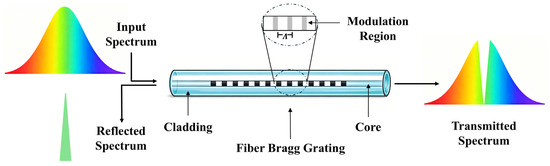
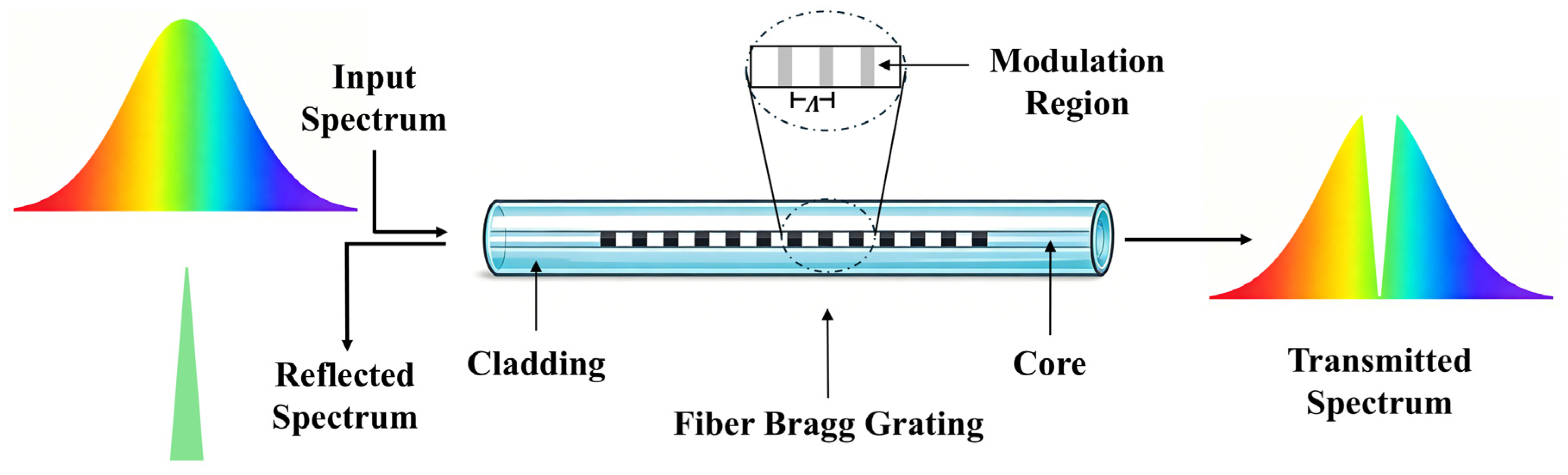
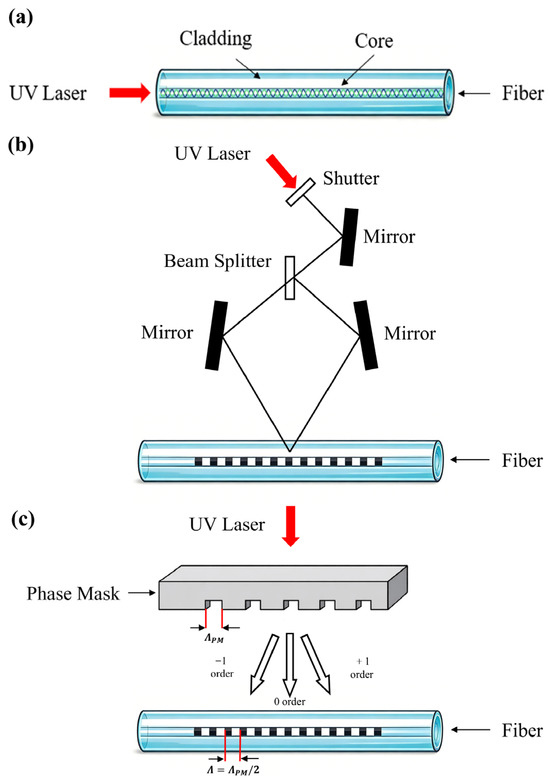
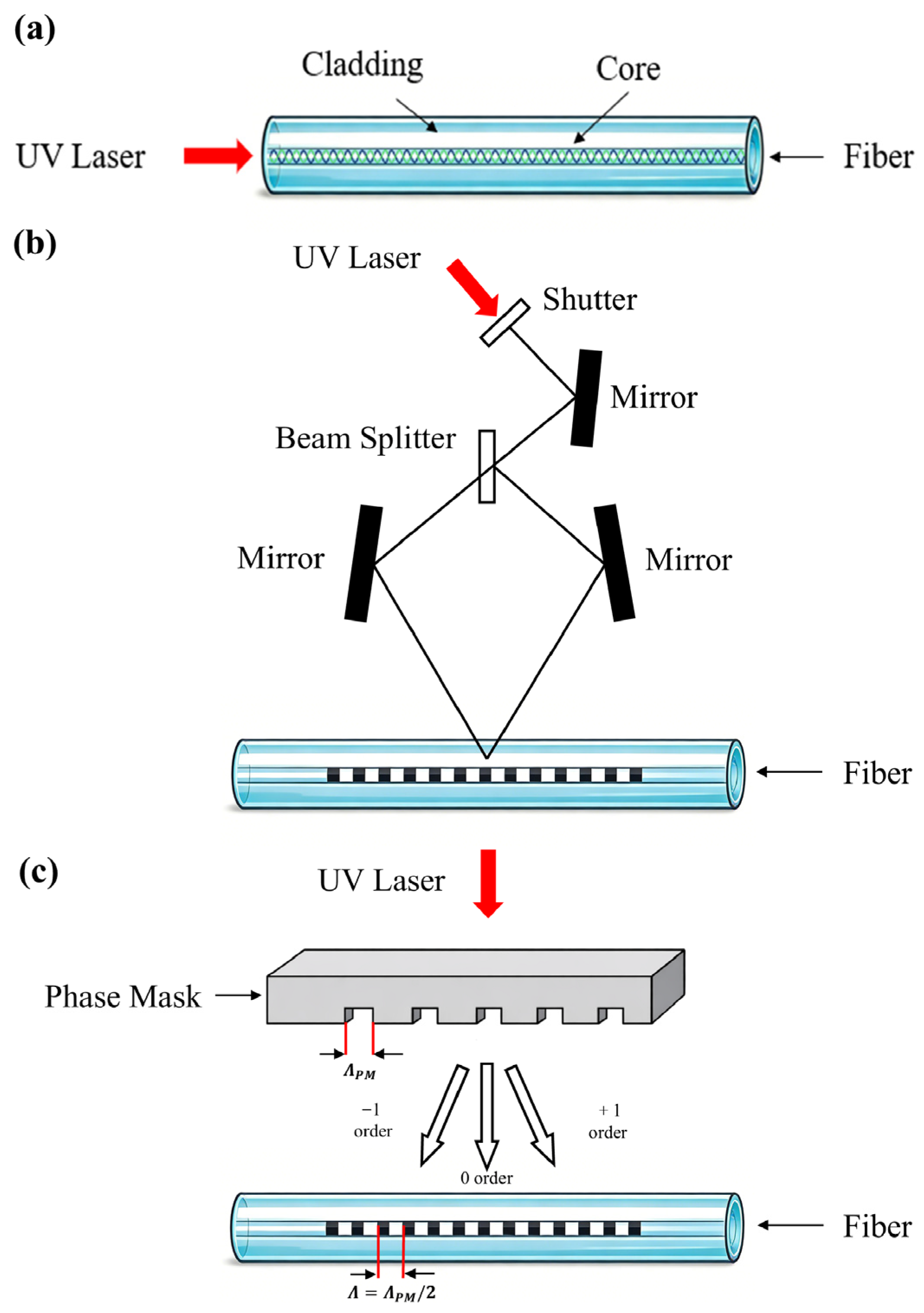
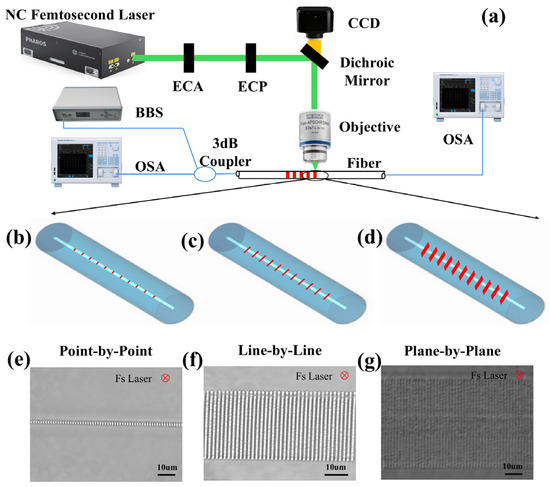
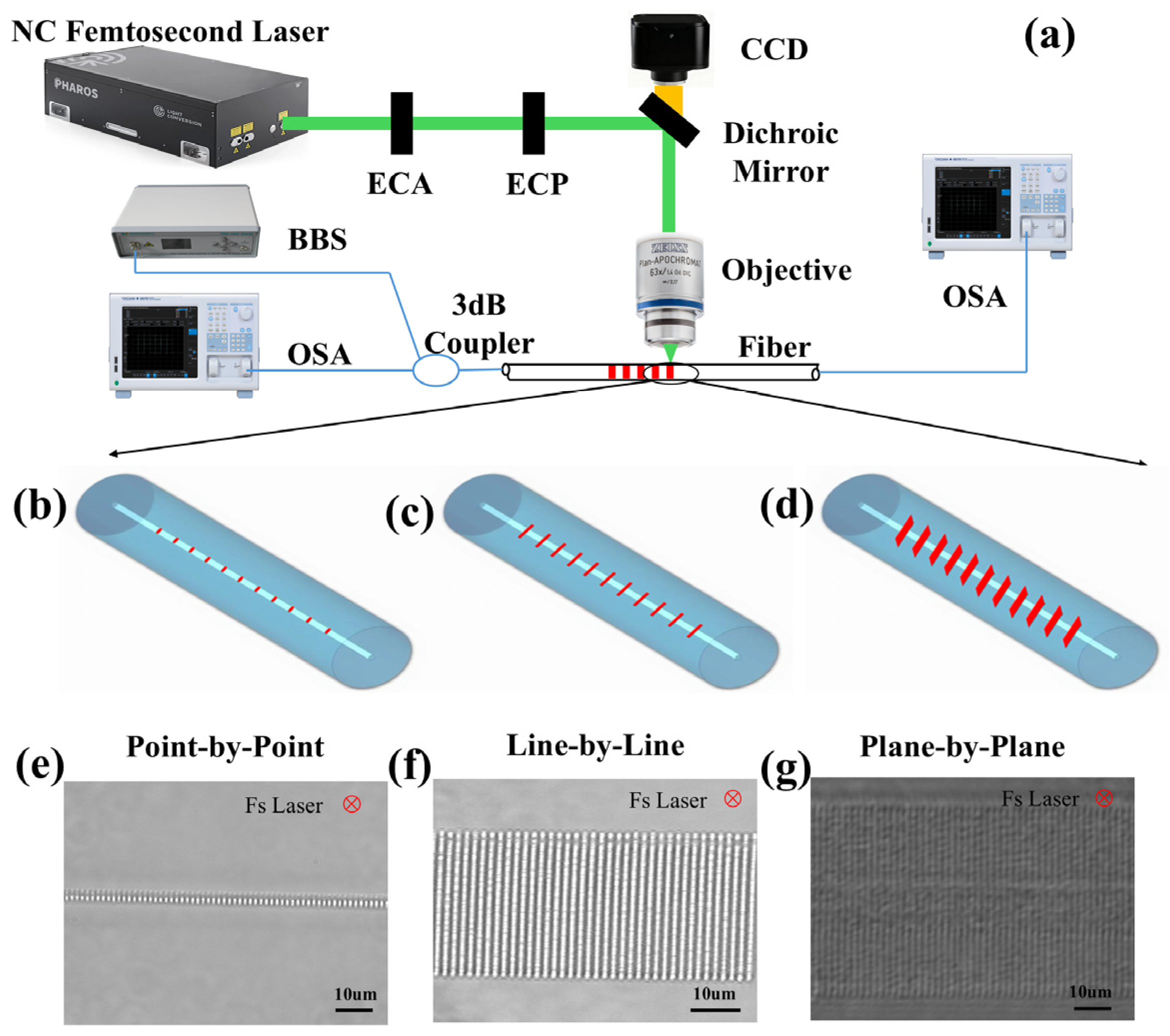
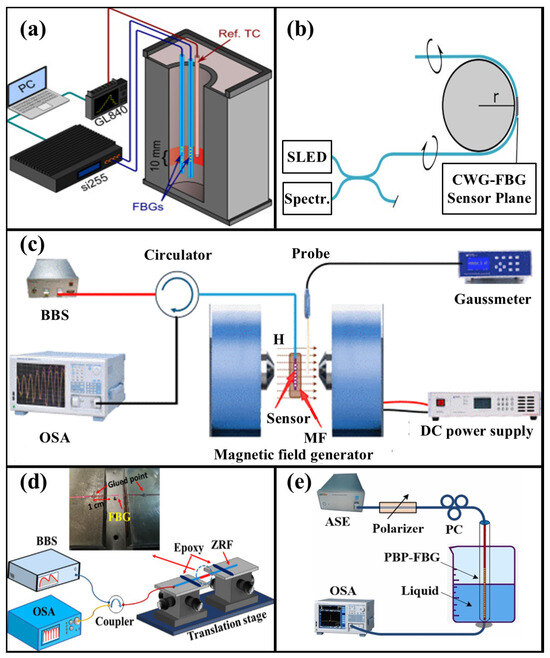
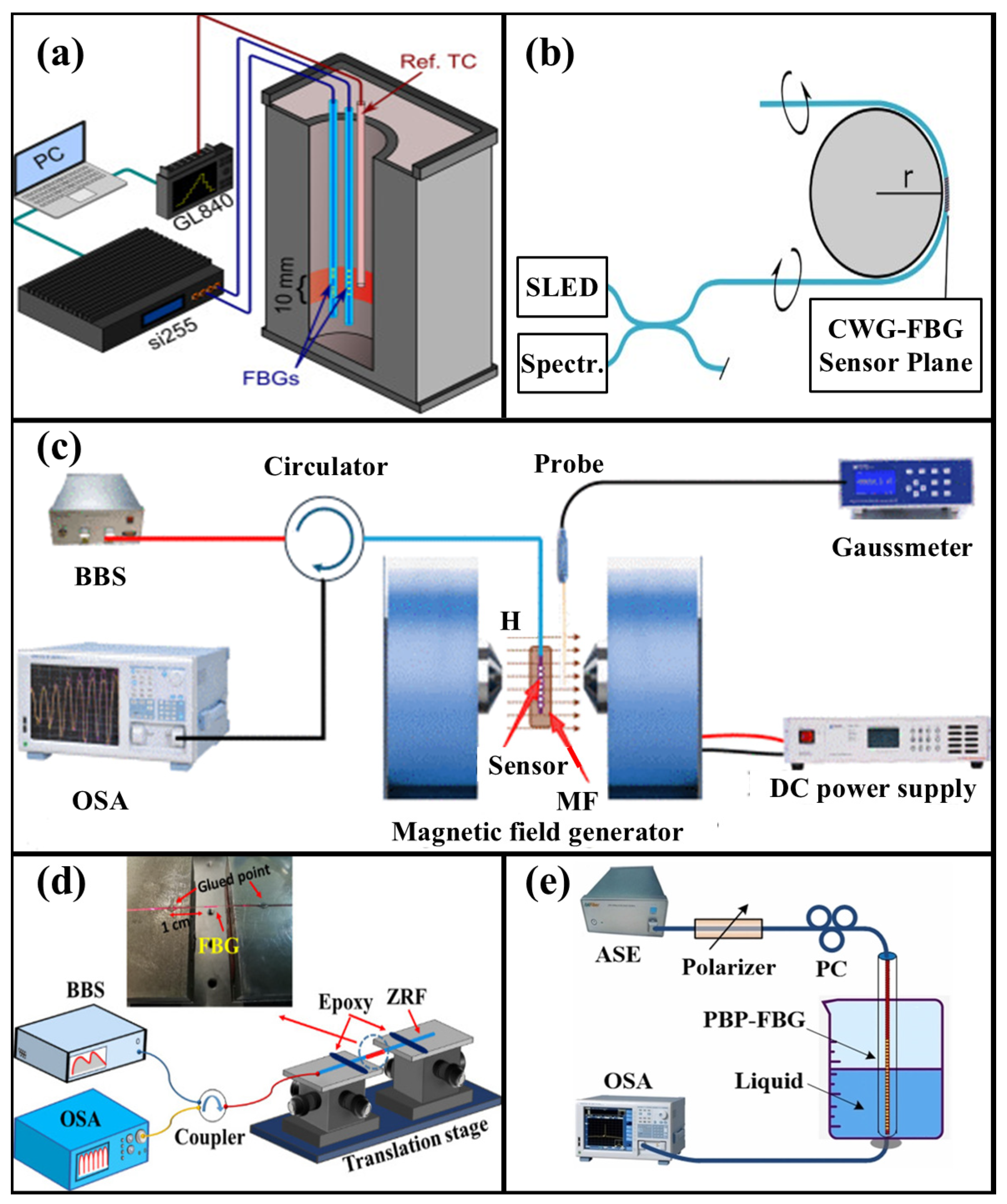
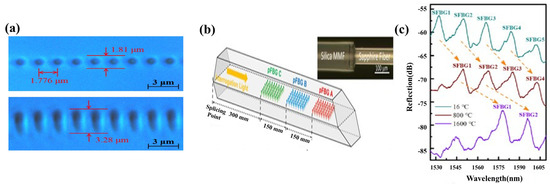
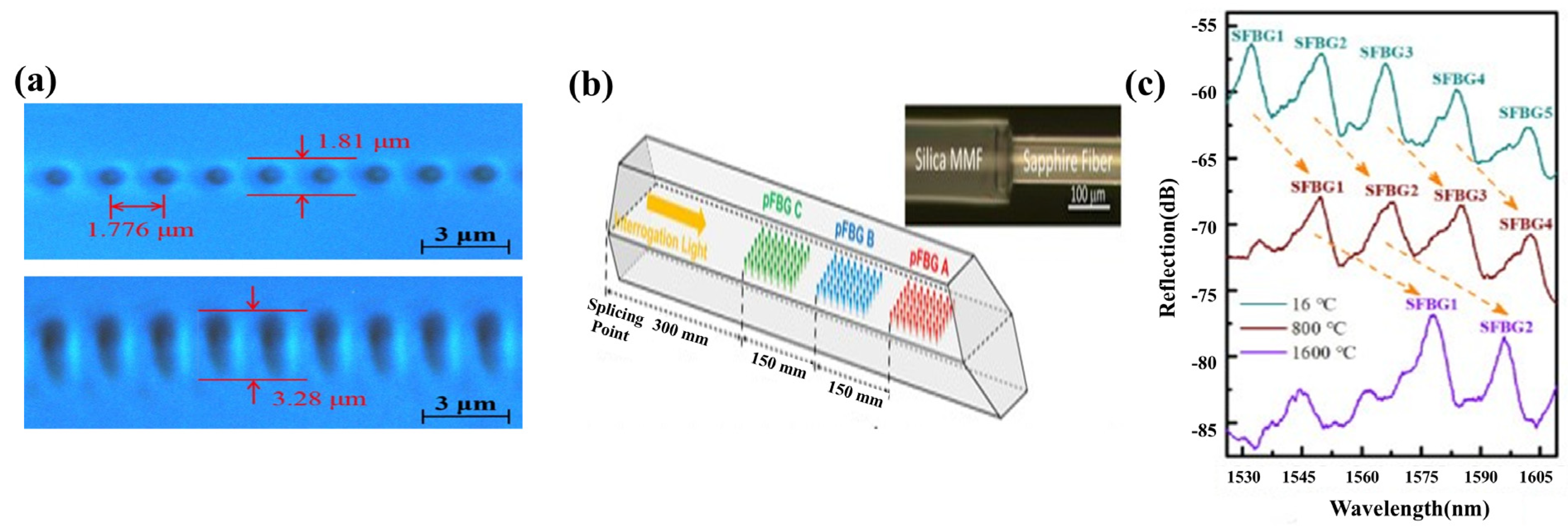
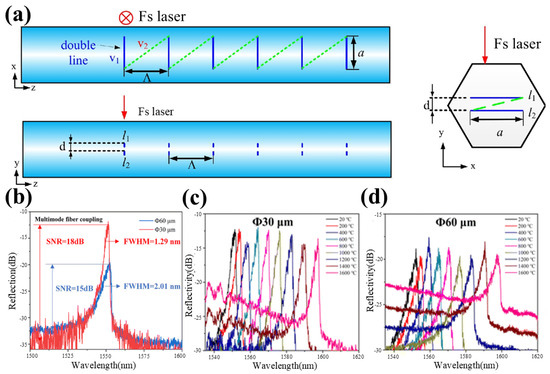
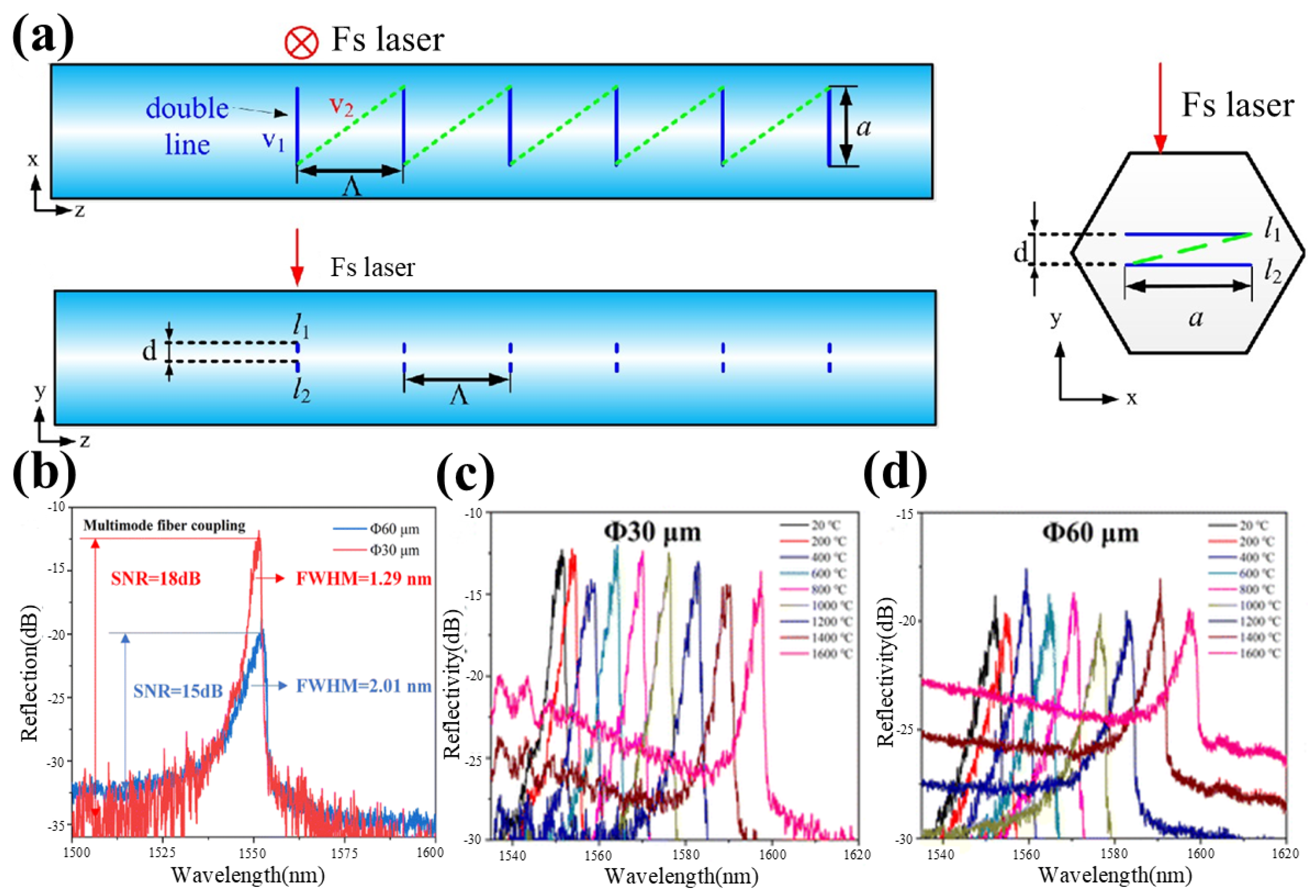
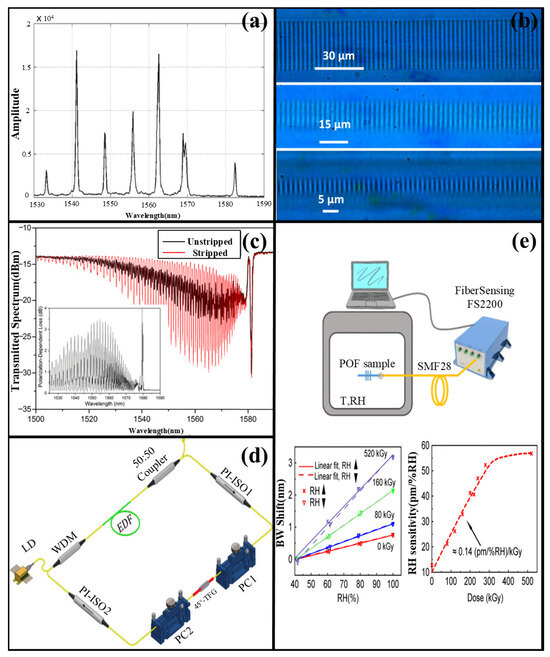
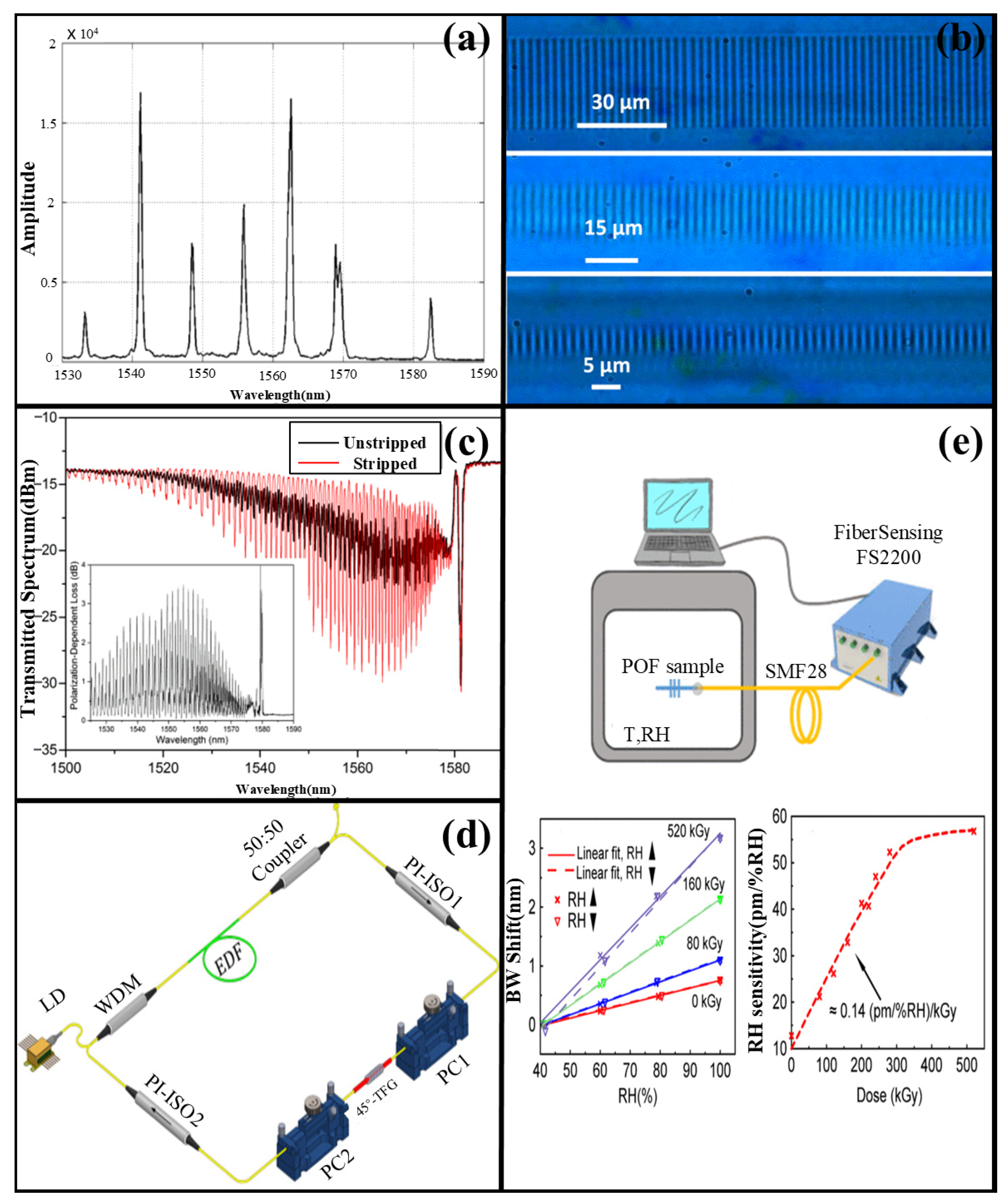

Disclaimer/Publisher’s Note: The statements, opinions and data contained in all publications are solely those of the individual author(s) and contributor(s) and not of MDPI and/or the editor(s). MDPI and/or the editor(s) disclaim responsibility for any injury to people or property resulting from any ideas, methods, instructions or products referred to in the content. |
© 2026 by the authors. Licensee MDPI, Basel, Switzerland. This article is an open access article distributed under the terms and conditions of the Creative Commons Attribution (CC BY) license.