Abstract
In white-light-driven resonant fiber optic gyroscopes (W-RFOG), modulation and demodulation techniques are essential for signal detection. Currently, in phase modulation and synchronous demodulation, the selection of relevant modulation waveforms and parameters is mostly based on experience, lacking systematic theoretical guidance. This study systematically evaluates the impact of modulation waveforms and parameters on gyroscope performance. We compare sine and triangular waveforms, analyzing their effects on the slope of the demodulation curve and overall performance across varying modulation frequencies. Quantitative results show that sine wave modulation yields a 185% higher sensitivity coefficient near the zero-crossing point than triangular wave modulation. Furthermore, W-RFOG systems using sine wave modulation achieve a 52.6% reduction in angular random walk (ARW) and a 19.4% reduction in bias instability (BI). These findings confirm the superior effectiveness of sine wave modulation in enhancing detection sensitivity coefficient and system accuracy in W-RFOG, which holds significance for modulation waveform selection and parameter optimization in W-RFOG systems.
1. Introduction
Fiber optic gyroscopes are inertial sensors that measure rotational angular velocity using the Sagnac effect between two counter-propagating light beams. They are widely applied in military and civilian fields such as aerospace, aviation, and navigation, serving as one of the core components in inertial navigation systems [1,2,3]. Based on their operating principles, fiber optic gyroscopes can be categorized into three types: Interferometric Fiber Optic Gyroscope (I-FOG), Resonator Fiber Optic Gyroscope (R-FOG), and Simulated Brillouin Fiber Optic Gyroscope (B-FOG). I-FOGs have been extensively utilized in engineering applications. However, high-resolution I-FOGs usually adopt kilometer-scale fiber loops to amplify phase shifts induced by rotation. While these ultra-long fiber loops offer significant advantages, they also amplify non-reciprocal noise, such as the Shupe effect, hindering further resolution improvements [4]. Additionally, long fiber loops are unsuitable for scenarios requiring miniaturized gyros. B-FOGs represent the third generation of fiber optic gyroscopes. However, due to numerous unresolved critical issues, they have yet to achieve practical implementation [5].
Resonator Fiber Optic Gyroscopes utilize high-precision fiber ring resonators as core sensing elements to enhance the Sagnac effect and measure angular velocity by detecting Sagnac frequency differences [6,7]. When achieving equivalent resolution to Interferometric Fiber Optic Gyroscopes, R-FOGs theoretically require shorter fiber lengths [8]. This not only facilitates smaller form factors and suppresses non-reciprocal noise, but also further enhances gyroscope resolution. However, conventional R-FOGs using laser light sources are prone to multiple parasitic effects due to their high coherence [9,10,11,12]. Addressing these challenges, Zhao et al. proposed a white-light-driven Resonant Fiber Optic Gyroscope (W-RFOG) system [13,14], demonstrating significant potential for high resolution and on-chip integration [15,16].
The core performance metrics of optical gyroscopes hinge on two critical factors: noise affects detection sensitivity, while drift determines bias stability. Existing research confirms that excessively high relative intensity noise (RIN) from white-light light sources constitutes the primary bottleneck limiting the detection sensitivity of W-RFOG [17,18]. To enhance gyroscope detection accuracy, efficient modulation–demodulation techniques must be introduced to optimize optical signal processing. Additionally, the error caused by RIN is determined by the magnitude of RIN itself and the slope of the demodulation curve [19,20]. Different modulation waveforms and their corresponding parameter settings directly influence the final modulation effect, demodulation output sensitivity, and overall system precision [21]. Previously, researchers optimized the frequency parameters of bipolar sawtooth wave and sine wave modulation–demodulation techniques, resulting in a reduction of the system’s angular random walk coefficient [22,23]. Therefore, rationally selecting modulation waveforms and determining their parameters can reduce errors without adding extra optical components or signal processing. This is crucial for improving the overall performance of W-RFOG.
However, research on the comparative analysis of modulation–demodulation results using different waveforms remains nearly nonexistent. In past practices of phase modulation and synchronous demodulation, the selection of modulation waveforms and parameters has mostly relied on empirical experience, lacking adequate theoretical guidance. This paper will address this research gap.
This paper analyzes the optical path system and simulation model of W-RFOG. Based on this analysis, it thoroughly investigates the impact of sine wave and triangular wave modulation and demodulation techniques on the detection sensitivity of W-RFOG. A series of simulation-based experiments were conducted to identify optimal modulation parameters. And these parameters were then validated experimentally using a self-developed R-FOG prototype. The final results demonstrate that sine wave modulation significantly enhances demodulation detection sensitivity compared to triangular wave modulation, leading to a marked improvement in the angular velocity measurement accuracy of the W-RFOG system.
2. Structures and Principles
2.1. Structures of W-RFOG
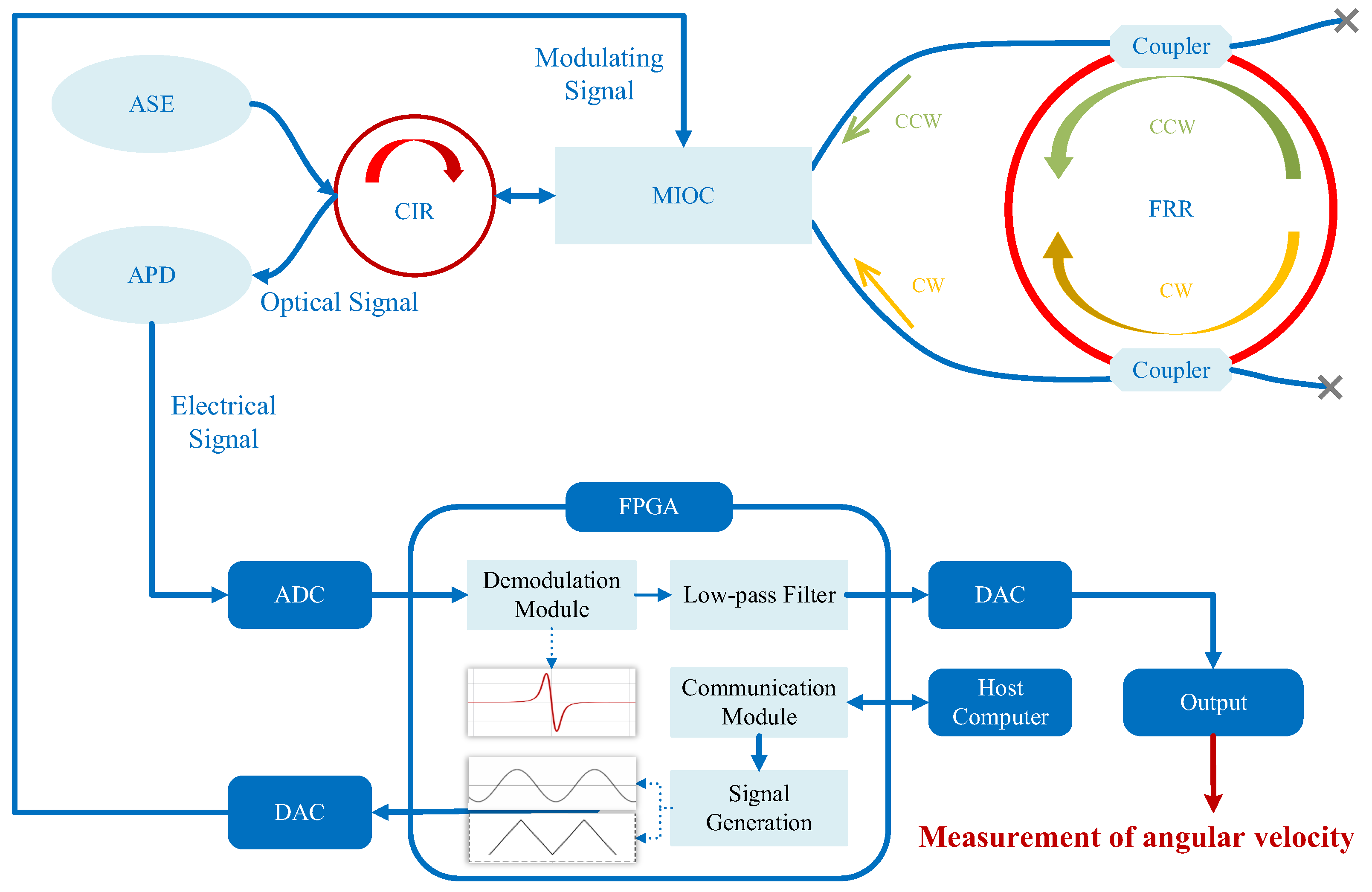
Figure 1 shows the schematic structure of a W-RFOG system. The gyroscope system utilizes an Amplified Spontaneous Emission (ASE) light source to provide low-coherence light. The optical signal passes through a circulator (CIR) before reaching the Multi-functional Integrated Optic Circuit (MIOC). At the MIOC, the initial optical signal is split into two beams of nearly equal power. Concurrently, modulating signals are applied by sending electrical drive signals to the lithium niobate crystals in the two arms of the MIOC. The modulated signals enter the fiber ring resonator (FRR) in clockwise (CW) and counterclockwise (CCW) directions, respectively. Two optical couplers are utilized to facilitate the output of multi-beam optical fields. The two output multi-beam fields propagate back along each other’s incident paths to the MIOC. The beams subsequently interfere at the combiner, and the resulting coherent light is routed through the CIR to an avalanche photodiode (APD), where it is converted into an electrical signal. Thereafter, the electrical signal undergoes analog-to-digital conversion (ADC). It is then fed into a Field-Programmable Gate Array (FPGA) for demodulation, filtering, and other signal processing. In this system, we designed the ADC to acquire the APD output signal through oversampling to enhance ADC resolution. During signal demodulation, a synchronous demodulation scheme based on a phase locked amplifier is employed. Finally, the demodulated signal is output. Based on the output results, measurement of rotational angular velocity can be achieved.
Figure 1.
Schematic diagram of a W-RFOG, which consists of optical and electrical subsystems.
The optical parameters of the fiber ring resonator directly influence the ultimate accuracy of the resonant fiber optic gyroscope by modifying its resonant characteristics. To enhance this accuracy during design, the fiber length within the resonator cavity should be moderately increased while remaining within practical dimensional constraints. Furthermore, fiber couplers exhibiting minimal excess loss should be selected, and fabrication-induced losses—such as those from fusion splicing, fiber bending, and adhesive curing—must be rigorously minimized. Under fixed conditions of cavity fiber length and total excess loss, further improvement in ultimate accuracy can be achieved by optimizing the coupler’s cross-coupling coefficient [24]. Accordingly, in the experimental gyroscope system, a coupler with a cross-coupling coefficient of 0.02 was selected for testing.
The white-light source used in this gyroscope system is an ASE source with a center wavelength of 1550 nm, a spectral width of 30 nm, and an output optical power of approximately 8 mW. And the FRR has a ring length of 200 m and a diameter of 0.78 cm. The parameters used in the subsequent simulation analysis are identical to those of the actual gyroscope system.
2.2. Principles of W-RFOG
Resonant fiber optic gyroscopes measure angular velocity by detecting the Sagnac frequency difference. The relationship between this frequency difference and the rotational angular velocity can be expressed as
In the equation, D represents the diameter of the optical fiber, denotes the effective refractive index of the fiber, and is the wavelength of light in a vacuum.
The light beam enters the FRR through the cross port of directional couplers and , completing one full round-trip per cycle. In each round-trip, the optical field exits at the coupler port opposite to its entry point. The single-pass amplitude attenuation coefficient R of the resonant cavity is defined by the mathematical expression:
Here, is the unit fiber transmission loss, L is the fiber loop length, is the coupler insertion loss, and is the cross-coupling factor.
This gyroscope system is driven by a white-light source. So, integrating the power density over the source’s emission bandwidth yields the total optical power incident on the photodetector. The resulting power spectral function of the light signal received by the detector is given below [24]:
In the equation, denotes the insertion loss of the MIOC, represents the insertion loss of the CIR, indicates the light source power, signifies the free spectral range, and denotes the phase shift caused by the Sagnac effect, which can be expressed as:
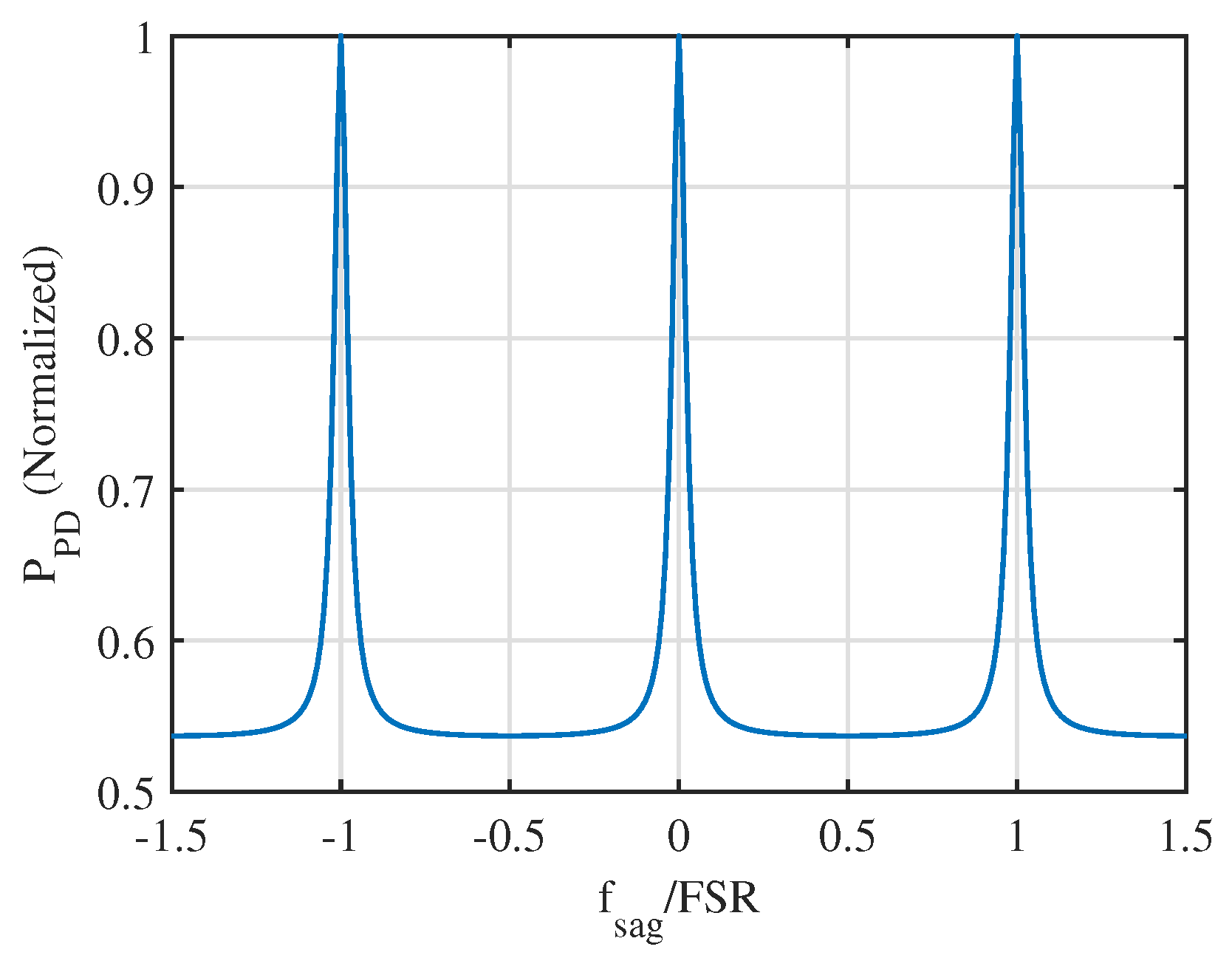
The simulation based on Equation (3) yields the resonance curve shown in Figure 2. When the system is stationary, the optical power density captured by the photodetector attains its maximum value. When the system is rotating, the optical power density at the photodetector drops sharply, thereby exhibiting a Lorentzian profile. Additionally, the curve indicates that the optical power density remains constant when the rotation direction changes while the rotational rate remains constant.
Figure 2.
Resonance curve of the W-RFOG system, illustrating the relationship between and .
3. Mathematical Modeling and Simulation
3.1. W-RFOG with Triangular Wave Modulation Technology
The amplitude and frequency are the primary characteristic parameters of a triangular wave. They maintain a mathematical relationship with the equivalent frequency shift after modulation, expressed as follows:
Here, p is an integer. As shown in Equation (5), within a complete triangular wave modulation cycle, the modulator generates two discrete spectral lines with a fixed frequency interval. This enables equivalent frequency shifting at both the rising and falling edges of the triangular wave.
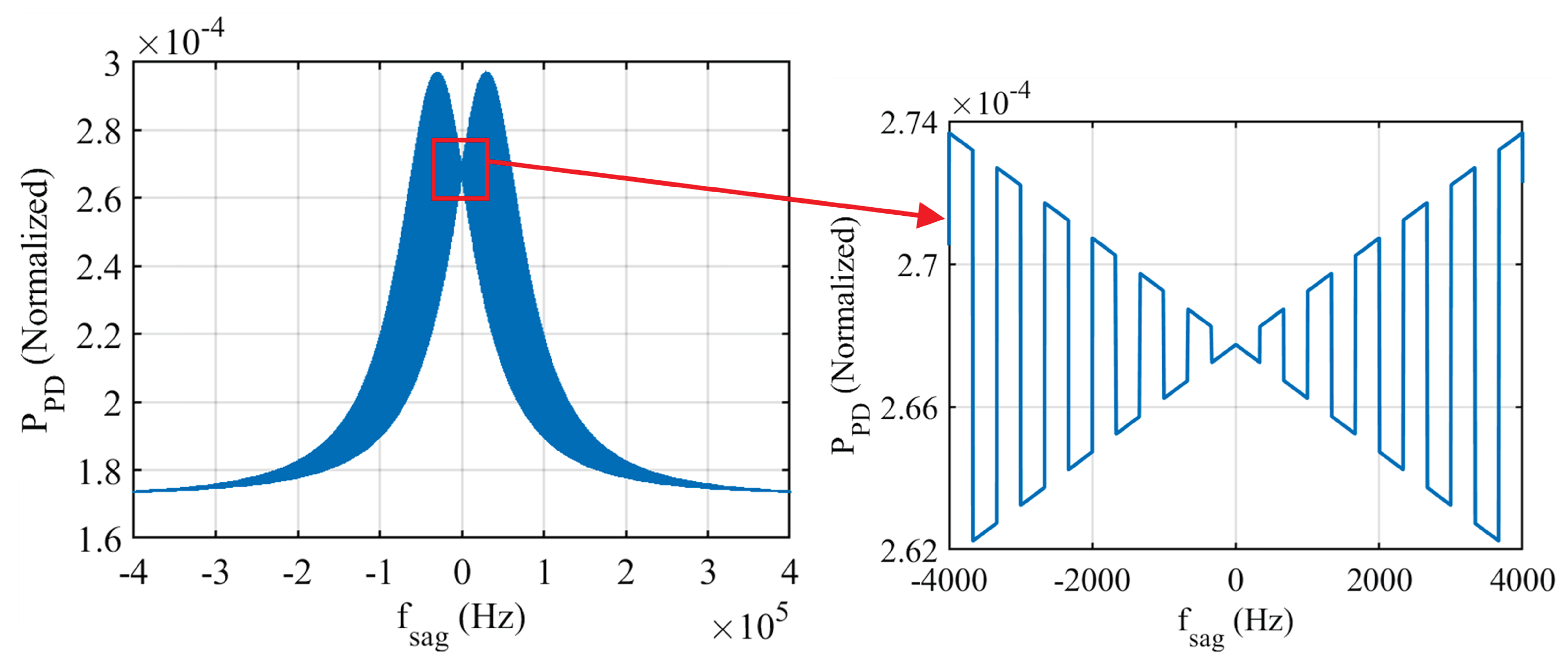
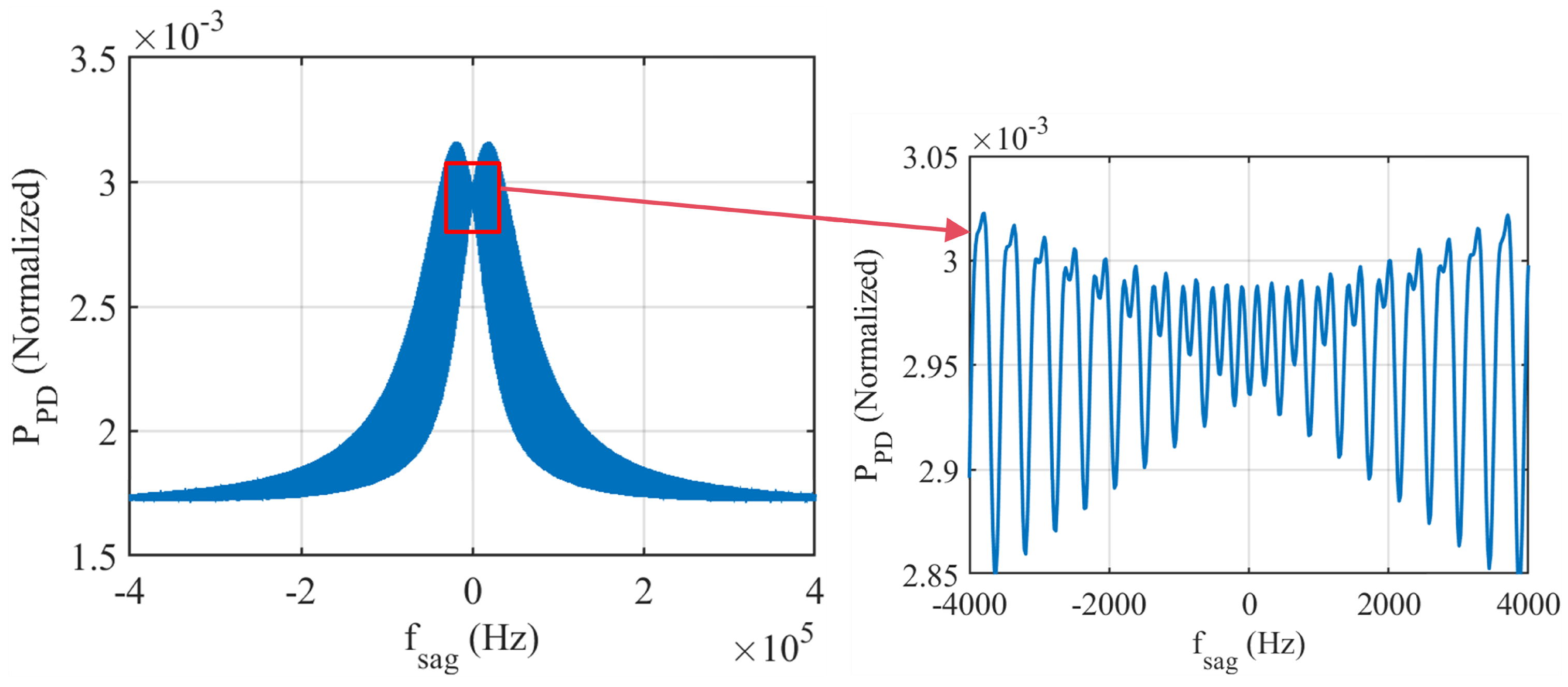
Triangular wave phase modulation induces an equivalent bidirectional frequency shift . Substituting Equation (5) into Equation (3) gives the triangular wave-modulated resonance curve Equation (6). When L = 200 m and = 30 KHz, the resonance curve after triangular wave modulation and its local enlargement is shown in Figure 3.
Figure 3.
Resonance curve after triangular wave modulation and its local enlargement.
As observed in Figure 3, the phase-modulated optical signal exhibits an approximately constant optical power output characteristic near the zero-crossing point of the resonant frequency difference. At this point, the electrical signal from the photodetector contains a distinct DC component. Notably, when the system deviates from the resonant equilibrium state, the output signal evolves into a periodic rectangular wave with amplitude modulation characteristics. Its peak intensity has a strong positive correlation with the absolute value of the resonant frequency difference. Within a specific detection range, the amplitude of this rectangular wave maintains a linear growth relationship with the resonant frequency difference. This linear response region is defined as the effective detection range of the W-RFOG system.
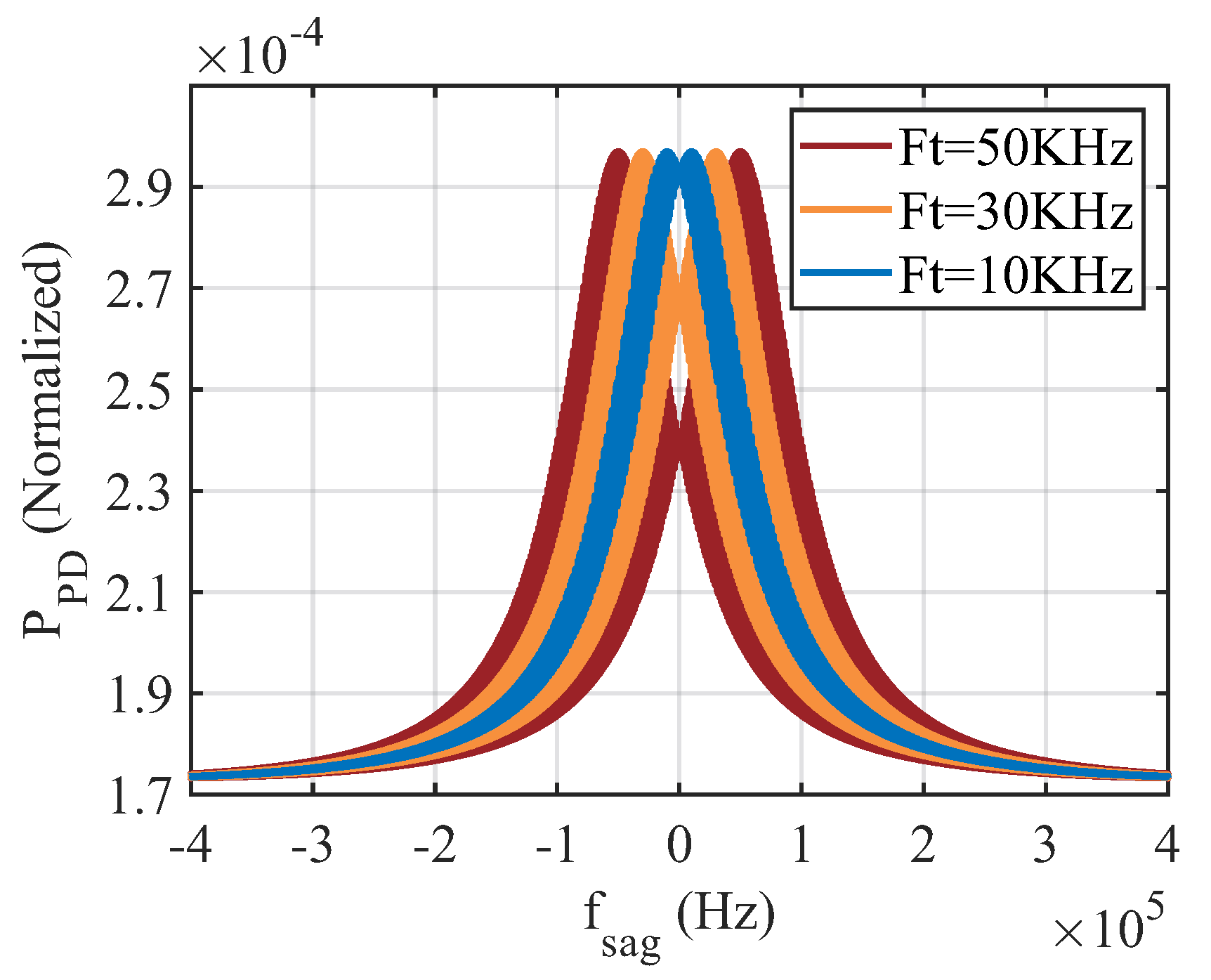
To analyze the impact of different modulation parameters on modulation results, simulations were conducted at modulation frequencies of 10 KHz, 30 KHz, and 50 KHz, respectively. The results are shown in Figure 4. It can be observed that as the modulation frequency increases, the modulation depth of the resonance curve also increases, while the linewidth of the curve broadens and the degree of line splitting intensifies.
Figure 4.
Resonance curve after triangular wave modulation, demonstrating the relationship between the curve and .
As derived from the gyroscope resonance characteristic Equation (3), it follows that when the FRR is stationary, the gyroscope yields a zero output. Conversely, when the resonator rotates, a Sagnac frequency difference is induced, resulting in a non-zero gyroscope output. Adding triangular wave modulation is equivalent to introducing an additional phase shift related to the modulation frequency, on the basis of the Sagnac frequency difference phase shift. Therefore, by adjusting the slopes of the triangular wave’s rising and falling edges, we can tune the additional phase shift to null the gyroscope output. At null, the difference in duration between the rising and falling edges directly encodes the target rotation rate. Based on the resonant curve Equation (6), subtracting the equivalent frequency shifts induced by the rising and falling edges over one full modulation cycle yields the demodulation curve:
Taking L = 200 m and = 20 KHz for the simulation of Equation (6), the curve shown in Figure 5 is obtained. Near the zero-crossing point, the output square wave amplitude exhibits an approximately linear positive relationship with the resonant frequency difference. Within this linear regime, the W-RFOG system can employ this curve as a demodulation curve to detect the rotational angular velocity signals.
Figure 5.
Output curve after triangular wave modulation and demodulation. This demonstrates the relationship between output power I and resonant frequency difference .
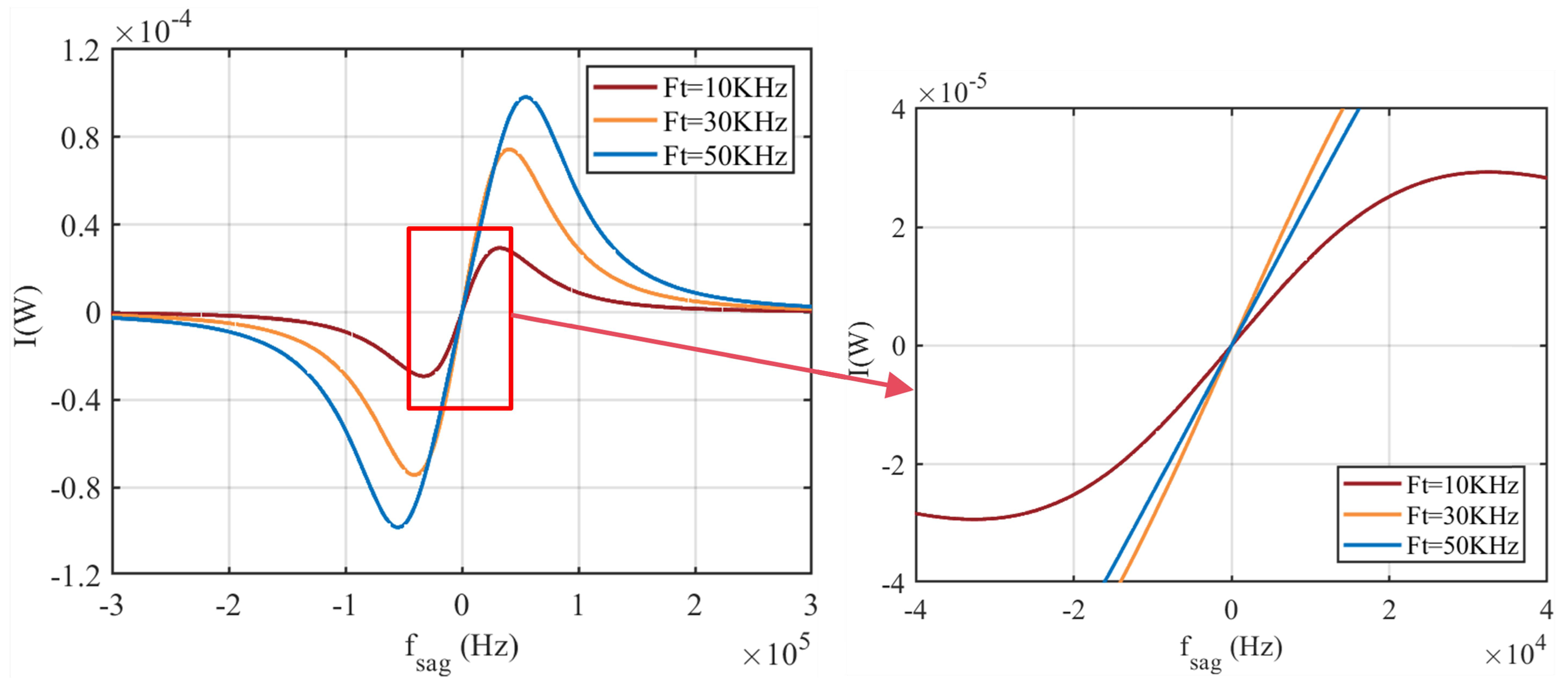
We analyzed the demodulation curve after triangular wave modulation. Figure 6 shows the simulation results of the triangular wave modulation–demodulation curve under different modulation frequency parameters. As shown in the figure, the demodulation curves differ for different values. The higher the absolute value of the slope near the zero-crossing point of the demodulation curve, the higher the sensitivity coefficient of the gyroscope. The simulation results indicate that the sensitivity coefficient of the gyroscope is not linearly related to the modulation parameter. Instead, as increases, the sensitivity coefficient first increases and then decreases. Therefore, by differentiating the demodulation curve expression and applying the extremum theorem, we can derive the value corresponding to the theoretical maximum.
Figure 6.
Demodulation curves corresponding to different modulation frequencies.
Taking the derivative of Equation (7) yields the following expression:
The slope of the curve at the zero point can be expressed as the expression for in Equation (8), namely,
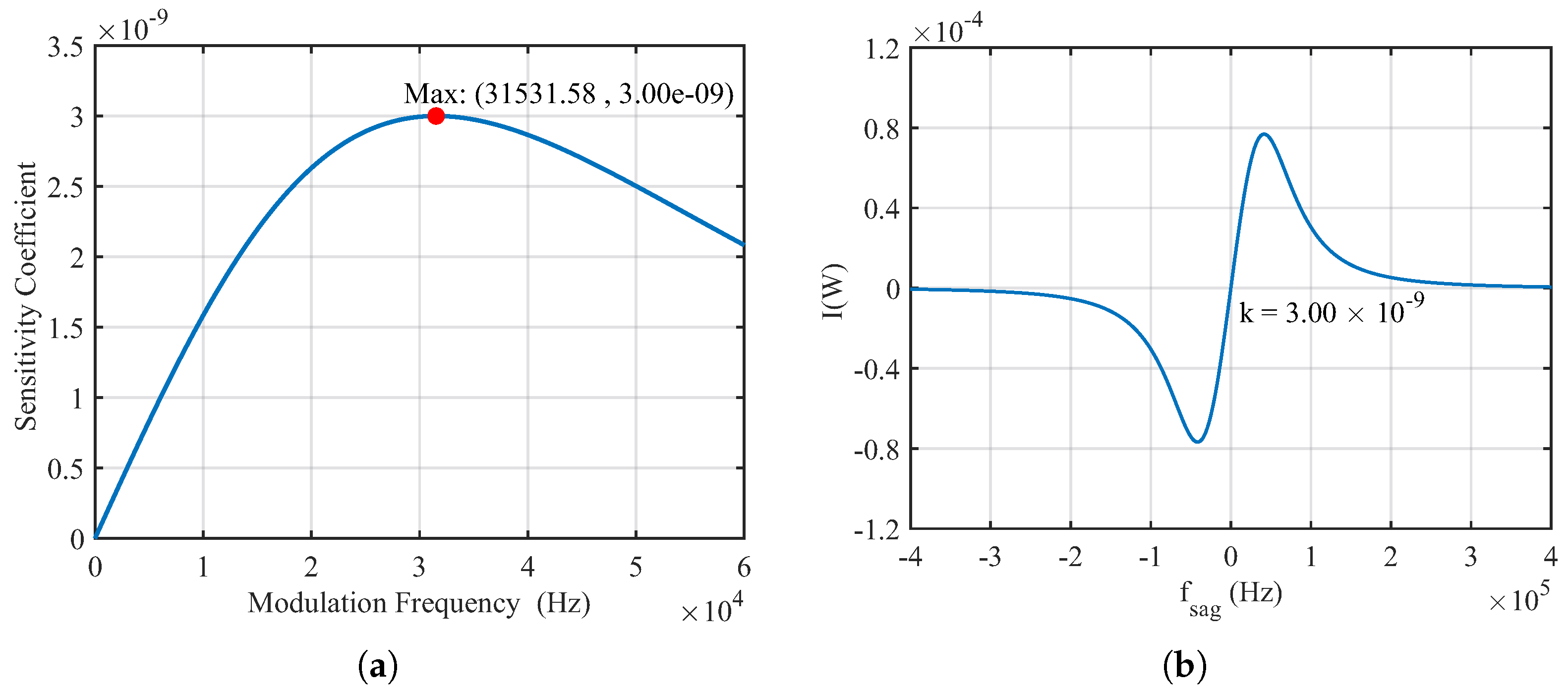
Simulating Equation (9) yields the relationship between modulation frequency and the slope of the demodulation curve’s zero-crossing point, as shown in Figure 7a. The simulation results indicate that as the modulation frequency gradually increases, the system’s sensitivity coefficient near the zero-crossing point exhibits a non-monotonic trend of first increasing and then decreasing. It reaches a maximum at approximately 31.5 KHz, where the sensitivity coefficient of the demodulation curve is highest. As shown in Figure 7b, the absolute value of the slope near the zero-crossing point is W/Hz.
Figure 7.
Triangular wave demodulation results: (a) Relationship diagram between modulation frequency and the slope near the zero-crossing point of demodulation curve. (b) Demodulation curve at .
3.2. W-RFOG with Sine Wave Modulation Technology
A sine wave with frequency simultaneously modulates the CW and CCW light waves. This effectively modulates the frequency difference between the resonant frequencies and [22]. Using phase-sensitive detection technology, we extract and isolate the photodetector’s output signal that matches the modulating signal’s frequency. Subsequently, we suppress the carrier wave with a low-pass filter to retrieve angular velocity information and realize angular velocity detection.
The sine wave signal applied across the two terminals of the MIOC is:
In the equation, and , respectively, represent the amplitude and frequency of the modulated sine wave signal.
The phase shift of the modulated light wave differs from that of a sine wave signal only by a coefficient and can be expressed as:
Here, represents the phase modulation coefficient and denotes the half-wave voltage of the phase modulator. It can be seen that under fixed conditions, the phase shift depends solely on the frequency of the modulating signal.
Since instantaneous frequency is the time derivative of the instantaneous phase, the frequency of the incident light after frequency sweeping is given by:
In the equation, and is the sweep frequency. Substituting Equation (12) into Equation (3) yields the expression for the light intensity emitted from the resonant cavity after adding the modulated signal:
Based on Equation (13), the resonance curve after sine wave modulation is plotted as shown in Figure 8.
Figure 8.
Resonance curve after sine wave modulation and its local enlargement.
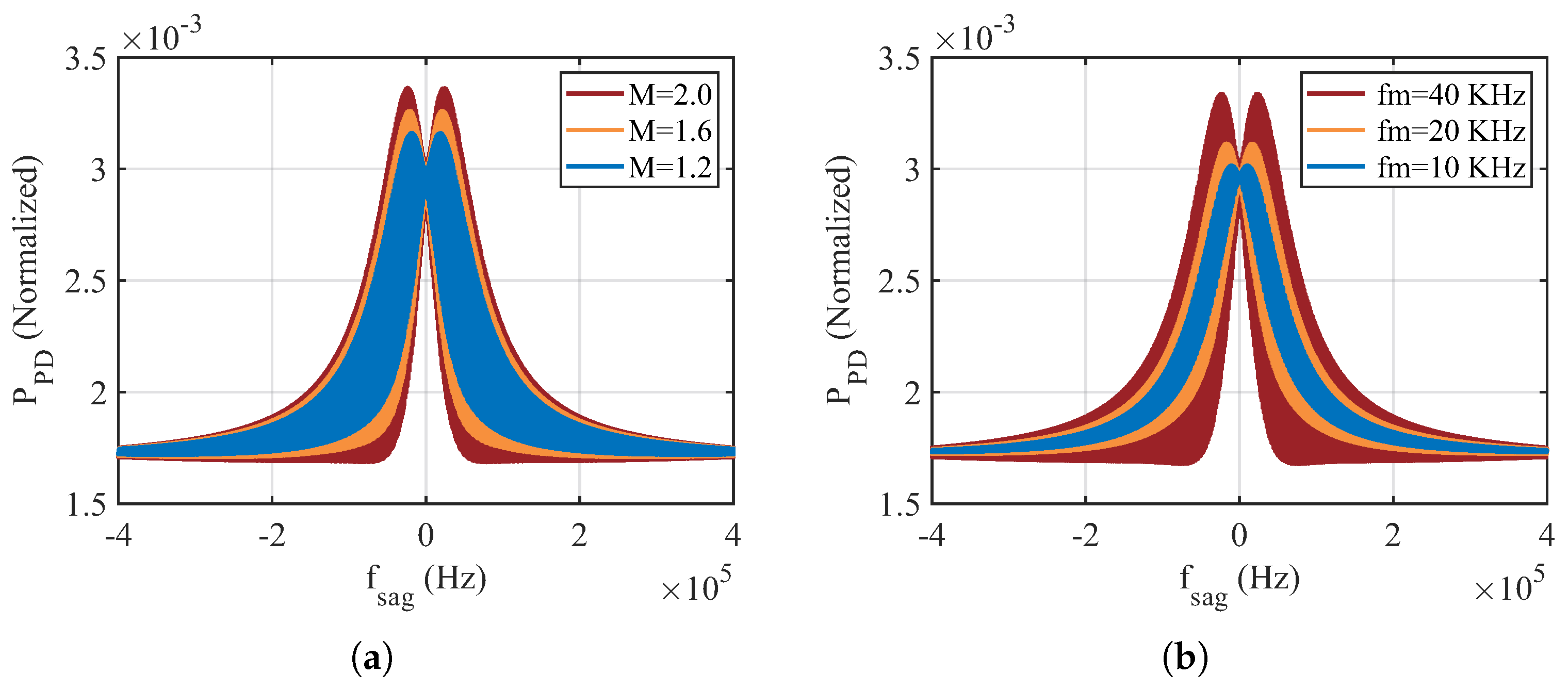
To compare the effects of different modulation parameters on the modulation results, simulations were conducted with an M of 1.2, 1.6, and 2.0, and of 10 KHz, 20 KHz, and 40 KHz. The results are shown in Figure 9.
Figure 9.
Resonance curve after sine wave modulation: (a) Resonance curves for different M values when . (b) Resonance curves for different values when .
After sine wave modulation, we utilize a reference signal with the same frequency as the modulated signal to accomplish coherent demodulation, based on the principle of phase sensitive detection. This effectively extracts the baseband signal component containing the target information. After applying a low-pass filter to this component, the demodulation curve is obtained:
Here, is the low-pass filter (LPF) function.
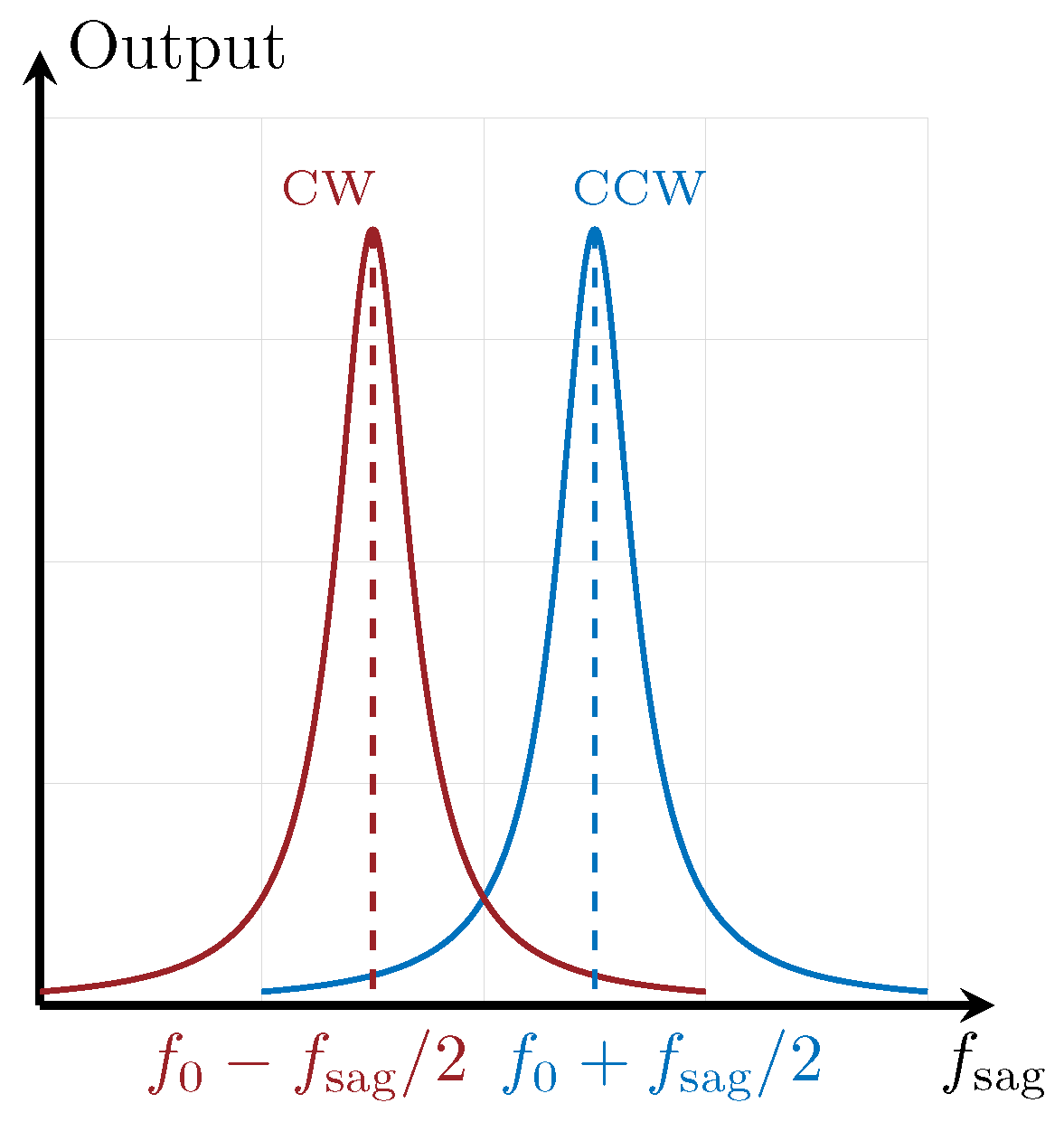
When the FRR rotates, the power spectra of the CW and CCW light fields exhibit a frequency shift relative to the stationary state. This shift arises from the Sagnac effect. And the two shifts have opposite directions, with a magnitude equal to half the Sagnac frequency difference. As shown in Figure 10, the figure reveals that the resonant frequencies for CW and CCW directions differ. Consequently, within a single modulation cycle, the frequency scanning induced by modulation sequentially traverses and . Due to this frequency sweeping, the system response generates a phase term proportional to the frequency difference. After Bessel function expansion and LPF, higher-order harmonics are eliminated, leaving only the fundamental frequency component associated with .
Figure 10.
Schematic diagram of sweep frequency and Sagnac frequency difference.
Based on the above analysis, the results of rearranging Equation (14) using the Bessel function are as follows:
In this equation, m denotes the number of cycles of both CW and CCW lightwaves in the FRR under the same cycling conditions; represents the first-kind Bessel function, whose physical significance corresponds to the amplitude coefficient of different-order modes. k is an integer indicating the contribution of distinct harmonic components, while parameter x symbolizes the signal modulation depth under the same-order harmonic. We define , where and .
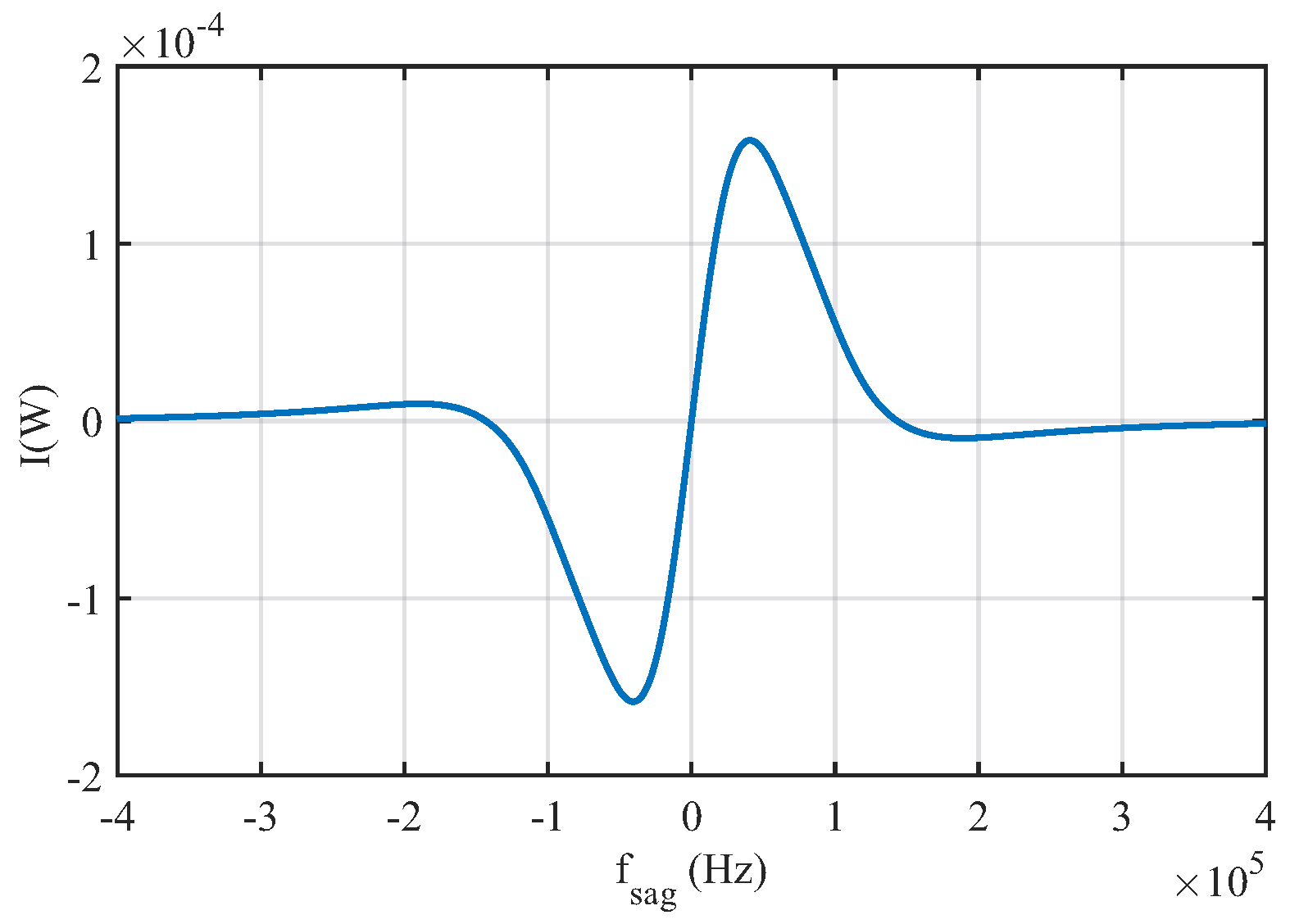
The simulation of Equation (15) was performed using a sine wave frequency of = 50 KHz and a modulation coefficient of M = 1.5. The demodulation curve results are shown in Figure 11. Near the zero-crossing point, the demodulated output signal amplitude exhibits an approximate linear relationship with the resonance frequency difference. This linear region represents the normal operating range of the W-RFOG system.
Figure 11.
Output curve after sine wave modulation and demodulation. This demonstrates the relationship between output power I and resonant frequency difference .
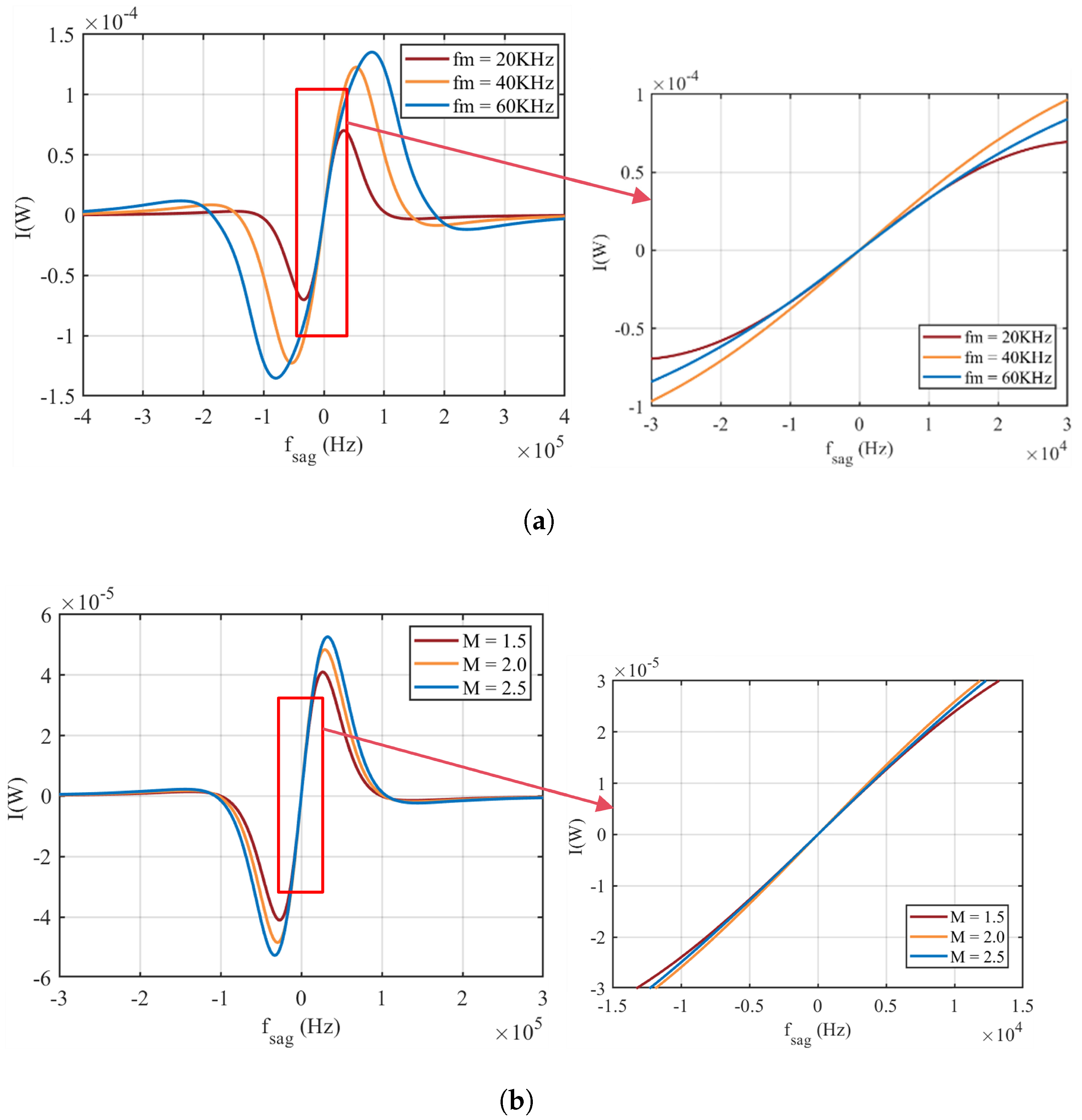
Moreover, as shown in the demodulation Equations (14) and (15), the demodulation output depends on the modulation frequency and modulation coefficient M when system parameters are fixed. Subsequently, simulations were conducted with = 20 KHz, = 40 KHz, = 60 KHz, and M = 1.5, M = 2.0, M = 2.5, yielding the results shown in Figure 12.
Figure 12.
Demodulation curves for different modulation parameters: (a) Demodulation curves for different when . (b) Demodulation curves for different M when .
As shown in Figure 12, when other parameters are fixed, increasing the modulation frequency or modulation coefficient does not necessarily increase the slope near the zero-crossing point of the demodulation curve. The larger the absolute value of this slope, the higher the gyroscope’s sensitivity coefficient. Therefore, the modulation frequency and modulation coefficient should be properly selected to maximize the gyroscope’s sensitivity coefficient, namely, to achieve the maximum slope near the zero-crossing point.
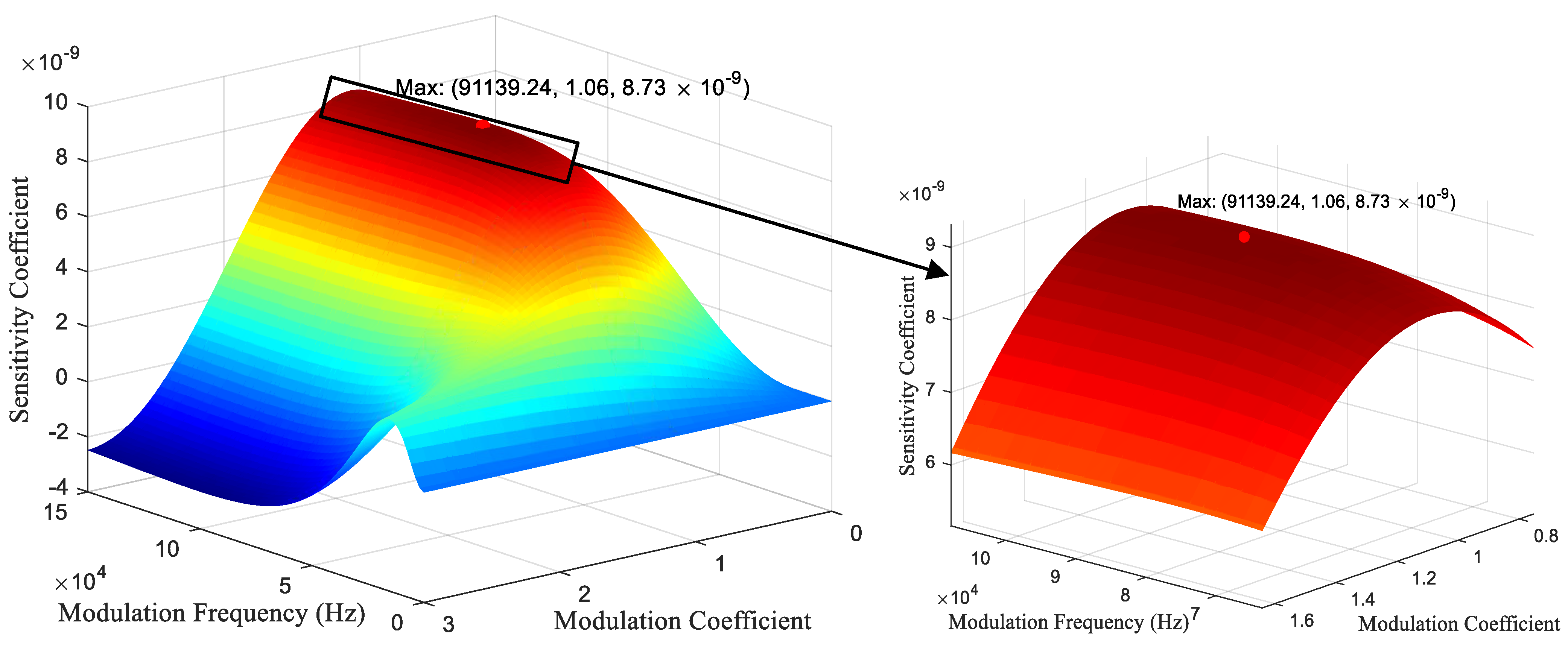
To assess the impact of modulation frequency and modulation coefficient M on the slope near the zero-crossing point of the demodulation curve, simulations were performed for different combinations of and M. The results are shown in Figure 13. As observed, when the modulation frequency is approximately 91 KHz and the modulation coefficient is approximately 1.06, the slope near the demodulation curve’s zero-crossing point reaches a maximum of approximately .
Figure 13.
Relationship diagram between modulation frequency, modulation coefficient, and sensitivity coefficient.
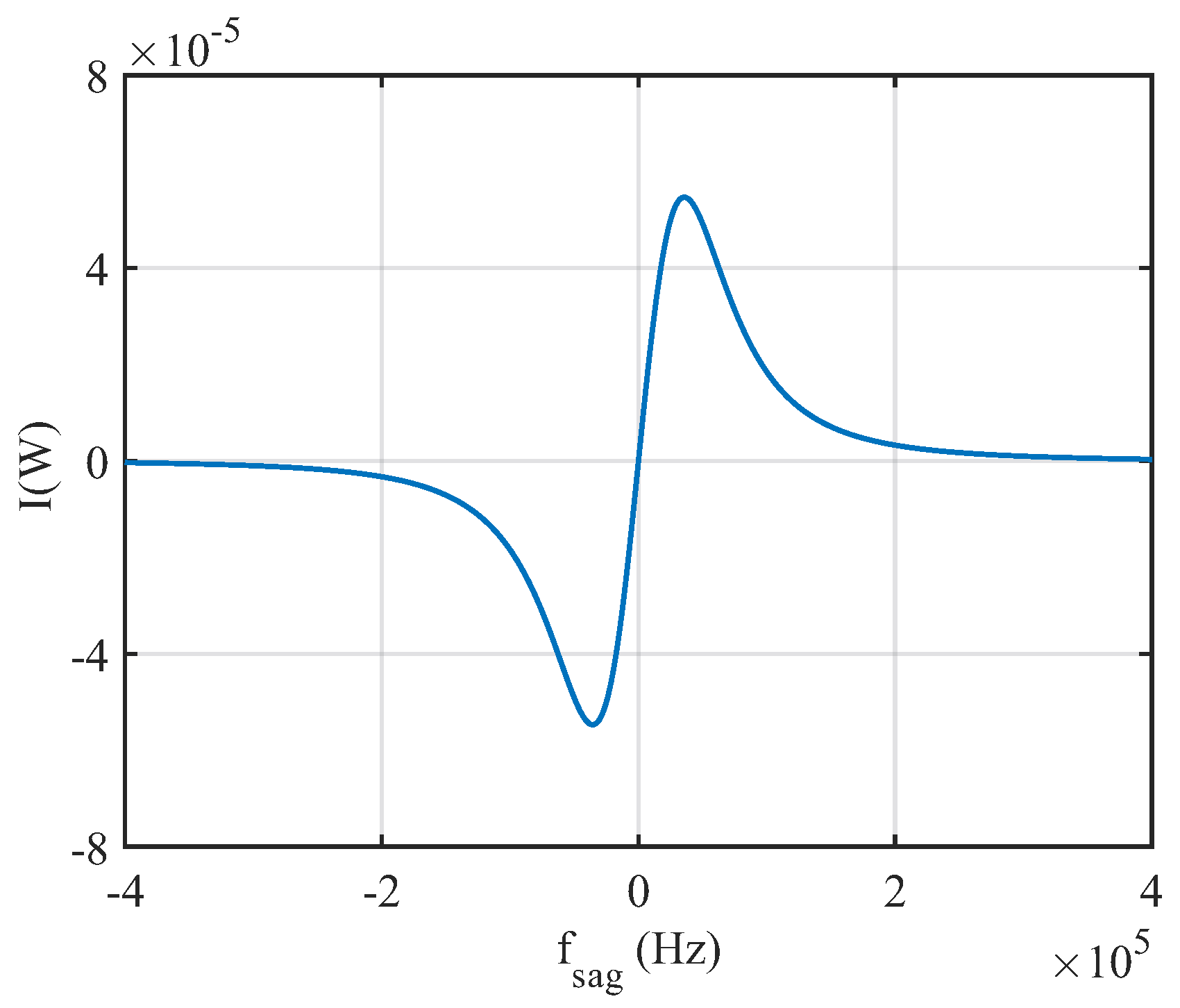
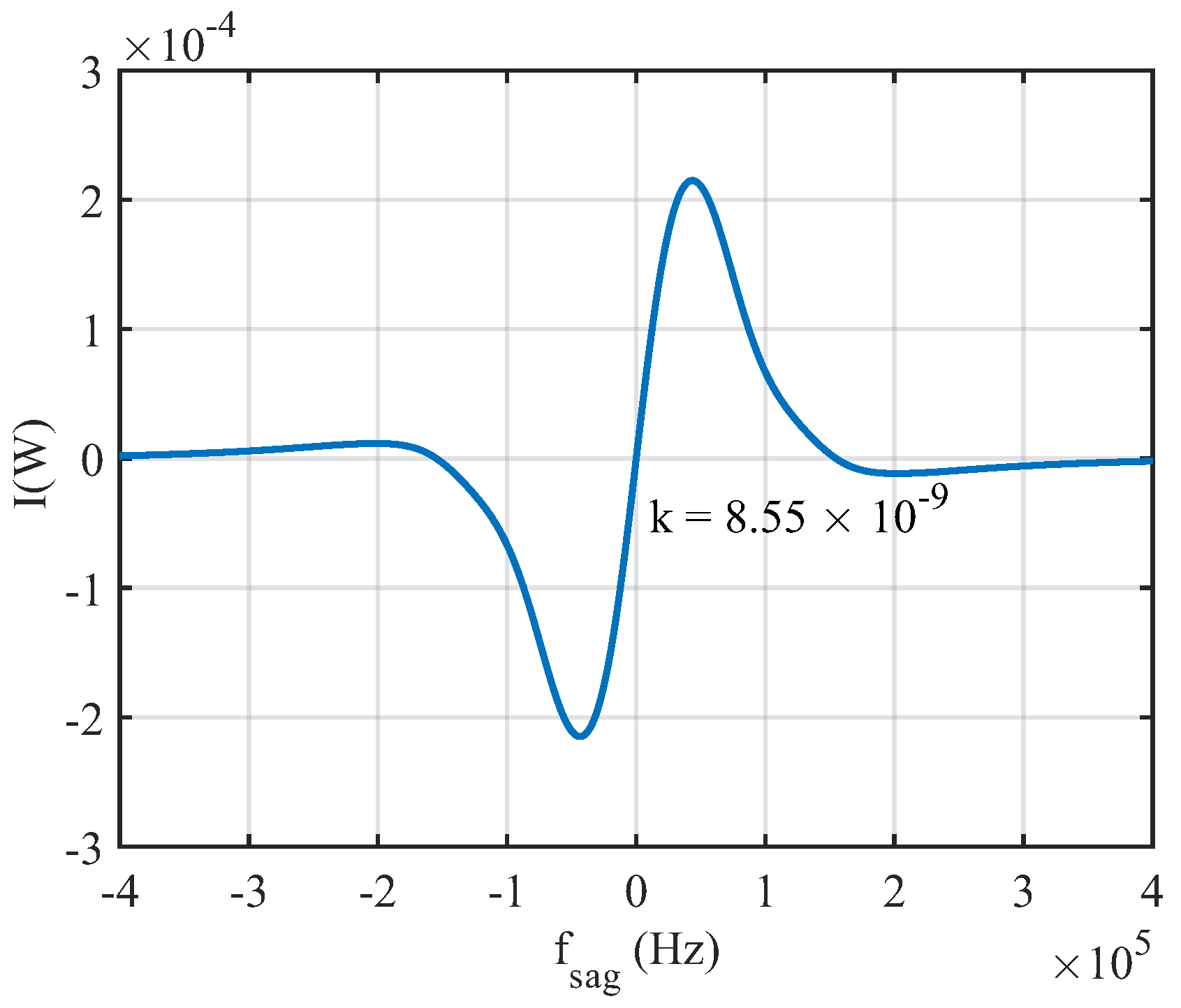
In practical applications, excessive modulation frequency can cause distortion in the output waveform of the W-RFOG system’s resonant cavity [25]. As shown in Figure 13, the slope of the demodulation curve near the zero-crossing point remains relatively stable within a certain range of and M. Therefore, after comprehensive analysis, = 70 KHz and M = 1.1 were selected as the final experimental parameters. Under these modulation parameters, the demodulation curve plotted in Figure 14 yields an absolute slope near the origin of W/Hz.
Figure 14.
Demodulation curve for = 70 KHz and M = 1.1.
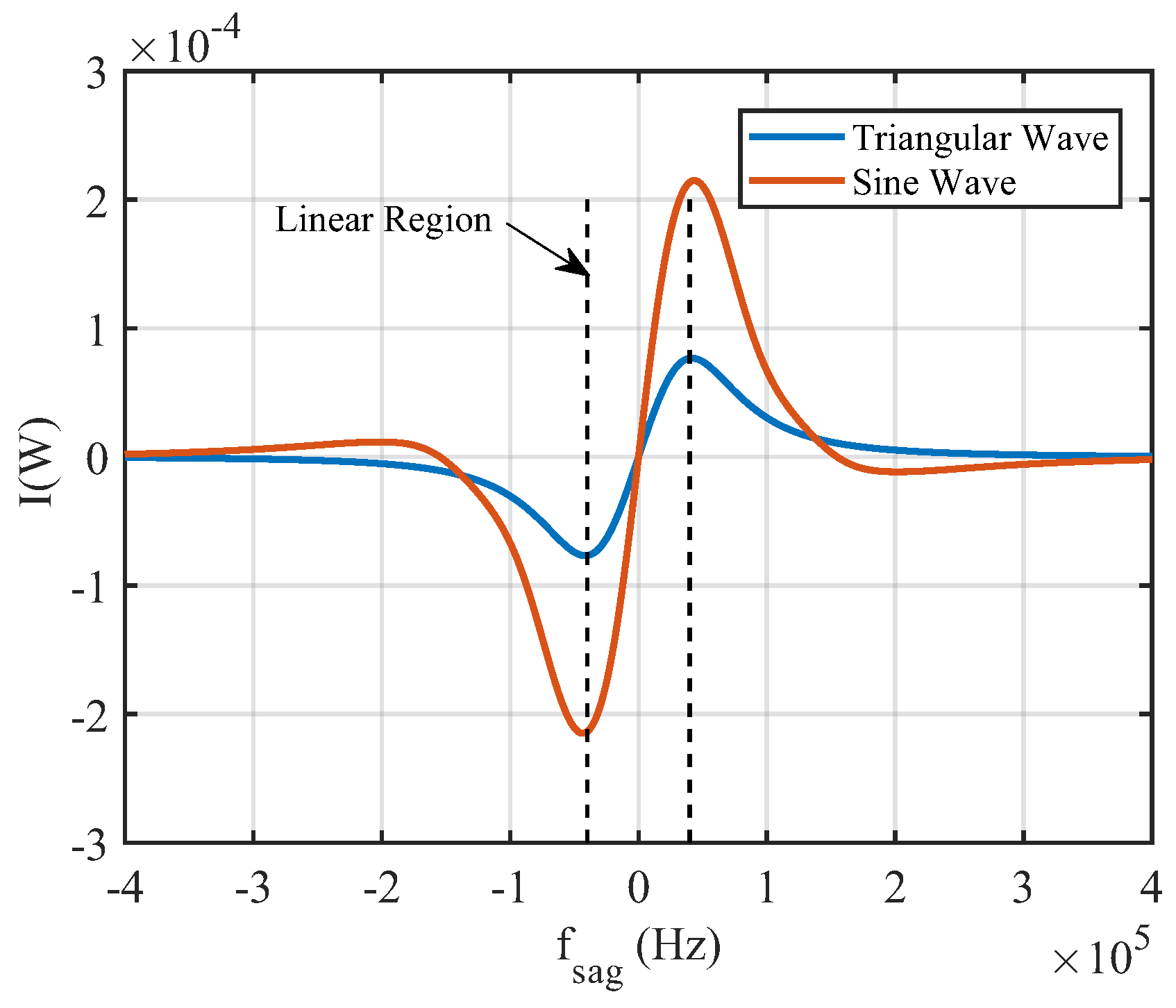
To summarize, based on the analysis of demodulation curves under triangular wave and sine wave modulation, the simulated experimental data are summarized in Table 1. It is evident that the demodulation response or sine wave modulation clearly surpasses that for triangular wave modulation. Moreover, as shown in Figure 15, the linear range of the demodulation curves for sine wave and triangular wave modulation is roughly the same. Quantitative analysis indicates that under their respective optimal modulation frequencies, the sensitivity coefficient of sine wave modulation is 185% higher than that of triangular wave modulation in W-RFOG system detection.
Table 1.
The sensitivity coefficient near the zero-crossing point for different modulation waveforms.
Figure 15.
Demodulation curves after sine wave and triangular wave modulation.
It should be noted that the absolute sensitivity coefficient depends on the quality factor of the resonant cavity. The simulation results shown in Table 1 demonstrate that, without altering the hardware conditions, the sensitivity coefficient can be enhanced solely through waveform selection and parameter optimization.
In summary, when both modulation schemes operate at their respective optimal performance levels, sine wave modulation offers substantial potential advantages. It also demonstrates that sine wave modulation holds significant advantages over triangular wave modulation in W-RFOG.
4. Experimental Results and Discussions
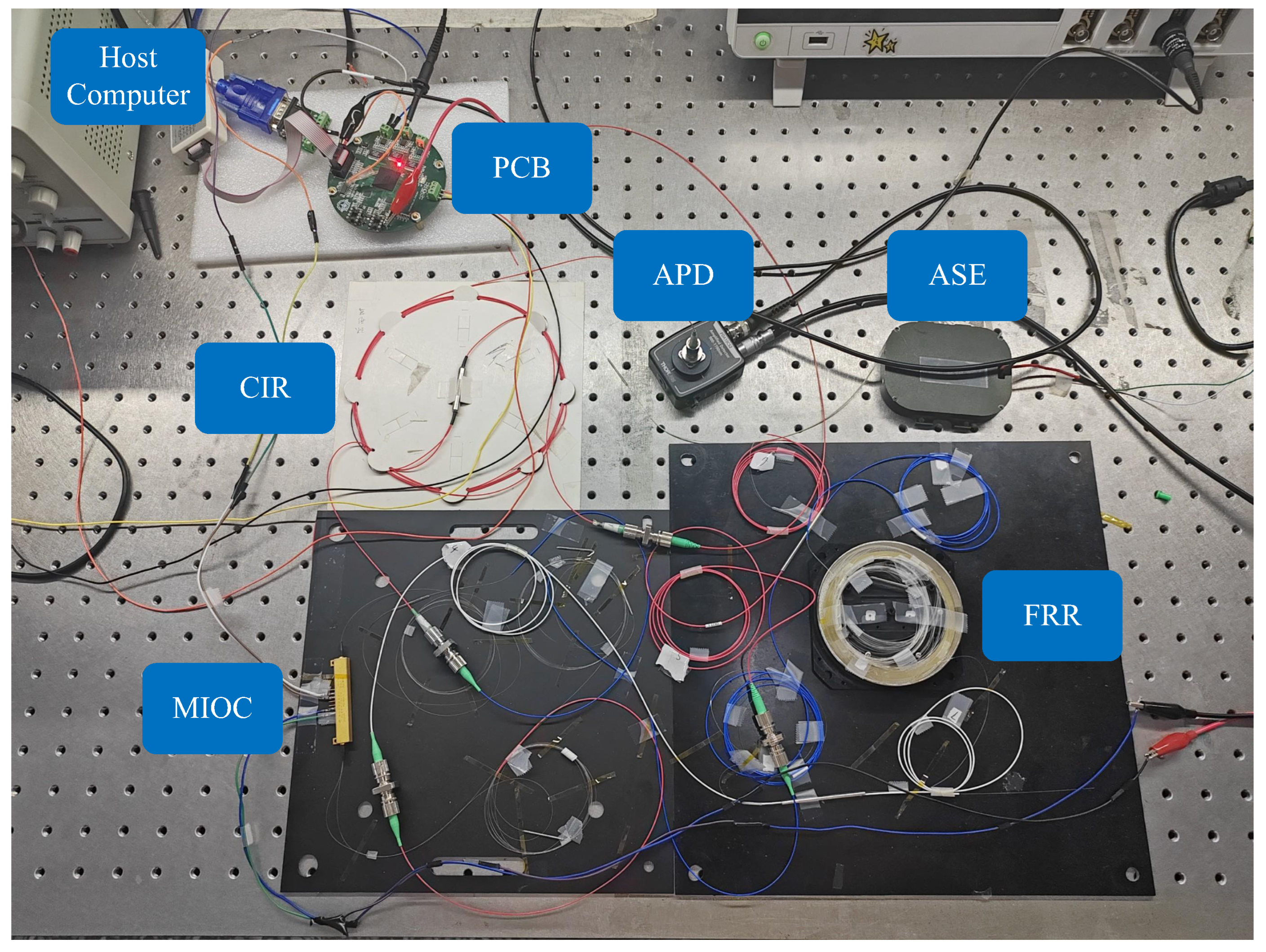
As shown in Figure 16, we used a W-RFOG system to investigate the impacts of sine wave and triangular wave modulation on gyroscope performance in an open-loop fiber optic gyroscope detection scheme. The system primarily comprises an ASE, a Printed Circuit Board (PCB), a CIR, a MIOC, an APD, and an FRR. The core sensitive component of the experimental system, the FRR, has a ring length of 200 m, a diameter of 0.78 cm, and a couple with a cross-coupling coefficient of 0.02.
Figure 16.
W-RFOG experimental system.
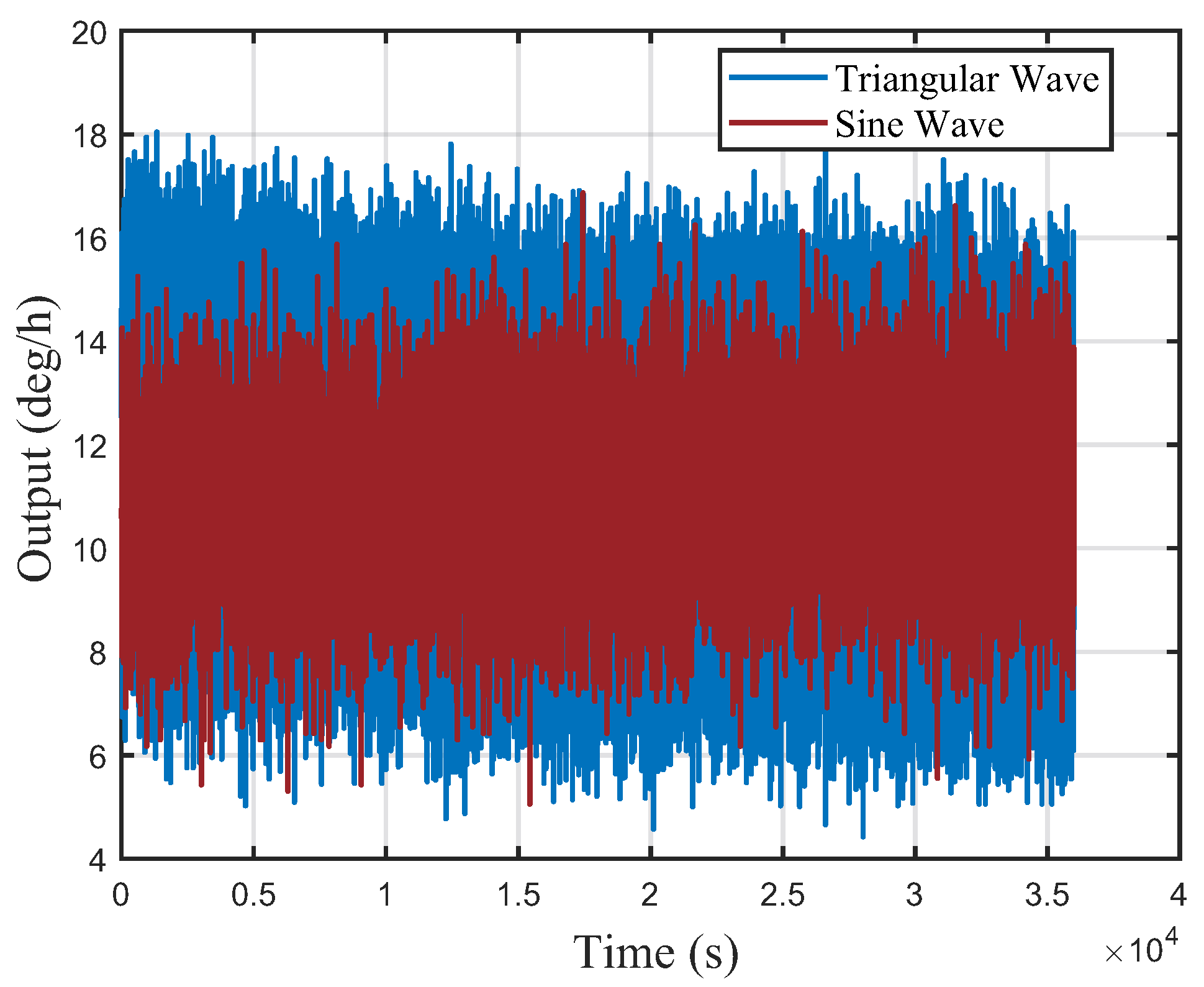
The gyroscope was housed within a sealed metal shielding enclosure on a vibration-isolated optical platform to minimize mechanical vibrations and electromagnetic interference. During the experiment, a sine wave voltage signal with an amplitude of 7.1 V and a frequency of 70 KHz, and a triangular wave voltage signal with the same amplitude (7.1 V) and a frequency of 31.5 KHz were, respectively, applied to the phase modulator. Static tests were performed on the W-RFOG system. Data were continuously acquired for 1 h at a sampling rate of 10 Hz [18,26]. The collected raw output data of the stationary W-RFOG system is depicted in Figure 17.
Figure 17.
Gyroscope static output.
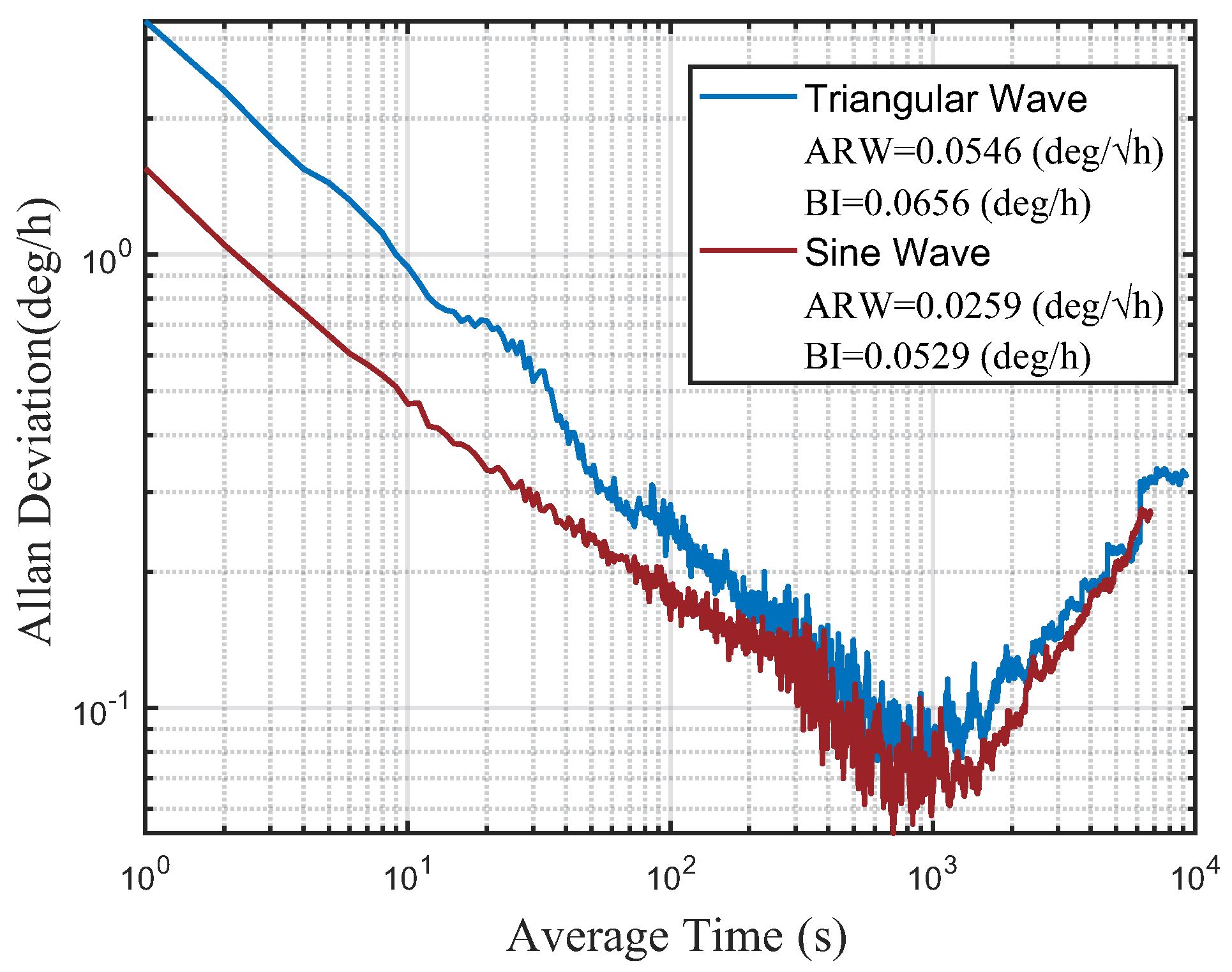
Bias instability (BI) characterizes the temporal fluctuation of a gyroscope’s output, specifically long-term drift. It quantifies the output variation of the gyroscope in the absence of external input. The angular random walk (ARW) coefficient quantifies the variance of the gyroscope’s white noise. To analyze BI and ARW, Allan deviation analysis was performed on the collected raw data, with results shown in Figure 18. ARW coefficient corresponds to the straight line with a slope of on the Allan deviation curve, and its value can be directly read at average time . BI corresponds to the straight line with a slope of zero on the Allan deviation curve, which is the position of the minimum value on the Allan deviation curve. Clearly, under triangular wave modulation at 31.5 KHz , the ARW coefficient is 0.0546 and the BI is 0.0656 deg/h. For sine wave modulation at 70 KHz, the gyro system exhibits an ARW coefficient of 0.0259 and a BI of 0.0529 deg/h.
Figure 18.
Allan deviation of W-RFOG output.
The experimental data are summarized as shown in Table 2. The results indicate that the W-RFOG system’s performance parameters under 70 KHz sine wave modulation outperform those under 31.5 KHz triangular wave modulation, highlighting the system’s superior performance with 70 KHz sine wave modulation. Furthermore, these experimental results are consistent with theoretical simulation analyses, validating the accuracy of the theoretical approach. Specifically, compared to triangular wave modulation, 70 KHz sine wave modulation reduces the ARW coefficient by 52.6% and the BI by 19.4%.
Table 2.
System performance metrics for different waveform modulations.
To further optimize system performance and reduce angular random walk, the light source output power can be moderately increased or coupling efficiency optimized. Another approach involves employing a high-quality-factor resonator to enhance system gain, thereby suppressing relative noise. To mitigate bias instability, the resonator can be placed in a high-precision temperature-controlled environment or operated in closed-loop mode, among other solutions.
5. Conclusions
This paper investigates modulation and demodulation techniques for white-light-driven resonant fiber optic gyroscopes systems. To improve gyroscope detection accuracy, we established mathematical models for triangular wave modulation–demodulation and sine wave modulation integrated with phase sensitive detection, based on the resonator’s characteristics and equivalent frequency shift theory. The effects of modulation waveforms and parameters on the sensitivity coefficient of the demodulation curve were analyzed, revealing sine waves are the optimal modulation waveform for the self-developed W-RFOG system. An experimental W-RFOG platform was constructed to evaluate angle random walk (ARW) and bias instability (BI). Results fully confirm the effectiveness and superiority of sine wave modulation in improving system accuracy. Experimental results demonstrate that under sine wave modulation, the sensitivity coefficient near the zero-crossing point of the gyroscope’s demodulation curve is improved by approximately 185% compared to that under triangular wave modulation, while the system’s ARW and BI are, respectively, reduced by 52.6% and 19.4%. This work provides both theoretical guidance and experimental validation for modulation waveform selection and parameter optimization in W-RFOG systems, offering a reference for their practical implementation in high-precision inertial navigation and related fields.
Author Contributions
Software, W.Y. and L.L.; writing—original draft preparation, W.Y.; writing—review and editing, H.Z.; supervision, G.W. and W.G.; funding acquisition, G.W. All authors have read and agreed to the published version of the manuscript.
Funding
This work was supported in part by the National Natural Science Foundation of China under Grant Numbers 52271315 and 51909048, in part by the Natural Science Foundation of Heilongjiang Province under Grant Number YQ2023F013, in part by the Fundamental Research Funds for the Central Universities under Grant Number ZFQQ2970101222, and in part by the Aeronautical Science Foundation of China under Grant Numbers ASFC-2023Z074077001, ASFC-2023Z019077001, and ASFC-2023Z019077002.
Data Availability Statement
The original data contributions presented in the study are included in the article; further inquiries can be directed to the corresponding authors.
Conflicts of Interest
The authors declare no conflicts of interest.
References
- Udd, E. An overview of the development of fiber gyros. In Optical Waveguide and Laser Sensors; Lieberman, R.A., Sanders, G.A., Scheel, I.U., Eds.; International Society for Optics and Photonics; SPIE: Cergy Pontoise, France, 2020; Volume 11405, p. 1140502. [Google Scholar]
- Wei, W. Development of new inertial technology and its application in aerospace field. Infrared Laser Eng. 2016, 45, 301001. [Google Scholar] [CrossRef]
- Liu, Y.; Wang, C.; Luo, G.; Ji, W. Design and applications of drilling trajectory measurement instrumentation in an ultra-deep borehole based on a fiber-optic gyro. Geosci. Instrum. Methods Data Syst. 2020, 9, 79–104. [Google Scholar] [CrossRef]
- Suo, X.; Yu, H.; Wu, X. Integrated Interferometric Fiber Optic Gyroscope Employing a Photo-Electronic Chip. IEEE Photonics Technol. Lett. 2022, 34, 1250–1253. [Google Scholar] [CrossRef]
- Liu, C.; Gao, C.; Yang, H.; Xu, X.; Song, N. Review on Stimulated Brillouin Scattering Effects and Their Applications in Integrated Optical Gyroscopes. Chin. J. Lasers 2022, 49, 192–206. [Google Scholar]
- Meyer, R.E.; Ezekiel, S.; Stowe, D.W.; Tekippe, V.J. Passive fiber-optic ring resonator for rotation sensing. Opt. Lett. 1983, 8, 644–646. [Google Scholar] [CrossRef] [PubMed]
- Hu, J.; Liu, S.; Liu, L.; Ma, H. Closed-Loop Resonant Fiber-Optic Gyroscope with a Broadband Light Source. J. Light. Technol. 2023, 41, 6088–6093. [Google Scholar] [CrossRef]
- Li, Y.; Bai, Y.; Zhang, S.; Bu, H.; Wenyao, L. Research on frequency locking and error feedback technology of resonant optical microcavity gyro. Electron. Meas. Technol. 2025, 48, 142–149. [Google Scholar]
- Wang, J.; Li, J.; Lan, S. Design and realization of a scheme for differential resonant hollowcore photonic crystal fiber gyro. J. Chin. Inert. Technol. 2020, 28, 802–808. [Google Scholar]
- Descampeaux, M.; Feugnet, G.; Bretenaker, F.; Debord, B.; Benabid, F.; Gérôme, F.; Amrani, F. Impact of Photonic Bandgap Hollow-Core Fiber Loss Wavelength Dependence on the Performance of RFOG. In Proceedings of the 2022 IEEE International Symposium on Inertial Sensors and Systems (INERTIAL), Avignon, France, 8–11 May 2022; pp. 1–4. [Google Scholar]
- Zhao, S.; Liu, Q.; Ma, H.; He, Z. White-light-driven resonant fiber-optic gyro based on round trip filtering scheme. Opt. Lett. 2022, 47, 1137–1140. [Google Scholar] [CrossRef]
- Li, H.; Lin, Y.; Liu, L.; Ma, H.; Jin, Z. Signal processing improvement of passive resonant fiber optic gyroscope using a reciprocal modulation-demodulation technique. Opt. Express 2020, 28, 18103–18111. [Google Scholar] [CrossRef] [PubMed]
- Zhao, S.; Liu, Q.; Liu, Y.; Ma, H.; He, Z. Navigation-grade resonant fiber-optic gyroscope using ultra-simple white-light multibeam interferometry. Photonics Res. 2022, 10, 542–549. [Google Scholar] [CrossRef]
- Wu, F.; Li, J.; Lan, S.; Gao, T.; Cheng, J.; Yue, Y. Angle random walk improvement method of theSLD-light-source-driven resonant fiber optic gyroscope. J. Chin. Inert. Technol. 2022, 30, 359–364. [Google Scholar]
- Liu, S.; Hu, J.; Wang, Y.; Liu, Q.; Ma, H.; He, Z. Broadband source-driven resonant micro-optic gyroscope based on a multi-turn waveguide-type ring resonator. Opt. Lett. 2023, 48, 1152–1155. [Google Scholar] [CrossRef]
- Wang, Z.; Wang, G.; Kumar, S.; Marques, C.; Min, R.; Li, X. Recent Advancements in Resonant Fiber Optic Gyro—A Review. IEEE Sens. J. 2022, 22, 18240–18252. [Google Scholar] [CrossRef]
- Liu, S.; Hu, J.; Wang, Y.; Wang, H.; Liu, L.; Ma, H. Improving the Performance of Broadband Source-Driven Resonant Fiber-Optic Gyroscopes. J. Light. Technol. 2024, 42, 6417–6423. [Google Scholar] [CrossRef]
- Xu, C.; Yang, L.; Wang, Y.; Chen, Z.; Jin, T.; Zhang, Y. Suppression of RIN in broadband source-driven RFOG using a light intensity fluctuation offset technique. Opt. Commun. 2025, 580, 131588. [Google Scholar] [CrossRef]
- Liu, S.; Liu, L.; Hu, J.; Li, H.; Liu, Q.; Ma, H.; He, Z. Performance of a resonant fiber-optic gyroscope based on a broadband source. Appl. Opt. 2022, 61, 4971–4979. [Google Scholar] [CrossRef]
- Liu, S.; Liu, L.; Hu, J.; Liu, Q.; Ma, H.; He, Z. Reduction of relative intensity noise in a broadband source-driven RFOG using a high-frequency modulation technique. Opt. Lett. 2022, 47, 5100–5103. [Google Scholar] [CrossRef] [PubMed]
- Xu, K.; Zhou, Y.; Xue, F.; Wang, Y.; Liu, W.; Tang, J.; Liu, J. Resonant fiber optic gyroscope driven by a broadband light source based on an over-coupled state fiber ring resonator. Appl. Opt. 2024, 63, 4840–4847. [Google Scholar] [CrossRef]
- Wang, Y.; Liu, S.; Hu, J.; Li, B.; Ma, H. Resonant fiber-optic gyroscope driven by broadband source with low cost and high accuracy. Acta Opt. Sin. 2025, 45, 153–160. [Google Scholar]
- Yan, B.; Li, J.; Wu, F.; Lan, S.; Cao, K.; Yue, Y. Analysis of the influence of modulation and demodulation parameters on the angular random walk of resonant fiber optic gyroscopes. J. Chin. Inert. Technol. 2025, 33, 722–726. [Google Scholar]
- Lan, S.; Li, J.; Wu, F.; Yan, B.; Su, Z.; Yue, Y. Analysis of resonance characteristics of resonant fiber opticgyroscope with broadband spectrum light source. J. Chin. Inert. Technol. 2024, 32, 300–307. [Google Scholar]
- Li, R.; He, J. Research on the Effects of Modulation Signal Frequencyto Resonator Fiber Optic Gyroscopes. Chin. J. Sens. Actuators 2007, 20, 2400–2403. [Google Scholar]
- Miao, W.; Zhao, H.; Yu, F.; Li, L. A High-Extinction-Ratio Resonator for Suppressing Polarization Noise in Hollow-Core Photonic-Crystal Fiber Optic Gyro. Photonics 2025, 12, 1126. [Google Scholar] [CrossRef]
Disclaimer/Publisher’s Note: The statements, opinions and data contained in all publications are solely those of the individual author(s) and contributor(s) and not of MDPI and/or the editor(s). MDPI and/or the editor(s) disclaim responsibility for any injury to people or property resulting from any ideas, methods, instructions or products referred to in the content. |
© 2026 by the authors. Licensee MDPI, Basel, Switzerland. This article is an open access article distributed under the terms and conditions of the Creative Commons Attribution (CC BY) license.