1. Introduction
Bisphenol A (BPA) is an endocrine-disrupting chemical commonly found in everyday-use consumer products [
1]. Its presence in food is mainly due to migration from polycarbonate plastics and epoxy resins, which are regularly used in food packaging. It can also originate from environmental contamination during the early stages of food production [
2]. Studies have linked human exposure to BPA to several pathologies, including premature puberty, obesity, metabolic disorders, infertility, and the proliferation of hormone-dependent cancers [
1,
3,
4]. Thus, even at very low concentrations, BPA poses a serious risk to human health, and its presence in food should be monitored.
Most sensing approaches for BPA detection are based on electrochemical [
5,
6,
7] or colorimetric [
8,
9] methods, but some optical fiber sensors have also been proposed. Optical fiber sensors possess advantageous characteristics, including real-time monitoring capability, potential for remote sensing, high resistance to corrosion, and immunity to external electromagnetic interference. Due to the very low concentration at which most chemical contaminants are usually found, high sensitivity and/or resolution are required. Although optical fiber sensors can be tailored to be sensitive to a specific parameter, such as refractive index (RI), higher levels of sensitivity can be achieved by modifying the sensor surface to promote interaction with the target compound. Indeed, most studies focused on the development of optical sensors for BPA detection report modifications to the fiber surface. The most common approach is the use of aptamers, which can bind to specific target molecules. In addition to their high selectivity, aptasensors for BPA detection have demonstrated very high sensitivities, with very low limits of detection [
10,
11,
12]. Another common approach involves the use of molecularly imprinted polymers (MIP), designed to bind to a specific target molecule, that can also achieve high specificity and low limits of detection [
13,
14]. Surface modifications using antibodies have also been reported, with similar results [
15,
16]. Although highly selective and capable of achieving very low limits of detection, these surface modifications are often costly, laborious, and may require the use of harsh chemicals. Moreover, most optical fiber sensors for BPA detection are based on intensity or fluorescence measurements; the former are more susceptible to signal variations, such as source fluctuations or fiber losses [
17].
Nowadays, the use of low-toxicity, non-polluting, and low-cost alternatives has become very desirable. Chitosan is an abundant polysaccharide derived from chitin that possesses many attractive properties, including non-toxicity, biodegradability, biocompatibility, and film-forming and adhesion capacities [
18]. Due to its numerous hydroxyl and amino groups, this waste-derived biopolymer exhibits high adsorbent properties. Therefore, chitosan has been employed as an adsorbent in a wide range of applications, including the removal of heavy metals, pesticides, dyes, and phenols from wastewater [
19,
20,
21,
22]. Indeed, several adsorption methods using chitosan or chitosan composites have been explored for the adsorption of BPA [
23,
24]. Furthermore, some studies also report the use of modified chitosan in electrochemical sensors for BPA detection [
5,
25].
In this study, we present an easy-to-fabricate optical fiber sensor composed of a microstructured fiber spliced between two single-mode fibers (SMF) for BPA concentration measurement. Aiming to use a more economically and environmentally friendly binding element that enhances sensitivity toward the target molecule, the sensor is coated with three layers of a 1% (w/v) chitosan film. The response to concentration variations is evaluated for both the coated and uncoated sensor using BPA solutions in concentrations ranging from 0 to 0.1 mg/mL. Possible washing procedures for the chitosan-coated sensor, using different organic solvents, are also investigated.
2. Sensor Design and Working Principle
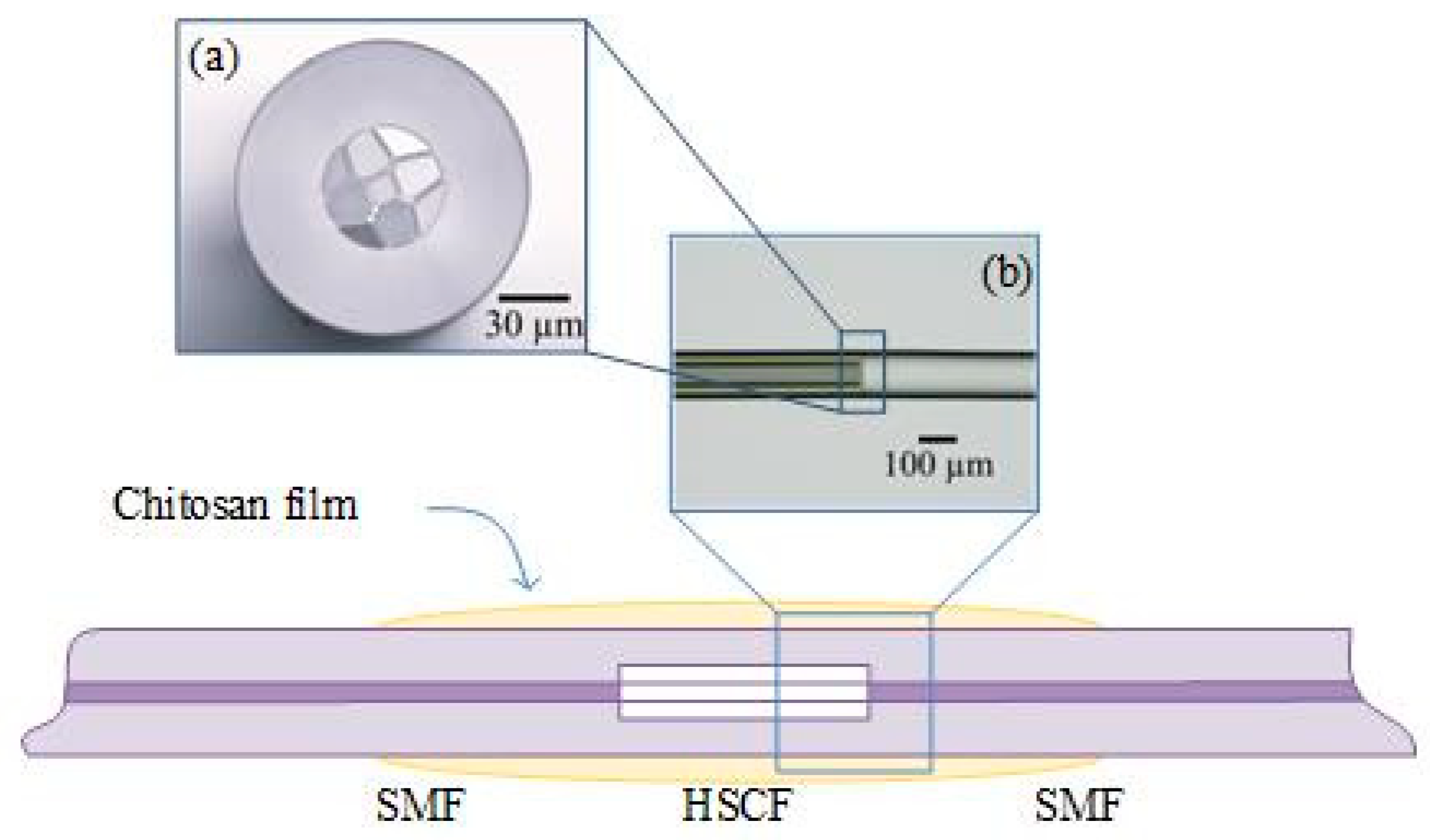
The proposed sensing structure, depicted in
Figure 1, consists of a section of ~6 mm of hollow-square core fiber (HSCF, manufactured at the Leibniz Institute of Photonic Technology, Jena, Germany) spliced between two SMFs (SMF28, from Corning, New York, NY, USA). The HSCF features a square-shaped hollow core surrounded by eight air structures—four petal-shaped structures intercalated with four interstices—connected to the silica cladding by silica strands. The fiber solid cladding has an inner diameter of approximately 52 µm and an outer diameter of 125 µm. The cross-section of the HSCF is pictured in
Figure 1.
The HSCF was spliced to the SMFs using the manual program of a Fujikura FSM40-S (Tokyo, Japan) fusion splicer, with a discharge time of 500 ms and an arc power of 15 arb. units. The fusion was performed with an offset to prevent the HSCF structure from collapsing at the splice site. The sensor was connected in a transmission setup to a broadband light source (BBS, model ALS-CL-17-B-FA from Amonics, Beijing, China) and to an optical spectrum analyzer (OSA, model MS9740A from Anritsu, Kanagawa, Japan), which acquired spectra with a resolution of 0.04 nm.
The light guidance of the HSCF is primarily based on antiresonance. However, the dimensions and configuration of the sensor used in this study create additional interferometric paths that become dominant when the sensor is submerged in a liquid medium [
26,
27]. The light from the input SMF, upon reaching the HSCF interface, couples into the hollow core and excites multiple core modes. Due to the differing numerical apertures between the SMF and the HSCF, some modes also couple to the silica strands surrounding the core and adjacent air structures. Upon reaching the interface of the output SMF, the light propagating in the two media (air and silica) recombines, forming a Mach–Zehnder interferometer (MZI). Part of the light propagating in the silica strands escapes to the cladding region, exciting cladding modes with different propagating constants and optical paths. The interference of multiple outer cladding modes forms a cladding modal interferometer (CMI) sensitive to changes in the external medium (RI, for example). The fiber characteristics and the sensor working principle have previously been described in greater detail in other works [
28,
29].
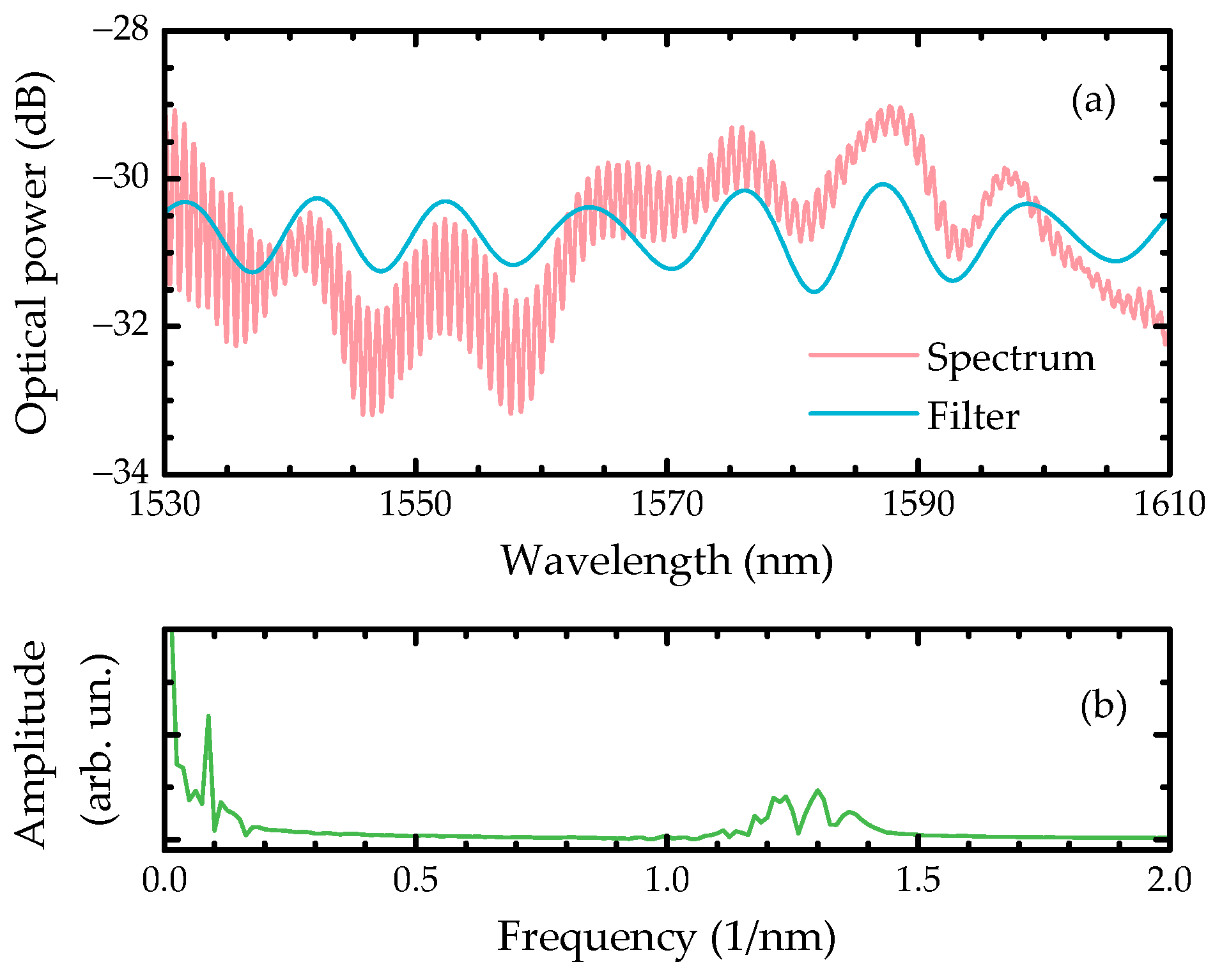
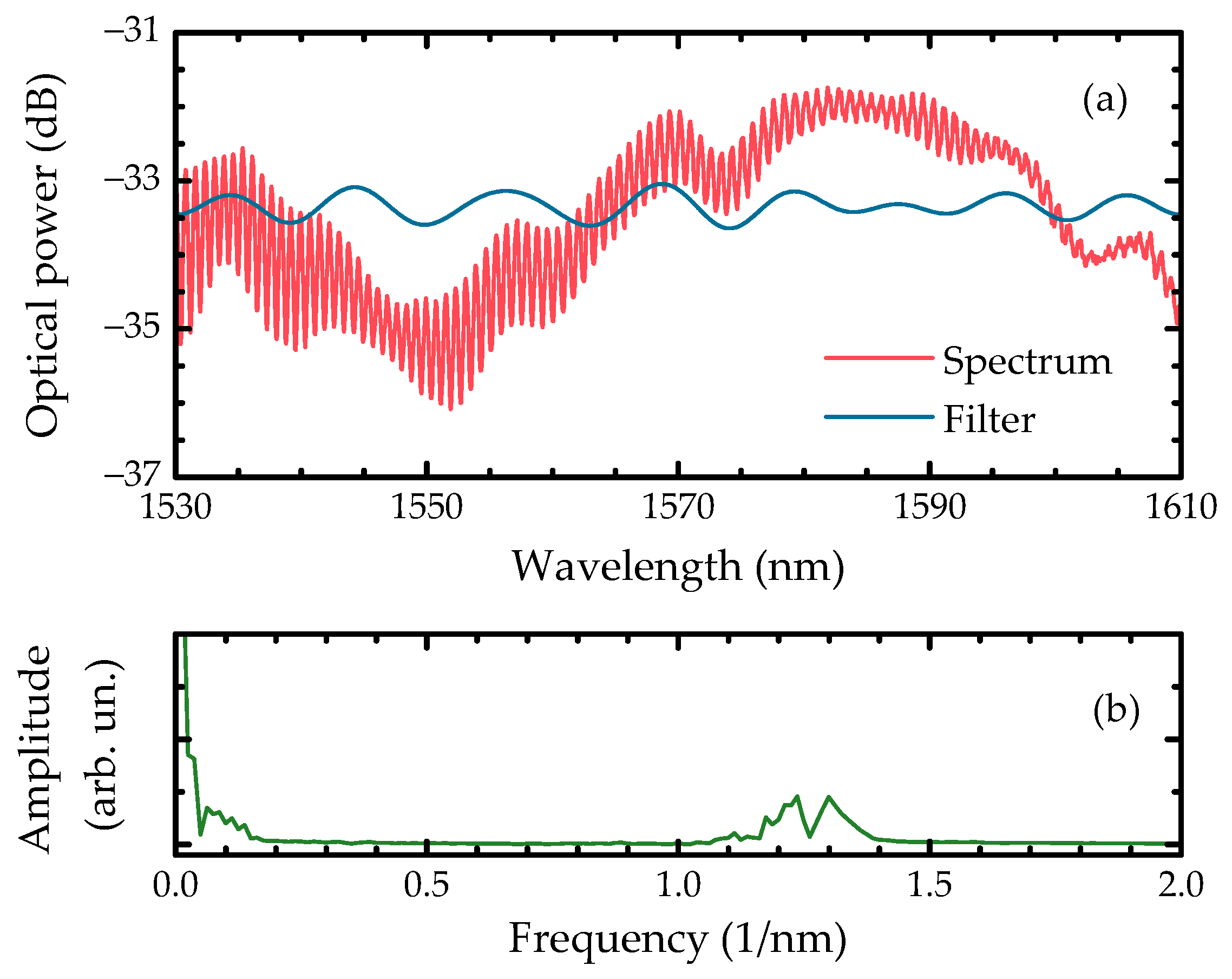
Figure 2a shows the spectrum of the sensor submerged in water, where the CMI and MZI components are clearly visible. The fast Fourier transform (FFT) graph is depicted in
Figure 2b, which shows two distinct sets of frequencies. The lower frequencies, at around 0.1 nm
−1, are related to the CMI, while the higher frequencies, at around 1.2 nm
−1, are generated by the MZI. A band-pass filter between 0.07 and 0.12 nm
−1 was employed, as shown in
Figure 2a, to monitor the CMI component. The MZI is generated by the light propagating in the core and silica strands and is not affected by RI variations [
27]. Although the MZI component was not monitored in this study, it is sensitive to temperature variations and can therefore be employed for temperature compensation in RI measurements.
To enhance the sensor sensitivity to the target analyte, a chitosan film was applied to the sensor. Chitosan possesses amino and hydroxyl groups that provide active sites for hydrogen bonding with the hydroxyl groups in phenolic compounds such as BPA [
21]. Chitosan is insoluble in water but is soluble in slightly acidic aqueous solutions; therefore, a 1% (
w/
v) chitosan solution was prepared by dissolving the appropriate amount of commercial chitosan (from ChemLab, Zedelgem, Belgium) in a 4% (
v/
v) acetic acid solution, as described in [
30]. The solution was stirred continuously for 24 h at room temperature to ensure complete dissolution. The coating procedure was performed manually by submerging the sensor in the chitosan solution, ensuring that the HSCF section was fully covered. To achieve this, the sensor was suspended over a microscope slide containing the chitosan solution, which was placed on a lab jack, enabling the solution to be raised until it entirely covered the sensor. The chitosan-coated sensor was then left to dry for an appropriate period before further use.
A preliminary assay demonstrated that coating the sensor with a single layer of chitosan film did not enhance its sensitivity to the target analyte. This could be because a single layer did not provide sufficient binding sites to significantly increase the concentration of BPA molecules near the sensing region. It is also possible that such a thin layer may not have adequately covered the sensor or may have been damaged during handling. Therefore, in subsequent assays, the sensors were coated with three layers of chitosan. The additional layers helped ensure complete coverage of the sensor and reduce the impact of film damage.
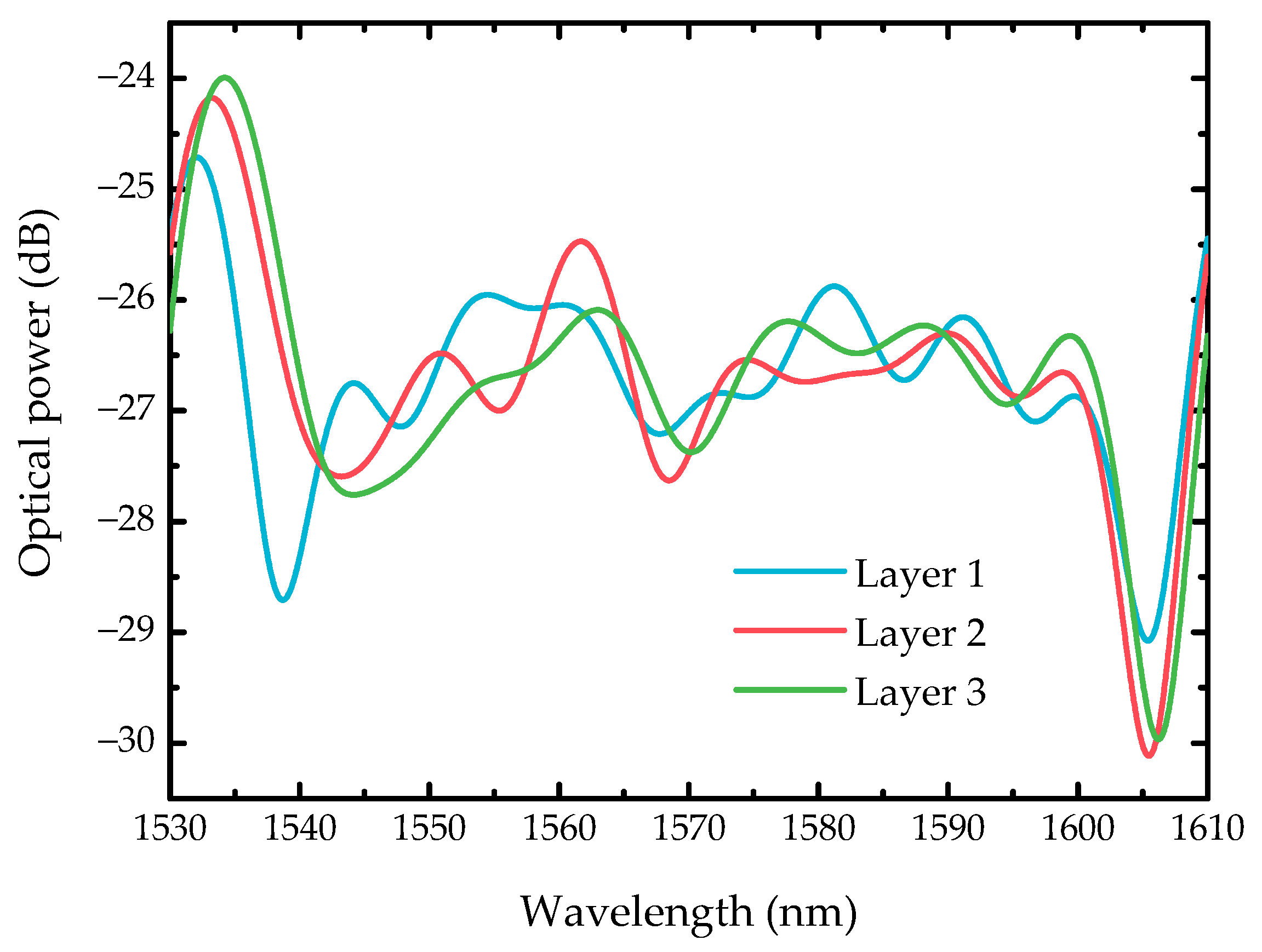
Figure 3 illustrates the response of the coated sensor, using the appropriate band-pass filter, acquired immediately after each coating procedure. There are visible differences in the spectra, with less-defined peaks after each layer is deposited, along with a shift towards longer wavelengths (red shift).
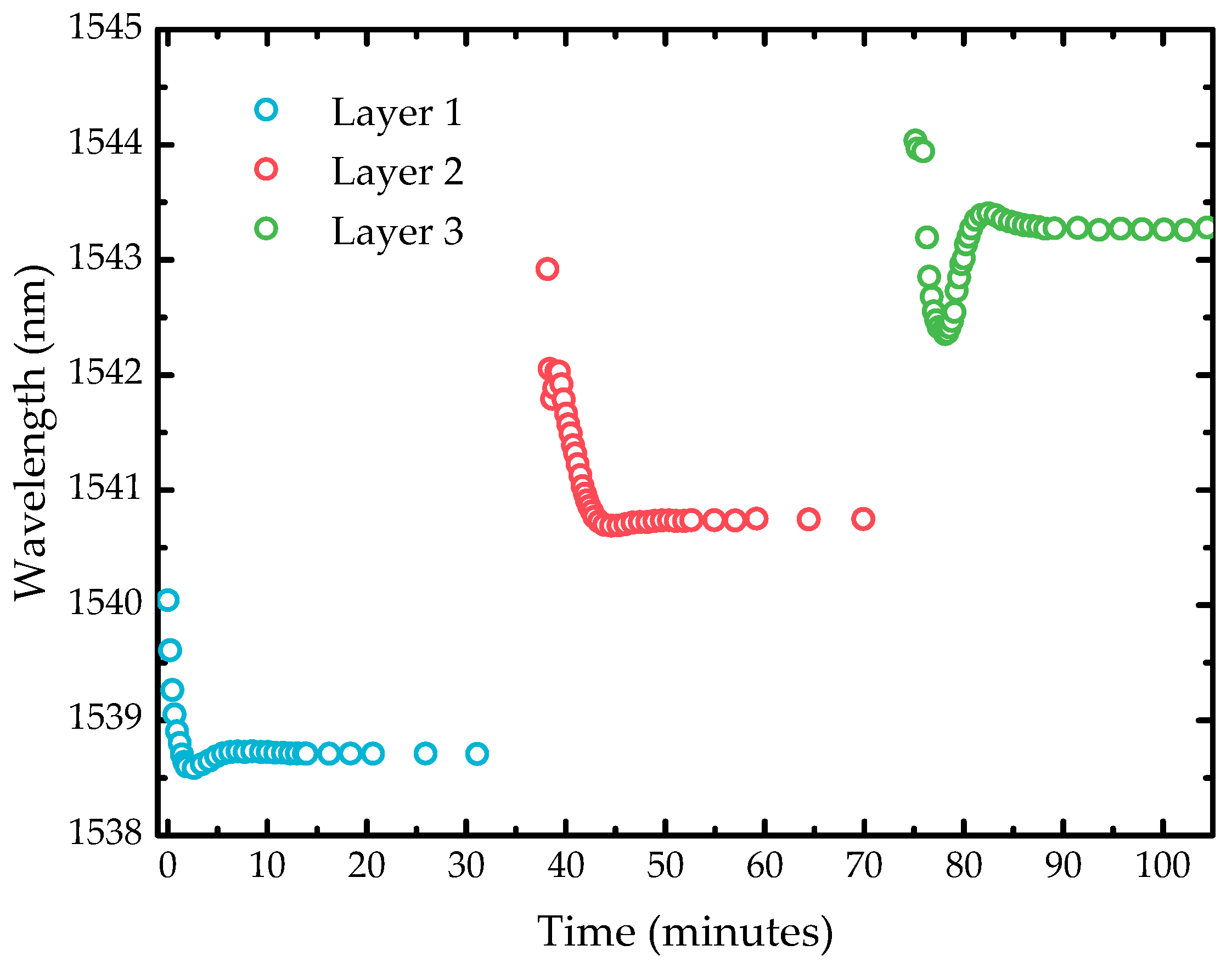
The wavelength evolution during the drying process of each layer, measured at a dip around 1540 nm, is shown in
Figure 4. Overall, a significant wavelength shift occurs in the first few minutes after chitosan deposition, during which the film remains wet. During this period, two phenomena are thought to occur: first, water evaporation causes a decrease in wavelength, and then the setting of the chitosan polymer occurs, resulting in a slight increase in wavelength. After about 20 min, it becomes stable, with a maximum standard deviation of 7.6 pm between measurements, indicating that the film is fully cured. Since drying time can be affected by room temperature and humidity, a 40-min drying period was adopted between coating procedures. Furthermore, after the last layer was applied, the sensor was left to dry overnight before subsequent use.
3. Results and Discussion
The spectral response of the coated sensor when submerged in a liquid medium is shown in
Figure 5a. Similar to the response of the uncoated sensor, the spectrum shows two components corresponding to an MZI and CMI. However, in the coated sensor, the CMI component possesses fewer, much less defined peaks. The same pattern can also be observed in the FFT graph in
Figure 5b, where the lower-frequency peaks, at around 0.1 nm
−1, are reduced. Since the CMI is strongly influenced by the external medium, this effect could be due to the higher RI or surface irregularities of the chitosan film, both of which can interfere with the propagation of some modes into the external medium. The CMI component of the chitosan-coated sensor was monitored using the same band-pass filter used for the uncoated sensor, between 0.07 and 0.12 nm
−1.
The coated and uncoated sensor responses to RI variations were characterized using BPA solutions with concentrations ranging from 0 to 0.1 mg/mL, corresponding to a RI range of 1.3162 to 1.3171 RIU (refractive index unit) at 1550 nm. Due to its low solubility in water, the BPA (≥99% purity, from Aldrich Chemicals, St. Louis, MO, USA) stock solution was prepared in 50% (v/v) ethanol, while working solutions were prepared in water. While the concentration range used in this study is higher than the concentrations typically found in food and environmental samples, it already corresponds to minimal variations in RI. Moreover, owing to the very low concentrations of the BPA solutions, it was not possible to accurately measure their RI using the Abbe refractometer available in our lab. Therefore, the RI value of each solution was estimated using a calibration curve obtained for a set of ethanol solutions with known RI values ranging from 1.3159 to 1.3307 RIU. To do this, an uncoated sensor was used to acquire the spectral response of the ethanol and BPA solutions. Assuming that the RI of both sets of solutions follows a similar pattern, the calibration curve obtained for the ethanol solutions was applied to the wavelength shift measured for the BPA solutions to calculate the RI of each solution.
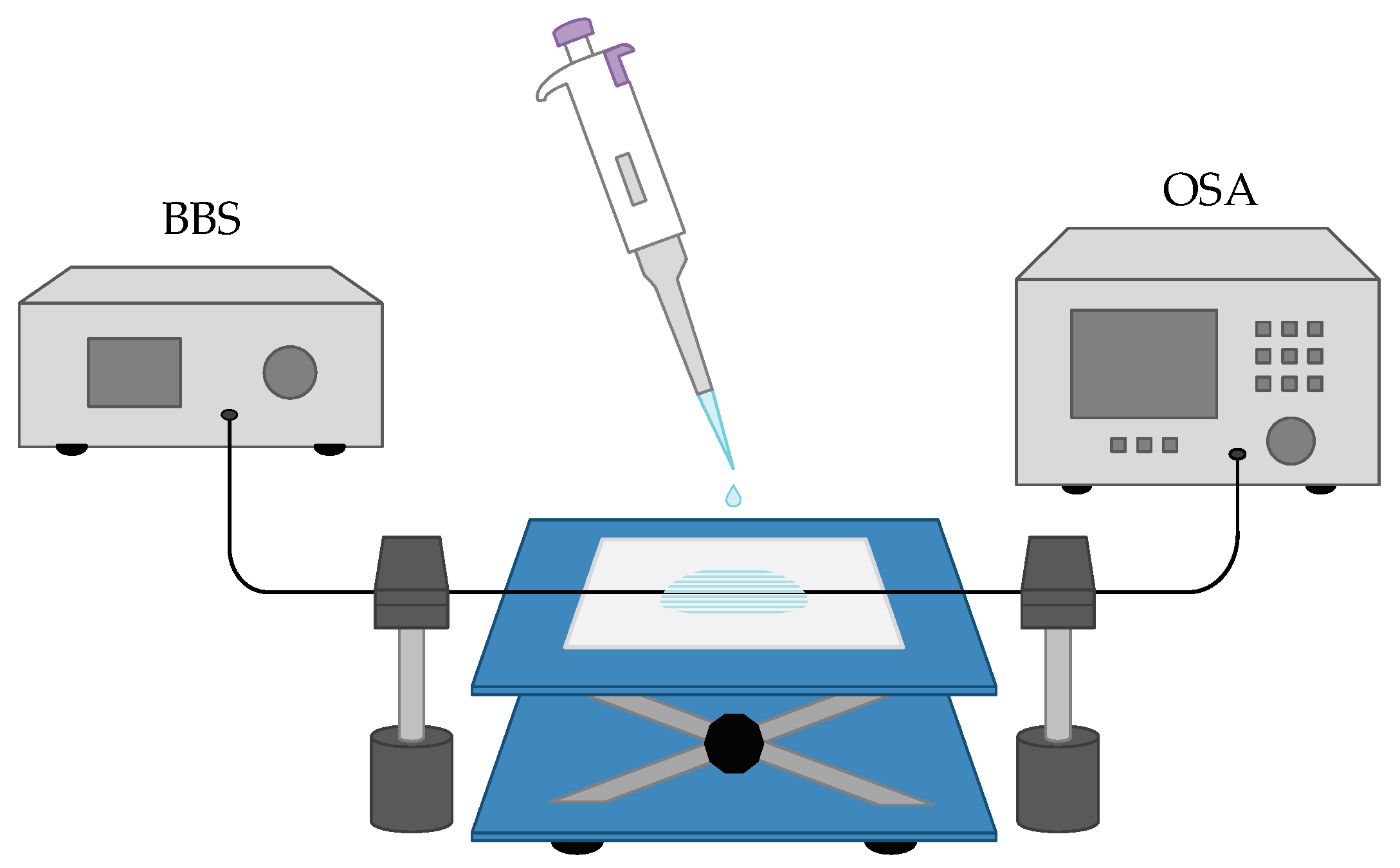
To characterize the sensor response to concentration variations, the sensor was suspended horizontally above a microscope slide, without touching it, and secured in place by clamps on the opposing SMFs. Then, 500 µL of solution was added, ensuring the sensor was fully submerged. To avoid confusion, please note that the chitosan film was deposited on the external surface of the fiber cladding; therefore, the BPA solution surrounded the sensing element, allowing for interaction with the film to occur. To provide contact time between the chitosan film and the BPA molecules, spectra were acquired 1 min after the sensor was submerged. After each measurement, the BPA solution was carefully removed with a micropipette before adding the next solution. During the chitosan drying process, water and acetic acid slowly evaporate, and the chitosan chains grow in proximity, forming compact, ordered structures held together by strong, stable hydrogen bonds. When this solid film is submerged in non-acidic aqueous media, water molecules penetrate the chitosan chains, causing swelling, but are unable to disrupt the strong bonds that hold the chitosan structure together, thereby forming a hydrogel [
30]. Therefore, the coated sensor was submerged in water for 10 min before measurements to minimize the impact of swelling on spectral acquisition. The measurements were performed at a constant temperature of around 21 °C, and the experimental setup used is illustrated in
Figure 6.
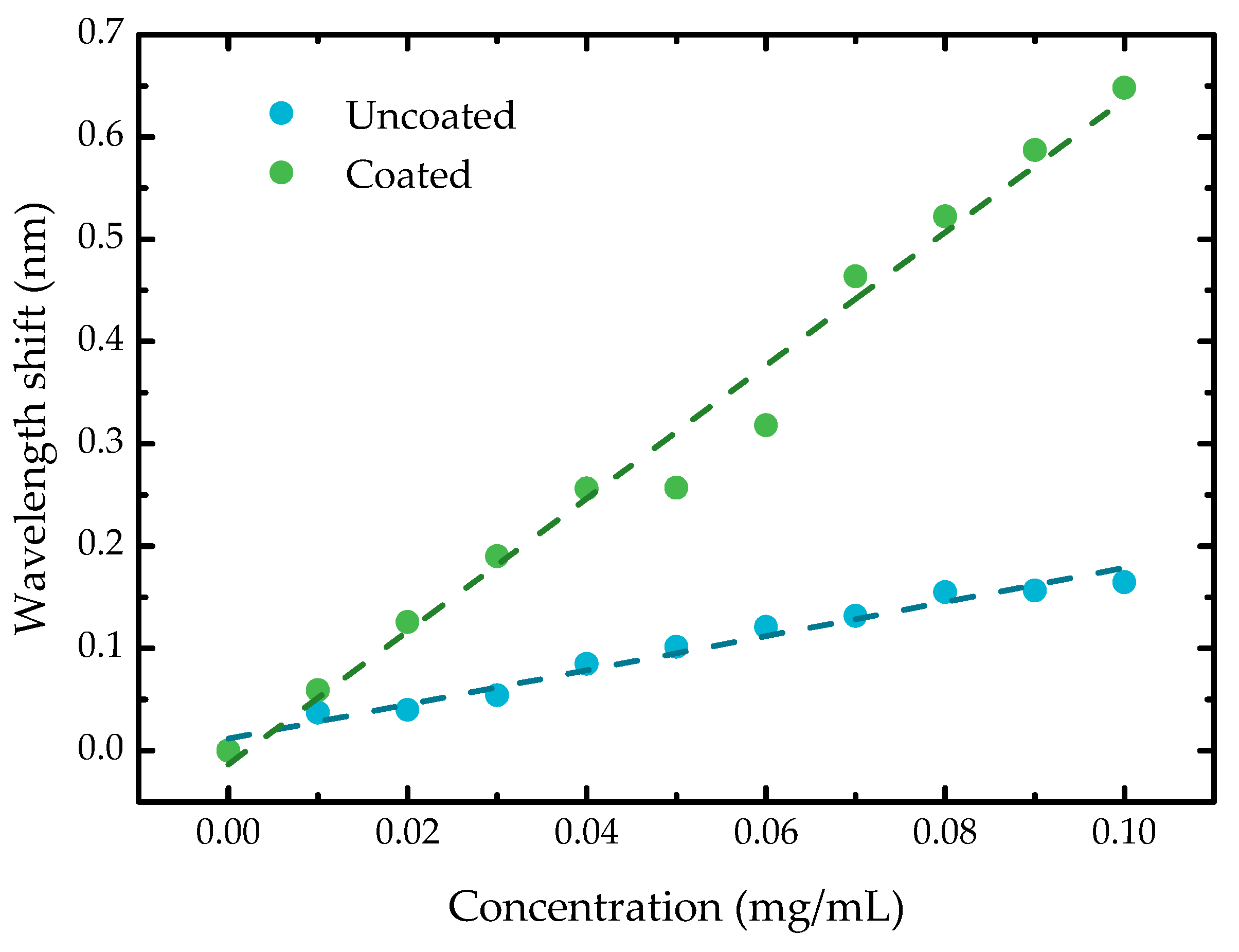
To avoid interferences such as those observed in intensity measurements, in this study, concentration measurements were based on variations in wavelength. The increase in BPA concentration also increases the RI of the solutions, resulting in a shift toward longer wavelengths, as illustrated in
Figure 7. The concentration range of the BPA solutions corresponds to a small RI range. Therefore, the wavelength shift obtained for the uncoated sensor, measured at the peak at 1552 nm, displayed a linear behavior with a sensitivity of 1.670 pm/(µg/mL) and a correlation coefficient of 0.972. Similarly, the coated sensor also exhibited linear behavior, achieving a maximum sensitivity of 6.503 nm/(mg/mL) with a correlation coefficient of 0.981, measured for the peak at 1556 nm. This represents a 3.9-fold increase in sensitivity compared to the uncoated sensor. Although the results for the coated sensor show two points outside the fitting line, these are due to experimental errors likely arising from the preparation of the BPA working solutions. It is also possible that these deviations were caused by residual solution from the previous measurement (a less concentrated solution). In terms of RI, these results correspond to sensitivities of 199.7 and 782.1 nm/RIU for the uncoated and coated sensors, respectively. In the coated sensor, BPA is adsorbed onto the chitosan film via hydrogen bonding between its hydroxyl groups and the hydroxyl and amino groups of the chitosan film. This leads to an increase in the concentration of BPA molecules in the medium surrounding the sensing region, thereby increasing the sensitivity of the chitosan-coated sensor.
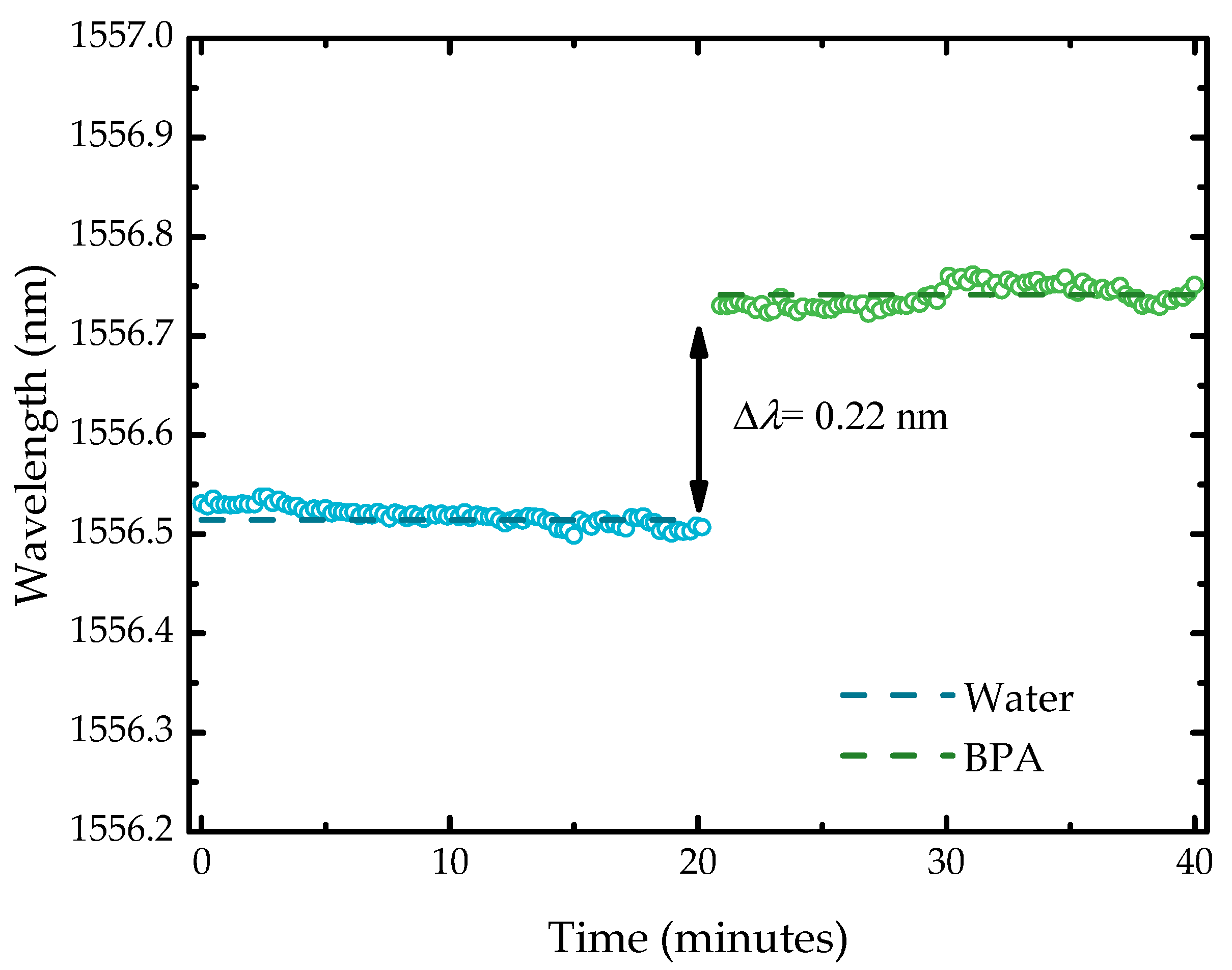
The sensor resolution, determined by assessing its stability, provides information about the lowest analyte concentration the sensor can detect. To this end, the spectral response to distilled water was monitored by acquiring spectra at approximately 15-s intervals over a 20-min period. The procedure was then repeated for the least concentrated BPA solution (0.01 mg/mL). The wavelength stability of the coated sensor, measured with water and BPA solution, is illustrated in
Figure 8.
The maximum wavelength standard deviation was 11.07 pm, observed for the BPA solution. This value is lower than the OSA resolution, evidencing the high sensor stability. Mean values of 1556.518 nm and 1556.740 nm were obtained for steps 1 (distilled water) and 2 (BPA solution), respectively. Based on these values, the resolution was calculated according to
δc = 2
σλ∆
c/∆
λ [
31], where
λ represents the standard deviation (in nm), ∆
c the variation in the concentration of the two steps (in mg/mL), and ∆
λ the wavelength variation between the two steps (in nm). A resolution of 9.98 × 10
−4 mg/mL was obtained, which is equivalent to 1.30 × 10
−5 RIU. These results demonstrate the ability of the chitosan-coated sensor to detect smaller concentrations of analyte than the lowest concentration used in this study.
To assess potential analyte carry-over between measurements, spectra were acquired for five BPA solutions at the same concentration. The results revealed an increasing shift towards longer wavelengths with each measurement, following a linear behavior. This suggests that after each analysis, BPA molecules remain adsorbed to the chitosan film, thereby affecting subsequent measurements. The removal of BPA from chitosan using methanol solutions has previously been reported in the literature [
23]. Therefore, a washing procedure using a 70% (
v/
v) methanol solution was investigated as a possible means of regenerating the chitosan film. The adopted procedure comprises five measurement cycles, each corresponding to the spectral acquisition of a set of BPA solutions ranging from 0 to 0.1 mg/mL, following the procedure described for sensor characterization to concentration variations. Between each measurement cycle, 500 µL of the 70% (
v/
v) methanol solution was added to the chitosan-coated sensor. After a period, the methanol was removed with a micropipette, and the sensor was washed with water to remove any residual methanol. The contact time with the methanol solution was investigated for 5, 30, and 60 min. Due to the volatile nature of methanol, the washing solution was replaced every 10 min during the assays with 30- and 60-min exposure times. The sensitivity was then determined for each measurement cycle.
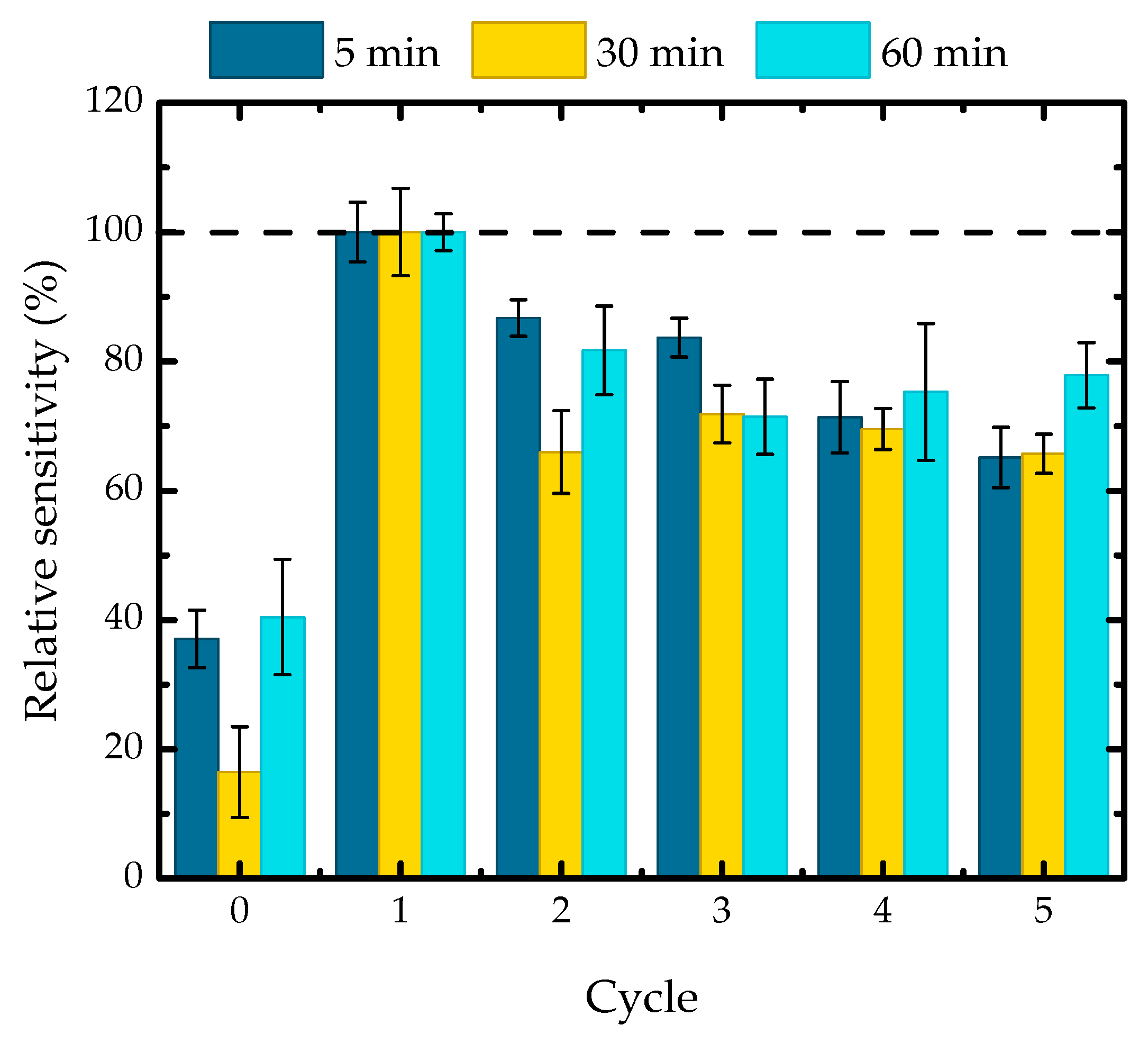
Figure 9 depicts the relative sensitivity of each cycle, with the sensitivity obtained for Cycle 1 serving as the standard sensitivity of the coated sensor.
The results show that, in general, sensitivity decreases after the first cycle regardless of exposure time to the methanol solution. In the washing assays with 30- and 60-min exposure times, the methanol solution had to be replaced, which may account for the slightly higher standard deviations obtained for these assays. However, it appears to have had no relevant impact on the ability of the solvent to regenerate the chitosan film. Indeed, while a 5-min exposure time resulted in a lower decrease of sensitivity after the first three cycles (around 16%), overall, it does not appear that exposure time had an impact on the efficiency of methanol in removing BPA from the chitosan film. The gradual decrease in sensitivity indicates that the methanol solution was unable to completely remove the BPA molecules adsorbed onto the chitosan film. Similarly, it has been reported that, although recovery of BPA superior to 90% was achieved, an aqueous solution of methanol was unable to fully regenerate the chitosan adsorbent [
23]. However, it is important to note that, although the washing procedure with the methanol solution was unable to fully regenerate the chitosan film, the sensitivity of the coated sensor after five measurement cycles was still considerably higher compared to the uncoated sensor (represented in
Figure 9 by Cycle 0).
Bisphenol A is soluble in several solvents [
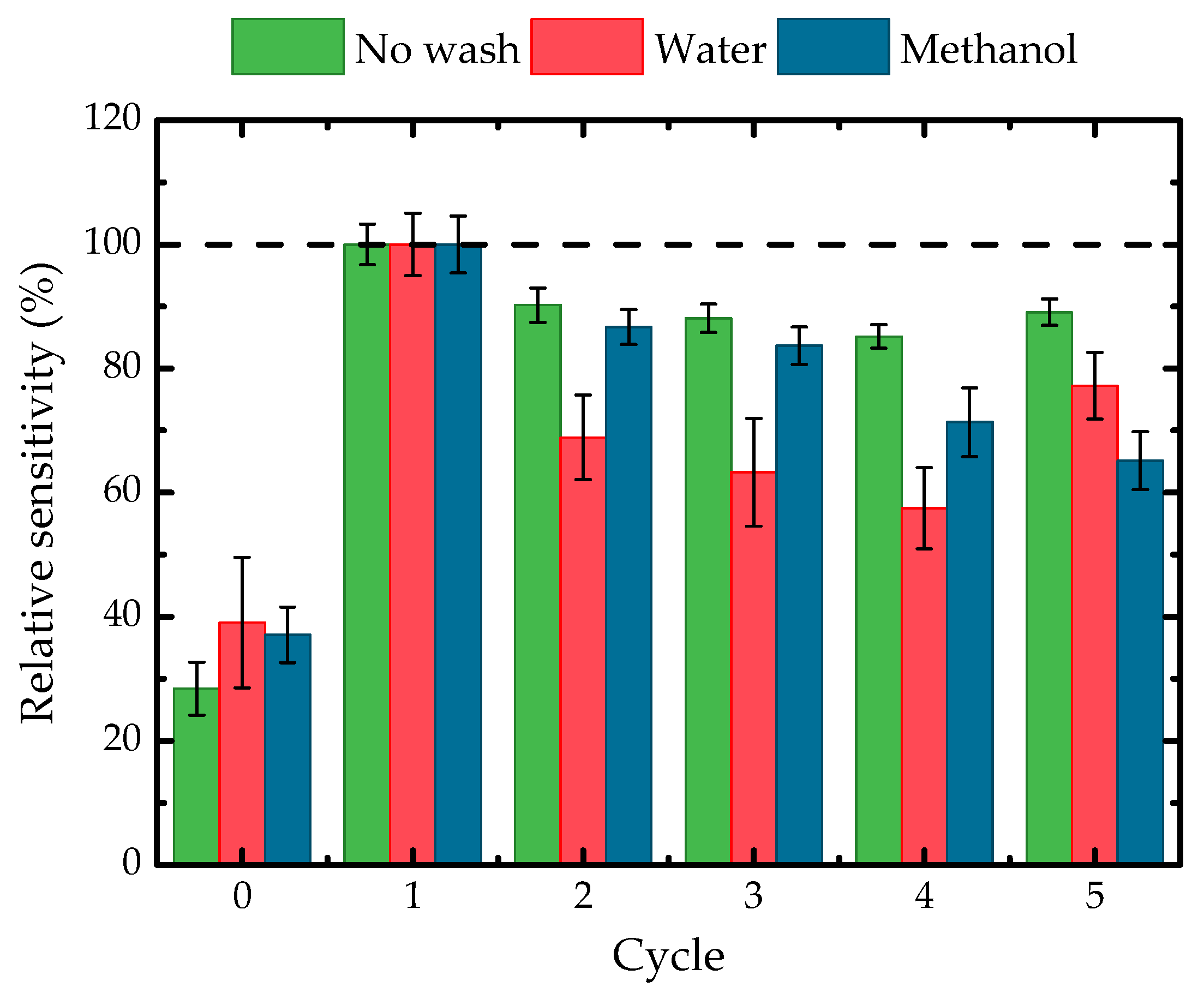
32], so further experiments were carried out to investigate the performance of acetonitrile and water in removing BPA from the chitosan film. Since longer exposure times were not advantageous in the methanol washing assays, a 5-min exposure period was selected for these assays. Distilled water was used to remove any residual solvent from the sensor after each washing. The performance of these washing experiments was also compared with that of an assay in which no washing procedure was employed and with the methanol washing assay. The relative sensitivities determined for the measurement cycles of each assay are depicted in
Figure 10.
The results show a decrease in sensitivity in all assays after the first measurement cycle. However, the sensitivity at the end of all five cycles remained higher than the sensitivity of the uncoated sensor, similar to what was observed in the washing assays with methanol. Overall, the decrease in sensitivity was more pronounced when water was used as the cleaning solvent. This is likely because BPA has low solubility in water, while it has a relatively high affinity towards chitosan. On the other hand, water can also interact with chitosan through hydrogen bonding [
33]. As such, there is a cumulative effect where water is not able to remove the BPA molecules and is also interacting with the chitosan film, resulting in fewer bonding sites being available. Similarly, the hydroxyl groups in methanol can also interact with the chitosan film through hydrogen bonding [
30]. In this case, however, BPA is much more soluble in methanol. Therefore, the higher ability of methanol to remove BPA from the chitosan film is based on a stronger affinity between methanol and BPA.
The results for the washing assay using acetonitrile are not depicted in
Figure 10 because exposure to this solvent produced significant spectral differences between cycles and rendered the sensor highly unstable. Chitosan is not soluble in most organic solvents, including acetonitrile. However, acetonitrile is a polar aprotic solvent, which may disrupt the inter- and intra-hydrogen bonds in the chitosan structure, compromising the integrity of the film and causing alterations to the spectra, as well as sensor instability.
In the assay where no washing procedure was employed, distilled water was used to remove any residual solution before the next measurement cycle began. In this case, the chitosan film was only exposed to water for a short period, which resulted in a lower decrease in sensitivity (around 11%). Indeed, after the initial decrease in sensitivity, it stabilizes. Although it was not possible to completely regenerate the chitosan film to its initial state, using distilled water to quickly clean the sensor between uses could allow it to be reused. Nonetheless, further testing, using other organic solvents, should be conducted to improve the regeneration of the chitosan film, which in turn would ensure that the sensor can be reused with more reliable results.
The characteristics and performance of other optical sensors for BPA detection are summarized in
Table 1. While these sensors employ different designs of varying complexity and measure different parameters (wavelength shift, fluorescence intensity, absorbance), their common feature is the use of highly specific recognition elements, such as ap-tamers, antibodies, or MIPs, that provide high specificity for BPA. A direct comparison between sensors is not accurate because they use different sensing mechanisms and different methods to determine the limit of detection. The sensor proposed herein has a relatively high limit of detection (determined by sensor resolution); however, it offers a fast response time and relies on a straightforward design that does not require harsh chemicals, complex procedures, or expensive biorecognition elements.
Although temperature was not evaluated in this study, the sensor can be used for compensating this parameter in RI measurements without requiring an additional component. Moreover, in the future, it may be possible to further enhance the sensor selectivity by modifying the chitosan film. For example, chitosan modification with a crosslinker, such as genipin (low toxicity), would not only improve the stability of the chitosan structure but could also alter pore size, thereby conferring size-selective adsorption properties by tuning the degree of crosslinking [
34]. Grafting chemical moieties, specifically an aromatic group, would also promote π-π stacking interactions and increase hydrophobicity, thus enhancing selectivity for BPA [
35]. Alternatively, better selectivity could be achieved by using chitosan-based molecular imprinting. It follows a similar principle to synthetic molecularly imprinted polymers; however, in this case, chitosan serves as the base polymer onto which the target molecule is imprinted [
36].