Review

Drivers of the Worldwide Distribution of Raphidiopsis raciborskii: Evidence from Experimental to Field Studies


by
Florencia Soledad Alvarez Dalinger
1,2,*,
Lucia Verónica Laureano
1,2,
Liliana Beatriz Moraña
2,
Claudia Nidia Borja
2,
María Laura Sanchéz
1,3 and
Verónica Laura Lozano
1,2
1
Consejo Nacional de Investigaciones Científicas y Técnicas (CONICET), Godoy Cruz 2290, Autonomous City of Buenos Aires 1425, Argentina
2
Facultad de Ciencias Naturales, Universidad Nacional de Salta, Avenida Bolivia 5150, Salta 4400, Argentina
3
Laboratorio de Limnología, Departamento de Ecología, Genética y Evolución, Facultad de Ciencias Exactas y Naturales, Universidad de Buenos Aires, Autonomous City of Buenos Aires 1425, Argentina
*
Author to whom correspondence should be addressed.
Limnol. Rev. 2026, 26(2), 13; https://doi.org/10.3390/limnolrev26020013 (registering DOI)
Submission received: 11 March 2026 / Revised: 3 April 2026 / Accepted: 7 April 2026 / Published: 12 April 2026

Abstract

Raphidiopsis raciborskii is one of the most widely reported cyanobacteria worldwide, responsible for dense blooms and cyanotoxin production. Classified as invasive, it has been documented across all continents except Antarctica. While its distribution has been extensively studied, abiotic factors have consistently emerged as the main determinants of its success, which are therefore the focus of the present study. The objective of the present review is to synthesize findings from both experimental and field-based studies to identify which are the key drivers of its dominance. In total, 30 abiotic factors were reported, reflecting the broad strategies of the species. Results show the temperature as a consistent universal factor (11–35 °C), while differences were found regarding nutrient dynamics. Particularly, nitrogen forms and N/P ratios predominated in field-based evidence, whereas photosynthetically active radiation was disproportionately emphasized within experimental studies under controlled conditions. Factors such as salinity and micronutrients, and synergistic interactions remain critically understudied, limiting predictive capacity under global change scenarios. Understanding which combinations of these drivers create favorable conditions is essential for anticipating bloom dynamics in order to establish management strategies for avoiding or mitigating the negative impact of them.

1. Introduction

Cyanobacterial blooms are a major cause of water quality deterioration and represent one of the most significant environmental and health threats associated with climate change [1]. Among bloom-forming species, Raphidiopsis raciborskii stands out due to its invasive nature and its wide distribution in continental ecosystems [2]. For decades, it was classified as Cylindrospermopsis raciborskii; however, recent molecular analyses have revealed significant genetic similarities between the genera Cylindrospermopsis and Raphidiopsis [3,4]. This finding supports the synonymy of these names and has resulted in its reclassification as Raphidiopsis raciborskii. This species is morphologically characterized by isopolar trichomes that feature terminal heterocytes and akinetes distributed along their length [5]. Due to its invasive nature, its capacity to outcompete other cyanobacteria, like Microcystis aeruginosa [6], and its propensity to form dense blooms and produce toxins [7], R. raciborskii has become significant concern in recent decades. Toxic strains of this species are known to produce cylindrospermopsin and saxitoxin, potent cyanotoxins that pose a serious risk to human health; however, important biogeographic differences exist, as saxitoxin producing strains of R. raciborskii have to date been reported exclusively from South America, whereas cylindrospermopsin producing strains show a broader global distribution [8]. Cylindrospermopsin is hepatotoxic, nephrotoxic, and cardiotoxic, while saxitoxin is a neurotoxin that can induce paralytic shellfish poisoning and neuromuscular paralysis [9,10,11]. Although these studies do not involve Raphidiopsis raciborskii, recent research on New Zealand Scytonema crispum strains has revealed the largest saxitoxin biosynthetic gene clusters described to date, with genetic differences in modifying enzymes correlating with distinctive toxin profiles among strains [12,13]. Furthermore, blooms of R. raciborskii critically degrade water quality, potentially causing severe ecological imbalances and increasing the economic costs associated with water treatment [14].
R. raciborskii exemplifies the paradox of a “generalist specialist”, a cyanobacterium with remarkable phenotypic plasticity that enables it to thrive in diverse habitats, from oligotrophic reservoirs to hypereutrophic lakes [15]. Since its first report in Indonesia by Woloszynska (1912), this species has achieved a global distribution [16], occurring in environments ranging from rivers to reservoirs of varying trophic status [14]. It has formed blooms in tropical and subtropical regions, such as South America, as well as in temperate zones like Europe and North America; to date, blooms have not been reported in Antarctica [15]. Proposed mechanisms for its dispersal include the transport of akinetes by migratory birds (on their legs or via digestive tracts) or by fish dispersing vegetative cells, while accidental human transport via ship ballast water may also play a significant role [17]. The success of R. raciborskii is largely attributed to its physiological plasticity and tolerance. Although the specific factors driving its expansion remain unclear, most cyanobacteria are influenced by eutrophication and rising temperatures associated with climate change [18,19]. The distribution and ecology of R. raciborskii have been extensively studied, with research focusing on its dispersal mechanisms [20,21], morphological traits such as akinete number and size [22], different morphotypes and environmental factors regulating toxin production [23]. Overall, increased temperatures and high nitrogen and phosphorus concentrations appear to be the main conditions favoring its dispersal and colonization of new environments [24].
Identifying the key drivers behind the expansion and proliferation of this species is crucial for predicting its behavior and designing effective prevention and mitigation strategies. This requires a synthesis of the extensive literature now available. Combining insights from field observations and controlled experiments offers a powerful approach to achieve this goal. Thus, this study aims to integrate evidence from both sources to elucidate the principal factors determining the success of Raphidiopsis raciborskii.

2. Materials and Methods

A database was compiled from scientific publications retrieved from Scopus covering the period 1990–2024. Searches were performed on English, Spanish, and Portuguese titles and abstracts using the keywords raciborskii AND factor OR condition* OR driver*. The results were restricted to articles within the subject areas of Agricultural and Biological Sciences, Environmental Science, and Earth and Planetary Sciences.
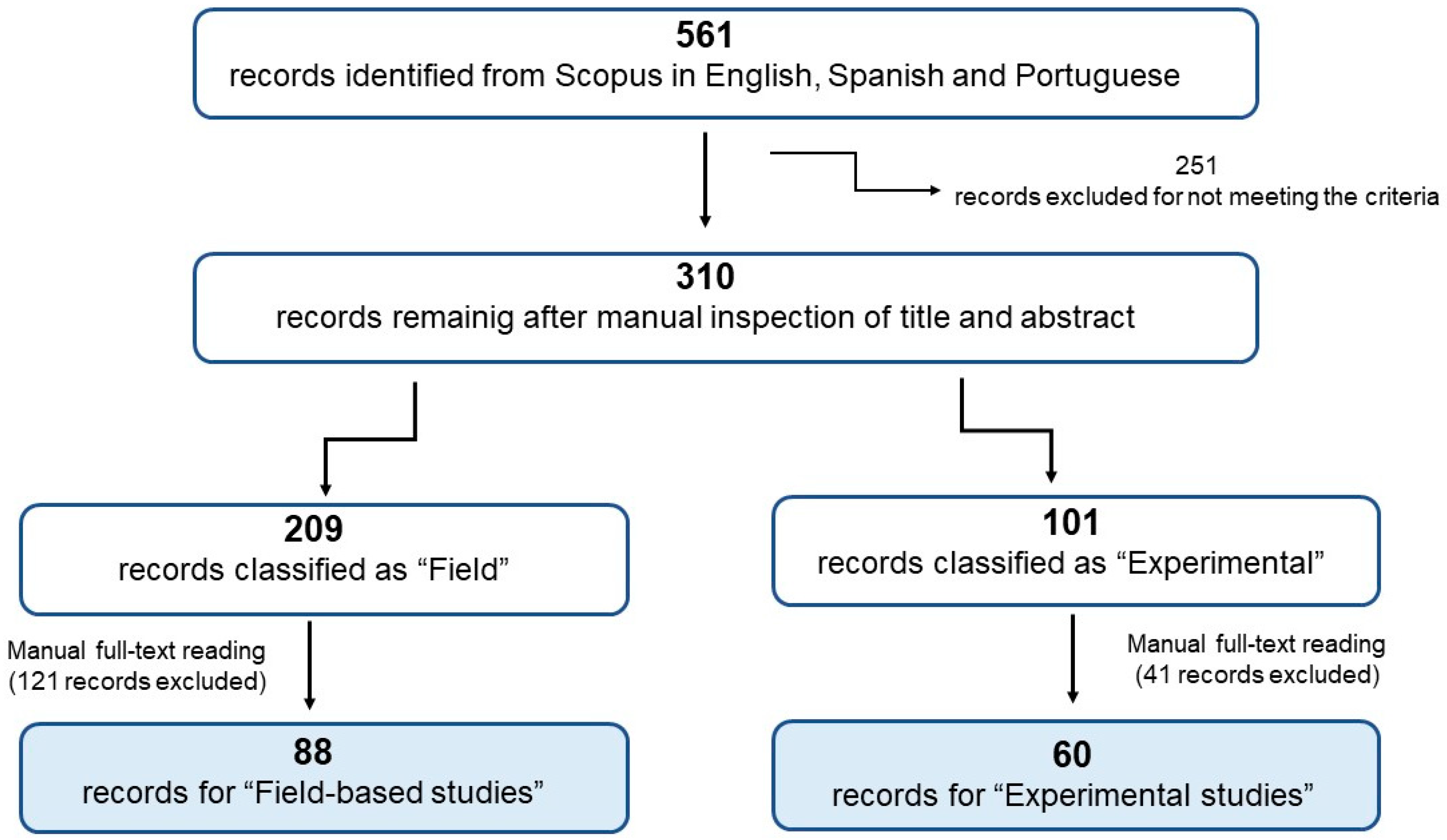
The bibliometric search yielded 561 potential papers. In the first stage, 251 papers were excluded based on titles and abstracts that did not meet the criteria. Of the remaining studies, 209 were initially classified as “field-based” and 101 as “experimental”. Field-based studies were defined as field investigations conducted in natural systems (e.g., reservoirs, lakes, shallow lakes), whereas experimental studies referred to research carried out under controlled conditions, either in laboratories or mesocosms. After an in depth review, 88 field-based and 60 experimental studies were retained. In total, 148 papers were included in this study (Figure 1). The literature search was finalized in August 2025. For the creation of the graphs, RStudio version 4.5.1 was used, and QGIS software version 3.40.7 was used for the creation of the maps.

3. Results

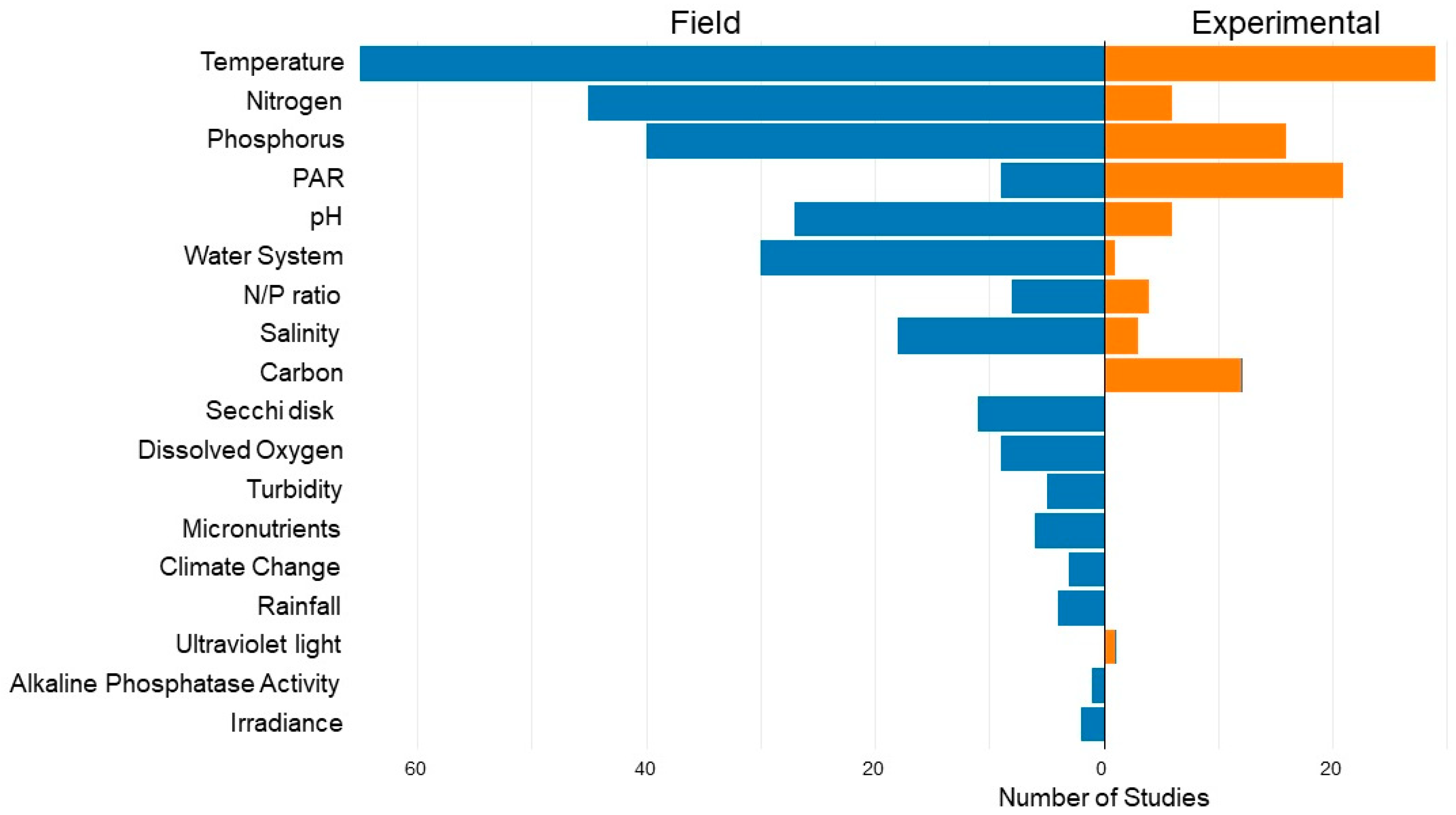
A total of 16 variables were identified as drivers for field-based studies, and 10 for experimental ones (Figure 2). Some studies reported more than one driver simultaneously, while others, although recognizing the variable as a driver, did not specify value ranges for it.
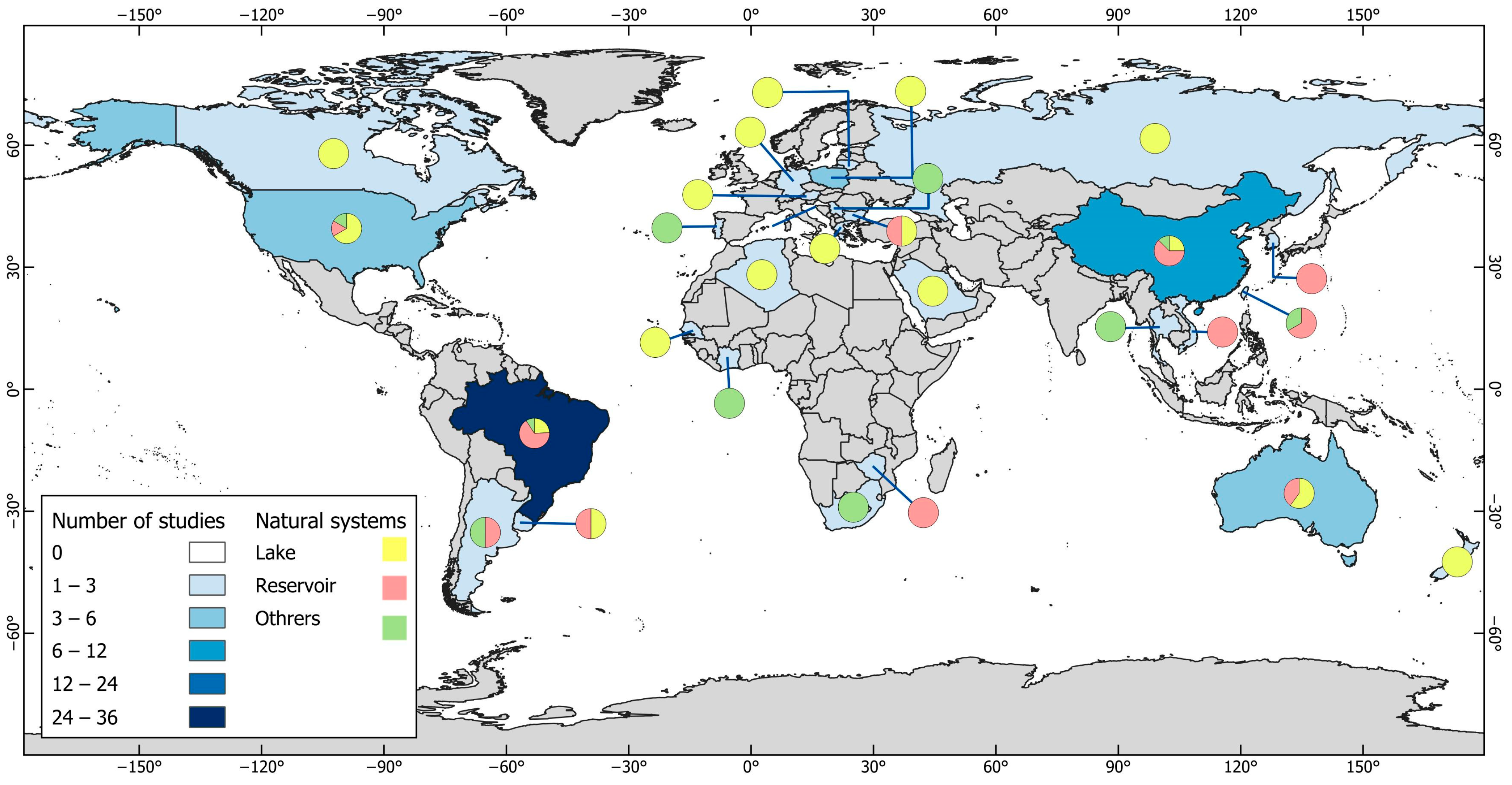
Regarding the geographic distribution of field-based research, Brazil had the highest number of studies (n = 33), followed by China (n = 8), the United States (n = 5), and Australia (n = 4). In contrast, African and most Asian countries were represented by comparatively fewer studies. Although Europe contributes many studies overall, most European countries did not exceed three studies each (Figure 3). The most studied natural systems were lakes and reservoirs, the former being well represented in Europe and North America, while the latter are mainly found in Brazil, China, and parts of Asia. Studies on wetlands, ponds, and rivers are more scattered and are mainly found in Africa and Europe (Figure 3).
Meanwhile, 87.9% of laboratory experiments were conducted in Erlenmeyer flasks, 12.1% in open-air microcosms, mesocosms, or limnocorrals.

3.1. Physical Drivers

3.1.1. Temperature

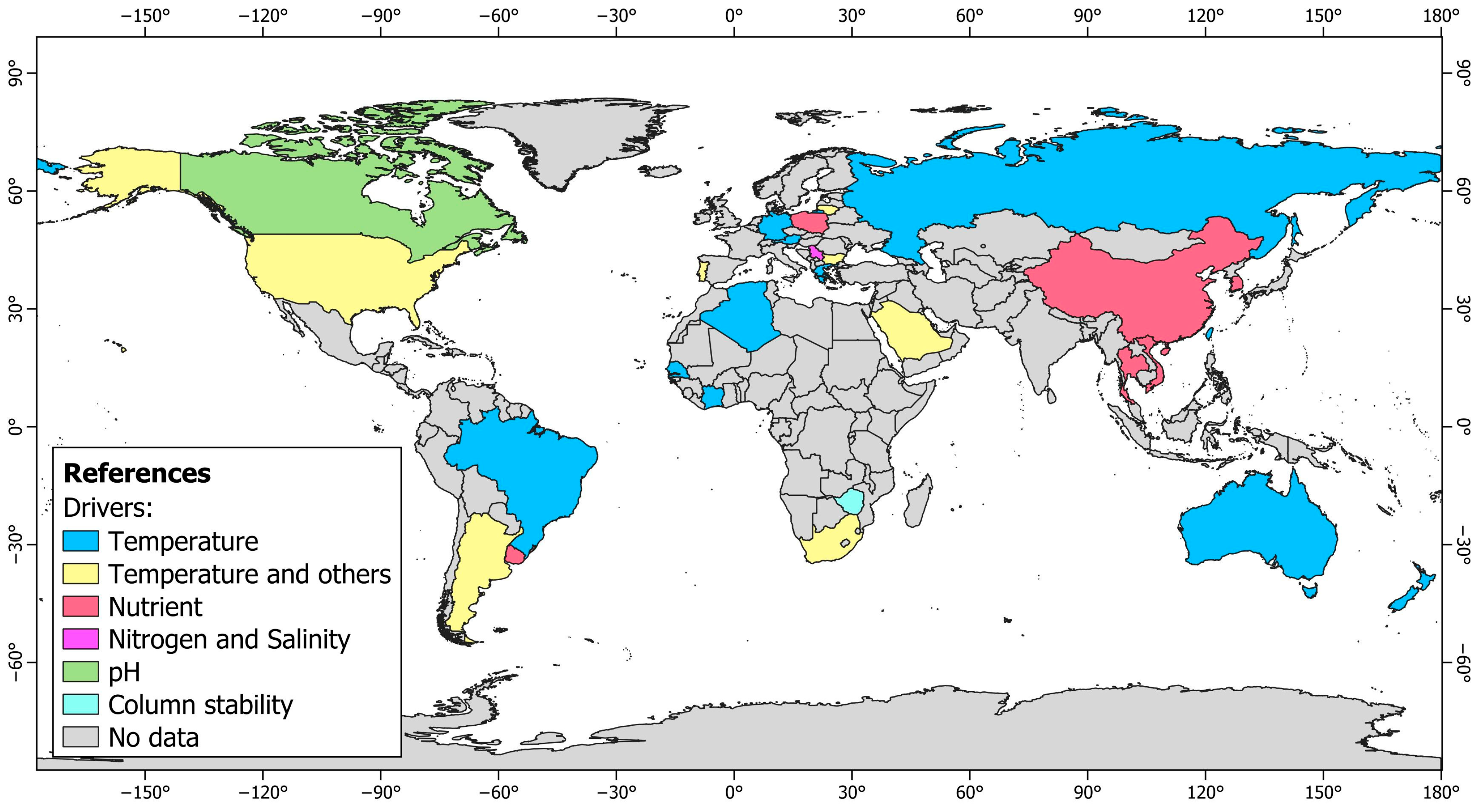
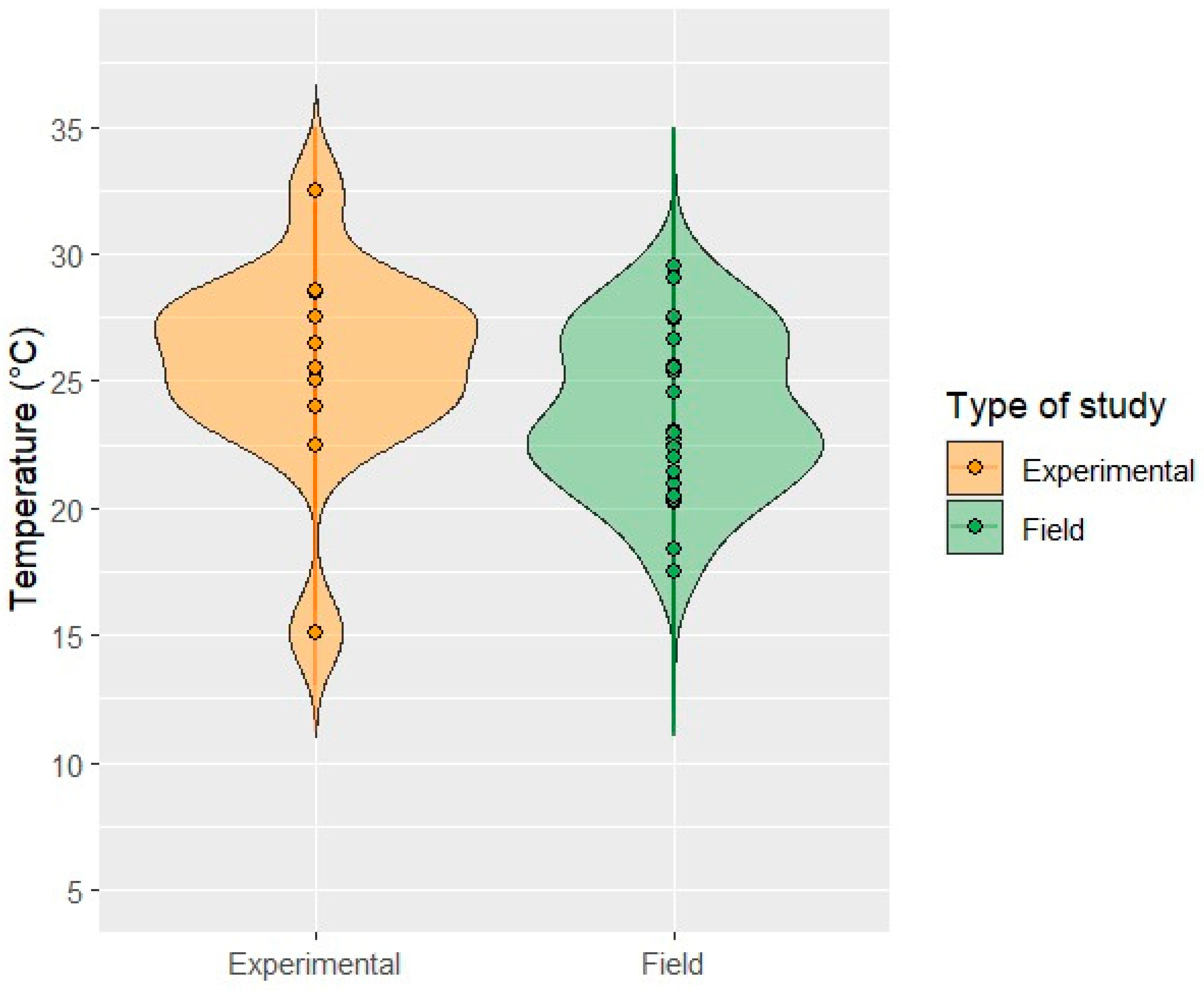
Our analysis identified 65 field-based studies that reported temperature as the most frequent abiotic driver for R. raciborskii dominance (Figure 2 and Figure 4). Among the field studies, optimal temperatures were detected across temperate, subtropical, and tropical climates, ranging from a minimum of 11.2 °C [25] to a maximum of 35 °C in lakes in Saudi Arabia [26]. The remaining 13 studies identified temperature as a driver without specifying the exact ranges. However, the most common temperatures in reservoirs with blooms were generally above 23 °C. Records of lower temperatures were rare, for example, 12.6 °C and 12.7 °C in Brazil and Taiwan [27,28], 13 °C in China [29], 16 °C in New Zealand [30], 17 °C in Taiwan [31], and 19.5 °C in the United States [32].
When comparing the mean optimal temperature ranges reported by experimental and field studies (Figure 5), a notable consistency emerges. Experimental studies, conducted under controlled conditions, tend to report slightly narrower and higher mean optimal ranges (e.g., 25–32 °C), reflecting the ability to isolate temperature effects without confounding environmental variables. In contrast, field studies show broader mean optimal ranges (e.g., 20–30 °C), capturing the natural variability and the interactive effects of other factors such as nutrients, light, and hydrodynamics. This comparison highlights that while temperature is a key driver across both approaches, field conditions may modulate the realized thermal niche, often extending the lower and upper boundaries of tolerance due to local adaptations and synergistic interactions with other environmental variables.
In experimental studies using cultivated R. raciborskii (n = 29), temperature was also reported as the most important driver among other variables. Occurrence and survival of the species in its vegetative phase under unusually low water temperatures, below 12 °C, the lowest value recorded [33], have been documented, with lower growth rates and more fragile trichomes observed at 12 °C [34], and even dominance reported at temperatures below 15 °C [35]. The highest optimal temperature range for growth reported under laboratory conditions was between 33 and 35 °C [36,37]. In addition, Soares et al. [34] observed denser blooms, accompanied by reduced trichome length, at temperatures above 32 °C. Depending on competition with Microcystis aeruginosa, R. raciborskii exhibited variation in optimal growth temperature, maintaining a competitive advantage between 16 °C and 32 °C [38].

3.1.2. Light

Only nine field studies reported the photosynthetically active radiation (PAR) as relevant drivers. From these, eight concluded that the optimal range of PAR was between 50 and 150 µmol photons·m−2·s−1, while a slightly lower range of 30–80 µmol photons·m−2·s−1 was reported by Briand et al. [39]. In experimental studies, 35% recognized PAR as influential in growth, with the most common radiation between 50 and 150 µmol photons·m−2·s−1, although lower intensities were also used. Evaluations at 25 and 50 µmol photons·m−2·s−1 showed no significant differences in akinete differentiation [40]. The highest growth rates were recorded at light intensities around 80–86 μmol photons·m−2·s−1, based on testing of 10 strains across a range of 30–400 μmol photons·m−2·s−1 [36,39], suggesting that the species’ ability to colonize mid-latitude regions may be linked to its broad light tolerance.
Ultraviolet light was reported in only one experimental study, finding that exposure to UV-B light increased saxitoxin concentration and altered growth, morphology, and heterocyst numbers [41].

3.1.3. Secchi Depth and Turbidity

Eleven field studies evaluated Secchi disk depth, and six evaluated turbidities. In experimental studies, these parameters were not assessed. Both Secchi depth and turbidity showed high variability across ecosystems and were closely linked to R. raciborskii abundance. Low transparency (Secchi depth < 1 m) and high turbidity were consistently associated with the dominance of this species, though there are also consequences of the bloom itself, particularly when considering inorganic turbidity [42,43,44]. For instance, in New Zealand lakes, Secchi depths ranged from 0.01 to 1.3 m, while turbidity reached extremes of 932 NTU [45]. Similar patterns were observed in Serbia’s Ponjavica River, where summer cyanobacterial blooms coincided with low Secchi depth (0.15 m) and turbidity up to 145 NTU, both positively correlated with Raphidiopsis sp. abundance [46]. High turbidity was also associated with blooms in Brazilian reservoirs [28,47] and Lithuanian lakes [48].
However, the relationship between turbidity and R. raciborskii dominance is not unidirectional and depends critically on the origin of the turbidity: organic (phytoplankton biomass) versus inorganic (mineral suspended matter, often following a heavy rainfall). In Muskegon Lake, for example, relatively low turbidity values of 5.62 NTU were sufficient to favor the species’ growth, and turbidity showed strong positive correlations with cyanobacterial biovolume and microcystin concentrations [42]. In semi-arid Brazilian reservoirs, Secchi depth and water volume were key predictors of R. raciborskii blooms, confirming its competitive advantage in turbid, light-limited environments [43]. In contrast, negative correlations have also been reported: in Argentina, turbidity values between 5 and 10 NTU recorded during intense rainfall events, reflecting inorganic suspended matter, were associated with lower abundances of R. raciborskii [14].
It is important to note that in the field studies compiled here, Secchi depth and turbidity were recorded both as pre-existing environmental conditions and as concurrent measurements during bloom events. Consequently, it is not always possible to determine whether reduced water transparency preceded and facilitated the bloom, or whether it resulted from the high phytoplankton density associated with the bloom itself. The negative correlation observed in Argentina (5–10 NTU during heavy precipitation) likely reflects inorganic light limitation driven by mineral suspended matter, rather than a biological response to bloom-derived turbidity. This highlights that similar turbidity ranges can have opposite effects depending on the source of the suspended particles.

3.1.4. Hydrodynamics and Water Column Stability

Water body morphology and hydrological parameters identified as predictors in several field studies included total volume (n = 7), water column depth (n = 4), thermal stratification (n = 5), mixing (n = 1), and water column stability (n = 9). Stable conditions were noted as favorable but not essential for species success [24]. Dominance of Raphidiopsis sp. in Brazilian reservoirs affected by prolonged El Niño droughts was attributed to stability and water volume diminishing [49]. Thermal stratification in tropical reservoirs was associated with species thriving under both stratified and mixed conditions, with high abundances at both the surface and bottom despite a 2.8 °C temperature difference [47]. Decreases in cyanobacterial abundance during cold-dry seasons due to mixing were observed [50]. Proliferation of Raphidiopsis sp. during stratified periods in Lake das Garças was reported, with disappearance during mixing periods. Up to 50% of phytoplankton biomass during stratified periods was attributed to Raphidiopsis sp. [51]. Dominance of Raphidiopsis sp. during mixing periods in Funil Reservoir was also reported, indicating tolerance to mixing and an ability to prosper under such conditions due to redistribution of nutrients and oxygen [52].
Only one experimental study identified aeration as relevant, showing that ambient aeration favored R. raciborskii [53].

3.2. Chemical Drivers

3.2.1. Nutrients

A total of 45 field-based studies considered nitrogen as a driver, considering all its forms: total nitrogen, nitrite, nitrate, and ammonium. Particularly, in reservoirs and shallow lakes, total nitrogen was reported as the abundance driver in 12 studies, with concentrations ranging from 0.18 mg/L [54] to 3.67 mg/L [55] and up to 5.23 mg/L in a pond in Thailand [56]. Relative abundance of Raphidiopsis raciborskii of 92% was found with total nitrogen concentrations of 1.694 mg/L in Laguna Blanca, Uruguay [57]. Ammonium showed highly variable ranges, from 0.033 mg/L [43] to 1.009 mg/L in Gazan Dam Lake [26]. Nitrate and nitrite concentrations were, in comparison, less often reported as predictors than ammonium. On the other hand, in experimental studies, nitrogen was less often reported as a driver, with the N/P ratio being more relevant than nitrogen forms, showing a broad range of variation [58,59]. Experiments in limnocorrals tested low (7:1) and high (122:1) N/P ratios, with the community being dominated by R. raciborskii at the end of the experiments, showing the species’ capacity to dominate under extreme ratios [58].
Related to phosphorus, 40 field-based studies identified it as a driver in one of its forms: total phosphorus, soluble reactive phosphorus, etc. The most relevant form in natural water bodies was total phosphorus, while soluble reactive phosphorus was reported only two times as a driver. Opportunistic use of dissolved inorganic phosphorus by the species was suggested [32,39], while a lack of direct dependence on total phosphorus concentrations was reported [49]. In contrast, the number of experimental studies was lower (n = 16). Laboratory experiments demonstrated that different ecotypes of R. raciborskii showed lower growth rates at higher phosphorus concentrations, suggesting a phosphorus storage strategy [60]. Continuous and discontinuous experiments further indicated strong uptake affinity and adaptation of ecotypes to low phosphorus conditions, prioritizing nutrient storage over the growth rate [7]. Lower cell numbers at phosphorus concentrations of 0.00 and 0.01 mg/L compared to ≥0.5 mg/L were observed, supporting the hypothesis of metabolic reorganization as an adaptive response [61].
Regarding micronutrients, zinc, copper, and iron were identified as factors in field, while none of them were reported as relevant in experimental studies.

3.2.2. Carbon

Carbon dynamics were reported as a driver in only six experimental studies. A relationship between R. raciborskii, inorganic carbon, and pH was observed. The species efficiently utilized dissolved inorganic carbon (DIC), particularly bicarbonate (HCO3), under conditions of high DIC availability and elevated pH, an ability enhanced under high light intensity [62]. Light-dependent CO2 concentrating mechanisms enabling active uptake of both CO2 and HCO3 were reported [62,63,64]. An increase in partial pressure of CO2 (pCO2) in water by injection was shown to raise cellular concentrations and specific growth rates, although this effect varied between strains [64,65]. Elevated pCO2 levels doubled maximum photosynthetic rates (Vmax) despite a decrease in affinity for CO2 [63,64]. However, very high pCO2 (e.g., 1000 ppm) resulted in lower cell concentrations than at intermediate levels (750 ppm), potentially due to light limitation or imbalances in carbon assimilation [65].
Phosphorus availability critically modulated the response to carbon: high phosphorus availability amplified the positive effects of elevated CO2 on photosynthetic parameters and nitrate uptake, while low P availability suppressed them [64]. Furthermore, carbon availability mediated competitive outcomes, with R. raciborskii dominating under CO2-favorable conditions (low alkalinity), whereas Microcystis aeruginosa competed better under high bicarbonate conditions [53].

3.2.3. pH

pH was among the most frequently reported factors influencing R. raciborskii abundance, with 27 field studies identifying it as a driver. Higher values were predominant, with tolerance reported between 6.9 and 10 [24,66,67,68]. Tolerance starting from 5.8 was also reported [23,27,51]. In experimental studies, growth between 6.9 and 10 was reported [69], as well as ranges between 6.8 and 8.2 [53,70].

3.2.4. Salinity and Conductivity

Salinity was rarely evaluated as a factor in field studies (n = 7). Considering electrical conductivity as a driver adds 11 field studies, with values ranging from 80.9 to 864 µS/cm. Preference for low salinity conditions between 0.5 and 5 ppm was reported [16,46,71,72]. Broader ranges of 0.5–8 ppm were also noted, allowing survival in mesohaline waters [15,39]. Only three experimental studies identified salinity as relevant, reporting tolerance within 0.5–5 ppm [73]. Tolerance limits up to 4 g L−1 NaCl was demonstrated, with high estuarine salinity suggested as a controlling factor of species dominance [74].

3.2.5. Dissolved Oxygen

Dissolved oxygen (DO) was recorded as a driver in 8 field studies. DO concentrations varied significantly across ecosystems and seasons, ranging from 2.0 to 12.5 mg L−1. Seasonal trends showed higher DO values typically recorded during the dry season in Vietnam and Brazil [75,76]. A positive correlation between DO concentrations and both the biovolume of R. raciborskii and cylindrospermopsin toxin concentrations was reported [75]. In Nanpeng Reservoir (China), the highest DO levels coincided with the bloom stage of R. raciborskii, while lower DO occurred during the low-bloom stage [77].

3.3. Other Factors

Some factors were scarcely analyzed in field studies. Precipitation was addressed in only three papers. Intense cyanobacterial blooms dominated by R. raciborskii during years with the lowest rainfall were reported, with rainfall promoting destratification and turbidity, thereby limiting bloom intensity [14]. Positive relationships between rainfall and R. raciborskii abundance were also reported, combined with temperature and nutrient levels, although extreme rainfall events decreased abundance by more than 60% [61]. In Brazilian reservoirs, rainfall was positively correlated with abundance, as nutrient input via runoff reorganized the community and favored species establishment [78].
Climate change (global warming) was addressed in only two studies. Expansion of R. raciborskii was proposed to result from earlier increases in water temperature, facilitating earlier germination and greater light availability [79]. A review reached similar conclusions, highlighting global warming as a driver of expansion into temperate regions and emphasizing physiological adaptability as a key factor [80].
Alkaline phosphatase activity was analyzed in only one study. Activity was reported as positively associated with R. raciborskii, accounting for 89% of total phosphorus uptake by phytoplankton. Elevated activity coincided with higher phytoplankton biomass and predominance of cyanobacteria, including R. raciborskii [81].

4. Discussion

4.1. Temperature as a Universal Driver

Our results are consistent with the extensive literature that positions temperature as a primary factor promoting cyanobacterial blooms in general [82,83,84]. The broad thermal niche (11–35 °C) helps explain its global expansion from tropical to temperate regions. However, its preference for temperatures above 23 °C suggests that warming due to climate change could favor its competitive dominance over other phytoplankton. Although historically unreported in polar regions or at temperatures below 10 °C [16,85,86,87], its documented survival at temperatures as low as 5 °C indicates a greater thermal tolerance than previously assumed [88]. Rare reports of growth at lower temperatures (e.g., 12–13 °C) [29], often from colder climates, suggest that local ecotypes may be adapting, a phenomenon requiring further investigation.
Some recent studies have begun to question whether the influence of temperature has been overestimated, emphasizing that nutrients may be more decisive [1]. Indeed, in warmer regions, water bodies often exhibit higher trophic states, which strongly promote cyanobacterial blooms. Aquatic productivity and trophic status generally decrease from the equator toward the poles, highlighting that temperature and nutrients act in concert [89,90]. Thus, while temperature is a key driver, it rarely acts in isolation; its effects are frequently modulated by nutrient availability, as discussed below. This interplay also extends to colder environments: cyanobacteria can be abundant in the benthos of oligotrophic subarctic lakes, underscoring that their success is not solely dependent on warm, nutrient-rich conditions [83]. Such considerations align with studies by Håkanson et al. [91] and further support the need to examine temperature–nutrient interactions more explicitly.

4.2. Discrepancies in Nutrient Relevance

In natural systems, especially lentic environments, nutrients play a key role for cyanobacteria and phytoplankton in general, with nitrogen and phosphorus concentrations being critical factors. However, under experimental conditions, nutrient availability has been shown to significantly affect the growth and physiological performance of Raphidiopsis (Cylindrospermopsis) raciborskii; nevertheless, most culture-based studies rely on standard media with fixed nutrient concentrations, with comparatively few exploring modified media or nutrient interactions in depth. In general, authors have recognized that nitrogen concentration is related to the dominance of the species, although ammonium appears to be the most favorable form of nitrogen [8,15,92]. Importantly, this species is capable of fixing atmospheric nitrogen under nitrogen-depleted conditions through the differentiation of specialized cells (heterocytes), which provides a competitive advantage in environments with low dissolved inorganic nitrogen availability [93]. In addition, it grows well on ammonium and nitrate [94].
Phosphorus is another determining element, although it has long been considered the limiting nutrient for phytoplankton growth. While the species may be associated with eutrophic environments, it has been shown to grow easily in environments with phosphorus limitation [24], as long as ammonium or nitrates are present [95]. The species’ success under phosphorus limitation can be explained by its ability to efficiently uptake and store dissolved inorganic phosphorus (DIP) when available, prioritizing storage over immediate growth. This strategy, coupled with its capacity to utilize ammonium as a preferred nitrogen source and to fix atmospheric nitrogen when necessary, allows R. raciborskii to survive and dominate in fluctuating nutrient conditions where other phytoplankton might be limited.

4.3. Light, Context-Dependent Influence

In experimental setups, radiation comes second as an important parameter (based on the number of reports), particularly light and photoperiod. In contrast, PAR in natural environments was less reported as a driver for the species, even though numerous field studies have recognized that light availability influences the species across a wide range of intensities [16,41,87,91]. Several studies suggest that the species is actually tolerant to low light conditions due to chromatic adaptation and the ability to increase the concentration of phycobiliproteins, expanding the light spectrum it can absorb [25,69,91,92]. These adaptations enable the species to compete successfully against other cyanobacteria in turbid waters.
Field observations reinforce this view: the inverse relationship between Secchi depth and R. raciborskii dominance underscores this species’ adaptation to light-limited, turbid waters. Its tolerance and efficient light-harvesting strategies allow it to outperform competitors in eutrophic systems where high phytoplankton density reduces light penetration. This creates a feedback loop: blooms increase turbidity and shading, consolidating the species dominance. Collectively, these findings position Secchi depth and turbidity as practical, integrative indicators for bloom risk assessment. Managing water clarity through sediment and nutrient control could disrupt the cycle of bloom persistence, particularly in shallow, eutrophic systems vulnerable to R. raciborskii invasion.
The dual role of Secchi depth and turbidity—as both drivers and consequences of cyanobacterial blooms—must be interpreted with caution. High phytoplankton density itself reduces water transparency, creating a feedback loop that consolidates bloom dominance. However, turbidity driven by inorganic suspended matter, such as that mobilized by intense precipitation events, may instead impose light limitation that suppresses bloom development. Future field studies should explicitly distinguish between organic and inorganic turbidity sources to better resolve the causal direction of these relationships.

4.4. pH and Water Chemistry

pH and carbon availability are tightly interconnected drivers shaping the success of R. raciborskii. While pH tends to be less relevant in controlled experimental systems, where it is maintained stable, it plays a major role in natural environments, where intense blooms tend to naturally elevate pH through high photosynthetic activity. The depletion of CO2 concentration and corresponding increases in bicarbonate (HCO3) under these conditions can disadvantage species restricted to CO2 uptake but favor those capable of bicarbonate assimilation. This mechanism partly explains why cyanobacteria often dominate high-pH systems, especially in hard waters where alkalinity further enhances bicarbonate availability.
In this context, carbon emerges as a critical yet understudied factor in field research. The species’ efficiency in utilizing bicarbonate via CO2 concentrating mechanisms (CCMs) provides a decisive advantage in the high-pH conditions typical of eutrophic, cyanobacteria-dominated blooms where CO2 is depleted [62,63]. These adaptations not only support growth in elevated-pH environments but also interact with broader environmental changes. Rising atmospheric pCO2, for instance, may further fuel its growth by reducing the energetic cost of operating CCMs, potentially freeing resources for other processes like toxin production or nutrient acquisition [63,64]. Additionally, the strong interaction between CO2 and phosphorus [64] suggests that eutrophication and climate change act synergistically to reinforce the species’ dominance. The high strain-specific variability reported [21,65] further emphasizes its plasticity and invasive potential. Addressing this knowledge gap requires incorporating carbon speciation and pH dynamics into long-term monitoring to better anticipate bloom trajectories under changing environmental conditions.

4.5. Geographical Patterns

The comparison between field-based and experimental studies highlights that while temperature consistently drives R. raciborskii success, other factors received different amounts of attention depending on the type of study. Nutrients, pH, and water chemistry dominate in the field, while light is more relevant in laboratory settings. Many variables, including salinity, micronutrients, and their interactions, remain poorly understood.
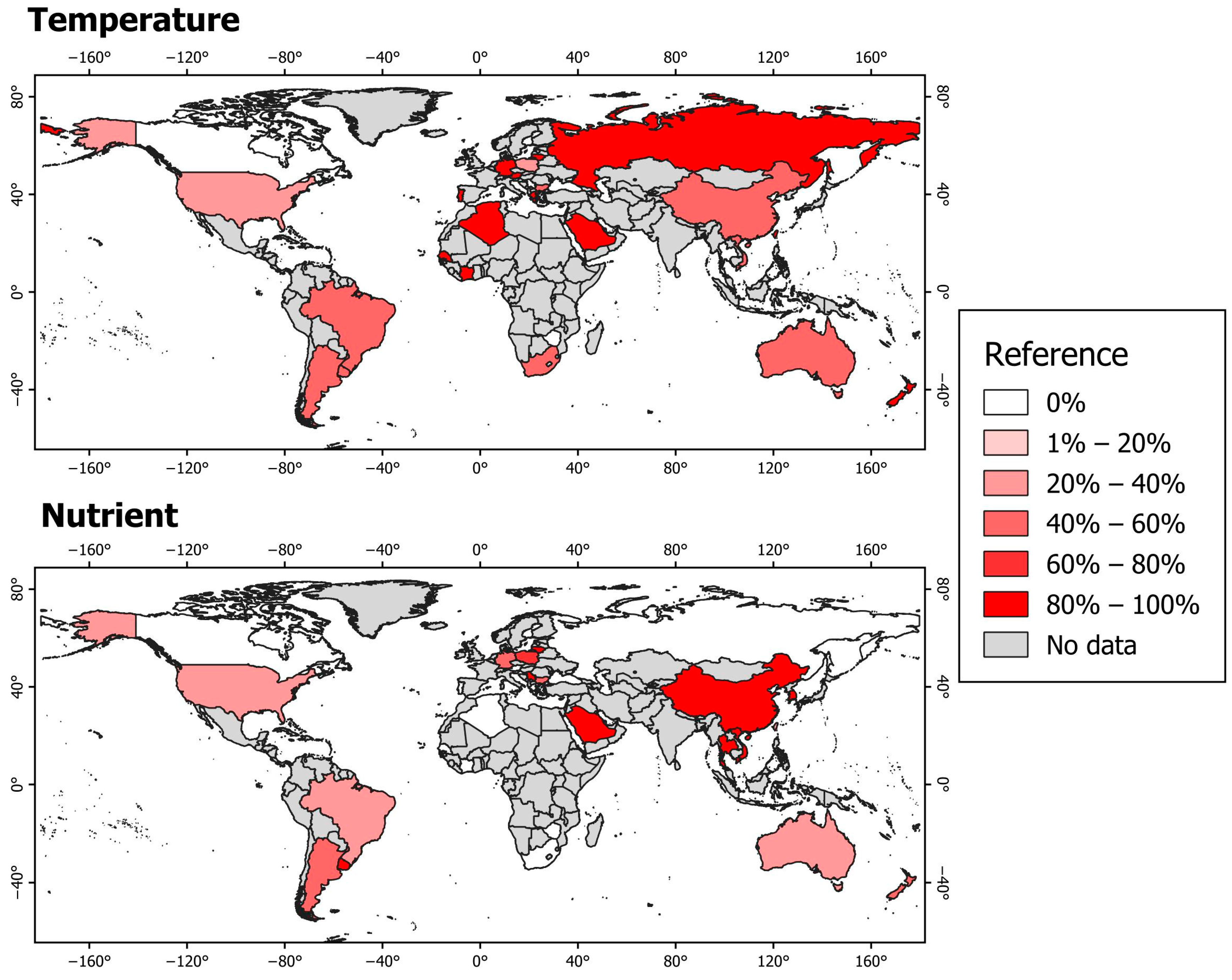
Caution is warranted when interpreting country-level patterns, particularly for nations with vast and climatically heterogeneous territories. Russia, for instance, spans climatic zones ranging from high Arctic conditions in northern Siberia to subtropical climates along the Black Sea coast, with summer air temperatures that can reach 30–35 °C in boreal and steppe regions and up to 45 °C in the Lower Volga basin. Similarly, China, Brazil, and the United States encompass multiple climatic zones within their borders. In such countries, attributing bloom drivers to a single climatic context oversimplifies the ecological reality. The prevalence of temperature as a reported driver in Russia may therefore reflect not the paradox of a cold country responding to heat, but rather the role of seasonal temperature increases—which coincide with thermal stratification and nutrient upwelling in lakes and reservoirs—as key triggers for R. raciborskii proliferation during the productive summer season, even in subarctic and boreal regions.
Considering the effects of climate change in recent years, it is reasonable to assume that rising temperatures in traditionally cold areas are becoming an ecologically determining factor. Eastern Europe, China, South America, and Oceania also show high percentages for temperature, suggesting that in temperate or subtropical regions—where R. raciborskii is expanding toward higher latitudes—temperature acts as a key factor controlling its proliferation (Figure 6). However, the nutrient map in Figure 6 reveals that many of these same regions also exhibit elevated nutrient levels, particularly in Eastern Europe, parts of China, and agricultural areas in South America. This pattern aligns with the broader understanding that temperature and nutrients rarely act independently; rather, their combined effect often determines the success of cyanobacterial expansion. Thus, while temperature may be the limiting factor at the advancing front of the distribution range, nutrient availability likely modulates the magnitude and intensity of blooms once thermal conditions become suitable.
Areas with a stronger emphasis on nutrients are concentrated in China, India, South America, and Africa. In China, for instance, agricultural expansion may increase nutrient availability through fertilizer application, which could explain why nutrients are more frequently reported as bloom-promoting factors.
Overall, temperature exhibits a more consistent global pattern as the dominant driver, especially in temperate and cold regions where climate warming facilitates the species’ expansion. In contrast, nutrients show a more localized distribution, playing a key role in tropical regions or in countries with eutrophic water bodies, where insufficient sanitation infrastructure may exacerbate nutrient enrichment and eutrophication. In temperate regions, thermal limitation appears to be the main constraint for the proliferation of R. raciborskii, making temperature a key factor in explaining its recent success. Conversely, in warm regions where temperature is already optimal, nutrients gain greater relevance in determining the magnitude of the bloom. Thus, temperature acts as an enabling factor for the geographic expansion of the species, whereas nutrients function as modulators of bloom intensity once populations are established.
Short-term fluctuations in environmental conditions, even on the scale of days or months, can explain discrepancies between experimental studies and those conducted in the field. Climate change, in fact, serves as evidence of this. The interaction between rising temperatures in certain areas and changes in precipitation or runoff could explain the emergence of blooms in locations where they were previously absent; however, this interaction has been virtually unassessed in studies.

4.6. Limitations

It is important to consider that experimental studies often focus on one or a few factors, while ecological reality is far more complex. Interactions among variables and the ranges in which they occur can produce unexpected effects on the growth of a species. This methodological schism not only reinforces the paramount importance of abiotic conditions but also highlights a critical limitation in our current understanding, suggesting that a holistic, multi-factorial approach is essential for accurately predicting bloom dynamics in a changing global climate. In this sense, outdoor mesocosm studies should be an important tool for reducing the gap.
Studies often assume variables act independently, but there may be synergistic effects. Designing multifactorial experiments can therefore help identify the combinations that truly enhance blooms. Conversely, understanding which combinations promote abundance can also provide a starting point for identifying those that limit it, contributing to potential solutions for the challenges posed by cyanobacteria.
Moreover, the studies compiled in this work did not consider biotic interactions such as allelopathy or grazing [82,83]. And finally, the geographically skewed distribution of the studies, with a clear underrepresentation of Africa and Asia, makes it difficult to extrapolate conclusions on a global scale. While phytoplankton dynamics have traditionally been linked to environmental drivers, cyanobacteria are increasingly recognized for thriving under higher temperatures and elevated nutrient levels, conditions intensified by climate change and global agricultural practices. More importantly, our synthesis indicates that, although field and experimental studies generally focus on similar drivers, there are still notable gaps, and several drivers identified in the field are rarely tested under controlled conditions.

5. Conclusions

Based on the analyzed studies, Raphidiopsis raciborskii dominance is primarily influenced by temperature, showing optimal growth between 23 and 35 °C and survival at lower temperatures (11–12 °C), which reflects high physiological plasticity. Temperature, however, interacts with nutrient availability rather than acting independently.
A methodological gap persists between field and laboratory studies: the former emphasizes nutrient concentrations, especially ammonium nitrogen and pH, while the latter focuses on light and N/P ratios. Integrative approaches, such as mesocosm experiments, are needed to bridge this divide.
Nutrients, particularly nitrogen and phosphorus, emerge as key factors in field environments, whereas experimental research has more often examined carbon dynamics. The species’ capacity to use bicarbonate efficiently, store phosphorus, and adapt to low light provides strong competitive advantages in fluctuating eutrophic systems, explaining its invasive potential.
R. raciborskii tends to prefer eutrophic, low-salinity, and stable conditions; high salinity appears to be a limiting factor, though this aspect remains understudied. Finally, the geographic bias in current research, with limited representation of Africa and Asia, restricts the global applicability of these findings, highlighting the need for broader spatial coverage to better understand its ecological behavior across climates.

Author Contributions

F.S.A.D.: Conceptualization, Data curation, Formal analysis, Writing—original draft. L.V.L. and V.L.L.: Formal analysis, Visualization, writing—review & editing. C.N.B., L.B.M. and M.L.S.: Validation, Writing—review & editing, English language editing. All authors have read and agreed to the published version of the manuscript.

Funding

This research received no external funding.

Data Availability Statement

Not applicable.

Acknowledgments

The authors want to emphasize that the funding situation for science in Argentina is in complete crisis. We are proud of our scientific development and continue working to sustain it despite everything.

Conflicts of Interest

The authors declare no conflicts of interest.

References

  1. Bonilla, S.; Aguilera, A.; Aubriot, L.; Huszar, V.; Almanza, V.; Haakonsson, S.; Izaguirre, I.; O’farrell, I.; Salazar, A.; Becker, V.; et al. Nutrients and not temperature are the key drivers for cyanobacterial biomass in the Americas. Harmful Algae 2023, 121, 102367. [Google Scholar] [CrossRef] [PubMed]
  2. Wojciechowski, J.; Fernandes, L.F.; Fonseca, F.V.B. Morpho-physiological responses of a subtropical strain of Cylindrospermopsis raciborskii (Cyanobacteria) to different light intensities. Acta Bot. Brasílica 2016, 30, 232–238. [Google Scholar] [CrossRef][Green Version]
  3. Aguilera, A.; Gómez, E.B.; Kaštovský, J.; Echenique, R.O.; Salerno, G.L. The polyphasic analysis of two native Raphidiopsis isolates supports the unification of the genera Raphidiopsis and Cylindrospermopsis (Nostocales, Cyanobacteria). Phycologia 2018, 57, 130–146. [Google Scholar] [CrossRef]
  4. Abreu, V.A.; Popin, R.V.; Alvarenga, D.O.; Schaker, P.D.; Hoff-Risseti, C.; Varani, A.M.; Fiore, M.F. Genomic and genotypic characterization of Cylindrospermopsis raciborskii: Toward an intraspecific phylogenetic evaluation by comparative genomics. Front. Microbiol. 2018, 9, 979. [Google Scholar]
  5. Hauer, T.; Komárek, J. Cyanodb.z 2.0: Online Database of Cyanobacterial Genera; University of South Bohemia: České Budějovice, Czech Republic, 2019. [Google Scholar]
  6. Jia, N.; Yang, Y.; Yu, G.; Wang, Y.; Qiu, P.; Li, H.; Li, R. Interspecific competition reveals Raphidiopsis raciborskii as a more successful invader than Microcystis aeruginosa. Harmful Algae 2020, 97, 101858. [Google Scholar] [CrossRef]
  7. Willis, A.; Posselt, A.J.; Burford, M.A. Variations in carbon-to-phosphorus ratios of two Australian strains of Cylindrospermopsis raciborskii. Eur. J. Phycol. 2017, 52, 303–310. [Google Scholar] [CrossRef]
  8. Burford, M.A.; Beardall, J.; Willis, A.; Orr, P.T.; Magalhaes, V.F.; Rangel, L.M.; Azevedo, S.M.; Neilan, B.A. Understanding the winning strategies used by the bloom-forming cyanobacterium Cylindrospermopsis raciborskii. Harmful Algae 2016, 54, 44–53. [Google Scholar] [CrossRef]
  9. Humpage, A.R.; Fenech, M.; Thomas, P.; Falconer, I.R. Micronucleus induction and chromosome loss in transformed human white cells indicate clastogenic and aneugenic action of the cyanobacterial toxin, cylindrospermopsin. Mutat. Res. 2000, 472, 155–161. [Google Scholar] [CrossRef]
  10. Froscio, S.M.; Humpage, A.R.; Burcham, P.C.; Falconer, I.R. Cylindrospermopsin-induced protein synthesis inhibition and its dissociation from acute toxicity in mouse hepatocytes. Environ. Toxicol. 2003, 18, 243–251. [Google Scholar] [CrossRef]
  11. Su, Z.; Sheets, M.; Ishida, H.; Li, F.; Barry, W.H. Saxitoxin blocks L-type Ica. J. Pharmacol. Exp. Ther. 2004, 308, 324–329. [Google Scholar] [CrossRef]
  12. Cullen, A.; D’Agostino, P.M.; Mazmouz, R.; Pickford, R.; Wood, S.; Neilan, B.A. Insertions within the Saxitoxin Biosynthetic Gene Cluster Result in Differential Toxin Profiles. ACS Chem. Biol. 2018, 13, 3107–3114. [Google Scholar] [CrossRef] [PubMed]
  13. Smith, F.M.J.; Wood, S.A.; van Ginkel, R.; Broady, P.A.; Gaw, S. First report of saxitoxin production by a species of the freshwater benthic cyanobacterium, Scytonema Agardh. Toxicon 2011, 57, 566–573. [Google Scholar] [CrossRef] [PubMed]
  14. Alvarez Dalinger, F.S.; Claudia Nidia, B.; Lozano, V.L.; Moraña, L.B.; Salusso, M.M. Bloom-forming cyanobacteria and dinoflagellates in five Argentinian reservoirs: Multi-year sampling. Water Biol. Secur. 2024, 3, 100232. [Google Scholar] [CrossRef]
  15. Antunes, J.T.; Leão, P.N.; Vasconcelos, V.M. Cylindrospermopsis raciborskii: Review of the distribution, phylogeography, and ecophysiology of a global invasive species. Front. Microbiol. 2015, 6, 473. [Google Scholar] [CrossRef]
  16. Padisák, J. Cylindrospermopsis raciborskii (Woloszynska) Seenayya et Subba Raju, an expanding, highly adaptive cyanobacterium: Worldwide distribution and review of its ecology. Arch. Für Hydrobiol. 1997, 107, 563–593. [Google Scholar]
  17. Atkinson, K.M. Birds as transporters of algae. Br. Phycol. J. 1972, 7, 319–321. [Google Scholar] [CrossRef]
  18. Huisman, J.; Hulot, F.D. Population dynamics of harmful cyanobacteria. In Harmful Cyanobacteria; Huisman, J., Matthijs, H.C.P., Visser, P.M., Eds.; Aquatic Ecology Series; Springer: Dordrecht, The Netherlands, 2005; pp. 143–176. [Google Scholar]
  19. Panou, M.; Zervou, S.-K.; Kaloudis, T.; Hiskia, A.; Gkelis, S. A Greek Cylindrospermopsis raciborskii strain: Missing link in tropic invader’s phylogeography tale. Harmful Algae 2018, 80, 96–106. [Google Scholar] [CrossRef]
  20. Weithoff, G.; Taube, A.; Bolius, S. The invasion success of the cyanobacterium Cylindrospermopsis raciborskii in experimental mesocosms: Genetic identity, grazing loss, competition, and biotic resistance. Aquat. Invasions 2017, 12, 333–341. [Google Scholar] [CrossRef]
  21. Bolius, S.; Wiedner, C.; Weithoff, G. High local trait variability in a globally invasive cyanobacterium. Freshw. Biol. 2017, 62, 1879–1890. [Google Scholar] [CrossRef]
  22. Padisák, J. Estimation of minimum sedimentary inoculum (akinete) pool of Cylindrospermopsis raciborskii: A morphology and life-cycle-based method. Hydrobiologia 2003, 502, 389–394. [Google Scholar] [CrossRef]
  23. Casali, S.P.; Dos Santos, A.C.A.; De Falco, P.B.; Calijuri, M.D.C. Influence of environmental variables on saxitoxin yields by Cylindrospermopsis raciborskii in a mesotrophic subtropical reservoir. J. Water Health 2017, 15, 509–518. [Google Scholar] [CrossRef]
  24. Pagni, R.L.; Falco, P.B.D.; Santos, A.C.A.D. Autecology of Cylindrospermopsis raciborskii (Woloszynska) Seenayya et Subba Raju. Acta Limnol. Bras. 2020, 32, e24. [Google Scholar] [CrossRef]
  25. Bonilla, S.; Aubriot, L.; Soares, M.C.S.; Gonzalez-Piana, M.; Fabre, A.; Huszar, V.L.; Lürling, M.; Antoniades, D.; Padisák, J.; Kruk, C. What drives the distribution of the bloom-forming cyanobacteria Planktothrix agardhii and Cylindrospermopsis raciborskii? FEMS Microbiol. Ecol. 2012, 79, 594–607. [Google Scholar] [CrossRef]
  26. Mohamed, Z.A.; Al-Shehri, A.M. Assessment of cylindrospermops in toxin in an arid Saudi lake containing dense cyanobacterial bloom. Environ. Monit. Assess. 2013, 185, 2157–2166. [Google Scholar] [CrossRef]
  27. Yamamoto, Y.; Shiah, F.K. Factors related to the dominance of Cylindrospermopsis raciborskii (Cyanobacteria) in a shallow pond in Northern Taiwan. J. Phycol. 2012, 48, 984–991. [Google Scholar] [CrossRef]
  28. Werner, V.R.; Cabezudo, M.M.; da Silva, L.M.; Neuhaus, E.B. Cyanobacteria from two subtropical water bodies in southernmost Brazil. Iheringia Série Botânica 2015, 70, 357–374. [Google Scholar]
  29. Xiao, L.J.; Xie, J.; Tan, L.; Lei, L.M.; Peng, L.; Wang, Z.; Naselli-Flores, L. Iron enrichment from hypoxic hypolimnion supports the blooming of Raphidiopsis raciborskii in a tropical reservoir. Water Res. 2022, 219, 118562. [Google Scholar] [CrossRef]
  30. Ryan, E.F.; Hamilton, D.P.; Barnes, G.E. Recent occurrence of Cylindrospermopsis raciborskii in Waikato lakes of New Zealand. N. Z. J. Mar. Freshw. Res. 2003, 37, 829–836. [Google Scholar] [CrossRef]
  31. Yu, Z.; Zhou, J.; Yang, J.; Yu, X.; Liu, L. Vertical distribution of diazotrophic bacterial community associated with temperature and oxygen gradients in a subtropical reservoir. Hydrobiologia 2014, 741, 69–77. [Google Scholar] [CrossRef]
  32. Fuentes, M.S.; Rick, J.J.; Hasenstein, K.H. Occurrence of a Cylindrospermopsis bloom in Louisiana. J. Great Lakes Res. 2010, 36, 458–464. [Google Scholar] [CrossRef]
  33. Dokulil, M.T. Vegetative survival of Cylindrospermopsis raciborskii (Cyanobacteria) at low temperature and low light. Hydrobiologia 2016, 764, 241–247. [Google Scholar] [CrossRef]
  34. Soares, M.C.S.; Lürling, M.; Huszar, V.L.M. Growth and temperature-related phenotypic plasticity in the cyanobacterium Cylindrospermopsis raciborskii. Phycol. Res. 2013, 61, 61–67. [Google Scholar] [CrossRef]
  35. Bonilla, S.; González-Piana, M.; Soares, M.; Huszar, V.L.; Becker, V.; Somma, A.; Marinho, M.M.; Kokociński, M.; Dokulil, M.; Antoniades, D. The success of the cyanobacterium Cylindrospermopsis raciborskii in freshwaters is enhanced by the combined effects of light intensity and temperature. J. Limnol. 2016, 75, 606–617. [Google Scholar] [CrossRef]
  36. Mohamed Nor, N.H.; Te, S.H.; Mowe, M.A.D.; Gin, K.Y.H. Environmental factors influence cylindrospermopsin production of Cylindrospermopsis raciborskii (CR12). J. Plankton Res. 2019, 41, 114–126. [Google Scholar] [CrossRef]
  37. Dufour, P.; Berland, B. Nutrient control of phytoplanktonic biomass in atoll lagoons and Pacific Ocean waters: Studies with factorial enrichment bioassays. J. Exp. Mar. Biol. Ecol. 1999, 234, 147–166. [Google Scholar] [CrossRef]
  38. Shi, J.; He, S.; Zhao, L.; Ji, L.; Yang, S.; Wu, Z. Physiological and molecular responses of invasive cyanobacterium Raphidiopsis raciborskii to ambient phosphorus deficiency. J. Oceanol. Limnol. 2022, 40, 1792–1803. [Google Scholar] [CrossRef]
  39. Briand, J.-F.; Leboulanger, C.; Humbert, J.-F.; Bernard, C.; Dufour, P. Cylindrospermopsis raciborskii (Cyanobacteria) invasion at mid-latitudes: Selection, wide physiological tolerance, or global warming? J. Phycol. 2004, 40, 231–238. [Google Scholar] [CrossRef]
  40. Moore, D.; O’donohue, M.; Shaw, G.; Critchley, C. Potential triggers for akinete differentiation in an Australian strain of the cyanobacterium Cylindrospermopsis raciborskii (AWT 205/1). Hydrobiologia 2003, 506, 175–180. [Google Scholar] [CrossRef]
  41. Beamud, G.; Vico, P.; Haakonsson, S.; de la Escalera, G.M.; Piccini, C.; Brena, B.M.; Pirez, M.; Bonilla, S. Influence of UV-B radiation on the fitness and toxin expression of the cyanobacterium Cylindrospermopsis raciborskii. Hydrobiologia 2016, 763, 161–172. [Google Scholar] [CrossRef]
  42. Xie, L.; Hagar, J.; Rediske, R.R.; O’Keefe, J.; Dyble, J.; Hong, Y.; Steinman, A.D. The influence of environmental conditions and hydrologic connectivity on cyanobacteria assemblages in two drowned river mouth lakes. J. Great Lakes Res. 2011, 37, 470–479. [Google Scholar] [CrossRef]
  43. Nery, J.F.; Nery, G.K.M.; Ferreira, W.B.; da Costa Batista, F.R. Blooms of Raphidiopsis raciborskii (Woloszynska) Aguilera & al. 2018 in semiarid reservoirs: An approach integrated Bayesian. Rev. Gestão Soc. Ambient. 2024, 18, 1–19. [Google Scholar]
  44. Belkinova, D.; Stoianova, D.; Beshkova, M.; Kazakov, S.; Stoyanov, P.; Mladenov, R. Current status and prognosis of Raphidiopsis raciborskii distribution in Bulgaria as part of the southeastern region of Europe. Harmful Algae 2024, 132, 102578. [Google Scholar] [CrossRef]
  45. Wood, S.A.; Pochon, X.; Luttringer-Plu, L.; Vant, B.N.; Hamilton, D.P. Recent invader or indicator of environmental change? A phylogenetic and ecological study of Cylindrospermopsis raciborskii in New Zealand. Harmful Algae 2014, 39, 64–74. [Google Scholar] [CrossRef]
  46. Karadžić, V.; Simić, G.S.; Natić, D.; Ržaničanin, A.; Ćirić, M.; Gačić, Z. Changes in the phytoplankton community and dominance of Cylindrospermopsis raciborskii (Wolosz.) Subba Raju in a temperate lowland river (Ponjavica, Serbia). Hydrobiologia 2013, 711, 43–60. [Google Scholar] [CrossRef]
  47. Moura, A.D.N.; Bittencourt-Oliveira, M.D.C.; Chia, M.A.; Severiano, J.S. Co-occurrence of Cylindrospermopsis raciborskii (Woloszynska) Seenaya & Subba Raju and Microcystis panniformis Komárek et al. in Mundaú reservoir, a semiarid Brazilian ecosystem. Acta Limnol. Bras. 2015, 27, 322–329. [Google Scholar] [CrossRef]
  48. Šuikaitė, I.; Karosienė, J.; Koreivienė, J. A snapshot of alien cyanobacteria found in northeastern European Freshwaters-Lithuania case. J. Limnol. 2024, 83, 2183. [Google Scholar] [CrossRef]
  49. Bouvy, M.; Falcão, D.; Marinho, M.; Pagano, M.; Moura, A. Occurrence of Cylindrospermopsis (Cyanobacteria) in 39 Brazilian tropical reservoirs during the 1998 drought. Aquat. Microb. Ecol. 2000, 23, 13–27. [Google Scholar] [CrossRef]
  50. Dalu, T.; Wasserman, R.J. Cyanobacteria dynamics in a small tropical reservoir: Understanding spatio-temporal variability and influence of environmental variables. Sci. Total Environ. 2018, 643, 835–841. [Google Scholar] [CrossRef]
  51. Tucci, A.; Sant’Anna, C.L. Cylindrospermopsis raciborskii (Woloszynska) Seenayya & Subba Raju (Cyanobacteria): Weekly variation and relationships with environmental factors in a eutrophic reservoir, São Paulo, Brazil. Braz. J. Bot. 2003, 26, 97–112. [Google Scholar]
  52. Soares, M.C.S.; Lürling, M.; Panosso, R.; Huszar, V. Effects of the cyanobacterium Cylindrospermopsis raciborskii on feeding and life-history characteristics of the grazer Daphnia magna. Ecotoxicol. Environ. Saf. 2009, 72, 1183–1189. [Google Scholar] [CrossRef]
  53. Da Silva Brito, M.T.; Duarte-Neto, P.J.; Molica, R.J.R. Cylindrospermopsis raciborskii and Microcystis aeruginosa competing under different conditions of pH and inorganic carbon. Hydrobiologia 2018, 815, 253–266. [Google Scholar] [CrossRef]
  54. Li, X.; Huo, S.; Zhang, J.; Xiao, Z.; Xi, B.; Li, R. Factors related to aggravated Cylindrospermopsis (cyanobacteria) bloom following sediment dredging in an eutrophic shallow lake. Environ. Sci. Ecotechnol. 2020, 2, 100014. [Google Scholar] [CrossRef] [PubMed]
  55. Ngo, M.T.D.; Doan, D.M.; Ton, P.T.; Duong, T.T.; Bui, H.M.; Nguyen, L.T.T. Population dynamics of Raphidiopsis raciborskii and cylindrospermopsin concentration in Ea Nhai Reservoir in Dak Lak Province, Vietnam. Pol. J. Environ. Stud. 2022, 31, 3723–3734. [Google Scholar] [CrossRef]
  56. Srichomphu, M.; Phewnil, O.; Pattamapitoon, T.; Chaichana, R.; Chunkao, K.; Wararam, W.; Dampin, N.; Maskulrath, P. Role of Cylindrospermopsis sp. in vertical nitrogen changes observed in tropical oxidation wastewater treatment ponds. Glob. J. Environ. Sci. Manag. 2024, 10, 287–300. [Google Scholar]
  57. Vidal, L.; Kruk, C. Cylindrospermopsis raciborskii (Cyanobacteria) extends its distribution to Latitude 34°53′ S: Taxonomical and ecological features in Uruguayan eutrophic lakes. Pan-Am. J. Aquat. Sci. 2008, 3, 142–151. [Google Scholar]
  58. Chislock, M.F.; Sharp, K.L.; Wilson, A.E. Cylindrospermopsis raciborskii dominates under very low and high nitrogen-to-phosphorus ratios. Water Res. 2014, 49, 207–214. [Google Scholar] [CrossRef]
  59. Willis, A.; Chuang, A.W.; Burford, M.A. Nitrogen fixation by the diazotroph Cylindrospermopsis raciborskii (Cyanophyceae). J. Phycol. 2016, 52, 854–862. [Google Scholar] [CrossRef]
  60. Willis, A.; Adams, M.P.; Chuang, A.W.; Orr, P.T.; O’Brien, K.R.; Burford, M.A. Constitutive toxin production under various nitrogen and phosphorus regimes of three ecotypes of Cylindrospermopsis raciborskii ((Wołoszyńska) Seenayya et Subba Raju). Harmful Algae 2015, 47, 27–34. [Google Scholar] [CrossRef]
  61. Yang, J.R.; Lv, H.; Isabwe, A.; Liu, L.; Yu, X.; Chen, H.; Yang, J. Disturbance-induced phytoplankton regime shifts and recovery of cyanobacteria dominance in two subtropical reservoirs. Water Res. 2017, 120, 52–63. [Google Scholar] [CrossRef] [PubMed]
  62. Holland, D.P.; Pantorno, A.; Orr, P.T.; Stojkovic, S.; Beardall, J. The impacts of a high CO2 environment on a bicarbonate user: The cyanobacterium Cylindrospermopsis raciborskii. Water Res. 2012, 46, 1430–1437. [Google Scholar] [CrossRef]
  63. Pierangelini, M.; Stojkovic, S.; Orr, P.T.; Beardall, J. Elevated CO2 causes changes in the photosynthetic apparatus of a toxic cyanobacterium, Cylindrospermopsis raciborskii. J. Plant Physiol. 2014, 171, 1091–1098. [Google Scholar] [CrossRef]
  64. Wu, Z.; Zeng, B.; Li, R.; Song, L. Combined effects of carbon and phosphorus levels on the invasive cyanobacterium, Cylindrospermopsis raciborskii. Phycologia 2012, 51, 144–150. [Google Scholar] [CrossRef]
  65. Willis, A.; Chuang, A.W.; Orr, P.T.; Beardall, J.; Burford, M.A. Subtropical freshwater phytoplankton show a greater response to increased temperature than to increased pCO2. Harmful Algae 2019, 90, 101705. [Google Scholar] [CrossRef]
  66. Šuikaitė, I.; Vansevičiūtė, G.; Koreivienė, J. An overview of the distribution and ecology of the alien cyanobacteria species in Europe. Oceanol. Hydrobiol. Stud. 2023, 52, 312–332. [Google Scholar] [CrossRef]
  67. Gemelgo, M.C.; Sant’Anna, C.L.; Tucci, A.; Barbosa, H.R. Population dynamics of Cylindrospermopsis raciborskii (Woloszynska) Seenayya & Subba Raju, a toxic cyanobacteria species, in water supply reservoirs in São Paulo, Brazil. Hoehnea 2008, 35, 297–307. [Google Scholar]
  68. Hamilton, P.B.; Ley, L.M.; Dean, S.; Pick, F.R. The occurrence of the cyanobacterium Cylindrospermopsis raciborskii in Constance Lake: An exotic cyanoprokaryote new to Canada. Phycologia 2005, 44, 17–25. [Google Scholar] [CrossRef]
  69. Marinho, M.M.; Souza, M.B.G.; Lürling, M. Light and phosphate competition between Cylindrospermopsis raciborskii and Microcystis aeruginosa is strain dependent. Microb. Ecol. 2013, 66, 479–488. [Google Scholar] [CrossRef] [PubMed]
  70. Vilar, M.C.P.; Molica, R.J.R. Changes in pH and dissolved inorganic carbon in water affect the growth, saxitoxins production, and toxicity of the cyanobacterium Raphidiopsis raciborskii ITEP-A1. Harmful Algae 2020, 97, 101870. [Google Scholar] [CrossRef] [PubMed]
  71. Calandrino, E.S.; Paerl, H.W. Determining the potential for the proliferation of the harmful cyanobacterium Cylindrospermopsis raciborskii in Currituck Sound, North Carolina. Harmful Algae 2011, 11, 1–9. [Google Scholar] [CrossRef]
  72. Chapman, A.D.; Schelske, C.L. Recent appearance of Cylindrospermopsis (Cyanobacteria) in five hypereutrophic Florida lakes. J. Phycol. 1997, 33, 191–195. [Google Scholar] [CrossRef]
  73. Duval, C.; Thomazeau, S.; Drelin, Y.; Yepremian, C.; Bouvy, M.; Couloux, A.; Troussellier, M.; Rousseau, F.; Bernard, C. Phylogeny and salt-tolerance of freshwater Nostocales strains: Contribution to their systematics and evolution. Harmful Algae 2018, 73, 58–71. [Google Scholar] [CrossRef]
  74. Moisander, P.H.; Hench, J.L.; Kononen, K.; Paerl, H.W. Small-scale shear effects on heterocystous cyanobacteria. Limnol. Oceanogr. 2002, 47, 108–119. [Google Scholar] [CrossRef]
  75. Diem, M.N.T.; That, P.T.; Thi, T.D.; Phuong, Q.L.T.; Thu, L.N.T. Cyanobacterium Raphidiopsis raciborskii and its toxin in Buon Phong reservoir, Dak Lak province, Vietnam. Vietnam. J. Earth Sci. 2022, 44, 257–272. [Google Scholar]
  76. Da Silva, M.V.; Jati, S. Rainfall increases the biomass and drives the taxonomic and morpho-functional groups variability of phytoplankton in a subtropical urban lake. Acta Limnol. Bras. 2024, 36, 27. [Google Scholar] [CrossRef]
  77. Zheng, B.; Dong, P.; Zhao, T.; Deng, Y.; Li, J.; Song, L.; Wang, J.; Zhou, L.; Shi, J.; Wu, Z. Strategies for regulating the intensity of different cyanobacterial blooms: Insights from the dynamics and stability of bacterioplankton communities. Sci. Total Environ. 2024, 918, 170707. [Google Scholar] [CrossRef] [PubMed]
  78. Dantas, Ê.W.; Moura, A.D.N.; Bittencourt-Oliveira, M.D.C.; Arruda Neto, J.D.D.T.; Cavalcanti, A.D.D.C. Temporal variation of the phytoplankton community at short sampling intervals in the Mundaú reservoir, Northeastern Brazil. Acta Bot. Bras. 2008, 22, 970–982. [Google Scholar] [CrossRef][Green Version]
  79. Wiedner, C.; Rücker, J.; Brüggemann, R.; Nixdorf, B. Climate change affects timing and size of populations of an invasive cyanobacterium in temperate regions. Oecologia 2007, 152, 473–484. [Google Scholar] [CrossRef]
  80. Sinha, R.; Pearson, L.A.; Davis, T.W.; Burford, M.A.; Orr, P.T.; Neilan, B.A. Increased incidence of Cylindrospermopsis raciborskii in temperate zones--is climate change responsible? Water Res. 2012, 46, 1408–1419. [Google Scholar] [CrossRef] [PubMed]
  81. Prentice, M.J.; Hamilton, D.P.; Willis, A.; O’Brien, K.R.; Burford, M.A. Quantifying the role of organic phosphorus mineralisation on phytoplankton communities in a warm-monomictic lake. Inland Waters 2019, 9, 10–24. [Google Scholar] [CrossRef]
  82. Paerl, H.W.; Huisman, J. Blooms like it hot. Science 2008, 320, 57–58. [Google Scholar] [CrossRef]
  83. Woolway, R.I.; Sharma, S.; Smol, J.P. Lakes in hotwater: The impacts of a changing climate on aquatic ecosystems. Bioscience 2022, 72, 52. [Google Scholar] [CrossRef]
  84. Reinl, K.L.; Harris, T.D.; North, R.L.; Almela, P.; Berger, S.A.; Bizic, M.; Burnet, S.H.; Grossart, H.P.; Ibelings, B.W.; Jakobsson, E.; et al. Blooms also like it cold. Limnol. Oceanogr. Lett. 2023, 8, 546–564. [Google Scholar] [CrossRef]
  85. Chonudomkul, D.; Yongmanitchai, W.; Theeragool, G.; Kawachi, M.; Kasai, F.; Kaya, K.; Watanabe, M.M. Morphology, genetic diversity, temperature tolerance, and toxicity of Cylindrospermopsis raciborskii (Nostocales, Cyanobacteria) strains from Thailand and Japan. FEMS Microbiol. Ecol. 2004, 48, 345–355. [Google Scholar] [CrossRef] [PubMed]
  86. Mehnert, G.; Leunert, F.; Cirés, S.; Jöhnk, K.D.; Rücker, J.; Nixdorf, B.; Wiedner, C. Competitiveness of invasive and native cyanobacteria from temperate freshwaters under various light and temperature conditions. J. Plankton Res. 2010, 32, 1009–1021. [Google Scholar] [CrossRef]
  87. Engström-Öst, J.; Rasic, I.S.; Brutemark, A.; Rancken, R.; Simić, G.S.; Laugen, A.T. Can Cylindrospermopsis raciborskii invade the Baltic Sea? Environ. Rev. 2015, 23, 161–169. [Google Scholar] [CrossRef]
  88. Dokulil, M.T. Impact of climate warming on European inland waters. Inland Waters 2014, 4, 27–40. [Google Scholar] [CrossRef]
  89. Xiao, M.; Willis, A.; Burford, M.A. Differences in cyanobacterial strain responses to light and temperature reflect species plasticity. Harmful Algae 2017, 62, 84–93. [Google Scholar] [CrossRef]
  90. Håkanson, L.; Boulion, V.V. Regularities in primary production, Secchi depth and fish yield and a new system to define trophic and humic state indices for lake ecosystems. Int. Rev. Hydrobiol. 2001, 86, 23–62. [Google Scholar] [CrossRef]
  91. Håkanson, L.; Bryhn, A.C.; Hytteborn, J.K. On the issue of limiting nutrient and predictions of cyanobacteria in aquatic systems. Sci. Total Environ. 2007, 379, 89–108. [Google Scholar] [CrossRef]
  92. Kenesi, G.; Shafik, H.; Kovács, A.; Herodek, S.; Présing, M. Effect of nitrogen forms on growth, cell composition, and N2 fixation of Cylindrospermopsis raciborskii in phosphorus-limited chemostat cultures. Hydrobiologia 2009, 623, 191–202. [Google Scholar] [CrossRef]
  93. Plominsky, Á.M.; Larsson, J.; Bergman, B.; Delherbe, N.; Osses, I.; Vásquez, M. Dinitrogen fixation is restricted to the terminal heterocysts in the invasive cyanobacterium Cylindrospermopsis raciborskii CS-505. PLoS ONE 2013, 8, e51682. [Google Scholar] [CrossRef] [PubMed]
  94. Ammar, M.; Comte, K.; Tran, T.D.C.; Bour, M.E. Initial growth phases of two bloom-forming cyanobacteria (Cylindrospermopsis raciborskii and Planktothrix agardhii) in monocultures and mixed cultures depending on light and nutrient conditions. Ann. Limnol. Int. J. Limol. 2014, 50, 231–240. [Google Scholar] [CrossRef]
  95. Burford, M.A.; Davis, T.W. Physical and chemical processes promoting dominance of the toxic cyanobacterium Cylindrospermopsis raciborskii. Chin. J. Oceanol. Limnol. 2011, 29, 883–891. [Google Scholar] [CrossRef]
Figure 1. Flow chart of bibliometric searching using Scopus as database and the period 1990–2024.
Limnolrev 26 00013 g001
Figure 2. Number of studies for each identified factor: Temperature; Nitrogen (TN, NO3, NO2, NH4, DIN); Phosphorus (TP, SRP, PO4); PAR; pH; type of water system (volume, depth, mixing, aeration, stratification, and thermal stratification); N/P relation; salinity (dissolved salts, salinity, and electrical conductivity); Carbon (carbon, CO2; C:P); Secchi disk; dissolved oxygen; turbidity; micronutrients (Zn, Fe, and Cu); climate change (global warming); rainfall; ultraviolet light; alkaline phosphatase activity; and irradiance. Blue bars represent field studies, while orange bars represent experimental studies.
Limnolrev 26 00013 g002
Figure 3. Number of reports by country and water systems considered in field studies. ‘Others’ includes marsh, lagoon, pond, river, riverine floodplains and dams.
Limnolrev 26 00013 g003
Figure 4. Drivers reported in field-based studies per country.
Limnolrev 26 00013 g004
Figure 5. Comparison of mean optimal temperature ranges for Raphidiopsis raciborskii reported in experimental (n = 29) and field (n = 65) studies. Data represent the mean values of the optimal temperature ranges identified in each study. Experimental studies show a narrower and higher mean optimal range, whereas field studies exhibit broader variability reflecting natural environmental complexity.
Limnolrev 26 00013 g005
Figure 6. Percentage of field studies reporting temperature or nutrients as the most important driver in each country. In gray, countries with no reports for any driver; in white, countries reporting a different driver.
Limnolrev 26 00013 g006
Disclaimer/Publisher’s Note: The statements, opinions and data contained in all publications are solely those of the individual author(s) and contributor(s) and not of MDPI and/or the editor(s). MDPI and/or the editor(s) disclaim responsibility for any injury to people or property resulting from any ideas, methods, instructions or products referred to in the content.