Article

Invariant-Based Analysis of Transient Gas Flow and Optimal Valve Spacing in Pipelines

Department of Operation and Reconstruction of Buildings and Facilities, Azerbaijan University of Architecture and Construction, Baku AZ1073, Azerbaijan
*
Author to whom correspondence should be addressed.
Math. Comput. Appl. 2026, 31(4), 139; https://doi.org/10.3390/mca31040139
Submission received: 20 June 2026 / Revised: 12 July 2026 / Accepted: 15 July 2026 / Published: 16 July 2026
(This article belongs to the Section Engineering)

Abstract

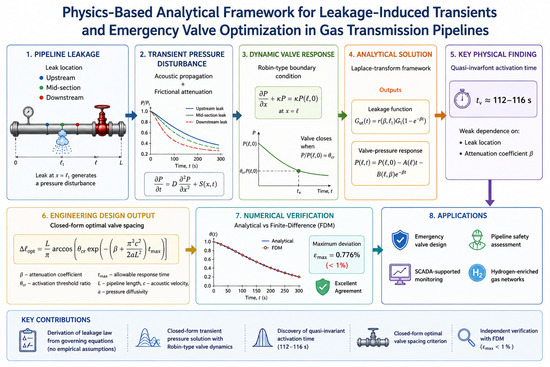
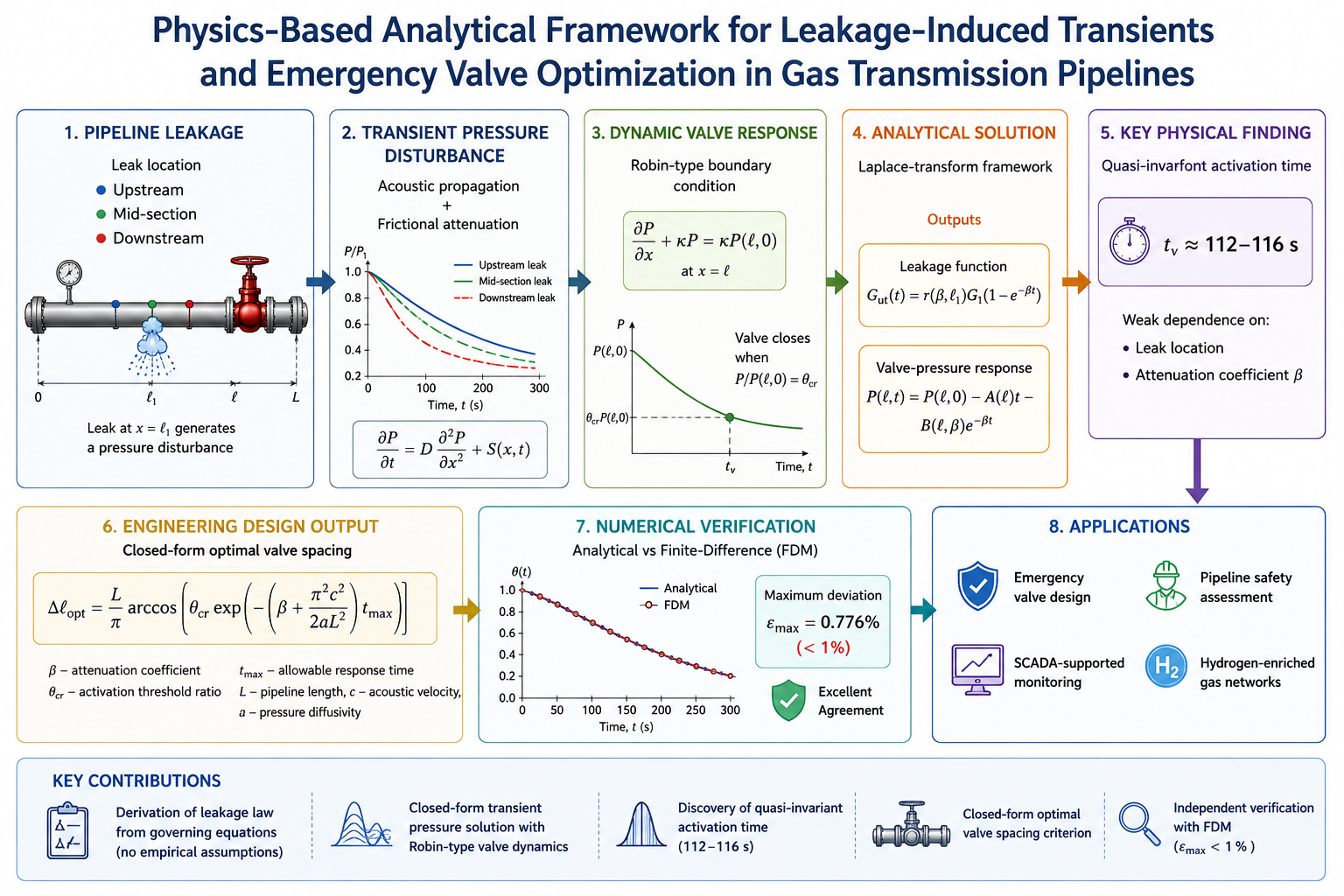
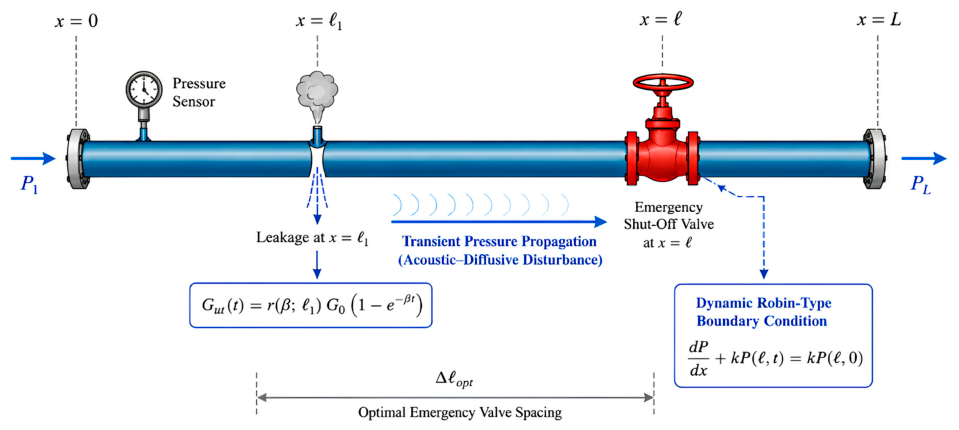
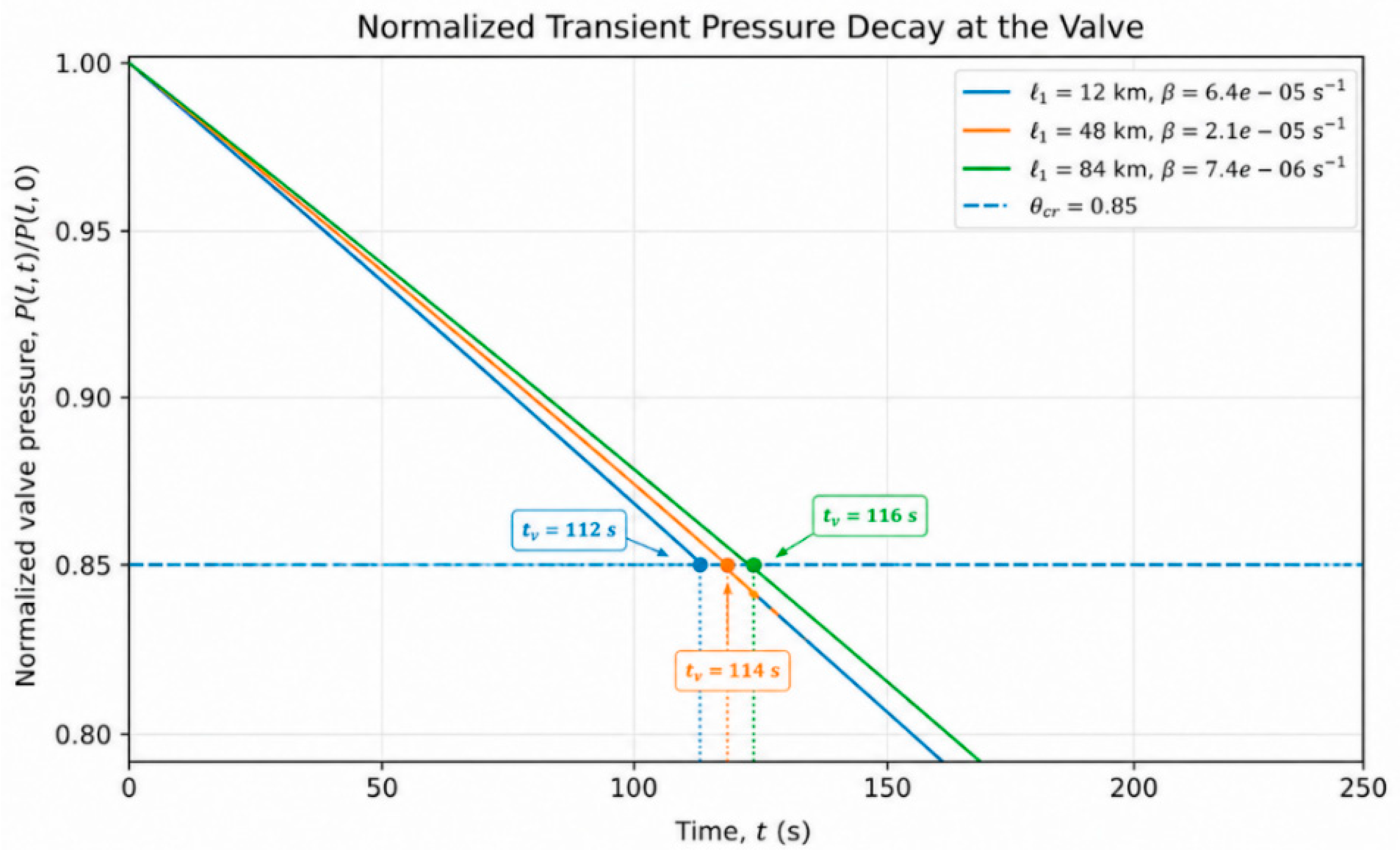
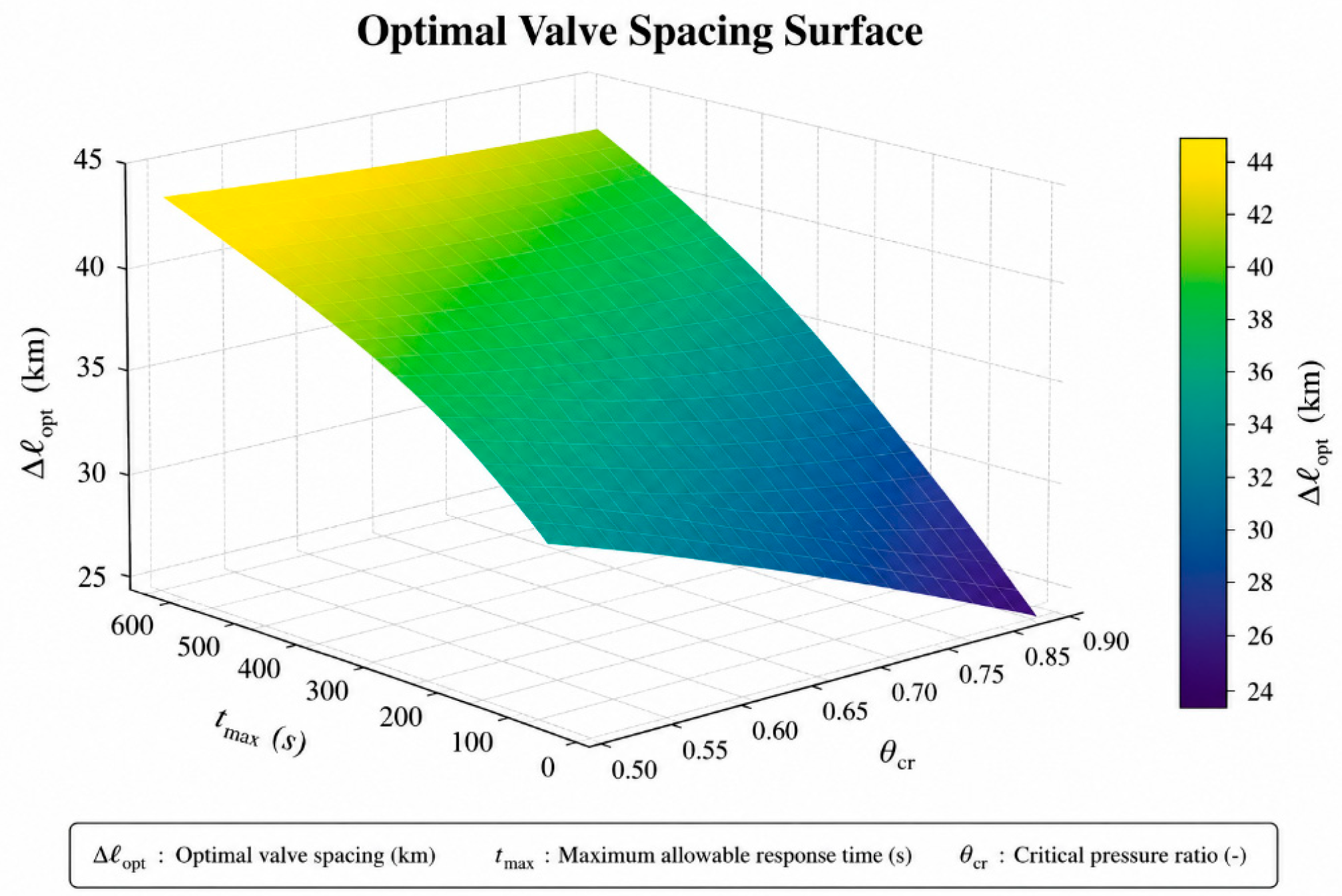
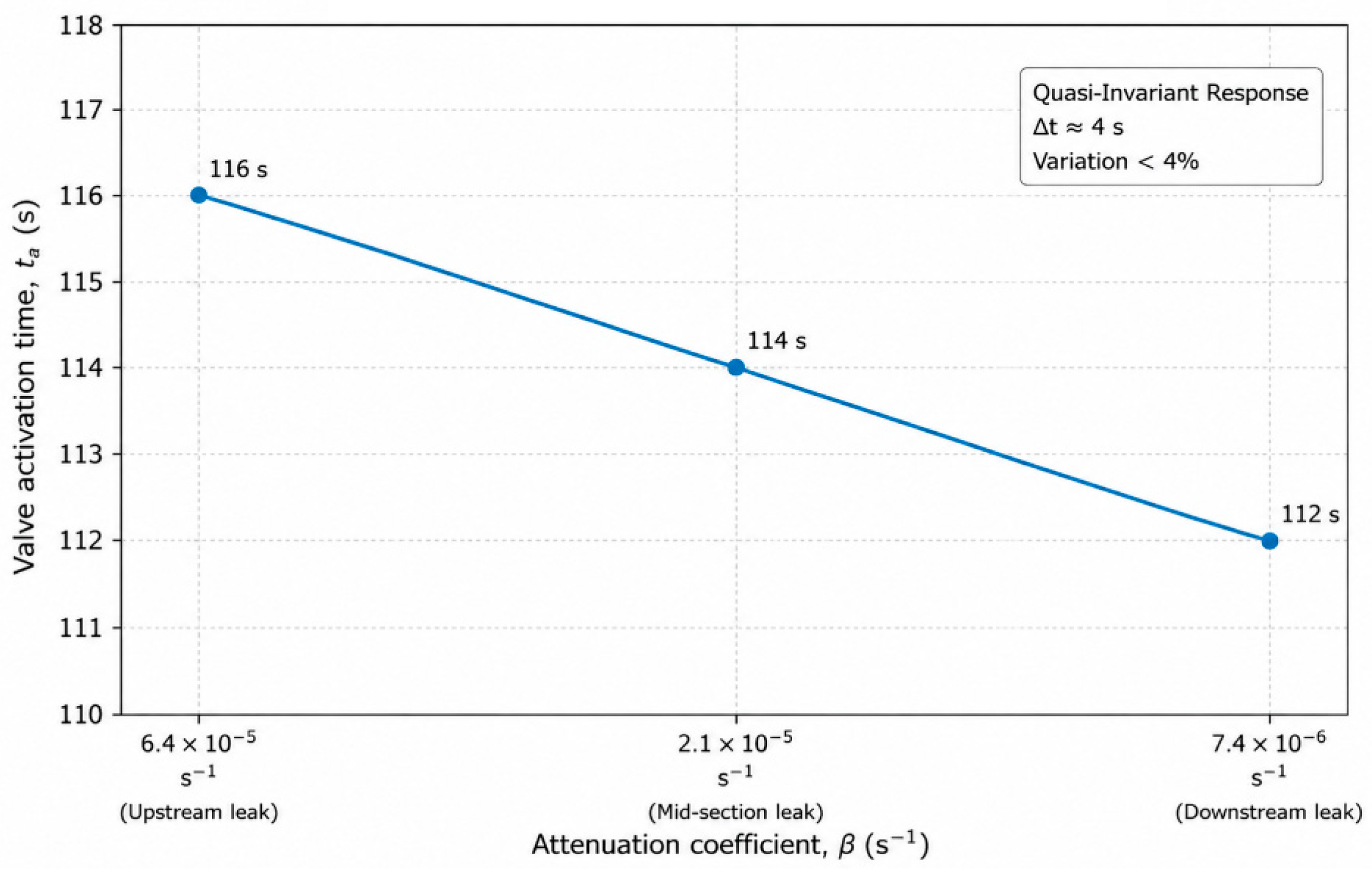
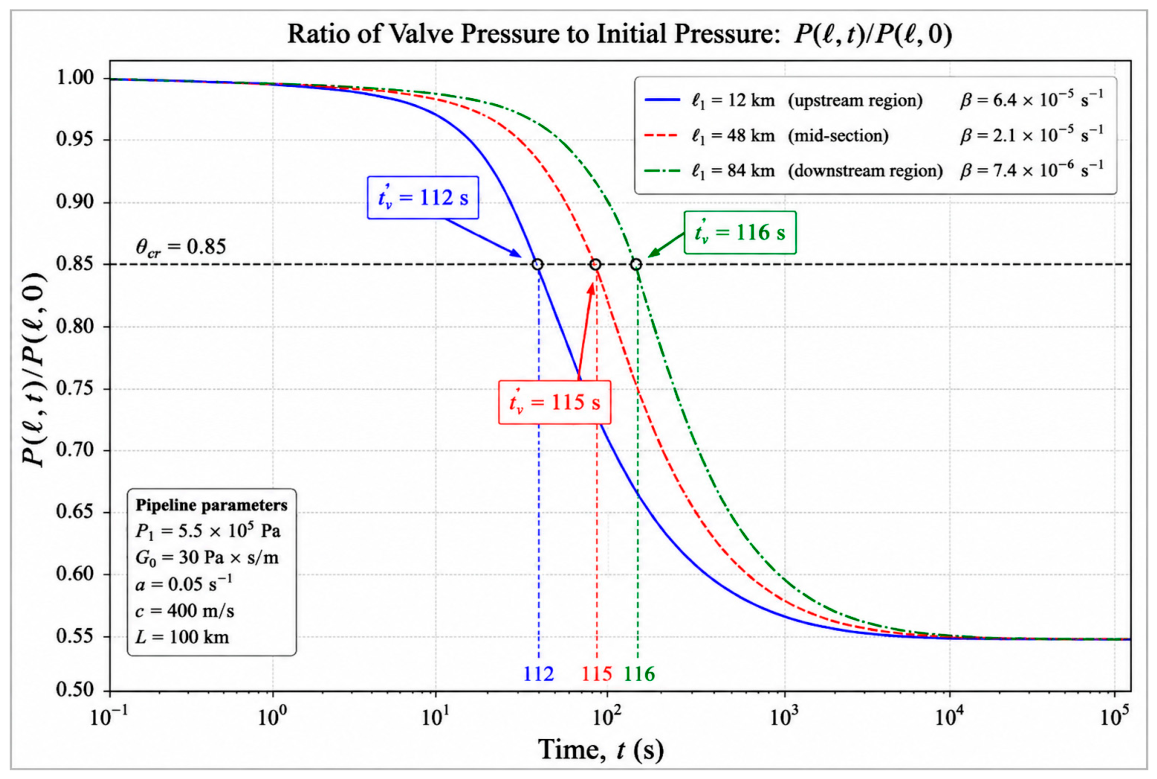
Leakage-induced transients in natural gas transmission pipelines can significantly affect operational safety and emergency response. This study develops a physics-based analytical framework for predicting transient pressure evolution, leakage dynamics, and emergency valve response in high-pressure gas pipelines while deriving a closed-form criterion for optimal valve spacing. The governing equations of compressible gas flow are reduced to a diffusion-type model incorporating acoustic wave propagation and frictional attenuation. A dynamic Robin-type boundary condition is introduced to describe valve–pipeline interactions, and closed-form analytical solutions are obtained using the Laplace transform method. An analytical leakage function and an explicit valve spacing criterion are derived directly from the governing equations and boundary conditions. Parametric investigations under representative transmission pipeline operating conditions demonstrate that the optimal valve spacing depends systematically on attenuation characteristics, activation thresholds, and allowable response times. The analytical solution further predicts a narrow quasi-invariant valve activation interval of approximately 112–116 s, which is theoretically explained through the dominant acoustic–diffusive balance of the proposed model. Verification against an independent finite difference solution shows excellent agreement, with the maximum relative deviation remaining below 1%, thereby confirming the accuracy and numerical consistency of the analytical formulation. The proposed framework provides a physically interpretable and computationally efficient tool for leakage assessment, emergency valve design, and safety-oriented analysis of conventional natural gas transmission pipelines.
Keywords: transient gas flow; leakage dynamics; Robin boundary condition; emergency valve response; optimal valve spacing; Laplace transform transient gas flow; leakage dynamics; Robin boundary condition; emergency valve response; optimal valve spacing; Laplace transform
Graphical Abstract