1. Introduction
Animation generation plays a fundamental role in video games and in human–computer interaction applications. Existing projects range from interactive dance video games that track human motion [
1,
2] to rehabilitation systems for older adults [
3,
4]. Motion generation is commonly based on motion capture technology (MoCap) [
5], which provides accurate skeletal data for subsequent analysis and animation synthesis [
6].
However, producing character animations remains costly, as it often requires recording extensive datasets from human performers or the labor-intensive manual work of professional animators. An essential objective is to generate motion sequences that can be efficiently reused, combined, and blended to create seamless and natural-looking action sequences. In [
7] a method based on a Long Short-Term Memory (LSTM) network was proposed to generate bipedal locomotion animations, such as walking and running. The results showed that the approach was able to model character movements effectively.
In [
8] a Hierarchical Finite State Machine (HFSM) is employed to control player character animation. In this approach, states are defined according to the motion design and organized into groups based on similar behavioral patterns. The animation control is integrated into the Unity interface and executed according to player input within each state. In addition, a black-box approach is adopted by combining the Test Flow Diagram (TFD) method with frame rate performance evaluation. Experimental results showed that the HFSM achieved better character animation control and higher frame rates than the TFD approach.
The authors in [
9] address the challenge of preserving pose features between a reference image and an image sequence. The proposed method combines diffusion models with Rigid Transformation Augmentation (RTAug) to enhance training data and improve the representation of appearance features. Experimental results showed that the method achieved more accurate and consistent animations than existing approaches.
In the context of facial animation for video conferencing applications, deep generative models are commonly used to efficiently compress videos by employing a sparse set of key points. This strategy avoids the need to transmit dense motion vectors, which tend to saturate in performance as available bandwidth increases. To overcome this limitation, the authors in [
10] propose a hybrid layered coding scheme. The approach augments a facial animation-based codec with an auxiliary low-bitrate video stream, which is fused with the animated stream through a novel module to enhance the fidelity of reconstructed animations.
Several studies have explored cost-effective alternatives to traditional motion capture (MoCap) technologies. In [
11], the authors present a method for animating virtual characters from RGB video sequences based on human pose reconstruction. This approach aims to reduce reliance on expensive MoCap equipment, which is often limited by high costs and operational complexity. Similarly, in [
12], the authors analyze major computer animation technologies and their application using motion capture data. Based on their findings, they propose a method for generating animation from MoCap data that offers a more convenient and efficient production workflow.
Despite these advances, traditional MoCap systems, which rely on extensive hardware setups and physical markers, still present significant limitations in terms of cost, complexity, and efficiency. In [
13], the authors employ a two-level machine learning approach, combining deep convolutional neural networks (DCNNs) and generative adversarial networks (GANs), to compute and complete multiple actions in animation. This method improves joint position accuracy and enhances the consistency of the generated motion sequences. In addition, the authors in [
14] develop a vision-based motion capture system for animated characters. Using multiple synchronized cameras, the system captures motion frames with omnidirectional information. An improved Harris corner detection algorithm is applied, increasing the accuracy of keypoint extraction by approximately 15% compared to traditional methods.
In recent years, there has been increasing interest in applications that use animations to facilitate communication with deaf individuals. In [
15], the authors implemented an avatar capable of performing signs. Motion capture (MoCap) was used to record body, limb, and head movements in a 3D space. These recordings required post-processing corrections, and additional animations were generated by manipulating individual finger bones to achieve the desired sign configurations.
In this work, we are interested in Human Action Generation from skeleton sequences captured by devices and libraries that record the (
x,
y,
z) positions of human skeletal joints. The proposed framework takes as input a skeletal sequence corresponding to a given action and aims to generate a complete animation by constructing transitions between consecutive key poses. To achieve this, a bio-inspired optimization algorithm is executed multiple times to determine both the number of key poses and the parameters of a homotopy-based formulation that enable a feasible and complete motion transition. The optimization process is performed independently for each input sequence, treating each action as a separate instance. The proposed framework assumes complete and noise-free skeleton data. Handling noisy or incomplete joint information would require a preprocessing stage for data filtering or reconstruction, which is beyond the scope of this work. Several publicly available datasets capture human actions by storing the spatial positions of skeletal joints [
16,
17]. These datasets were primarily developed for the evaluation of action recognition systems. Each action involves the coordinated movement of multiple body parts, with individual joints following distinct motion patterns and trajectories during execution. To evaluate the proposed hybrid mathematical and bio-inspired framework and to assess its ability to generate animations across different types of actions, the Kinect Activity Recognition Dataset (KARD) [
16] was used. This dataset includes 18 actions: Horizontal Arm Wave, High Arm Wave, Two-Hand Wave, Catch Cap, High Throw, Draw X, Draw Tick, Toss Paper, Forward Kick, Side Kick, Take Umbrella, Bend, Hand Clap, Walk, Phone Call, Drink, Sit Down, and Stand Up. For each action, the dataset provides a .txt file that contains the (
x,
y,
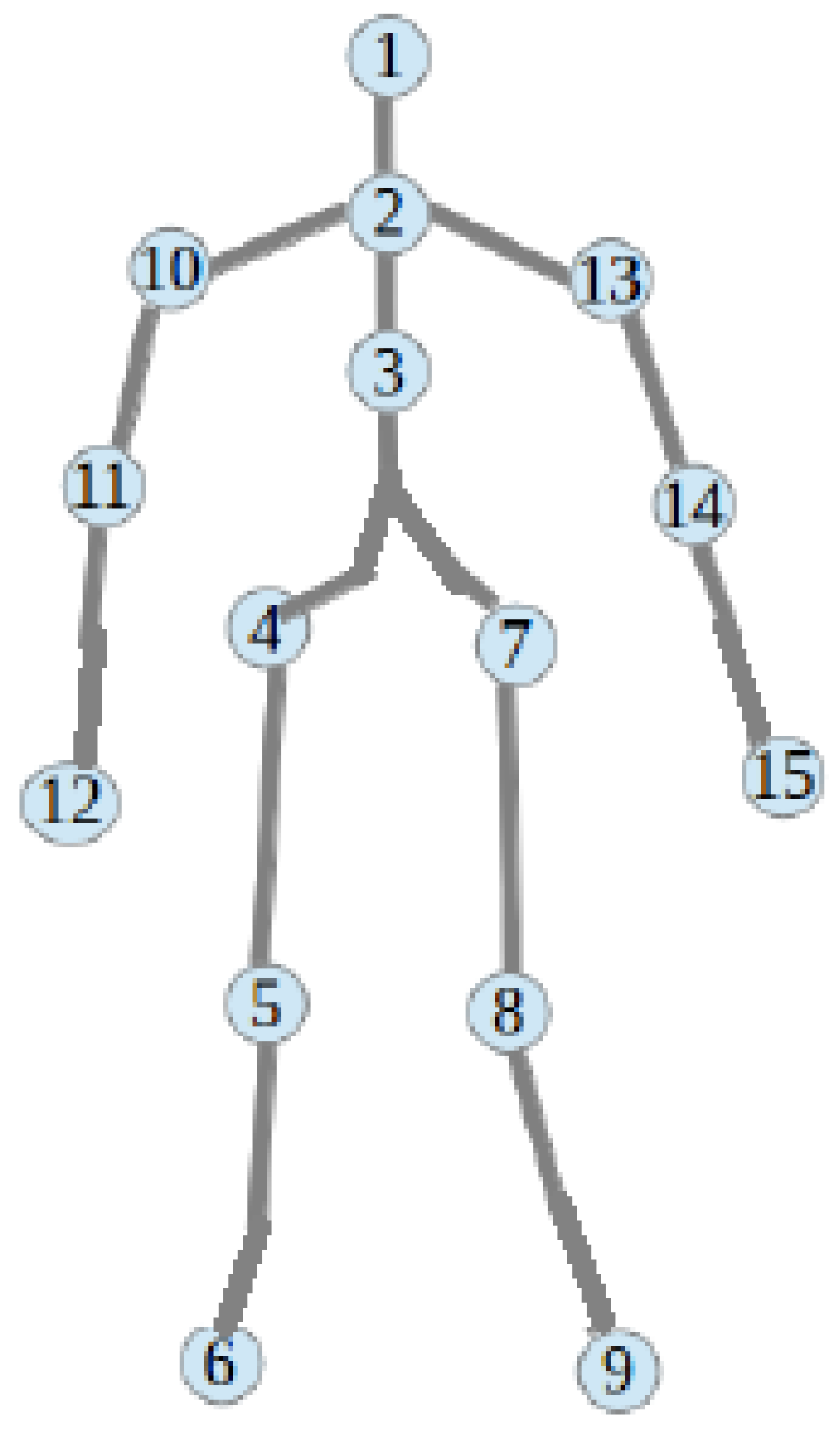
z) coordinates of 15 joints captured by the Kinect (
Figure 1).
During the execution of an action, body joints move along different directions.
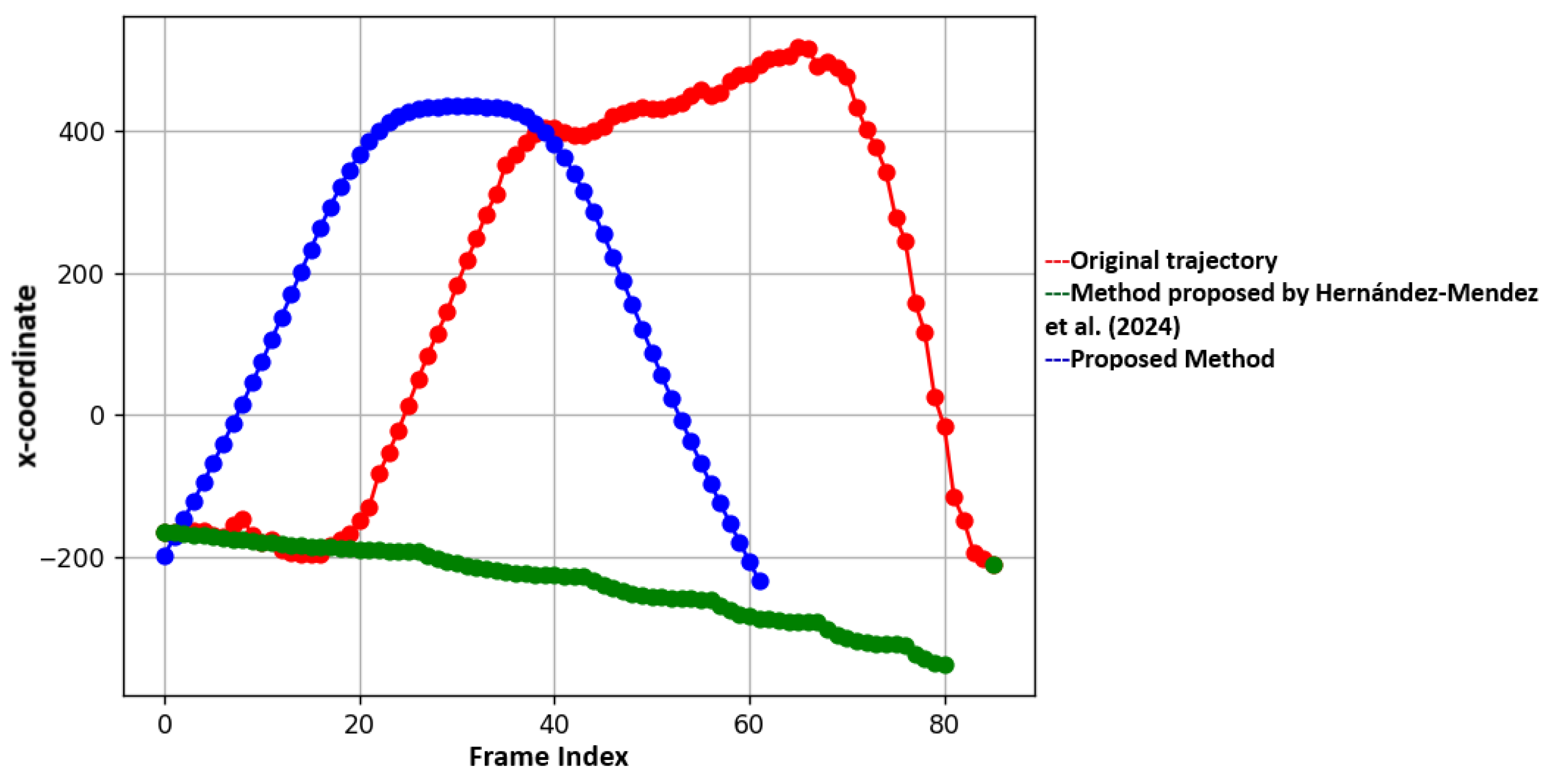
Figure 2 shows the trajectory of the hand along the
x-coordinate during the Horizontal Arm Wave action, where the original trajectory is shown in red. This motion includes both upward and downward displacements. The transitions calculated from the skeletal joint positions of the first and last frames using the method proposed in [
18] are shown in green. This demonstrates that relying exclusively on the initial and final frames is insufficient to adequately describe the variations that occur during the execution of an action. To improve the trajectory calculation, one key pose was selected, and the method proposed in [
18] was applied between consecutive poses. To generate the trajectory shown in blue at
Figure 2, 30 frames were generated from the initial pose to the key pose, and an additional 30 frames were generated from the key pose to the final pose. The resulting trajectory, shown in blue, exhibits closer correspondence with the reference motion. To generate motion sequences using the Homotopy-based Animation Method (HAM), it is necessary to define the number of key poses, the radius and its increment, which are used to construct the homotopy curve of the numerical tracing algorithm for calculating transitions between pairs of key poses. Key poses are selected from the set of action poses using the k-means algorithm [
19], and the transitions between pairs of key poses are computed using the mathematical method proposed in [
20]. This method was further enhanced in [
18], where a genetic algorithm [
21] was employed to optimize the radius and its increment along the homotopy curve of the numerically traced algorithm for generating animations between pairs of letters in the sign language alphabet.
The main contribution of this research is the evaluation of four bio-inspired optimization methods—Genetic Algorithm (GA), Micro Genetic Algorithm (MicroGA), Particle Swarm Optimization (PSO), and Ant Colony Optimization (ACO)—within a homotopy-based framework for human motion generation from skeletal sequences. Specifically, the study focuses on determining suitable configurations for the number of key poses and the homotopy curve parameters (radius value and increment) in order to generate continuous motion transitions between pairs of pose. The optimization process is performed independently for each input sequence. The proposed framework provides flexibility in controlling the temporal discretization between key poses and enables the generation of motion sequences from a reduced set of representative poses. Additionally, the comparative analysis of the optimization methods offers practical insight into their relative performance within the proposed formulation. This work focuses on evaluating the feasibility of the proposed framework rather than providing a direct comparison with state-of-the-art methods. Dynamic Time Warping (DTW) is used in this work to evaluate the similarity between generated and reference motion sequences. However, it is important to note that DTW measures temporal alignment and does not explicitly account for perceptual realism, biomechanical constraints, or physical plausibility. Therefore, DTW is employed as a relative similarity metric rather than as a direct indicator of motion quality.
The manuscript is organized as follows:
Section 2 describes the methodology to implement Hybrid Mathematical and Bio-Inspired Framework for Human Action Generation from Skeleton Sequences. After that, in
Section 3 the experimental design and the results obtained are presented. In
Section 4, a brief discussion is presented. Finally,
Section 5 summarizes the findings of this research and sets the future work.
2. Methodology
This study compares mathematical and bio-inspired algorithms for human action generation from skeletal sequences. An action consists of a sequence of frames, where each frame stores the (
x,
y,
z) positions of the joints (
Figure 1). For each input action, multiple independent runs of the optimization algorithm are performed, and the solution that achieves the best transition completeness is selected. This approach does not involve training a global model across multiple sequences; instead, each action is treated as an independent optimization problem. Therefore, the objective is not to generalize across subjects or styles, but to demonstrate that homotopy-based transitions can be constructed for different types of human actions. The parameters of the mathematical traced algorithm and the number of key poses, are determined using four nature-inspired optimization methods, including genetic algorithm (GA), micro-genetic algorithm (MGA), particle swarm optimization (PSO), and ant colony methods (ACO), in order to compare their performance in terms of similarity between generated and reference motion sequences. To measure the similarity between the sequences, Dynamic Time Warping (DTW) [
22,
23,
24] was used. As it has been previously stated, Dynamic Time Warping measures sequence similarity based on temporal alignment, but it does not explicitly account for biomechanical constraints, joint limits, or perceptual realism. In this work, DTW was used as an external evaluation metric rather than being incorporated into the optimization objective.
2.1. Hybrid Mathematical and Bio-Inspired
Framework for Human Action Generation from
Skeleton Sequences
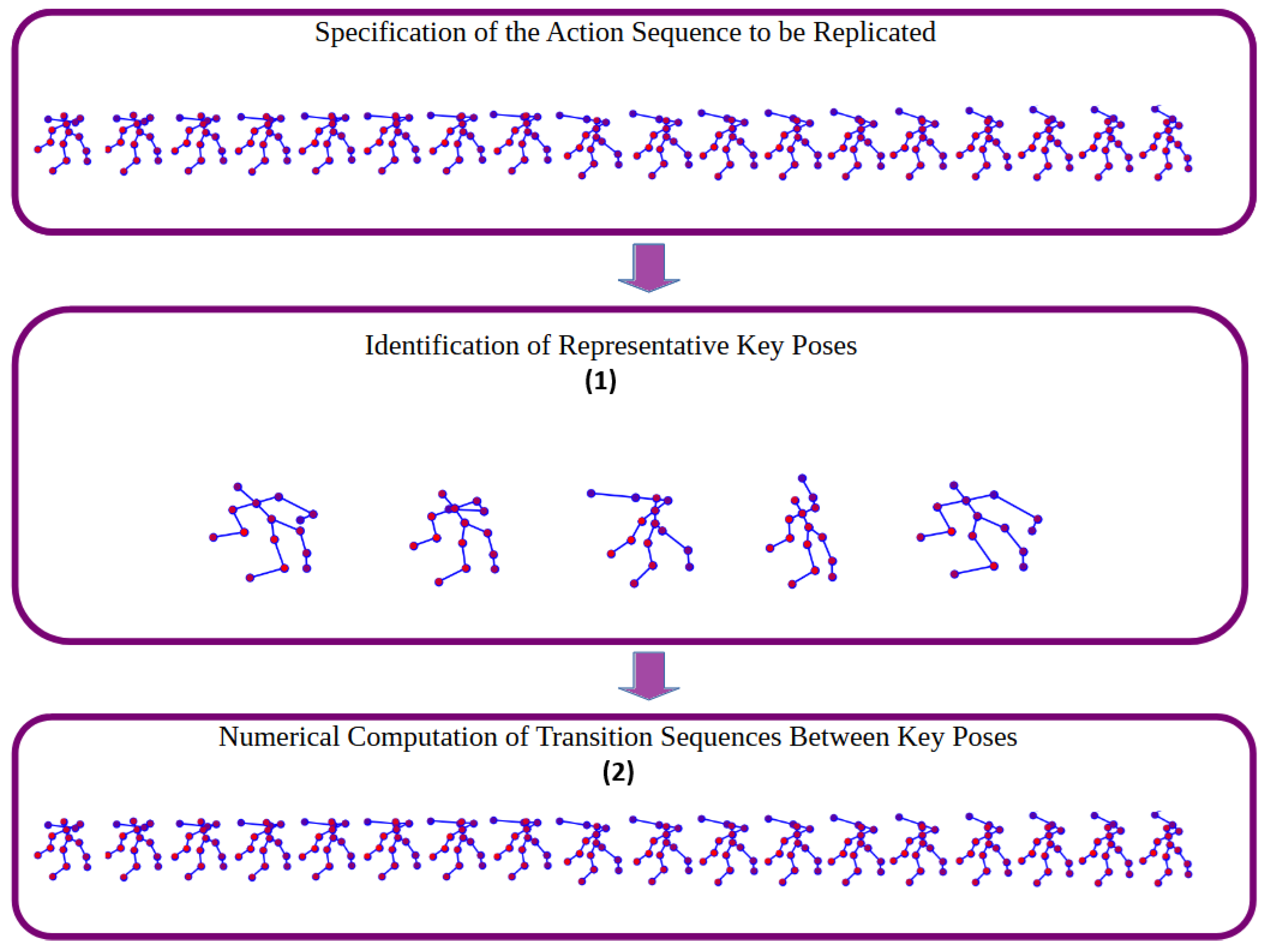
The system is composed of the following stages (
Figure 3):
Identification of Representative key poses: given an input skeletal sequence corresponding to a specific action, the system selects a set of key poses using the K-means algorithm. The first and last frames of the sequence are included as key poses to ensure that the generated animation starts and ends consistently with the original motion.
Computation transitions between key poses: for each input sequence, transitions between selected key poses are generated using a homotopy-based formulation [
20], where each pair of consecutive key poses serves as the initial and final postures. The number of key poses and the homotopy curve parameters are obtained through an optimization process in which four bio-inspired algorithms are executed to determine suitable configurations for motion generation.
The four selected algorithms are the most frequently used. The GA [
25,
26,
27] is an adaptive search heuristic inspired by natural selection. It simulates evolutionary processes in which individuals compete for resources, allowing the fittest solutions to prevail over weaker ones. Similar to biological evolution, GA employs selection, recombination, and mutation mechanisms to iteratively refine candidate solutions. MicroGA [
28] is a variant of the traditional genetic algorithm that uses a small population size to reduce computational cost while preserving evolutionary search capabilities. It applies selection, crossover, and mutation operators to evolve solutions over successive generations. Its main advantages include fast convergence, low memory requirements, and efficiency in optimization problems with limited computational resources. PSO [
29] is inspired by the collective behavior of social animals. In this approach, a set of candidate solutions, referred to as a swarm of particles, moves through the search space according to their own performance and that of neighboring particles. This method requires defining the speed and inertia of particles, incorporating a cognitive component that allows particles to revert to previously discovered superior solutions, and including a social component that encourages collective movement toward optimal solutions. ACO [
30,
31] is a bio-inspired, population-based optimization algorithm that models the foraging behavior of ants. It constructs solutions probabilistically and reinforces high-quality paths through pheromone updates. Its main advantages include efficient exploration of large solution spaces, adaptability to dynamic problems, and convergence toward optimal or near-optimal solutions. The aforementioned techniques are useful when the search space is large and traditional methods do not provide competitive solutions.
2.2. Transitions Between Key Poses
Homotopy continuation methods [
32] introduce a homotopy parameter
into nonlinear algebraic equations to obtain a continuous deformation from trivial state to nonlinear state. In Equation (
1)
n denotes the number of variables and
represents the set of variables in the system of equations.
Transitions between pairs of key poses are calculated using the Homotopy-based Animation Method (HAM) described in [
20]. Using the same notation, the initial skeletal pose is denoted as
, and the final skeletal pose as
. The (
x,
y,
z) joint positions detected for each skeleton (
Figure 1) are stored in a
matrix, corresponding to 15 joints with three components each. In total, this results in 45 variables that are used to compute the transitions between
and
. In Equation (
2), the homotopy equation models the transition between
and
:
where
represents the homotopy parameter, and
and
correspond to the systems of equations
and
respectively. According to the systems
and
, the initial and final skeletal poses can be defined as follows:
The systems of equations shown in (
3) and (
4) are substituted into (
2) to obtain a global system of equations that combines the initial and final skeletal poses for generating the transition. To obtain transitions from the initial pose
when
to the final pose
when
, it is necessary to trace the homotopy curve using a numerical continuation algorithm. For this purpose, the hypersphere equation [
33] is introduced:
where
corresponds to the value of
in each transition. To begin tracing the curve [
34], the value of
is initialized at 0;
represent the dimensions of the hypersphere, while
correspond to the coordinates of its center, and
r denotes the radius of the hypersphere. Therefore, the system of equations used to calculate the transitions between an initial pose and a final pose is formed by (
2) and (
5). Thus, by solving the system of equations in (
6),
contains the transitions required to generate the animation between pairs of key poses.
The centers
of the hypersphere are initialized with the values of
, while
is assigned the initial value of
, which is 0. The system of equations in (
6) is solved iteratively using the Newton-Raphson method [
35]. The iterative process continues until
reaches a value close to 1, indicating that the transition between the pair of key poses has been completed. The radius and its increment must be adjusted to generate transitions between pairs of skeletal poses.
2.3. Optimization with Nature-Inspired Methods
In this research, the GA [
36], MicroGA [
28], PSO [
29], and ACO [
31] methods were used to determine the number of key poses, the initial radius of the hypersphere and its increment. The individuals are represented as binary strings with 36 alleles. Each individual encodes the initial radius of the hypersphere, its increment for generating a 30-frame transition using the numerical traced algorithm, and the number of key poses:
16 bits are used to represent the radius (r)
16 bits are used to represent the increment of the radius ()
4 bits are used to represent the number of key poses () selected using the K-means algorithm
The 16-bit segments are interpreted as integer values in the range [0, 65535]. These values are then scaled to obtain real-valued parameters. Specifically, the radius r is obtained by dividing the encoded value by , resulting in a range of approximately [0, 0.655]. Similarly, the increment is obtained by dividing the encoded value by , yielding values in the interval [0, 6.553]. The 4-bit segment used for allows selecting up to 15 key poses. This encoding allows controlling both the resolution of the parameter space and the range of feasible solutions. The parameter encoding is designed to maintain a bounded and computationally tractable search space. In particular, the number of key poses is limited to a maximum of 15, which was empirically found to be sufficient to represent the considered actions while preventing unnecessary increases in computational complexity. The number of key poses and the homotopy parameters influence the structure and progression of the generated transitions, providing a controllable trade-off between representation detail and optimization complexity.
Table 1 shows an example of an individual. The second row presents its binary representation, while the third row shows the corresponding real values. These values are obtained by converting the binary encoding to decimal and dividing by the corresponding scaling factor.
Table 2 shows the number of individuals (
N), the number of alleles (
M) per individual, the number of generations (
) executed in each run, and the number of restarts for each evaluated algorithm. To ensure a fair comparison, the product of the population size (
N), the total number of generations (
), and the number of restarts (
) was fixed at 900.
2.4. Fitness Function
The fitness function in the proposed framework is designed to evaluate the feasibility of the transitions generated by the homotopy-based method rather than directly measuring perceptual realism. In the homotopy formulation, the parameter represents the progression of the transition from the initial pose () to the final pose (). Therefore, serves as an indicator of transition completion. A value of close to 1 indicates that the generated trajectory successfully reaches the target pose, whereas values significantly lower than 1 correspond to incomplete transitions. Based on this interpretation, the fitness function favors solutions that achieve values close to 1, ensuring that valid and complete transitions between poses are obtained. Additionally, values of greater than 1 are penalized because they may indicate numerical instability or divergence in the homotopy tracing process. It is important to note that is not intended to quantify motion realism or perceptual quality. Instead, it is used to verify that the generated transition satisfies the boundary conditions defined by the initial and final poses. The similarity between the generated motion and the reference sequence is evaluated independently in a post-processing stage using Dynamic Time Warping (DTW). DTW provides a measure of sequence-level similarity rather than a direct assessment of motion realism or physical plausibility. This separation allows the optimization process to focus on generating feasible transitions, while sequence-level similarity is evaluated through an external metric. Empirically, solutions with values closer to 1 tend to produce more complete transitions, although this does not guarantee perceptual realism.
Fitness Evaluation of Individuals in the Population
For each action sequence, the number of selected key poses is determined by the last four bits of each individual. Let the selected key poses be denoted as
, where
n is determined from the last four bits of each individual. Transitions between consecutive key poses are generated using a homotopy-based formulation to produce continuous motion [
20]:
where
represents the transition from pose
to pose
. The sequence of these transitions defines the generated animation. For each transition
, 30 intermediate frames are calculated. Increasing this number improves the temporal resolution of the generated motion, while decreasing it produces a coarser representation with more abrupt transitions. Once the 30 intermediate frames have been generated for a pair of poses, the final value of
is used as the fitness measure, where values close to
indicate that the transition between the initial and final poses has been successfully completed. Values of
greater than 1 indicate that the generated trajectory exceeds the target pose, which may reflect instability in the homotopy process. Therefore, solutions with
are penalized by assigning
in order to discourage divergence while allowing a small tolerance for numerical variation. The fitness of an individual is then calculated as the average fitness across all pose pairs. Let the fitness of the transition between poses
and
be denoted as
. Then, the fitness of an individual,
, is calculated as the average fitness across all transition pairs:
where
n is the number of key poses in the sequence. An individual is considered better when
is closer to 1.
The Algorithm 1 implemented in this study is described below:
| Algorithm 1 Bio-inspired optimization for human motion animation |
Require: N binary individuals with 36 alleles each
Ensure: Best individual according to fitness evaluation
- 1:
Initialize population binary individuals} - 2:
for to do - 3:
for each do - 4:
compute radius value of - 5:
compute radius increment of - 6:
compute number of key poses to select - 7:
select k poses using k-means - 8:
compute 30 transitions between each pair of poses in S - 9:
evaluate individual using Equation ( 8) - 10:
end for - 11:
evolve population using bio-inspired algorithm - 12:
end for return
|
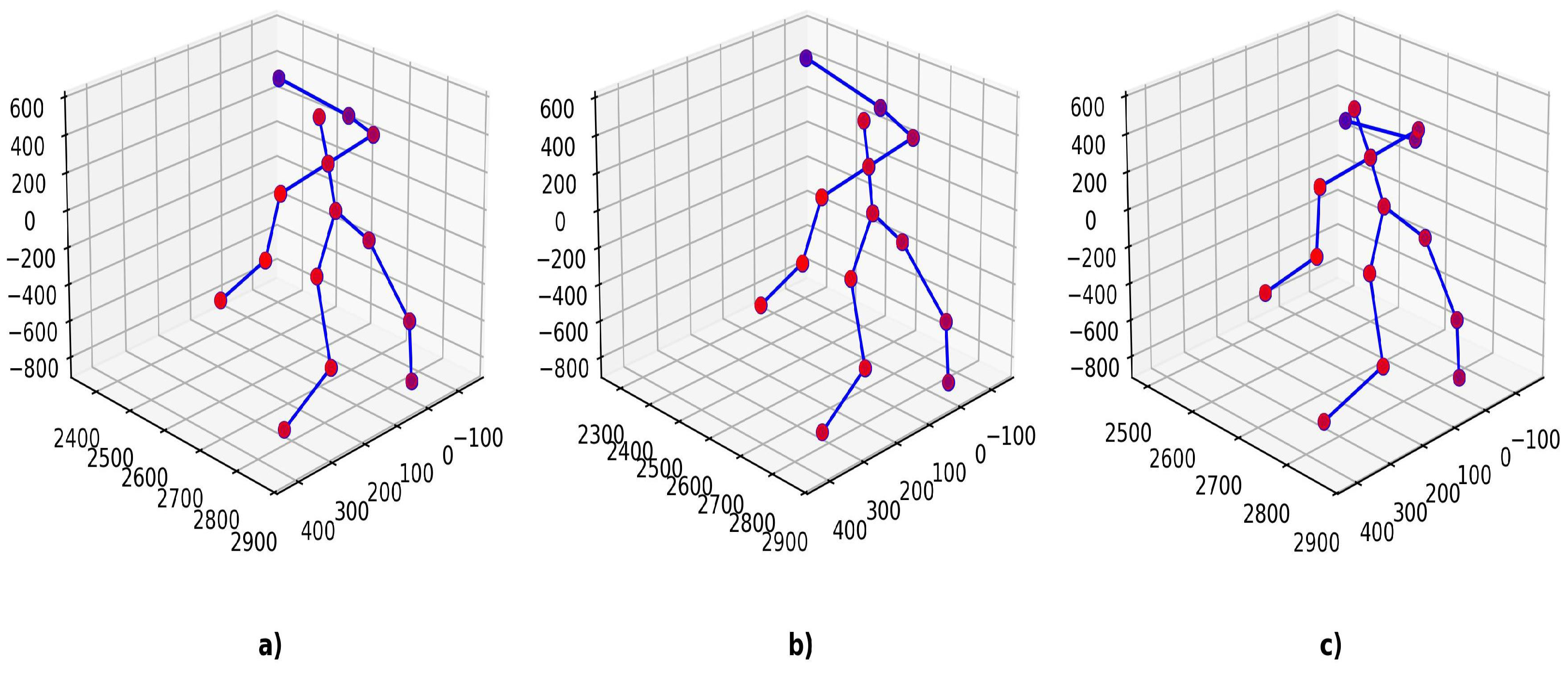
The Algorithm 1 was executed using each of the four methods: GA, MicroGA, PSO, and ACO. The
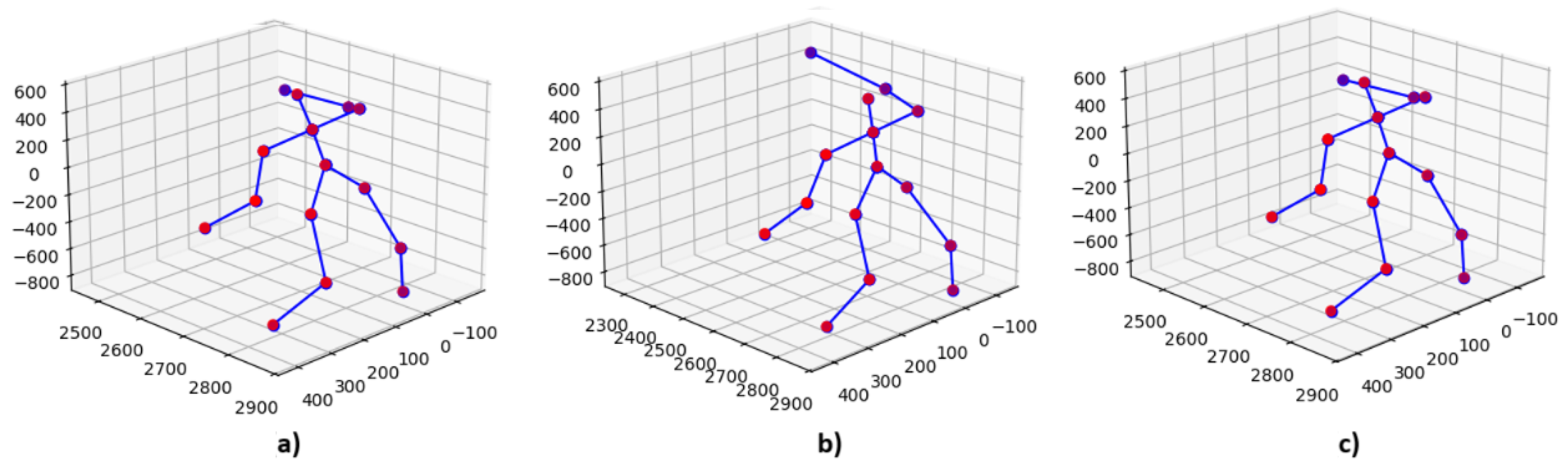
Figure 4 shows three key poses selected for the Horizontal Arm Wave action. The corresponding individual has a radius of 0.0647, a radius increment of 0.0363, and specifies that three key poses should be selected.
Using the Algorithm 1, 30 intermediate transitions are generated between the poses (a,b) and (b,c) (
Figure 4). The final
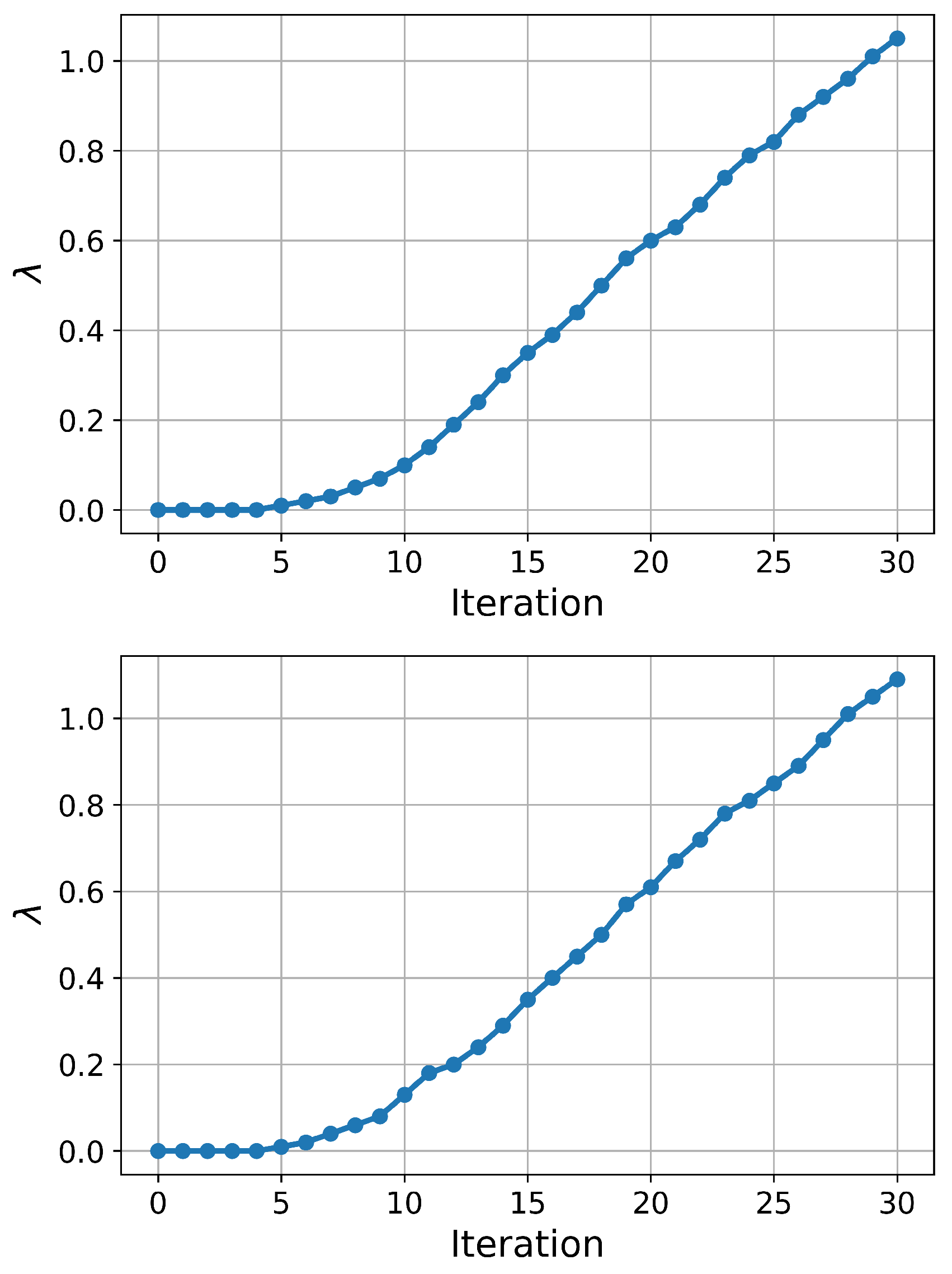
values for the key poses pairs (a,b) and (b,c) are 1.05 and 1.09, respectively. The fitness of the individual, calculated using (
8), is 1.07, indicating that the transitions between the corresponding poses pairs were successfully completed (
Figure 5). Using Dynamic Time Warping (DTW), the similarity between the original and generated sequence was 2567.26.
The
Figure 6 shows three key poses selected for the Horizontal Arm Wave action. The corresponding individual has a radius of 0.0544, a radius increment of 0.0256, and specifies that three key poses should be selected.
The final
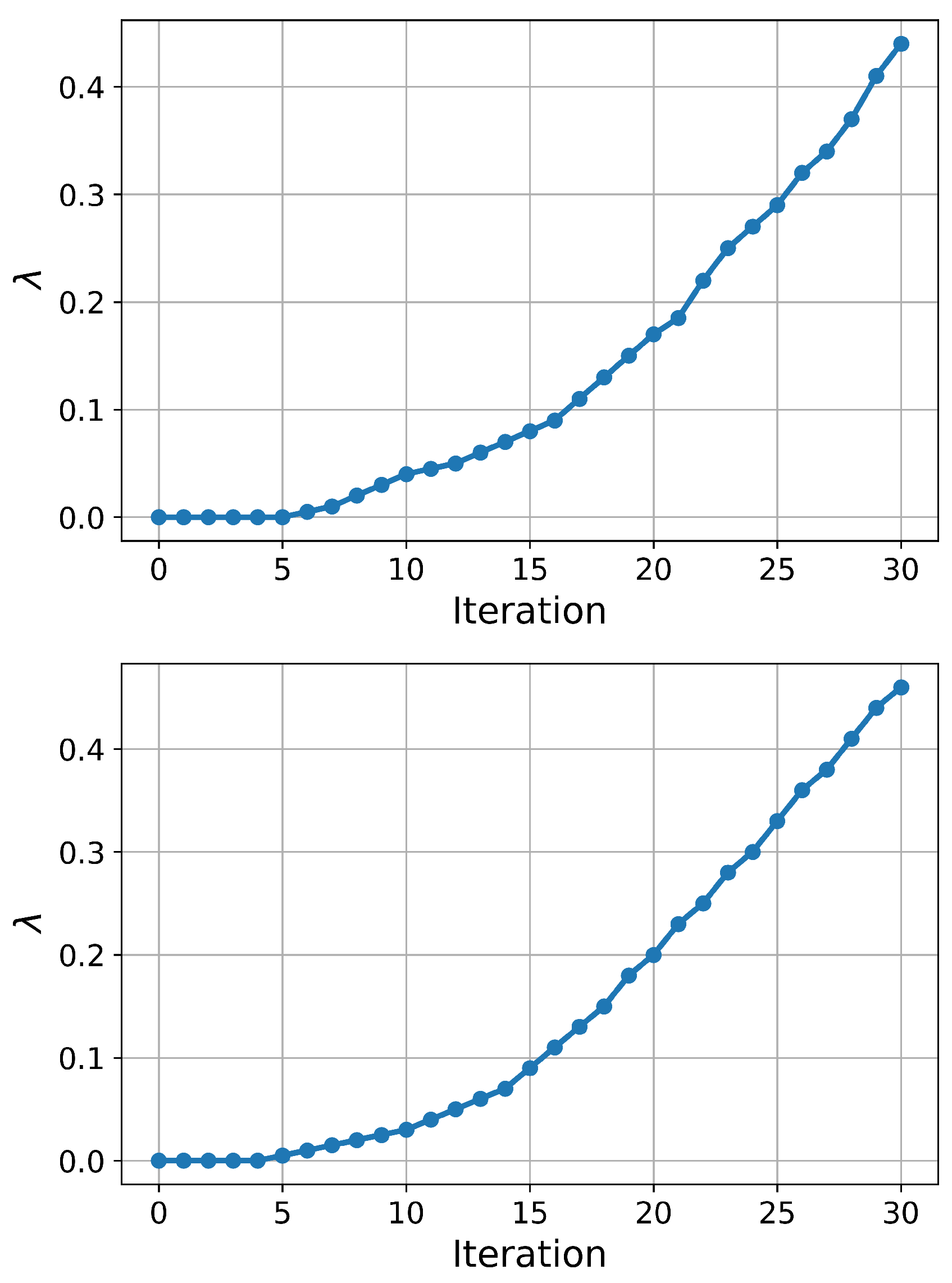
values for the key poses (a,b) and (b,c) are 0.44 and 0.46, respectively. The fitness of the individual, calculated using (
8) is 0.45, indicating that the transitions between the defined pose pairs were not fully completed (
Figure 7). Using DTW, the similarity between the original and the generated sequence was 3846.78.
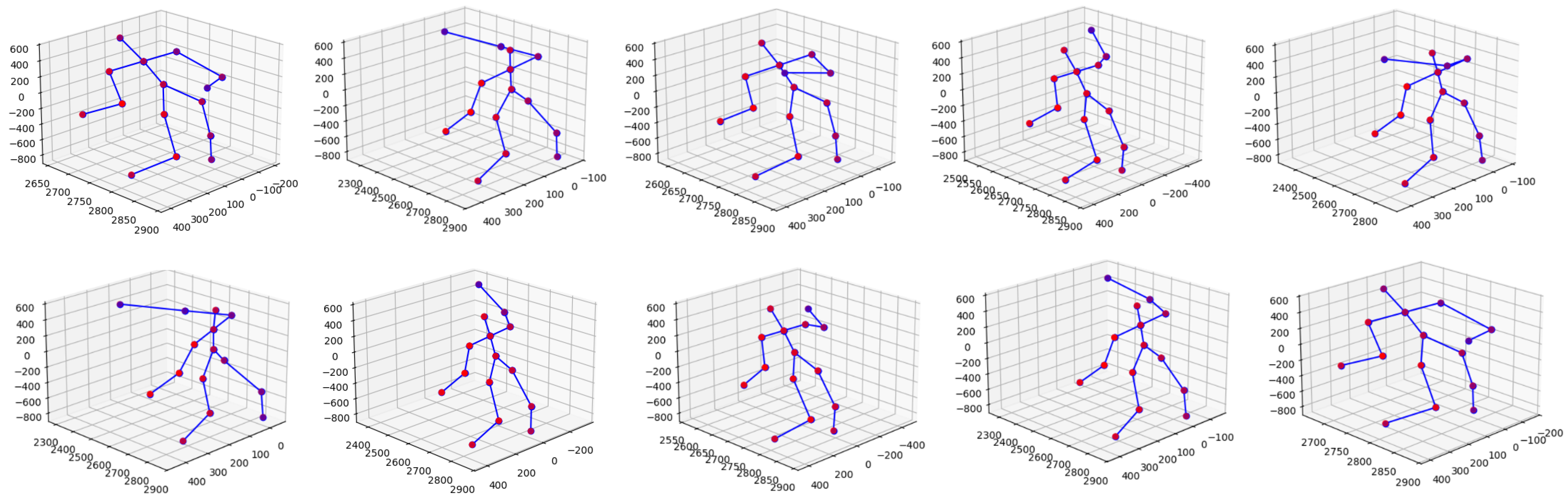
Figure 8 shows ten poses selected by another individual, which has a radius of 0.0132 and a radius increment of 0.0054. The fitness values for the corresponding key pose pairs are 0.74, 0.854, 1.08, 1.09, −1.62, −1.15, −1.43, −1.11, 0.77; resulting in an average individual fitness of −0.086. The fitness indicates that the transitions between certain pose pairs were not fully completed, with a DTW distance of 11,014.80 between the original sequence and the generated sequence.
Table 3 shows that the individual with a fitness of 1.07 produces a lower distance between the generated and original sequences. In contrast, the individual with a fitness of −0.086 produces a larger distance, indicating greater dissimilarity between the sequences.
3. Experiments and Results
The experiments were conducted using the Kinect Activity Recognition Dataset (KARD) [
16], which includes the 18 activities: Horizontal Arm Wave, High Arm Wave, Two-Hand Wave, Catch Cap, High Throw, Draw X, Draw Tick, Toss Paper, Forward Kick, Side Kick, Take Umbrella, Bend, Hand Clap, Walk, Phone Call, Drink, Sit Down, and Stand Up. The KARD dataset contains multiple sequences for each action with similar initial and final poses. Since the objective of this work is to evaluate the feasibility of generating transitions between representative poses, a single sequence was selected for each action. This allows different types of motions to be analyzed while avoiding redundancy in similar pose configurations. The Algorithm 1 was executed to generate the animations, and for each run, the following data were recorded: restart number, generation number, best individual fitness, average population fitness, standard deviation, and number of evaluations performed.
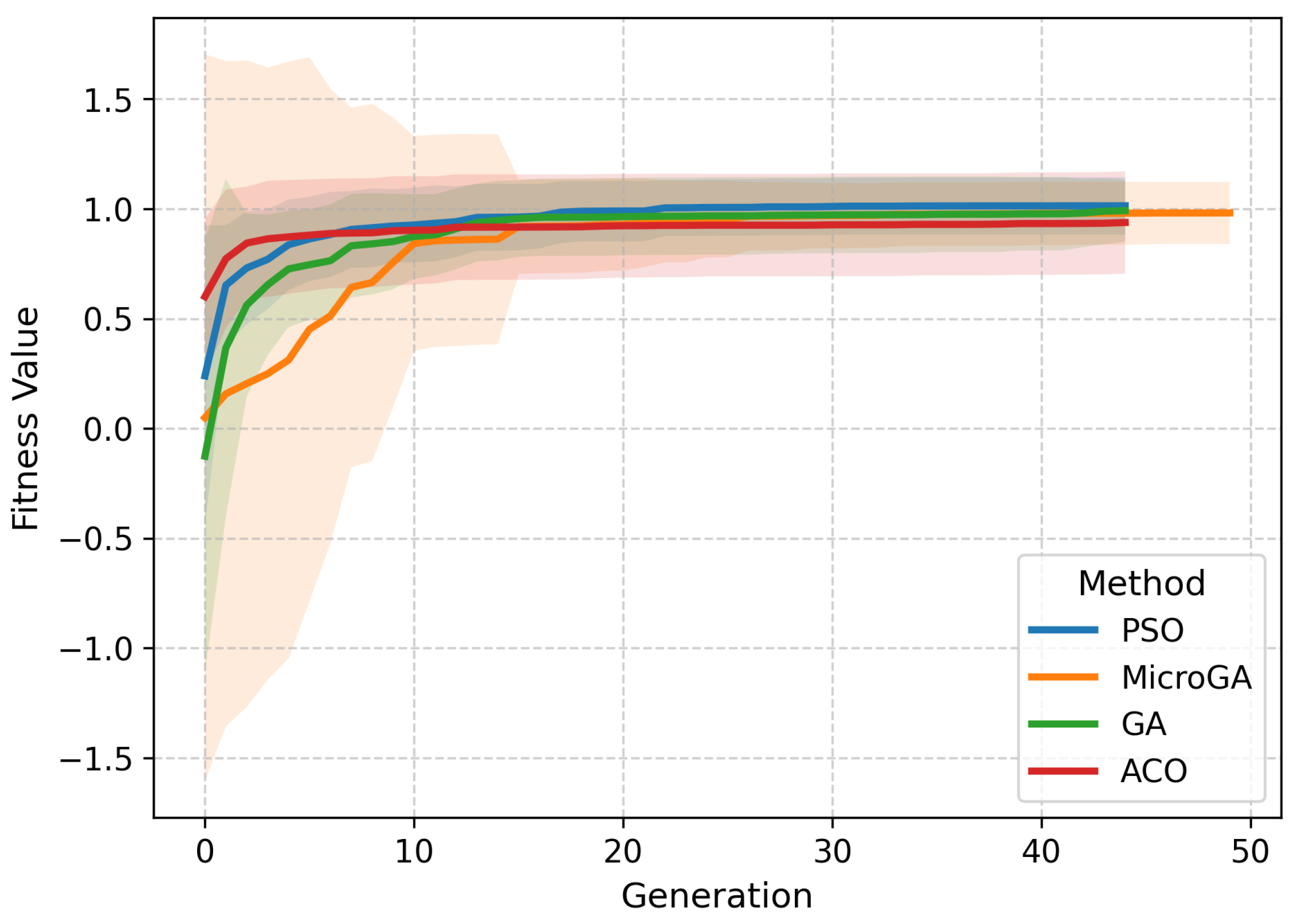
Figure 9 shows that, for the PSO and MicroGA methods, the fitness of the best individual approaches 1. MicroGA requires more generations to stabilize, eventually reaching a fitness close to 1, whereas ACO stabilizes faster but fails to reach 1.
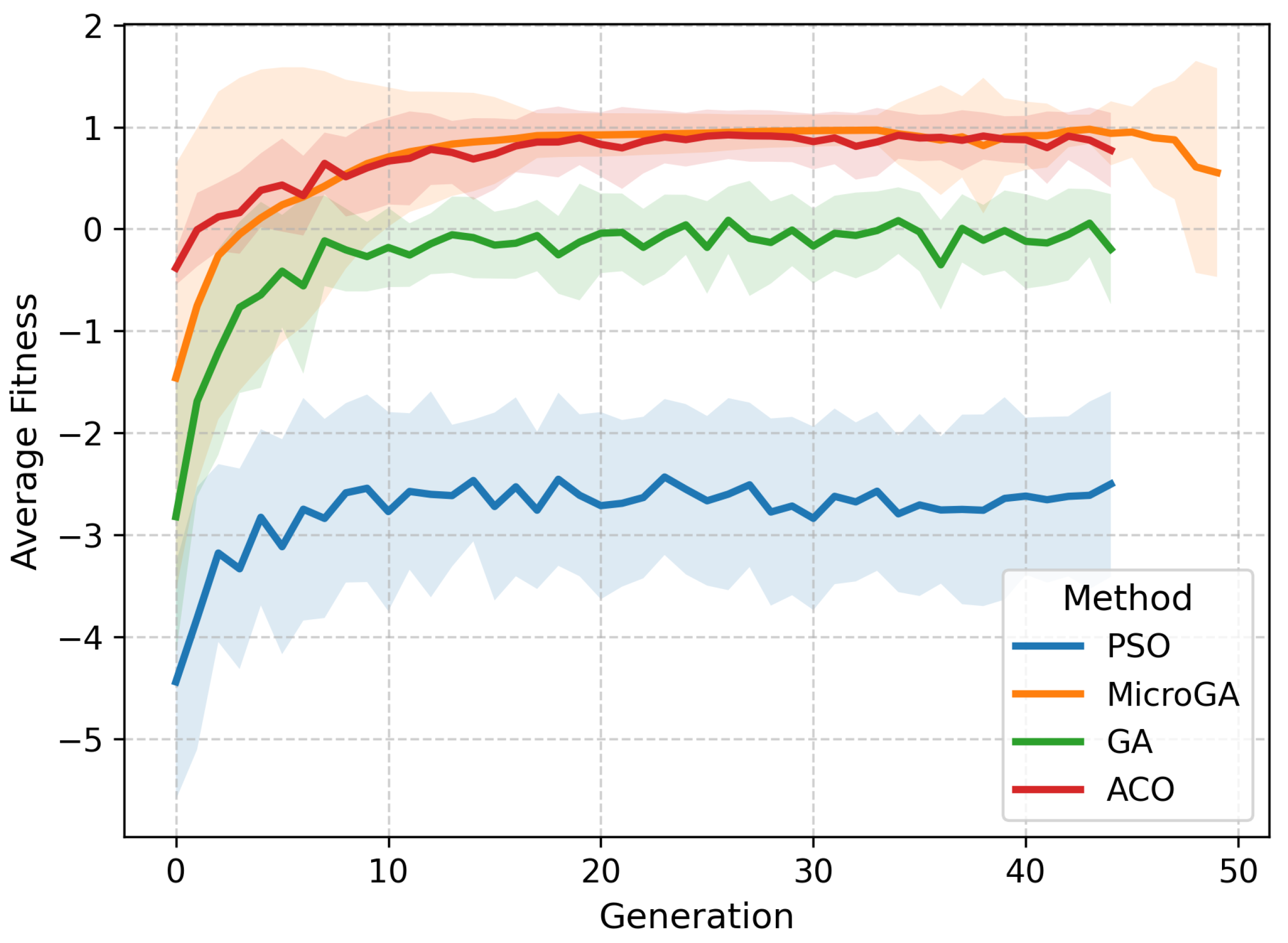
Figure 10 shows the evolution of the average fitness of the individuals. For ACO and MicroGA, the average fitness remains closer to 1, whereas for the other methods it stays below this value.
In terms of method performance, MicroGA and ACO achieve more complete motion transitions on average, as indicated by their average fitness values being closer to 1. MicroGA requires more generations to stabilize but eventually reaches fitness values close to 1, indicating slower convergence but more consistent completion of the transitions.
In contrast, ACO stabilizes faster but does not attain the same maximum fitness as MicroGA, indicating quicker convergence at the expense of in terms of transition completion. The remaining methods show average fitness values below 1, indicating that the transitions are not consistently completed and reflecting a reduced ability to effectively explore the solution space.
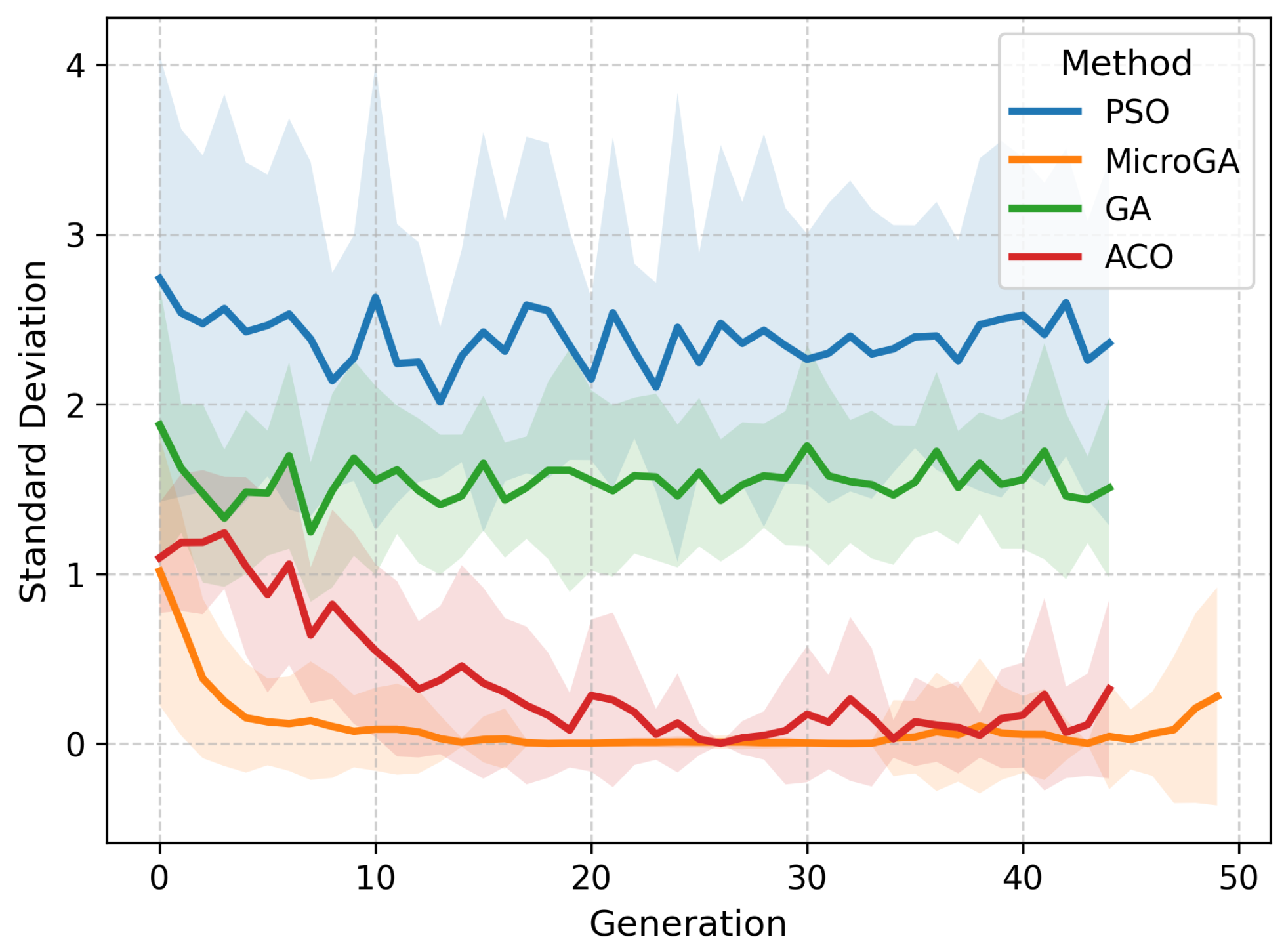
Figure 11 shows that GA and PSO have higher standard deviation indicating more dispersed populations and less predictable results across runs. ACO starts with a large deviation that decreases to zero. MicroGA follows a similar trend but reaches near-zero deviation earlier than ACO, suggesting faster convergence to consistent solutions. A lower standard deviation indicates higher consistency among the solutions generated by a method, reflecting stable performance. Overall, MicroGA offers the advantage of quicker convergence and more reliable solutions.
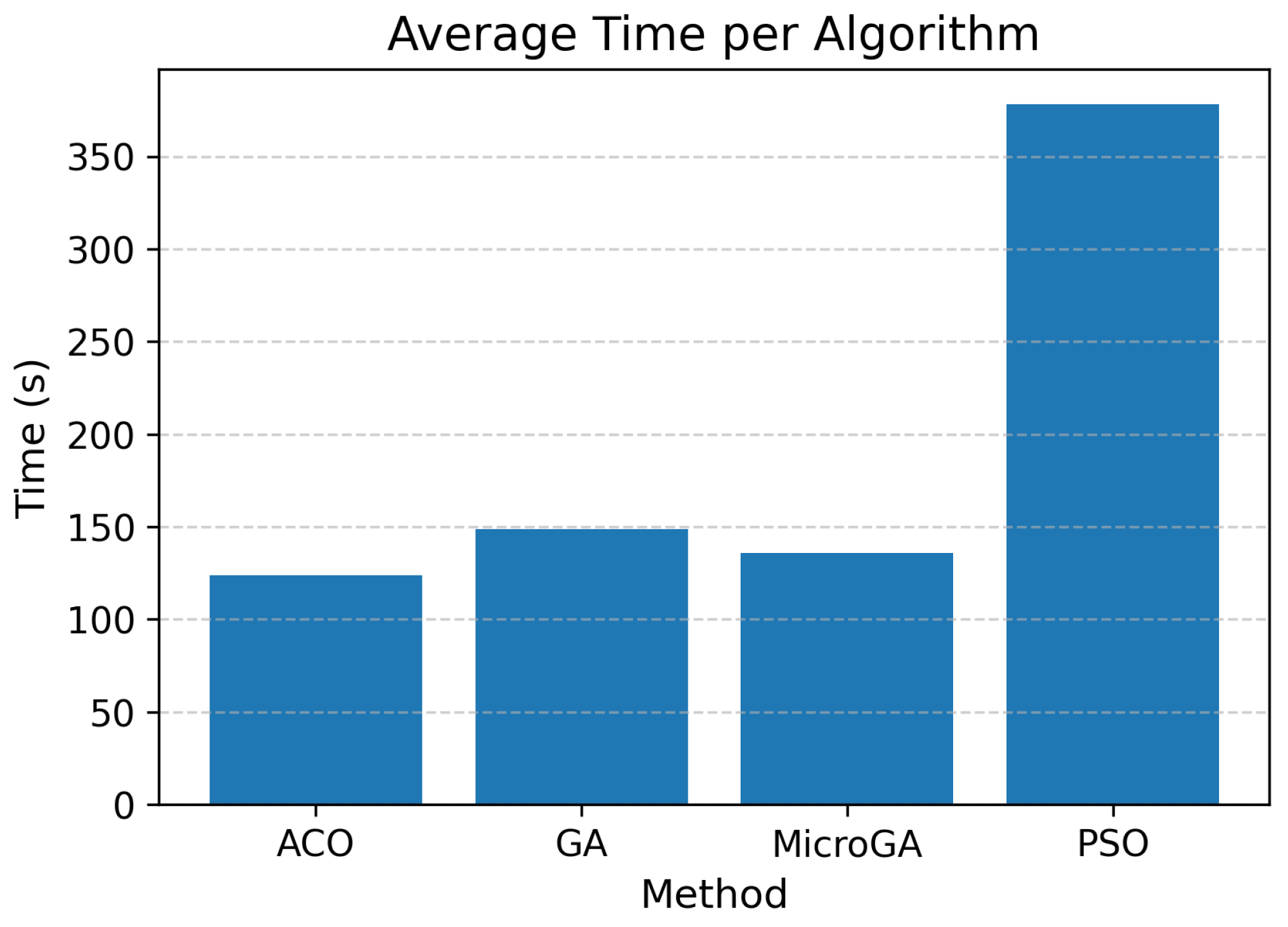
Figure 12 shows that ACO and MicroGA have the shortest execution times, while PSO takes the longest.
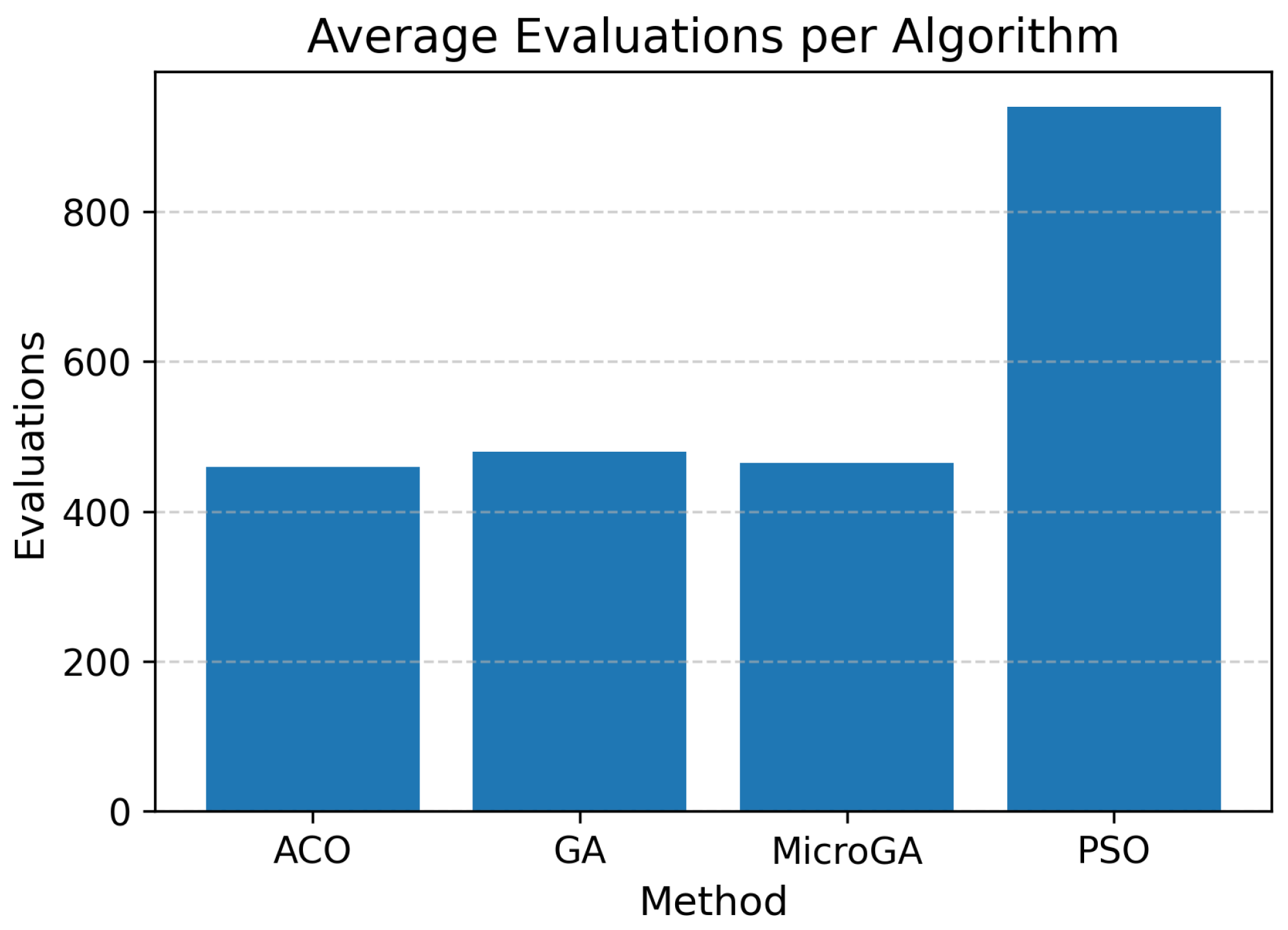
Figure 13 shows that ACO and MicroGA performed fewer evaluations, whereas PSO performed more than twice as many. The fitness of the best individual, calculated using (
8), obtained with each of the four bio-inspired algorithms is shown in
Table 4. As discussed in
Section 2.4,
serves as an indicator of transition completion, where values close to 1 indicate that the transition between poses has been successfully completed. However, lower values are observed for more complex actions such as “Two hand wave” and “Walk”, suggesting incomplete transitions. For the purposes of this study, a transition is considered complete when the homotopy parameter satisfies
. This threshold is used as a practical criterion to account for numerical variations in the homotopy tracing process. Based on this criterion, PSO and MicroGA each achieved 16 complete actions, while GA achieved 15 actions and ACO achieved 14 actions.
Table 5 reports the DTW distance between each original action and the corresponding generated sequence produced by each bio-inspired method. It is important to note that the proposed method does not aim to exactly reconstruct the original motion trajectories. Instead, it generates feasible transitions between key poses using a homotopy-based approach. Therefore, the DTW values obtained are not expected to be close to zero. Higher DTW values reflect differences in intermediate trajectories and temporal alignment, rather than a failure in motion generation. Consequently, DTW is used as a relative measure to compare the consistency of generated sequences, rather than as an indicator of exact reconstruction or perceptual realism. As shown in
Table 5, actions with lower values of fitness
tend to exhibit significantly higher DTW distances. This behavior is particularly evident in the Walk action, where incomplete transitions (
) result in large deviations from the reference sequence. These results suggest that transition completion, as indicated by
, plays an important role in achieving lower DTW distances. However,
and DTW capture complementary aspects of the generated motion, namely transition feasibility and sequence-level similarity, respectively. To further account for the stochastic nature of the optimization algorithms, the mean and standard deviation of the DTW values were complemented with a 95% confidence interval, computed using the Student’s t-distribution. The resulting intervals for the mean DTW values are as follows: PSO [89.01, 19,531.11], MicroGA [896.50, 20,400.36], GA [1565.80, 21,270.14], and ACO [1187.65, 26,752.00]. The relatively wide confidence intervals observed for the DTW values indicate variability in the performance of the proposed framework across different motion sequences, particularly for complex motions such as Walk. This suggests that the quality of the generated transitions is influenced by the complexity and variability of the input actions. In particular, simpler actions with smoother and more regular motion patterns tend to produce more consistent DTW values, while more complex actions involving multiple joints and non-linear dynamics result in greater dispersion. Therefore, the observed variability reflects differences in motion complexity rather than instability of the proposed method. The confidence intervals reported for the DTW values reveal notable differences in both performance and variability among the evaluated optimization methods. PSO exhibits the lowest lower bound and a comparatively narrower interval ([89.01, 19,531.11]), indicating more consistent performance and generally lower DTW values across different actions. In contrast, GA and ACO present wider intervals, particularly ACO ([1187.65, 26,752.00]), suggesting higher variability and less stable behavior when generating motion transitions. MicroGA shows intermediate behavior, with a relatively low lower bound but still a wide interval, reflecting sensitivity to the complexity of the motion sequences. These results indicate that methods such as PSO tend to produce more reliable and consistent motion similarity, while methods with wider confidence intervals are more affected by variations in action complexity. PSO and MicroGA exhibit more consistent behavior, as reflected by their lower mean DTW values and comparatively more stable variability than GA and ACO. These statistical descriptors provide a more robust basis for comparing the performance of the evaluated methods. Although the confidence intervals overlap, they provide useful insight into the variability and relative behavior of the evaluated methods. Overall, the wide intervals observed across all methods suggest that DTW values are strongly influenced by the type of action being generated, with more complex actions leading to higher dispersion. Therefore, the variability in DTW should be interpreted as a reflection of motion complexity rather than solely as a limitation of the optimization algorithms. This suggests that DTW-based evaluation is sensitive to action-dependent variability.
4. Discussion
This work shows that the proposed Hybrid Mathematical and Bio-Inspired Framework for Human Action Generation from Skeleton Sequences can generate animation sequences from key poses, producing motion transitions that are consistent with the reference actions from which the key poses were derived. In this work four bio-inspired methods were evaluated for selecting the homotopic curve parameters and the number of key poses to create animations of more complex actions involving joint movements over different directions. All four algorithms had difficulties completing the transitions between key pose pairs for the Two hand wave and Walk actions. The actions: Two hand wave and Walk, were more difficult to reproduce because they involve more complex temporal patterns, simultaneous movements of multiple limbs, and larger spatial variations between poses. These characteristics make it more difficult for the homotopy-based formulation to generate complete transitions between consecutive key poses. However, PSO and MicroGA were able to generate complete animations for the remaining 16 actions (
Table 4). The MicroGA method achieves transitions that more consistently reach completion. The MicroGA method achieves more complete transitions in less time (
Figure 12) and requires fewer evaluations (
Figure 13). The results obtained in this study suggest that the MicroGA algorithm may be suitable for application in problems similar to those addressed in [
18]. This indicates that these methods are more effective in generating feasible transitions between key poses within the homotopy-based framework. From the DTW perspective, PSO and MicroGA also tend to produce lower distance values across most actions, suggesting better correspondence with the reference sequences. In contrast, GA shows greater variability in performance, while ACO presents higher DTW values in several cases, particularly in more complex actions such as Walk, where incomplete transitions lead to large deviations. Overall, the results highlight that methods capable of consistently achieving transition completion are more likely to produce motion sequences with lower DTW distances. However, this relationship is not strictly monotonic, as
and DTW capture complementary aspects of the generated motion. These findings suggest that PSO and MicroGA provide a more balanced performance in terms of transition feasibility and sequence-level similarity, making them suitable candidates for motion generation within the proposed framework. These results support the use of bio-inspired optimization methods for tuning homotopy parameters, while highlighting the importance of jointly considering transition completion and sequence similarity in motion generation tasks. One important limitation of the proposed framework is that the evaluation of the generated motion is primarily based on transition completion and sequence similarity, without explicitly incorporating perceptual or biomechanical criteria. Although DTW provides a measure of temporal alignment, it does not guarantee that the generated motions are physically plausible or visually natural. In particular, the current formulation does not enforce constraints related to joint limits, body balance, or dynamic consistency. As a result, some generated transitions may be mathematically valid but not necessarily realistic from a human motion perspective. This limitation becomes more relevant in complex actions involving coordinated multi-limb movements, where physical feasibility plays a critical role. Addressing these limitations would require integrating biomechanical constraints or perceptual evaluation metrics into the optimization process. This represents an important direction for future work, as it could improve the realism and applicability of the generated motion sequences. This limitation highlights the gap between mathematically valid motion generation and perceptually realistic human movement. Recent deep learning approaches for skeleton-based human action understanding commonly rely on graph neural networks or multimodal fusion techniques to learn complex joint dependencies [
37]. Deep neural networks, such as recurrent or transformer-based architectures, can generate realistic sequences, but they often require high computational resources and may lack transparency regarding how joint dynamics are represented. In comparison, the homotopy-based model combined with bio-inspired optimization can generate continuous motion sequences that achieve transition completion without requiring large-scale training. This suggests that mathematical modeling and evolutionary computation can complement deep learning methods, especially in contexts where data is limited.




 ,
,