
Mathematical Model Analysis for Dynamics and Control of Yellow Fever and Malaria Disease Co-Infections



Abstract
1. Introduction
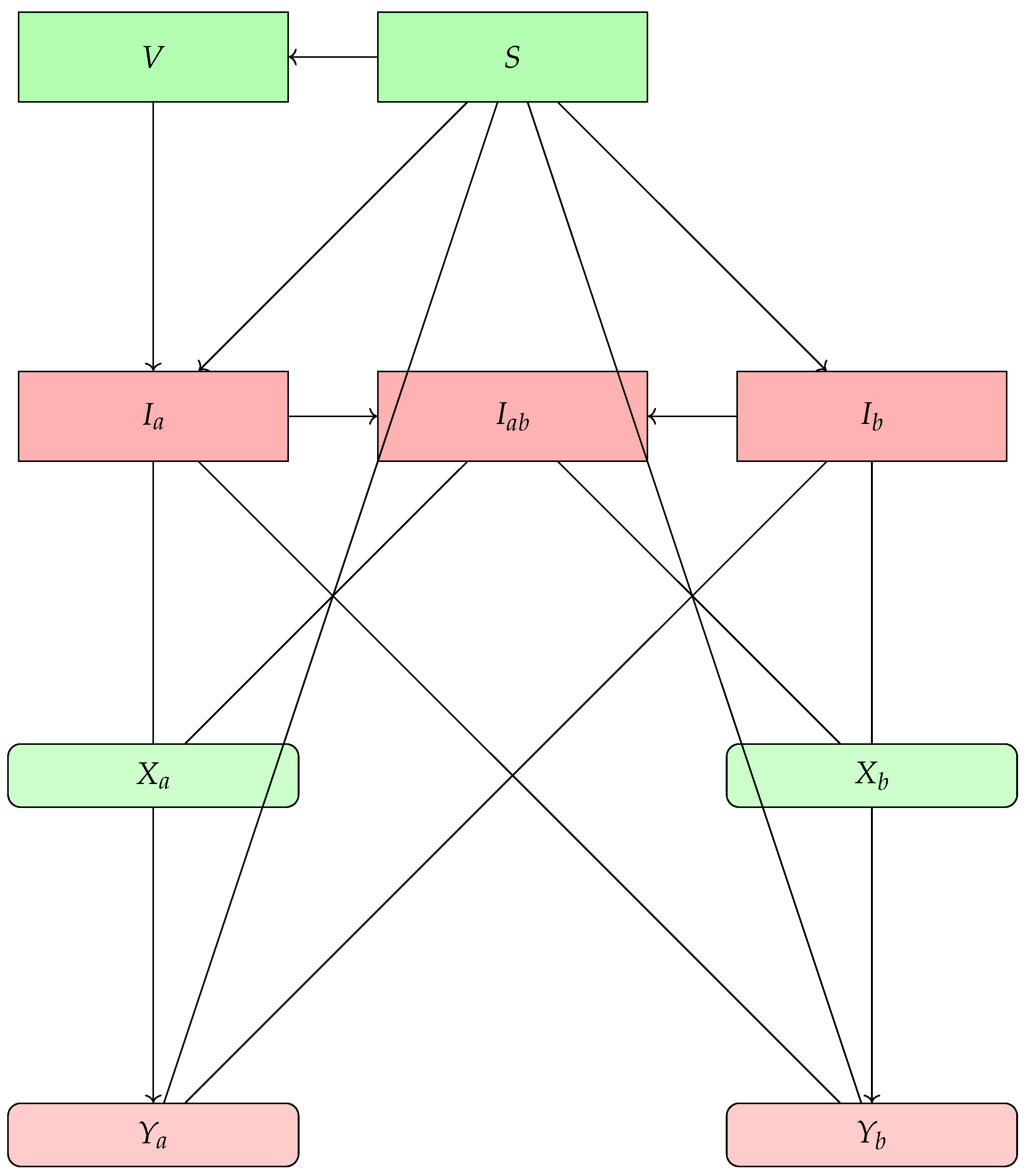
2. Model Development
3. Analyses and Results
3.1. Model Transformation
3.2. Yellow Fever Sub-Model
3.2.1. Equilibrium Points of the Yellow Fever Sub-Model (3)
3.2.2. The Basic Reproduction Number of the Yellow Fever Sub-Model (3)
3.2.3. Stability Analysis of the Yellow Fever Sub-Model (3)
- H1.
- For , is globally asymptotically stable;
- H2.
- , for where the Jacobian is an M–matrix (the off-diagonal elements of A are non-negative) and Ω is the region where the model makes biological sense.
3.3. Malaria Sub-Model
3.3.1. Equilibrium Points of the Malaria Sub-Model (14)
3.3.2. The Basic Reproduction Number of the Malaria Sub-Model (14)
3.3.3. Stability Analysis of the Malaria Sub-Model (14)
3.4. Analysis of the Yellow Fever and Malaria Co-Infection Model (2)
3.4.1. Equilibrium Points of the Yellow Fever and Malaria Co-Infection Model (2)
3.4.2. Basic Reproduction Number of the Yellow Fever and Malaria Co-Infection Model (2)
3.4.3. Stability Analysis of the Yellow Fever and Malaria Co-Infection Model (2)
4. Numerical Simulations
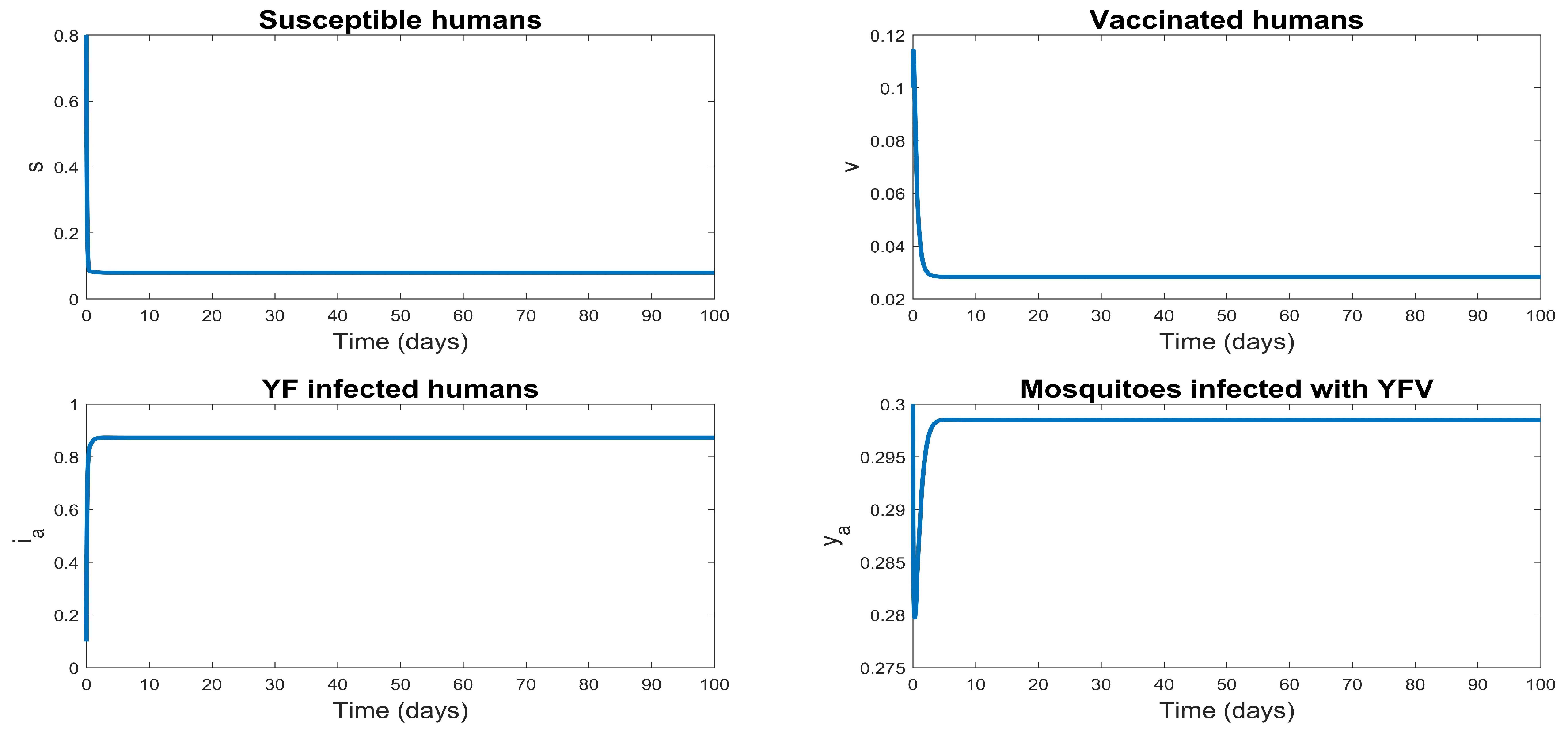
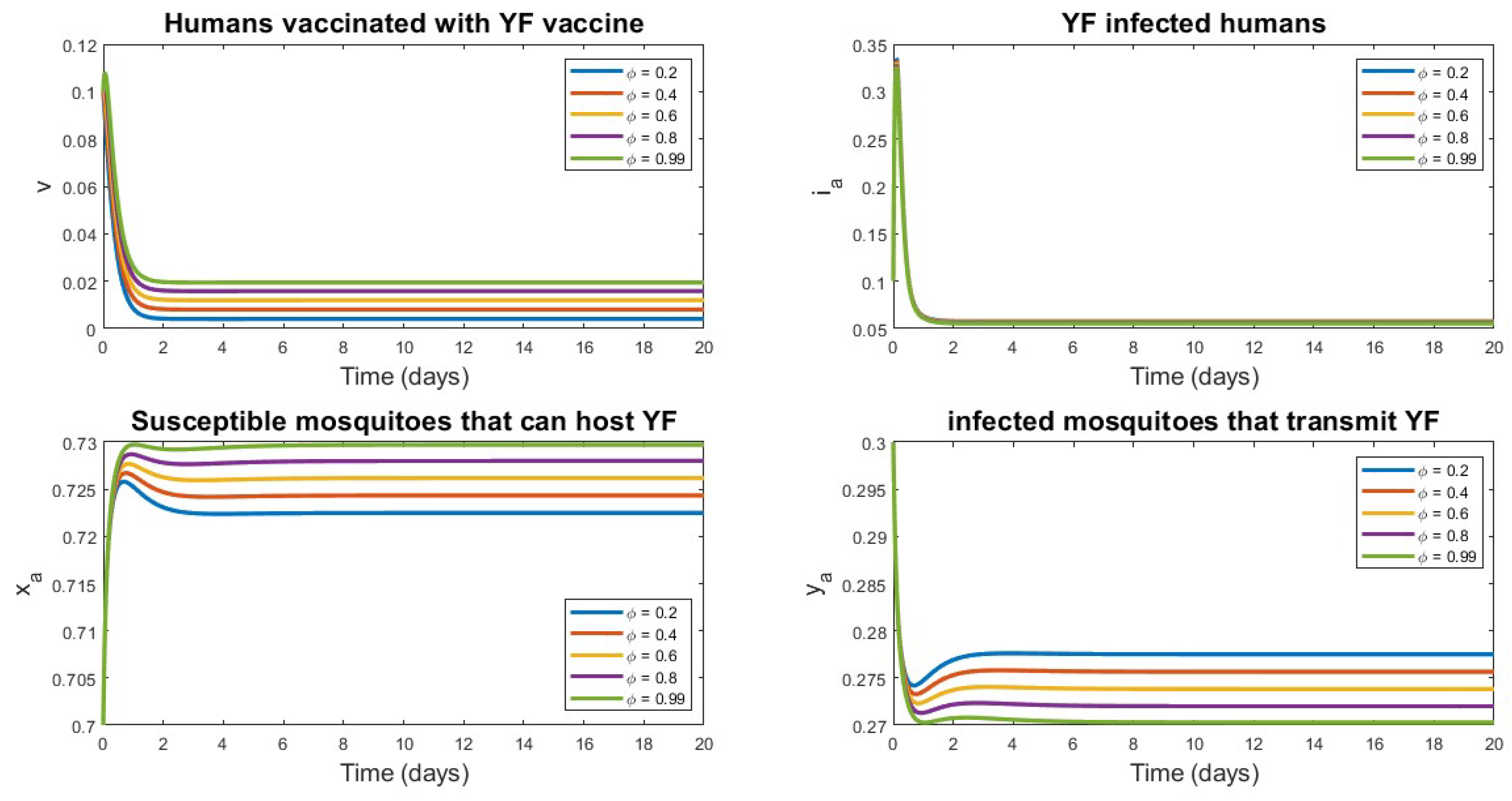
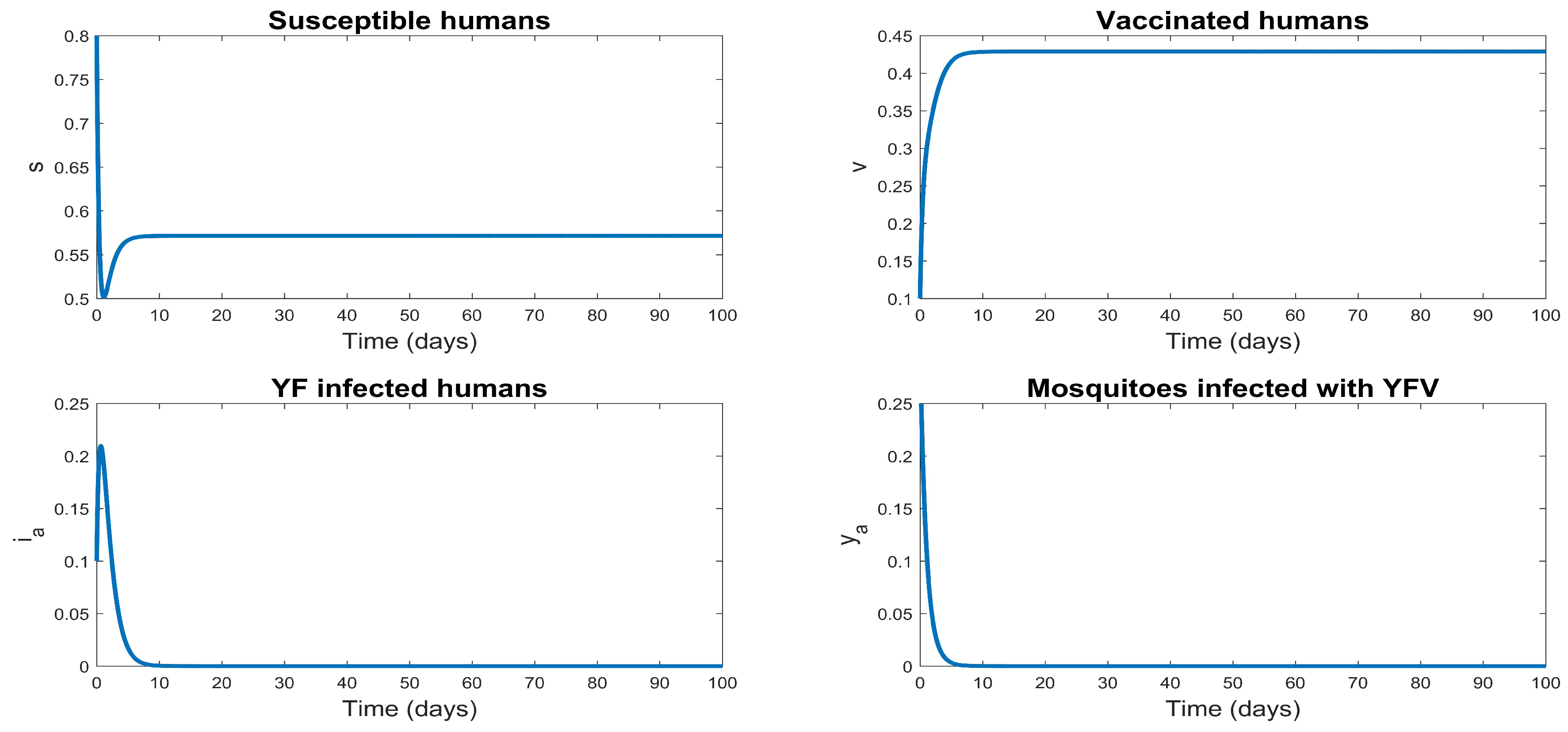
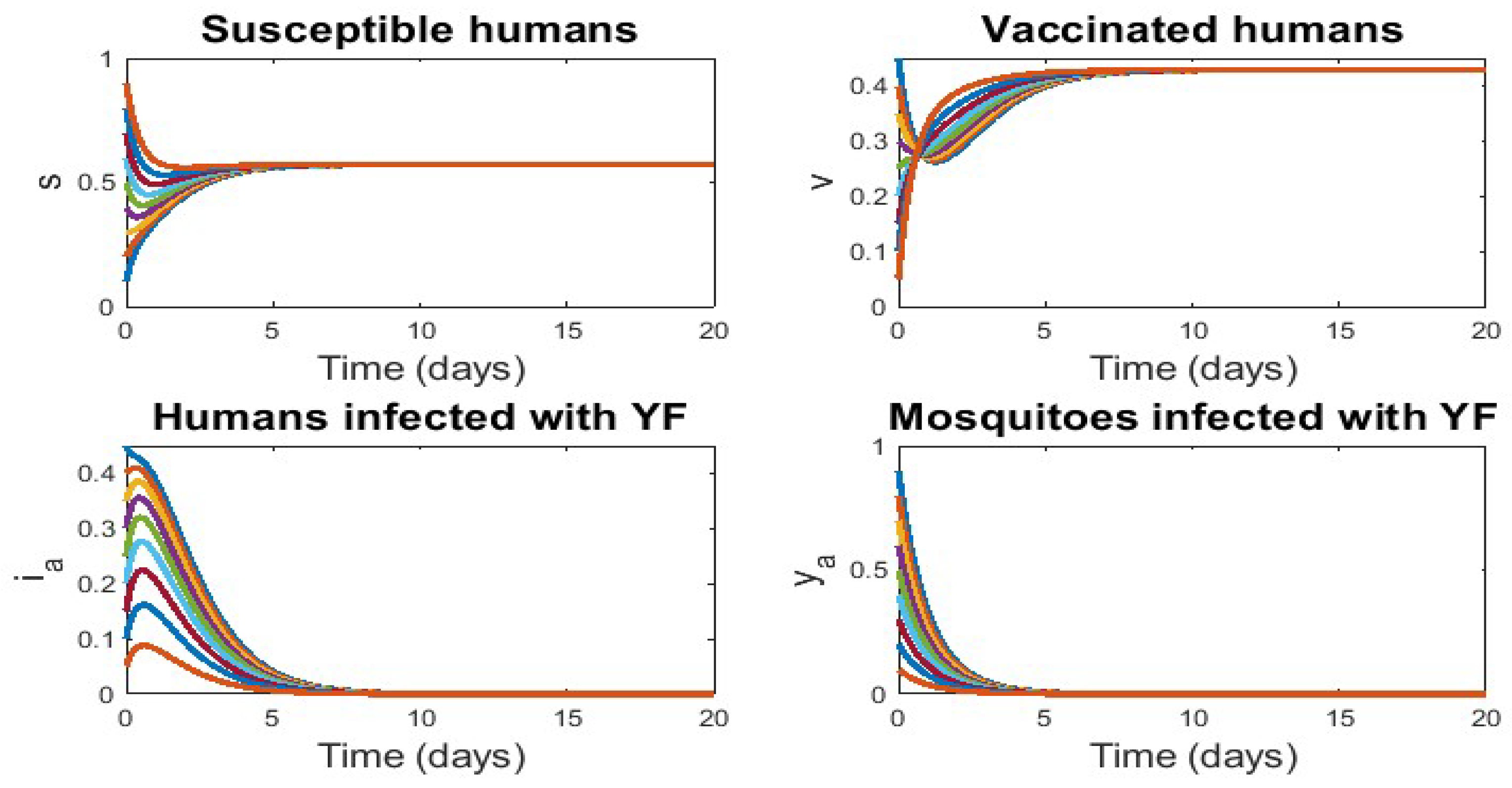
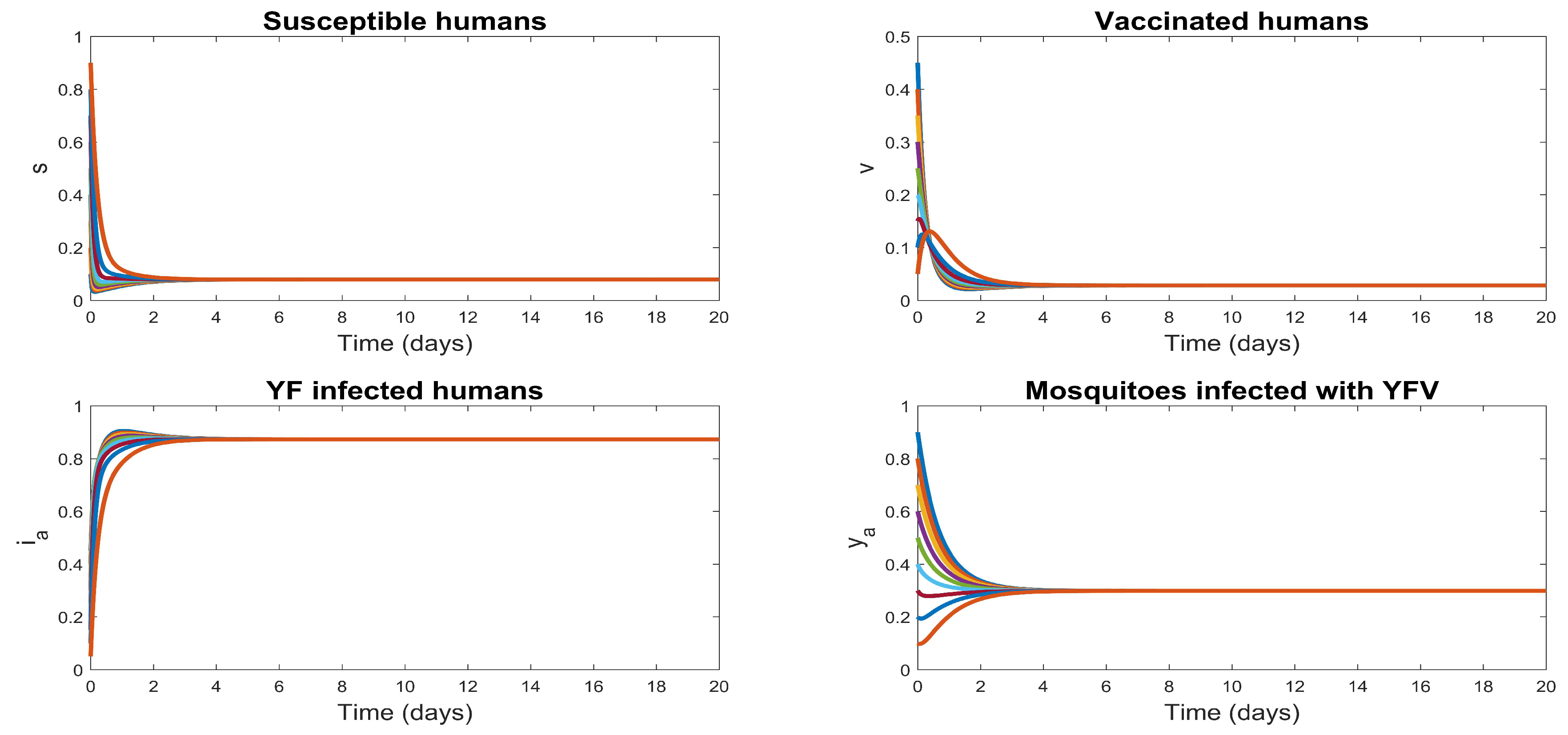
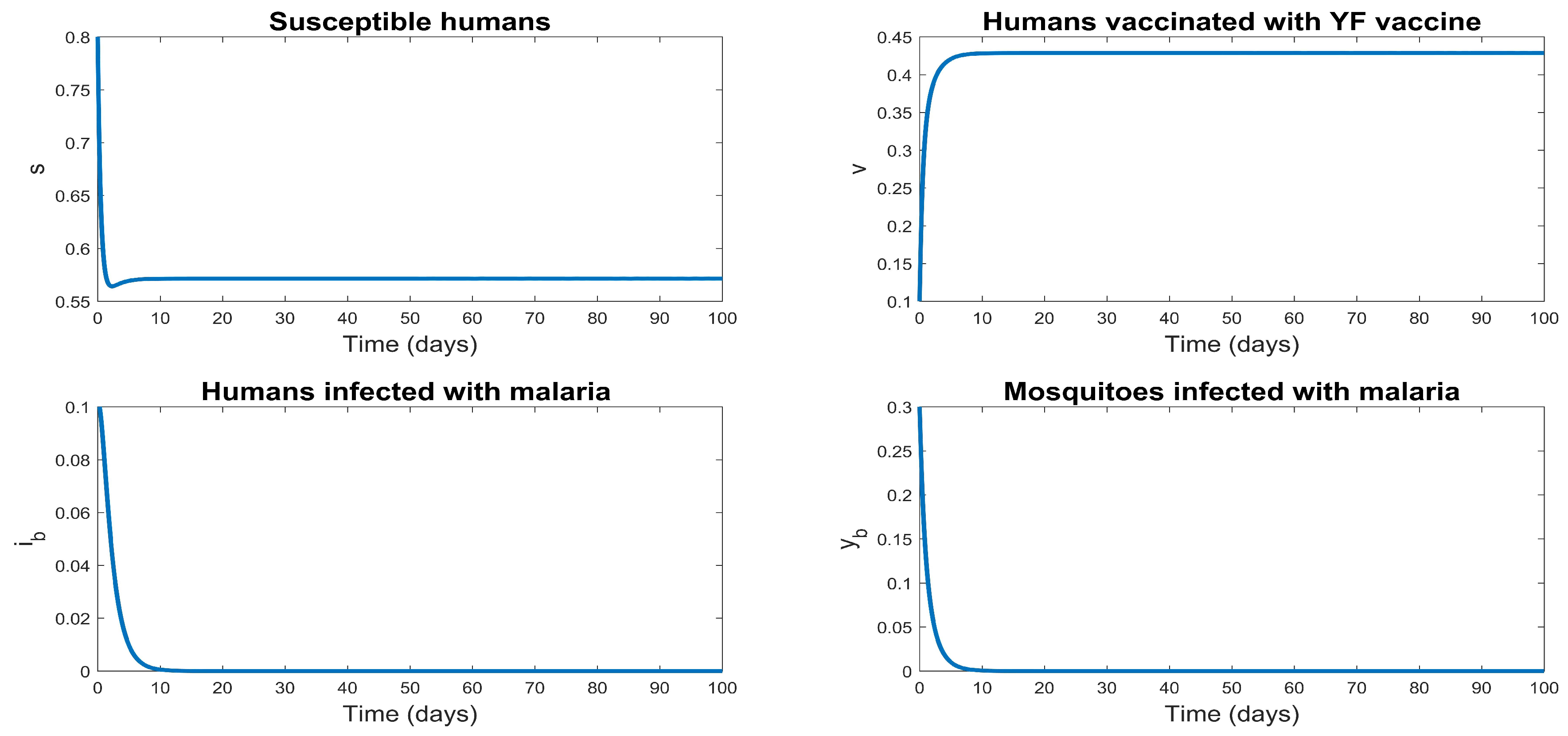
4.1. Numerical Simulation of the Yellow Fever Sub-Model (3)
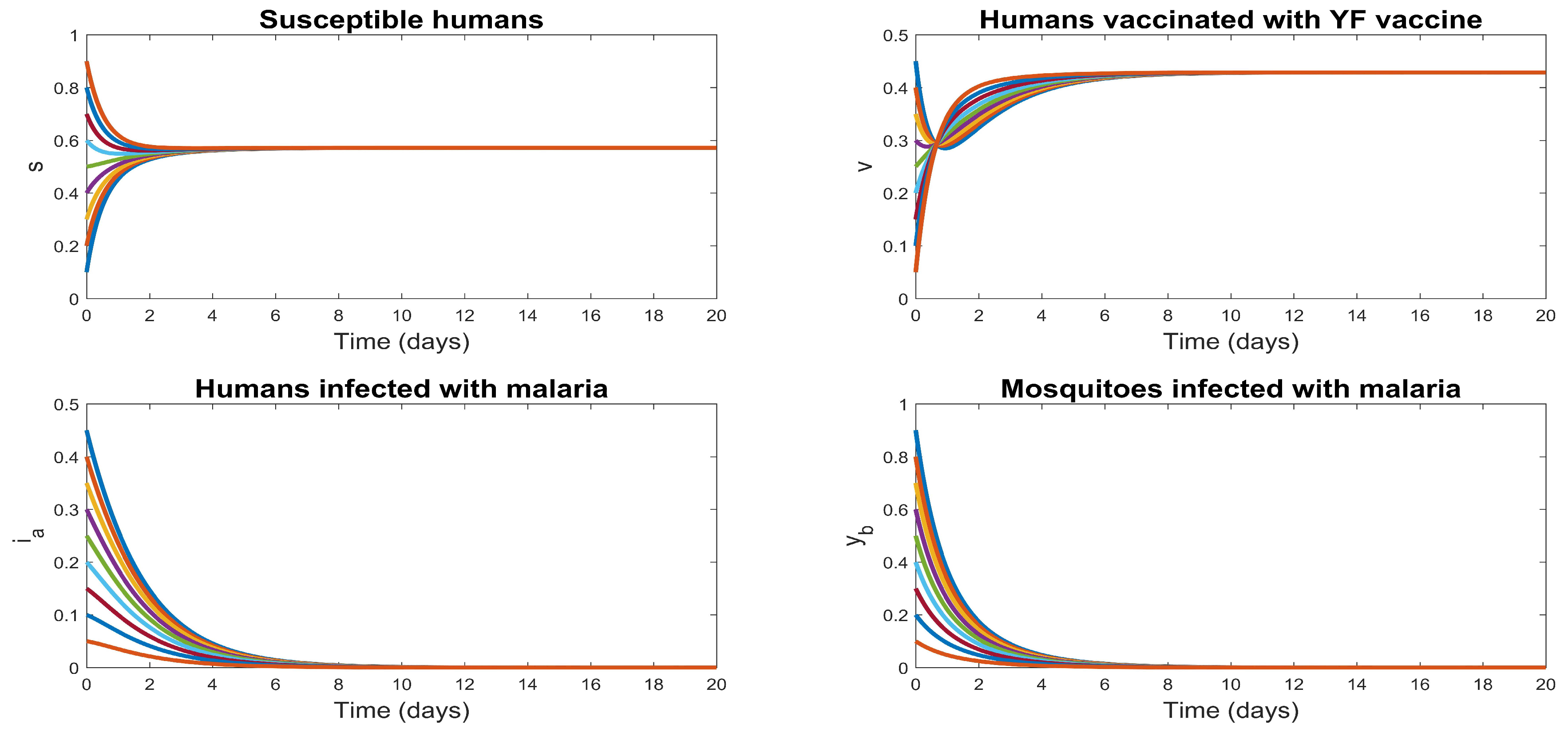
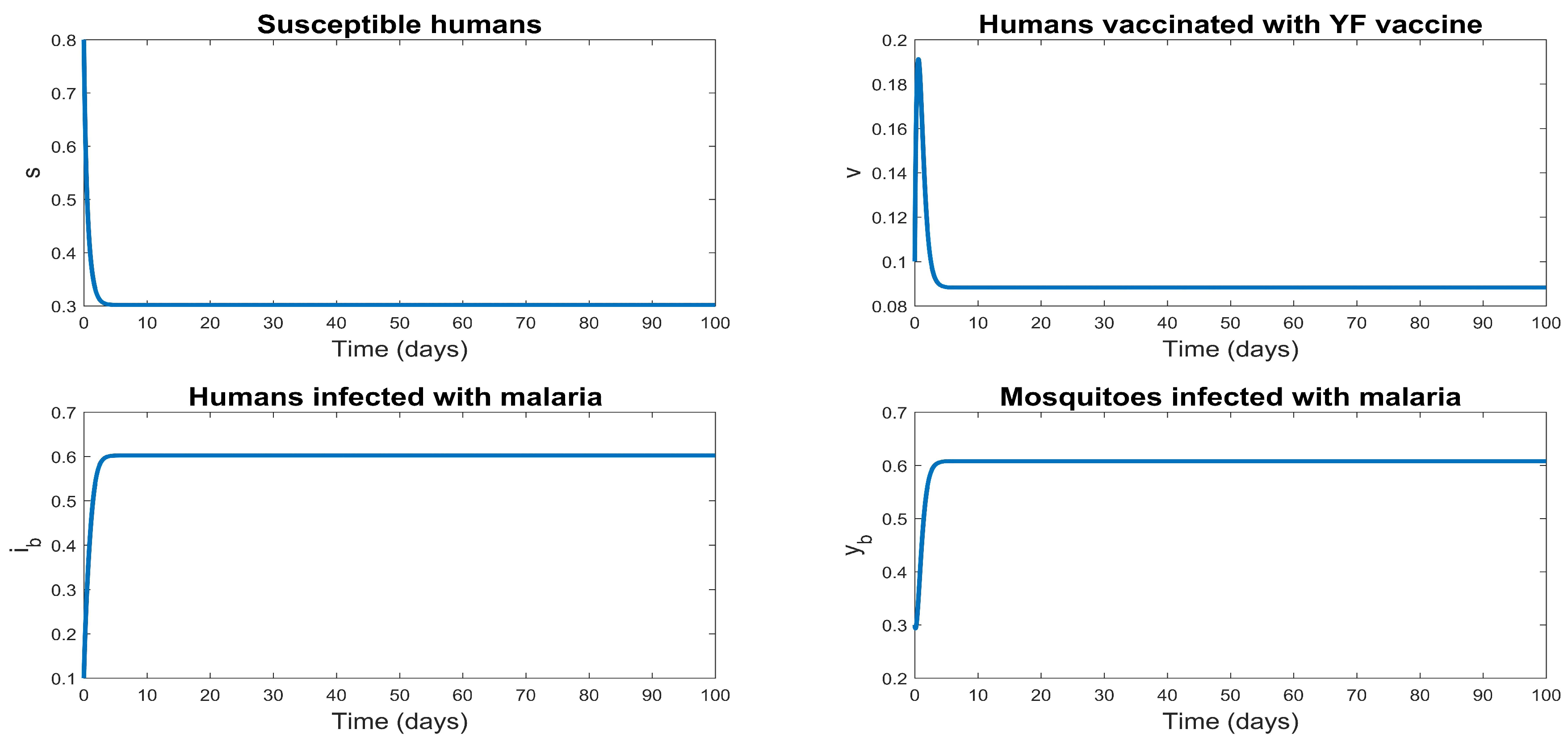
4.2. Numerical Simulation of the Malaria Sub-Model (14)
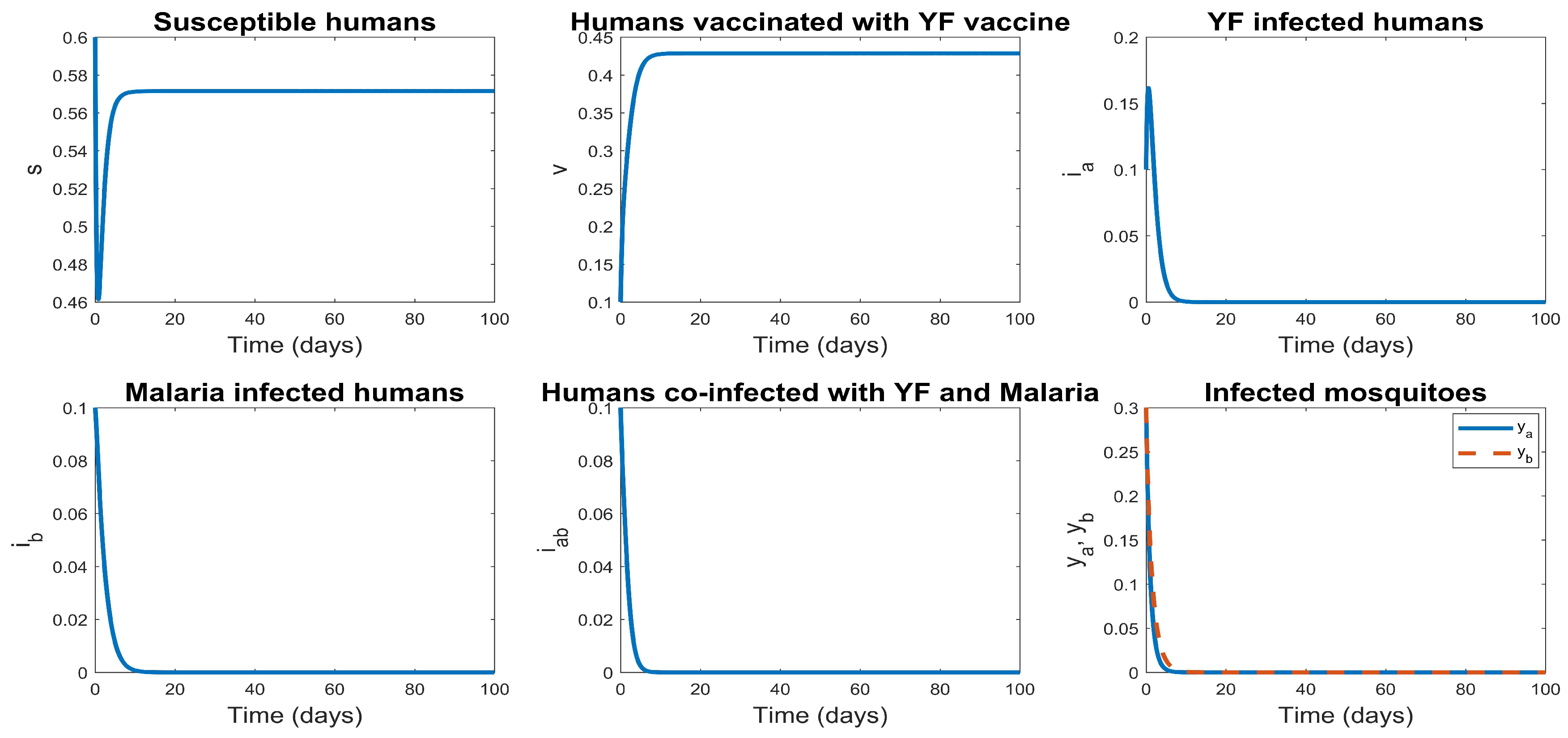
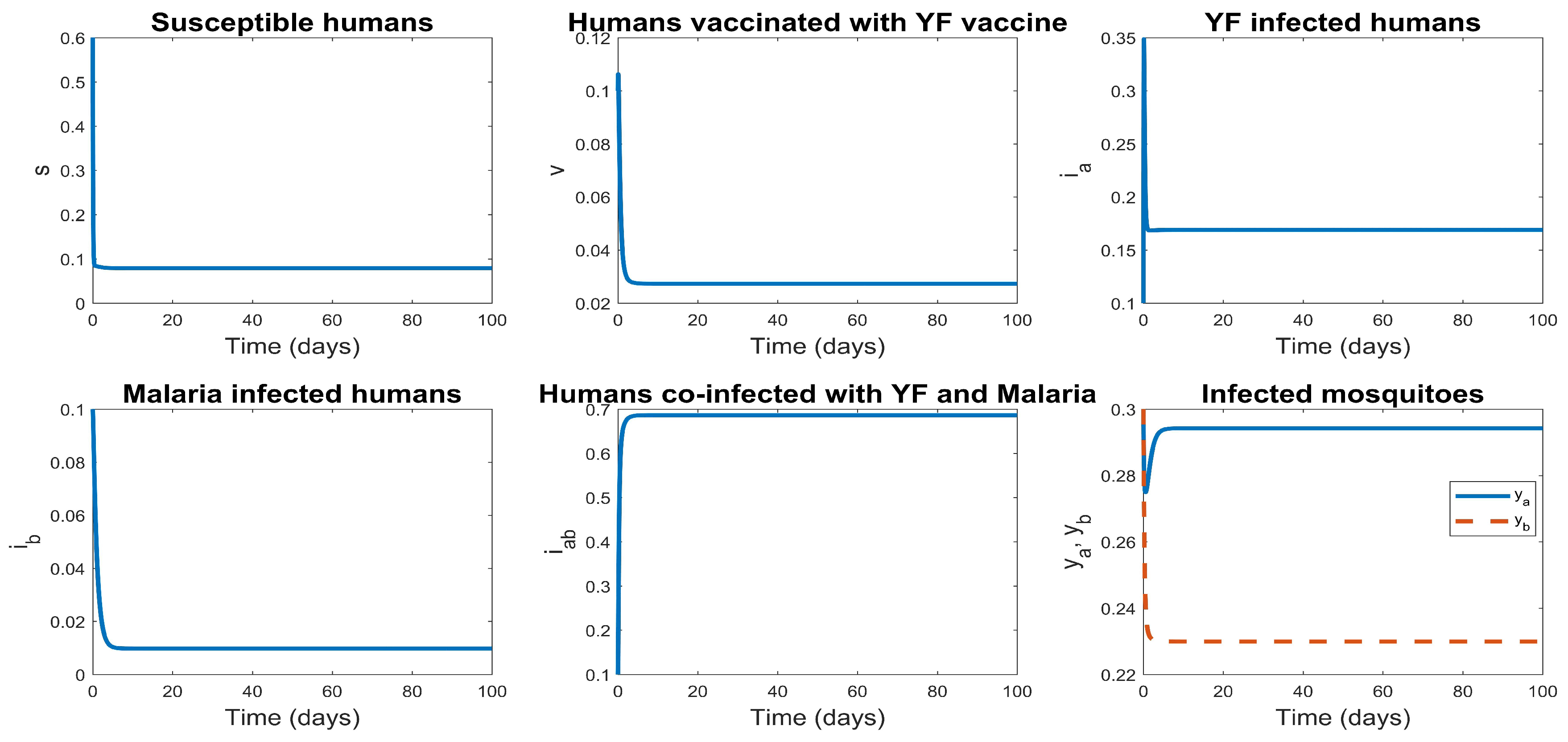
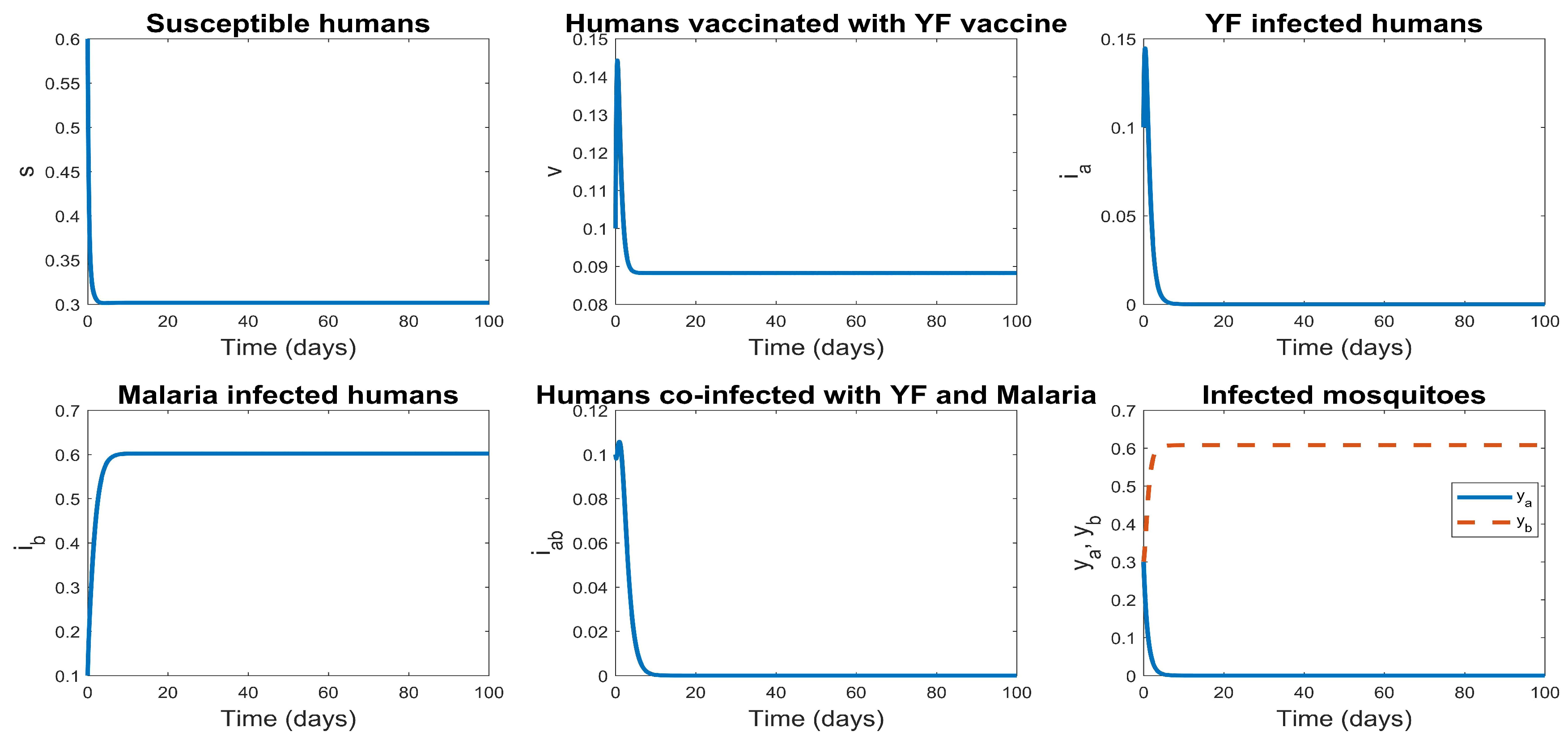
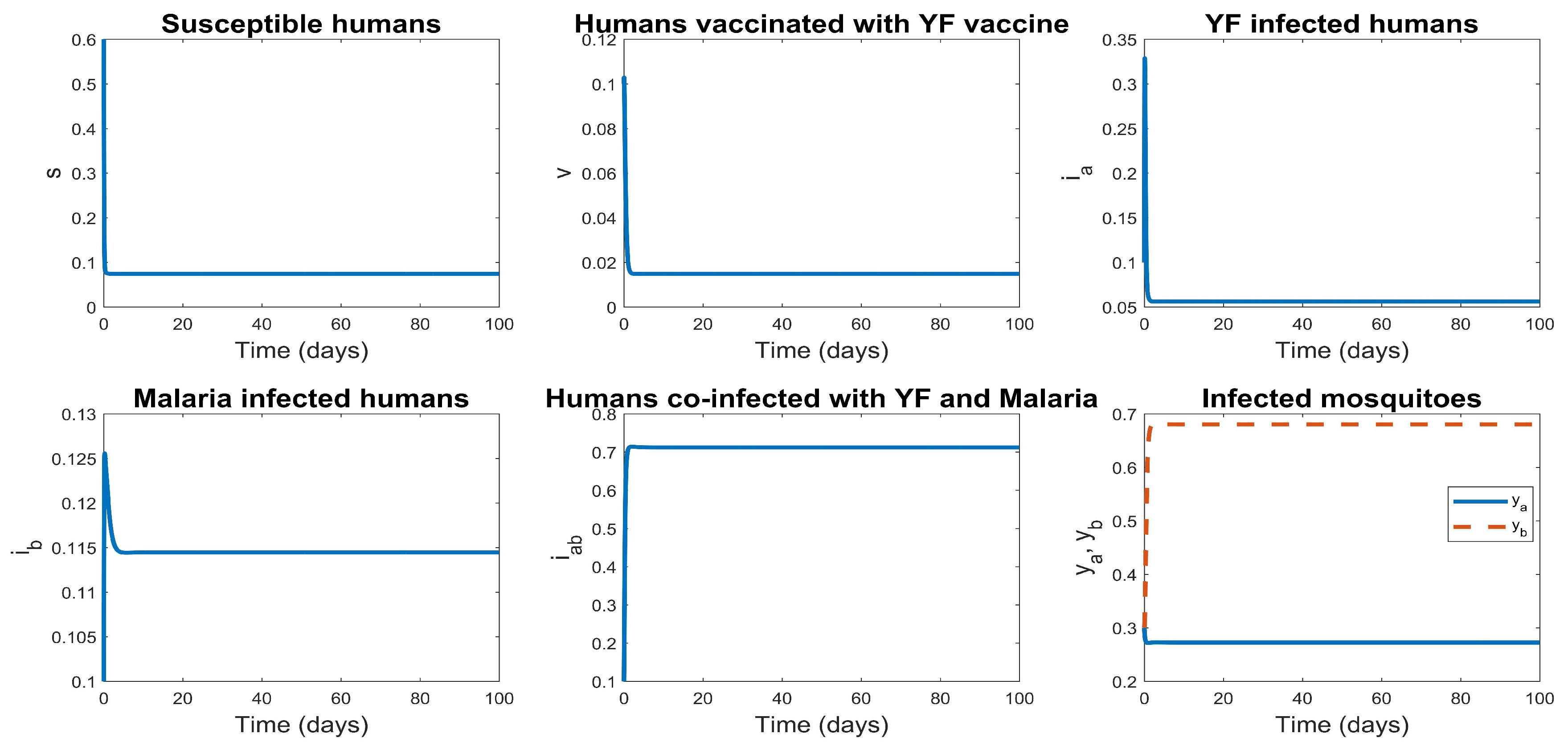
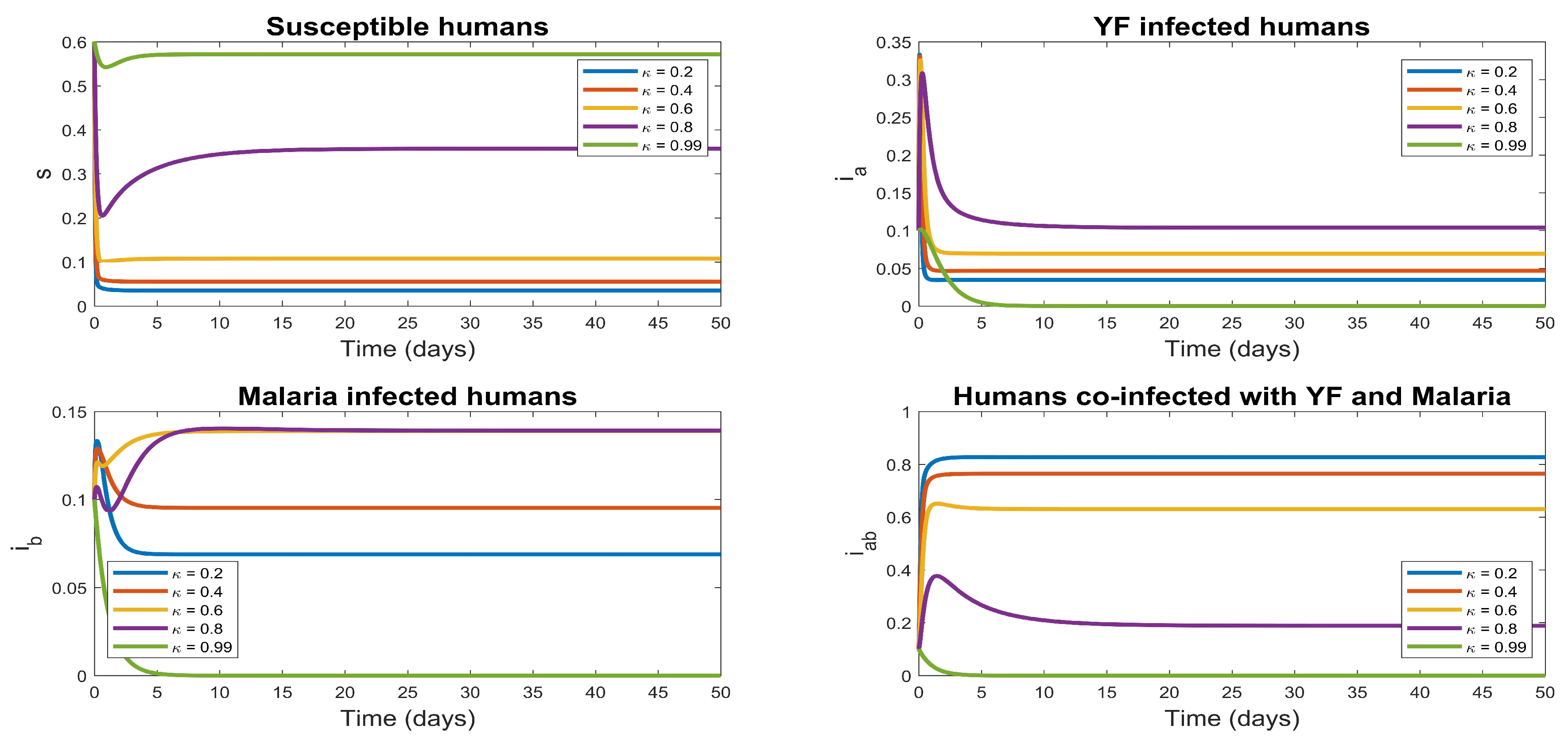
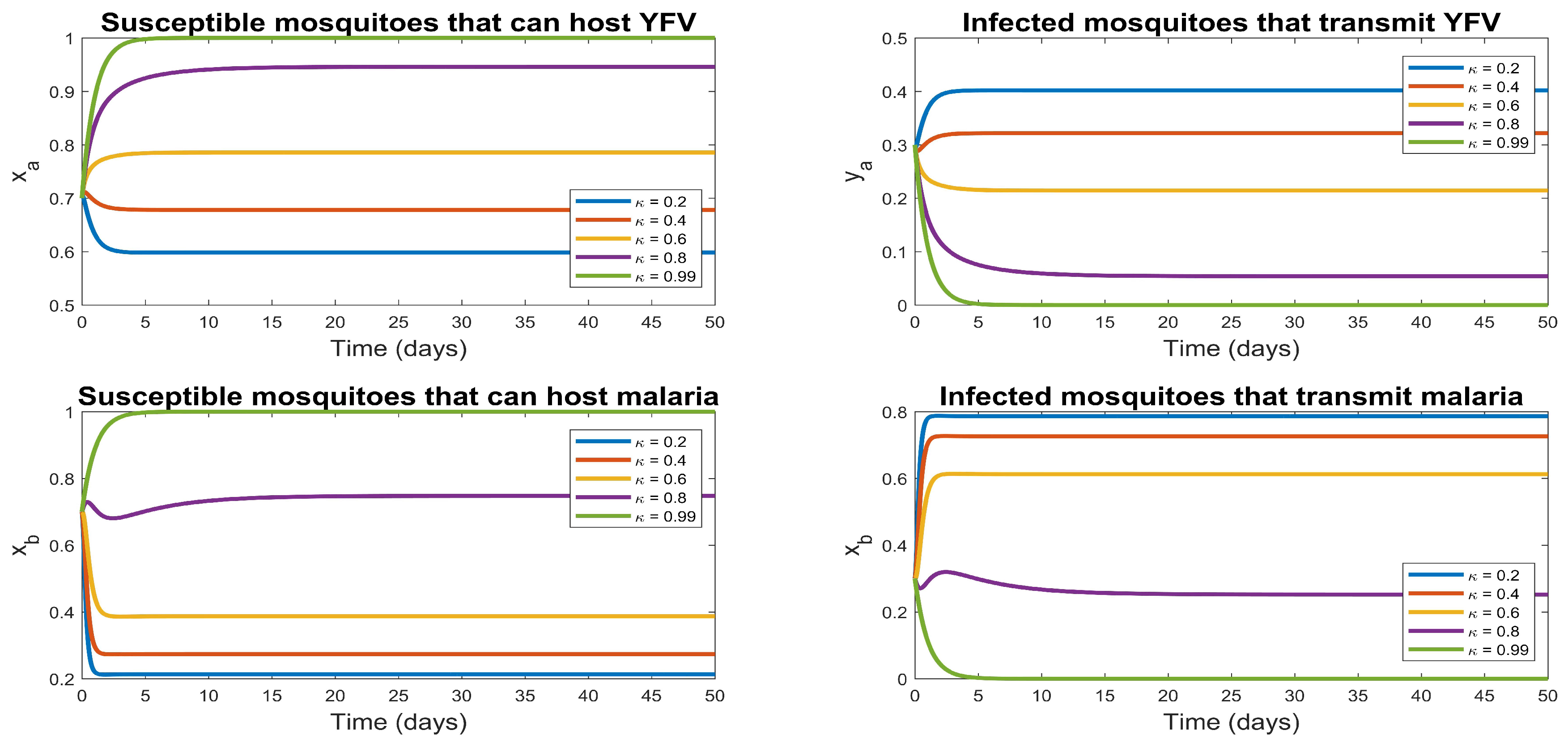
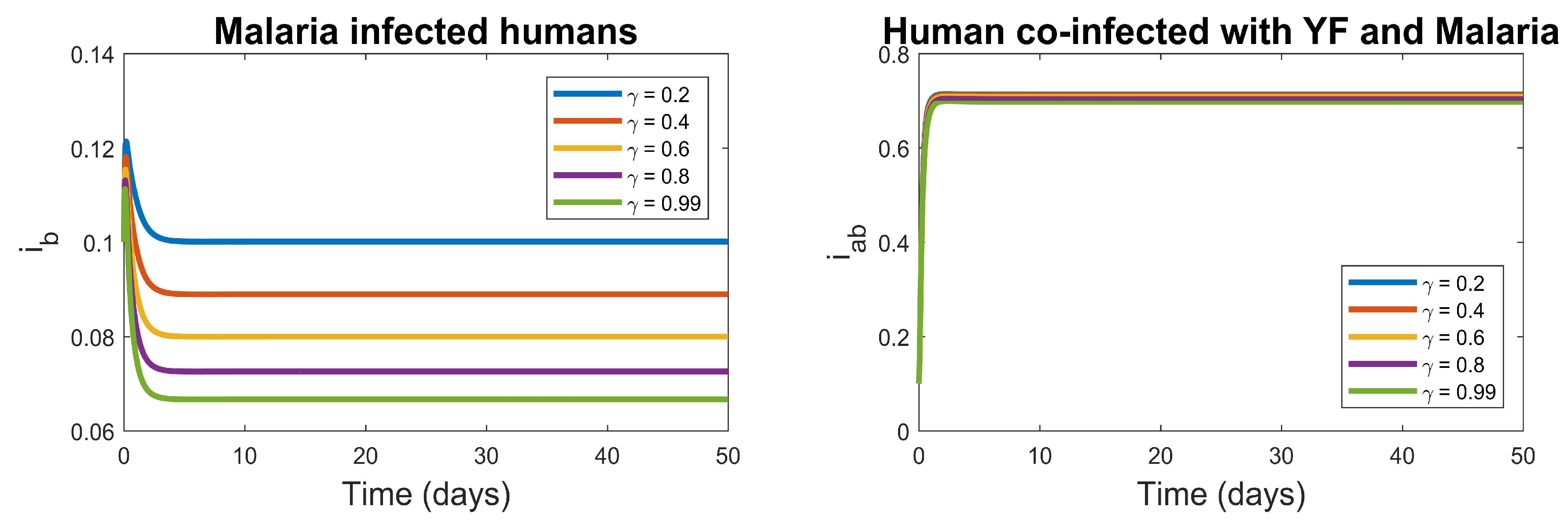
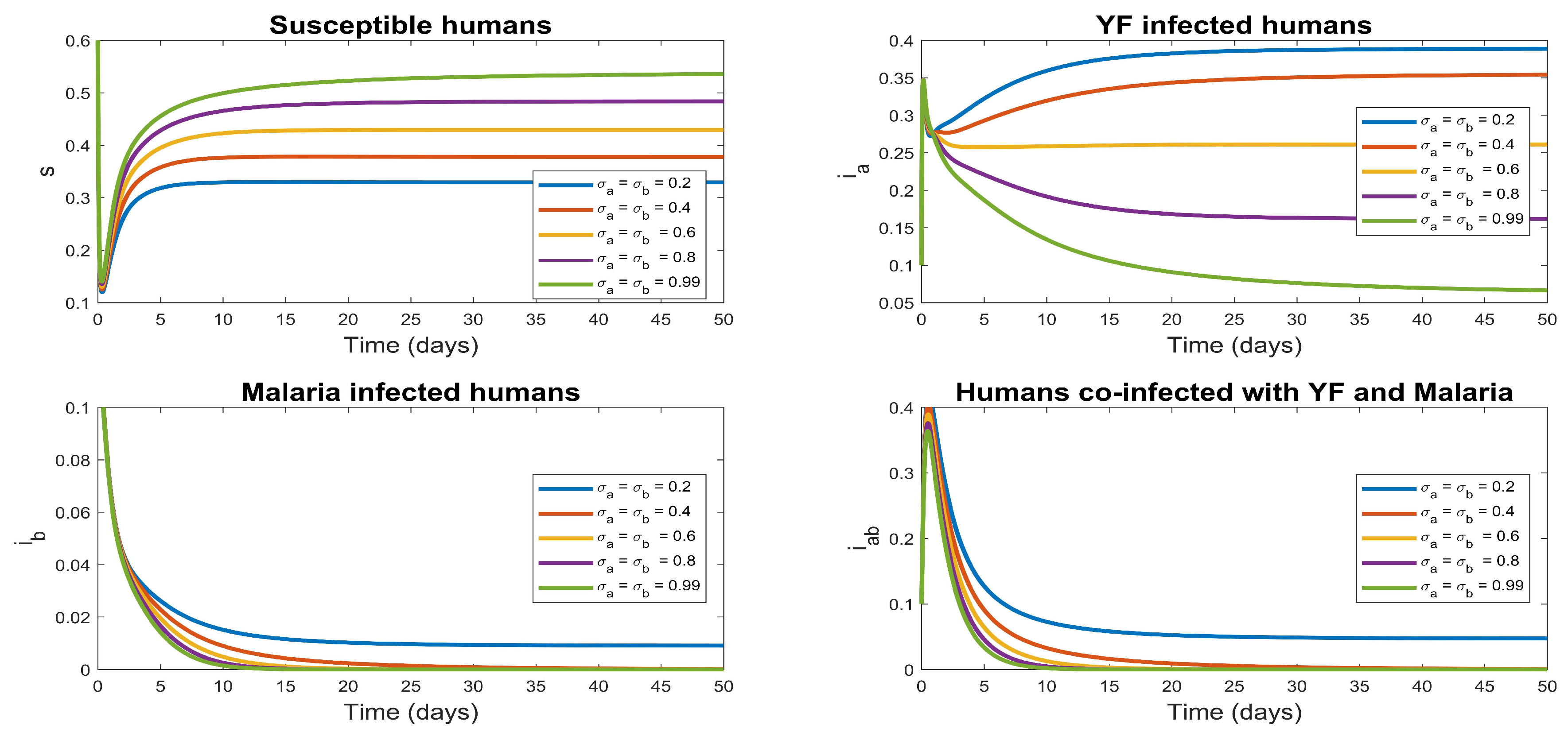
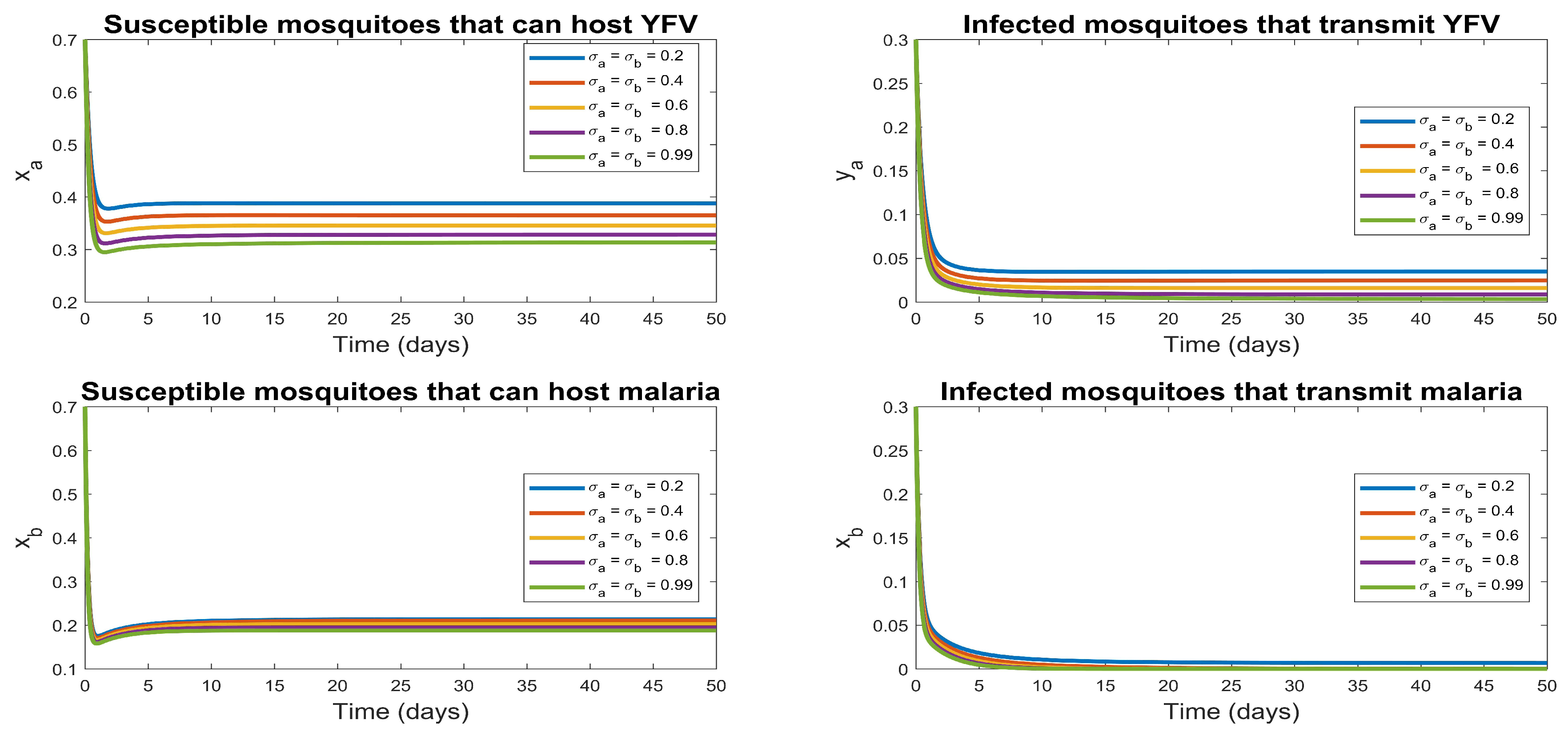
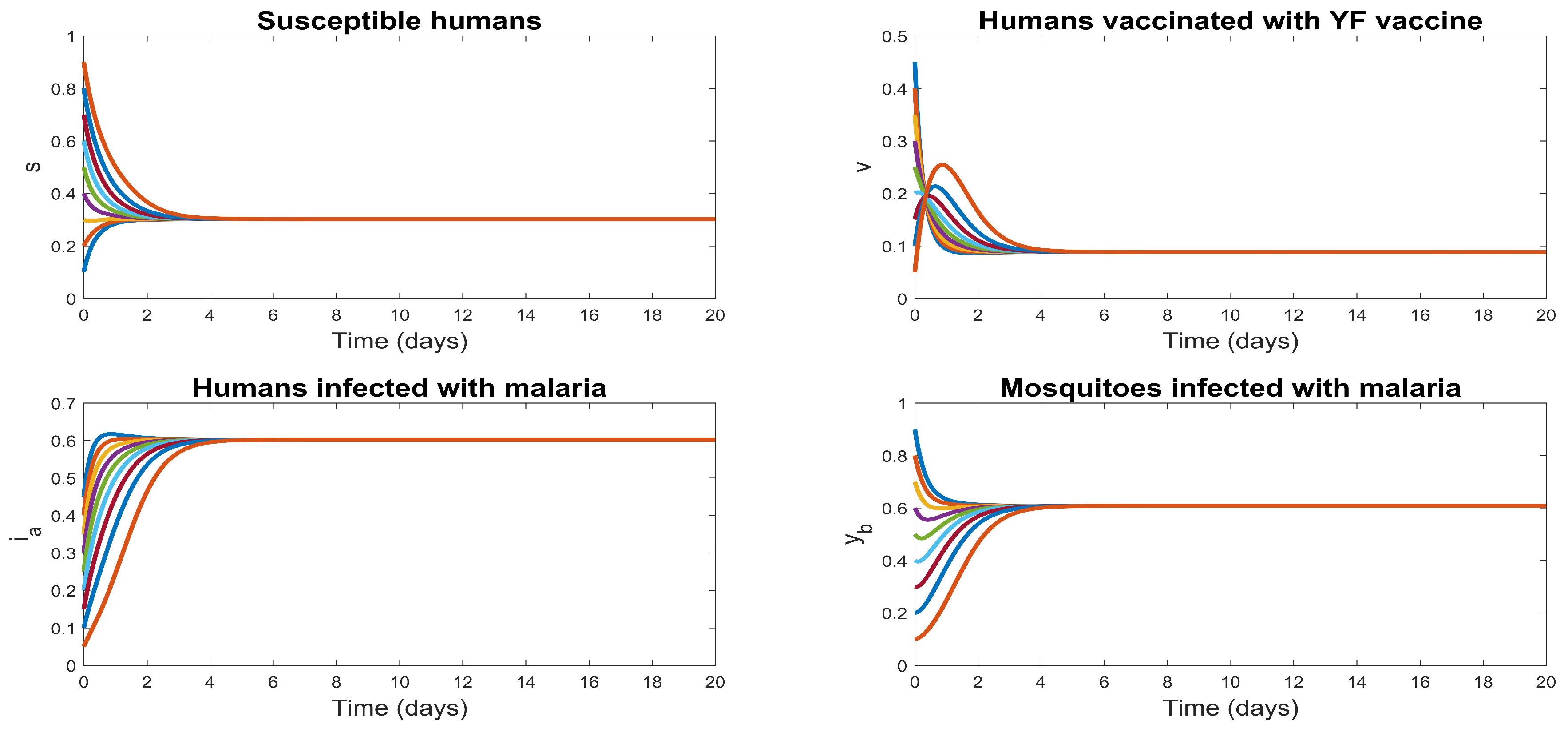
4.3. Numerical Simulation of the Yellow Fever and Malaria Co-Infection Model (2)
5. Discussion
Author Contributions
Funding
Data Availability Statement
Conflicts of Interest
References
- World Health Organization. Malaria. Available online: https://www.who.int/news-room/fact-sheets/detail/malaria (accessed on 23 December 2025).
- World Health Organization. Yellow Fever. Available online: https://www.who.int/news-room/fact-sheets/detail/yellow-fever#:~:text=About%2015%25%20of%20people%20infected,high%20fever%2C%20jaundice%20(yellowing%20of (accessed on 23 December 2025).
- Center fo Disease Prevention and Control. Transmission of Yellow Fever Virus. Available online: https://www.cdc.gov/yellow-fever/php/transmission/index.html#:~:text=Yellow%20fever%20virus%20is%20transmitted,or%20working%20in%20the%20jungle. (accessed on 23 December 2025).
- Center fo Disease Prevention and Control. Clinical Features of Malaria. Available online: https://www.cdc.gov/malaria/hcp/clinical-features/index.html (accessed on 23 December 2025).
- Van den Driessche, P.; Watmough, J. Reproduction numbers and sub-threshold endemic equilibria for compartmental models of disease transmission. Math. Biosci. 2002, 180, 29–48. [Google Scholar] [CrossRef]
- Tien, J.H.; Earn, D.J. Multiple transmission pathways and disease dynamics in a waterborne pathogen model. Bull. Math. Biol. 2010, 72, 1506–1533. [Google Scholar] [CrossRef] [PubMed]
- Collins, O.C.; Duffy, K.J. Mathematical analyses on the effects of control measures for a waterborne disease model with socioeconomic conditions. J. Comput. Biol. 2021, 28, 19–32. [Google Scholar] [CrossRef] [PubMed]
- Castillo-Chavez, C.; Song, B. Dynamical models of tuberculosis and their applications. Math. Biosci. Eng. 2004, 1, 361–404. [Google Scholar] [CrossRef] [PubMed]
- Collins, O.C.; Duffy, K.J. A mathematical model for the dynamics and control of malaria in Nigeria. Infect. Dis. Model. 2022, 7, 728–741. [Google Scholar] [CrossRef]
- Agusto, F.B.; Del Valle, S.Y.; Blayneh, K.W.; Ngonghala, C.N.; Goncalves, M.J.; Li, N.; Zhao, R.; Gong, H. The impact of bed-net use on malaria prevalence. J. Theor. Biol. 2013, 320, 58–65. [Google Scholar] [CrossRef]
- Collins, O.C.; Duffy, K.J. Using data of a Lassa fever epidemic in Nigeria: A mathematical model is shown to capture the dynamics and point to possible control methods. Mathematics 2023, 11, 1181. [Google Scholar] [CrossRef]
- Okuneye, K.; Gumel, A.B. Analysis of a temperature-and rainfall-dependent model for malaria transmission dynamics. Math. Biosci. 2017, 287, 72–92. [Google Scholar] [CrossRef]
- Collins, O.C.; Duffy, K.J. Dynamics and control of mpox disease using two modelling approaches. Model. Earth Syst. Environ. 2024, 10, 1657–1669. [Google Scholar] [CrossRef]
- Zhao, K. A generalized stochastic Nicholson blowfly model with mixed time-varying lags and harvest control: Almost periodic oscillation and global stable behavior. Adv. Contin. Discret. Model. 2025, 2025, 171. [Google Scholar] [CrossRef]
- Handari, B.D.; Aldila, D.; Dewi, B.O.; Rosuliyana, H.; Khosnaw, S. Analysis of yellow fever prevention strategy from the perspective of mathematical model and cost-effectiveness analysis. Math. Biosci. Eng. 2022, 19, 1786–1824. [Google Scholar] [CrossRef]
- Donkoh, E.K.; Danquah, B.A.; Mahama, F.; Musah, D.; Tuffour, F.; Mensah, K.; Danquah, K.K. Transmission dynamics of yellow fever with toxic infected population. Commun. Math. Biol. Neurosci. 2025, 2025, 12. [Google Scholar] [CrossRef]
- Martorano Raimundo, S.; Amaku, M.; Massad, E. Equilibrium analysis of a yellow fever dynamical model with vaccination. Comput. Math. Methods Med. 2015, 2015, 482091. [Google Scholar] [CrossRef] [PubMed]
- Otoo, H.; Appiah, S.T.; Arhinful, D. Stability and Sensitivity Analysis of Yellow Fever Dynamics. Eur. J. Eng. Technol. Res. 2019, 4, 159–166. [Google Scholar]
- Kalra, P.; Ratti, I. Mathematical modeling on yellow fever with effect of awareness through media. In Journal of Physics: Conference Series; IOP Publishing: Bristol, UK, 2022; Volume 2267, p. 012034. [Google Scholar]
- Alsowait, N.L.; Al-Shomrani, M.M.; Abdulrashid, I.; Musa, S.S. Synergistic Impact of Active Case Detection and Early Hospitalization for Controlling the Spread of Yellow Fever Outbreak in Nigeria: An Epidemiological Modeling and Optimal Control Analysis. Mathematics 2024, 12, 3817. [Google Scholar] [CrossRef]
- Miller, A.P.; Eli, I.C.; Bunonyo, K.W. Numerical Simulation of the Impact of Delay on Yellow Fever and Its Implication. Eur. J. Stat. Probab. 2024, 12, 26–42. [Google Scholar] [CrossRef]
- Gaythorpe, K.A.; Jean, K.; Cibrelus, L.; Garske, T. Quantifying model evidence for yellow fever transmission routes in Africa. PLoS Comput. Biol. 2019, 15, e1007355. [Google Scholar] [CrossRef]
- Bonin, C.R.; Fernandes, G.C.; Dos Santos, R.W.; Lobosco, M. A qualitatively validated mathematical-computational model of the immune response to the yellow fever vaccine. BMC Immunol. 2018, 19, 15. [Google Scholar] [CrossRef]
- Yusuf, T.T.; Daniel, D.O. Mathematical modeling of yellow fever transmission dynamics with multiple control measures. Asian Res. J. Math. 2019, 13, 1–15. [Google Scholar] [CrossRef]
- Akar, S.E.; Nwachukwu, W.; Adewuyi, O.S.; Ahumibe, A.A.; Akanimo, I.; Okunromade, O.; Babatunde, O.; Ihekweazu, C.; Hitachi, M.; Kato, K.; et al. Epidemiology of Yellow Fever in Nigeria: Analysis of Climatic, Ecological, Socio-Demographic, and Clinical Factors Associated with Viral Positivity Among Suspected Cases Using National Surveillance Data, 2017–2023. J. Epidemiol. Glob. Health 2025, 15, 2. [Google Scholar] [CrossRef]
- Herdicho, F.F.; Chukwu, W.; Tasman, H. An optimal control of malaria transmission model with mosquito seasonal factor. Results Phys. 2021, 25, 104238. [Google Scholar] [CrossRef]
- Kim, J.E.; Choi, Y.; Lee, C.H. Effects of climate change on Plasmodium vivax malaria transmission dynamics: A mathematical modeling approach. Appl. Math. Comput. 2019, 347, 616–630. [Google Scholar] [CrossRef]
- Tasman, H. An optimal control strategy to reduce the spread of malaria resistance. Math. Biosci. 2015, 262, 73–79. [Google Scholar] [CrossRef] [PubMed]
- Koella, J.C.; Antia, R. Epidemiological models for the spread of anti-malarial resistance. Malar. J. 2003, 2, 3. [Google Scholar] [CrossRef]
- Mandal, S.; Sarkar, R.R.; Sinha, S. Mathematical models of malaria—A review. Malar. J. 2011, 10, 202. [Google Scholar] [CrossRef]
- Tumwiine, J.; Hove-Musekwa, S.D.; Nyabadza, F. A mathematical model for the transmission and spread of drug sensitive and resistant malaria strains within a human population. Int. Sch. Res. Not. 2014, 2014, 636973. [Google Scholar] [CrossRef]
- Klein, E.Y.; Smith, D.L.; Laxminarayan, R.; Levin, S. Superinfection and the evolution of resistance to antimalarial drugs. Proc. R. Soc. B Biol. Sci. 2012, 279, 3834–3842. [Google Scholar] [CrossRef]
- Ogwezzy, P.I.; Agbure, P.A.; Odogu, K. Seroprevalence of Yellow Fever Virus and Plasmodium Falciparum in Patients Clinically Diagnosed of Malaria in Delta State, Nigeria. Int. J. Innov. Sci. Res. Technol. 2025, 10, 1256–1262. [Google Scholar]
- Rugarabamu, S.; Rumisha, S.F.; Mwanyika, G.O.; Sindato, C.; Lim, H.Y.; Misinzo, G.; Mboera, L.E. Viral haemorrhagic fevers and malaria co-infections among febrile patients seeking health care in Tanzania. Infect. Dis. Poverty 2022, 11, 33. [Google Scholar] [CrossRef]
- de Souza Mendes, P.R. Dimensionless non-Newtonian fluid mechanics. J. Non-Newton. Fluid Mech. 2007, 147, 109–116. [Google Scholar] [CrossRef]
- Malekjani, N.; Kharaghani, A.; Tsotsas, E. A comparative study of dimensional and non-dimensional inputs in physics-informed and data-driven neural networks for single-droplet evaporation. Chem. Eng. Sci. 2025, 306, 121214. [Google Scholar] [CrossRef]
- Castillo-Chavez, C.; Feng, Z.; Huang, W. On the computation of R0 and its role on global stability. In Mathematical Approaches for Emerging and Reemerging Infectious Diseases: An Introduction; Springer: New York, NY, USA, 2002; Volume 125, pp. 31–65. [Google Scholar]
- Zhao, S.; Stone, L.; Gao, D.; He, D. Modelling the large-scale yellow fever outbreak in Luanda, Angola, and the impact of vaccination. PLoS Neglected Trop. Dis. 2018, 12, e0006158. [Google Scholar] [CrossRef] [PubMed]
- Andraud, M.; Hens, N.; Marais, C.; Beutels, P. Dynamic epidemiological models for dengue transmission: A systematic review of structural approaches. PLoS ONE 2012, 7, e49085. [Google Scholar] [CrossRef] [PubMed]
- Rodrigues, H.S.; Monteiro, M.T.T.; Torres, D.F. Seasonality effects on dengue: Basic reproduction number, sensitivity analysis and optimal control. Math. Methods Appl. Sci. 2016, 39, 4671–4679. [Google Scholar] [CrossRef]
- Aldila, D.; Gotz, T.; Soewono, E. An optimal control problem arising from a dengue disease transmission model. Math. Biosci. 2013, 242, 9–16. [Google Scholar] [CrossRef]
- Shearer, F.M.; Moyes, C.L.; Pigott, D.M.; Brady, O.J.; Marinho, F.; Deshpande, A.; Browne, A.J.; Kraemer, M.U.G.; O’Reilly, K.M.; Hombach, J.; et al. Global yellow fever vaccination coverage from 1970 to 2016: An adjusted retrospective analysis. Lancet Infect. Dis. 2017, 17, 1209–1217. [Google Scholar] [CrossRef]
- Danbaba, U.A.; Garba, S.M. Stability analysis and optimal control for yellow fever model with vertical transmission. Int. J. Appl. Comput. Math. 2020, 6, 105. [Google Scholar] [CrossRef]
- Cottin, P.; Niedrig, M.; Domingo, C. Safety profile of the yellow fever vaccine Stamaril: A 17-year review. Expert Rev. Vaccines 2013, 12, 1351–1368. [Google Scholar] [CrossRef]
- Gemperli, A.; Vounatsou, P.; Sogoba, N.; Smith, T. Malaria mapping using transmission models: Application to survey data from Mali. Am. J. Epidemiol. 2006, 163, 289–297. [Google Scholar] [CrossRef]
- Buonomo, B.; Della Marca, R. Optimal bed net use for a dengue disease model with mosquito seasonal pattern. Math. Methods Appl. Sci. 2018, 41, 573–592. [Google Scholar] [CrossRef]
- Blayneh, K.W.; Gumel, A.B.; Lenhart, S.; Clayton, T. Backward bifurcation and optimal control in transmission dynamics of West Nile virus. Bull. Math. Biol. 2010, 72, 1006–1028. [Google Scholar] [CrossRef]





| Variables | Description | Unit |
|---|---|---|
| Total population of humans | Humans km−2 | |
| Susceptible population of humans | Humans km−2 | |
| Humans vaccinated with yellow fever vaccine | Humans km−2 | |
| Humans infected with yellow fever | Humans km−2 | |
| Humans infected with malaria | Humans km−2 | |
| Humans co-infected with yellow fever and malaria | Humans km−2 | |
| Total population of mosquitoes that can host yellow fever virus | Vectors km−2 | |
| Susceptible mosquitoes that can host yellow fever virus | Vectors km−2 | |
| Infected mosquitoes that transmit yellow fever virus | Vectors km−2 | |
| Total population of mosquitoes that can host malaria parasite | Vectors km−2 | |
| Susceptible mosquitoes that can host malaria parasite | Vectors km−2 | |
| Infected mosquitoes that transmit malaria parasite | Vectors km−2 |
| Parameters | Description | Unit |
|---|---|---|
| Recruitment rate of humans into | Humans km−2 Year−1 | |
| Transmission rate from to | km−2 Vector−1 Year−1 | |
| Transmission rate from to | km−2 Vector−1 Year−1 | |
| Transmission rate from to | km−2 Vector−1 Year−1 | |
| Transmission rate from to | km−2 Vector−1 Year−1 | |
| Natural mortality rate of humans | Year−1 | |
| Disease induces mortality rate of | Year−1 | |
| Disease induces mortality rate of | Year−1 | |
| Disease induces mortality rate of | Year−1 | |
| Yellow fever vaccination rate | Year−1 | |
| Efficacy of the yellow fever vaccine | Dimensionless | |
| Recovery rate due to malaria treatment | Year−1 | |
| Recruitment rate of | Vectors km−2 Year−1 | |
| Recruitment rate of | Vectors km−2 Year−1 | |
| Transmission rate from to | km−2 Human−1 Year−1 | |
| Transmission rate from to | km−2 Human−1 Year−1 | |
| Natural death rate of and | Year−1 | |
| Natural death rate of and | Year−1 | |
| Death rate of and due to control interventions | Year−1 | |
| Death rate of and due to control interventions | Year−1 | |
| Reduction in transmission rate due to use of mosquito net | Dimensionless |
| Parameters | Values | References |
|---|---|---|
| 0.000004–0.000075 | [15,38,39] | |
| 0.0044 | [12,26,40] | |
| 0.5 | Assumed | |
| 0.5 | Assumed | |
| [15,41] | ||
| 0.0003–0.0005 | [15,38] | |
| 0.0002 | [12] | |
| Assumed | ||
| 0–1 | [15,17,42] | |
| 0.0–0.99 | [43,44] | |
| 0.00019 | [9,31,45] | |
| 0.0000015–0.00001 | [15,38,39] | |
| 0.0044 | [12,26,40] | |
| [15,41] | ||
| [9,12,26] | ||
| 0–1 | [15,46,47] | |
| 0–1 | [15,46,47] | |
| 0–0.99 | Assumed |
Disclaimer/Publisher’s Note: The statements, opinions and data contained in all publications are solely those of the individual author(s) and contributor(s) and not of MDPI and/or the editor(s). MDPI and/or the editor(s) disclaim responsibility for any injury to people or property resulting from any ideas, methods, instructions or products referred to in the content. |
© 2026 by the authors. Licensee MDPI, Basel, Switzerland. This article is an open access article distributed under the terms and conditions of the Creative Commons Attribution (CC BY) license.
Share and Cite
Collins, O.C.; Olanrewaju, O.A. Mathematical Model Analysis for Dynamics and Control of Yellow Fever and Malaria Disease Co-Infections. Math. Comput. Appl. 2026, 31, 21. https://doi.org/10.3390/mca31010021
Collins OC, Olanrewaju OA. Mathematical Model Analysis for Dynamics and Control of Yellow Fever and Malaria Disease Co-Infections. Mathematical and Computational Applications. 2026; 31(1):21. https://doi.org/10.3390/mca31010021
Chicago/Turabian StyleCollins, Obiora C., and Oludolapo A. Olanrewaju. 2026. "Mathematical Model Analysis for Dynamics and Control of Yellow Fever and Malaria Disease Co-Infections" Mathematical and Computational Applications 31, no. 1: 21. https://doi.org/10.3390/mca31010021
APA StyleCollins, O. C., & Olanrewaju, O. A. (2026). Mathematical Model Analysis for Dynamics and Control of Yellow Fever and Malaria Disease Co-Infections. Mathematical and Computational Applications, 31(1), 21. https://doi.org/10.3390/mca31010021