Article

Hybrid Deep Learning Models for Predicting Student Academic Performance

by
Kuburat Oyeranti Adefemi
*,
Murimo Bethel Mutanga
and
Vikash Jugoo
Department of Information and Communication Technology, Mangosuthu University of Technology, Umlazi, Durban 4026, South Africa
*
Author to whom correspondence should be addressed.
Math. Comput. Appl. 2025, 30(3), 59; https://doi.org/10.3390/mca30030059
Submission received: 1 April 2025 / Revised: 15 May 2025 / Accepted: 19 May 2025 / Published: 23 May 2025
(This article belongs to the Special Issue New Trends in Computational Intelligence and Applications 2024)

Abstract

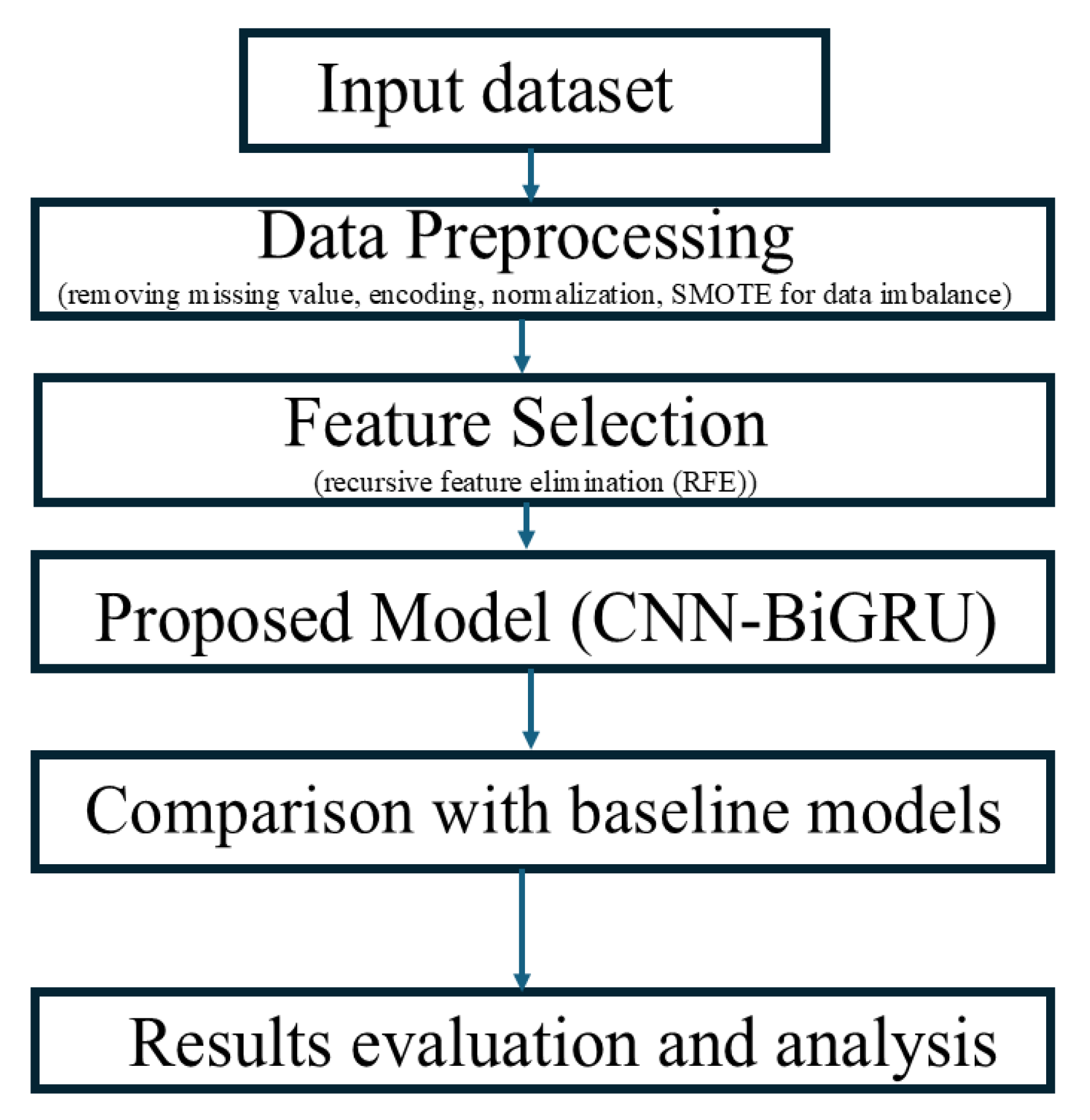
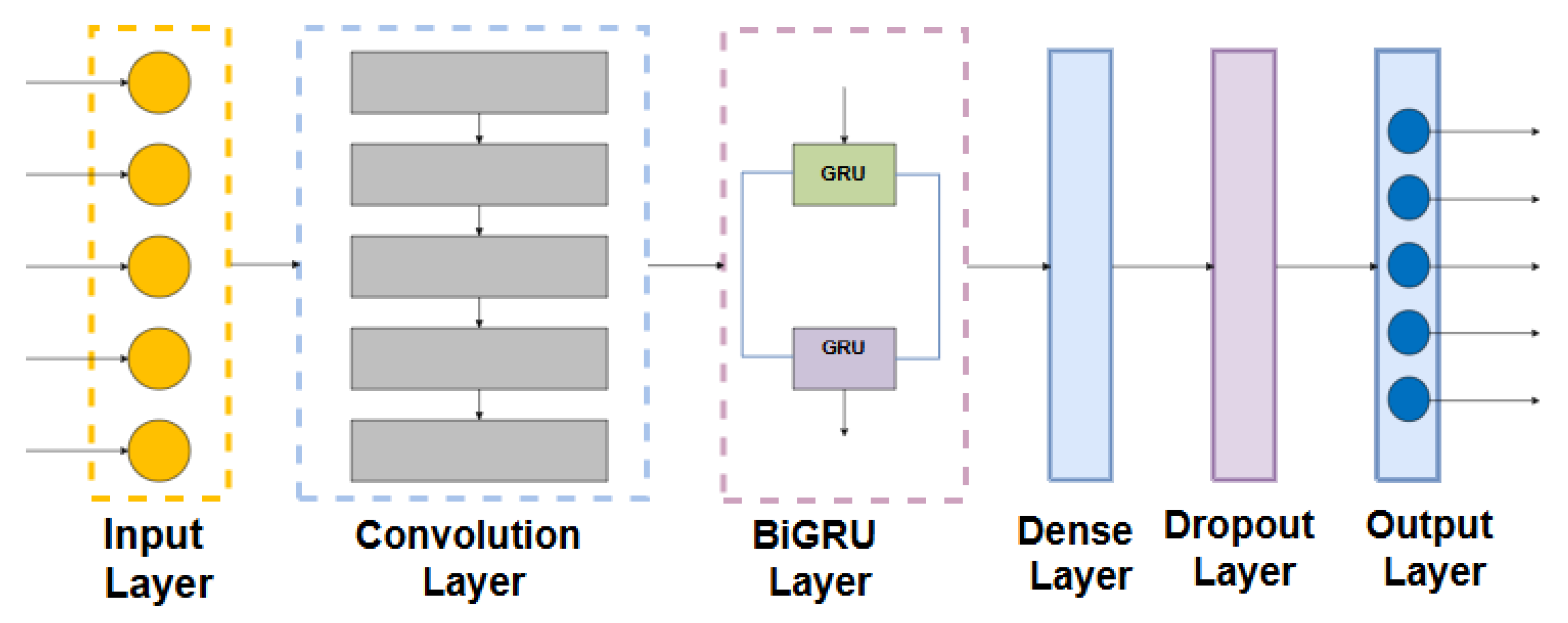
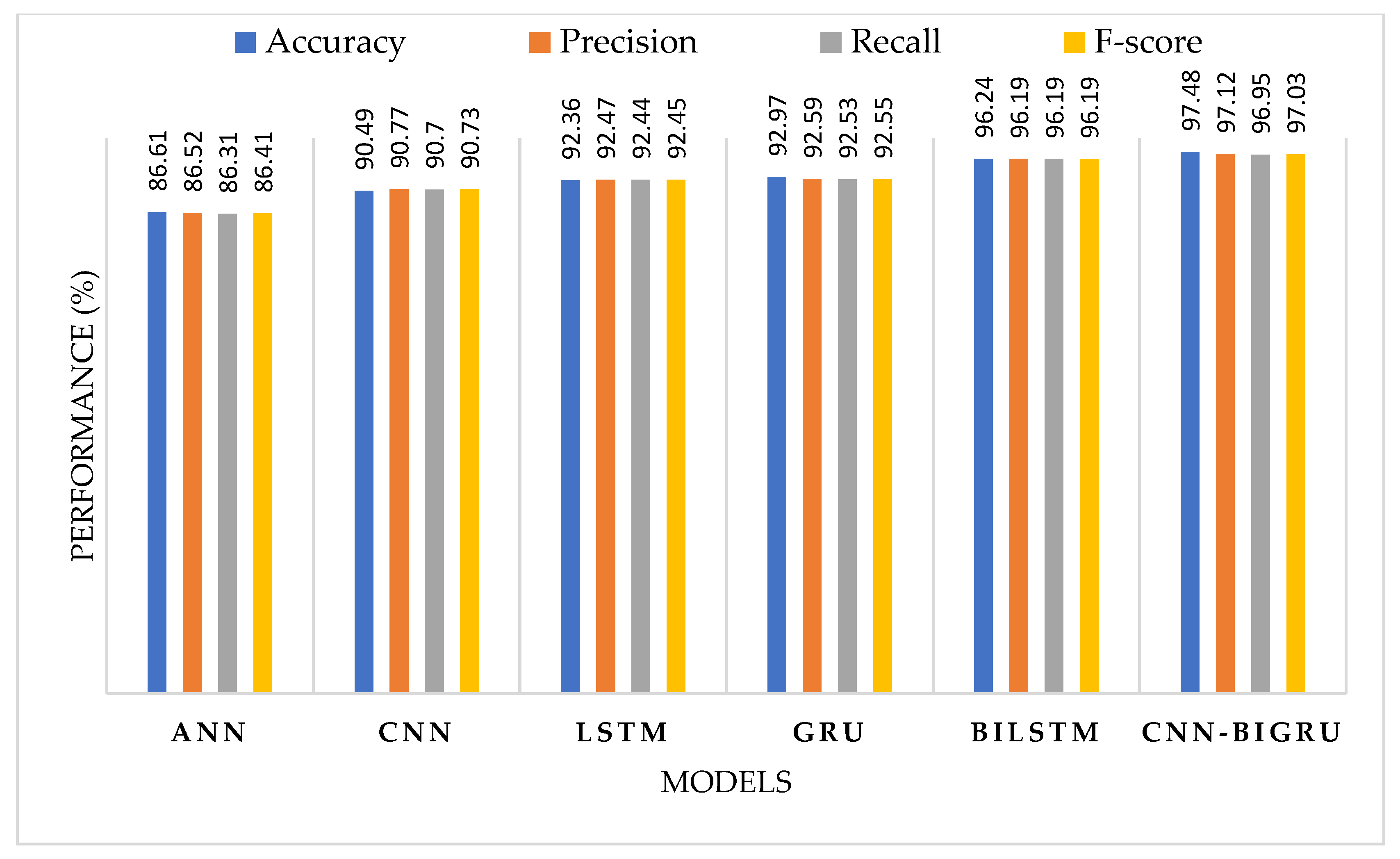
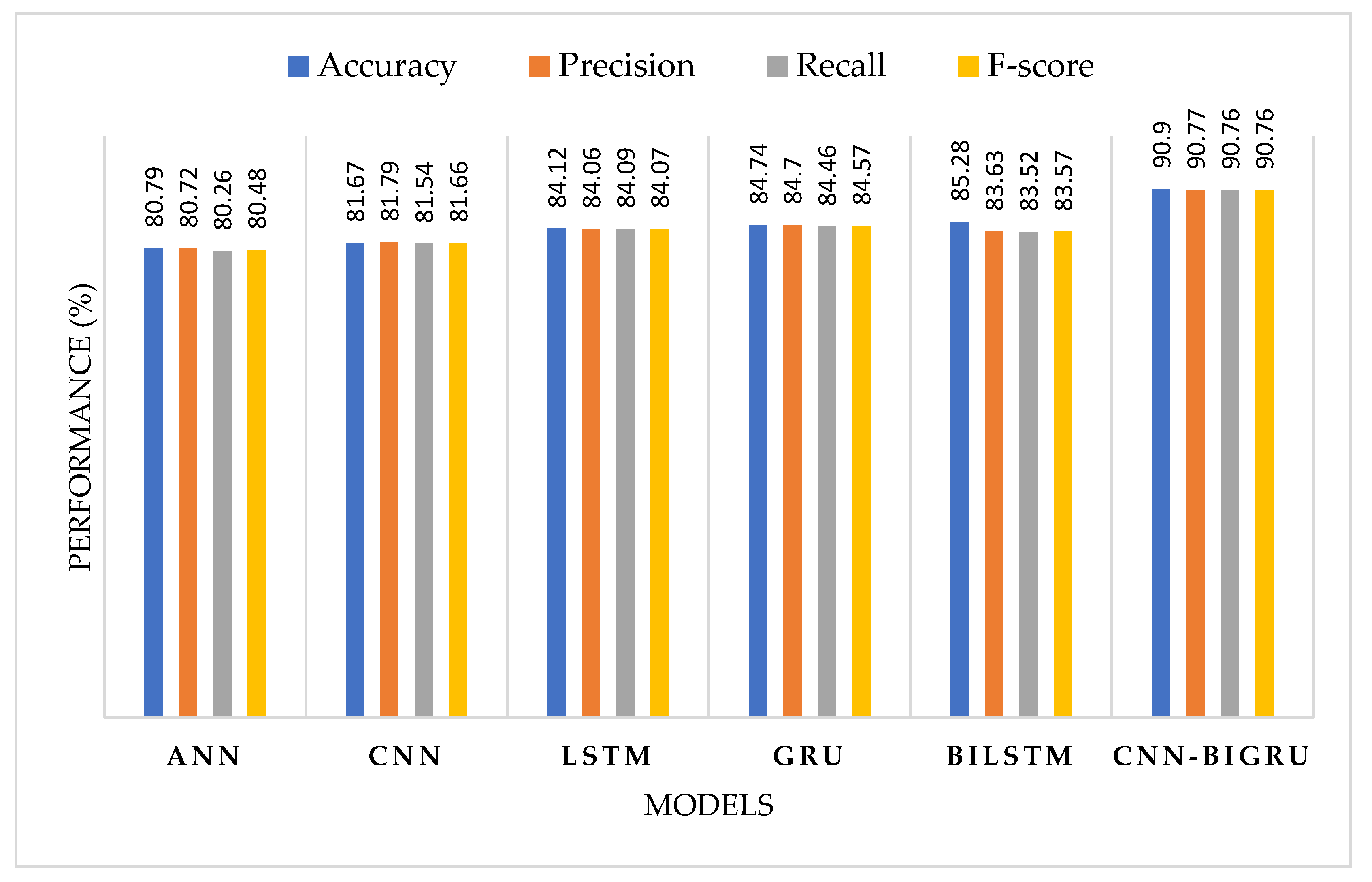
Educational data mining (EDM) is instrumental in the early detection of students at risk of academic underperformance, enabling timely and targeted interventions. Given that many undergraduate students face challenges leading to high failure and dropout rates, utilizing EDM to analyze student data becomes crucial. By predicting academic success and identifying at-risk individuals, EDM provides a data-driven approach to enhance student performance. However, accurately predicting student performance is challenging, as it depends on multiple factors, including academic history, behavioral patterns, and health-related metrics. This study aims to bridge this gap by proposing a deep learning model to predict student academic performance with greater accuracy. The approach combines a convolutional neural network (CNN) and a bidirectional gated recurrent unit (BiGRU) network to enhance predictive capabilities. To improve the model’s performance, we address key data preprocessing challenges, including handling missing data, addressing class imbalance, and selecting relevant features. Additionally, we incorporate optimization techniques to fine-tune hyperparameters to determine the best model architecture. Using key performance metrics such as accuracy, precision, recall, and F-score, our experimental results show that our proposed model achieves improved prediction accuracy of 97.48%, 90.90%, and 95.97% across the three datasets.
Keywords: artificial intelligence; data mining; educational data mining; machine learning; student academic prediction artificial intelligence; data mining; educational data mining; machine learning; student academic prediction