Article

Time Recurrence Analysis of a Near Singular Billiard


by
Rodrigo Simile Baroni
*,
Ricardo Egydio de Carvalho
,
Bruno Castaldi
and
Bruno Furlanetto
Institute of Geosciences and Exact Sciences (IGCE), São Paulo State University (UNESP), Av. 24A 1515, Bela Vista, Rio Claro-SP, Brazil
*
Author to whom correspondence should be addressed.
Math. Comput. Appl. 2019, 24(2), 50; https://doi.org/10.3390/mca24020050
Submission received: 11 March 2019 / Revised: 25 April 2019 / Accepted: 7 May 2019 / Published: 8 May 2019
(This article belongs to the Special Issue Dynamics Days Latin America and the Caribbean 2018)

Abstract

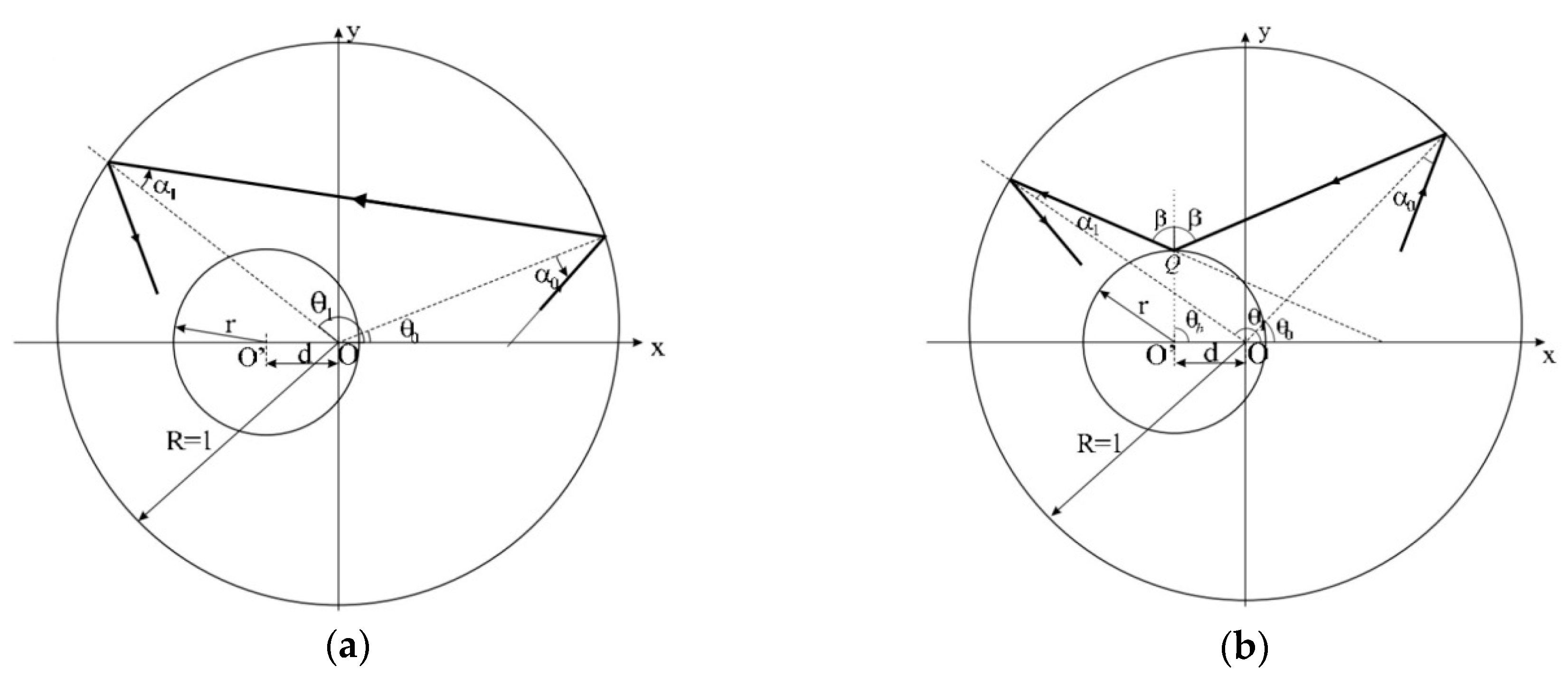
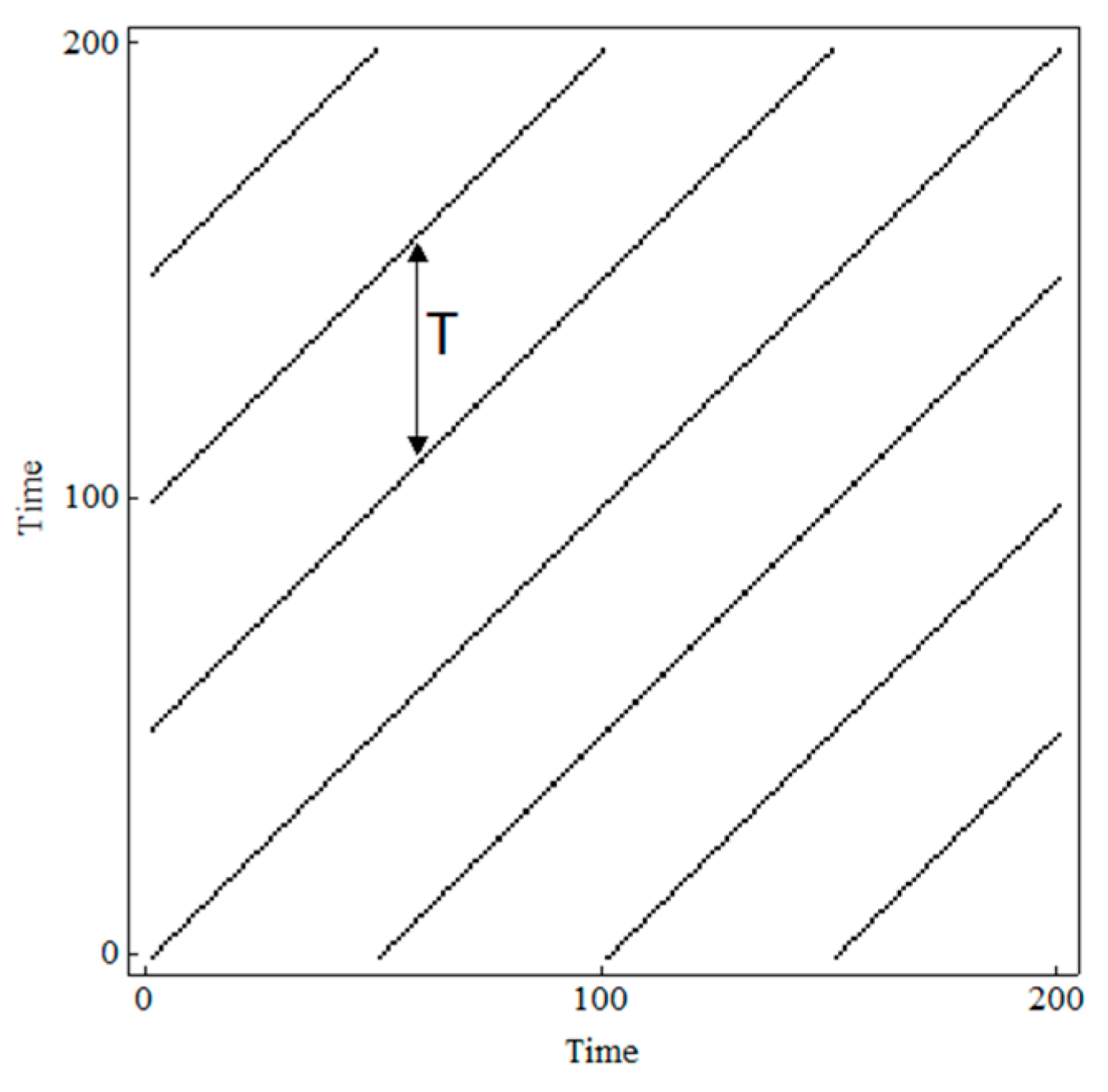
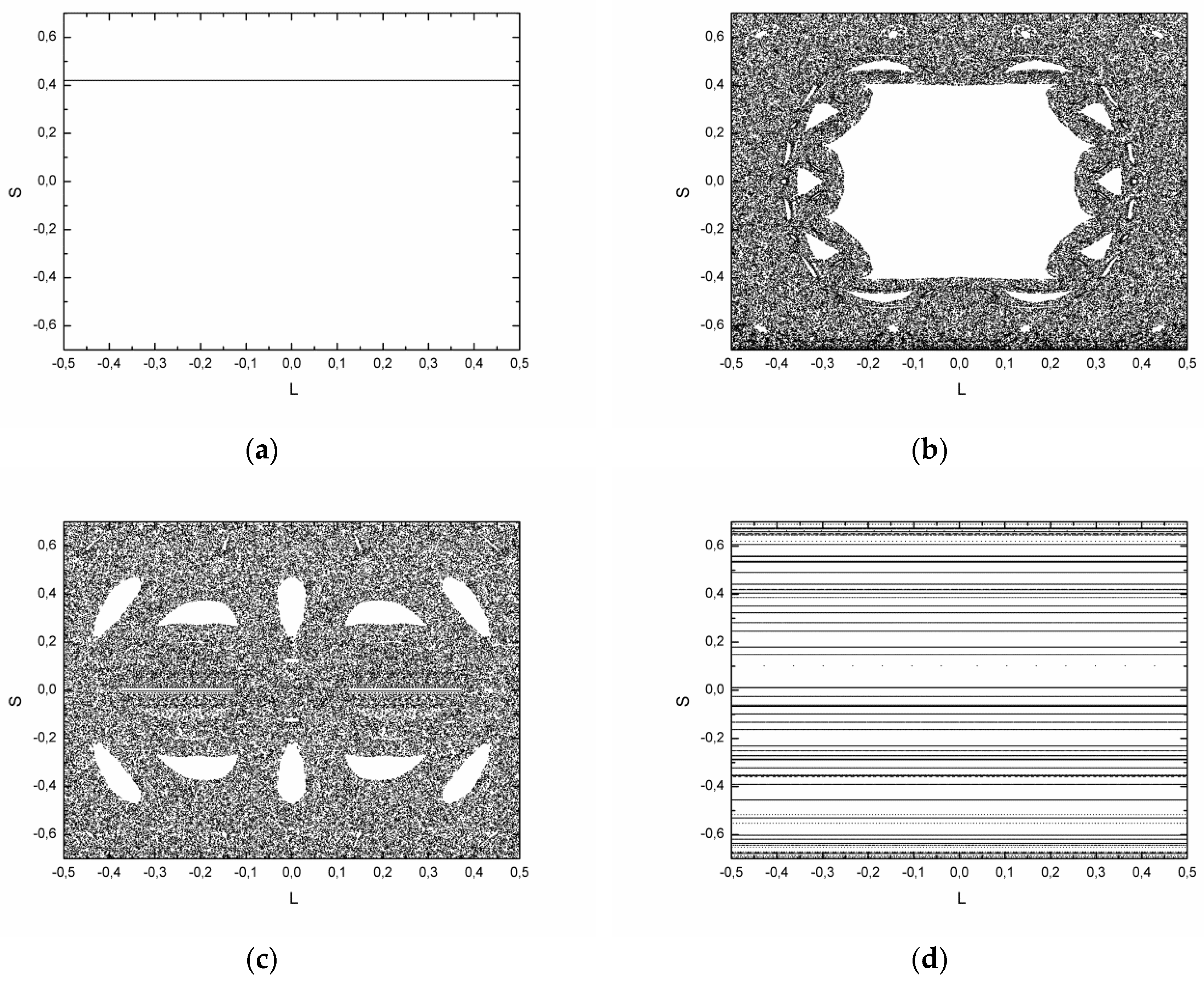
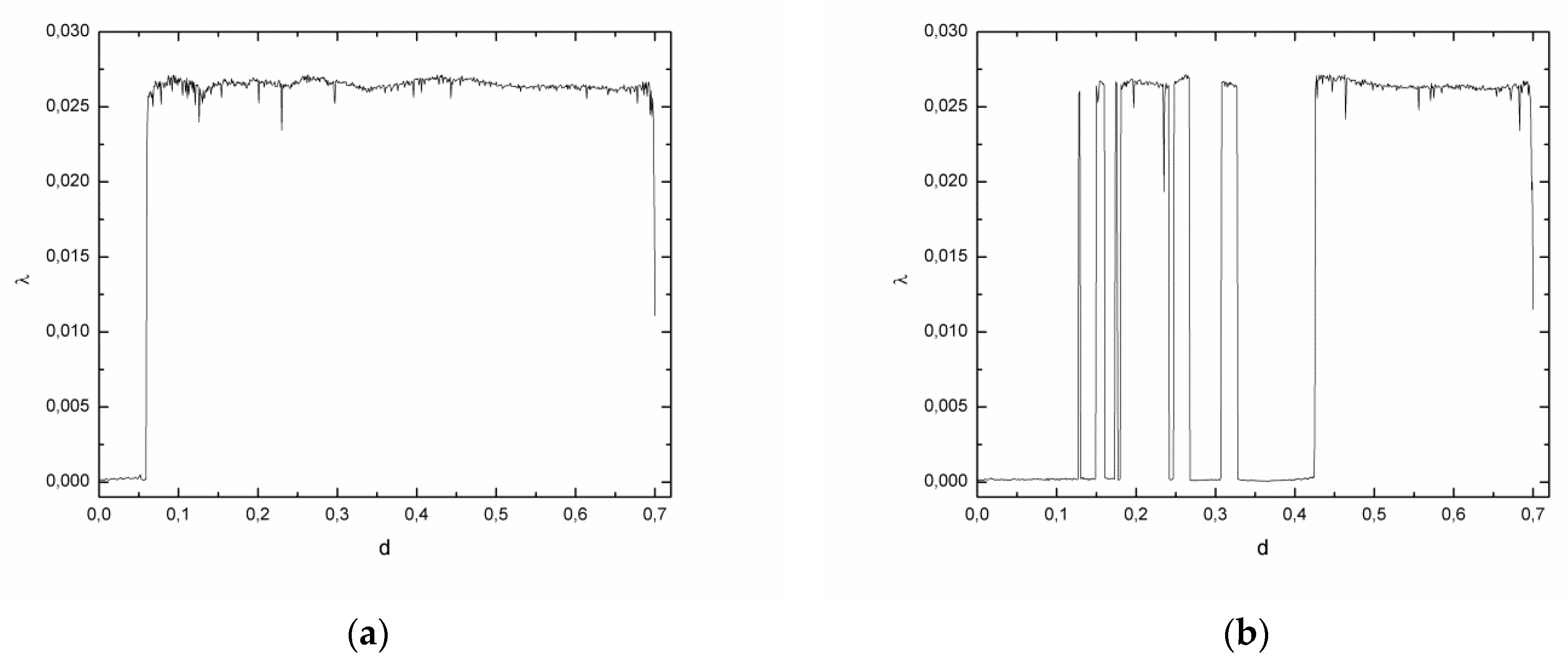
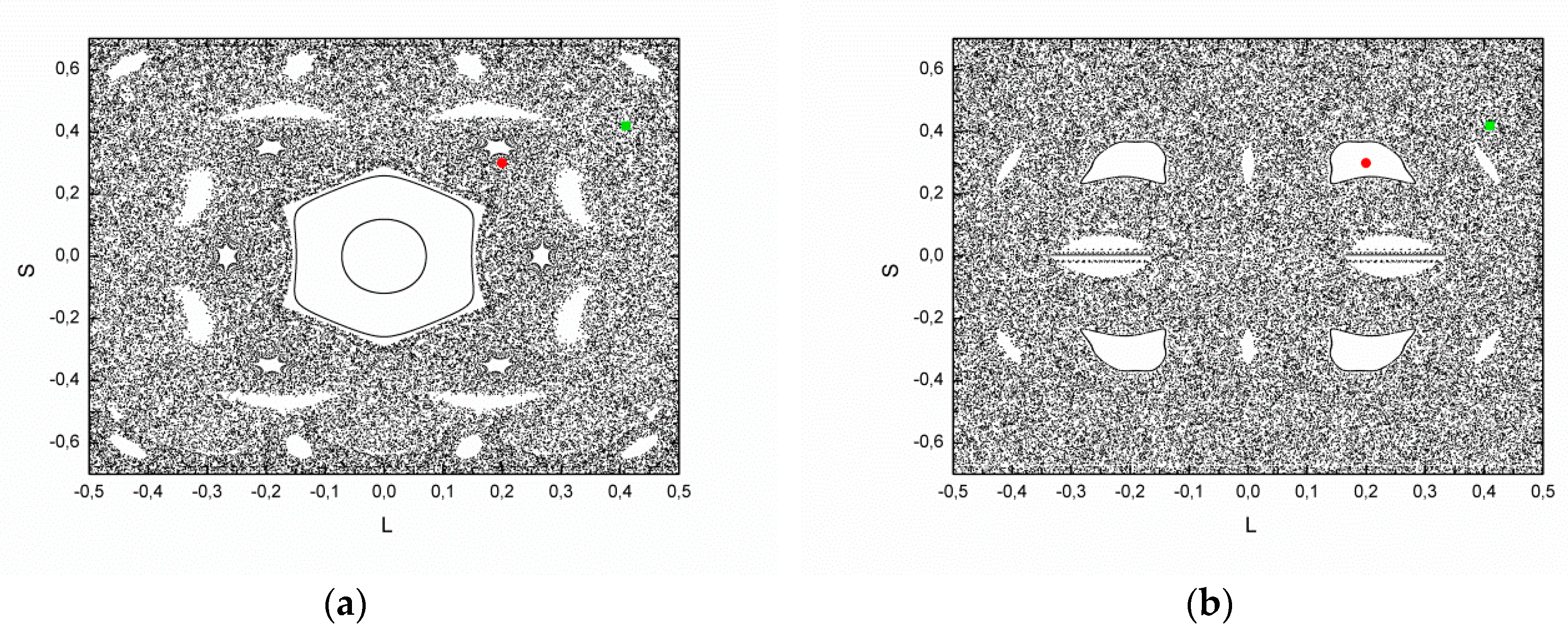
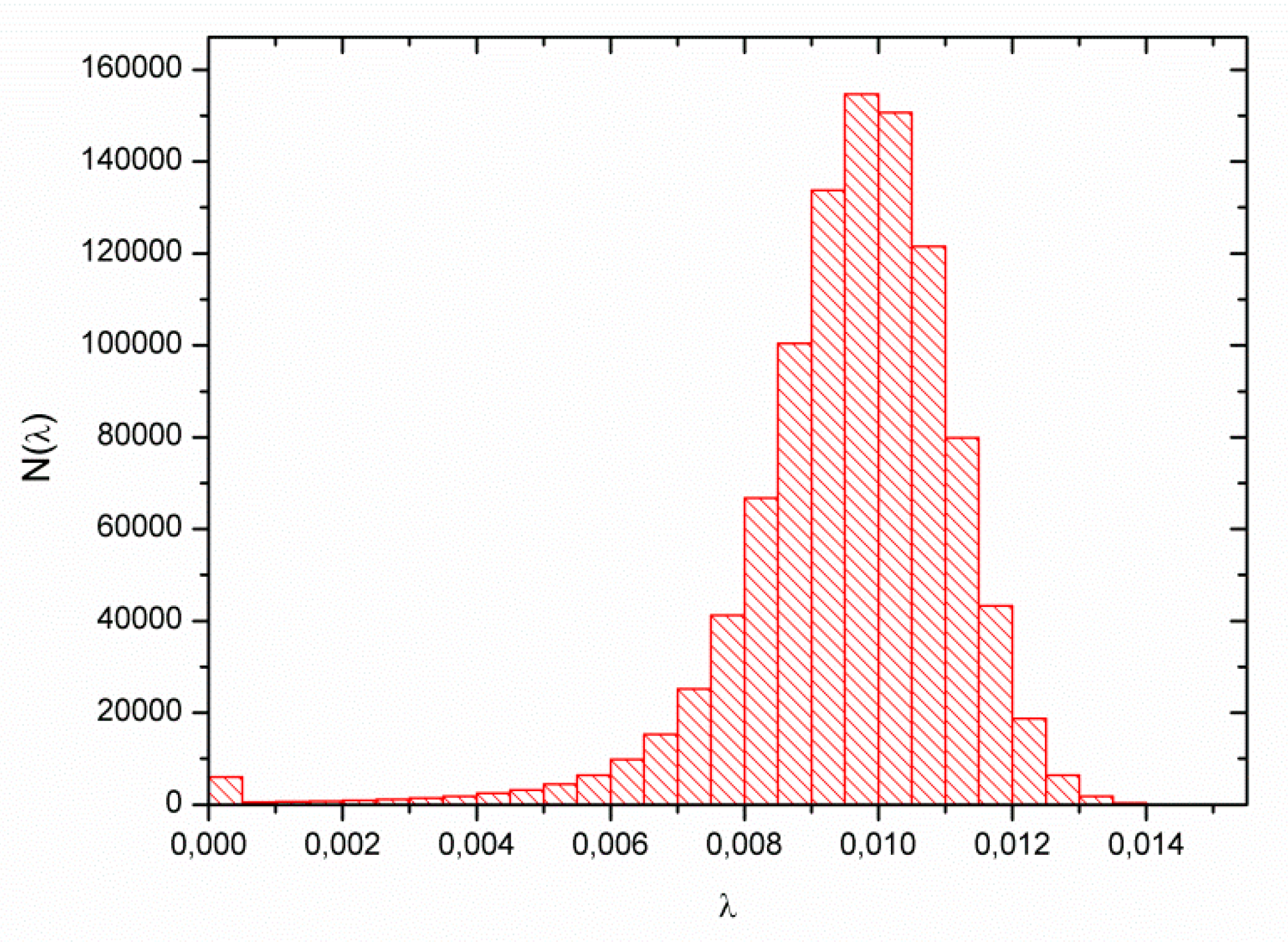
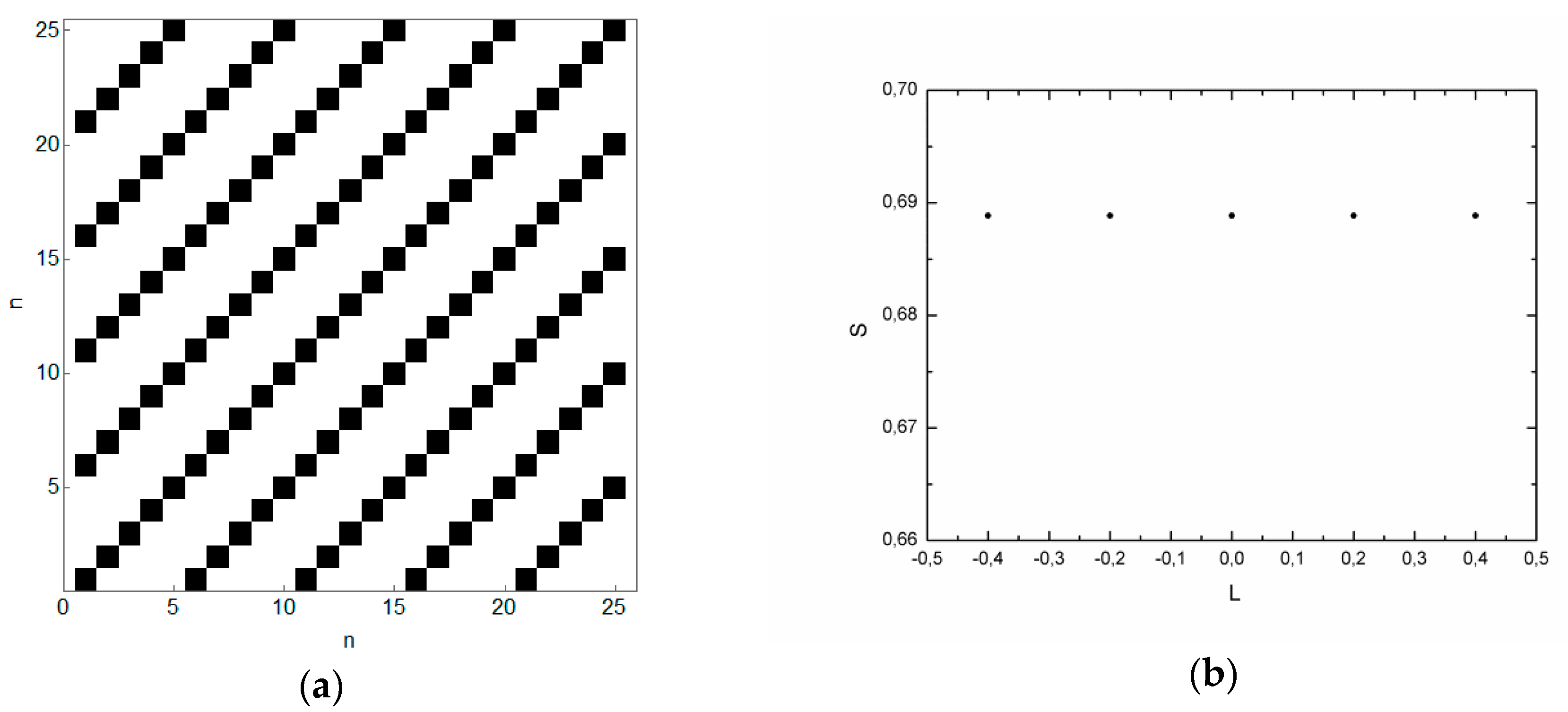
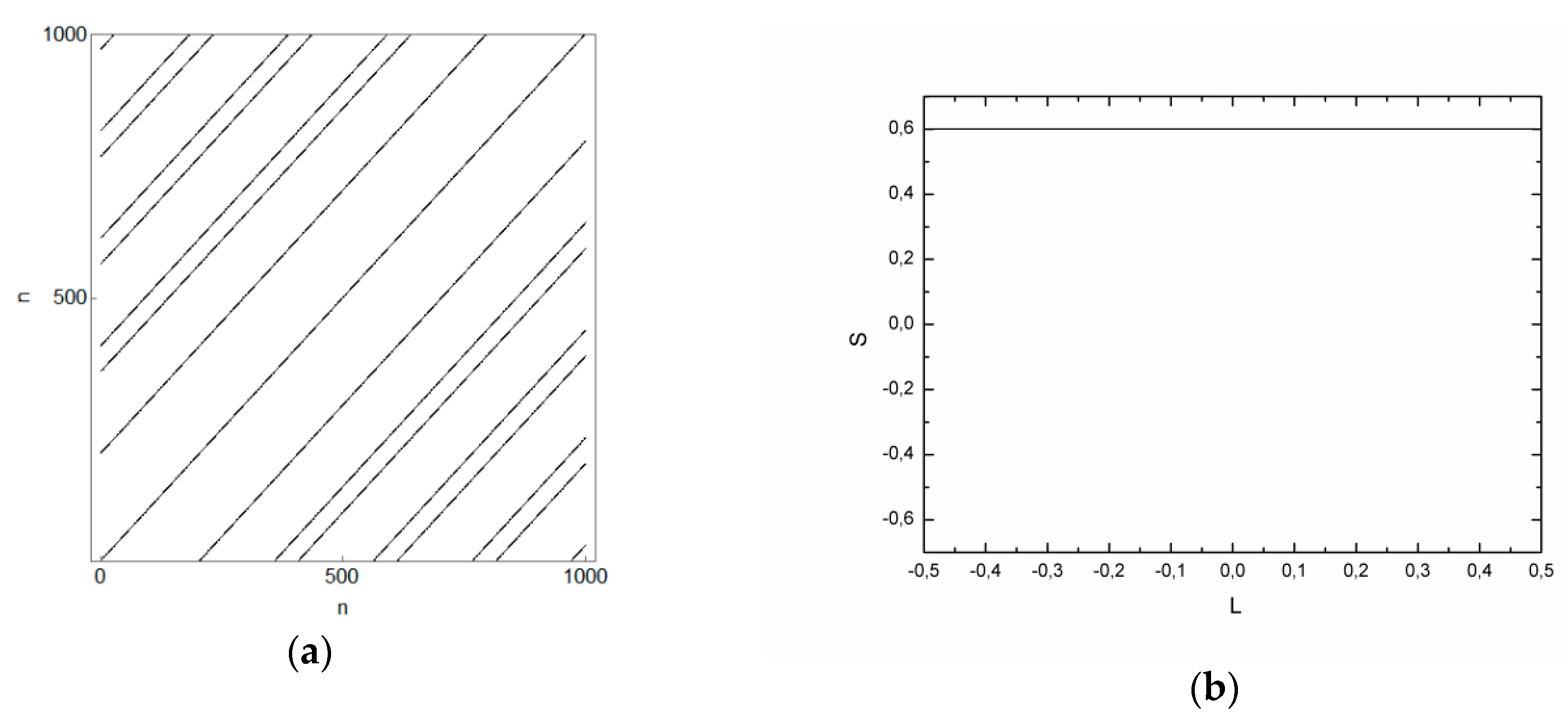
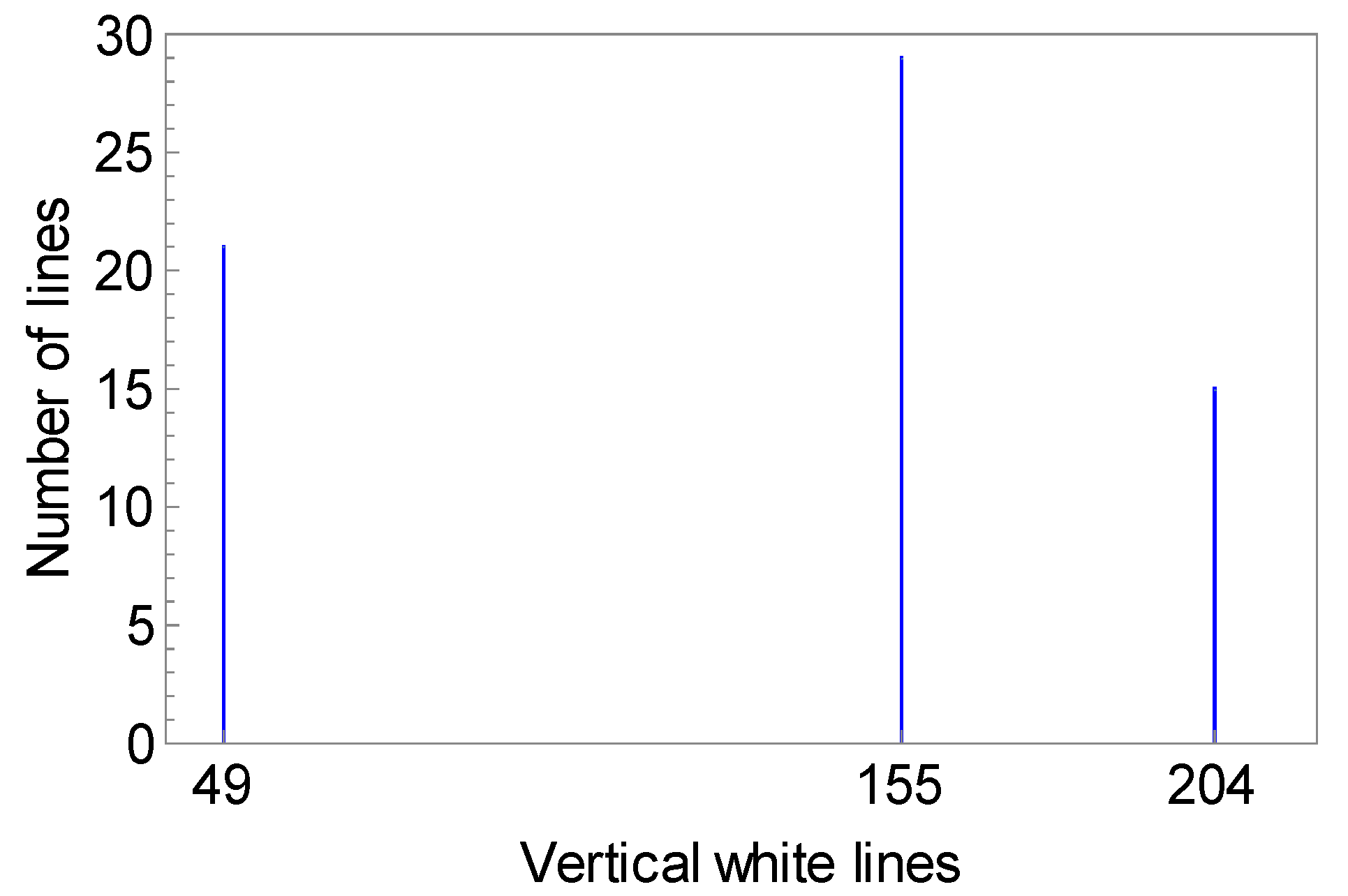
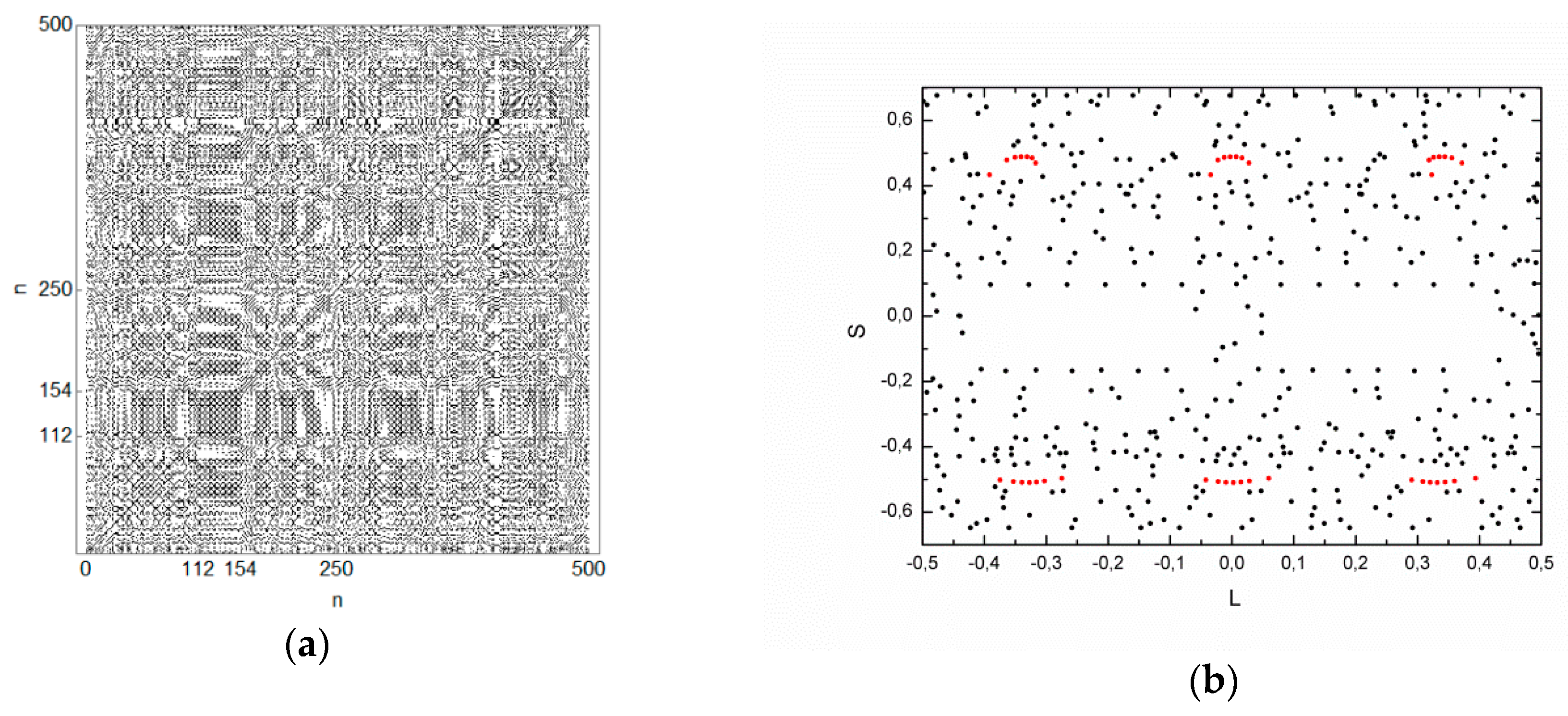
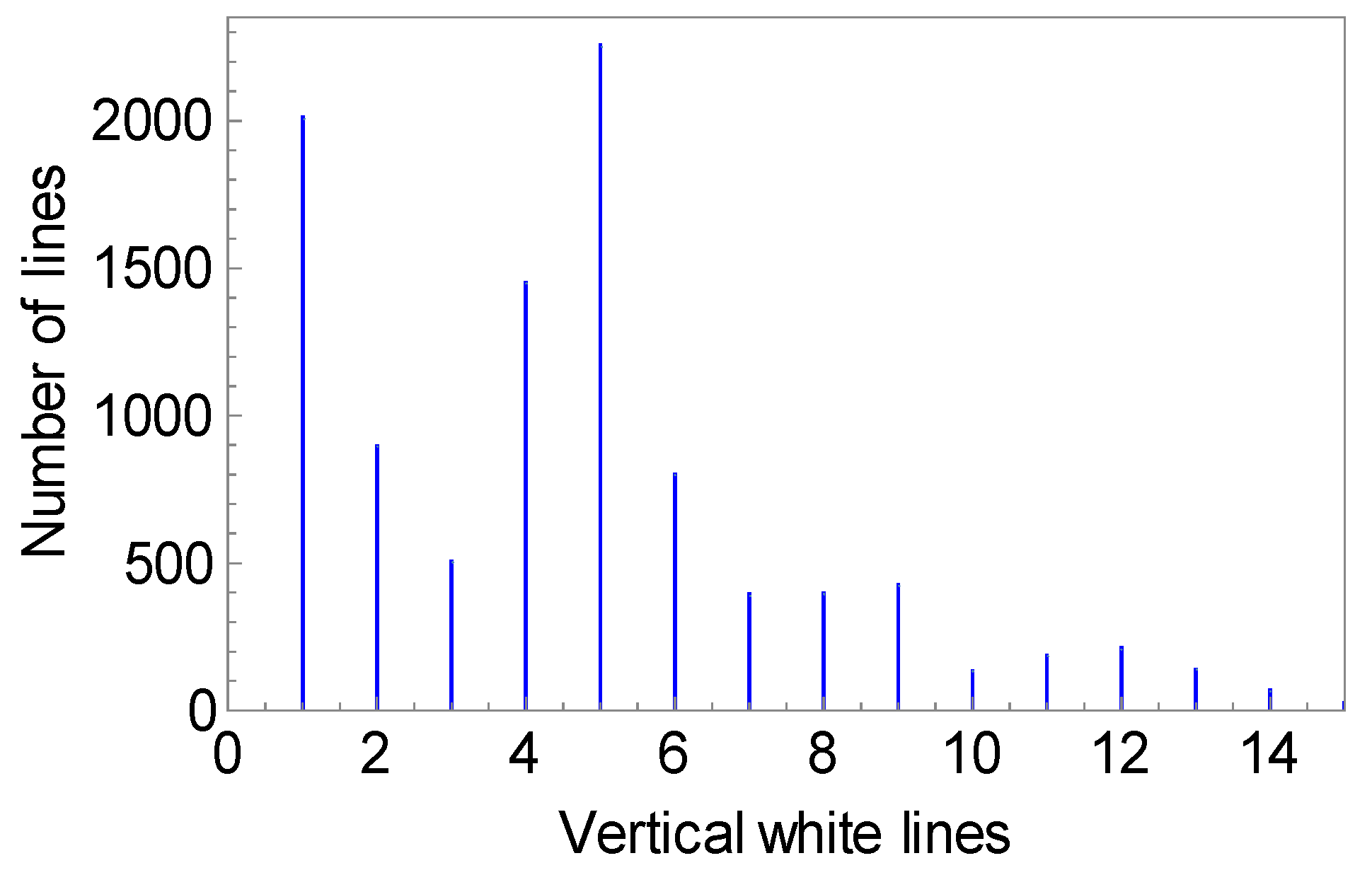
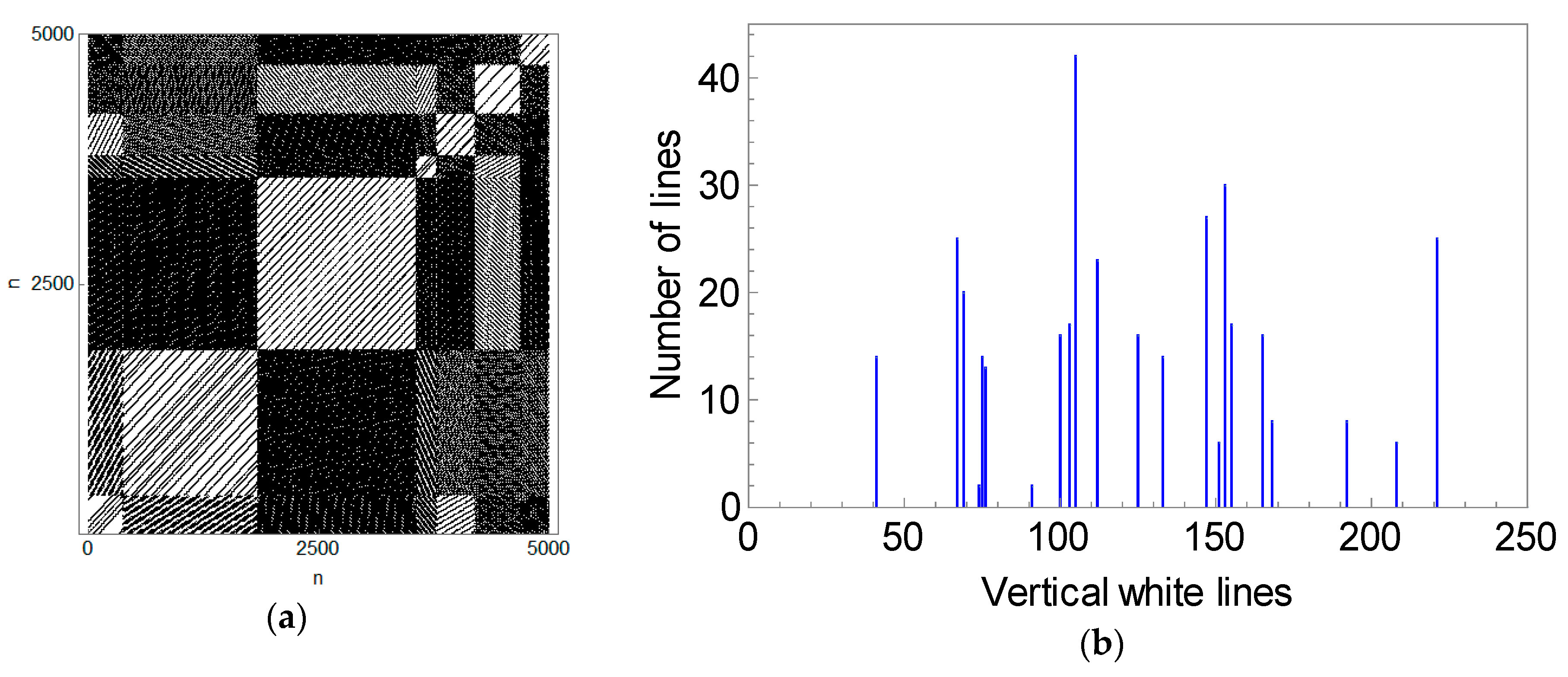
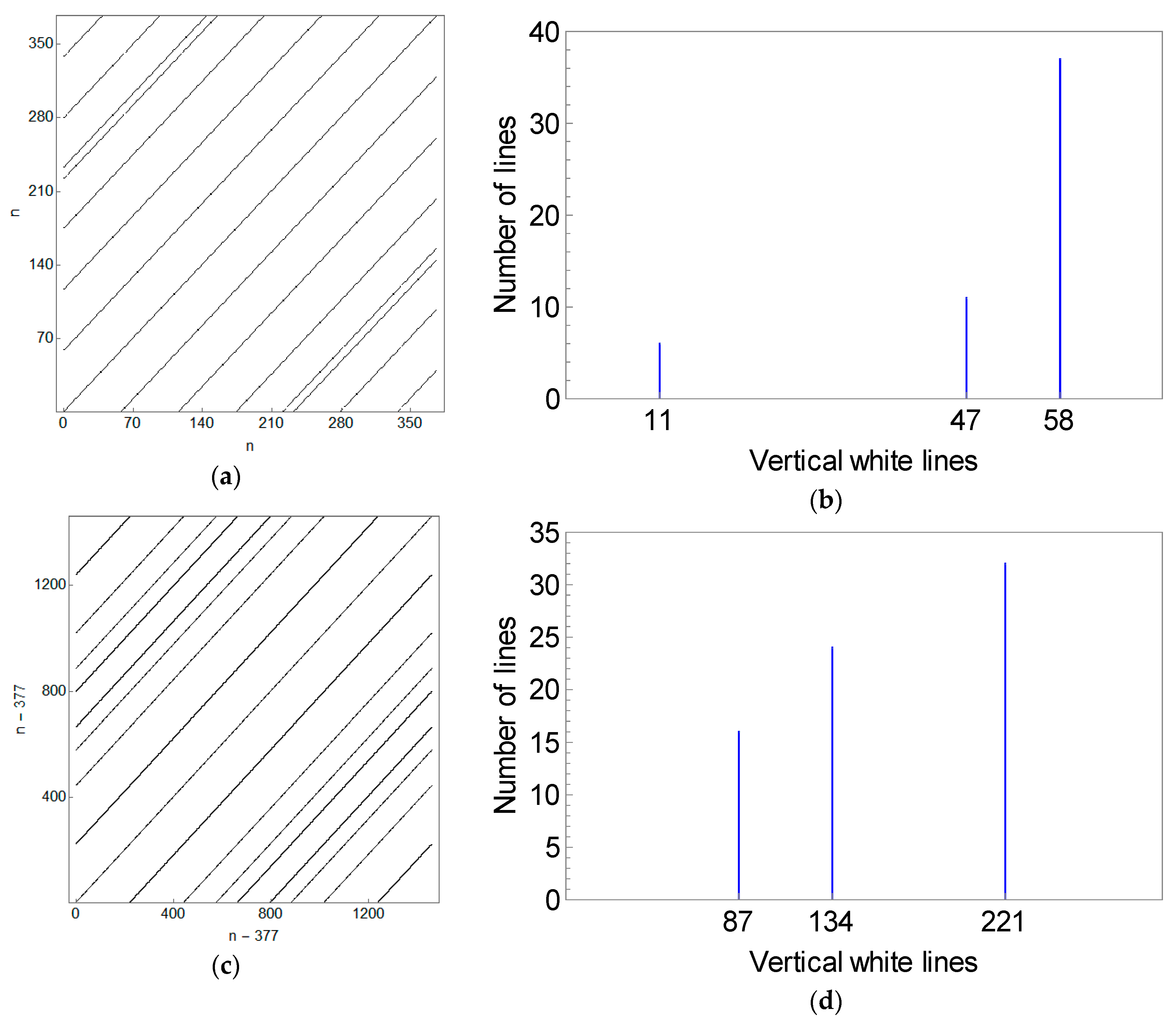
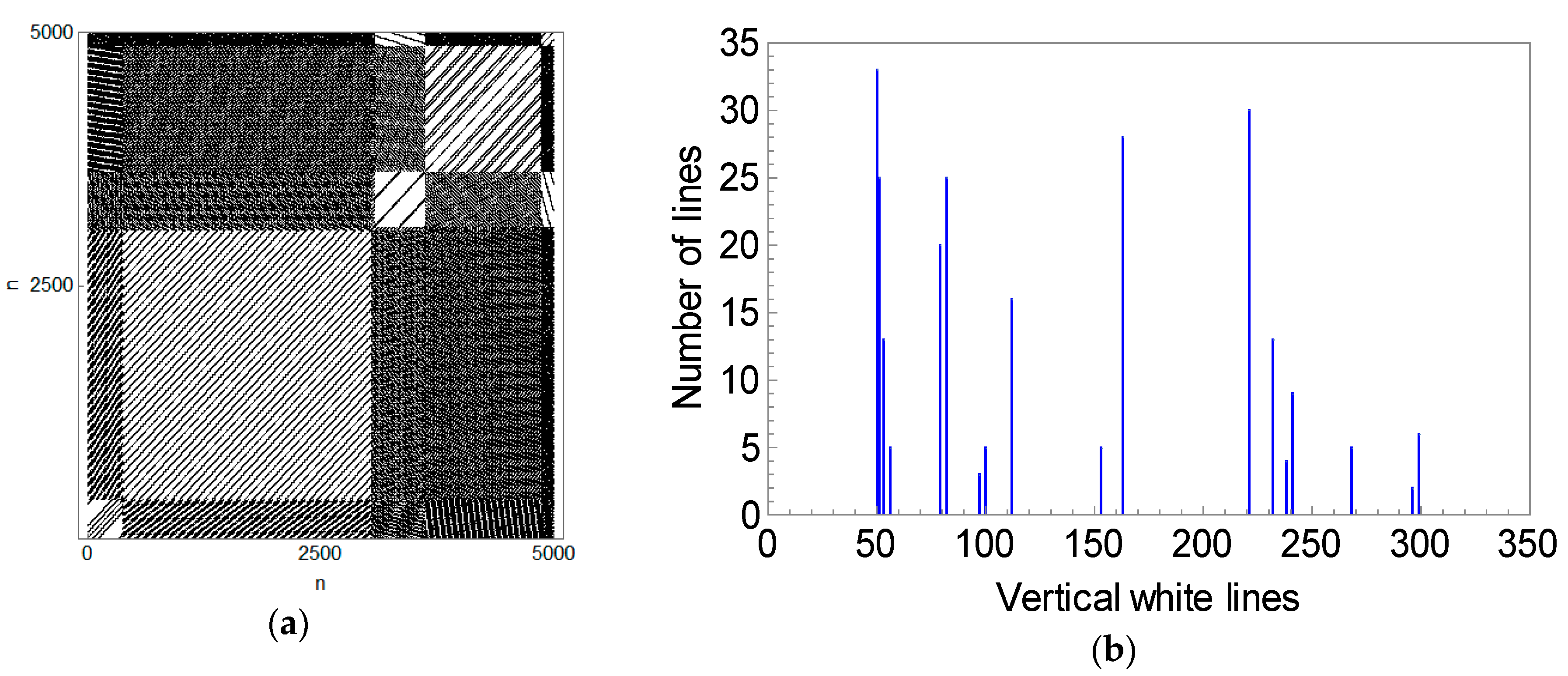
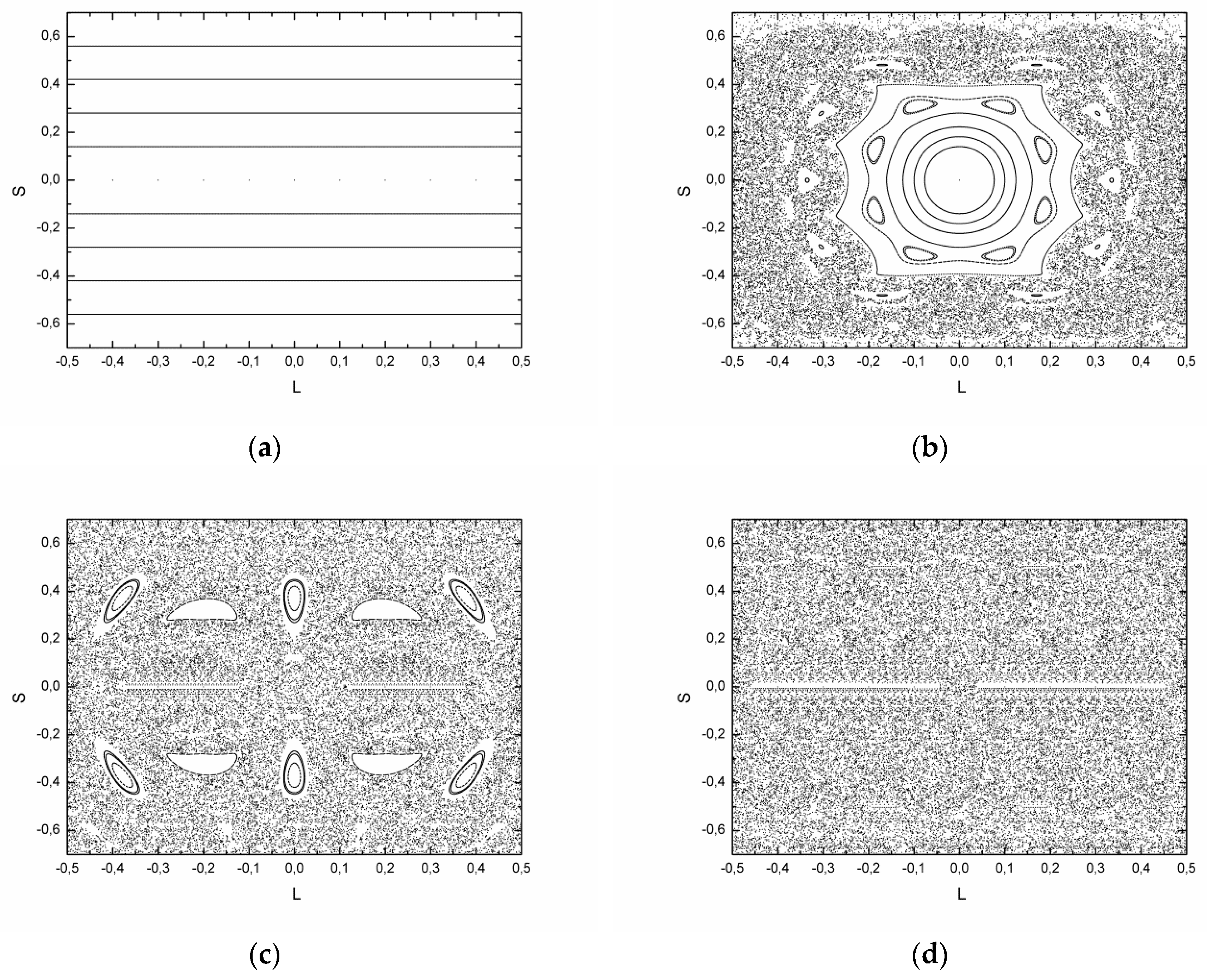
Billiards exhibit rich dynamical behavior, typical of Hamiltonian systems. In the present study, we investigate the classical dynamics of particles in the eccentric annular billiard, which has a mixed phase space, in the limit that the scatterer is point-like. We call this configuration the near singular, in which a single initial condition (IC) densely fills the phase space with straight lines. To characterize the orbits, two techniques were applied: (i) Finite-time Lyapunov exponent (FTLE) and (ii) time recurrence. The largest Lyapunov exponent λ was calculated using the FTLE method, which for conservative systems, λ > 0 indicates chaotic behavior and λ = 0 indicates regularity. The recurrence of orbits in the phase space was investigated through recurrence plots. Chaotic orbits show many different return times and, according to Slater’s theorem, quasi-periodic orbits have at most three different return times, the bigger one being the sum of the other two. We show that during the transition to the near singular limit, a typical orbit in the billiard exhibits a sharp drop in the value of λ, suggesting some change in the dynamical behavior of the system. Many different recurrence times are observed in the near singular limit, also indicating that the orbit is chaotic. The patterns in the recurrence plot reveal that this chaotic orbit is composed of quasi-periodic segments. We also conclude that reducing the magnitude of the nonlinear part of the system did not prevent chaotic behavior.
Keywords: recurrence time; Slater’s theorem; Lyapunov exponent; point scatterer; annular billiard recurrence time; Slater’s theorem; Lyapunov exponent; point scatterer; annular billiard