Article

Synergistic Adsorption and Bioreduction of Cr(VI) by a New Composite Material: Effect of Biochar and Immobilized Bacillus subtilis

1
College of Agricultural Engineering and Food Science, Shandong University of Technology, Zibo 255000, China
2
Branch of State Key Laboratory of Woody Oil Resources Utilization, Shandong University of Technology, Zibo 255000, China
3
Shandong Hengsheng Ecological Environment Co., Ltd., Zibo 255000, China
*
Author to whom correspondence should be addressed.
Separations 2026, 13(2), 69; https://doi.org/10.3390/separations13020069
Submission received: 19 January 2026 / Revised: 11 February 2026 / Accepted: 12 February 2026 / Published: 16 February 2026

Abstract

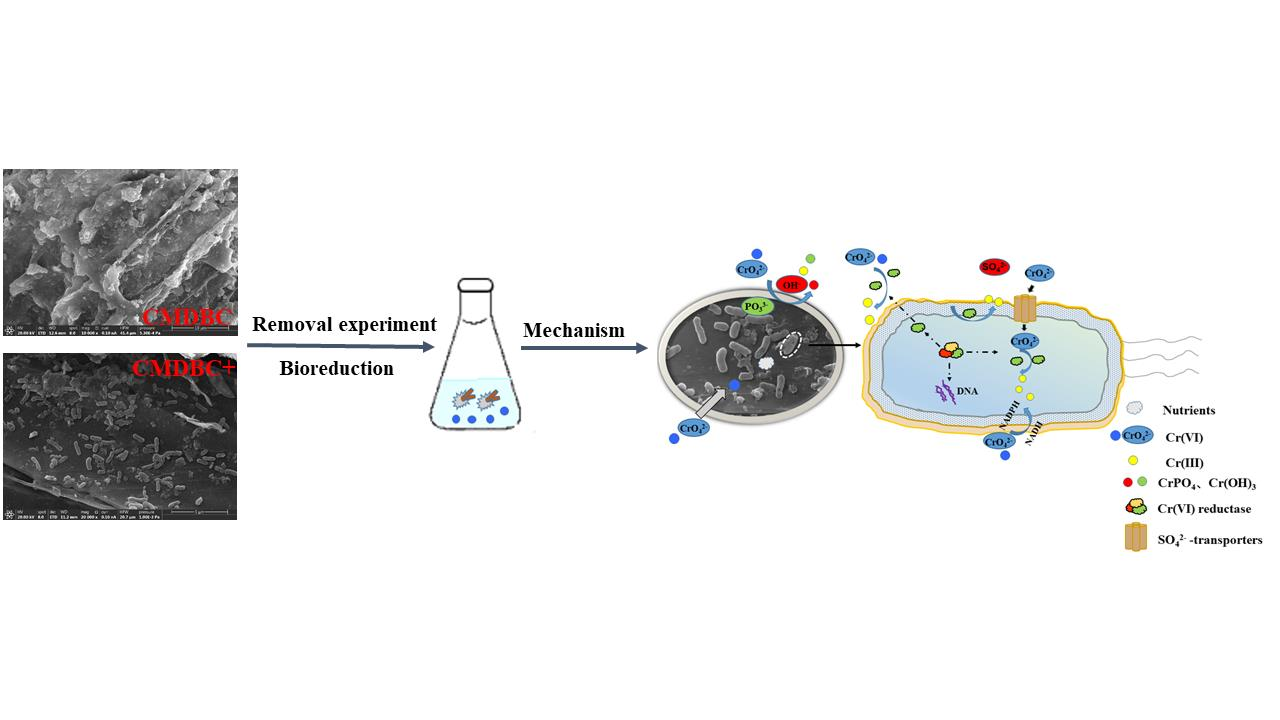
This study investigates the preparation of a composite material by immobilizing Bacillus subtilis on biochar derived from chicken manure biogas residue for the removal of Cr(VI) from wastewater. The results demonstrated that the composite material (Bacillus subtilis immobilized biochar, BIB) achieved a maximum Cr(VI) removal efficiency of 94.1% in a 100 mg/L Cr(VI) solution within 4 h. The chicken manure-derived biochar not only served as an effective carrier for Bacillus subtilis but also enhanced the Cr(VI) removal efficiency through a synergistic effect with the microorganism. Functional groups such as phosphorus, carboxyl, and hydroxyl groups on the biochar surface played a key role in the sorption of Cr(VI). Bacillus subtilis primarily reduced Cr(VI) to Cr(III) by secreting cellular reductases. The combined action of biochar and Bacillus subtilis increased the Cr(VI) removal rate by 13.71% compared to biochar alone. This study presents a promising approach for Cr(VI) remediation in contaminated water and lays a theoretical foundation for the development of composite materials for Cr(VI) reduction.

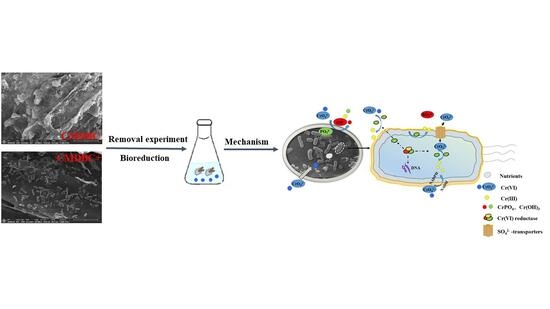
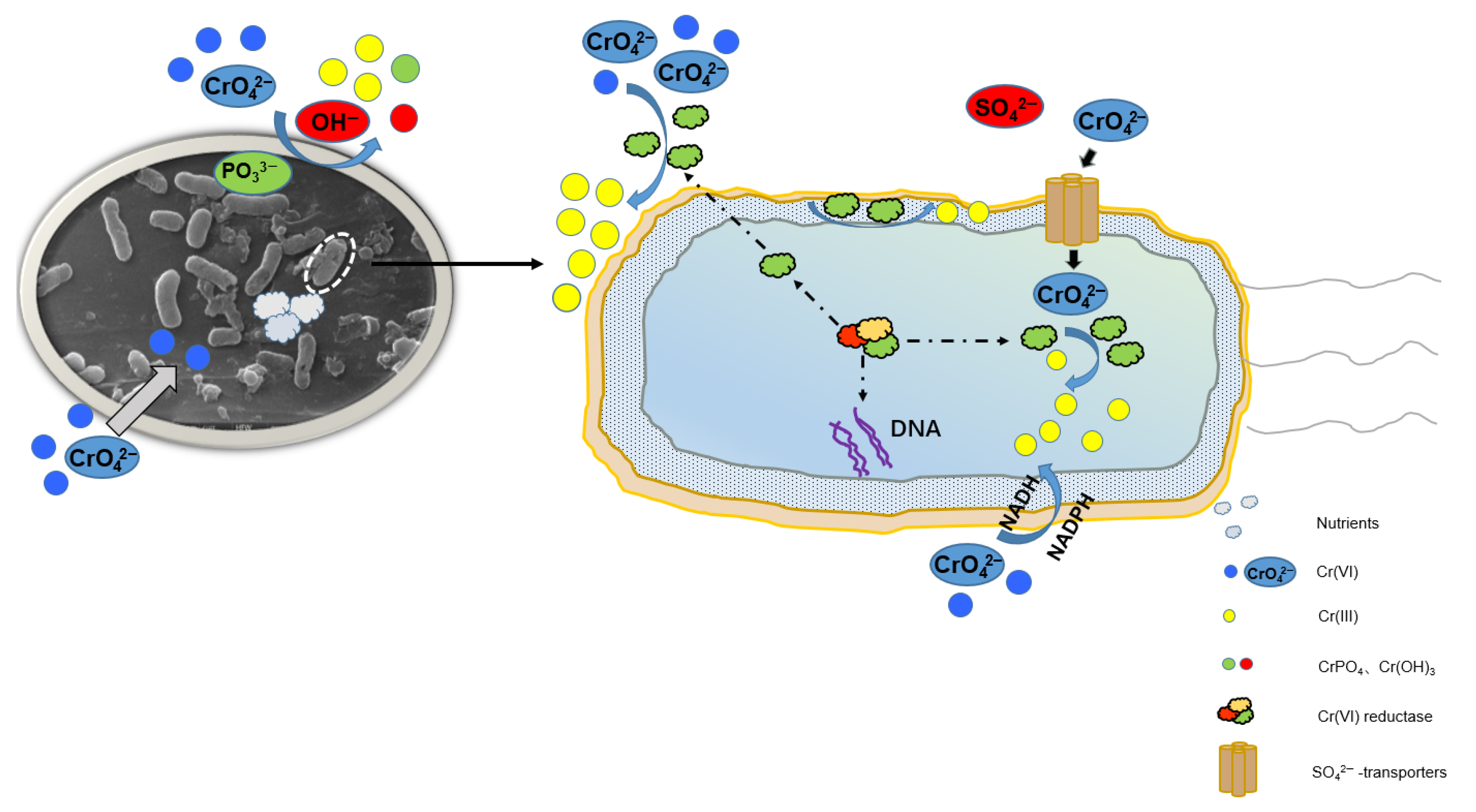
Graphical Abstract

1. Introduction

Chromium (Cr) is widely applied in industrial production, including electroplating, dyeing, and leather treatment [1,2,3]. For example, the electroplating industry alone in China discharges about 4 billion tons of chromium-containing wastewater annually, leading to serious environmental pollution problems [4]. Normally, Cr exists in two main oxidation states, trivalent chromium (Cr(III)) and hexavalent chromium (Cr(VI)), which have different chemical properties and biological toxicities [5]. Cr(III) usually exists as precipitates of Cr2O3 and Cr(OH)3 with a wide pH range, and keeps a stable valence bond structure, which has low toxicity [6]. In contrast, Cr(VI) is highly oxidizing and mainly exists as oxygenated anions of chromates (HCrO4 and CrO42−) and dichromates (Cr2O72−) that have highly toxicological properties [7]. Therefore, an effective method is urgently needed to eliminate Cr(VI) or convert harmful Cr(VI) into Cr(III), thereby reducing its pollution risk.
Bioremediation technology has great potential in treating heavy metal pollution, thanks to its advantages of being environmentally friendly, safe and free of secondary pollution [8,9,10,11]. Microorganisms convert heavy metal ions into sediments or less toxic substances by metabolism and accumulate them within themselves. Natural Cr(VI)-reducing bacteria are widely distributed and effective in remediating Cr(VI)-polluted environments. Some microorganisms were screened, and their bioremediation mechanism was investigated [12]. Dong et al. isolated Bacillus cereus strain xmcr-6 from chromium-contaminated soil, and confirmed that it has a strong capacity for Cr(VI) reduction (>90% reduction efficiency) [13]. Tan et al. used a novel Bacillus strain, crb-B1, to treat Cr(VI), and found that Cr(VI) removal primarily depends on bioreduction rather than biosorption [14]. Wu et al.’s study revealed that Bacillus subtilis can not only adsorb Cr(VI) via its negatively charged surface but also intracellularly reduce Cr(VI) to less toxic Cr(III) using reductases [15]. Moreover, Bacillus subtilis often collaborates with other organisms, generating synergistic effects on Cr(VI) removal.
In order to protect these repair-capable microorganisms from pH fluctuations, toxic substances, and other unfavorable environmental conditions, microbial immobilization technology (MIT) is applied in the field of bioremediation [16,17,18,19]. MIT immobilizes microorganisms in a specific carrier, which has a positive effect on the rapid propagation and biological activity of functional microorganisms. The integral immobilized microbial materials are able to significantly enhance the efficiency of the removal of pollutants through the synergistic effects of adsorption and biodegradation. In addition, because of the immobilization of the carrier, the microorganisms can be recovered from the treatment system and reused, avoiding the risk of secondary pollution [20,21]. Alginate, chitosan, and other natural organic polymers are widely used as immobilization carriers because of their excellent biocompatibility. However, they suffer from poor stability and easy degradation. Conversely, inorganic materials, such as activated carbon, silica gel and zeolite, are valued as superior carriers due to their high adsorption capacity and chemical stability [22].
Since biochar has the property of a larger specific surface area, abundant functional groups, excellent environmental compatibility and low cost, it has received widespread attention for pollutant disposal [23]. Tang et al. used iron-doped biochar as an absorbing material to repair soil polluted with high-content Cr(VI) [24]. Chen et al. prepared wheat and sawdust biochar with high electron donor capacity and applied it to reduce Cr(VI) content in sewage [25]. Furthermore, if the biochar is loaded with microorganisms with a bioremediation function, heavy metal remediation will be enhanced by the synergistic effects of the biochar and microorganisms. Biochar has a dual role. As a carrier of microbial enrichment, biochar can increase the density of the microbial flora and maintain the reproductive metabolism of microorganisms to strengthen their reduction activity. In addition, the biochar can enrich heavy metals by adsorption, which can increase the probability of contact between microorganisms and pollutants [26,27,28].
Digestion residue biochar possesses a well-developed porous structure, abundant surface functional groups, and high cation exchange capacity, conferring distinct advantages and promising application potential in heavy metal remediation. The study of Jiang et al. showed that the biochar derived from pig manure digestate has excellent potential in the remediation of heavy metals. After Mn modification, the biochar’s removal efficiency for As(III), Cu and Zn were 83.98%, 66.53% and 48.96%, respectively. The comprehensive remediation efficiency is outstanding, and it can be used as an effective material for heavy metal compound pollution remediation [29]. Meanwhile, the nitrogen content of livestock and poultry manure biochar is relatively high, and the nitrogen atom has a similar atomic radius to the carbon atom, which makes it easier to replace the carbon atom to form nitrogen-containing functional groups [30,31]. Nitrogen-containing functional groups improve the conductivity of biochar and promote the enrichment of electroactive microorganisms. These microorganisms accelerate the exchange of electrons through direct electron transfer or intermediate transfer, thereby significantly improving the synergistic ability of microorganisms and biochar [32]. Sharma et al. prepared a biochar-immobilized Bacillus sp. SSAU-2 and Cyanobacteria consortium using rice husk as raw material. Through the synergistic effect of adsorption and bioreduction, the Cr(VI) removal capacity was increased from 60 ppm to 500 ppm, and the remediation and fertility restoration of Cr(VI)-contaminated soil were realized [33]. Therefore, this study focuses on the recycling of anaerobic digestion waste (chicken manure biogas residue). The large specific surface area of biochar derived from chicken manure biogas residue provides more sites for microbial colonization and Cr(VI) adsorption. Bacillus subtilis and chicken manure biogas residue biochar were used to prepare BIB. This preparation optimized the adsorption performance of Cr(VI) and enabled the rapid treatment of water pollution.

2. Materials and Methods

2.1. Preparation of BIB

2.1.1. Preparation of Biochar

Chicken manure, chicken manure digestate and swine manure digestate were used to prepare biochar. The raw materials were ground and sieved to 80–100 mesh. They were dried in an oven for 24 h at 105 °C. Subsequently, they were pyrolyzed using a tube furnace (GSL-1700X, Anhui Puofit Material Technology Co., Ltd., Hefei, China) in a nitrogen atmosphere at a heating rate of 10 °C min−1 to 650 °C and kept for 2 h. The yields of biochar prepared by pyrolysis were 53.23%, 45.99% and 48.71%. The biochar was cooled down to ambient temperature and ground to 200 mesh. Then, it was sterilized by autoclaving and stored in a sterile environment for subsequent experiments. The biochars obtained with the three raw materials were labeled as CMBC, CMDBC and SMDBC, respectively.

2.1.2. Immobilization Experiments

The Bacillus subtilis used in this study was provided by Shandong Hengsheng Ecological Environment Co., Ltd., Zibo, China. The strain was cultured with Luria–Bertani (LB) medium that contained 10 g of peptone, 5 g of yeast paste, 10 g of NaCl and 1000 mL of distilled water. The pH of the LB medium was adjusted to 7 with 1 mol/L NaOH. The incubator was incubated at 37 °C for 48 h. Subsequently, cells were harvested by centrifugation and resuspended in sterile physiological saline (0.85% w/v) to a final concentration of 1 × 10¹⁰ CFU·mL−1 for subsequent use. The cell suspension was then added to sterile flasks containing pre-weighed biochar at a biochar-to-suspension ratio of 1% (w/v). The mixtures were incubated in a shaking incubator (THZ-98AB, Shanghai Yiheng Scientific Instrument Co., Ltd., Shanghai, China) at 37 °C and 250 rpm for 24 h [33]. The Bacillus subtilis-immobilized biochars (BIB) were labeled as CMBC+, CMDBC+, and SMDBC+.

2.2. Cr(VI) Removal Experiment

The correlation between the Cr(VI) concentrations and the adsorption capacities of various materials was explored through isothermal adsorption experiments. K2Cr2O7 solutions of different concentrations (50, 100, 150, 200, 250, 250 and 300 mg/L) were prepared. The pH drift method was used to determine the pHPZC of the adsorption material, which was employed to fix the optimal pH value of the experiment. The pH was adjusted to 7 using a 1 mol/L NaOH solution. Then, 50 mL of solution was mixed with the 0.1 g biochar, BIB or Bacillus subtilis (Bs). The mixtures were placed in centrifuge tubes and shaken (37 °C, 250 rpm) with a shaker (CHA-2, Jiangsu Suzhou Weil Experimental Supplies Co., Ltd., Suzhou, China) to reach adsorption equilibrium. In total, 0.1 g of the biochar, BIB or Bs was added into 50 mL of K2Cr2O7 solution with an initial Cr(VI) concentration of 100 mg·L−1, and the removal experiment was performed under the same conditions as before. During the removal experiment, the solution was extracted at 2, 4, 6, 12, and 24 h, respectively. The Cr(VI) concentration was measured by the 1,5-diphenylcarbazide method [30]. All operations were performed three times, and the reported experimental data were averaged. According to equilibrium Equation (1), the adsorbance Qe (mg/g) of the biochar, BIB and Bs was computed.
Q e = C 0 C e V m
where C0 (mg/L) and Ce (mg/L) are the initial and final concentration of Cr(VI), respectively; V (L) is the volume of the solution; and m (g) is the mass of biochar, BIB and Bs.
The adsorption kinetics of Cr(VI) onto different materials were evaluated using kinetic models, and the experimental data were fitted to both the pseudo-first-order and pseudo-second-order kinetic models. Adsorption isotherms describe the relationship between the initial Cr(VI) concentration and the equilibrium adsorption capacity of the materials. The experimental data were fitted to the Langmuir and the Freundlich isotherm models.
Q t = Q e 1 e k 1 t
t Q t = 1 k 2 Q e 2 + t Q e
Q e = Q m a x K 1 C e 1 + K 1 c e
Q e = K 2 C e 1 n
where Qt (mg/g) represents the amount of Cr(VI) adsorbed at time t; Qe (mg/g) represents the amount of Cr(VI) adsorbed at equilibrium; k1 and k2 are the rate constants of pseudo-first-order and pseudo-second-order, respectively; t (h) represents adsorption time; Qmax (mg/g) is maximum adsorption capacity; Ce (mg/L) is the Cr(VI) concentration in the solution at equilibrium; and K1, K2 and n are adsorption equilibrium constants.

2.3. Characterization of Biochar and BIB

The specific surface area of the biochar was determined using an automated specific surface area and porosity analyzer (BET method; BSD-PM2, Beijing Beside Instrument Technology Co., Ltd., Beijing, China). Crystalline phase identification was performed by X-ray diffraction (XRD; D8 ADVANCE, Bruker, QKA, Billerica, MA, USA). Surface morphology and functional group analysis of the biochar and biochar-immobilized bacteria (BIB) were conducted via scanning electron microscopy (SEM; Tecnai G2 F20, Oregon State FEI Company, Hillsboro, OR, USA) and Fourier transform infrared spectroscopy (FTIR; Nicolet iS50, Thermo Fisher Scientific Inc., Waltham, MA, USA), respectively. To assess morphological changes in bacterial cells following Cr(VI) reduction and to map the spatial distribution of chromium on the BIB surface, energy-dispersive X-ray spectroscopy (EDS; INCA, Xinyi Innovation Technology Co., Ltd., Shenzhen, China) was employed. The chemical states of carbon (C), nitrogen (N), and chromium (Cr) after Cr(VI) reduction were further investigated using X-ray photoelectron spectroscopy (XPS; Thermo Scientific K-Alpha, Thermo Fisher Scientific Inc., Waltham, MA, USA).

2.4. Measurement of Cell Concentration by OD600 and Location of Cr(VI) Reductase

To investigate the tolerance of Bacillus subtilis to varying concentrations of Cr(VI), the optical density at OD600 was measured in LB medium supplemented with 50, 100, 200, 300, and 400 mg·L−1 Cr(VI) to quantify bacterial growth.
To investigate the enzymatic catalysis mediated by Bacillus subtilis during Cr(VI) reduction, the active site of the responsible reductase was identified. First, a precultured bacterial suspension was centrifuged at 10,000 rpm for 10 min at 4 °C to separate the supernatant from the cell pellet. The supernatant was collected as the cell-free suspension (CFS). The cell pellet was washed twice with phosphate-buffered saline (PBS; pH 7.2) and resuspended in fresh PBS. Subsequently, the cell suspension was subjected to ultrasonication on ice (4 °C) at a power output of 200 W for 30 min, using a pulse duration of 4 s followed by a 4 s interval. The resulting lysate was then centrifuged at 10,000 rpm for 10 min at 4 °C. The supernatant was collected as the cell-free extract (CFE), while the pellet was designated as the cell debris (CD). The distribution of reductase activity among extracellular enzymes, cell membrane-associated enzymes, and intracellular enzymes was assessed using CFS, CD, and CFE, respectively. In parallel, intact cells were resuspended in PBS (pH 7.2) to evaluate the Cr(VI) reduction capacity of resting cells. Cr(VI) reduction efficiencies were quantitatively determined for resting cells, CFS, CFE, and CD, respectively.

3. Results and Discussion

3.1. Characteristics of Biochar and BIB

Table 1 and Table 2 showed the specific surface area, pore structure and ultimate analysis of CMBC, CMDBC and SMDBC, respectively. In addition, the nitrogen adsorption/desorption isotherm charts of biochar were also shown. The specific surface area and total hole volume of the biochar were greatly increased after anaerobic digestion by comparison with the CMBC and CMDBC, which were conducive to adsorption and microbial enrichment. The specific surface area of the CMDBC was more than twice that of the SMDBC due to the relatively high ash content and tar generated during the pyrolysis of chicken manure, which blocked the pore space.
The higher N content provides favorable conditions for the removal of pollutants by the enhancement of electrostatic attraction. The N content of three biochars derived from manures fluctuated from 0.74% to 0.79%, which were higher than those of forestry and agricultural residues. The H/C ratio is an indicator used to characterize the aromaticity of biochar and exhibits a negative correlation with the degree of aromatization; a higher O/C ratio indicates a greater abundance of oxygen-containing functional groups on the biochar surface, thereby facilitating the adsorption-coupled reduction in Cr(VI) [34]. The anaerobic digestion process increased both ratios, indicating a reduction in biochar aromaticity and a concomitant enrichment of oxygen-containing functional groups.
The pHPZC values measured by the pH drift method are shown in Figure 1d. For the three materials, when ΔpH = 0, the corresponding pH values were between 6 and 7.5. This provided a theoretical basis for the optimization of the pH of the adsorption system. It not only aligned with the optimal pH range for the adsorption of Cr(VI) by biochar, but also corresponded to the optimal activity pH (7) of Bacillus subtilis.
The XRD patterns of CMBC, CMDBC and SMDBC are shown in Figure 1e, whose multiple diffraction peaks can be divided into CaSO4, CaCO3 and SiO2. The main characteristic diffraction peaks 2θ = 29.40° and 31.65° are related to the (112) and (020) planes of the CaSO4 crystal. The 29.46° and 45.46° peaks are consistent with the (026) and (302) planes of CaCO3. The 26.72° and 36.12° peaks correspond to the (101) and (102) planes associated with SiO2 crystals, respectively. It can be seen that CaSO4 has higher crystallinity in CMDBC. Due to the structural similarity between the chromate ion (CrO42−) and the sulfate ion (SO42−), Cr(VI) can enter cells via the sulfate transporter pathway and is subsequently rapidly reduced by intracellular reductases [14]. Chromate (Cr(VI)) is typically taken up by cells via sulfate transporters, which mediate its active transport and facilitate subsequent intracellular reduction to Cr(III). An appropriate amount of SiO2 and CaCO3 contributed to the structural stability of biochar pores and helped sustain its adsorption capacity.
To investigate the effect of microbial immobilization on the functional groups and thereby elucidate the relationship between specific functional groups and Cr(VI) reduction, the FTIR spectra of pristine biochar and biochar-immobilized bacteria (BIB) were comparatively analyzed. As shown in Figure 1f, compared with CMBC and SMDBC, the absorption peak of CMDBC at 875 cm−1 caused by the planar vibration of C-H on aromatic carbon is relatively low. On the contrary, the peaks around 1421 cm−1 in CMDBC and SMDBC are wider and stronger, which was attributed to the fact that the two raw materials contained a large amount of calcium carbonate, resulting in a richer -COO content. When the three types of biochar had been loaded with microorganisms, a wide absorption band was observed around 3393 cm−1 for CMDBC+, which was assigned to the stretching vibrations of the –OH and –NH groups in polysaccharides and proteins [35,36]. The appearance of the –OH peak suggests that Cr(VI) may exist, in part, as a trace hydroxide precipitate during adsorption. Notably, hydroxyl and carboxyl groups can participate not only in the binding of Cr(III) to the cell wall [37] but also play an important role in the reduction of Cr(VI). However, compared to CMDBC, the peak of CMDBC+ at 1409 cm−1 is weakened, revealing that the CMDBC+ contained a very small amount of carboxylic acid, which was attributed to the peptide bond binding of the -COO conjugate to the primary amide [38]. The vibration in the range of 1026–1046 cm−1 in BIB is mainly due to the abundant phosphate groups in the cell membrane of Bacillus subtilis, and P-O promoted the reduction of Cr(VI) and formed a stable and insoluble chromium phosphate precipitate (CrPO4) with the strong complexation of Cr(III) [39]. This process may not only enhance heavy metal adsorption but also improve bacterial survival under toxic conditions, as heavy metals can alter cell surface functional groups and thereby modify cellular structure [40].

3.2. Adsorption Experiments

3.2.1. Comparation of Cr(VI) Reduction Between Biochar and BIB

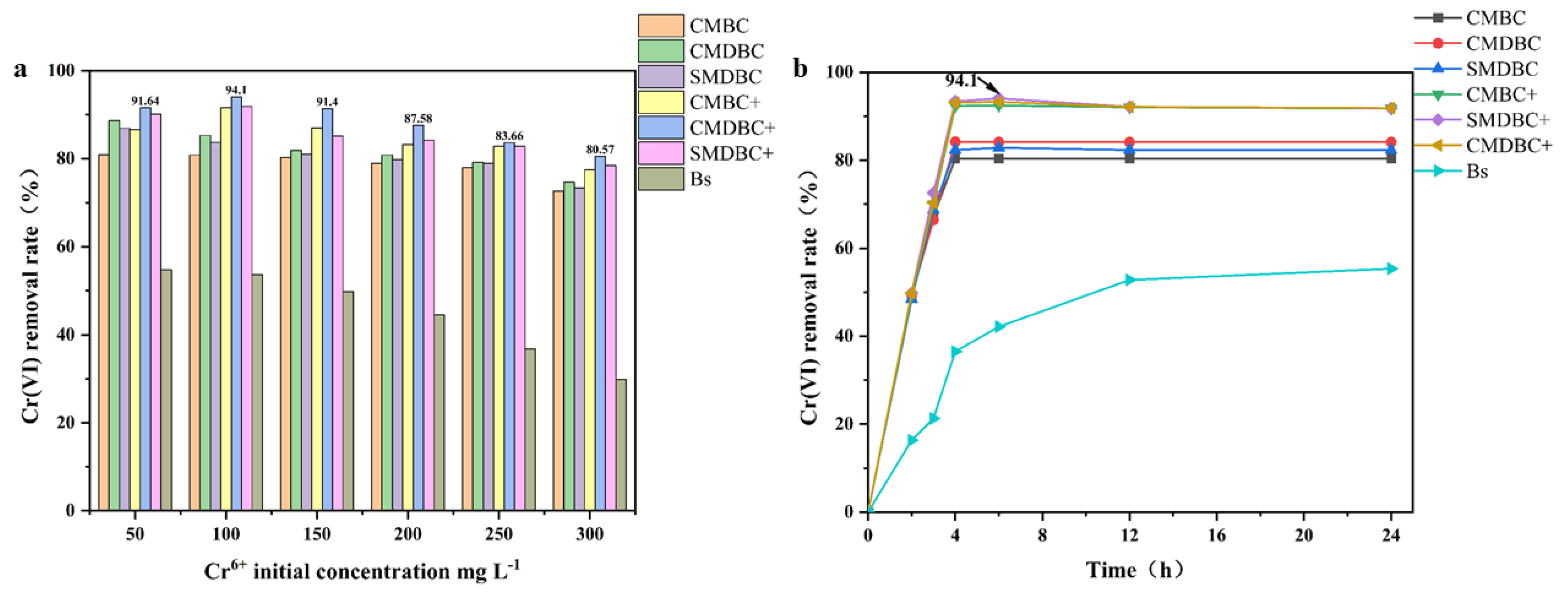
Figure 2a showed the Cr(VI) removal efficiency of the three materials, biochar, BIB and Bs, under different initial concentrations of Cr(VI) solution. At the lowest concentration (50 milligrams per liter), all three types of biochar materials achieved relatively high removal efficiencies within 6 h, ranging from 80.55% to 87.51%. In contrast, Fang et al. prepared a nZVI@CMBC composite material for the removal of Cr(VI), with a removal efficiency within 6 h of less than 20% [41]. CMDBC demonstrated a better removal capability, which was related to its larger specific surface area. Meanwhile, the Cr(VI) removal efficiency of Bs was significantly lower, and it further decreased as the initial Cr(VI) concentration increased. At 100 mg/L, the removal efficiency of these three biochars slightly decreased compared to that at 50 mg/L, but their relative performance trends remained consistent. When the initial Cr(VI) concentration was raised to 250 mg/L, removal efficiencies continued to decline, stabilizing within a narrow range of 78.84–80.39%. Notably, BIB consistently demonstrated superior adsorption capacity across all three tested concentrations. The CMDBC+ sample exhibited the highest removal rate, which was 91.64%, 94.1% and 91.4% in 50, 100 and 150 mg/L Cr(VI) solutions, respectively. This can illustrate that the adsorption efficiency of Cr(VI) was improved by Bacillus subtilis immobilization. However, when the concentration of Cr(VI) solution increased, the adsorption capacity of the three BIB materials declined slightly, which was mainly induced by the decrease in microbial activity. Because the adsorption efficiency of Bacillus subtilis (Bs) was significantly reduced at elevated Cr(VI) concentrations, its Cr(VI) reduction capacity declined markedly with increasing Cr(VI) dosage. Specifically, Bs achieved only 29.84% Cr(VI) reduction in a 300 mg/L Cr(VI) solution—substantially lower than the 54.72% reduction observed in a 50 mg/L Cr(VI) solution. This pronounced decrease is likely attributable to the relatively low tolerance of Bacillus subtilis to high Cr(VI) concentrations. In contrast, the Cr(VI) reduction efficiency of CMDBC+ decreased by only 13.53% across the same concentration range (50–300 mg/L Cr(VI)), suggesting that the biochar matrix serves as a protective shelter for Bacillus subtilis.
In an 100 mg/L Cr(VI) solution, the adsorption capacity of biochar, Bs and BIB with time was investigated, as shown in Figure 2b. Compared with Bs, the adsorption equilibrium of biochar and BIB was reached at about 24 h, which was earlier. From the 2nd hour to the 4th hour, Cr(VI) adsorption completed rapidly in biochar and BIB, and adsorption equilibrium was almost reached at 4 h. The slope of the curve from 2 to 4 h indicated that the adsorption rate of all three BIBs was higher than that of the raw biochar, and that the equilibrium adsorption capacity of BIB was higher than that of biochar. Since biochar enhanced the contact between Bacillus subtilis and Cr(VI), the removal of Cr(VI) was accelerated via a synergistic effect between biochar and Bacillus subtilis. However, prolonged exposure of the BIB materials to Cr(VI) compromised the viability of Bacillus subtilis, leading to a partial release of previously adsorbed or reduced Cr(VI) from the bacterial cells and a consequent slight increase in the aqueous Cr(VI) concentration. Overall, CMDBC+ exhibited superior and more pronounced Cr(VI) removal efficiency.
A remarkable synergistic effect was observed between biochar adsorption and Bacillus subtilis bioreduction during the removal of Cr(VI). This synergistic advantage was quantified through multidimensional comparative analysis. In a 100 mg/L Cr(VI) solution, the composite system (CMDBC+) achieved a removal efficiency of 94.1% within 4 h, which was increased 13% in comparison with biochar alone (CMDBC, 80.57%) and increased 39.38% comparing with Bacillus subtilis individual (Bs, 54.72%). In terms of adsorption capacity, the equilibrium adsorption capacity of the composite system (47.061 mg/g) was 3.768 mg/g higher than that of biochar alone (43.293 mg/g), and the synergistic increment accounted for 8.01% of the total adsorption capacity of the composite system. Stability assessments further demonstrated that under acute stress induced by a high Cr(VI) concentration (300 mg/L), the composite system displayed significantly enhanced robustness. Specifically, its attenuation rate of removal efficiency (13.53%) was 31.94% lower than that of Bacillus subtilis alone (45.47%). These findings confirmed the existence of a synergistic interaction between adsorption and bioreduction within the biochar–microbe integrated system (BIB). Collectively, the results demonstrated that biochar-mediated adsorption and enrichment established a localized, high-concentration microenvironment that was favorable for Cr(VI) reduction. Simultaneously, Bacillus subtilis bioreduced the highly toxic Cr(VI) to Cr(III), which can be easily immobilized by biochar. This interaction established a closed-loop “adsorption–reduction–fixation” synergy, significantly enhancing Cr(VI) removal efficiency, adsorption capacity, and operational stability under environmentally relevant stress conditions.

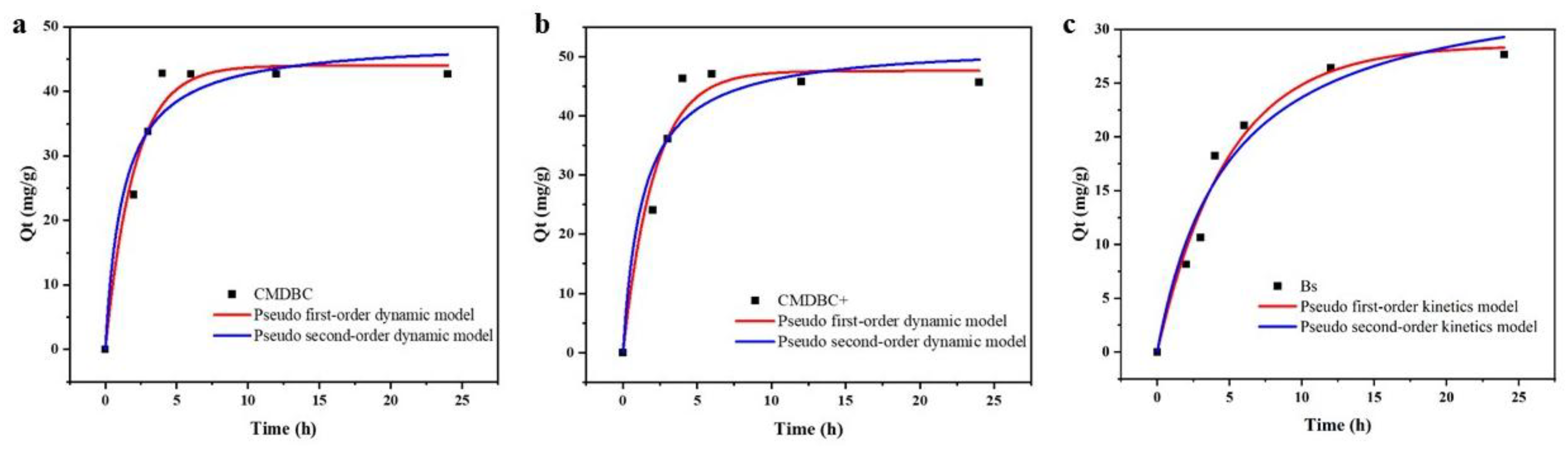
3.2.2. Adsorption Kinetics

Figure 3 presents the adsorption kinetic fitting curves of CMDBC, CMDBC+, and Bs for Cr(VI). The results demonstrate that CMDBC and CMDBC+ exhibited rapid adsorption and absorption kinetics, achieving adsorption equilibrium within 6 h. In contrast, Bs required 12 h to reach adsorption equilibrium. These findings indicated that the biochar carrier facilitated the overall adsorption process. The fitting results showed that the pseudo-first-order model was the most fit for the adsorption kinetic process of all three materials, whose R2 were 0.968, 0.954 and 0.972 for CMDBC, CMDBC+, and Bs, respectively (Table 3). Furthermore, the theoretical equilibrium adsorption capacities predicted by this model (44.001–47.643 mg/g) exhibited excellent agreement with the experimentally determined values (43.293–47.061 mg/g), thereby confirming its suitability for accurately describing the adsorption kinetics of all three adsorbents. The fitting result of the pseudo-first-order model suggested that Cr(VI) removal is predominantly governed by diffusion-controlled processes. Specifically, the rate constant k1 reflects the efficiency of mass transfer, while the equilibrium adsorption capacity Qe represents the total removal capacity. In parallel, the pseudo-second-order kinetic parameters imply a nonnegligible contribution from chemisorption, corroborating the involvement of chemical binding mechanisms. Notably, CMDBC+ exhibited both a relatively high k1 and a significantly enhanced Qe compared to either component alone. This superior performance stems from the synergistic interplay between the porous architecture of biochar, which facilitates rapid mass transfer, and the reductive activity of Bacillus subtilis, which expands the effective adsorption capacity via Cr(VI) reduction and subsequent immobilization.

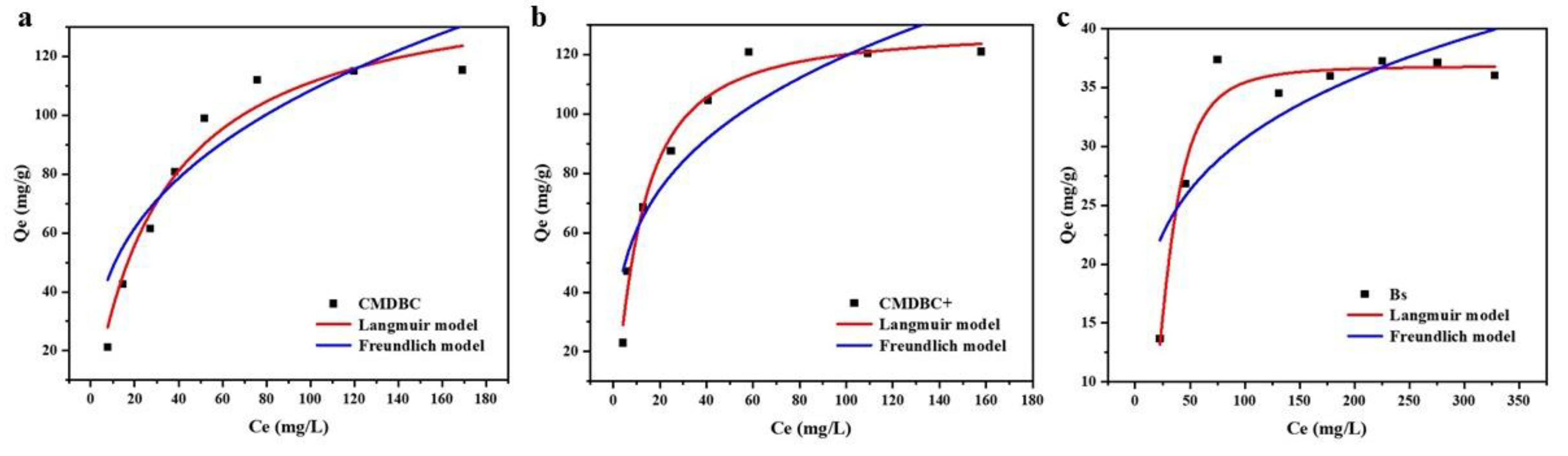
3.2.3. Adsorption Isotherm

The isothermal adsorption fitting results in Figure 4 demonstrate that the adsorption capacity of CMDBC, CMDBC+, and Bs for Cr(VI) increased with rising initial Cr(VI) concentration and eventually reached equilibrium at 115.35, 121.01 and 36.01 mg/g, which exhibits a typical concentration-dependent saturation behavior. The results showed that the correlation coefficient (R2 = 0.961) of the Langmuir model for fitting CMDBC was nearly the same as that of the Freundlich model (R2 = 0.960). Therefore, CMDBC possessed both single-layer and multi-layer adsorption properties. In contrast, Bs depended on active sites uniformly distributed on its surface, which followed the Langmuir isotherm adsorption model more closely. Consequently, CMDBC+ also displayed both monolayer and multilayer adsorption. Since Bs was uniformly immobilized on the CMDBC surface, the Langmuir model (R2 = 0.973) was a better fit for the CMDBC+ system (Table 4). The maximum adsorption capacity (Qmax) primarily depended on the intrinsic structural features of each material and the total number of effective adsorption sites. The Langmuir equilibrium constant (K1) directly reflects the affinity of the adsorbent for Cr(VI). Notably, CMDBC+ demonstrated a significantly higher K1 value (0.051 mg/g) when compared with CMDBC and Bs individually, highlighting the synergistic improvement provided by the “biochar had a multifunction of adsorption, enrichment, and microbial reduction fixation” mechanism in terms of both adsorption stability and selectivity. Collectively, this adsorption isotherm analysis and mechanistic interpretation provided a critical theoretical foundation for the “adsorption–reduction” synergistic system in remediating Cr(VI) contamination.

3.3. Microscopic Characterization of BIB After Cr(VI) Reduction

3.3.1. SEM-EDS Analysis

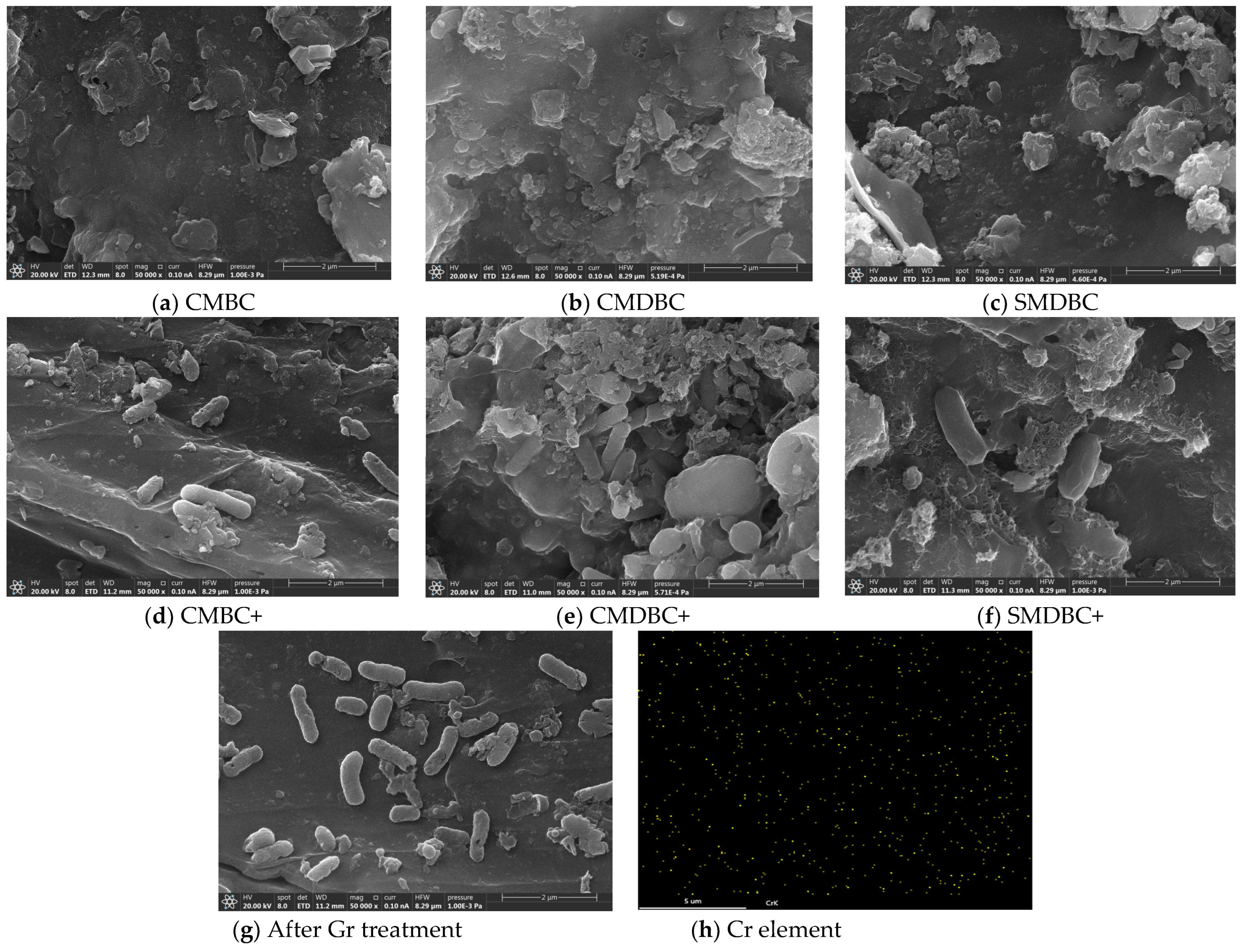
Figure 5d–f shows the three biochar samples loaded with Bacillus subtilis. As clearly observed, B. subtilis cells were uniformly attached to the biochar surfaces. Notably, the surface loading density of B. subtilis on CMDBC+ was significantly higher than that on the other two biochars, which was attributed to the substantially larger specific surface area of CMDBC+. In the absence of Cr(VI), the bacterial cells exhibit a typical shortrod morphology, with lengths ranging from 4 to 7 μm and smooth, regular surfaces. To more intuitively visualize the morphological changes in B. subtilis before and after Cr(VI) reduction by the biochar-immobilized bacteria (BIB), CMDBC+ was selected for SEM–EDS analysis (Figure 5g,h). A subset of Cr(VI)-treated cells displayed structural damage, including cell rupture and surface wrinkling, which is a phenomenon previously reported for other microorganisms exposed to Cr(VI) [15]. In addition, EDS analysis revealed that Cr(VI) exposed to CMDBC+ was uniformly distributed across its surface. The detection of Cr on the bacterial cells confirmed the adsorption or deposition of either Cr(VI) or its reduced form, Cr(III). The surface presence of Cr(VI) and Cr(III) on the adsorbed BIB can be identified via XPS analysis.

3.3.2. XPS and FTIR Analyses

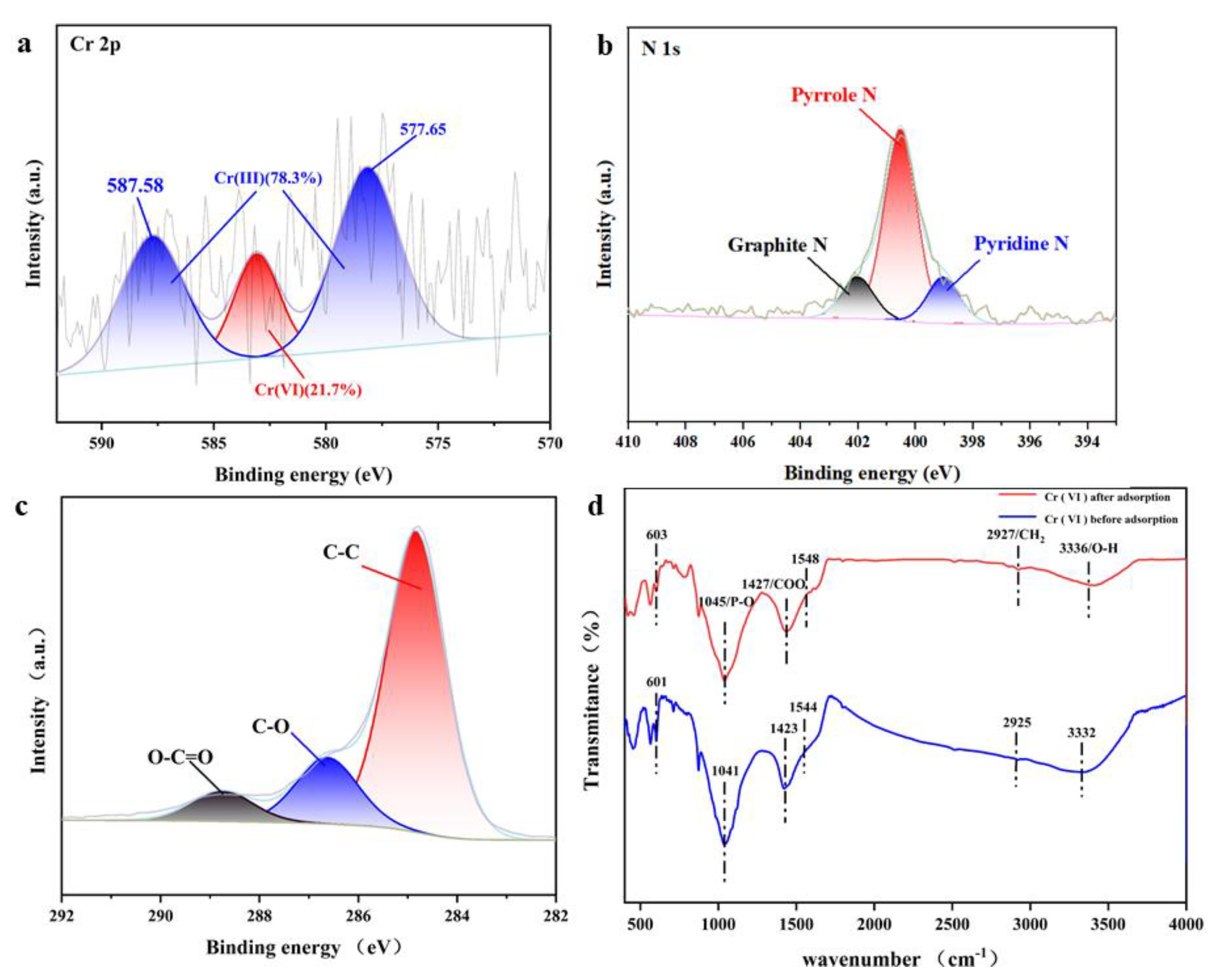
XPS analysis (Figure 6) further elucidated the mechanism underlying Cr(VI) removal by CMDBC+. The C 1s spectrum exhibited three characteristic peaks at 284.83, 286.68, and 288.89 eV, assignable to C–C, C–O, and O–C=O bonds, respectively, which further illustrated that hydroxyl and carboxyl groups can form stable surface complexes with Cr(VI). The N 1s spectrum showed three characteristic peaks at 398.89, 400.26 and 401.97 eV, and the pyrrole nitrogen content was the highest, which provided a guarantee for stable electron transport. The Cr(III)/Cr(VI) ratio was 3.61. The binding energies of 577.65, 583.08 and 587.58 eV were observed in the Cr 2p spectrum, corresponding to Cr2O3/CrPO4, Cr2O42− and Cr(OH)3, respectively. The detection of Cr2O3/Cr(OH)3 confirmed the successful reduction of Cr(VI) to Cr(III), while the presence of Cr2O72− indicated that a fraction of Cr(VI) was adsorbed onto the CMDBC surface without undergoing reduction, suggesting that oxygen-containing functional groups participated in the Cr(VI) removal process [42]. Cr 2p XPS analysis further revealed that Cr(VI) was predominantly reduced to Cr(III) via biological reduction, while a minor fraction of Cr was adsorbed onto the cell surface.
FTIR analysis (Figure 6d) of BIB before and after Cr(VI) reduction was conducted to further elucidate the binding mechanism between functional groups in BIB and chromium species. Prior to Cr(VI) reduction, characteristic absorption peaks of CMDBC+, which were assigned to polysaccharides, phosphoryl, amide II (N–H/C–N), amide I (C=O–N–H), alkyl, and hydroxyl groups, were observed at 601 cm−1, 1041 cm−1, 1423 cm−1, 1544 cm−1, 2927 cm−1, and 3332 cm−1, respectively. Following Cr(VI) reduction, these peaks shifted to 603 cm−1, 1045 cm−1, 1427 cm−1, 1548 cm−1, and 2927 cm−1, respectively, while the hydroxyl peak at 3332 cm−1 disappeared; such shifts are likely attributable to coordination interactions between Cr(III) and the corresponding functional groups [38]. A broad absorption peak centered at approximately 3332 cm−1 was observed, assignable to the N–H and O–H stretching vibrations of polysaccharides and proteins. This suggested that hydroxyl groups present on either the biochar or Bacillus subtilis surface may directly interact with Cr species. In addition, the absorption band near 601 cm−1 exhibited a marked decrease in intensity, indicating that surface-associated polysaccharides on Bacillus subtilis may contribute to Cr adsorption via electrostatic attraction [43]. It is worth noting that the hydroxyl group was not only involved in Cr(III) binding on Bacillus subtilis, but may also contributed to Cr(VI) reduction. Collectively, functional groups presented on both biochar and Bacillus subtilis surfaces act synergistically to mitigate Cr(VI) toxicity.

3.4. The Tolerance of Bacteria to Cr(VI) and Location of Active Cr(VI) Reductase

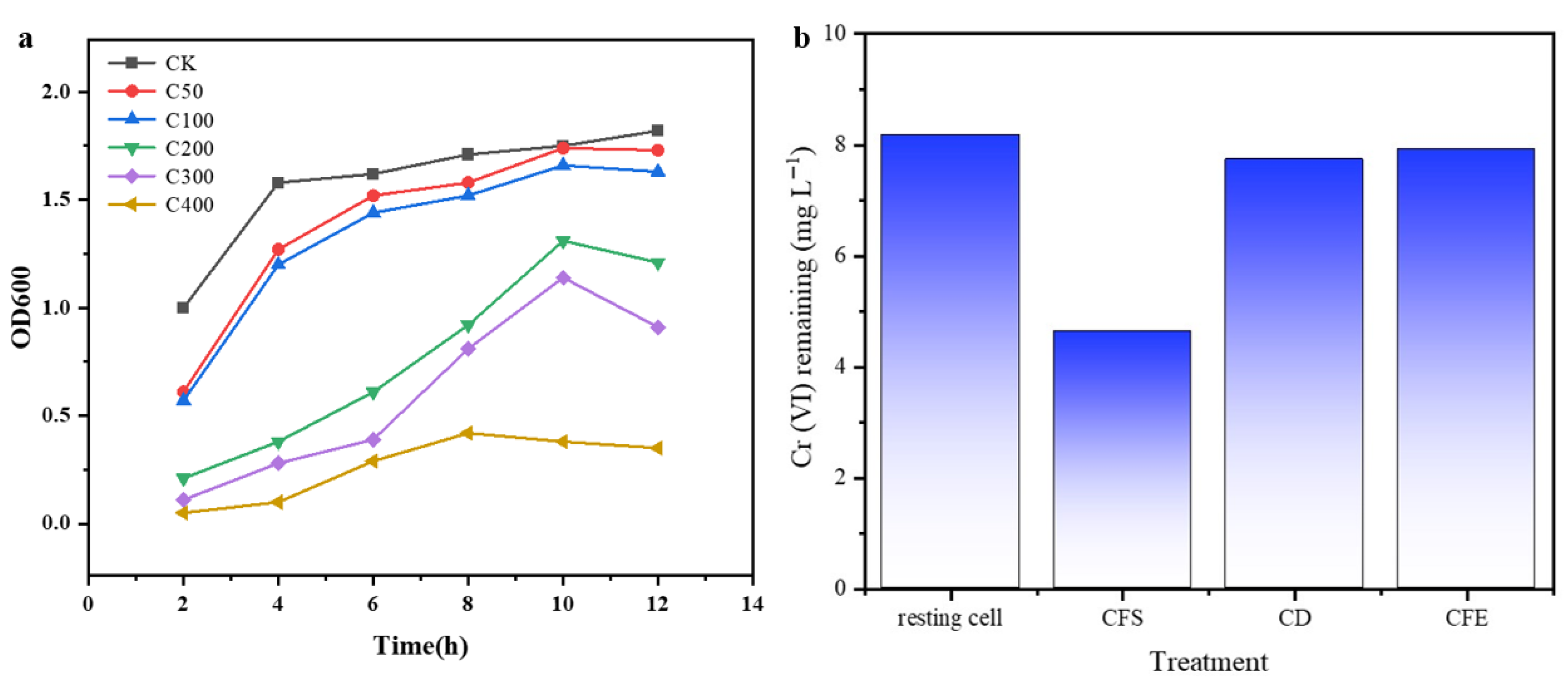
The OD600 value was directly proportional to the density of bacterial cells. Therefore, variation in OD600 reflected the growth dynamics of Bacillus subtilis in the culture medium. In this study, the growth of Bacillus subtilis was investigated under different concentrations of Cr(VI) (50, 100, 200, 300, and 400 mg/L). The corresponding curves of OD600 values were presented in Figure 7a. Under identical incubation times and other standardized culture conditions, the OD600 values exhibited a progressive decline with increasing Cr(VI) concentration, indicating a reduction in viable cell density. This trend suggested that elevated Cr(VI) levels exert inhibitory effects on microbial growth. When Bacillus subtilis grew naturally without Cr(VI), the OD600 value reached 1.82. At low concentrations (50–100 mg/L), the OD600 value decreased slightly. When the concentrations of Cr(VI) reached 200–300 mg/L, the Bacillus subtilis could still maintain a relatively high activity (OD600 = 0.91–1.21). But at high concentrations, the cell density of Bacillus subtilis had become much lower, which completely inhibited the growth of Bacillus subtilis. Collectively, these findings demonstrated that Bacillus subtilis can survive under low-level Cr(VI) exposure and exhibits a measurable tolerance to this heavy metal.
The reductases produced by Bacillus subtilis play a crucial role in the bioreduction of Cr(VI). Given that complex cellular structures enabled the synthesis of multiple reductases, we sought to identify the subcellular localization of the active Cr(VI)-reducing components. To this end, Cr(VI) removal efficiencies were comparatively evaluated using resting cells (intact cells), extracellular secretions (cell-free supernatant, CFS), cell debris (CD), and cell-free extract (CFE). After 48 h of incubation in a medium containing an initial Cr(VI) concentration of 10 mg/L at pH 7.0 and 37 °C, residual Cr(VI) concentrations were determined as follows: 8.18 mg/L for resting cells, 4.65 mg/L for CFS, 7.72 mg/L for CD, and 7.92 mg/L for CFE (Figure 7b). The significantly higher Cr(VI) removal efficiency observed with CFS compared to both CD and CFE strongly suggests that extracellularly secreted active substances constitute the primary mediators of Cr(VI) reduction by B. subtilis. Notably, CD and CFE also exhibited substantial Cr(VI) removal activity, achieving removal rates of 22.8% and 20.8%, respectively. Similarly, resting cells demonstrated a Cr(VI) removal rate of 18.8%, which may be attributable to combined contributions from surface adsorption, intracellular reducing agents, and inherent cellular accumulation capacity [44]. In general, Bacillus subtilis primarily reduced Cr(VI) through the extracellular secretion of reductases.

3.5. Mechanism of Cr(VI) Removal by BIB

The porous architecture and high specific surface area of biochar furnish abundant adsorption sites for Cr(VI), thereby facilitating its enrichment on the biochar surface or within its pores. This localization enhances the contact frequency between Cr(VI) and microorganisms, promoting its microbial reduction to Cr(III) by bacterial cells. Owing to the presence of hydroxyl (–OH) and phosphate (P–O) functional groups in BIB, the generated Cr(III) readily associates with surface-bound or intracellular anions, such as OH and PO43− to form stable precipitates (e.g., Cr(OH)3 or CrPO4). These precipitates effectively suppress chromium migration and transformation, thereby mitigating its biological toxicity [45].
In Bacillus subtilis cells, Cr(VI) is usually actively transported into the cell through sulfate transporters (Figure 8). After entering cells, Cr(VI) is translocated with the assistance of specific metal-binding proteins, and is finally reduced to low-toxicity Cr(III) through highly unstable intermediate oxidation states (such as Cr(V) and Cr(IV)). This study shows that extracellular reduction is the main way for Bacillus subtilis to remove Cr(VI) and that this process is mediated by enzymes. In addition, a small amount of Cr(VI) is removed by the cell membrane, membrane reducing protein and intracellular reducing agent, and the specific mechanisms include adsorption, biological reduction and intracellular accumulation [36]. Bacillus subtilis can secrete a variety of active extracellular reductases that directly, extracellularly reduce Cr(VI). The resulting reduced chromium primarily exists as water-soluble organic Cr(III) complexes, which are unable to cross the cell membrane; consequently, Cr(III) remains localized outside the cell. [46]. At the same time, Cr(VI) can enter cells via the sulfate transport pathway owing to the structural similarity between chromate (CrO42−) and sulfate (SO42−) ions, followed by rapid intracellular reduction by reductases [47].
The Cr(VI) reduced on the cell surface is typically released into the external environment and partially adsorbed onto functional groups present on the biochar surface [47]. Extracellular Cr(VI) reduction is primarily mediated by secreted reducing agents, such as reductases and secondary metabolites. Under adverse environmental conditions, microorganisms can substantially upregulate the synthesis of these agents to mitigate Cr(VI)-induced cellular stress. The resulting reduced chromium species are predominantly found in the supernatant as water-soluble Cr(III) compounds. Overall, extracellular Cr(VI) reduction confers a distinct physiological advantage to microorganisms, as it circumvents energy-dependent intracellular Cr uptake and associated toxicological risks [48].

4. Conclusions

This study introduces a novel technology for remediating Cr(VI)-contaminated water, utilizing Bacillus subtilis immobilized on biochar derived from chicken manure biogas residue. At an initial Cr(VI) concentration of 100 mg/L, the immobilized bacterial–biochar composite (BIB) achieved removal efficiencies of 91.58–94.1% within 4 h—10–14 percentage points higher than those attained by biochar alone. Comparative analyses reveal that re-carbonization following anaerobic digestion markedly enhances adsorption performance relative to raw manure-derived biochar. The high specific surface area of biogas residue biochar not only provides an expanded habitat for microbial colonization but also facilitates Cr(VI) adsorption owing to its abundant carboxyl group content. Furthermore, microbial immobilization introduces additional amino- and phosphorus-containing functional groups onto the biochar surface, thereby synergistically enhancing both Cr(VI) adsorption and subsequent reduction. Concurrently, extracellular enzymes secreted by Bacillus subtilis play a critical role in the enzymatic reduction of Cr(VI) to the less toxic Cr(III). The resulting composite—Bacillus subtilis immobilized on chicken manure biogas residue biochar—demonstrates excellent operational stability, robust Cr(VI) removal capacity, and minimal secondary environmental impact, highlighting its strong potential for practical application in the remediation of Cr(VI)-contaminated water and soil.

Author Contributions

Writing—original draft, H.W.; Formal analysis, H.W.; Methodology, H.W. and F.W.; Investigation, L.D. and C.G.; Project administration, F.W. and M.L.; Software, D.Z. and S.W.; Supervision, L.D., C.G., W.Y. and S.W.; Funding acquisition, F.W.; Resources, F.W. and M.L.; Writing—review and editing, F.W.; Data curation, H.W. and D.Z.; Validation, W.Y. and S.W. All authors have read and agreed to the published version of the manuscript.

Funding

This work is supported by the National Natural Science Foundation of China (32472026, 52130610) and Innovation Ability Improvement Project of Science and Technology-based Small and Medium-sized Enterprises in Shandong Province (2023TSGC0994).

Data Availability Statement

The original contributions presented in this study are included in the article. Further inquiries can be directed to the corresponding author.

Conflicts of Interest

Author Min Lv was employed by the Shandong Hengsheng Ecological Environment Co., Ltd., Zibo, Shandong 255000, China. The products used in this article were provided by Shandong Hengsheng Ecological Environment Co., Ltd., Zibo, Shandong 255000, China. The author declares that the Shandong Hengsheng Ecological Environment Co., Ltd. did not participate in the design of the research, the collection, analysis, or interpretation of the data, nor did they participate in the writing of this article or the decision on whether to publish it. The remaining authors declare that the research was conducted in the absence of any commercial or financial relationships that could be construed as a potential conflict of interest.

References

  1. Ahmed, M.B.; Zhou, J.L.; Ngo, H.H.; Guo, W.; Johir, M.A.H.; Sornalingam, K.; Belhaj, D.; Kallel, M. Nano-Fe0 immobilized onto functionalized biochar gaining excellent stability during sorption and reduction of chloramphenicol via transforming to reusable magnetic composite. Chem. Eng. J. 2017, 322, 571–581. [Google Scholar] [CrossRef]
  2. Lin, J.; Ye, W.; Baltaru, M.-C.; Tang, Y.P.; Bernstein, N.J.; Gao, P.; Balta, S.; Vlad, M.; Volodin, A.; Sotto, A.; et al. Tight ultrafiltration membranes for enhanced separation of dyes and Na2SO4 during textile wastewater treatment. J. Membr. Sci. 2016, 514, 217–228. [Google Scholar] [CrossRef]
  3. Ye, J.; Li, C.; Yan, Y. Core-shell ZIF-67/ZIF-8-derived sea urchin-like cobalt/nitrogen Co-doped carbon nanotube hollow frameworks for ultrahigh adsorption and catalytic activities. J. Taiwan Inst. Chem. Eng. 2020, 112, 202–211. [Google Scholar] [CrossRef]
  4. Chen, D.; Yang, K.; Wang, H.; Zhou, J.; Zhang, H. Cr(vi) removal by combined redox reactions and adsorption using pectin-stabilized nanoscale zero-valent iron for simulated chromium contaminated water. RSC Adv. 2015, 5, 65068–65073. [Google Scholar] [CrossRef]
  5. Wan, Z.; Cho, D.-W.; Tsang, D.C.W.; Li, M.; Sun, T.; Verpoort, F. Concurrent adsorption and micro-electrolysis of Cr(VI) by nanoscale zerovalent iron/biochar/Ca-alginate composite. Environ. Pollut. 2019, 247, 410–420. [Google Scholar] [CrossRef]
  6. Yang, D.; Liu, J.; Wang, Q.; Hong, H.; Zhao, W.; Chen, S.; Yan, C.; Lu, H. Geochemical and probabilistic human health risk of chromium in mangrove sediments: A case study in Fujian, China. Chemosphere 2019, 233, 503–511. [Google Scholar] [CrossRef]
  7. Ahmad, S.; Gao, F.; Lyu, H.; Ma, J.; Zhao, B.; Xu, S.; Ri, C.; Tang, J. Temperature-dependent carbothermally reduced iron and nitrogen doped biochar composites for removal of hexavalent chromium and nitrobenzene. Chem. Eng. J. 2022, 450, 138006. [Google Scholar] [CrossRef]
  8. Varjani, S.J. Microbial degradation of petroleum hydrocarbons. Bioresour. Technol. 2017, 223, 277–286. [Google Scholar] [CrossRef]
  9. Kiamarsi, Z.; Kafi, M.; Soleimani, M.; Nezami, A.; Lutts, S. Conjunction of Vetiveria zizanioides L. and oil-degrading bacteria as a promising technique for remediation of crude oil-contaminated soils. J. Clean. Prod. 2020, 253, 119719. [Google Scholar] [CrossRef]
  10. Rodríguez-Uribe, M.L.; Peña-Cabriales, J.J.; Rivera-Cruz, M.d.C.; Délano-Frier, J.P. Native bacteria isolated from weathered petroleum oil-contaminated soils in Tabasco, Mexico, accelerate the degradation petroleum hydrocarbons in saline soil microcosms. Environ. Technol. Innov. 2021, 23, 101781. [Google Scholar] [CrossRef]
  11. Wu, P.; Wang, Z.; Bhatnagar, A.; Jeyakumar, P.; Wang, H.; Wang, Y.; Li, X. Microorganisms-carbonaceous materials immobilized complexes: Synthesis, adaptability and environmental applications. J. Hazard. Mater. 2021, 416, 125915. [Google Scholar] [CrossRef]
  12. Jobby, R.; Jha, P.; Yadav, A.K.; Desai, N. Biosorption and biotransformation of hexavalent chromium [Cr(VI)]: A comprehensive review. Chemosphere 2018, 207, 255–266. [Google Scholar] [CrossRef]
  13. Dong, G.; Wang, Y.; Gong, L.; Wang, M.; Wang, H.; He, N.; Zheng, Y.; Li, Q. Formation of soluble Cr(III) end-products and nanoparticles during Cr(VI) reduction by Bacillus cereus strain XMCr-6. Biochem. Eng. J. 2013, 70, 166–172. [Google Scholar] [CrossRef]
  14. Tan, H.; Wang, C.; Zeng, G.; Luo, Y.; Li, H.; Xu, H. Bioreduction and biosorption of Cr(VI) by a novel Bacillus sp. CRB-B1 strain. J. Hazard. Mater. 2020, 386, 121628. [Google Scholar] [CrossRef] [PubMed]
  15. Wu, M.; Li, Y.; Li, J.; Wang, Y.; Xu, H.; Zhao, Y. Bioreduction of hexavalent chromium using a novel strain CRB-7 immobilized on multiple materials. J. Hazard. Mater. 2019, 368, 412–420. [Google Scholar] [CrossRef] [PubMed]
  16. Röling Wilfred, F.M.; Milner Michael, G.; Jones, D.M.; Fratepietro, F.; Swannell Richard, P.J.; Daniel, F.; Head Ian, M. Bacterial Community Dynamics and Hydrocarbon Degradation During a Field-Scale Evaluation of Bioremediation on a Mudflat Beach Contaminated with Buried Oil. Appl. Environ. Microbiol. 2004, 70, 2603–2613. [Google Scholar] [CrossRef]
  17. Wang, Z.-Y.; Xu, Y.; Wang, H.-Y.; Zhao, J.; Gao, D.-M.; Li, F.-M.; Xing, B. Biodegradation of Crude Oil in Contaminated Soils by Free and Immobilized Microorganisms. Pedosphere 2012, 22, 717–725. [Google Scholar] [CrossRef]
  18. Lang, F.S.; Destain, J.; Delvigne, F.; Druart, P.; Ongena, M.; Thonart, P. Biodegradation of Polycyclic Aromatic Hydrocarbons in Mangrove Sediments Under Different Strategies: Natural Attenuation, Biostimulation, and Bioaugmentation with Rhodococcus erythropolis T902.1. Water Air Soil Pollut. 2016, 227, 297. [Google Scholar] [CrossRef]
  19. Xu, X.; Zhou, H.; Chen, X.; Wang, B.; Jin, Z.; Ji, F. Biodegradation potential of polycyclic aromatic hydrocarbons by immobilized Klebsiella sp. in soil washing effluent. Chemosphere 2019, 223, 140–147. [Google Scholar] [CrossRef]
  20. Barreto, R.V.G.; Hissa, D.C.; Paes, F.A.; Grangeiro, T.B.; Nascimento, R.F.; Rebelo, L.M.; Craveiro, A.A.; Melo, V.M.M. New approach for petroleum hydrocarbon degradation using bacterial spores entrapped in chitosan beads. Bioresour. Technol. 2010, 101, 2121–2125. [Google Scholar] [CrossRef]
  21. Guo, J.; Chen, C.; Chen, W.; Jiang, J.; Chen, B.; Zheng, F. Effective immobilization of Bacillus subtilis in chitosan-sodium alginate composite carrier for ammonia removal from anaerobically digested swine wastewater. Chemosphere 2021, 284, 131266. [Google Scholar] [CrossRef] [PubMed]
  22. Fu, Z.; Zhao, J.; Guan, D.; Wang, Y.; Xie, J.; Zhang, H.; Sun, Y.; Zhu, J.; Guo, L. A comprehensive review on the preparation of biochar from digestate sources and its application in environmental pollution remediation. Sci. Total Environ. 2024, 912, 168822. [Google Scholar] [CrossRef] [PubMed]
  23. Wang, B.; Ma, Y.; Lee, X.; Wu, P.; Liu, F.; Zhang, X.; Li, L.; Chen, M. Environmental-friendly coal gangue-biochar composites reclaiming phosphate from water as a slow-release fertilizer. Sci. Total Environ. 2021, 758, 143664. [Google Scholar] [CrossRef] [PubMed]
  24. Tang, J.; Liu, Z.; Liu, W.; Finfrock, Y.Z.; Ye, Z.; Liu, X.; Liu, P. Application of Fe-doped biochar in Cr(VI) removal from washing wastewater and residual Cr(VI) immobilization in contaminated soil. J. Clean. Prod. 2022, 380, 134973. [Google Scholar] [CrossRef]
  25. Chen, M.; Chen, X.; Xu, X.; Xu, Z.; Zhang, Y.; Song, B.; Tsang, D.C.W.; Xu, N.; Cao, X. Biochar colloids facilitate transport and transformation of Cr(VI) in soil: Active site competition coupling with reduction reaction. J. Hazard. Mater. 2022, 440, 129691. [Google Scholar] [CrossRef]
  26. Ma, Z.T.; Wang, Q.; Wang, X.W.; Chen, X.S.; Wang, Y.F.; Mao, Z.Q. Effects of Biochar on Replant Disease by Amendment Soil Environment. Commun. Soil Sci. Plant Anal. 2021, 52, 673–685. [Google Scholar] [CrossRef]
  27. Dike, C.C.; Shahsavari, E.; Surapaneni, A.; Shah, K.; Ball, A.S. Can biochar be an effective and reliable biostimulating agent for the remediation of hydrocarbon-contaminated soils? Environ. Int. 2021, 154, 106553. [Google Scholar] [CrossRef]
  28. Qi, W.-Y.; Chen, H.; Wang, Z.; Xing, S.-F.; Song, C.; Yan, Z.; Wang, S.-G. Biochar-immobilized Bacillus megaterium enhances Cd immobilization in soil and promotes Brassica chinensis growth. J. Hazard. Mater. 2023, 458, 131921. [Google Scholar] [CrossRef]
  29. Louati, Z.; Wahab, M.A.; Drapanauskaitė, D.; Doyeni, M.; Bakšinskaitė, A.; Žiūra, K.; Zvicevičius, E.; Jedidi, N.; Trabelsi, I.; Barčauskaitė, K. Benefits of pig manure digestate-derived biochar on soil properties and plant growth. Euro-Mediterr. J. Environ. Integr. 2025, 10, 2789–2802. [Google Scholar] [CrossRef]
  30. Ma, S.; Song, C.-S.; Chen, Y.; Wang, F.; Chen, H.-L. Hematite enhances the removal of Cr(VI) by Bacillus subtilis BSn5 from aquatic environment. Chemosphere 2018, 208, 579–585. [Google Scholar] [CrossRef]
  31. Li, R.; Wang, B.; Niu, A.; Cheng, N.; Chen, M.; Zhang, X.; Yu, Z.; Wang, S. Application of biochar immobilized microorganisms for pollutants removal from wastewater: A review. Sci. Total Environ. 2022, 837, 155563. [Google Scholar] [CrossRef]
  32. Cong, P.; Song, S.; Song, W.; Dong, J.; Zheng, X. Biochars prepared from biogas residues: Temperature is a crucial factor that determines their physicochemical properties. Biomass Convers. Biorefinery 2022, 14, 12843–12856. [Google Scholar] [CrossRef]
  33. Sharma, A.; Maurya, N.; Singh, S.K.; Sundaram, S. Investigation on synergetic strategy for the rejuvenation of Cr (VI) contaminated soil using biochar-immobilized bacteria and cyanobacteria consortia. J. Environ. Chem. Eng. 2024, 12, 112034. [Google Scholar] [CrossRef]
  34. Ahmed, M.B.; Zhou, J.L.; Ngo, H.H.; Guo, W. Insight into biochar properties and its cost analysis. Biomass Bioenergy 2016, 84, 76–86. [Google Scholar] [CrossRef]
  35. Doshi, H.; Ray, A.; Kothari, I.L. Biosorption of Cadmium by Live and Dead Spirulina: IR Spectroscopic, Kinetics, and SEM Studies. Curr. Microbiol. 2007, 54, 213–218. [Google Scholar] [CrossRef] [PubMed]
  36. Chen, Z.; Huang, Z.; Cheng, Y.; Pan, D.; Pan, X.; Yu, M.; Pan, Z.; Lin, Z.; Guan, X.; Wu, Z. Cr(VI) uptake mechanism of Bacillus cereus. Chemosphere 2012, 87, 211–216. [Google Scholar] [CrossRef]
  37. Mary Mangaiyarkarasi, M.S.; Vincent, S.; Janarthanan, S.; Subba Rao, T.; Tata, B.V.R. Bioreduction of Cr(VI) by alkaliphilic Bacillus subtilis and interaction of the membrane groups. Saudi J. Biol. Sci. 2011, 18, 157–167. [Google Scholar] [CrossRef]
  38. Karthik, C.; Barathi, S.; Pugazhendhi, A.; Ramkumar, V.S.; Thi, N.B.D.; Arulselvi, P.I. Evaluation of Cr(VI) reduction mechanism and removal by Cellulosimicrobium funkei strain AR8, a novel haloalkaliphilic bacterium. J. Hazard. Mater. 2017, 333, 42–53. [Google Scholar] [CrossRef]
  39. Xie, Z.; Liu, X.; Sun, X.; Lin, W.; Liang, M.; Xie, H.; Gao, W.; Liu, J.; Cao, W.; Liu, H. Engineering Aspergillus niger for Effective Bioremoval of Hexavalent Chromium from Water. ACS ES&T Water 2024, 4, 466–475. [Google Scholar] [CrossRef]
  40. Arivalagan, P.; Singaraj, D.; Haridass, V.; Kaliannan, T. Removal of cadmium from aqueous solution by batch studies using Bacillus cereus. Ecol. Eng. 2014, 71, 728–735. [Google Scholar] [CrossRef]
  41. Fang, S.; Huang, X.; Xie, S.; Du, J.; Zhu, J.; Wang, K.; Zhuang, Q.; Huang, X. Removal of Chromium (VI) by a Magnetic Nanoscale Zerovalent Iron–Assisted Chicken Manure-Derived Biochar: Adsorption Behavior and Synergetic Mechanism. Front. Bioeng. Biotechnol. 2022, 10, 935525. [Google Scholar] [CrossRef]
  42. Yuan, J.; Pang, Z.; Liu, Q.; Huang, L.; Liu, Y.; Liao, J.; Luo, L.; Feng, Y. Plant endophyte immobilization technology: A promising approach for chromium-contaminated water and soil remediation. J. Hazard. Mater. 2024, 477, 135320. [Google Scholar] [CrossRef]
  43. Dhal, B.; Thatoi, H.; Das, N.; Pandey, B.D. Reduction of hexavalent chromium by Bacillus sp. isolated from chromite mine soils and characterization of reduced product. J. Chem. Technol. Biotechnol. 2010, 85, 1471–1479. [Google Scholar] [CrossRef]
  44. Poljsak, B.; Pócsi, I.; Raspor, P.; Pesti, M. Interference of chromium with biological systems in yeasts and fungi: A review. J. Basic Microbiol. 2010, 50, 21–36. [Google Scholar] [CrossRef] [PubMed]
  45. Ahmad, S.; Liu, X.; Liu, L.; Waqas, M.; Zhang, J.; Hassan, M.A.; Zhang, S.; Pan, B.; Tang, J. Remediation of chromium contaminated water and soil by nitrogen and iron doped biochars. Sci. Total Environ. 2024, 954, 176435. [Google Scholar] [CrossRef]
  46. Das, S.; Ram, S.S.; Sahu, H.K.; Rao, D.S.; Chakraborty, A.; Sudarshan, M.; Thatoi, H.N. A study on soil physico-chemical, microbial and metal content in Sukinda chromite mine of Odisha, India. Environ. Earth Sci. 2012, 69, 2487–2497. [Google Scholar] [CrossRef]
  47. Cheng, Y.; Yongming, X.; Zheng, J.; Zhaoxian, W.; Zhi, C.; Xiaoyan, M.; Bin, L.; Zhang, L. Identification and characterization of the chromium (VI) responding protein from a newly isolated Ochrobactrum anthropi CTS-325. J. Environ. Sci. 2009, 21, 1673–1678. [Google Scholar] [CrossRef] [PubMed]
  48. Cheung, K.H.; Gu, J.-D. Mechanism of hexavalent chromium detoxification by microorganisms and bioremediation application potential: A review. Int. Biodeterior. Biodegrad. 2007, 59, 8–15. [Google Scholar] [CrossRef]
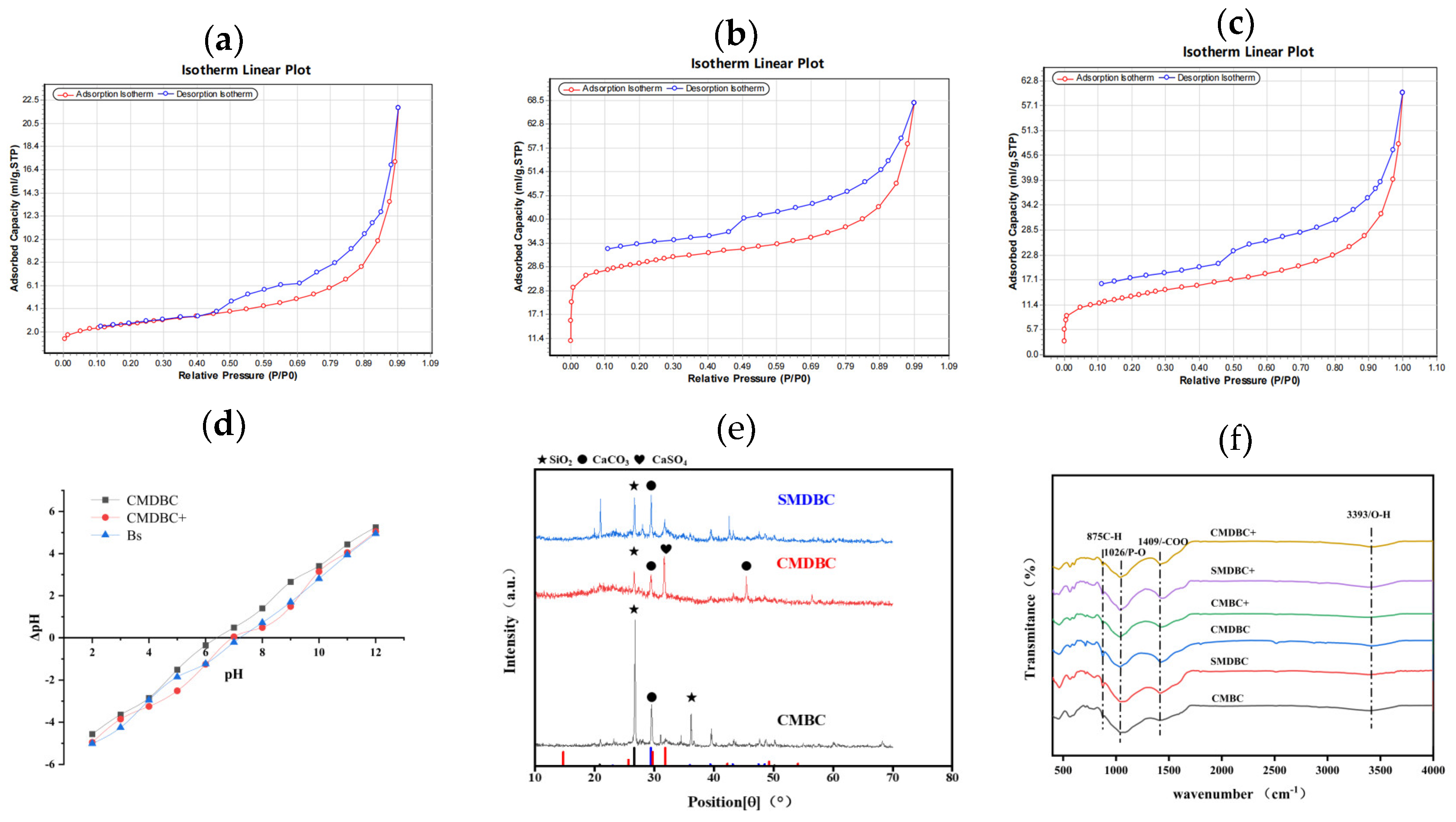
Figure 1. (a) The isotherm linear plot of CMBC; (b) The isotherm linear plot of CMDBC; (c) The isotherm linear plot of SMDBC; (d) pHPZC for CMDBC, CMDBC+, and Bs; (e) XRD analysis of biochar; (f) FTIR analysis of biochar and BIB.
Separations 13 00069 g001
Figure 2. (a) The removal efficiency of Cr(VI) by biochar, Bs and BIB at different Cr(VI) concentrations. (b) The removal efficiency of Cr(VI) by each material at a Cr(VI) concentration of 100 mg/L.
Separations 13 00069 g002
Figure 3. Adsorption kinetics of (a) CMDBC, (b) CMDBC+ and (c) Bs to Cr(VI).
Separations 13 00069 g003
Figure 4. Adsorption isotherm of (a) CMDBC, (b) CMDBC+ and (c) Bs to Cr(VI).
Separations 13 00069 g004
Figure 5. (a) SEM image of CMBC; (b) SEM image of CMDBC; (c) SEM image of SMDBC; (d) SEM image of CMBC+; (e) SEM image of CMDBC+; (f) SEM image of SMDBC+; (g) SEM images of CMDBC+ after 100 mg/L Cr(VI) treatment. (h) The element positioning diagram for Cr.
Separations 13 00069 g005
Figure 6. (ac) XPS of CMDBC+ treated with 100 mg·L−1 Cr(VI). (d) FTIR analysis of 100 mg·L−1 Cr(VI) treated CMDBC+.
Separations 13 00069 g006
Figure 7. (a) The growth curve of Bacillus subtilis at different Cr(VI) concentrations; (b) the removal efficiency of Cr(VI) by different cellular components.
Separations 13 00069 g007
Figure 8. Adsorption and reduction in Cr(VI) on biochar surface and reduction in Cr(VI) by Bacillus subtilis.
Separations 13 00069 g008
Table 1. Specific surface area and pore structure analysis of biochar.
BiocharSpecific
Surface
Area/(m2/g)
Average
Pore Size
/nm
Total Hole
Volume
/(cm3/g)
Pore Size Distribution
(%)
MicroporeMesoporeMacropore
CMBC9.636412.8260.0313.1173.9322.96
CMDBC94.2774.4550.10534.3150.9214.77
SMDBC45.5376.8780.07813.2769.2517.48
Table 2. Ultimate analysis of biochar.
BiocharUltimate Analysis (%)Ash Content (%)Atomic Ratio (%)
CNHOH/CO/C
CMBC24.950.740.8420.7952.680.4080.645
CMDBC24.800.771.2335.9837.220.6121.088
SMDBC24.420.791.1329.4044.260.5520.899
Table 3. Adsorption kinetics parameters of CMDBC, CMDBC+ and Bs.
AdsorbentPseudo First-Order KineticPseudo Second-Order Kinetic
k1/min−1Qe/(mg/g)R2k2/min−1Qe/(mg/g)R2
CMDBC0.49543.9990.968390.01648.1150.93259
CMDBC+0.47747.6430.953600.01452.2990.91026
Bs0.20528.5040.971700.00535.2810.95207
Table 4. Adsorption Isotherm parameters of CMDBC, CMDBC+ and Bs.
AdsorbentLangmuir ModelFreundlich Model
Qmax/(mg/g)K1/(L/mg)R2K2/(L/mg)1/nR2
CMDBC147.6160.0300.9610821.5750.3510.96046
CMDBC+128.7150.0510.9729530.9470.2940.82663
Bs36.8310.0130.9461811.0210.2220.59579
Disclaimer/Publisher’s Note: The statements, opinions and data contained in all publications are solely those of the individual author(s) and contributor(s) and not of MDPI and/or the editor(s). MDPI and/or the editor(s) disclaim responsibility for any injury to people or property resulting from any ideas, methods, instructions or products referred to in the content.