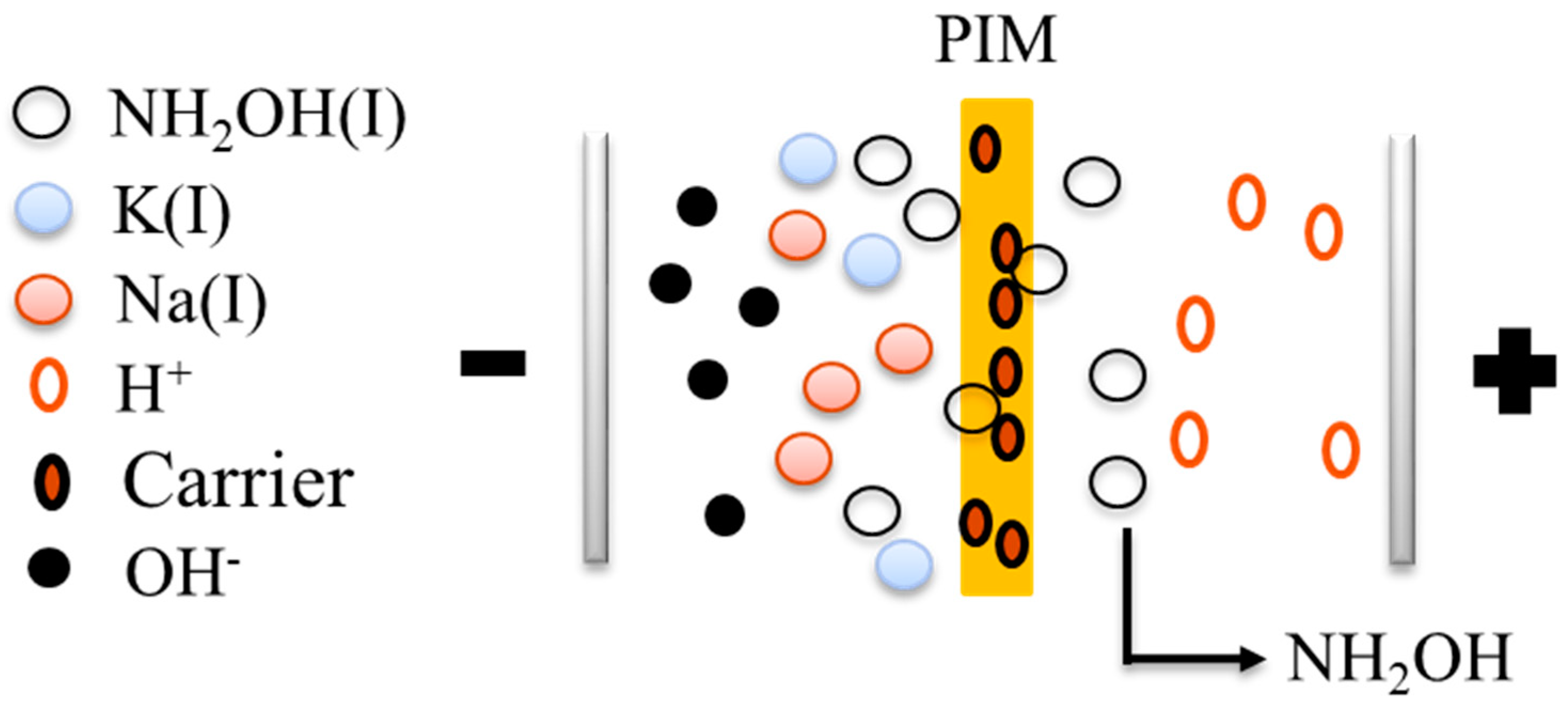
Abstract
Selective separation of hydroxylamine (HA) from metal ions to prepare high-purity HA remains a challenge. In this study, given that HA can react with carbonyl compounds, TTA (thenoyltrifluoroacetone) was screened as a carrier to prepare the polymer inclusion membrane (PIM), which was used to separate HA from metal and inorganic acid ions. The experimental results demonstrated that the PIM exhibited good selectivity for HA. During the PIM process, the proton gradient served as a driving force to transport NH2OH(I). The electrodialysis (ED) process was used to efficiently and continuously provide proton gradient without introducing other ions, which coupled with PIM to separate HA. Under the optimum conditions, the separation factors of NH2OH(I)/Na(I) and NH2OH(I)/K(I) were 30.81 and 35.11; the purity of HA was 99.4%, indicating that the PIM-ED process can be used for high-purity preparation of HA.
1. Introduction
Hydroxylamine (HA) is widely used in the chemical, pharmaceutical, and electronic industries [1,2,3]. HA is primarily produced through the reaction of HA salts with inorganic bases and then separated by distillation or ion exchange [4]. The separation methods with low selectivity and efficiency result in the HA product containing certain metal ions and inorganic acid ions [4,5]. The residual metal ions and inorganic acid ions could accelerate the decomposition of HA products and limit their application [6,7,8].
A polymer inclusion membrane (PIM) is developed from a liquid membrane. PIMs are composed of a carrier and a base polymer, where the carrier is incorporated into the entangled chains of the base polymer and can separate target ions with high selectivity through specific binding of the carrier to the target ions [9,10,11,12]. Due to their advantages of simultaneous extraction and stripping, good flexibility, and high selectivity, PIMs have been used to separate metal ions and small organic molecules [11,12,13,14,15,16]. For instance, Cai et al. [12] prepared a PIM by selecting TTA and TOPO as carriers for the separation of Li(I) from Na(I) and K. The separation factors of Li(I)/Na(I) and Li(I)/K(I) were 54.25 and 50.60, respectively. O’Bryan [13] used Aliquat336 as a carrier and PVDF-HFP as a base polymer to separate SCN−, and the PIM showed good transport performance for SCN−. Almeida et al. [14] selected dinonylnaphthalene sulfonic acid (DNNS) as a carrier to prepare PIM, which has been used in monitoring ammonia contamination in waters; the PIM showed high selectivity for the ammonium ion. Mwakalesi et al. [15] used polymer inclusion membranes (PIMs) with anacardic acid (AA) as a carrier for the extraction and transport of 4-amino-2-chloropyridine (ACP), paraquat, and diquat as representative target solutes of organic pesticide residues in aqueous solutions. The transport efficiency of ACP, paraquat, and diquat reached 98%, 100%, and 100%. Casadellà et al. [16] developed a polymer inclusion membrane selective for ammonium using tripodal pyrazole substituted benzene as the ionophore. As the content of the ionophore increased from 2 wt.% to 5 wt.%, the selectivity of NH4+/Na+ and NH4+/K+ was reduced from 13.07 to 9.33 and from 14.15 to 9.57. Based on enhancing the different affinities between the metal ions and the carrier, a polymer inclusion membrane with Aliquat336 as the carrier was prepared to separate Mo (VI) and V(V) ions with similar properties; the separation factor of Mo(VI) and V(V) achieved 333.4 [17]. Depending on the property of HA to react with carbonyl compounds (such as aldehydes, ketones, and esters) [18,19,20,21], it may be possible to achieve selective separation of HA from metal ions by selecting suitable carriers.
In this work, depending on the steric effects and eletrophilicity, the reactivity of HA with carbonyl compounds is in descending order: aldehydes, ketones, and esters [22,23]. The ketones (TTA, SPEEK, and SMP-II) with higher boiling points and more carbonyl groups were selected as HA carriers for PIM preparation. The result showed that the PIM with TTA as a carrier exhibited good selectivity and permeability of HA. In the PIM process, the proton gradient was the driving force to transport NH2OH(I). To continuously and efficiently supply a proton gradient without introducing other ions, the ED process was used to separate HA from metal. The effects of related factors such as carrier types, carrier content, current density, and initial concentration of HA were investigated. Under the optimal conditions, the separation factors of NH2OH(I)/Na(I) and NH2OH(I)/K(I) were 30.81 and 35.11; the purity of HA was 99.4%, indicating that the PIM-ED process can be used for the selective separation of HA from metal ions and inorganic acid ions.
2. Materials and Methods
2.1. Material
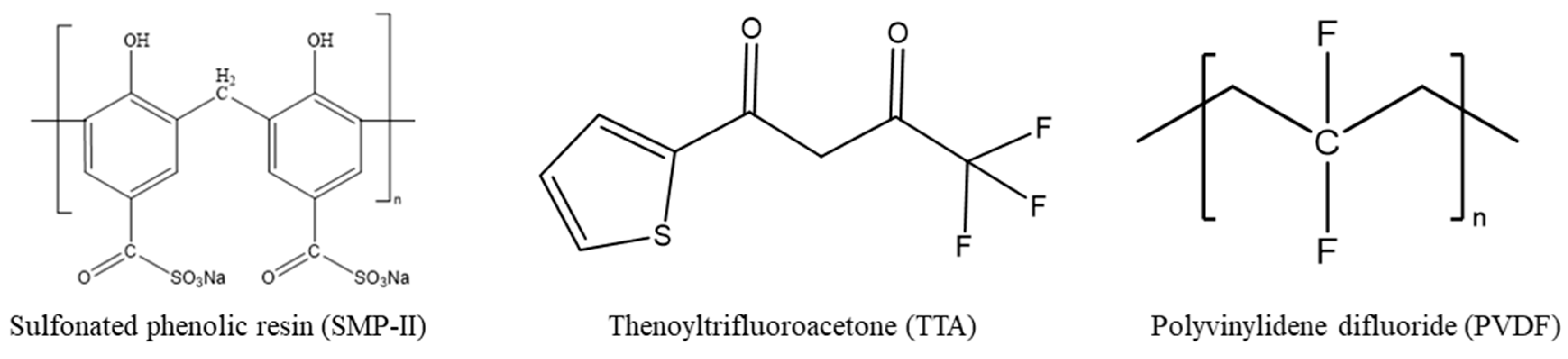
The PVDF was bought by Solvay Advanced Polymer Co., Ltd. (Shanghai, China). A.R. Thenoyltrifluoroacetone (TTA) was obtained from Shanghai Macklin Biochemical Technology Co., Ltd. (Shanghai, China). Sulfonated phenolic resin (SMP-II) with a molecular weight (Mw) of 80 was purchased from Hebei Yanxing Chemical Co., Ltd. (Xingtai, China). Poly(ether-ether-ketone) (PEEK) was acquired from Suyuan Plastic Material Sales Department(Shenzhen, China) in the form of a powder with a molecular weight (Mw) of 100,000. Deionized water with a conductivity of 1 μS·cm−1 was produced by laboratory reverse osmosis equipment. Dimethylformamide (DMF) was purchased from Fuchen Chemical Reagent Co. (Tianjin, China). Hydroxylamine sulfate ((NH2OH)2·H2SO4), ammonium chloride (NH4Cl), sodium chloride (NaCl), and potassium chloride (KCl) were supplied by Aladdin Industrial Corporation (Shanghai, China). Carbon electrodes were purchased from Aimite (Dongguan) New Material Co. (Guangdong, China). Anion exchange membrane (AEM, types: AMI-7001) and cation exchange membrane (CEM, types: CMI-7000) were purchased from Beijing Apslong Technology Co., Ltd. (Beijing, China). Molecular structures of the PVDF, TTA, and SMP-II are shown in Figure 1.
Figure 1.
Molecular structures of the reagents.
2.2. Synthesis of SPEEK
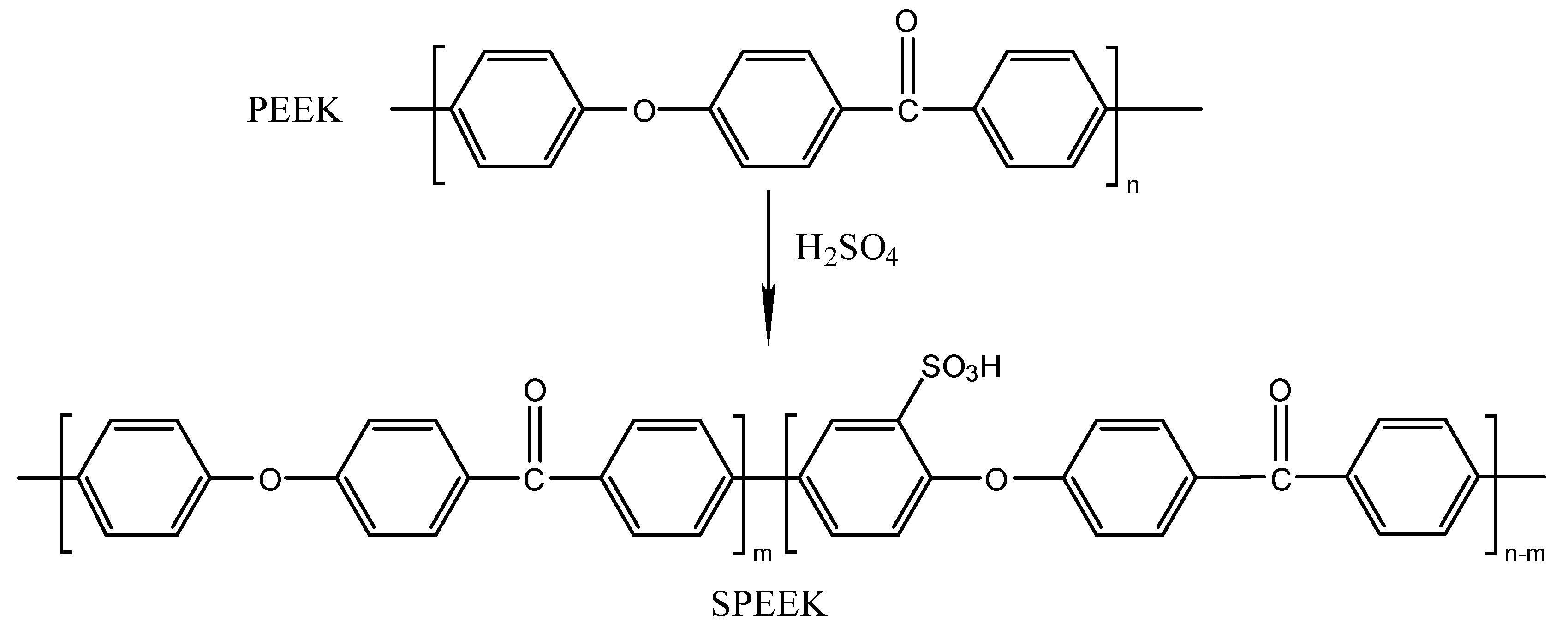
SPEEK is obtained by sulfonation of PEEK, and the reaction equation is shown in Figure 2. PEEK was dried in a vacuum oven at 100 °C before use. Eight grams of PEEK was dissolved in 500 mL of concentrated sulfuric acid (98 wt.% H2SO4) and stirred at 70 °C for 5 h. After the sulfonation reaction, the obtained polymer solution was cooled below 5 °C to terminate the reaction, and then the solution was dropped into a large amount of ice-cold deionized water to form SPEEK fibers. The precipitate was repeatedly washed with deionized water until the pH value became neutral. Then, the polymer was dried at 60 °C for 48 h.
Figure 2.
The Reaction equation for the synthesis of SPEEK.
2.3. Membrane Preparation
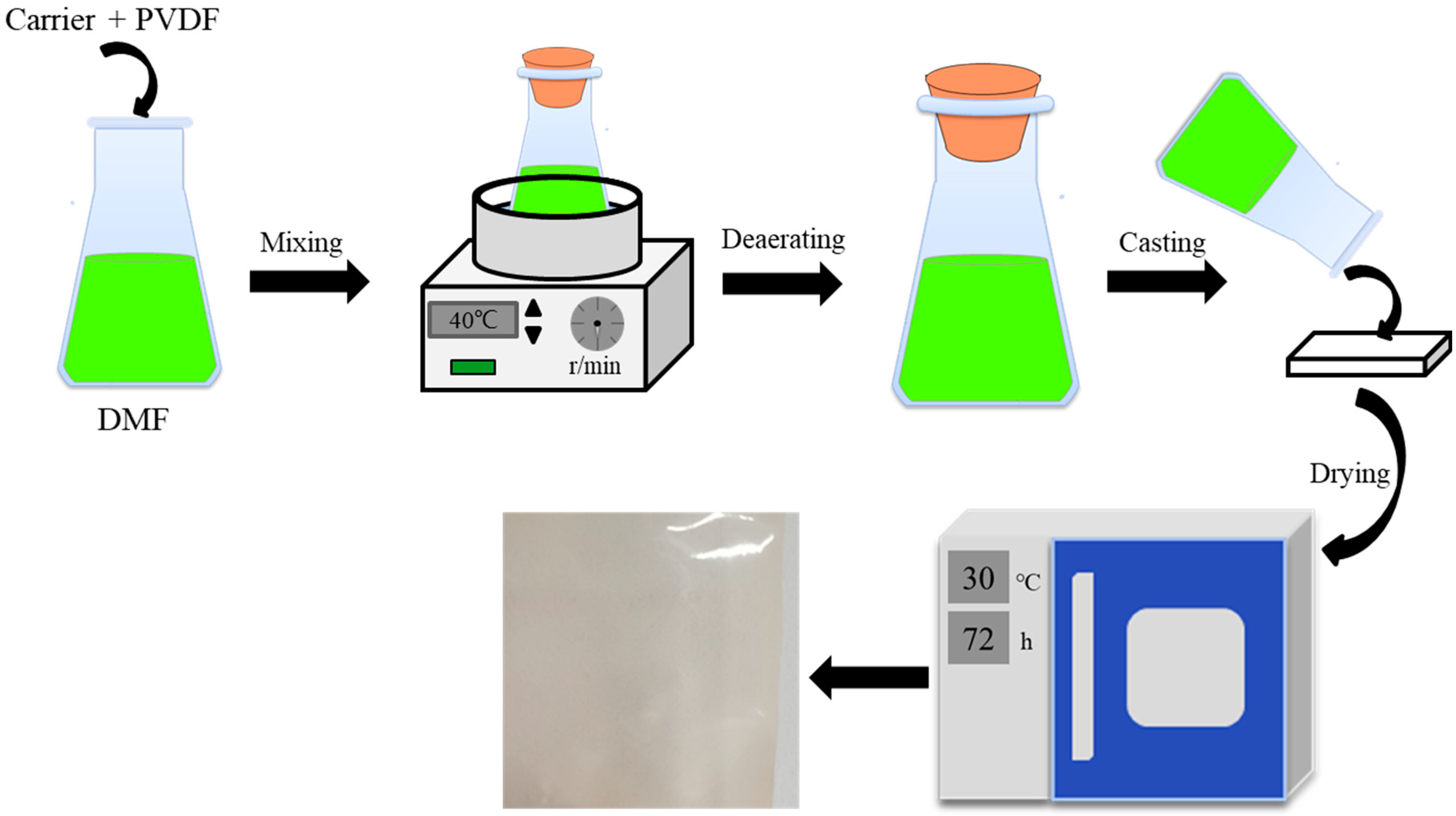
In this study, PIMs with PVDF as the base polymer and TTA, SPEEK, or SMP-II as the carriers were prepared by the casting method. As shown in Figure 3, 1.0 g of the PIM component (as shown in Table 1) was dissolved in 20 mL of dimethylformamide (DMF) at 40 °C and degassed for 48 h at room temperature to obtain a uniform casting solution. The casting solution was poured onto a flat glass (12 × 12 cm), the casting gap was 3 mm, and it was completely dried at 30 °C to obtain the PIM.
Figure 3.
Schematic diagram of preparing membranes.
Table 1.
Composition and proportions of the PIMs.
2.4. Transport Experiment
In the feed phase, the HA is formed as NH3OH+ (NH2OH(I)). The traditional preparation of HA mainly used an inorganic base to react with HA salts. Therefore, a mixed solution of NaCl, KCl, and hydroxylamine sulfate ((NH2OH)2·H2SO4) was used as the feed phase for the transport experiments.
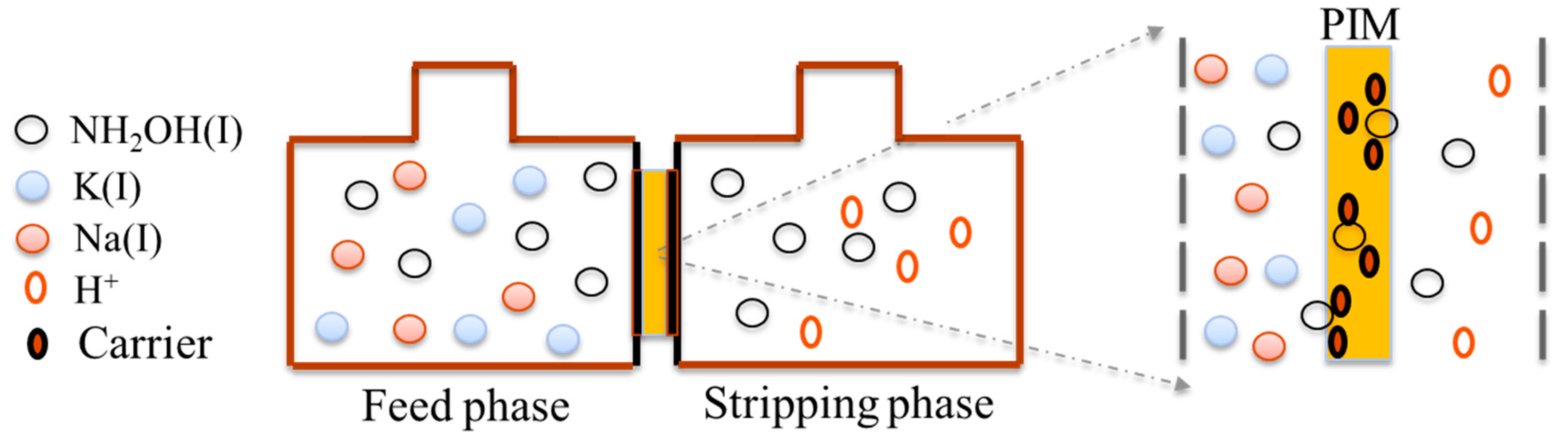
In order to screen suitable carriers and study the PIM transport mechanism of HA, experiments were carried out to separate HA by the PIM process. As shown in Figure 4, the experimental set-up consisted of two permeation chambers separated by a PIM with an effective area of 36 cm2. The experiment was conducted at 20 °C. The feed phase (150 mL) consisted of a mixture of NH2OH(I), Na(I), and K(I) with a concentration of 0.25 mol·L−1, and the stripping phase (150 mL) was acids (H2SO4 or HCl) with a concentration of 0.0–0.1 mol·L−1. The sample was removed from the feed and stripping phases and replaced with an equal volume of fresh material. The concentrations of NH2OH(I), Na(I), and K(I) were monitored by ion chromatography.
Figure 4.
Schematic diagram of the NH2OH(I) selective transfer experiment with the PIM system.
2.5. PIM-ED Process Transport Experiment
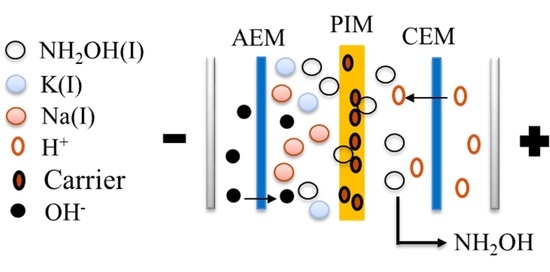
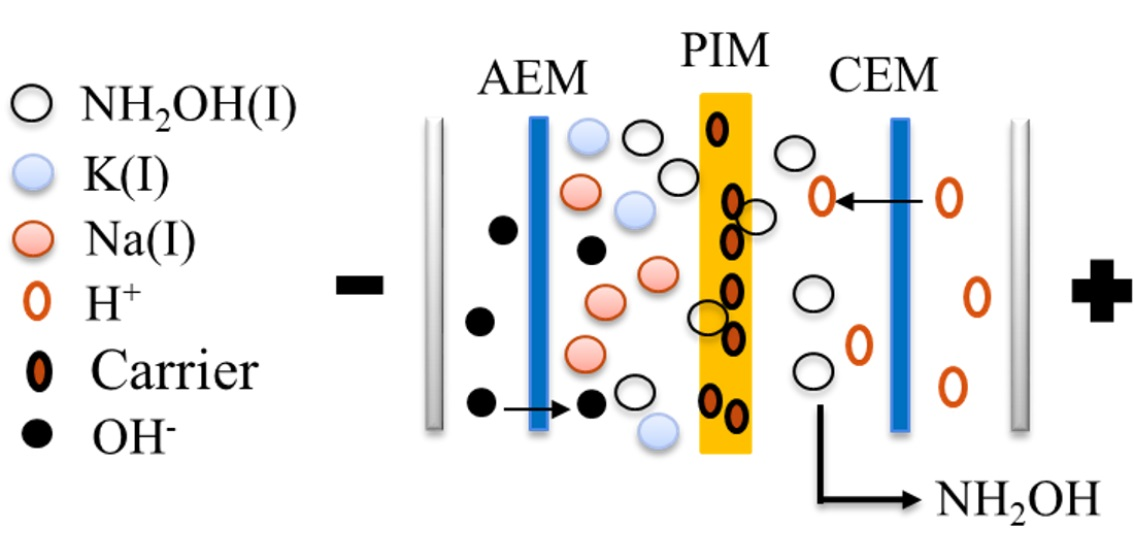
As shown in Figure 5, the PIM-ED process consisted of four permeation cells separated by membranes. The external electric field was provided by a stable DC power supply with carbon electrodes, and different current densities (0–15 mA·cm−2) were selected for the transport experiments. The effective separation area of the membrane was 36 cm2. The feed phase (150 mL) contained 0.125 mol·L−1 (NH2OH)2·(H2SO4) and a 0.25 mol·L−1 KCl and NaCl mixed solution, and the stripping phase was deionized water. The temperature in each of the four compartments was kept constant at 20 °C. At regular intervals, 0.5 mL of sample was taken from the feed and stripping phase solutions and replaced with an equal volume of fresh material. The concentrations of NH2OH(I), K(I), and Na(I) were monitored by ion chromatography.
Figure 5.
Schematic diagram of the PIM-ED process for separation NH2OH(I) from metal ions to prepare HA.
The k of NH2OH(I) was calculated by the PIM-ED process based on the first-order reaction.
where k (s−1) is the rate constant, Ci,t = 0 (mol·L−1) and Ci,t (mol·L−1) refer to the initial concentration of ions in the feed phase and the concentration of ions at a given time in the feed phase, and t (s) is the transport time.
Permeability coefficient (P) was calculated as follows in Equation (2):
where P (μm·s−1) represents the permeability coefficient, A (cm−2) is the membrane effective area, and V (mL) is the two-phase volume.
The initial flux (J0) can be calculated using Equation (3) when the concentration of each ion in the feed phase is a constant:
The extraction efficiency (E(%)) and stripping efficiency of ions in the feed phase was calculated as follows:
The formulae for the separation factors of NH2OH(I) and Na(I) ions are given below:
where JNH2OH(I) and JNa(I) is the flux of the NH2OH(I) and Na(I).
The formulae for the purity of HA as follows:
where Cs,t (mol·L−1) refer to the concentration of HA and Ctittal,t (mol·L−1) refer to total ion concentration at a given time in the stripping phase.
The current efficiency (η) of the PIM-ED process was calculated using Equation (8):
where η represented the current efficiency, Qtotal(C) is the total quantity of electric charge through the PIM, QNH2OH(I)(C) is the quantity of NH2OH(I) charge of through the PIM, F is the faraday constant, and I(A) is the total current.
3. Results and Discussion
3.1. PIM Process for HA Separation
3.1.1. Screening of Carrier Types
Based on the reactivity of HA with carbonyl compounds, SPEEK, SMP-II with sulfonic acid groups, and carbonyl groups and TTA rich in carbonyl groups were chosen as carriers for the preparation of PIM. The separation properties of NH2OH(I) from Na(I) and K(I) were studied in the PIM process.
As can be seen from Table 2, PIM with TTA as the carrier had a better performance in the transport of NH2OH(I). The reason could be that TTA contained more carbonyl groups, which provided abundant binding sites for NH2OH(I) transport and promoted the transfer of NH2OH(I). PIM with SMP-II or SPEEK as a carrier had similar NH2OH(I), Na(I), and K(I) migration properties. The results showed that the sulfonic acid played a dominant role in ion transport compared to the carbonyl group in the PIM process. Therefore, TTA was screened as a carrier for subsequent experiments.
Table 2.
Effect of different carrier types. (PIM: 50 wt.% carrier (TTA, SMP-II, or SPEEK) + 50 wt.% base polymer (PVDF); Feed phase: 0.125 mol·L−1 (NH2OH)2·H2SO4, 0.250 mol·L−1 KCl, and NaCl, pH = 7; Stripping phase: 0.1 mol·L−1 H2SO4; Experimental time: 16 h).
3.1.2. Effect of Feed and Stripping Condition
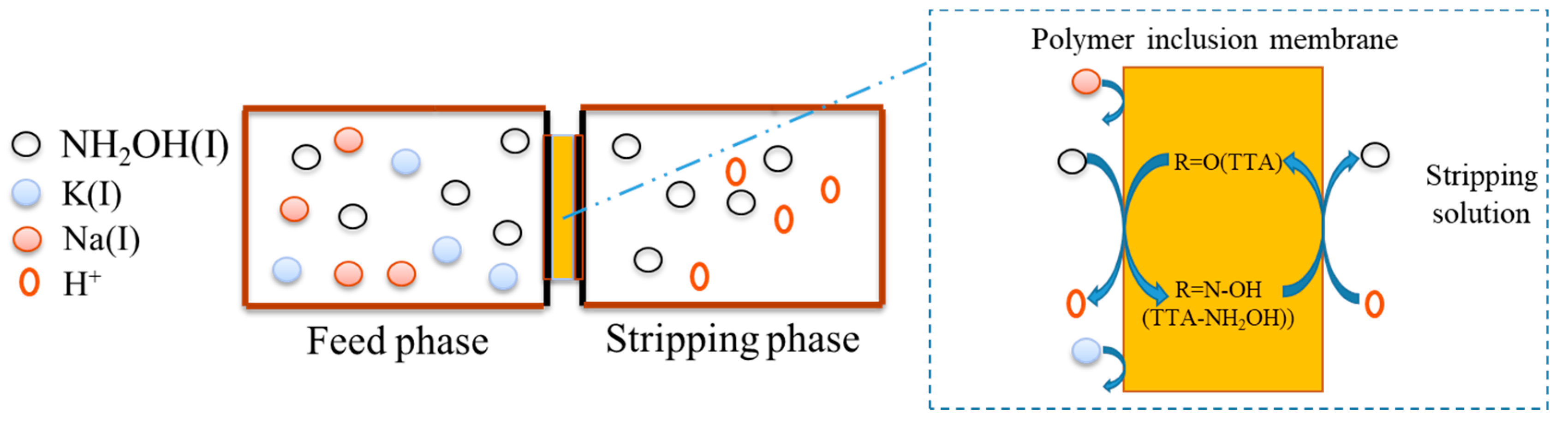
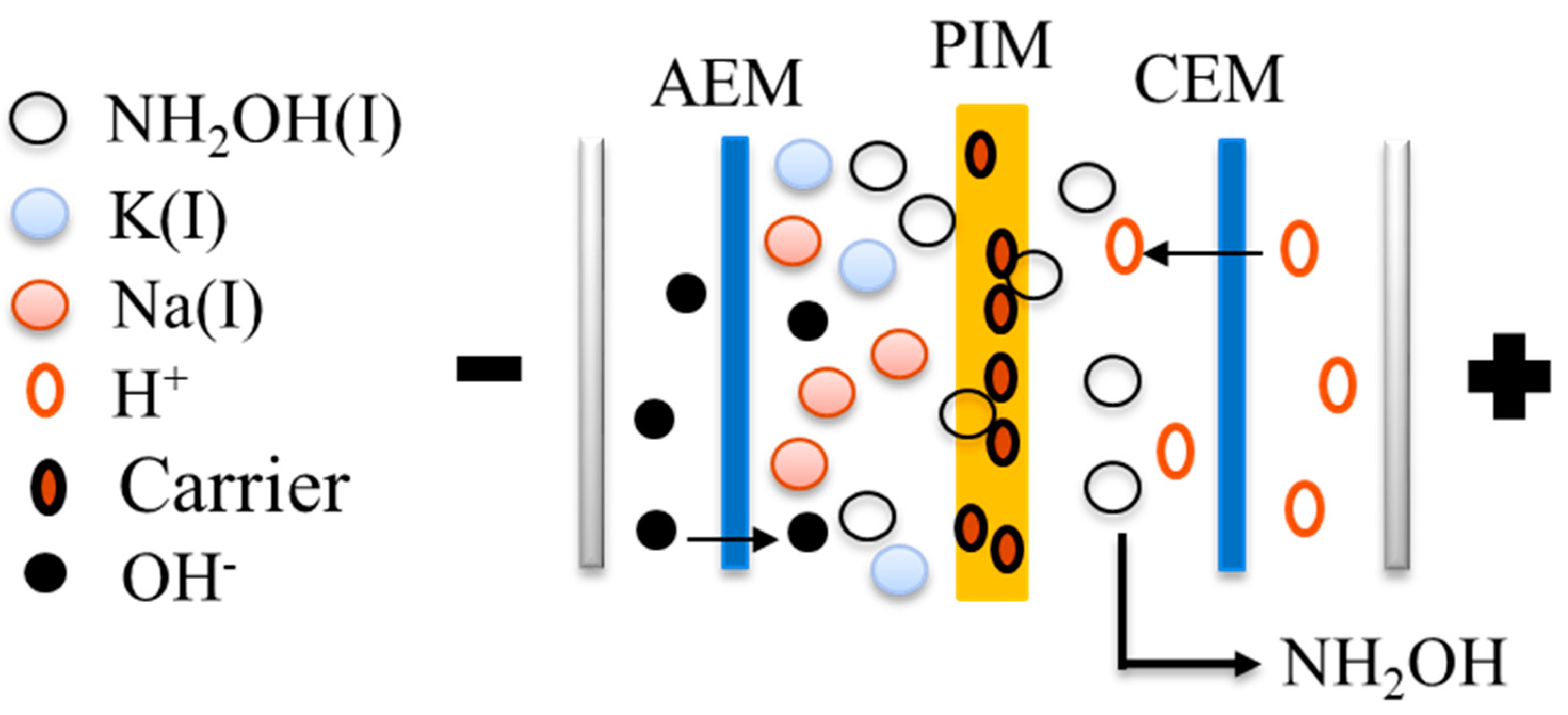
The chemical kinetics of the complexation reaction were critical for PIM selectivity and transport rate [24]. As shown in Equation (9), the reaction between NH3OH+ and the carbonyl group on the carrier is a chemical equilibrium reaction. When NH3OH+ reacts with a carrier, protons are released, while the dissociation of the NH3OH+ from the complex needs the supply of protons. As shown in Figure 6, in PIM process, NH3OH+ diffuses from the feed phase to the stripping phase. To maintain the reaction equilibrium and continuity of NH3OH+ transport, protons need to transport in the opposite direction to that of NH3OH+. Therefore, as the NH3OH+ transport proceeds, the protons will be continuously transported from the stripping phase to the feed phase, resulting in a decrease in the pH of the feed phase. The proton gradient between the two phases was needed to supply the driving force for target ion transport [10,24,25].
Figure 6.
Schematic diagram of NH2OH(I) transport through the PIM system.
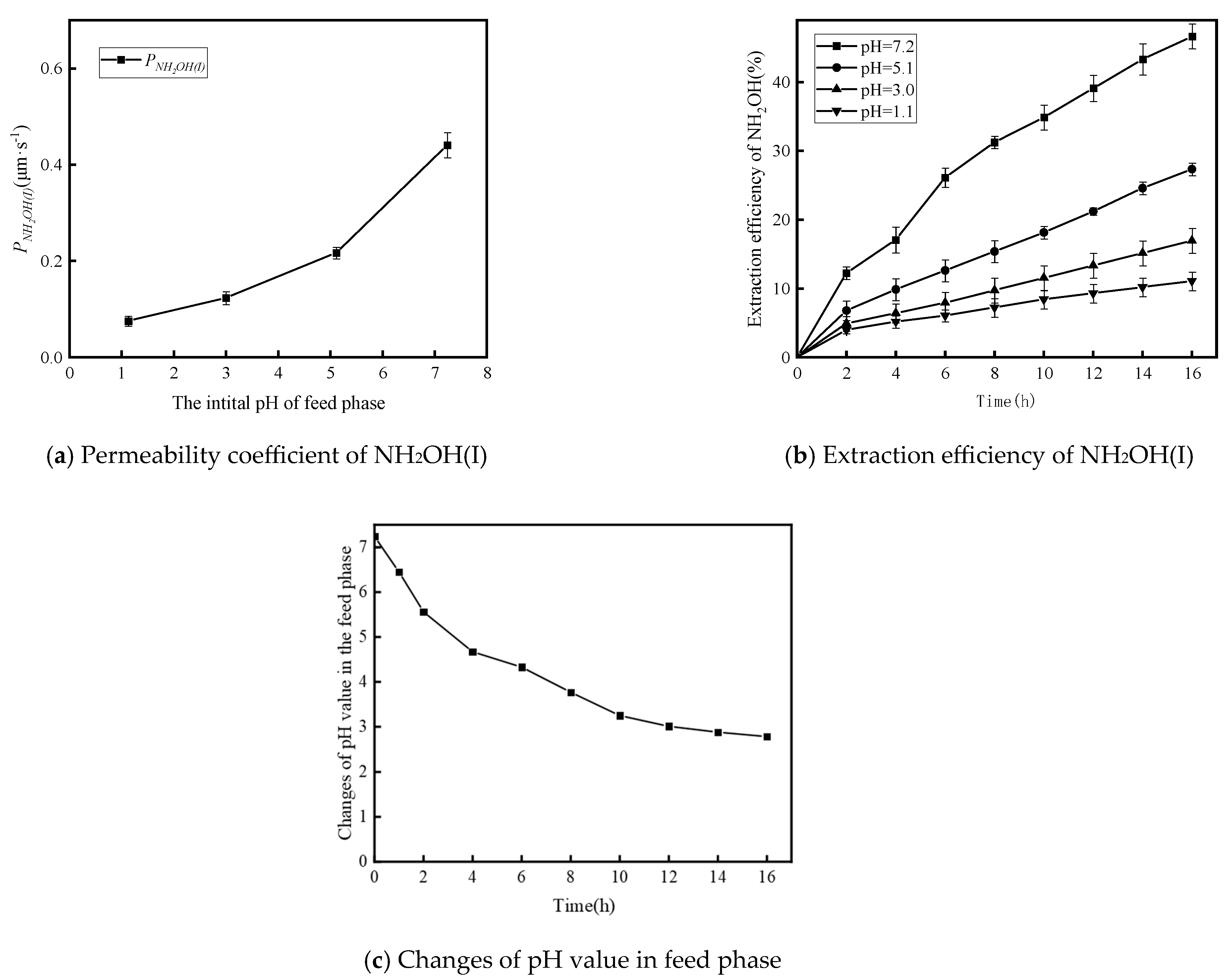
Figure 7 shows the influence of pH in the initial feed phase, which varied from 1.0 to 7.3 (the stripping phase was 0.70), on the transport of NH2OH(I). The permeability coefficient and the extraction efficiency of PIM in transporting NH2OH were improved by increasing the proton gradient (the pH of initial feed phase was from 1.0 to 7.3 and the stripping phase was 0.70). As the experiment proceeds, the proton concentration increases in the feed phase (as shown in Figure 7c and decreases in the stripping phase, resulting in a decrease in the driving force for NH2OH(I) transported by PIM. The migration efficiency of NH2OH(I) gradually decreased, which can be seen in Figure 7b. Therefore, increasing the proton gradient in the feed and stripping phase was useful for improving the NH2OH(I) transport efficiency. In addition, HA decomposition was faster at higher alkalinity, so the initial pH of the feed for subsequent experiments was between 7–8.
Figure 7.
(a,b) Effect of feed phase pH on permeability coefficient and extraction efficiency of NH2OH(I) (Feed phase: 0.125 mol·L−1 (NH2OH)2·H2SO4, 0.250 mol·L−1 KCl and NaCl, pH = 1–7.3; Stripping phase: 0.1 mol·L−1 H2SO4; Experimental time: 16 h; PIM: 50 wt.% TTA + 50 wt.% PVDF); (c) Changes in pH value in the feed solutions with varying time of the experiment (initial feed pH 7).
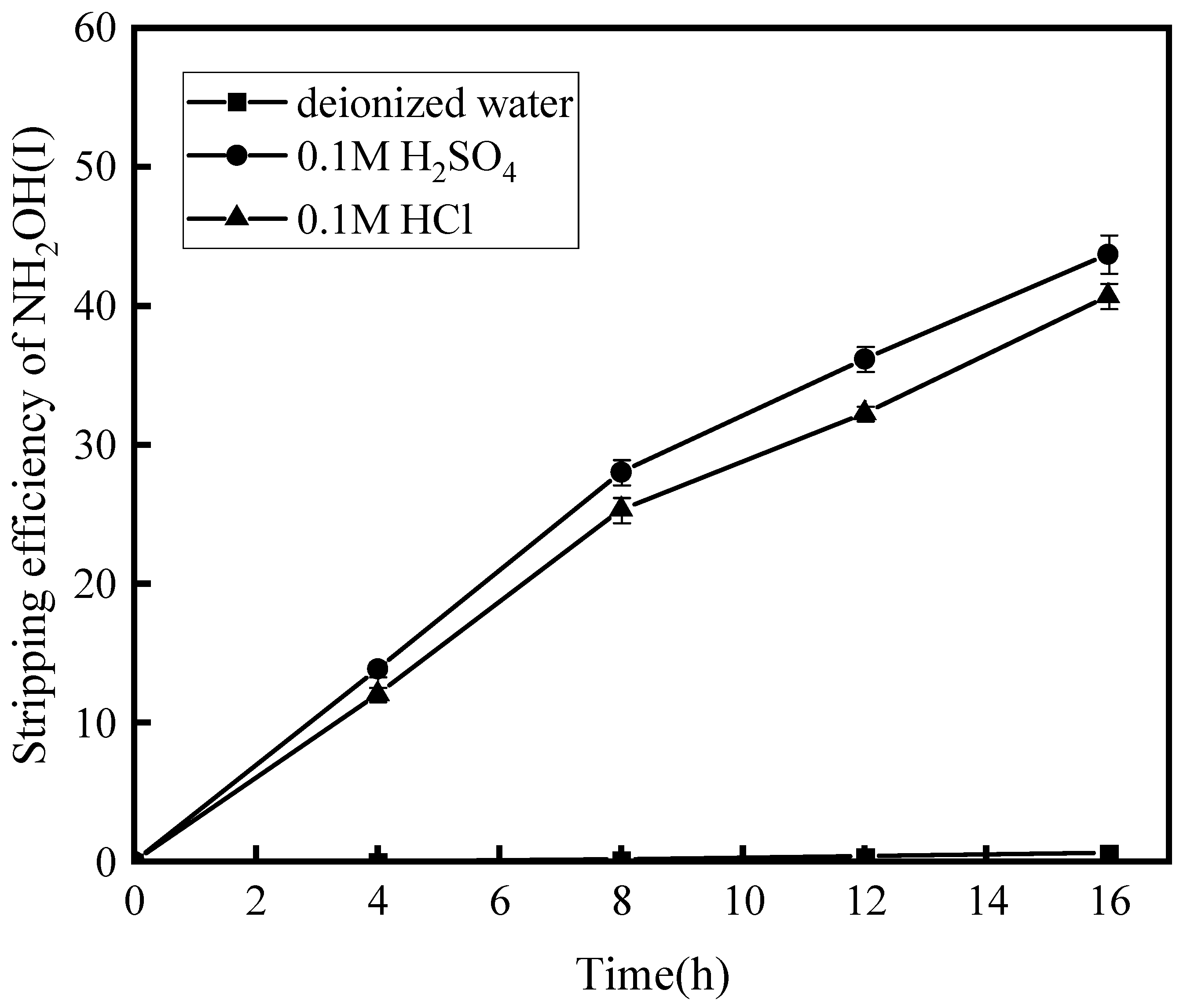
To investigate the effect of the stripping solution on NH2OH(I) transport in PIM system, experiments were carried out using different concentrations of HCl or H2SO4 as the stripping solution. As shown in Figure 8, the type of acid had little effect on the efficiency of the stripping phase. Moreover, when the stripping solution was deionized water (the initial pH of the stripping phase and feed phase was 7), NH2OH(I) was hardly transported to the stripping phase, indicating that the proton gradient between the feed and stripping phases significantly affected the transport of NH2OH(I) in the PIM process. Therefore, it is necessary to provide a proton gradient between the feed and stripping solutions in the PIM process for the transport of target species.
Figure 8.
Effect of stripping phase conditions on separation of NH2OH(I). (Feed phase: 0.125 mol·L−1 (NH2OH)2·H2SO4, 0.250 mol·L−1 KCl and NaCl, pH = 7; Stripping phase: deionized water or 0.1 mol·L−1 H2SO4 or 0.1 mol·L−1 HCl; Experimental time: 16 h; PIM: 50 wt.% TTA + 50 wt.% PVDF).
3.2. PIM-ED Process for HA Separation
In the PIM process, the proton gradient between the feed and stripping phases was the driving force for transporting NH2OH(I), which introduced new ions. To provide an efficient and continuous proton gradient without introducing other ions, the ED process coupled with PIM was used to provide a proton gradient to separate HA from metal ions.
3.2.1. Effect of Carrier Content
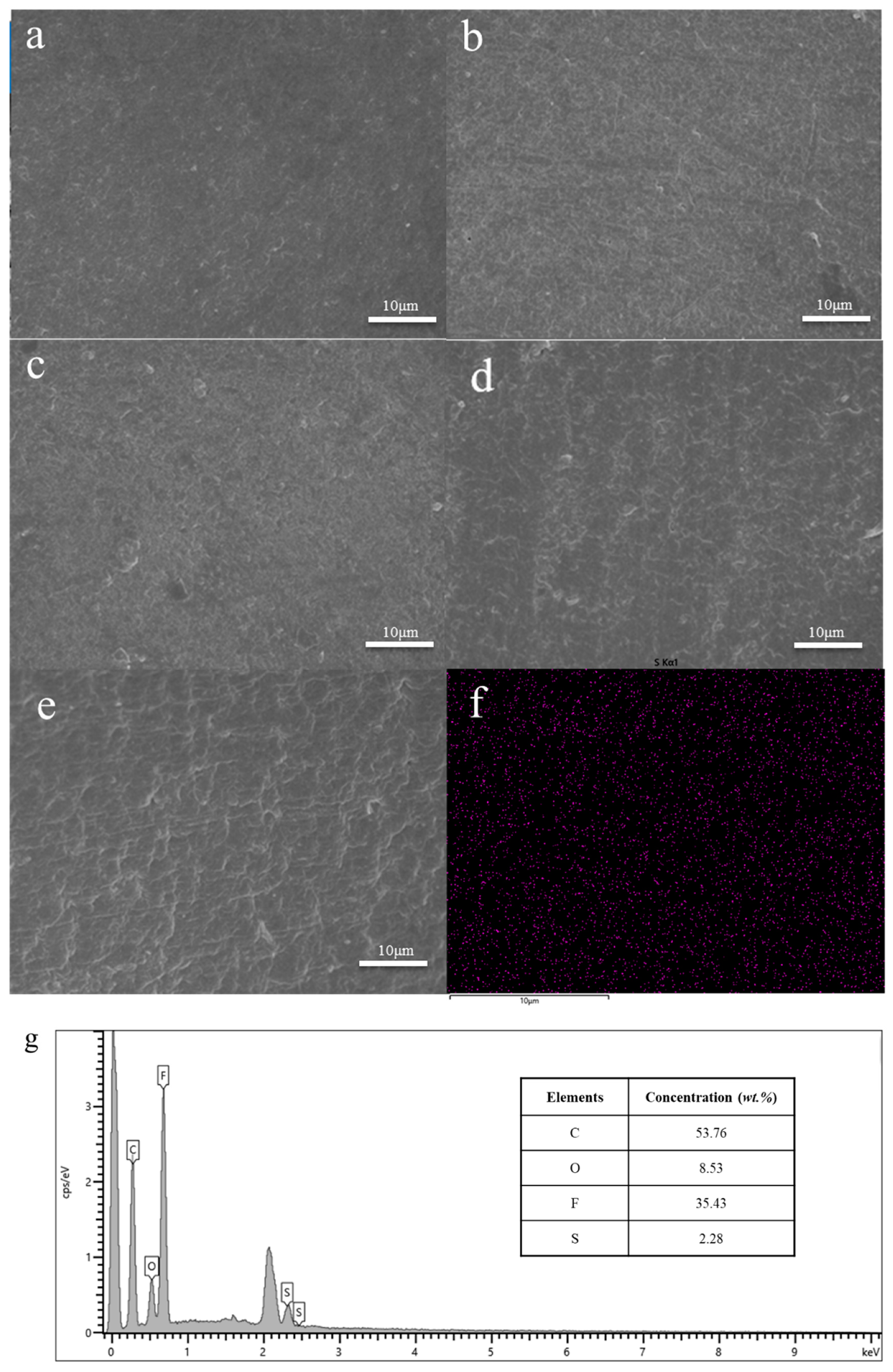
PIMs with different TTA contents were characterized and analyzed by SEM-EDS techniques to understand the morphology, structure, and composition. As shown in Figure 9a–e, the morphology surface of all PIMs had a dense, crack-free, and non-porous structure. With increasing TTA content, the surface structure of the PIM gradually became rough, which can be attributed to the increase in TTA content on the membrane surface. It has been shown that increasing the roughness of the PIM surface provides a larger effective area, which promotes ion transport [26]. In addition, the composition of the PIM was analyzed by EDS. From Figure 9f,g, in the EDS spectra of the PIM with TTA as a carrier, the element S was uniformly distributed, indicating that TTA was a uniform arrangement of the membrane for the PIM and the successful preparation of the PIM.
Figure 9.
(a–e) SEM micrographs of PIM surface: ((a): PIM (10 wt.% TTA + 90 wt.% PVDF); (b): PIM (20 wt.% TTA + 80 wt.% PVDF); (c): PIM (30 wt.% TTA + 70 wt.% PVDF); (d): PIM (40 wt.% TTA + 60 wt.% PVDF); (e): PIM (50 wt.% TTA + 50 wt.% PVDF)); (f,g) PIM composition analyzed by EDS spectroscopy: (f) distribution of S elements in the PIM surface; (g) Total distribution spectrum of elements in PIM.
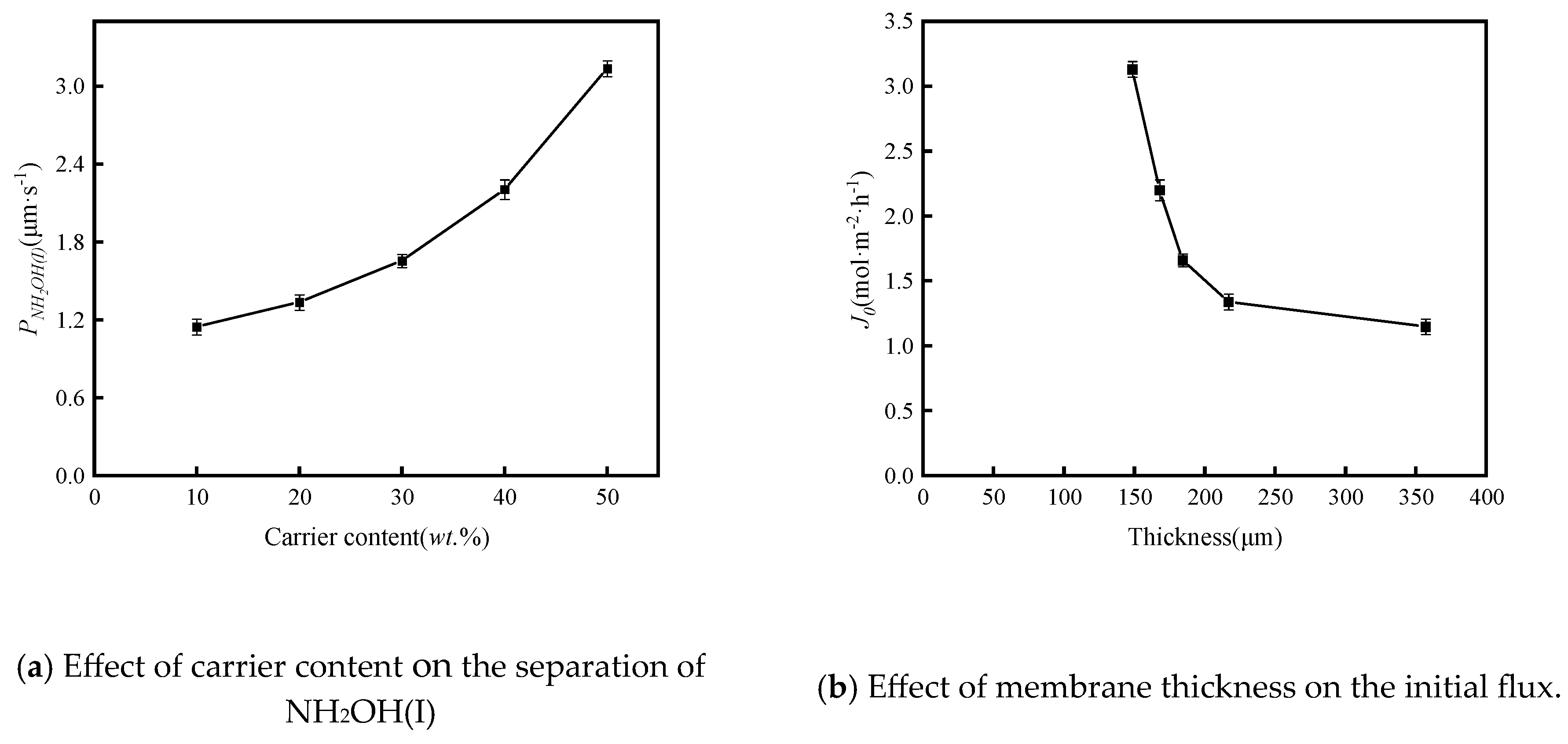
PIM with the TTA content from 10 wt.% to 50 wt.% was used for the separation of NH2OH(I) from Na(I) and K(I) in PIM-ED process. From Figure 10a, the permeability coefficient of NH2OH(I) improved with increasing TTA content. This phenomenon was attributed to the fact that the surface of the membrane became significantly rougher with the increase in the carrier content (as shown in Figure 9b, which increased the effective area of the membrane and accelerated the membrane transfer rate of NH2OH(I). In addition, increasing the carrier content would shorten the distance between the carriers in the membrane, reducing the diffusion resistance of the target substances [17,26] and further improving the permeability coefficient of NH2OH(I). From Figure 10b, as the PVDF content increased from 50 wt.% to 90 wt.%, the thickness of the membrane increased from 148.6 μm to 356.8 μm, which led to an increased resistance to diffusion of the PIMs, resulting in a higher initial flux of PIMs. On the other hand, there was a trade-off effect between thickness and the mechanical strength of the membrane [27]. Therefore, this paper identified the preferred composition for PIM as 50 wt.% PVDF + 50 wt.% TTA.
Figure 10.
Effect of carrier content and thickness of membrane on the separation of NH2OH(I): (a) Effect of carrier content; (b) Effect of thickness of membrane. (Feed phase: 0.125 mol·L−1 (NH2OH)2·H2SO4, 0.250 mol·L−1 KCl and NaCl, pH = 7; Stripping phase: deionized water, pH = 7; Experimental time: 10 h; Carrier content from 10 wt.% to 50 wt.%; Current density: 10 mA·cm−2).
3.2.2. Effect of Current Density
In previous studies, the introduction of an electric field reduced the resistance to ion transport across the membrane, which in turn significantly increased the transport efficiency of the target ions [17,26,28]. To explore the influence of the electric field on the selective separation of NH2OH(I) from K(I) and Na(I) and the mechanism of ion transport facilitated by PIM-ED, the experiments were carried out with different current densities.
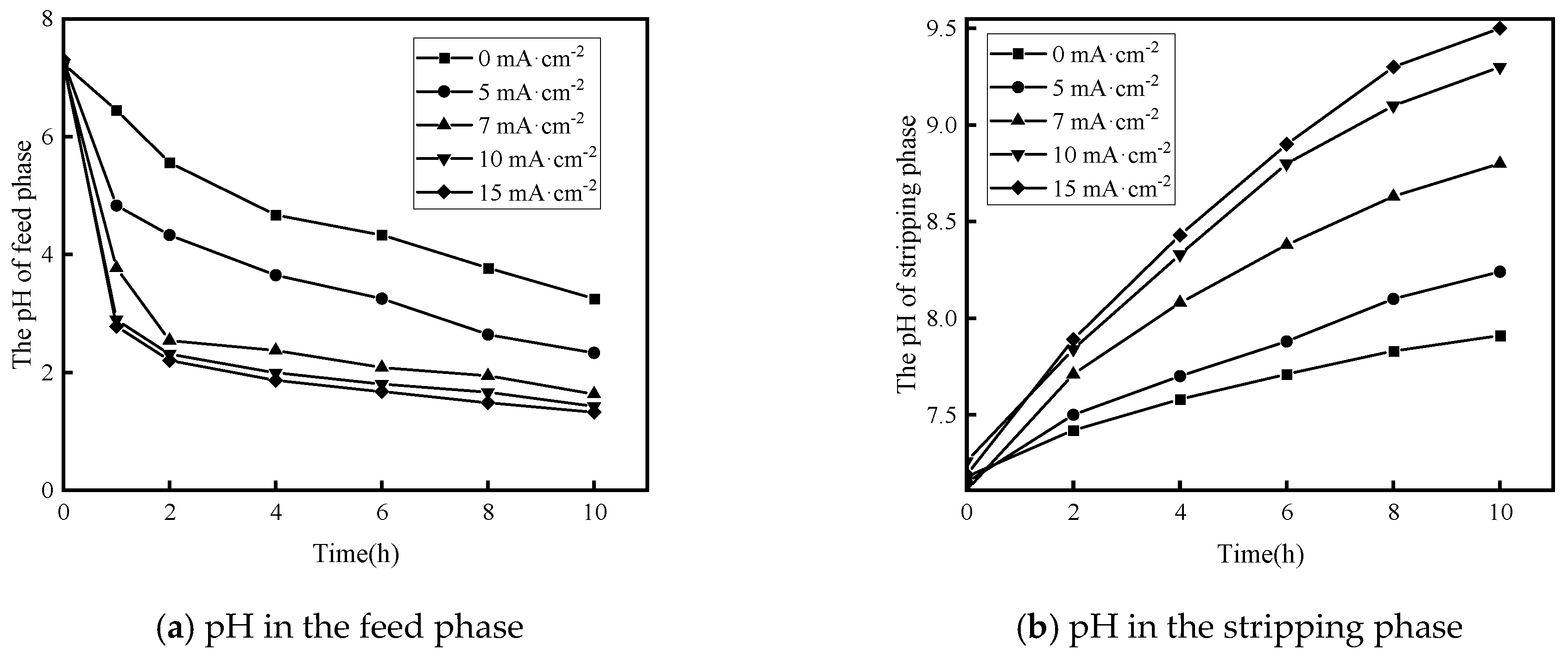
Figure 11 shows the variation of pH in the feed phase and the stripping phase at different current densities. The proton and hydroxide ions generated in the ED process are transported to the stripping phase and the feed phase, driven by electric field, causing changes in the proton gradient between the stripping phase and feed phase, increasing the driving force for proton transport and facilitating proton transport. As the current density increases, the proton generation rate increases, leading to an increase in the proton gradient and accelerating the opposite transport of NH2OH(I) and protons, thus causing a change in pH on the feed side.
Figure 11.
Changes in pH value in the feed and stripping phases at different current densities: (a) Change pH in feed phase; (b) Change pH in stripping phase. (Current density: 0–15 mA·cm−2; Feed phase: 0.125 mol·L−1 (NH2OH)2·H2SO4, 0.250 mol·L−1 KCl and NaCl, pH = 7; Stripping phase: deionized water, pH = 7; Experimental time: 10 h; PIM: 50 wt.% TTA + 50 wt.% PVDF).
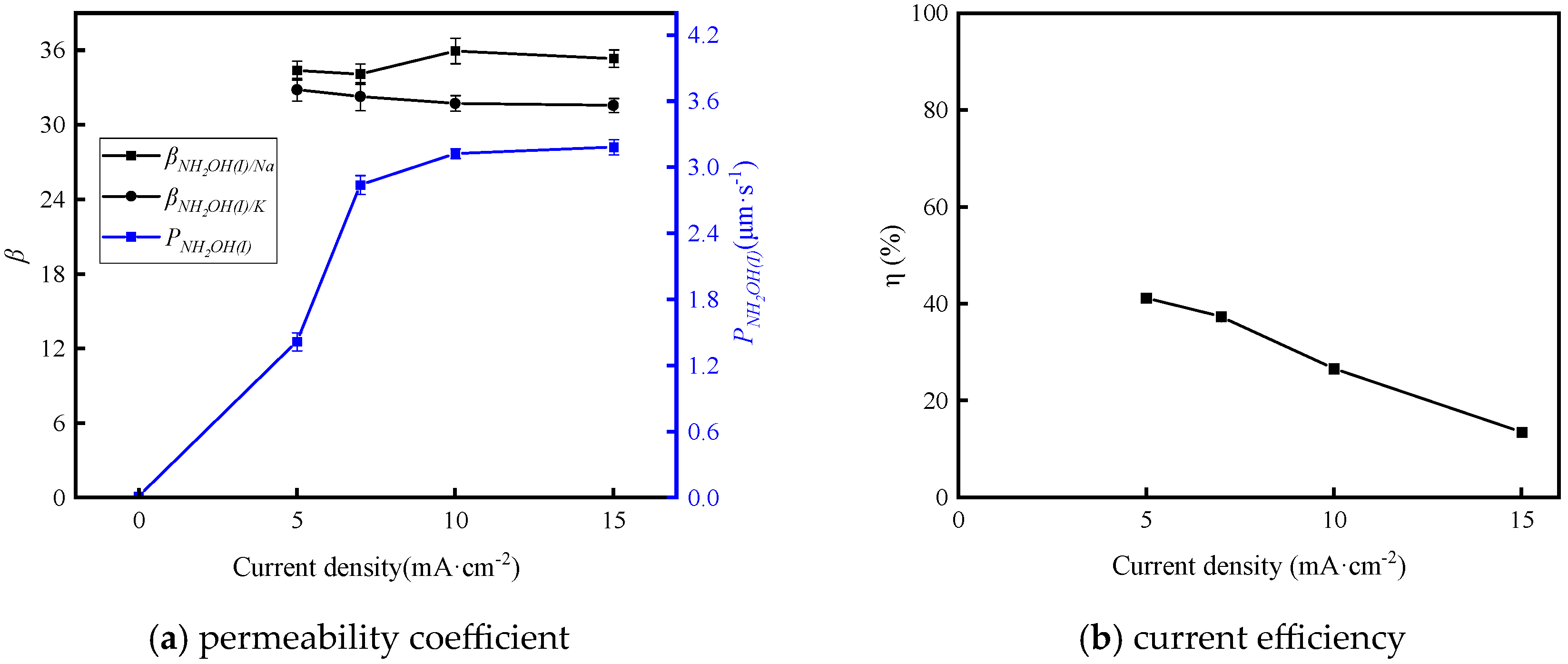
Figure 12 illustrated a significant increase in the permeability coefficient of NH2OH(I) while maintaining selectivity with an applied electric field. The permeability coefficient of PIM was only 0.01 μm·s−1 in the absence of an electric field (current density = 0 mA·cm−2). As the current density increased from 0 to 5 mA·cm−2, the permeability coefficient of NH2OH(I) increased smoothly from 0.01 to 1.42 μm·s−1. Subsequently, the permeability coefficient of NH2OH(I) rose sharply from 1.42 to 2.84 μm·s−1 as the current density increased from 5 to 7 mA·cm−2. As the current density was further increased, a higher operating voltage was required, and more energy was consumed in water electrolysis and heat generation, while the NH2OH(I) transfer efficiency remained unchanged, resulting in a decrease in current efficiency. Therefore, the preferred current density for this study was 10 mA·cm−2.
Figure 12.
Effect of current density on the separation of NH2OH(I): (a) Effect of current density on separation factors and permeability coefficient of NH2OH(I); (b) Effect of current density on current efficiency of NH2OH(I). (Current density: 0–15 mA·cm−2; Feed phase: 0.125 mol·L−1 (NH2OH)2·H2SO4, 0.250 mol·L−1 KCl and NaCl, pH = 7; Stripping phase: deionized water, pH = 7; Experimental time: 10 h; PIM:50 wt.% TTA + 50 wt.% PVDF).
3.2.3. Effect of Concentration of NH2OH(I) in Feed Phase
The PIM-ED process was used for producing high-purity HA. Experiments were carried out with various initial concentrations of NH2OH(I).
From Table 3, it can be seen that the flux and the purity of HA increased with increasing initial concentration of NH2OH(I) from 0.05 mol·L−1 to 0.25 mol·L−1. The gradual increase in the initial concentration of NH2OH(I) significantly increased the contact opportunity between NH2OH(I) and carriers, which promoted the formation of ion-carrier complexes, thereby increasing the NH2OH(I) flux. Furthermore, this process followed Fick’s law of diffusion, where increasing the feed concentration increased the initial flux by improving the concentration gradient between the feed and stripping solutions.
Table 3.
Effect of concentration in the feed phase on the synthesis of HA. (Feed phase: 0.025–0.255 mol·L−1 (NH2OH)2·H2SO4, 0.250 mol·L−1 KCl and NaCl, pH = 7; Stripping phase: deionized water, pH = 7; Experimental time: 10 h; PIM: 50 wt.% TTA + 50 wt.% PVDF: Current density: 10 mA·cm−2).
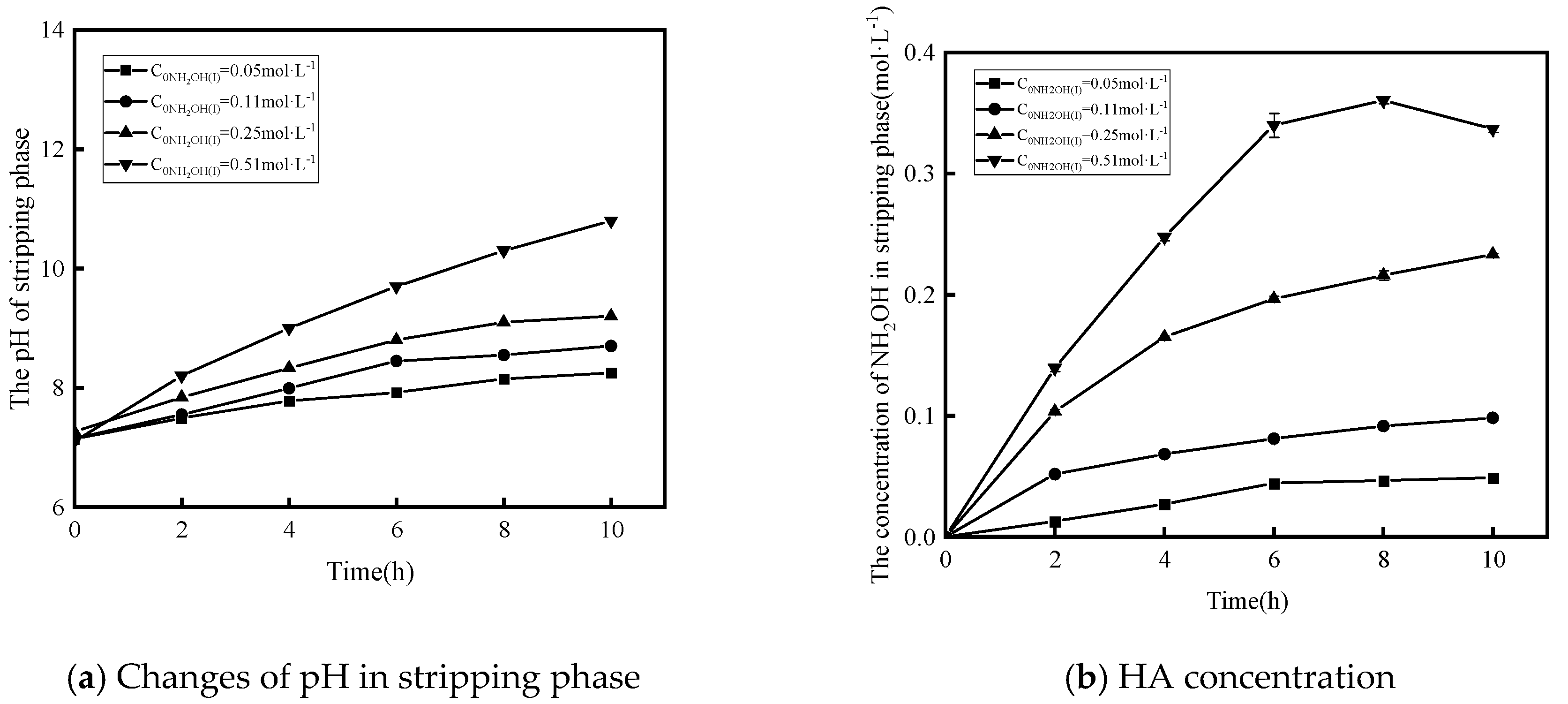
From Table 3 and Figure 13, the purity of HA was significantly reduced from 99.4% to 79.8% with the initial concentration of NH2OH(I) increasing from 0.25 to 0.51 mol·L−1. This phenomenon can be attributed to the fact that the carbon electrode may contain metal ions, which diffused through the membrane into the stripping phase, leading to the decomposition of HA at higher concentrations to form ammonia in the presence of metal ions [29]. The ammonia further increased the pH of the solution and accelerated the decomposition of HA [30,31,32]. The high-purity HA could be produced in the PIM-ED process by controlling metal ion concentrations and the pH of the stripping phase. In addition, under the optimal conditions, the yield and purity of HA were 92.3% and 99.4%, while through the distilling methods, a yield ranging from 75% to 90% and a purity of over 99% can be obtained. This indicates that the PIM-ED process provides an efficient method to prepare high-purity HA [33,34].
Figure 13.
(a) Changes of pH value in the stripping phase; (b) The concentration of HA in stripping phase. (Feed phase: 0.025–0.255 mol·L−1 (NH2OH)2·H2SO4, 0.250 mol·L−1 KCl and NaCl, pH = 7; Stripping phase: deionized water, pH = 7; Experimental time: 10 h; PIM: 50 wt.% TTA + 50 wt.% PVDF; Current density: 10 mA·cm−2).
As shown in Figure 14, an electro-membrane extraction (EME) device without AEM and CEM was constructed to investigate the effect of the electrodes on HA synthesis. The new device was used to prepare HA. Other experimental conditions were the same with the original device: Current density:10 mA·cm−2, feed phase (0.125 mol·L−1 (NH2OH)2·H2SO4, 0.250 mol·L−1 KCl and NaCl, pH = 7), stripping phase (deionized water, pH = 7), PIM (50 wt.% TTA + 50 wt.% PVDF).
Figure 14.
Schematic diagram of the PIM-EME process for HA preparation.
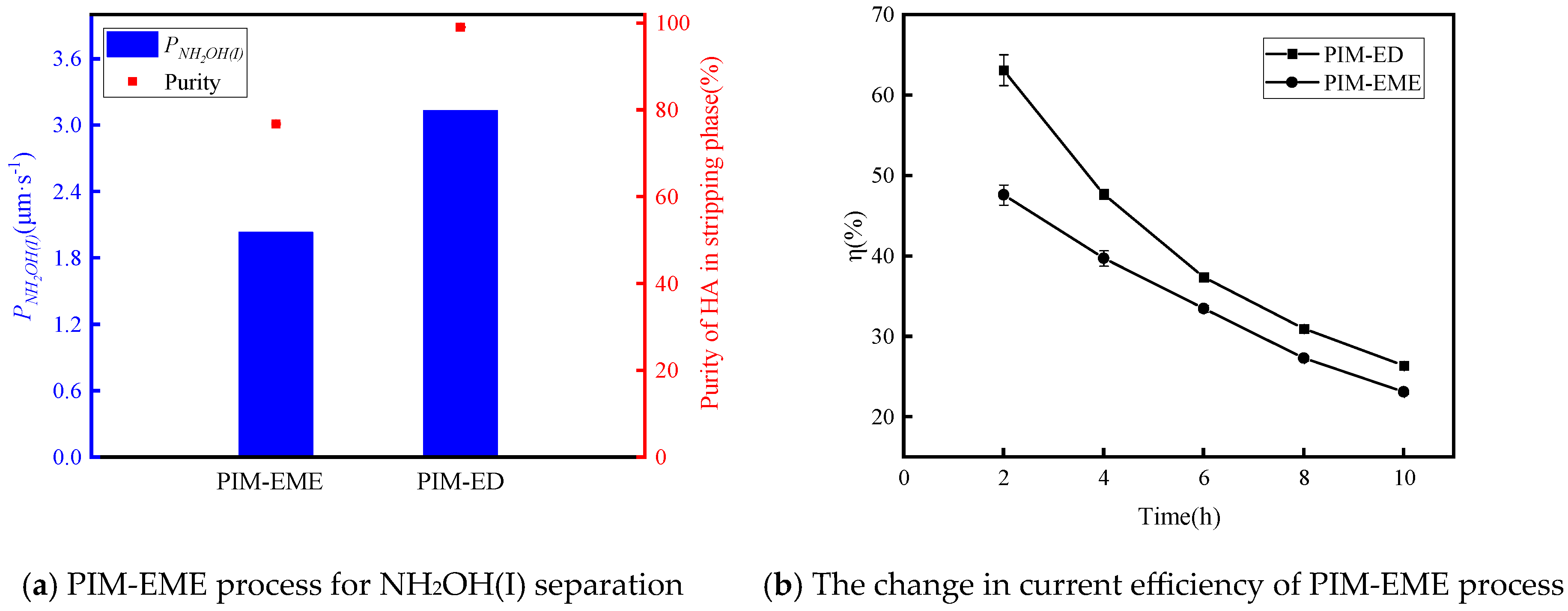
From Figure 15, the permeability coefficient of NH2OH(I) and the purity of HA in the stripping phase of the PIM-EME process were lower than those of the PIM-ED process. In the PIM-EME process, metal ions from the carbon electrode were released directly into the stripping solution, which accelerated the decomposition of HA in the stripping phase. In contrast, the other process prevented metal ions from passing from the anode chamber to the stripping chamber, which mitigated the decomposition of HA. In addition, compared with the PIM-ED process, the feed solution and the stripping solutions were directly electrolyzed in the EME process, resulting in solution loss and the generation of a large number of air bubbles, which reduced the transfer efficiency (as shown in Figure 15b).
Figure 15.
The PIM-EME process for NH2OH(I) separation: (a) The separation factors and permeability coefficient of NH2OH(I) in PIM-EME process; (b) The current efficiency of PIM-EME process. (Feed phase: 0.125 mol·L−1 (NH2OH)2·H2SO4, 0.250 mol·L−1 KCl and NaCl, pH = 7; Stripping phase: deionized water, pH = 7; Experimental time: 10 h; PIM: 50 wt.% TTA + 50 wt.% PVDF; Current density: 10 mA·cm−2).
3.3. Stability Study
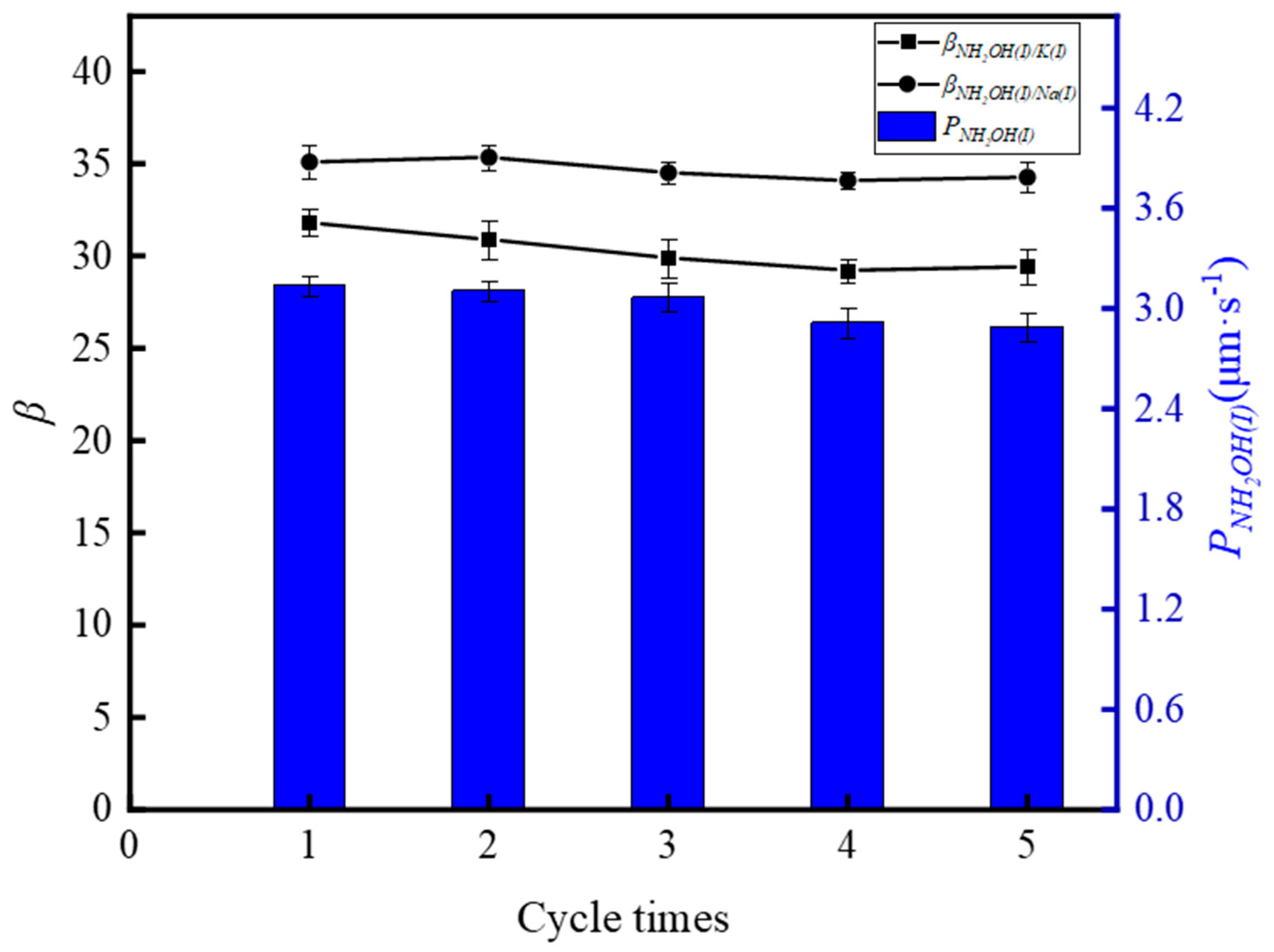
Membrane stability plays a key role in determining the industrialization of PIM. Figure 16 shows the variation of permeability coefficients and selectivity in a transport experiment performed on the same membrane for five cycles.
Figure 16.
Stability of PIM in PIM-ED process. (Feed phase: 0.125 mol·L−1 (NH2OH)2·H2SO4, 0.250 mol·L−1 KCl and NaCl, pH = 7; Stripping phase: deionized water, pH = 7; Experimental time: 10 h; PIM: 50 wt.% TTA + 50 wt.% PVDF; Current density: 10 mA·cm−2).
After five cycles of experiments, the permeability coefficient of the PIM decreased from 3.13 μm·s−1 to 2.89 μm·s−1, indicating that the PIM had good stability. The main reason for the decrease in the PIM performance in the repeated experiments was the loss of carrier molecules on the membrane surface. As the experiment processed, carriers with relatively low binding to the PVDF on the membrane surface dissolved into the aqueous phase. In addition, the membrane performance gradually stabilized as the number of cycles increased (as shown in Figure 16), indicating that the carriers were better fixed in the interior of the membrane.
4. Conclusions
In this paper, the PIM process was employed to achieve the separation of Hydroxylamine (HA) from metal ions. TTA was screened as a carrier due to its abundant carbonyl sites. In the PIM process, the proton gradient was needed to provide the driving force to transport HA. The ED process has been employed to efficiently supply the proton gradient to separate HA from metal ions. In the ED process, the electric field could rapidly change the proton gradient between the feed phase and the stripping phase, which accelerates the reverse migration process of protons and target ions in the PIM process, thus promoting the transport of NH2OH(I). The high purity of HA could be produced by controlling the metal ion concentrations and pH in the PIM-ED process. Under the optimized conditions, the separation factors of NH2OH(I)/Na(I) and NH2OH(I)/K(I) were 30.81 and 35.11; the purity of HA was 99.4%, providing a strategy for the preparation of high-purity hydroxylamine (HA).
Author Contributions
Conceptualization, L.Y., Z.D. and W.Z.; methodology, L.Y. and Z.Z.; writing-original draft preparation, L.Y.; writing-review and editing, L.Y., Z.D. and W.Z. All authors have read and agreed to the published version of the manuscript.
Funding
This research received no external funding.
Data Availability Statement
All data are supplied in the manuscript.
Conflicts of Interest
The authors declare no conflicts of interest.
References
- Zhao, F.; You, K.; Peng, C.; Tan, S.; Li, R.; Liu, P.; Wu, J.; Luo, H. A simple and efficient approach for preparation of hydroxylamine sulfate from the acid-catalyzed hydrolysis reaction of cyclohexanone oxime. Chem. Eng. J. 2015, 272, 102–107. [Google Scholar] [CrossRef]
- Zhang, W.; Su, X.; Hao, Z.; Qin, S.; Qing, W.; Xia, C. Pervaporation membrane reactor for producing hydroxylamine chloride via an oxime hydrolysis reaction. Ind. Eng. Chem. Res. 2014, 54, 100–107. [Google Scholar] [CrossRef]
- Constant, A.; Coppens, P.; Baele, J.; Ziad, H.; Novak, T.; Kostelnik, P.; Pestel, F.D. Selective wet etching and hydrolysis of polycrystalline AlN films grown by metal organic chemical vapor deposition. Mater. Sci. Semicond. Process. 2022, 137, 106157. [Google Scholar] [CrossRef]
- Watzenberger, O.; Wilfinger, H.J. Method for Preparing Highly Stabilized Hydroxylamine Solutions. German. Patent No. DE 19936594, 15 February 2001. [Google Scholar]
- Heinz, W.; Joachim, T.; Heinz, K.; Eckhard, S.; Markus, W.; Bernd, G.; Bernd, R.; Bernd, S.; Steffen, K. Method for Preparing Highly Stabilized Hydroxylamine Solutions. U.S. Patent No. DE 10482212, 2004. [Google Scholar]
- Kumasaki, K. Calorimetric study on the decomposition of hydroxylamine in the presence of transition metals. J. Hazard. Mater. 2004, 115, 57–62. [Google Scholar] [CrossRef] [PubMed]
- Li, Z.; Yang, Q.; Qi, X.; Xu, Y.; Zhang, D.; Wang, Y.; Zhao, X. A novel hydroxylamine ionic liquid salt resulting from the stabilization of NH2OH by a SO3H functionalized ionic liquid. Chem. Commun. 2015, 15, 1930–1932. [Google Scholar] [CrossRef] [PubMed]
- Li, Z.; Qi, X.; Gao, L.; Xu, Y.; Zhang, D.; Wang, S.; Zhao, X.; Wang, Y. Application of Hydroxylamine Ionic Liquid Salts in Hydroxylation of Benzene to Phenol with Ammonium Molybdate-Copper Chloride-Ionic Liquid System. Chem. Lett. 2016, 46, 289–292. [Google Scholar] [CrossRef]
- Almeida, M.; Cattrall, R.W.; Kolev, S.D. Recent trends in extraction and transport of metal ions using polymer inclusion membranes (PIMs). J. Membr. Sci. 2012, 415–416, 9–23. [Google Scholar] [CrossRef]
- Luo, H.; Yao, H.; Wang, X.; Liang, X.; Li, B.; Liu, H.; Li, Y. Selective recovery of lithium from mother liquor of Li2CO3 by synergistic hydrophobic deep eutectic solvents: Performance and mechanistic insight. Sep. Purif. Technol. 2023, 313, 123353. [Google Scholar] [CrossRef]
- Mahanty, B.N.; Mohapatra, P.K.; Raut, D.R.; Das, D.K.; Behere, P.G.; Afzal, M.; Verboom, W. Polymer inclusion membrane containing a diglycolamide-functionalized calix[4]arene for actinide ion uptake and transport. J. Membr. Sci. 2016, 516, 194–201. [Google Scholar] [CrossRef]
- Cai, C.; Yang, F.; Zhao, Z.; Liao, Q.; Bai, R.; Guo, W.; Chen, P.; Zhang, Y.; Zhang, H. Promising transport and high-selective separation of Li(I) from Na(I) and K(I) by a functional polymer inclusion membrane (PIM) system. J. Membr. Sci. 2019, 579, 1–10. [Google Scholar] [CrossRef]
- O’Bryan, Y.; Cattrall, R.W.; Truong, Y.B.; Kyratzis, I.L.; Kolev, S.D. The use of poly(vinylidenefluoride-co-hexafluoropropylene) for the preparation of polymer inclusion membranes. Application to the extraction of thiocyanate. J. Membr. Sci. 2016, 510, 481–488. [Google Scholar] [CrossRef]
- Almeida, M.; Silva, A.; Cattrall, R.W.; Kolev, S.D. A study of the ammonium ion extraction properties of polymer inclusion membranes containing commercial dinonylnaphthalene sulfonic acid. J. Membr. Sci. 2015, 478, 155–162. [Google Scholar] [CrossRef]
- Casadellà, A.; Schaetzle, O.; Loos, K. Ammonium across a Selective Polymer Inclusion Membrane: Characterization, Transport, and Selectivity. Macromol. Rapid Commun. 2016, 37, 858–864. [Google Scholar] [CrossRef]
- Mwakalesi, A.J.; Potter, I.D. Targeting of cationic organic pesticide residues using polymer inclusion membranes containing anacardic acid from cashew nut shell liquid as a green carrier. J. Water Process. Eng. 2021, 43, 102222. [Google Scholar] [CrossRef]
- Wang, Y.; Wang, P.; Xie, H.; Tan, M.; Wang, L.; Liu, Y.; Zhan, Y. Mechanistic investigation of intensified separation of molybdenum (VI) and vanadium (V) using polymer inclusion membrane electrodialysis. J. Hazard. Mater. 2023, 456, 131671. [Google Scholar] [CrossRef] [PubMed]
- Wang, S.; Liu, J.; Cheng, P.; Li, Z.; Zhang, D.; Yang, Q.; Wang, Y. Application of an immobilized ionic liquid for the preparation of hydroxylamine via hydrolysis of cyclohexanone oxime. Z. Anorg. Allg. Chem. 2021, 647, 742–750. [Google Scholar] [CrossRef]
- Xu, L.; Ding, J.; Yang, Y.; Wu, P. Distinctions of hydroxylamine formation and decomposition in cyclohexanone ammoximation over microporous titanosilicates. J. Catal. 2014, 309, 1–10. [Google Scholar] [CrossRef]
- Altenburger, J.M.; Mioskowski, C.; d’Orchymont, H.; Schirlin, D.; Schalk, C.; Tarnus, C. Useful hydroxylamine derivatives for the synthesis of hydroxamic acids. Tetrahedron Lett. 1992, 33, 5055–5058. [Google Scholar] [CrossRef]
- Denmark, S.E.; Nguyen, S.T. Catalytic, Nucleophilic Allylation of Aldehydes with Allyl Acetate. Org. Lett. 2009, 11, 781–784. [Google Scholar] [CrossRef]
- Neuvonen, H.; Neuvonen, K.; Koch, A.; Kleinpeter, E.; Pasanen, P. Electron-withdrawing substituents decrease the electrophilicity of the carbonyl carbon. An investigation with the aid of (13)C NMR chemical shifts, nu(C[double bond]O) frequency values, charge densities, and isodesmic reactions to interpret substituent effects on Reactivity. J. Org. Chem. 2002, 67, 6995–7003. [Google Scholar] [CrossRef]
- Toh, Q.Y.; Mcnally, A.; Vera, S.; Erdmann, N.; Gaunt, M.J. Organocatalytic C-H bond arylation of aldehydes to bis-heteroaryl ketones. J. Am. Chem. Soc. 2013, 135, 3772–3775. [Google Scholar] [CrossRef]
- Nghiem, L.; Mornane, P.; Potter, I.; Perera, J.; Cattrall, R.W.; Kolev, S.D. Extraction and transport of metal ions and small organic compounds using polymer inclusion membranes (PIMs). J. Membr. Sci. 2006, 281, 7–41. [Google Scholar] [CrossRef]
- Gyves, J.; Miguel, E. Metal ion separations by supported liquid membranes. Ind. Eng. Chem. Res. 1999, 38, 2182–2202. [Google Scholar] [CrossRef]
- Li, Z.; Liu, Y.; Wang, B.; Lang, Q.; Tan, M.; Lee, M.; Peng, C.; Zhang, Y. Insights into the facilitated transport mechanisms of Cr(VI) in ionic liquid-based polymer inclusion membrane-electrodialysis. Chem. Eng. J. 2020, 397, 125324. [Google Scholar] [CrossRef]
- Wu, N.; Almeida, M.; Simeonova, S.; Spassov, T.G.; Rangelov, A.; Cattrall, R.W.; Datcheva, M.; Kolev, S.D. Preparation and characterization of very thin polymer inclusion membranes (PIMs) and their application to the transport of thiocyanate. J. Membr. Sci. 2023, 668, 121249. [Google Scholar] [CrossRef]
- Wang, B.; Liu, F.; Zhang, F.; Tan, M.; Jiang, H.; Liu, Y.; Zhang, Y. Efficient separation and recovery of cobalt (II) and lithium (I) from spent lithium ion batteries (LIBs) by polymer inclusion membrane electrodialysis (PIMED). Chem. Eng. J. 2022, 430, 132924. [Google Scholar] [CrossRef]
- Iwata, Y.; Koseki, H. Risk evaluation of decomposition of hydroxylamine/water solution at various concentrations. Process Saf. Prog. 2002, 21, 136–141. [Google Scholar] [CrossRef]
- Andriani, G.; Pio, G.; Vianello, C.; Mocellin, P.; Salzano, E. Safety parameters and stability diagram of hydroxylamine hydrochloride and sulphate. Chem. Eng. J. 2024, 482, 148894. [Google Scholar] [CrossRef]
- Wei, C.; Saraf, S.R.; Rogers, W.J.; Mannan, M.S. Thermal runaway reaction hazards and mechanisms of hydroxylamine with acid/base contaminants. Thermochim. Acta 2004, 421, 1–9. [Google Scholar] [CrossRef]
- Cisneros, L.O.; Wu, X.; Rogers, W.J.; Mannan, M.S.; Park, J.; North, S.W. Decomposition Products of 50 Mass% Hydroxylamine/Water Under Runaway Reaction Conditions. Process Saf. Environ. Prot. 2003, 81, 121–124. [Google Scholar] [CrossRef]
- Wachenberger, O.; Schölling, H.; Pfab, P.; Stöllfel, E. Preparation of Aqueous Hydroxylamine Solution of High Purity. CN 1260762A, 19 July 2000. [Google Scholar]
- Wostbrock, K.; Thiel, J.; Kruger, K.; Strofer, E.; Weber, M.; Gerber, B.; Rumpf, B.; Sachweh, B.; Kerth, S. Method for Producing an Aqueous Hydroxylamine Solution Devoid of Salt. U.S. Patent US20040149563A1, 30 December 2003. [Google Scholar]
Disclaimer/Publisher’s Note: The statements, opinions and data contained in all publications are solely those of the individual author(s) and contributor(s) and not of MDPI and/or the editor(s). MDPI and/or the editor(s) disclaim responsibility for any injury to people or property resulting from any ideas, methods, instructions or products referred to in the content. |
© 2025 by the authors. Licensee MDPI, Basel, Switzerland. This article is an open access article distributed under the terms and conditions of the Creative Commons Attribution (CC BY) license (https://creativecommons.org/licenses/by/4.0/).