Outcome scales—An observational study of the use of continuous clinical outcome assessment and therapy management in neurosurgery

Simple Summary
Introduction
Material and methods
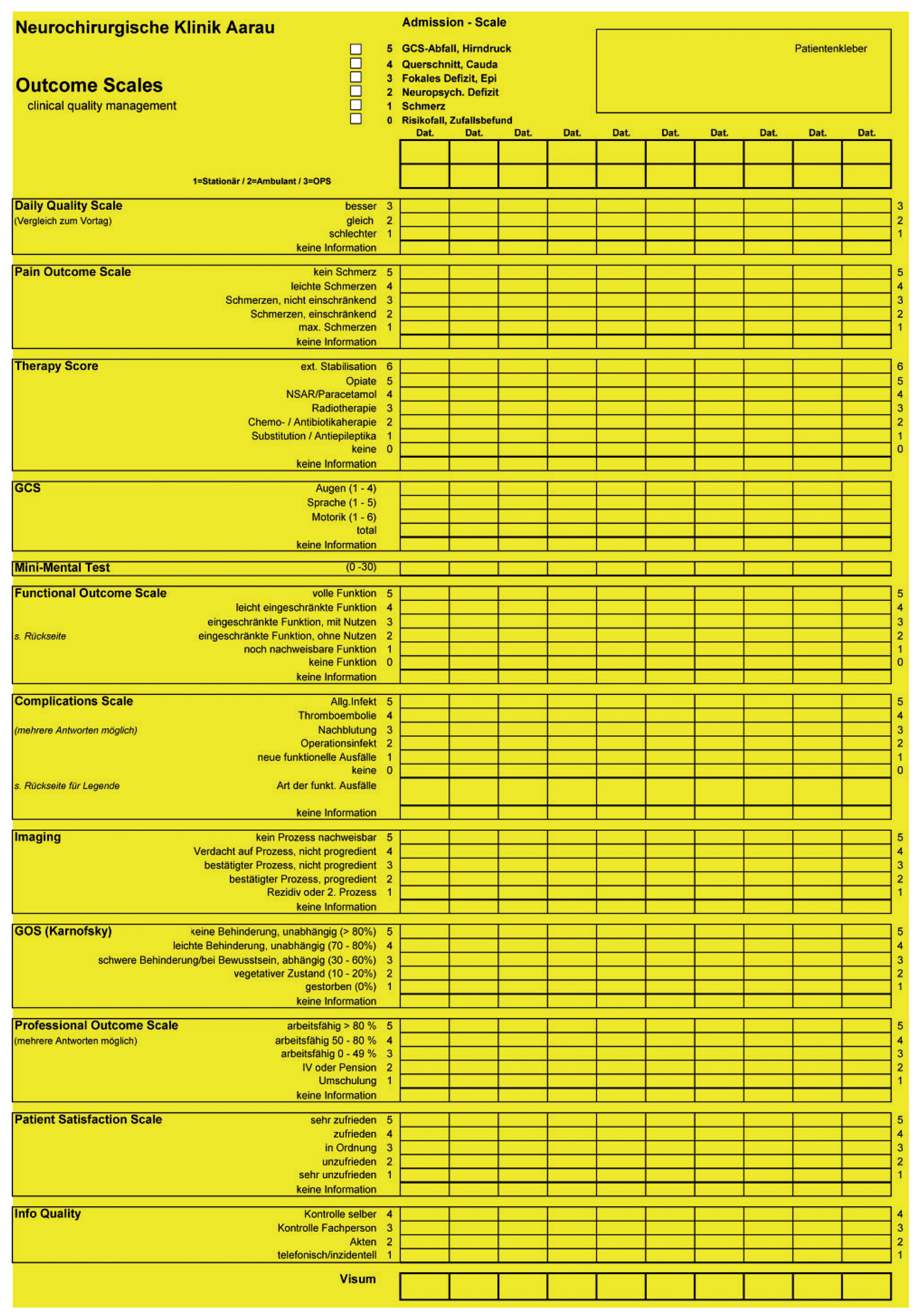
The assessment instrument
Individual scales used
Patients
Data collection and processing procedures
Reliability and validity of the instruments used
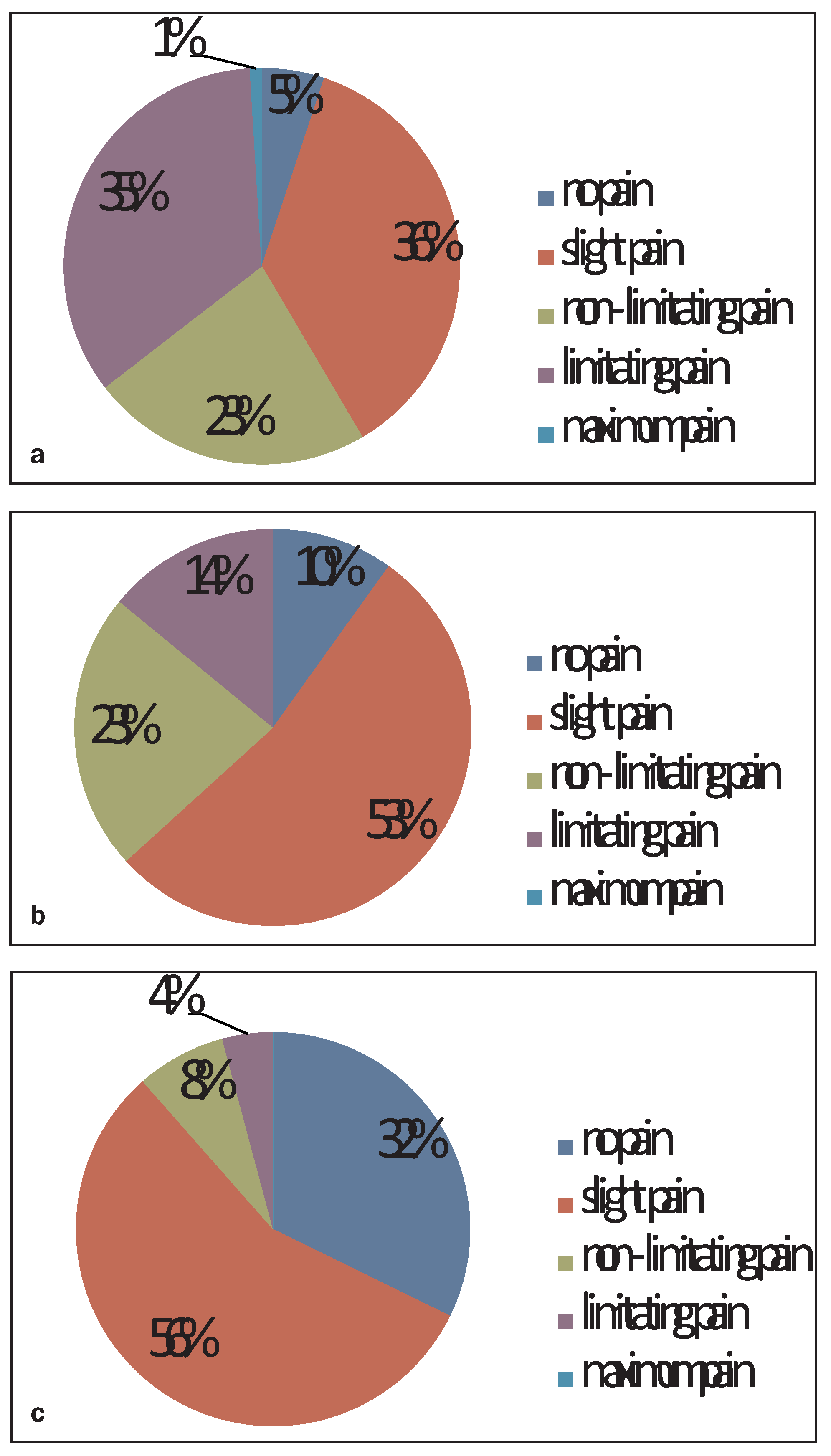
Pilot investigation: the assessment of pain evolution in patients with lumbar disc herniation
Statistical analysis
Results
Evaluation of reliability and validity of the pain outcome scale
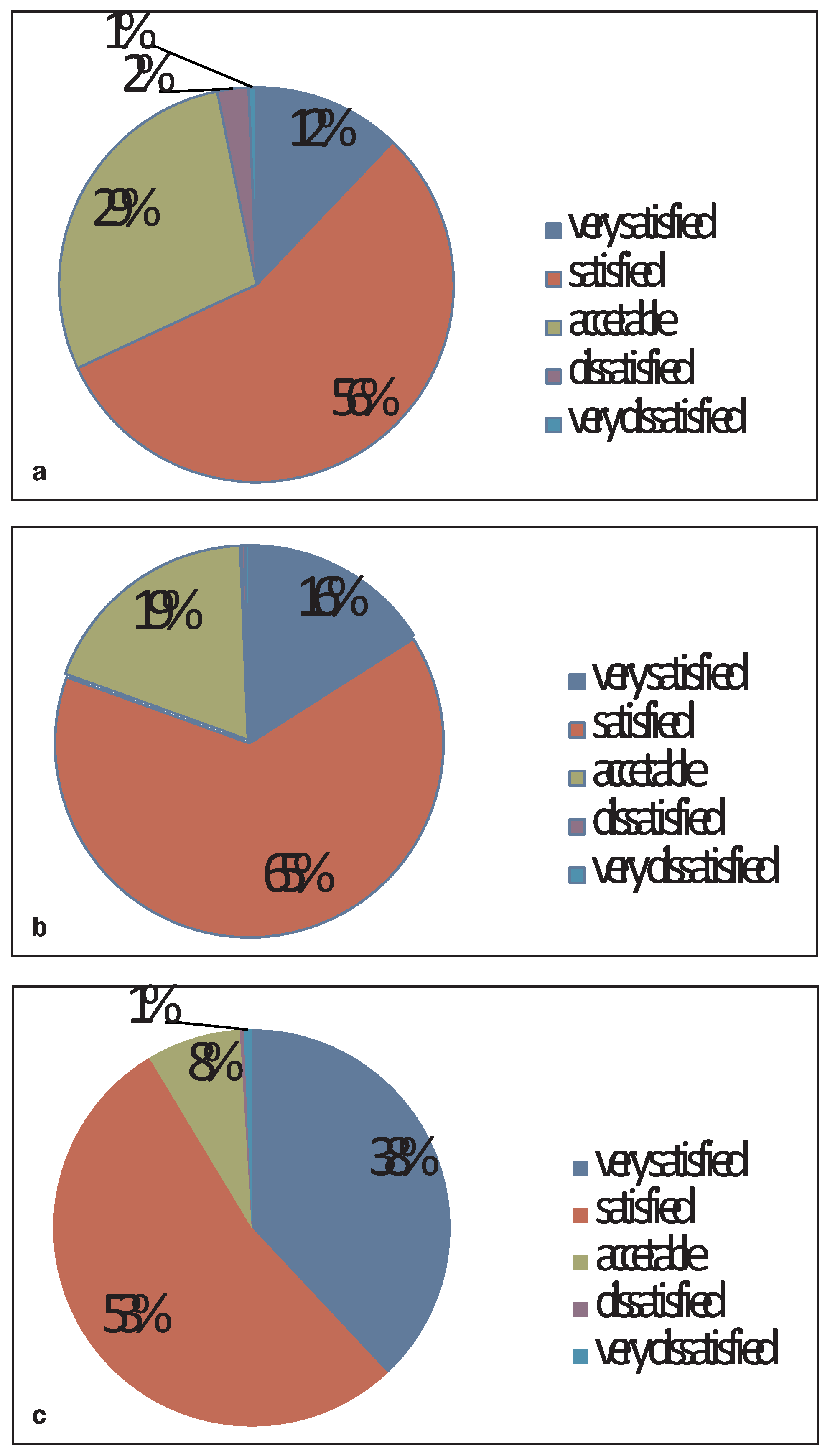
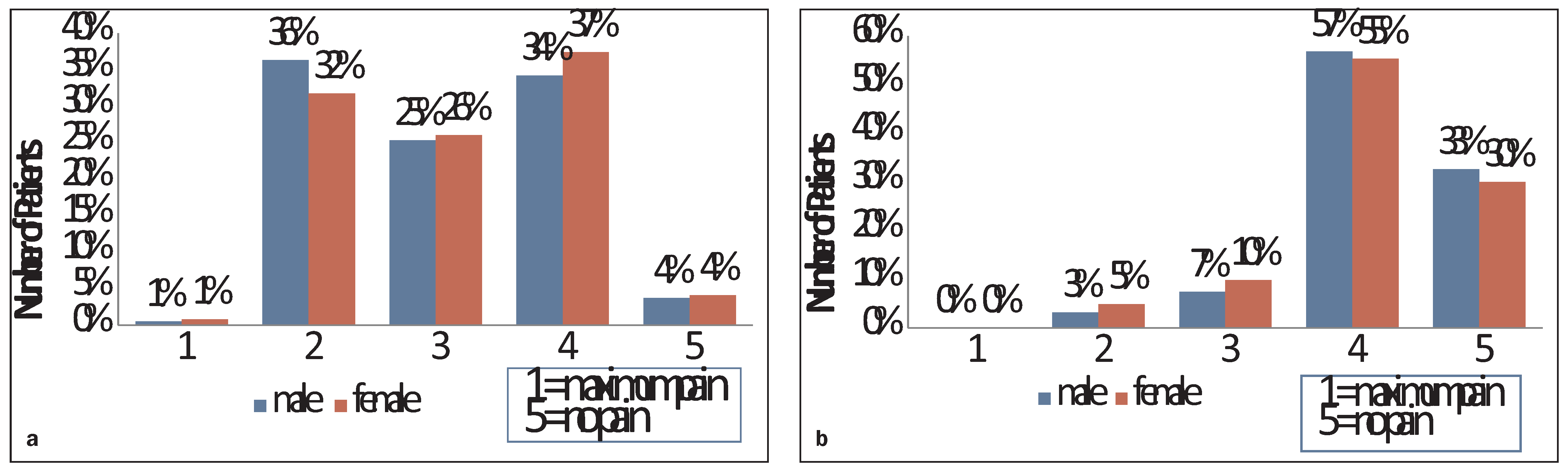
Pain outcome scale and patient satisfaction after lumbar microdiscectomy
Discussion
Conclusion and outlook
Funding/potential conflict of interest
References
- BAG, B.f.G. Kosten des Gesundheitswesens 2008 2009. Available online: http://www.bfs.admin.ch/bfs/portal/de/index/themen/14/05/blank/key/ueberblick.html.
- Oggier, W. Sozialinfo, Wörterbuch der Sozialpolitik. 2004. Available online: http://www.socialinfo.ch/cgi-bin/dicopossode/show.cfm?id=257.
- Lyndon, A. Communication and teamwork in patient care: how much can we learn from aviation? J Obstet Gynecol Neonatal Nurs. 2006, 35(4), 538–46. [Google Scholar] [CrossRef] [PubMed]
- Mannion, AF; et al. Pain measurement in patients with low back pain. Nat Clin Pract Rheumatol. 2007, 3(11), 610–8. [Google Scholar] [CrossRef] [PubMed]
- Wewers, ME; Lowe, NK. A critical review of visual analogue scales in the measurement of clinical phenomena. Res Nurs Health 1990, 13(4), 227–36. [Google Scholar] [CrossRef] [PubMed]
- Teasdale, G; Jennett, B. Assessment of coma and impaired consciousness. A practical scale. Lancet 1974, 2(7872), 81–4. [Google Scholar] [CrossRef] [PubMed]
- Berney, J. The Glasgow coma scale. Schweiz Med Wochenschr 1982, 112(27–28), 961–3. [Google Scholar] [PubMed]
- Folstein, MF; Folstein, SE; McHugh, PR. “Mini-mental state”. A practical method for grading the cognitive state of patients for the clinician. J Psychiatr Res. 1975, 12(3), 189–98. [Google Scholar] [CrossRef] [PubMed]
- Nurmohamed, MT. Thromboprophylaxis in neurosurgical patients. Semin Hematol. 2000, 37((3), 15–8. [Google Scholar] [CrossRef] [PubMed]
- Mirza, SK; et al. Towards standardized measurement of adverse events in spine surgery: conceptual model and pilot evaluation. BMC Musculoskelet Disord. 2006, 7, 53. [Google Scholar] [CrossRef] [PubMed]
- Anderson, SI; et al. Glasgow Outcome Scale: an inter-rater reliability study. Brain Inj. 1993, 7(4), 309–17. [Google Scholar] [CrossRef] [PubMed]
- Jennett, B; Bond, M. Assessment of outcome after severe brain damage. Lancet 1975, 1(7905), 480–4. [Google Scholar] [CrossRef] [PubMed]
- Jennett, B; et al. Disability after severe head injury: observations on the use of the Glasgow Outcome Scale. J Neurol Neurosurg Psychiatry 1981, 44(4), 285–93. [Google Scholar] [CrossRef] [PubMed]
- Aarau, K. Digital Unterwegs Jahresbericht 2009. yearly [Report] 2010 [cited 1; 2010:[62]. Available online: http://www.ksa.ch/omcms/omLink.asp?ID=127.
- H-Webbuilder. H-Webbuilder. 2009. Available online: www.hintag.ch.
- Crystal-Reports. Crystal–Reports. 2009. Available online: www.ch.businessobjects.com.
- Steiger, HJ. Quality, risk and health care: another view. Acta Neurochir Suppl. 2001, 78, 69–70. [Google Scholar] [PubMed]
- Lang, DA; Neil-Dwyer, G. Principles and problems of assessing the results of medical treatment. Acta Neurochir Suppl. 2001, 78, 59–62; discussion 62–3. [Google Scholar] [PubMed]
- Aebi, M; Grob, D. SSE Spine Tango: a European Spine Registry promoted by the Spine Society of Europe (SSE). Eur Spine J 2004, 13(8), 661–2. [Google Scholar] [CrossRef] [PubMed]
- Melloh, M; et al. The international spine registry SPINE TANGO: status quo and first results. Eur Spine J. 2008, 17(9), 1201–9. [Google Scholar] [CrossRef] [PubMed]
- Garratt, AM; Helgeland, J; Gulbrandsen, P. Five-point scales outperform 10-point scales in a randomized comparison of item scaling for the Patient Experiences Questionnaire. J Clin Epidemiol. 2011, 64(2), 200–7. [Google Scholar] [CrossRef] [PubMed]
- Bolognese, JA; Schnitzer, TJ; Ehrich, EW. Response relationship of VAS and Likert scales in osteoarthritis efficacy measurement. Osteoarthritis Cartilage 2003, 11(7), 499–507. [Google Scholar] [CrossRef] [PubMed]
- Veresciagina, K; Spakauskas, B; Ambrozaitis, KV. Clinical outcomes of patients with lumbar disc herniation, selected for one-level open-discectomy microdiscectomy. Eur Spine J. 2010, 19(9), 1450–8. [Google Scholar] [CrossRef] [PubMed]


This is an open-access article distributed under the terms of the Creative Commons Attribution Non-Commercial No Derivatives (CC BY-NC-ND) 4.0 License.
Share and Cite
Mutter, U.M.; Landolt, H. Outcome scales—An observational study of the use of continuous clinical outcome assessment and therapy management in neurosurgery. Swiss Arch. Neurol. Psychiatry Psychother. 2011, 162, 202-207. https://doi.org/10.4414/sanp.2011.02278
Mutter UM, Landolt H. Outcome scales—An observational study of the use of continuous clinical outcome assessment and therapy management in neurosurgery. Swiss Archives of Neurology, Psychiatry and Psychotherapy. 2011; 162(5):202-207. https://doi.org/10.4414/sanp.2011.02278
Chicago/Turabian StyleMutter, Urs M., and Hans Landolt. 2011. "Outcome scales—An observational study of the use of continuous clinical outcome assessment and therapy management in neurosurgery" Swiss Archives of Neurology, Psychiatry and Psychotherapy 162, no. 5: 202-207. https://doi.org/10.4414/sanp.2011.02278
APA StyleMutter, U. M., & Landolt, H. (2011). Outcome scales—An observational study of the use of continuous clinical outcome assessment and therapy management in neurosurgery. Swiss Archives of Neurology, Psychiatry and Psychotherapy, 162(5), 202-207. https://doi.org/10.4414/sanp.2011.02278