Next Article in Journal
Verticality perception in patients with lesions along the graviceptive pathways
Previous Article in Journal
Neurosciences et neuropsychiatrie
 
 
Swiss Archives of Neurology, Psychiatry and Psychotherapy is published by MDPI from Volume 176 Issue 1 (2026). Previous articles were published by another publisher in Open Access under a CC-BY (or CC-BY-NC-ND) licence, and they are hosted by MDPI on mdpi.com as a courtesy and upon agreement with EMH Editores Medicorum Helveticorum.
Review

Possible new avenues in epilepsy treatment: the stimulation techniques †

by
Colette Boëx
1,*,
Verena Brodbeck
1,
Serge Vulliémoz
1,
Laurent Spinelli
1,
Andrea O. Rossetti
2,
Giovanni F. Foletti
2,
Claudio Pollo
3 and
Margitta Seeck
1
1
Unité d’Evaluation Préchirurgicale de l’Epilepsie & Unité EEG et Epileptologie, Clinique de Neurologie, Hôpitaux Universitaires de Genève (HUG), Rue Gabrielle-Perret-Gentil 4, CH-1211 Genève
2
Service de Neurologie, CHUV, Lausanne, Switzerland
3
Service de Neurochirurgie, CHUV, Lausanne, Switzerland
*
Author to whom correspondence should be addressed.
Deep brain stimulation, vagal nerve stimulation, transcranial magnetic stimulation
Swiss Arch. Neurol. Psychiatry Psychother. 2011, 162(2), 51-56; https://doi.org/10.4414/sanp.2011.02241
Published: 1 January 2011

Summary

Stimulation techniques have been extensively explored as new treatments for epilepsy, and their efficacy is still being investigated, albeit several approaches appear to be very promising. Vagal nerve stimulation (VNS) has been a well established palliative therapy for almost 20 years, however, complete seizure control is rarely obtained. Its favourable effect on mood has been noted in several studies, and VNS was FDA-approved for the treatment of major depression in 2005. Intracerebral electrical stimulation is currently being evaluated as a potential treatment for patients with drug-resistant focal epilepsy in whom surgery cannot be offered. We summarise the results of various studies applying deep brain stimulation (DBS) to different brain structures, particularly to the mesial temporal lobe. From these studies, it appears that the efficiency of DBS to reduce epileptic seizures is demonstrated in a sufficiently large patient population but the exact determinants (physical parameters, syndromes) of its success (or its absence) remain unknown. Repetitive Transcranial Magnetic Stimulation (rTMS) has been investigated as an antiepileptic treatment in patients with focal seizure onset by several groups, however, the clinical success is variable and in most studies rather low.

Introduction

A total of 20–30% of all patients with epilepsy become drugresistant, which means that the seizures cannot be controlled by medication. In some of these patients, surgical treatment is an important therapeutic option. However, in approximately 30% of all pharmaco-resistant patients, the resection of the epileptogenic zone is not feasible a) because a dominant epileptogenic zone cannot be unequivocally identified and/or b) due to a major risk of postoperative neurological or cognitive impairment.
For patients with drug-resistant epilepsy in whom surgical therapy has been excluded, alternative therapies are critically needed. If a prevalence of epilepsy of 0.7% is assumed, the lack of efficient drug and surgical therapy affects 4000–5000 patients in Switzerland. In order to fill the treatment gap, stimulation techniques have been developed and/or adapted from strategies applied in other neurological diseases. Alternative therapies based on intracranial electrical or transcranial magnetic stimulation have been developed mainly in the last 5–10 years, complementing vagal nerve stimulation (VNS). VNS has the longest history as an epilepsy treatment since its introduction onto the market in the 1990s, and is currently also approved in some countries for antidepressant therapy. Deep brain stimulation (DBS) is a well established treatment for patients with Parkinson’s disease (or other movement disorders) or for pharmaco-resistant pain. The first reports on repetitive transcranial magnetic stimulation (rTMS) as an antiepileptic stimulation method were published in the late 1990s as well. Common to all three techniques is that 1) they are minimally (DBS, VNS) or noninvasive (rTMS), 2) they are reversible treatments, 3) there is still ongoing research concerning the optimal stimulation parameters (frequency, pulse width, amplitude etc.) and 4) they can be adapted individually to each patient and the stimulation parameters can be altered during treatment.
In the following brief review, we will discuss the following stimulation devices:
Vagal Nerve Stimulation (VNS)
Intracranial or Deep Brain Stimulation (DBS)
Repetitive Transcranial Magnetic Stimulation (rTMS)

Vagal nerve stimulation

Vagal nerve stimulation is the most widely used stimulation tool in the field of epilepsy (approximately 40000 cases implanted so far). An electrode is wrapped around a branch of the vagus nerve during a brief surgical intervention and connected to a control box, which is then implanted underneath the collarbone. The most commonly-used protocol consists of intermittent stimulation (30 sec. ON, 5 min. OFF), but other cycles have been successfully used as well. In patients who do not respond to the initially recommended cycle, faster cycles have been evaluated and were well tolerated (e.g. 30 sec. ON, <1 min. OFF). Acute adjustment of the VNS is possible. By means of an external magnet held over the pacemaker, the stimulation can be changed to continuous mode; stimulation which is particularly interesting when the patient feels an aura and is still able to abort the seizure by this manipulation. VNS is approved by the Food and Drug Administration (FDA) in the U.S. (patients over 12 years and with partial epilepsy syndromes) and received the European CE mark (with no age restrictions and all epilepsy syndromes).
The first double-blind, multicenter studies have shown that stimulation of the vagus nerve can produce a significant reduction in seizure frequency [1,2]. In the long term, 40–50% of patients using this system observed a reduction of at least 50% in seizure frequency [3,4]. Interestingly, a lack of response during the first 3 months is not necessarily related to absence of response during later stimulation periods. Even up to 12 months after the onset of VNS, there are still responders.
Despite the large number of patients stimulated with VNS so far, no particular profile of the “perfect” VNS-candidate has emerged. Moreover, no particular antiepileptic drug pairs optimally with VNS, leading to enhanced synergistic efficiency than either VNS or the drug alone [4]. Among patients who appear to benefit most from VNS are patients with Lennox-Gastaut syndrome (LGS). Tonic seizures were reduced by 88% and atypical absences by 81% in a study of 46 LGS-patients [5]. In addition, VNS was correlated to improved behaviour. Patients with frequent ictal falls who are candidates for corpus callosotomy (CC) benefitted from VNS as much as from CC, with lower complication rates for VNS [6]. Thus, it is now recommended to firstly try VNS, and reserve CC for the more refractory cases.
Adverse events are mainly seen as hoarseness and coughing caused by stimulation of the recurrent laryngeal nerve, a branch of the vagus nerve, and tend to disappear in the first two years after implantation of the VNS. Overall, adverse events occur at an acceptable rate and can be grouped into stimulation-related (coughing, dyspnea, hoarseness etc.) or surgery-related side effects (haematoma, lead breakage, device migration etc.). The mechanisms of action of VNS have been recently reviewed, but still remain unclear [7]. Autopsies of patients with VNS did not reveal any histopathological changes at the vagus nerve itself or in the brainstem [8]. While only a minority of patients become seizure-free (<10%), it is a safe procedure providing seizure reduction in many patients as well as positive behavioural changes. This might be due to its antidepressant effect, and it is of note that VNS received the FDA approval for treatment-resistant major depression in July 2005.

Deep brain stimulation

The first human brain electrical stimulation was performed in a patient with epilepsy by Krause in 1912 [9]. A review of previous experiments in electrical stimulation of the mesial temporal lobe (amygdala and hippocampus), which began in 1941, can be found in the review by Bancaud and his colleagues published in 1966 [10].
The rapid increase in the number of publications on DBS since the 1970s is evidence for the resurging interest in DBS. The most frequent stimulated sites are the subthalamic nucleus (STN) [11], the cerebellum [12,13,14,15,16,17] and various sites in the basal ganglia or thalamus.
One of the first stimulation sites investigated for the treatment of epilepsy was the thalamus. Stimulation of the anterior nucleus of the thalamus has so far been tested in about 31 patients worldwide with multifocal epilepsy and symptomatic generalised seizures or partial complex [18,19,20,21,22,23]. These studies report that stimulation at a frequency between 90 and 200 Hz, produces a significant reduction of the seizure frequency (≥60%) in 16/31 of the patients. There is currently an ongoing multicenter study in the US, called the SANTE trial (Medtronic, Minneapolis, MN, USA; Clinicaltrials.gov NCT00101933). The stimulation of the centromedian nucleus of the thalamus, at a stimulation frequency ranging from 4 to 185 Hz, has been tested in 78 patients so far [20,24,25,26,32] where it leads to a significant reduction in seizure frequency of generalised tonic-clonic seizures and of absences, but not of partial complex seizures [23]. Other studies have indicated no reduction in seizure frequency [20,32]. Stimulation of the centromedian nucleus of the thalamus has also been investigated as a treatment of Lennox-Gastaut syndrome [27]. Overall, a seizure reduction of about 80% was achieved and 2 out of 13 patients became seizure-free. This is a promising result in this difficult-to-treat patient group, but needs to be verified in further studies.
Similar to DBS in Parkinson’s Disease, the subthalamic nucleus (STN) has been also explored as a target region for epilepsy patients, but so far with less success than the studies of thalamic DBS. Two research groups have studied STN-DBS in a total of 14 patients with frontal or temporal lobe epilepsy with a stimulation frequency between 100 and 130 Hz [28,29,30,31,32]. A total of 9 patients showed no or only a slight (≤50%) decrease in their seizure frequency. In 5 patients, a more significant reduction in seizure frequency (≥50%) was obtained. DBS of the caudate nucleus was investigated by the group of Chkhenkeli [33]. At low stimulation frequencies (i.e. 4 to 8 Hz), a decrease of interictal epileptic activity was found in 41 out of 57 patients with temporal lobe epilepsy, leading to the implantation of a permanent pacemaker in 38 patients. The authors reported good efficacy regarding generalised tonic-clonic, complex partial and tonic seizures with reduction frequencies ranging from 70 to 90%, however, this study has not yet been replicated.
Regarding the stimulation of the cerebellum, the encouraging results that have been reported in animals and uncontrolled studies [34] could not be confirmed by controlled clinical studies [35,36]. Only 2 patients out of 17 benefited from this procedure [37]. However, a recent study reported that stimulation of the superior-mesial cerebellar cortex in 5 patients with generalised tonicoclonic seizures (4 patients also with tonic seizures), led to a reduction but not complete suppression of tonicoclonic or clonic seizures after 24 months [38].
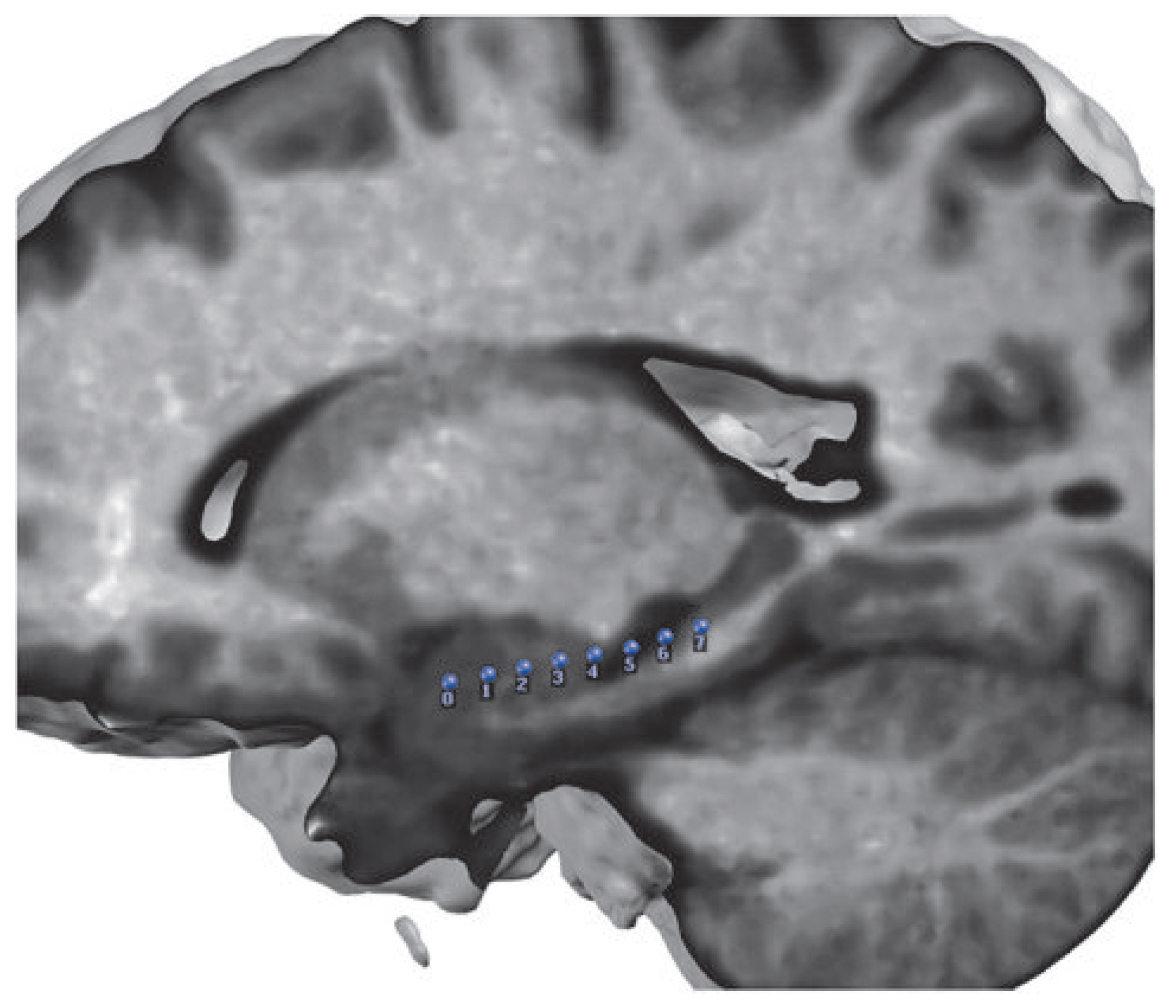
Amygdalo-hippocampal stimulation (fig. 1) has so far been applied in 22 patients with temporal lobe epilepsy [39,40,41], with overall positive clinical results. Out of these 22 patients, 5 became seizure-free, 10 patients showed a reduction of seizure frequency of at least 50%, 6 patients had a reduction of less than 50% and one patient experienced an increase of seizure frequency. In this group, high frequency stimulations of 130 or 190 Hz, with a pulse width of 90 or 450 μs, were applied continuously or in intermittent cycles [39].
With regard to the epilepsy surgery program of Geneva-Vaud, 8 patients suffering from temporal lobe epilepsy were subject to DBS and had a follow-up of >1 year [42]. All patients were initially subject to an extensive examination to test whether they could be surgical candidates. In all patients, surgery could not be recommended, due to a high risk of postoperative memory function impairment (evaluated by neuropsychological testing and Wada tests), and unilateral, continuous DBS of amygdalohippocampal complex was initiated. The optimal electrical stimulation parameters appear to be different for lesional and nonlesional mesial temporal lobe epilepsy. A total of 2 patients became seizure-free, one patient before the stimulation was switched on (fig. 1), suggesting a microlesional effect, and 4 had a >60% seizure reduction; a result which is in line with the current literature. AH-DBS appears to be an interesting alternative for temporal lobe epilepsy patients in whom surgery is not an option. The microlesional effects should be systematically evaluated by including periods with stimulation OFF in the appropriate protocols.
Other sites of stimulation have been evaluated in very small cohorts of patients. Elisevich et al. [43] obtained a decrease of seizure frequency of 90% in one patient with postencephalitic epilepsy by the stimulation of the primary motor cortex. More recently, Franzini et al. [44] obtained significant reduction in seizure frequency with the stimulation of the posterior hypothalamus in two patients with multifocal epilepsy (reductions of 75 and 85%), and with stimulation of the caudal zona incerta in the subthalamus in another two patients with focal sensorimotor epilepsy (reduction of 80% in one patient, the other patient became seizure-free).
Histopathological analyses of the brain tissue of DBS patients did not reveal any parenchymal alterations due to the electrical stimulation [45,46]. While in some cases of AH-DBS, impairments of memory have been reported [47], we observed transient impairments of memory functions only when stimulating large zones or with high intensity. When stimulation parameters were readjusted, the patients regained their habitual memory performance. Up to now, no psychiatric side effects have been reported.

Optimisation of DBS parameters

The previously mentioned studies demonstrate the capacity of DBS to reduce the frequency of epileptic seizures in a sufficiently large patient population. Still, the exact determinants of the therapeutic success (or its absence) remain unknown. The physical parameters of the applied stimuli vary considerably between studies and/or are not controlled. Moreover, the high variability regarding the individual epilepsy syndrome/epileptogenic site of the included patients imposes an additional difficulty for the delineation of optimal stimulation parameters. Preliminary results in amygdalo-hippocampal DBS suggest that stimulation of epileptogenic zones at a frequency of 130 Hz is able to reduce or limit the interictal epileptogenic activity, whereas stimulation at low frequencies (5 Hz) seems to increase the epileptic activity. Although the relationship between interictal activity and the frequency of seizures is controversial, a positive correlation seems to be present at least in mesial temporal lobe epilepsy [48,49,50,51].
Table 1. Summary of reported effects on seizure frequencies. VNS: vagal nerve stimulation, DBS: deep brain stimulation, rTMS: repetitive transcranial magnetic stimulation. GTCS: generalized tonic-clonic seizures, TLE: temporal lobe epilepsy. LGS: Lennox-Gastaut Syndrome.
Stimulation deviceSiteEffectRemarks
VNSVagal nerveLGS: Seizure reduction of tonic seizures or other seizures with falls (80%), atypical absences (90% in 50% of patients)Alternative to corpus callosotomy
All other types of epilepsy: in 40–50%, decrease of >50%, very rarely complete seizure control
DBSAmygdala-hippocampusReduction (>50%) or absence of seizure in 70% of all patientsWorks better in nonlesional TLE
Centromedian nucleus of the thalamusMajor reduction (>87%) or absence of seizureGTCS, atypical absences in LGS
Anterior nucleus of the thalamusMajor reduction (mean 60% in most recent studies)Under investigation in a multicenter study in the US
Subthalamic nucleusVery variable results, none seizure-freeIn patients with epilepsy with focal seizure onset
Caudate nucleusReduction of 70–90%Examined mainly for TLE
Cerebellum (vermis)No effect or decreaseProbably works best for GTCS
rTMSApplied over vertex
or epileptic onset zones
Very variable resultsOnly one study with good effects on cortical dysplasia
Patients with focal seizure onset seem to be the best candidates for stimulation. The potential beneficial effect of electrical stimulation in various encephalopathies with refractory seizures (e.g. Lennox-Gastaut, Dravet, progressive myoclonic epilepsy) is not yet known, despite encouraging results [26,52,53].

DBS closed-loop systems

A study is currently underway in the United States to assess the effectiveness of an intracranial “pacemaker” which triggers electrical stimulation in response to the detection of an ongoing seizure through intracerebral electrodes [54,55]. This system, the NeuroPace RNS system (Mountain View, CA, USA), is being evaluated for medically refractory partial-onset epilepsy (Clinicaltrials.gov NCT00264810) [56].

Mechanisms of DBS

Different hypotheses have been considered to explain the observed effects [57]: 1) depolarisation blockade [58] which is an alteration in the activation of voltage-gated currents that block neural output near the electrode; 2) synaptic inhibition [59] which is an indirect inhibition of neuronal output by means of activation of axon terminals that make synaptic connections with neurons near the electrode; and 3) synaptic depression [60] which is a synaptic transmission failure of the efferent output of stimulated neurons as a result of transmitter depletion. Another hypothesis would be that DBS force the neuronal activity to be synchronised to a high frequency (i.e. 130 Hz) [61], preventing any other rate of synchronisation.

Transcranial Magnetic Stimulation

Repetitive Transcranial Magnetic Stimulation (rTMS) is a noninvasive method for cortical stimulation, based on principles of electromagnetic induction. Small intracranial electrical currents are generated by a strong fluctuating extracranial magnetic field [62,63,64]. rTMS has been applied with therapeutic attempts in several pathologies such as depression, pain, tinnitus and stroke, and also in epilepsy patients. Low frequency (<1 Hz) rTMS decreases the cortical excitability, outlasting the duration of the stimulation itself [65]. Inhibition of epileptic activity with rTMS is based on the notion that rTMS can achieve a reorganisation of the cortical circuitry in humans leading to potentially therapeutic effects [66]. The inhibitory effects of low frequency rTMS have been attributed to the transsynaptic activation of GABAergic inhibitory interneurons to the recurrent inhibition of the targeted cortical neurons through axonal collaterals [67]. As a lack of GABAergic surround inhibition is assumed to be involved in the spreading of local epileptic activity, the concept of inhibitory rTMS in epilepsy with focal seizure onset is convincing. In epilepsy, rTMS has been applied either in single sessions to study acute effects on the number of epileptic discharges, or multiple sessions applied on five to ten consecutive days. Using this method of application, an antiepileptic effect is thought to accumulate over days and therefore a decrease of seizure frequency is more likely to be obtained.
First studies using low frequency rTMS in epilepsy patients reported promising results with beneficial effects on seizure frequency and/or number of epileptic spikes after stimulation [68,69]. Several case reports and open-label studies have reported beneficial, some even long-lasting, reductions of seizures and/or epileptic seizures [70,71,72] or complete arrest of seizure signs in a patient with epilepsia partialis continua [73]. Other studies failed to demonstrate significant effects on seizure frequencies [74].
A total of 4 placebo-controlled human studies have been published so far. Fregni et al. [75] found a significant reduction of epileptic spikes and long-lasting (>2 months) significant seizure reduction after five days of 1Hz rTMS in the real rTMS group only. Theodore et al. [57] used 1Hz rTMS and found a nonsignificant reduction of seizures after real stimulation. Tergau et al. [76] did not find significant differences after 1Hz stimulation. Using 0.3 Hz stimulation, they found a significant decrease of seizure frequencies during the stimulation period only, and when compared to baseline but not to placebo. Cantello et al. used 0.3 Hz stimulation on five consecutive days showing a nonsignificant reduction of seizures and epileptic spikes in the active stimulation group [77]. Despite promising results regarding seizure reduction at least in some studies, rTMS as a therapeutic option has not yet become a routine application. The rather mild and variable success rate together with the relatively time consuming application on several consecutive days has prevented its clinical utilisation until now [78,79]. A relatively new stimulation protocol is theta burst stimulation with which longer-lasting excitability changes can be obtained even after few seconds of stimulation [80].

Conclusion

VNS is an established palliative epilepsy treatment, leading to significant seizure reduction in approximately half of all implanted patients. Its good effect on mood and behaviour has now been described in several studies, leading to its FDA approval also for major depression. In some patients with drug-resistant epilepsy, intracerebral electrical stimulation is gaining importance as an alternative treatment option. The majority of patients treated with DBS showed a decrease in seizure frequency, and in rare cases, even complete seizure control. Larger clinical studies are necessary to determine the role of DBS, and are currently underway for the thalamic and neocortical DBS. Repetitive TMS, on the other hand, still has a controversial effect and has not gained clinical acceptance so far.

Funding

No funding.

Conflicts of Interest

No conflict of interest.

References

  1. Ben-Menachen, E.; Mañon-Espaillat, R.; Ristanovic, R.; Wilder, B.; Stefan, H.; Mirza, W.; et al. Vagus Nerve stimulation for treatment of partial seizure: 1. A controlled study of effect on seizures. Epilepsia 1994, 35, 616–26. [Google Scholar] [CrossRef]
  2. Handforth, A.; DeGiorgio, C.M.; Schachter, S.C.; Uthman, B.M.; Naritoku, D.K.; Tecoma, E.S.; et al. Vagus Nerve Stimulation therapy for partial-onset seizures: a randomized active control trial. Neurology 1998, 51(1), 48–55. [Google Scholar] [CrossRef]
  3. Ben-Menachem, E. Vagus-nerve stimulation for the treatment of epilepsy. The Lancet Neurology 2002, 1, 477–82. [Google Scholar] [CrossRef]
  4. Tecoma, E.S.; Iragui, V.J. Vagus nerve stimulation use and effect in epilepsy: what have we learned? Epileps. and Behav. 2006, 8, 127–36. [Google Scholar] [CrossRef]
  5. Frost, M.; Gates, J.; Helmers, S.L.; Wheless, J.W.; Levisohn, P.; Tardo, C.; et al. Vagus nerve stimulation in children with refractory seizures associated with Lennox-Gastaut syndrome. Epilepsia 2001, 42(9), 1148–52. [Google Scholar] [CrossRef]
  6. Nei, M.; O’Connor, M.; Liporace, J.; Sperling, M.R. Refractory generalized seizures: response to corpus callosotomy and vagal nerve stimulation. Epilepsia 2006, 47(1), 115–22. [Google Scholar] [CrossRef]
  7. Vonck, K.; De Herdt, V.; Boon, P. Vagal nerve stimulation—1 15 year survey of an established treatment modality in epilepsy surgery. Adv Tech Stand Neurosurg. 2009, 34, 111–46. [Google Scholar]
  8. Tecoma, ES; Iragui, VJ. Vagus nerve stimulation use and effect in epilepsy: what have we learned? Epilepsy & Behavior 2006, 8, 127–36. [Google Scholar] [CrossRef]
  9. Krause, F. Surgery of the brain and spinal cord based on personal experience. Vol III. 1912.
  10. Bancaud, J.; Talairach, J.; Morel, P.; Bresson, M. La corne d’Ammon et le noyau amygdalien: Effets cliniques et électriques de leur stimulation chez l’homme. Revue Neurologique 1966, 115(3), 329–52. [Google Scholar]
  11. Tress, K.H.; Herberg, L.J. Permanent reduction in seizure threshold resulting from repeated electrical stimulation. Exp Neurol. 1972, 37(2), 347–59. [Google Scholar] [CrossRef]
  12. Cooper, I.S.; Amin, I.; Gilman, S. The effect of chronic cerebellar stimulation upon epilepsy in man. Trans Am Neurol Assoc. 1973, 98, 192–6. [Google Scholar]
  13. Cooper, I.S.; Amin, I.; Riklan, M.; Waltz, J.M.; Poon, T.P. Chronic cerebellar stimulation in epilepsy. Clinical and anatomical studies. Arch Neurol. 1976, 33(8), 559–70. [Google Scholar] [CrossRef]
  14. Cooper, I.S.; Upton, A.R. Effects of cerebellar stimulation on epilepsy, the EEG and cerebral palsy in man. Electroencephalogr Clin Neurophysiol Suppl. 1978, (34), 349–54. [Google Scholar]
  15. Gilman, S. Cerebellar stimulation: safety factors. Surg Neurol. 1978, 9(3), 194. [Google Scholar]
  16. Fenton, G.W.; et al. Chronic cerebellar stimulation in the treatment of epilepsy. In Epilepsy: the eight international symposium. 1978.
  17. Levy, L.F.; Auchterlonie, W.C. Chronic cerebellar stimulation in the treatment of epilepsy. Epilepsia 1979, 20(3), 235–45. [Google Scholar] [CrossRef]
  18. Hodaie, M.; Wennberg, R.A.; Dostrovsky, J.O.; Lozano, A.M. Chronic anterior thalamus stimulation for intractable epilepsy. Epilepsia 2002, 43(6), 603–8. [Google Scholar] [CrossRef]
  19. Kerrigan, JF; Litt, B.; Fisher, R.S.; Cranstoun, S.; French, J.A.; et al. Electrical stimulation of the anterior nucleus of the thalamus for the treatment of intractable epilepsy. Epilepsia 2004, 45(4), 346–54. [Google Scholar] [CrossRef]
  20. Osorio, I.; Frei, M.G.; Sunderam, S.; et al. Automated seizure abatement in humans using electrical stimulation. Ann Neurol. 2005, 57(2), 258–68. [Google Scholar] [CrossRef]
  21. Andrade, DM; Zumsteg, D; Hamani, C; et al. Long-term follow-up of patients with thalamic deep brain stimulation for epilepsy. Neurology 2006, 66, 1571:3. [Google Scholar] [CrossRef]
  22. Lim, S.N.; Lee, S.T.; Tsai, Y.T.; et al. Electrical stimulation of the anterior nucleus of the thalamus for intractable epilepsy; a long-term follow-up study. Epilepsia 2007, 48(2), 342–7. [Google Scholar] [CrossRef]
  23. Osorio, I.; Overman, J.; Giftakis, J.; Wilkinson, S.B. High frequency thalamic stimulation for inoperable mesial temporal lobe epilepsy. Epilepsia 2007, 48(8), 1561–71. [Google Scholar] [CrossRef]
  24. Velasco, M.; Velasco, F.; Velasco, A.L. Centromedian-thalamic and hippocampal electrical stimulation for the control of intractable epileptic seizures. J Clin Neurophys 2001, 18(6), 495–513. [Google Scholar] [CrossRef]
  25. Velasco, F.; Velasco, M.; Ogarrio, C.; Fanghanel, G. Electrical stimulation of the centromedian thalamic nucleus in the treatment of convulsive seizures: a preliminary report. Epilepsia 1987, 28(4), 421–30. [Google Scholar] [CrossRef]
  26. Fisher, R.S.; Uematsu, S.; Krauss, G.L.; Cysyk, J.; McPherson, R.; Lesser, R.P.; et al. Placebo-controlled pilot study of centromedian thalamic stimulation in treatment of intractable seizures. Epilepsia 1992, 33(5), 841–51. [Google Scholar] [CrossRef]
  27. Velasco, A.L.; Velasco, F.; Jiménez, F.; Velasco, M.; Castro, G.; Carrillo-Ruiz, J.D.; et al. Neuromodulation of the centromedian thalamic nuclei in the treatment of generalized seizures and the improvement of the quality of life in patients with Lennox-Gastaut syndrome. Epilepsia 2006, 47(7), 1203–12. [Google Scholar] [CrossRef]
  28. Neme, S.; Montgomery EBJr Rezai, A.; Wilson, K.; Lüders, H.O. Subthalamic nucleus stimulation in patients with intractable epilepsy: the Cleveland experience. In Deep brain stimulation and epilepsy; Lüders, HO, Ed.; 2004; pp. 349–355. [Google Scholar]
  29. Habardès, S.; Kahane, P.; Minotti, L.; Koudsie, A.; Hirsh, E.; Benabid, A.L. Deep brain stimulation in epilepsy with particular reference to the subthalamic nucleus. Epileptic Disord. 2002, 4 (Suppl 3), S83–93. [Google Scholar] [CrossRef]
  30. Shon, Y.M.; Lee, K.J.; Kim, H.J.; Chung, Y.A.; Ahn, K.J.; Yang, D.W.; Kim, B.S. Effect of chronic deep brain stimulation of the subthalamic nucleus for frontal lobe epilepsy: substraction SPECT analysis. Stereotact Funct Neurosurg. 2005, 83, 84–90. [Google Scholar] [CrossRef]
  31. Handforth, A.; DeSalles, A.A.F.; Krahl, S.E. Deep brain stimulation of the subthalamic nucleus as adjunct treatment for refractory epilepsy. Epilepsia 2006, 47(7), 1239–41. [Google Scholar] [CrossRef]
  32. Vesper, J.; Steinhoff, B.; Rona, S.; Wille, C.; Bilic, S.; Nikkhag, G.; Osterag, C. Chronic high-frequency deep brain stimulation of the STN/SNr for progressive myoclonic epilepsy. Epilepsia 2007, 48(10), 1984–9. [Google Scholar] [CrossRef]
  33. Chkhenkeli, S.A.; Sramka, M.; Lortkipanidze, G.S.; Rakviashvili, T.N.; Bregvadze, E.S.; Magalashvili, G.E.; et al. Electrophysiological effects and clinical results of direct brain stimulation for intractable epilepsy. Clin Neurol Neurosurg. 2004, 106(4), 318–29. [Google Scholar] [CrossRef]
  34. Davis, R.; Gray, E.; Engel, H.; Dusnak, A. Reduction of intractable seizures using cerebellar stimulation. Appl Neurophysiol. 1983, 46(1-4), 57–61. [Google Scholar] [CrossRef]
  35. Wright, G.D.S.; McLellan, D.L.; Brice, J.G. A double-blind trial of chronic cerebellar stimulation in twelve patients with severe epilepsy. J Neurol Neurosurg Psychiatry 1984, 47, 769–74. [Google Scholar] [CrossRef]
  36. Van Buren, J.M.; Wood, J.H.; Oakley, J.; Hambrecht, F. Preliminary evaluation of cerebellar stimulation by double-blind stimulation and biological criteria in the treatment of epilepsy. J Neurosurg. 1978, 48, 107–16. [Google Scholar] [CrossRef]
  37. Krauss, G.L.; Fisher, R.S. Cerebellar and thalamic stimulation for epilepsy. Adv Neurol. 1993, 63, 231–45. [Google Scholar]
  38. Velasco, F.; Carrillo-Ruiz, J.D.; Brito, F.; Velasco, M.; Velasco, A.L.; Marquez, I.; Davis, R. Double-blind, randomized controlled pilot study of bilateral cerebellar stimulation for treatment of intractable motor seizures. Epilepsia 2005, 46(7), 1071–81. [Google Scholar] [CrossRef]
  39. Tellez-Zenteno, J.F.; McLachlan, R.S.; Parrent, A.; et al. Hippocampal electrical stimulation in mesial temporal lobe epilepsy. 2006, 66(10), 1490–4. [Google Scholar] [CrossRef]
  40. Velasco, A.L.; Velasco, F.; Velasco, M.; Trejo, D.; Castro, G.; Carillo-Ruiz, J.D. Electrical stimulation of the hippocampal epileptic foci for seizure control: a double-blind, long-term follow-up study. Epilepsia 2007, 48(10), 1895–903. [Google Scholar] [CrossRef]
  41. Boon, P.; Vonck, K.; De Herdt, V.; Van Dycke, A.; Goethals, M.; Grossens, L.; et al. Epilepsia. 2007, 48(8), 1551–60. [Google Scholar]
  42. Boëx, C.; Seeck, M.; Vullièmoz, S.; Rossetti, A.O.; Staedler, C.; Spinelli, L.; et al. Chronic deep brain stimulation in temporal lobe epilepsy. Epilepsia, in revision. [CrossRef]
  43. Elisevich, K.; Jenrow, K.; Shuh, L.; Smith, B. Lon-term electrical stimulationinduced inhibition of partial epilepsy. J Neurosurg. 2006, 105, 894–7. [Google Scholar] [CrossRef]
  44. Franzini, A.; Messina, G.; Marras, C.; Villani, F.; Cordella, R.; Broggi, G. Deep brain stimulation on two unconventional targets in refractory nonresectable epilepsy. Stereotact Funct Neurosurg. 2008, 86, 373–81. [Google Scholar] [CrossRef]
  45. Haberler, C.; Alesh, F.; Mazal, P.R.; et al. No tissue damage by chronic deep brain stimulation in Parkinson’s disease. Ann Neurol. 2000, 48, 372–6. [Google Scholar] [CrossRef]
  46. Moss, J.; Ryder, T.; Aziz, T.Z.; Graeber, M.B.; Bain, P.G. Electron microscopy of tissue adherent to explanted electrodes in dystonia and Parkinson’s disease. Brain 2004, 127, 2755–63. [Google Scholar] [CrossRef]
  47. Van Roost, D.; Miatton, M.; Thiery, E.; Vonck, K.; Boon, P.; Vingerhoets, G. Cognitive effects of hippocampal DBS for refractory temporal lobe epilepsy. Acta Neurochirg (Wien) 2008, 150, 933–1012. [Google Scholar]
  48. Lebowitz, R.M. Autorhythmicity of spontaneous interictal spike discharge at hippocampal penicillin foci. Brain Res. 1979, 172, 35–55. [Google Scholar] [CrossRef]
  49. Lange, H.H.; Lieb, J.P.; Engel, JJr; Crandall, P.H. Temporo-spatial patterns of pre-ictal spike activity in human temporal lobe epilepsy. Electroencephalogr Clin Neurophysiol. 1983, 56(6), 543–55. [Google Scholar] [CrossRef]
  50. Litt, B.; Esteller, R.; Echauz, J.; D’Alessandro, M.; Shor, R.; Henry, T.; et al. Epileptic seizures may begin hours in advance of clinical onset: a report of five patients. Neuron 2001, 30(1), 51–64. [Google Scholar] [CrossRef]
  51. Avoli, M.; Biagini, G.; de Curtis, M. Do interictal spikes sustain seizures and epileptogenesis ? Epilepsy Curr. 2006, 6(6), 203–7. [Google Scholar] [CrossRef]
  52. Andrade, D.M.; Hamani, C.; Lozano, A.M.; Wennberg, R.A. Dravet syndrome and deep brain stimulation: seizure control afte 10 years of treatment. Epilepsia. In press.
  53. Vesper, J.; Steinhoff, B.; Rona, S.; Wille, C.; Bilic, S.; Nikkhah, G.; Ostertag, C. Chronic high-frequency deep brain stimulation of the STN/SNr for progressive myoclonic epilepsy. Epilepsia 2007, 48(10), 1984–9. [Google Scholar] [CrossRef]
  54. Fountas, K.N.; Smith, J.R.; Murro, A.M.; Politsky, J.; Park, Y.D.; Jenkins, P.D. Imlantation of a closed-loop stimulation in the management of medically refractory focal epilepsy. Stereotact Funct Neurosurg. 2005, 83, 153–8. [Google Scholar] [CrossRef]
  55. Skarpaas, T.L.; Morrell, M.J. Intracranial stimulation therapy for epilepsy. Neurotherapeutics 2009, 6(2), 238–43. [Google Scholar] [CrossRef]
  56. Sun, F.T.; Morrell, M.J.; Wharen, R.E. Responsive cortical stimulation for the treatment of epilepsy. Neurotherapeutics 2008, 5(1), 68–74. [Google Scholar] [CrossRef]
  57. McIntyre, C.C.; Savasta, M.; Walter, B.L.; Vitek, J.L. How does deep brain stimulation work? Present understanding and future questions. J Clin Neurophysiol. 2004, 21(1), 40–50. [Google Scholar] [CrossRef]
  58. Beurrier, C.; Bioulac, B.; Audin, J.; Hammond, C. High-frequency stimulation produces a transient blockade of voltage-gated currents in subthalamic neurons. J Neurophysiol. 2001, 85(4), 1351–6. [Google Scholar] [CrossRef]
  59. Dostrovsky, J.O.; Lozano, A.M. Mechanisms of deep brain stimulation. Mov Disord. 2002, 17 (Suppl 3), S63–8. [Google Scholar] [CrossRef]
  60. Urbano, F.J.; Leznik, E.; Llinas, R.R. Cortical activation patterns evoked by afferent axons stimuli at different frequencies: an in vitro voltage-sensitive dye imaging study. Thalamus Res Syst. 2002, 1, 371–8. [Google Scholar]
  61. Garcia, L.; D’Alessandro, G.; Fernagut, P.O.; Bioulac, B.; Hammond, C. Impact of high-frequency stimulation parameters on the pattern of discharge of subthalamic neurons. J Neurophysiol. 2005, 94(6), 3662–9. [Google Scholar] [CrossRef]
  62. Barker, A.T.; Jalinous, R.; Freeston, I.L. Non-invasive magnetic stimulation of human motor cortex. Lancet 1985, 1(8437), 1106–7. [Google Scholar] [CrossRef]
  63. Kobayashi, M.; Pascual-Leone, A. Transcranial magnetic stimulation in neurology. Lancet Neurol. 2003, 2(3), 145–56. [Google Scholar] [CrossRef]
  64. Bae, E.H.; Schrader, L.M.; Machii, K.; Alonso-Alonso, M.; Riviello, JJJr; PascualLeone, A.; Rotenberg, A. Safety and tolerability of repetitive transcranial magnetic stimulation in patients with epilepsy: a review of the literature. Epilepsy Behav. 2007, 10(4), 521–8. [Google Scholar] [CrossRef]
  65. Chen, R.; Classen, J.; Gerloff, C.; Celnik, P.; Wassemann, E.M.; Hallett, M.; Cohen, L.G. Depression of motor cortex excitability by low-frequency transcranial magnetic stimulation. Neurology 1997, 48(5), 1398–403. [Google Scholar] [CrossRef]
  66. Esser, SK; Huber, R; Massimini, M; Peterson, MJ; Ferrarelli, F; Tononi, G. A direct demonstration of cortical LTP in humans: a combined TMS/EEG study. Brain Res Bull. 2006, 69(1), 86–94. [Google Scholar] [CrossRef]
  67. Pascual-Leone, A.; Valls-Sole, J.; Wassermann, E.M.; Hallett, M. Responses to rapid-rate transcranial magnetic stimulation of the human motor cortex. Brain 1994, 117 Pt 4, 847–58. [Google Scholar] [CrossRef]
  68. Tergau, F.; Naumann, U.; Paulus, W.; Steinhoff, B.J. Low-frequency repetitive transcranial magnetic stimulation improves intractable epilepsy. Lancet 1999, 353(9171), 2209. [Google Scholar] [CrossRef]
  69. Theodore, W.H.; Hunter, K.; Chen, R.; Vega-Bermudez, F.; Boroojerdi, B.; Reeves-Tyer, R.; et al. Transcranial magnetic stimulation for the treatment of seizures: a controlled study. Neurology 2002, 59(4), 560–2. [Google Scholar] [CrossRef]
  70. Daniele, O.; Brighina, F.; Piazza, A.; Giglia, G.; Scalia, S.; Fierro, B. Low-frequency transcranial magnetic stimulation in patients with cortical dysplasia – a preliminary study. J Neurol. 2003, 250(6), 761–2. [Google Scholar] [CrossRef]
  71. Fregni, F.; Thome-Souza, S.; Bermpohl, F.; Marcolin, M.A.; Herzog, A.; PascualLeone, A.; Valente, K.D. Antiepileptic effects of repetitive transcranial magnetic stimulation in patients with cortical malformations: an EEG and clinical study. Stereotact Funct Neurosurg. 2005, 83(2-3), 57–62. [Google Scholar] [CrossRef]
  72. Santiago-Rodriguez, E.; Càrdenas-Morales, L.; Harmony, T.; FernándezBouzas, A.; Porras-Kattz, E.; Hernàndez, A. Repetitive transcranial magnetic stimulation decreases the number of seizures in patients with focal neocortical epilepsy. Seizure 2008, 17(8), 677–83. [Google Scholar] [CrossRef]
  73. Misawa, S.; Kuwabara, S.; Shibuya, K.; Mamada, K.; Hattori, T. Low-frequency transcranial magnetic stimulation for epilepsia partialis continua due to cortical dysplasia. J Neurol Sci. 2005, 234(1-2), 37–9. [Google Scholar] [CrossRef]
  74. Kinoshita, M.; Ikeda, A.; Begum, T.; Yamamoto, J.; Hitomi, T.; Shibasaki, H. Low-frequency repetitive transcranial magnetic stimulation for seizure suppression in patients with extratemporal lobe epilepsy-a pilot study. Seizure 2005, 14(6), 387–92. [Google Scholar] [CrossRef][Green Version]
  75. Fregni, F.; Otachi, P.T.; Do Valle, A.; Boggio, P.S.; Thut, G.; Rigonatti, S.P.; et al. A randomized clinical trial of repetitive transcranial magnetic stimulation in patients with refractory epilepsy. Ann Neurol. 2006, 60(4), 447–55. [Google Scholar] [CrossRef]
  76. Tergau, F.; Neumann, D.; Rosenow, F.; Nitsche, M.A.; Paulus, W.; Steinhoff, B. Can epilepsies be improved by repetitive transcranial magnetic stimulation? interim analysis of a controlled study. Suppl Clin Neurophysiol. 2003, 56, 400–5. [Google Scholar]
  77. Cantello, R.; Rossi, S.; Varrasi, C.; Ulivelli, M.; Civardi, C.; Bartalini, S.; et al. Slow repetitive TMS for drug-resistant epilepsy: clinical and EEG findings of a placebo-controlled trial. Epilepsia 2007, 48(2), 366–74. [Google Scholar] [CrossRef]
  78. Nyffeler, T.; Wurtz, P.; Lüscher, H.R.; Hess, C.W.; Senn, W.; Pflugshaupt, T.; et al. Extending lifetime of plastic changes in the human brain. Eur J Neurosci. 2006, 24(10), 2961–6. [Google Scholar] [CrossRef]
  79. Nyffeler, T.; Wurtz, P.; Lüscher, H.R.; Hess, C.W.; Senn, W.; Pflugshaupt, T.; et al. Repetitive TMS over the human oculomotor cortex: comparison of 1-Hz and theta burst stimulation. Neurosci Lett. 2006, 409(1), 57–60. [Google Scholar] [CrossRef]
  80. Paulus, W. Toward establishing a therapeutic window for rTMS by theta burst stimulation. Neuron 2005, 45(2), 201–6. [Google Scholar] [CrossRef]
Figure 1. Amygdalo-hippocampal DBS: 3D electrode reconstruction after coregistration of the CT with the 3D preoperative MRI, in one seizure free patient.
Sanpp 162 00051 g001