Article

Optimal Design of a Synchronous Reluctance Motor Using a Genetic Topology Algorithm
1
Department of Electrical, Electronic and Computer Engineering, University of Ulsan, Ulsan 44610, Korea
2
R&D Division, Hyundai-Transys, Seosan 31930, Korea
3
Korea Railroad Research Institute, Uiwang 16105, Korea
*
Author to whom correspondence should be addressed.
Processes 2021, 9(10), 1778; https://doi.org/10.3390/pr9101778
Submission received: 26 August 2021 / Revised: 29 September 2021 / Accepted: 1 October 2021 / Published: 5 October 2021
(This article belongs to the Special Issue Design, Concepts and Applications of Electric Machines)

Abstract

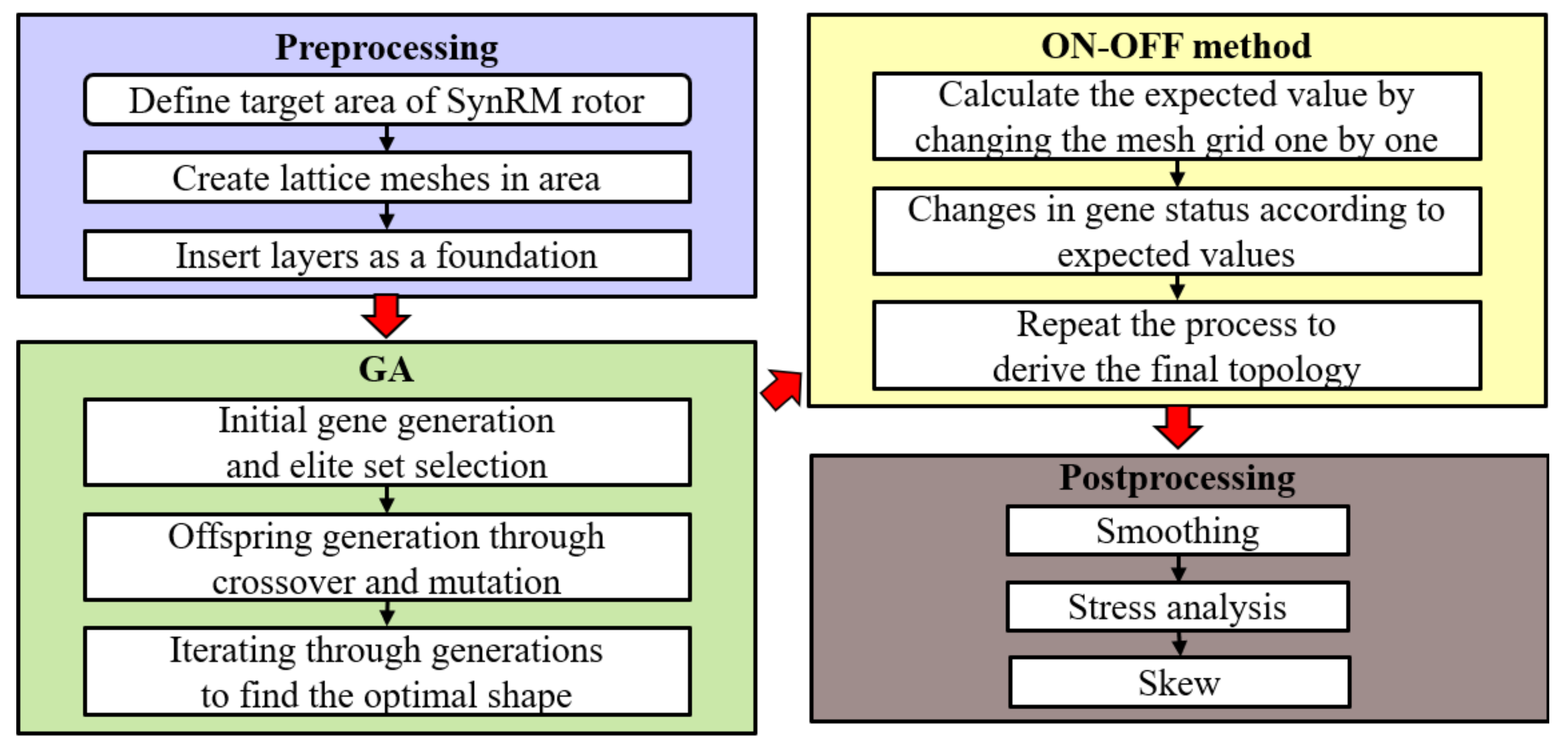
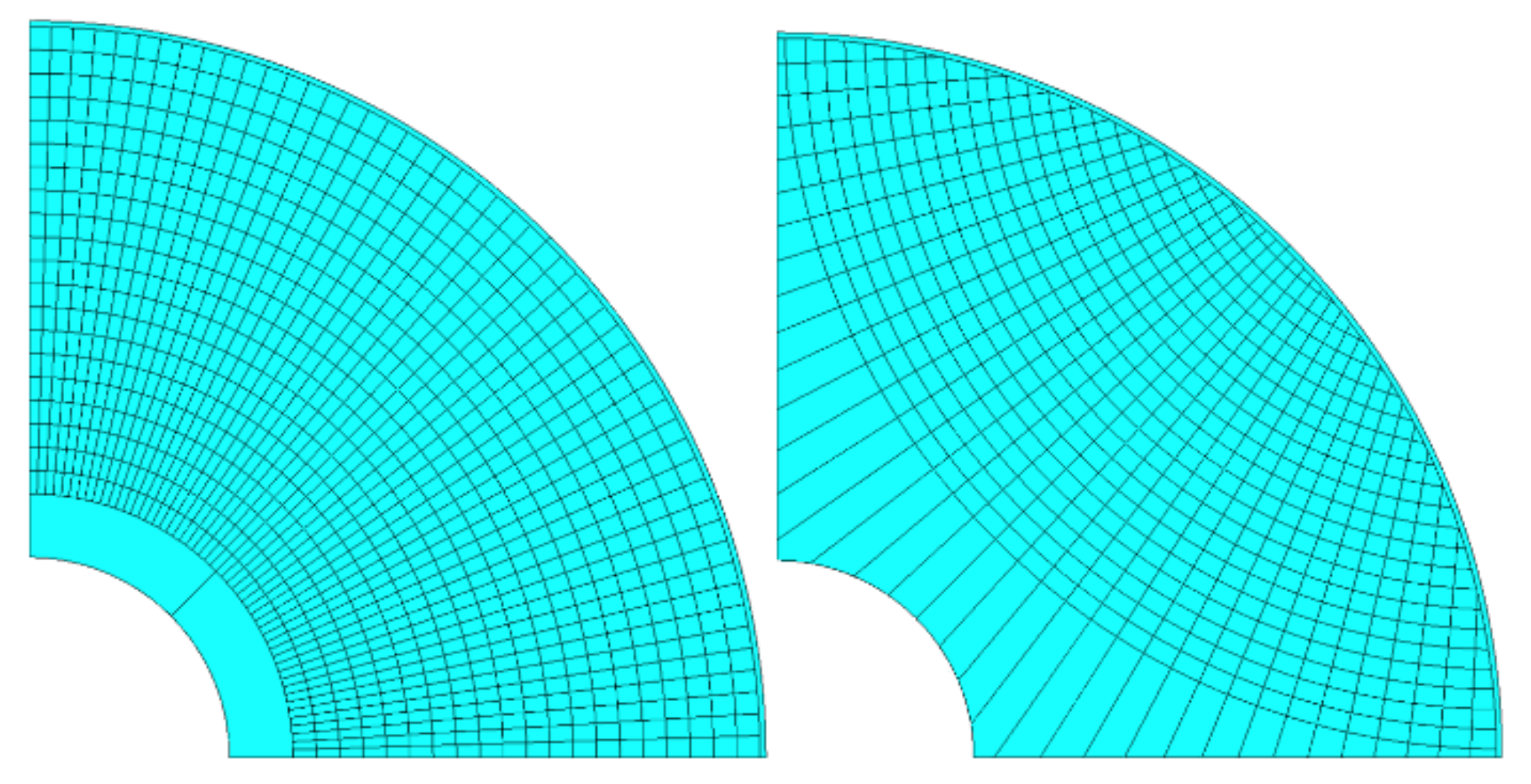
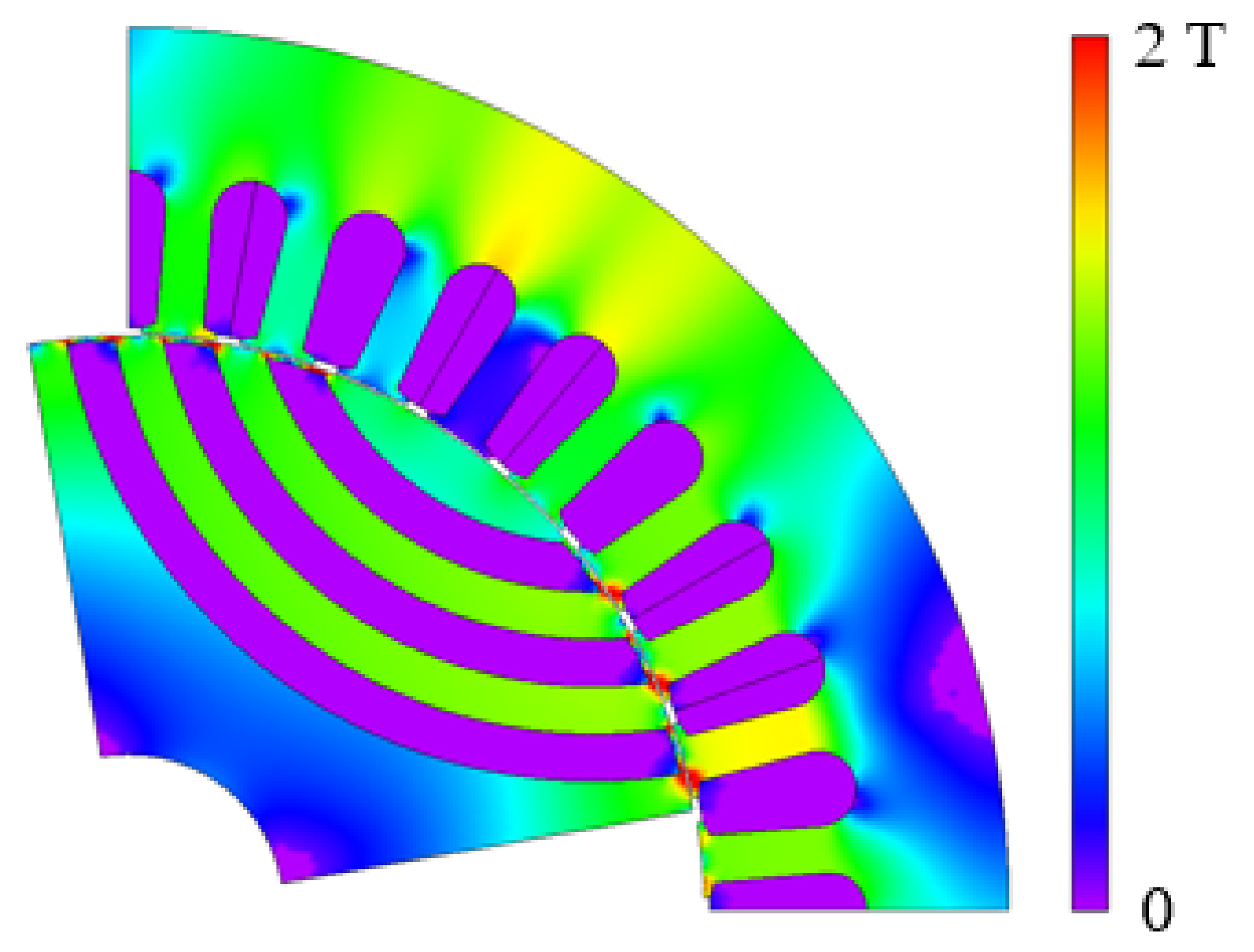
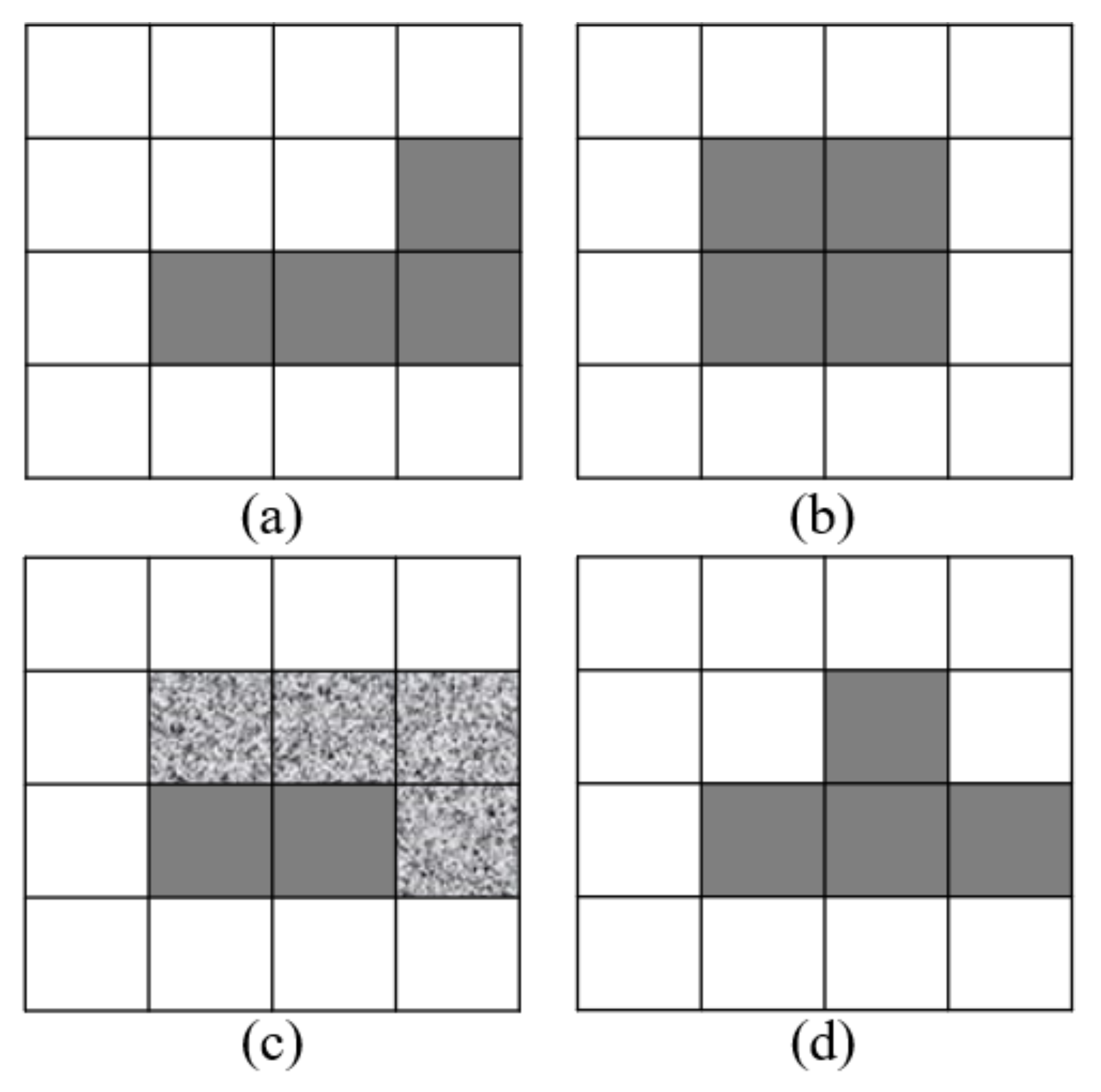
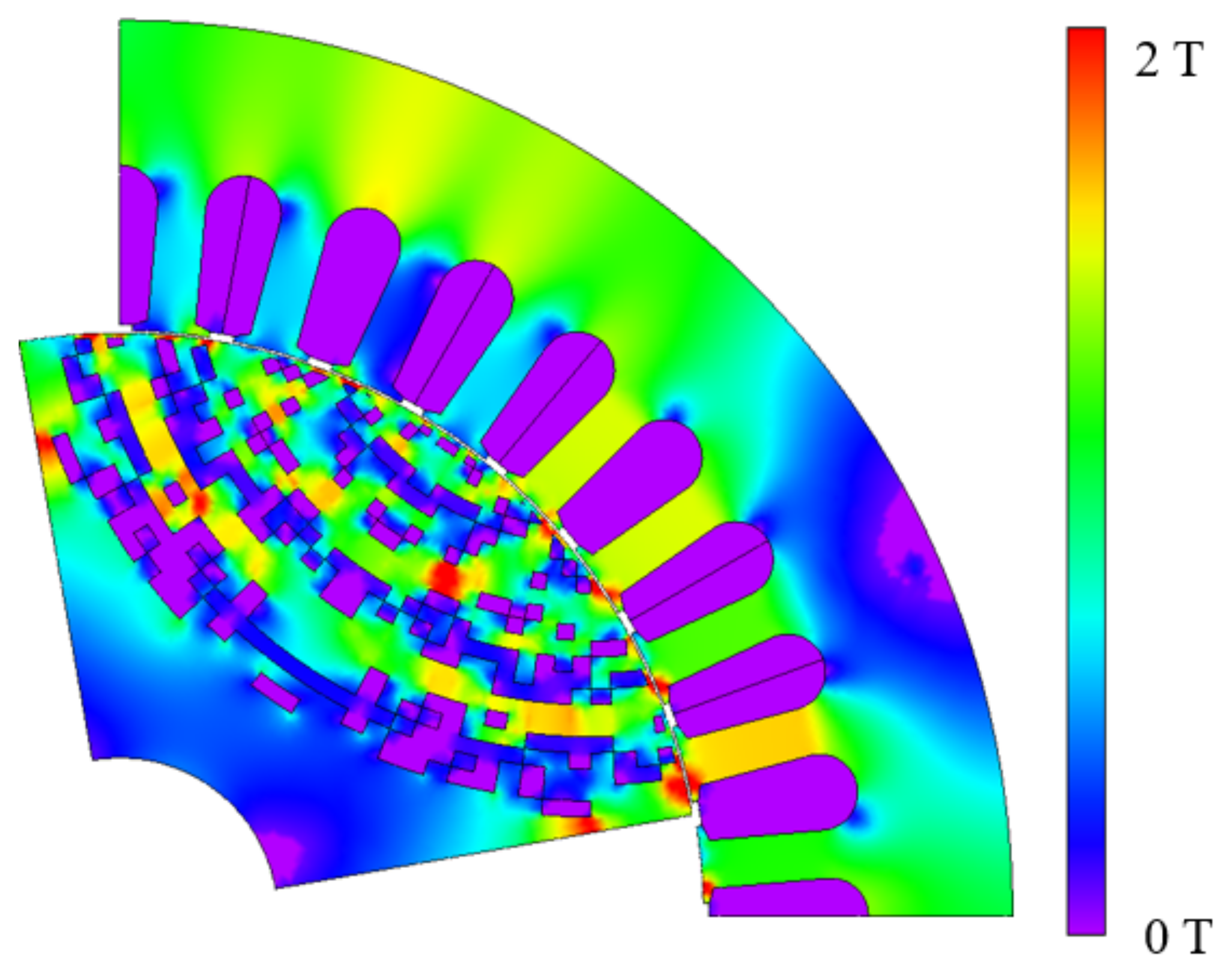
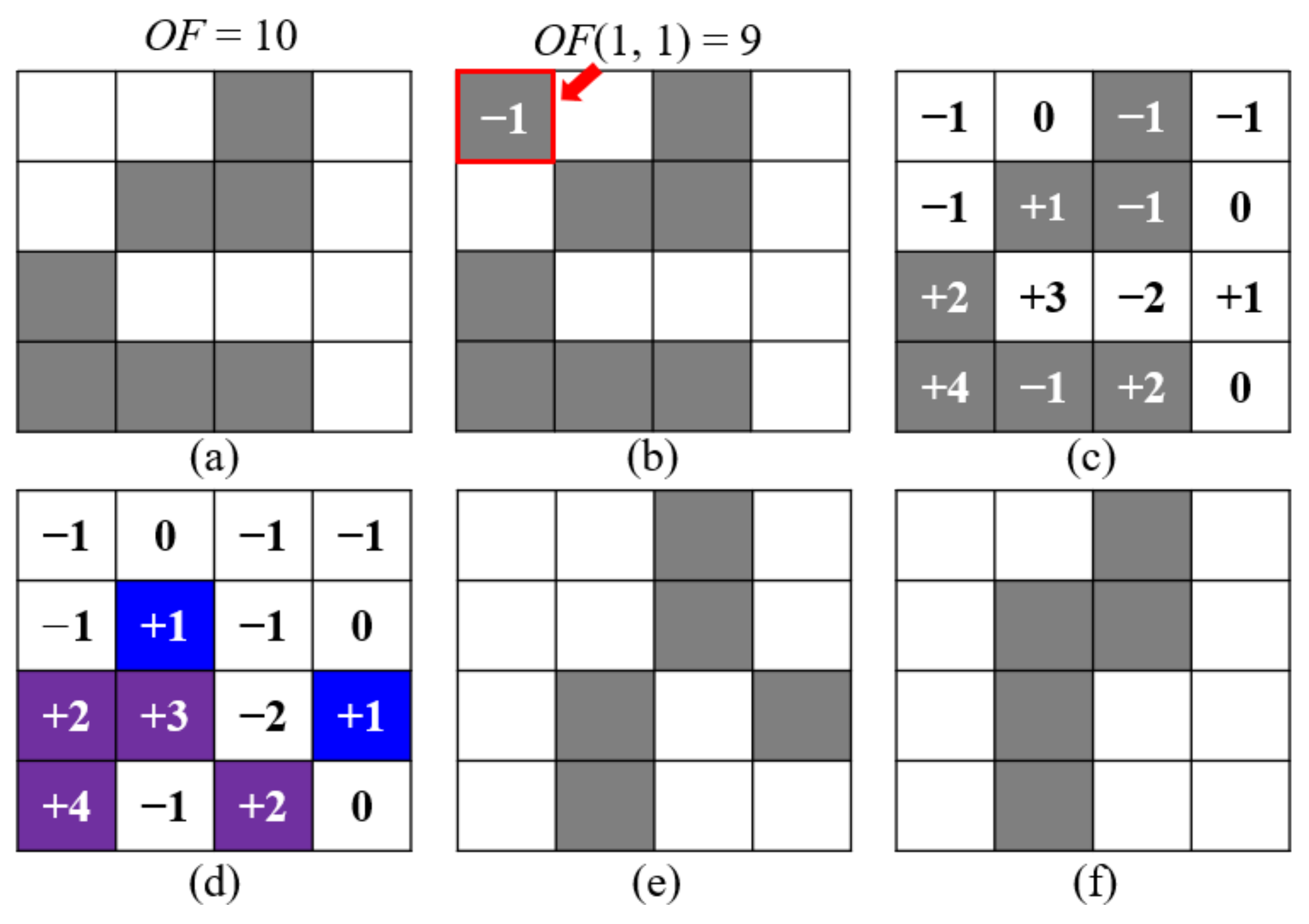
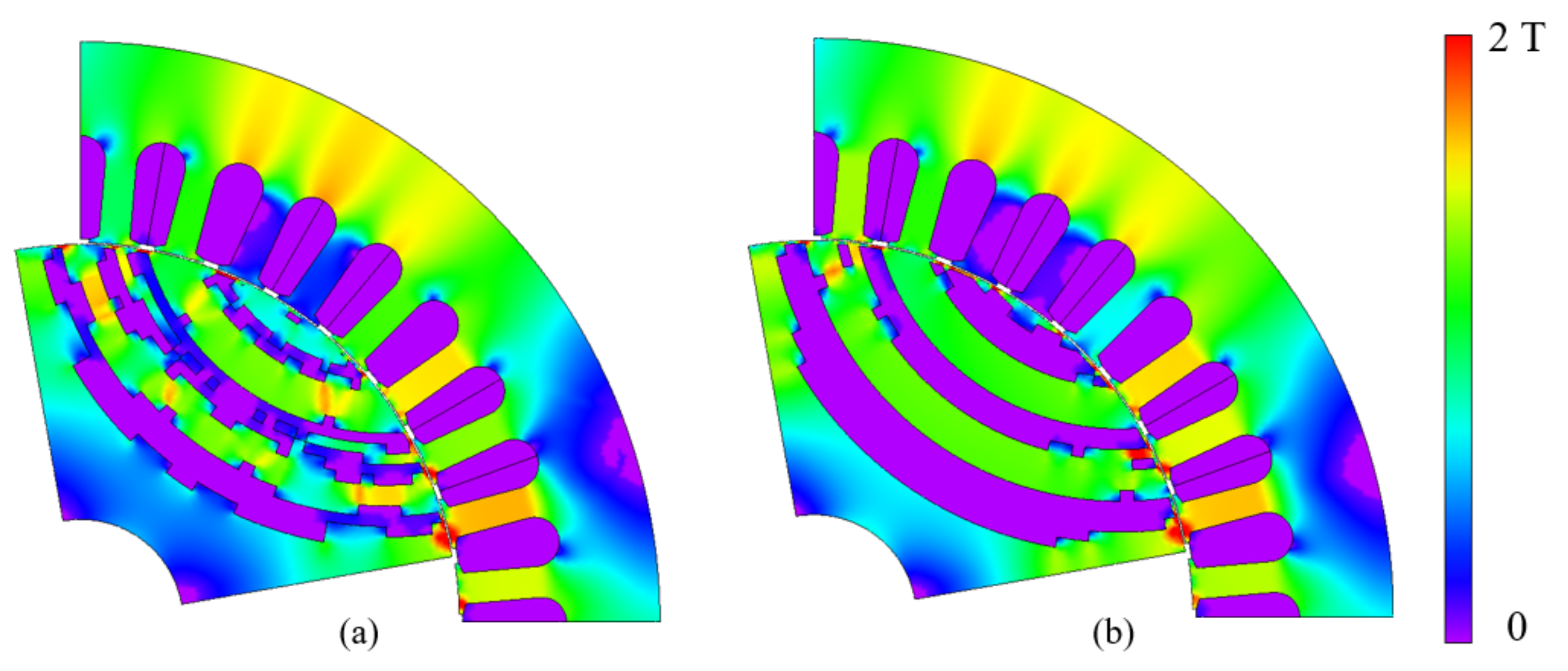
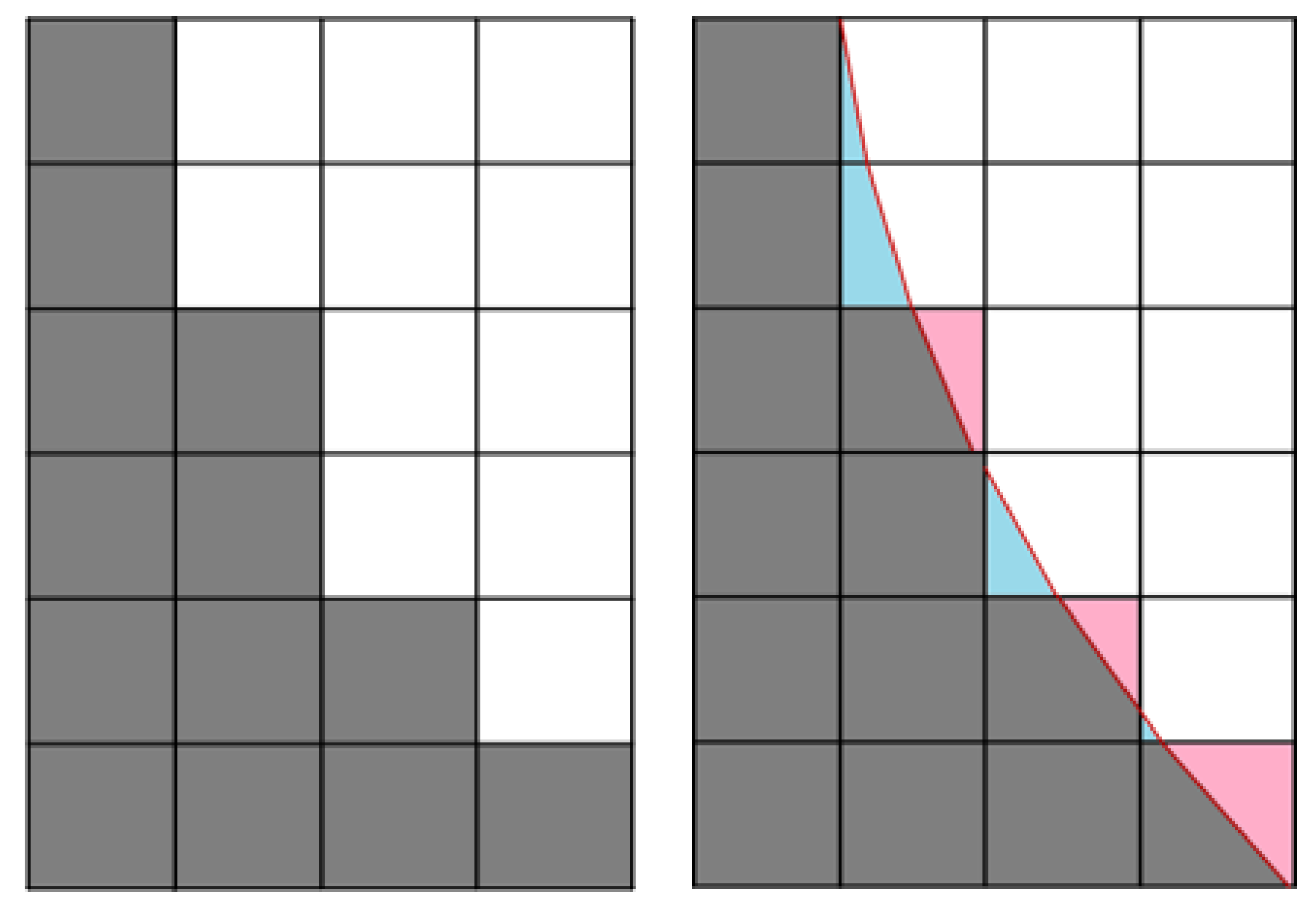
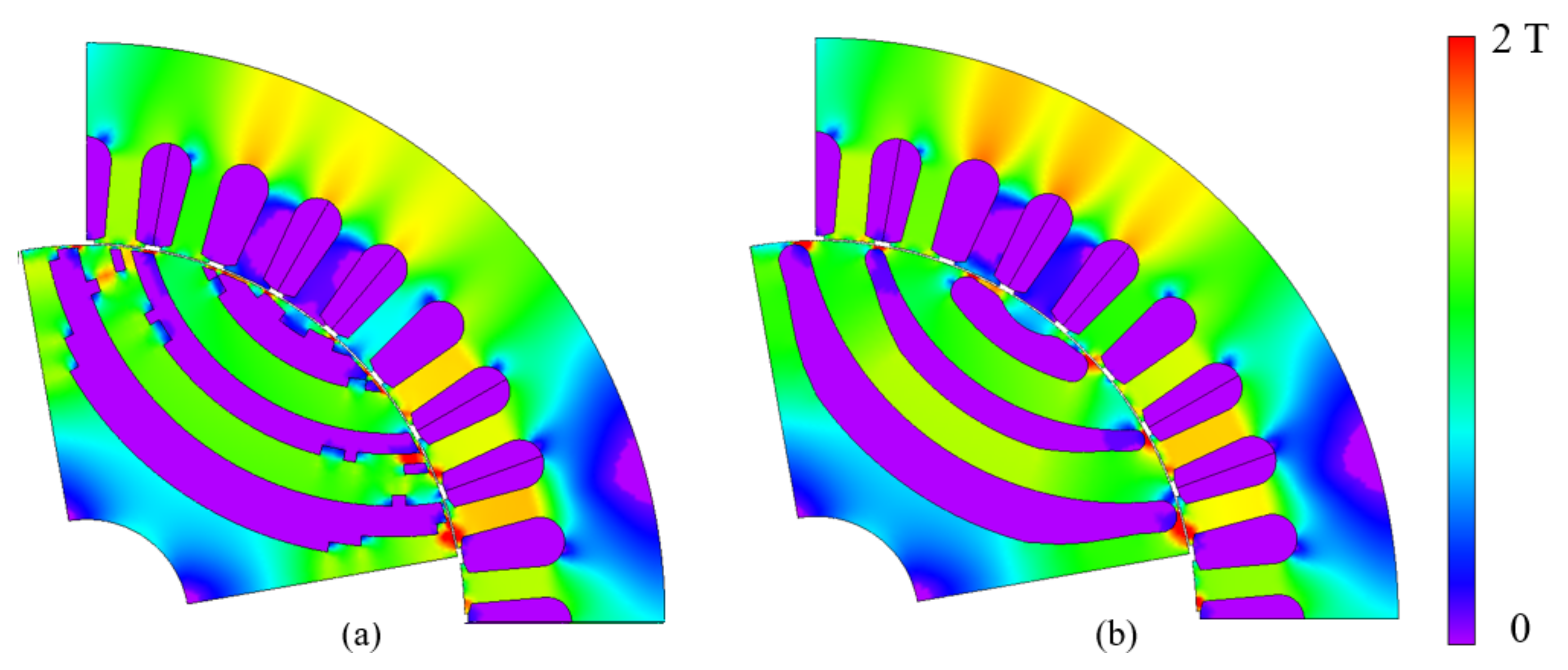
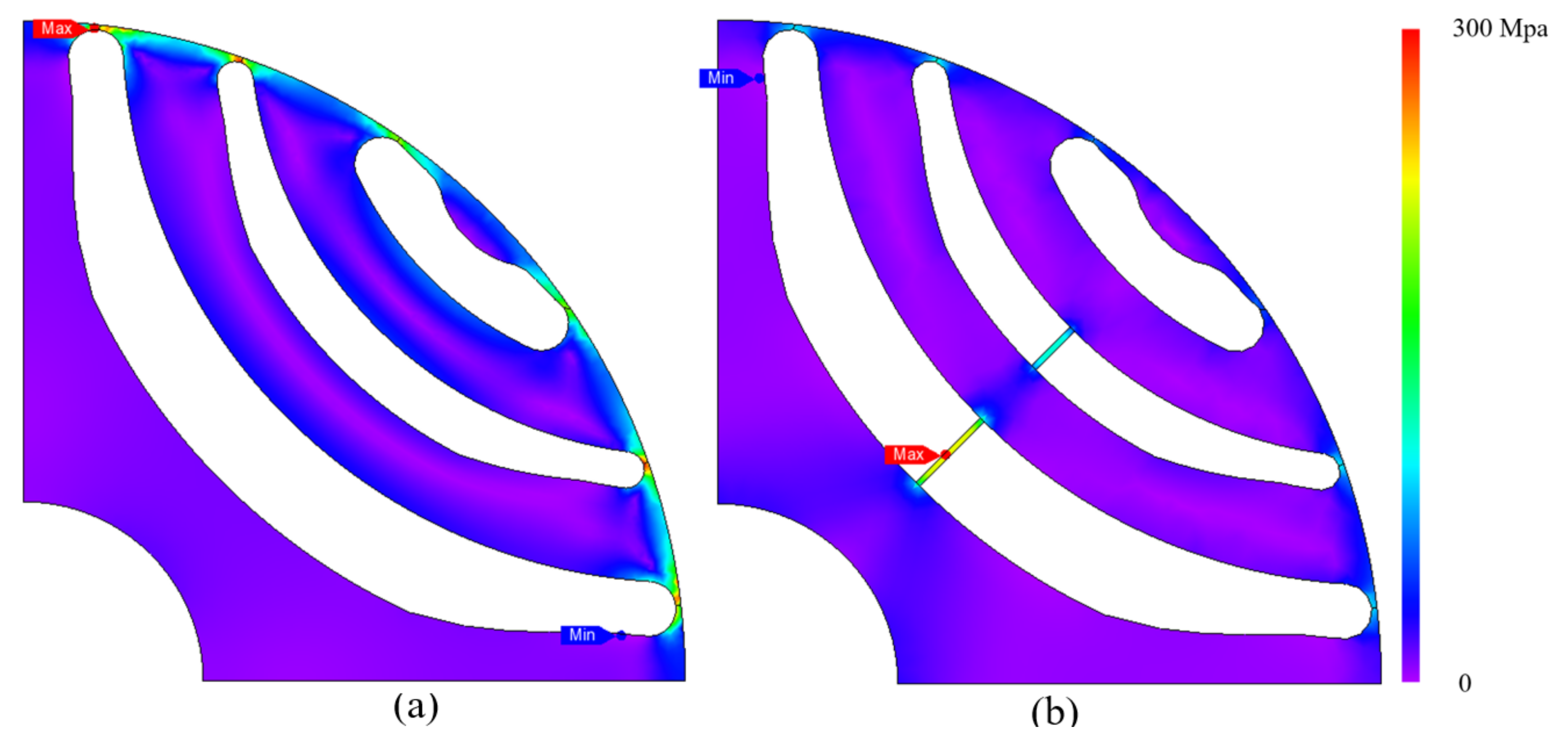
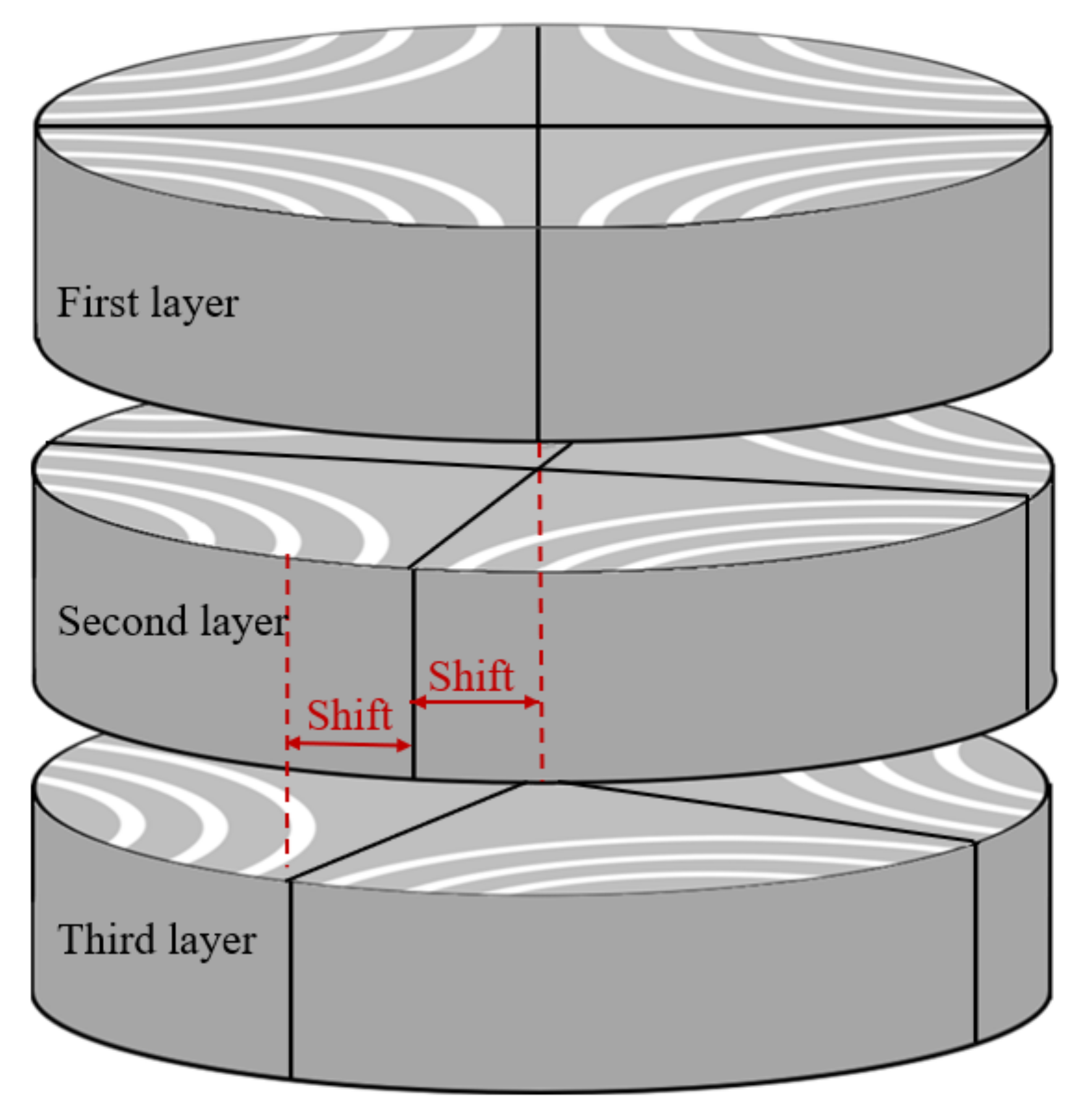
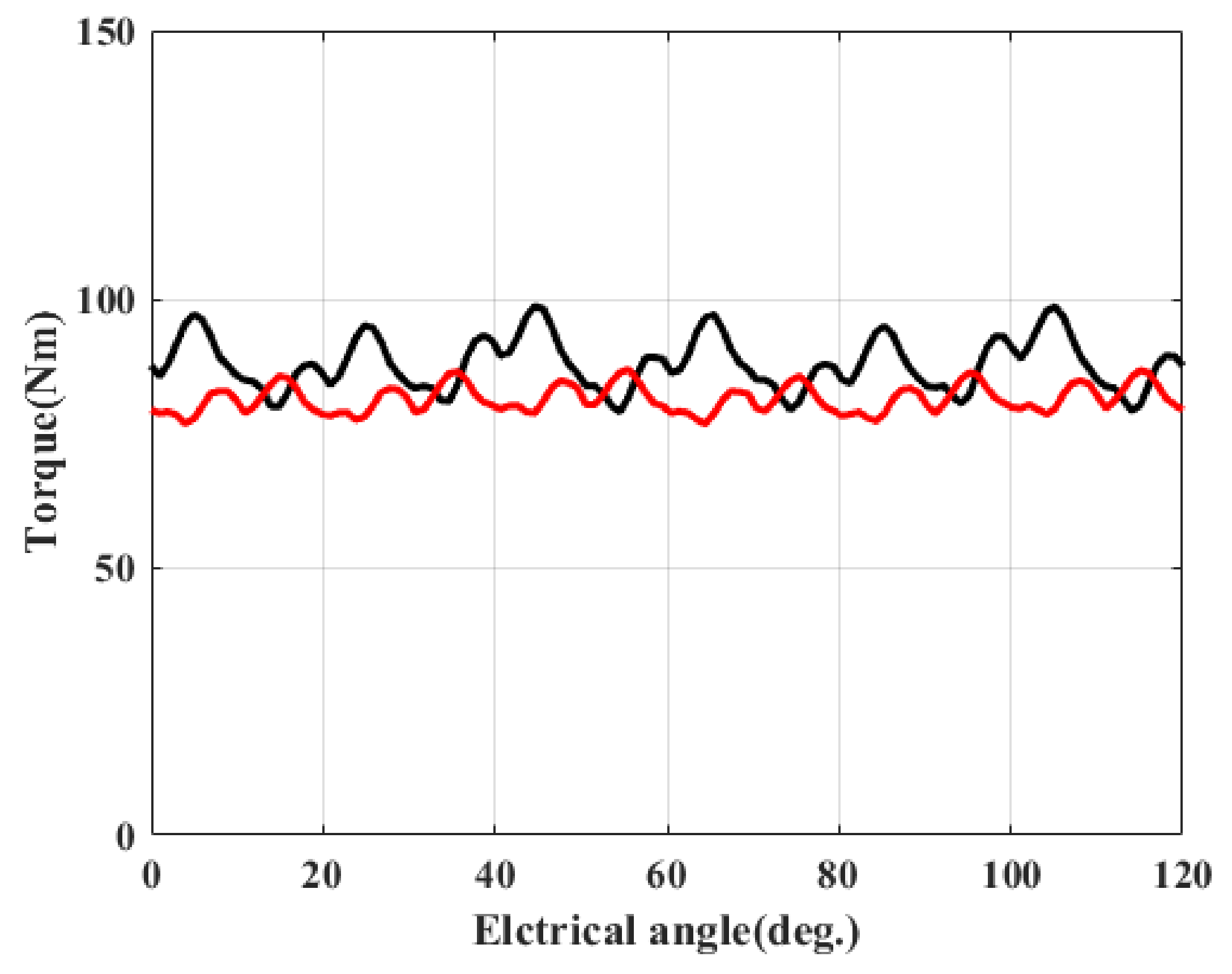
The topology algorithm (TA) can effectively find an optimal solution by changing the material and shape of the design target without the limitation of design variables. In this paper, a genetic topology algorithm (GTA) is proposed for the design optimization of a synchronous reluctance motor (SynRM). By applying the stochastic algorithm (genetic algorithm (GA)) and the deterministic algorithm (ON-OFF method) to the design, the optimal shape can be found quickly and effectively. The GTA, which improves manufacturability by removing the aliasing that occurs in TA, was applied to the design of SynRM to search for the optimal model. After dividing the rotor into a reverse mesh grid, the optimal topology was searched for by GA and ON-OFF methods. Then, mechanical stability was verified through stress analysis, and additional performance improvement was obtained through the skew technique. The final design, which satisfies the minimum efficiency, required torque, and torque ripple was derived by applying the step-by-step design using GTA to the SynRM optimization.
Keywords: industrial motors; ON-OFF method; smoothing; synchronous reluctance motor; topology algorithm industrial motors; ON-OFF method; smoothing; synchronous reluctance motor; topology algorithm