Article

A Flexible Responsive Load Economic Model for Industrial Demands


1
Electrical Engineering Department, Amirkabir University of Technology, Tehran 15916-34311, Iran
2
Department of Energy Technology, Aalborg University, 9220 Aalborg East, Denmark
3
Department of Electrical Engineering, Shahid Beheshti University, Tehran 19839-69411, Iran
*
Author to whom correspondence should be addressed.
Processes 2019, 7(3), 147; https://doi.org/10.3390/pr7030147
Submission received: 18 February 2019 / Accepted: 4 March 2019 / Published: 8 March 2019

Abstract

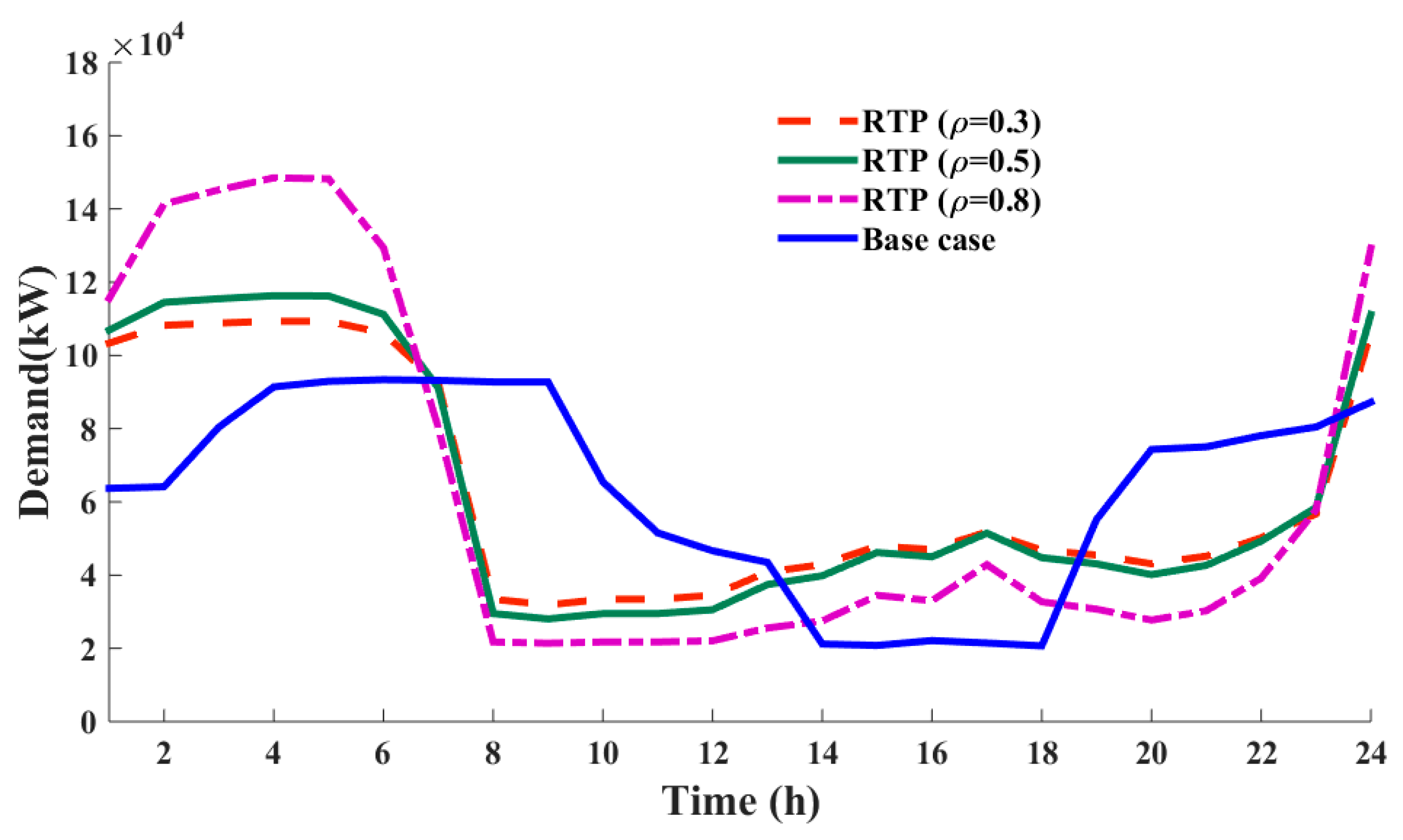
The best pricing method for any company in a perfectly competitive market is the pricing scheme with regards to the marginal cost. In contrast to this environment, there is a market with imperfect competition. In this market, the price can be affected by some players in the generation/demand side (i.e., suppliers and/or buyers). In the economic literature, “market power” refers to a company that has the power to affect prices. In fact, market power is often defined as the ability to divert prices from competitive levels. In the electricity market, especially because of the integration of intermittent renewable energy resources (RESs) along with the inflexibility of demand, there are levels of market power on the supply side. Hence, implementation of demand response (DR) programs is necessary to increase the flexibility of the demand side to deal with the intermittency of renewable generations and at the same time tackle the market power of the supply side. This paper uses economic theories and mathematical formulations to develop a flexible responsive load economic model (FRLEM) based on real-time pricing (RTP) to show modification of the load profile and mitigation of the energy costs for an industrial zone. This model was developed based on constant elasticity of the substitution utility function, known as one of the most popular utility functions in microeconomics.
Keywords: demand-side management; economic demand response model; consumer utility function; electricity market restructuring demand-side management; economic demand response model; consumer utility function; electricity market restructuring